Blog

  • Week 2 NFL power rankings roundup: Eagles get mixed reaction to opening win

    Week 2 NFL power rankings roundup: Eagles get mixed reaction to opening win

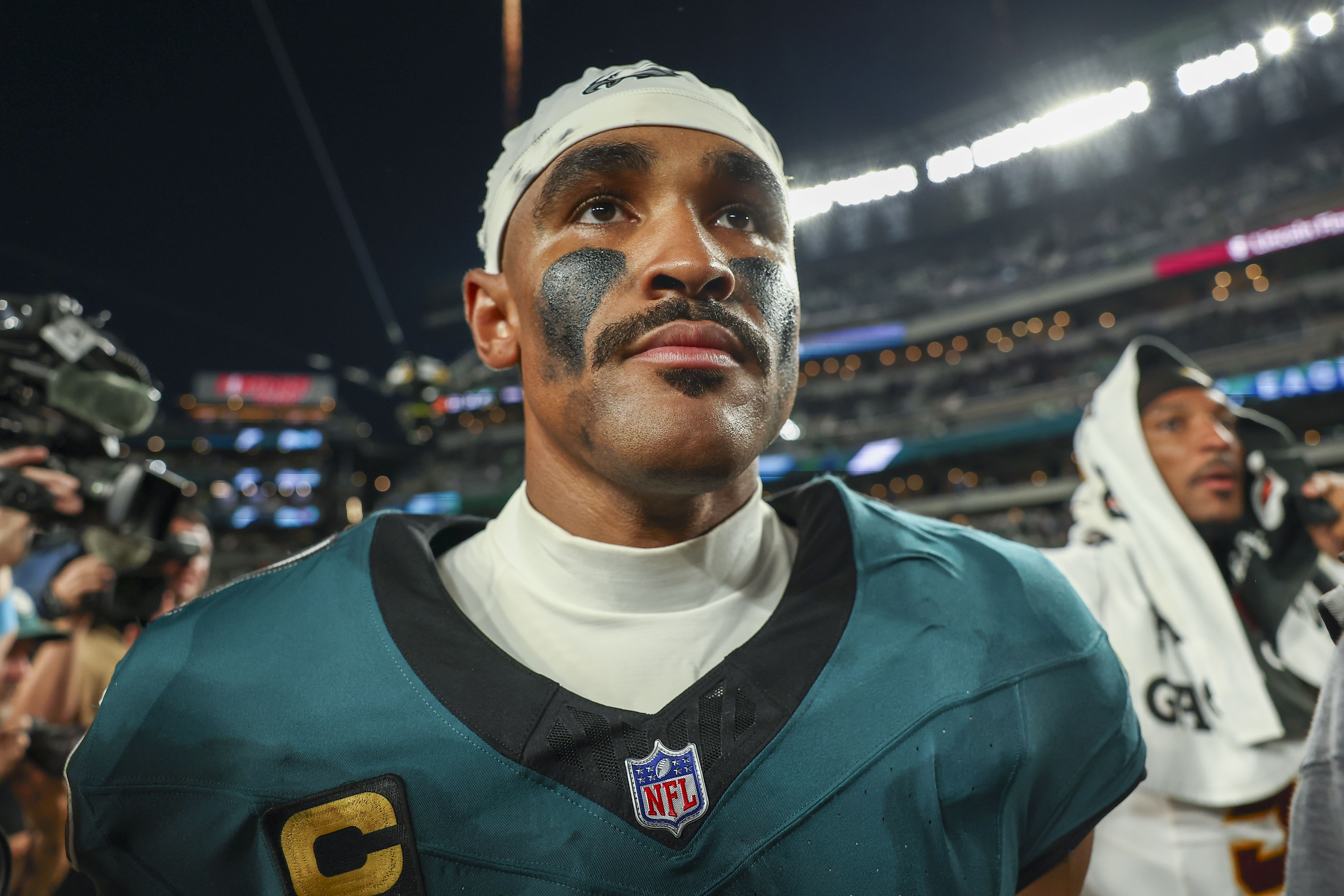
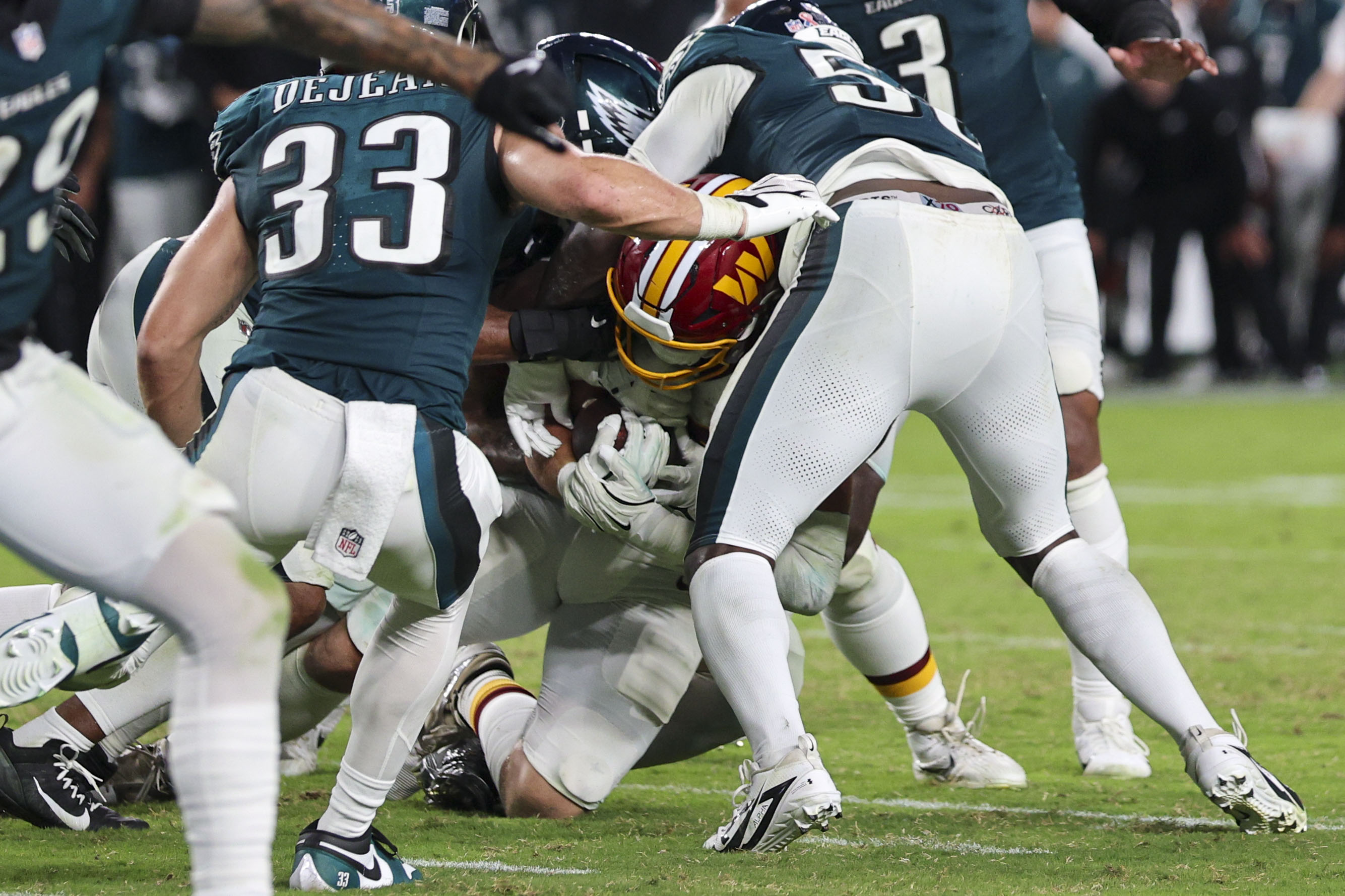
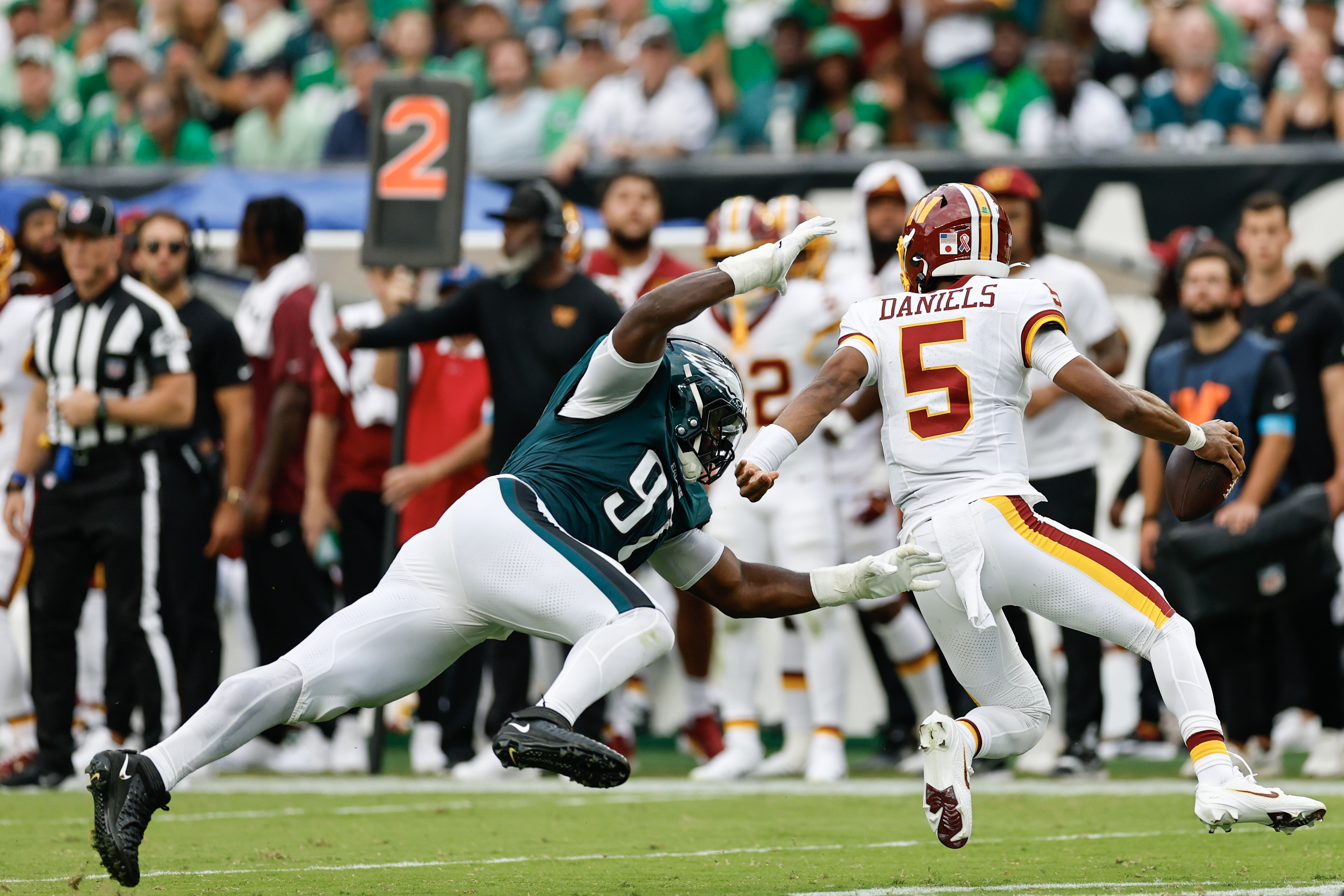
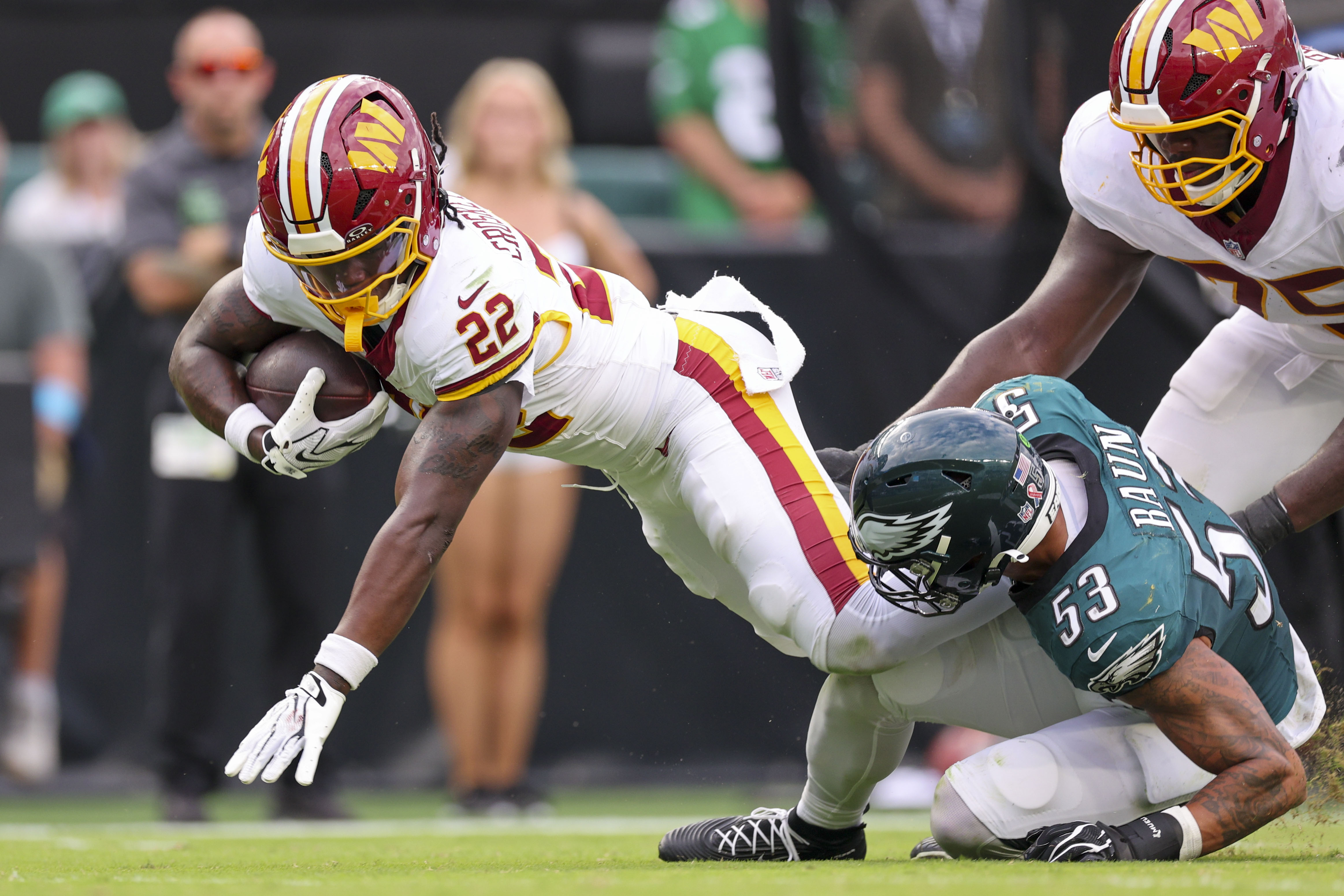
    In the record books it was a win, but for national media outlets, the Eagles’ 24-22 victory over the Commanders on Sunday has garnered mixed responses.

    Those varied opinions are reflected in the NFL power rankings ahead of Week 2 when the Eagles take on the Tennessee Titans at 1 p.m. Sunday in Nashville. Here’s where the Eagles stand in the power rankings of several national media outlets.

    ESPN: Sixth

    The Eagles moved down from fifth to sixth in ESPN’s power rankings.

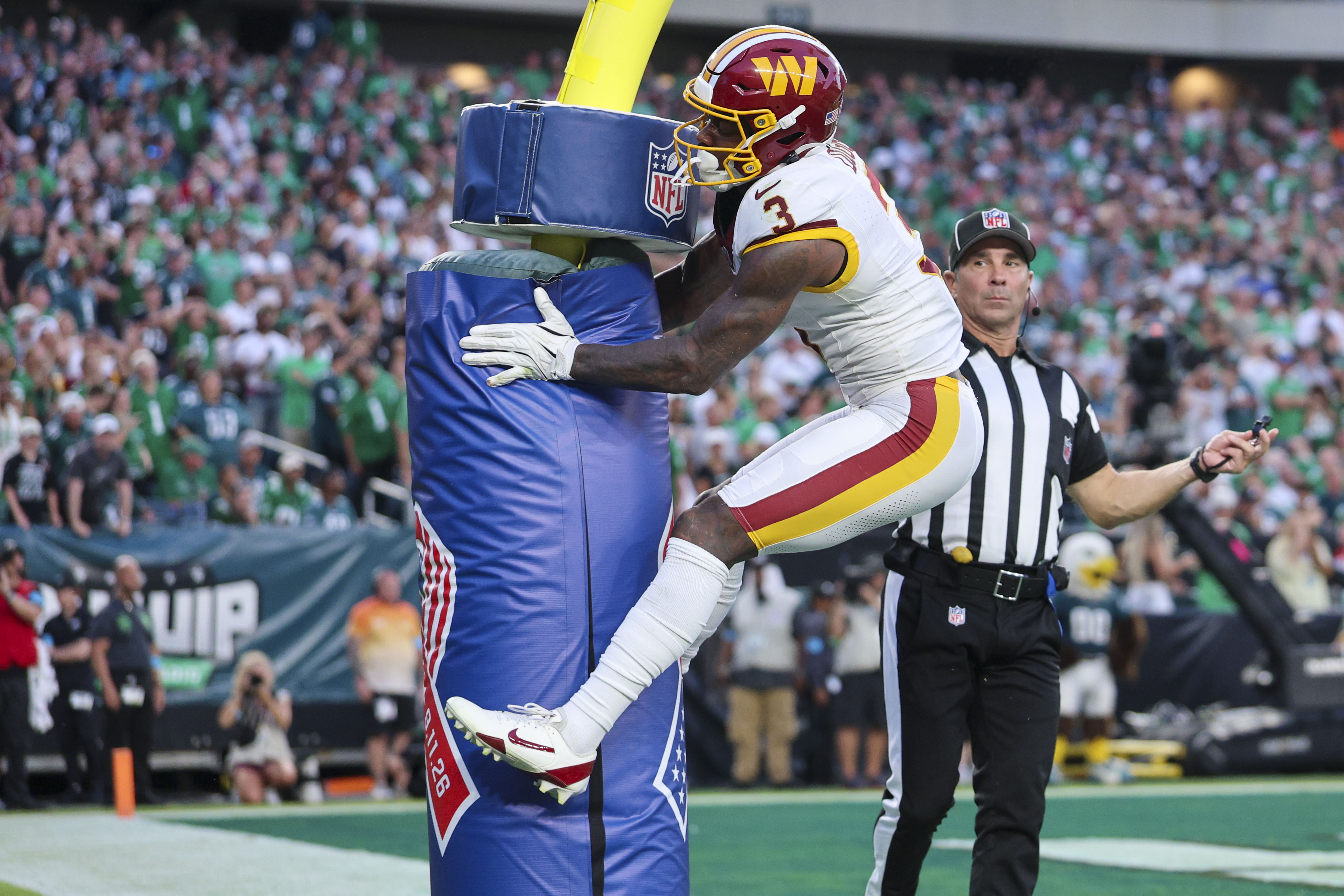
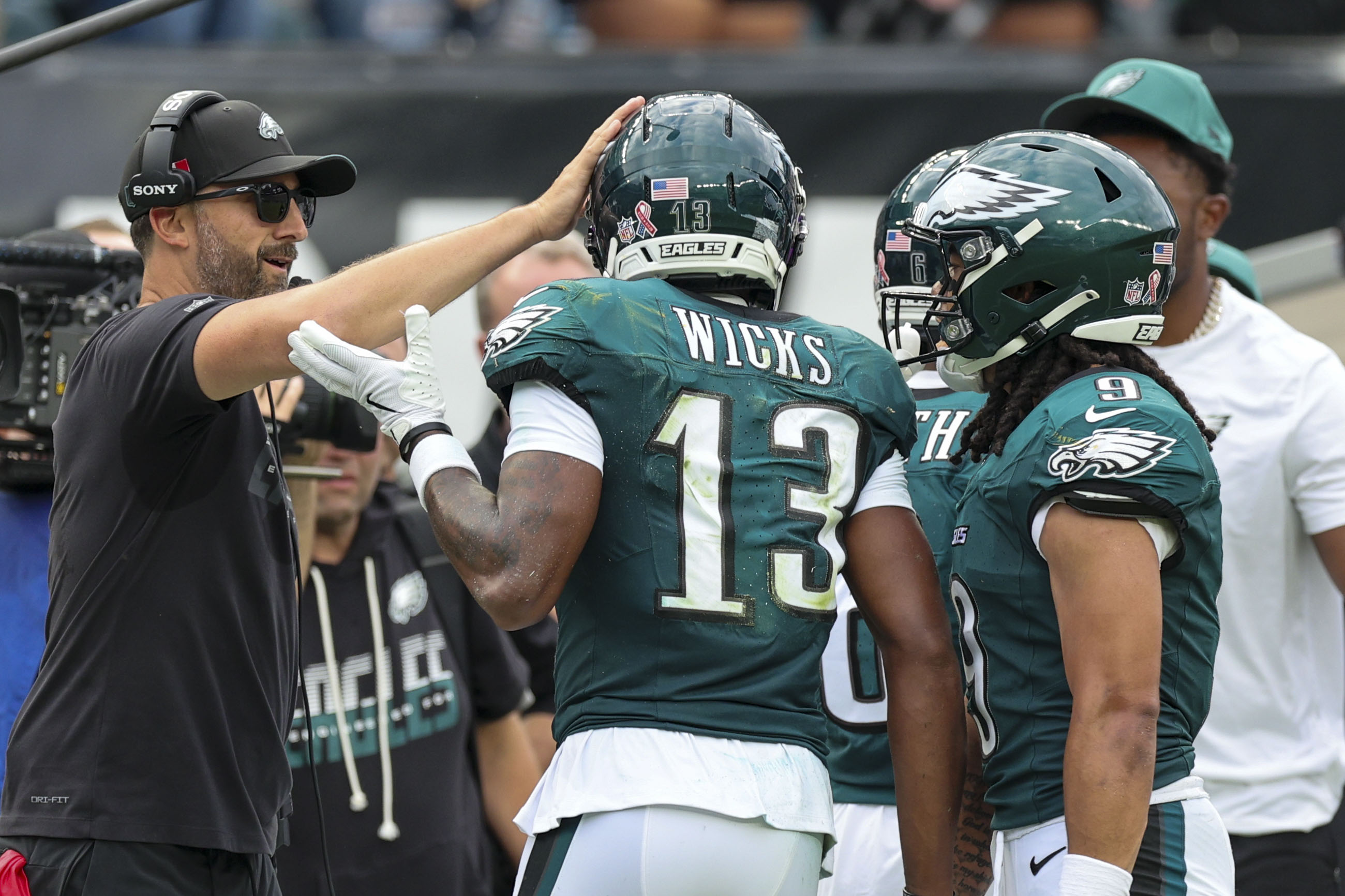
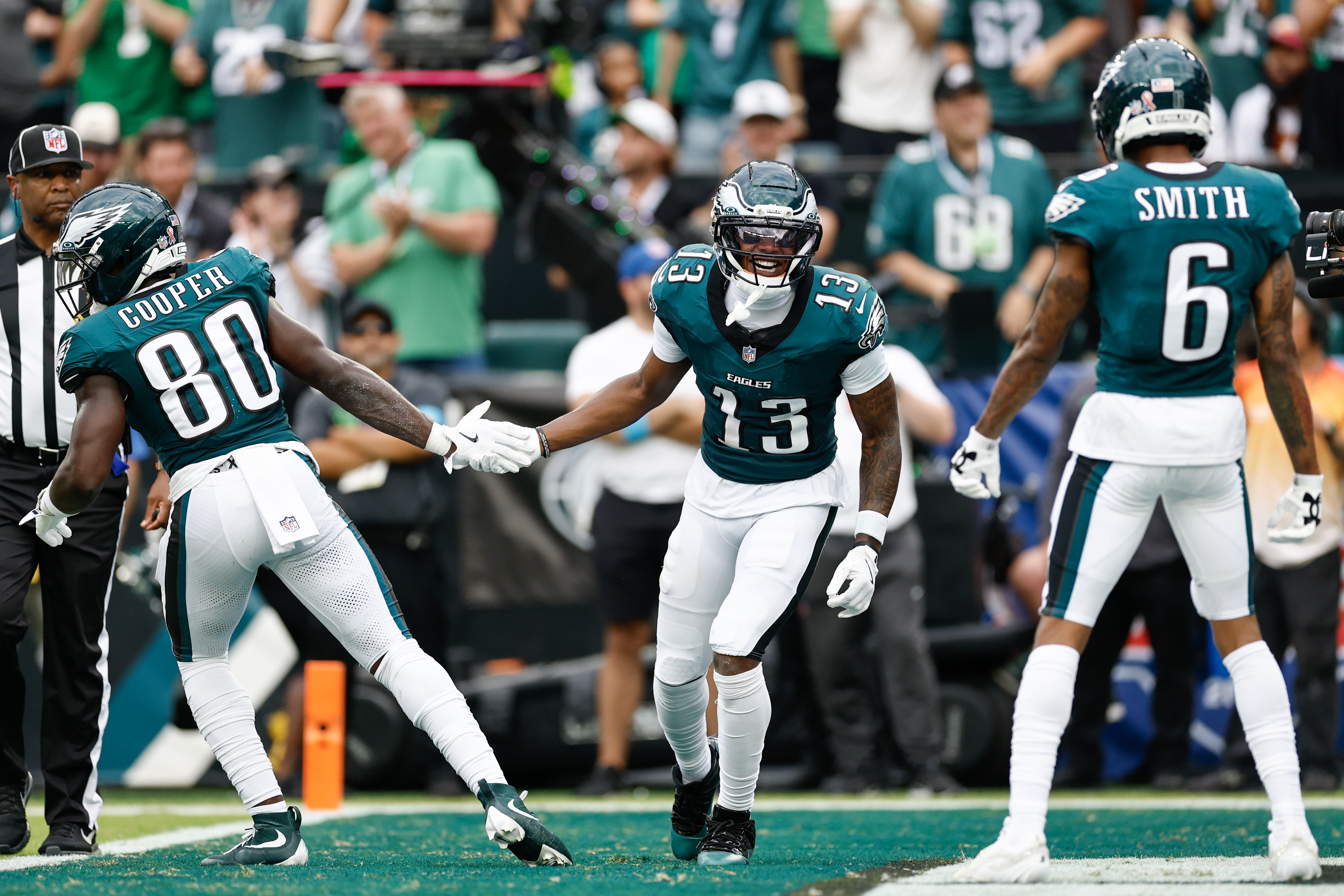
    ESPN’s Tim McManus credited Dontayvion Wicks for the role he played with two catches for 73 yards and a touchdown.

    “His 64-yard catch-and-run in the first half marked the longest reception of his career, providing a much-needed spark to the Eagles’ new-look offense,” McManus wrote.

    unCovering the Birds: Shades of 2022 Jalen Hurts?
    Video: unCovering the Birds: Shades of 2022 Jalen Hurts?

    CBS Sports: Seventh

    Pete Prisco of CBS Sports moved the Eagles up six spots from 13.

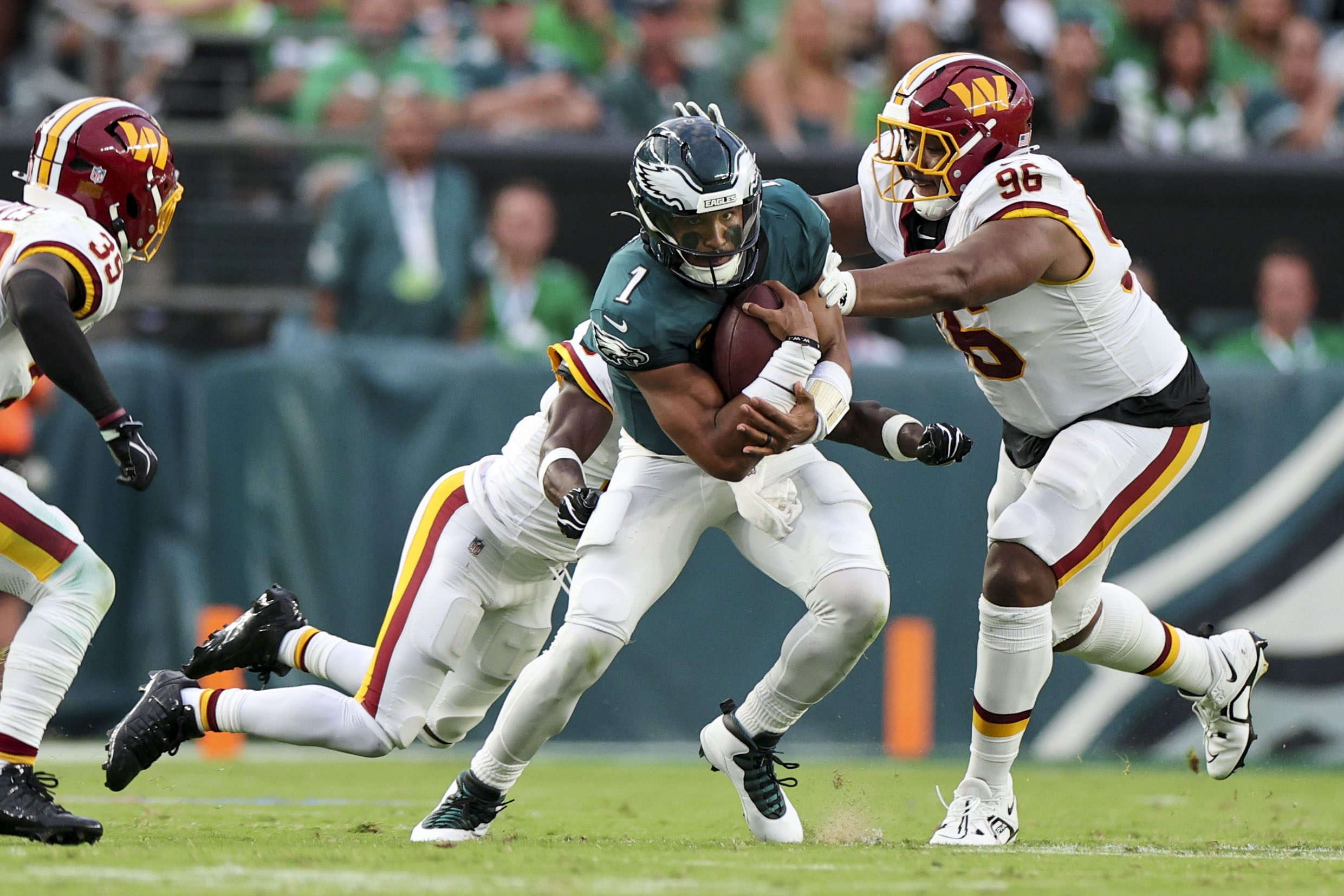
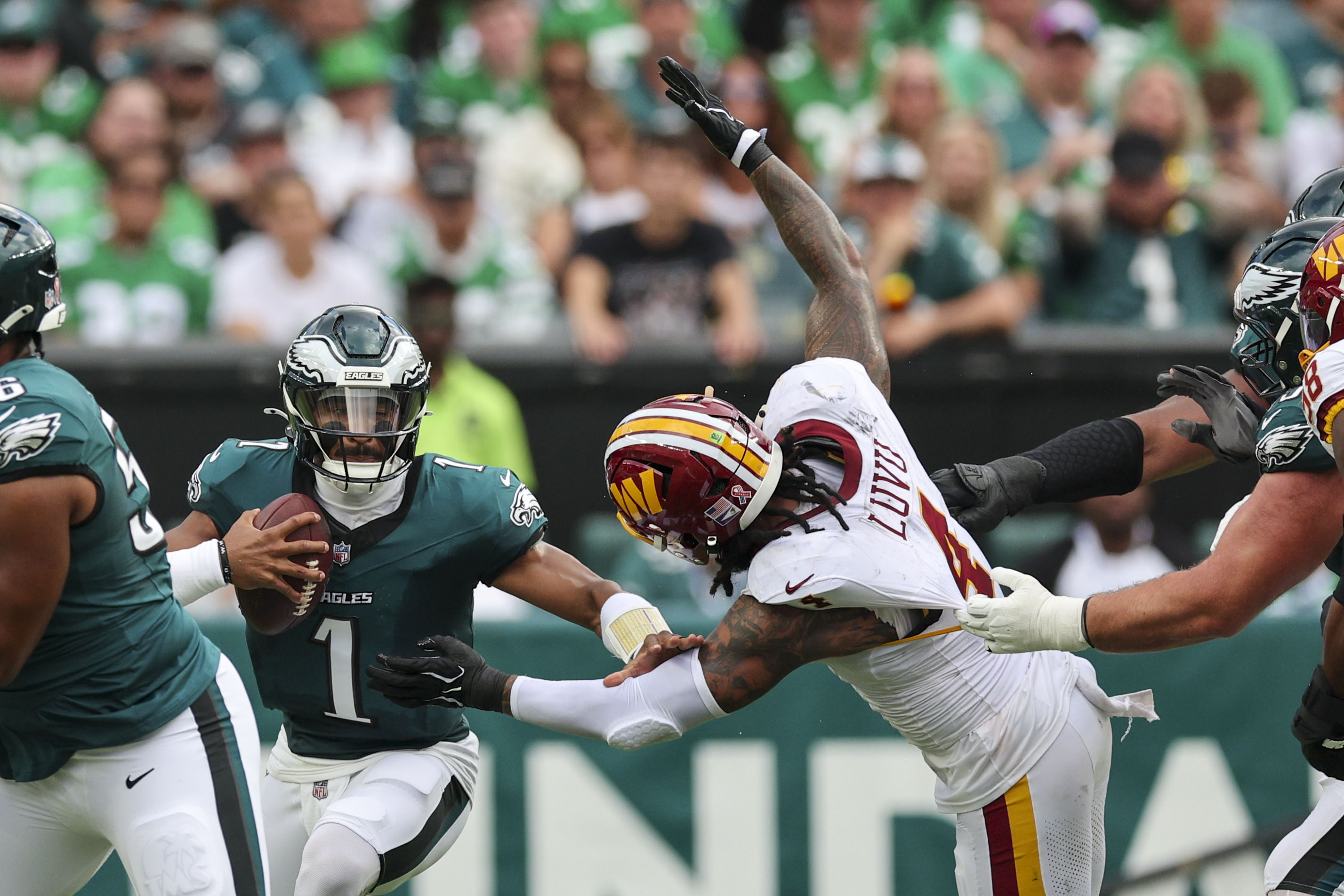
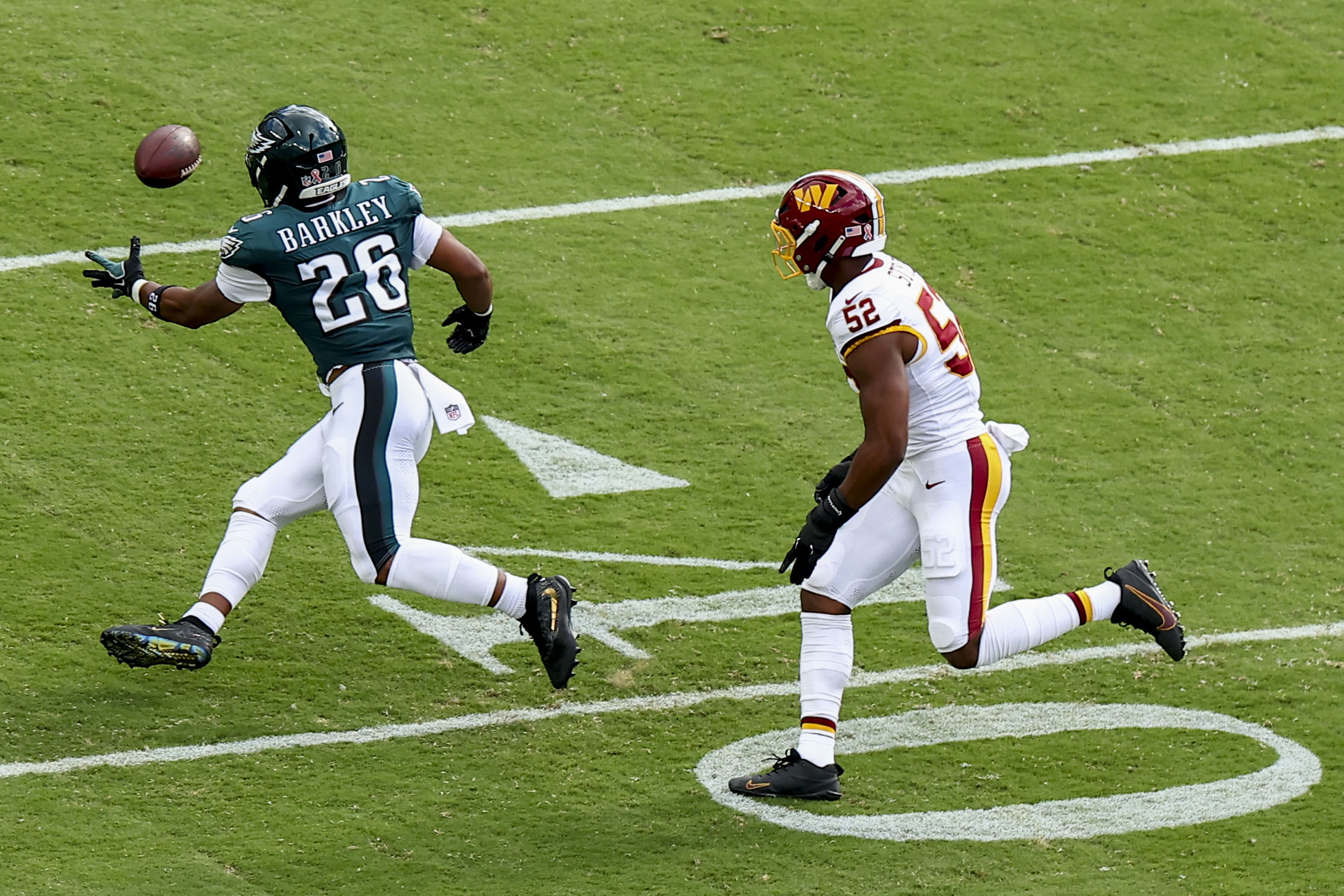
    “It wasn’t pretty against the Commanders, but there were good signs,” Prisco wrote. “Saquon Barkley averaged 5.5 per rush and Jalen Hurts threw three touchdown passes.”

    The Athletic: 11th

    Hurts’ three touchdown passes matched a career high in a season opener and helped move the Eagles up one spot..

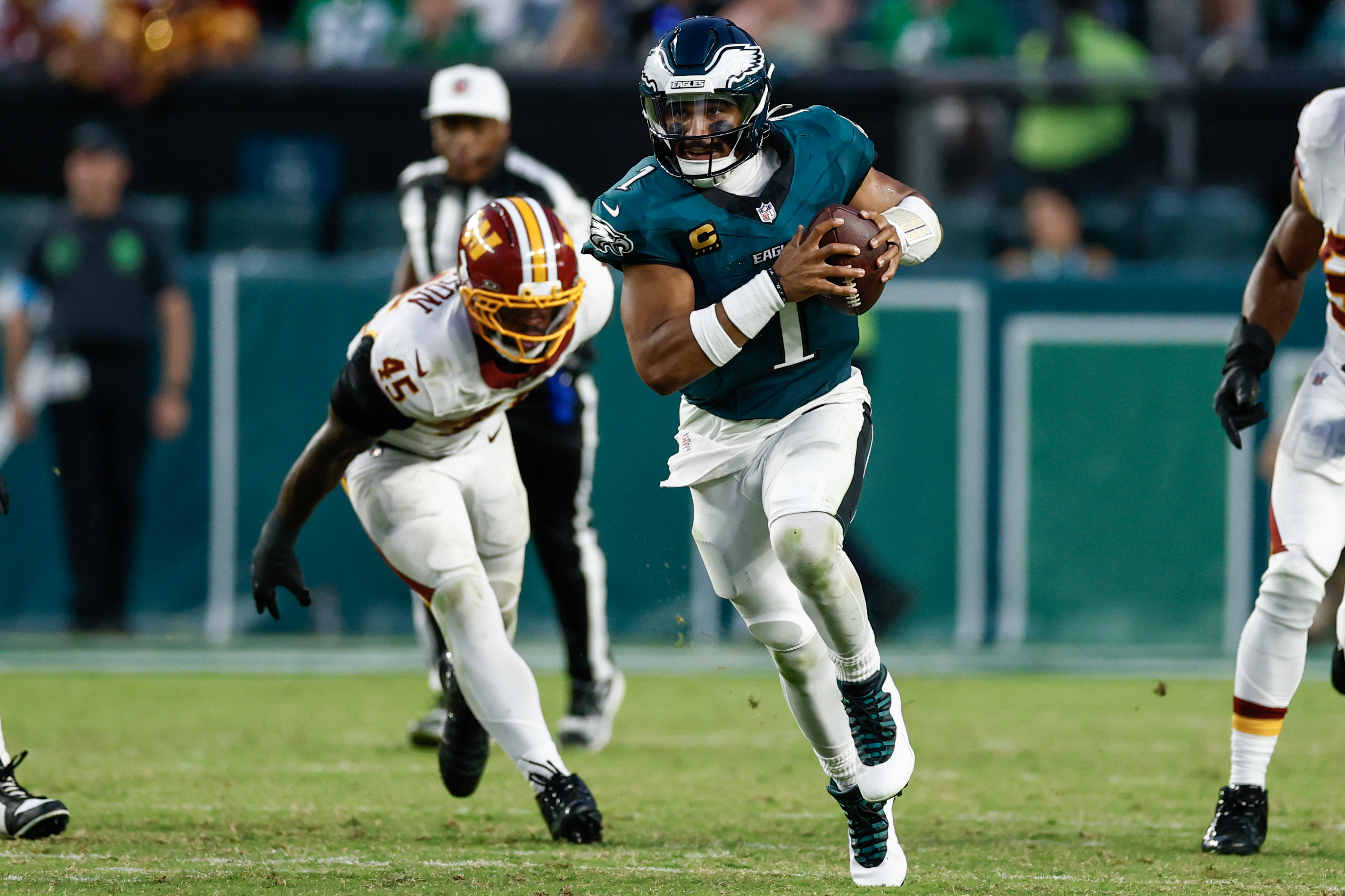
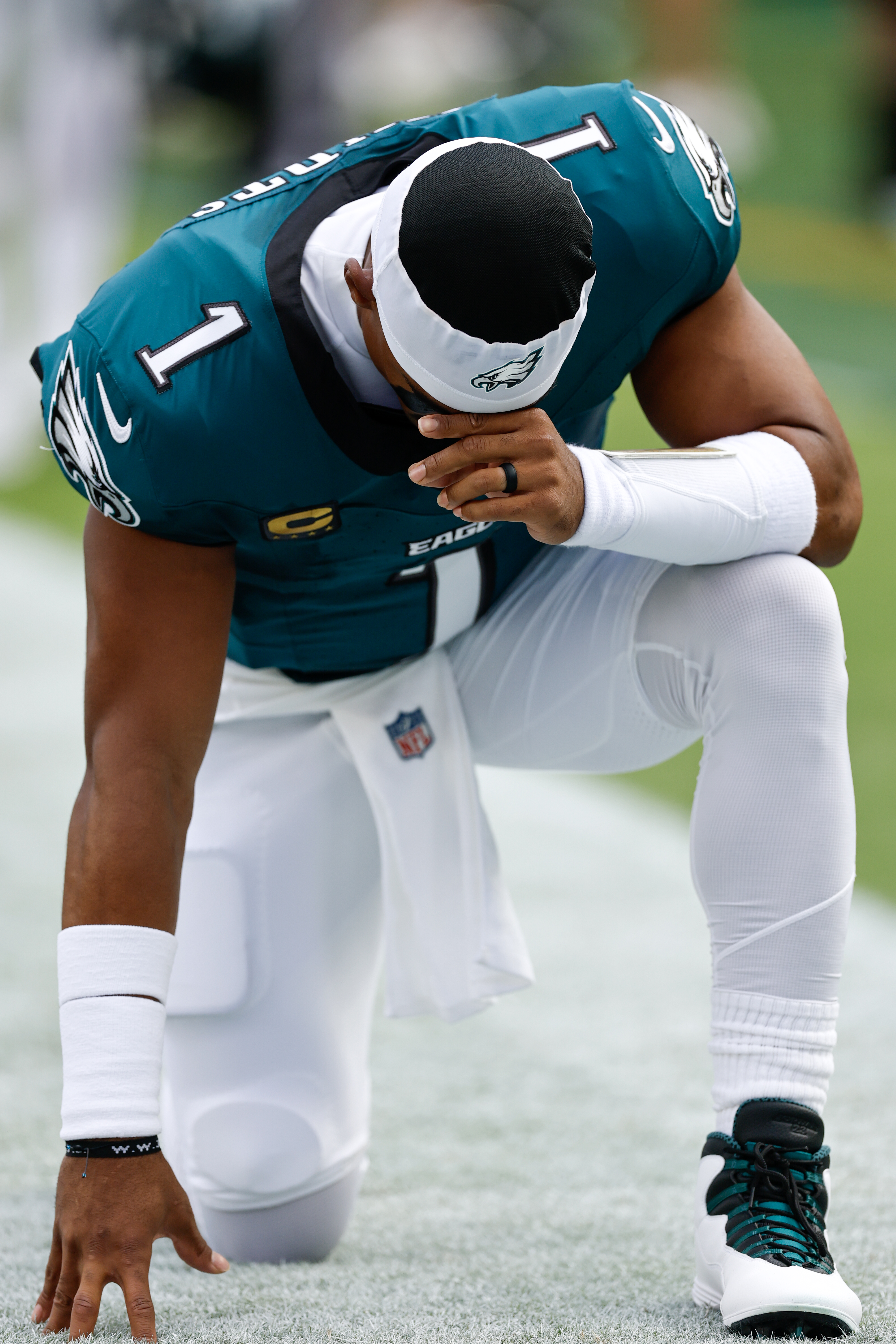
    “The final box score isn’t going to instill a ton of faith that the Eagles’ offense has suddenly morphed back into one of the league’s best,” Chad Graff and Josh Kendall wrote. “But Hurts made enough big plays when his team needed him, connecting on a deep ball and improvising with his legs on a third-and-18 conversion to offer hope as Philadelphia settles into this new offensive scheme under Sean Mannion.”

    Sports Illustrated: 12th

    For Conor Orr at Sports Illustrated, Sunday’s game exposed more issues in the offense, and he moved the Eagles down one spot from 11. What Orr called “The Sean Mannion experience” included the Eagles punting on their first two drives of the game, and their first three drives in the second half. But for Orr, the biggest problem was the run game.

    “Jalen Hurts was able to use his legs and smooth out the choppiness but the run game was of utmost concern: most of Saquon Barkley’s yards came after first contact and most came on one play. He was hit behind the line at a pretty high rate,” Orr wrote.

    NFL.com: 11th

    The Eagles took a decent hit in the NFL.com rankings, moving from fifth to 11th. While many outlets focused on Mannion’s offense, Nick Shook gave credit to Vic Fangio’s defense.

    “The Eagles didn’t start the season like a well-oiled machine, but they were able to rely on their defense for a good portion of Sunday’s opener and received some timely contributions from Jalen Hurts and the offense to outlast the Commanders,“ Shook wrote. ”Philadelphia can be proud of starting 1-0, but the Eagles likely understand they’ll need to be better over the long haul to achieve their goals.”

    Bleacher Report: Seventh

    While most were complimentary of Hurts’ performance on Sunday, the B/R NFL staff wasn’t letting the quarterback off the hook that easily for some of the “rust” he and other starters might have been showing in their first game.

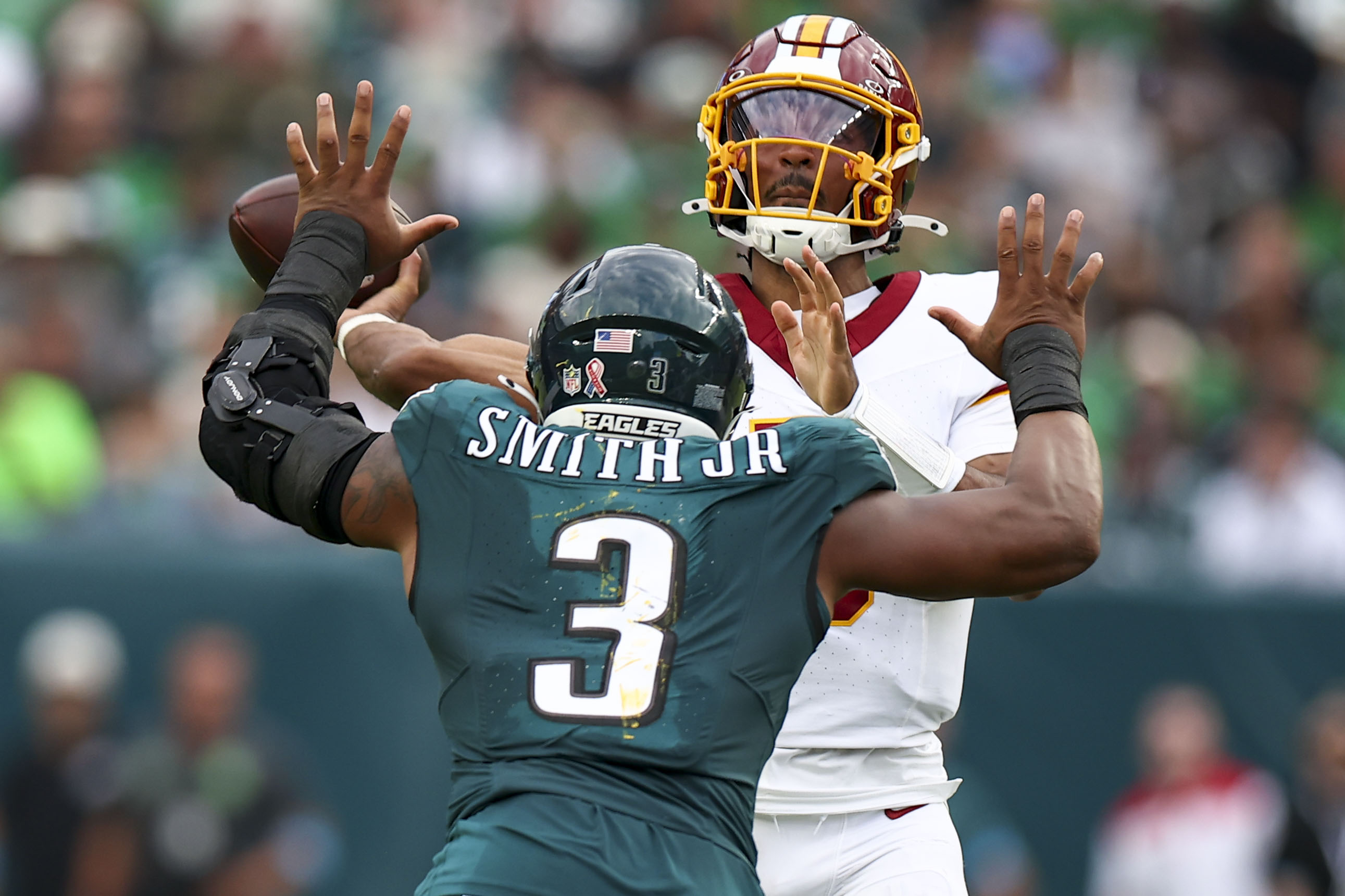
    “Jalen Hurts threw three touchdown passes but completed just 56% of his passes. The offense averaged 6 yards per play but converted less than half their third-down tries. The Philly pass rush was all but invisible, recording just one sack and two QB hits,” the staff wrote. “The Eagles have their sights set on SoFi Stadium and Super Bowl LXI, and if they are going to make a deep playoff run they need to tighten things up on both sides on the ball.”

  • Eagles OC Sean Mannion talks impending offensive line shift: ‘Confident that guys are going to be able to step up’

    Eagles OC Sean Mannion talks impending offensive line shift: ‘Confident that guys are going to be able to step up’

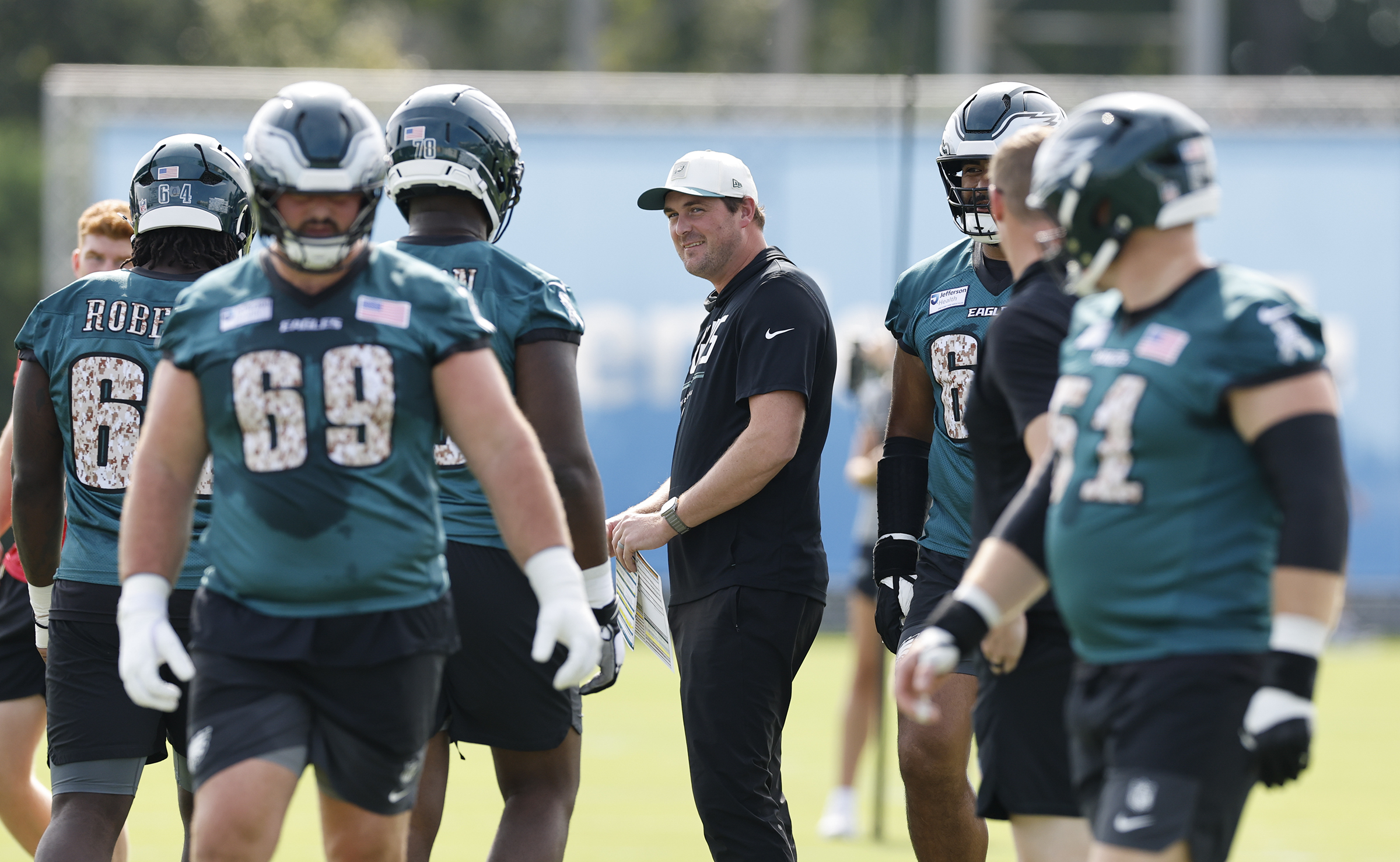
    Sean Mannion already has to deal with a major injury just one game into his Eagles tenure.

    The Eagles on Monday placed left guard Landon Dickerson on injured reserve with a knee injury, a move officially confirmed by the team Tuesday. The veteran lineman, who struggled Sunday during the Eagles’ 24-22 win over Washington, said he suffered the injury during practice several weeks ago.

    Before he spoke about how the injury would impact the Eagles’ depth chart, Mannion first raved about Dickerson’s toughness.

    “It’s unfortunate with Landon. The guy is a warrior,” Mannion said in his Tuesday news conference. “He’s going to go out and give it his all. He had a great week of practice. It’s unfortunate. … The focus with Landon is to get him healthy and get him back with us here at some point.”

    The Eagles are expected to turn to second-year lineman Drew Kendall in Dickerson’s absence, though they’re still mulling whether they should start him at center (while sliding Cam Jurgens to guard) or not.

    Kendall, 24, was a center at Boston College. Jurgens has right guard experience in the NFL. Undersized second-year lineman Willie Lampkin, who dominated during the preseason, is also in the mix.

    Mannion was mostly mum when asked about this looming decision Tuesday, but he did acknowledge that all options are on the table — including a shuffle across the line.

    “Got to get [Dickerson] healthy,” Mannion said. “And in the meantime, we need guys to step up. Drew’s had a really nice camp. Willie’s had a nice camp. We have a lot of guys on our offensive line with a lot of positional flexibility, versatility.

    “We feel good about all of them. Obviously, Landon will be missed in the meantime. But we feel confident that guys are going to be able to step up and fill the void.”

    The clock on this decision is ticking. The Eagles face the Titans next Sunday at Nissan Stadium.

    More moves

    With Dickerson’s move to injured reserve, which will keep him out a minimum of four games, the Eagles signed wide receiver/return man Britain Covey from the practice squad to the active roster and signed tight end Josiah Deguara to the practice squad.

    Covey was elevated from the practice squad for Sunday’s win over the Commanders, returning four punts for 37 yards.

    Deguara, meanwhile, has significant NFL experience as a tight end, fullback and H-back. A third-round pick in the 2020 draft out of Cincinnati, Deguara played four seasons with the Packers (2020-23) before spending time with the Jaguars (2024) and Cardinals (2025). The blocking specialist has 53 career receptions with three touchdowns, with season-highs of 25 grabs for 245 yards and two TDs in 2021. Deguara faced the Eagles as a member of the Packers in Philly in 2022 and with the Jaguars in 2024.

  • Maduro ally Alex Saab pleads guilty in a $195M money laundering case, agrees to cooperate

    Maduro ally Alex Saab pleads guilty in a $195M money laundering case, agrees to cooperate

    MIAMI — A close ally of former Venezuelan President Nicolás Maduro long described by U.S. officials as the ousted leader’s frontman pleaded guilty Tuesday to a single count of money laundering tied to an alleged bribery conspiracy to win lucrative government contracts in the South American country.

    As part of the plea deal, Alex Saab agreed to cooperate in continuing federal investigations, paving the way for his eventual cooperation against his former protector. He also agreed to forfeit $195 million in criminal proceeds from the corruption scheme.

    Saab, 54, was deported in May by Venezuela’s acting President Delcy Rodriguez to the U.S., which has been targeting the Colombian-born business owner for more than a decade.

    The money laundering offense carries a maximum 20-year penalty but prosecutors agreed to recommend a sentence at the low end of the recommended range and seek additional reductions should his cooperation prove substantial.

    Saab was previously charged during the first Trump administration in 2019 and then arrested during a refueling stop in Cape Verde on what the Venezuelan government described as a high-level humanitarian mission to Iran.

    But President Joe Biden pardoned Saab in 2023 in exchange for the release of several imprisoned Americans in Venezuela. The deal, part of a failed effort by the Biden White House to lure Maduro into holding a free presidential election, was harshly criticized by Republicans and federal law enforcement officials, who immediately began investigating Saab for other alleged crimes not covered by the narrowly tailored pardon.

    “This case sends a clear message: Political connections, wealth, and proximity to a corrupt regime will not put anyone beyond the reach of American justice,” said Jason A. Reding Quiñones, U.S. attorney for the Southern District of Florida, who attended Tuesday’s proceedings along with more than a dozen federal agents.

    The new indictment centers on contracts for the so-called CLAP program set up by Maduro to provide staples — rice, corn flour, cooking oil — to poor Venezuelans at a time of rampant hyperinflation and a crumbling currency.

    High-level protection offered in exchange for bribes

    In an eight-page statement of facts submitted as part of the plea deal, Saab admitted to skimming at least $195 million from at least six contracts awarded to companies he controlled to import food and medicine.

    The scheme “had the approval, participation, and protection of some of the Venezuelan government’s highest ranking public authorities,” including from an individual described only as “Government Official 1A,” who designated a surrogate — one of four unnamed co-defendants — to receive bribe payments on their behalf.

    Also receiving $17 million in kickbacks was former Gov. Jose Gregorio Vielma Mora, a Maduro ally who with Government Official 1A’s support secretly awarded a Saab-controlled company a contract in 2016 to deliver 10 million boxes of food rations in Tachira state, prosecutors allege. Vielma Mora was previously charged in the conspiracy in 2021.

    To conceal the criminal activity and hide the payments, Saab said, he and his associates falsified shipping records and set up a network of shell companies and bank accounts in countries including Antigua, Bulgaria, Liechtenstein, the Marshall Islands, Montenegro, Switzerland, Turkey, the United Kingdom, and the United Arab Emirates.

    Over time, as U.S. sanctions deepened the country’s financial woes, Saab and his associates received payment in the form of Venezuelan oil, gold, and other natural resources.

    In court Tuesday, Saab told Judge Kathleen Williams that he takes the antidepressant Zoloft and other medicines daily for what he described as “post-traumatic stress disorder” following his 2020 arrest.

    Saab could become a witness against Maduro

    U.S. officials have long described Saab as Maduro’s “bag man” and could ask him to serve as a character witness against the former president, who is awaiting trial on drug charges in Manhattan after being captured in a raid by the U.S. military in January.

    The new U.S. prosecution of Saab and Maduro is taking place as the Trump administration overhauls relations with Venezuela, focusing its attention on tapping into Venezuela’s vast oil reserves. This month, Trump announced a partnership with Venezuelan oil entrepreneur Alejandro Betancourt in which the U.S. government will gain a stake in and access to at-cost crude shipments from oil fields with a potential to produce 65 billion barrels.

    Saab was little known even in Venezuela until after his first arrest, in 2020, when Maduro’s government invested huge resources rallying public support for his release.

    Rodríguez, then serving as Maduro’s vice president, helped mount an international campaign in which she referred to Saab as an “innocent Venezuelan diplomat” who had been illegally “kidnapped” by the U.S.

    But after Maduro’s capture, Rodríguez distanced herself from Saab, firing him from her cabinet and stripping him of his role as the main conduit for foreign companies looking to invest in Venezuela.

    Saab amassed a fortune through Venezuelan government contracts but became even more valuable to Maduro as U.S. sanctions forced Venezuela to conduct much of its oil sales and foreign trade outside of Western financial institutions.

  • Gulf Arab states explore new options as U.S. bases fail to deter Iran

    Gulf Arab states explore new options as U.S. bases fail to deter Iran

    RIYADH, Saudi Arabia — Gulf Arab countries have long relied for their security on the U.S. military bases that they host.

    But after six months of war, the repeated pummeling of those countries by Iranian missiles and drones has made the limitations of U.S. security guarantees abundantly clear.

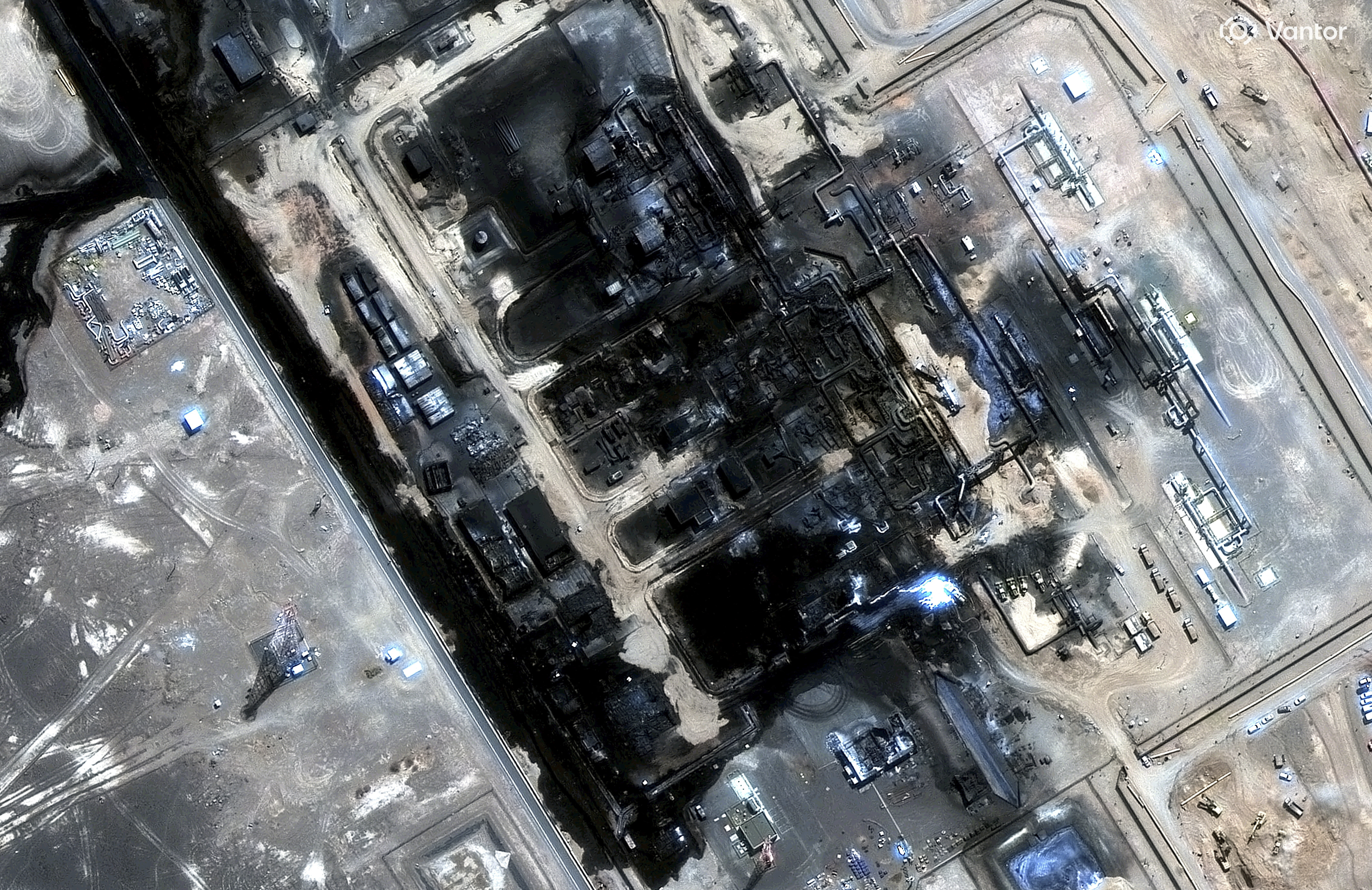
    Iran and its allies have nearly destroyed some of the U.S. bases, set luxury hotels ablaze, and, most recently, knocked offline one of the most critical pieces of energy infrastructure in the world, an oil pipeline that stretches across Saudi Arabia.

    Their backs against a wall, Gulf Arab officials are now trying to cobble together different ways to avoid attacks by Iran and its allies, including direct diplomacy with the Islamic Republic.

    Even that option faces challenges. On Sunday night, a meeting that was scheduled for Monday between Iran and the Gulf Arab states was abruptly postponed. The delay came after Saudi Arabia and Iran reached an impasse in discussions about the Strait of Hormuz — a crucial route for Gulf energy exporters — according to a senior Gulf official, who spoke on the condition of anonymity to discuss sensitive diplomacy.

    Analysts say the region’s leaders have no choice but to seek different security options after the U.S.-Israeli war with Iran exposed the vulnerabilities of the Gulf Arab countries and emboldened the Islamic Republic.

    “We’re stuck in this position of trying to build something new while maintaining some of the old,” said Bader Al-Saif, an assistant professor of history at Kuwait University. “We need to snap out of this external protector syndrome.”

    The island nation of Bahrain, for example, has been host to a major U.S. naval base for decades in the hopes of protecting itself from Iran. But as in other Gulf countries, the base became a target instead.

    The base was nearly destroyed in February, on the first day of Iran’s retaliatory attacks against the assault launched by the United States and Israel. Most of the sailors stationed there were evacuated to Florida, leaving a skeleton crew, according to a U.S. military official, who spoke on the condition of anonymity to discuss operational matters.

    Some sailors in Bahrain were evacuated so rapidly that the U.S. Navy is still trying to reunite them with their belongings, Adm. Daryl Caudle, chief of naval operations, said at a recent town hall meeting. It is unclear when they will return, he said.

    For the United States and its allies in the Middle East, the war has incurred steep costs. Iran’s effective closure of the Strait of Hormuz represents a major strategic failure and an economic setback for Gulf energy exporters. The inability of U.S. forces to fend off attacks by Iran is another strategic failure, which could have significant consequences for those countries and for the United States’ projection of power.

    Yet Bahrain and the other Gulf countries, including Saudi Arabia, the United Arab Emirates, and Kuwait, have no clear, single alternative to the United States as the guarantor of their security.

    Their militaries are smaller and weaker than Iran’s, despite spending hundreds of billions of dollars on advanced weaponry in recent decades, including American F-15 fighter jets and Patriot missile defense systems.

    China and Russia have not stepped in to defend the Gulf countries, despite close ties with many of them.

    Many Gulf officials are calling for greater regional self-sufficiency in defense. But efforts to bolster regional security — like a new defense pact among Saudi Arabia, Pakistan, and Turkey — are unproven. It remains unclear whether any of these countries will be willing and able to come to each other’s aid.

    The most realistic option for Gulf countries is to build defense partnerships that will “supplement, rather than replace, the U.S. security umbrella,” said Yasmine Farouk, Gulf and Arabian Peninsula project director at the International Crisis Group.

    Gulf analysts and officials say that without U.S. assistance and American weaponry, such as air defenses, the damage to the Gulf states would have been far worse. Dozens of people were killed in the Iranian attacks, instead of hundreds or thousands. Flights carrying tourists and businesspeople were canceled and delayed but have started to resume.

    Still, Iran’s campaign wreaked havoc on the energy-rich economies of the Gulf countries, cracking their images as safe havens in a volatile region.

    The war proved that the Gulf’s advanced defense systems are not “leak proof,” and that Iran can “impose major costs” on the countries by using large numbers of relatively cheap drones, said Kristian Alexander, a senior fellow at the Rabdan Security & Defence Institute, a government-linked research institution in the UAE.

    Facing fierce counterattacks from Iran, the United States “prioritized protecting its personnel and defending Israel,” Alexander added. “These priorities did not always coincide with the Gulf’s needs to protect airports, ports, desalination plants.”

    The short supply of U.S. missile interceptors globally also posed a challenge for the Gulf Arab states in the early weeks of the war, and they have tried to fill the gap by turning to Ukraine and other European countries. But even enhanced air defenses against relatively inexpensive Iranian drones cannot provide complete protection.

    Anna Kelly, a White House spokesperson, said President Donald Trump is “in constant communication” with regional partners and that the United States “maintains stronger bonds with these countries than ever before.”

    She dismissed the idea that U.S. military protection for the Gulf countries has been insufficient, saying that analysts who assert that “are not privy to sensitive diplomatic conversations and have no idea what they are talking about.”

    This article originally appeared in The New York Times.

  • Pollution spikes after Trump halted global air-monitoring efforts, report says

    Pollution spikes after Trump halted global air-monitoring efforts, report says

    Air pollution in dozens of cities around the world rose after U.S. embassies and consulates stopped monitoring air quality readings last year, according to a study published Monday.

    The Trump administration halted the program that published independent air quality data at more than 80 U.S. diplomatic sites in March 2025, citing budget constraints.

    Later that year, local air pollution levels increased by between 24% and 33% in 46 of those cities, according to Monday’s study, published in the Proceedings of the National Academy of Sciences.

    “This is such a big loss,” said Zoey Zhou, an assistant professor of climate at Columbia University and one of the study’s authors. “Not only for the data, but also for the health impacts and also for accountability.”

    The State Department’s program had been linked in a previous study to lower air pollution levels in the cities where it was active. Its pullback came amid other moves the administration has made to curtail climate change research and regulations on air quality. The Environmental Protection Agency repealed limits on greenhouse gas emissions for coal and natural gas power plants on Monday.

    The State Department did not respond to a request for comment on the recent findings and on whether the monitoring program will resume.

    The program originated in 2008 when the U.S. Embassy in Beijing began to share air quality information from a monitor installed on its roof. The readings, which sometimes topped the Chinese government’s reported levels, drew local anger and pressured Chinese officials to act.

    A 2022 study of 50 cities where U.S. embassies began monitoring air quality found that it led to significantly lower air pollution and increased local Google searches for terms like “air quality.”

    “The US Embassy monitoring program provided high quality and credible information to the public about the state of their air, often where there were no other sources of such information,” Andrea La Nauze, an associate professor of economics at Deakin University in Australia and one of the authors of the 2022 study, wrote to the Washington Post. (La Nauze was not involved in the most recent report.)

    Experts said the monitoring was valuable in cities and countries where local governments did not provide air quality information or offered inaccurate reports.

    “This has been very valuable to the citizens of those countries to be able to understand what are the levels of air pollution, and how much trust should they place in the numbers that are published by the national government or by the city or region,” said Kristie Ebi, a professor at the Center for Health and the Global Environment at the University of Washington. “And that has been useful then for people to take action.”

    Monday’s study investigated whether air quality gains would continue when that information disappeared, the authors wrote. They used satellite imagery to estimate air pollution levels in 46 cities where U.S. embassies and consulates halted monitoring in March 2025.

    By September that year, the aerosol optical depth — a measure of particles in the air derived from satellite imagery that is correlated with levels of PM 2.5, pollutants small enough to enter the bloodstream — around those cities had increased by about 33%. By November 2025, pollution levels had decreased but were still around 24% higher than before monitoring stopped.

    A 33% increase in aerosol optical depth corresponds to an increase of about 2 micrograms per cubic meter of PM 2.5, according to the study. The World Health Organization’s global air quality guidelines recommend that average PM 2.5 levels not exceed 5 micrograms per cubic meter each year.

    Grouped by region, the largest average increases in aerosol optical depth appeared at sites in Southeast Asia, sub-Saharan Africa, and South Asia, according to Zhou, the study co-author. She cautioned that the number of sites in each region was small and that the study was not designed to isolate particular countries or cities, where readings could have been affected by other local factors.

    Zhou wrote that the reduction in air pollution between September and November 2025 could suggest that other sources of air pollution information gradually filled the gap after U.S. embassies stopped their monitoring. But she said the pullback by American diplomatic missions, which issued highly visible and trusted air quality reports, was still a large loss.

    Zhou added that her study did not perform a full cost-benefit analysis of the air quality monitoring program for the U.S. embassies involved.

    Ebi of the University of Washington, who was not involved in the new study, said that the U.S. embassies’ data was also invaluable to researchers investigating other climate trends affected by air pollution, such as the spread of wildfire smoke and heat waves.

    “As a scientist, I don’t understand why there is such a strong focus on removing information,” Ebi said. “Of moving to a situation where people are more ignorant, less knowledgeable about the harms they may be facing … and what actions to take to help reduce those harms.”

  • Trump’s planned sale of controversial bombs to Israel is largest in years

    Trump’s planned sale of controversial bombs to Israel is largest in years

    The Trump administration is preparing a multibillion-dollar sale of 2,000-pound bombs to Israel in the largest single sale of the controversial munition in recent years, a U.S. official told the Washington Post.

    The $2.8 billion package, which would be purchased with U.S. taxpayer dollars, includes 40,000 bombs that weigh 2,000 pounds each, including 20,000 MK-84s and 20,000 BLU-117s, said the official, who like others spoke on the condition of anonymity to discuss military matters. The sale also includes 20,000 I-2000 Penetrator warheads.

    Among the most destructive munitions in Western military arsenals, an MK-84 explosion sends metal fragments in every direction for thousands of feet, can rip through metal and thick concrete, and often creates large craters in the earth.

    The pending transaction has been informally notified to congressional committees, setting up a potential litmus test for Democrats as frustrations with Israeli Prime Minister Benjamin Netanyahu have created unprecedented strain in the U.S.-Israel relationship.

    Though described as a sale, the transaction is financed through a mechanism known as Foreign Military Financing, in which the United States provides the money that Israel uses to buy the weapons.

    When asked about the humanitarian concerns, a senior administration official said: “All foreign arms sales are moving through the appropriate process. We do not comment on pending sales.”

    The Israeli Embassy did not respond to a request for comment.

    The size of the package eclipses previous sales of 2,000-pound munitions to Israel during the Biden administration and the Trump administration, including a controversial $2.04 billion sale in 2025 that bypassed the normal congressional review process.

    The 2,000-pound bombs have been employed by Israel on hundreds of occasions in Gaza and Lebanon, playing a significant role in the death toll of those conflicts. Israel has drawn criticism for routinely dropping MK-84s in zones it designated as safe for civilians in Gaza.

    “They do like to use them a lot when they’re trying to target any building,” said Trevor Ball, a former explosive-ordnance-disposal technician for the U.S. Army. “If Hezbollah or whoever is in a building, an MK-84 will bring down the whole building.”

    Nicknamed the “hammer” by U.S. pilots in the first Gulf War, it is the only munition that President Joe Biden’s administration stopped sending to Israel during the Gaza war out of concern about the killing of Palestinian civilians. That involved suspending a single shipment of the munitions in the spring of 2024. The policy was immediately reversed by President Donald Trump in January 2025, his first month back in office.

    “Given the way Israel conducted its air war in Gaza and, to some extent, in southern Lebanon, there are real concerns about how such weapons would be used in densely populated areas,” said Brian Finucane, a senior adviser at the International Crisis Group. “That’s assuming that you have valid military targets to start with because there are concerns about what Israel deems to be valid military targets.”

    U.S. support for the sale comes despite several areas of tension between Israel and the Trump administration, including over the violent attacks on Palestinians by Israeli settlers in the West Bank, and ongoing concerns about Israeli military operations in Lebanon and Syria. Israelis also have spurned Trump’s peace plan for Gaza, which involves Hamas disarming in exchange for a withdrawal of Israeli forces.

    When the Trump administration struck a short-lived deal with Iran aimed at ending the war there, allies of Netanyahu harshly criticized the agreement and attacked Vice President JD Vance for negotiating it.

    As the conflict has dragged on ahead of the midterm elections, Trump and his aides have grown increasingly frustrated with Netanyahu, who pushed for the war on the promise of a quick and decisive victory.

    Though the delivery time for such orders can be multiple years, approving such sales sends a broader signal about the bilateral relationship.

    “If the Trump administration’s goal is to calm things down in the Middle East, the timing of this is unusual,” Finucane said. “Whether they intend to or not, it sends a vote of confidence to Israel.”

    The Trump administration is pressing the leaders of the Senate Foreign Relations Committee and the House Foreign Affairs Committee to approve the sale.

    Republican and Democratic leaders historically have backed such sales, but they are starting to face resistance from rank-and-file members regarding U.S. support for Israel stemming from the unpopularity of the wars in Gaza and Iran.

    Polls consistently show most Americans oppose the war in Iran, which has raised energy costs and increased inflation. In July, more than 100 House Democrats voted to end all U.S. aid to Israel, signaling a historic shift in the party’s opposition to the country.

    Republicans are more unified in their support for Israel, but a growing number of conservative commentators, including Megyn Kelly, Tucker Carlson, and Candace Owens, have questioned Washington’s steadfast backing and the $3.8 billion of aid the U.S. sends to Israel every year.

    Besides the MK-84, the sale includes I-2000s, a penetrating bomb body used to attack hardened structures, and BLU-117s, a variant of the MK-84 that has thermal protective coating to make it safer for naval storage.

  • Neshaminy Mall to close this fall

    Neshaminy Mall to close this fall

    The Philadelphia suburbs is losing another mall.

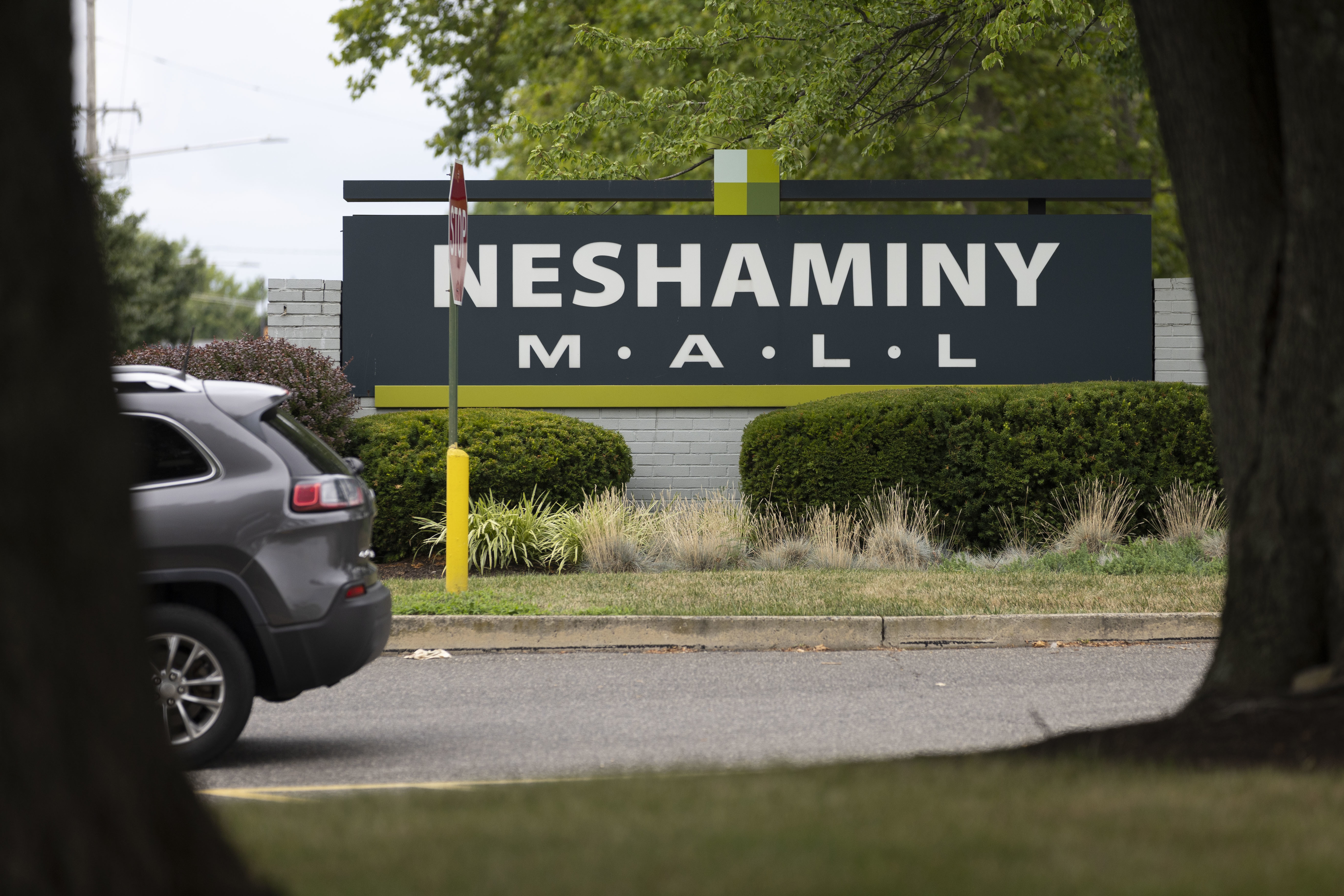
    Neshaminy Mall, a 58-year-old Bucks County institution, will not see another holiday season, according to Bensalem Township Mayor Joe DiGirolamo, who said the complex will close by the end of October.

    “It’s very bittersweet,” DiGirolamo said, “but the mall has been going downhill for the last few years.”

    The 1-million-square-foot center has struggled with rising store vacancies and fewer customers, becoming fodder for TikTokers mourning their teenage stomping grounds.

    Neshaminy Mall in Bensalem, Pa., on Monday, July 22, 2024.Monica Herndon / Staff Photographer

    It will be the region’s second mall to shut its doors this year, after Chester County’s Exton Square Mall closed in June.

    Like in Exton, Neshaminy’s Boscov’s will remain open, DiGirolamo said, as will the AMC Movie Theater and Barnes & Noble bookstore.

    A handful of other mall tenants must close up shop by the end of October, DiGirolamo said. In November, township officials plan to remove the mall’s dioramas, which depict key moments in U.S. history that took place in the Delaware Valley, as well as a bronze Native American statue, for preservation.

    Historical dioramas in the Neshaminy Mall, as seen in 2024, will be preserved when the mall closes.Monica Herndon / Staff Photographer

    The mayor said the property’s owners, Lakewood, N.J.-based Paramount Realty, want to knock down the mall and build something new in its place, though the company had not applied for a demolition permit or submitted redevelopment plans as of Tuesday. Such plans would require approval by township council.

    Paramount Realty declined to comment.

    The Philadelphia region is home to more than a dozen indoor shopping malls. Some, including King of Prussia and Cherry Hill, appear to be thriving, while other centers like Neshaminy struggle.

    The exterior of the old Macy’s at the Neshaminy Mall, as seen in 2024.Monica Herndon / Staff Photographer

    A few have been transformed, or are in the process. In Media, Delaware County, the 1-million-square-foot Granite Run Mall was demolished in 2016 and replaced by a mixed-use town center with apartment buildings, new retail, and medical offices.

    At the Neshaminy Mall site, near U.S. Route 1 and the Pennsylvania Turnpike, DiGirolamo said he’s “hopeful they are going to rebuild it in a way that most malls are rebuilt,” in the town-center style with housing and outdoor walkways.

    As for the indoor mall’s final days, the mayor said he expects them to be quiet, with some tenants vacating before their leases expire.

    DiGirolamo, a lifelong resident of Bensalem, said he remembers when the mall opened in 1968. It was a “regional mall,” he said, that attracted out-of-town visitors.

    A faux storefront covered the old Macy’s at the Neshaminy Mall in 2024.Monica Herndon / Staff Photographer

    A Philadelphia Daily News article about Neshaminy Mall’s opening called the $25-million complex “America’s most modern shopping center,” with the largest branches of Sears Roebuck & Co. and Strawbridge & Clothier at the time.

    A few years later, the Oxford Valley Mall opened in nearby Langhorne. Oxford Valley, which is being partially redeveloped with apartments, will be Bucks County’s only enclosed mall once Neshaminy closes.

  • Democrats gain edge as Trump drags down GOP, new poll finds

    Democrats gain edge as Trump drags down GOP, new poll finds

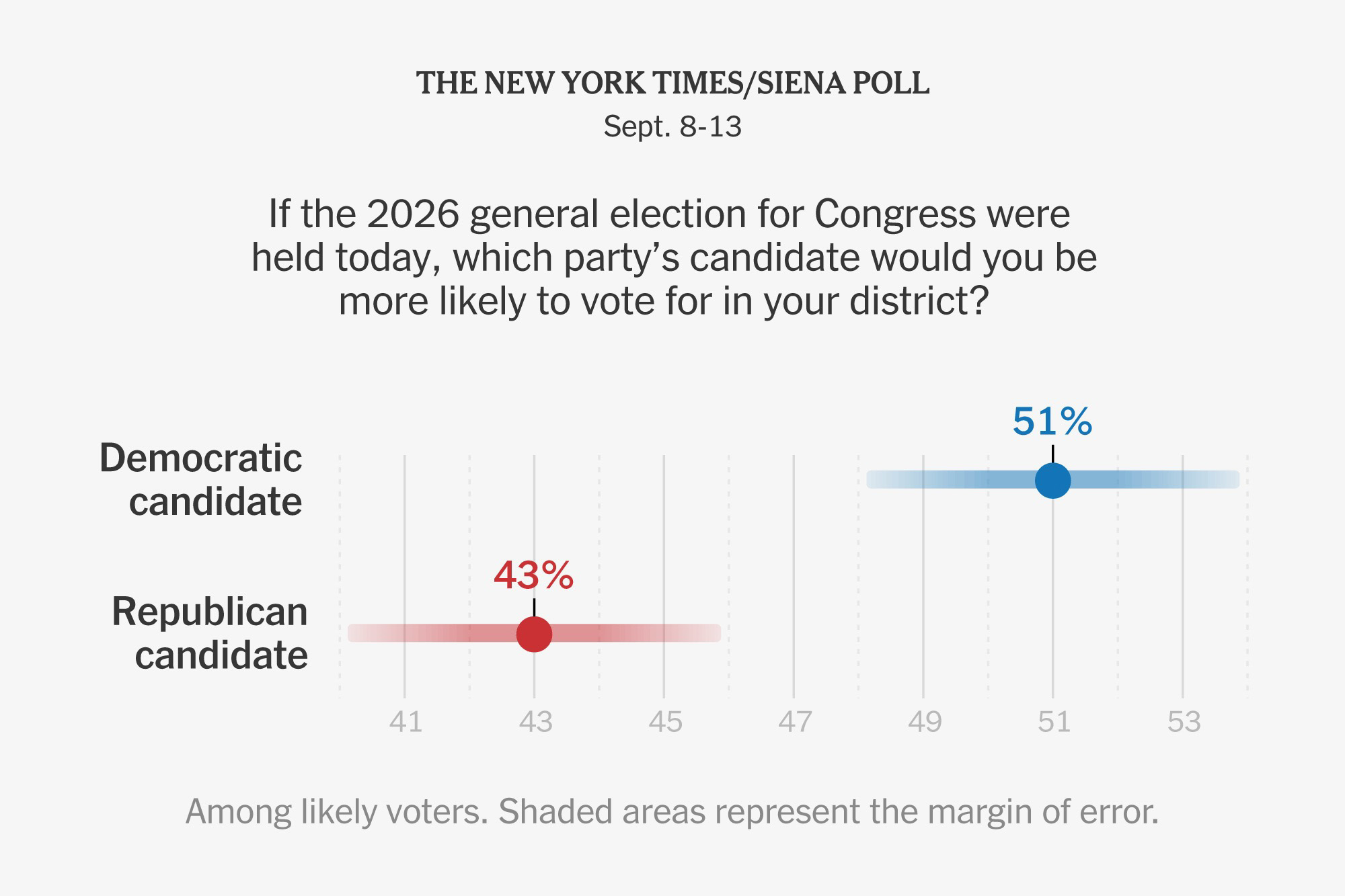
    With fewer than 50 days until the midterms, Democrats have developed a clear advantage over Republicans as the president has lost the public’s trust on the economy, according to a new national poll from the New York Times and Siena University.

    President Donald Trump’s lingering unpopularity and intense frustration over his management of cost-of-living issues, in particular, have deepened Republican vulnerabilities as Democrats push to win control of both the House and Senate.

    Likely voters favored Democratic candidates over Republicans by close to 9 percentage points in their congressional district — a metric that is closely watched by both parties as a leading indicator of political momentum.

    Trump’s approval rating continued to languish at 38% among likely voters, essentially unchanged from the lows it sank to after he went to war with Iran. A majority of voters disapproved of Trump’s handling of every major issue included in the poll: the economy, immigration, tariffs, the war, and, especially, the cost of living.

    And voters said they trusted Democrats more than Republicans on not just healthcare and foreign wars but also on the two issues that powered Trump’s 2024 victory: immigration and the economy.

    The political conditions found by the poll suggest the makings of a potential Democratic wave in November. But that outcome is far from assured. Thanks in part to gerrymandering, relatively few House seats are truly competitive, and in the run-up to the midterms, Republicans drew new House maps in several states favorable to their candidates. And even a nearly 9-point advantage would not guarantee flipping some of the Senate seats Democrats are counting on in 2026 — Texas, Ohio, Alaska, Iowa — which Trump won by double digits in 2024.

    Still, independent voters have especially soured on Trump. Just 10% of them said the economy was better today than a year ago and only 27% approve of Trump’s job performance overall. And in the fight for Congress, 57% of independent voters said they planned to vote for a Democrat compared with only 34% for a Republican.

    The cost of living is dragging down Republicans more than any other issue, as even some Republican voters lose faith in Trump’s economy. Only 28% of voters said they approved of how Trump has managed matters related to affordability.

    Even Trump’s most loyal and durable demographic base — white voters without college degrees — disapproved of the president’s handling of the cost of living by a wide 21-percentage point margin.

    And opposition to Trump is intensifying. The survey was the first Times/Siena poll in his second term to find a majority of voters, 52%, saying that they “strongly” disapproved of him.

    The war in Iran, which has driven gas prices above $4 a gallon, is also weighing down the president. More than three-quarters of independent voters said they disapproved of his handling of the conflict, and so did nearly a quarter of Trump’s own 2024 voters.

    Yet the survey found that the GOP’s vulnerabilities extend beyond Trump.

    Voters see Republicans broadly as more extreme, more elitist, and more corrupt than Democrats, according to the poll. And while voters continue to have doubts about both parties, they aligned more with the Democratic Party on both cultural and economic matters than the Republican Party in the survey.

    One glimmer of good news for Republicans is that the political situation has not deteriorated further since the spring. Yes, Trump is unpopular. But he is not more so than he was five months ago. The Democratic Party is viewed as too far left. And Republicans are generally outpolling Trump — including on how they would handle particular issues.

    Still, by an 11-point margin, voters said they would prefer for Democrats to control Congress after the November election.

    “All I know is right now, the Republicans are in power and I’m not really seeing the change I wanted to see,” said Elizabeth Gloden, 21, an independent college student in Arizona who voted for Trump in 2024 but is planning to vote Democratic this year. “I’m Gen Z. I am in the area where we want to move out of our parents’ houses, but we can’t because everything costs a million dollars,” she added. “I think it’d be a good idea to just see the other side what they can do.”

    There were indications that the Democrats were winning back groups they had lost ground with in the 2024 presidential race. The current Democratic strength in the battle for Congress was being driven heavily in the poll by younger voters (those under 30 favored Democrats by 35 percentage points), Hispanic voters (43 points) and independent voters (23 points) — all groups the party had seen sagging support from two years ago.

    Trump’s approval rating among voters under 30 stands at an abysmal 18%.

    The economy ranked as the top issue for voters. Only 14% of voters said the economy was better than it was a year ago — down from 31% who said so in January.

    The erosion among Republicans is especially stark. While 72% of Republicans said in January that the economy was better than it had been the prior year, only 29% of Republicans said so now.

    Trump has tried to wave off those concerns. “This has been the most successful two years financially and every other way in the history of the presidency,” Trump claimed in his address last week at a convention in Dallas.

    Voters are not buying it.

    “I actually feel really gaslit because I’m constantly hearing from Republicans, from conservatives just in the media in general, that ‘don’t believe your lying eyes, everything’s great, wages have increased,’ all of these different things,” said Meghan Demetrios, 40, an independent voter in South Carolina.

    “I feel like I’m super poor in America,” she continued. “I got a new career job about nine months ago, and I was so proud of myself and so excited. And I thought everything was going to get a little bit better. And I turn around, and I find that every single bill I have has gone up.”

    She plans to vote Democratic this year.

    All told, 71% of voters disapprove of how Trump is handling the cost of living while 28% approve — a net disapproval of 43 percentage points, which is 13 points worse than it was January.

    Economic hardship appears to be especially hampering the GOP among lower-wage earners.

    Those earning less than $50,000 were more than twice as likely to say they would vote for a Democratic congressional candidate this fall rather than a Republican, 63% to 31%.

    That would represent a dramatic shift from 2024, when Trump narrowly carried that group, according to exit polling.

    More than half of voters said they worry more about Republicans in Congress allowing Trump to go too far, while 39% said that they worry about Democrats trying to move the country too far to the left.

    Adding to the party’s problems, Republicans face an enthusiasm gap: 61% of Democrats said they were almost certain to vote, compared with 56% of Republicans.

    One of the Democratic Party’s potential vulnerabilities is being seen as outside the mainstream. The share of voters who see Democrats as too far left has grown to 50%, up from 47% earlier this year. (But likely voters were more likely to describe the Republican Party as “extreme” than the Democratic Party.)

    And a 51% majority of voters had an unfavorable view of socialism — one reason Trump’s convention in Dallas repeatedly used that label.

    “The Democrats have always done a horrible job of supporting their own cause because they can’t get out of their own way,” said Thomas Lappin, 48, a Democrat who lives in Austin, Texas, and who wished his party would move strategically to the center. “I feel like they’re just doing this again and every time they get their act together, they just somehow screw it up again.”

    About a tenth of all voters, including Democrats, Republicans, and independents, say they disagree with both parties when it comes to economic issues. This year, Democrats seem to be winning them over, at least for now.

    James Witherington, 41, left the Army after two decades last year and is now a real estate investor in Colorado Springs. He called his voter registration — he’s a Republican — a “loaded question” these days, considering his frustrations with Trump, whom he called “an egomaniac.”

    “This is an unnecessary war,” he said. “Do I hate Iran? Yes. Should we destroy them? Yes. But now is not the time.”

    But Witherington said he is still planning to vote for his local Republican congressman, Jeff Crank, whom he knew by name. “He emails me about veterans problems,” he said.

    “The extreme left has gone too far,” he said. “The extreme right is like the high school jock bully. But most people are in the middle. Most people are just walking down the hall.”

    This article originally appeared in the New York Times.

  • Iranian strikes have damaged hundreds of structures at U.S. bases, watchdog says

    Iranian strikes have damaged hundreds of structures at U.S. bases, watchdog says

    Iranian strikes have damaged or destroyed hundreds of buildings and other structures at U.S. bases across the Middle East, and caused about $184 million worth of damage at U.S. diplomatic facilities, according to a Pentagon watchdog report.

    The inspector general’s report to Congress on Operation Epic Fury — the Trump administration’s name for the war with Iran — also details the extent of U.S. munitions shortages, in the first comprehensive public accounting of the war, which is now in its seventh month.

    The report, released Monday, covers operations through June 30. It contains input from the departments of Defense and State and other agencies to provide the most complete picture yet of the cost and military impact of the ongoing conflict.

    Buildings and other structures at U.S. bases in Kuwait, Bahrain, Qatar, UAE, Saudi Arabia, Iraq, Oman, and Jordan were damaged or destroyed in the war, the report stated, adding that U.S. diplomatic facilities in Iraq, Kuwait, Saudi Arabia, and the United Arab Emirates also sustained damage.

    The mounting costs of the war and impact on U.S. munitions stockpiles has already come under scrutiny. In July, Defense Secretary Pete Hegseth told a Senate hearing that the war has cost $37.5 billion and defended the administration’s request for a further $67 billion to restock the Pentagon’s arsenal and avoid looming budget shortfalls.

    The latest report details how the war has “resulted in strategic inventory shortfalls” of munitions and “revealed industrial base bottlenecks for munitions resupply.”

    It said the Defense Department is working to “streamline” procurement and production processes, as well as stockpile critical materials, components, and munitions to mitigate the shortage. But while these efforts have begun, the defense industrial base requires “significant lead time” to expand production.

    “The most persistent bottlenecks remain in the production of solid rocket motors, the availability of high-grade explosives and propellants, and the recruitment of skilled manufacturing labor,” it states.

    The expenditure of U.S. munitions is increasingly worrying U.S. allies and Pentagon officials in the Indo-Pacific region who fear the war in Iran could undermine readiness for a potential conflict with China. The weapons drain has become a source of tension between President Donald Trump and Hegseth, though Trump has denied U.S. weapons are running low.

    On Monday, Trump touted U.S. weapons stockpiles in a post on Truth Social, saying he had received a report noting the U.S. is producing “more Exquisite and Elite Weapons than at any time in our History” that were being delivered to U.S. forces.

    “A primary focus of this production has been Patriots, THAAD Systems, Tomahawks, and other Standard Missile Systems, of which we already have large numbers in stock,” he said.

    The Pentagon and the White House did not immediately reply to requests for comment early Tuesday.

    The Washington Post reported in May that the U.S. had depleted much of its inventory of advanced missile-defense interceptors, using up roughly half of the Pentagon’s total inventory of Terminal High Altitude Area Defense, or THAAD, interceptors. The U.S. military also fired more than 850 Tomahawk cruise missiles in the first four weeks of war, a rate that has alarmed some Pentagon officials.

    The extent of the munitions the U.S. has used during Operation Epic Fury illustrates the “magnitude and complexity” of the challenge posed by Iran, the report said, noting Iran’s large armed forces, extensive underground facilities, and decades of building a domestic defense industry.

    The U.S. launched Operation Epic Fury on Feb. 28 in joint strikes with Israel that killed Iran’s leader at the time, Ayatollah Ali Khamenei. The war has now entered its seventh month, with Iran retaining leverage over the Strait of Hormuz, a critical waterway for oil and gas flows from the Persian Gulf. A recent lightning offensive by Houthi rebels in Yemen, supported by Iran, has threatened to further imperil shipping through the Bab al-Mandab Strait.

    Dozens of U.S. aircraft have been damaged or destroyed during the operation, including four F-15E fighter jets, one F-35A damaged in enemy fire over Iran, and several other aircraft and helicopters, the report said.

    More than 50,000 U.S. service members have been deployed throughout U.S. Central Command’s area of responsibility in support of the operation, the watchdog report said. A total of 18 have died, the report said, including several in July. It said 417 service members were wounded between Feb. 28 and June 30.

    The State Department has also incurred around $113 million in costs, including nearly $80 million responding to events such as the evacuation of U.S. citizens and State Department personnel, the report said, adding that about 9,000 Americans have left the region on charter flights and buses.

    The war has also had an “immediate negative impact” on U.S. assistance across the Middle East, including agriculture, food, health, nutrition, and water sanitation, because of the departure of embassy staff, the report said.

  • LeBron James is on a tour of Angola this week to support his … electric powerboat racing team?

    LeBron James is on a tour of Angola this week to support his … electric powerboat racing team?

    In addition to being the biggest acquisition for the Sixers this offseason, LeBron James is known for many things.

    What stands out most are his four championships and multiple NBA Most Valuable Player awards, his status as the NBA’s all-time scoring leader, or the legacy he’s leaving to the game.

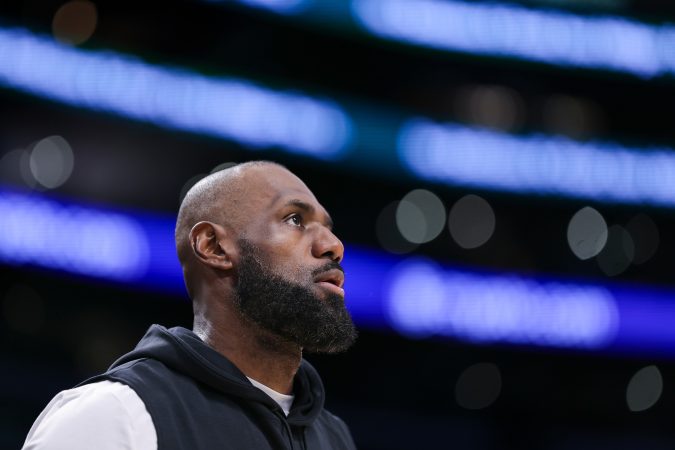
    James, however, appears to be a jack-of-all-trades, showing off one of his lesser-known endeavors this week in Angola, where he is promoting his electric powerboat racing team, Team AlUla.

    The E1 World Championship races brought James to Luanda, Angola, where his first stop was the National Museum of Slavery in Morro da Cruz. James said the hospitality shown by the people there has felt welcoming, and he acknowledged the region’s history in an interview with local media.

    “Obviously there is a lot of history here, a lot of history that not only is here in the country but also crosses over to America,” James said.

    The African nation hosted the fifth round of the E1 World Championship, an electric boat racing league that held its inaugural season in 2024. James invested in the sport in 2025, backing Team AlUla, whose boat is driven by Nerea Marti and Rusty Wyatt. The boat finished seventh out of 10 competitors in its inaugural Luanda race on Sept. 13.

    James is one of a few A-listers who have helped build support for the new E1 league. Tom Brady’s team finished first, while famous DJ and producer Steve Aoki’s boat beat out James’ Team AlUla to finish sixth.

    James was also seen shooting hoops and dunking at a local basketball clinic, joining fellow new Sixers forward Jaylen Brown in worldwide youth sports appearances. Brown was seen this summer in the Dominican Republic playing baseball with locals. Both Brown and James will need to report to the City of Brotherly Love soon to prepare for the season opener against the New York Knicks at Madison Square Garden on Oct. 20.