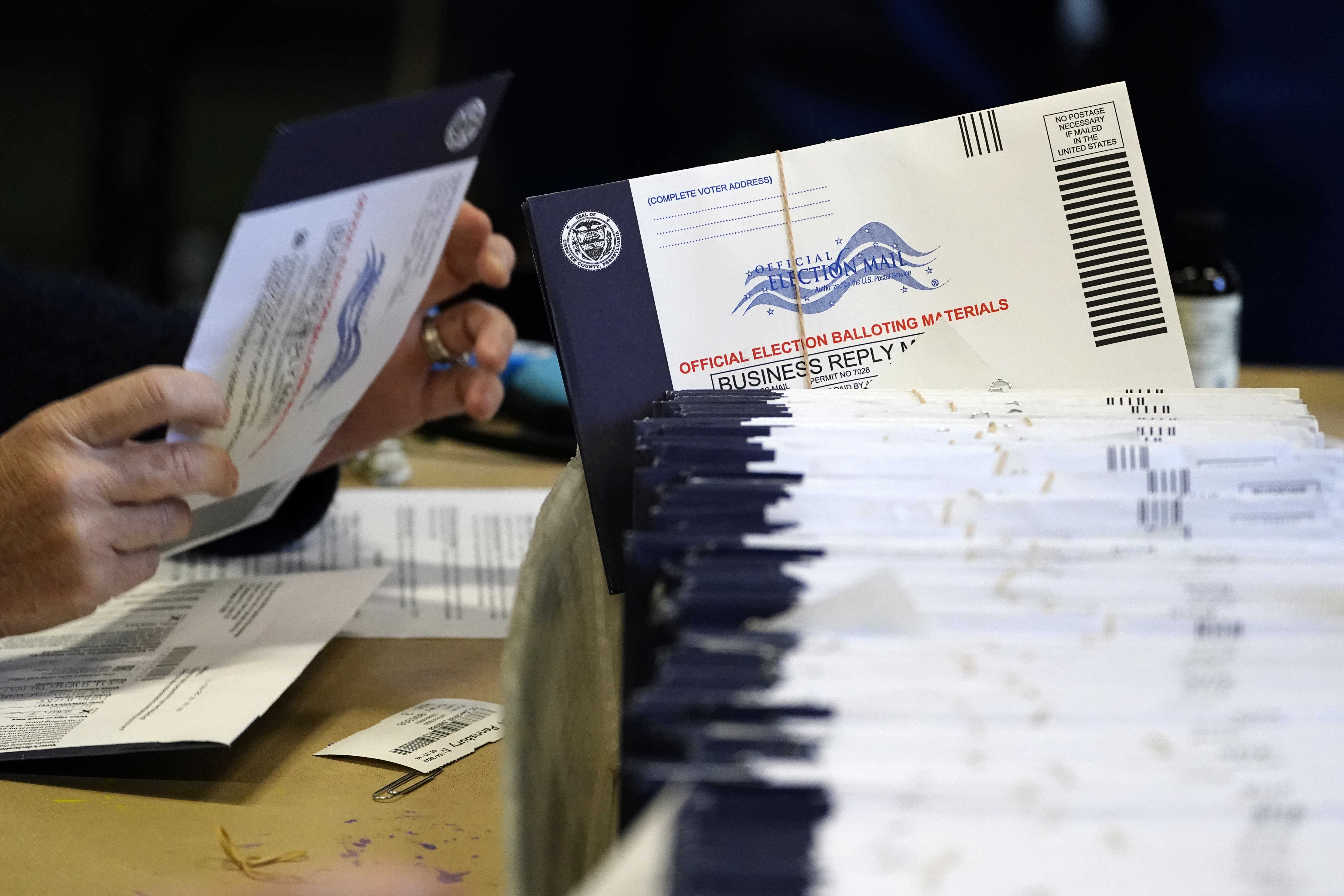
Voters on Tuesday approved a measure expanding East Whiteland’s board of supervisors to include two more members, after a group of residents rallied to increase representation on the board due to their opposition to the data center project.
The board of supervisors — who are elected for six-year terms and oversee the budget, hear conditional use applications, and appoint staff and members to advisory committees — will grow from three members to five.
It was one of three questions that voters approved Tuesday in Chester County, where residents also consented to shrinking the Malvern Borough Council from seven to five and passed robust Home Rule Charter updates in Tredyffrin.
East Whiteland, with a population of roughly 15,000 people, has faced increased scrutiny in the last year after a 1.5 million-square-foot data center proposal, originally approved by the township’s three elected officials in 2024, resurfaced as its developers sought to expand the project.
That discontent ultimately underpinned the resident-led effort to add two more supervisors to East Whiteland’s board. Organizers who sought petition signatures said they felt adding additional supervisors would add a broader range of perspective, representation, and understanding to local government.
At the polls Tuesday night, residents weighed that argument as they cast their ballots.
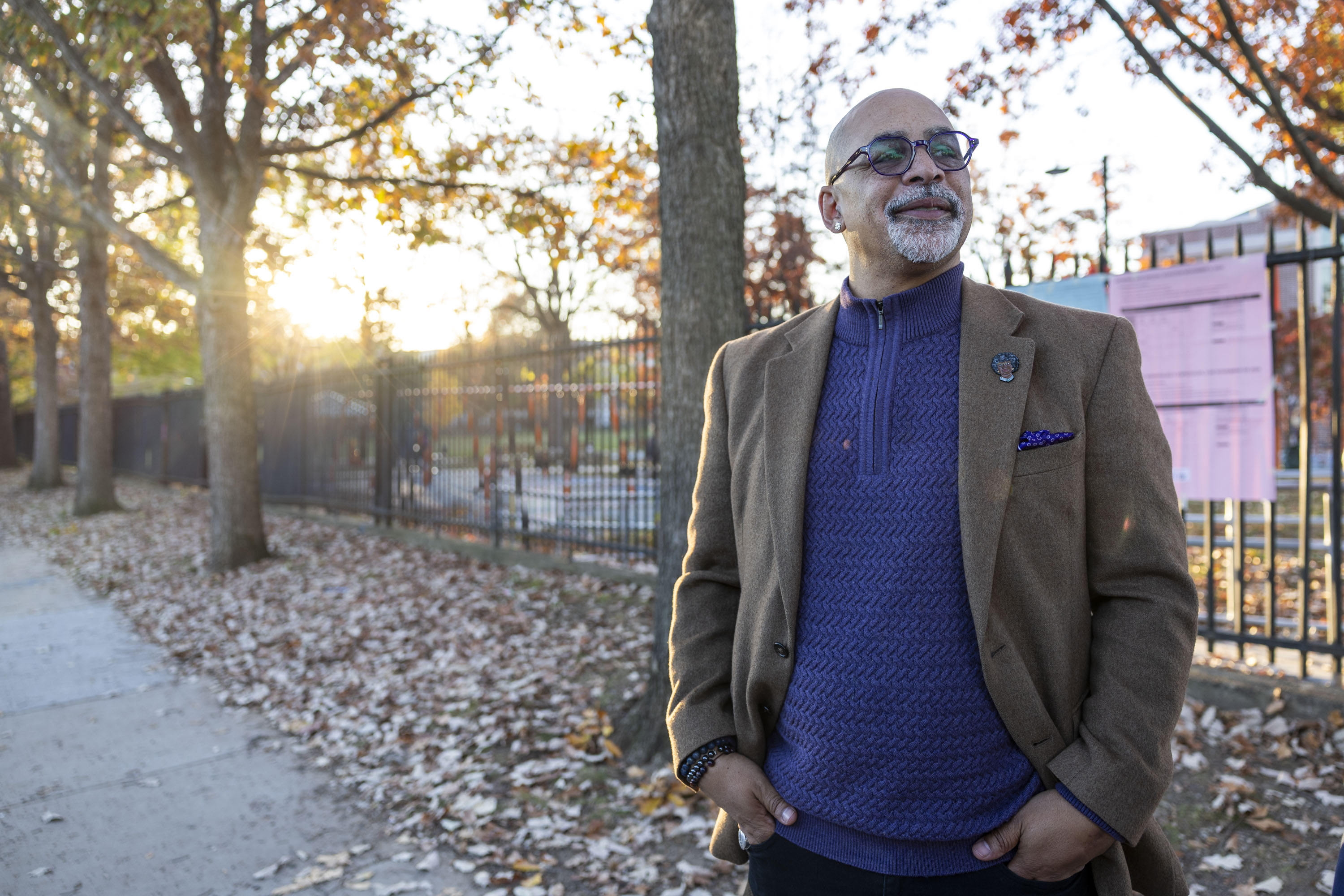
Rajie Mangan, 55, cast his vote in favor of expanding the board.
“When they’re doing all these data centers and all that, I think that it becomes crucial having multiple points of view,” he said.
They faced some headwinds: Neither the Democratic Party nor the Republican Party endorsed the question, encouraging voters to strike the effort down. But the measure passed with 64% of the vote, with 62% of eligible voters casting a ballot in Tuesday’s election.
Madeline Marcotte, 60, knew having an expanded board would not stop the existing data center project.
“The group that’s pushing the referendum has promised qualified candidates, and I look forward to seeing who they put forward,” she said. “But I don’t want to see the corporate class taking over the supervisors.”
Without saying which way he voted, Richard Orlow, who served on the board for 10 years until the end of his term last December, said there were pros and cons to expansion.
“There’s just a lot of work. I might have liked a little more help. But we did fine; three is a good number because it’s easier to deliberate and get decisions made,” said Orlow, 68. “There’s less input, but in East Whiteland, you can always count on the public providing plenty of input.”
Scott Lambert, chairman of the East Whiteland supervisors, said Wednesday he respected the voters’ decision.
“My commitment to serving our community remains unchanged,” he said.
While East Whiteland’s board will grow, Malvern residents decided to go in the opposite direction, with nearly 60% of voters backing a measure to shrink the council. No council member will lose their seat as a result of the vote.
A group of residents there had petitioned to downsize, saying the larger board size ofseven made it difficult to get things done and placed more burden on borough staff. The organizers also had said it was difficult for either party to nominate qualified candidates for the borough with a population of around 3,500.
Tredyffrin voters, meanwhile, overwhelmingly approved with 70% of the vote a lengthy update to the township’s Home Rule Charter, which had last been altered in the 1970s.
This suburban content is produced with support from the Leslie Miller and Richard Worley Foundation and The Lenfest Institute for Journalism. Editorial content is created independently of the project donors. Gifts to support The Inquirer’s high-impact journalism can be made at inquirer.com/donate. A list of Lenfest Institute donors can be found at lenfestinstitute.org/supporters.
NEW YORK — The WNBA Finals was the most watched since 1999 with an average of 1.88 million people viewing the seven-game series that Golden State won over Atlanta in a decisive Game 7.
That game averaged 3.3 million viewers, making it the most watched WNBA postseason game ever. It was up 128% from last season’s clinching game between Las Vegas and Phoenix that the Aces won.
WASHINGTON — Democratic candidates made up significant ground among key demographic groups in the 2026 midterms, according to The AP Voter Poll, reversing many of the gains President Donald Trump made with the traditional Democratic coalition in the 2024 presidential election.
The AP Voter Poll, a sweeping survey of more than 100,000 voters in all 50 states, showed that young voters swung sharply left. Democratic candidates’ performance among voters under 30 this year far exceeded the support this group gave Vice President Kamala Harris in the 2024 AP VoteCast survey.
Hispanic voters, who shifted toward Trump in 2024 as well, moved toward Democrats this year, as did Black voters — particularly Black men. Many Moderates — who overwhelmingly said Congress was not doing enough to put checks and balances on the presidency — backed Democratic candidates nationally and were important for Democratic victories in several key Senate races.
And as most voters said inflation had caused them and their family at least “moderate” hardship over the past year, voters with a 2025 household income of less than $50,000 also shifted away from Republicans, compared to 2024.
Here is how five key demographic groups moved in the 2026 election, according to The AP Voter Poll:
Voters under 30 swung toward the Democratic Party
After relatively high support for Trump in the 2024 election, young voters snapped back toward the Democratic Party in this year’s midterms.
The AP Voter Poll showed about 7 in 10 voters under 30 nationally said they supported the Democratic candidate in their local U.S. House race, while about 3 in 10 said they voted for the Republican. That was a dramatic shift from 2024, when the youngest voters were roughly split between Trump and Harris.
Most first-time midterm voters, who skew younger, also mostly supported the Democratic candidate.
Both young voters and first-time voters made up a fairly small share of voters. Only about 1 in 10 voters in the 2026 national electorate are under 30, for instance, which limited the impact of the shift.
But young voters’ displeasure with the country and its leadership was clear. About half of young voters said they were “angry” about the way things were going in the country today, compared with only about one-third of voters ages 65 and older. And about 6 in 10 voters under 30 said one reason for their vote for the U.S. House was to express opposition to Trump, compared to about half of voters ages 30-44, and about 4 in 10 voters ages 45 and older.
Young voters shifted toward the Democrats in each of the Senate races where the Democratic Party picked up a seat, including in Texas, Kansas, Iowa, Ohio and North Carolina.
Republicans lost ground with Hispanic voters, particularly in Texas
Republicans appeared to lose most — if not all — of Trump’s gains with Hispanic voters in 2024.
Only about one-third of Hispanic voters said they backed the Republican in their local U.S. House race, while roughly 4 in 10 voted for Trump two years ago. About 6 in 10 Hispanic voters nationally said they voted for the Democratic candidate in their local House race.
This shift was evident in the Texas Senate race that Democrat James Talarico won over Republican Ken Paxton. The AP Voter Poll showed roughly 6 in 10 Hispanic voters in the Texas Senate race supported Talarico, while only about 3 in 10 voted for Paxton. The group was more closely split between Trump and Harris in the 2024 presidential election, according to AP VoteCast.
And even in the Florida Senate race, where Republican Sen. Ashley Moody managed to narrowly win reelection, less than half of Hispanic voters supported Moody, while Trump definitively won this group two years earlier.
Republican inroads with Black voters appear fleeting
Black voters, particularly Black men, were another group where Trump’s 2024 gains didn’t stick.
Only about 1 in 10 Black men voters nationally backed the Republican candidate in their local U.S. House race, down from the roughly one-quarter who supported Trump in the last presidential election, according to AP VoteCast. About 9 in 10 Black voters supported the Democratic House candidate, up from the roughly 8 in 10 who cast their ballot for Harris.
These shifts were particularly important in some major races. Black men shifted significantly in the Georgia race for governor, where Keisha Lance Bottoms became the first Black woman elected as a governor. About 9 in 10 Black men voted for Bottoms, according to The AP Voter Poll. Only about three-quarters supported Harris in 2024.
About 9 in 10 Black women supported Bottoms, roughly the same share that supported Harris.
Republican Byron Donalds, who was elected Florida’s first Black governor, did not have the same level of success with Black voters. About one-quarter of Black men in the state voted for Donalds over Democrat David Jolly, while only about 1 in 10 Black women supported Donalds.
Democrats increased their support with moderate voters
Democrats increased their support with moderate voters, particularly in key Senate races where Democrats flipped Republican-held seats.
Roughly two-thirds of moderates supported the Democratic candidate in their local U.S. House race, an uptick from the approximately 6 in 10 moderate voters who backed Harris.
A large majority of moderate voters, about 8 in 10, said Congress was not doing enough to provide checks and balances on the presidency, and a similarly high share said they had experienced at least a “moderate” hardship in the past year because of inflation.
Many Democratic candidates in key Senate upset races benefitted from significant moderate support. In Kansas, for instance, Democrat Adam Hamilton won about 7 in 10 moderate voters, a substantial rise from the roughly half that Harris won in 2024.
In Iowa, there was a similar pattern as Democrat Josh Turek won about two-thirds of moderates, up from about half for Harris.
And in North Carolina, Democrat Roy Cooper won about three-quarters of moderates, improving on the slimmer majority that backed Harris.
Amid concern about costs, lower-income voters move toward Democrats
In a year when economic concerns drove many voters’ choices, the AP Voter Poll found lower-income voters shifted toward the Democrats.
More than half of voters with a 2025 household income under $50,000 voted for the Democratic candidate in their local U.S. House race. These voters were about evenly split between Trump and Harris in 2024. About 3 in 10 U.S. voters nationally report having a family income that falls under $50,000 each year.
The survey suggests that these voters were more likely than voters with a higher income to say they were concerned about the cost of food and groceries, gas prices, and utilities. About 6 in 10 voters with a household income under $50,000 said the cost of living was “crucial” to their vote, compared to about half of voters who earned $50,000 or more.
Drexel opened its men’s basketball season Tuesday night facing one of the toughest opponents on its nonconference schedule.
A trip to No. 9 Virginia offered an early opportunity to evaluate how coach Zach Spiker’s team would respond against nationally-ranked competition.
But the Dragons encountered a difficult defensive challenge.
Virginia’s full-court pressure forced 21 turnovers and converted those mistakes into 25 points in La Salle’s 89-60 loss at John Paul Jones Arena in Charlottesville, Va.
Drexel trailed by 24 points at halftime, but showed signs of improvement after the break, briefly cutting Virginia’s lead to 16 before the Cavaliers pulled away.
Exposing offensive struggles
Drexel’s biggest challenge emerged almost immediately.
Virginia forward Thijs De Ridder, the ACC preseason player of the year, scored 12 points in the opening two minutes, 20 seconds, helping the Cavaliers establish a 14-2 advantage. Eight minutes into the contest, Drexel trailed, 25-4.
The Dragons struggled to establish an offensive rhythm against Virginia’s aggressive full-court defense, which repeatedly created opportunities for the Cavaliers in transition.
Virginia finished with 18 steals, a John Paul Jones Arena record, and outscored Drexel, 29-7, in fast-break points. The Cavaliers also dominated inside, holding a 44-28 advantage in points in the paint.
“They didn’t do anything to surprise us,” Spiker said. “They just did it really well.”
Drexel shot 39.7% from the field and 32% from three-point range. Starting guard Josh Reed, one of the team’s returning players, finished with six points on 2-for-8 shooting.
The Dragons’ ability to handle sustained pressure will be an area to monitor as they move through their nonconference schedule.
Newcomers offer promise
Drexel received encouraging contributions from several players making their Dragons debuts.
Eight newcomers accounted for 42 of Drexel’s 60 points, including the team’s two leading scorers.
Freshman Latief Lorenzano-White, an Imhotep Charter graduate, made an immediate impression. The 6-foot-4 swingman started and finished with 11 points on 5-for-7 shooting in 21 minutes.
Senior guard LaDricus Pittman, who transferred from Division II LeMoyne-Owen College, also had 11 points with four assists and two steals off the bench. Pittman connected on 3 of 5 three-pointers.
The Dragons also received contributions from two international newcomers.
French freshman David Simonovic, a 6-11 forward, started and finished with six points and four rebounds in 27 minutes. Sophomore Panagiotis Pagonis, a transfer from New Orleans and a native of Athens, Greece, added five points in 28 minutes.
Graduate transfer Amaree Abram, who spent last season at Tennessee, contributed five points.
Second-half response
Drexel showed more resistance after halftime.
The Dragons opened the second half with a 7-2 run, capped by a Pittman three-pointer. Later, returning junior Dillon Tingler connected on consecutive threes to cut Virginia’s lead to 58-42 with 11 minutes, 49 seconds remaining.
Virginia coach Ryan Odom acknowledged that Drexel played more physically in the second half and that his team struggled to execute in the half court.
The Dragons also improved defensively, recording all four of their blocks after halftime and holding Virginia to 38 second-half points after allowing 51 in the opening period.
But the momentum didn’t last.
Virginia responded with a 22-3 run that eliminated any possibility of a comeback. De Ridder finished with a game-high 24 points and nine rebounds, while Sam Lewis added 20 points and four three-pointers.
Next
The Dragons will return to the Daskalakis Athletic Center for their home opener against Colgate at 2 p.m. Saturday.
President Donald Trump’s campaign to reshape the Federal Reserve and bend interest-rate policy to his will has hit a formidable firewall after Democrats won control of the Senate on Tuesday.
The flip in the Senate, a seismic political shift that once seemed unlikely, effectively blocks the White House from confirming loyalist nominees to the Fed’s seven-member Board of Governors, stripping the administration of its most direct lever to exert greater control of the U.S. central bank.
Under a Democratic majority, Massachusetts Sen. Elizabeth Warren is likely to assume the chairmanship of the Senate Banking Committee, handing the panel that oversees the Fed to a lawmaker expected to bottle up any nominees perceived as unduly pliable to executive pressure.
Though she has long pushed for stricter oversight and accountability, particularly regarding Wall Street regulation, Warren has defended the central bank’s autonomy to set interest rates free of political interference.
“What the Fed gets from a Democratic Senate is a stronger bulwark,” said Mark Spindel, an investment manager at Potomac River Capital who cowrote a history of Fed independence. “It gives the Fed a more full-throated defense from presidential pressure.”
The result could also provide the Fed, and Chairman Kevin Warsh, more freedom to fight inflation with higher interest rates.
“The election result means the president has less leverage — on Congress, on the country, and on the Fed,” Daleep Singh, chief global economist at PGIM, and a former senior official in the Biden administration, said in an interview on Bloomberg Television. “Voters are angry about the rising cost of living. You put those two thoughts together, and the Fed is uniquely positioned to do something about it.”
Pivotal shift
A Democratic majority marks a pivotal institutional shift, depriving Trump of a Republican-controlled Senate after nearly two years of unprecedented executive pressure on the central bank.
Beyond repeated public demands for steep rate cuts, the administration has tested the boundaries of its authority, with the president cheering on a Justice Department investigation into former Chair Jerome Powell that a federal judge and lawmakers across party lines characterized as an abuse of power.
Trump has also continued to wage a campaign to oust Fed Governor Lisa Cook, a Biden appointee. The president ordered a White House hearing to examine the unproven claim that Cook committed mortgage fraud. A top White House official said last week the hearing would likely take place in December.
Trump has made clear he hoped eventually to appoint a majority of the Fed’s seven-member board. The administration has also weighed options for increasing control over the Fed’s regional reserve banks. Trump critics have pointed out that a majority on the Washington-based board would have the power to fire regional presidents.
Yet even with Republicans in charge, the administration hit resistance from Senate Banking Committee members uneasy with executive overreach — most notably when Republican Thom Tillis stalled Warsh’s nomination to become Fed chairman until the Justice Department dropped its inquiry into Powell.
“The Senate is always a constraint on the White House,” said Vincent Reinhart, chief economist at BNY Investments and a former senior Fed official. “The fact that there was pushback on how they dealt with Powell tells you how precarious the situation was. The midterms will make that even harder.”
No vacancy
At present, there are no vacancies on the Fed board. Powell bucked tradition and denied Trump an opening by remaining on after his term as chair expired in May. His term as a governor runs until January 2028. Philip Jefferson’s term as vice chair expires in September 2027, but if he remains on the board after that, Trump will have to choose someone already on the board to fill the leadership role.
Warren declined to comment for this story. A White House spokesperson said in a written statement ahead of Tuesday’s election that Trump was focused on campaigning to maintain Republican majorities in Congress to protect his economic agenda.
As of Wednesday afternoon, Senate Democrats had clinched at least 54 seats, with just Alaska and Mississippi still unresolved. Currently, Democrats hold 47 Senate seats, including two independents who caucus with the party.
That political shift would dramatically constrain Trump’s ability to repeat tactics used last year. When Fed governor Adriana Kugler unexpectedly resigned in August 2025, the administration worked at breakneck pace with Senate Republicans to confirm Stephen Miran, a top White House economic adviser. Once seated, Miran dissented at all six policy meetings in which he participated, always in favor of steeper rate cuts, until he was replaced on the board by Warsh in May.
A Democratic majority robs the White House of any payoff if any current governor resigns or if the administration succeeds in creating an opening.
By law, a president may remove a Fed governor only “for cause” — a standard long interpreted by legal scholars as requiring proof of severe malfeasance or dereliction of duty, rather than policy disagreements. Trump is the first president to attempt to oust a sitting governor.
Limited insulation
If any vacancies appear on the Fed board — through a court decision or otherwise — a Democratic-led Banking Committee could simply refuse to advance a replacement, leaving the seat open rather than allowing Trump to install an ally.
Some Fed watchers argue a Senate flip offers only limited insulation against an aggressive executive branch. Democrats cannot prevent the White House from using pressure tactics — including the threat of dismissal — to cow sitting policymakers.
Moreover, if the administration successfully ousts disfavored officials and simply leaves those seats empty, that could still shift the balance of power at the Fed. A Democratic-run Senate provides “a marginal reduction in the threat to Fed independence, but it doesn’t strike me as a sea change,” said Michael Strain, director of economic policy studies at the conservative American Enterprise Institute.
“The bigger threat,” he added, “is weaponizing the criminal justice system in order to affect monetary policy decisions.”
Midterm election results made for a wave of firsts, elevating members of historically underrepresented groups into higher office, bringing new generations into the political fold, and turning over longtime strongholds.
From the country’s first Black female governor to the first Muslim U.S. senator, the first Gen Z woman in Congress, and a first Black speaker of the House poised to take over soon, a mix of mostly Democratic victories and some GOP wins are collectively pushing the envelope and expanding the electorate.
Here is an overview of some of the major breakthroughs:
Governor’s races
In Georgia, Keisha Lance Bottoms was elected the country’s first Black female governor. The Democrat and former Atlanta mayor beat a Republican billionaire in the governor’s race, overcoming scrutiny of her single term as mayor from 2018 to 2022. Bottoms is also the first Black person and woman to occupy Georgia’s top office.
The country will also see its first Native American governor, Democrat Deb Haaland, the former U.S. interior secretary, who won New Mexico’s gubernatorial race. She is a member of Laguna Pueblo.
California and Texas elected their first Latino and Latina governors, respectively, in Democrats Xavier Becerra and Gina Hinojosa. Florida and Wisconsin each elected their first Black governors with Republican Byron Donalds and Democrat David Crowley.
Ohio will see its first female governor in Amy Acton, the state’s first Democratic governor since 2011.
Big Senate firsts
The midterm elections brought another wave of firsts, including the country’s first Muslim senator, Abdul El-Sayed. El-Sayed won the highly contested Michigan race despite frequent attacks on his identity and religion by the Republican Party and President Donald Trump.
Chris Pappas, a New Hampshire representative, was elected to the U.S. Senate. That will make him the first openly gay man to serve in the chamber.
Peggy Flanagan, Minnesota’s lieutenant governor, became the first Native American woman to be elected to the U.S. Senate. She is Ojibwe and a member of the White Earth Nation.
The Democratic House and Senate flips mark the first time the party will hold the majority in both houses of Congress in 16 years. It also positions Rep. Hakeem Jeffries (D., N.Y.) to become the first Black speaker of the U.S. House of Representatives.
Generational advancements
Democratic socialist Melat Kiros of Colorado won her race, making her the first Gen Z woman elected to Congress. She was born in 1997 and is 29 years old. In 2023, Rep. Maxwell Frost (D., Fla.) became the first member of Gen Z to join Congress. Frost was also born in 1997.
WASHINGTON — House Speaker Mike Johnson will be stepping aside from Republican Party leadership after the GOP’s wipeout in the midterm election, declining to seek support to stay on as House minority leader in the new Congress, according to two people familiar with his decision Wednesday.
Johnson is expected to retain his seat as a rank-and-file member of the House from Louisiana when the Congress convenes in January. He won reelection from his Shreveport-area district for an eighth term in office.
It’s a swift rise and fall for Johnson, often seen as an accidental speaker, who nevertheless drew close to President Donald Trump and led the House GOP during a tumultuous era, with one of the slimmest majorities in modern times.
And it sets up a fierce internal party battle for the new GOP leader after Democrats swept to power.
Rep. Steve Scalise, the House majority leader, is running for the leadership post, according to a person familiar with his plans. The people who told The Associated Press about Johnson’s and Scalise’s decisions insisted on anonymity to disclose them.
House Republicans are expected to elect their new leader when members-elect gather in Washington next week, in what will likely be a familiar showdown between two who reached for the top spot before — Scalise of Louisiana and Rep. Jim Jordan of Ohio.
Johnson’s sunny assertions that Republicans would defy history in the midterms, as voters traditionally have punished the president’s party in power, failed to hold. Instead, Republicans were trounced as Democrats swept to the House majority, leaving Johnson without a path to power.
The powerful speaker’s gavel now is expected to pass to Democrats, who are preparing to nominate House Democratic Leader Hakeem Jeffries of New York for the job, second in line to the president. The House speaker’s election is among the first votes of the new Congress, on Jan. 3, 2027.
From Shreveport to Washington
Johnson first won the speaker’s gavel in 2023 after his colleagues ousted the previous GOP speaker, Kevin McCarthy of California, in a first-of-its-kind coup in House history.
A lower-level member of House leadership, Johnson in many ways fell into the job after Republican colleagues could not agree on a next-in-line successor to McCarthy. He had distinguished himself before the Jan. 6, 2021 attack on the Capitol by organizing support for Trump’s false claims of widespread fraud in the 2020 election he lost to Democrat Joe Biden.
Once in office, Johnson quickly pulled closer to Trump — so close that Johnson candidly recounts their almost daily phone calls and chats, often offering his impressions in the president’s voice.
Johnson led passage of the GOP’s signature package of tax breaks and social services cuts that Trump signed into law. He protected the president and his administration from embarrassing votes, including a recent effort to impeach Defense Secretary Pete Hegseth, by simply sending lawmakers home.
House leadership elections ahead
Johnson’s decision sets up a potential repeat of the leadership battles that have played out in recent years between the House GOP’s conservative and far-right flanks.
Scalise, the majority leader, has long courted backing from the House GOP’s conservative wing, particularly business and energy sector lawmakers. Jordan, the brawling former wrestler who helmed the Judiciary Committee, has long been preferred by the hard right, including some from the Freedom Caucus.
Both Scalise and Jordan reached for the speaker’s gavel once McCarthy was forced aside in 2023, but they failed to win majority support from their colleagues, splitting the votes. At the time, Johnson emerged as the consensus candidate who became the House speaker.
Voters across the country, in a stunning display of dissatisfaction with President Donald Trump, threw their support behind Democrats in historic fashion on Tuesday, delivering the opposition party widespread control from Harrisburg to Washington after lifting Trump’s GOP to power just two years ago.
The party flipped at least seven seats in the U.S. Senate, including in states long seen as deep-red territory such as South Carolina and Kansas, securing a commanding majority that was unthinkable just a few months ago.
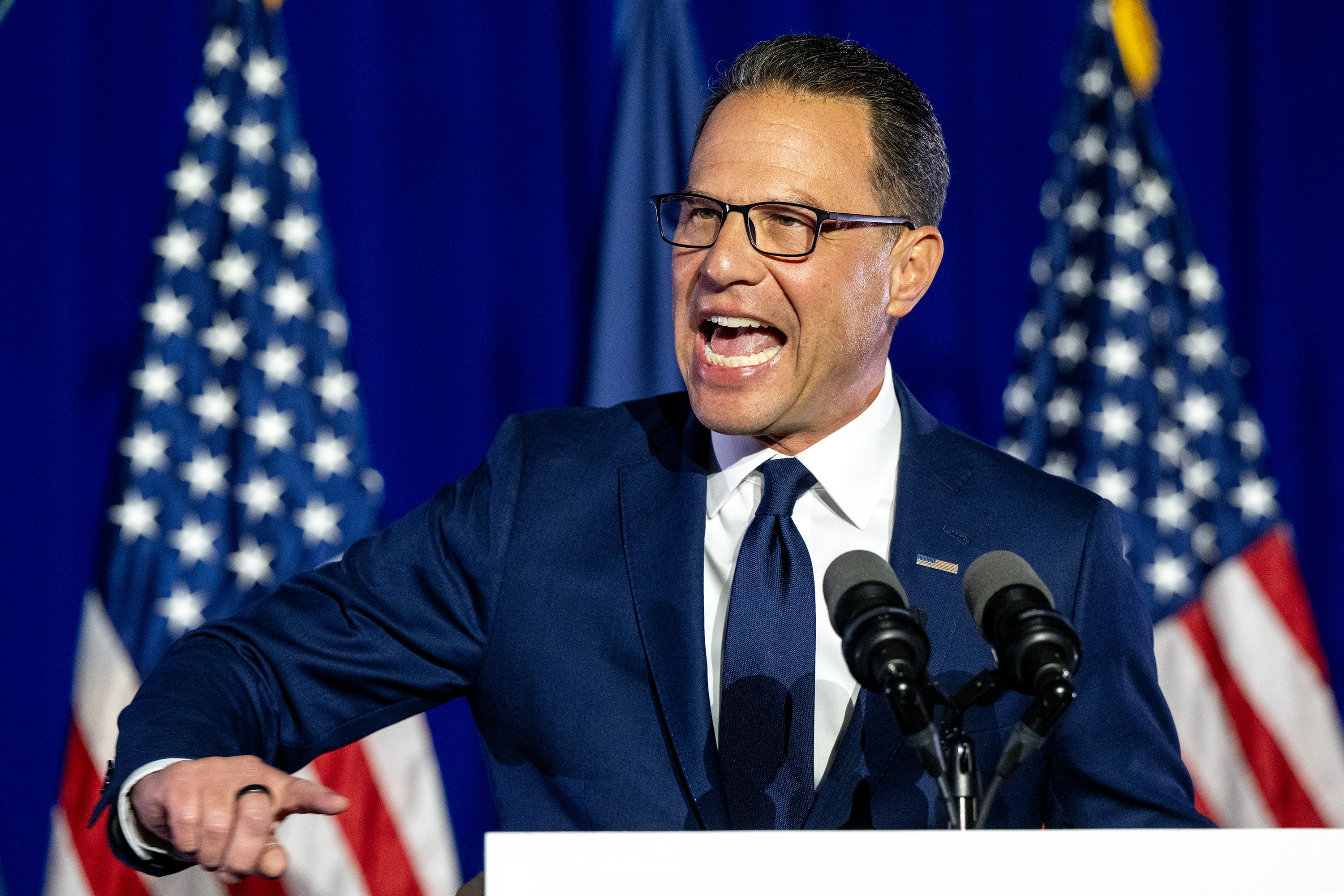
In Pennsylvania, Gov. Josh Shapiro did not just win reelection, as was telegraphed in polls. Unofficial returns showed that, as of Wednesday night, he was leading his GOP opponent by more than 20 percentage points, and he was ahead in 10 counties that Trump won in 2024.
And Democrats, for the first time in more than 30 years, won a trifecta in Harrisburg, meaning they will have control of the state House, the state Senate, and the governor’s mansion.
Even those smaller, local races broke Democrats’ way. In Bucks County’s closely watched 6th State Senate District, where issues like data centers and inflation drove the campaign, Democrat Eileen Hartnett Albillar, the county clerk of courts and a social worker by trade, toppled Republican State Sen. Frank Farry.
“Sometimes in this political life you’re the windshield, and sometimes you’re the bug,” said Christopher Nicholas, a veteran GOP strategist. “Pennsylvania voters have totally reversed what they did in 2024.”
Gov. Josh Shapiro delivers his victory speech at his Election Night party in Camp Hill, Tuesday Nov. 3, 2026.Tom Gralish / Staff Photographer
Now, Democrats — looking toward a new political order once they are sworn into office in January — must find a way to govern amid deep fractures within their own party.
“We’re going to have a lot of serious conversations after today to see about what this big tent actually means,” State Rep. Chris Rabb, a democratic socialist who was elected to represent a large swath of Philadelphia in Congress, said Tuesday.
A clear rebuke of the president
Neil Makhija, a Montgomery County commissioner who stumped for Democrats across the state, compared the results to 2006, when the party won back power with George W. Bush in the White House as voters rejected an unpopular war.
“Back then, I remember feeling stunned that we were winning states we weren’t supposed to win,” Makhija said. “This kind of election expands people’s view of what’s possible.”
Democrats this week romped to victory in U.S. House races and were expected to best Republicans by about 13 percentage points nationally, according to the New York Times. That would be the most significant across-the-board congressional win by either party in at least 50 years.
“It was not only a normal wave election,” Van Drew said after conceding. “What I said all along was, ‘I’ll be fine as long as it isn’t Watergate.’ And it kind of is a Watergate, where it’s larger than life and just swept people along with it who weren’t necessarily doing anything wrong.”
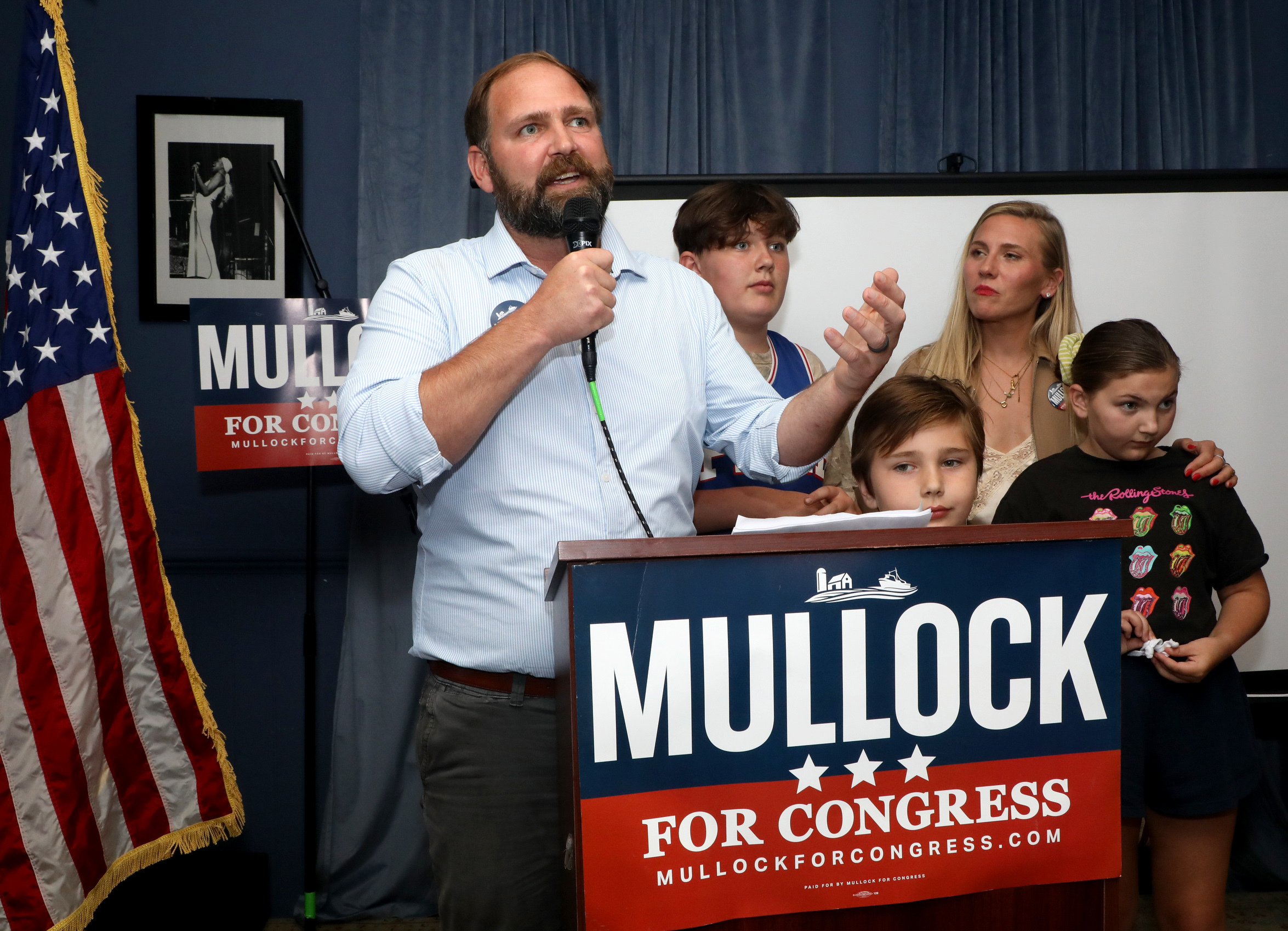
Democratic congressional candidate and Cape May Mayor Zack Mullock, celebrates with his team after receiving a call from Congressman Jeff Van Drew who conceded the race, Tuesday, Nov. 3, 2026.Tim Hawk / For The Inquirer
Strategists said the results showed that voters are fed up with the party in power, even those who just two years ago cast a ballot for the president.
Samuel Chen, a GOP strategist, said voters often feel a sense of regret in midterm elections if they don’t feel they are getting what they bargained for.
But amid rising inflation and the unpopular war in Iran, the dissatisfaction ran deeper. Even some Trump voters, Chen said, “felt a sense of betrayal.”
“They didn’t want forever wars, they didn’t want prices to go back up, and they did,” Chen said. “And the president is saying ‘the economy is not that bad, suck it up.’”
Members of both parties said the race between Fitzpatrick and Democrat Bob Harvie to represent Pennsylvania’s 1st District was a canary in the coal mine for Republicans. If he fell, it would mean many others would, too.
“We saw him as the hardest to beat,” Democratic strategist Anthony Campisi said.
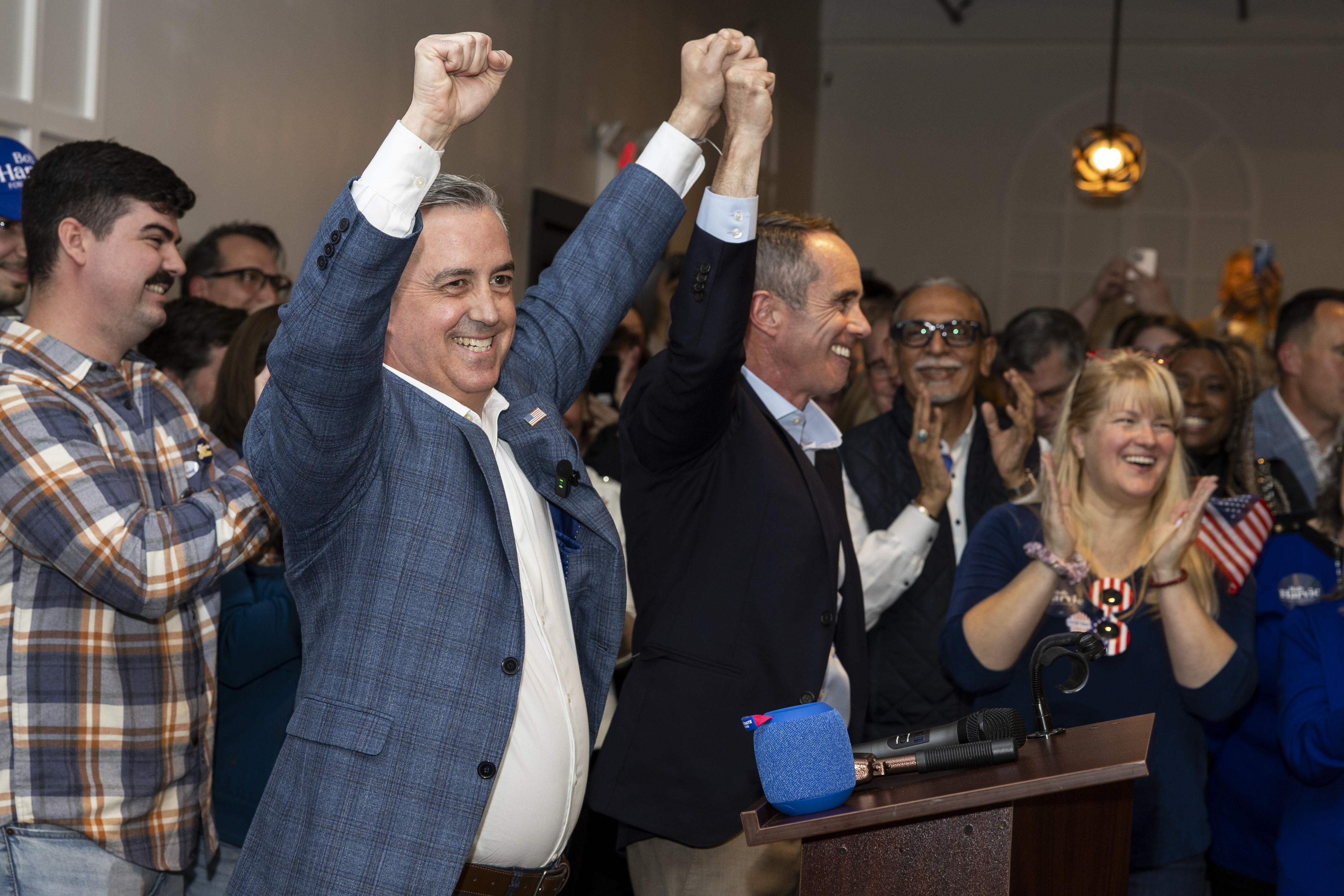
Pennsylvania First Congressional District Candidate Bob Harvie celebrates with State Sen. Steve Santarsiero at his election night party at Rafters on Tuesday, Nov. 3, 2026 in Newtown, Pa.Monica Herndon / Staff Photographer
But disaffection with the president appeared too much for even the most bipartisan member of Congress to overcome.
“When the president is talking about the reflecting pool instead of the cost of living the night before the election,” Campisi said, “it’s kind of like an allegory.”
A still-divided Democratic Party
The euphoria among Democrats on Wednesday in some ways masked the deep ideological fissures within the party.
Nowhere were those divides laid bare more than in Michigan, where Democrat Abdul El-Sayed, a progressive and a staunch critic of Israel, won a bitter race in the swing state against Republican Mike Rogers. That was despite a last-minute defection by U.S. Rep. Haley Stevens, whom El-Sayed beat in the Democratic primary and who announced this week that she would vote for Rogers, saying that El-Sayed had not adequately defended Israel and American Jews.
The conflict in the Middle East drove substantial tension between the progressive wing of the party and more establishment-aligned Democrats during the primary season. That includes in the race to represent Philadelphia’s 3rd Congressional District, and those disagreements over whether the United States should continue to arm Israel amid its military campaign in Gaza are not likely to disappear.
State Rep. Chris Rabb stops by at Kingsessing Recreation Center to talk with poll workers and voters on Election Day in Philadelphia, Pa., on Tuesday, Nov. 3, 2026.Tyger Williams / Staff Photographer
Rabb, a longtime state representative who has been critical of both the Republican Party and the Democratic establishment, endorsed El-Sayed and campaigned for him in Michigan. The longtime state representative from Northwest Philly, who was elected on Tuesday to become Philadelphia’s first democratic socialist in Congress, will now govern alongside Democrats — including from his own state — who have a wildly different worldview.
And in New Jersey, Cape May Mayor Zack Mullock, who beat Van Drew, said he won because he ran as a pragmatist willing to work across the aisle who could appeal to independents and Republicans.
“What you’re seeing on the national level, some of the socialist kind of things?” Mullock said. “If you look at Cape May, it’s not Leningrad.”
Michelle Leiby, of Langhorne, cheers as early Bucks County results are announced during Bob Harvie’s election night party at Rafters on Tuesday, Nov. 3, 2026 in Newtown, Pa.Monica Herndon / Staff Photographer
But Rabb said Tuesday that an El-Sayed win in purple Michigan amid other progressive gains would demonstrate not just that leftist candidates are winning in deep-blue districts, but that “there is a hue and cry for transformational change across the country.”
Those divides will also no doubt be present in Harrisburg, where far-left state representatives could grow frustrated with Democratic senators who have a history of centrist ideologies and bipartisan dealings.
Still, the party said it is unified in its day-one priorities for the Democratic trifecta: Shapiro has said he will sign legislation to raise the state minimum wage, which has been a Democratic priority for decades.
Rabb and others of his political ilk said they agree that would make a material difference for a large swath of Pennsylvanians, including those in Philadelphia, the poorest big city in the nation.
Makhija said that Democrats were delivered a mandate to focus on improving the cost of living for Americans, and that intraparty debate over the best ways to achieve that goal are healthy.
“We can have debates over whether this healthcare policy is going to be more effective vs. another,” he said. “But as long as we are having that debate and trying to do something that helps people, the voters will recognize that and appreciate that we are on their side.”
Staff writers Amy S. Rosenberg, Aliya Schneider, Fallon Roth, Sam Janesch, and Sean Collins Walsh contributed to this article.
The anticipated blue wave came and, in some cases, ended up stronger than expected. It traveled down the Shore and toppled four-term U.S. Rep. Jeff Van Drew as his challenger, Democratic Cape May Mayor Zack Mullock, clinched his seat. For the latest election news, check Inquirer.com throughout the day.
After the polls closed but before the Associated Press called the race, Jeff Van Drew conceded.
It’s a surprise victory for Zack Mullock and a major upset for Van Drew.
South Jersey’s 2nd Congressional district leans toward the right and analysts predicted Van Drew would retain his seat from the beginning.
As the election drew closer, the race garnered more attention and was placed on the Democratic Congressional Campaign Committee’s “districts in play” list last month. In the final stretch, Mullock had DNC Chair Ken Martin and Gov. Mikie Sherrill campaigning with him.
In related politics news: Democrat Rebecca Bennett defeated Republican incumbent Tom Kean Jr. for New Jersey’s 7th Congressional District seat. It was considered one of state’s key races Democrats eyed to help take control of the House.
November has arrived with a new slate of upcoming restaurant openings.
🍣 Akira70 is set to open its doors in Cherry Hill either at the end of this month or the start of December. The Japanese restaurant will offer a 10-seat omakase counter and a chef’s-table experience. The owner also runs Akira Sushi in Voorhees and Moorestown.
🧁 Magnolia Bakery, the New York-based company known for its cupcakes and banana pudding, is expected to welcome customers who have a sweet tooth to a franchise shop on Nov. 17 in Mount Laurel.
🍕 Pizzeria Cusumano in Collingswood is a new venture from Sal Cusumano, who comes from a legacy of pizza makers. His family is known for the Angelo’s shops in South Jersey. Expect New York-style pies by the middle of the month.
A pickup truck crashed into a school bus with two students onboard Tuesday morning in East Greenwich Township. The two students’ injuries are not believed to be life-threatening and the cause of the collision is under investigation, CBS Philadelphia reports.
The Voorhees planning board recently approved a $50 million affordable housing complex of 120 apartments. It will offer one-, two-, and three-bedroom units, 70and73 reports.
Contract talks between Jefferson Health and Horizon Blue Cross Blue Shield of New Jersey have reached in impasse, leading both to warn patients that Jefferson will leave Horizon’s network on March 1 if they fail to reach a new agreement.
Gov. Mikie Sherrill sent letters to port and terminal operators on Monday warning them to refuse Russian fuel or they will have to deal with penalties, the New York Times reports.
A teenager helped save a newborn’s life in Tuckerton using CPR skills she learned in a class two days before, according to NBC10.
Residents or those who commute through Camden should be mindful of five roadwork projects throughout the week, two of which are on Haddon Avenue. Be prepared for delays and to take different routes.
🧠Trivia time
Which band named an album after the Palace Of Depression, the roadside attraction in Vineland?
Email us if you know the answer. We’ll select a reader at random to shout out here. Cheers to Dottie Alexander, who solved last Wednesday’s anagram: Mischief Night. The evening before Halloween is known as Mischief Night and is usually celebrated with vandalism. The term is commonly used in New Jersey, Philadelphia, and Delaware.
Built in 1880, the highlights of this four-bedroom home include its original hardwood floors and French doors, a clawfoot bathtub, and a stone wood-burning fireplace. A spacious three-season balcony offers views of the mature trees on the property.
Outside of the three-level house, there’s a covered porch, a fenced backyard, and a detached garage.
Now that Democrats have won at least 54 seats in the U.S. Senate, the new majority party likely won’t have to rely on Pennsylvania Democratic U.S. Sen. John Fetterman to be a reliable vote for their agenda.
And if he switches parties, it will have no bearing on who controls the chamber.
For months, some Democrats had voiced concerns that Fetterman — who has broken with the party in high-profile moments since President Donald Trump took office — could be a powerful swing vote if they either tied or won a one-seat majority.
But as many online commenters pointed out Tuesday night, their gains will likely leave them with a “Fetterman-proof” margin.
“You know who doesn’t matter anymore? John Fetterman,” wrote Adam Jentleson, Fetterman’s former chief of staff, who has become an outspoken critic of the senator.
State Rep. Malcolm Kenyatta, a Philadelphia Democrat who lost the 2022 primary to Fetterman, added: “We just Fetterman proofed the US Senate.”
Democrats scored wins in traditionally Republican states, including Texas, where Democrats had last won a Senate race in the 1980s, and Kansas, where Democrats snapped a 94-year losing streak in Senate races.
Those wins give Democrats a solid majority regardless of how Pennsylvania’s two senators vote. And the majority could grow if Democrats maintain their leads in Alaska and Mississippi.
Fetterman has repeatedly promised to remain a Democrat, though his assurances had not fully limited concerns that he would become an independent or Republican depending on what happened in the midterm elections.
On Tuesday, he did not comment publicly on his party’s massive wins, though he did post a straightforward message earlier in the day about polls being open.
He also did not campaign for any Democrats this year — in Pennsylvania or elsewhere — or advocate for them to regain the majority in the Senate.
At times, he and some of his party’s nominees were openly antagonistic toward one another — including Abdul El-Sayed, who is now set to join Fetterman in the Democratic caucus with his win in Michigan.
In the summer, El-Sayed referred to Fetterman privately as an “ogre” while saying he would support a primary challenge against him in 2028, according to Politico.
Fetterman responded by criticizing El-Sayed’s alliance with progressives, said he had “little man syndrome,” and — when a last-minute feud erupted between El-Sayed and U.S. Rep. Haley Stevens right before Election Day — supported Stevens.