Blog

  • Pennsylvania wasn’t just the birthplace of democracy, it was a key inspiration

    Pennsylvania wasn’t just the birthplace of democracy, it was a key inspiration

    It’s been an extraordinary summer celebrating America’s 250th, but before we shift our focus from the events of 1776, we would direct the minds of our fellow Pennsylvanians to an earlier period — to the founding of the commonwealth, and to William Penn’s forward-thinking advocacy for religious and political freedom and his belief in democratic self-government. These ideas were central to his political philosophy and plans for the early government of Pennsylvania. They also found their way into the democratic experiment we steward today.

    Although Philadelphia played an important role in setting the stage for a stunning world event — the birth of American democracy — the city was more than just a geographically convenient location for the nation’s founders to gather.

    By the time of the revolution, Pennsylvania had become an important intellectual and economic center of the colonies, and the unique political culture and form of government established at its founding helped inform and inspire the development of American democracy, later embodied in the U.S. Constitution and Bill of Rights.

    As Pennsylvanians, we are the inheritors of this impressive and innovative political heritage, a legacy that should be an important point of civic pride and inspiration for local patriotism.

    Think about this: A decade after Penn arrived in America and began the work of establishing a refuge for religious dissenters, colonial Massachusetts accused nearly 200 individuals of witchcraft and executed 19 people. Massachusetts had a state religion until 1833; Pennsylvania never had a state religion.

    After the end of the short-lived Maryland Toleration Act, Pennsylvania became the only colony where the Catholic Church enjoyed ongoing, legally secure protection.

    Visitors look at historic artifacts as part of the Jewish America 250 celebration at Congregation Mikveh Israel in Center City in July.Monica Herndon / Staff Photographer

    And, of course, Pennsylvania is also home to the “Synagogue of the American Revolution,” Congregation Mikveh Israel, one of the oldest synagogues in the nation, dating to 1740.

    As historian Nicolas P. Miller observed, the success of colonial Pennsylvania was linked in the minds of many onlookers to the freedoms, particularly religious liberty, that its inhabitants enjoyed.

    To remind Pennsylvanians of our special birthright of religious tolerance, farsighted political liberties, and a long tradition of self-government that predate the nation, Poor Richards Charitable Trust, the William Penn Foundation, the Connelly Foundation, and the Syde Hurdus Foundation — in partnership with Drexel University’s Lenfest Center for Cultural Partnerships and the National Constitution Center — are presenting a new exhibit: “Pennsylvania’s Founding: How a City and a Colony Shaped America’s Civic DNA.”

    For the first time, this exhibit will bring together original versions of several of the most important artifacts that helped define the civic and political character of early Pennsylvania, and tell the story of how the founding of the commonwealth helped inspire American democracy.

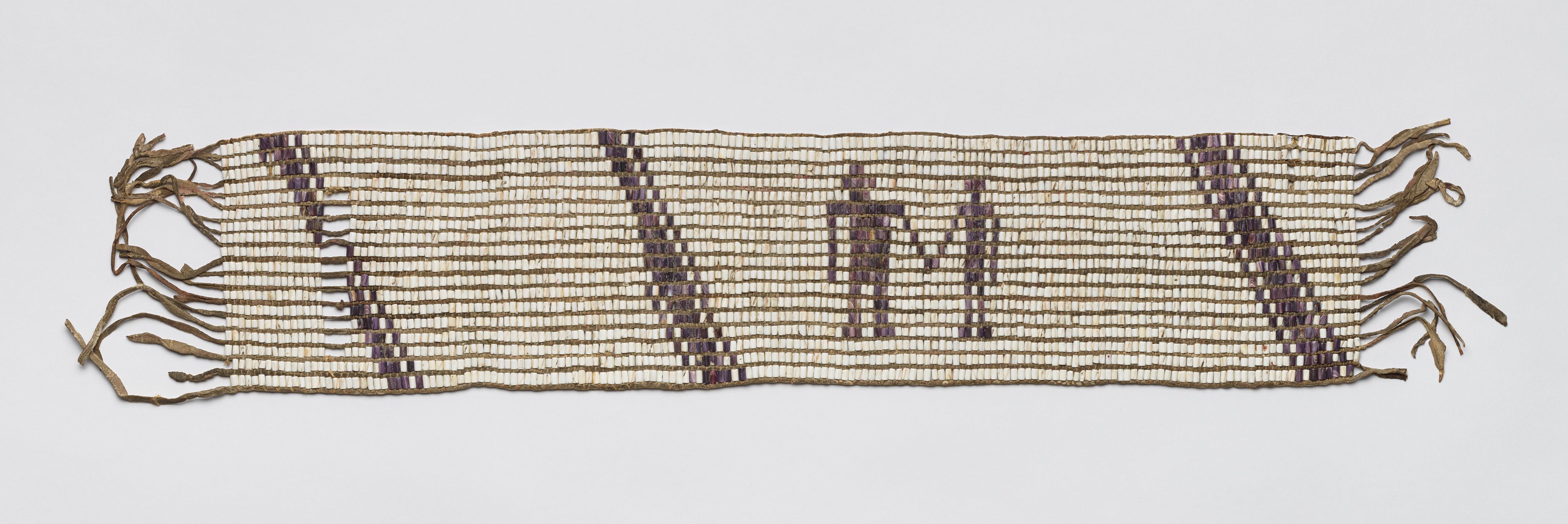
    Wampum belt, 1682, likely made by Lenape female artisans in the Delaware Valley. Atwater Kent Collection, From the Historical Society of Pennsylvania Collection

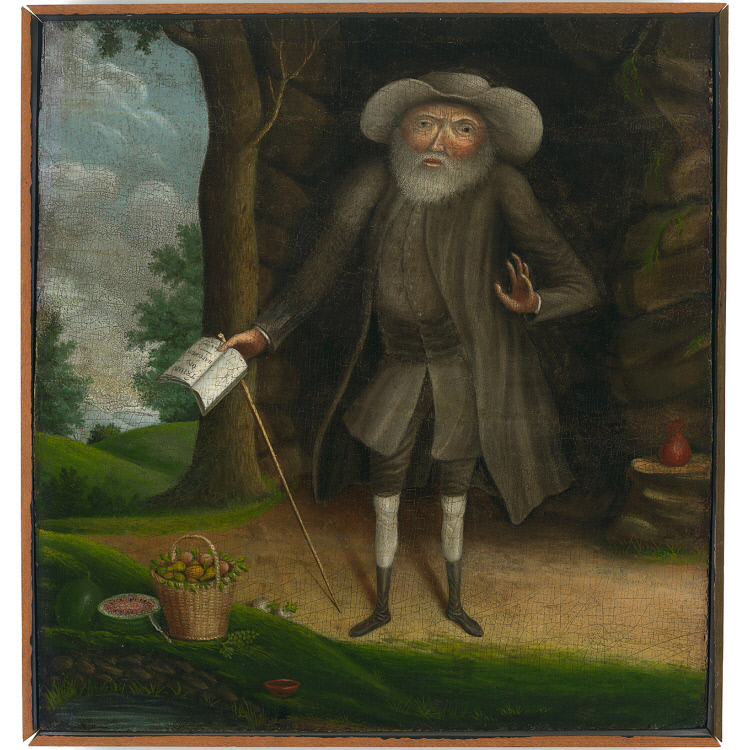
    They include the 1681 Pennsylvania Charter, signed by King Charles II, establishing the colony and granting Penn authority to govern; Penn’s 1701 Charter of Privileges, a framework of government for Pennsylvania until 1776, establishing religious freedom and other liberties and protections; a Lenape wampum belt given to Penn, associated with the 1682 Treaty of Shackamaxon, symbolizing a hoped-for moment of peace and cooperation; the 1696 Quaker Protest Against Slavery, one of the earliest in the Americas, and materials connected to early abolitionist Benjamin Lay; and other artifacts that clearly document Penn’s and Pennsylvania’s key contributions to the establishment of American democracy.

    Painting of abolitionist Benjamin Lay by William Williams at National Portrait Gallery of the Smithsonian Institution.National Portrait Gallery of the Smithsonian Institution.

    The exhibit will be on view to the public, free of charge, at the National Constitution Center from Sept. 30 through Jan. 3, 2027. Learn more here.

    So this fall, let’s continue the Semiquincentennial celebration. We encourage all Pennsylvanians to make a special pilgrimage to the National Constitution Center to see, understand, and remember our political heritage that is ours alone — a world-changing and invaluable inheritance of tolerance that we should continue to aspire to today.

    Tom Riley is the president of the Connelly Foundation. David Seltzer is a trustee of Poor Richards Charitable Trust. Shawn McCaney is the executive director of the William Penn Foundation.

  • Holtec delays IPO, citing energy demand uncertainty amid U.S. data center backlash

    Holtec delays IPO, citing energy demand uncertainty amid U.S. data center backlash

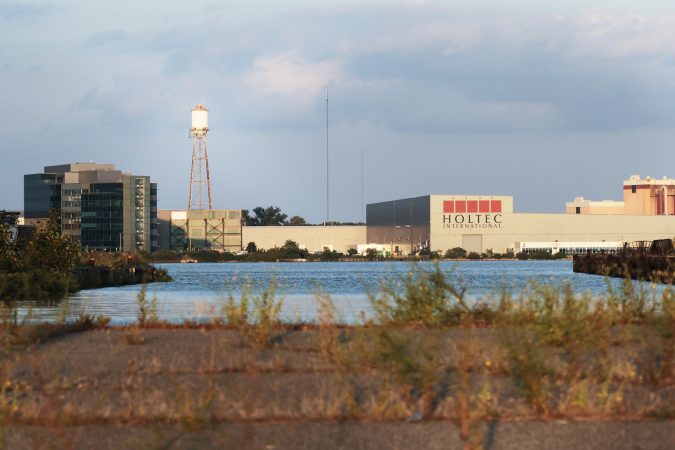
    Camden-based Holtec Nuclear says it will postpone its plans to raise more than $750 million in an initial public stock offering (IPO).

    “Market conditions” sparked the delay in what Wall Street had expected to be one of the largest companies to go public this fall, Holtec spokesperson Patrick O’Brien said.

    In particular, founder and CEO Krishna P. Singh has blamed the uncertainty in demand for power by U.S. data centers.

    “Our business, rightly or wrongly, is ​viewed as connected to [data centers],” Singh told the Financial Times of London. “We provide nuclear power. So that was, of course, a big factor in market sentiment against nuclear.”

    Plans for giant data centers to power artificial intelligence applications, credited with reigniting demand for new U.S. nuclear electric plants, have become an issue in the fall U.S. election campaigns. Political leaders including Pennsylvania Gov. Josh Shapiro and his Republican opponent, state Treasurer Stacy Garrity, have diluted and even reversed previous support for data center projects amid a wave of strong local opposition.

    Nuclear power stocks that soared on expected data center demand have slipped. For example, shares of Constellation Energy — the Baltimore company that is speeding work to reopen a nuclear power plant at Three Mile Island near Harrisburg — have fallen from a high of over $400 last fall to the mid-$260s in recent trading.

    The VanEck Uranium and Nuclear ETF, an index-based investment fund whose largest holding is Constellation and also includes uranium suppliers such as Cameco and Denison Mines, peaked at over $160 in January but has lately traded below $110.

    Holtec said it plans to release a formal statement on the IPO delay later Thursday.

    The company employs around 4,150 people, including employees at its Advanced Manufacturing Division and headquarters in Camden, plus manufacturing units in Pittsburgh and Orrville, Ohio.

    Holtec is best known for decommissioning and removing spent uranium fuel from aging nuclear power plants, which were mostly developed in the 1970s and 1980s.

    Holtec is one of several U.S. companies that has developed smaller, modular reactors (SMRs). It says these can replace larger power plants and be swapped out for maintenance without turning off power production. It is working install the first two SMRs at the Palisades nuclear plant site in Michigan, which Holtec decommissioned, purchased, and is now working to restart. Other products Holtec has been developing include the “Green Boiler” liquid battery for storing solar energy.

    The company had enlisted J.P. Morgan, Guggenheim Securities, Goldman Sachs & Co., Citigroup, and Bank of America’s securities arm to lead its IPO share sales effort. Morgan Stanley and Commerce Secretary Howard Lutnick’s Cantor Fitzgerald also participated.

  • This chef is making Philly’s most unique mooncakes

    This chef is making Philly’s most unique mooncakes

    Mooncakes often have a less-than-stellar reputation. They’re beautiful thanks to the intricate molds they’re made with, but they’re usually better to look at than eat. At the Mid-Autumn Festival, one of the four major Chinese holidays — which falls this year on Sept. 25 — people give and receive them much like fruitcakes at Christmas (without anyone actually eating them).

    One Philadelphia pastry chef is reversing mooncakes’ bad rap.

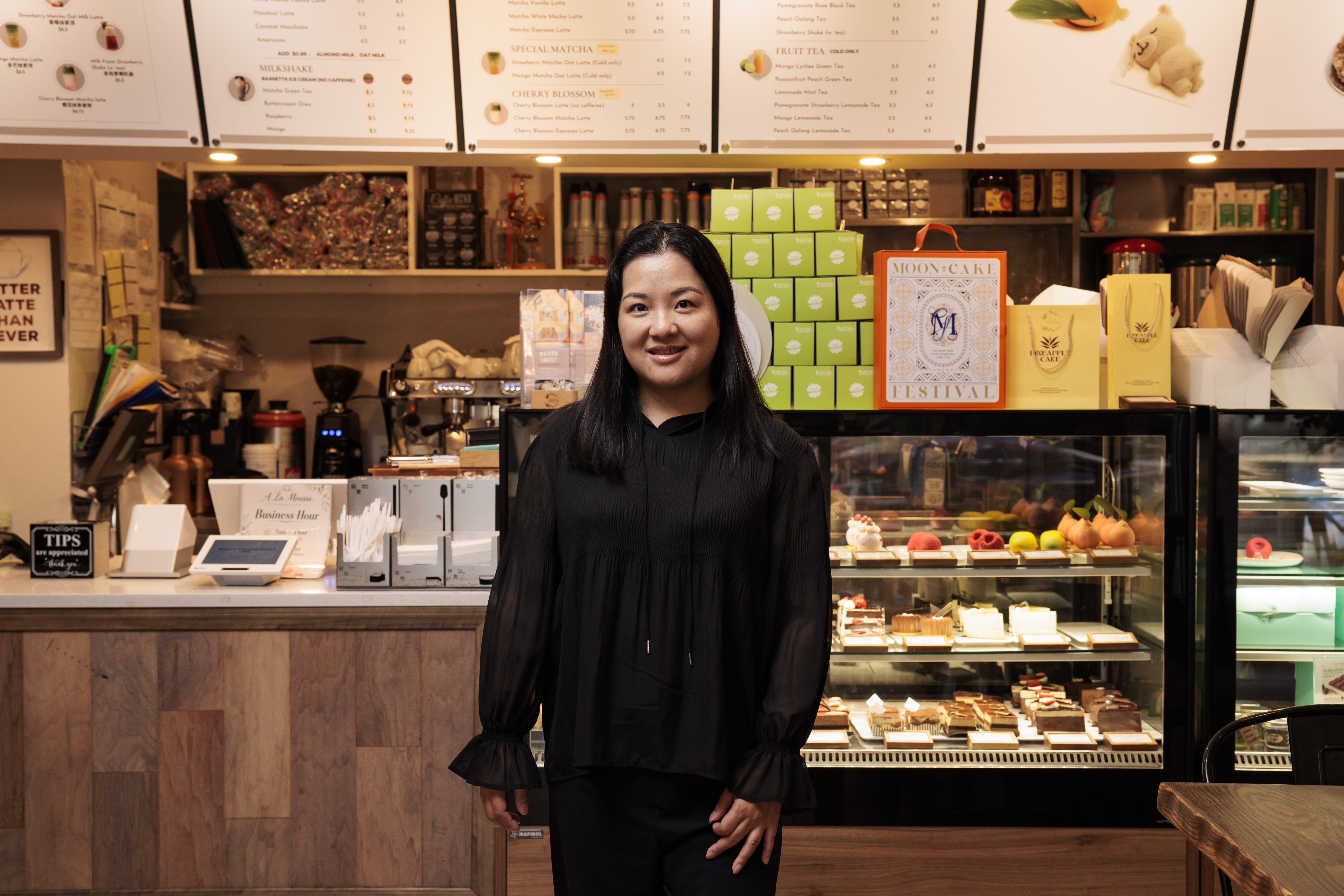
    Anna Chen posed for a portrait at A La Mousse on Tuesday, Sept. 15, 2026, in Philadelphia.Monica Herndon / Staff Photographer

    Nobody in Philly is making mooncakes like Anna Chen, the owner of A La Mousse. While most Chinatown bakeries sell conventional versions — made from wheat flour, lacquered with egg wash, and stuffed with lotus bean paste and duck egg yolks — Chen’s are vibrantly colored and stuffed with a range of fillings that cross cultures and marry flavors. Think Oreo cookies with Hong Kong milk tea and Taiwanese pineapple cake with salted duck egg.

    Chen’s three bakeries — A La Mousse in Chinatown and Narberth, and Maison Sweet in University City — specialize in mousse cakes, but she and her staff prepare about 400 to 500 boxes of mooncakes every year before Mid-Autumn Festival.

    Chen’s approach aligns with an inventive, sometimes wacky strain of mooncake that has emerged in Asia in recent years, as mooncake makers abandon ultrasweet lotus- and winter melon-paste versions in favor of updated varieties stuffed with ice cream, matcha cream, and even beef. They sometimes also trade the traditional dough for flaky pastry or thin mochi skins (referred to as “snow skin”), which are more commonly made by Vietnamese pastry chefs.

    Chen takes inspiration from her travels around China, especially to cities like Shanghai and Guangzhou, as well as popular trends in Hong Kong, where she grew up and returns to visit every two years. “Every year we make different flavors, but we keep one or two mooncakes traditional, because that’s what people keep asking me for,” Chen said.

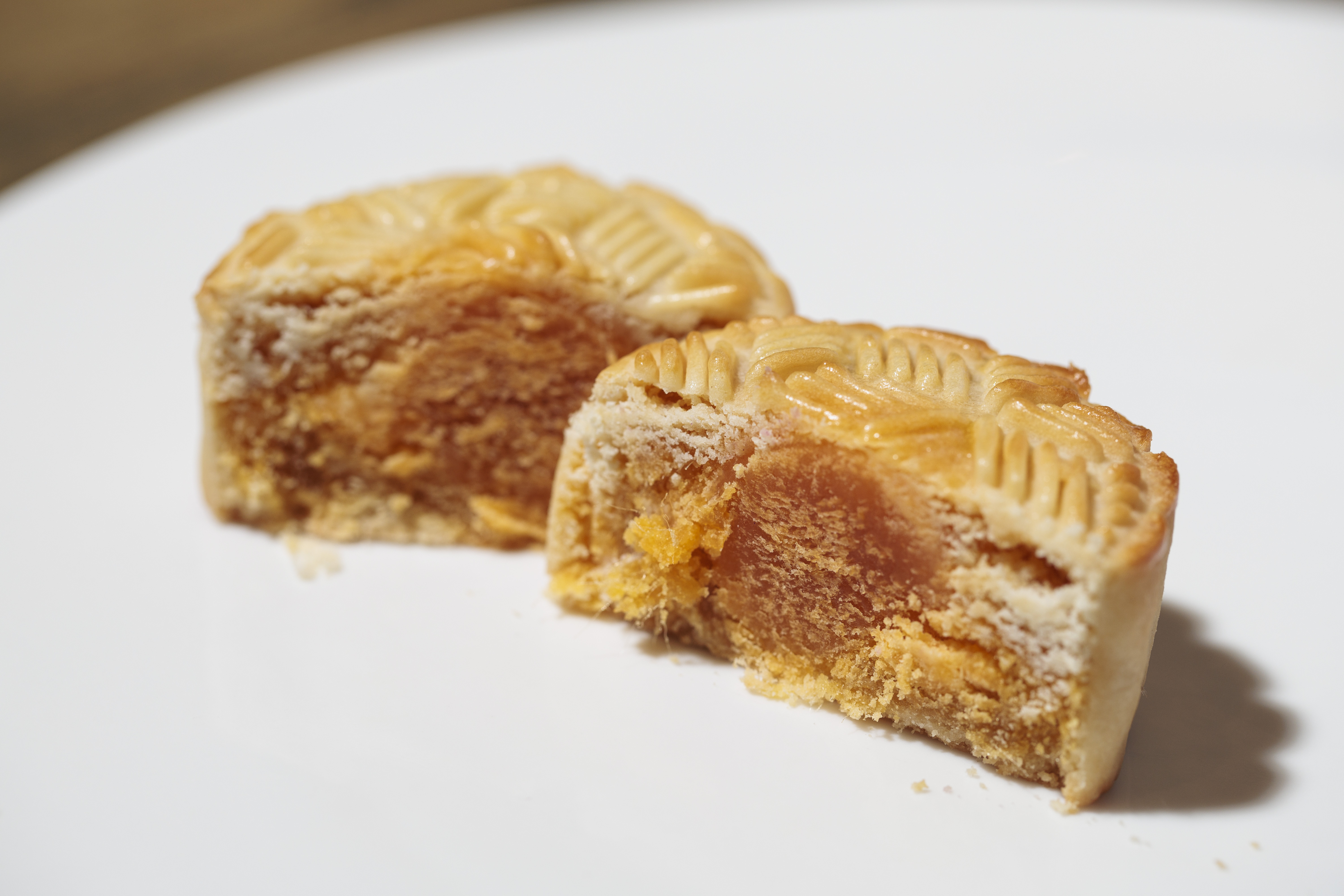
    The Mid-Autumn Festival salted egg yolk with pork floss mooncake at A La Mousse on Tuesday, Sept. 15, 2026 in Philadelphia.Monica Herndon / Staff Photographer

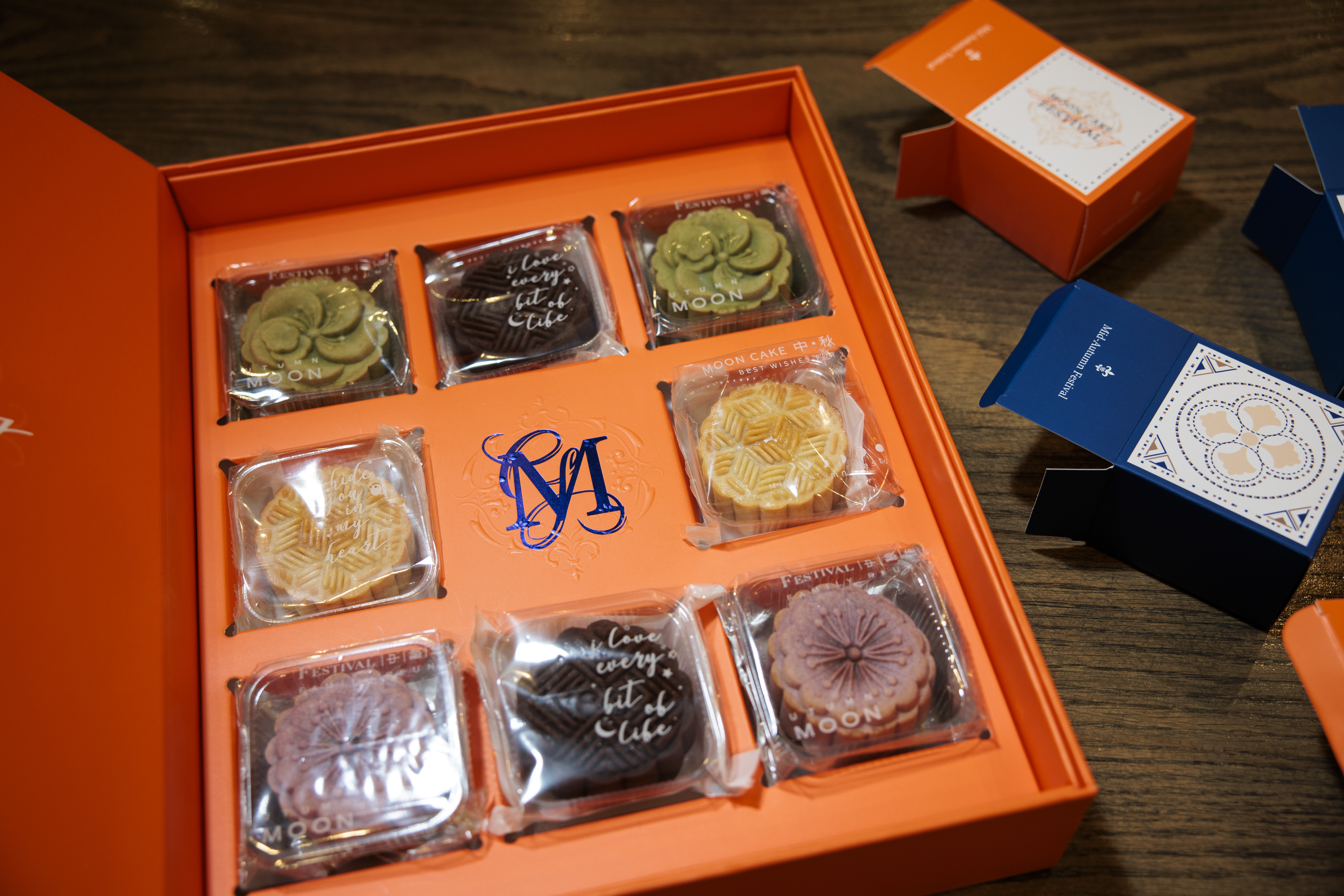
    This year, the traditional flavor is pork floss with salted egg yolk; hers is masterful, a delicate balance of savory and sweet — though none of her mooncakes are extremely sweet, in another departure from convention. The other flavors in this year’s box set of eight mooncakes, which sells for $65, include Dubai chocolate (Chen’s current favorite) and purple sweet potato with salted egg yolk.

    “We don’t want to follow anyone else’s style; we only want to create our own special mooncakes,” Chen said.

    The Mid-Autumn Festival Dubai chocolate mooncake at A La Mousse on Tuesday, Sept. 15, 2026 in Philadelphia.Monica Herndon / Staff Photographer

    Chen starts preparing for the season in early August, ordering items like mooncake sugar syrup (also known as golden invert sugar syrup), flowery molds, and specially designed mooncake packaging from China. Then, in September, she and her pastry chefs — along with daughter Joanne, a student at Drexel — get to work, rolling fillings into balls and stuffing them into rice flour-based skins before pressing them into molds.

    Chen, who opened Chinatown’s A La Mousse 13 years ago, has longtime customers who often order 30 to 40 boxes to give as gifts.

    Even as her creations are trend-driven, she does stick to one tradition: embedding whole egg yolks in most of her mooncakes. The yolks represent the full moon, one of the most important emblems of the Mid-Autumn Festival, symbolizing family reunions and the idea of wholeness.

    The Mid-Autumn Festival mooncakes at A La Mousse on Tuesday, Sept. 15, 2026 in Philadelphia.Monica Herndon / Staff Photographer

    Anna Chen’s mooncakes are available for pickup and must be preordered two to three days in advance via a Google form at bit.ly/4iwdZwu/..

    A La Mousse, 145 N. 11th St., 215-238-9100; A La Mousse, 920 Montgomery Ave., Narberth, 610-664-6888; Maison Sweet, 2930 Chestnut St., 215-387-1388, instagram.com/alamousse

  • 2026 Toyota 4Runner Hybrid: An overdue revision

    2026 Toyota 4Runner Hybrid: An overdue revision

    2026 Toyota 4Runner Hybrid 4WD Platinum: A wilder time off-road, now that fuel will last longer?

    Price: $66,360 as tested. $200 for a tailgate LED light; one more option mentioned below.

    What others are saying: “Highs: Comfortable ride on-road, massively capable off-road, electric assistance makes it peppy off the line. Lows: Hybrid battery reduces cargo space, no available third row, only moderate fuel-economy gains over the nonhybrid,” says Car and Driver.

    What Toyota is saying: “4ever untamed.”

    Reality: It’s a better SUV, but don’t plan on big fuel savings dividends.

    What’s new: The 4Runner was moved into the marketing department’s world of all-newness for the 2025 model year, when it received a new look, upgraded technology, and the very hybrid motor and engine that give it the 4Runner Hybrid name. So we’re expecting some real fuel stretching this time around, right?

    Fuel savings or not, it was definitely overdue for a remake, as noted in the 2023 4Runner review, and heck, even three years before that in a review of the 2020 model.

    Competition: Here’s the shortest list we’ve seen in a while: Ford Bronco and Jeep Wrangler.

    Up to speed: The 4Runner Hybrid features the usual array of drive settings, including Sport and Sport+, that might sound incongruous with a hybrid.

    But the two-part power plant doesn’t slow things down, as the 2.4-liter turbo four-cylinder engine and 48-horsepower hybrid motor make a combined 326 horsepower. These launch the big SUV to 60 mph in 6.7 seconds, according to Car and Driver.

    It takes the non-hybrid — the same four-cylinder turbo but lacking 48 of the hybrid motor’s horses — 7.5 seconds to cover the same ground. That’s half a second faster than the previous generation’s models with the 4.0-liter V-6.

    Shifty: A normal-geared transmission paired with a hybrid is unusual, and Toyota seems to do its usual good job on the eight-speed transmission. That is, until my final test day, when I began to notice some lag now and again when downshifting, especially when turning.

    On the road: The 4Runner seems like a big, ungainly vehicle in the driveway, but like its competitors, it grows on you.

    The Sport and Sport+ modes tighten things up, and with a little practice I could feel where the vehicle was in the lane and how it cornered, but it never felt sporty, and definitely fell short of sport-plussy.

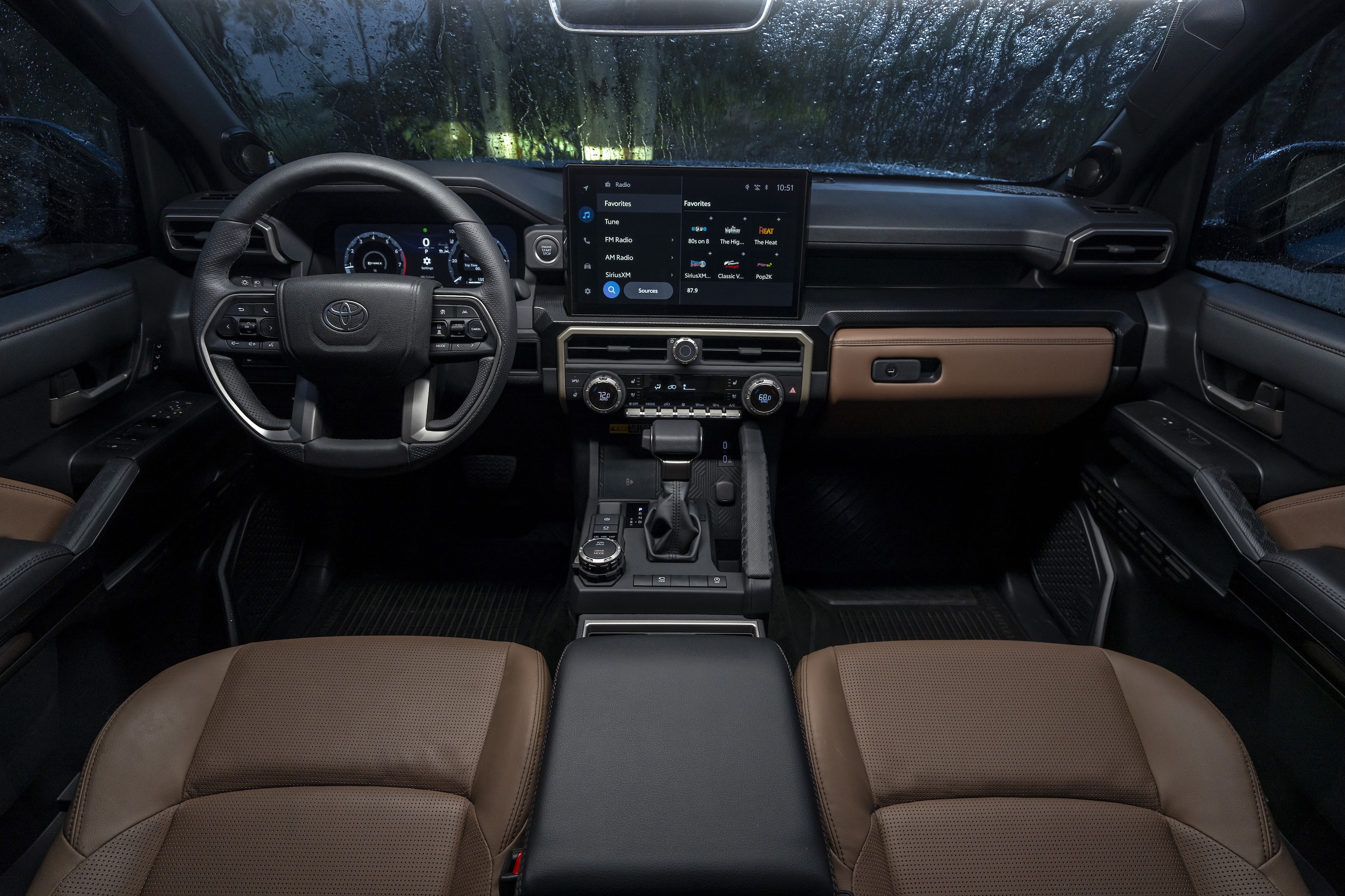
    The interior of the 2026 Toyota 4Runner features lots of big knobs.Toyota

    Driver’s Seat: I’m a fan of the Driver’s Seat. The front seats in the test vehicle were wide and supportive, quite comfortable, heated and ventilated, stitched in blue, and trimmed in leather. We’re definitely beyond the “rugged, rhinoceros hide leather seats” I described in the 2020 version, likening them to something you’d find in a firetruck.

    The gauges are standard for Toyota, but the controls are plasticky with touches of matte gray and exterior-matching blue.

    Friends and stuff: The rear seat is pretty nice as well; the fabric and cushioning feel soft and comfortable, and still offer good support as well.

    Space is at a premium, though, as foot room and headroom are super snug, while legroom is just adequate. A large hump makes the center seat a bad place to be. And the hybrid battery pack cuts into the rear storage as well.

    The big console is nice in the front but also cuts into rear legroom.

    Cargo space is 42.6 or 82.6 cubic feet, depending on the seats. That’s about 10% less than the nonhybrid 4Runner, which also offers three-row versions.

    Both versions of the 4Runner tow up to 6,000 pounds. The right configuration of the Wrangler can tow 5,000 pounds while the Bronco maxes out at 4,500.

    Keeping warm and cool: Big dials operate the temperature and toggles work the fan and blower location.

    The blower is squeezed vertically next to the giant screen and it seems either too strong or too weak, with no “just right” setting.

    Play some tunes: A big dial works the volume and almost everything else is in the ginormous 14-inch touchscreen.

    Sound from the 14-speaker Toyota system including JBL portable speaker is quite good, an A- heading to an A. There were points when I was hearing a little more from songs, but not consistently enough.

    In and out: The automatic running boards ($1,005) are concierge-worthy in helping entry and exit for this tall beast of a vehicle. They sit nice and low, and made it possible for Mr. Driver’s Seat and his herniated disc to enter without loud groaning.

    Fuel economy: I averaged just over 20 mpg with this hybrid vehicle, quite a disappointment.

    The 4Runner clocked 17 mpg in 2020 and 18 three years later.

    The Bronco averaged 16 mpg in Driver’s Seat testing, while the Wrangler Hemi struggled to reach 13. A 2018 Wrangler averaged 17.

    Where it’s built: Tahara, Aichi, Japan

    How it’s built: Consumer Reports gives the 4Runner a 5 out of 5 for predicted reliability.

    In the end: If you have to have a rugged, off-road-type SUV, there’s just no better way to do it than the 4Runner. Rock-solid reliability, nice road manners, strong towing, and plenty of space help it squash the Wrangler and the Bronco like bugs on a rocky trail.

  • Phillies won’t play on NBC Sports Philadelphia the next few nights amid playoff push

    Phillies won’t play on NBC Sports Philadelphia the next few nights amid playoff push

    The Phillies kick off a four-game series with the New York Mets Thursday, but fans will need to do a bit of channel surfing to catch all the games.

    Thursday night’s game will air on Fox beginning at 7:15 p.m., with Kenny Albert and Tom Verducci calling all the action. Ken Rosenthal will report from Citi Field.

    Aaron Nola (6-10, 4.69 ERA) is scheduled to take the mound for the Phillies. Nola hasn’t allowed more than three runs in a start since way back on July 22, when he gave up five to the Los Angeles Dodgers. He’ll face Mets rookie Nolan McLean (11-9, 3.24 ERA), who gave up just two hits and struck out 10 in a win against the Phillies on July 19.

    On Friday, the Phillies jump off TV and onto streaming for their final appearance on Apple TV’s Friday Night Baseball this season. First pitch is scheduled for 7:10 p.m., with Alex Faust and Ryan Spilborghs on the call and Tricia Whitaker reporting from the stadium.

    Apple TV also has its own pregame show hosted by Sierra Santos alongside former outfielder Chris Young and MLB insider Russell Dorsey.

    It’s the fifth season of Apple TV’s seven-year, $595 million deal with MLB, which runs through the 2028 season. Over that time, the cost has nearly doubled from $6.99 to $12.99 a month.

    While Apple TV’s exclusive games remain an annoyance for baseball fans without the streaming service, they do come with one important perk — the ability to switch the audio feed over to 94.1 WIP and Scott Franzke and Kevin Stocker calls.

    The quality of Apple TV’s broadcast is also generally very good, with crystal-clear footage and minimalist graphics (though the constant probabilities and live gambling updates become a bit annoying).

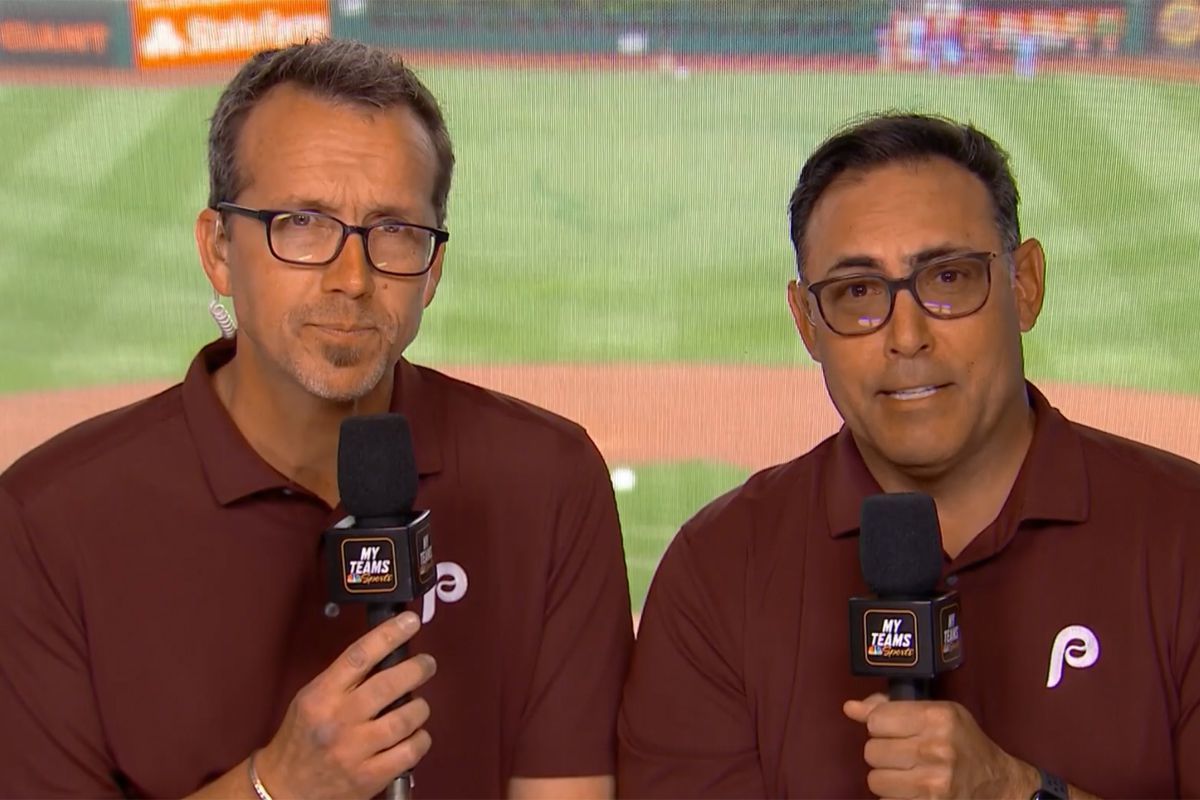
    Scott Franzke (left) and Ruben Amaro, Jr. will call the final two games of the Phillies-Mets series on NBC Sports Philadelphia. NBC Sports Philadelphia

    The final two games of the Phillies-Mets series will be back on NBC Sports Philadelphia Saturday or Sunday. With Tom McCarthy calling Sunday’s NFL matchup between the Cleveland Browns and Tampa Bay Buccaneers on CBS, it’ll be Franzke calling the games alongside former Phillies general manager turned announcer Rubén Amaro Jr.

    John Kruk will be back Tuesday along with McCarthy to call the Phillies’ series against the Milwaukee Brewers, the second-to-last of the season. And World Series MVP-turned-broadcaster Cole Hamels will be back in the booth for the final Phillies game of the season on Sept. 27 against the Tampa Bay Rays.

    Phillies playoff picture

    NL East standings

    window.addEventListener(“message”,function(a){if(void 0!==a.data[“datawrapper-height”]){var e=document.querySelectorAll(“iframe”);for(var t in a.data[“datawrapper-height”])for(var r,i=0;r=e[i];i++)if(r.contentWindow===a.source){var d=a.data[“datawrapper-height”][t]+”px”;r.style.height=d}}});

    There was a moment where it seemed like the Phillies might overtake the Braves in the standings. But after dropping two of three against Atlanta last weekend, the Phillies’ chances of winning the National League East appear distant as best.

    The Phillies enter Thursday’s series opener against the Mets 4½ games behind the Braves with 10 remaining. Atlanta faces the AL West-leading Houston Astros this weekend, but finish the season against the lowly Cincinnati Reds and Miami Marlins. An epic collapse along the lines of the 1964 Phillies — who blew a 6½ game lead with 12 remaining — doesn’t seem likely.

    NL wild-card standings

    window.addEventListener(“message”,function(a){if(void 0!==a.data[“datawrapper-height”]){var e=document.querySelectorAll(“iframe”);for(var t in a.data[“datawrapper-height”])for(var r,i=0;r=e[i];i++)if(r.contentWindow===a.source){var d=a.data[“datawrapper-height”][t]+”px”;r.style.height=d}}});

    If the season ended Tuesday, the Phillies would end up in the second wild-card spot, meaning they’d travel to Chicago for a three-game series against the Cubs.

    The good news is the Phillies are just a half-game down from the top wild-card spot entering Thursday. Overtaking the Cubs would move that three-game series to Citizens Bank Park.

    The bad news is the Cubs, who are off Thursday, own the tiebreaker against the Phillies. Chicago kicks off a three-game series against the Reds Friday before finishing the season with series against the Marlins and Boston Red Sox.

    The MLB playoffs begin Sept. 29 and will air on NBC.

    Phillies magic number

    That is the combined total of Phillies’ wins and/or losses by the teams on the outside looking in that are needed to secure at least the third wild-card berth and a spot in the playoffs.

    Phillies news

    Alec Bohm is batting .293 against lefties, including .500 since the beginning of August.Monica Herndon / Staff Photographer

    Remaining Phillies TV schedule

    • Phillies at Mets
    • Brewers at Phillies
    • Rays at Phillies
  • 5 subtle dental symptoms you should never ignore

    5 subtle dental symptoms you should never ignore

    Plenty of dental issues can feel like no big deal, at least at first. The symptoms don’t always hurt and may not even catch your attention. “A lot of times patients don’t realize they have a problem in their mouth because they don’t look so closely,” said Steven Katz, immediate past president of the American Association of Endodontists.

    Even a toothache might come and go, Katz said, leading some people to put off dealing with it. And making a dentist appointment for a painless problem — for instance, gums that bleed when you floss — can feel like more of a hassle than it’s worth.

    But seemingly minor dental symptoms often signal infections that, if left untreated, can progress into more complex problems, Richard M. Lipari, a cosmetic dentist in New York, said in an email. These issues can also require more costly treatment and additional visits to repair. Some changes in your mouth can even be early warning signs of disease elsewhere in the body, Lipari added.

    Below are five tooth and gum symptoms you may be tempted to ignore — but shouldn’t, for the sake of your oral and overall health.

    Tooth pain of any kind

    “There’s no amount of pain in your teeth that should be considered normal,” Katz said. The most common cause of a toothache is tooth decay.

    It starts when bacteria combine with saliva and food particles to form a sticky film of plaque on a tooth’s surface. The bacteria feed on sugars and starches and produce acids that erode enamel. This decay can eventually lead to a cavity — a hole that can cause pain or irritation if it reaches the sensitive inner layers of the tooth.

    More than 1 in 5 people ages 20 to 64 in the United States have at least one untreated cavity, according to the Centers for Disease Control and Prevention. The concern is what can happen next: As bacteria move deeper into the tooth, an infection can develop at the root, causing sharp or throbbing pain. Over time, it may even spread to the face, neck, and underlying bone.

    Katz cautioned that even if your tooth stops hurting, you shouldn’t ignore it. “A lot of patients think, ‘OK, well, I aggravated something, and it’s gone now,’” he said. But usually, pain that suddenly lets up is a sign that decay has killed the tooth’s nerve. So, the pain can disappear even as the infection gets worse. “That’s when [bacteria] can start to eat away at the bone,” he said.

    While a cavity can be fixed with a simple filling (which generally costs a couple hundred dollars without insurance), a dental infection typically requires a root canal (which can cost $1,000 or more, depending on the tooth). During the procedure, a dentist drills into the tooth to clear out the infected pulp and then reseals it and stabilizes it with a crown. But if an infection destroys enough bone, the tooth will ultimately have to be removed.

    There’s also evidence that untreated dental infections are associated with a higher risk of several conditions beyond the mouth, including Type 2 diabetes, cardiovascular disease and dementia. Bacteria and inflammation around the root of an infected tooth may spill into the bloodstream and reach other parts of the body.

    Swollen or bleeding gums

    Puffy gums that bleed easily are often a sign of gingivitis, a mild form of gum disease, Lipari said, even if they’re not painful. Like cavities, gingivitis is generally caused by plaque buildup. The immune system triggers inflammation in the gums in an attempt to ward off an infection.

    While regular brushing and flossing can remove plaque and reverse gingivitis, if the swelling persists for longer than a couple of weeks, it’s important to see a dentist. They can use special tools to remove plaque and its hardened form, called tartar, at and below the gumline. This helps keep gingivitis from progressing to periodontitis, a more severe form of gum disease. At that stage, inflamed gums can pull away from a tooth, creating a pocket where bacteria can accumulate. The gums may become even more swollen or tender, and tooth pain and sensitivity can develop.

    Like dental infections, untreated gum disease has also been associated with other serious health issues. “The same systemic inflammatory mediators involved in gum disease are linked to conditions like cardiovascular disease and neurodegenerative disorders,” Lipari said.

    Though gingivitis is the usual culprit, persistently swollen or bleeding gums can sometimes have other causes, which a dentist can help rule out. For example, bleeding gums are also “strongly associated with diabetes,” said Lipari. Having high blood sugar can increase the amount of glucose in your saliva, which feeds bacteria in the mouth and increases the risk of plaque buildup.

    In very rare cases, gums that frequently bleed could also point to a blood disorder or cancer such as leukemia that interferes with blood clotting, Katz said. (If a dentist sees bleeding that doesn’t appear typical for gingivitis or suspects a different underlying trigger, they can refer you to the right doctor for a workup.)

    Loose teeth

    A loose tooth, particularly one that’s accompanied by tender or swollen gums, may signify advanced gum disease, Lipari said. Left untreated, the infection can damage the bone holding the tooth in place, leaving it mobile or wobbly.

    In rare cases, a loose tooth could also indicate a tumor in the mouth or jaw, Katz said. “Most of the time they grow silently until all of a sudden they don’t,” he said. “We might see loose teeth because tumors typically will destroy bone.”

    A slow-growing tumor could also push teeth out of alignment, Katz added. Outside of orthodontic treatment, you shouldn’t notice your teeth moving, he said: “Our teeth are always moving microscopically, but to move significantly such that your bite would be off, for example, that’s something that should ring a bell.”

    Bad breath or a bad taste that doesn’t go away

    A garlicky pasta or tuna salad sandwich can certainly give you bad breath that lingers for a few hours. But a foul odor or taste that persists day after day could signal an infection — and you might not always have pain or swelling along with it.

    In some cases, a small drainage track can form near an infected tooth or gum, allowing pus to escape. Sometimes it looks like a bubble or pimple on the gumline, though people often don’t notice it, Katz said. The release of fluid keeps bacteria and inflammation from building up, so the infection might not hurt much, he explained.

    Alternatively, off-smelling breath could be a result of dry mouth. Saliva helps wash away food debris and bacteria. Dry mouth is a common side effect of certain medications, including blood pressure drugs, antidepressants, and GLP-1s, Katz pointed out.

    If dryness and bad breath persist, it’s worth bringing it up to your dentist or primary care doctor. A dry mouth can also be associated with autoimmune diseases such as Sjögren’s syndrome (in which the immune system mistakenly damages the body’s moisture-producing glands) as well as diabetes, Lipari said, and can raise your cavity risk. In certain cases, a bitter or sour taste in the mouth could also be a byproduct of acid reflux, or the backflow of stomach acid and contents into the esophagus, he added.

    Persistent mouth sores

    Canker sores — small ulcers that form inside the mouth, such as on the inner cheek, tongue or gums — generally heal within a couple of weeks. (It isn’t known exactly what causes canker sores, but stress, minor trauma to the mouth, certain kinds of toothpaste, and spicy or acidic foods may trigger or aggravate them.) But if you have a sore that sticks around for longer than two weeks, or turns into a lump or bleeds, it’s important to see your dentist or primary care doctor. Certain autoimmune conditions, such as lupus, can cause mouth sores, and in rare cases, a persistent sore can be a sign of oral cancer, Lipari said.

    The bottom line

    If you notice any of the above symptoms, it’s better to get them checked sooner rather than later. That way, you’re more likely to catch an infection or other underlying issue before it becomes more serious. (It’s also wise to keep seeing your dentist regularly, even if you don’t have symptoms. They can spot problems early, when they’re easier to treat.)

    The typical resolution for gum and tooth disease is a root canal, Katz said. Getting one done when you need it may not only spare your tooth and stop the symptoms — research shows it can improve markers tied to heart health such as cholesterol and chronic inflammation.

    And these days, a root canal isn’t as bad as you may fear. Better local anesthesia can keep pain to a minimum. Improved technology means the procedure can often be completed quickly, Katz said, typically within an hour and in a single appointment. As he put it, “This is not your grandmother’s root canal.”

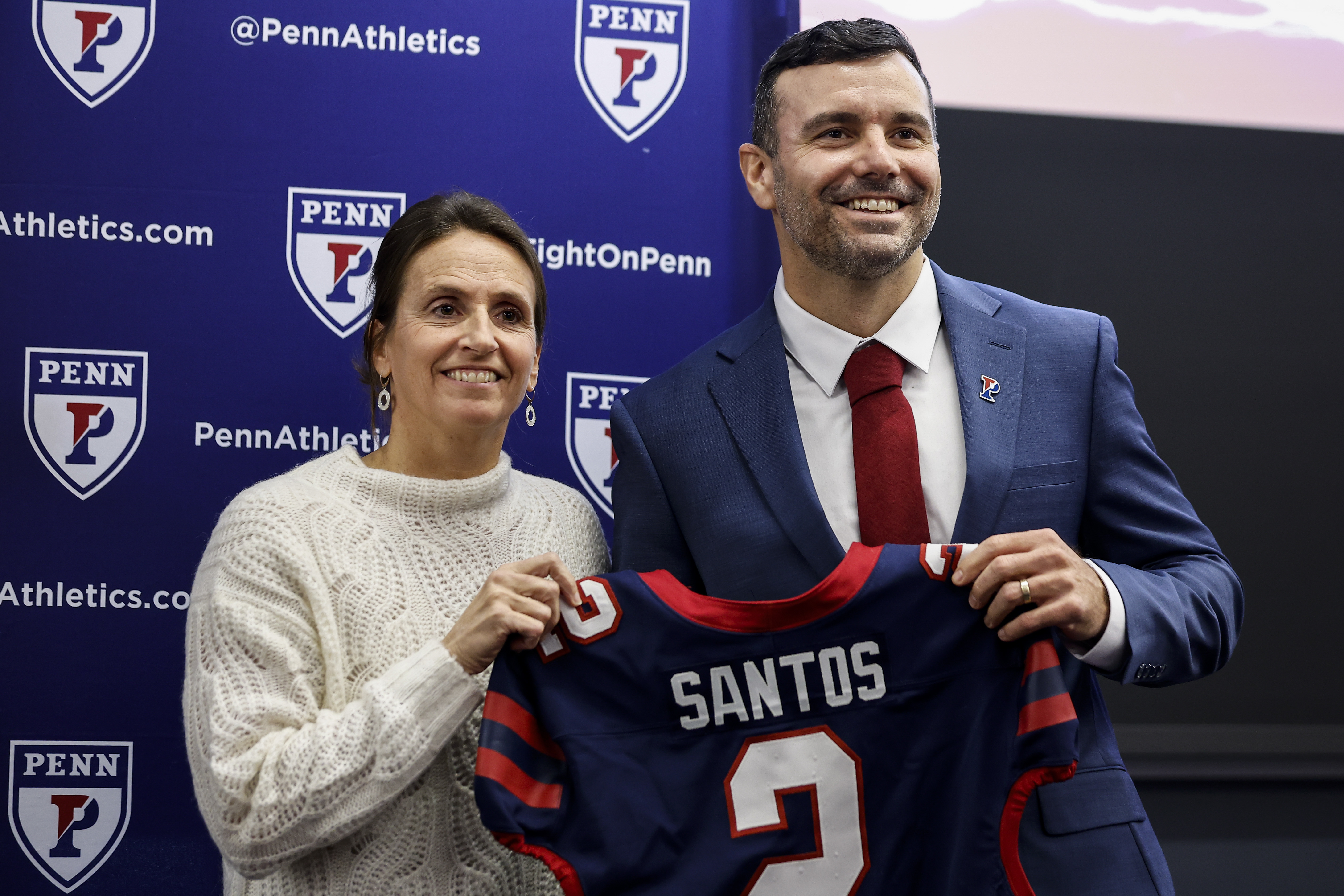
  • First-year Penn coach Rick Santos makes major starting quarterback decision before season begins

    First-year Penn coach Rick Santos makes major starting quarterback decision before season begins

    Penn freshman quarterback Miles Teodecki hesitated when he extended his hand for a handshake. His palm and fingers were covered in a thick coat of white chalk, to give him a better grip on the football. Though he had just ended nearly five hours of team practice, his freshly dusted hands looked like he was about to throw for the first time that day.

    On Monday, Penn coach Rick Santos announced that Teodecki would be the starting quarterback, reversing the August decision to start junior Karson Siqueiros-Lasky.

    “Those two have battled all camp,” Santos said ahead of Saturday’s season opener at Bucknell (3 p.m., ESPN+), “and honestly it was one of the hardest decisions I’ve had as a coach.”

    Santos is entering his first season as head coach after Ray Priore stepped down in November, capping an 11-year tenure that included Ivy League titles in 2015 and 2016. Last season’s stars — quarterback Liam O’Brien and wide receiver Jared Richardson — are at Cincinnati and Duke, respectively, following their graduation from Penn.

    Many questions loom over this new team, and the Ivy League preseason poll placed Penn fourth. Not that Santos cares.

    “In ’22 at New Hampshire, we won the [conference] championship and we were picked ninth out of 13 team[s],” said Santos, who was the head coach at his alma mater from 2022 to 2025, “So at the end of the day, that’s up for the media to talk about and decide what they think. … The rankings matter at the end of the year, so that’s what we got to focus on one week at a time.”

    Anyone’s name can stand out on the team’s blank slate, and Santos found that Teodecki, Penn’s highest-rated recruit since 2000, fit what he and his staff had been looking for.

    “He’s very competitive. He’s got a moxie about him and a confidence, and we’re excited to see him going game day,” Santos said.

    Teodecki, who’s from Austin, Texas, was thankful for the opportunity.

    “First off, just got to thank God,” he said. “I got to thank Coach Santos and the coaching staff for believing in me, giving me this chance. I got to thank my teammates for supporting me and going out there doing their jobs, putting trust in me, allowing me to trust in them. I’m fired up for the opportunity.”

    Santos said he’s been “encouraged with the senior leadership” on the team, which includes captains Siqueiros-Lasky and senior defensive back Josh Narcisse, and Narcisse noted that relationships have been built across all levels.

    “[The coaches have] been really intentional with getting to know each of us on a personal level outside of football,” he said, “And as a player, I can say that goes a long way when it’s Friday night, the lights are bright, you look to the sideline, you want to see people that have your back on and off the field.”

    For Narcisse, that’s the identity of this year’s team.

    “I think a lot of old Penn teams were more individualized, and it was about what this guy or this guy is going to do any given Saturday, but now when you watch the team, you’re going to be more focused on, ‘What is our defense going to do? What is our offense going to do? How are they going to handle themselves on special teams?’” he said.

    Even with the change in starting quarterback, Santos and Teodecki were quick to say that the plays remain the same, regardless of who is under center.

    “We have two bona fide studs at quarterback, two guys that can start at this level, two guys that are good enough to lead us to a championship,” Santos said. “So I would expect both of them to play at some point this year, but we decided to give Miles the nod for the opener.

    “There [are] no solidified jobs here. Every single day you need to earn the right to be on the field.”

    “Confidence through preparation” seems to be the motto of the Santos era. The team hits the field every day at 6:15 a.m. — “We want to get up before the enemy and get a bunch of work in while everyone’s still sleeping,” Santos said — and has been methodical in watching film, running plays, taking notes, and adopting the right mindset.

    “I feel 1,000% confident, not only in my own ability, but also our game plan and what our coaches have dialed up for us to be able to make plays and be successful on Saturday,” Narcisse said.

    The defense this year, he said, would be “fast, violent, relentless.”

    Santos said the defense is “really smart, instinctual in terms of being able to diagnose presnap reads and what the opposing team offense is doing. … And then ultimately when you get to the opener, it’s about how well we tackle.”

    Even while the team seems poised and eager to kick off a new chapter this Saturday, Teodecki admits that “there’s a little bit of nerves; if you’re not nervous, that either means you don’t care or you just — you really don’t care.”

    After practice ends at 11 a.m., he chalks his hands and throws the football with a teammate for a few extra minutes.

    “We’re blessed to play this game, and we get to play this game,” Teodecki said.

  • Zack Wheeler delivers seven scoreless innings in Phillies’ shutout of the Nationals: ‘They’re all must-win’

    Zack Wheeler delivers seven scoreless innings in Phillies’ shutout of the Nationals: ‘They’re all must-win’

    WASHINGTON — Most of the Phillies were already gone from the clubhouse to catch the team bus. But for the benefit of any stragglers, Kyle Schwarber took it up an octave.

    “It’s going to be a grind,” he said here the other night. “It’s not like it’s guaranteed.”

    Not even when it should be a walk in the park — or lots of walks in Nationals Park. Not for these Phillies. Not with 10 games left and a playoff spot still to be clinched.

    Case in point: Wednesday night. The Phillies knocked a rookie opener from the game after six batters. They worked seven walks through four innings, including four in the first — and 13 in all, their highest total in a game in … checks notes … 22 years.

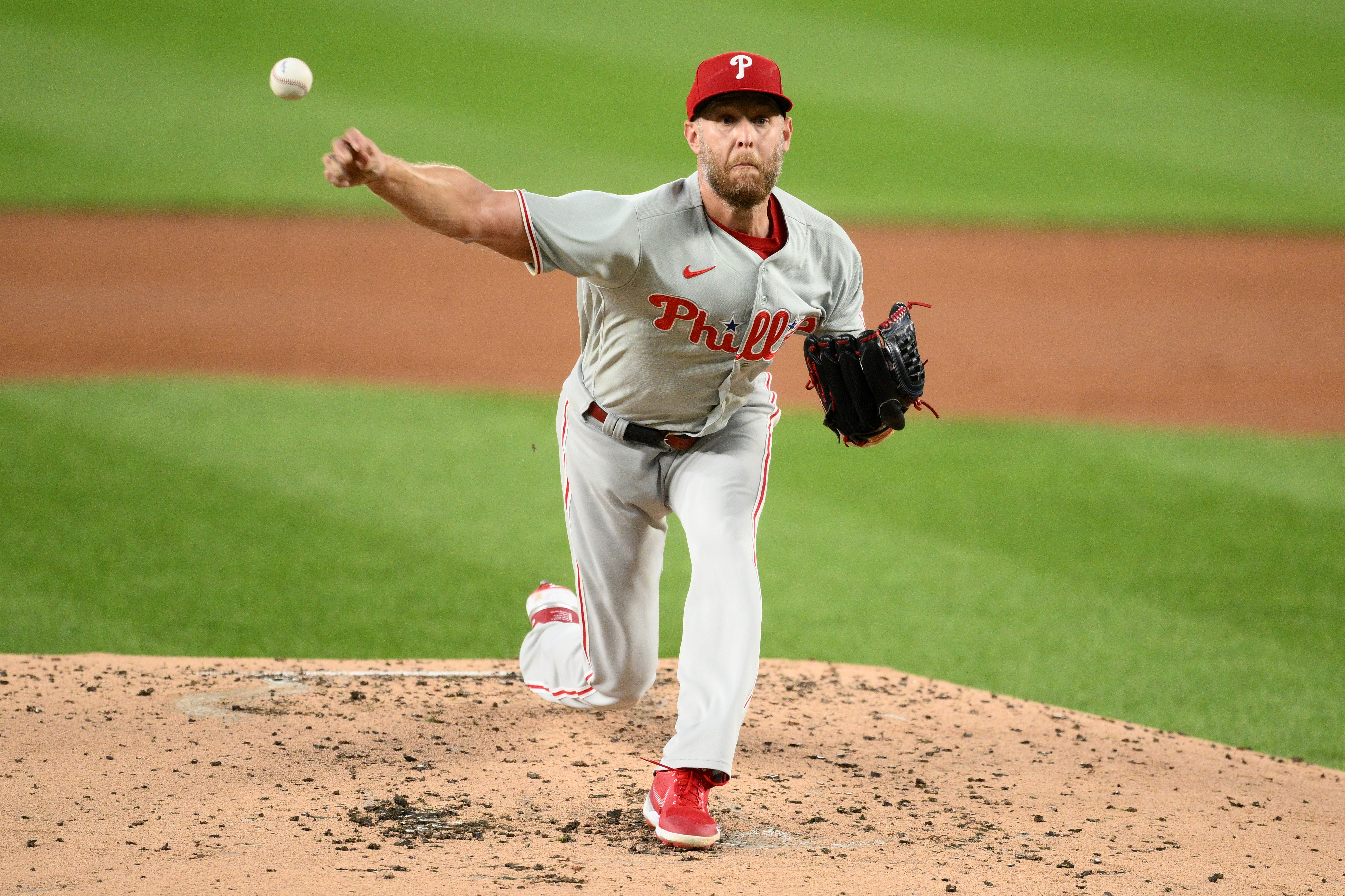
    And yet they ground out only a 3-0 victory over the Nationals behind seven workmanlike innings from old reliable Zack Wheeler, once again the most effective and healthiest of the Phillies’ Big Three starters.

    “It’s win games and get in the playoffs at this point. So they’re all must-win,” said Alec Bohm, who drove in the first run with a bases-loaded single and reached five times (two hits, three walks). “We just want it in our control. We win, then it’s in our control. If we don’t win, we’re scoreboard watching and who knows what can happen.”

    Cue the nightly check of the playoff race:

    • The Phillies (84-68) remained a half-game behind the (85-68) Cubs for the top National League wild card. The Phillies were one game clear of the Padres (83-69) going into Thursday’s games for the second wild card.
    • With any combination of six victories or Diamondbacks losses, the Phillies will clinch a wild card.
    • Chicago, which holds a tiebreaker over the Phillies, is off Thursday. The Phillies will begin a four-game series in New York against the out-of-contention Mets, who have played better after a brutal first half.

    Got all that? Good.


    NL wild-card standings

    window.addEventListener(“message”,function(a){if(void 0!==a.data[“datawrapper-height”]){var e=document.querySelectorAll(“iframe”);for(var t in a.data[“datawrapper-height”])for(var r,i=0;r=e[i];i++)if(r.contentWindow===a.source){var d=a.data[“datawrapper-height”][t]+”px”;r.style.height=d}}});


    The Phillies are struggling to reach base at last month’s majors-leading clip. But even they couldn’t avoid taking what the Nationals gave them in the first inning, chiefly enough walks to score twice.

    And Wheeler took it from there.

    One day after Jesús Luzardo went on the injured list with an inflamed left shoulder and Cristopher Sánchez gave up five runs on eight hits in a loss, Wheeler was in command against the Nationals, third in the majors in runs despite being headed for their seventh consecutive losing season.

    Wheeler said he sought to exploit the young Nationals by throwing pitches off the plate early in the count “to try to use their aggressiveness against them.” It worked. He held them to four hits (three singles) and completed seven innings in 91 pitches.

    “I threw a lot of first-pitch balls, but that was kind of on purpose just to see if I could get weak contact,” Wheeler said. “If I was going in, I was trying to throw it off the plate. If I was going away, I was trying to make them chase a ball or two off the plate.”

    Luis Arraez doubled in Bryce Harper for insurance in the seventh inning. Arraez reached four times, including his first three-walk game since 2024. Maybe it all gets the offense refocused. Maybe it was one game.

    Say this: Bohm has hoisted his average above .250 for the first time since the third game of the season. He’s batting .293 against lefties, including .500 since the beginning of August.

    “I was in a pretty deep hole early on,” Bohm said. “For me, it was focusing less on what’s my batting average today and more on let’s go out and try to win a game today. Because the numbers are what they are. Can’t really do much about it at this point, so let’s try to go help the team win and contribute in some way.

    “Getting lost in that for a while, they’ve found their way back to, I guess, more of the norm for myself.”

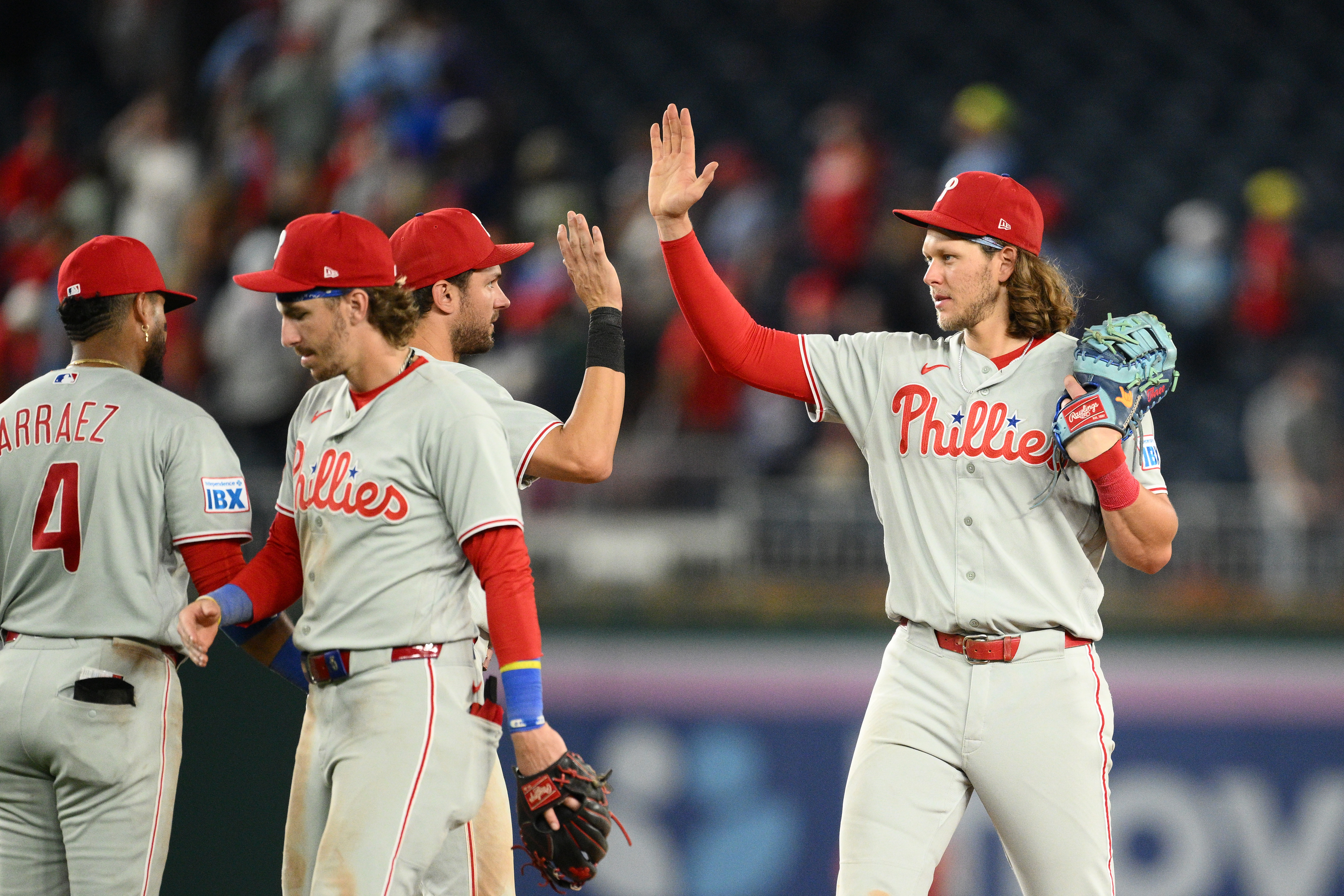
    Alec Bohm (right) is batting .293 against lefties, including .500 since the beginning of August.Nick Wass

    It’s a mature outlook for a player who has often been criticized for immaturity. But it’s undoubtedly the correct one in the second-to-last week of the season.

    At this late juncture, interim manager Don Mattingly is still trying to bring order to the bullpen. He put the lead in the unsteady hands of lefty José Alvarado, who sidestepped a one-out walk by getting dangerous James Wood to line out and Daylen Lile to fly out.

    Jhoan Duran, who hadn’t pitched in five days, went to a full count on the leadoff batter in the ninth before striking him out. He popped up CJ Abrams to win a seven-pitch duel before ending the game with a strikeout.

    The whole thing was imperfect. The Phillies went 1-for-10 with runners in scoring position. They left 13 on base. They became the first team since the Tigers on June 8, 1955, to walk at least 13 times and score three runs or less in a nine-inning game.

    “I look at it as, we won tonight,” Mattingly said. “That’s what I look at. No matter how we do it, we got the win. So, that’s really what matters at the end of the day.”

    Indeed. And in winning for only the second time in six games, they crossed Game 152 off the calendar in their quest to just get into the playoffs, reset everything, and take their chances.

    “After losing [Tuesday] night, we had to come out here with a win today,” Wheeler said. “I was just trying to do the best that I could and at least split.”

    It wasn’t easy, even though the Nationals tried to make it so. And it isn’t about to get easier, just as Schwarber warned.

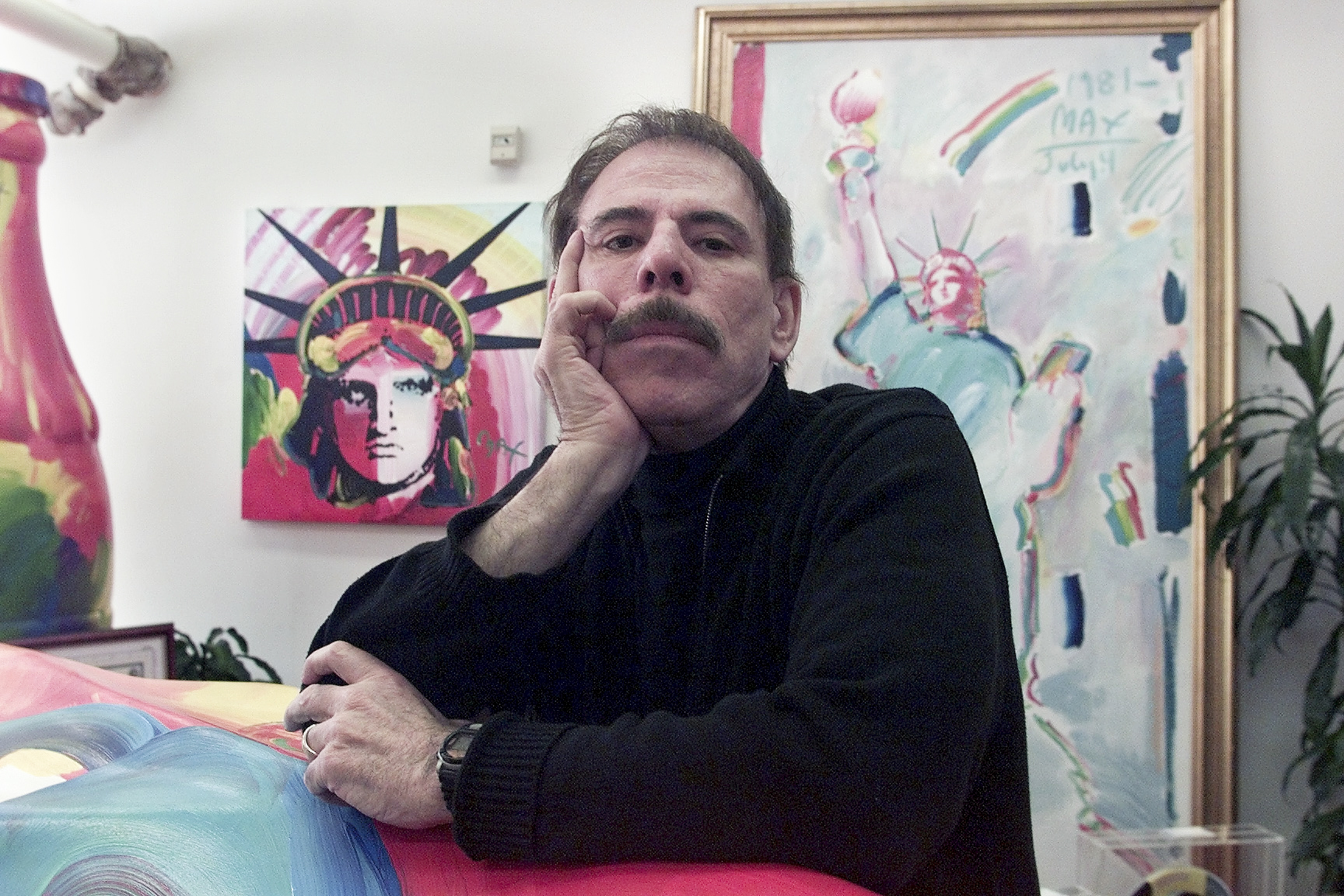
  • Peter Max, trippy artist of counterculture era and beyond, dies at 88

    Peter Max, trippy artist of counterculture era and beyond, dies at 88

    NEW YORK — Peter Max, whose trippy posters of Day-Glo flowers, butterflies, rainbows, stars and planets sold by the millions and expressed the blissed-out exuberance of the countercultural 1960s, died Monday in New York City. He was 88.

    The death, at a hospital, was confirmed by his son, Adam Max. He had long suffered from dementia.

    Mr. Max, a vegetarian and a teetotaler who expanded his consciousness through yoga, not drugs, was one of the most visible and successful artists of his time, selling posters in the millions.

    His simple graphic images, brightly colored and infectiously happy, lent themselves to a long list of licensed commercial products, from sheets and glassware and shower curtains to airplanes and, on one occasion, a stamp for the Postal Service.

    Incorporating art nouveau, op art and psychedelic motifs, Mr. Max’s designs offered instant visual gratification and a cheery endorsement of the generational politics of love, joy and universal consciousness. His “panopticon” images repeated visual elements in tight formation, producing a kaleidoscope effect that recalled Easter mandalas.

    His “cosmic jumper,” a young man in bell bottoms traversing the globe in giant strides, became an emblem of modern youth, eager to explore the far reaches of inner and outer space. Barefoot and surrounded by puffy clouds and chubby birds, the jumper appeared on the 10-cent stamp commissioned for Expo ’74, the conservation-themed World’s Fair in Seattle.

    In The Universe of Peter Max, a memoir published in 2013, he wrote: “My cosmic art subjects were always euphoric: Himalayan sages levitating under a shower of flowers beside snowcapped mountain peaks; faces and flowers exploding into a symmetrical cosmic butterfly; mirrored lakes and waters with a cascade of stars and planets; flowers in perpetual states of organic growth, begetting blossoms. My inspiration came from the new youth movement in America and in return spoke to it.”

    Peter Max Finkelstein was born Oct. 19, 1937, in Berlin, where his father, Jakob, was in the import-export business and his mother, Salla (Zeisel) Finkelstein, had been a fashion designer before her marriage. With the rise of Nazism, the family moved to Shanghai, where Jakob set up as a pearl merchant. Peter attended an English-language school and spent much of his spare time talking to monks at the nearby Buddhist monastery.

    As the Maoist revolution gathered strength, the Finkelsteins moved again, this time to Haifa, in Israel, where Peter learned Hebrew and, infatuated with the stars and planets, took special courses in astronomy at the Technion, the Israel Institute of Technology.

    In 1953, the family emigrated to New York, settling in Bensonhurst, Brooklyn, where Peter attended Lafayette High School. He had taken private art lessons in Israel, and, at the urging of a classmate, signed up for summer classes at the Art Students League in Manhattan after high school graduation. Abandoning his rather vague plan to pursue astronomy as a career, he threw himself into art.

    Initially he painted as a realist, then dabbled in abstraction and finally concentrated on commercial art. Riverside Records gave him his first assignment, to design the LP sleeve for The Blues Piano Artistry of Meade Lux Lewis, released in 1962. His moody, vaporous portrait of Lewis at the piano won a gold medal at the annual exhibition of the Society of Illustrators.

    With Tom Daly, he formed a design company that quickly found favor with advertising agencies and book publishers. Within two years, Daly & Max Studio had collected more than 60 awards for its book jackets, album covers and other work, but Mr. Max, feeling constrained, left in 1965. For two years, he lived in virtual seclusion in his duplex apartment on Riverside Drive, turning out thousands of drawing and ideas.

    In 1967, he applied some of his new concepts to the Tin Lizzie in midtown Manhattan, a theme restaurant that he decorated with paisley wallpaper, photographic collages of Charlie Chaplin film scenes and an actual Model T Ford.

    His advertising posters for local shops began to attract special attention. Young customers called up the job printer, Security Printing Company, asking for a poster to hang in their rooms. Denton Stein, the company’s owner, went into partnership with Mr. Max to create Peter Max Posters, which sold 25 of the artist’s designs, in millions of copies, to book stores, head shops and department stores.

    As his popularity grew, Mr. Max began doing commercial posters for the American Cancer Society, the Peace Corps, and the United Nations. The 3,000 posters and 40,000 flyers he printed for a gathering in Central Park on Easter 1967 inadvertently gave the event its name. The words “Be In,” in large letters, followed by “Central Park on March 31,” were read as a noun, not a verb in the imperative mood.

    In 1968, a transit advertising company commissioned Mr. Max to design posters for buses, streetcars and subways in 10 major cities. “I am bringing art to the people where the people are,” he told Time magazine. “Now they don’t have to go to galleries and see paintings on a wall.”

    General Electric approached him to design a clock. He followed up with a line of linens for J.P. Stevens and shirts for Van Heusen. Through the half dozen businesses bearing his name, he entered into licensing agreements with more than 70 companies.

    “You provide the cash, the production and the selling,” he told Business Week in 1968. “I’ll furnish the ideas and the designs — and we’ll split the profits 50-50.” When Life magazine put Mr. Max on its cover in 1969, the headline read “Peter Max: Portrait of the Artist as a Very Rich Man.”

    Mr. Max was everywhere. He was not, however, involved with the 1969 Beatles film Yellow Submarine, often assumed to be his work, in part because he often took credit for it. The film’s art director was Heinz Edelmann, sometimes called the German Peter Max.

    By the 1970s, Mr. Max was in a rut. He shut down his studio and again went into seclusion. “I stopped cold,” he told People magazine in 1976. “I was repeating myself creatively. I had filled myself with being everywhere, doing everything. I had had it.”

    Gradually, he reemerged. For the American Bicentennial, he accepted a commission from the Swedish company ASEA to produce the book Peter Max Paints America, a collection of paintings and drawings honoring each of the 50 states.

    That same year, he produced a series of bilingual “Welcome to the United States” signs posted at more than 200 crossings along the Canadian and Mexican borders. Initially rejected by the Customs Service as implicitly endorsing the ’60s drug culture, they were finally put up in 1978.

    He designed the logo for MTV in the 1980s and the official poster for soccer’s World Cup in 1994. In 1999 he decorated a Boeing 777 for Continental Airlines to commemorate NYC 2000, the official millennium celebration in New York. In 2015, the Rock & Roll Hall of Fame commissioned him to do a poster for its annual induction ceremony.

    By then, he was already struggling with dementia. Yet the Peter Max brand flourished, boosted by the artist’s relationship with Park West Galleries, a Michigan-based company that sold Mr. Max’s work at cruise-ship auctions. Sales on a single voyage could reach $2 million, and in 2018, Mr. Max’s studio, ALP Inc. — named for its three owners, Peter Max and his two children, Adam and Libra — recorded a profit of more than $30 million.

    The artist’s production methods became the subject of widespread speculation. Friends reported that Mr. Max could no longer paint and merely signed his work, which was made, in prodigious quantities, by a small army of assistants.

    They were overseen by Adam Max, who was ousted from his father’s business in 2019 by his daughter, Libra Max, and the artist’s court-appointed guardian, who were concerned that Mr. Max was being exploited. Libra Max took over her father’s studio, fired many of his assistants and business associates, and set about restoring his reputation through galley and museum shows that showcased his earlier work.

    Mr. Max’s first marriage, to Elizabeth Nance, with whom he had two children, ended in divorce. In 1997, he married Mary Balkin, who was 30 years his junior and whom he randomly met on a Manhattan sidewalk a year earlier. “Hi, I’m Peter Max, and I’ve been painting your profile my entire life,” he reportedly said upon first seeing her.

    She died by apparent suicide in 2019, amid her husband’s worsening dementia and an extended legal dispute with her stepson over the handling of Peter Max’s art and wealth.

    Mr. Max is survived by Adam and Libra Max.

    For his legions of fans, Mr. Max would always remain an avatar of the 1960s counterculture in its happiest, most innocent phase. Whatever the year, and whatever the occasion, his work always breathed the spirit of the 1960s. When the De Young Museum in San Francisco organized an exhibition in 2007, the title said it all: “Peter Max and the Summer of Love.”

    “Just as The Beatles had the music, I had the images,” he told Crain’s New York Business in 2007. “Kids would buy the posters and look at them as they listened to the music. It was like their MTV.”

  • U.N.-backed experts cite possible U.S. war crimes in Iran strikes

    U.N.-backed experts cite possible U.S. war crimes in Iran strikes

    GENEVA — Human rights experts commissioned by the U.N.’s top human rights body say they have found “reasonable grounds” to believe the United States committed war crimes in two strikes in Iran, including on a school in the southern city of Minab. They also accuse Iran’s theocratic government of carrying out crimes against humanity against its own people in a report published Thursday.

    The report, while not binding, adds to international evidence gathered about crimes in the war in Iran, and could eventually be used in efforts to reach justice in international courts.

    The fact-finding mission on Iran, chaired by jurist Sara Hossain of Bangladesh, is made up of independent experts and was created in 2022 by the Human Rights Council, the U.N.’s top human rights body, which is based in Geneva.

    The experts were expected to present their findings on Monday to the council, which is made up of 47 U.N. member countries.

    The team says the U.S. launched ‘indiscriminate’ attacks

    The international fact-finding mission says its findings on U.S. war crimes center on a pair of U.S. airstrikes that killed at least 178 civilians, including women and children.

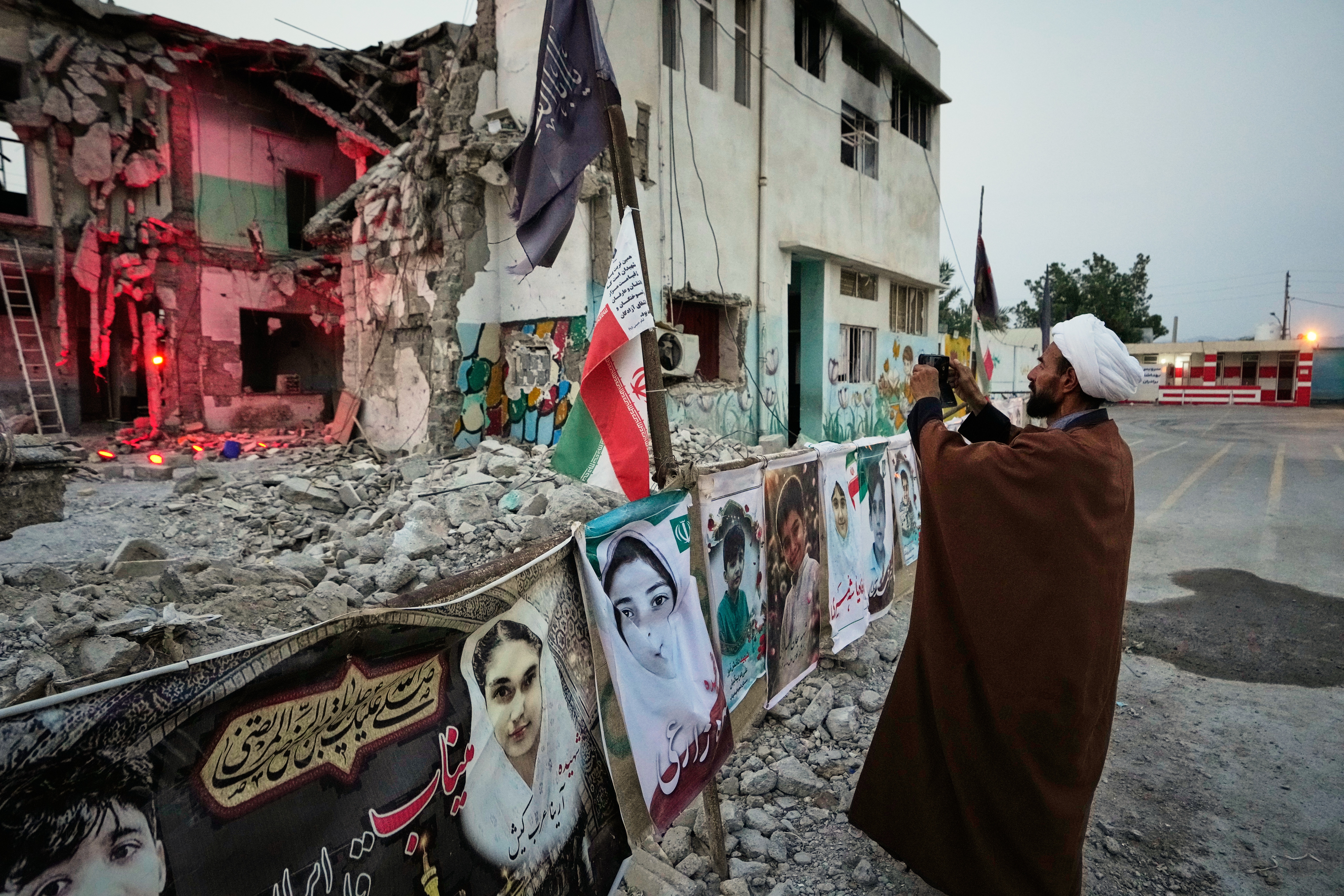
    At the start of the U.S.-Israeli war against Iran in February, at least one U.S. missile hit the Shajareh Tayyebeh school in Minab, according to an Associated Press investigation. There has been no final accounting of what happened.

    Iranian state media have said 168 people were killed in the strike, most of them children.

    “Following the United States and Israeli attacks on 28 February, the mission found reasonable grounds to believe the United States committed the war crime of launching indiscriminate attacks resulting in the loss of life or injury to civilians or damage to civilian objects,” a U.N. statement about the team’s findings said.

    The U.S. State Department did not immediately respond to a request from The Associated Press seeking comment.

    In their report, the experts concluded that “the building of the school was the intended point of impact” and the resulting damage wasn’t the result of an errant strike or collateral damage from an attack on a compound of Iran’s Revolutionary Guard next to the school.

    The Trump administration has yet to directly accept responsibility or release the findings of a Pentagon investigation into the school bombing.

    The U.N.-backed team based its allegations on two strikes — one involving Tomahawk missiles that hit the “clearly identifiable” school, and another in which Precision Strike Missiles dispersed tungsten pellets over a “clearly identifiable sports complex and residential area” in the southern city of Lamerd, also on Feb. 28.

    The U.N.-backed team said 22 civilian men and women were killed. U.S. Central Command has denied responsibility for the strike on Lamerd.

    Experts cite ‘crimes against humanity’ by Iran’s government

    The team found that killings by state security forces in Iran have occurred on a “staggering scale,” and civilians faced “gross human rights violations and crimes against humanity committed by their own government.”

    Iranian security forces carried out “violent repression” over the last two years by firing assault rifles into crowds, beating protesters and arresting healthcare workers, among other things, the team said. Detainees faced torture, and were deprived of legal counsel, leaving their families “in the dark” about their whereabouts, the experts said.

    The Tehran government intensified the use of the death penalty, and said more than 70 people – including five women and three boys – remain at “imminent risk of execution,” they added.

    “The report concluded that many of these gross violations amount to crimes against humanity — including murder, imprisonment, torture, and other inhumane acts committed as part of a widespread and systematic attack on civilians,” the statement said.

    Both the U.S. and Iran should provide reparations, they say

    The experts said the United States and Iran should halt all rights violations and crimes, and provide “full reparations to victims.”

    The report, built on a “victims-centered approach,” was based on interviews with 73 people both inside and outside Iran, along with documentation, satellite imagery, photographic and video material and information from “credible” organizations and experts, the experts wrote.

    The ongoing conflict that has driven people from their homes in Iran as well as an internet shutdown and a lack of full cooperation from the two governments partially impeded the team’s efforts to get information.

    Nearly three dozen requests from the experts for information from Iran’s government went unanswered, they said, as have requests in June to the U.S. government for information and meetings with officials.