What started as a search for love on a “sugar daddy” website ended with nearly $3 million in taxpayer fraud — and, in Philadelphia’s federal courthouse Wednesday, a one-year prison sentence.
In 2019, prosecutors said, David Ray of Ione, Calif., set up a profile on a website to search for a potential girlfriend. On the site — which prosecutors did not name — Ray struck up a conversation with Aryanah Davison of Harrisburg, and the two began chatting online for months.
Ray became so smitten, prosecutors said, he agreed to take out lines of credit to send Davison money. He even bought her a luxury SUV.
Then, awash in debt, Ray — who worked at a California trucking company for 38 years — agreed to a novel scheme to try to make the money back: He decided to send Davison personal identifying details of 375 of his colleagues.
And Davison then used that information to file fraudulent claims for pandemic unemployment assistance in 27 states, prosecutors said — leading the government to pay $2.8 million in improper benefits.
The scheme unraveled several years ago, and in 2023 Ray agreed to plead guilty to wire and mail fraud and identity theft charges.
During their investigation, authorities also charged Davison with similar offenses. And they learned that she had been persuaded to set up her profile and start looking for potential victims at the urging of another man, Ardavan Alamoutinia of Hummelstown, Pa.
Alamoutinia, prosecutors said, was a key part of the scheme to manipulate Ray — and, ultimately, to defraud a government program intended to benefit people harmed by the COVID-19 pandemic.
“While anxiety and division engulfed this country, [Alamoutinia] saw dollar signs,” prosecutors wrote.
And although they acknowledged that Ray was, in a certain sense, a victim of Davison and Alamoutinia, they also said Ray knew it was wrong to send Davison his colleagues’ personal information. And they said he shared in some of the benefits, when Davison and Alamoutinia sent him back some of their proceeds.
“When life got tough, David Ray sold out his co-workers and friends — and earned over $144,000 doing it,” prosecutors wrote. “The defendant knew better.”
In court Wednesday, Ray said that was true — he did know better.
Ray, 68, told U.S. District Judge Juan R. Sánchez that he had failed to control his impulses while communicating with Davison. Since his arrest, he said, he has relied on therapy, his family — including his wife, who was in court with him — and his faith to hold himself accountable and avoid similar temptations.
“I allowed myself to be corrupted,” he said.
Sánchez called Ray’s actions in the case “bizarre,” but said he has been impressed with Ray’s efforts to get his life back in order.
As for Ray’s accused coconspirators, Sánchez sentenced Alamoutinia earlier this year to 10 years in prison. Davison has pleaded guilty and is awaiting sentencing.
A sixth death tied to Pennsylvania’s measles outbreak, the nation’s worst in decades, was confirmed on Wednesday by Pennsylvania health officials. The death involved an unvaccinated person in Jefferson County.
Officials did not provide any additional information on the death, citing state privacy laws.
A spokesperson for the Pennsylvania Department of Health said the state was still investigating a seventh death, reported by Franklin County’s coroner last month, but has not been able to find a local death that fits the state’s definition for one related to measles.
The Centers for Disease Control and Prevention, under Kennedy’s direction, has been slow to log measles deaths and has acknowledged only four deaths on its measles data dashboard, without saying where they occurred. Outside of Pennsylvania, New York reported its first measles death in 30 years on Monday, a 7-month-old infant who was not vaccinated.
In Pennsylvania, state officials have largely declined to provide information on measles deaths beyond the patient’s county of residence and vaccination status; all other information has come from local coroners and right-to-know records requests.
The death reported Wednesday is the second in Jefferson County. In September, County Coroner Greg Furlong said a 40-year-old woman died from respiratory failure and measles, and added that the woman, who was unvaccinated, had chronic obstructive pulmonary disease and other serious health conditions that made her particularly vulnerable to the highly contagious virus.
Furlong did not immediately return a request for comment on the county’s second death.
Jefferson County has reported 92 measles cases so far this year, the state’s fourth-highest case count since the current outbreak began in April. As of Wednesday, the state has reported 1,467 cases, with 77 new cases logged in the last week.
Besides the two Jefferson County deaths, health officials have confirmed four other measles-associated deaths, which are deaths that occur within 30 days of symptom onset in a person with clinical evidence of a measles infection and a positive lab test. Such deaths cannot be due to unrelated causes, like a car crash.
Officials also consider other information in confirming a measles-associated death, including medical records and known exposures to measles.
In all, the state has confirmed three deaths in Lancaster County residents, two in Jefferson County residents, and one in a Mifflin County resident.
In Lancaster County, a local coroner challenged the state’s interpretation of one death, saying that an infant who died shortly after birth and tested positive for measles died from a lacerated spleen, not the virus, though prominent physicians have questioned that conclusion.
In October, Franklin County’s coroner said a 39-year-old woman had died from a “probable acute cardiac event due to possible complications of the measles.”
In a subsequent email to reporters, the coroner wrote that “per the direction of the Pennsylvania Department of Health, all deaths are considered measles associated with clinically relevant symptoms within the last 30 days prior to death.”
But the state heath department said Wednesday that its “thorough investigation” has not yet found any cases in Franklin County that fit its definition.
“DOH appreciates that the Franklin County coroner made DOH and the public aware of this case. DOH continues to work with coroners throughout the state to improve communications and refine death reporting standards during the ongoing measles outbreak,” the department wrote in a statement.
Last week, The Inquirer took legal action to contest the decision of the Franklin County coroner to partially deny a public records request seeking to learn more about the death. A Franklin County judge had ordered that information about the death be sealed from public review.
The coroner did not immediately return a call for comment.
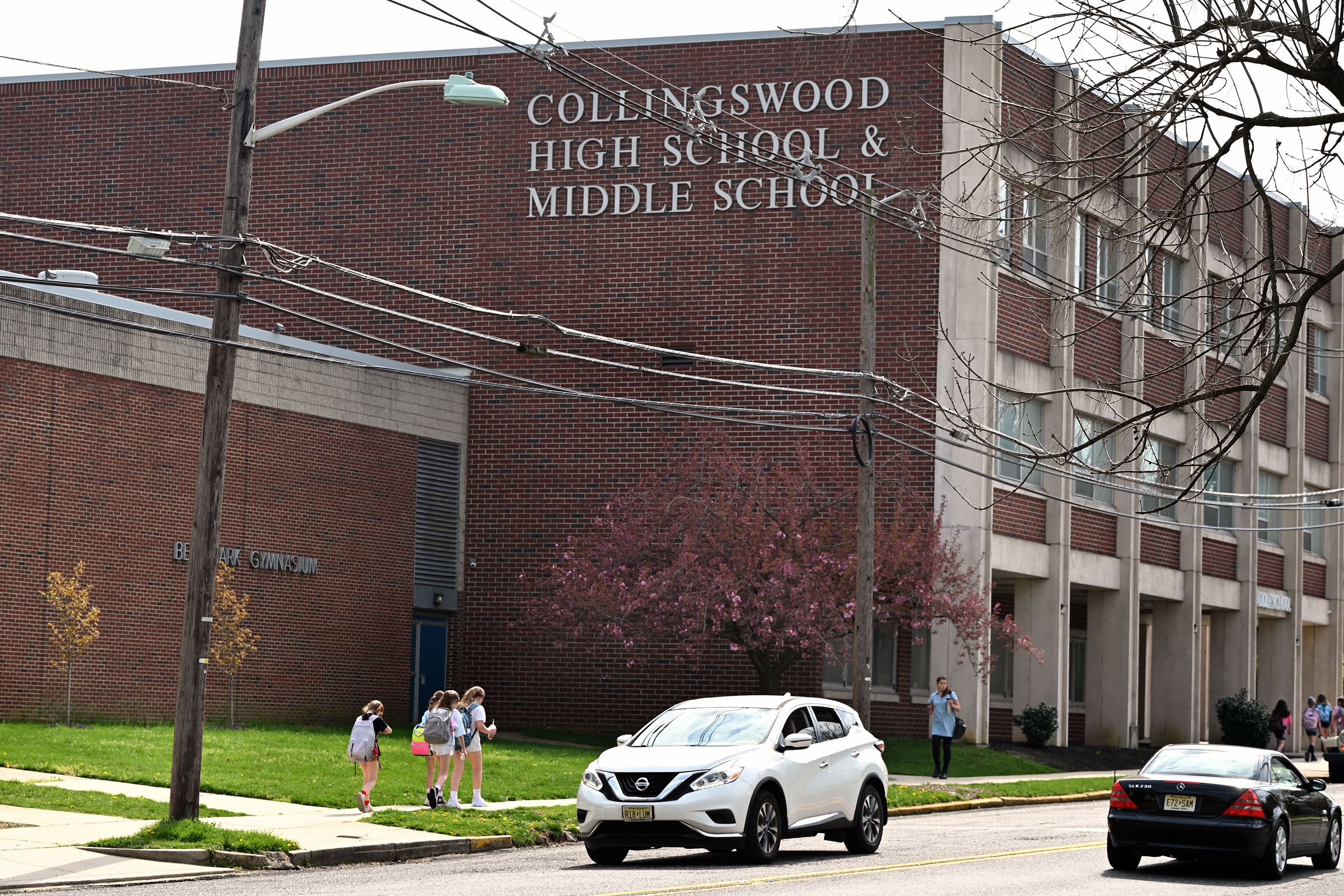
In preliminary unofficial results, the Collingswood bond question was rejected 2,863 to 2,646. It would have added $1,324 annually to a tax bill for a home assessed at the borough average of $448,000.
“We deeply appreciate every community member who engaged in this process and made their voice heard. While these initial results are not what we had hoped for, our primary focus remains unchanged: delivering a strong, supportive education for all Collingswood students,” Superintendent Fred McDowell said in a statement Wednesday.
Without the funds, McDowell has said the district would likely face significant budget cuts, including reducing teacher positions, increasing class sizes, reducing elective courses and athletics, and possibly cutting student mental health services for the 2027-28 school year.
For the current school year, Collingswood raised taxes, cut positions, closed a school, and consolidated its middle school and high school campuses to help bridge a $3.3 million budget gap.
McDowell has sounded an alarm for another tough budget cycle next year and an expected budget deficit. He said Collingswood’s school tax level yields about $480,000 annually — far short of the $4 million needed to cover salaries, benefits, and state mandates.
Residents had mixed feelings about the bond proposal.
“I think in general I had to weigh the future of our schools with the current lack of affordability … but in the long term, with two kids, I need a school system not to crumble,” said Emma Rose, 40.
Donald Nigro, a software engineer, and his wife, Patricia, an attorney, both voted against the referendum.
“We don’t have confidence in the members of the school board to be fiscally responsible,” Patricia Nigro said. “I just felt like they need a little more scrutiny and a little more fiscal responsibility.”
Collingswood was among four districts statewide that turned to operating bonds Tuesday to add to their budgets in the wake of declining state aid. The question enables districts to exceed the 2% property tax levy cap.
Voters in Burlington Township approved a $567,000operating bond, and voters in the Bordentown Regional School district passed an $86.1 million capital bond that will raise their property taxes.
Elsewhere in the state, voters in Oradell in Bergen County rejected a $73,000 operating referendum to fund an armed law enforcement officer and educational programs.
Burlington Township officials said the funds would be used to hire two additional elementary school teachers, add a music teacher and expand the music program, reduce class sizes, and expand middle school athletic programs.
The approval, 3,033 to 2,179 vote, will mean a permanent increase in the district’s tax levy. It will add $50 to the annual tax bill for a home assessed at the township average of $234,975, said district spokesperson Liz Scott.
Voters in the Bordentown Regional school district who reside in Fieldsboro, Bordentown City, and Bordentown Township approved their bond referendum 3,663 to 2,260.
Superintendent James Altobello said the bond, one of the largest in the district’s history, would be used for renovations at all five district schools.
The bond will add $588 to the average annual tax bill in Bordentown Township, $456 in Bordentown City, and $420 in Fieldsboro. The state will pick up $34.4 million of the costs.
Voters in Washington Township in Burlington County approved a measure to reduce the school board from five members to three.
Staff writer Lacey Latch contributed to this article.
At least in Southeastern Pennsylvania, the blue wave was not fueled by a surge in voter turnout.
Although some votes are still being counted, Tuesday’s turnout in Philadelphia and the four suburban counties is on track to come in slightly lower than in 2022, the last presidential midterm election cycle.
In Philadelphia, where more than 99% of ballots had been counted as of Wednesday afternoon, turnout among registered voters was about 44.6%. Four years ago, about 47.4% participated.
In Montgomery, Chester, and Bucks Counties, turnout was just over 62% on Tuesday, compared to about 66% or more in 2022. And in Delaware County, where almost 61% of registered voters cast ballots in 2022, turnout Tuesday was just shy of 57% as of Wednesday afternoon.
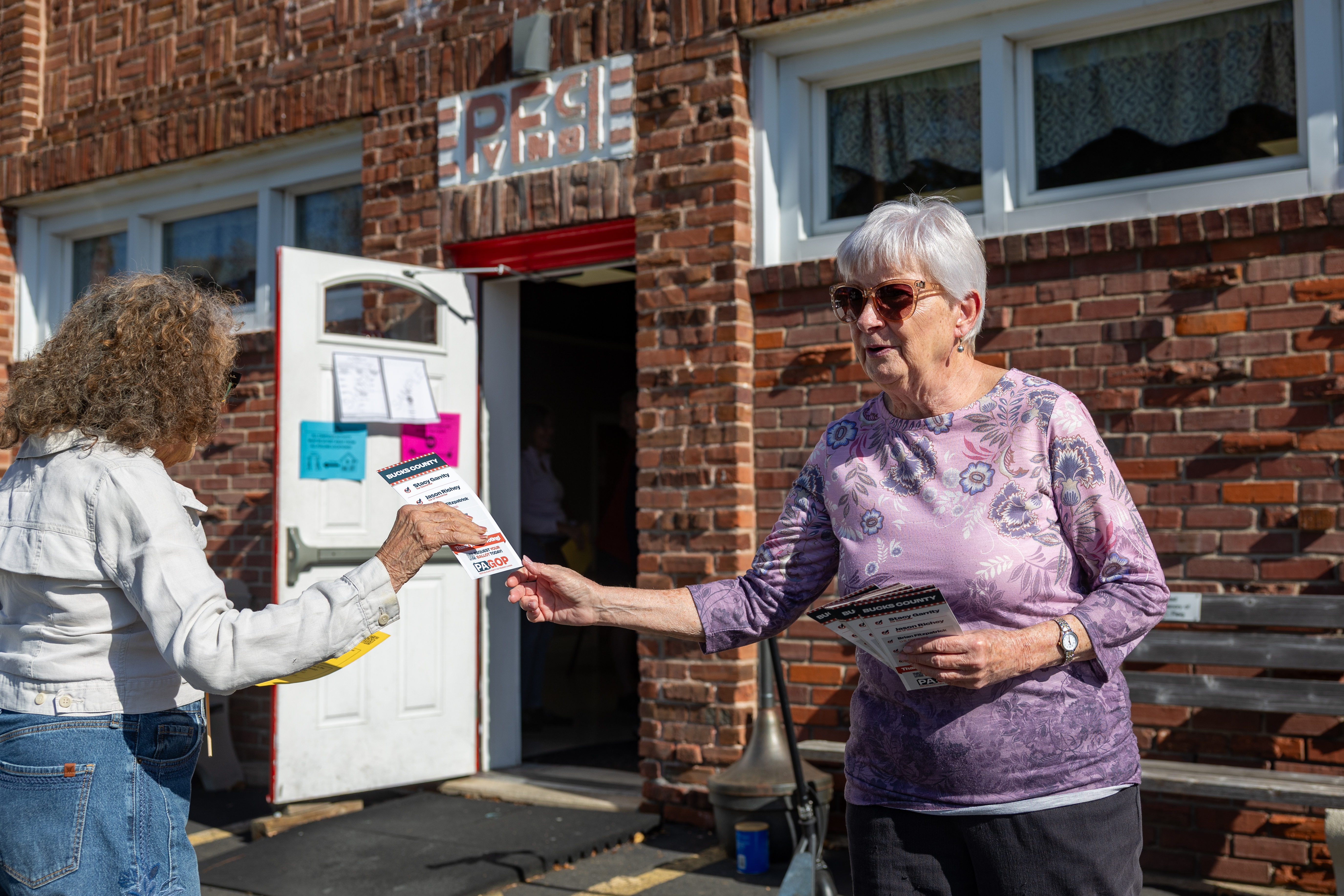
Committee person Therese Marshall, 77, of Langhorne, Pa., hands out a Republican ballot to a local voter outside the Parkland Fire Company during midterm elections in Langhorne, Pa., on Tuesday, Nov. 3, 2026.Aidan T. Gallo / Staff Photographer
Some votes still had not been counted by Wednesday, including provisionals, ballots from overseas voters, and mail-in ballots with errors that voters still have a chance to cure.
That means voter turnout rates are likely to increase slightly before results are finalized. But even if they come close to 2022 levels, there are no signs of a spike in turnout in Philly and the collar counties.
“In recent midterm elections, it was higher than the turnout that we just had, but we’re not done counting,” Philadelphia City Commissioner Seth Bluestein said.
Southeastern Pennsylvania’s relatively lower turnout may not reflect a national trend, with voter participation reportedly up in several battleground states and setting records for non-presidential years in Michigan and Minnesota.
Jim Allen, the elections administrator for Delaware County, said he was surprised turnout wasn’t higher, but declined to speculate why.
“We expected it do be a little higher, based on the speed with which people were returning their mail and absentee ballots,” Allen said Wednesday. “There seemed to be a strong desire to get that ballot back to us, even though we didn’t have as many applications.”
Democratic Committee members on Election Day outside polling place located in the Marconi Plaza Bocce Courts, in Philadelphia, November 3, 2026.Jessica Griffin / Staff Photographer
One reason turnout may have been depressed locally was a dearth of competitive races that could draw voters to the polls.
“We had one competitive state [representative] race, based on the results,” Allen said of Delaware County.
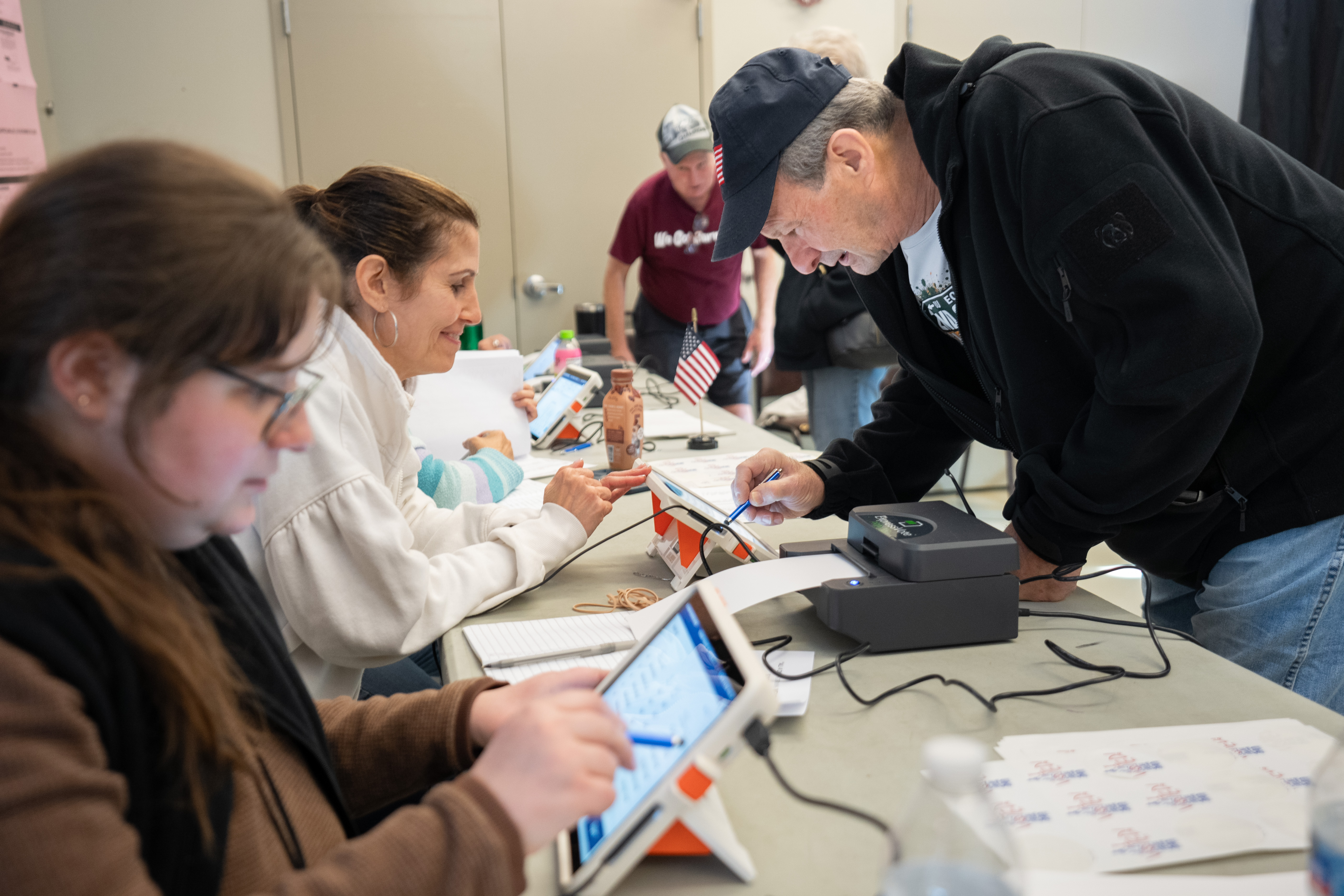
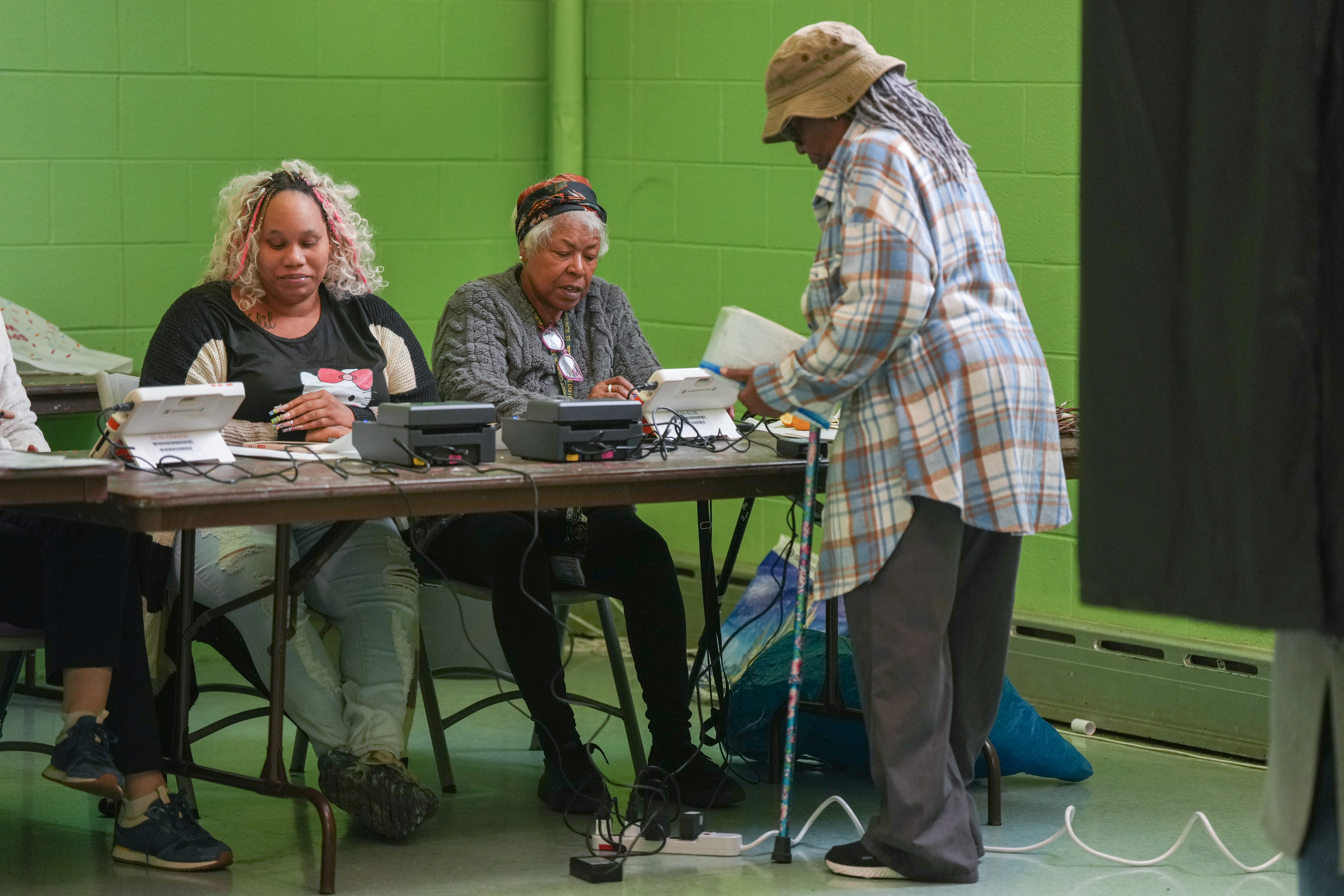
Volunteers assist a voter at the polls at the Hawthorne Recreation Center, on Election Day, in Philadelphia, November 3, 2026.Jessica Griffin / Staff Photographer
Another reason may be that the blue wave had as much to do with Republicans staying home as it did with Democrats flocking to the polls.
Montgomery County Commissioner Neil Makhija, a Democrat who chairs the county’s elections board, said the turnout story provides a warning for his party as it takes the reins of power.
“Much of the win is likely from Republicans who didn’t have the enthusiasm to turn out,” Makhija said. “It’s an important lesson for Democrats because the right answer to that is we need to actually respond to the pressing issues people are facing. Otherwise, the same thing will happen when Democrats are in charge.”
This year’s participation levels were a stark contrast from 2018, the first midterm election under President Donald Trump. That year, Democrats made major gains as turnout surged to about 65% or higher in Bucks, Montgomery, and Chester Counties that year, and north of 50% in Philadelphia.
In 2022, when local turnout had slipped from four years earlier but was still relatively strong, the ballot in Pennsylvania was headlined that year by an ultra-competitive Senate race in which Democrat John Fetterman topped Republican Mehmet Oz.
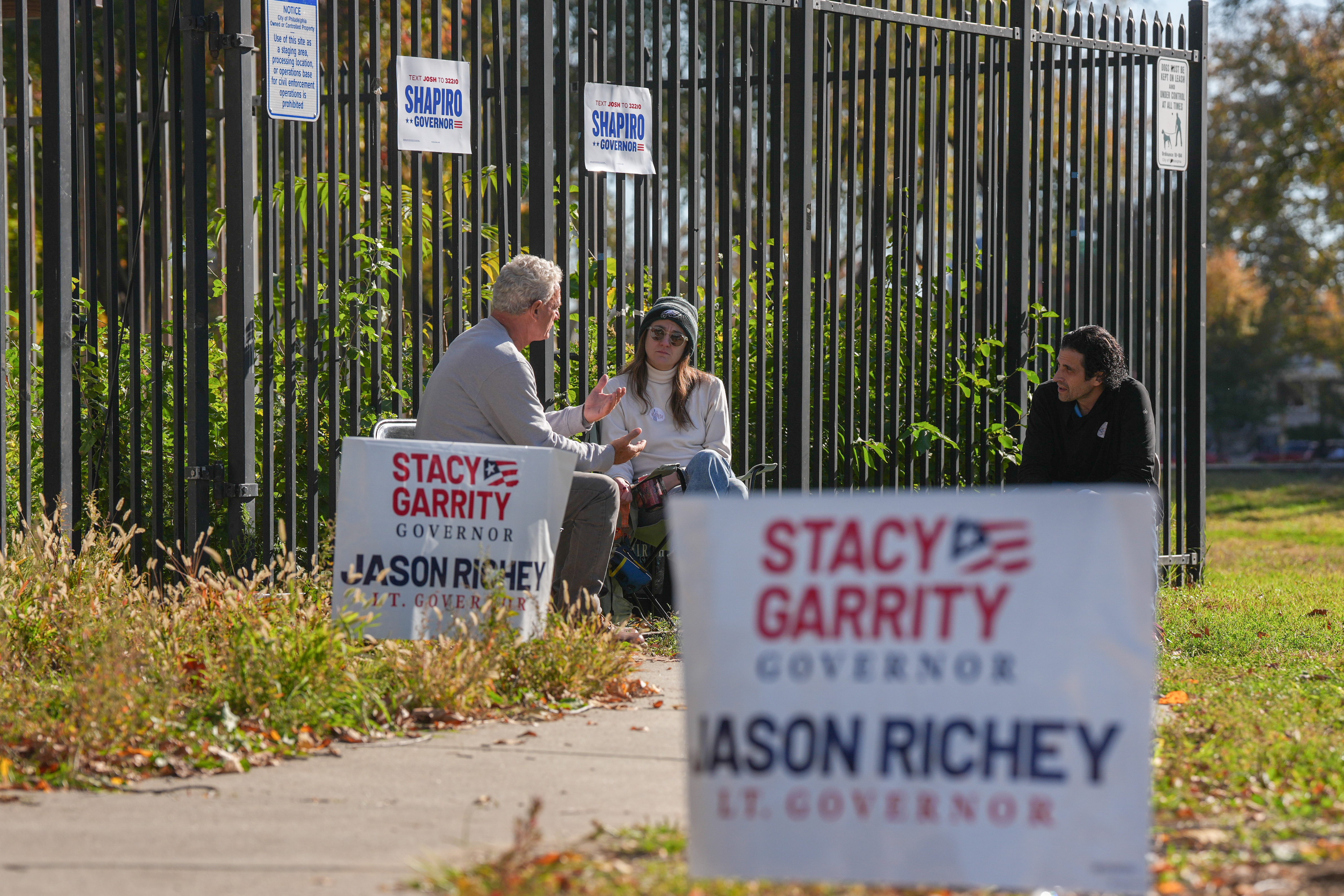
Jim Knapp, who chairs the Haverford Township GOP in Delaware County, said he sensed a lack of enthusiasm heading into Election Day.
“At a cursory glance, it’s pretty disappointing. There’s just a lot of apathy,” Knapp said. “I didn’t see a whole lot of lawn signs.”
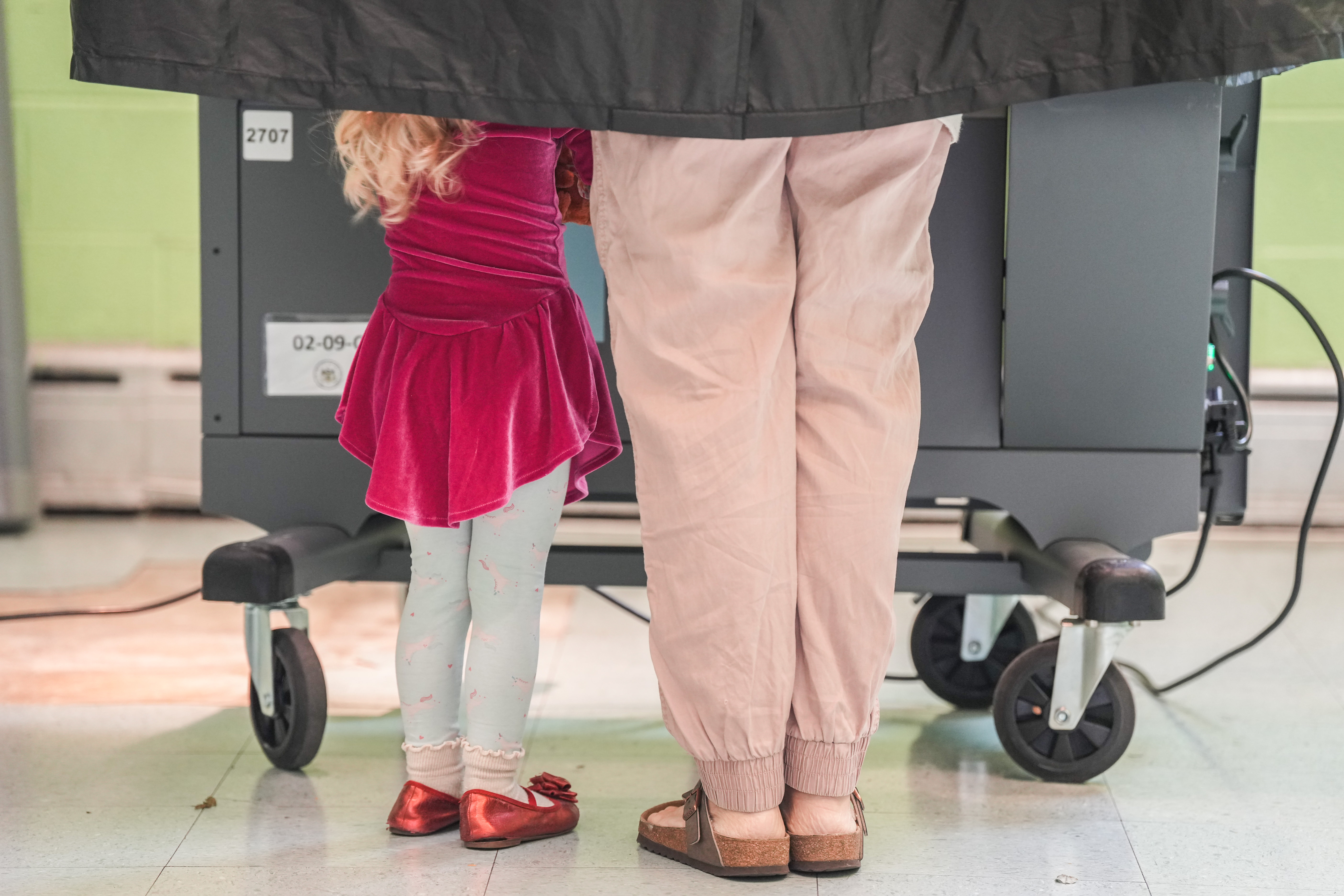
Bronwynn Hall and her three-year-old daughter, Elodie, vote at the Hawthorne Recreation Center, on Election Day, in Philadelphia, November 3, 2026.Jessica Griffin / Staff Photographer
For decades, Pennsylvania’s Democratic legislators have been stymied in their attempts to pass environmental and energy-related bills amid political gridlock.
Now Democrats have control of the Senate, House, and governorship for the first time since 1993. But getting legislation passed will not be easy with a slim margin of 26-24 in the Senate.
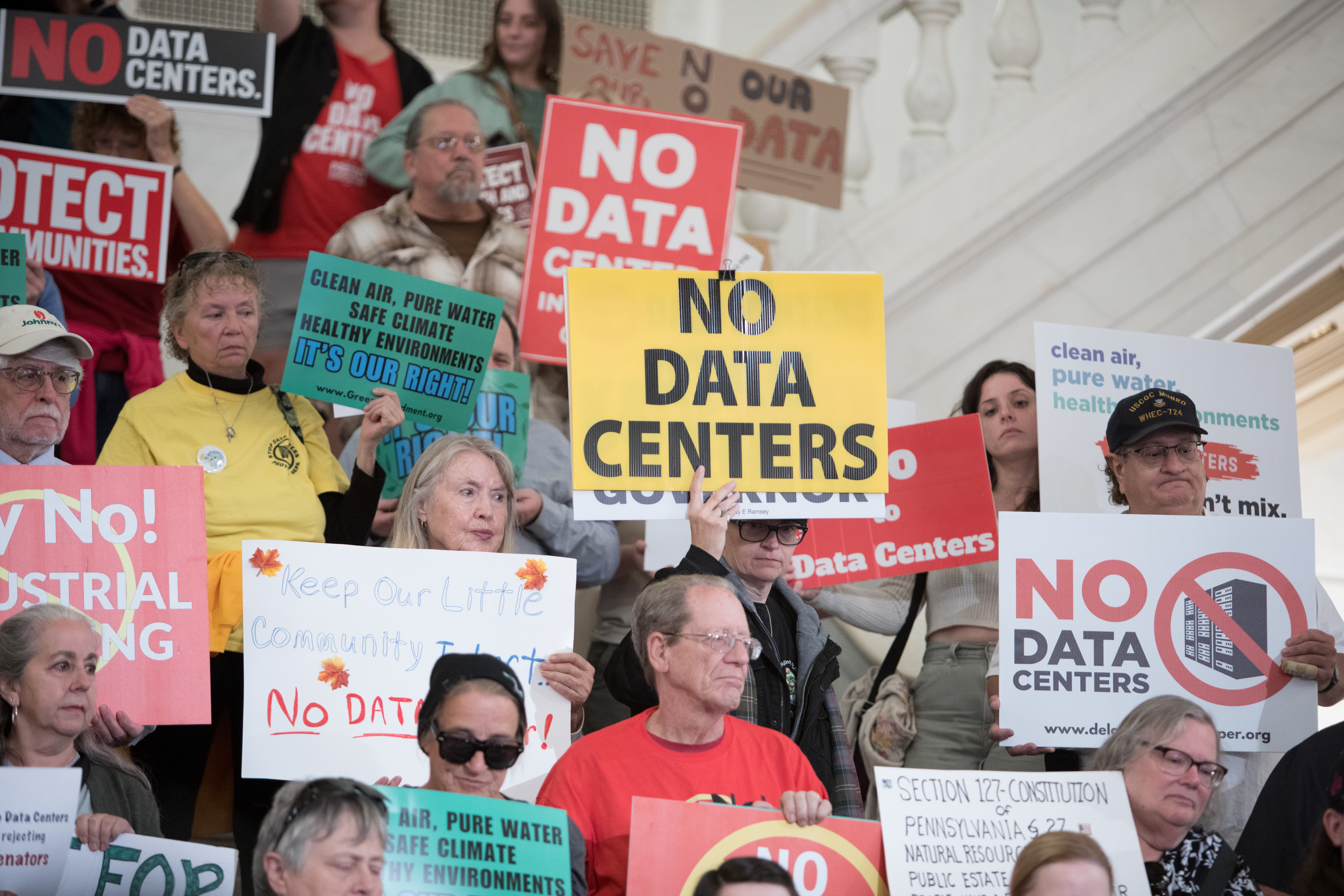
Regardless, legislators will be under pressure to act fast on one major issue: hyperscale data centers.
The data centers are not only a pressing environmental issue but are also intertwined with rising consumer energy costs as the electrical grid and utilities struggle to meet the power demand.
Six such data centers meant for artificial intelligence and totaling millions of square feet are proposed for Bucks, Chester, and Montgomery Counties.
“The data center issue is the environmental issue of this generation,” said Ginny Kerslake, the Eastern Pennsylvania organizing manager for the nonprofit advocacy group Food and Water Watch. “You cannot talk about the environment without talking about data centers in Pennsylvania right now.”
Republicans have been able to thwart many Democratic environmental bills in the past. Lawmakers are out of excuses, she said.
Data centers
Currently, a bill with strong bipartisan support has passed the House and would allow municipalities to voluntarily impose a moratorium on data center proposals for up to 180 days.
The goal of the bill, sponsored by State Rep. Paul Friel, a Democrat from Chester County, is to give towns breathing room to craft ordinances that could put limits on how and where data centers are built. The bill has been referred to the Senate.
But activists like Kerslake want more. She supports a bill sponsored by State Sen. Katie Muth, a Democrat from Chester County, that would impose a three-year statewide moratorium on hyperscale data center development and permitting. The bill has been referred to a committee.
Now that Democrats control the governor’s office and both houses of the legislature, they can no longer blame Republicans for failing to enact protections, Kerslake said.
The only reason Democrats would fail to take up or pass a statewide moratorium, she argued, is if they bow to pressure from tech companies, the energy industry, or building trades.
If Democrats fail to act, she believes, lawmakers would face voter backlash from their own party and Republicans, many of whom also support moratoriums.
David Hess, who served as secretary of the Pennsylvania Department of Environmental Protection (DEP) under former Republican Govs. Tom Ridge and Mark Schweiker, said state leaders face an immediate burden of addressing not only data centers and energy costs, but also shale gas reform.
Hess, who runs a popular environmental blog, called the Democrats’ control of all three branches the biggest change he has seen in state politics in 50 years.
“Democrats have to show progress on those issues,” Hess said, “or they’ll suffer the same fate the Republicans had in this election. People want results.”
Anxiety over utility bills is high, he said. Voters’ patience will run out quickly if Democrats do not come up with a highly targeted agenda soon.
That would include transitioning from a dependence on the state’s vast natural gas reserves in the Marcellus Shale to an “all of the above” energy policy that incorporates renewables, Hess said.
Environmental protections surrounding natural gas drilling have remained unchanged for 23 years and need to be updated, he said. That would include increasing the distance of gas projects from communities and a ban on dumping drilling wastewater on roads.
Democrats have their work cut out for them, he said, as both the House and Senate would have to work with Shapiro, who has his own plans.
Low-hanging fruit
David Masur, executive director of the nonprofit advocacy group PennEnvironment, predicted that getting things done might not be easy, even though Democrats have full control in Harrisburg.
Lawmakers must navigate a slim Senate majority that leaves no margin for error. Tie votes in the Senate, he noted, automatically fail.
Additionally, party leaders must bridge a caucus that spans progressive members and conservative Democrats who represent districts that rely on fossil fuel energy.
“It’s much different being in charge than being in the minority,” Masur said. “They have to build the ship while they sail it. And they can’t lose a single vote.”
Masur urged leaders to focus on popular bills already approved by the House.
He believes priorities should include community solar energy expansion, banning PFAS “forever chemicals” in personal care products, appliance efficiency standards, and the 180-day data center moratorium.
“If there’s low-hanging fruit like these bipartisan bills,” he said, “why not come out of the gate fast and send them to the governor’s desk?”
Collingswood voters decided Tuesday to overturn a Quaker-era policy restricting the sale of alcohol in the borough, after more than a century as a dry town.
The ballot measure passed with just over 60% of the vote,or 3,506 voters, according to preliminary election results from Camden County.
The move represents a historic shift for a borough that has prohibited alcohol sales since the 19th century.
“The outcome represents an important change for Collingswood, and the governing body is committed to approaching the next steps thoughtfully, transparently and in a manner that reflects the interests of the community,” the borough said in a statement Wednesday.
It is not yet clear how quickly alcohol sales could begin. Local regulations will first need to be established to determine how many liquor licenses will be available, what types of businesses can apply for them, what they will cost, and how those businesses will be allowed to operate, according to the borough.
To abide by the state-mandated population-based cap, Collingswood will be limited to either a single distribution license for a liquor store or four retail consumption licenses that permit restaurants or bars to serve alcohol. It is not clear which route Collingswood will take.
It is also unclear how much revenue the borough could take in from the new licenses.
Collingswood intends to award the licenses through a public bidding process and will establish a minimum bid “informed by research into recent successful license bids in comparable municipalities,” according to the borough’s statement.
Annual licensing and renewal fees could generate between $1,000 and $10,000 each year, borough solicitor Caitlin Harney Norcia said during a commissioners meeting earlier this year.
In addition to a liquor license ordinance, officials will also need to establish zoning regulations to determine where in town the licensed establishments can operate, the borough said. Right now, they are primarily focusing on the central business district, they added.
“There’s a general sense that liquor can be a good thing, but there’s a concern that if it’s done in a way that’s unbalanced, it can also throw people off,” borough administrator Cassandra Duffey told The Inquirer in June.
“The challenge is not to disrupt the balance of businesses that already exist here,” she said.
Tuesday’s ballot referendum was the result of a concerted effort from Collingswood residents this summer to collect enough signatures to put the question in the hands of voters.
One of the residents who voted in support of the measure was Emma Rose, 40.
“We absolutely need liquor in this town,” said Rose, who does not drink but voted in support of the measure.
“I don’t think businesses should be hampered from being successful in the modern market based on the outdated, outmoded, sort of strange puritanical restrictions,” Rose said.
“It’s just not possible” for small restaurants to sustain themselves without serving alcohol,Rose said.
Jill Leeb, a 38-year-old mental health therapist, also does not drink, but she said she wants to see if the liquor licenses can provide a revenue boost for the borough and its restaurants.
“I don’t think it can do much harm to try it out and see what happens,” Leeb said at her polling place Tuesday. “And we could always walk it back if it doesn’t, but it’s important to enough people that why not try and see how it goes?”
But longtime residents Donald and Patricia Nigro fear that liquor sales could be a slippery slope for the borough. They both voted against the measure.
Collingswood’s enduring status as a dry town helps set it apart, they said, and has helped protect it from some of the pitfalls of other municipalities.
When he moved to the borough decades ago, Nigro said, people were skeptical of his decision.
“Back in the mid-’80s, Collingswood wasn’t as vibrant as it is now,” he said, attributing its growth into a highly desirable place to live, at least in part, to being alcohol-free.
“If we have alcohol, it’s going to do nothing for the quality of life here, because when we want to drink at a restaurant, we bring a bottle,” he said. “It’s cheaper.”
I woke up after the midterm elections feeling a little like I did the morning after President Barack Obama won his first term in office.
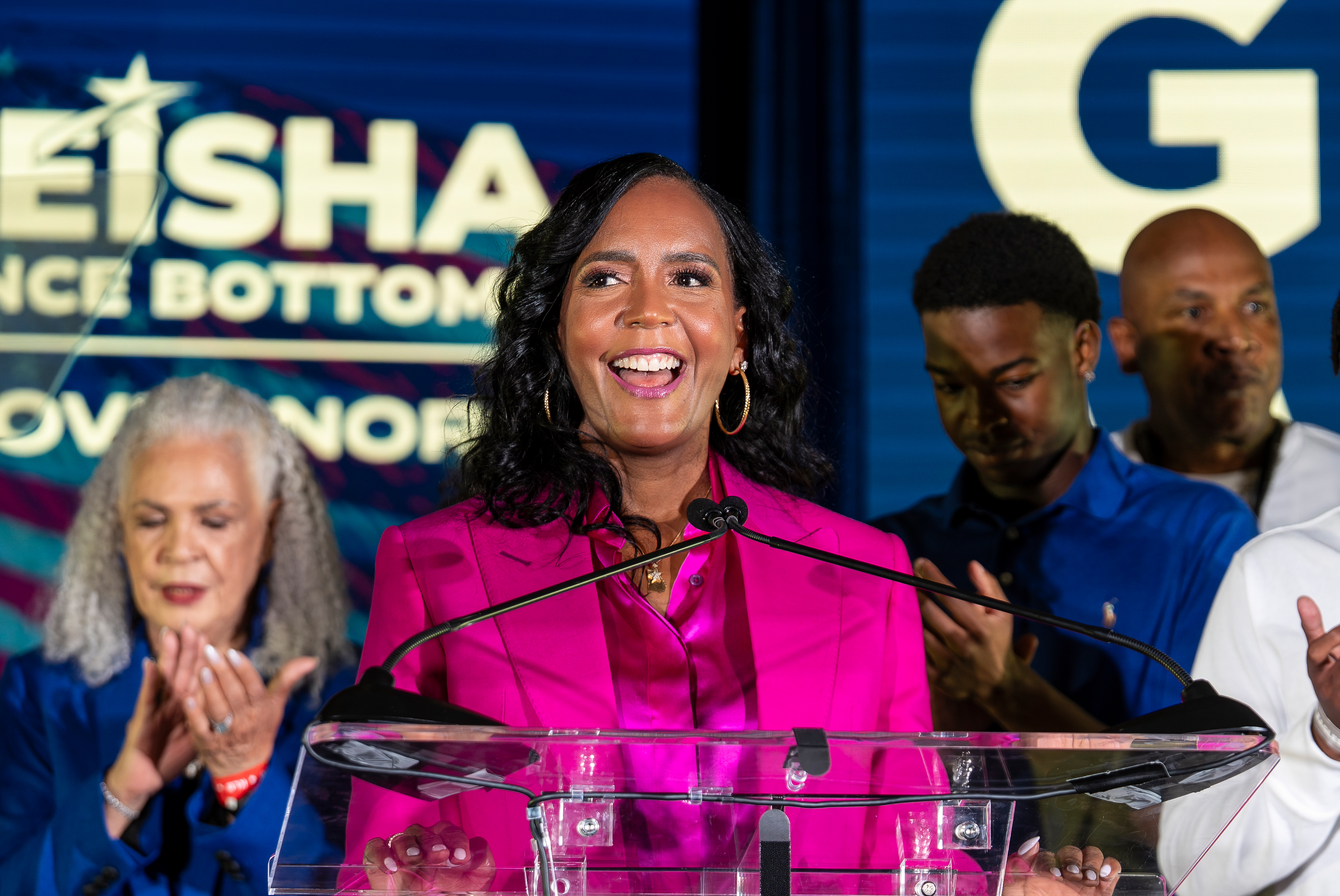
America has finally elected its first Black female governor, and her name is Keisha. That’s Keisha as in Keisha Lance Bottoms from the state of Georgia.
The last time I’d actually laid eyes on her before election night, Bottoms was being interviewed in her kitchen earlier this yearby ABC News anchor Linsey Davis. The former mayor of Atlanta was discussing her gubernatorial campaign and family history while demonstrating how she makes her family’s sweet potato pie recipe.
As she talked, I watched as she added ingredients. Black folks don’t play when it comes to our sweet potato pies. They have roots in West Africa and a special place on tables in Black Southern households. If you see an orange pie on our table at Thanksgiving, you can almost bet it’s sweet potato instead of pumpkin.
And Black folks can be downright picky about how to make it. During her TV interview, Bottoms looked a bit too manicured and well dressed — or bougie — to be cracking eggs.
I was giving her a bit of a side-eye before I realized she prepared her pie the same way my grandmothers and great-grandmothers made theirs. It made me smile. She is one of us.
Our shared history as Black women makes her election night victory even sweeter.
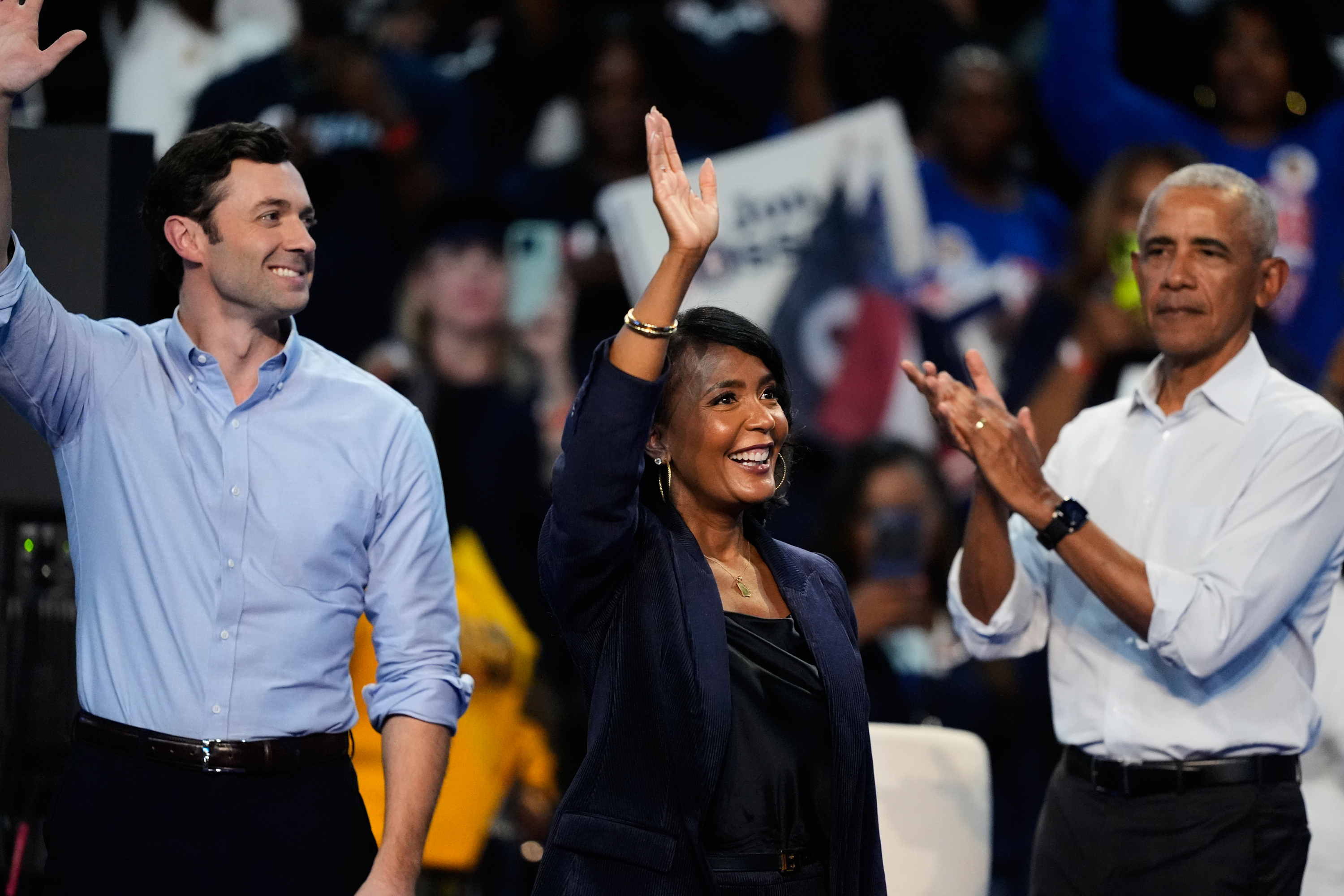
Democratic gubernatorial candidate Keisha Lance Bottoms (center) waves to supporters, joined by former President Barack Obama and Democratic candidate Sen. Jon Ossoff, after a rally ahead of the Georgia primary election on Oct. 28, in Morrow, Ga.Brynn Anderson
It’s the morale boost that so many of our sisters needed, and it’s right on time.
It’s estimated that as many as 100,000 Black female federal workers have lost their so-called good government jobs. That’s huge, especially considering many are the breadwinners of their families.
This — on top of Vice President Kamala Harris’ heartbreaking loss in the presidential race two years ago — has been a lot to endure. On Tuesday night,MSNOW political commentator Symone Sanders Townsendsummed that election up best when she said, “After the 2024 election, to Black women all over this country it felt like a repudiation of us.”
As one of the 92% of Black women who ran to the polls to vote for Harris, I agreed with Townsend that her loss felt like a sign that “America just does not want us.”
Townsend referenced seeing Bottoms out on the campaign trail with her hair in box braids (which date back to ancient Africa) and being uncertain how that might impact the former mayor’s candidacy. Bottoms’ willingness to not shy away from her racial identity paid off.
“She won by going out there and being herself and talking about the issue, connecting with the people and for the 92% out there that was feeling like, ugh, maybe the country just doesn’t want us,” Townsend said. “Georgia wanted Keisha.”
Townsend choked up as she spoke. Watching from home, I teared up a bit, too. A friend of mine called and told me she also felt emotional.
Bottoms’ win was for every girl who was told her name was too ethnic to open the right doors.
Bottoms’ win was for every woman who felt she had no choice but to remove her braids before an important job interview.
Bottoms’ win was for every woman who dared to try and break through a glass ceiling.
And the fact that Bottoms’ historic victory took place in the heart of the Confederacy is the dollop of whipped cream on top of our slice of sweet potato pie. It didn’t come easy.
The Republican nominee for governor in Georgia, billionaire Rick Jackson, poured more than $200 million of his own fortune into his campaign. But it turned out that this was one election even all that money couldn’t buy.
Years from now, schoolchildren in the Peach State will learn about how Bottoms’ beloved late father had to enter through the literal back doors of some of Georgia’s oldest institutions during segregation. Years later, she walked through those same doors first as mayor of Atlanta, and soon as the state’s first Black governor.
During her victory speech, Bottoms talked about visiting the tiny town of Crawfordville, Ga., which has ties to both Alexander Stephens, a founder of the Confederacy, and five generations of her ancestors.
“I visited the grave of Betsy Peek, my great-great-grandmother, who was born in 1845, 20 years before emancipation,” she told the crowd. “In a cemetery filled with unmarked graves, I found hers.”
“I don’t know what dreams Betsy Peek had for her children or her grandchildren or the generations that she would never meet,” Bottoms continued, “but I know I am standing on shoulders made of steel.”
She is — and for so many Black women, her rise called to mind the words of another pioneering politician who gave his own speech on a brisk election night in Chicago 18 years ago: Yes, we can.
The tax will help fuel a $400 million plan unveiled in July to improve water quality in the Cooper River, a tributary of the Delaware River that runs through Camden County, and other local rivers, lakes, and streams.
In the county’s final unofficial returns as of Wednesday, 79% of Camden County voters who responded to the ballot question, or nearly 92,000 people, had voted “yes” to boosting the county’s Open Space Trust Fund.
The tax increase will cost the average Camden County homeowner $1.83 per month. The vote increases the existing open space tax to $.03 per $100 of assessed property value, still one cent lower than in Burlington and Gloucester Counties.
The county will start collecting that money in 2027, said Dan Keashen, the county’s public affairs director.
“Now that the referendum has passed we can get to work improving and enhancing our community,” Keashen wrote in a text.
The ballot question also puts dollars toward protections for the county’s drinking water sources, wetlands, parks, water recreation, and prevention of development in natural areas.
Don Baugh, president of nonprofit Upstream Alliance, said the new tax will reduce how often his group has to cancel its free paddling and other educational trips through Camden’s waterways. It will also, he said, improve the ecosystem for aquatic life.
“It will boost the quality of life and economic development of Camden County, where more people will say, ‘I love to live here,’” Baugh wrote in an email.
County officials are still discussing which projects the levy will fund first, but Keashen said the increase will immediately support fixes for outdated sewer pipes leaking into the county’s waterways and improvements to Camden City’s combined sewer system.
Those efforts would help reduce flooding in the city and eliminate liquid waste flowing into the Cooper and Delaware Rivers, Keashen said.
“This referendum reflects a shared commitment to environmental stewardship, and preserving our natural resources for years to come,” wrote Jeffrey Nash, a Camden County commissioner, in a statement.
In addition to the one-cent tax hike, the county plans to shore up those projects with state and federal funding, philanthropy, and other funding sources.
Voters approved Camden County’s first open space tax 28 years ago with a referendum establishing a $2 million trust fund for environmental protections. Today, all 21 counties in New Jersey have an open space tax. Camden County raised more than $12 million through the tax last year.
On Election Day, some voters at the polls supported the new levy, but others were concerned about the extra cost.
Nicole Fahnestock, 52, has lived in Cherry Hill for nearly two decades. Her main concern at the ballot box was the cost of living.
“I voted ‘no’ because, honestly, I’m just tired of all the taxes,” Fahnestock said, noting that she has recently been impacted by property tax increases.
But other Camden County voters, like Shawn Acosta, said they were willing to pay a little more to help the planet.
“I’m a kayaker, so I’ve noticed our waterways are getting cloudier and cloudier,” said Acosta, a 61-year-old Etsy shop owner and longtimeCherry Hill resident. “I grew up fishing and we ate the fish. I take my grandson fishing and can’t eat the fish. That’s a problem to me.”
Rudolph Williams, director of climate and culture at the Philadelphia School District, also supported the measure.
“Anything that’s going to increase the [water] purity needs to happen,” Williams said. “Can you really put a value on purification of the things that we need?”
Philadelphia Democrats woke up to a new political reality on Wednesday, and they are brushing off their wish lists.
Elated with their party’s commanding performance in elections across the country, Philly lawmakers said this week that full Democratic control in Harrisburg for the first time in more than 30 years will be felt acutely in the city, where core institutions are facing compounding funding crises.
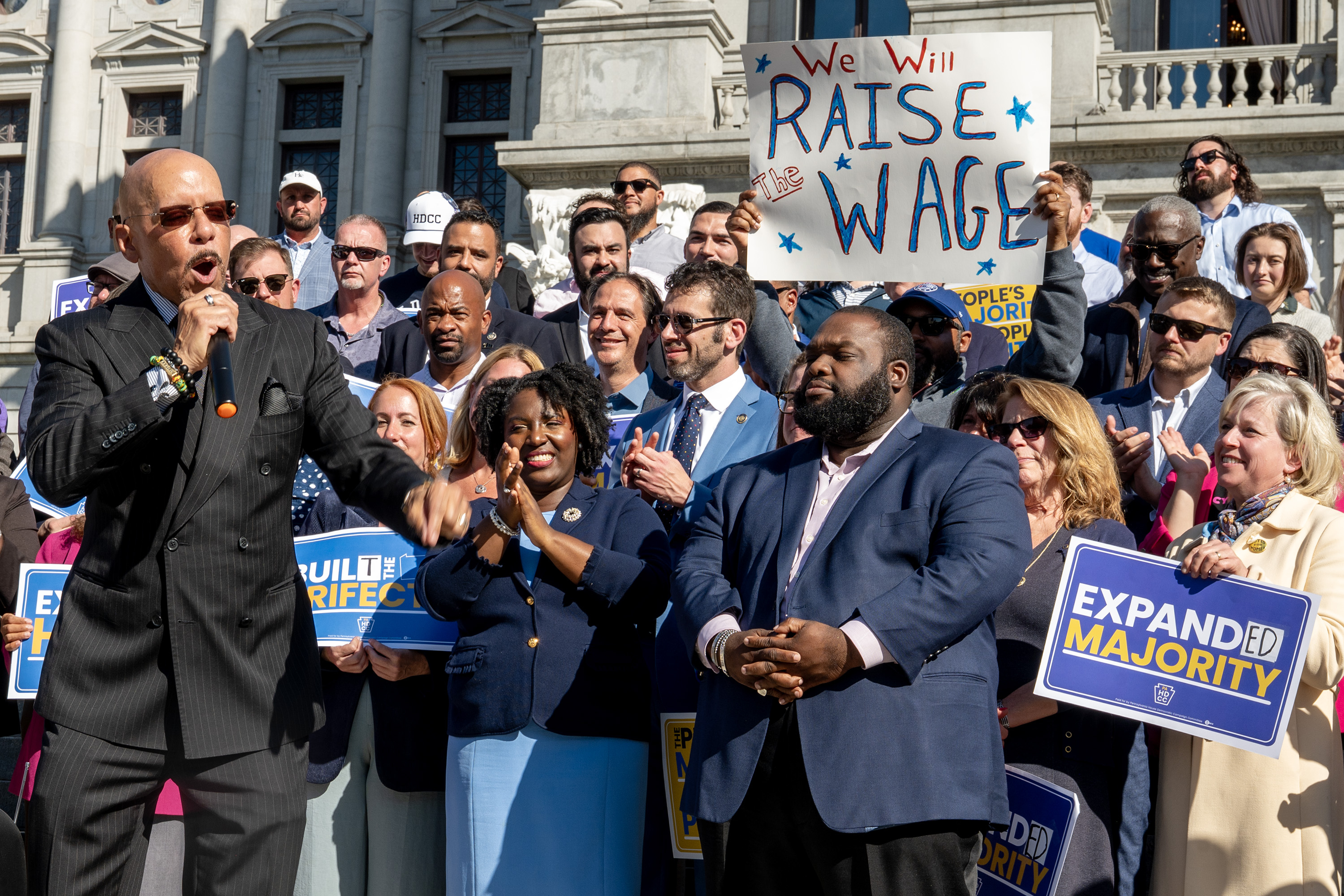
Come January, Democrats will have a trifecta in Harrisburg, controlling the state House, the state Senate, and the governorship, meaning the party can advance its priorities with little to no Republican backing.
In Philadelphia, where Democrats hold a supermajority of local elected offices, that could mean more funding for the city’s financially strapped public school system and a lifeline for SEPTA as the mass transit system stares down a looming fiscal cliff.
But for the city’s leaders, the most transformative change could be what Gov. Josh Shapiro has said will be his No. 1 priority: raising the state minimum wage — currently $7.25 an hour for non-tipped employees, in line with the federal minimum wage — for the first time since 2009.
The Democratic-controlled state House has passed legislation to raise the wage to $15 an hour, but the bill stalled in the GOP-led Senate. Mayor Cherelle L. Parker, a centrist Democrat, said Tuesday that raising the wage will put Philadelphia residents on “a path to self-sufficiency.”
“We don’t have an affordability crisis if what we earn gives us the ability to take care of ourselves,” she said.
State Sen. Nikil Saval, a progressive Democrat from South Philadelphia and the leader of the city’s delegation in the Senate, said his party’s takeover of the chamber is a mandate from voters to address the cost of living in the city in meaningful ways.
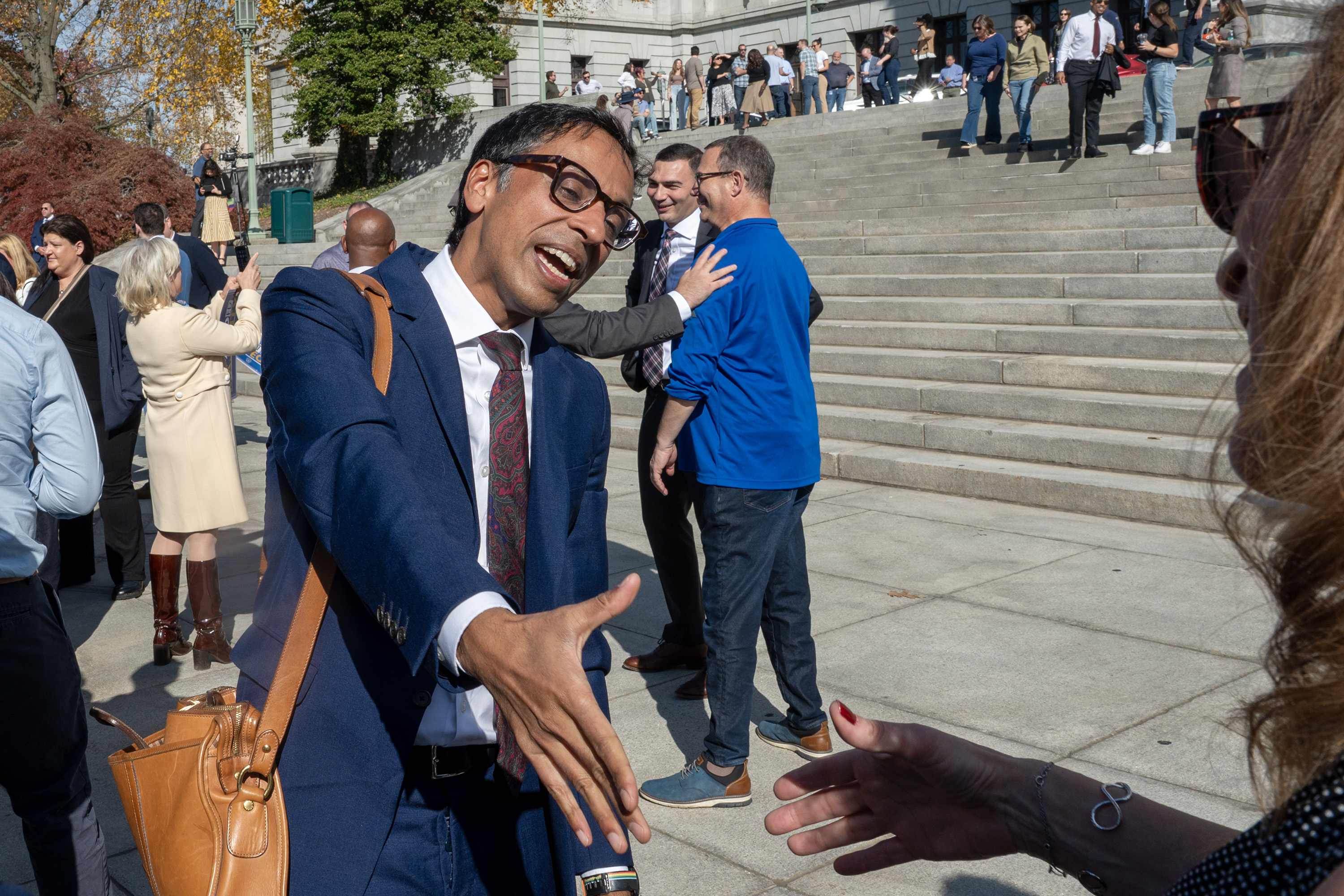
Sen. Nikil Saval (D., Phila.) greets other Democratic Caucus members and those newly elected on the steps of the State Capitol Wednesday.Tom Gralish / Staff Photographer
He said GOP control of the Senate stifled how Democrats could attack issues like inflation, utility costs, and the price of housing.
“It might have been fanciful or futile to think about certain efforts or ideas under the constraints of having a fairly intransigent Senate Republican majority,” Saval said.
Now, Saval said, “the attitude of government is a widely held desire to do something about it.”
Improving school buildings tops Philly priority list
Parker, in an interview Tuesday before results trickled in showing that Democrats had secured control of the state Senate, said a Democratic trifecta would also put leaders in Harrisburg in a position to infuse the Philadelphia School District with funding to address its aging facilities.
“Our school buildings are old,” Parker said. Some schools, she said, “need to be totally rebuilt so our kids are learning in modern, 21st-century school buildings that can prepare young people so that they can compete in the global economy.”
State funding to Philadelphia public schools has increased substantially since the 2023 Commonwealth Court ruling that declared Pennsylvania’s funding model unconstitutional. That has resulted in hundreds of millions of dollars in additional aid to Philly schools since the ruling.
But the district is still far short of closing what the state’s Basic Education Funding Commission considers to be its “adequacy gap,” and has a massive structural deficit. In addition, the district’s capital needs are vast, and officials have estimated that fixing aging buildings and other facilities is a multibillion-dollar endeavor.
City Council President Kenyatta Johnson, a Democrat who has been critical of the facilities plan, said that while the Commonwealth Court ruling resulted in “significant progress,” it has not been enough to address decades-long school funding inequities.
“If we have a trifecta,” he said, “we should be doing even more.”
Mayor Cherelle L. Parker speaks at Vare-Washington Elementary School to highlight the historic education investments included in the 2026-27 budget in Philadelphia, July 14, 2026.Jessica Griffin / Staff Photographer
To do so, Philadelphia leaders will need to have the governor on board. Last year, Parker sent a letter to Shapiro requesting more than half a billion dollars in state money for a range of her agenda items, including improving school buildings, addressing homelessness, building affordable housing, and treating people in recovery from addiction.
But as the governor prepares his next state budget proposal, he will be facing dramatically different possibilities as his own party controls the upper chamber.
State Sen. Vincent Hughes, a West Philadelphia Democrat in line to chair the powerful Senate Appropriations Committee, said Tuesday that Senate Republicans have roundly “refused to address” the need for capital improvements in the district, and that he expects that to change under Democratic control.
“Republicans repeatedly said ‘no, no, no, no.’ So what are you gonna do? You got to beat ’em,” Hughes said. “Create the trifecta, and then make investments in school infrastructure.”
A new reality for SEPTA, if they can find the money
Finding the money to fund Democratic priorities will likely be the hard part as the state expects to spend more than it makes in revenue this fiscal year.
And Shapiro has advocated for a steep tax on unlicensed “skill games” — the slot-like machines in gas stations and convenience stores — to raise money for transit. With his party in firm control of Harrisburg, his plan seems possible.
As Democrats craft next year’s budget, they are likely to face tremendous pressure from transit advocates and local elected officials to rush money to the chronically underfunded SEPTA.
Gov. Josh Shapiro makes remarks Monday, November 24, 2025 at Septa Frazer Shop and Rail Yard in Malvern, Pennsylvania.William Thomas Cain
Over the last two years, Shapiro has found ways to channel money to the transit authority, blaming Republicans for not agreeing to a recurring funding plan.
In 2024, the governor redirected $153 million in federal highway funding to SEPTA to avert massive fare increases, and last year, he allocated $220 million for SEPTA to make emergency improvements to the Regional Rail system that connects Philadelphia to the rest of the region.
But SEPTA officials have long pushed for a sustainable funding stream, and they say they are facing a structural operating deficit of $192 million in the coming fiscal year. That means the threat of service cuts, fare increases, or both remains real.
Saval said his party must meet the expectations of voters who delivered Democrats governing power on Tuesday.
“Mass transit,” he said, “has a direct effect on quality of life for Philadelphians.”
Staff writers Gillian McGoldrick and Kristen A. Graham contributed to this article.
As the Eagles approach the halfway point of the season, their immediate future already looks grim.
According to The Athletic’s playoff simulator, the Eagles now have a 1% chance of making the playoffs following their 27-10 loss to the Washington Commanders on Sunday night. Their 2-6 start this season is their worst record through the first eight games since they started 2-6 in 1999, which was Andy Reid’s first season as head coach.
The Eagles are searching for answers as they try to find some semblance of consistency in all phases. But on Wednesday, they made the decision to switch from Tanner McKee to Joe Milton at quarterback. Will that make any difference against a 4-2-1 New York Giants team that sits atop the NFC East?
Here’s what we know (and what we don’t) about the Eagles entering Week 9:
Video: What should the Eagles’ 3-5 year plan be? | unCovering the Birds
Finding value in the season
Last Friday, defensive tackle Jordan Davis discussed how he was leaning on his experience during the 2023 season — in which the Eagles lost six of their last seven games and exited the playoffs after the wild-card round — to inform his approach to their 2026 losing streak.
“We love learning off of wins,” Davis said. “But you learn the most, and you learn about people the most, when you’re losing. You learn about who you are. You learn about what you can do, what you can be. You learn about how you can get back to work, the work ethic that you have.”
That might just be the value in what feels like a lost season for the Eagles. While the playoffs are almost entirely out of the picture, the team’s current situation poses a different question: Who can be part of the solution, not even necessarily this season, but beyond? Who emerges as a contributor? A leader?
How players show up — or don’t show up — these next nine games matter as the team evaluates who they can rely on as the front office retools for future success. That’s especially true of the young players, whose starting contributions are all the more important as the team attempts to balance the scales with their veterans on lucrative, long-term contracts.
Makai Lemon, Eli Stowers, and Markel Bell will be in the spotlight as the season continues. Lemon, the No. 20 overall pick out of USC, is now the most targeted player on the team this season, as DeVonta Smith and Dontayvion Wicks have missed games due to injury. Lemon had forged a connection with McKee in his last two outings, averaging 9.5 yards per reception (13 receptions on 17 targets for 124 yards and a touchdown in that span). He also leads the team with 96 yards after the catch this year. But he’ll have a new QB under center this week.
Tanner McKee (16) and Makai Lemon (9) connected on the receiver’s first career touchdown catch against the Cowboys in Week 7. Yong Kim / Staff Photographer
Stowers has just two games under his belt, but he made his first NFL catch against the Commanders and finished with three receptions for 53 yards (two of those catches came in garbage time). Bell is clearly still developing, too, as he conceded two sacks to the Commanders on Sunday in just his fifth NFL start, according to Pro Football Focus.
Now is the time to learn more about those players, and others, as they gain more experience and learn what it takes to show up in tough times. What the Eagles learn will inform their approach to the offseason.
McCarthy makes an impact
There’s a new quarterback in town in East Rutherford.
J.J. McCarthy, the 2024 10th overall pick out of Michigan, is attempting to turn the page on his disappointing stint with the Minnesota Vikings following his trade to the Giants on Sept. 28. He got his first start two weeks ago and led his new team to a 27-21 overtime win over the struggling Houston Texans.
The box score alone isn’t particularly eye-catching. McCarthy went 20-for-28 for 250 yards. He didn’t throw a touchdown, nor did he throw an interception.
But his film was littered with some excellent plays, whether he was throwing with anticipation on a 47-yard deep out to wide receiver Malachi Fields or throwing on the move under pressure from a free rusher to connect with top receiver Malik Nabers for 17 yards. McCarthy had five completions of at least 20 yards against the Texans, which was tied for the most in a game in his career, established one week prior in the Giants’ loss to the New Orleans Saints when he entered the game in the fourth quarter.
J.J. McCarthy (18) is trying to make an impression on a Giants team that lost quarterback Jaxson Dart early in the season. Eric Smith
He also made some questionable decisions, particularly on the two-minute drive before the end of the first half against Houston when he threw an incomplete deep ball for Fields into double coverage. Still, for a quarterback who joined the team about a month ago and was the third-stringer up until two weeks ago, he acquitted himself well in his case to be the starter moving forward.
The Eagles defense has room for improvement when it comes to limiting chunk passing plays. Last week, Commanders quarterback Jayden Daniels was explosive through the air, completing all three of his deep attempts (at least 20 air yards) for 104 yards, according to Next Gen Stats. That total was his most in a game since Week 8 of 2024 against the Chicago Bears.
According to NFL data scientist Sam Hoppen, the Eagles rank 29th in the league in explosive passing play rate allowed (6.7%). In the last four weeks, that rate is up to 7.1%, which ranks 30th.
The Eagles defense has also floundered in the run game this season. They’ve allowed over 100 rushing yards in each game, ranking 28th in the league in rushing yards against.
By comparison, back in 2024 the Eagles defense only had nine regular-season games in which they allowed at least 100 rushing yards. They finished that season ranked 10th in the league in rushing yards against.
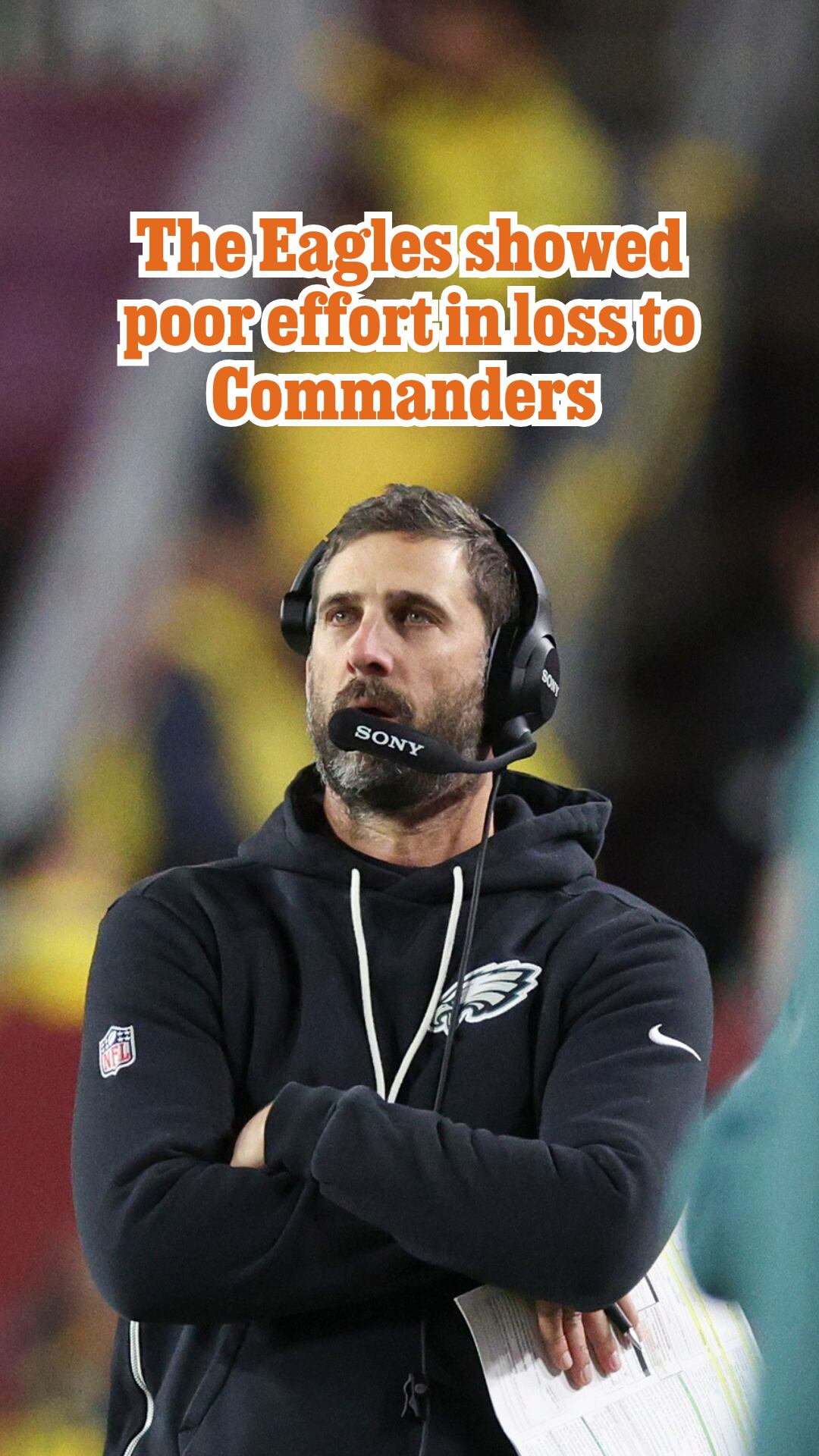
Video: The Eagles showed poor effort in loss to Commanders | Gameday Central
The Eagles’ run defense was marginally better against the Commanders compared to their poor outing against the Dallas Cowboys the week before, but it was a low bar to clear. Vic Fangio described their run defense as “inconsistent” overall this season and characterized Sunday’s showing as “OK to borderline good.” His perception skewed more toward the negative after Rachaad White’s 33-yard outside zone run that set up the Commanders’ final touchdown of the evening.
The Giants are coming off their best showing on the ground this season, with six different rushers combining for a season-high 188 yards and four touchdowns on 34 attempts.
Two explosives led the way to a Giants overtime win: a 44-yard Cam Skattebo carry and an ensuing 30-yard Devin Singletary touchdown run. Skattebo is reportedly day to day with a hamstring injury coming out of the game and could be a game-time decision on Sunday. The Eagles could catch a break if he can’t go.