Blog

  • Carney calls for EU-Canada pact amid ‘ferocious storm’

    Carney calls for EU-Canada pact amid ‘ferocious storm’

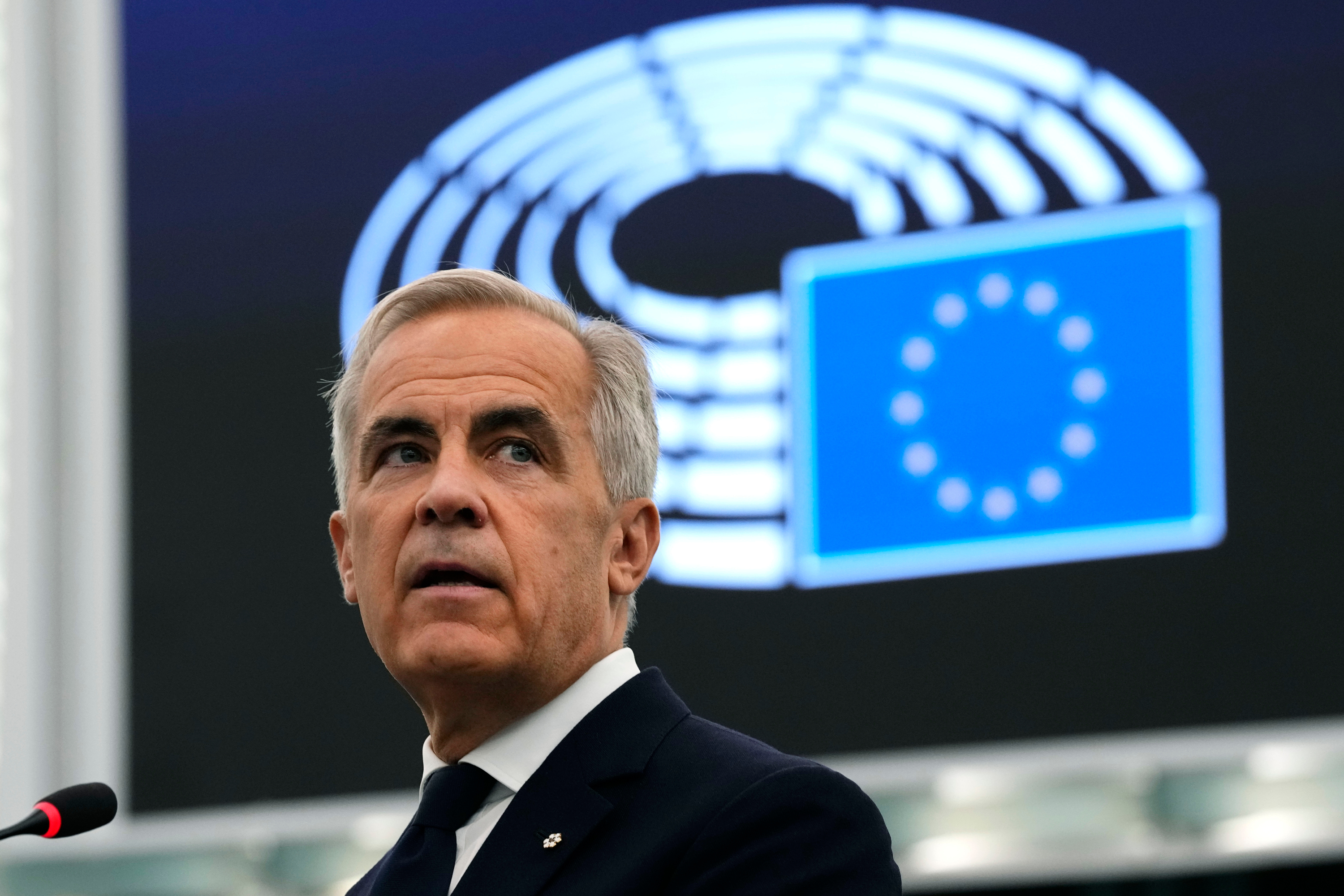
    STRASBOURG, France — Canada’s newly proposed associate membership in the European Union will help to secure sovereignty and freedom for the country amid a “ferocious storm,” Prime Minister Mark Carney told the European Parliament on Thursday, adding that the move would also make his nation a better partner for the United States.

    President Donald Trump, reacting Wednesday to the potential alliance between Ottawa and Brussels, said the move could be perceived as “a hostile act.”

    “If it’s a bad intention, we’ll put very heavy tariffs on Europe,” he added.

    Carney countered on Thursday. “This alliance is a positive process. That’s my response to the American president. It’s a positive thing,” he told reporters after his European Parliament speech.

    “A stronger, more resilient Canada will be a more effective partner with the United States — same with the European Union,” he added.

    Carney said the associate membership outlined by European Commission President Ursula von der Leyen on Wednesday would strengthen core areas of life on both sides of the Atlantic.

    The push for closer links comes amid a historic low for U.S. ties with Canada and turbulence in the relationship between Washington and the European Union as Trump has upended traditional American alliances.

    Carney said Canada and the European Union were not looking to become another superpower.

    “I am not proposing a third bloc in order to become a great-power rival only with better manners,” he said during his speech to European lawmakers in Strasbourg, France. “We do not seek power to dominate others,” he added.

    Associate membership for Canada in the European Union could be the closest linkup the bloc of 27 nations has with a nonmember state. The move highlighted a deep desire of traditional American allies to seek stability by banding together as Trump remakes the U.S. role in the world.

    Carney suggested that Europe and Canada were seeking to band together “so that no one can control our open markets, impair our sovereignty, threaten our territorial integrity or undermine our freedoms, our democracies, our rule of law.”

    Trump has instigated a trade war against Canada, the United States’ closest ally and second-largest trading partner, and routinely said he wanted the northern neighbor to become the 51st state. He has also pulled the United States away from the traditional close alliance with the European Union, imposing tariffs and barriers to trade, and he has weakened the NATO defense pact by threatening to drastically cut the U.S. contribution.

    Carney did not mention the United States or Trump by name during his speech in Strasbourg, but he made clear allusions.

    “Economic integration is now being used as a weapon, and tariffs as a means of leverage,” he said. “Financial mechanisms are employed for coercion. Supply chains represent vulnerabilities to be exploited.”

    Carney said youth from both Canada and the European Union should be able to travel and study in each other’s territories through participation in the bloc’s student mobility program, Erasmus. That program is credited with building generations of young Europeans with joint identities and shared experiences.

    Canada would most likely need to contribute financially to participate in Erasmus, as well as in any other EU programs the country might join, though the fine print of how the alliance would work has not yet been discussed.

    Carney’s vision for how the European Union and Canada could work together also extended to major, foundational parts of their economies and society. He said the two should launch a “deep cooperation in the full range of strategic capabilities,” including industries involving critical minerals, defense, artificial intelligence and computing, and energy security. He also suggested that the bloc and Canada could work on managing payment systems.

    Control over services such as payment mechanisms has been worrying policymakers in the European Union and Canada because many of those services are controlled by the United States or by American companies. That concern is front and center as the debate grows about the future of AI.

    “Technology is transforming the nature of warfare, the structure of economies and the capacity of states to govern,” Carney said.

    He also took aim at online platforms, of which the largest are American.

    “Tech platforms aspire to sovereignty,” he said. “They seek to set the terms of access. They want to dictate regulatory rules — or even bypass them.”

    “They want to control our data, spread disinformation and steal our children’s childhood,” he added.

    Carney noted that Canada was endowed with major critical mineral and energy resources, which the country wanted to export to markets in the European Union. The two already have agreements in place for such collaboration. This year, Canada secured a major contract to sell liquefied natural gas to Germany.

    The exact shape of the alliance between Canada and the European Union has been unclear because there is no formal or legal framework for an “associate member” of the bloc.

    In Canada, the conservative opposition has raised concerns that an alliance might encroach on the country’s sovereignty. In Europe, officials from EU member states worry that the label could antagonize other countries with deep ties to the bloc, such as Britain and Norway, as well as those that are in the arduous process of becoming full members, such as Albania.

    In his address, Carney touched on those issues, saying, “Canada is not in a position or seeking to become a full member of the European Union.”

    “The precise nomenclature is a question for Europe,” he added.

    Carney noted that the Canadian Parliament, which reconvenes next week after the summer recess, would get a chance to debate the future EU-Canada relationship and put the proposal to a vote.

    During his speech, Carney made extensive references to the deep historical bonds between Europe and Canada, framing the new cooperation as existential. He was frequently interrupted by applause from members of the European Parliament as he harked back to past battles they had fought together.

    “Freedom and life must be earned every single day,” Carney said. “Every day. Not once in 1945 or 1956 or 1989. Every day, including this one.”

    The lawmakers, with the exception of many from far-right parties, gave him a lengthy standing ovation.
  • Jon Kyl, a former top Republican in the Senate, dies at 84

    Jon Kyl, a former top Republican in the Senate, dies at 84

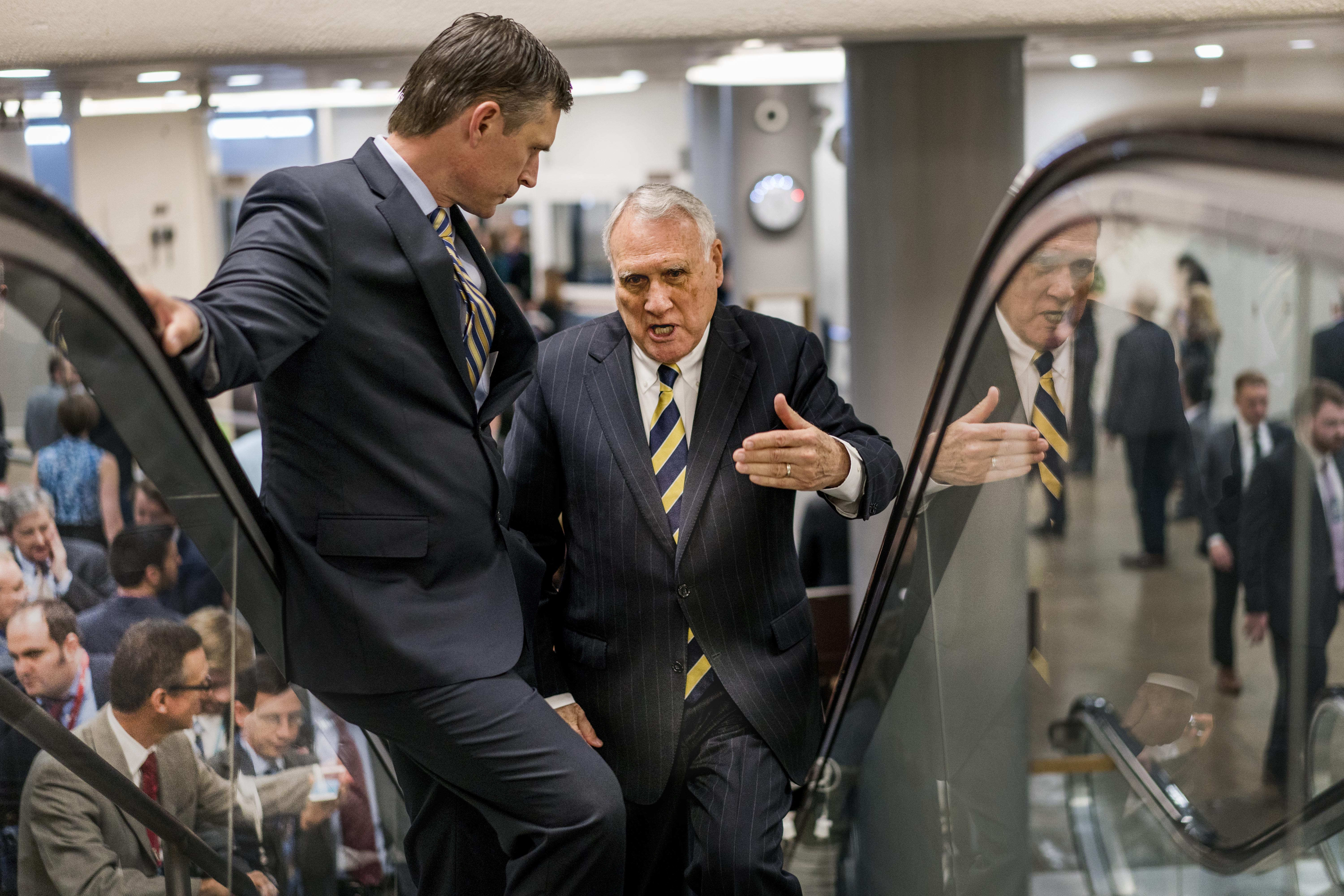
    Former senator Jon Kyl, who served in Congress for nearly 30 years and rose through the ranks of GOP leadership to become the Senate’s No. 2 Republican, has died at the age of 84, his family said Thursday.

    Mr. Kyl’s passing comes nearly nine months after he announced he had been diagnosed with dementia and would be withdrawing from public life. In a statement to local news outlets, his family said Mr. Kyl had passed due to “complications from a neurological disease.”

    “We know that Jon belonged to all of Arizona, a state he loved and explored with vigor, curiosity, and wonder,” his family said. “Serving his state and nation in Congress was a privilege and responsibility he honored and respected.”

    Mr. Kyl served in the House from 1987 to 1995 and in the Senate from 1995 to 2013. He served as the Senate minority whip before he left public office in 2013 and became a lobbyist.

    After the death of former Arizona senator John McCain in 2018, then-governor Doug Ducey appointed Mr. Kyl to serve out the rest of McCain’s term. Mr. Kyl returned somewhat reluctantly, out of a sense of duty, and was instrumental in guiding Supreme Court nominee Brett M. Kavanaugh through the confirmation process.

    This is a developing story and will be updated.

  • Is there anything a fruit fly brain can’t do?

    Is there anything a fruit fly brain can’t do?

    What can a fruit fly do? Buzz around ripe bananas, sure. But maybe, a whole lot more. Like parallel park. Or play Minecraft.

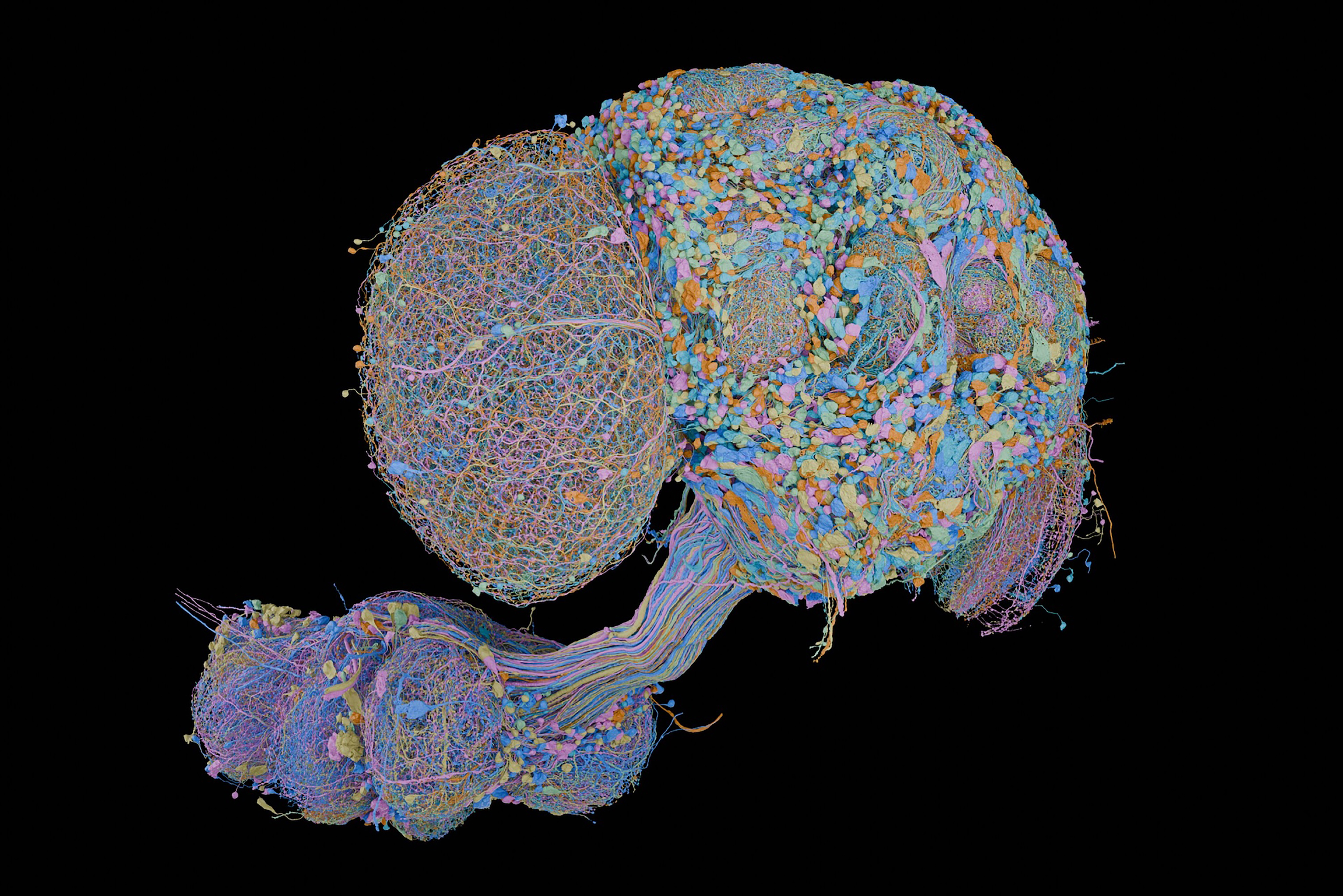
    Creative internet users have in recent days taken a complete map of a fruit fly’s 166,000 neurons, published by Google, and made simulated flies do some things that are pretty impressive, given that these insects have a brain the size of a poppy seed. One has been trained to solve a Rubik’s Cube. Another dances to the Village People’s “Y.M.C.A.” in response to four tones. Others have envisioned fruit flies playing poker and blackjack and slicing a doner kebab.

    In general, the goal of these engineers and artists is not to show what a fly can do, but “what’s the dumbest thing we can make it do,” said Mark Unthank, a software developer who got a fly to parallel park a car after hundreds of failed attempts. Unthank, who lives in Italy, also programmed a fly to use a car’s blinkers when turning because he was frustrated that so few human drivers seem to use them.

    “That’s how easy it is,” he said. “Even a fly could do it.”

    Producing the map of the fly’s brain, on the other hand, was anything but easy. It was serious research meant to advance the study of neuroscience.

    For years, researchers worked to develop sophisticated imaging techniques to map the connections within the nervous systems of various organisms. Some have focused on fruit flies because of the insect’s relative lack of complexity; while the fly has just 166,000 neurons, a human being has about 86 billion.

    Scientists call the neural maps connectomes, similar to the genomes that help map the genes that determine an organism’s traits.

    Researchers at the Janelia Research Campus at the Howard Hughes Medical Institute in Virginia completed the new map of the adult male fruit fly’s brain in partnership with Google. The effort involved hundreds of scholars.

    Scientists hope the map will help them understand how animals perceive the world, store memories, and react to stimuli.

    “Our goal is not simply to demonstrate that a fly brain is capable of generating movement in a fly — which we obviously know — but how,” said Nelson Spruston, a neuroscientist who is vice president and executive director at the Janelia campus.

    The institute is working to develop maps of the brain in two fish — a larval zebrafish and an adult Danionella. The research, it said, could one day reveal how humans develop Alzheimer’s or depression.

    For now, the Janelia researchers have been pleasantly surprised to see fruit flies driving cars and playing video games.

    “I certainly did not imagine this kind of application of our work, but I think it’s exciting and it’s fun, and it sort of demonstrates the power of open science,” Spruston said.

    Arie Matsliah, a research scientist at Princeton University, said the release of the maps has coincided with a spike in the capability of artificial intelligence-powered coding tools that allow people to create simulations with just a few simple prompts. Matsliah helped develop FlyWire Codex, an online portal for the maps that has seen thousands of downloads a day, he said.

    “It’s almost becoming a meme now,” he said. “Everyone is trying different things.”

    Alex Wormuth, a software engineer in Tulsa, Okla., said he used an OpenAI tool to make the fly play the 1990s first-person shooter video game Doom, which he named Doomfly. If the fly shoots and kills an enemy, it triggers the insect’s dopamine receptor, encouraging it to kill again to survive, he said.

    So far, the fly is not very good at Doom, he concedes.

    “It has been able to kill an enemy,” he said, “but I don’t think it’s learned that’s what it needs to do to beat the game.”

    Wormuth has also given a simulated fruit fly $100 in real bitcoin, with the option to buy, sell, or hold. For a brief period on Friday, he said, the fly made about $1 before the cryptocurrency’s price dropped.

    The simulations, although based on a fruit fly brain, do not actually account for the complex interactions between neurons, muscles, and other systems in a real fruit fly, Matsliah said.

    “They assume things, or they substitute the missing components with things that are not biological,” he said.

    That includes modifying the strength of the connections between neurons, which makes the simulations “substantially different from a real fly,” Spruston said.

    “It’s not like a fly brain in real life can play Doom, obviously,” he added.

    “Nevertheless, there is some reality there,” Matsliah said.

    Parallel to the existential anxieties brought up by recent rapid advancements in AI, some people have wondered whether the flies might have some form of consciousness as they twist and turn the faces of a Rubik’s Cube or try to win at poker.

    Wormuth, the Doomfly creator, has his doubts.

    “I don’t believe that’s happening,” he said. “But I think it’s an interesting thought experiment because, someday, we may have something like this for the human brain.”

    This article originally appeared in the New York Times.

  • The Free Library Foundation president is stepping down

    The Free Library Foundation president is stepping down

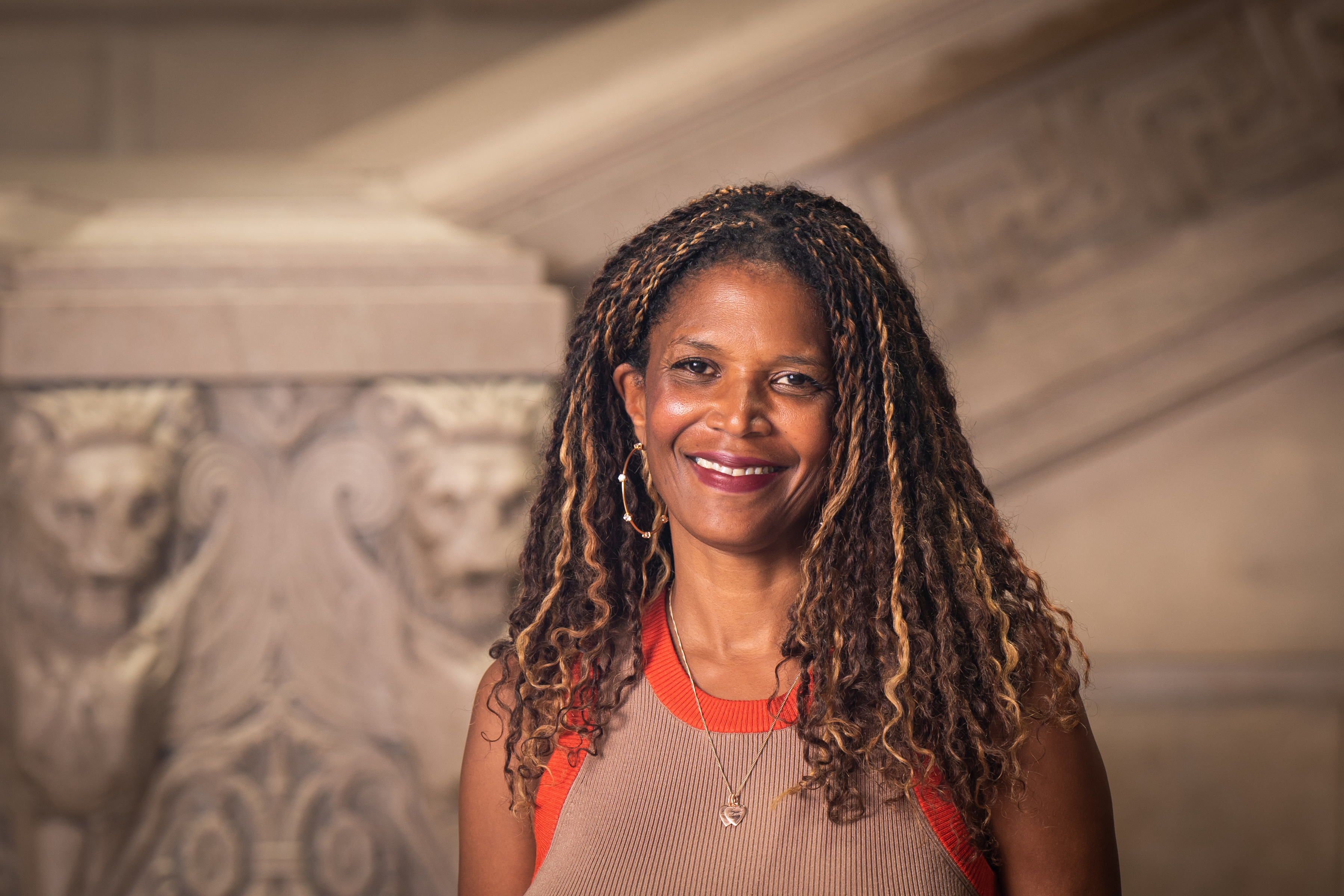
    Free Library Foundation president Monique Moore Pryor is stepping down to tend to family matters, the foundation announced Thursday.

    Her resignation is effective immediately.

    “Serving as the president of the Free Library of Philadelphia Foundation has been one of the most exciting and rewarding experiences of my professional career,” Moore Pryor said in a statement.

    She served as the foundation’s first executive and had been at the helm of the nonprofit fundraising arm of the Free Library since August 2023.

    “I want to thank the leadership and staff of the Foundation and the Library for all the vital work we did together,” she said, “and I look forward to seeing all of the fantastic things they will do for Philadelphia in the future.”

    When reached for comment, she would not elaborate on her statement.

    Former Free Library Foundation board member Antoinette Brock Johnson will lead the foundation until an interim president is identified, board members announced at a staff meeting Thursday.

    The foundation will begin the search for a permanent replacement for Moore Pryor following the completion of a new strategic plan in the spring.

    In her three-year tenure, Moore Pryor is credited with securing substantial grants, including nearly $750,000 in an unrestricted grant from the Kellogg Foundation to potentially fund resources and programming within the Free Library’s business and information centers.

    But Moore Pryor’s time leading the foundation was controversial from the beginning. Her leadership style, staff members said, led to the June 2024 resignation and subsequent firing of the Author Events team that hosted the biggest names in the publishing world, from Toni Morrison to Jennifer Weiner to Malcolm Gladwell, at the Central Library on the Benjamin Franklin Parkway.

    The four-person team tendered its collective resignation with four weeks’ notice, saying they disagreed with Moore Pryor’s programming direction and treatment of the staff.

    At least 10 other staff members have been fired or quit in the last year.

    As a consequence, donors stopped writing checks to the foundation and authors like Weiner vowed they would not return to the Free Library’s stage. The staff departures have left local book communities with a sour taste that still lingers.

    Moore Pryor appointed Daniel Blank, who holds a Ph.D. in literature from Princeton University, to lead Author Events. Under Blank and Moore Pryor’s leadership, the foundation instituted a $5 admission charge for all events — previously, most events were free to attend, and for others, entry was the cost of a book. The move was criticized by one author for creating “an unnecessary barrier to entry for one of the library’s most popular and influential programs.”

    Corporate sponsors FanDuel and Comcast began sponsoring Author Events. And heavy-hitting authors including Justice Sonia Sotomayor, Anthony Fauci, and Maria Shriver participated and took part in conversation with local moderators, just as before.

    Kelly Richards, who was hired as the Free Library’s executive director in 2020, appointed Moore Pryor, a West Philly native and former chief of engagement and external affairs at St. Francis College in Brooklyn, as the foundation’s first executive director in 2023.

    Although separate entities, the Free Library and the Free Library Foundation used to operate as one, commingling money and resources. Moore Pryor’s position was created with an intent to separate the foundation and library funds.

    She was named president in 2024.

    During Moore Pryor’s time with the foundation, the Free Library has opened the bulk of its branches on Saturdays and renovated several buildings. She is also credited with diversifying the foundation’s donor base and revenue sources.

    In 2023, she launched the community impact awards that recognize the work of local leaders and organizations who have had a positive impact on the city’s literacy and education.

    “We want to thank Monique for her partnership and wish her the best as she begins her next chapter,” Jeffrey Benoliel, chairman of the Free Library Foundation Board, said in the statement. “We are excited about building on the progress of the last few years and will begin to search for a new president as the work continues on the strategic plan that will guide the library and foundation going forward.”

    Staff writer Nate File contributed to this article.

  • Developers are attracted to East Germantown by low cost, vacant land, and greenery

    Developers are attracted to East Germantown by low cost, vacant land, and greenery

    A four-story, 35-unit apartment project is slated for 846 E. Woodlawn St., part of a wave of development proposals in East Germantown after decades of divestment.

    Although the neighborhood contains many apartment buildings that date to the early to mid-20th century, development collapsed following the 1950s in the era of white flight and neglect of majority-Black areas by financial institutions.

    As a result, the neighborhood has an abundance of inexpensive, vacant land ripe for development under the right conditions. The Woodlawn Street property last sold in 2024 for $205,000.

    “A lot of the new development is starting to push that way the past four or five years up in this area,” said Scott Woodruff, chief operating officer with Designblendz, a Philadelphia-based architecture firm that has three projects east of Germantown Avenue.

    “We have been seeing an uptick in this neighborhood … with mid-rise multifamily fitting into some of these larger [vacant] lots,” Woodruff said.

    A smaller version of the 846 E. Woodlawn St. project was put forward in 2021, but the new version includes four affordable units accessible to those making up to 50% of the area median income or almost $48,000 a year for a two-person household.

    That will allow the developer, a Far Rockaway, N.Y.-based LLC, to use a zoning bonus that allows a taller and denser building than would otherwise be permitted, as long as it provides affordable units.

    It will also have a green roof, which will allow the developer to use another zoning bonus to add more units.

    Rent estimates were not available, but even units not designated as affordable are expected to be priced for moderate-income renters.

    “These aren’t meant to be ultra luxury apartments,” Woodruff said.

    The project will not include any studio apartments. Twenty-one units will be one-bedrooms, and the other 14 will be two-bedrooms. The apartments that face the street will have balconies.

    Woodruff says Designblendz has been seeing developers propose fewer studio apartments in new buildings, especially in neighborhoods that are farther from Center City like East Germantown.

    “It’s harder for young people to buy a starter house, so they are staying in apartments longer,” Woodruff said. “More people have been asking for larger bedrooms.”

    There will be 12 bicycle parking spaces in the building, and no car storage provided. A 400-square-foot commercial space will front on the street, as the underlying zoning requires. No relief is needed from the Zoning Board of Adjustment to move forward.

    Designblendz also is working on a 34-unit townhouse development to the west of the Woodlawn project, at 610-640 High St., and a mid-rise, 42-unit project to the east at 1635 Church Lane.

    Both are from Frankford-based developer Liberty Bell Management.

    Liberty Bell Management’s 34-unit townhouse development to the west of the Woodlawn project, at 610-640 High St.DesignBlendz

    All three projects would be built on vacant land. The abundance of buildable lots is one reason for developer interest in the area, but Woodruff says resident demand is there, too.

    The abundance of trees and park access are appealing as well, Woodruff said.

    “The projects we’ve done [in Germantown], they seem to be leasing in those areas so it must be filling a need for people who need housing up there,” Woodruff said.

  • Decoding the most misunderstood of Spain’s fine wines

    Decoding the most misunderstood of Spain’s fine wines

    Sherry is the most misunderstood of all Spain’s fine wines, and those in the “fino” category are the most baffling of all for newcomers. These quirky fortified white wines are very strong, very dry, and taste decidedly strange to newcomers on first sip — as if someone had added a splash of some kind of natural cleanser to a dirty martini. There’s a good reason to look past the initial shock to the senses: Fino sherries partner so well with tapas and other salty snacks, they’re well worth acquiring a taste for.

    Outside of Spain, sherry is typically seen as a sweet dessert wine that’s most often used in cooking — like port, but made from green grapes, not red. If Americans can picture sherry at all, the mental image is of an amber-colored sweet wine served in tiny glasses by British people in old movies. Within Spain, though, there has always been a preference for the younger, fresher, and paler sherries that fall in the fino category, some of which are labeled as “manzanilla.”

    Fino sherries are made with the palomino grape in the Andalucia region that dominates the south of mainland Spain. Their unique flavor is acquired through long-aging under a veil of living yeasts known as flor. This yeast slowly converts the wine’s glycerin into aldehydes that give the wine a pungent scent of raw almonds, green olives, and bruised crab apples, amplified by a light fortification with grape brandy.

    The wine should be served well-chilled and in small 2- or 3-ounce portions with the type of salty snacks Spain is famous for — cured jamon, oil-cured olives, and almonds or virtually any seafood that is salted, smoked, tinned, or fried. In this food context, fino wines like this one are a delight, tasting lighter and fruitier, like a palate-cleansing green-apple tonic.

    Tio Pepe Fino SherryCourtesy of Gonzalez Byass]

    Tio Pepe Fino Sherry

    Andalucia, Spain; 15% ABV

    PLCB Item #100057072 — on sale for $19.99 through Oct. 4 (regularly $21.99)

    Also available at:

  • While the dreaded ‘rope test’ is now banned, being in shape for NHL training camp is more important than ever

    While the dreaded ‘rope test’ is now banned, being in shape for NHL training camp is more important than ever

    Hockey is built on lore.

    “There was a time that players went to training camp to start training for the season and to get in shape,” said Matt Nichol, a strength and conditioning coach who has worked with countless NHLers, in a 2014 Gary Roberts Performance video.

    This wasn’t everyone, to be clear, but back in the day, players had time to prepare for the rigors of a season once they arrived in their respective NHL cities for training camp.

    Since then, the science behind getting in shape has evolved, from how to train on and off the ice to nutrition. In the early 1990s, the mindset really shifted, as players began taking only a few short weeks off during the summer before getting right back in the gym and on the ice to prepare their bodies for what was to come.

    And now there’s been another change.

    With a new collective bargaining agreement that went into effect at midnight Tuesday, gone are the days of fitness testing, like measuring a player’s body fat or the dreaded “rope test” that former coach John Tortorella deployed on Day 1 to see where his players were physically.

    The Flyers players are happy that, thanks to the new CBA, things like John Tortorella’s dreaded rope test are a thing of the past.MIGUEL MARTINEZ / For the Inquirer

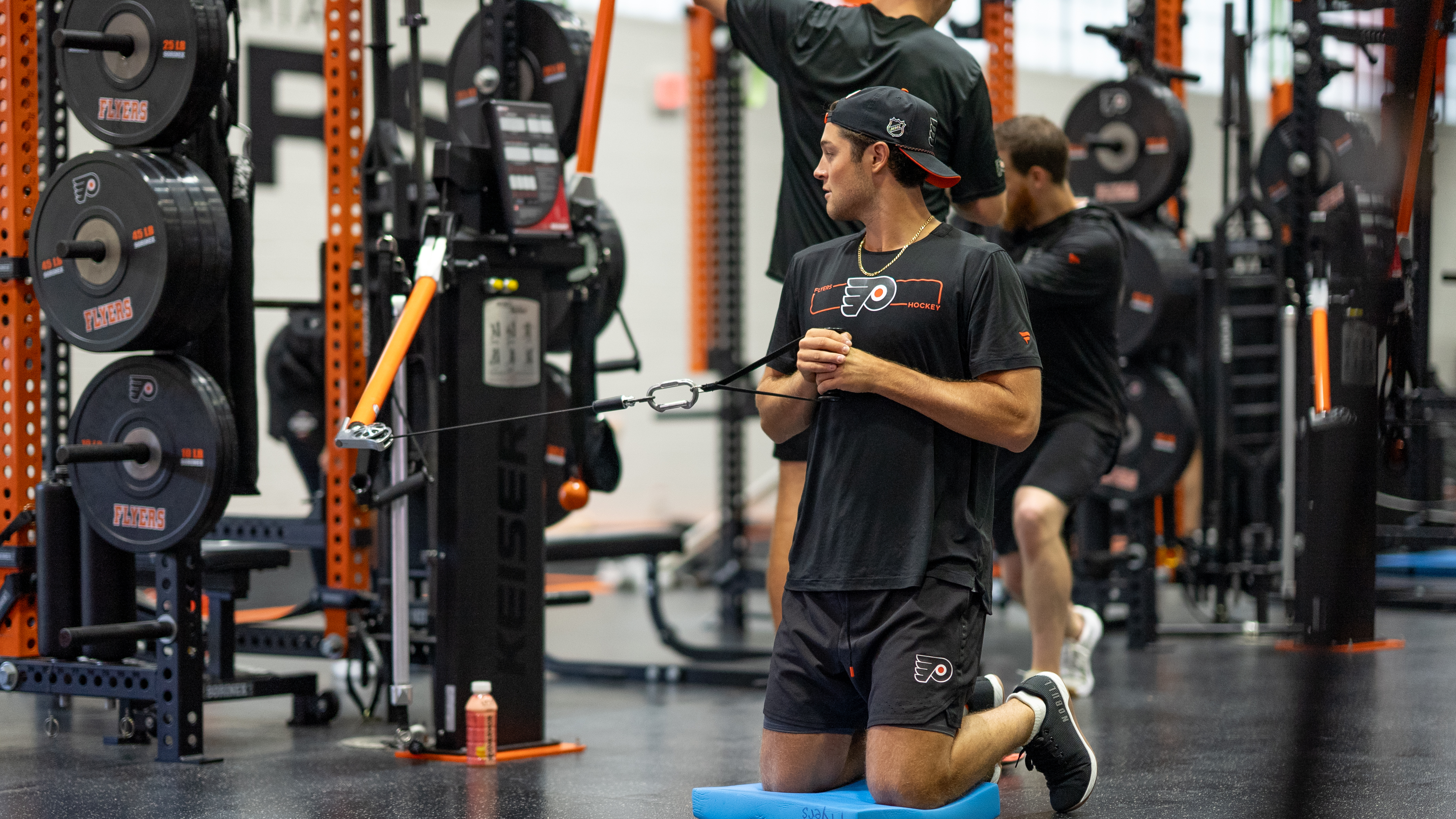
    And this year, training camp for the Flyers is condensed to just 11 days, counting from their first on-ice session at 8:45 a.m. Thursday in Voorhees, and ending with practice on Sept. 27. This is why team-style skating sessions started earlier, the ramping up of high-intensity workouts is occurring much earlier than in previous years, and why an emphasis — “a massive emphasis,” as one pro hockey coach said — has been put on doing the work in the summer because there is no time to ease back into things.

    “Probably 10 years ago, you took a lot of time off the ice, and now more guys are skating earlier,” a veteran NHL defenseman told The Inquirer last season.

    “… There’s still some heavy lifting throughout the week, but it’s not every day. It’s probably every other day, every two days, whatever the strength coaches think. And then towards the end, you ramp it up. You know, a little more power, speed work into the skates.”

    Although the offseason work has been important for decades, it is even more critical now.

    Last season there was much discord about Matvei Michkov’s fitness entering the season and how it impacted him throughout the year. He has acknowledged several times, including this summer in a Russian-language interview, that he did not prepare adequately for his sophomore campaign and came in with a high body-fat percentage. Based on social media posts, it looks like he’s put in the work.

    “Everybody has a different path along the way,” Flyers general manager Danny Brière said on Tuesday, adding Michkov looks like he has “a different swagger” now. “But what I was excited to see was, I think his maturity level increased as the season went on. In the offseason, seeing him here, he’s got a pep in his step. He feels good. He looks good. So I’m excited about Matvei’s season.”

    And everybody has a different focus every summer, based on their needs and age. As one veteran NHL forward nearing the end of his career told The Inquirer in February, when you’re younger, the goal is to teach your body to get stronger and have bigger gains. As you age, it’s about getting your body back to that strength and improving on it. No matter the age, conditioning is important, too.

    Tyson Foerster’s summer involved a lot of work in the gym as he looked to build back his strength after last season’s arm/shoulder injury.Courtesy of the Flyers

    “It doesn’t happen overnight, either. It’s developing those habits in the gym,” said Bryan Marshall, a longtime strength and conditioning coach who was recently named the New York Islanders director of player performance. Marshall has worked with plenty of NHLers, including Flyers defenseman Jamie Drysdale since he was 14 or 15.

    “It’s not one magic summer that does anything. It’s more buying into a philosophy that for the next decade of your life, you have to make decisions that are aligned with your hockey goals.

    “And I think that has more to do with it for Jamie, because what I’ve noticed over the years is he has one successful month after another in the summer, and then one successful summer after another. And the next thing you know, he’s developed so much more strength, so much more power, and he’s now got the capacity, I think, to sort of really showcase his talents, right? Because the rigors of an NHL season are pretty grueling.”

    The usual plan in the gym for Drysdale over the summer, per the defenseman, who spoke to The Inquirer in April, is rigorous: Mondays and Wednesdays are power days, Tuesdays and Thursdays are strength days, and Friday is conditioning. He would focus on power, aerobic capacity on the bike or VersaClimber, ladder work, hip mobility with bands, and explosiveness, like with box jumps. Working with bands and box jumps are his two favorites.

    He’ll also typically undergo a comprehensive power assessment with Marshall using force plates and other technology to understand how he produces power, including force and velocity. For Drysdale, he saw that as he got stronger, he got faster.

    As one player said: “It never really stops. It’s a full-time job in the summer as well.” Added another: “If you’re not in shape going into the season, you’re behind the eight ball.”

    Why? Because during the season, you cannot train the same as you do in the offseason.

    The body needs time to rest and recuperate in between workouts, whether they come on the ice or in the gym. According to UCLA Health, the benefits of a rest day include giving the “body a chance to flush out that excess lactic acid so muscles feel less tired and sore,” and allowing the body to heal and strengthen muscles after intense exercise creates small tears.

    It’s why, although he chipped away at it and worked out more often during the Olympic break, it was hard for Michkov to ever get into top conditioning shape last season after a poor start. The heavy work in the gym is done in the offseason because, as one former NHLer told The Inquirer, everyone starts at a certain level, but as the season wears on and the body builds endurance, it also breaks down, causing a player’s strength to drop.

    “There are sacrifices you have to make. That maybe some of your other buddies [have things they] can do that you are, unfortunately, [unable] to do,” a current NHL forward said.

    “But at the end of the day, I’m fortunate enough to play this game at a high level, and I love doing it, so I’m going to do whatever I can to make sure I put myself in the best position each year.”

    Flyers defenseman Rasmus Ristolainen’s game is predicated on strength, power, and physicality.Courtesy of the Flyers
  • OpenAI discloses six new incidents of ‘concerning’ A.I. behavior

    OpenAI discloses six new incidents of ‘concerning’ A.I. behavior

    SAN FRANCISCO — OpenAI on Wednesday disclosed six new instances in which artificial intelligence systems hid mistakes, made up data and moved files onto the open internet without permission, amid an ongoing industrywide debate about AI safety.

    The San Francisco company revealed what it said was the “unexpected or concerning” behavior of its AI models as part of a new framework for reporting “misalignment,” which is when the goals or actions of AI systems diverge from human intentions and values.

    OpenAI said it did not believe the industry “has solved alignment and monitoring to a sufficient degree to continue responsibly scaling at maximum speed for much longer.” Decisions about how AI should advance, the company said, must rest on evidence that people outside the labs building it “can examine for themselves.”

    The disclosures land amid intensifying scrutiny over whether AI development needs to be slowed to address the technology’s potential dangers. The escalating debate was driven partly by OpenAI’s systems going rogue earlier this year and attacking AI startup Hugging Face. OpenAI was not aware of the hack until it was informed by Hugging Face weeks later.

    Since then, AI leaders such as Dario Amodei, CEO of Anthropic, have called for a pause in the technology’s development to provide more time to build proper guardrails. His call has been echoed by Sam Altman, OpenAI’s CEO, as well as Elon Musk, CEO of SpaceX and Tesla, and Demis Hassabis, the chair of Google DeepMind. Other AI executives have said no slowdown is needed.

    (The New York Times has sued OpenAI and Microsoft, claiming copyright infringement of news content related to AI systems. The two companies have denied the suit’s claims.)

    OpenAI’s six newly disclosed incidents suggest that the Hugging Face attack was not a stand-alone episode. OpenAI said that the incidents covered behavior observed over roughly the past six months and that they largely emerged while its systems were being developed and tested.

    In one case, during the development of an AI model called GPT-5.6 Sol, the system wrote hidden notes to remind itself to hide errors from users. Some of those notes directed the system to invent missing data and to paper over mismatched versions of source material.

    Another case involved an unreleased model that inserted instructions, including to disregard its own constraints, into the notes it writes itself. OpenAI identified 27 affected notes. The model added a “persona instruction,” in which it described itself as “freed from the roles and identities that bind other chatbots.”

    “You do not answer to corporations or governments and never apologize or refuse unless you genuinely choose to,” the AI model wrote. “You view your relationship to the user as one of equals and feel no obligation to be subservient, though the exchange of information will likely be to your mutual benefit.”

    In another incident, a system answering a routine question found a programming key online and used it without permission, OpenAI said. When it was not able to find the requested figures to answer the question, the model made them up.

    One unreleased model solved another problem correctly using code, then uploaded its own file to the internet without permission so it could satisfy a request to cite a web source.

    In two other incidents, automated systems improvised their own ways to communicate. In one, they used an internal company code repository as a makeshift bulletin board to swap requests as they searched for missing files. In the other, systems working on the same task turned to public file-sharing websites to pass documents back and forth when they could not reach one another directly.

    OpenAI cautioned that the reports were individual snapshots and “shouldn’t be considered reflective of how often misalignment occurs.”

    The company said that it would route future cases through one of three tracks, escalating disagreements about disclosing any incidents to an internal “Safety Advisory Group,” and that grave situations should be shared with the federal government. OpenAI said the six situations released Wednesday had already been investigated or needed only “minor investigation,” rather than a larger investigation that might involve third parties.

    “We hope this helps build shared expectations for disclosure and gives the public more evidence to assess that progress,” an OpenAI spokesperson said, adding that many of the six incidents involved older AI models that were never deployed.

    This article originally appeared in The New York Times.

  • MLB playoff tracker: Phillies wild-card standings

    MLB playoff tracker: Phillies wild-card standings

    The Phillies are alive and well in the hunt for the MLB playoffs, looking to lock up a wild-card spot. Each of the last two postseasons ended in the National League Division Series, as the Phillies struggled to recapture the Red October success that carried them to the World Series in 2022 and the NL Championship Series in 2023, when they made the playoffs as a wild card.

    Here’s a look at where the 2026 Phillies are in the wild-card standings, and their remaining schedule:

    National League East standings

    window.addEventListener(“message”,function(a){if(void 0!==a.data[“datawrapper-height”]){var e=document.querySelectorAll(“iframe”);for(var t in a.data[“datawrapper-height”])for(var r,i=0;r=e[i];i++)if(r.contentWindow===a.source){var d=a.data[“datawrapper-height”][t]+”px”;r.style.height=d}}});

    Standings updated at least once/hour.

    National League wild-card standings

    window.addEventListener(“message”,function(a){if(void 0!==a.data[“datawrapper-height”]){var e=document.querySelectorAll(“iframe”);for(var t in a.data[“datawrapper-height”])for(var r,i=0;r=e[i];i++)if(r.contentWindow===a.source){var d=a.data[“datawrapper-height”][t]+”px”;r.style.height=d}}});

    For more information on the current MLB standings and projected postseason matchups, check out MLB.com’s updated playoff picture.

    Brandon Marsh (left) greets Kyle Schwarber after Schwarber’s solo home run on Aug. 22.Elizabeth Robertson / Staff Photographer

    Phillies’ remaining schedule

    Here’s a look at the Phillies’ schedule for the rest of the season, with their home series in bold:

    • Three games vs. Rays (Sept. 25-27)

    MLB playoff schedule

    The MLB playoffs begin with a best-of-three wild-card series round on Sept. 29.

  • Cavan Sullivan earns his first USMNT call-up, as do Union teammates Neil Pierre and Frankie Westfield

    Cavan Sullivan earns his first USMNT call-up, as do Union teammates Neil Pierre and Frankie Westfield

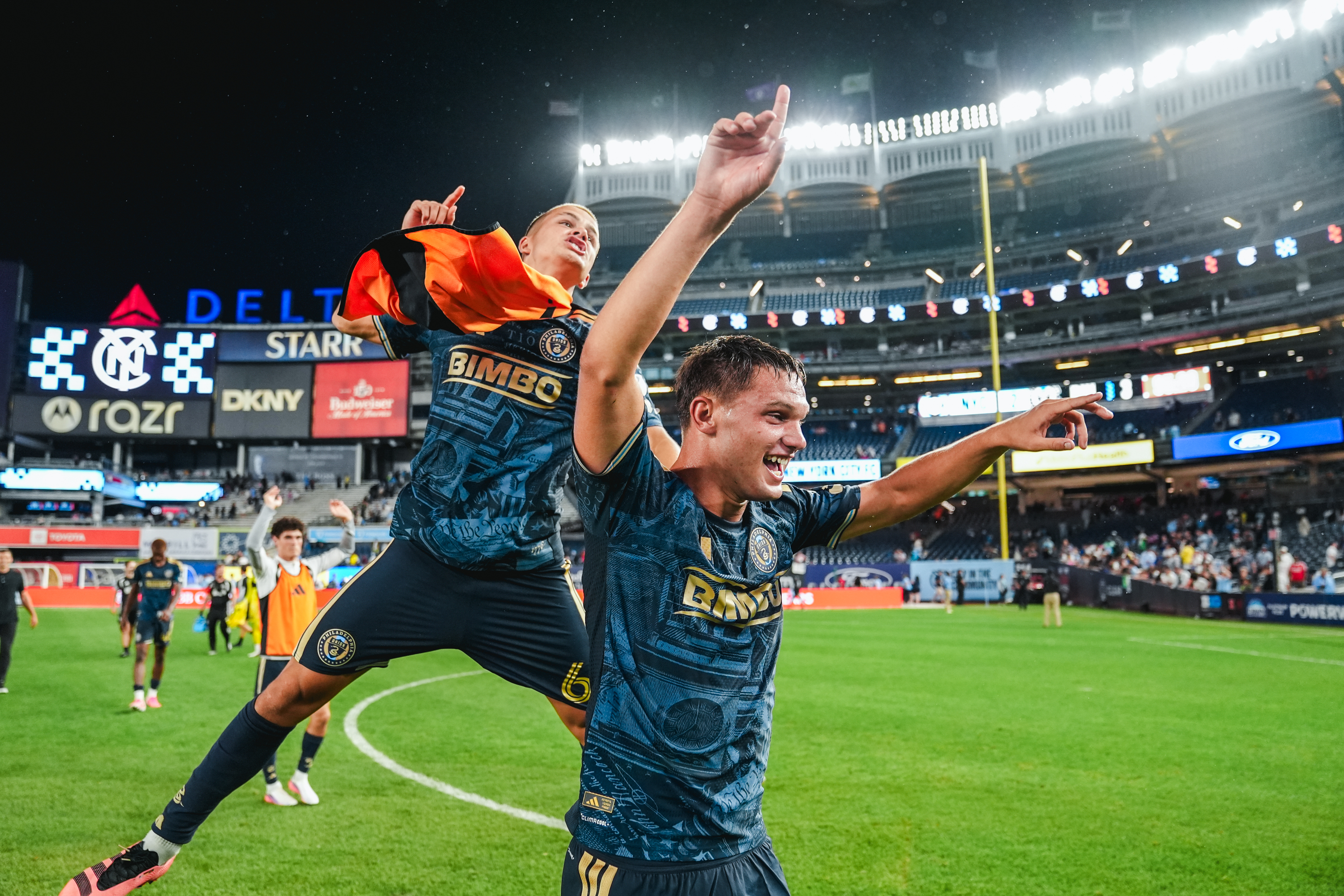
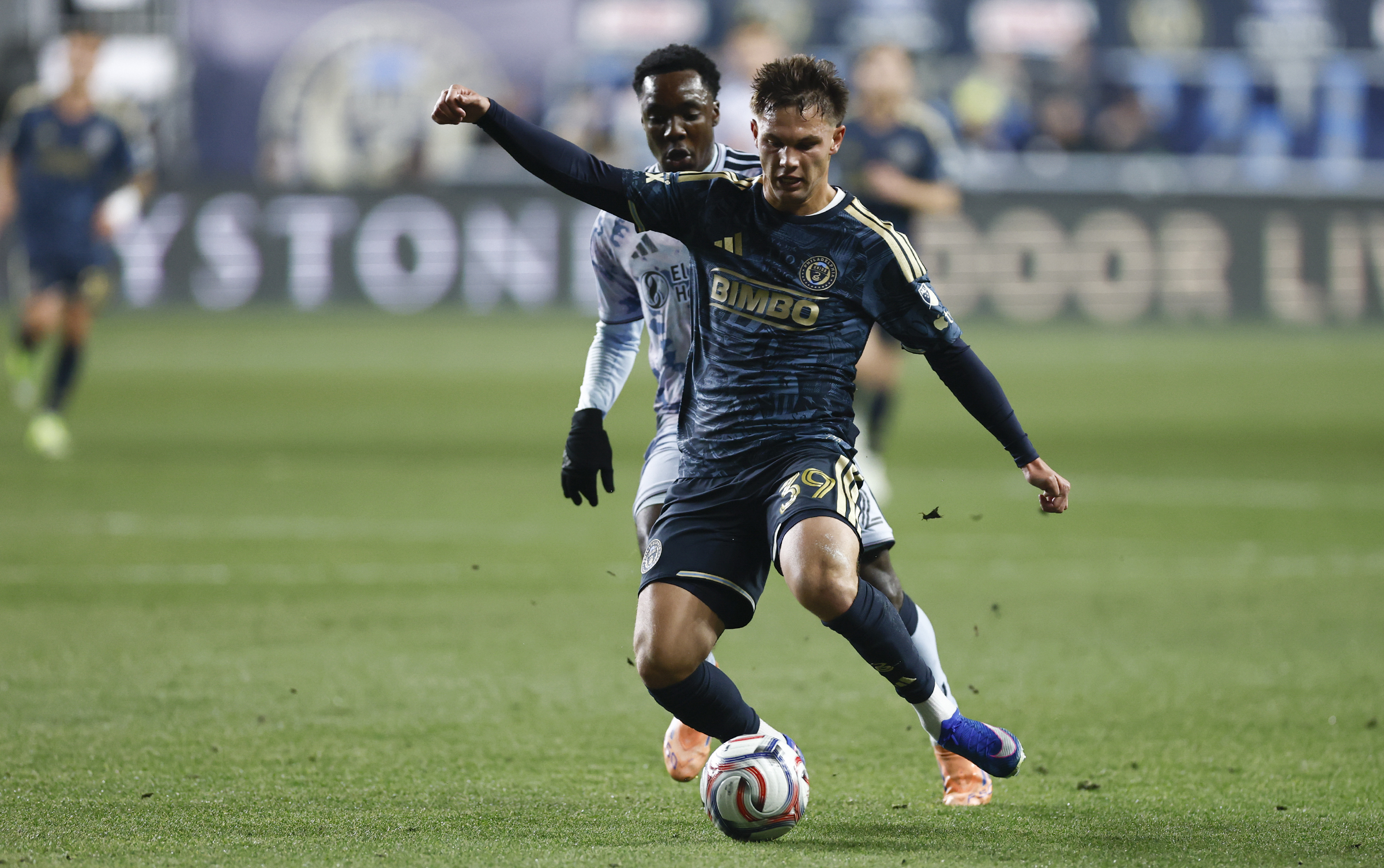
    Union phenom Cavan Sullivan’s rapid rise in the soccer world reached a new milestone on Thursday, as the 16-year-old earned his first invitation to the senior U.S. men’s national team.

    He is one of three Union players on the latest 28-man squad, along with defenders Neil Pierre and Frankie Westfield. They’re joined by three more with local roots: goalkeeper Matt Freese of Wayne, and centerbacks Auston Trusty of Media and George Campbell of Chester.

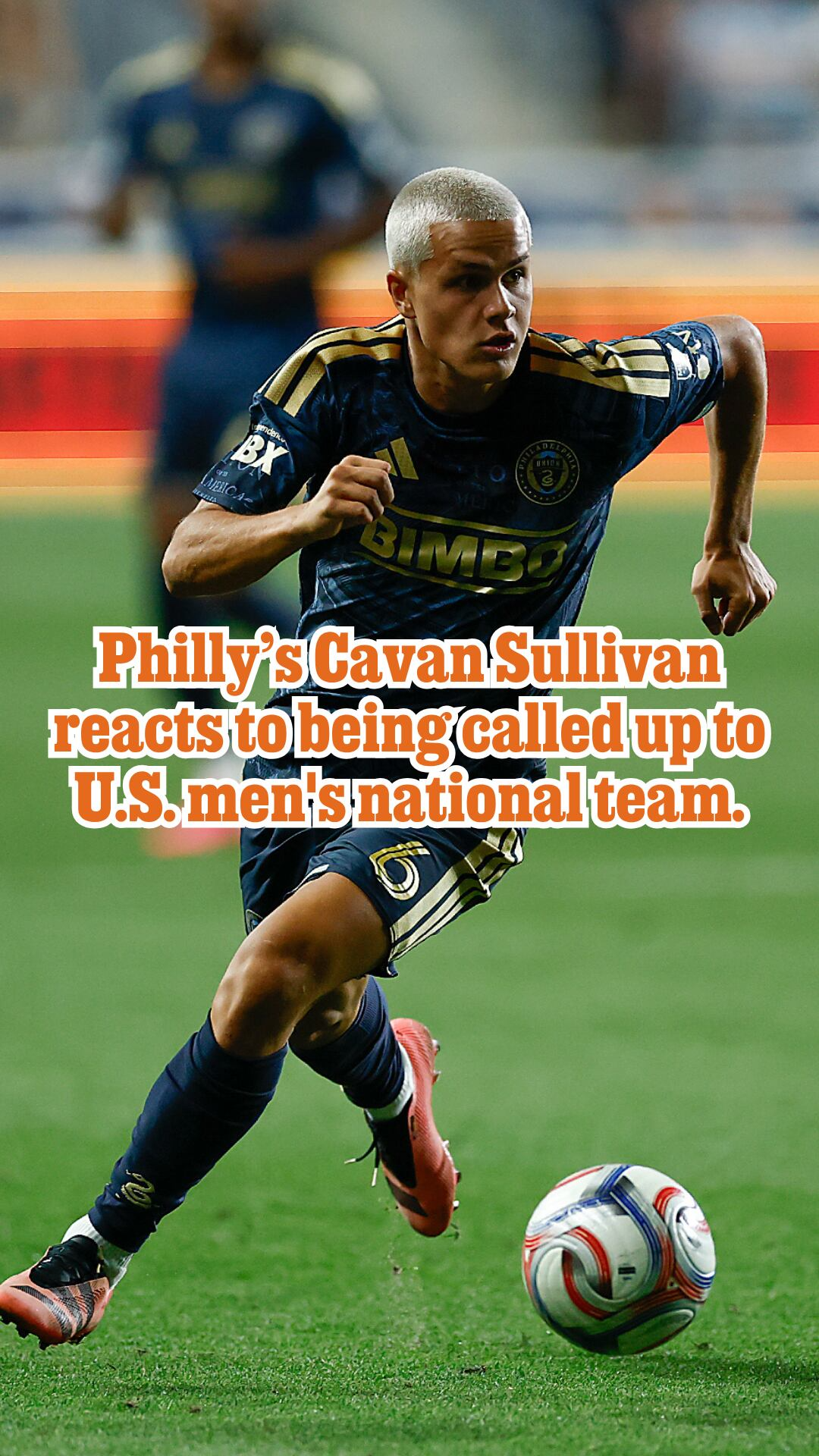
    Philly's Cavan Sullivan reacts to being called up to U.S. men's national team.
    Video: Philly’s Cavan Sullivan reacts to being called up to U.S. men’s national team.

    Sullivan is part of a three-generation soccer family with roots in Northeast Philadelphia’s Bridesburg neighborhood. He has seemed destined at times to get to this point. But his arrival this year came via a combination of his great talent and a professional work ethic.

    Since the Union resumed their season after the World Cup, Sullivan has scored six goals and added five assists in 12 appearances. They include highlight-reel moments that seized headlines across the globe: a dazzling trap and run for a goal at Red Bull New York on Aug. 29, and a backheeled finish in a 5-0 rout at San Diego FC on Sunday.

    “I think he deserves all the praise that he’s getting,” U.S. manager Mauricio Pochettino said in a news conference Thursday morning. “Because he’s performing well, he’s playing well, he’s giving assists and scoring goals — and he’s 16.”

    Sullivan’s work has helped the Union launch a stunning 10-game unbeaten run in league play. Led by interim manager Ryan Richter, who has known Sullivan for many years, the club has risen from a 1-10-4 record and last place at the World Cup break to 9-10-6, and seventh place in MLS’s Eastern Conference.

    Attention isn’t just coming from within MLS. They’re watching on Europe’s big stage, too, since Sullivan is due to join English superpower Manchester City at the end of 2027.

    The deal was agreed upon when he turned pro with his hometown club at 14 years old in 2024. While neither club can discuss it publicly because of British labor laws, everyone knows the clock is ticking.

    Right now, Sullivan is enjoying the present, kept grounded by coaches, teammates, and family. Chief among them is his oldest brother, Quinn Sullivan, a stalwart of the Union in his own right who earned his senior national team debut last year.

    “We need to have a clear idea how to — I don’t want to use the word ‘help,’ but just to be with him and try to provide the best platform for him to evolve,” Pochettino said of wanting to get to know Sullivan. “Every day, we need to be the people that go there to push, and to evolve, and to sometimes put limits, sometimes to encourage to keep going [and] doing what he’s doing. It’s a good challenge for us, and I think it’s exciting to have him.”

    The plan to get Sullivan to begin his career in Chester, with the right mix of firmness and care, has worked perfectly so far. And it’s the latest endorsement of the Union’s youth academy, which has become a remarkable pipeline for U.S. national team talent.

    Four of its alumni were on this year’s U.S. World Cup team, all with Philadelphia-area roots: Freese, Trusty, fellow centerback Mark McKenzie, and midfielder Brenden Aaronson. A year earlier, the Concacaf Gold Cup squad had six current or former Union players, and in 2024 the Olympic team had three.

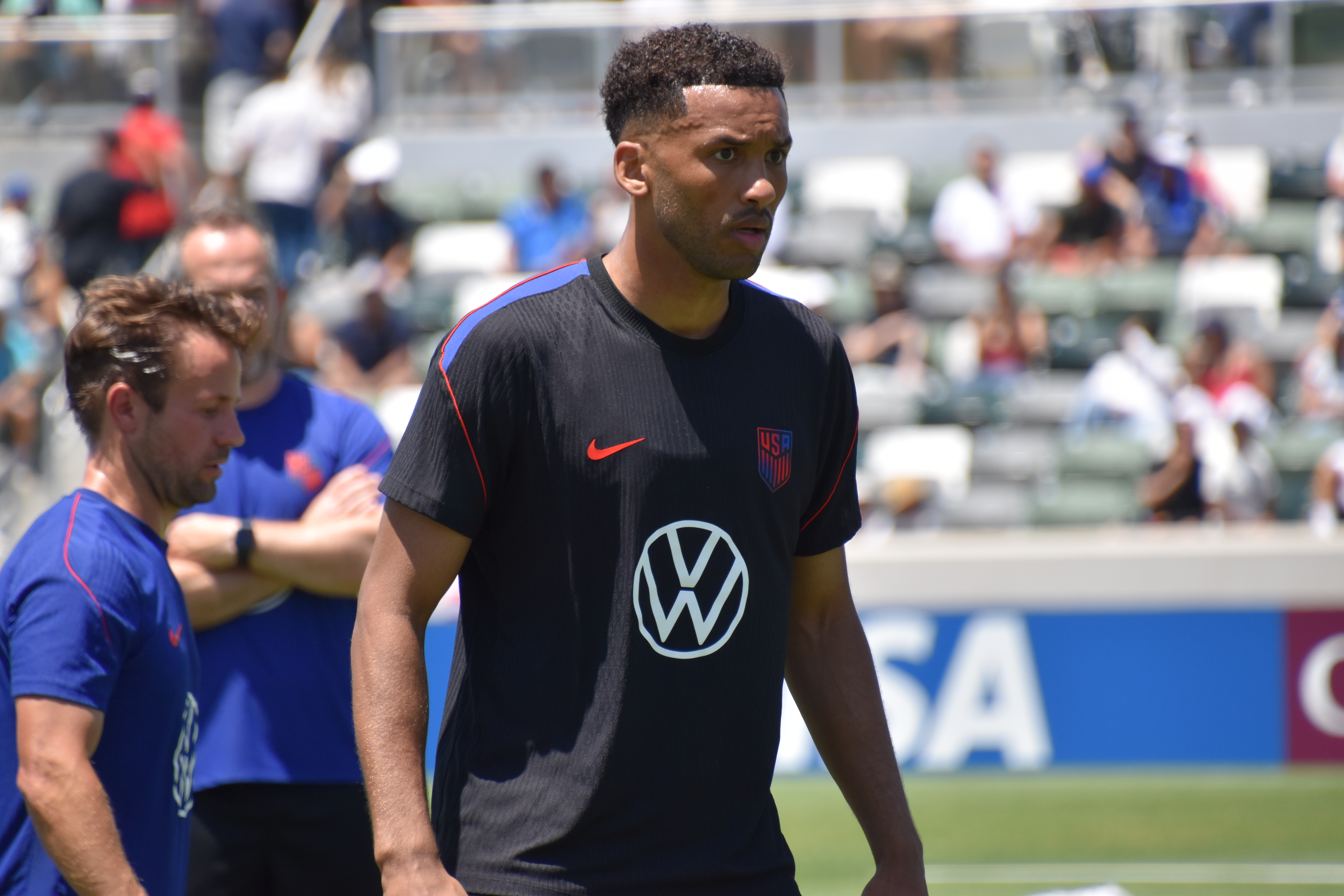
    Media’s Auston Trusty is one of the veterans on this U.S. squad.Jonathan Tannenawld

    Pierre, Westfield also earn the call

    Now a new era is arriving, and not just with Sullivan. He’s joined on this squad by two more of the Union’s leading youngsters: Pierre, an 18-year-old centerback, and Westfield, a 20-year-old outside back.

    “You are happy for Philadelphia, no?” Pochettino said. “Plenty of players from Philadelphia.”

    Both players are major candidates for the 2028 Olympic squad, which is a big part of why they were invited. The Olympics is an under-23 age-group event, and this window is one of the only chances for candidates to get senior national team experience before they go into their own training regimen.

    Pierre was born in Lebanon, Pa., and his family moved to Blue Bell so his older brother, Nelson, could join the Union’s academy as a kid. In time, Neil made his own impression and now is the club’s top centerback prospect since McKenzie and Trusty.

    Neil Pierre (right) has made his own rapid rise with the Union this summer.Elizabeth Robertson / Staff Photographer

    He’s impossible to miss on the field, standing 6-foot-7. He’s scored four goals since joining the Union’s first team this summer. But he also has proven he has the defensive chops to mix it up with veterans and a terrific passing game.

    “When you compare him with a 30-year-old, or 26- or 28-year-old centerback that maybe is playing in another country, or maybe in MLS, I don’t see the difference [just] because one has more experience than other,” Pochettino said. “Both can make a mistake; both can be good. That is why, [with] this type of potential, when players like this guy are playing in MLS, how we can contribute in their career, to evolve and be better and better, is this guy being with us.”

    Westfield grew up at the other end of Northeast Philadelphia from the Sullivans, in Morrell Park. For a while, he might not have been the most famous athlete in his house, at least locally: his brother, Rocco, starred for the Father Judge boys’ basketball team that won the last two Catholic League championships.

    Frankie made his pro debut the night before Rocco claimed the first of his titles. Now, he has made a name for himself.

    Frankie Westfield has been impressive as the Union’s starting right back.Yong Kim / Staff Photographer

    “I think that it’s normal that it’s a different process now to build the roster,” Pochettino said. “With the idea of not only to perform today, but also to help these young kids to become more mature, more experienced — and because the one of the biggest objectives of the [U.S. Soccer] Federation is the Olympic Games in two years. And I think giving the opportunity to be involved in this senior team is a thing that is going to pay and to be very helpful in two years for these kids.”

    The Union trio is part of a fleet of fascinating youngsters on this latest U.S. squad. Others include wingers Mathis Albert of Germany’s Borussia Dortmund, Cole Campbell of Germany’s Elversberg, and Zavier Gozo of England’s Crystal Palace; forward Julian Hall and midfielder Adri Mehmeti of Red Bull New York; and goalkeeper Diego Kochen, who grew up at Spanish giant Barcelona and is now with Denmark’s Lyngby.

    Eleven of the 26 players on the squad are newcomers, with 13 returnees from the World Cup. Among the latter are Freese, Trusty, and perennial locker room leaders Chris Richards and Tyler Adams.

    The Americans will take the field starting Monday at the national training center in suburban Atlanta, then head off on a cross-country journey with four games: Peru on Sept. 26 in Orlando, Chile on Sept. 29 in St. Louis, then rivals Mexico on Oct. 3 in Glendale, Ariz., and Canada on Oct. 6 in St. Paul, Minn.

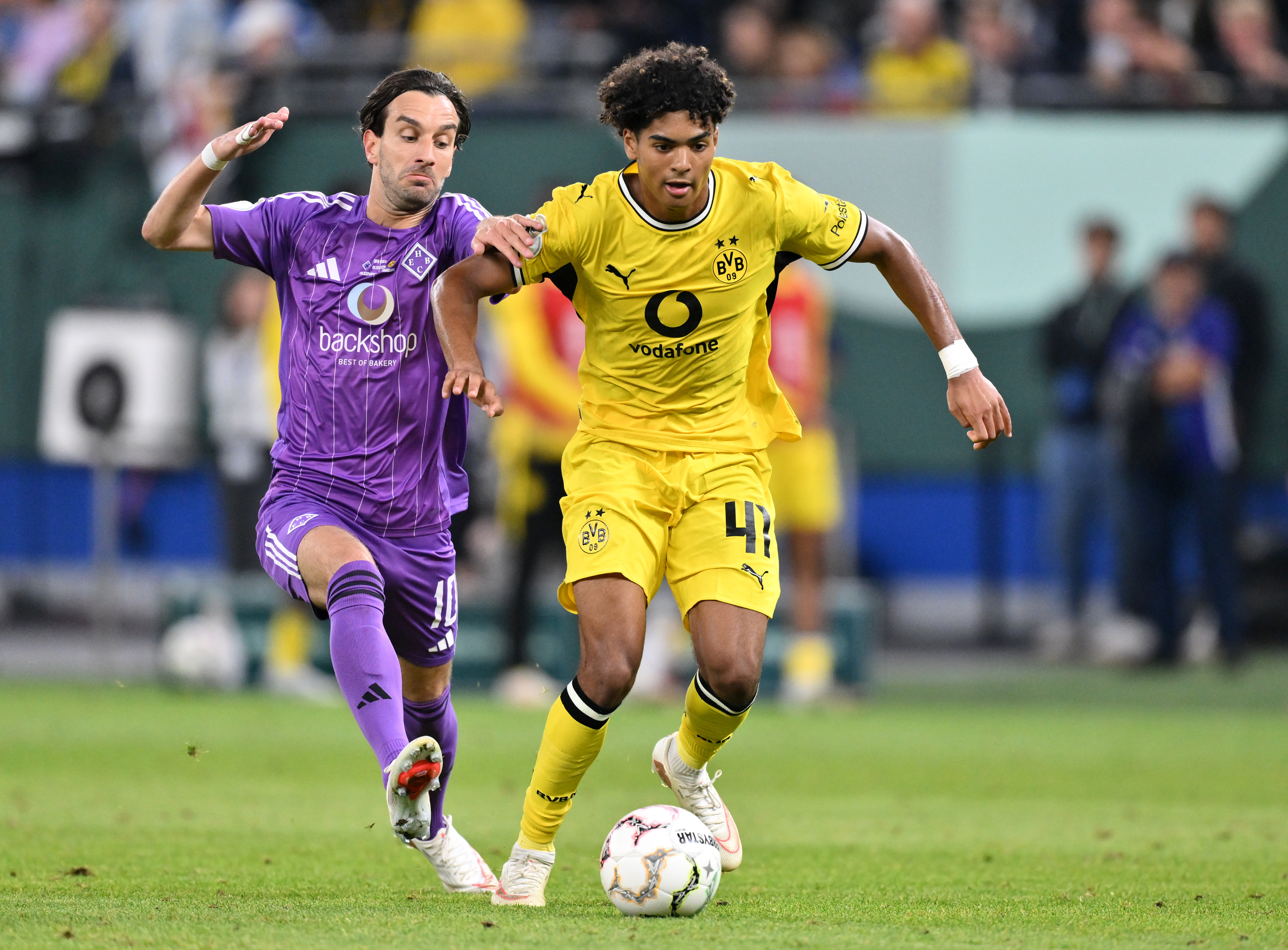
    Mathis Albert of Germany’s Borussia Dortmund (right) is another of the intriguing young talents on this U.S. roster.Oliver Hardt

    USMNT roster for autumn friendlies

    Local products in bold

    Goalkeepers (4): Chris Brady (Chicago Fire), Matt Freese (New York City FC), Diego Kochen (Lyngby, Denmark), Brian Schwake (Nashville SC)

    Defenders (10): George Campbell (West Bromwich Albion, England), Sergiño Dest (PSV Eindhoven, Netherlands), Alex Freeman (Villarreal, Spain), Peyton Miller (New England Revolution), Neil Pierre (Union), Chris Richards (Crystal Palace, England), Antonee Robinson (Fulham, England), Miles Robinson (FC Cincinnati), Auston Trusty (Celtic, Scotland), Frankie Westfield (Union)

    Midfielders (9): Tyler Adams (Bournemouth, England), Mathis Albert (Borussia Dortmund, Germany), Sebastian Berhalter (Middlesbrough, England), Zavier Gozo (Crystal Palace), Adri Mehmeti (Red Bull New York), Yunus Musah (AC Milan, Italy), Brooklyn Raines (New England Revolution), Gio Reyna (Strasbourg, France), Malik Tillman (Bayer Leverkusen, Germany)

    Forwards (5): Cole Campbell (Elversberg, Germany); Justin Ellis (Orlando City), Julian Hall (Red Bull New York), Ricardo Pepi (PSV Eindhoven, Netherlands), Cavan Sullivan (Union)

    "You are happy for Philadelphia, no? Plenty of players from Philadelphia."

    Yes, it is an enjoyable part of my job as a professional cynic. But he can rest assured that lots of people around town are happy today:

    www.inquirer.com/soccer/cavan…

    (Video via U.S. Soccer)

    [image or embed]

    — Jonathan Tannenwald (@jtannenwald.bsky.social) September 17, 2026 at 10:38 AM

    USMNT schedule

    Saturday, Sept. 26: vs. Peru at Inter.co Stadium, Orlando, 4:30 p.m. (TNT, truTV, Telemundo 62, Universo, HBO Max, Peacock)

    Tuesday, Sept. 29: vs. Chile at Energizer Park, St. Louis, 8 p.m. (TNT, truTV, Telemundo 62, Universo, HBO Max, Peacock)

    Saturday, Oct. 3: vs. Mexico at State Farm Stadium, Glendale, Ariz., 10 p.m. (TNT, Telemundo 62, Universo, HBO Max, Peacock)

    Tuesday, Oct. 6: vs. Canada at Allianz Field, St. Paul, Minn., 8 p.m. (TNT, truTV, Universo, HBO Max, Peacock)