Blog

  • GOP’s losses will raise pressure on conservative Supreme Court justices to retire

    GOP’s losses will raise pressure on conservative Supreme Court justices to retire

    The GOP’s sweeping losses in the midterm elections Tuesday set up an unsettling possibility for the party: If they don’t act now to confirm a new Supreme Court justice, they may not have another chance for years to come.

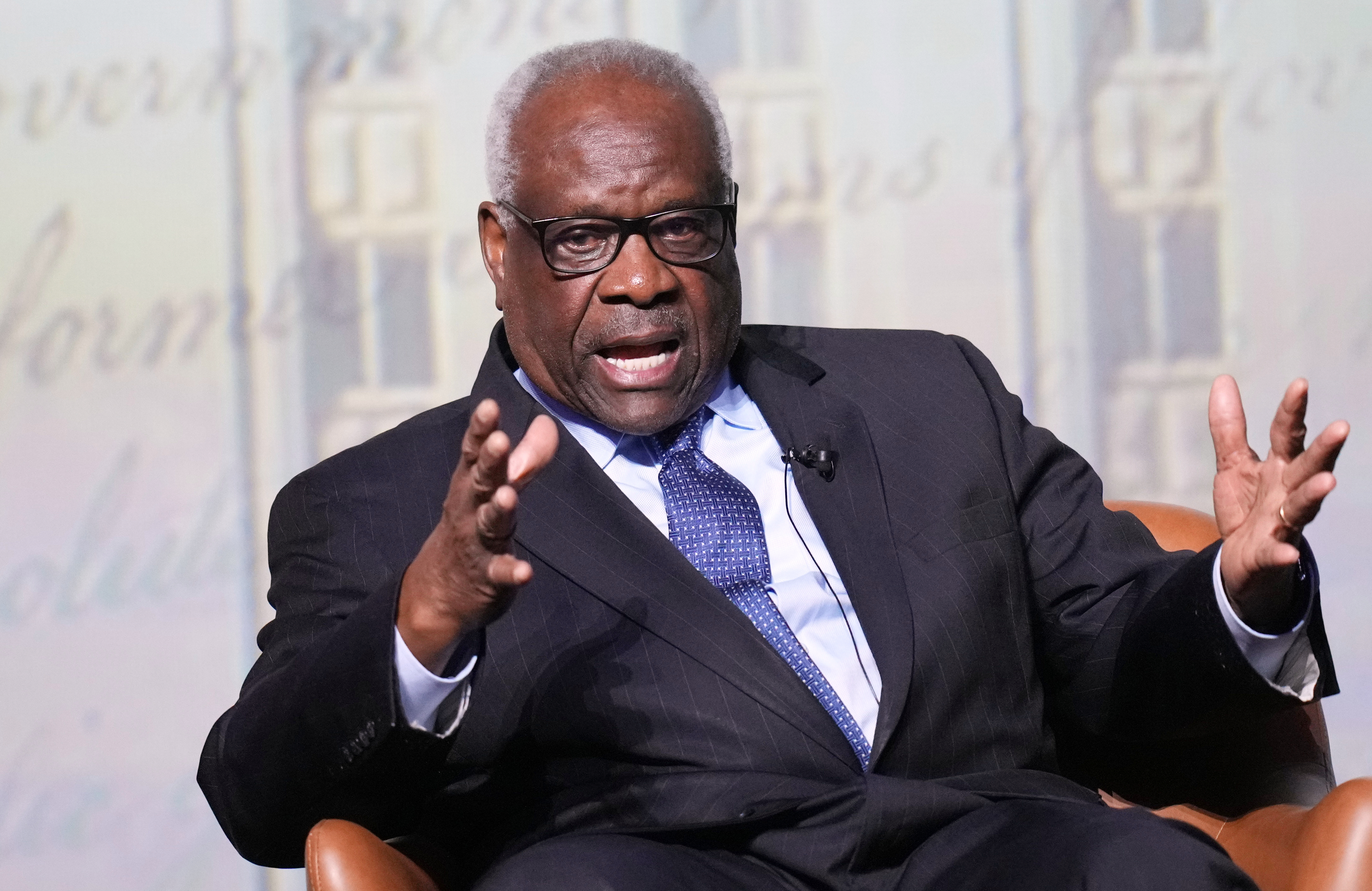
    That prospect is likely to ramp up pressure on the court’s two oldest conservatives — Justice Samuel A. Alito Jr., 76, and Clarence Thomas, 78 — to retire during the lame-duck period, while Republicans still have the votes to get a nominee confirmed by the Senate. The new Senate, in which Democrats will hold a majority, is seated on Jan. 3.

    Alito, who joined the court in 2006, said last month he has no plans to retire during the lame-duck session. Thomas has said in the past he has no plans to step down from the court. He joined the court in 1991 and could become the longest-serving justice in its history in 2028.

    But given the magnitude of Democratic inroads in the Senate, legal and political experts said it could be 2033 before Republicans have a realistic shot at winning back enough seats in that chamber to approve a conservative justice.

    At that point, Alito and Thomas would be well into their 80s. Neither responded to a request for comment.

    “I think both are making an implicit bet that they will live long enough … so that a Republican president can replace them with someone ideologically similar,” said Ed Whelan, a conservative attorney and senior fellow at Ethics and Public Policy Center.

    This is likely to make many Republicans antsy, particularly those mindful of the lesson of liberal Justice Ruth Bader Ginsburg, who died while still on the bench at 87, in September 2020.

    Ginsburg’s death allowed Republicans to move the court in a more conservative direction when they confirmed Justice Amy Coney Barrett to replace her weeks later. President Donald Trump nominated Barrett to replace Ginsburg, and over the vociferous objections of Democrats, Senate Republicans quickly muscled the nomination through just ahead of the 2020 presidential election.

    Trump remade the court with three picks in his first term — Barrett, Neil M. Gorsuch and Brett M. Kavanaugh — who pushed the court sharply to the right.

    The Supreme Court’s conservative 6-3 supermajority has delivered historic opinions on abortion, affirmative action, religious rights, and much more that have thrilled Republicans. A younger replacement for Alito or Thomas could lock that advantage in for years to come.

    Liberals accused Republicans of hypocrisy for rapidly confirming Barrett after they blocked President Barack Obama’s nomination of Merrick Garland for 11 months in 2016, saying it was too close to the presidential election to confirm him. Trump won the White House and Garland’s nomination was scuttled.

    Some observers think the window has already closed for Trump to nominate a fourth justice, which would allow him to leave a mark on the Supreme Court that few presidents have enjoyed.

    Republicans control 53 seats in the upper chamber, compared to 47 held by Democrats. But that split will shift to 52-48 as soon as Dec. 15, when Ohio Senator-elect Sherrod Brown (D) is seated as a result of special election. A handful of moderate Senate Republicans like Maine’s Susan Collins and Alaska’s Lisa Murkowski might also have to be persuaded to back a Trump pick.

    The margin of error is thin enough that Florida Gov. Ron DeSantis (R) posted Tuesday night on X that Trump likely won’t be able to get a suitable nominee confirmed.

    “Chance of confirming a worthy successor to Justice Thomas and/or Alito during President Trump’s term: Zero,” DeSantis wrote. “Chance of confirming a worthy successor during a hypothetical GOP admin 2029-2033: probably zero (GOP won’t be able to recapture enough seats in 28).”

    Harry Litman, a law professor at UCLA and a former U.S. attorney, said the optics of a justice retiring during the lame-duck session would also tarnish his or her reputation.

    “It would be the most crass and nakedly political resignation in the court’s history,” Litman said.

    Emily Hampsten, a spokeswoman for Sen. Dick Durbin (Illinois), the Democratic whip and a member of the Judiciary Committee, said a lame-duck nominee would create a backlash among voters and Democrats.

    “The American people will hold them accountable in 2028, and Democrats could justifiably refuse to confirm any Trump nominees for the next two years,” Hampsten said.

    That would curtail one of Trump’s other biggest legacies — the nomination of hundreds of lower court federal judges.

    Steve Vladeck, a Georgetown law professor, wrote on his blog that a lame-duck confirmation fight might also backfire on the GOP by building support for court reforms that Democrats are already eyeing during the next Congress.

    “The question would no longer be whether the Court deserves to be restructured, but whether the other side has left Democrats any choice,” Vladeck wrote.

    Gabe Roth, executive director of the reform group Fix the Court, said he thinks only small reforms will be possible while Trump is still president over the next two years.

    “Democrats would do well to focus on areas within the realm of court reform where there’s already strong bipartisan support,” Roth said. “That includes banning stock trading in the federal courts, adding more lower court judgeships to relieve ballooning caseloads, improving workplace conduct protections for judiciary staff and making access to court records free.”

    Speculation over whether Alito would retire flared over the summer when NPR published an erroneous account saying he was planning to step down. The story was later retracted.

    Alito said during a round of interviews to promote his new book last month that he had no plans to retire during the current term, which will end in June or July. The justice said he has more to contribute to the court, but did consider whether to continue each term.

    “I intend to stick around through this term,” Alito said in the interview before the Supreme Court’s new term began last month. “I made that decision many months ago.”


  • A few miles from the U.S. Capitol, dozens slept in cars awaiting free care

    A few miles from the U.S. Capitol, dozens slept in cars awaiting free care

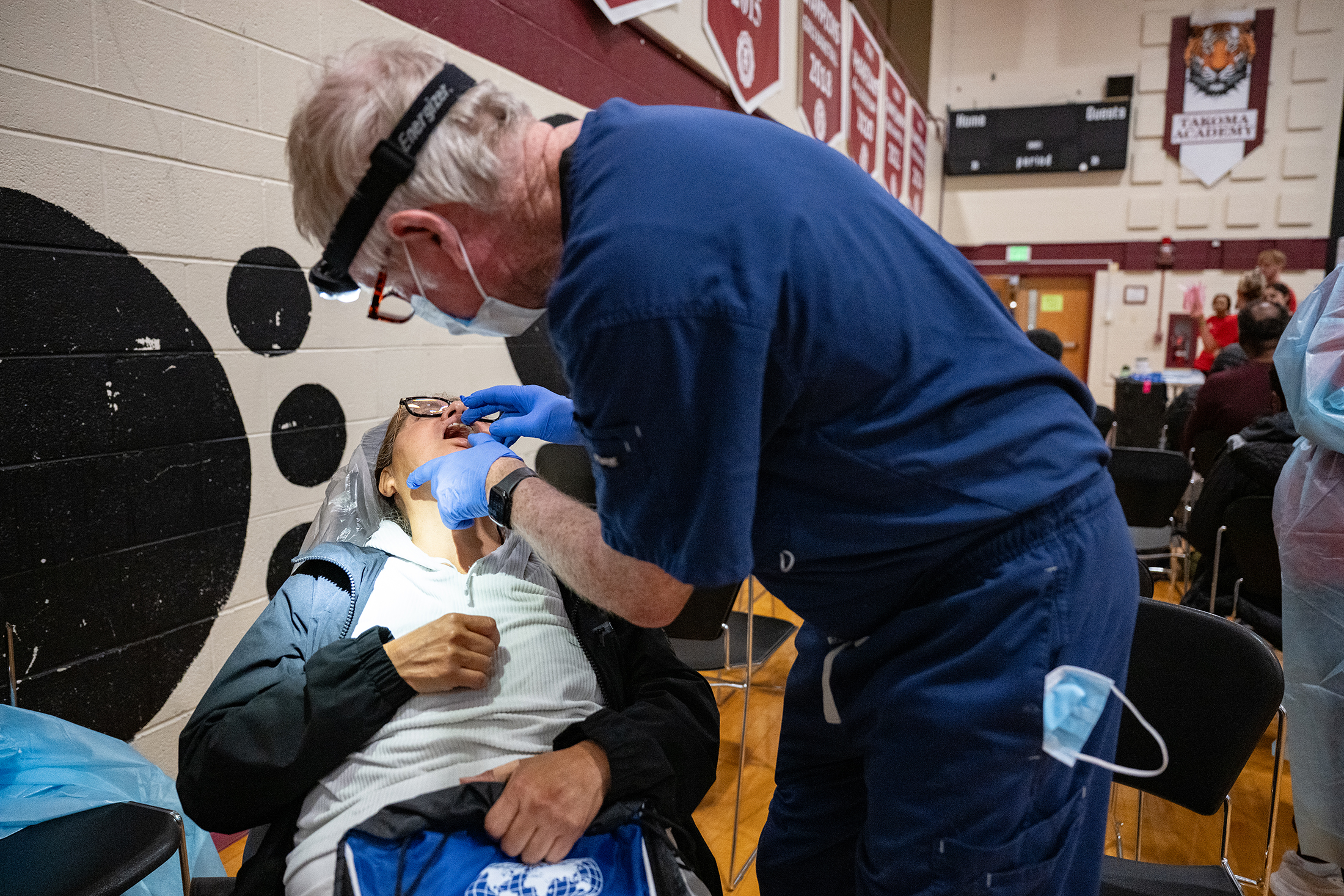
    TAKOMA PARK, Md. — Friday night lights took on a whole new meaning at a high school here in this suburb of Washington, D.C.

    Instead of fans packing stadium bleachers to watch football, on this recent October weekend the gymnasium, hallways, and parking areas were jammed with people desperately seeking healthcare at a free pop-up clinic.

    The 2026 election season was punctuated by affordability issues, with polls showing high healthcare costs a top concern among likely voters. The staggering toll of people struggling to get care was on full display here just 8 miles northeast of the U.S. Capitol — in an area where census data shows the median household income tops $108,000 and about 94% have health insurance.

    Dozens of people slept in their cars overnight outside Takoma Academy to secure spots for free health, dental, or vision care, according to clinic coordinators and interviews with patients.

    Though clinic doors were scheduled to open at 6 a.m., the first patients drove up shortly before midnight. By 4 a.m., three hours before sunrise, about 80 cars had arrived. Patients were given numbers representing their place in line when they entered the parking lot, and they had to be on site when they were notified by text message that it was their turn.

    Kenys Bautista arrived at the school before midnight after driving 20 minutes from her home in Wheaton, Md. She wanted to be sure she got the medical and dental checkups that she had put off for three years because she didn’t have insurance or the money to cover the costs.

    “It’s really sad that a lot of people like me had to sleep in their car just to see a doctor or dentist because we do not have health insurance,” Bautista said. She works as a payroll specialist for a small company but does not get any health benefits.

    Bautista was one of 467 patients at the weekend clinic. Most received dental and/or medical care. Ninety-nine got vision exams, and many left with new eyeglasses, according to clinic organizers.

    While most patients at the clinic were uninsured, 1 in 4 had health coverage, such as through Medicare or their employer. But many said just having coverage was not enough, because it left them with unaffordable out-of-pocket costs .

    “I never thought I would need a clinic like this, but it’s gotten so expensive in the world,” Alma Walton said. She has Medicare, but routine dental care is not a standard benefit.

    Walton, who lives in Camp Springs, Md., was 59th in line for care. She arrived around 1:30 a.m. “I wanted to make sure I could get in,” she said. She went to the clinic in hopes of getting a filling fixed after it cracked over the summer. She had postponed seeing a dentist.

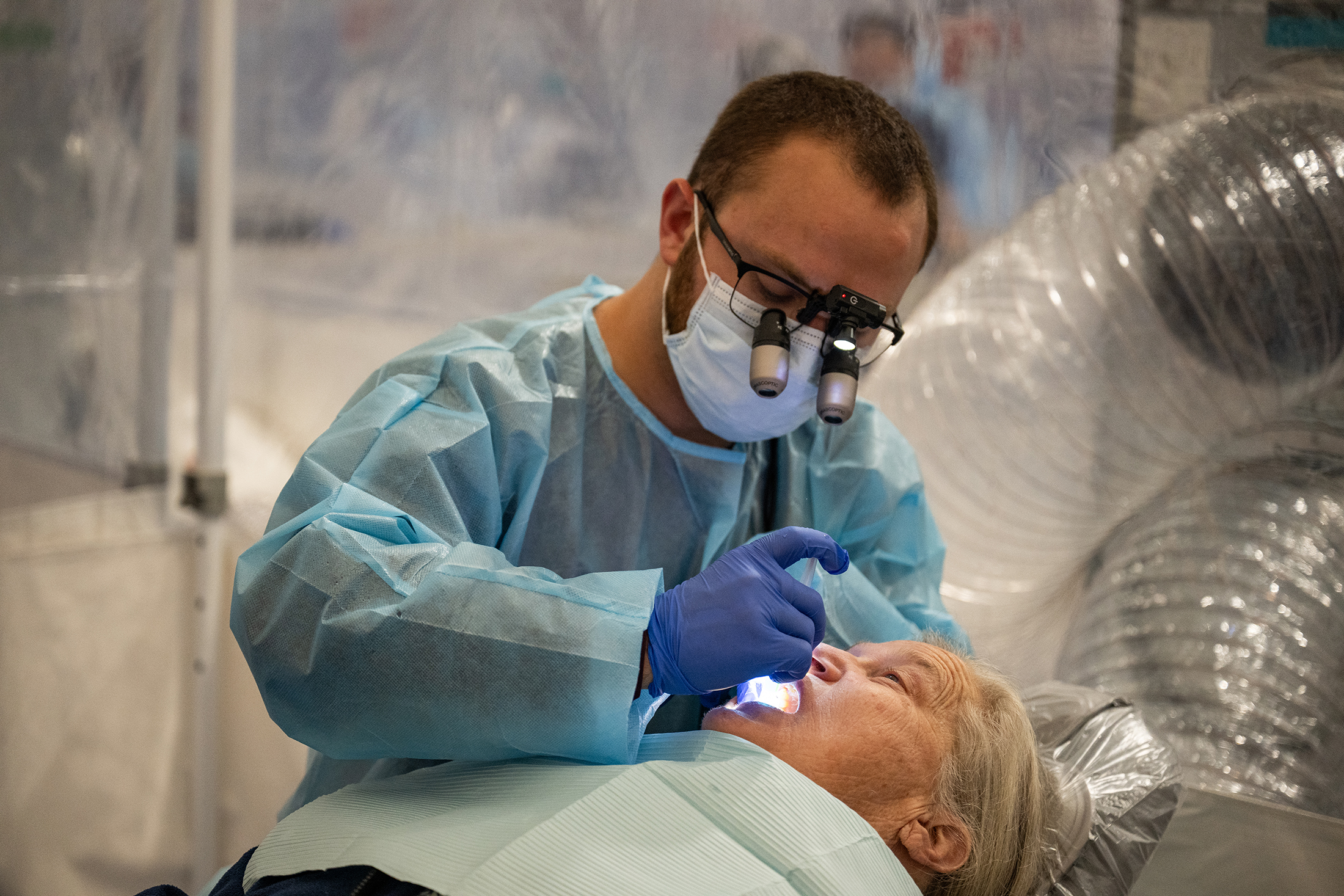
    Around 11 a.m., Walton was in one of the 30 dental treatment tents set up in the large gymnasium, having her filling replaced.

    “You got here just in time,” John Renzi, a dentist volunteering at the clinic, told her just before he began drilling. “Any longer and this tooth would have been a goner.”

    Dentist John Renzi replaces a cracked filling for Alma Walton. “You got here just in time,” Renzi told her before he began drilling. “Any longer and this tooth would have been a goner.” (Eric Harkleroad/KFF Health News)(Eric Harkleroad/KFF Health News

    The clinic was organized by Remote Area Medical, a Tennessee-based nonprofit that says it has provided free healthcare to more than a million patients over its 40-year history. The clinics initially targeted rural areas, such as in Appalachia, traditionally home to some of the poorest and least insured communities in the country. The nonprofit held a clinic in August 2025 at the School of the Future in West Philadelphia.

    In recent years, the organization has branched out into urban and suburban areas — such as around the nation’s capital, Baltimore, and Philadelphia — where having insurance is more common. The clinics rely on doctors and dentists donating their time.

    At the Takoma Park event, more than 300 dental, medical, and vision professionals volunteered along with members of the U.S. Public Health Service.

    According to a survey by Remote Area Medical, nearly 40% of patients here said they had not seen a dental provider — other than one provided at a RAM clinic — in at least two years.

    And nearly two-thirds said they did not have a usual place for seeking care other than a hospital emergency room.

    Dana Bensinger, a nurse specialist working at the medical care clinic, said many patients had high blood pressure or diabetes. They were given prescriptions for a 90-day supply of pills and told to connect with community health centers or free clinics where they can get free or low-cost primary care.

    “We have seen a lot of folks who lose insurance or are not able to keep it, and so they can’t get their prescriptions renewed,” he said.

    Many patients at the clinic showed up to get a tooth extraction — and with it, relief from dental pain.

    “We call it point-and-pull dentistry,” said Tom Ritter, a retired dentist who was triaging dental patients. “You point to the tooth you want out, and we take it out.”

    Tom Ritter, a retired dentist, triaged dental patients at the free clinic. He examined Josefina Guel’s teeth, and she later received a filling. (Eric Harkleroad/KFF Health News)(Eric Harkleroad/KFF Health News

    The dilemma, he said, is patients often need multiple teeth extracted and the volunteer dentists have only limited time for each patient. “We have to spread the love around because we have a busy schedule.”

    Michel Boudreaux, an associate professor at the University of Maryland Department of Health Policy and Management, said the RAM clinic, about 5 miles from his campus, highlighted the growing difficulty people with and without health insurance face.

    Dentist Marsha Plater fills a cavity for Josefina Guel with help from dental assistant Anusha Patlola. (Eric Harkleroad/KFF Health News)(Eric Harkleroad/KFF Health News

    “Even in this suburban county there are a lot of uninsured people struggling with affordability and insured people struggling with high deductibles and copays,” he said.

    Boudreaux called it “disheartening” that people felt they had to sleep in their cars overnight for care.

    Having a government job with benefits was once seen as way of immunizing one’s family from rising health costs.

    Cheromie Johnson, who works for the District of Columbia, said that recent dental work left her with a $12,000 bill.

    She came to the clinic with her 6-year-old son, Cairo, to get eye exams. She was hoping they would each get a new pair of eyeglasses.

    “This is very important, especially for him in school, and I drive, so we both need to see clearly,” Johnson said. She estimated the free vision care would save them more than $1,000.

    Ryan Shaw, a physician assistant student, checks Cairo’s eye pressure at the clinic. (Eric Harkleroad/KFF Health News)(Eric Harkleroad/KFF Health News

    When asked what this busy free clinic said about the state of U.S. healthcare, she said: “It’s poor, and it needs to be revamped. But we all know that.”

    John Osborn, dental director for RAM, was taking a break on a balcony that overlooked the gymnasium, now peppered with treatment tents and mobile equipment that had transformed the space into something from the TV show M*A*S*H from decades ago. He was not surprised to see people showing up on a Saturday morning for care. Over the past 35 years, he’s seen similar scenes at RAM’s clinics across the country.

    He only wished that some members of Congress would have come by to bear witness.

    “It would have been nice for them to see what people have to do to get healthcare,” he said.

    KFF Health News is a national newsroom that produces in-depth journalism about health issues and is one of the core operating programs at KFF — the independent source for health policy research, polling, and journalism.

  • Voters are turning out in droves to cut autocrats down to size

    Voters are turning out in droves to cut autocrats down to size

    It’s not just the U.S. midterms: An anti-authoritarian wave appears to be crashing over elections around the world.

    In country after country that has struggled with creeping authoritarianism and democratic decay, outraged electorates have turned out in record numbers, delivering indisputable victories that have checked the autocratic advance.

    The United States crossed into “competitive authoritarianism” during President Donald Trump’s second term, according to eminent political scientists Steven Levitsky and Lucan A. Way. Voters issued a stunning rebuke in the midterms, when an expected blue wave turned out to be a blue tsunami.

    The outpouring was just what Kamala Harris, the former Democratic presidential contender, urged before the vote when she told supporters, “We just need to turn out in really large numbers that would be too big to rig.” It even overcame exceptional efforts by Trump and his party to gerrymander impenetrable Republican districts.

    Voters are still seen as more likely to go to the polls to defend their pocketbooks than democratic principles. But when those issues intersect — for instance, in angry accusations of corruption, at a time when voters are struggling economically — the combination has proved especially motivating.

    The year has provided a host of examples, as voters turned out in numbers that capsized the efforts of nationalist autocrats, tainted by corruption accusations, to tilt the political playing field their way even before elections could begin.

    Last month, when Aleksandar Vucic, Serbia’s longtime nationalist strongman, was swept out of power, estimates suggested that voter turnout was nearly 70%, the highest since the breakup of the former Yugoslavia.

    In Brazil, President Luiz Inácio Lula da Silva defeated Flávio Bolsonaro, whose father, the former president Jair Bolsonaro, was jailed for attempting a coup after he lost the last election to Lula. In this year’s election, turnout increased by nearly 3 million voters between the first and second rounds, bucking the usual trend of votes falling in the runoff. Voter absenteeism fell to the lowest level of any Brazilian presidential election.

    In Hungary, Viktor Orban, a MAGA favorite who had proclaimed himself the champion of “illiberal democracy,” was ousted in April after nearly 16 successive years as prime minister. Voter turnout reached its highest level since the fall of Communism in 1989 — about 80%.

    ‘Too big to rig’

    The overwhelming turnout and high margins of those victories were important, because they neutralized the tactics that authoritarian leaders often use to prejudice electoral outcomes in their favor, said Kim L. Scheppele, a professor at Princeton University who studies democracy in Eastern Europe.

    “If you have a close vote, then autocratic capture can always pull them over the line with dirty tricks of different kinds,” she said. But when the margin is huge, such tricks no longer work, and disfavored leaders must either step down or fully abandon democracy in favor of a violent crackdown, as former President Nicolás Maduro of Venezuela did when he faced a loss in 2024.

    In Hungary, for example, the opposition Tisza party won an absolute majority in Parliament, overcoming even the rejigged rules that Orban had long used to ensure that a plurality of votes gave his party a supermajority in the legislature.

    In Israel, by contrast, Prime Minister Benjamin Netanyahu’s coalition lost its parliamentary majority in elections in October, due in part to record-high turnout among Israeli Arabs. But the coalition bargaining is so narrow that Netanyahu has tried to cast doubt on the results by claiming without evidence that the Arab parties stole the election.

    Youth in revolt

    Young people have been a crucial element of this new anti-authoritarian wave.

    “I want to thank the generosity of Brazilian youth, who took to the streets to defend democracy,” Lula said in his victory speech, referring to student protests that broke out after he finished in second place in the first round of the presidential election. In the second round, Lula’s substantial advantage with voters younger than 35 powered him to victory.

    In the United States, 70% of all voters younger than 30 cast their ballots for Democrats, according to New York Times data. Even more notably, 61% of young men voted Democrat — a big change from 2024, when more than 56% of them supported Trump.

    In Hungary, according to exit polls, 67% of voters younger than 30 cast their ballots for the victorious Tisza party, compared with just 8% for Orban’s party, Fidesz.

    The most notable youth effects came in Serbia, where the opposition’s victory was driven by a new youth-led political bloc called Student List-Students Win, which grew out of a longtime student protest movement. The students recruited candidates from outside the political system: doctors, scientists and others. Their message — anti-politics but pro-democracy — resonated with voters.

    “If you can get all new faces, then you can build these big-tent parties and let young people power it with social media,” Scheppele said. “Then you can get these huge election victories, which enable you to really root out the prior autocratic government.”

    This article originally appeared in The New York Times.

  • Court weighs Trump’s appeal in the Stormy Daniels hush money case

    Court weighs Trump’s appeal in the Stormy Daniels hush money case

    NEW YORK — New York appeals judges grilled President Donald Trump’s lawyers and prosecutors Thursday about his bid to erase his historic hush money conviction, but the court didn’t signal how or when it would rule.

    The judges delved into legal theory, presidential immunity, and some evidence in Trump’s 2024 trial. Convicted of 34 felony counts of falsifying business records to obscure a $130,000 payment to adult film performer Stormy Daniels, Trump denies any wrongdoing. He has turned to state and federal courts in hopes of unwinding the verdict.

    Trump, who denounced the case on social media as recently as September, didn’t attend Thursday’s court session.

    Much of the back-and-forth focused on prosecutors’ theory that the hush money was meant to keep unflattering information about Trump away from the electorate before the 2016 vote, and that it amounted to an illegal campaign contribution under the Federal Election Campaign Act.

    Trump lawyer Robert Giuffra Jr. told the judges that Manhattan District Attorney Alvin Bragg’s office has no place tying a case to a federal election law.

    “We think it’s the most obvious ground for reversal,” he said.

    Prosecutors argued that they weren’t prosecuting an alleged federal campaign finance offense, but rather presenting it as a factor underlying what they claim was a Trump-orchestrated conspiracy.

    “So are you relying upon FECA in order to prove your falsifying business records (charge)?” Justice Troy Webber asked.

    “Only partially,” replied Bragg’s appeals chief, Steven Wu, adding that it was “important only to show that the purpose for the falsifying business records here was to conceal that conspiracy.”

    Judges drill down on question about White House conversations

    The appeal also concerns whether jurors should have been allowed to hear testimony about supposed White House workflow and conversations — some with then-Communications Director Hope Hicks — and even Trump social media posts during his first term. His lawyers cite presidential immunity for official acts, and they argue his official conduct included responding to the Daniels drama once it became public in 2018.

    “Ms. Hicks was serving as a White House official,” talking with the president about how to respond to press inquiries that implicitly concerned his fitness for office, Giuffra told the appeals judges.

    Wu countered later: “In this conversation, they were not speaking about a press response. … The president was talking to her about his private opinion.”

    The appeals judges pressed both sides about the matter and the specifics of Hicks’ testimony. She told jurors that she asked Trump how he wanted to respond, but as for what he said, she testified only that he expressed relief that the Daniels story hadn’t emerged during the campaign.

    Bragg’s office contends that all the White House-related evidence was fair game. The conversations were “unofficial conduct,” some of the other evidence was public record, and some was a general description of office practices, prosecutors say. They maintain that even if some of the evidence should have been excluded, its admission was a “harmless error” that doesn’t warrant overturning a conviction that rested on “a mountain” of other proof against Trump.

    Justice Bahaati E. Pitt-Burke wondered aloud about that.

    “If you take all of those things cumulatively, right, and there’s a problem with this evidence, there’s a problem with this evidence, at what point … does it stop being harmless error and turn into something else?” she asked.

    “It would have to be a lot more than there was in this case,” Wu responded.

    Trump’s lawyers also have argued the case was political

    While the appeal turns on complex legal disputes, political overtones aren’t hard to find. The very first paragraph of one of the Trump team’s court filings contended that the case was the flimsy product of “immense political pressure” on a Democratic prosecutor to go after Trump — rhetoric that echoes the Republican president’s own oft-repeated claims in the court of public opinion.

    The May 2024 verdict made Trump the first former — and now current — U.S. president with a criminal conviction. While historic, it didn’t impede his return to the White House or subject him to any punishment.

    The trial involved $130,000 that Daniels got from Trump’s then-fixer and lawyer, Michael Cohen, weeks before the 2016 election. The money bought, for a time, her silence about an alleged sexual encounter with the married Trump a decade earlier. He says that nothing sexual happened between them.

    Trump’s company reimbursed Cohen in 2017, logging those payments as legal expenses.

    Trump’s lawyers argue there’s only “weak” evidence that he even knew about Cohen’s dealings at the time. His trial attorneys also said that payments to Cohen were indeed legal expenses, and that any hush money expended on Trump’s behalf wasn’t hidden campaign spending, just an effort to avoid embarrassing his family.

    The distinction matters because, under New York law, falsifying business records isn’t a felony unless it’s done with an intent to commit or conceal a separate crime.

    While pursuing his state appeal, Trump also has been trying to shift the case to federal court and have it dismissed on immunity grounds. A federal judge said no — for the third time — in August. Trump’s attorneys are appealing that decision, with arguments set for Nov. 16.

  • Multiple flights in Europe diverted because of bomb threats after earlier hoaxes

    Multiple flights in Europe diverted because of bomb threats after earlier hoaxes

    MILAN — Multiple flights in Europe made emergency landings on Thursday after being diverted because of bomb threats, authorities said. The incidents followed hoax bomb threats earlier this week that prompted searches, diversions and in one case a military escort.

    More than a dozen flights from cities including Copenhagen, Dublin, Helsinki, Madrid, Milan and Warsaw were confirmed to have been targeted with bomb threats, most diverted to other airports for emergency landings while others landed safely at their destinations. So far inspections have not turned up hazardous or suspicious materials.

    Such threats are not new, but the latest incidents come at a time of increased geopolitical tensions and other disruptions, like attacks on supermarket refrigeration systems, drone incursions in Europe and mysterious triggers to alert apps. Authorities have warned that hybrid threats abound.

    Czech police said searches of another four planes that landed in Prague after being targeted by bomb threats were clear. They have not given details on where the flights originated.

    Earlier, a flight from Dublin to Rome was diverted to a military air base in western France because of a bomb threat, the French prime minister’s office said. The flight landed safely at the base in Evreux in Normandy, Prime Minister Sebastien Lecornu’s office said. All 151 passengers and six crew members were safe and military bomb disposal teams were examining the plane, the office said.

    It added that it was following the situation in real time. No other information was immediately released.

    Authorities report ‘abstract threats’ to several airports

    A LOT Polish Airlines flight from Warsaw to Brussels landed at its destination, where inspections found no hazardous or suspicious items, the airline said. A Wizz Air flight from Milan to Bucharest landed safely in Bucharest following a bomb threat, airport spokesman Teo Postelnicu said.

    A Finnair flight from Helsinki to Rome landed safely at Rome’s Leonardo da Vinci airport at around 9:30 a.m., escorted by Italian air force fighter jets, according to an airport official with knowledge of the situation. The official spoke on condition of anonymity because they weren’t authorized to speak publicly.

    An emailed bomb threat had been received, and security clearance procedures by police bomb disposal experts were completed, with no explosives found, the official said.

    A flight to Warsaw landed in Vienna following a mail to Polish authorities containing an abstract threat, said Stefan Loidl, a police spokesperson in Lower Austria province. Nothing was found and the plane continued to Warsaw.

    He said there was also an abstract threat to Vienna Airport concerning four other flights, which he declined to identify, but operations were not disrupted.

    Polish authorities checked a LOT flight that was about to depart from Warsaw to Paris on Thursday morning after a threat was reported at Warsaw’s Chopin Airport, said airport spokesman Piotr Rudzki. No threat was ultimately identified. One runway at Chopin airport was temporarily closed while authorities carried out standard security procedures.

    Three Ryanair flights bound for Sofia, Bulgaria, had to make emergency landings because of bomb threats on board. Two of the flights, one from Copenhagen, Denmark, and the other from Madrid, landed safely at Sofia’s Vasil Levski Airport, airport officials told reporters. The third Sofia-bound flight, from London’s Stansted Airport to Sofia, had been diverted and landed safely at the airport in Plovdiv, Bulgaria’s second-largest city, Plovdiv Airport CEO Krassimir Peshev said.

    Hoaxes prompted similar searches earlier this week

    Several flights across Europe received hoax bomb threats earlier this week that prompted searches, diversions and, in one case, an escort by the Italian air force until landing, officials said.

    The flights included Polish airline LOT, Scandinavian Airlines, Wizz Air and Ryanair. The hoax threats came after a plane headed for Bulgaria was diverted to Hungary after receiving a similar bomb threat while in the air. No one was injured.

  • Now that Democrats have won Congress, their first priority must be governing — not impeaching Trump

    Now that Democrats have won Congress, their first priority must be governing — not impeaching Trump

    Michael A. Gottesman is the founder of the New Jersey Public Education Coalition, a nonpartisan group that advocates for secular public education.

    The Nov. 3 midterm elections have given Democrats majorities in both the House of Representatives and the Senate, putting them in control of Congress when the new members take office. They now face an important decision: Will they address the enormous problems confronting American families, or make Donald Trump and impeachment the centerpiece of their agenda?

    Immediately pursuing impeachment would be a serious mistake.

    I say that as someone deeply critical of Trump, his administration, and many of his policies. My opposition to an impeachment-first agenda is not a defense of Trump. It is a defense of Americans who have spent too long watching political warfare while their problems grow.

    Americans are struggling. In October, an AP-NORC poll found that 85% of voters considered the economy among their most important voting issues, while 84% said the same of the cost of living.

    In the same time frame, a Pew Research Center survey reported widespread concern about energy, food, healthcare, and housing costs. These are the realities of parents choosing between groceries and childcare, seniors stretching fixed incomes, and young adults unable to afford a home.

    These people do not need another Washington spectacle. They need results.

    Impeachment is a constitutional safeguard, not a political strategy. Congress must investigate credible evidence of corruption, abuse of power, or other serious misconduct, no matter who occupies the White House. But there is a difference between legitimate oversight and deciding in advance that impeachment will define the next Congress.

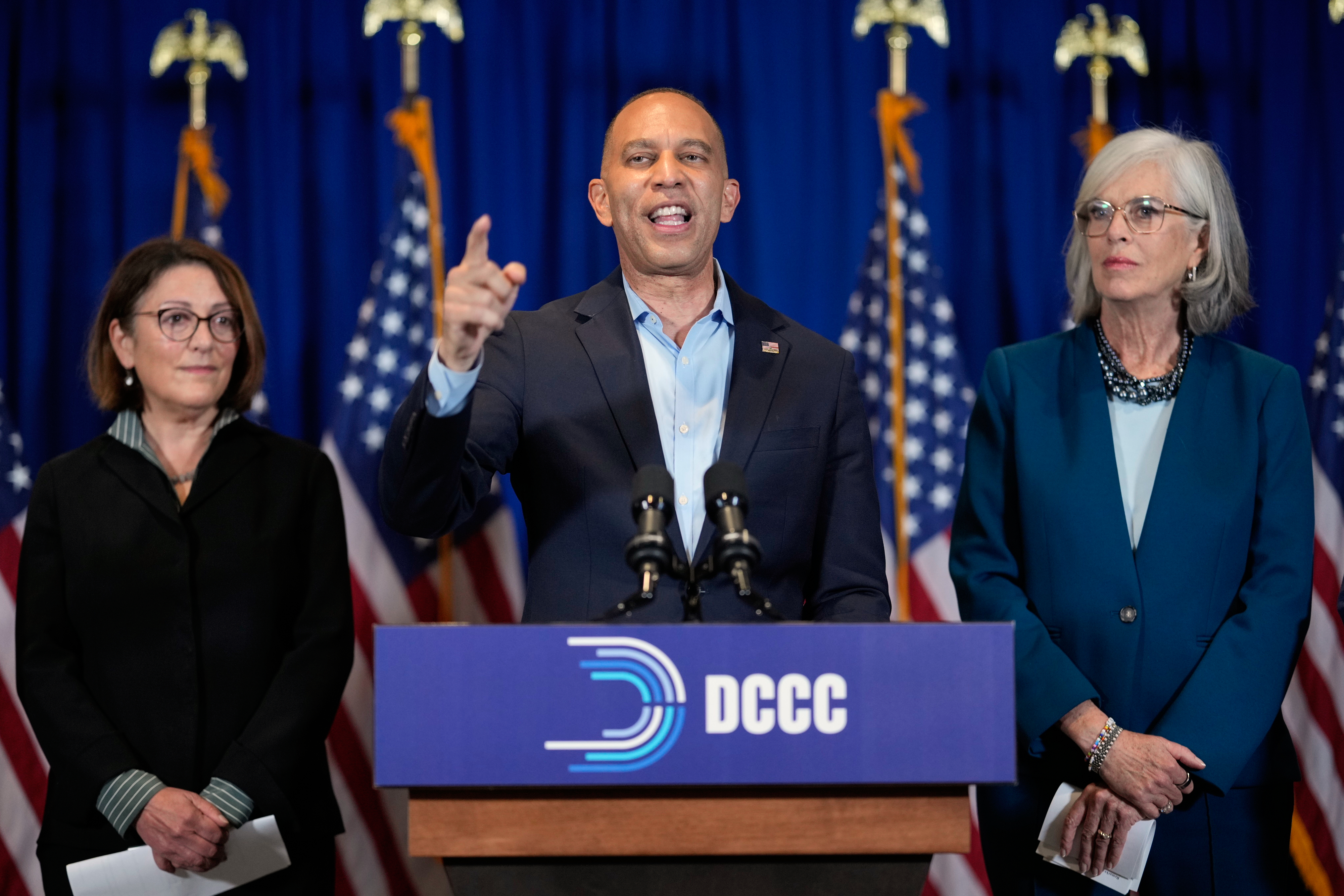
    House Democratic Leader Hakeem Jeffries struck both notes in his election-night speech, promising to deliver change while declaring, “We’re going to bring accountability to those who have visited unprecedented corruption on this country.”

    I agree that credible abuses must be investigated and those responsible held accountable. But that pursuit must remain secondary to governing. Democrats should not allow investigations, however warranted, to consume the time, attention, and political capital needed to deliver the changes Americans are demanding. Accountability should support the work of government, not become a substitute for it.

    The House can impeach by a simple majority, but conviction and removal require two-thirds of the senators present. Democrats’ Senate majority is still nowhere near the 67 votes needed if all 100 senators participate. In other words, they could have the votes to impeach but not the votes to remove Trump.

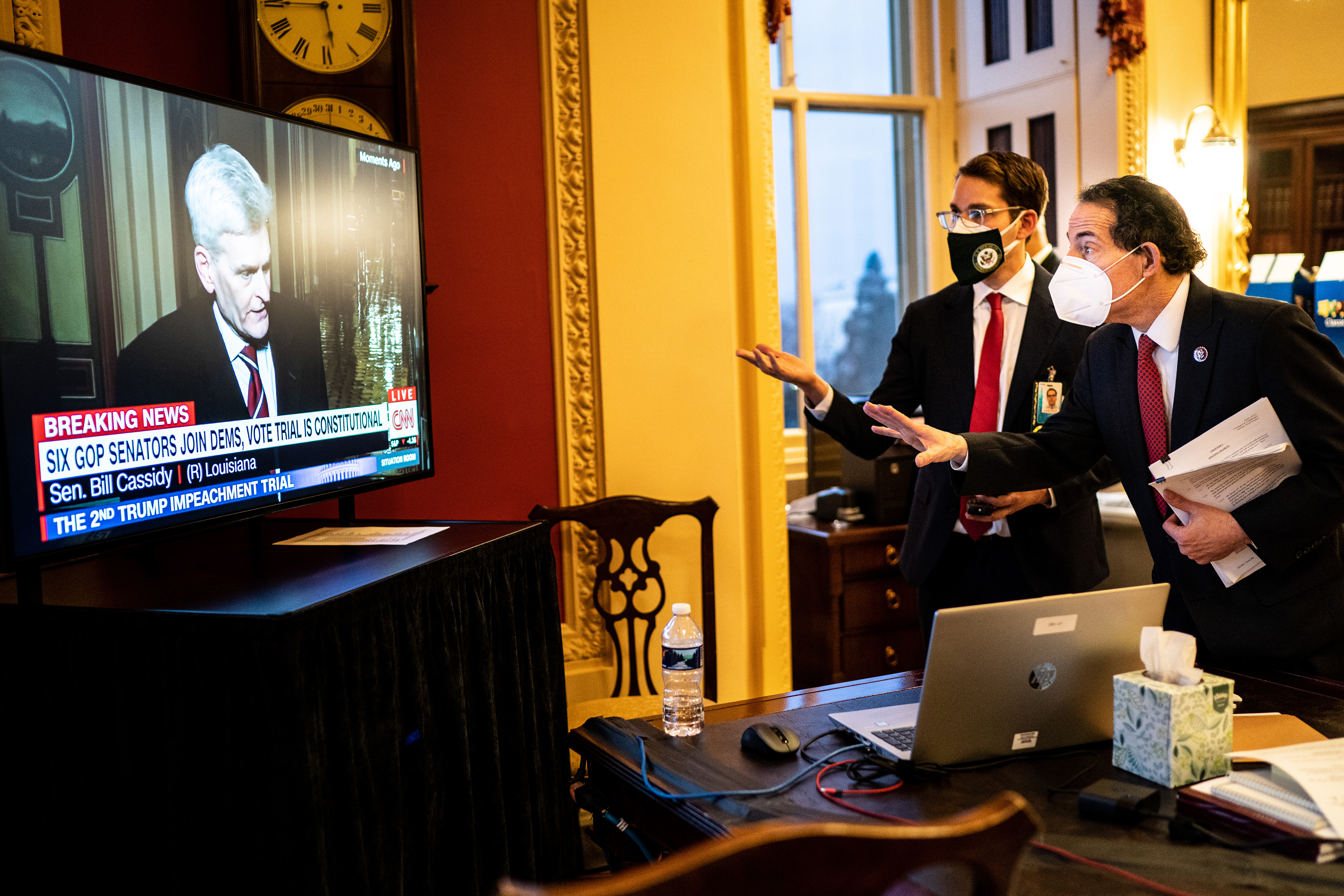
    Lead House impeachment manager U.S. Rep. Jamie Raskin (D., Md.) (right) and counsel Joshua Matz watch a television as U.S. Sen. Bill Cassidy (R., La.) speaks to reporters about why he switched his vote regarding the constitutionality of impeaching then-former President Donald Trump at the close of the first day of the Senate impeachment trial at the U.S. Capitol in Washington, Feb. 9, 2021.ERIN SCHAFF

    That makes an impeachment-first agenda even harder to justify: months of hearings, a Senate trial, and relentless headlines could dominate Washington without changing who occupies the White House, while groceries remain expensive, healthcare remains unaffordable, and housing shortages persist.

    There is also a political danger. Trump has repeatedly turned confrontation into a major part of his public messaging. An immediate impeachment drive could allow him to shift attention from scrutiny of his policies to claims of persecution. Whether that approach would work is unknowable. But Democrats need not make it easier for debate to revolve around political scores rather than policy outcomes.

    Imagine instead a Congress devoted to healthcare costs, affordable housing, Social Security and Medicare, public education, childcare, wages, prescription prices, and consumer protection. Imagine committees examining why full-time work still leaves so many households financially insecure. Not every bill would become law: Trump would still hold the veto pen, and Senate rules could block legislation even under Democratic majorities.

    But voters would see concrete priorities and meaningful choices.

    Accountability and governing are not mutually exclusive.

    Congress can hold hearings, demand records through lawful processes, scrutinize contracts and spending, and expose abuses. If credible evidence establishes misconduct serious enough to warrant impeachment, Congress must assess that evidence and fulfill its constitutional duty. The point is not to rule impeachment out if compelling evidence and constitutional obligations demand it. It is to refuse to treat impeachment as an automatic reward for winning an election, particularly when the votes for removal are absent.

    Trust in government has suffered while Americans watch both parties accuse one another of putting advantage ahead of public service. The incoming Democratic congressional majority has a chance to demonstrate a different approach. That does not mean excusing wrongdoing or abandoning principles. It means understanding that power is a means of serving the public, not an end in itself.

    Families trying to put food on the table, seniors worried about medical bills, and parents concerned about their children’s futures deserve to see Congress tackle those concerns. Investigate wrongdoing when evidence warrants it. Hold the administration accountable. Defend the Constitution. But do not confuse retaliation with public service.

    The measure of congressional success should not be how effectively one party punishes another. It should be whether Americans’ lives improve because their representatives were entrusted with power.

  • Vacant houses as a fresh start | Real Estate Newsletter

    Vacant houses as a fresh start | Real Estate Newsletter

    What does it take to make homeownership affordable for people with low and moderate incomes?

    Creativity, according to the folks behind a pilot initiative that’s trying to make a Philly first-time homebuyer program accessible to people who make less money.

    The hope is that the pilot can become a model.

    Keep scrolling for that story and more in this week’s edition:

    — Michaelle Bond

    If someone forwarded you this email, sign up for free here.

    New initiative uses vacant homes

    Inarvis Ramos and her 23-year-old son make about $45,200 per year. But next month, they’re closing on a newly renovated rowhouse for them and Ramos’ two children under 10.

    Their monthly mortgage payment will be around $1,000, which is less than their current rent.

    And it’s all because of a pilot initiative through the city’s Turn the Key program for first-time homebuyers. The program essentially donates city-owned vacant land to developers so they can build new homes at a lower cost and offer below-market-rate sale prices.

    Through the pilot, Turn the Key has expanded to include rehabilitated existing homes that are affordable for households with lower incomes.

    HACE, a North Philly-based community development corporation, has kicked off the initiative by renovating uninhabitable houses and selling them for $160,000. It’s partnering with the city of Philadelphia, the Philadelphia Housing Authority, and a community development support nonprofit to make Turn the Key homes more affordable.

    Keep reading to learn more about the pilot and see what Ramos’ formerly vacant house looks like now.

    Another redevelopment attempt

    Is the third time the charm for a builder looking to redevelop Germantown’s historic YWCA?

    The four-story brick building that’s more than a century old has sat vacant for decades, awaiting its next act.

    Over the last decade, KBK Enterprises, a developer based in Ohio, tried twice to give the city-owned building new life. Both attempts fizzled.

    Now, the developer is back with attempt No. 3. It wants to add affordable senior apartments to the building, a plan similar to one proposed by a different group 12 years ago.

    Key funding for the project is still up in the air, and no one knows when or if plans will materialize. But the developer has the support of the local City Council member, who handpicked the company years ago to redevelop the YWCA.

    Keep reading to learn more about this saga.

    The latest news to pay attention to

    Home tour: A full house in Sharswood

    There’s a lot going on in Jeremy Olsen’s rowhouse in Sharswood.

    I’m not surprised. Olsen was the owner of the former Queen Village vintage store RareCo.

    His home’s walls are covered in art, mirrors, and vintage signs. A shiny yellow toilet seat is decor. A pig sculpture hangs from the ceiling in a doorway.

    Olsen comes from a family of collectors and has picked up items from markets, auctions, and the street.

    He said he had about 250 pieces removed from his home before The Inquirer came to visit. He’s constantly bringing items in and out to keep things fresh.

    Something he won’t change? The wooden man that hangs above the entrance to his powder room. Even though it falls on his head when he opens the door.

    Olsen said that sometimes he likes “to have things that are precarious.”

    Peek inside this home that’s full of surprises.

    📷 Photo quiz

    Do you know the location this photo shows?

    📮 If you think you do, email me back. Your memories of visiting this spot might be featured in the newsletter.

    Last week’s quiz featured a photo taken at Bob’s Diner, the Roxborough institution on Ridge Avenue.

    Shout-out to Janet P. and Mark B. for getting that right.

    ―

    If you’re into reading about dying malls, check out my colleague Erin McCarthy’s story about the final days of the Neshaminy Mall in Bensalem, which closed for good last weekend. She found that the 1-million-square-foot complex was empty but full of memories.

    Enjoy the rest of your week.

    By submitting your written, visual, and/or audio contributions, you agree to The Inquirer’s Terms of Use, including the grant of rights in Section 10.

  • Pa. police are rushing to help ICE with immigration enforcement. Formal agreements have nearly doubled in six months.

    Pa. police are rushing to help ICE with immigration enforcement. Formal agreements have nearly doubled in six months.

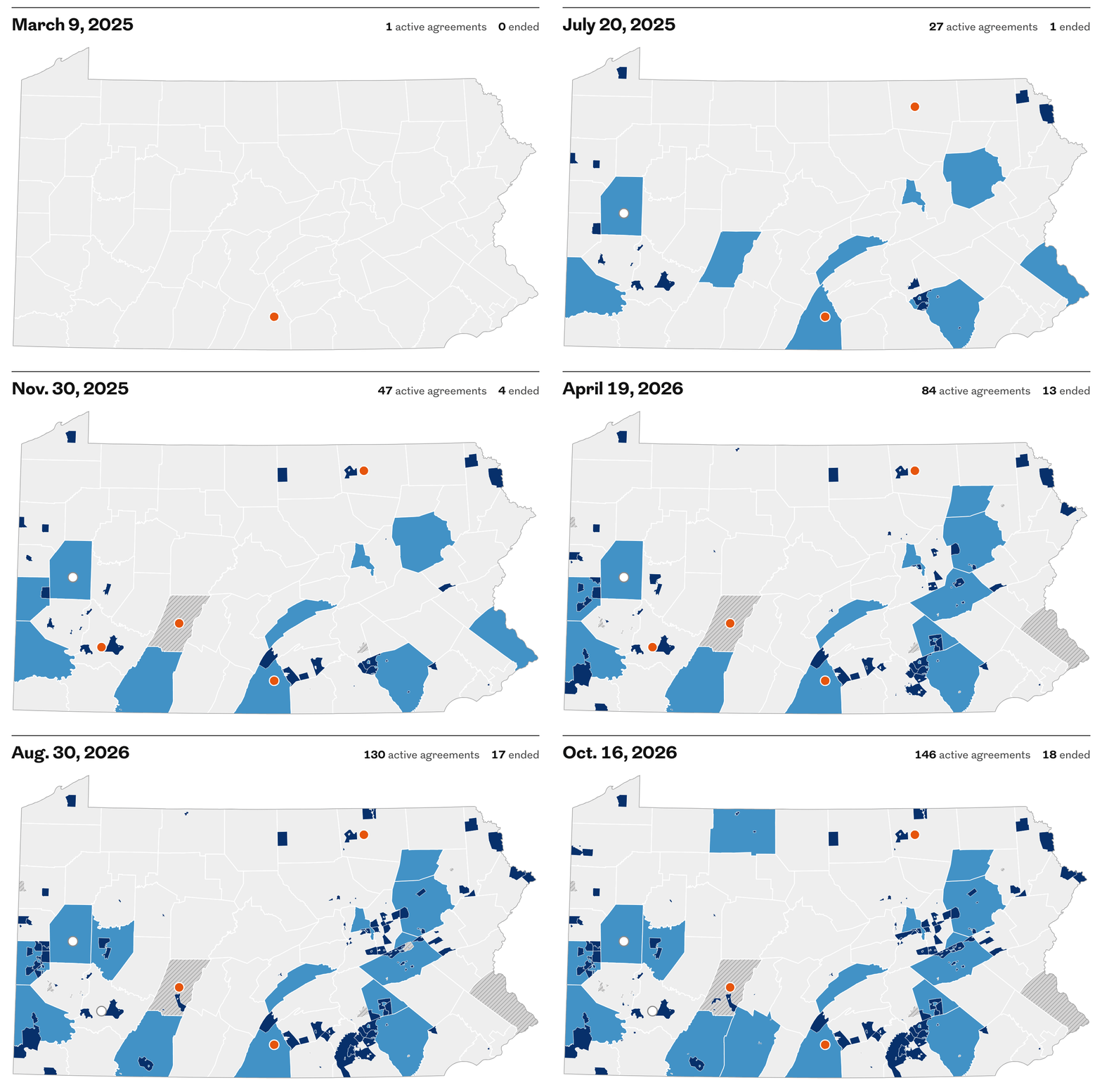
    The number of Pennsylvania police agencies signing up to help ICE enforce federal immigration law has nearly doubled in the last six months.

    That is on top of a big, earlier increase that took place in winter and spring.

    Today 146 local agencies have inked formal agreements to assist U.S. Immigration and Customs Enforcement in its work, up to and including arresting immigrants and turning them over for deportation proceedings.

    That is up from 78 in April.

    (function(){function e(){window.addEventListener(`message`,function(e){if(e.data[`datawrapper-height`]!==void 0){var t=document.querySelectorAll(`iframe`);for(var n in e.data[`datawrapper-height`])for(var r=0,i;i=t[r];r++)if(i.contentWindow===e.source){var a=e.data[`datawrapper-height`][n]+`px`;i.style.height=a}}})}e()})();

    The police-ICE alliances are part of a controversial agency initiative known as 287(g), named for a section of a 1996 immigration act, in which state and local police assist the agency in identifying, arresting, and removing immigrants. The Trump administration says the agreements make Americans safer, acting as a force multiplier for immigration enforcement.

    “Under the Biden Administration, Pennsylvania had zero 287(g) partnerships with ICE,” a spokesperson for the Department of Homeland Security said in a statement. “Under President Trump’s leadership, they are surging because state and local law enforcement want to help make America safe again.”

    Nationally, as of Oct. 20, the number of program partnerships had increased nearly 1,900% since the beginning of Trump’s second term ― from 135 agreements to 2,698, according to the department.

    “Our 287(g) partners work with ICE to protect the public safety of the communities in which they live and serve, without fear, favor, or prejudice, and they should be commended for doing so,” the department said. “Partnerships with law enforcement are critical to having the resources we need to arrest criminal illegal aliens. … When politicians bar local law enforcement from working with DHS, our law enforcement officers must have a more visible presence so that we can find and apprehend the criminals let out of jails and back into communities.”

    Some of the agencies that recently signed up in Pennsylvania include the district attorneys’ offices in Bedford, Armstrong, and McKean Counties, the Butler Township Police Department, the Pottsville City Police Department, the Lehigh Township Police Department, and regional police departments in Northern York County, Eastern Pike County, and Conneaut Lake, which serves Conneaut Lake Borough, Sadsbury Township, North Shenango Township, and Linesville Borough.

    They join other municipal police departments, county sheriff’s offices, and constables’ offices that work with ICE to serve the president’s push for mass deportations of immigrants.

    (function () {window.addEventListener(‘message’, function (e) { var message = e.data; var els = document.querySelectorAll(‘iframe[src*=”‘ + message.id + ‘”]’); els.forEach(function(el) { el.style.height = message.height + ‘px’; }); }, false); })();

    During the first 18 months of Trump’s second term, DHS completed about 980,000 deportations ― a faster pace than under the Biden and first Trump administrations, though still below early-2000s levels, according to a new analysis by the Migration Policy Institute in Washington.

    “It’s a very harmful program, because it’s turning local police into ICE agents,” said Patty Torres Vera, co-executive director of the immigrant rights group Make the Road Pennsylvania. “It erodes the trust that the community should have in police. People become afraid, afraid to report crimes, to help in investigations, because they fear consequences.”

    The agreements foster racial profiling of Black and brown people, she said, while putting local communities at risk of paying big legal settlements.

    “Local police, they’re not required to enforce local immigration laws ― they’re choosing to sign these agreements,” Torres Vera said. “Their limited resources should be focused on keeping their communities safe, not carrying out the duties of federal authorities.”

    The new statistics come from the Deportation Data Project, a group of attorneys and academics committed to transparency in immigration enforcement data. The organization used government statistics, provided by ICE in response to a Freedom of Information Act request, that were then processed by the project and analyzed by The Inquirer.

    The figures show not just the overall number of agreements, but also how local alliances with ICE are shaping immigration arrests in Pennsylvania.

    The first Pennsylvania arrest under the program occurred in July 2025. Since then, 1,342 people have been arrested under 287(g), about 13% of the 10,163 ICE arrests in the state.

    Program arrests hit a monthly high of 414 in July, constituting one out of three ICE arrests that month. While arrests under the program are making up a larger share of all immigration arrests in the state, the geographic distribution varies widely.

    In dozens of cities, arrests under 287(g) make up more than 90% of all ICE arrests. In hundreds of other places, however, they account for less than 10%.

    The arrests data are current as of Aug. 5.

    The program designates three main models under which local authorities can help ICE:

    • The Task Force model, the most expansive, which enables local police to enforce federal immigration laws during routine patrols. That includes arresting people who police suspect are not citizens.
    • The Jail Enforcement model, where local officers identify and process for possible immigration offenses those who have been arrested on criminal charges.
    • The Warrant Service Officer program, which authorizes local police to execute ICE administrative warrants at jails.

    All but three of the 146 agreements in the state fall under the task force model.

    (function(){function e(){window.addEventListener(`message`,function(e){if(e.data[`datawrapper-height`]!==void 0){var t=document.querySelectorAll(`iframe`);for(var n in e.data[`datawrapper-height`])for(var r=0,i;i=t[r];r++)if(i.contentWindow===e.source){var a=e.data[`datawrapper-height`][n]+`px`;i.style.height=a}}})}e()})();

    Some police departments and local governments, including those in Philadelphia, not only avoid the agreements but also deliberately limit their cooperation with ICE. They say that their sanctuary and welcoming policies create trust in immigrant communities, and that undocumented crime victims and witnesses will not come forward if they fear being arrested for lack of legal status.

    ICE says the program adds staff strength to an agency workforce that numbers an estimated 21,000 nationwide. DHS Secretary Markwayne Mullin encourages local officials to join forces with ICE, saying they can be key partners in keeping Americans safe.

    ICE provides incentives for local police including stipends, equipment, and financial reimbursements.

    Opponents insist that turning police officers into immigration agents hurts local economies, including at farms and restaurants, as communities use their own tax dollars to help drive away the workforce on which they depend.

    New Jersey has long barred local collaboration with ICE, first by directive and, as of March, by law, after Gov. Mikie Sherrill signed legislation prohibiting those agreements.

    Pennsylvania has no such restrictions.

    Nationally, the number of agencies signing on to help ICE grows nearly every day, covering 38 states and two ​U.S. territories.

    Vanessa Stine, a senior staff attorney for immigrants’ rights at the ACLU of Pennsylvania, said she sees the federal government aggressively pushing the expansion of 287(g) ― increasing racial profiling and legal risk for local taxpayers.

    “It’s shameful and squarely wrong for so many law enforcement agencies in Pennsylvania to enter into 287(g) agreements, and really calls into question their core mission and values, when they voluntarily choose to do a job that is not actually their job,” she said. “Pennsylvanians should be upset about that.”

  • Gaining 40 pounds and studying Stallone’s emails: Inside the making of ‘I Play Rocky’

    Gaining 40 pounds and studying Stallone’s emails: Inside the making of ‘I Play Rocky’

    Inside South Philadelphia’s Villa di Roma hangs a poster for I Play Rocky, the new film about the making of Sylvester Stallone’s 1976 classic, which follows an underdog boxer from Kensington who gets an unlikely shot at the world heavyweight title.

    More than 50 years ago, Stallone ran past the doors of the family-owned restaurant on his way to the Philadelphia Museum of Art steps in the film’s now-iconic training montage. After climbing the steps, Stallone, as Rocky Balboa, raises his fists toward the city that would embrace him as one of its own.

    Rocky made Stallone a Hollywood star, and the fictional boxer he created has became one of Philadelphia’s most-beloved characters and enduring cultural icons.

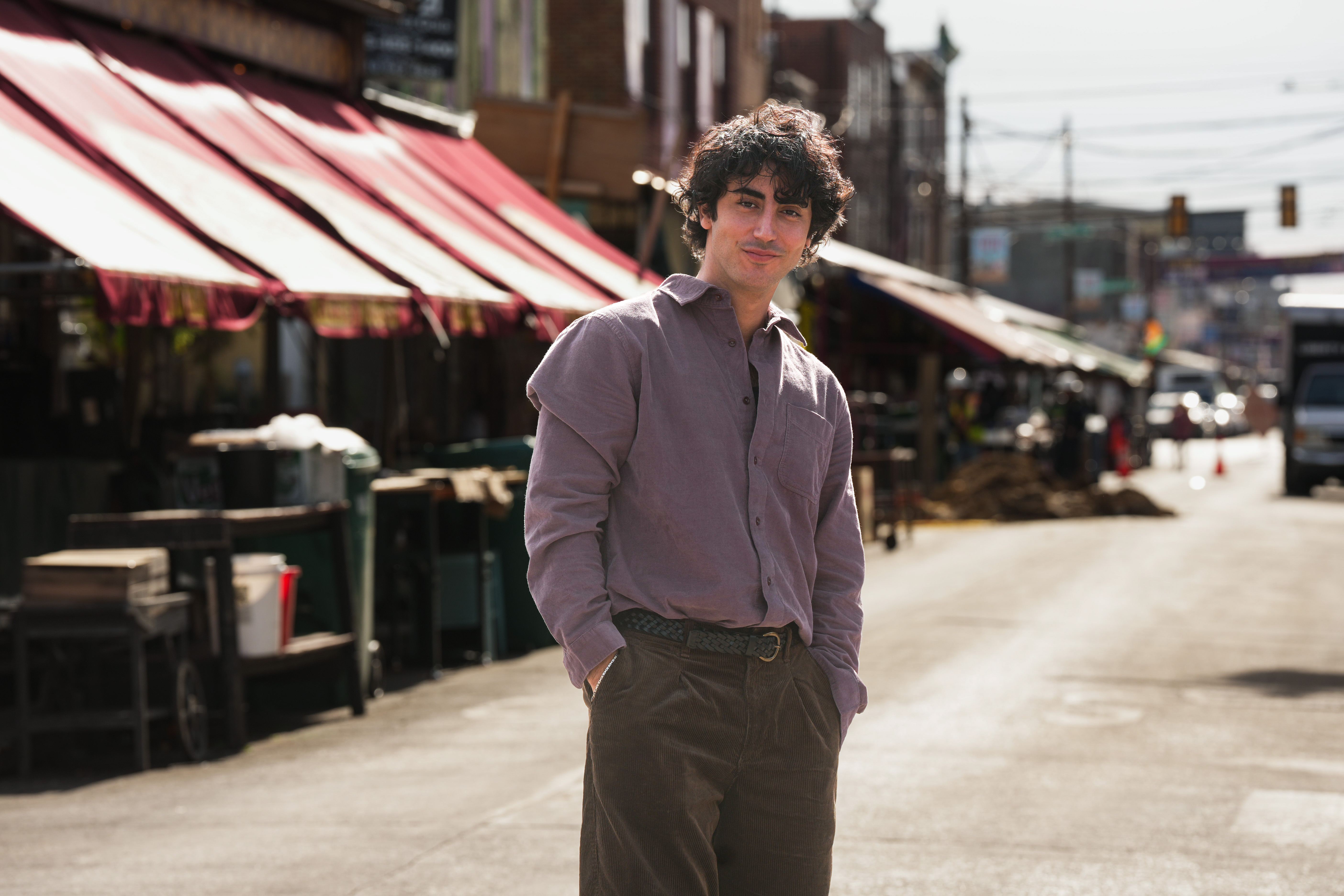
    Actor Anthony Ippolito, from the film “I Play Rocky’, outside at the Italian Market, in Philadelphia, November 2, 2026.Jessica Griffin / Staff Photographer

    Now, when The Inquirer meets Anthony Ippolito, the actor portraying a young Stallone in I Play Rocky, he is sitting inside that same Italian Market restaurant. That poster of Ippolito raising his fists atop the Art Museum steps, a la Stallone, hangs right by him.

    On the sunny November afternoon, Ippolito is joined by costar AnnaSophia Robb, who plays Stallone’s first wife, Sasha Czack, and Oscar-winning director Peter Farrelly.

    The lead actor, noticeably fatigued by the media blitz, asks for a cappuccino before sitting down for the interview.

    I Play Rocky, opening in select theaters Friday ahead of a wider release Nov. 20, retraces Stallone’s journey from a struggling actor sleeping on the streets of New York City to writing the script for Rocky and fighting to bring his dream movie to the screen.

    This image released by Amazon MGM Studios shows Anthony Ippolito as Sylvester Stallone in a scene from “I Play Rocky.” Claire Folger

    The cast includes P.J. Byrne as producer Irwin Winkler, Toby Kebbell as the late producer Robert Chartoff, Matt Dillon as Frank Stallone Sr., Jay Duplass as director John Avildsen, Stephan James as Carl Weathers, who played Apollo Creed, and Kiki Seto as Talia Shire, who played Adrian.

    Before reading Peter Gamble’s script, Farrelly, who was born in Phoenixville and grew up in Rhode Island, thought he knew everything about the making of Rocky. He had seen the documentaries and heard the stories that have circulated in Hollywood for decades. Still, the “shocking” parallels between Stallone and Rocky drew him to the project.

    “This is the same story, except I’d argue Stallone has a better or bigger arc than Rocky because when Rocky starts, he at least has a job,” said Farrelly. “He’s breaking bones, but he has a job.”

    But Stallone, he said, lived on the street, “selling his dog, and doing soft-core porn.”

    “Rocky doesn’t win,” said Farrelly. “He survives.” On the other hand, “Stallone wins Best Picture, and I recognize, like, ‘Wow, this is amazing.’”

    Director Peter Farrelly from the film “I Play Rocky’, outside at the Italian Market, in Philadelphia, November 2, 2026.Jessica Griffin / Staff Photographer

    Bringing that story to the screen required an actor who could portray both Stallone and his most famous character without slipping into an impersonation or caricature.

    After reading an article announcing that Farrelly and producer Toby Emmerich were taking on the project, Ippolito began his campaign.

    “I really wanted to try to get my foot in the door for it in some way, but it was hard because at the time I didn’t really have a script or anything like that,” he said. “But I was really passionate about it.”

    In his grandmother’s basement on Long Island, Ippolito recorded videos of him reciting lines from Rocky, with a friend’s help, in hopes of grabbing Farrelly’s attention.

    The video made its way across Farrelly’s desk, and the director continued to feed Ippolito portions of the script before officially casting him in the role.

    Ippolito’s portrayal of Al Pacino in the 2022 biographical mini-series The Offer proved his elasticity as an actor. But Farrelly said it was his Stallone-like approach to the role that convinced him and Emmerich that the 27-year-old actor was the ideal choice.

    Not long after, Farrelly tapped Robb to play Czack.

    “It was a blessing because we had a great script, and it was fully formed,” Farrelly said. “And then I ran into these two actors, who were both unbelievable … Both of them were the first actors I looked at for these roles.”

    Actor AnnaSophia Robb from the film “I Play Rocky,’ at the Italian Market, in Philadelphia, November 2, 2026.Jessica Griffin / Staff Photographer

    For Robb, portraying Czack presented a different challenge. Unlike Stallone, Czack has largely remained out of the public eye, leaving Robb with fewer resources to draw from.

    She turned to documentaries and The Official Rocky Scrapbook, Stallone’s 1977 book featuring photographs Czack took during the filming of Rocky. Robb also read emails Stallone sent to Emmerich describing Czack as “sunshine” and their marriage as “two rocks leaning against each other.”

    “I thought those were really specific and very useful visuals as an actor,” Robb said.

    She also took inspiration from her own marriage with entertainment lawyer Trevor Paul to embody the role of Czack.

    “I think without [Czack] there wouldn’t be a Rocky. It’s the people in our lives who aren’t necessarily public-facing that are taking you by the hand. They’re encouraging you on your down day,” Robb said.

    Actors AnnaSophia Robb and Anthony Ippolito, from the film “I Play Rocky,” at the Italian Market, in Philadelphia, November 2, 2026.Jessica Griffin / Staff Photographer

    Ippolito, for his part, amped up his workout routine and changed his diet to gain 40 pounds, a process that required a complete “lifestyle shift,” the actor said.

    “Stallone was hugely inspired by Steve Reeves, who played Hercules, so he turned to weightlifting at a really young age,” Ippolito said. “It was a part of who he was, and then who Rocky was. It required a lot, but thankfully I had a lot of time to do it.”

    To master Stallone’s voice, Ippolito watched hours of Stallone interviews, and researched the origins of Stallone’s facial paralysis from a birth complication to capture the “depth” of his voice.

    “It was a gradual process — the physical part of this,” he said. “None of it was really an overnight thing.”

    Robb said she often marveled at Ippolito, as he alternated between playing Stallone and Balboa. “I get goose bumps,” she said. “I think the whole cast looked at each other and thought, ‘Damn.’”

    This image released by Amazon MGM Studios shows Anthony Ippolito as Sylvester Stallone in a scene from “I Play Rocky.” Claire Folger

    While the production was mostly filmed in Los Angeles and New York City, they also filmed at the Italian Market, Schuylkill River Trail, PMA, and Rocky’s Kensington apartment.

    It made Farrelly recognize why the character is such an integral part of the city, even decades after the film’s release.

    “You could just feel the energy. The city is such a big character in Rocky,” he said. “We were only here for a few days, but that was the most important part of the shoot. It was just magical.”

    The local connection also extends to the music used throughout the film.

    The original score by Dave Palmer was recorded and mixed at Northern Liberties’ Undercarriage Recordings with Philly-based musicians Tom Spiker, Daniel Villarreal, and the War on Drugs’ Charlie Hall.

    This image released by Amazon MGM Studios shows Anthony Ippolito as Sylvester Stallone in a scene from “I Play Rocky.” Claire Folger

    After watching I Play Rocky, Ippolito said he wants Stallone’s story to inspire viewers to follow their dreams, just as Stallone did, and persevere through the obstacles they encounter along the way.

    “I don’t think there are as many films that give you that sort of feeling,”he said. “I’m glad that this film has those kinds of elements.”

    For Robb, the story also serves as a reminder that even the most celebrated achievements rarely happen alone.

    She said there’s often an “individualistic” approach to the American dream, but she hopes audiences recognize the importance of the people who support them along the way.

    As long as you cherish those who stick by your side and keep pounding the pavement, “you can go the distance,” she said.

    “I Play Rocky” will be in select theaters on Friday, followed by a wider theatrical release on Nov. 20.