St. Joseph’s men’s basketball coach Steve Donahue thought his team executed when it needed to in its 82-73 season-opening victory over Longwood.
He pointed to the Hawks’ 8-3 run in the final 90 seconds Wednesday night at Hagan Arena as a “good sign.” But he said his biggest takeaways are always going to be how his team can improve.
“I think we played really good basketball [for] 20, 25 [minutes], just not 40,” Donahue said. “But I love that we figured out a way to win this game because there’s times where they could have [gotten] the momentum.”
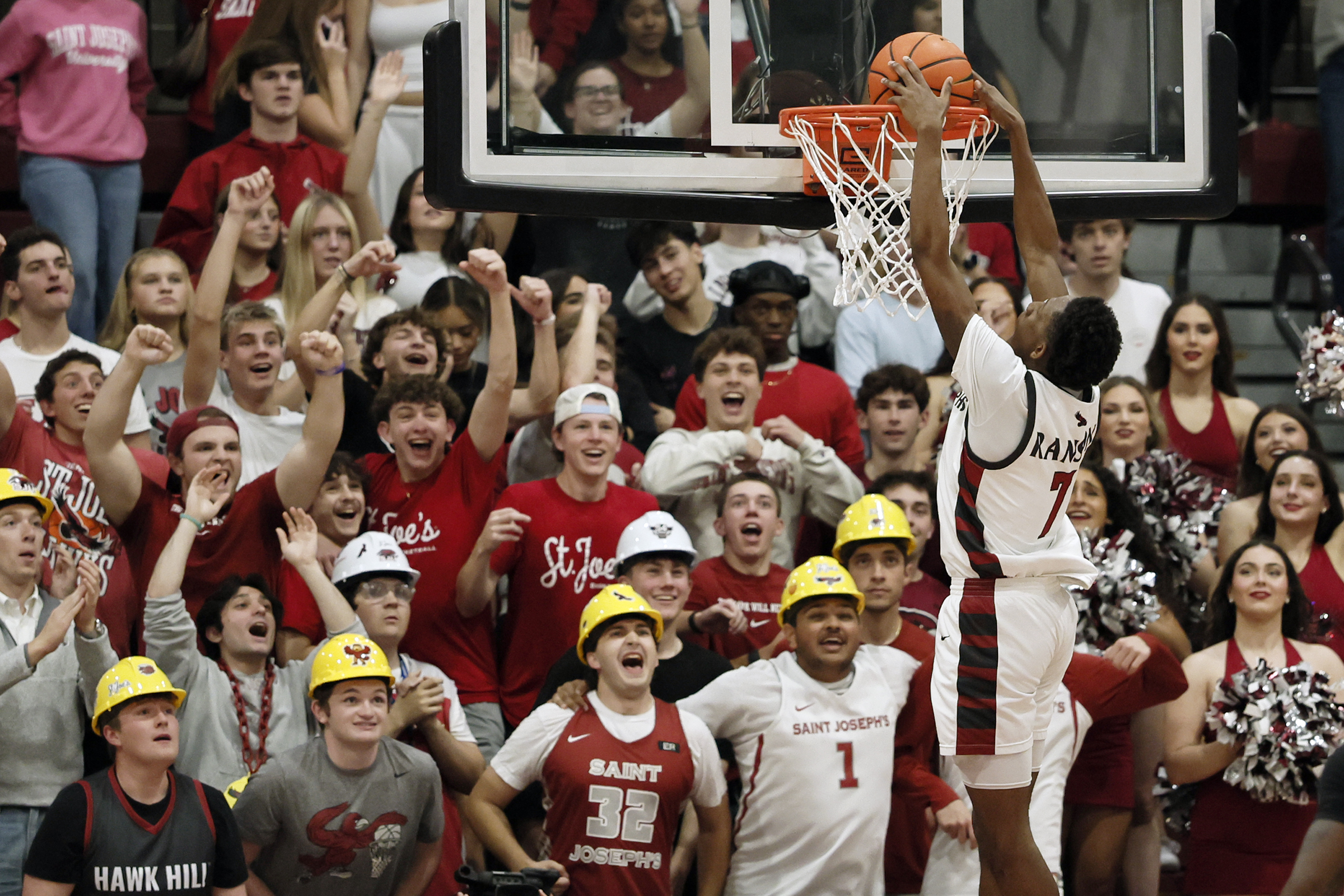
Donahue suggested that going deeper on the bench can help the Hawks play a more complete game. St. Joe’shad 28 bench points, led by freshman guard BJ Ranson’s 17.
He exited the game with six minutes left because of cramps, which Donahue said is a testament to how hard he plays and how he “gives it his all every single day.”
“He’s a playmaker,” Donahue said. “He’s going to be one of those other next great St. Joe’s guards, in my opinion, just because of all those things. And we never had someone like that, that can make three or four hard shots in a row. He has that ability.”
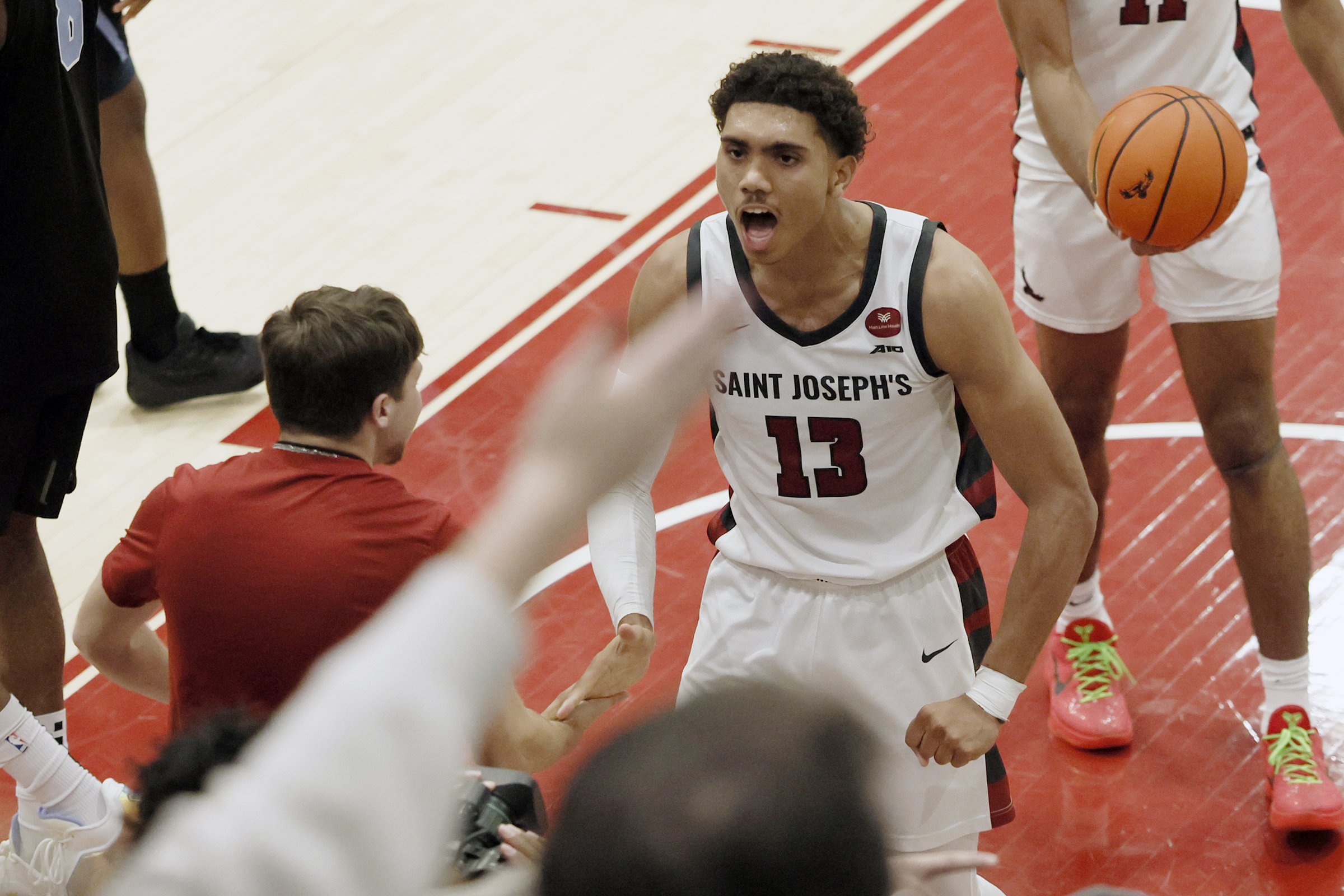
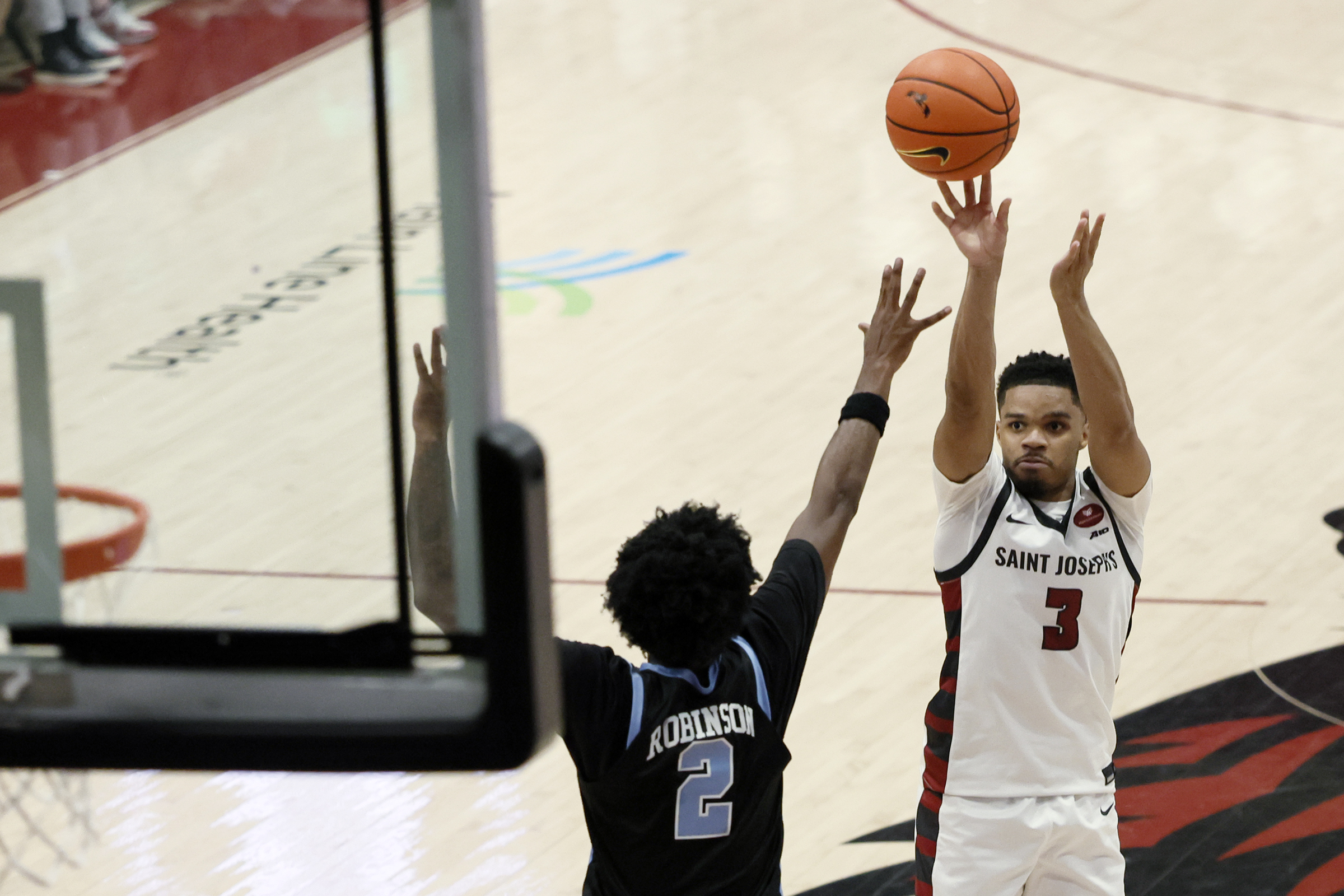
Ranson was one of four Hawks double-digit scorers, led by Jaiden Glover-Toscano, who finished with a game-high 22 points. Khaafiq Myers had a career-high 17 points, and Austin Williford added 10.
Since several older players are new to the team this season, Myers said it’s up to returners like himself, Williford, and Glover-Toscano to step up as leaders.
Austin Williford was one of four St. Joe’s players that scored in double figures on Wednesday night.Elizabeth Robertson / Staff Photographer
“We were here last year, we had a good year last year, so we need to bring that energy back this year,” Myers said. “We’ve been through it, so we know what it’s like. So just bringing those guys with us, and we know what it’s going to take, and we’ll be willing to do anything to figure it out down stretch.”
One of those newcomers, 6-foot-11 Davidson transfer Sean Logan, was a major contributor defensively. He had six blocks, seven rebounds, and seven assists and was a “facilitator,” in Donahue’s words, despite picking up three of his four fouls in the game’s first 26 minutes.
Sean Logan says no for his sixth block of the night!
Donahue said that in addition to Logan’s six blocks, he “probably discourages about four” other shots. He also thinks he can rely on a four-guard strategy for some of the game with Myers, Glover-Toscano, Williford, and Ranson partially because of what Logan brings.
“Glover and Wilford are such two-way players,” Donahue said. “But Sean just adds another dimension … I thought we got easy buckets at times because of Sean’s ability to pass.”
St. Joe’s guard Khaafiq Myers had a career-high 17 points on Thursday.Elizabeth Robertson / Staff Photographer
Up Next
The Hawks will host Lafayette on Saturday (4 p.m., ESPN+).
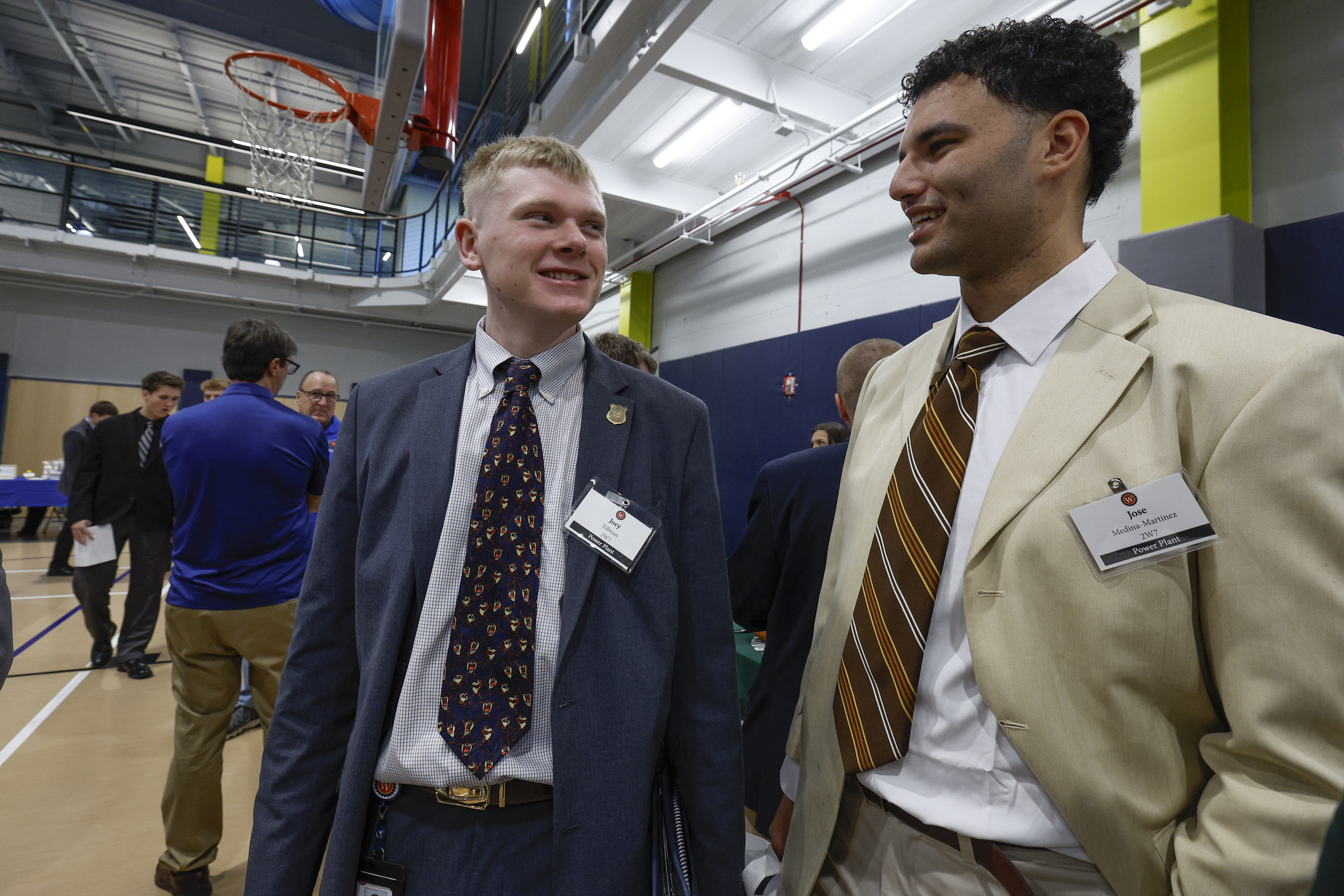
Jose Medina-Martinez, a senior at Williamson College of the Trades, already had seven companies interested in making him a job offer before he showed up to his school’s biannual career fair.
“You get a lot of job offers here. I think it’s a little foolish to take one without having everything lined up before you because who knows, maybe something later on down the line is a lot better,” said Medina-Martinez of Dover, Del. “The last thing I want to do is commit to something and then go back on my word.”
The country’s need for workers in the trades was on full display at Williamson’s career fair Wednesday in Media. That’s taking place amid an otherwise challenging job market, in which the hiring rate has been down for the past two years.
But at the Williamson career fair, some companies leave telling the school, “I would hire more guys if you had them,” said college president Michael Rounds.
Upon graduating, students can expect to make between $60,000 and $85,000 depending on their trade. They can go on to work as carpenters, masons, project managers, and field engineers.
With the skills Medina-Martinez has learned in the college’s power plant technology track, he said he could work many different jobs, such as a power plant operator or as an electrician for a utility company.
During Wednesday morning’s career fair, he estimated that he could line up some 25 interviews and felt confident he could get an offer from all of them.
“At that point, it just comes to which one gives better pay, benefits, location, stuff like that,” he said.
Medina-Martinez’s confidence isn’t misplaced. Many seniors start their final year at the college with at least one job offer in their pocket, said Rounds, and many have more than one to choose from.
Seniors Joey Tillman (left) and Jose Medina-Martinez attended the career fair on Wednesday. Medina-Martinez already had several companies interested in making him a job offer. Steven M. Falk / For The Inquirer
“There are definitely more companies that are trying to hire people than there are students available to hire,” he said.
Patrick McMahan Jr. of Germantown manufacturing company Derbyshire Machine & Tool Co. noted a large skills gap between newcomers and those leaving the workforce.
“The guys that you can hire that are ready [on] Day One are retired at this point,” he said.
Matthew Moates, a commercial arborist with Bartlett Tree Experts, said it’s difficult to find new hires who “are really interested in getting their hands dirty and doing hard labor.”
“But it’s very rewarding when you find that person because usually when they do start working with you, they’re in it for the long run.”
Demand for workers in the trades
“Why are companies from 19 different states coming to Media, Pennsylvania?” asks Rounds. “Because this is a nationwide problem.”
Some 178 companies gathered at the college Wednesday to find potential summer interns and full-time employees. They included local employers Peco, Hanwha, Lockheed Martin, and SEPTA.
“We’re at capacity, and we have been the last few events,” said Stephanie Boon, the college’s director of career services.
While getting into the trades might have been looked down upon in the past, Rounds said, that’s been changing given the need in those industries, coupled with the growing cost of higher education.
The college is trying to keep up with demand, both from the industry as well as the growing application pool. Over 770 applications were submitted for 130 spots in the most recent freshman class. The three-year school, which is nonprofit and tuition-free for students,today has 340 students, up from 238 in 2015.
“We have to push ourselves — which we have — to try to bring in as many young men as we can,” Rounds said.
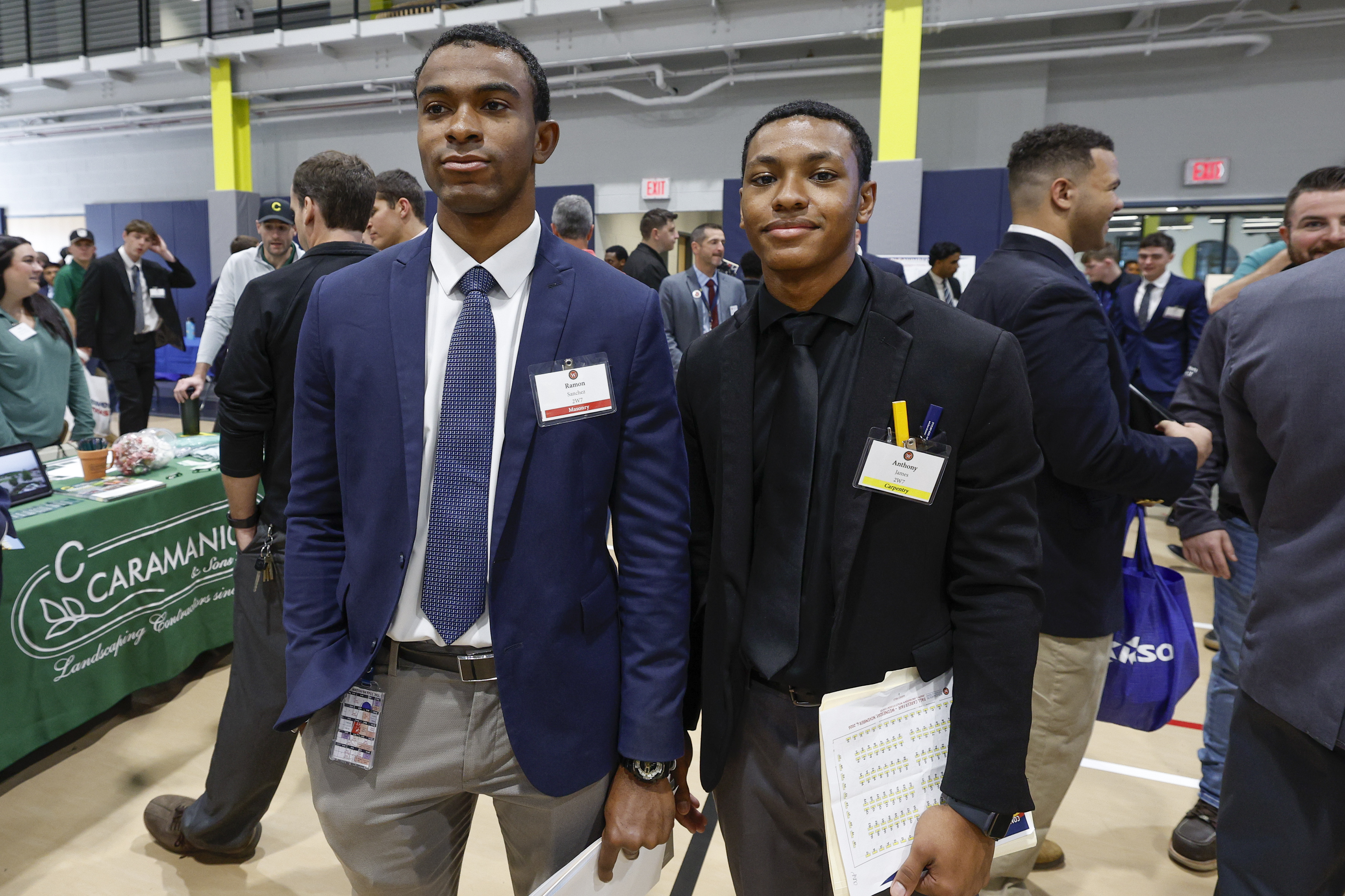
Seniors Ramon Sanchez (left) and Anthony James are among the 340 students enrolled across the three-year program at Williamson College of the Trades.Steven M. Falk / For The Inquirer
Students don’t just learn trade skills at the college, they pick up soft skills that companies are also looking for, she said. Those include communication, critical thinking, time management, and problem solving.
“We have a pretty strict atmosphere. We have a strong code of conduct,” Boon said. “Our students attend chapel every morning. They line up on a lineup pad every morning. They wear a shirt, tie, coat every day.”
Businesses want someone who is going to show up with their safety gear ready, who is going to be on time, and communicate issues effectively, she added.
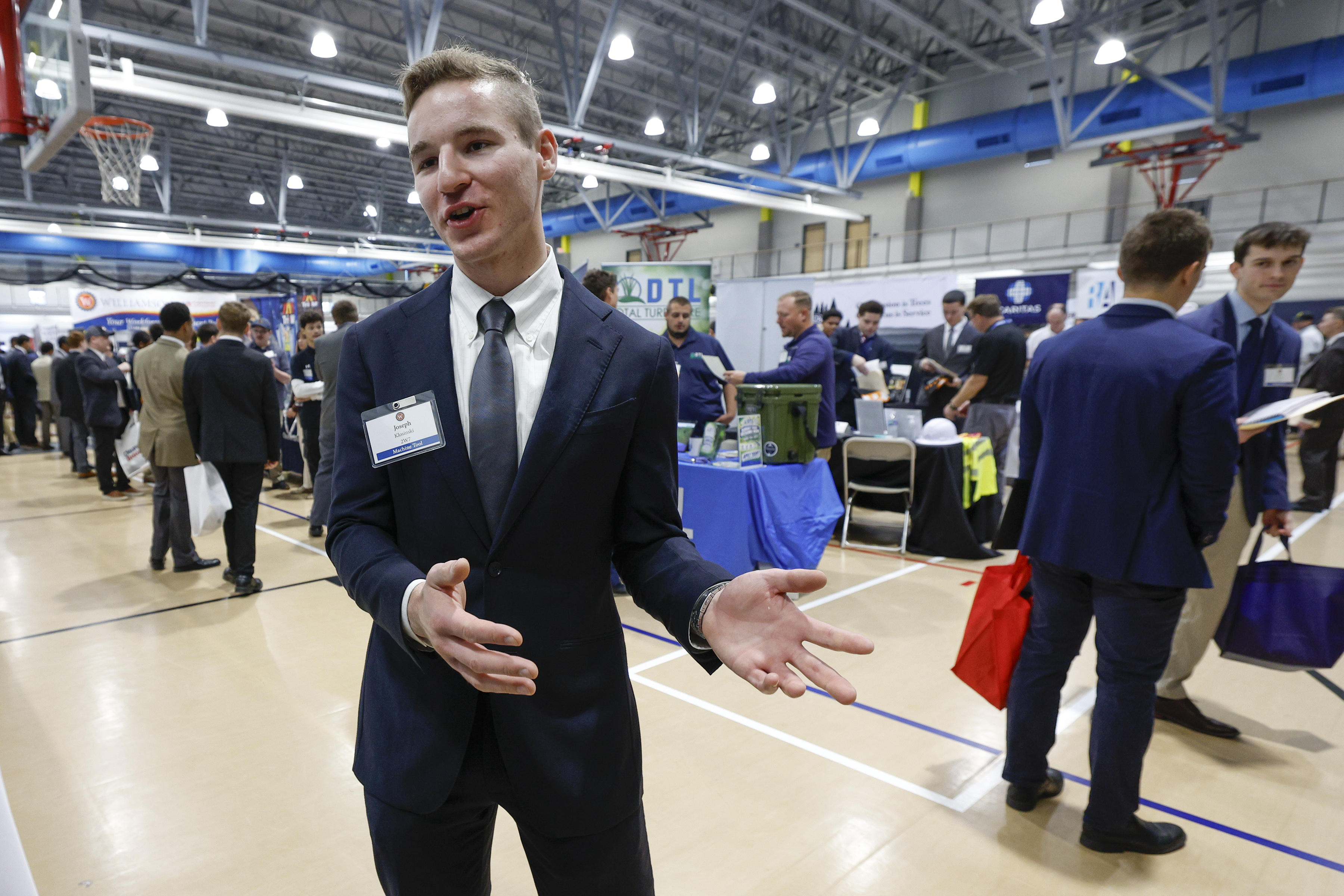
Senior Joseph Klosinski in the machine tool technology track at Williamson would like to one day own his own business. Steven M. Falk / For The Inquirer
Joseph Klosinski, a senior in the machine tool technology track, said pay is important when evaluating potential job offers, but he also cares about company culture.
“I want to be happy where I work,” said the Mount Holly native. “I don’t want to go there to collect a paycheck. I kind of want to feel part of the team.”
And one day he hopes to own his own business, he said. “It would be nice if I control my own destiny.”
For Peter Gaglio of Ware, a Kentucky-based boiler rental and service company, the career fair was a homecoming.
Peter Gaglio, a graduate of Williamson, identified potential interns and full-time candidates for the company he’s now employed at during his time at the career fair. Steven M. Falk / For The Inquirer
Gaglio studied in the power plant technology track at Williamson, and started out the day with a couple hundred T-shirts to give out from his booth. Two hours later, he was down to six. He had also identified four interns to hire and three other candidates for full-time positions.
It was a relatively meaningless play. The result of the game was decided. The Eagles were down 17 points and 42 yards away from the end zone with two seconds left.
The stadium was emptying. Eagles fans watching back home in the Delaware Valley probably already had their sleep masks on.
Tanner McKee dropped back and threw short to rookie tight end Eli Stowers, who turned upfield and saw nothing but space. With the help of a block from Darius Cooper, he got by one Washington defender and had three to beat as he stepped inside the 20-yard line.
Sure, the game was over, but it took all three guys to get Stowers down.
“I was hoping I could drag them in there,” Stowers said on Wednesday.
There likely will be a lot more meaningless moments to come from the rest of this Eagles season, but they all are meaningful for players like Stowers who are logging their firsts in the NFL. The second-round pick is finally healthy, and the three catches he had Sunday — two of them came in garbage time — helped his confidence, he said.
This hasn’t been the rookie season Stowers envisioned, and likely not the one the Eagles imagined when they selected him 54th in the draft. The Eagles raved about the former quarterback turned tight end and thought his athleticism and size could create mismatches on offense.
But Stowers had a slow start to training camp and wasn’t a big factor in the offense, even when playing with the backups. He then suffered a hamstring injury late in camp before a curious first week of the regular season that had him say publicly that he thought he was playing only to be placed on injured reserve before the game.
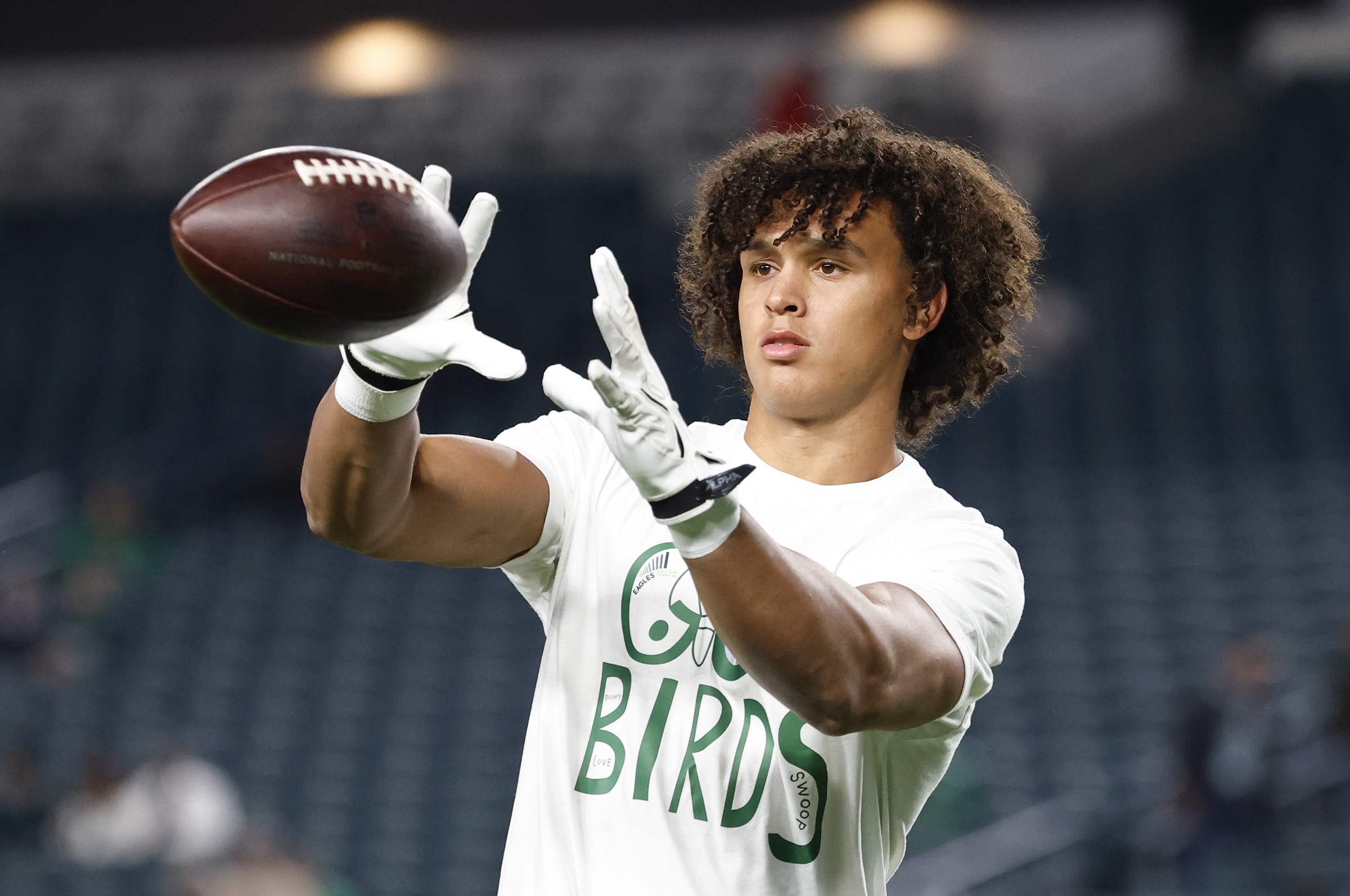
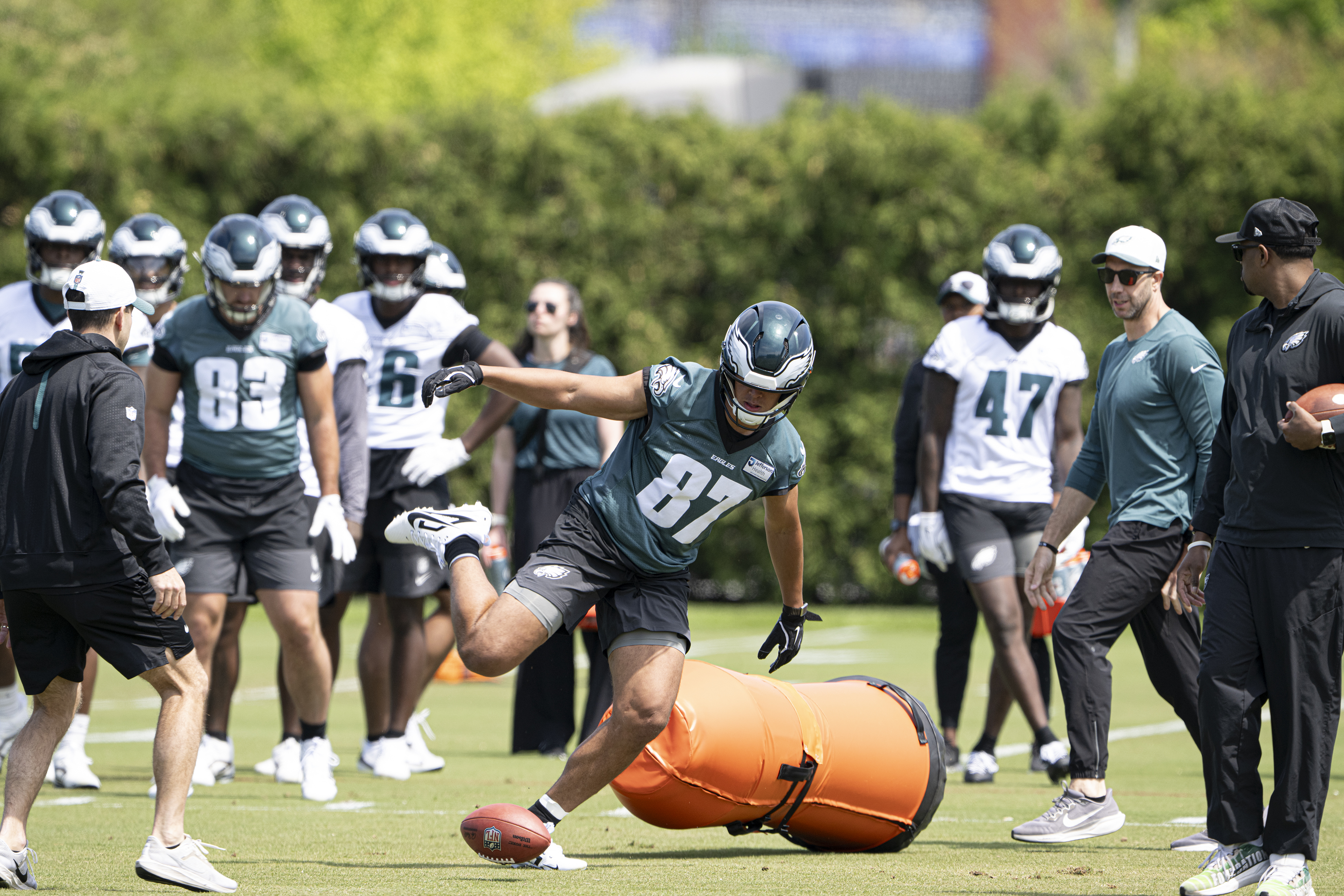
Eli Stowers waited until October to make his formal NFL debut. Jose F. Moreno / Staff Photographer
It took about seven weeks, Stowers said, for his body to get back to normal after hamstring and quad injuries stunted the start of his NFL career and kept him from making his debut until Week 7.
“Sometimes injuries like that, you can’t do anything about it,” he said. “You take care of your body the best way you can. Get good sleep, eat right, drink, do all the stuff. But sometimes you just can’t do anything about it.”
Stowers said he can still see the growth in himself from this rookie season despite not playing.
“In the span of the time when I wasn’t out on the field, I was being really intentional about getting reps that didn’t require me running: catching the ball, hand placement, hand combat, stuff like that,” he said. “Staying in the playbook, mentally being ready. I think there was a lot of progress just in the time I wasn’t playing just to be able to set myself up for when I get back, to be able to get better.”
Stowers has only been playing tight end since 2023. There’s some mental “carryover,” he said, from quarterback, but the physical nature of the position requires more “nuances and technique.” He’s still trying to master hand placement, blocking technique, and route running at the NFL level.
The Eagles may be wise to allow him to learn more on the job now that their season is in turmoil. They could trade Dallas Goedert before Tuesday’s deadline, though there are salary cap implications to doing so.
After the Eagles signed Zach Ertz to their practice squad, they put his locker next to Stowers’, a move Ertz felt was intentional. Both players are represented by the same agency, and Ertz made sure Stowers knew he could ask him questions whenever he needs to.
Eli Stowers says he benefited mentally and in his preparation during his time on injured reserve. Jose F. Moreno / Staff Photographer
Sometimes, Stowers said, he’ll be sitting quietly in his locker stall and Ertz will nudge him and ask if he has anything on his mind Ertz can help with.
Stowers said all the veterans in the tight end room have been helpful.
“I’ve really appreciated that they’ve kind of poured into me,” he said.
Now that his first NFL touches are out of the way, what’s next?
“My goal every single day is the same, put my best foot forward, work as hard as I can, and whatever my job is week-to-week, attack that job with the best of my ability,” Stowers said.
“It’s always good to get the first one out of the way. To feel that in a game, I think it was a good first step for me.”
There’s no better occasion than the Thanksgiving or Friendsgiving feast to bring a bottle and pop a cork.
No holiday is more centered on food, and wine is the world’s finest food partner, hands down.
Even if we look beyond the meal to Friendsgiving’s higher purpose — to gather with people we know and love in a spirit of gratitude — that too is perfectly in line with wine’s core strengths. Wine has an extraordinary ability to elevate life’s precious moments and to strengthen the bonds of love and humanity that connect us all.
Consider these suggestions, chosen for a range of different possible objectives. All are available through Pennsylvania’s Fine Wine and Good Spirits stores; check finewineandgoodspirits.com for locations.
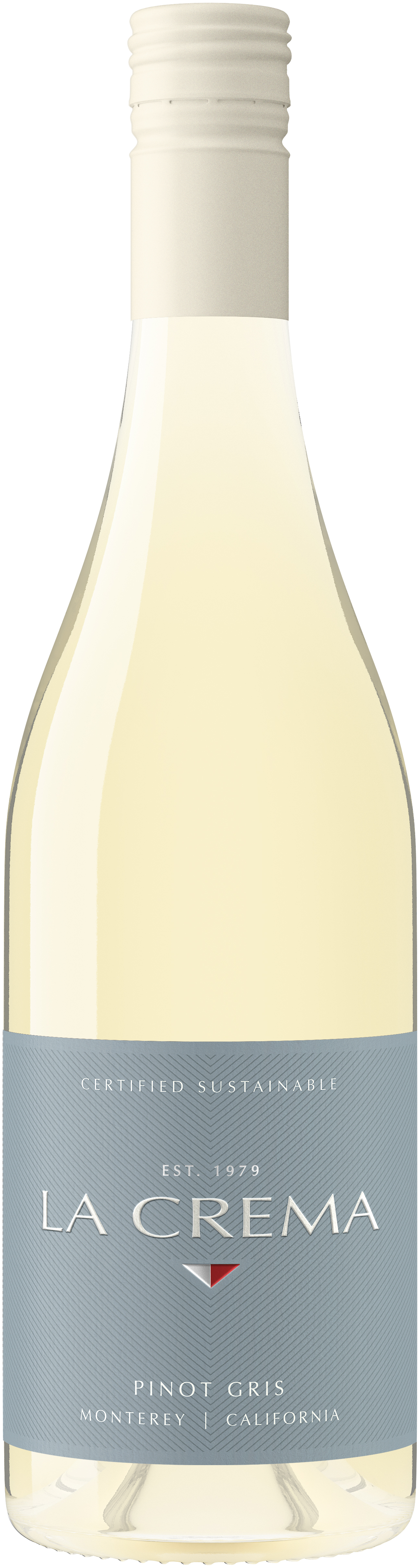
La Crema Monterey Pinot Gris, CaliforniaFine Wine & Good Spirti
The right white for under $20: French-style pinot gris
La Crema Monterey Pinot Gris, California, $18.99
There is no single wine that is more universally flattering with the full range of traditional Thanksgiving foods — from roasted turkey with gravy to sweet potato casserole — than pinot gris, provided that it is made in the ripe and luscious style of the French Alsace region, not the lighter, milder variant popularized in Italy as pinot grigio.
This reliable and widely available offering from Monterey overdelivers every time and tastes like bottled sunshine, with cheerful flavors of apricot and lemon curd.
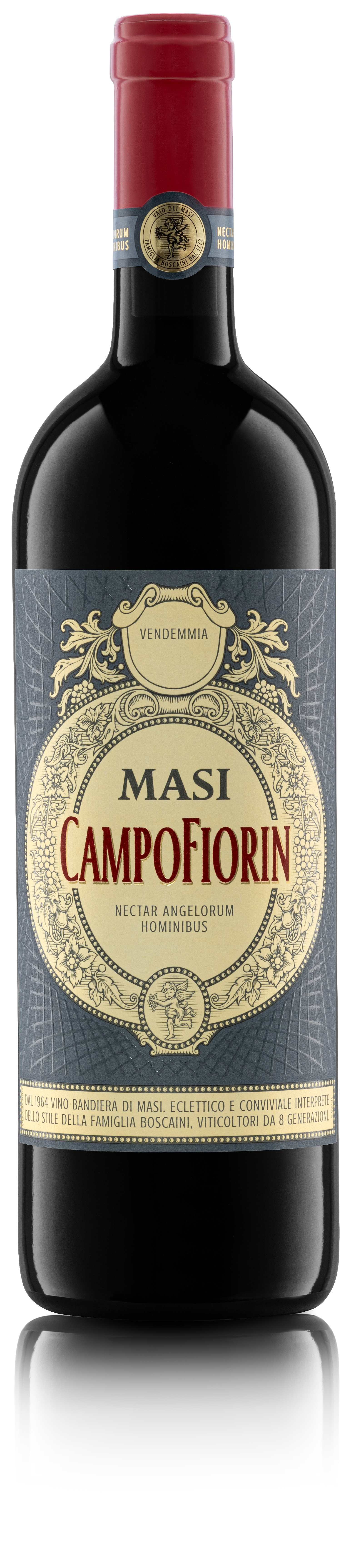
Masi “Campofiorin” Rosso del Veronese, ItalyFine Wine & Good Spirits
The classic red that’s not too dry: Valpolicella ripasso
Masi “Campofiorin” Rosso del Veronese, Italy, $23.99
Most European reds are either too dry or too tannic to flatter holiday dishes, but those from the Valpolicella region of Italy are an exception. This is particularly true of those made using the “ripasso” method, like this icon from the inventor of the category.
Here, the raisiny remnants from making the region’s specialty — a powerhouse dried grape wine called Amarone — are added to a lighter red wine and fermented a second time to boost flavor, color, and fruitiness, as if a fresh blackberry tart had been turbocharged with a hidden layer of blackberry jam.
Terras Gauda “O Rosal” Rías Baixas, SpainFine Wine & Good Sp
The step off the beaten path: albariño-caiño blanco blend
Terras Gauda “O Rosal” Rías Baixas, Spain, $24.99
Albariño wines from the Rías Baixas region are Spain’s most famous whites, but most are too light for a meal as rich as Thanksgiving. The tiny subregion of O Rosal has its own tradition of blending in other local grapes that can boost albariño’s heft and aromatics.
The results can be eminently turkey-worthy, as they are here, featuring a lemony base of 70% albariño enriched in texture with a heaping helping of caiño blanco and made extra flavorful with a dollop of Loureiro, a grape named for the laurel leaves we know better as bay leaves.
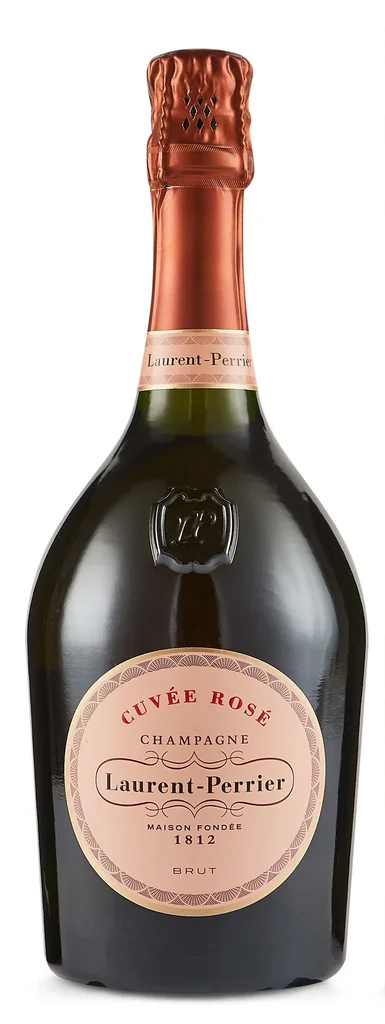
Laurent-Perrier “Cuvée Rosé” Brut Champagne.Fine Wine & G
The ultimate sparkling showstopper: Rosé champagne
Laurent-Perrier “Cuvée Rosé” Brut Champagne, France, $99.99
Sparkling wine famously goes with everything, and there’s a reason that Champagnes command such staggering prices: They simply deliver more pleasure per square inch than the bubbly competition, with the best leaving the palate reverberating for minutes after each sip.
Pink Champagnes are ideal for the flavors of the holiday table, and Laurent-Perrier is a thought leader for the style, having revived an ancient and painstaking 18th century method for coaxing both a delicate raspberry flavor and a pale salmon color from pinot noir grapes in this famed cuvée, and then preserving them brilliantly.
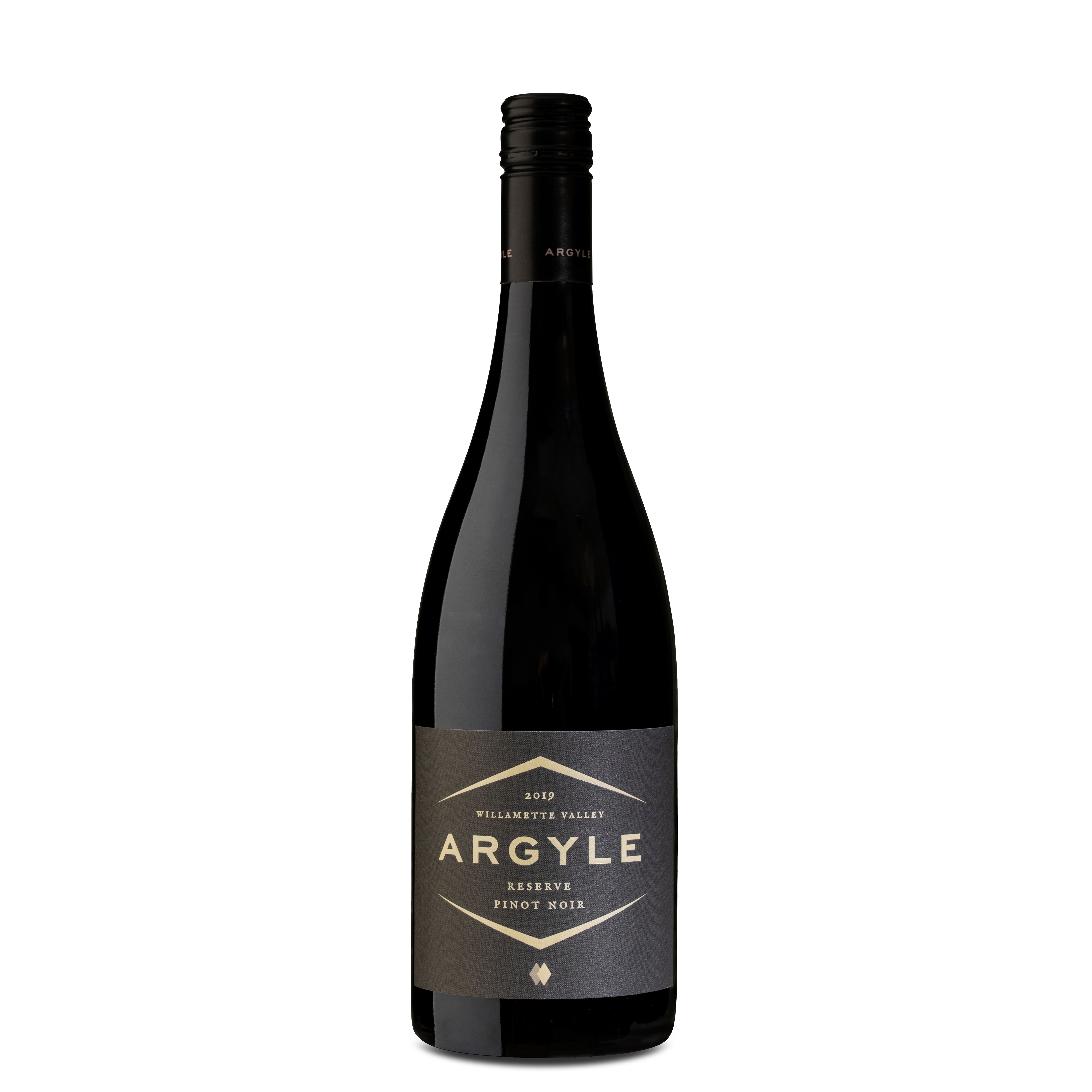
The low-key light red splurge: Reserve-tier Oregon pinot noir
Argyle “Reserve” Pinot Noir, Willamette Valley, $40.99
Speaking of pinot noir, this grape offers some of the best pairing potential to be found in a red wine for a Friendsgiving menu that favors whites, especially if you look to Oregon as your source rather than France or California. Traditional Burgundy can be too dry while California offerings can overpower, so your best bet lies in the premium offerings of the Willamette Valley, which can capture and channel the best of both worlds.
This lovely example has the depth and tension of a perfectly ripe black cherry dipped ever so briefly in excellent cognac.
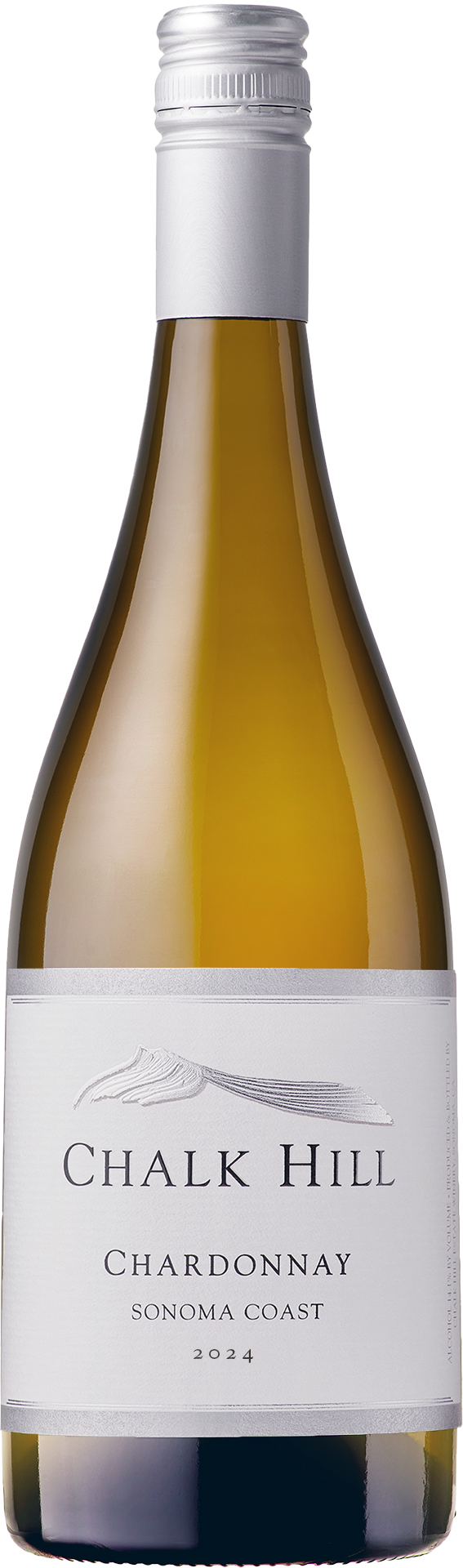
Chalk Hill Sonoma Coast Chardonnay, CaliforniaFine Wine & Good Spirits
The retro bombshell: Barrel-fermented chardonnay
Chalk Hill Sonoma Coast Chardonnay, California, $24.99
Whether your holiday table is anchored by a turkey or a ham, both options favor richer white wines — a category dominated by barrel-fermented chardonnays. California versions like this one are best suited, since they feature enough fruity ripeness to handle sugary accents like cranberry sauce or a brown-sugar glaze and a gloss of caramelized oak that echoes the flavors of browned foods.
Here, a respected producer’s offering is beautifully balanced — neither too heavy nor too delicate — like a warm slice of apple pie with a cold scoop of vanilla bean ice cream.
Friendsgiving might be the most “anything goes” holiday on the calendar. You can lean into tradition or throw the whole rule book out and start over. Turkey or lasagna, folding tables or your nicest china, nobody’s going to stop you.
But if there’s one rule I’d actually enforce, it’s this: Have nonalcoholic options on the bar. Not as an afterthought, and not just a cooler full of supermarket seltzer and a few Diet Cokes. Real options, with real flavor. It not only matters for the people who aren’t drinking (whatever their reason), but also for everyone who needs to brave I-95 or the Schuylkill after the party’s over.
The good news is the category has gotten so good that “nonalcoholic” no longer means “boring.” You put more effort into impressing your friends than your family anyway, so treat the people who show up for you all year, and yourself, to something worth sipping.
Set a few of these out next to the usual suspects, and no one will have to settle at your Friendsgiving. Everyone will be drinking the good stuff.
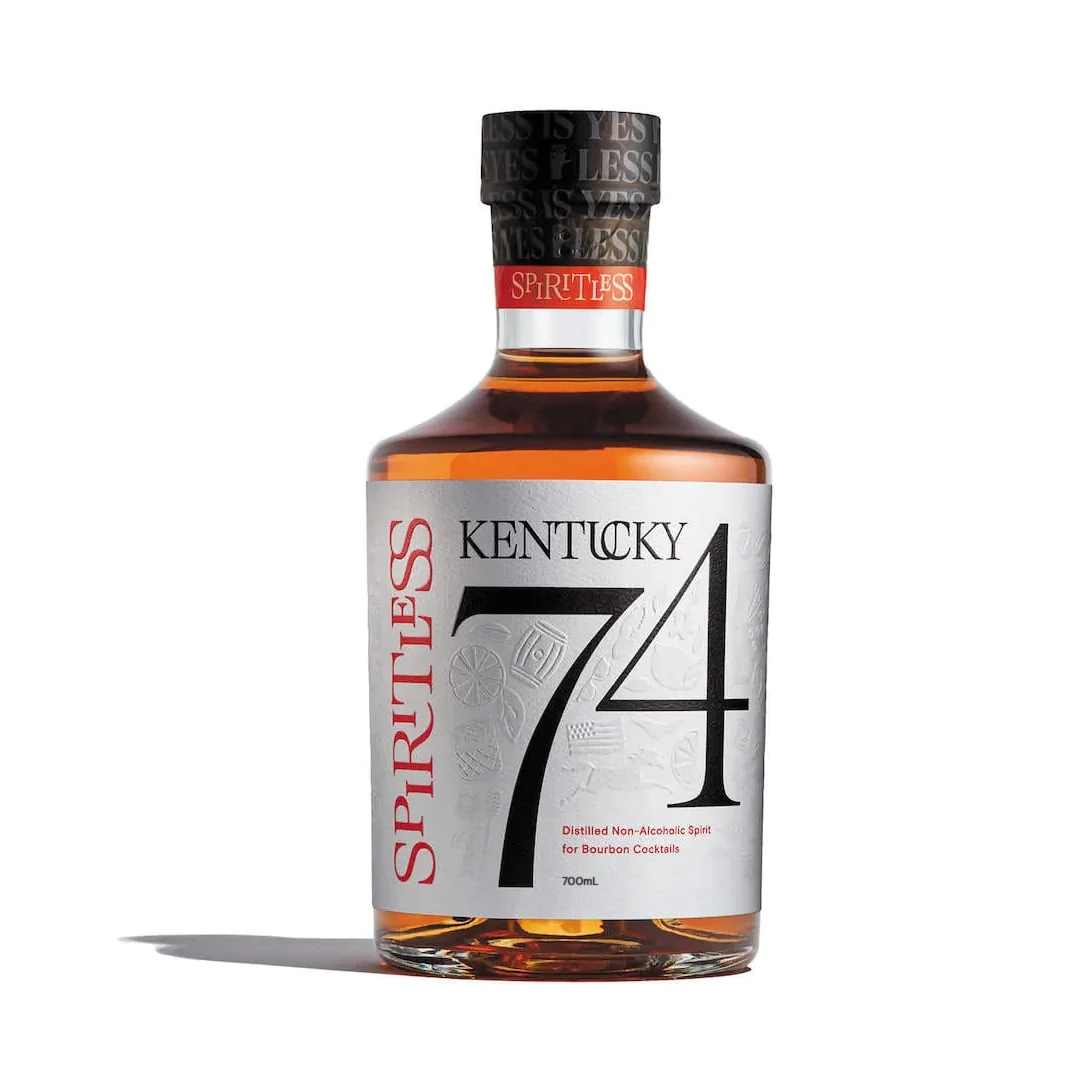
Spiritless Kentucky 74
The best nonalcoholic whiskey I’ve tried, and one of the best-selling brands in the category for good reason. It’s made by a team of women with real roots in Kentucky bourbon country, and it shows: heavy on the wood, with enough bite to pass as the real thing.
Build it into an old-fashioned using the mocktail kit from Cork, which comes with standout glycerin bitters from All the Bitter.
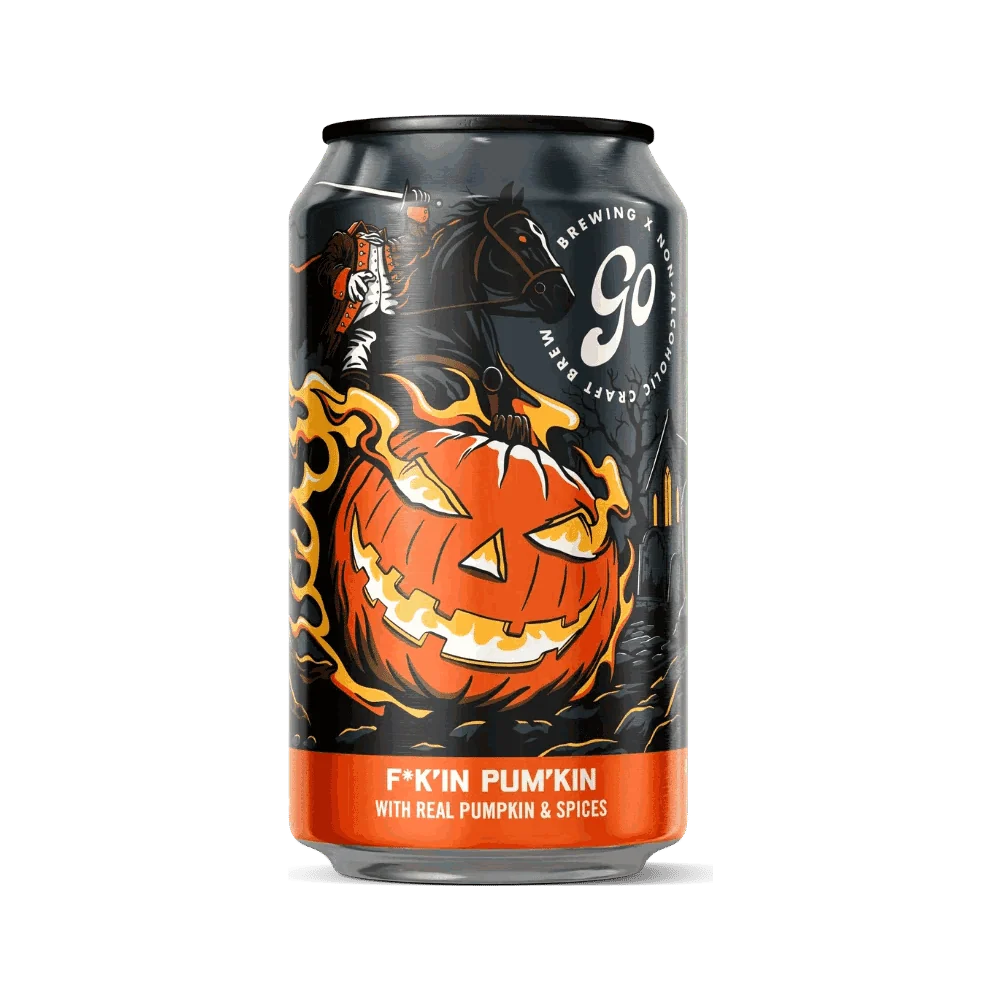
GO Brewing’s nonalcoholic F*k’in Pum’kinGO Brewing
GO Brewing
For a fun group activity, Friendsgiving can double as a nonalcoholic beer tasting. GO Brewing’s lineup of alcohol-free craft beers actually tastes like the styles they’re named for: a coffee stout with real roast, a West Coast-style IPA that doesn’t skimp on hops, a seasonal pumpkin beer that leans into spice instead of just slapping the word on the label.
Line up a few and let the table argue about a winner. Get an assortment from Wallace Dry Goods.
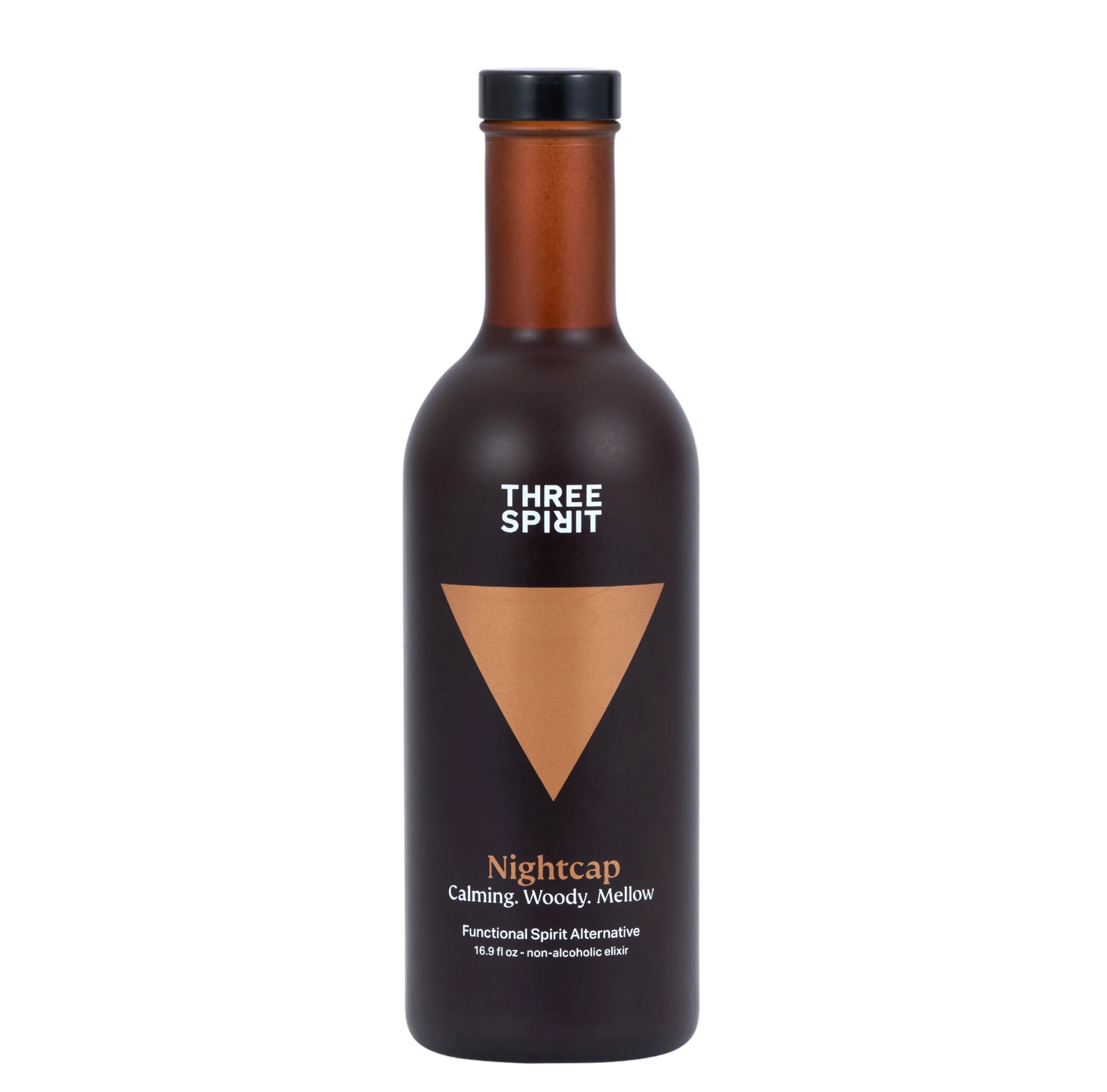
Three Spirit NightcapThree Spirit
Three Spirit Nightcap
If turkey and tryptophan alone won’t get you there, this botanical spirit will help finish the job. It’s built for winding down, with ashwagandha and valerian root doing quiet work underneath dark maple, hops, anise, and black pepper, a strange and specific combination that somehow reads as one seamless flavor instead of a list of exotic ingredients.
This isn’t a shot to knock back between dishes. It’s the kind of thing you pour into an actual glass, carry to the coziest chair in the house, and sip slowly while the rest of the party winds down. Available at Gem Boutique.
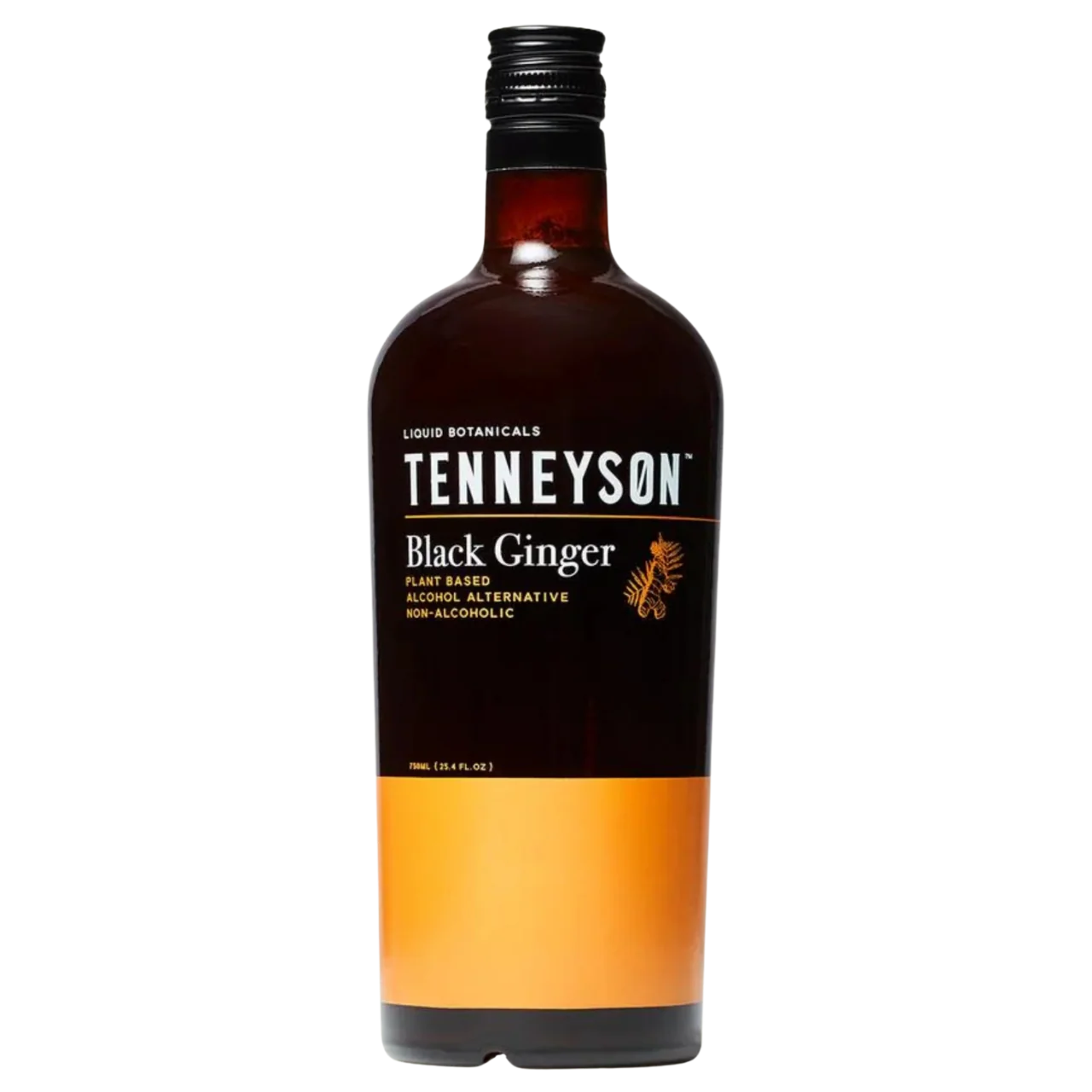
Tenneyson Black GingerTenneyson
Tenneyson Black Ginger Spirit
Ginger already lives in your pumpkin pie spice, so it makes sense it works this well in a glass on its own. Tenneyson leads with a serious, warming ginger punch and rounds it out with citrusy bergamot, earthy dandelion, and a handful of other botanicals working underneath.
Drink it as an aperitif over ice before the meal starts, or stir it into a mug of warm apple cider with dessert. Find it at Herman’s Coffee.
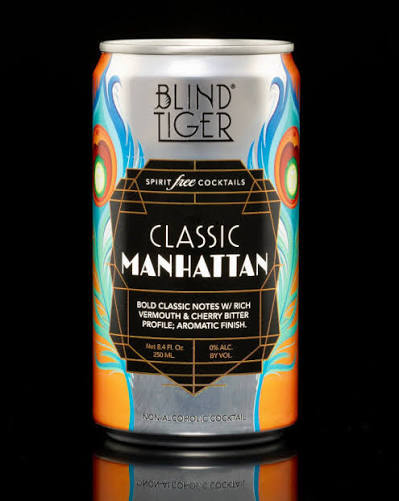
Blind Tiger Spirit-Free Cocktails’ Classic ManhattanBlind Tiger Spirit-Free Co
Blind Tiger Canned Cocktails
Made right here in Pennsylvania, Blind Tiger uses real juice and real extracts to make canned cocktails that taste like a bartender actually made them, not like they came out of a lab. That matters most on a day when you’re already juggling a turkey, a full table, and a dozen conversations at once.
Grab the variety pack, which covers a Bee’s Knees, a French 75, a Mojito, and a Sidecar Mimosa. Pop a tab and skip the shaking, stirring, and doing dishes entirely.
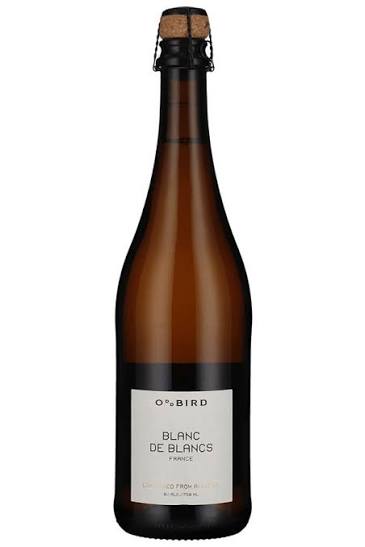
Oddbird Wines’ non-alcoholic Blanc de BlancsOddbird Wines
Oddbird Wines
Nonalcoholic wine became a serious business in Europe long before it made a dent here, which means brands like Sweden’s Oddbird have had years to perfect the process while American drinkers were still stuck with syrupy, one-note substitutes.
Oddbird blends de-alcoholized varietals until the result stops feeling like an apology and starts tasting like an actual bottle of wine you’d choose on its own merits. Track it down at Moon and Arrow.
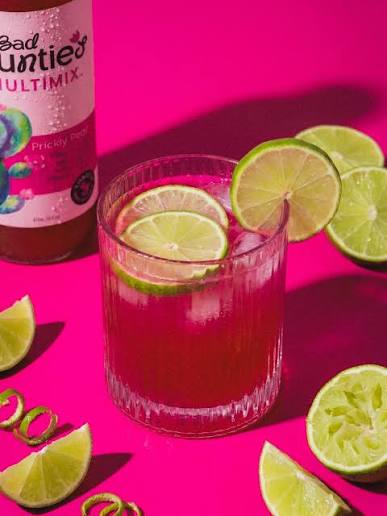
Bad Auntie’s Prickly Pear Multi MixBad Auntie's Multi Mix
Bad Auntie’s Prickly Pear Multi Mix
This one earns its name; it does the job of about four bottles at once. Made from real fruit juice and agave, it works mixed with spirits, hard or nonalcoholic, for a margarita or martini, poured into sparkling wine for a Royale, or topped with sparkling or still water for a fully alcohol-free drink that still feels like something.
It’s a bright, tart burst that plays nicely with turkey and greens, and it keeps your whole beverage station from tipping into pumpkin spice overload. Available at badauntiesmultimix.com.
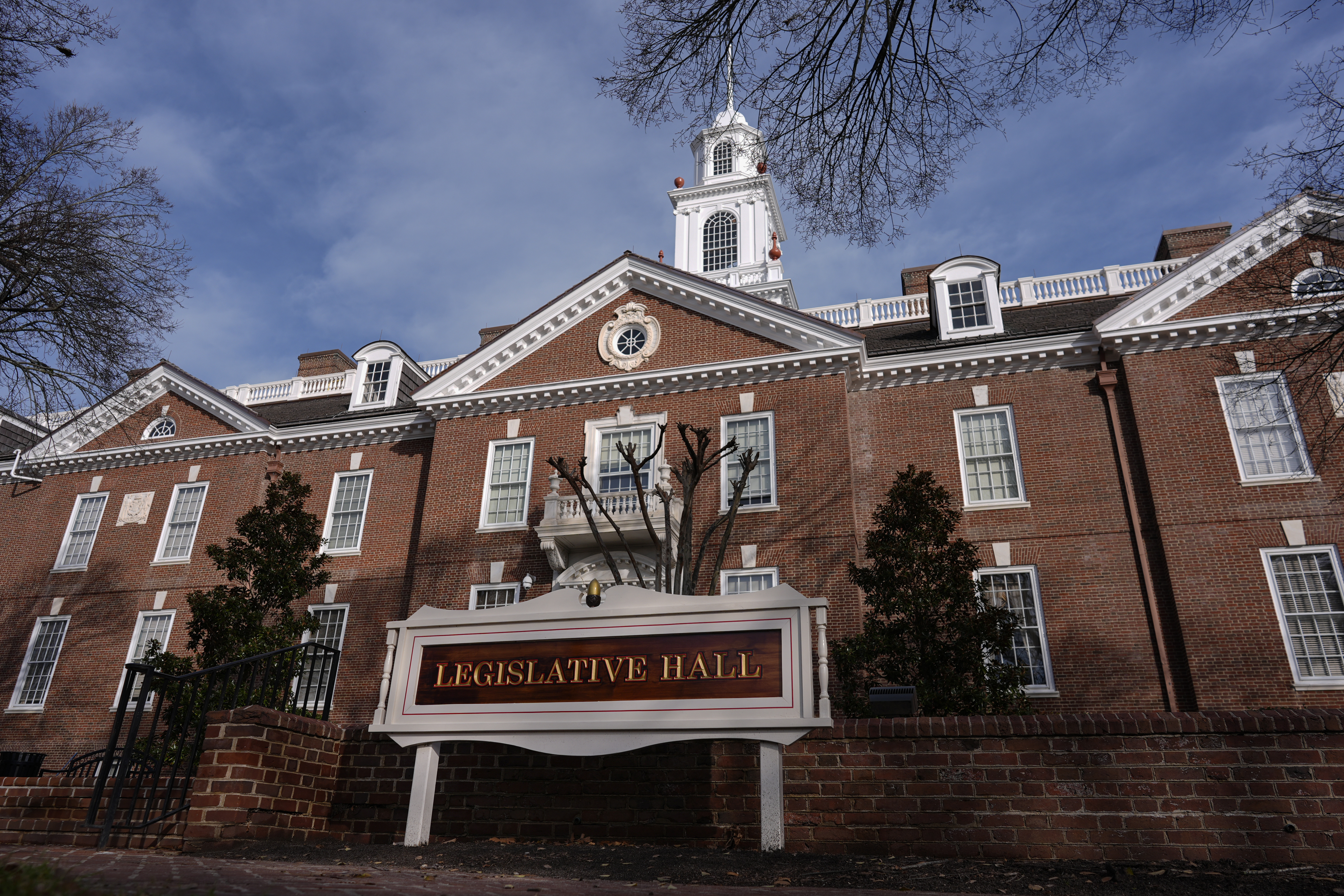
As Republicans were being swept out of office across the country, voters moved Delaware from blue to indigo.
Democrats swept every statewide race in the First State on election night, flipped Republican seats in the statehouse in all three counties, and gained supermajorities in both the state Senate and House of Representatives for the first time since 1992.
That means Democrats could pass constitutional amendments without Republican support. In recent years, Democrats have tried and failed to pass amendments protecting reproductive freedom, same-sex marriage, and voting rights.
Unlike in Pennsylvania and New Jersey, constitutional amendments do not require a statewide referendum in Delaware.
“Winning a supermajority is a strong vote of confidence from Delawareans,” Speaker of the Delaware House of Representatives Melissa Minor-Brown told Spotlight Delaware. “They’ve seen what we were able to accomplish over the last two years, and they’re ready to see more, and we’re ready to deliver.”
Delaware has long been a Democratic stronghold, with the party controlling all nine statewide seats since 2018. In 2024, when other blue states like New Jersey made major shifts to the right during President Donald Trump’s successful reelection campaign, Delaware drifted just four percentage points toward Republicans, among the smallest moves in the country.
U.S. Rep. Sarah McBride (D., Del.) remains the only open transgender member of Congress. Steven M. Falk / Staff Photographer
While a small number of ballots remainsto be counted, more Delawareans voted in this election cycle than in any midterm since 2018.
As of Thursday morning, 384,862 ballots were cast in Delaware, putting turnout of registered voters a little shy of 48%. The number of ballots was up 18% from the 325,632 cast during the 2022 midterms.
A truly remarkable day in the long, imperfect history of democracy began Tuesday at sunrise with Black voters in the Mississippi Delta lining up to cast the ballots their grandparents had fought and sometimes died for. It ended with whoops and honking cars in the streets of Texas’ capital, Austin — a scene that an online commentator compared to the overthrow of a corrupt Eastern European regime.
That’s because in many ways the U.S. midterm election of 2026 was a revolution, and a peaceful one at that. As the final votes are tallied, it’s difficult to single out one highlight from a night that didn’t just see voters summon an early end to the Donald Trump era by electing huge Democratic majorities in Congress, but also historic firsts for Black, brown, Indigenous, and LGBTQ+ communities that have seen their rights under attack for much of the last decade.
Texans cheer as a crowd gathers at the Texas state Capitol in Austin to celebrate the results of the election, early Wednesday morning.Sara Diggins
When a Republican official — David Holt, the mayor of Oklahoma City — posted on social media that “a political party that is morally and intellectually bankrupt deserves the rebuke of the American people,” it felt like the beginning of truth and reconciliation for a nation waking up from an autocratic nightmare.
But Holt’s next words even better captured the mood of a night that saw a stream of teary-eyed citizens plant their “I Voted” stickers on the ad hoc memorials for the Minneapolis shooting victims Renee Good and Alex Pretti, when preachers and seminarians like Adam Hamilton and James Talarico reclaimed the flag of morality from the Christian right, and a majority of the American people showed up to say, “No, MAGA is actually not who we really are.”
“It’s now time,” Holt wrote, “to make America good again.”
The sounds of celebration in Austin, Texas, after the midterm results were announced
If Trump thinks this is an easy one to fix, he's massively mistaken
But sometimes the biggest story is the thing that didn’t happen, the dog that did not bark. On a night that was kind of like a political version of the Y2K scare that launched this cursed century, the meltdown of democracy that so many people had prepped for over months, with churning stomachs, never came on Tuesday.
There were no reports of U.S. Immigration and Customs Enforcement (ICE) agents lurking at the polls to intimidate voters in communities with large immigrant populations.
A strutting strongman president didn’t send his troops to voting locations, and there were no tanks in the streets to prevent the opposition party from reclaiming power on Capitol Hill.
The thousands of election officials who trained for what to do if and when the FBI or other federal agents showed up to seize paper ballots or impound voting machines turned out to be overprepared. No one came.
Well, nearly no one. The U.S. Department of Justice did announce Tuesday morning that it had dispatched 1,000 “election observers” to a list of counties that seemed largely selected for the percentage of melanin in their residents’ skin. But much like Hamlet’s Rosencrantz and Guildenstern, these government emissaries were never heard from again — dots of plastic pollution overwhelmed by the blue tsunami.
The president who suffered political defeat in 2020 and yet still walked out to declare famously that, “Frankly, we did win this election,” didn’t have it in him this time around. In 2026, Trump hopped on the phone with two reporters from the bane of his existence, the New York Times, and meekly said he “absolutely will” accept the results of the election.
So what happened? Or more to the point, what didn’t happen?
One of the few analysts who took a step back this week to look at the big win for democracy, and not just for Democrats, was Richard L. Hasen, a University of California, Los Angeles School of Law professor who publishes the Election Law Blog. He noted that Tuesday’s free and fair election was no accident — that the absence of banana republic-style vote stealing was a tribute to the broad network of state and county election officials and poll workers, lawyers, nonprofit civic groups, and political activists who stood in the way.
“We are in decent shape not because Trump’s attacks were weak, or because our election system is strong, or because we were just lucky — although the huge margins did make things ‘too big to rig,’” Hasen wrote. “The risk that Trump would interfere with our democracy in a way that made 2020 look harmless was quite serious, and it took laborious work of thousands of lawyers, election administrators, and key parts of civil society to neutralize the threat from materializing.”
Hasen is absolutely right here, and the larger essence of his point — that to keep the American republic, you must never stop fighting for it — is one of the biggest takeaways from the midterms. Yet, I’d argue that something even bigger was in play here.
I’ve long posited that the most sweeping platitudes about American exceptionalism are a myth that has been punctured again and again, from the lynch mobs of Tulsa, Okla., to four dead in Ohio. Yet there are ways that the American experience is different from so many other nations that have suffered under the autocratic one-man rule of an Adolf Hitler, or Pol Pot, or Louis XVI, or Henry VIII.
Over the last 22 months, U.S. citizens have looked tyranny straight in the eye — the unthinkable scenes of masked secret police goons kidnapping our neighbors off the street, under a ruler who declared that nothing can restrain him but “my own mind,” while he siphons billions into his personal bank account — and the majority of us have been utterly repulsed by what we have seen.
Dictatorship, it turns out, is not in the American DNA.
In the end, Trump didn’t send out the tanks after the votes were counted Tuesday night, not so much because he lacked the brazen audacity to issue such a wretched order, but because deep down he knew that even his handpicked white dude-bro generals would say no, and that angry Americans would surround the White House to save democracy just like what happened in Seoul, South Korea, two years ago.
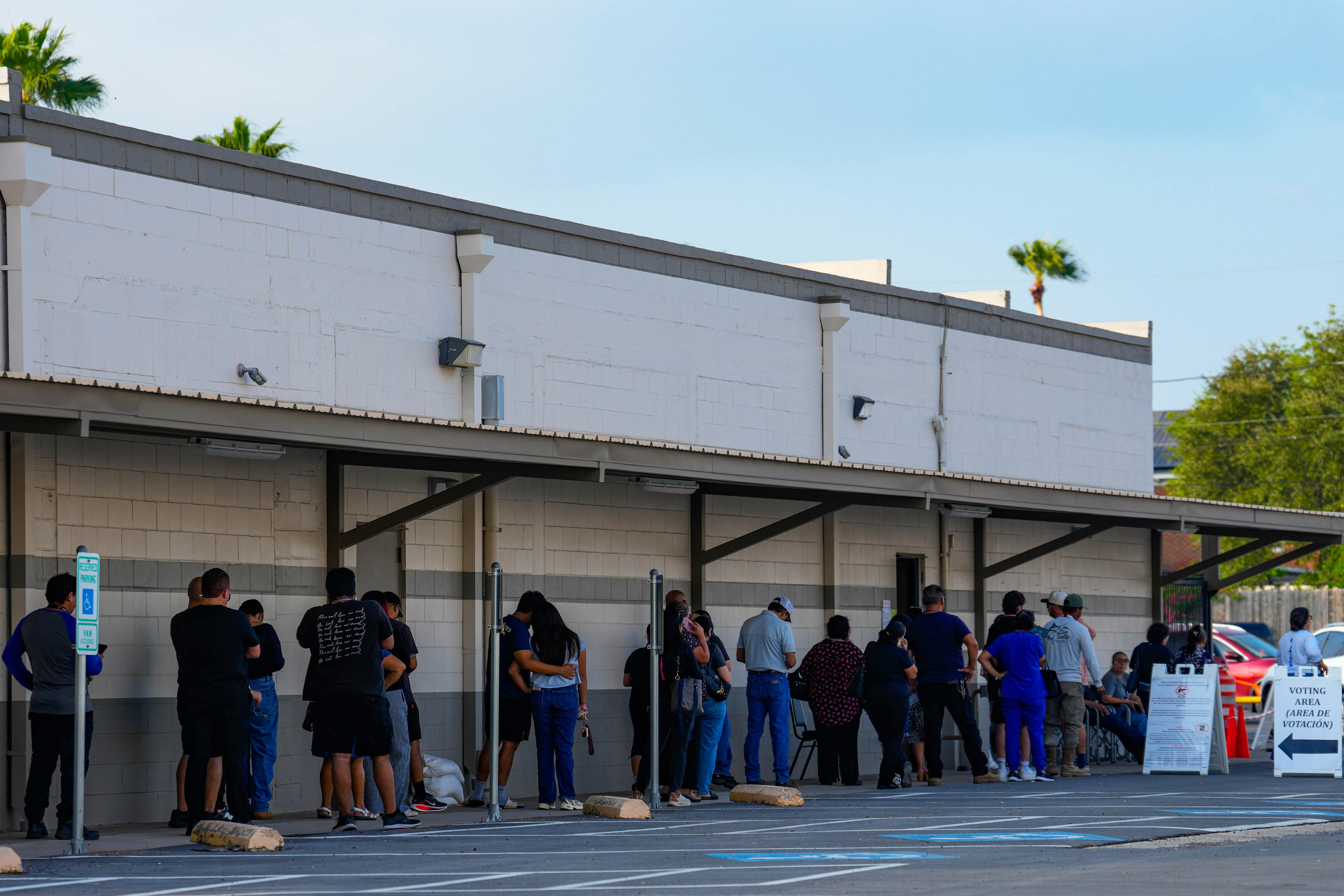
People wait in line to vote at the Hidalgo County Elections Annex on Election Day in Edinburg, Texas.Raquel Natalicchio
America’s first strongman revealed himself Tuesday as the weakest president we’ve ever had — a self-proclaimed wizard who, in the end, could no longer fool Kansas, let alone Oz.
While Americans historically have been pretty lackadaisical about democracy, with voter turnout that lags other developed countries, it’s a different story when you try to take away our basic rights.
After two years of punditry that Trump’s false machismo had won over a majority of U.S. Latinos, we learned on Tuesday that even Hispanics who are longtime citizens don’t like it when people who look like them are run over or shot dead in the street by masked thugs, and they flipped to the Democrats in huge numbers.
But we know now that the fate of Trump’s experiment of autocracy was truly sealed on April 29 of this year when the U.S. Supreme Court, in Louisiana v. Callais, gutted the Voting Rights Act, sparked a mad dash across the former Confederacy to remap Black members of Congress out of a job — and thus energized the mass of African American voters.
Mississippi appeared to finally fulfill the dream of the Rev. Dr. Martin Luther King Jr. that “a state … sweltering with the heat of oppression will be transformed into an oasis of freedom and justice,” as record numbers of Black voters lined up to put one of their own, Democrat Scott Colom, on the brink of a U.S. Senate victory.
And yet, the true meaning of Tuesday’s result — as both a repudiation of authoritarianism and an affirmation of liberty — feels even greater than the sum of these remarkable parts.
Sunday will mark the 10th anniversary of America’s darkest day in the last generation, the first shock election of Trump on Nov. 8, 2016. A decade is the perfect measure of time to finally begin understanding that this era wasn’t a one-night drunken binge, but instead something of a long national bender. It was fueled by a cocktail of grievances that was one part legit (the destruction of the middle class) and one part ungodly (a clinging to patriarchal white supremacy), and then abused by a snake-oil conman pouring poison down our gullets.
Ten years later, America woke up — sleeping with our clothes on, car in the front yard — and began the long, headachey process of sobering up. And we learned a lesson we must never again forget. Most of us, it turns out, really are better than this.
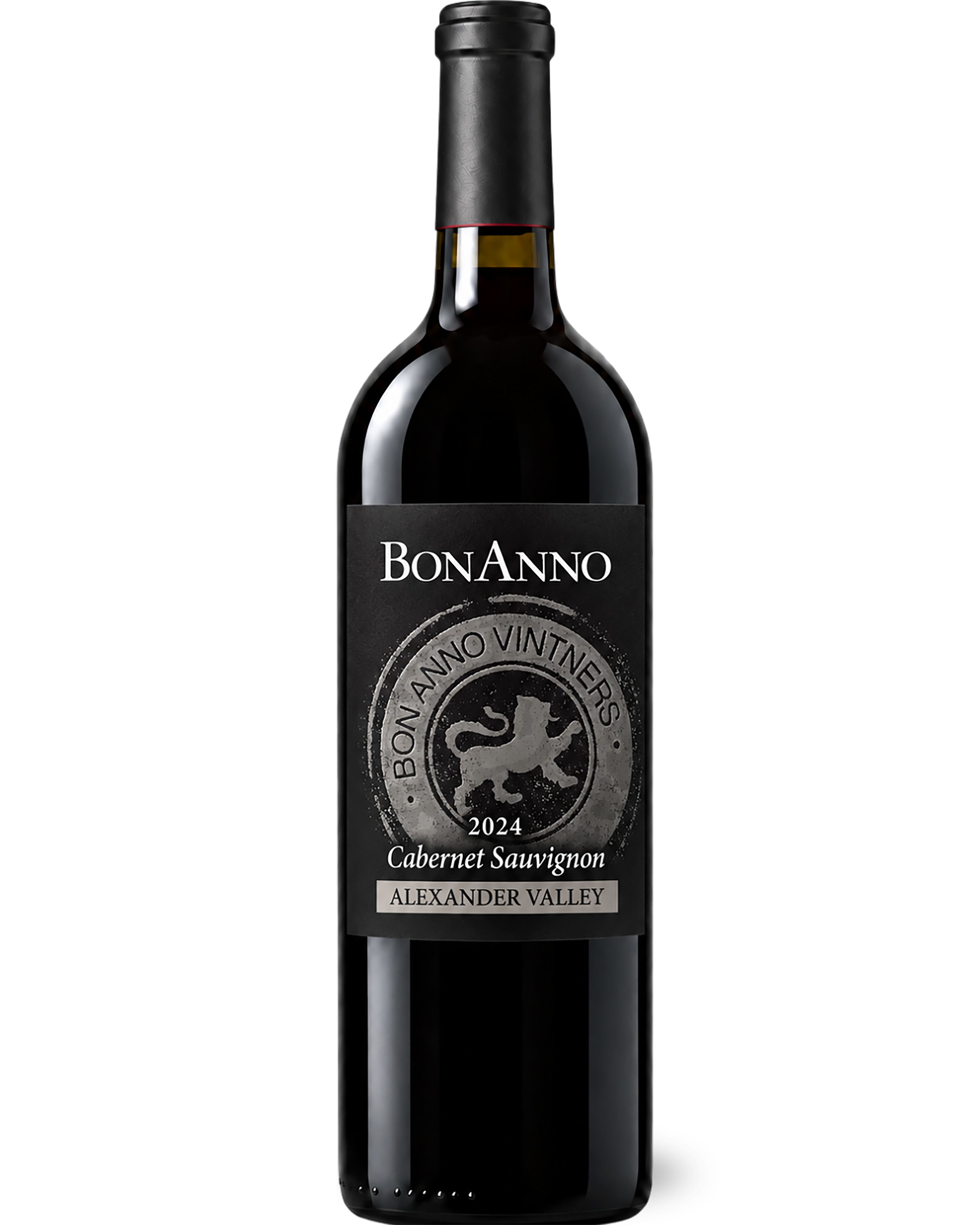
Napa Valley produces most of the finest American cabernet sauvignon. But as that region’s prices have soared into the stratosphere, nearby Alexander Valley has become the cabernet capital of Sonoma County by producing excellent, reasonably priced wines like this one.
Located just north of San Francisco, both Napa and Sonoma counties have a lot in common. Both have a vine-friendly Mediterranean climate and are close enough to the Bay Area to feel its impact on real estate prices. But there are meaningful differences as well. Almost all of Napa County is suitable for growing cabernet sauvignon, since it is shielded from the cooling influence of the Pacific Ocean by two ranges of coastal hills. Sonoma County’s terrain, on the other hand, is more exposed, with more than half of its area being too cold to fully ripen the thick skins that give cabernet sauvignon its signature color and flavor intensity.
While much of that land can produce excellence in chardonnay or pinot noir, only the easternmost reaches of Sonoma County have the warmer, more sheltered conditions that make for great cabernet sauvignon — most notably in appellations nestled into the Mayacamas Mountains like Alexander Valley, Knights Valley, Moon Mountain, and Sonoma Valley. Of these, Alexander Valley is the largest and has the most Napa-like conditions, which explains how it has earned a reputation for producing top cabernet sauvignons from iconic brands like Silver Oak and Jordan.
In this example, a small family-owned vintner uses 100% cabernet sauvignon and patient maturation in French oak barrels to produce a solid, well-made red wine you can afford to drink every day. In the glass, the wine has good depth of color and a charming fragrance. On the palate, it offers a ripe, rich mouthful and flavors of fresh Bing cherries and blackberry compote, finishing with a hint of cocoa dust and a mild vanilla inflection from barrel aging.
BonAnno Cabernet SauvignonCourtesy of BonAnno Wines
BonAnno cabernet sauvignon
Alexander Valley, California
14.1% ABV
PLCB Item #100056916
On sale for $22.99 through Nov. 29 (regularly $24.99)
No alternate retail locations within 50 miles of Philadelphia according to Wine-Searcher.com
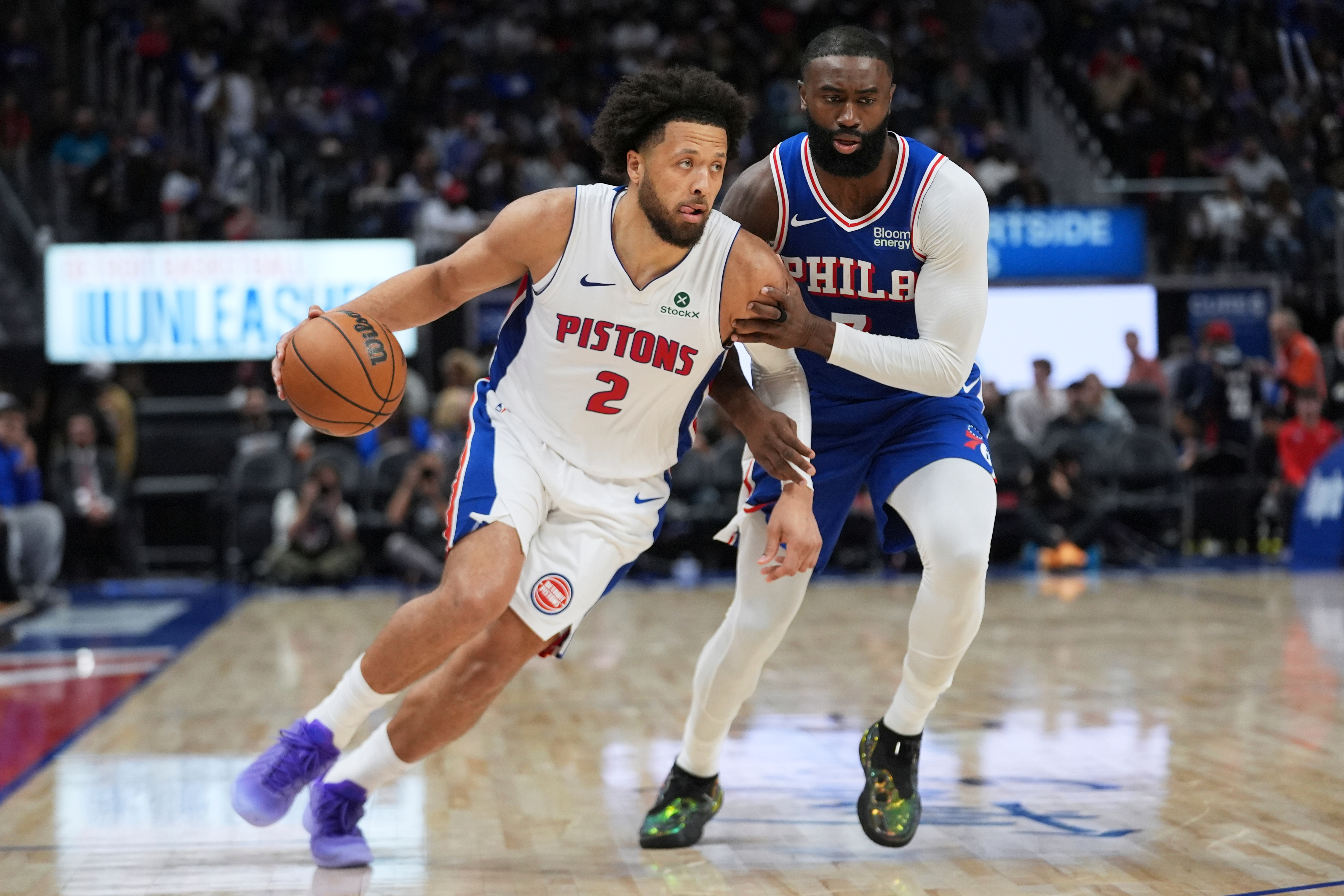
DETROIT — Cade Cunningham was dribbling down the right wing as the Detroit Pistons were making a last-minute run against the 76ers.
Little Caesars Arena was as loud as it had been all night after the Pistons had cut the Sixers’ 18-point lead to four with less than 45 seconds to play on Wednesday.
The Sixers were in need of a play to stop the bleeding and secure what became a 112-106 victory. Enter Jaylen Brown. Amid the noise, Brown kept his cool, and made his way over to meet Cunningham on the right wing. The whole time he was focused on one thing.
“I could see Cade’s eyes,” Brown said. “He was shooting the ball.”
Jaylen Brown on being a “new guy” with the 76ers and how he’s been trying to fit in. pic.twitter.com/IluyeuXxnO
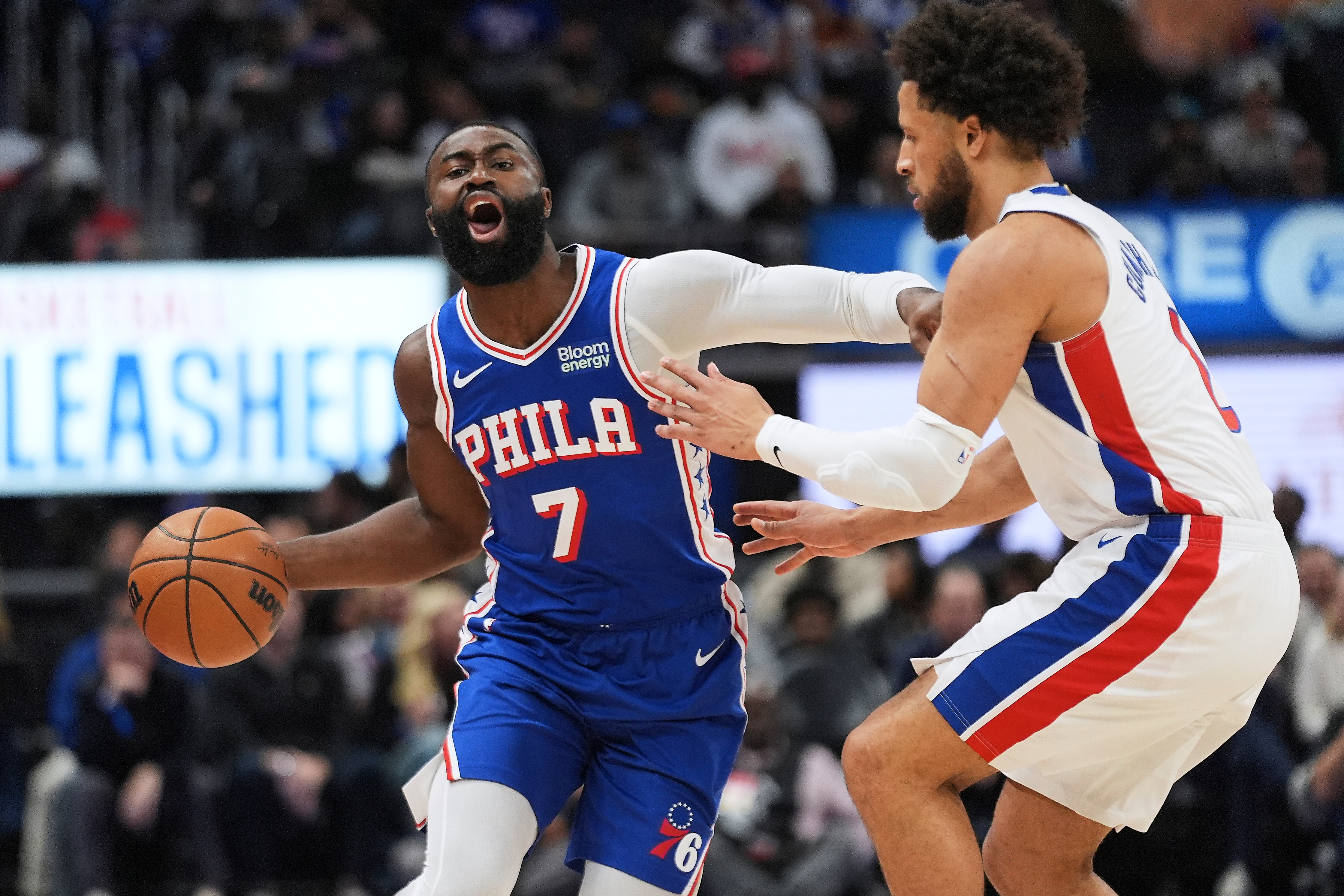
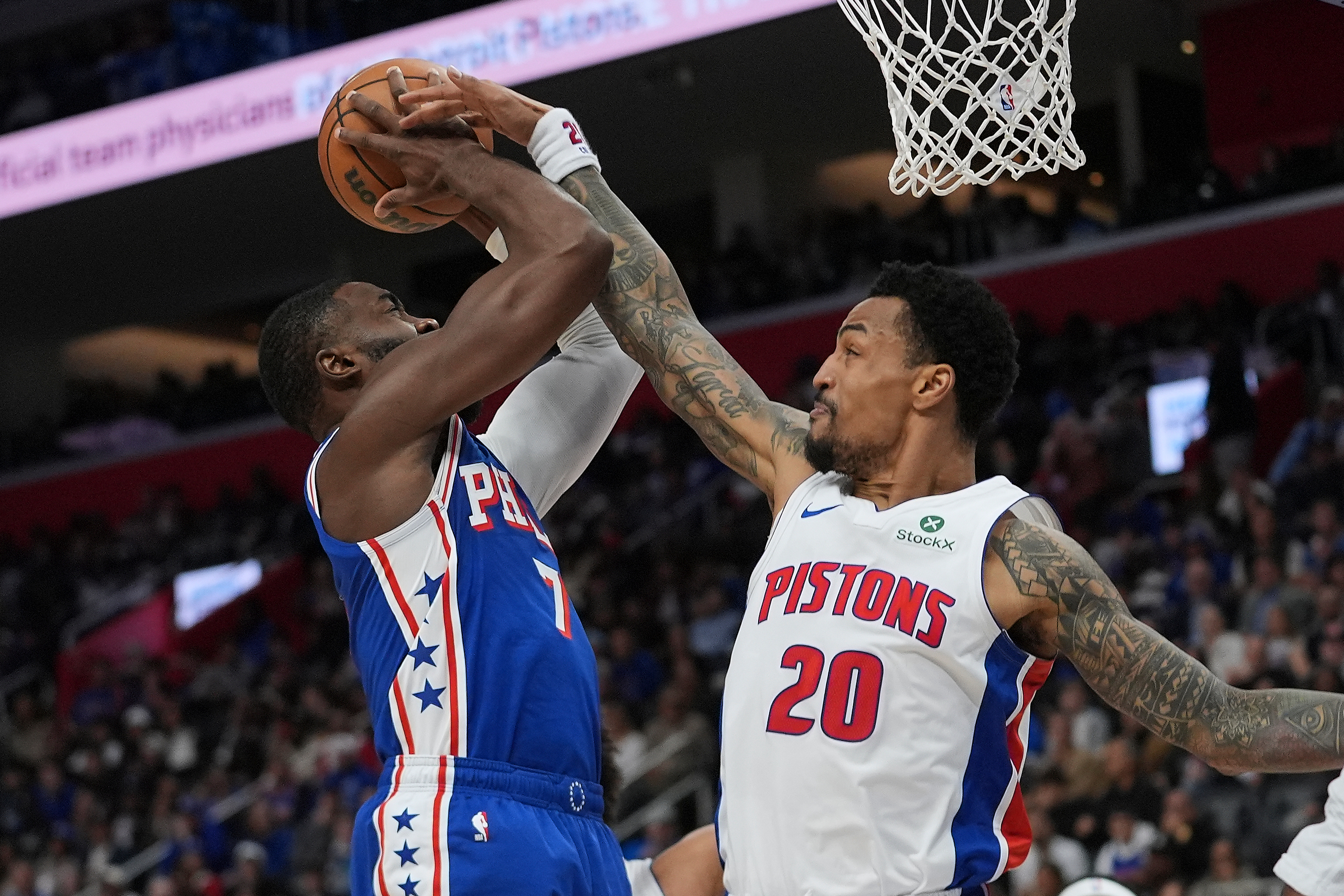
Brown, a scorer himself, knows that look. He kept a little distance from Cunningham so as not to foul. Then, a game after Brown said he has been playing through some pain in his left knee and other parts of his lower body, he got up to block the shot.
“I didn’t want to foul, but I was able to make a play right there,” Brown said. “So that was it.”
It capped perhaps the best game of Brown’s tenure with the Sixers, who improved to 8-1 with a win over the only team that has defeated them.
Brown had 30 points on 11-for-19 shooting, with 23 coming in the first half when the Sixers built their lead.
Weeks ago, Brown said he was still getting used to his new city after 10 years in Boston, and getting used to his new teammates. Nine games into the season, that hasn’t changed much, and he still feels like “the new guy.”
“Everything is new,” he said. “Everybody knows what it feels like when you just move into a new space and you’re unpacking. Kind of feels like that. Feels like that, on and off the court, just trying to get settled a little bit.”
Brown said Monday that the Sixers were Tyrese Maxey’s team, and he repeated how he was trying to complement what Maxey, VJ Edgecombe and Joel Embiid had started to build. But he was more in a starring role against the Pistons.
Jaylen Brown hit 11 of 19 shots, including 3 of 5 from three-point range, against the Pistons on Wednesday.Paul Sancya
On the court, Brown’s adjustment has been “seamless,” Embiid said, and it looked that way, especially in the first half. Brown said the Sixers have started to figure out some of their spacing on offense. His touches and shots Wednesday came more within the flow of the offense.
Whether he was operating in isolation, getting the ball off screens, or finding gaps in the defense for his teammates to find him, Brown looked more at ease in the offense, even if he said it’s still a work in progress.
“Obviously, after spending so much time in one city, especially competing against this team the last, basically his whole career, it would be kind of different,” Embiid said Monday. “I don’t know how to say it, but it would take time to adjust a little bit. He’s come in, trying to do his job, trying to lead guys. He’s been great and we love having him.”
Brown had to miss a recent win over the Knicks because of left patellar tendinopathy (jumper’s knee), but has played through soreness in the last three games. He also added he has dealt with pain in his Achilles and calf as well, and that has limited his athleticism.
“Looking forward to getting that pop back in my step, so I can explode and take off,” Brown said. “I haven’t been as athletic as I would like to start the season.”
It was hard to notice that on the Cunningham block. Since training camp, Brown has been steadfast in saying the team’s commitment to defense had to be “non-negotiable.” And through nine games, the Sixers have the second highest defensive rating in the league. Mission accomplished there. He has also been happy with the Sixers’ start to the season, since in his eyes, the first 10 games can set a team on the wrong or right path.
Jaylen Brown had a key block of Pistons star Cade Cunningham (left) late in Wednesday’s victory in Detroit.Paul Sancya
“I’ve been in the league for a long time,” Brown, 30, said. “It’s my 11th year. First 10 games, it can [set] the tone for your year. Now we still got a lot of basketball to play even after the first 10 games. But it’s always good to get off to a good start, and 8-1 is pretty damn good.”
Even with Brown not at full health and still not fully adjusted in his new home.
“It’s early in the season, but I’ll keep leveling up,” Brown said.
2027 Infiniti QX65 Sport vs. Volkswagen Atlas Cross Sport: Battle of the chopped down SUVs
This week: Infiniti QX65
Price: $60,470 as tested
What others are saying: “Pros: Elegant cabin, handsome exterior styling, roomy. Cons: Uneven power delivery, brakes are muted, steering feels numb,” says Motor Trend.
What Infiniti is saying: “Blaze a bold path in a sporty 2-row luxury crossover designed to turn heads and move you in more ways than one. The INFINITI QX65 is pure confidence in motion.”
Reality: Definitely a head turner. But what Nissan calls “pure confidence” can be a double-edged sword; people who are the most wrong seem to be the most confident.
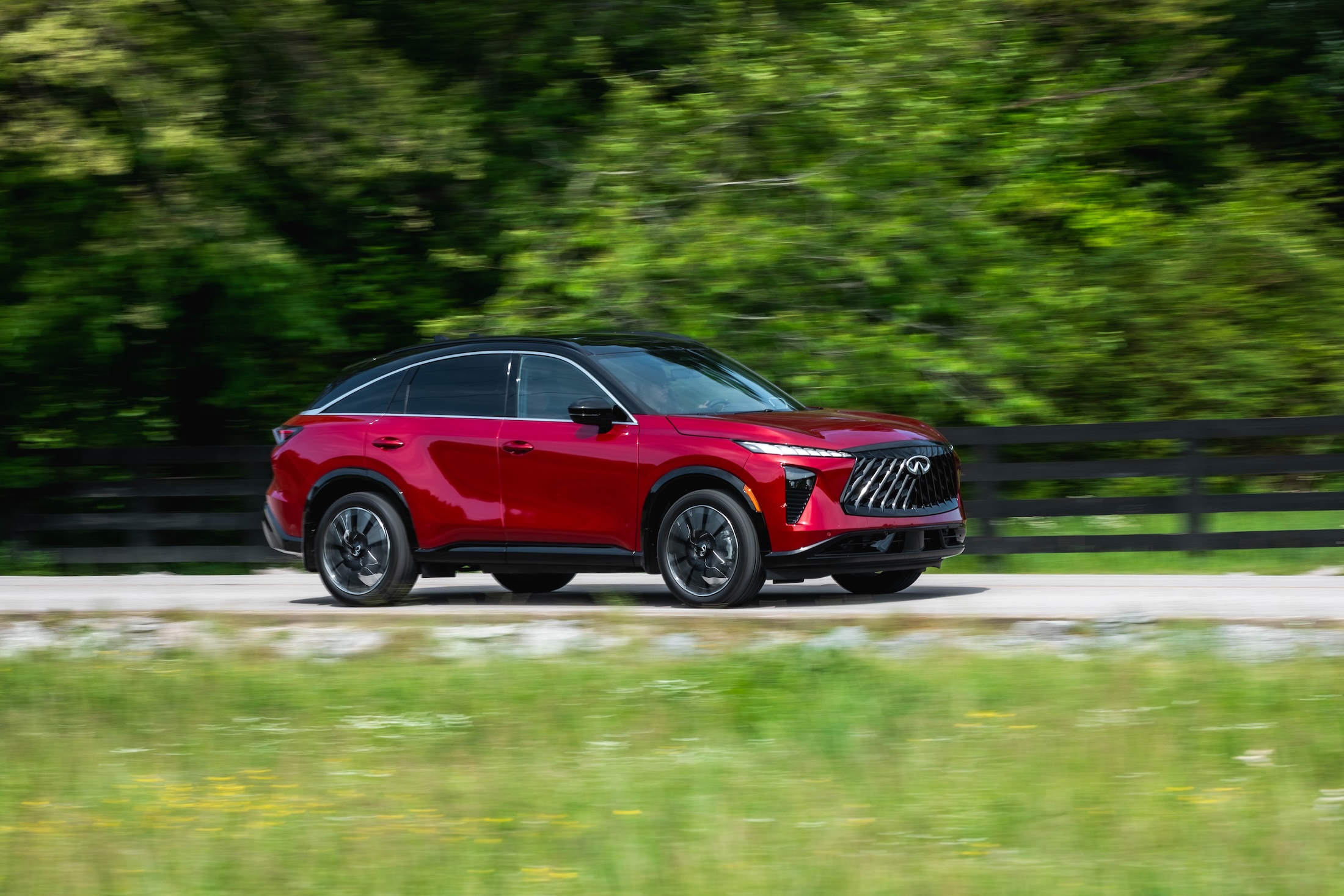
What’s new: The whole thing. Infiniti finally gets into the “sporty SUV” game with this model that takes the QX60 and slices a piece off the back end.
Of course there’s more to it than that.
Competition: It might seem like an odd pairing, pitting the Volkswagen Cross Sport against the premium Infiniti SUV. But the vehicles are really of the same ilk, and the Volkswagen is only $5,000 less.
Up to speed: The 2.0-liter turbocharged four-cylinder engine plays a pretty nice game. It sounds awesome, especially when put in Sport mode, and there’s decent power when you pull out. Sometimes too much of it, especially when it’s cold, as there could be a sudden surge or a quick conk-out. Adding to the Infiniti mystery, you just never knew which one you’d get. (You probably dated people like that. And I bet they were confident.)
Anyway, that engine creates 268 horsepower, and Nissan media materials describe “confident acceleration,” but it takes 8.1 glacial seconds for the SUV to hit 60 mph, according to Motor Trend. Needless to say the competition buries it.
Shifty: The nine-speed shiftable automatic is controlled by a rectangular shift mechanism à la 2015 Lexus. The transmission takes care of itself just fine; there’s a manual mode and paddle shifters, but I didn’t bother.
On the road: Lane keeping sounds like a very excellent thing. A car that will help you not drift of your lane. What could go wrong, right?
Plenty, if it’s the QX65 doing the keeping.
Part of the reason I wasn’t inspired to bother with shifting was the lackluster handling. When I first received the vehicle, it just danced all around and was so wavy even The Lovely Mrs. Passenger Seat commented on the road feel. That’s something she’s loath to do, lest I get pouty and sad and she has to buy me ice cream to cheer me up. Plus, in the QX65, there would be a danger of ice cream hurl.
I realized that the lane keeping must have been turned on; it interferes with the handling on many vehicles, and the QX65 is certainly one of them. We found the switch — not too deeply into the lists in the options screens — we exited the sensors, and life was vastly improved.
But not so vastly improved that I started to enjoy the QX65. I really didn’t look forward to trips in this vehicle, although the highway handling at least became tolerable without the lane keeping.
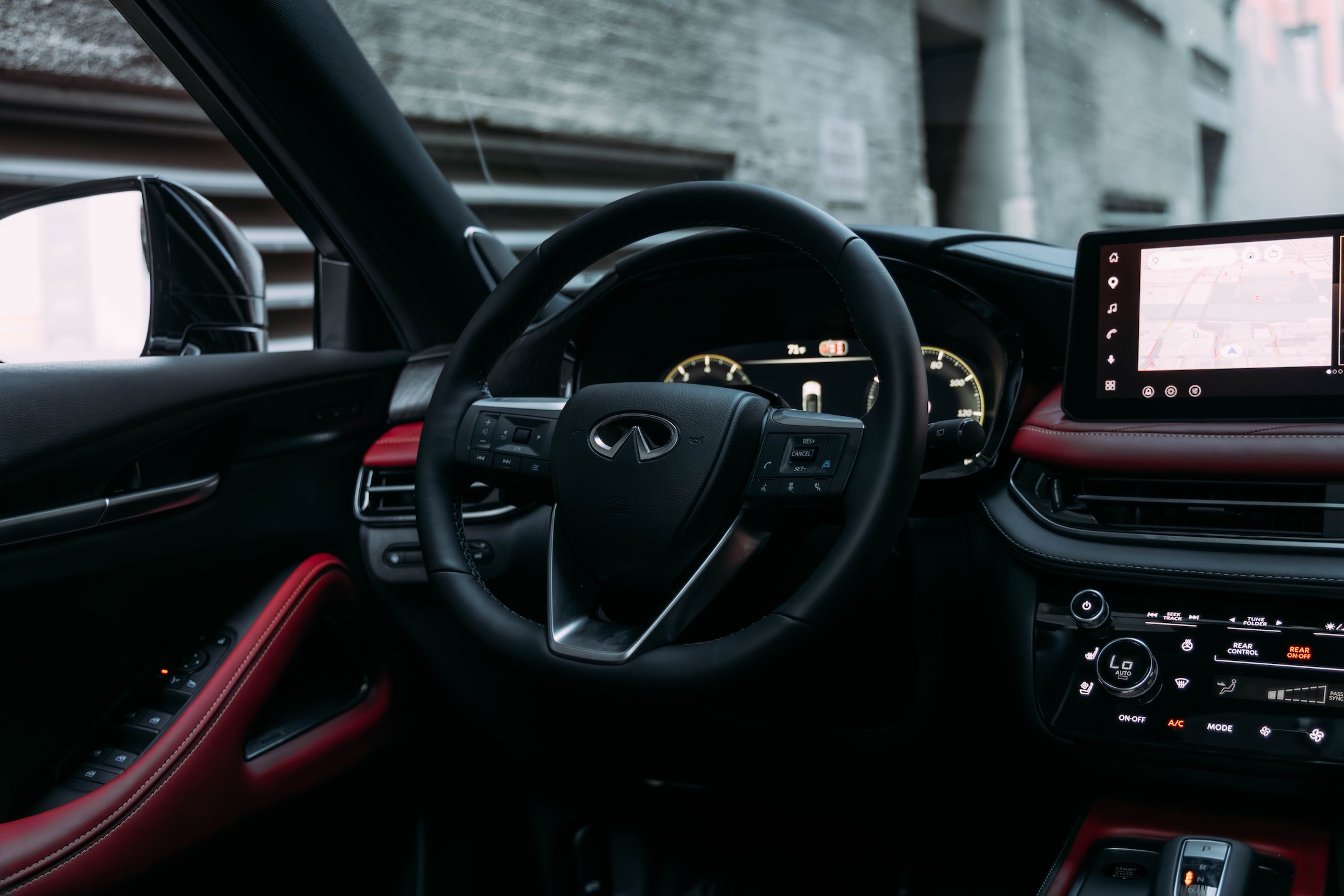
The interior of the 2027 Infiniti QX65 employs the same two-tone look that made the outside attractive, and these pictures don’t really capture the best of it.Infiniti
Driver’s Seat: The seat and cockpit all offered nice touches. The TailorFit appointed seat felt luxurious and supple, and the dashboard was a beautiful sight, two shades separated by a graphene band.
On the downside, though, the shape of the vehicle and design of the windows makes it quite hard to see where you are on the road. Whatever, just look at the pretty interior.
Friends and stuff: The rear seats offered the same luxury as the front, with plenty of space all around. Legroom was especially generous, with no need to slide your feet under the seats, and headroom was nice. The rear seat adjusts front to back and reclines as well.
Cargo space is a healthy 35.8 cubic feet behind the second row and 67.7 cubic feet behind the first.
In and out: The QX65 requires a leg up to get in, so it may not be suitable for all hips and knees.
Play some tunes: Sound from the Klipsch 16-speaker audio system is quite good, an A- leaning to an A.
The controls were just a volume dial, a couple functions down near the HVAC controls (we’ll complain more about those below), and then it was all smallish 12.3-inch touchscreen.
Keeping warm and cool: Dials controlled the temperature, but the other HVAC controllers were a metaphor for the whole QX65: It looks great but the performance is really lacking.
The ebony touch pad was handsome, but it required pretty forceful button pushing to get things working. I tried telling myself it was like an Audi control, but even with the extra force, the two are not in the same league. It was all so unpredictable. And so it went for the media controls as well.
Fuel economy: The QX65 averaged around 19 mpg since forever (well, 800 miles).
Where it’s built: Smyrna, Tenn. The U.S. and Canada supply 45% of the content; another 15% comes from Mexico.
How it’s built: Consumer Reports hasn’t yet offered a reliability prediction for the QX65. The close relative 2025 QX60, also made in Tennessee, received a four out of five.
Next week: I could say I’m confident the Volkswagen will be better, but we now know confidence isn’t all it’s cracked up to be.