Just in time for fall, the drink of the season has arrived — but its creators caution, there’s no pumpkin here.
Little Bean, the West Philly coffee shop owned by the married couple behind Cleo Bagels, has debuted a pumpernickel syrup. It’s available in any coffee drink, but co-owner Alex Malamy says it’s best showcased in the form of a pumpernickel cortado.
The flavor is the newest permanent fixture on the shop’s list of housemade syrups, alongside chocolate, vanilla, and lavender.
“It’s not the ‘pump’ you were expecting,” Malamy, who runs the two shops alongside his wife, Ilana Silber, said. “It’s inspired by a beloved bagel that we don’t make.”
Pumpernickel bagels are too oftena vestige of the past. They were created by Jewish immigrants in New York who combined their bagel-making skills with the ingredients for German dark rye bread. Classic American pumpernickel bread and bagels include additives like molasses, cocoa, and sometimes brown sugar to help enhance the flavors and color. Traditional German pumpernickel, meanwhile, relies solely on rye for its flavor and hue.
These bagels also require more labor and ingredients compared to other classic bagels, including a blend of flours that typical base flavors don’t call for. In Philly, Bart’s Bagels is one of the few shops that offers the deep brown treats (along with a pumpernickel everything version).
Alex Malamy, owner of Little Bean, with his wife, Ilana Silber, and their dog Bean in their coffee shop in West Philadelphia in March.Tyger Williams / Staff Photographer
At Little Bean, the pumpernickel syrup features a proprietary blend of the same ingredients that go into a classic pumpernickel bagel, ingredients Cleo and its sister shop already had on hand anyway: molasses, cocoa powder, coffee, and caraway seeds.
“The toasted caraway really does pair so well with the coffee,” Malamy said. The syrup was a monthslong project, taking about six iterations to get just right. “It’s about getting the balance right of really bitter ingredients without being cloyingly sweet.” The end result is savory, warm, and cozy.
As the six-month-old coffee shop gets into its groove, Malamy says more inventive, bagel-inspired syrups, cold foams, and little treats are on the way. “We’re going for bespoke Little Bean and Cleo things that feel traditional but playful,” he said. “It feels specific to us.”
So, does a pumpernickel syrup mean pumpernickel bagels are also on the way? Not yet, Malamy says, citing Cleo’s modest floor plan, but it’s not entirely out of the question.
“If we were to do a pumpernickel, we would definitely take our time with it,” he said. “We like baby-stepping into things.”
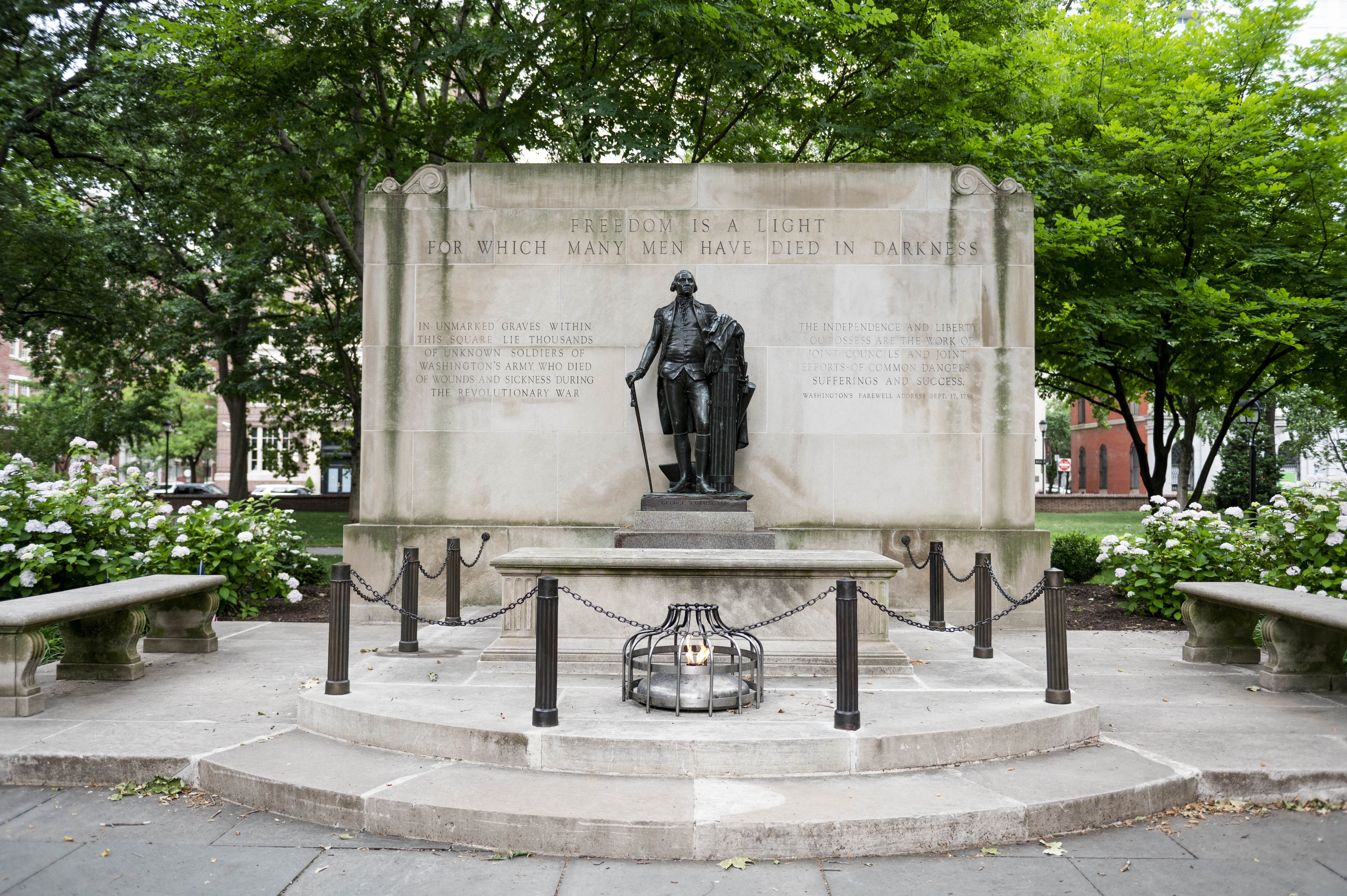
A new fixture is on Washington Square next to the Tomb of the Unknown Revolutionary War Soldier and the flags of the 13 original colonies — a fenced-off, solar-powered security camera.
Here is what you need to know about the new camera, which is not a Flock device.
Who installed the security camera?
Washington Square is part of Independence National Historical Park, and the federal government has jurisdiction over the park.
The camera was installed in July by the National Park Service in response to vandalism, according to City Councilmember Mark Squilla.
“The National Park Service has the responsibility to keep America’s most cherished places safe and free from damage for the enjoyment of the American people,” a spokesperson for the park service said. “In the past year, vandals have damaged the Tomb of the Unknown Revolutionary War Soldier.”
What do we know about vandalism in the park?
A handful of vandalism incidents in the Washington Square area have been reported this year, according to Philadelphia Police Department data.
One of the vandalism cases was in the early morning of July Fourth and was followed hours later by a separate incident.
Later that day, five people who participated in a protest were arrested. During the event outside Washington Square, an unidentified woman attempted to burn an American flag.
While the U.S. Supreme Court ruled burning an American flag is protected speech, it is a violation of city safety codes for public spaces.
The arrests followed police orders to the crowd to disperse, and the five people allegedly did not comply.
It is unclear if any specific incident led the National Park Service to install the additional surveillance measure.
The Tomb of the Unknown Revolutionary War Soldier, which includes a statue of George Washington, was defaced with spray paint in 2020. Vandals wrote “committed genocide” on the memorial’s granite wall.
Tomb of the Unknown Soldier monument in Washington Square on Wednesday, June 14, 2023.Allie Ippolito / Staff Photographer
Is it a Flock camera?
The new surveillance equipment is not a Flock camera, the park service spokesperson said.
“Independence National Historical Park does not use Flock cameras. The park’s camera network is operated solely by the National Park Service on a standalone network with no connections to local or other federal agencies,” the spokesperson said.
Philly is a foodie’s paradise with thousands of restaurants that call it home. But it’s a notoriously difficult business, and recent high-profile closures in the city reinforce that reality.
According to our analysis of business licenses since 2006, the median lifespan of a restaurant is seven and a half years.
To examine what has changed in that time frame, we looked into what happened in 2018. That year’s data shows:
✅ The city had a little more than 8,000 active licenses for food preparing and serving. (A new licensing process that year gave this figure a boost.)
⛔ Around 1,000 new licenses were issued throughout that year, but around 650 of those businesses have since closed.
That short forecast, coupled with the volatile dining scene, hasn’t deterred new places from opening up shop, though. And there’s one West Philly block in particular that represents this turnover trend.
There’s a new fixture on Washington Square that doesn’t exactly obscure its presence.
The fenced off, solar-powered security camera has sparked questions about whether it was a Flock camera, a type of surveillance device that has raised privacy concerns.
But it’s not a Flock device, my colleague Abraham Gutman reports. He tracked down more information on the camera, including:
Who installed it. The National Park Service did so in July, according to City Councilmember Mark Squilla.
Why they put it there. A handful of vandalism incidents in the area prompted the additional surveillance measure.
South Jersey power broker and former Inquirer co-owner George E. Norcross III on Thursday filed a $100 million defamation and conspiracy lawsuit against the newspaper and one of its editors.
Sheriff’s deputies investigated a package found in Council chambers, Council President Kenyatta Johnson said. No injuries were reported and police have determined it was not a bomb.
The cousin of a woman believed to have been killed by Raymond Horsch criticized police for sharing graphic details with the public before conferring with family.
The head of the Conviction Integrity Unit in the District Attorney’s Office has stepped down from his supervisory role, sources said, days after a federal judge said his actions in a contentious post-conviction case could amount to crimes.
Philadelphia Mayor Cherelle L. Parker ordered a task force to explore whether the city should place new regulations on the construction of data centers that power artificial intelligence. Meanwhile, in Pittsburgh, Gov. Josh Shapiro called for the federal government to establish “strict rules of the road” to guide the AI industry.
Atlantic City’s iconic Steel Pier, home to diving horses, Miss America pageants, and lately rides, has gone up for sale at $85 million.
Old City is one of the few Philadelphia neighborhoods that still sees condo development. A new 43-unit project, which would preserve historic features, could become part of the trend.
This week, we’re resurfacing an explainer on Philadelphia street nomenclature. A reader, self-described as obsessed with avenue numbers in Philadelphia, wanted to know why they start at 64th. And why 63rd Street, not 63rd Avenue?
We asked multiple city departments, but as it turns out, no one really knows why. Still, Inquirer reporter Michelle Myers uncovered some history of Philly’s street naming conventions, and how it may be related to the city’s addressing system. Here’s the full story.
Cheers to Khalil Garriott, who correctly guessed Thursday’s answer: Reading Terminal Market. The beloved Center City institution recently tallied up its local economic impact, to the tune of $126 million last year.
Photo of the day
A pedestrian walks across Logan Square near the Swann Memorial Fountain during a clear, sunny day.Jose F. Moreno / Staff Photographer
Thanks for starting your weekend with us. Have a great one.
By submitting your written, visual, and/or audio contributions, you agree to The Inquirer’s Terms of Use, including the grant of rights in Section 10.
As Heather Whitestone’s dream veered toward reality, her hearing aid wasn’t working and she had lost sight of Regis Philbin’s lips.
The 21-year-old Miss Alabama couldn’t hear the talk show host, or read his lips, when he announced the winner of the Miss America pageant on Sept. 17, 1994.
Rebecca Blouin — Miss Mississippi — turned to her fellow Southerner and shared the news, which broke a barrier at what many consider the United States’ most-celebrated beauty contest.
For the first time in the event’s history, which dates back to 1921 at the Jersey Shore, a deaf woman would wear Atlantic City’s most prestigious award: a rhinestone tiara.
Years of therapy taught her how to speak, and she utilized hearing aids, but Whitestone navigated her way through life primarily by reading lips.
Former Miss America Kimberly Aiken, left, crowns Miss America 1995 Heather Whitestone, of Alabama, after Whitestone won the 74th annual pageant in the Atlantic City Convention Hall in September 1994.Charles Fox
In media interviews during the pageant,she didn’t use an interpreter.
“It’s a physical challenge, not a handicap,” she told The Inquirer in an interview prior to her win. “I really believe the most handicapped people are those who have a bad attitude.”
Feeling the love
Leading up to the main event, attendees showered the Birmingham, Ala., woman with standing ovations as she made it through the pageant’s three nights of preliminary competition.
That affection carried over into the finals, when the ballet dancer dazzled judges Philbin and Kathie Lee Gifford with her talent and chutzpah.
As Christian singer Sandy Patti performed the song “Via Dolorosa,” Whitestone glided along on her tippy toes — counting beats in her head to help keep pace.
“She is an extraordinary human being,” Gifford told The Inquirer.
Crowning achievement
Whitestone was not the first deaf contestant, but she remains the only deaf woman to have won.
A reporter would later ask Whitestone about the potential challenges she faced fulfilling such a public-facing role.
“I think I’m doing just fine,” she said with a wry smile. “I mean, look at us now.”
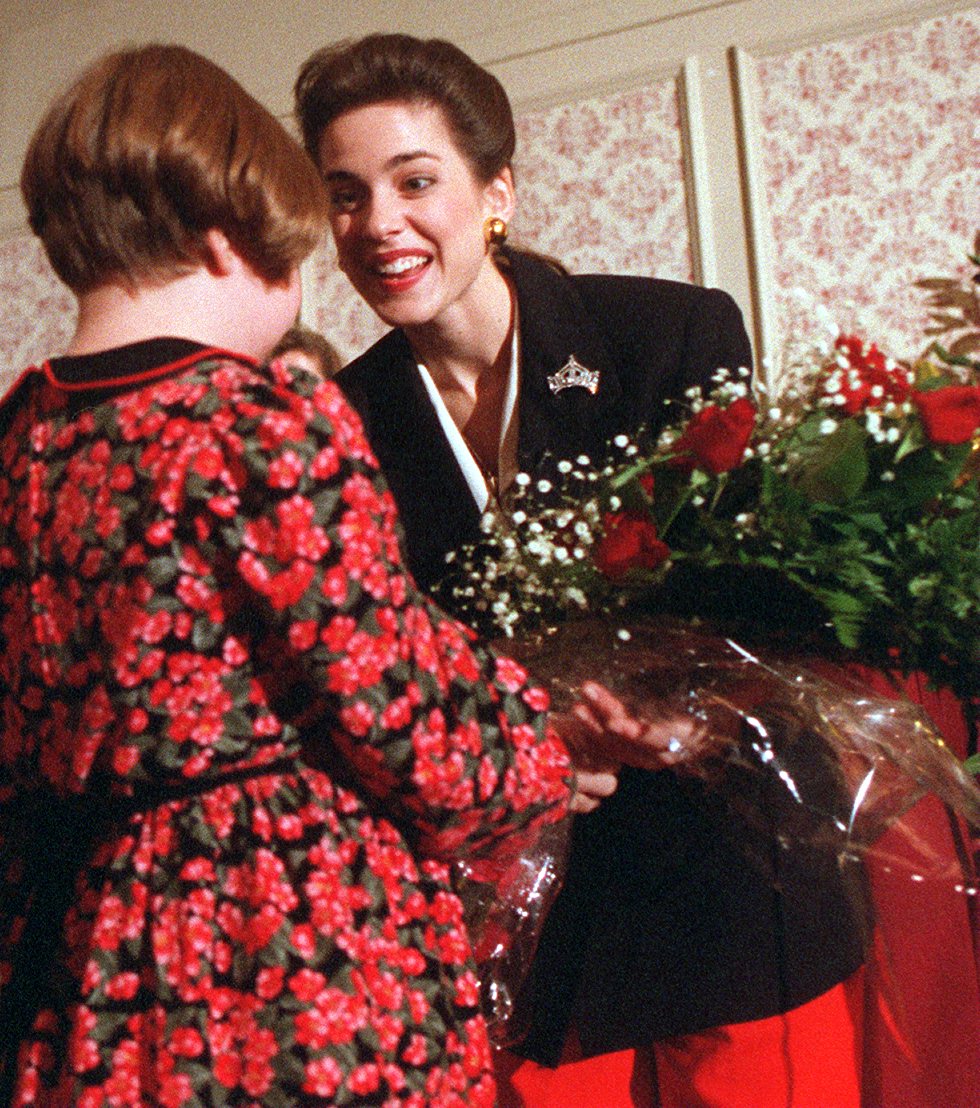
Miss America Heather Whitestone receives flowers from Christina Simeone, age 9, from Wallingford Elementary School in January 1995.G. Loie Grossmann / Staff Photographer
When Whitestone, as the newly crowned Miss America for the forthcoming 1995,took her victory walk down the runway, she raised her hand to the thousands in Convention Hall, signing “I love you.”
Whitestone couldn’t hear their response — the hearing aid in her left ear was overwhelmed by the thunderous ovation and transmitted only static — but she didn’t need to.
District Attorney Larry Krasner came into office promising to end mass incarceration, decriminalize minor offenses, eliminate cash bail, and free anyone who was wrongly convicted.
On its face, those reforms seemed laudable given Philadelphia’s — and the nation’s — decades-long, tough-on-crime politics, policies, and policing that resulted in high incarceration rates and a justice system rooted in racial and economic disparities.
But in Krasner’s zeal to right past wrongs, he has caused grave damage to himself and his office. A series of legal setbacks has cast doubt on Krasner’s ability to administer fair and impartial justice, let alone manage his office.
As a result, crime victims and the accused are left to wonder if the city’s top law enforcement official can properly do his job.
Krasner’s latest and most perilous legal trouble stems from a recent court case involving a man’s attempts to overturn his 2009 murder conviction.
Following an evidentiary hearing that stretched for three days over the summer, U.S. District Judge Paul S. Diamond referred the matter to federal prosecutors to investigate Krasner and Matthew Stiegler — the formerhead of the district attorney’s office’s Conviction Integrity Unit — for potential crimes, including conspiracy, obstruction of justice, and perjury.
Krasner and Stiegler have not been charged. It is unclear if the U.S. Attorney’s Office in Philadelphia will launch an investigation, though it appears very likely considering that amid the hearing that spurred the criminal referral, Diamond said that “potential wrongdoing abounds.”
Even before Krasner’s latest legal morass, a disturbing pattern of lies and chicanery emerged involving the office’s handling of other post-conviction cases, mainly for murder.
One supervisor was disbarred last year and another suspended in June for repeatedly lying in federal court while seeking to overturn the death sentence of a man convicted of killing a couple in their East Mount Airy home. The federal judge in that case found the DA’s office provided a “false account” of the events, and ordered Krasner to write a letter of apology to the victims’ family.
In the very first exoneration of Krasner’s first term, a Common Pleas Court judge ruled his team unfairly accused two former prosecutors of misconduct and had “misplaced and/or destroyed” records and relevant evidence. The judge fined the district attorney’s office $120,000.
In June, the state Supreme Court found the office had violated its duty of candor to the court and ordered the state attorney general’s office to review future attempts by the DA’s office to reduce a sentence or overturn a past conviction.
The latest case before Judge Diamond featured stunning sworn testimony by four supervisors hired during Krasner’s tenure who remain on the job.
Their accounts from the witness stand painted a disturbing picture of Krasner and Stiegler scrambling to contain any legal fallout involving the lazy and disingenuous handling of their decision to initially go along with defense attorneys seeking to overturn the 2009 second-degree murder conviction of Dennis Johnson.
For years, Johnson’s post-conviction appeal efforts were repeatedly rejected. In 2022, then-Assistant District Attorney Jaclyn Mason filed a brief that agreed with Johnson’s lawyers that his trial counsel had been ineffective, and his conviction should be overturned.
In May, Diamond ordered an evidentiary hearing to examine what new evidence emerged to prompt the DA’s change in position.
That spurred a group of supervisors in the district attorney’s office to scrutinize Mason’s initial brief in which they found numerous “material misstatements.” The four supervisors — Katherine Ernst, Steven Wildberger, David Napiorski, and Peter Andrews — determined the office needed to withdraw the motion and apologize to the court.
They asked Mason to sign the filing with them, but she said Stiegler should take responsibility since he drove the effort to concede after several meetings with Johnson’s defense attorneys at the Pennsylvania Innocence Project.
Fearing she would get all the blame, Mason quit in June and testified the following month that Stiegler had “colluded” with Johnson’s defense team and told her, “If it is good enough for the Innocence Project, it was good enough for him.”
After Mason quit, the supervisors said Stiegler lobbied his fellow supervisors to go through Mason’s other cases, find errors, and tell Diamond she was a rogue actor. Krasner endorsed the plan, calling it a “good idea,” according to the supervisors.
The supervisors rejected that scheme and instead argued for the case to be turned over to the state attorney general. Krasner repeatedly opposed that plan, citing the need to “protect the office.” The four supervisors concluded the efforts by Stiegler and Krasner created a conflict of interest for them and the office.
The supervisors testified that Krasner threatened “consequences” if they told Diamond about the internal discussions. But rather than go along with the ruse, the four supervisors withdrew from the case.
Diamond found Krasner’s threat “could amount to obstruction of justice,” and the scheme with Stiegler to present a false narrative “might amount to criminal conspiracy.”
Diamond credited Ernst, Wildberger, Napiorski, and Andrews for coming forward “at the risk of their jobs.” He wrote their testimony was “compelling and corroborated by contemporaneous documents.”
The judge rejected Stiegler’s version of events, writing that he found his testimony “contradictory, evasive, or outright dishonest.” He said Stiegler was “responsible” for the errors in the concession brief and that Mason followed his orders. Diamond added that Stiegler’s testimony “may well amount to perjury.”
Confirming Mason’s fears, Diamond found Krasner directed the four supervisors to implement Stiegler’s plan to blame her for errors in the brief.
Krasner issued a statement that said he “respectfully and vigorously” disagreed with Diamond’s findings and planned to appeal. He said he couldn’t comment further because the case is pending.
But even that is not entirely truthful. Diamond said Krasner could have defended himself at the hearing. The judge wrote that Krasner “chose not to testify” or even to submit an affidavit after the hearing.
“[Krasner] apparently does not dispute — or does not address — much of the testimony presented,” Diamond wrote.
Krasner’s handling of the Johnson matter is beyond troubling. Perhaps just as telling, before the judge’s ruling was released, Krasner’s take on events, detailed in a filing made by his office, underscored that he remains unbowed. Indeed, as the legal setbacks have mounted, Krasner has demonstrated a glaring blind spot regarding his failings as a leader.
As a result, Krasner faces a legal peril of his own making.
Krasner came into office with a long list of real and perceived detractors. But he has frittered away his credibility, and his actions have undermined the hard work and dedication of many of his rank-and-file attorneys.
This Editorial Board has endorsed Krasner in previous elections, but now believes he has created an untenable situation that could impact the treatment of crime victims and wrongdoers.
One significant challenge: Will judges and juries trust prosecutors from the DA’s office?
There is no denying that innocent people who were wrongly convicted sit in prisons. Krasner was right to review past convictions. But the questionable handling of these cases that was described in court has sabotaged his own authority to right those wrongs.
The DA’s office is now rife with turmoil, fear, and distrust. Krasner sent a chill through the office after he allegedly threatened jobs and called prosecutors in the state attorney general’s office “Nazis.” One assistant supervisor recently stepped down from his leadership post after losing faith in the office.
Krasner, who spent decades as a defense attorney, entered public office with a list of grievances and a deep mistrust of law enforcement, which he called “systematically racist.”
Before first getting elected district attorney in 2017, Krasner sued the Philadelphia Police Department 75 times. Days after taking office, he ousted more than two dozen staffers, including many experienced prosecutors.
Krasner has expressed disdain for the state attorney general’s office. He often views judges who oppose him as hostile, according to people familiar with his thinking.
His jaded and often huffish views inform how he administers justice, whom he indicts or doesn’t indict. Not to mention his fraught relationship with police. Lives hang in the balance, including the accused, victims, and the wrongly convicted.
Krasner now faces a major challenge: Can he regain the trust of the public and the prosecutors in his office? He should start by installing experienced and respected leaders.
Then Krasner needs to look in the mirror and determine if he can continue to run the district attorney’s office under the giant cloud he has created.
Think you know your news? There’s only one way to find out. Welcome back to our weekly News Quiz — a quick way to see if your reading habits are sinking in and to put your local news knowledge to the test.
Question 1 of 10
This Philly sports team announced it was teaming up with the popular vending machine art designer, Anastasia Inciardi for an exclusive collection of $1 prints:
CorrectIncorrect. XX% of other readers got this question right.
The Eagles have teamed up with Inciardi, who's best known for popularizing vending machine art nationwide. Inciardi has Philly ties and has worked with many big brands, but never the NFL. The vending machines will be available at games and the fan pro shop all season.
Question 2 of 10
Biology students at Stockton University are monitoring this Jersey Shore icon and say the species could be in danger:
CorrectIncorrect. XX% of other readers got this question right.
The osprey, a raptor that feeds primarily on fish, was reclassified from “threatened” to “stable” by New Jersey’s Department of Environmental Protection’s Fish and Wildlife agency, but a recent study by Atlantic County University, whose mascot is the osprey, found staggering declines along the Mullica River and Great Bay. Biology students and instructors monitored 27 osprey nests along the Mullica River and Great Bay this year and discovered that chicks were surviving at a dismal rate.
story continues after advertisement
Question 3 of 10
Eagles outside linebacker Jalyx Hunt has established three scholarships for students at this school:
CorrectIncorrect. XX% of other readers got this question right.
Hunt has what he calls a “whole bunch of little sisters” in the hundreds of students at Little Flower Catholic High School for Girls in the Hunting Park section of North Philadelphia. His relationship with the school began in 2024, the year the Eagles drafted him in the third round out of Houston Christian, when he started a fundraiser for underfunded school sports programs.
Question 4 of 10
The Flyers updated a rendering last week of its upcoming new arena following backlash over this detail in the original:
CorrectIncorrect. XX% of other readers got this question right.
Critics worried the original Flyers arena rendering depicted a lack of women’s representation within sports and sports fandom, too with no visible women fans. Populous, the design firm behind the buildout, called it an oversight. The Flyers released an updated rendering following the outcry from fans.
story continues after advertisement
Question 5 of 10
Just one Philly restaurant made the New York Times’ best restaurant list this year. Who was it?
CorrectIncorrect. XX% of other readers got this question right.
Bomb Bomb Bar, the old-time South Philadelphia tavern revived last year by chef Joey Baldino, has been named to the New York Times’ 2026 list of the best restaurants in America — Philadelphia’s only entry this year. The city placed two restaurants — Mawn and Meetinghouse — on the list last year, Little Walter’s in 2024, and three — El Chingón, Kalaya, and My Loup — in 2023.
Question 6 of 10
The new Bathhouse opening in Philly uses this method to power its heated pools and seats:
CorrectIncorrect. XX% of other readers got this question right.
Since its 2019 founding, Bathhouse has used small on-site data centers of Bitcoin miners to warm its pools and heated seats, extracting excess energy from the machines via pipes. The practice, cofounder Travis Talmadge said, has helped significantly cut Bathhouses’ electricity bills while allowing them to make back some money, even as returns from the cryptocurrency have slowed.
Question 7 of 10
While Philadelphia-area TV shows racked up plenty of Emmy nominees, only one show took home the actual award. Which show won for outstanding supporting actor?
CorrectIncorrect. XX% of other readers got this question right.
Tom Pelphrey, a Rutgers University alum from Howell Township, N.J., won for outstanding supporting actor in a drama series for his performance as Robbie Prendergrast on Season 1 of the Delco-set HBO crime thriller Task.
Question 8 of 10
Union phenom Cavan Sullivan’s rapid rise in the soccer world reached a new milestone on Thursday, as he earned his first invitation to the senior U.S. men’s national team. How old is he?
CorrectIncorrect. XX% of other readers got this question right.
Sullivan is 16. Part of a three-generation soccer family with roots in Northeast Philadelphia’s Bridesburg neighborhood, Sullivan has seemed destined at times to get here.
Question 9 of 10
The renovations of a community space, led by Councilmember Jeffery Young Jr., have drawn contention because of the delayed timeline and a lack of community input. What space is at the center of the issue?
CorrectIncorrect. XX% of other readers got this question right.
A renovation project for the Cecil B. Moore Library has been anything but a win for Councilmember Jeffery Young Jr. Young and representatives from the Philadelphia Capital Program Office and the Free Library of Philadelphia gave further details on the $2 million in renovations planned for the North Philly library at a community meeting Tuesday. An additional $8 million previously raised and allocated for the project will remain unused for now. But the plans didn’t go over well with community members.
Question 10 of 10
A Point Breeze mural by this prominent artist just got through the next phase for consideration as a designated historic space. hello
CorrectIncorrect. XX% of other readers got this question right.
Keith Haring’s We the Youth is one step closer to being added to the city’s Register of Historic Places. On Wednesday, an advisory group of the Philadelphia Historical Commission unanimously approved its nomination to be included. If approved at next month’s Philadelphia Historical Commission meeting, the outdoor mural will be added to the Philadelphia Register of Historic Places. That would make it the first outdoor mural to be an officially designated and protected landmark in the city’s history.
Your Results
You have skipped .
You scored XX out of 10.
The average reader scored XX out of 10
Seems like you’ve been skimming more than reading there, buddy. There’s always next week.
You’ve read some articles (or made some educated guesses) but we wouldn’t come to you first for our local news recaps. Better luck next week!
Do you work here? You’re a local news stan with the latest updates on Philly happenings. Your friends definitely ask you for summaries on what’s going on and it shows.
Lindenwold will pay $15,000 to a resident who was removed from a council meeting for recording on his phone, settling a lawsuit over the Camden County borough’s video policy.
The lawsuit pushed the seven-person council to rescind its policy last month, which limited public meetings to one camera, required attendees to give 30 minutes’ notice before they record, and demanded that residents provide a copy of the recording to Lindenwold officials within two days.
The lawsuit follows years of calls by residents for the borough to record its own meetings and upload them to its website.
Alfonso Penna, 24, filed the complaint on July 22 against Lindenwold, its mayor, the police chief, and the police officer who escorted Penna out of a June council meeting. He alleged the borough had infringed upon his constitutional right to freedom of expression, his right to record, and the state’s Open Public Meetings Act. Penna, who has lived in Lindenwold all his life, said it took only a few days for Lindenwold to reach out seeking to settle the dispute.
“The residents ended up having to foot the bill of just some incompetence,” said Penna, who started attending all of Lindenwold’s public meetings between service calls in his job as a pool repairman two years ago. “That’s what it came down to.”
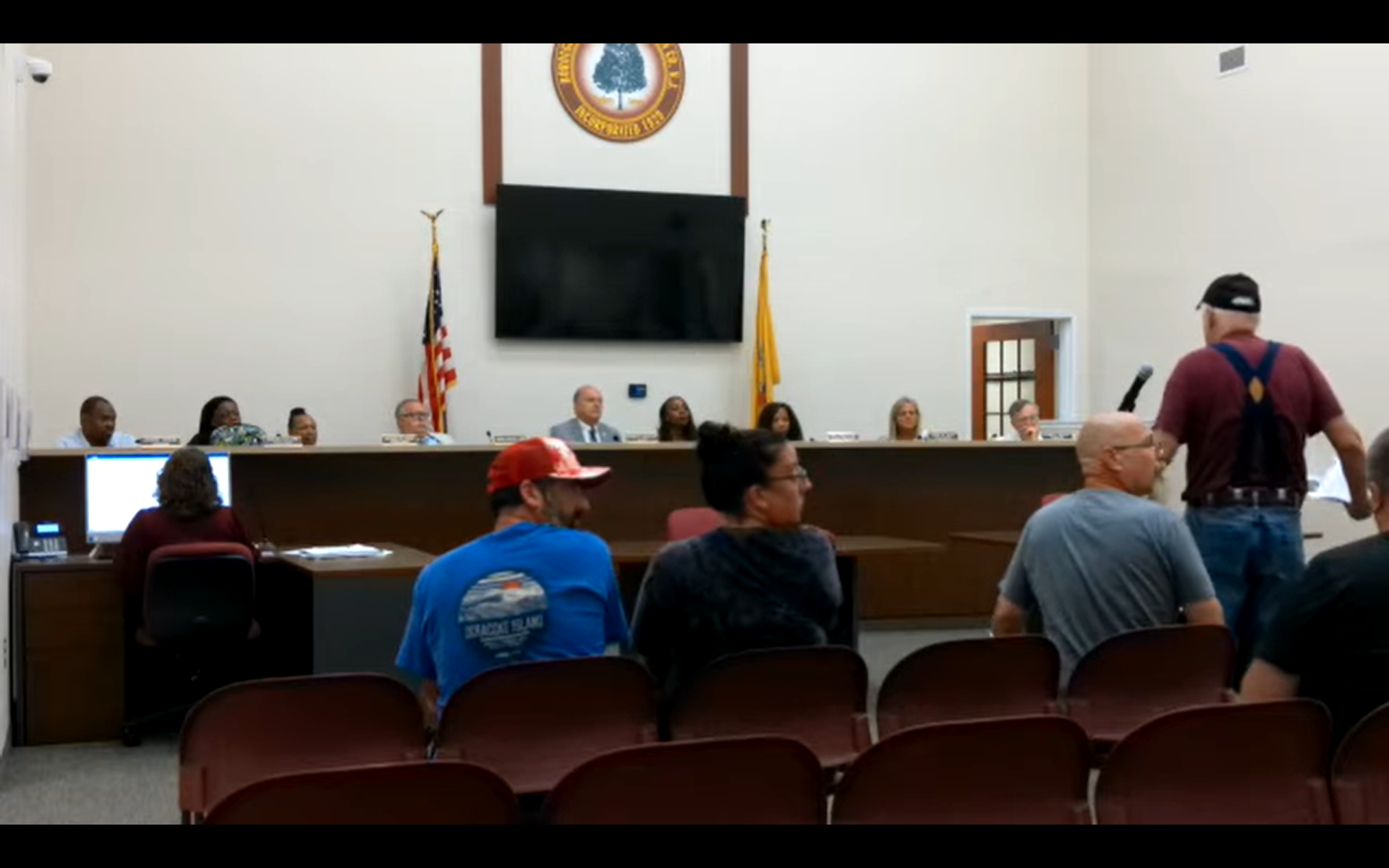
Officers escorted Penna out of the June 10 council meeting after Richard Roach, Lindenwold’s longtime mayor, told Penna to leave as he recorded a resident speaking during the public comment period, according to the complaint and a recording of the June meeting.
Roach cited the borough’s one-camera video policy. Trevor Shaw, founder of local community advocacy group Love Lindenwold, has recorded nearly every council meeting since 2018, and he was already recording that night.
In Shaw’s recording, Penna can be heard arguing for his right to record under the Open Public Meetings Act before agreeing to leave after repeated pushback from Roach.
Then, the complaint alleges, at another council meeting in July, Roach again demanded that Penna turn off his camera and asked an officer to escort Penna out. Police Chief Michael McCarthy allegedly told Penna that the meeting would not continue until Penna stopped recording.
But this time, the complaint says, Penna did not leave. Rather than remove him, council members temporarily ended the public session to speak in private. They returned less than 10 minutes later to resume the meeting, and Penna kept recording.
Alfonso Penna, 24, sued Lindenwold in July over the Camden County borough’s video recording policy.Alfonso Penna
Lawyers for Penna and Lindenwold filed to dismiss the lawsuit Tuesday, after the borough voted unanimously on Sept. 9 to pay thousands of dollars for Penna’s legal fees. The agreement, provided to The Inquirer by Penna, requires that any future recording policies in Lindenwold follow “constitutional limitations” and be enacted by an ordinance, so residents can comment on the rules.
The video policy that was revoked had been enacted by resolution in January at a council meeting, in a single vote approving 65 resolutions at once.
Roach and his fellow council members have not commented on the rescinded policy or their decision to settle at recent meetings. Roach, the borough administrator, and several council members did not return requests for comment.
Raymond Morrissey, who has served on Lindenwold’s council for four years, said he was not aware of any plans for council to create a new recording policy. But the old one will cost residents via the $15,000 payout.
“That impacts all us taxpayers in town because one way or another, it’s an extra expense,” Morrissey said. “Whether it was budgeted or not, it was an extra expense.”
‘A petty power play’
Until it was rescinded in August, Lindenwold’s policy limiting meetings to one camera had been approved by council every January for years. Morrissey said the policy is one of “a gazillion and one resolutions” passed with a single vote during the annual reorganization meeting.
Shaw, a Lindenwold resident since 1998, said the policy has affected him for the last eight years, as he has recorded and posted meetings online.
While Roach has never approached him over the one-camera rule, Shaw said, the mayor has demanded copies of his footage before he posts it to YouTube and criticized him for not giving proper notice.
“To me, it’s always seemed like a petty power play just to exert some perceived level of control or power over the people who choose to attend the meetings,” Shaw said.
It’s unclear exactly how long the policy has limited meetings to one camera, but its language is not very modern. The policy requires people recording to “advise the Council or Borough Clerk of the tape’s permanent location” and “make fair payment for the electricity used while operating the video recording device.”
The now-rescinded policy says the one-camera rule was created to “prevent disruption of council meetings” and could be enforced at the discretion of borough officials.
But Penna’s lawsuit claimed that his cell phone, “silent” and “self-contained,” posed no risk of distraction.
“This was clearly written for a time before smartphones,” Penna said.
At the June meeting, Shaw said, multiple people had taken their phones out to record during the induction of new borough police officers, about a half hour before Penna was removed from the room. Love Lindenwold’s recording shows at least one other person recording on a cell phone, without reproach.
Penna’s complaint attributed that difference to local politics: Penna ran for Lindenwold Council during the June Democratic primary, just days before he was kicked out of the meeting.
Penna lost that election to two incumbent council members.
A vacuum of information
Without the policy, residents can now record Lindenwold meetings regardless of whether Love Lindenwold or Penna is there to record, and no ordinances have been introduced to change that.
But Shaw and Penna both said Lindenwold’s next step should be to start recording and posting its own meetings so the public doesn’t have to. Shaw, who has previously approached borough officials to offer his recordings for Lindenwold’s website, said council has not been receptive to those pitches.
“There’s an enormous vacuum of information in this town,” Shaw said.
Penna agrees. He said attending public meetings could bring more attention to issues important to him and other residents, such as public transit and installing benches at local bus stops, especially as nearby municipalities record and post their own meetings without issue.
“It’s 2026,” Penna said. “I’ll keep holding Lindenwold accountable. There’s a lot of apathy in town. We need more people who want to show up and care because our town is worth caring about.”
Dozens of children between the ages of 3 and 12 lined up in front of the ice hockey rink at Hollydell Ice Arena on Thursday — wearing helmets, blades, and shoulder pads that appeared large compared to their small stature. At the sound of the whistle, they took off — with some on Bambi legs — as they followed their instructor, Guy Gaudreau, toward the entrance of the skating rink.
“This is more like home than home away from home,” Gaudreau said. “I spent 30 years here running the rink as hockey director, and John and Matt basically lived here with me. They were on the ice a lot and they made a lot of friends here. It’s just such a great sport. Anyone in the hockey world understands what I’m talking about.”
Thursday marked the first day of the Gaudreau Family Foundation’s first-ever learn-to-play/learn-to-skate program, a free initiative to introduce boys and girls to hockey in a fun, safe, and supportive environment. The 12-week program was made possible through the funds raised at the Gaudreau Family 5K & Family Day.
“We get them in learn-to-skate, learn-to-play,” Gaudreau said. “Now, we’re working with the NHL a little, trying to create a league that is financially — it won’t cost them anything to play one game a week, one practice a week. … We want them to continue. We don’t want them to fall in love with the sport and say ‘Hey, sorry. We’re done.’ So, we have a lot of work ahead of us to get that done.”
This is just one way the Gaudreaus have continued to honor the legacies of Johnny and Matthew Gaudreau, who were both struck and killed in August 2024 by an alleged drunk driver while biking near their family’s home in Salem County. Matthew, who played professional hockey for five seasons, and whose wife, Madeline, gave birth to the couple’s first son five months later, was 29. And Johnny, a seven-time NHL All-Star and father of three, was 31.
Guy Gaudreau comes to the side of the rink to get another child on to the ice during Thursday’s skate lesson.Elizabeth Robertson / Staff Photographer
Over the summer, the Gaudreau family also completed a yearlong project at Archbishop Damiano School, a special needs school that the family has been connected to for over 50 years, opening the Gaudreau Brothers’ Wings of Hopes and Chrysalis Corner, an adaptive playground for children with special needs.
“This was always important to the boys, they loved children, and they always wanted everybody to play hockey, even their friends from school who had never heard of hockey,” said Jane Gaudreau, Johnny and Matthew’s mother. “They were always trying to get someone involved in hockey. They wanted to grow the game, they wanted everybody to have a chance to play hockey, and I just think this is so important to them.”
After teaching the kids the basics of skating, Guy led them in a number of beginner skating drills to let the kids find their footing on their blades. He did something similar when teaching both John and Matty how to play as kids — but he has one lesson for all the hockey parents: Be patient.
“My son Matthew was probably two and a half [years old] when we did learn-to-skate and he did an hour of snow angels,” Gaudreau said. “Of course, me being a crazy hockey fan, I wasn’t too happy about it. But he finally grew out of that. So, it’s patience. You have to have patience. That’s one thing we’re going to tell the parents, be patient. They may go out there 10 minutes and if that’s all they’re going to do, that’s great. Next week, we’ll have them do 20 minutes. They got to work their way into it.”
Guy Gaudreau (right) helps Hunter Jax Caruso, 5, of Williamstown with his hockey equipment.Elizabeth Robertson / Staff Photographer
To make the sport more accessible, all of the children received a bag full of hockey equipment for free before they headed into the rink.
“There were so many children that couldn’t afford to play hockey,” Jane said. “And when we put it out on social media, we realized that was exactly the case. We had so many people that wrote in and said, ‘I never played hockey. I don’t know anything about it, but we watch it on TV and we just want to get our children involved.’ And we were like, OK, this is perfect. Let’s try this.”
Makai Lemon used just four words when asked to sum up his first NFL game.
“Lots to improve on,” Lemon said from his locker room stall Thursday.
He’s not wrong. In the 24-22 win vs. the Washington Commanders last Sunday, the Eagles’ first-round rookie wide receiver caught 3-of-4 targets for minus-5 yards. He did make a key block during Jalen Hurts’ crucial third-and-18 conversion in the fourth quarter, but it’s clear the 22-year-old is kicking himself due to his stat line.
“Route details,” Lemon said. “Just making sure I define my routes and assignments.”
Lemon’s Week 1 showing comes after a forgettable offseason, during which he was injured for most of training camp. When he played in the preseason finale, he recorded just 3 yards on three catches, plus a drop that led to an interception.
Lemon was brief when fielding questions on Thursday, but it’s clear he’s trying to keep a positive mindset.
“Really just playing for my teammates,” Lemon said, when asked for areas where he thought he did well on Sunday. “Blocking, doing things like that, just trying to help the team anywhere I can.”
Makai Lemon (right) made a key block on Jalen Hurts’ third-and-18 conversion against the Commanders last week.Yong Kim / Staff Photographer
Despite his slow start, the Eagles remain confident in their rookie. They took a risk when they traded up to take him with the 20th pick of the NFL draft in April — dealing with the rival Cowboys in order to do so — so they’re not hitting the panic button yet.
Lemon was one of college football’s top receivers in 2025, becoming the second Southern Cal player ever to win the Biletnikoff Award for most outstanding receiver in college football. He caught 79 passes for 1,156 receiving yards and 11 touchdowns in his final collegiate season.
On Monday, coach Nick Sirianni said he “trusts” Lemon to improve quickly.
“There’s a lot of things that Makai did in that game that don’t reflect on the stat sheet,” Sirianni said. “We constantly talk about that: What are you doing to help this team win the game, particularly if you’re a skill guy?
“That might not be able to be seen from the stat book or to the naked eye. What he’s always done a good job since he’s been here [is] blocking, doing the right things, being in the right spots. Obviously the ones that went to him [on Sunday] didn’t equal out to a big yardage game, right? But he did little things to help us win the football game that sometimes are unseen.”
LANCASTER — Amish families peer into Roberta Devers’ Honda Passport as she drives between prenatal checkups along the rolling hills of Lancaster County. They ask her increasingly frequent questions about the vaccine: Do you have some measles in your car?
Devers, 63, works asa traditional midwife in communities at the epicenter of Pennsylvania’s largest measles outbreak in more than 30 years. She belongs toa class of midwives who follow age-old practices and are unregulated by the state, unlikethestate-licensed midwives one may find in a hospital. She received the full childhood vaccination schedule but, as an adult, chose not to vaccinate her son and is part of the rising number of people in Pennsylvania refusing to get vaccinatedagainst preventable diseases due to unfounded concerns about their safety and necessity.
And she thinks she should be able to offer the vaccine to her patients, as a trusted caretaker among Amish residents.
“Babies are dying,” said Devers, who is not Amish but has been a traditional midwife for 38 years. Shesays she fearsthat Pennsylvania’s Amish community, one of the oldest and largest in the country, cannot wait to reach herd immunity. “You’re going to lose too many babies,” she said.
Devers occupies a unique vantage point from the front lines of the nation’s largest measles outbreak this year. State health officials said the deaths of two local Amish infants were measles-related, sparking a clash between Democratic Gov. Josh Shapiro and President Donald Trump’s Health and Human Services secretary, Robert F. Kennedy Jr.,over how to report the outbreak’s death toll. An 18-year-old from Mifflin County and a 40-year-old woman from Jefferson County alsodied from measles-related illnesses in recent days, according to the counties’ coroners.
As of Wednesday, the state had reported 731 cases in 38 counties. Lancaster has recorded the highest number of known cases in Pennsylvania, as the highly contagious disease has spread among the area’s significant number of unvaccinated people, including many from communities beyondthe county’s Amish population.
Measles alert signs in English and Spanish are posted on the front doors of an urgent care facility Tuesday, Sept. 8, 2026, in Lancaster County, Pa., amid a measles outbreak that has affected local Amish and Mennonite communities.Jose F. Moreno / Staff Photographer
Traditional midwives like Devers — also known as lay midwives or direct-entry midwives — broadly oppose being regulated by the modern medical system and often do not receive the medical and scientific training or college-level educationrequired of certified nurse midwives and midwives. Because of this, top medical associations like the American College of Obstetrics and Gynecology oppose traditional midwives from being able to practice at all. State lawalso prohibits traditional midwives from practicing medicine, such as administering vaccines or sutures.
Until this summer when it was quietly repealed in state budget documents, an unenforced 1929 law allowed traditional midwives to practice in Pennsylvania. A group of midwives have sued the state to formally recognize them, but thatwould still not permit them to practice medicine, including administering vaccines.
Yet, traditional midwives are the main care providers who oversee home births in certain Amish communities, or for people who want their help with a personal and private birth experience. Their influence is particularly prominent in Pennsylvania, which has one of the nation’s highest rates of home births. Devers’ practice, Mount Laurel Midwifery, delivers about seven babies per month across south-central and Southeastern Pennsylvania, with a number of student midwives studying underher.
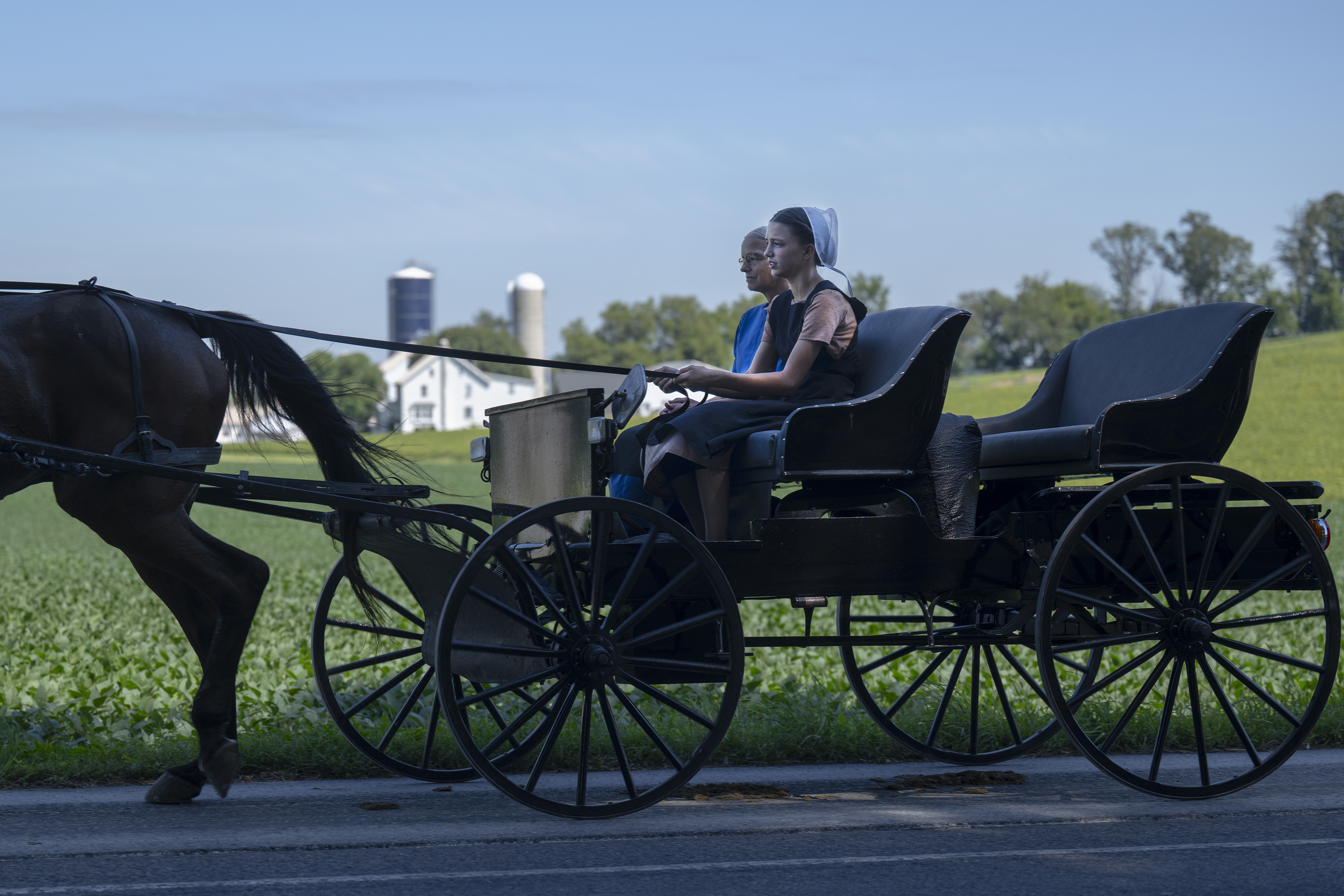
An Amish woman drives a horse-drawn buggy along a road Monday, Sept. 7, 2026, in Lancaster County, Pa., amid a measles outbreak that has affected the local Amish and Mennonite communities.Jose F. Moreno / Staff Photographer
In Lancaster, Devers’ clients are not talking about the political debate. Rather, their conversations center on the spread of measles — did she hear about the recent baby deaths, what should they do if they were exposed, does she have a vaccine with her?
Two doses of the measles, mumps, and rubella vaccine have proven 97% effective at preventing the disease, the Centers for Disease Control and Preventionsays. Nine in 10 unvaccinated people exposed to measles will acquire the disease.
Pregnant people are not eligible to receive the vaccine.
In her daily prenatal checkups, she is seeing moms who have the infection’s signature bumpy, red rash and fever, and families who have watched the sickness move through one family member to the next.
About three in 1,000 children who contract measles will die, according to the CDC. Measles can cause severe complications, especially in young children, including pneumonia and brain swelling. And measles during pregnancy can lead to pregnancy loss, premature delivery, and low birth weight, according to the CDC.
Devers said sherecently saw a case in which a mother lost her baby at 17 weeks. The Amish woman was recovering froman active measles infection at the time of the miscarriage, in addition to at least one other underlying medical condition, Devers said.
Amish families traditionally have funerals for stillborn babies or miscarried fetuses, sharing obituaries in the local newspaper. Devers attended the funeral for one such death, involving the 17-week-old fetus,last month.
Midwife Roberta Devers is photographed Tuesday, Sept. 8, 2026, near the home of one of her Amish patients in Lancaster, Pa. Devers, who primarily serves Amish mothers, discusses the measles outbreak and why she believes unlicensed midwives should be allowed to administer MMR booster shots.Jose F. Moreno / Staff Photographer
During previouspublic health emergencies, state and federal governments have usedlimited emergency approvals to expand who is allowed to administer vaccines, though the authority was not extended to unregulated groups like traditional midwives.
Now, Devers wants state or federal health officialsto extend approval to allow traditional midwives to administer the measles, mumps, and rubella vaccine.
But the Pennsylvania Department of Health saysit does not have the authority to allow traditional midwives to administer vaccines, because they are not certified healthcare providers. Currently, state law allows licensed healthcare providers like doctors and certified nurse midwives to administer vaccines, and any expansion of the list would require an amendment to state law, spokesperson Stephanie Nojiri said in a statement.
HHS and the CDC did not respond to requests for comment. Devers said sherecently accepted an invitation fromthe CDC to participate in a paid interview to discuss how midwives serving Plain communities are approaching the measles outbreak. She sees the outreach as asignal ofthe agency’s interest in working with midwives.
The Amish and vaccines
Vaccination rates among Pennsylvania children have been falling for years. The spread of misinformation about vaccine safety reached the highest echelons of the U.S. governmentafter Trump picked Kennedy, a longtime anti-vaccine activist, to lead the nation’s health agencies.
Amish communities do not have a religious objection to vaccinations, said Steven Nolt, a top Amish scholar at the Young Center for Anabaptist and Pietist Studies at Elizabethtown College.
He said low vaccination rates in the groups, who dress in plain clothes and widely object to using technology in favor of a more traditional way of life, aredue to their partial abstention from modern medicine, as well as a lack of nearby access given their rural lifestyles.
An Amish woman rides a kick scooter with a baby secured in a front basket attached to the scooter Tuesday, Sept. 8, 2026, along a road in Lancaster County, Pa., amid a measles outbreak that has affected local Amish and Mennonite communities.Jose F. Moreno / Staff Photographer
In Lancaster County, 30% of Amish families had their children vaccinated and believed vaccinations were safe and effective, according to a 2022 surveyof 433 Amish and Old Order Mennonite residents, published by Elizabethtown College and conducted by Franklin and Marshall College.
The numbers are much higher among Old Order Mennonites — a different religious group thatsimilarly dresses in plain clothes — with94% vaccinating their children and 72% believing they are safe and effective.
When a 1991 rubella outbreak spread through Amish communities, families welcomed the booster shots, Nolt said. So didAmish groups during a polio outbreak in the 1970s.
“When there would be an outbreak, that was a bit of a wake-up call,” he added. “Then people would come out for immunizations.”
Another “wake-up call” has now arrived for Lancaster’s Amish residents, Devers said.
Amish vendors work at their stands inside the popular Central Market in Lancaster, Pa., Tuesday, Sept. 8, 2026, amid a measles outbreak that has affected local Amish and Mennonite communities.Jose F. Moreno / Staff Photographer
Amish groups broadly approach their health through a “medical pluralism” lens — a term coined by Martha King, a medical anthropologist at the University of North Carolina at Chapel Hill. This means Amish communities view medical doctors, chiropractors, midwives, and homeopathic remedies as all being “on the same playing field,” rather than being supplementary to a primary care physician, as is common among most Americans, Nolt said. Sometimes Amish people will choose treatments thatcontradict each other or lack any scientific backing.
“They kind of all function in a way that doesn’t necessarily make sense the way many ‘normal’ Americans think about healthcare,” Nolt added.
Prior to his appointment as HHS secretary, Kennedy helped lead anti-vaccination efforts across the country. During a 2021 speech in Lancaster County, he mocked measles as a serious threat.
It is unclear what effect the efforts have had on Amish populations, Nolt said. During the COVID-19 pandemic, some anti-vaccine groups ran advertisements in Amish newspapers, discouraging the Amish from getting any immunizations, he added.
Devers said she largely supports Kennedy, but believes Shapiro was right to raise alarm about the need to vaccinate against measles. She said she has been disappointed in Kennedy for downplaying the dangers of the outbreak.
“My God, use your head,” Devers said. “He can’t mean this in the midst of an epidemic like this.”
Pennsylvania’s healthdepartment, in partnership with local health systems, says it has been working with Amish communities. And Shapiro has emphasized that the outbreak stretches much further than just among any one community, now that confirmed cases have spread to more than half of Pennsylvania’s 67 counties.
Since the start of the measles outbreak in Pennsylvania in April, state health officials have hosted 124 pop-up vaccination clinics across the state in locations like churches, fire halls, and private homes to give more than 4,100 doses of the MMR vaccine, Nojiri said. More pop-up clinics are planned in the near future.
But traditional midwives should be part of the solution, too, Devers argued.
“Different times call for a change in thinking,” she said.
This story has been updated to remove identifying information.