Category: Washington Post

  • Sports betting was once widely outlawed. Now it’s promoted at the White House.

    Sports betting was once widely outlawed. Now it’s promoted at the White House.

    The walls of the eight-sided cage where fighters will pummel each other Sunday on the South Lawn of the White House were plastered with logos for Polymarket, the prediction market where traders had staked millions on the fights.

    Across sportsbooks, fans are placing bets on whether President Donald Trump will receive a birthday cake at the event, whether first lady Melania Trump will appear at his side, or whether the now-80-year-old president will fall asleep during a bout.

    Less than a decade ago, wagering on a sporting event was a crime in all but a handful of states. On Sunday, the mat of the octagon Trump ordered placed on White House grounds advertised for Stake, a Caribbean-based online casino and sportsbook.

    Welcome to UFC Freedom 250 — and to the latest improbable milestone in the transformation of betting from a shadowy, mostly illegal pastime into a mainstream force in American sports, culture, and politics.

    The event marks a triumph for an industry that has grown into a multibillion-dollar juggernaut in eight years — and is now expanding beyond sports through prediction markets such as Polymarket, which allow users to wager on everything from Ultimate Fighting Championship fights to election contests and more. But the industry’s embrace by the White House comes as lawmakers and regulators face the consequences of an explosion in legal gambling, including addiction and mounting consumer debt.

    “Right now it’s certainly in its heyday,” said Bradley Tusk, a political strategist who helped FanDuel navigate gambling laws more than a decade ago and is now advising prediction markets.

    Trump, a former Atlantic City casino owner, has emerged as a natural ally for the sports betting and prediction market industries. He purchased $35,000 to $50,000 of stock in DraftKings earlier this year, according to his financial disclosure filings, and his social media company, Truth Social, also has said it is working with Crypto.com to launch its own prediction market, Truth Predict. Crypto.com’s logo appeared on the steps to the UFC cage, and it was a primary sponsor of the Sunday fights.

    In April, Trump said that he was “never much in favor” of prediction markets but later told reporters, “A lot of other countries are doing it, and when the other countries do it, we get left out in the cold if we don’t do it.”

    “I know people that are in the prediction market business, and they’re pretty happy with it,” he added. Trump’s son Donald Trump Jr. has invested in Polymarket through his venture capital firm, and he has advised both Polymarket and Kalshi.

    Trump “sort of embodies the casino capitalism of the late 20th and early 21st century,” said Jonathan D. Cohen, who leads gambling policy at the American Institute for Boys and Men. “It makes too much sense that his family would have personal investments in the prediction markets and support the rise of gambling on everything, and place a UFC fight on the White House lawn.”

    The White House said in a statement that the Trump family’s investments do not pose a conflict of interest, promising that the UFC fights would be “one of the greatest and most historic sports events in history.”

    “President Trump only acts in the best interests of the American public — which is why they overwhelmingly reelected him to this office, despite years of lies and false accusations against him and his businesses,” White House spokesperson Davis Ingle said. “President Trump’s assets are in a trust managed by his children.”

    UFC and Stake did not respond to requests for comment. Polymarket said in a statement that it was “proud to sponsor” the White House fight.

    The White House fights were not expected to generate an unusual volume of betting for UFC matches, said Chris Grove, partner emeritus at Eilers & Krejcik Gaming, a research firm focused on the global gambling industry. He anticipated that the total volume of wagers and trades would be measured in the tens of millions, rather than the hundreds of millions — far smaller than for major sports betting events such as the Super Bowl or FIFA World Cup.

    But the event’s role as a billboard for the betting industry has attracted criticism.

    “It’s an abomination that we have these sports betting markets sponsoring something that’s happening on the lawn of the chief executive officer of the United States,” said Joel Griffith, a senior fellow at Advancing American Freedom, a conservative think tank founded by former Vice President Mike Pence. “It shows that there’s a lot of money to be made in this business. Unfortunately, [sports betting] is harming Americans.”

    Griffith also said he’s “deeply troubled” by the potential conflicts of interest posed by the president’s investments in betting markets and in UFC while hosting an event that advertises both businesses.

    Congress advanced bipartisan legislation in 1992 that outlawed sports betting in every state except Nevada, highlighting how politically unpopular it once was to support the practice. Oregon, Delaware, and Montana had limited carve-outs.

    But since the Supreme Court struck down that law in 2018, 39 states have legalized sports betting, and bettors have wagered more than $650 billion, according to estimates from Legal Sports Report. The decision enabled the rise of companies such as FanDuel and DraftKings, which allowed people to bet on games directly from their cellphones.

    Internet searches for help with gambling addiction, such as “am I addicted to gambling,” have cumulatively increased 23% nationally since the 2018 Supreme Court decision, according to 2025 research from the University of California at San Diego Qualcomm Institute and School of Medicine.

    The rise of prediction markets such as Kalshi and Polymarket also has provided a new avenue for people to bet. Combined monthly global trading volume on the platforms has risen from less than $5 billion in September 2025 to about $24 billion in April 2026, according to Pew Research Center’s analysis of data from the Block, a digital assets media and information firm.

    The administration proposed new regulations for prediction markets Wednesday that are aimed at allowing most wagering, while restricting bets that are particularly vulnerable to manipulation and those that aren’t in the public interest, such as bets related to terrorism, assassination, or war.

    Multiple lawmakers have proposed bills that would regulate prediction markets. One from Sens. Adam Schiff (D., Calif.) and John Curtis (R., Utah) would bar prediction markets from offering sports betting, which they argue circumvents state gaming laws and legalizes sports betting nationwide.

    The administration’s proposed rule is “a backdoor for legalized sports gambling,” Schiff said in a statement, adding, “the sight of profiteering and gambling on the White House lawn in celebration of [Trump’s] birthday is problematic enough, we must ensure it is not compounded by insider trading and other conflicts of interest.”

    Other proposals would regulate the markets and ban elected officials from trading on them, or ban betting on sensitive events such as war, terrorism, and elections as well as sports.

    Lawmakers in Congress also are trying to rein in their own access to prediction markets, raising concerns about conflicts of interest and insider trading. The Senate passed a resolution in April prohibiting senators and staff from using prediction markets, and Rep. Bryan Steil (R., Wisc.) is working on legislation to ban current and former members and candidates from betting on political events.

    But such legislation faces an uncertain future as long as Trump is in the White House and holds veto power.

    “There’s lots of concern from both sides of the aisle about prediction markets, but there’s also this gnawing sense that the White House will block any attempt to rein them in,” said Cohen, who also wrote Losing Big: America’s Reckless Bet on Sports Gambling. “It’s going to get bigger before it gets smaller.”

  • After decades of pelvic pain and 100-plus doctor visits, one question changed it all | Medical mystery

    After decades of pelvic pain and 100-plus doctor visits, one question changed it all | Medical mystery

    Andy L. was a 19-year-old philosophy student at the University of Southampton, in England, when he first experienced a general malaise that left him with persistent headaches and feeling like he had a constant hangover.

    A visit to the university’s health clinic yielded a normal blood test; the doctor suggested Andy’s ailments were due to a bumpy transition to university life.

    But even after another normal blood test nine months later, the malaise continued. Then anxiety set in. After a panic attack, Andy returned to the doctor, who was now more emphatic that the problem was psychological. Andy was not convinced. After graduation, he hitchhiked from Britain to Ethiopia, a trip that gave him confidence he could function even as his health deteriorated.

    At age 25 he began experiencing jabbing pain in his bladder after urinating. A physician said it was probably a mild urinary tract infection or, perhaps, a bladder spasm. Drink plenty of water, the doctor advised.

    The following year, Andy awoke with pain in his perineum, the area that extends from the base of the scrotum to the anus, and he felt a lump deep in the tissue. His general practitioner sent him to a urologist, who diagnosed Andy with “atypical Peyronie’s disease,” a condition where plaques — sometimes painful — form in the deeper tissues under the skin of the penis, causing it to bend during erections.

    The diagnosis came as a relief at the time: “I thought: ‘Oh, good, something they can give a name to,” said Andy, who spoke on the condition of partial anonymity given the sensitive nature of his medical condition.

    That relief would not last. Follow-up tests over the years involved MRIs using Caverject, a drug injection into the penis that induces an erection so clinicians can assess vascular function and more clearly view the anatomy.

    “It was an unpleasant experience,” Andy said. “Walking around the hospital and then in the MRI machine for 45 minutes with an erection.”

    Still, the test ruled out cancer. But Andy knew his various symptoms did not fully align with Peyronie’s, partly because his pain was constant.

    That was just the start of Andy’s medical odyssey — a sometimes surreal quest that led him to more than 100 doctor appointments that included urologists, gastroenterologists, psychologists, and rheumatologists. He also saw an andrologist focusing on men’s reproductive health, sexual function, and urology problems.

    His physical symptoms — and extensive medical research — left him certain something biological was wrong. But the medical establishment often disagreed, leaving him questioning his own sanity and wondering if he was doomed to a life of unrelenting pain even while building a successful career and family.

    “I have the feeling that I am made up of two people traveling in different directions,” he wrote in his journal. “The person who feels ill and alone, and the person with some momentum behind them.”

    Constant pain

    Despite the pain, Andy’s life went on. He worked as a software engineer at the BBC, where he met his future wife. The couple had three children. During this period, from about 2004 to 2010, Andy said he experienced perineal pain “all the time.”

    It grew so intolerable that Andy asked his doctor about the viability of cutting out the aching lumps in his perineum. His doctor strongly advised against it.

    In 2010, he saw yet another urologist. This doctor’s note described Andy’s “constant pain … which feels like someone is pulling … his penis with a wire.” In response, the urologist told Andy it was time to stop fixating on his condition.

    “I strongly reassured him he does not have a serious medical condition, i.e. cancer, however, clearly he has a debilitating problem because he is very preoccupied with it,” the doctor wrote, adding that Andy had “a phenotype for chronic pain.” Finally, the doctor suggested a book on alternative healing called Teach Us to Sit Still — which, the clinician noted, he had never read.

    Further demoralized, Andy did not see another specialist for five years. He began running, which offered distraction, and threw himself into work, including leading a digital consultancy and building an analytics business with his brother. He started drinking wine every night to sleep.

    In 2014, he sold his analytics company and, with new private medical insurance, “embarked on another fruitless expedition” for a diagnosis. He also tried a range of treatments — various antidepressants, psychotherapy, beta-blockers, acupuncture, and a pain clinic — with little or no success. He saw a new urologist who said his condition “can’t be Peyronie’s,” but additional specialists could not find anything conclusive.

    Andy grew so weary of feeling ill with no explanation he remembers thinking, “How long can I go on?”

    A simple question

    Then Andy began losing weight — about 14 pounds in a few months — and experienced intermittent diarrhea. He was referred to Tom Creed, a consultant gastroenterologist in Bristol.

    Creed said it was clear Andy had been “traumatized” both by his painful symptoms and his experience in the medical system. “Nobody was really listening to him, and it struck me from the get-go that this was a genuine story, and he was really struggling,” Creed said.

    Creed ordered a colonoscopy, which he described as “very unexciting” until the end, when a bit of low-grade inflammation in the rectum caught his eye.

    “I thought, ‘it doesn’t look quite right,’” so he removed a tissue sample for biopsy. The pathologist identified something curious: a granuloma in the rectum — a foreign body surrounded by inflammatory cells.

    That’s when Creed asked Andy a question no doctor ever had: “Have you traveled anywhere exotic?”

    It turned out he had: nearly 30 years ago Andy spent a gap year teaching in Tanzania, where he washed and swam every day in Lake Tanganyika.

    “That was the moment the penny dropped for me,” Creed said. He remembered something from medical school and, thinking it was a long shot, sent the tissue off for another test and ordered blood work to look for antibodies that could confirm a rare condition he had never seen in a patient.

    Results validated Creed’s hunch: Andy had been suffering from schistosomiasis, a disease caused by parasitic worms, for nearly three decades.

    “Suddenly [there was] a unifying diagnosis,” Creed said.

    Schistosomiasis is a “neglected tropical disease,” according to the World Health Organization, most prevalent in sub-Saharan Africa, where parasitic worms live in certain freshwater snails that inhabit lakes and rivers. The worms infect people by burrowing into human skin as larvae, then traveling through veins into the bloodstream. There, they pair up, migrate to the liver, bowels, or bladder, and adult females start pumping out eggs — hundreds of them — which can lodge in various organ tissues, triggering an immune response. Humans pee or poop the eggs back into the water, where the cycle begins again.

    Andy had urogenital schistosomiasis, said one of his doctors, Mike Brown, a consultant physician at the Hospital for Tropical Diseases in London. In this disease, worms can take a “wrong turn” and wind up in the genital tract, where they can get trapped in the tissue and cause the kind of pelvic pain Andy experienced, Brown said. If left untreated, the eggs continue to penetrate the tissue lining, causing inflammation and scarring that can result in kidney failure, bladder cancer, and infertility in women. Brown said that adult worms can survive for 30 years or more and continue to produce inflammation-triggering eggs.

    When Andy got the phone call confirming the diagnosis, he was stunned. At 47 years old, he could finally see the path of his illness. He remembered a diagnosis of malaria in 1993 while he was living in Tanzania and spiked a 102 degree fever. The malaria test was negative, but the doctor insisted, “What else could it be?” This, Andy now believes, was most likely the acute phase of schistosomiasis.

    “When Creed called, he thought he was giving me bad news, but I was over the moon,” Andy said. “Having a diagnosis overruled any feeling of unease about the parasites living inside of me.”

    Following treatment with the drug praziquantel, the high level of antibodies in Andy’s blood decreased. “It’s an easy parasite to kill with the drugs,” said Brown, the tropical disease doctor. But even though the worms are dead, eggs already in the tissue remain and can cause ongoing problems.

    For Andy, now 51 and a tech consultant living with his family in Bristol, that means continued pelvic pain and a higher risk of bladder cancer, among other issues. But his headaches and malaise are gone, and he gained back the weight he had lost. “In terms of hardship, this all pales in comparison to battling against the misapprehension that I was suffering from an imaginary condition.”

    These days, Andy just wants to raise awareness about the disease to prevent others from suffering.

    “What happened to me happens to countless people in Africa,” he said.

    Indeed, the WHO estimates that more than 93% of people requiring treatment for the illness live in Africa.

    “Hundreds of thousands die every year, often from organ failure or bladder cancer. Many more are subjected to chronic illness,” Andy said.

    “But despite its prevalence,” he said, “schistosomiasis is a disease that most people in the developed world have never heard of.”

    Rachel Zimmerman is a journalist and writer based in Cambridge, Massachusetts. Her book “Us, After: A Memoir of Love and Suicide” was published in 2024.

  • Sleep Number files bankruptcy to sell itself, blames tariffs

    Sleep Number files bankruptcy to sell itself, blames tariffs

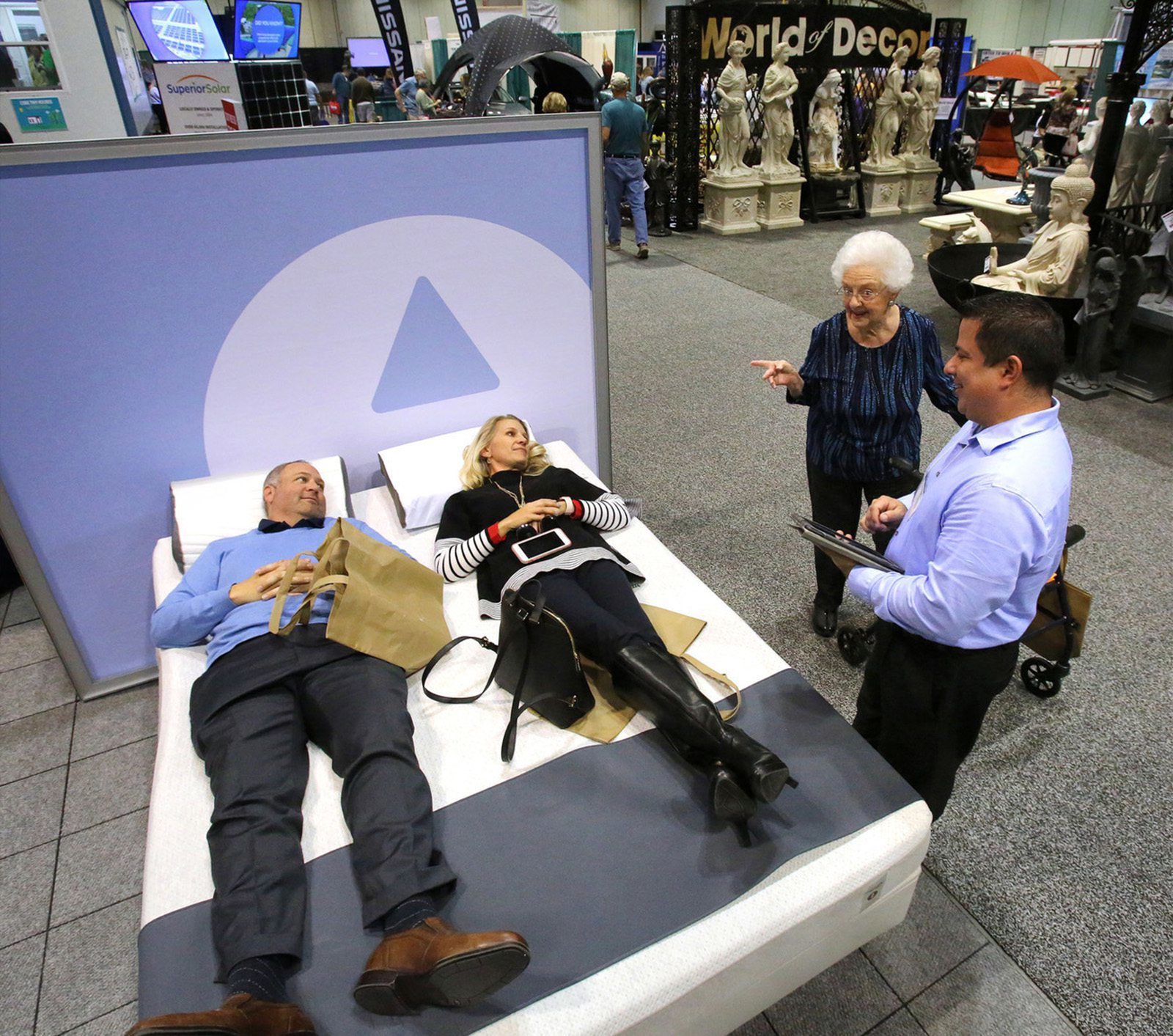
    Mattress maker Sleep Number Corp. filed bankruptcy with an agreement to sell the firm to one-time retail partner Sleep Country Canada Inc. after years of weak demand, mounting financial pressure, and unpredictable tariffs.

    Sleep Number blamed its bankruptcy, in part, on “the unpredictable shifting of trade rules imposed by the current U.S. government on top of an already vulnerable global supply chain,” according to a court filing Friday.

    Even after the U.S. Supreme Court struck down some of President Donald Trump’s tariffs, “the broader trade landscape remained complex and the company continued to manage ongoing regulatory uncertainties, particularly regarding potential alternative tariff frameworks that may be imposed” on U.S. imports, chief financial officer Amy O’Keefe said in the filing.

    Sleep Number filed for Chapter 11 protection from creditors in order to hold an auction, at which Sleep Country would be the so-called stalking horse bidder. Its all-cash opening offer for “substantially” all of the firm’s assets is $415 million, O’Keefe said.

    Because the firm tried to sell itself in the months leading up to the Chapter 11 filing, O’Keefe said Sleep Number is seeking a 26-day sale process. Any competing bids would be due July 8 and the sale would close by July 31 under the company’s proposed timeline.

    Sleep Number, which operates 572 stores and is known for its customizable beds, will continue operations while seeking a quicker-than-usual court-supervised sale process, according to the filing.

    The company, whose shares have plunged more than 95% the past four months, has been hurt by declining store traffic amid broader industry pressures.

    In response to mounting financial woes, O’Keefe said Sleep Number restructured its real estate portfolio and launched a number of cost-cutting initiatives in recent years. The firm had reported its operating costs fell by $136 million last year, but its net loss still widened as net sales dropped 16%.

    Sleep Number said in a statement that it will continue to review its footprint with the aim of retaining as many retail locations as possible. It added that as much as $65 million of new borrowing has been arranged to pay for the restructuring process. Sleep Number would also refinance $195 million of older debt should the loan package be approved by the judge overseeing the bankruptcy case.

    The company listed assets of between $500 million and $1 billion and liabilities of between $1 billion and $10 billion, with lenders owned about $672.5 million.

  • Justice Department approves Paramount’s deal to buy Warner Bros.

    Justice Department approves Paramount’s deal to buy Warner Bros.

    Antitrust regulators at the Justice Department on Friday approved Paramount Skydance’s $110 billion deal to buy Warner Bros. Discovery, a merger that would create one of the largest companies in Hollywood and reshape the television news landscape.

    In a statement, the Justice Department said it had concluded its eight-month investigation and found that the deal was unlikely to harm consumers because of corporate combination in streaming, linear television, and content production.

    The deal would put two major film and television studios (Paramount and Warner Bros.), streaming services (Paramount+ and HBO Max), and TV news giants (CBS News and CNN) under a shared roof.

    “The extensive investigatory record reviewed by the Division suggests that the impact of the transaction will be to increase competition across the media and entertainment ecosystem, with benefits for American consumers and workers,” the department wrote in a statement.

    The merger signals a quick accumulation of power for the son of Larry Ellison, the billionaire co-founder of Oracle and ally of President Donald Trump.

    David Ellison’s Skydance took over Paramount last year in a deal heavily scrutinized by regulators. Since then, his mark has perhaps been most noticeable at CBS News, where his appointed editor in chief, Bari Weiss, has overseen tumult, layoffs, and a high-profile blowup at the newsmagazine 60 Minutes.

    Politico first reported news of the deal’s approval.

    The agreement could still be challenged. Regulators in Britain and Europe are still reviewing the deal, and a group of state attorneys general is reportedly considering suing to halt it on antitrust grounds.

    Warner Bros. Discovery had initially agreed to sell most of its assets to Netflix in an $83 billion deal. Under the terms of that agreement, CNN and other cable TV assets would have spun off into an independent company.

    Despite being rebuffed, Paramount kept pursuing the entire company — including CNN — in a deal that was accepted in February when Paramount increased its offer and Netflix said it wouldn’t budge.

    Paramount Skydance did not respond immediately to a request for comment. Warner Bros. Discovery declined to comment.

    Trump and top administration officials repeatedly weighed in on the deal, particularly its impact on CNN, a media company Trump has warred with throughout his political career. “I think the people that have run CNN for the last long period of time are a disgrace,” he said in December amid the bidding war. “I think it’s imperative that CNN be sold.”

    Two weeks after Paramount won its bid, the White House issued a news release saying that CNN was “lying” in its coverage of the war with Iran in an effort to undermine the success of the military operation.

    That day, Defense Secretary Pete Hegseth criticized CNN for an article on how the administration failed to anticipate the war’s impact on the Strait of Hormuz, calling it “fake news” in a press briefing. “The sooner David Ellison takes over that network, the better,” Hegseth said.

    Ellison, for his part, has vowed that CNN will stay editorially independent. “CNN is an incredible brand with an incredible team,” Ellison said in a March interview with CNBC. “We absolutely believe in the independence that needs to be maintained, obviously, for those incredible journalists, and we want to support that going forward.”

  • SpaceX IPO extends Elon Musk’s influence across more than just AI

    SpaceX IPO extends Elon Musk’s influence across more than just AI

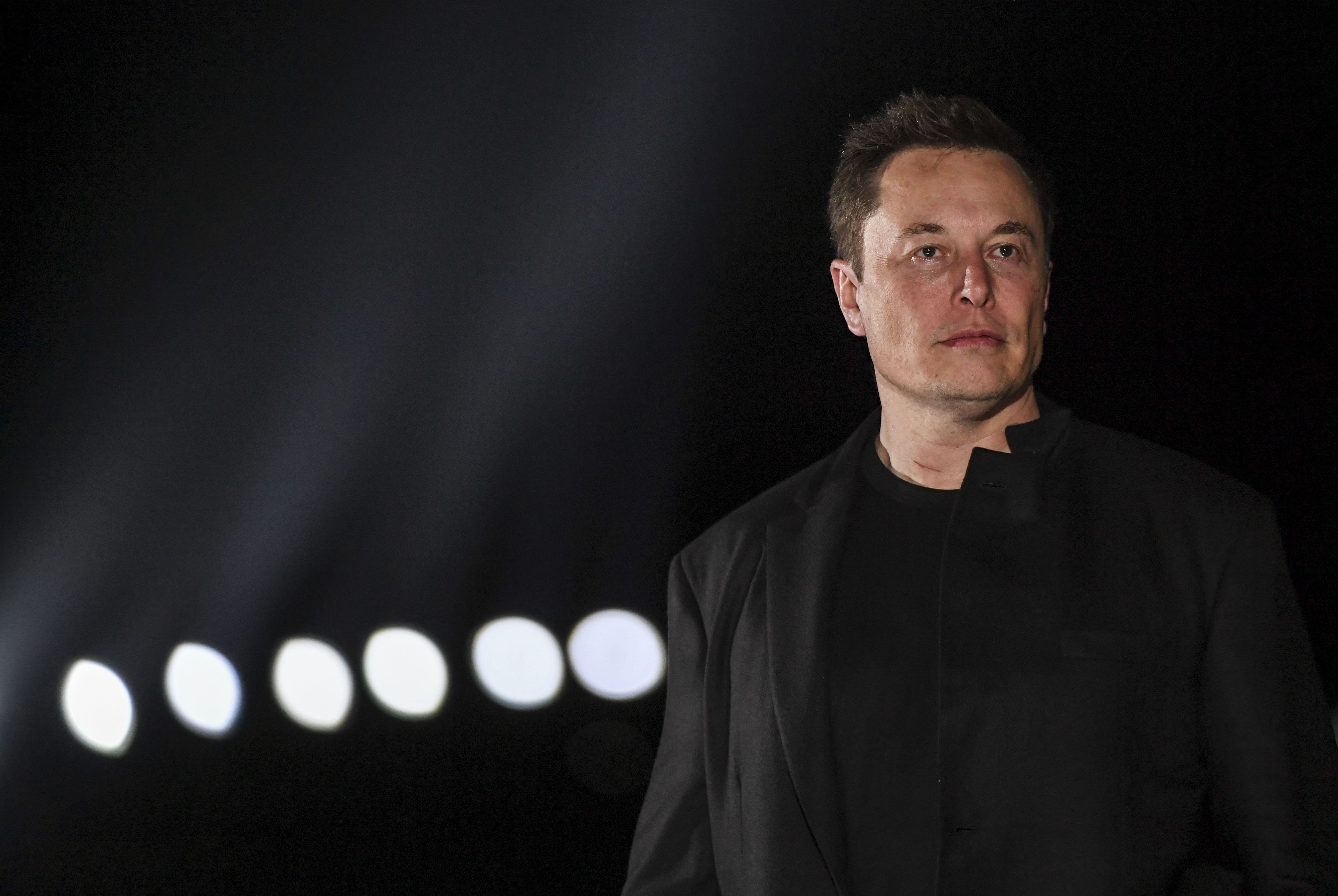
    Elon Musk controls reusable rockets that are the backbone of the U.S. space program. His constellation of satellites in space represents a pillar of U.S. defense. And he has struck deals with leading artificial intelligence companies to fuel the AI revolution.

    Now the public sale of SpaceX’s shares will not only dramatically increase Musk’s wealth, making him the world’s first trillionaire, but it will expand his reach into pivotal sectors of the global economy.

    All the while, it sets up Musk’s rocket company to dominate the cosmos as entities across the globe vie for control of space.

    “U.S. space power is built on the back of SpaceX. Period. Full stop. What does that mean?” asked Clayton Swope, deputy director of the Aerospace Security Project and senior fellow at the Center for Strategic and International Studies. “It means SpaceX has incredible leverage over the government right now.”

    The IPO is the largest in history, raising $75 billion to fuel the company’s ambitions. But SpaceX also has a recent track record of losing billions of dollars, including $13 billion since the beginning of 2023.

    In IPO documents, SpaceX has laid out an ambitious plan to become an essential hub of the artificial-intelligence age. Despite building its reputation on space launches and its satellite internet service, Starlink, SpaceX sees the vast majority of its market opportunity — all but $2 trillion of an estimated $28.5 trillion — in artificial intelligence.

    That opportunity rests on major, even far-fetched, bets. A constellation of millions of satellites for space-based data centers will power AI from orbit, and the company will vastly expand its Starlink internet service. Starshield, SpaceX’s secure satellite network for government, will be used for defense and national security applications.

    The diversity of SpaceX’s business, which spans AI, social media, and internet connectivity, will likely make it a clearinghouse of lucrative data, allowing it to improve on various capabilities and outpace rivals.

    Its plans are ambitious. Musk has upended global industries — making electric cars mainstream, bringing internet access to remote areas with thousands of satellites, and reviving the Space program. With SpaceX’s IPO, Musk turns his boundary-breaking approach to space, combining capabilities his firm has honed over decades.

    Musk mused recently, in an interview with SpaceX employees posted on X, about a core facet of the company’s mission. “How do you decide what progress a civilization has made?” Musk asked. So far, humanity is harnessing a tiny amount of Earth’s power and a minuscule proportion of the sun’s, he added, marking gaps SpaceX hopes to fill.

    The company’s plans however, are raising concerns among some in the space and tech sectors about the level of power SpaceX has amassed — which may give him tremendous sway over the U.S. space program.

    That power takes several forms.

    “The cost is the big one for me,” Swope said. “Where is the best value proposition? Is it with the company that holds all the cards?”

    By taking SpaceX public, Musk has realized an ambition that began more than two decades ago when he took the earnings from the sale of PayPal and seeded them into two companies: Tesla, which debuted on the stock market in 2010 and went on to become the world’s most valuable automaker, and SpaceX, where the entrepreneur pioneered reusable rockets and made space exploration into a private enterprise.

    The space company debuted on the Nasdaq composite index on Friday, under the ticker symbol SPCX. Its IPO shares were priced Thursday at $135 each. SpaceX opened Friday at $150 a share, then rose to around $168, before finishing the day just below $161.

    SpaceX’s significant losses have not muted its hype. The company has attracted an unusual level of interest from retail buyers, who have jockeyed for a stake in the next potential Musk moonshot.

    To some, SpaceX’s business case is underscored by the high level of importance the U.S. government ascribes to it.

    “This is the United States space program,” said Ross Gerber, a SpaceX investor who has emerged as a Musk critic in recent years. “We’ve outsourced from NASA to SpaceX.”

    In IPO documents, SpaceX describes how its satellites have been deputized for potential defense purposes.

    “What this really is about is about national security and expanding our … footprint in space in a way that no other country could,” Gerber added.

    This interdependent relationship provides upsides for the company, Gerber said, but “there is a risk inherent,” in the country’s level of dependency.

    Analysts expect significant buy-in for SpaceX’s ideas when it takes to the public markets.

    “Musk has always been very good at selling the future to investors, so I am not surprised by the excitement built into the valuation expectations for the IPO,” said David Meier, senior investment analyst at the Motley Fool. Meier noted, however, that SpaceX’s IPO pricing and valuation “looks very aggressive relative to the financial performance it has put up and expects to put up in the near future.”

    Still, SpaceX may not shatter all of the lofty expectations built into its IPO.

    Nick Smith, a senior analyst at research firm and IPO stock index Renaissance Capital, said IPOs of large companies have a mixed track record. For every winner like Meta, Smith said that there are also losers including Rivian.

    The electric vehicle company went public in 2021 with a market value of about $100 billion as its stock shot up on its first trading day. Today Rivian is worth about $20 billion.

    Smith noted that SpaceX’s investment bankers have sketched out a path to booming revenue, including from two deals with AI rivals Anthropic and Google to rent out data-center capacity from SpaceX’s xAI business and plans to deploy a more capable but much delayed rocket. If SpaceX’s annual revenue climbs well above $100 billion in a few years from about $19 billion last year, “I think the valuation is OK if you believe it can do that,” Smith said.

    Smith also said that Musk inspires a magical faith in his capabilities to make the impossible happen. This “Musk effect,” Smith said, makes his companies’ value become “divorced” from typical calculations of what companies should be worth.

    Swope, the senior fellow at the Center for Strategic and International Studies, said he is hopeful SpaceX won’t outgrow the entities it has served in the past.

    “The government’s mission and U.S. space power are so dependent on this company,” Swope said. “No one wants to see the period where it could be weakened.”

    Still, he wondered of the IPO, “How will it change the company?”

    The Associated Press contributed to this article.

  • David Hockney, 88, renowned artist who captured fleeting moments in vivid color

    David Hockney, an English painter, photographer, stage designer, printmaker, and draftsman who long made Southern California his muse and his home, and the fleeting beauty of life’s smallest moments the grand theme of his shape-shifting art, died June 11 at his home in London. He was 88.

    His publicist Erica Bolton confirmed the death in a statement.

    Mr. Hockney’s art, which earned him international renown and a colossal fortune, encompassed paintings of azure swimming pools and the artist’s gay friends; kaleidoscopic portraits collaged together from dozens of cocktail-napkin-size Polaroids; room-size installations using computer-controlled theatrical light fixtures; and, in later years, garish landscapes “drawn” with fingers on an iPad.

    Throughout these stylistic reinventions, over a career that seemed at times to memorialize the unmemorable, there was one constant: impermanence. “I loved the idea of painting this thing that lasts for two seconds,” Mr. Hockney once said, reflecting on The Splash, one of a series of paintings of water displaced by a recreational diver who is nowhere to be seen. “It takes me two weeks to paint this event that lasts for two seconds.”

    In 2018, at Christie’s auction house in Manhattan, his Portrait of an Artist (Pool With Two Figures) sold for $90.3 million, a world record price for a living artist, topping the previous record of $58.4 million reached by American Jeff Koons in 2013 for his stainless steel sculpture Balloon Dog (Orange).

    Mr. Hockney, a working-class lad from what was at the time England’s grimy industrial north, became a top pupil at London’s Royal College of Art. In 1963, his first solo exhibition sold out at a trendy London gallery. He soon traveled to California, long the center of his hedonistic fantasies fueled by muscle magazines.

    Like his pop-artist friend Andy Warhol — whom he vaguely resembled with his peroxide-blond hair — he was strongly influenced by technological advances in color photography, color ads in magazines, and early color TV. He deconstructed traditional ideas of perspective, proportion, and color balance with his often vivid pinks, blues, greens, yellows, and purples.

    Man in Shower in Beverly Hills (1964) indulged his fascination not only with the male figure but also with water in motion. A Bigger Splash (1967), perhaps his best-known painting, captured the broken surface of a pool, the diving board protruding from the foreground. Today the work hangs in the prestigious Tate Britain museum when it is not on tour.

    Beverly Hills Housewife (1967), depicting philanthropist and art collector Betty Freeman standing on her patio, fetched $7.9 million at a Christie’s auction in New York in 2009. Mr. Hockney’s previous highest price, in 2006, had been $5.4 million for The Splash, painted in 1966.

    “What David did was reinvent the way we saw the world,” Lindy Dufferin, the widow of one of his early patrons, told British Vogue in 2017. “Up until then a splash had passed without us noticing; the pool and the people around it would interest us, not the splash. So, as is typical of David, he made a deep philosophical point — that everything is ephemeral and passing — in a humorous way.”

    Mr. Hockney’s artistic restlessness led him to remake himself and his work over the years, with portraiture and still lifes from the decorous to the vibrant, such as his 16-foot-long May Blossom on the Roman Road (2009) with its foliage and swarming insects. Some of his later and best-selling works were landscapes depicting the American West and the forests of his native Yorkshire.

    Woldgate Woods (2006) sold at Sotheby’s in New York in 2016 for a record auction price of $11.7 million. In 2017, his composite painting 15 Canvas Study of the Grand Canyon (1998), with its deep, earthy sunset colors, sold at Sotheby’s in London for $7.88 million. As his age and celebrity grew, so did his prices. In May 2018, at a Sotheby’s auction in New York, his 1990 work Pacific Coast Highway and Santa Monica went under the hammer for $28.5 million — more than twice the estimate and a record for a Hockney.

    His prevailing fascination was with taking the mundane — household objects such as ashtrays and lamp shapes and passing moments like a shower — and emancipating them from the workaday as commentaries on what and how we see.

    “He is one of only a handful of 20th-century British artists who added anything to the image bank of the world’s imagination,” Guardian art critic Jonathan Jones wrote in 2004. “He was British art’s first pop star. But this was not because he made easy images. His paintings unequivocally praised gay sex — for example, Two Men in a Shower (1963). They were so innocent they disarmed everyone.”

    Visionary or lightweight?

    David Hockney was born in Bradford on July 9, 1937, the fourth of five children of what he called eccentric, “radical working class” parents.

    His mother, who was deeply religious and devoutly vegetarian, encouraged her son’s doodling as long as he didn’t do it on the wallpaper. His father, he told the Guardian, “was constantly writing to Stalin — every week. He used to tell us how important these letters were. We didn’t think so. We didn’t think Stalin would be waiting for them.”

    A conscientious objector during World War II, the elder Hockney became a social pariah, losing his job as an accounting clerk.

    Bradford, Mr. Hockney recalled, was perpetually cold and overcast, and made drearier still by wartime rationing in the 1940s and postwar deprivation in the ’50s. He escaped through movies and became enchanted with the concept of sun-dappled California.

    “I knew even as a child that it was sunny in Los Angeles because even though Laurel and Hardy wore overcoats, they cast long shadows,” he once told the New York Times. “There were no long shadows in Bradford. I noticed that. I thought, ‘Boy, it must be very sunny there.’ ”

    Mr. Hockney displayed a precocious talent for cartooning and poster-making and won second place in a national newspaper competition to design an advertisement for a watch. He entered the Bradford College of Art at 16 on a scholarship and graduated in 1957. Also a registered conscientious objector, he worked as a hospital orderly to complete two-year national service.

    From 1959 to 1962, he studied at the Royal College of Art, where his works earned the school’s gold medal. The next year, art dealer John Kasmin gave him his debut solo exhibition, “Pictures With People In.”

    At the college, Mr. Hockney also met the Ohio-born artist R.B. Kitaj. Incorporating Kitaj’s literary leanings, he used fragments of poems and quotations from Walt Whitman in his work. Paintings such as We Two Boys Clinging Together (1961) were among his earliest artistic nods to his homosexuality.

    A chain-smoking playboy, the artist became a hero to some in the LGBTQ community for being openly, indulgently gay at a time when homosexuality was still criminalized in England. Jack Hazan’s 1973 semidocumentary film A Bigger Splash shows Mr. Hockney reeling after the trauma of a breakup. Mr. Hockney was also the subject of Randall Wright’s well-received 2014 documentary Hockney.

    After his initial success in London, Mr. Hockney made his first trip to New York, where one friend introduced him to the city’s museums and galleries and another took him to its gay hot spots. Mr. Hockney soon embarked for California, beckoned by magazine images of beaches, suntanned pecs, and six-pack abs.

    He set up a studio in Hollywood Hills, teaching at several universities in the state, while also maintaining a home in the posh London district of Kensington as well as a seaside house in Bridlington, East Yorkshire.

    In 1975, Mr. Hockney began designing stage sets for theater, ballet, and opera, starting with a noted production of Stravinsky’s opera The Rake’s Progress at the Glyndebourne Festival in East Sussex, England.

    Over the decades, Mr. Hockney was viewed alternately with admiration and skepticism, as a visionary who played with convention and as a lightweight drawn to the frivolous.

    Commenting on a major Hockney retrospective in 2017 at Tate Britain, the British art writer Michael Glover observed in the Independent: “Is Hockney really deserving of this ridiculous amount of attention on the grounds of merit alone? Certainly not. He can be wonderful — some of those early prints were wonderful. He can be awful — as he so often was in the 1980s, when he played at being Picasso or doggedly painted his dogs. He can also be no better than pretty good. Many of his portraits look tossed off.”

    But Chris Stephens, formerly lead curator of modern British art at Tate Britain and co-curator of the Hockney retrospective, called him “brilliant at capturing people’s psychological aspect, their psychological demeanor.”

    One of Mr. Hockney’s best-received works was a time-lapse installation titled Snails Space with Vari-Lites, “Painting as Performance,” created in 1995-1996 and donated to the Smithsonian American Art Museum in Washington in 2003 by philanthropist Nan Tucker McEvoy, who chaired the museum’s governing board.

    The work features a nine-minute light show in which high-intensity, computerized spotlights cast a rainbow of colors from ever-changing angles upon a 3D landscape that is more stage set than painting. Describing the Snails Space exhibition, the museum declared it “both a summary of Hockney’s career and a poignant example of his belief that art should ‘overcome the sterility of despair.’ ”

    From 2004 to 2013, Mr. Hockney decamped for Yorkshire, looking for new inspiration in the trees and the turning of the seasons — and also because of what he considered puritanical antismoking ordinances in America.

    His return led to the financial windfall of Woldgate Woods. But it also brought tragedy, including a stroke in 2012 and the death the next year at his home studio of a 23-year-old assistant who drank drain cleaner after taking cocaine and ecstasy pills. The death was declared “a result of misadventure” and no charges were brought against Mr. Hockney, who was away at the time and later returned to Los Angeles.

    In 2018, Mr. Hockney, at age 81, achieved a longtime ambition that earned him no money and cost him a lot of time. His first stained-glass window, designed on his iPad and titled The Queen’s Window, was unveiled in London’s historic Westminster Abbey to commemorate Queen Elizabeth II’s reign.

    In sharp contrast to the Abbey’s traditional staid, religious-themed stained-glass windows, Mr. Hockney used his distinctive color palette of yellow, red, blue, pink, orange, and green to reflect the queen’s love of the countryside. He visibly held back tears as the window was revealed. The Barley Studio of York, England, using centuries-old techniques, painstakingly created the window in pieces in coordination with Mr. Hockney and his iPad creation.

    In 2019 Mr. Hockney began working in Normandy, producing ink drawings and paintings including A Year in Normandie, a massive panoramic iPad painting inspired by the nearby Bayeux Tapestry and his fascination with Chinese scrolls. He relocated to London in 2023.

    The director of Tate Britain, Alex Farquharson, said in a social media post that the gallery would work to realize two major projects Mr. Hockney was preparing for 2027: an exhibition featuring seven decades of his work and a multimedia installation at the Tate Modern showcasing his designs for opera sets.

    Survivors include his longtime partner, Jean-Pierre “JP” Gonçalves de Lima; and two brothers.

    Stephens, the former curator at Tate Britain and also a Hockney biographer, told the Times of London in 2017 that Mr. Hockney was happiest basking in the libertine joys of California. “He says, ‘Well I only have to go out for three things: the doctor, the dentist, and the marijuana supply.’ Which is not true, actually, because the guy who washes his car brings that round.”

  • Algae forms in the Reflecting Pool. It’s ‘residual,’ Trump officials say.

    Algae forms in the Reflecting Pool. It’s ‘residual,’ Trump officials say.

    When renovations of the Reflecting Pool were completed last week, President Donald Trump praised its “beautiful, clean water.” Under his predecessors, Trump said, the pool was “Terrible. Disgusting … garbage ridden.”

    Now, days after the pool was refilled, clumps of green algae have been spotted throughout the water. Noticed on two separate visits to the Reflecting Pool this week, the algae coated several areas of the bottom of the pool, including the east and west ends, close to the World War II Memorial and the Lincoln Memorial, and floated on the surface.

    An algae spot near the World War II Memorial grew significantly bigger between a rainy Wednesday afternoon and Thursday, which was hot and muggy.

    News photographers also captured images of buckets of Induclor, a chlorine compound used to control bacteria, algae, slime, and fungi in bodies of water.

    Trump officials have an explanation: “What you are seeing is residual algae from the supply lines which have been sitting dormant for eight weeks while construction has been taking place. It’s part of the normal startup process,” Katie Martin, an Interior Department spokesperson, said in a statement.

    “We are removing the algae, and the nanobubblers will maintain the pool and keep it algae free. President Donald J. Trump is an expert builder who has fixed the Reflecting Pool for good unlike the failed and extremely costly attempt by Obama and Biden.”

    Trump on Thursday touted his changes to Washington, including his resurfacing of the Reflecting Pool’s basin.

    “It always leaked because it was done in stone,” the president told reporters in the Oval Office. “Now it’s done properly. It’s not going to leak at all.”

    When asked about the algae, White House spokesperson Taylor Rogers replied in a statement: “President Trump used his expertise to deliver exquisite upgrades to the Lincoln Memorial Reflecting Pool that Americans will enjoy for years to come. The public supports these long-overdue improvements to our nation’s capital, and hit pieces like this are exactly why trust in the media is at an all-time low.”

    Algae has been a consistent problem for the pool, and quickly reappeared after a $34 million renovation that was completed in 2012.

    The plantlike aquatic organisms thrive on sunlight and heat, abundant in D.C.’s summer months. They are controlled through proper water filtration and chlorination, algaecide, and nanobubbles, tiny bubbles of oxygen that effectively cut off the algae’s food supply.

    Trump has touted his rapid renovation of the reflecting pool as a playbook for how he wants to make over Washington: move quickly to launch and complete construction projects, even if it requires bulldozing through regulations and red tape.

    Trump announced his plans to resurface the pool on April 23, saying the project would take about a week and cost less than $2 million. The project ultimately took six weeks and cost more than $14 million, drawing a lawsuit from historic preservationists who said Trump had flouted requirements for public comment and other necessary steps. Democrats also have pressed the White House on why the administration has issued no-bid contracts and rushed work on the reflecting pool and the president’s other construction projects.

    “While it is important that we maintain our national landmarks as they age, the scale, cost, and permanence of these projects has revealed troubling patterns of waste, fraud, and abuse across these episodes,” Sen. Richard Blumenthal (D, Conn.), the top Democrat on the Senate’s permanent subcommittee for investigations, wrote in a letter Tuesday to Park Service leaders. The letter was shared with the Washington Post.

    Trump has repeatedly defended his changes to the century-old pool as necessary, calling its water “filthy” and “disgusting,” and claiming that he has fixed the site’s repeated problems, such as persistent leaking.

    “I’m looking at the Washington Monument and this thing is terrible. The water is dirty, there’s cartons of stuff in it, and everything is just so horrible,” the president said at the White House last month. “It’s a much better job. This will last for at least 50 years and you’ll never have a leak.”

    White House officials this week echoed the president, saying that even critics should concede that Trump’s changes were for the better.

    One official mocked the pool’s smell before Trump’s changes.

    “I don’t think anyone can argue” with Trump’s renovations, the official said. The official declined to comment on the reappearance of algae.

    The “American Flag Blue” paint — another of the president’s choices for the renovation — has maintained the pool’s mirrorlike reflective qualities. But up close, the dark color is a high-contrast backdrop for bird droppings, which could also be observed this week, along with the families of ducks that had returned to the water.

  • Appeals court denies last-ditch Kennedy Center bid to delay removing Trump’s name

    Appeals court denies last-ditch Kennedy Center bid to delay removing Trump’s name

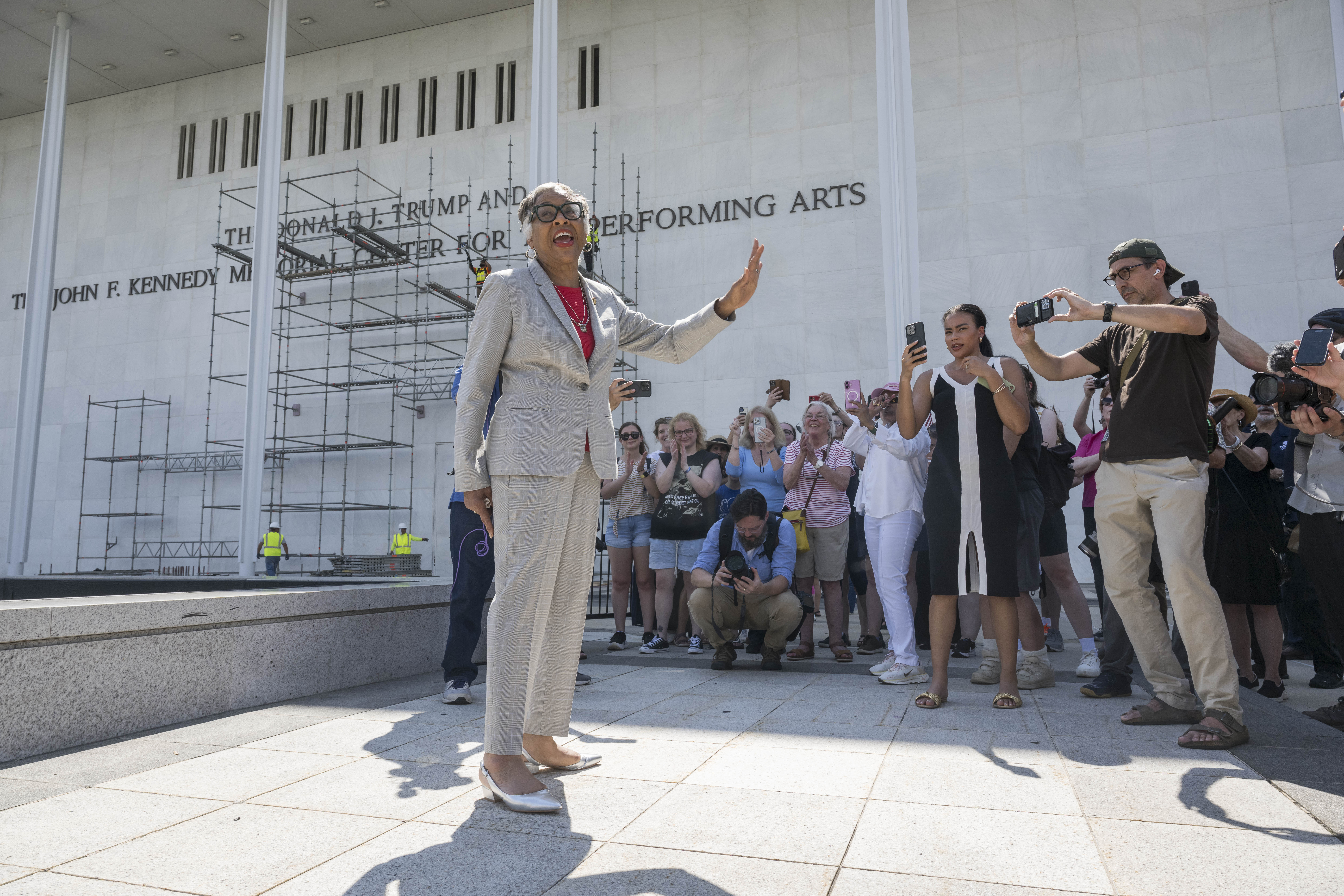
    A federal judge Friday denied the Kennedy Center’s last-ditch motion to delay removing President Donald Trump’s name from the performing arts venue, as crews erected scaffolding next to the building less than 12 hours before the court-ordered deadline to do so.

    U.S. District Judge Christopher Cooper ruled Friday afternoon that the Kennedy Center’s lawyers failed to demonstrate they were likely to win their appeal or that the center would suffer “irreparable harm” if Trump’s name were removed.

    Justice Department lawyers representing the center filed the motion to stay after the center’s trustees voted Thursday to appeal Cooper’s May 29 ruling.

    The Kennedy Center’s leadership appealed Cooper’s Friday ruling to the Court of Appeals for the D.C. Circuit and requested action by the court by 7 pm ET. That appeal was also denied Friday evening.

    Scaffolding had been erected earlier in the day around a section of the building that includes Trump’s name and crowds gathered to cheer the workers, though there was no effort to remove it by 7 p.m. Eastern Time. Storms with lightning were dancing around Washington, adding to the challenge for workers.

    Removing Trump’s name would be the most tangible setback in the president’s 15-month effort to take over the storied arts institution. On Monday, the center removed “Trump” from the title of its website, restoring it to “The Kennedy Center.” That came four days after the venue’s administration directed employees to erase references to Trump from official center materials — signs, social media accounts, email signatures, webpages, documents, and promotional materials.

    In February 2025, Trump purged the center’s board of trustees and replaced them with political allies who then elected him board chair. In December, those loyalists voted to rename the venue, and a day later, crews added Trump’s name to the exterior.

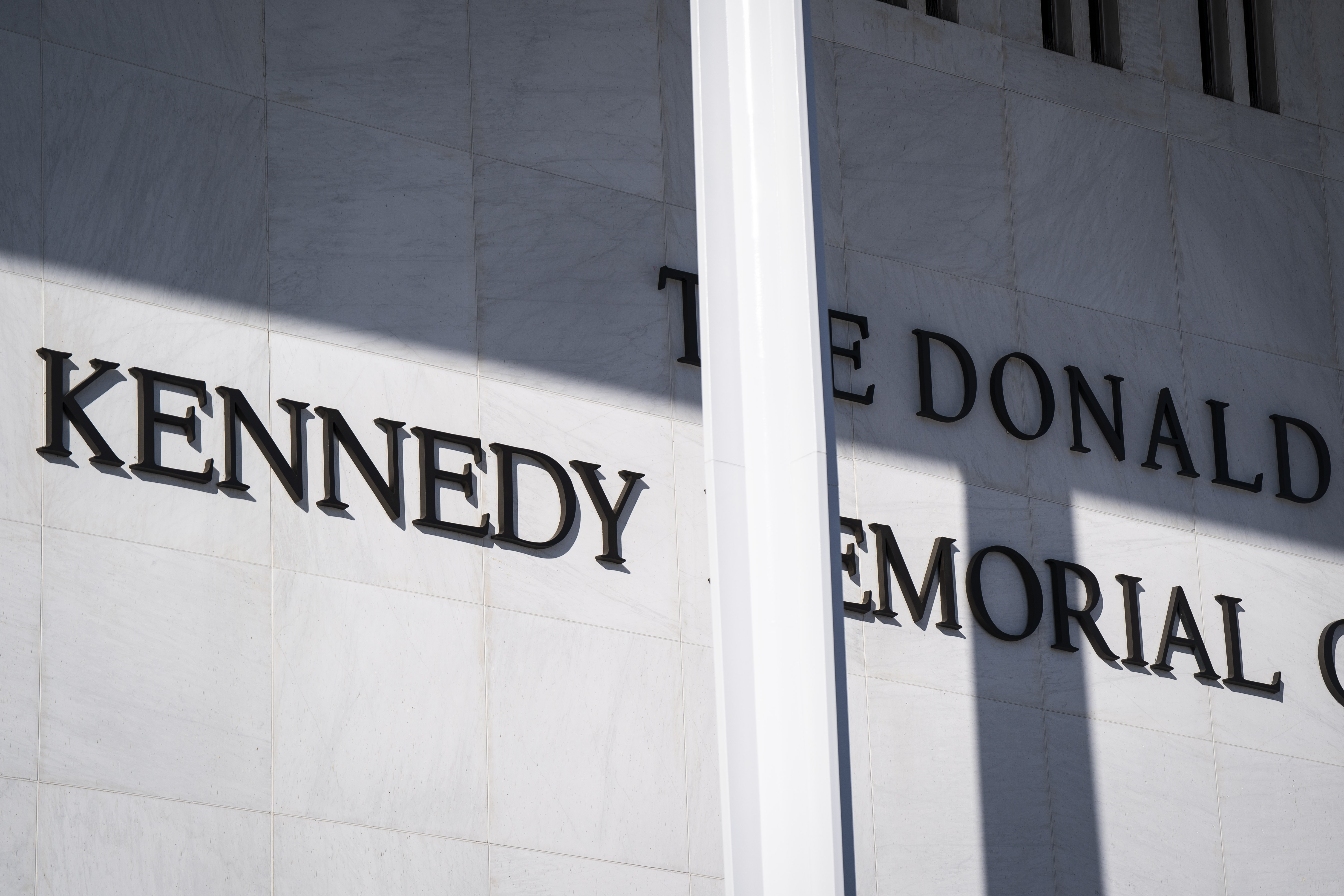
    Trump claimed that the board’s vote to do so was a surprise, but he had joked about naming the center after himself for months. Within hours his name was on the website, and the next morning the building’s sign read: “The Donald J. Trump and The John F. Kennedy Memorial Center for the Performing Arts.”

    Justice Department lawyers representing Trump later acknowledged that, given the speed with which the signage was installed, it had been “prepared and/or purchased prior to the Board’s vote the day before.”

    The addition of Trump’s name sparked immediate backlash from the arts community and members of the Kennedy family, who argued that the renaming desecrated a living memorial to the assassinated president. Congress established the center in 1964, two months after Kennedy’s death, designating it “the sole national monument to his memory within the city of Washington and its environs.” Critics noted that under the law creating the institution, only Congress has authority to change the center’s name.

    Rep. Joyce Beatty (D., Ohio), an ex officio board member, sued fellow trustees in December after she was muted during a virtual board meeting when she tried to voice opposition to the name change.

    In his May opinion, Cooper ruled that Congress was “crystal clear” in 1964 when it passed legislation changing the name of the National Cultural Center to the John F. Kennedy Center for the Performing Arts, designating it as “a living memorial” to the president who had been assassinated the year before.

    “Congress gave the Kennedy Center its name,” Cooper wrote, “and only Congress can change it.”

    Washington National Opera sues Kennedy Center board

    The Washington National Opera on Thursday filed a lawsuit seeking to force the Kennedy Center to turn over $17 million in gifts and donations to the opera company.

    The Kennedy Center has “wrongfully held” years’ worth of donor gifts, bequests, and endowment funds that belong to the opera, according to the complaint filed in the U.S. Court of Federal Claims, five months after the two institutions ended a roughly 15-year affiliation.

    “These funds represent years of gifts from loyal supporters who gave specifically to advance WNO’s mission, its performances, its artists, and its education and community programs,” the company said in a statement. “WNO has a fiduciary responsibility to its donors to ensure their contributions are honored and used as intended to support the work of WNO’s artists and its programs.”

    The lawsuit alleges the Kennedy Center not only refused to return the funds but also put a significant portion of them at risk.

    In a Jan. 8 email, the center’s chief financial officer claimed for the first time that millions held in a fund for WNO’s benefit actually belonged to the Kennedy Center — and disclosed that the center had used the money to collateralize its own line of credit, according to the complaint. The WNO board voted to terminate the affiliation agreement the next day.

    The breakup was swift and acrimonious, the complaint states. Within hours of WNO’s termination notice, the Kennedy Center allegedly cut off the opera’s access to its emails, donor records, and board minutes dating to 2011; locked staff out of their offices; sent termination letters to WNO employees; and scrubbed the opera’s remaining season from the center’s website. Then-President Richard Grenell announced on X that the “Trump Kennedy Center has made the decision to end the EXCLUSIVE partnership” with the opera.

    WNO said it spent months trying to resolve the dispute short of litigation, proposing meetings and invoking the mediation clause of the parties’ agreement, but the Kennedy Center never responded to its request to select a mediator.

    The complaint asks the court to award at least $17.1 million in damages and seeks a complete accounting of all WNO funds the center holds.

    The Kennedy Center did not immediately respond to a request for comment.

  • Kennedy Center board to fight order to remove Trump’s name as deadline looms

    Kennedy Center board to fight order to remove Trump’s name as deadline looms

    The Kennedy Center’s board plans to fight a federal judge’s order to remove President Donald Trump’s name from the performing arts center.

    The center’s trustees on Thursday voted to seek a last-minute stay of U.S. District Judge Christopher Cooper’s directive to take Trump’s name off the center’s exterior by Friday as they appeal his ruling that renaming the center was illegal, according to a meeting attendee and someone briefed by a meeting attendee, who both spoke on the condition of anonymity for fear of retribution.

    The board’s decision came a day before Cooper’s deadline for the center to remove Trump’s name from its building and branding, part of a ruling in which the judge also granted a request from Rep. Joyce Beatty (D., Ohio) to temporarily block steps toward a planned two-year shutdown.

    Cooper’s order, the most significant legal blow yet to Trump’s effort to remake the Kennedy Center, found that the board exceeded its authority in December when it voted to rename the venue “The Donald J. Trump and The John F. Kennedy Memorial Center for the Performing Arts.” Congress gave the center its name, Cooper wrote, and only Congress can change it.

    In February, Trump announced that he planned to close the center for two years starting in early July. The closure was necessary, he said, to make roughly $250 million in renovations, a decision that blindsided staff, artists, and even some trustees. The board — stacked with loyalists who elected Trump chairman after he purged his predecessors’ appointees in February 2025 — voted in March to approve the closure. The center’s executive director, Matt Floca, testified in April that the building’s deterioration is so severe that staying open during construction would be “irresponsible,” citing failing roof panels and water seeping into electrical vaults.

    But Cooper ruled that the closure decision was made rashly, without the board weighing enough information about the potential harms. He did not bar trustees from ever shuttering the building, leaving the door open for the board to reconsider whether it should “come to this decision anew after independently balancing its multiple obligations to the Center in a prudent fashion.” The center’s general counsel highlighted that language last week in a memo to staff, noting that the court did not require the center to stay open during renovations or present any particular programming.

    The center has so far signaled that it will comply. In last week’s memo, the general counsel’s office ordered employees to erase all references to Trump from official materials, starting immediately with email signatures, letterhead, and other documents, followed by signs, brochures, ID cards, and the building’s exterior by Friday’s court-ordered deadline. On Monday, the center erased Trump’s name from its website and YouTube page, and by Thursday, it had done the same with its Facebook, LinkedIn, and X accounts.

    “We are complying with the court’s order while evaluating all legal options to preserve this revitalization and recognize President Trump’s leadership,” spokeswoman Roma Daravi said.

    Late Thursday afternoon, the center’s Instagram account was still branded “The Trump Kennedy Center,” and the president’s name remained emblazoned across the building’s facade.

    Hours after Cooper’s rulings, Trump lashed out at the judge and suggested he would abandon his involvement in the Kennedy Center altogether. In social media posts after the ruling, the president insisted that the building must close for renovations to proceed safely and said that unless he was “free to do what I do better than anyone else,” he had no interest in continuing. Trump said he had instructed the Commerce Department to arrange a “full and complete transfer” of the institution to Congress, a proposal that puzzled lawmakers and legal observers, since federal law vests management of the center in its board of trustees.

    Last week, Trump appeared to walk that back. When asked on Friday how he wanted to be involved at the center, Trump said, “The same way it is.”

    “I’m the chairman, so we’ll just keep it going,” he told reporters aboard Air Force One.

    On Wednesday, a White House official said the president will remain engaged in the center’s affairs as administration officials devise plans to fix “the facility’s major issues.” The White House contested the notion that Cooper’s rulings were a “defeat” for Trump.

  • Oil executives warn White House that gas prices will get worse

    Oil executives warn White House that gas prices will get worse

    Oil and gas executives have warned the White House that gasoline prices could surge in coming months as fuel inventories fall to critical lows, complicating the Trump administration’s efforts to contain inflation that has already rattled American consumers.

    Industry officials say they are doing everything they can to sound an alarm that prices are about to soar as the commercial and government inventories that have mitigated price rises so far are rapidly depleting, according to multiple people familiar with the conversations, who spoke on the condition of anonymity for fear of retaliation from the administration. Some inventories could be wiped out within weeks, the executives have warned, coinciding with the peak summer travel season.

    “I have absolutely no doubt the White House — from the president on down — is fully aware of the nearly universal alarm among oil companies and analysts about the direction of travel for oil prices this summer,” said Bob McNally, who was an energy adviser in the George W. Bush administration and founded the research firm Rapidan Energy Group.

    The warnings underscore the rising political and economic risks confronting President Donald Trump as the conflict with Iran drags into its fourth month, with little indication that a diplomatic breakthrough is imminent, despite periodic White House predictions of progress.

    Already Trump’s administration is confronting the highest rate of inflation in three years, which has led to a significant drop in his standing among voters and deepened concern among Republicans about widespread losses in the midterm elections, which could cause them to lose control of one or both houses of Congress.

    The Labor Department’s Consumer Price Index rose at a 4.2% annual pace in the year ending in May, driven by surging gas prices.

    Trump has publicly brushed off concerns about the rising prices. “I love it. I love the inflation,” Trump told reporters Wednesday when asked about the new figures. Oil prices will drop “like a rock” once the war concludes, he said.

    Industry executives suggest otherwise.

    The war with Iran has snarled the Strait of Hormuz, the waterway that transported about one-fifth of the world’s oil and natural gas supplies before the war. Trump has repeatedly sought to assure the public that he is close to a deal to reopen the strait, but that has not happened.

    Senior oil executives who typically avoid making alarming projections in public have been doing exactly that.

    “We’re sounding the alarm on these inventories going to record lows,” said American Petroleum Institute CEO Mike Sommers on Mornings With Maria, a Fox Business program that Trump frequently watches. “We should be concerned about what prices we’re going to see over the next few weeks. We have to solve this problem in the Strait of Hormuz.”

    Industry officials, who spoke on the condition of anonymity to avoid antagonizing the White House, said the administration’s reception to their worries has been mixed. Some officials, they say, are taking the posture that the warnings are hollow. Prices have not shot up toward $200 a barrel, despite warnings since the war against Iran started in late February that they would quickly head there.

    The U.S. Strategic Petroleum Reserve has dropped to 349.2 million barrels, approaching a multi-decade low last seen in 1983. The exact date reserves start to run dry can be difficult to calculate, because they cannot be run all the way down.

    Millions of barrels of oil need to remain in pipelines and refineries to keep the systems from breaking down. Analysts and industry executives warn the critical moment could come anywhere from the end of this month to closer to the end of summer. But they are universally anxious about how quickly the supply is declining.

    Industry models show the collapse of crude inventories within a matter of weeks could push the cost of oil up by 50% or more — sending the price of gas at the pump soaring past $5 per gallon. Oil executives worry that will send the administration scrambling to impose emergency measures like restricting the export of U.S. fuel.

    A senior White House official said more information from the industry “is good,” and the administration will continue to take information from oil and gas executives into account.

    “But that is one piece of a larger picture that only the president has,” said the official, who spoke on the condition of anonymity to describe the private deliberations.

    The price of gas has “consistently gone down for the past couple of weeks,” the official said. The official attributed that to steps the administration has taken to ease prices, including waiving the Jones Act, which governs the ships that can serve U.S. ports, and coordinating the release of 172 million barrels from U.S. reserves.

    The national average for a gallon of gas on Wednesday was $4.15, down from $4.52 a month ago, according to data from AAA. The prices fell in part because of reports of peace negotiations in the conflict with Iran, but the latest exchange of attacks has jeopardized a fragile ceasefire.

    “The president is focused on finishing the job,” the official said. “We have heard projections again and again throughout this entire conflict that the price would jump higher and higher, that the price of crude barrel would be $150 or $200, or the average price of oil would be upwards of $5. None of that has played out.”

    Other administration officials are frustrated that the industry has not moved faster to drill more and expand domestic production to create a buffer, some of the people said.

    But companies have been reluctant to invest too heavily in multibillion-dollar drilling operations, which would not yield substantially more barrels for months when the administration is expressing confidence that the strait will reopen within days.

    “Both camps know exactly what is at stake,” said one industry official who frequently interacts with the administration. “The industry folks are intent on making sure that if the worm turns, the White House does not point fingers that the industry did not do enough.”

    “Everyone everywhere fully appreciates that the standoff cannot go on for another 30-45 days without the political calculations changing,” the official said.

    “The White House knows and understands the severity of the potential situation. … They are politically constricted from saying that publicly.”

    The potential for a dramatic price hike that would ripple around the world does not align with Trump’s narrative that the United States holds all the cards in negotiations and that oil disruption is but a minor, short-lived inconvenience.

    A further hike could carry political consequences for Trump, whose allies now acknowledge the risk that a prolonged conflict poses to the Republican Party’s prospects in the midterms.

    “High oil price is like a tax on the economy, and it’s a tax on the incumbent party,” said economist Steve Moore. “This is why Trump is so eager to get this done.”

    Trump said that he had conducted a secret military operation to remove 100 million barrels of oil that were stuck in the strait. Military officials said his remark referred to a previously announced plan to share information with shipping companies about safe routes through the waterway.

    Experts tracking movement of oil on through the strait say that some shipments have gotten through, but the volumes are extremely limited and do not do very much to solve the inventory problem.

    Before the war, some 130 tankers traversed the strait daily. Even if White House alleges that dozens of tankers are slipping through each week are accurate, that would amount to only a fraction of the crude moving through the strait before. Ship-monitoring data suggests the White House claims are exaggerated.

    “The president is making a remarkably dubious claim,” said Brett Erickson, managing principal at Obsidian Risk Advisors, which specializes in financial crime and sanctions, and is closely monitoring oil shipments in the Persian Gulf. “And even if some ships are getting through, this is not a long-term solution. Are we going to perpetually be the chauffeur for the Gulf?”

    Even if some stranded oil can be smuggled out, ships cannot get back into the strait to reload.

    “They don’t even need to hear from us directly to know there is a problem,” said an executive with a major oil company. “There is no shortage of people out there saying this publicly. The inventories are at historic lows.”