Category: Washington Post

  • Russia’s war in Ukraine comes back into Trump’s focus with no end in sight

    President Donald Trump met with Ukrainian President Volodymyr Zelensky at the Group of Seven summit in France on Tuesday and expressed exasperation as Russia’s war in Ukraine crept back into Washington’s focus with no end in sight.

    “It’s sort of the same thing,” Trump told reporters at the summit. “They just keep going fighting, losing soldiers. They lose so many soldiers.”

    “Not since World War II has anything like this happened,” Trump said, before invoking his exaggerated claims as a global peacemaker.

    “I settled eight wars,” he said. “This was the one I told you was going to be the easiest to settle, but they just, there’s a lot of dislike between the two leaders.”

    During his campaign, Trump said he would end the war within 24 hours. In France on Tuesday, he voiced unhappiness with the number of deaths but said that the United States is ultimately not affected.

    “We have nothing do with it,” he said. “We sell weapons to them. … The European Union pays us full price for weapons. … This has no impact on us other than we sell weapons. We’re thousands of miles away.”

    For four months, the conflict largely dropped off the White House agenda as Trump and his team focused on their own war against Iran.

    Trump meetings with Zelensky on Tuesday followed a call with Russian President Vladimir Putin on Sunday. Trump urged Putin to make a deal but said there was little sign of one. “I don’t like to see 25,000 young people die every month. They go to this front and get blown up.”

    He added, “The whole thing is ridiculous.”

    Zelensky, who attended the summit at the invitation of French President Emmanuel Macron, is hoping to reengage Trump, and European leaders have urged the president to break the impasse by hosting direct talks between Zelensky and Putin in the United States.

    Ukraine officially opened negotiations with Brussels this week over its bid for European Union membership. That step marks the start of a long and complex path in Ukraine’s ambition to join the EU, a process that Kyiv has urged the bloc to fast-track.

    Zelensky is expected to join leaders of the EU’s 27 nations at a summit in Brussels on Thursday.

    Since U.S.-led negotiations to end the Ukraine war fell by the wayside in recent months, Zelensky has been pushing to revive talks with a more prominent role for his European backers, led by France, Germany, and Britain.

    Some European nations have conveyed that they are willing to engage with Moscow in negotiations, while also warning of new Russia sanctions and sending military aid to Ukraine.

    At the summit, Zelensky also briefed G7 leaders on the damage to the Kyiv Pechersk Lavra church complex, one of the holiest sites in Eastern Orthodoxy, which caught fire last week following a Russian airstrike, according to local officials.

    The briefing came amid a broader escalation in the war. Ukraine has knocked out key Russian energy facilities, causing fuel shortages across multiple regions, while Kyiv and other Ukrainian cities have endured some of the war’s deadliest missile and drone strikes.

    The United Nations reported last week that at least 274 civilians were killed and nearly 1,800 injured in Ukraine in May, more than in any month since April 2022.

    Zelensky promised retaliation after visiting the church complex Monday. On Tuesday, Moscow officials reported shooting down dozens of Ukrainian drones approaching the capital. Ukraine also hit a key oil refinery in Kapotnya in the Moscow region, setting of a major fire.

    The extent of the damage was unclear, but the facility supplies up to 40% of the capital’s gasoline needs and about 50% of its diesel and could compound fuel shortages already affecting multiple Russian regions.

    Several of Russia’s largest gas stations are rationing fuel sales following months of sustained damage to major refineries that process crude oil, local media reported Tuesday.

    Zelensky is also hoping to step up pressure on Putin to hold direct, face-to-face talks, which have not occurred since Russia’s invasion began in 2022.

    Putin and other senior Russian officials, however, have dismissed such talks as pointless unless Zelensky is prepared to sign a final deal meeting Russia’s maximalist demands. They have also invited him to Moscow, which Zelensky has rejected, accusing Russia of “playing games” and insisting that any meeting take place in a neutral country.

    During their phone call Sunday, Putin congratulated Trump on his 80th birthday, according to the Kremlin.

    Trump called for an end to the war in Ukraine, and the two leaders agreed that U.S. envoys Steve Witkoff and Jared Kushner would visit Russia again in the near future.

    Putin had repeatedly offered help mediating between the United States and Iran given the close cooperation Moscow forged with Tehran in recent years, but Trump rebuffed those offers, telling Putin he should focus on resolving his own war.

    The recent deal to end the war against Iran could hinder Russia’s efforts to shore up its wartime budget, which has partly benefited from disruptions to Middle Eastern fuel supplies. In March, the Trump administration temporarily lifted sanctions on Russian oil exports seeking to keep global fuel prices in check.

    On Tuesday, during a bilateral meeting with the president of the United Arab Emirates, Trump appeared to suggest the U.S. could let the sanctions waiver lapse when it expires on Wednesday, though he stopped short of giving a timeline.

    “Soon, we’ll be able to do that because the oil is now flowing,” Trump said when asked whether the U.S. planned to tighten sanctions on Russia. “We took sanctions off because obviously we’re not looking to impede the oil, but we’re in a position to do that soon.”


  • Death of woman released by ICE on a winter day is now ruled a homicide

    Death of woman released by ICE on a winter day is now ruled a homicide

    The grainy security footage from the Pittsburgh transit authority shows Daphy Michel seated on a steel bench. She had been released hours earlier from U.S. Immigration and Customs Enforcement custody, and temperatures that night would dip to freezing. The 31-year-old asylum seeker wore a hooded sweatshirt to keep herself warm.

    Over the course of three days, Michel appears to have never left that bench, said her family’s attorney, who viewed the security footage and shared stills with the Washington Post. She had a history of untreated mental health issues and sat staring as people passed by, a plastic bag with her belongings, including a cellphone, placed beside her.

    By March 2, the Haitian woman was no longer sitting. The last image captured in the footage, according to the attorney, shows her lying on the ground. Emergency responders arrived at the scene and transferred Michel to a hospital, where she died that day.

    It was at least the second death this year involving an individual who was released by federal immigration authorities and died days later of complications related to hypothermia. The Allegheny County medical examiner’s office ruled Michel’s death a homicide on Friday. That conclusion means officials determined her death was the result of someone else’s actions, but it does not necessarily imply criminal wrongdoing.

    “The opinion of the forensic pathologist in this case is that Ms. Michel was a vulnerable adult, suffering from untreated severe mental health issues and a significant language barrier when she was released from federal custody on February 27,” Jim Madalinsky, the county’s public information officer, said in a statement. “Based on all available information during the investigation, the pathologist ruled Ms. Michel’s death a homicide.”

    The finding comes as ICE is eliminating its requirement to report deaths that occur within 30 days of people being released from its custody, and as the Trump administration continues to detain large numbers of migrants. Michel entered the country through the southern border in 2022 and was granted humanitarian parole, said her family’s attorney, Joseph Patrick Murphy. She died before the first hearing in her immigration case.

    A spokesperson for the Department of Homeland Security, which oversees ICE, did not say what time agents released Michel on Feb. 27 but stated that she had all her possessions and a fully charged phone. That day, temperatures in Pittsburgh reached a high of about 55 degrees, though they dropped nearly 30 degrees at night before a cold front brought flurries later that weekend, according to airport weather data.

    “ICE had NOTHING to do with this woman’s death,” DHS spokesperson Lauren Bis said. “She passed away THREE days after ICE encountered her.”

    The circumstances of Michel’s death echo those of the death of a visually impaired refugee in Buffalo in February. Immigration agents left Nurul Amin Shah Alam, 56, a Rohingya refugee from Myanmar who spoke little English, outside a closed coffee shop on a cold winter night. His body was found days later and his death also was ruled a homicide.

    The investigation of Alam’s death is ongoing.

    It’s unclear whether Pennsylvania officials will open an investigation of what happened to Michel days before her death. The Allegheny County district attorney’s office said in a statement that it is still gathering records and declined to comment on any possible investigation.

    “We do express our heartfelt sympathy to the family of Ms. Michel,” officials with the prosecutor’s office said.

    Guerline Jozef of the Haitian Bridge Alliance, an immigrant advocacy organization, said Michel came to the country at a time of massive domestic upheaval in the Caribbean nation following the assassination of its president. Armed groups violently took control of the nation’s capital while Haiti experienced a series of natural disasters that displaced thousands.

    Thousands of Haitians fled to South America and, eventually, the United States. Many, like Michel, were allowed to enter during the Biden administration while pursuing asylum claims but were targeted for removal once President Donald Trump took office.

    Jozef said that given Michel’s mental health struggles, ICE could have ensured she was in contact with a relative before her release.

    “We know that, allegedly, ICE is saying that they are not responsible. But we beg to differ,” she said. “There are certain protocols they could’ve taken to make sure she was released into her family and community safely,” Jozef said. “None of that happened.”

    ICE detention standards require agents to prioritize safety and consider “any special vulnerabilities” when deciding when, where, and how to release someone. Agents are instructed to provide detainees with a free phone call to make arrangements and are permitted to leave people near public transportation during operating hours.

    The guidelines also say ICE “must provide transportation” to detainees who “are not reasonably able to walk” because of issues such as age and mental health, or any conditions that endanger health and safety.

    In September, local authorities arrested Michel on charges of making terroristic threats and harassment, court records show. Charleroi regional police alleged she had been yelling in the street at “imaginary people,” according to Murphy. He said Michel struggled with undiagnosed and untreated mental illness. She remained in jail for six months. Then a judge dismissed her case, Murphy said, because she could not be prosecuted for making threats against people who did not exist.

    A day later, ICE agents took her into custody, affixed a tracking monitor to her ankle, and released her.

    “She was released with all of her belongings, including a fully charged phone, in sunny weather in the middle of Pittsburgh, where public transport is readily available,” said Bis, the DHS spokesperson.

    Murphy said Michel lived with her brother, who never received a phone call from ICE or his sister alerting him of her release. It wasn’t until the morgue contacted him three days later that Michel’s brother learned what had happened. He declined to comment through the attorney.

    Michel underwent repeated psychiatric examinations while at the county jail, Murphy said. When the judge ordered her release, Washington County authorities contacted ICE. It was unclear whether county officials communicated what they knew about Michel’s mental state to immigration agents. The county jail did not respond to requests for comment.

    Murphy believes it was “outrageous” and grossly negligent for ICE to have released Michel by herself on a winter day.

    “Even a 10-year-old could do more to help themselves,” he said. “She couldn’t speak English and she was effectively unable to care for herself.”

    An obituary for Michel shared on the website for Hogan-Melenyzer Funeral Home & Cremation Services says that she was born in Aquin, a port city on Haiti’s southern coast. After arriving in the United States, she settled in Charleroi, a community where about 1,200 Haitians had come to live in recent years. Now, according to local media reports, only a few hundred remain, driven away by fear over the immigration crackdown and the closure of several businesses.

    “Daphy was a person with a kind heart, who loved her family very much,” the obituary says. “… She was always ready to help those who needed her help and her presence brought joy and happiness and light into the lives of all who knew her.”

  • He’s studied procrastination for 40 years. Here’s what he’s learned.

    He’s studied procrastination for 40 years. Here’s what he’s learned.

    Joseph Ferrari has a nickname for procrastinators — procs — and he’s been studying them for 40 years. He became fascinated with procrastination when he was working on a Ph.D. in experimental psychology and realized that no one had studied the psychology of why some people put off completing tasks. Because he is not a proc, he immediately got to work, exploring what causes procrastination across various cultures and demographics.

    He went on to write multiple books on the topic, including Still Procrastinating? in 2010. He now teaches at DePaul University and has found that 20% of people are chronic procrastinators — meaning they habitually, intentionally, and irrationally delay a target task, often to the point that they cause discomfort for themselves and others. “That’s high,” Ferrari said. “Higher than depression, phobia, panic attacks, alcoholism, substance abuse.”

    And that’s a problem, he went on: “For 20 percent of people, they’re missing life. Life is too short. You need to get things done.”

    Here’s what decades of studying procrastination have taught Ferrari, and the five things he’d like people to know.

    Anyone can be a procrastinator, though certain jobs can be procrastination-prone

    According to Ferrari, neither gender nor age nor race makes someone more or less likely to procrastinate. Those who dwell in cities procrastinate as often as those who live in rural areas, and people who live in South Korea, India, Israel, and England are as likely to do it as Americans.

    The one difference he noticed was between blue-collar and white-collar workers. “If I’m an electrician, a plumber, a carpenter, and I don’t work, I don’t get paid,” Ferrari said. “But if I am white-collar — a corporate person — I’m going to get my paycheck every two weeks or a month anyway.”

    You can’t blame your procrastination on technology or your busy life

    Ferrari often hears people blame their procrastination on technology. Similarly, he hears people say that modern lives are just busier than they used to be.

    “Wow,” Ferrari said. “What an insult to our ancestors.” Our forebears were often farmers, for example, who “had to get up early in the morning and fix the fence, feed the animals, get the hay done, plant the seeds, get the roof done, can those goods. They had a lot to do.”

    Ultimately, though, every excuse he hears is just that — and, as Ferrari said, “procrastinators are great excuse makers.”

    Years ago, a reporter called Ferrari to ask him what he thought about the alarm clock snooze button, because, the journalist claimed, it was an example of how technology played a role in procrastination.

    Ferrari responded, “What about the automobile that came out in 1885?” At one point in history, if you wanted to visit a friend five or seven miles away, you had to have a horse that you fed and took care of and then take time to harness the animal to a carriage and travel to see your friend. “Then this thing called the automobile comes along, and you can go quickly,” he said. Suddenly, there was no preparation involved; you could wait until the last second to get up and go.

    These days, we carry our devices everywhere, which means distractions are ever-present, but so are shortcuts. We no longer need paper and pen and stamps to get in touch with people, for instance. And that’s why Ferrari isn’t buying this common excuse that technology is the reason you can’t get things done: Technology has an equal if not greater capacity to make our lives more efficient, not less, he said.

    Deadline pressure is not the solution

    Some people say procrastination is not a problem for them; they simply need the pressure of an imminent deadline to do their best work. But Ferrari’s research over the years doesn’t support that claim. In one paper, Ferrari documented the results of two experiments that compared the performances of procrastinators and non-procrastinators who were given limited time to complete tasks. Then researchers asked the participants how they thought they did. Procrastinators, as it turned out, took longer and performed worse. And yet they thought they’d done well; in fact, they thought they’d done better than other participants.

    In short, Ferrari said, “I found ‘working best under pressure’ was a myth, and they failed.”

    There are ways to kick the habit

    “Procrastination is sabotage,” Ferrari said, and there are various reasons people engage in it. One is a lack of self-confidence: If a person is not sure whether they can complete a task, Ferrari said, they may introduce obstacles, such as a lack of proper preparation time. If they fail, then, they can blame the obstacle rather than themselves. “And imagine if I succeed with the obstacle,” Ferrari said. “Then I look even better.”

    Because procrastination has emotional triggers, Ferrari doesn’t believe it’s a problem that can be solved with time management training. Instead, he recommends cognitive behavioral therapy, a goal-directed type of therapy that aims to adjust behavior to get a better result. “You have to change the way you think and the way you act,” he said.

    The solution to procrastination may be a cultural one

    “In our culture, we punish for being late,” Ferrari said. “We need to reward for being early.” He believes incentives could transform the collective tendency to put things off. What if, for example, the government gave people a discount if they filed their taxes early, or stores offered their biggest holiday sales on the day after Thanksgiving rather than Christmas Eve?

    “People laugh when I tell them this,” he said. But he does it in his own classes: He tells his students that if they turn papers in early, they’ll get extra points. Not everyone will do it, of course, but if he can get half of them to take the incentive, then he’s conditioning them to embrace positive behaviors. Plus, he said, “that’s less work for me at the end.”

  • Under Trump, Democrats draw red lines on national security

    Under Trump, Democrats draw red lines on national security

    In early June, Sen. Mark Warner was preparing to argue that despite deep distrust of the Trump administration, his fellow Senate Democrats should take a risk and help renew a controversial surveillance law that was soon due to expire.

    Then, hours before a meeting with his colleagues, the senator from Virginia learned that President Donald Trump had tapped Bill Pulte, a mortgage agency official and staunch loyalist, as his acting intelligence czar.

    “I said: ‘Holy crap, I just didn’t think Donald Trump could still surprise me,’” said Warner, the top Democrat on the Senate Intelligence Committee, in an interview.

    Pulte’s appointment, which tanked the renewal of Section 702 of the Foreign Intelligence Surveillance Act, is a glimpse into the frustrating life for national security Democrats in the second Trump administration.

    Center-left lawmakers who built their political brands around support for the U.S. military and intelligence community are increasingly drawing red lines on Trump policies they see as dangerous or incoherent — including the war in Iran, lethal strikes against alleged drug traffickers around Latin America, and personnel moves like tapping Pulte, who has no national security experience, as the acting director of national intelligence.

    In some cases, Democrats are voting to curtail the funding and authorities for these agencies — a trend that could have lasting consequences for one of Washington’s last areas of relative bipartisan consensus.

    “It is a sign of the times,” said Sen. Elissa Slotkin (D., Mich.), in an interview. “People who love this country, who have put their life on the line for the country — in uniform, in the intelligence community — are now pushing back on this president abusing it.”

    Multiple Democratic lawmakers said that their constituents were urging them to take hard-line stances against the Trump administration, including on national security issues.

    “It’s a reflection of where America is,” said Rep. Jason Crow (D., Colorado.), an Army veteran and member of the House Armed Services and Intelligence committees. “The vast majority of Americans do not want this war in Iran. The vast majority of Americans don’t think that just continuing to throw money at the [Defense Department] is the way to solve our problems.”

    In response to a request for comment, the White House listed instances where Section 702 has helped protect U.S. citizens, including by thwarting a “mass casualty terror attack” at a Taylor Swift concert in Austria and stopping North Korean cyberattacks.

    More than 60% of the information included in the president’s daily intelligence briefing contained information gathered through the program, the White House said.

    “Democrats will oppose anything to attack President Trump,” said White House spokesperson Anna Kelly in a statement, noting the president “will continue to prioritize maintaining ‘peace through strength’ and safeguarding America’s national security as Commander-in-Chief — just as he was elected to do.”

    Slotkin, a career CIA officer, is one of the few Democrats in Congress who has professionally relied on the information gathered under Section 702, which allows national security agencies to surveil the texts, emails, and calls from foreigners living abroad and suspected of posing a threat.

    But when the Republican-led Senate sought to renew the program in June, she and other Democrats united against it, demanding that Trump first backtrack on appointing Pulte.

    Joining a group of GOP civil libertarians who argued the program risked abusing Americans’ privacy rights, Democrats allowed the program to expire over the outcry of other Republicans, who argued the lapse would endanger U.S. citizens during the FIFA World Cup and conflict in Iran.

    “The consequences, to be frank, could be fatal,” said Sen. Tom Cotton (R., Ark.), the chairperson of the intelligence committee, in a speech last week. “Americans should not have to face that risk because of partisan game-playing.”

    Democrats have instead argued that it is the Trump administration that is endangering Americans by launching military operations without the approval of Congress and appointing unqualified people to leading national security roles.

    “To me, one of the only things more risky than letting FISA lapse is putting in a man with no experience and who is being sent to weaponize the DNI’s office against the American public,” Slotkin said.

    Hours after a last-ditch effort to renew the program failed last Friday, Trump nominated Jay Clayton, a senior Justice Department attorney, as the director of national intelligence. Democrats have signaled they will support Clayton, whose confirmation hearing is Wednesday, potentially opening a path for Congress to reauthorize Section 702.

    But the normally broad bipartisan consensus on core national security legislation is increasingly under pressure.

    In the past two weeks, an extraordinary number of Democrats on the House and Senate armed services committees opposed their panel’s version of the National Defense Authorization Act, Congress’s must-pass defense policy bill.

    Last year, only one Democratic senator voted against the bill in the committee’s markup. This year, nine did.

    In the House, that number went from two to 12 in the same period. Half of the Democrats who opposed the bill are veterans.

    The opposition came after Republicans voted down Democrat-led amendments that would have constrained the war in Iran and slashed the $1.15 trillion authorized in defense spending, a massive jump from last year’s budget.

    “I’ve usually voted for the [National Defense Authorization Act] because I support the troops, but this is just totally out of control,” said Rep. Seth Moulton (D., Mass.), a Marine Corps veteran who led multiple failed amendments in the committee’s markup.

    Over the weekend, the administration announced a preliminary deal with Iran to halt the fighting and eventually reopen the Strait of Hormuz, a vital waterway for global energy supplies that has been almost entirely closed for months.

    Some Democrats offered cautious support for the deal, while criticizing the Trump administration’s decision to launch the war without the approval of Congress in late February. Many have already signaled they will oppose any bid for supplemental funding to cover the costs incurred by the war.

    The war, which according to Pentagon estimates has cost about $30 billion, has led to a spike in global energy prices.

    Rep. Chrissy Houlahan (D., Pa.), an Air Force veteran, voted for the NDAA despite reservations that the committee was doing too little to rein in Defense Secretary Pete Hegseth.

    Still, she argued, Democrats needed to find points of “leverage” to exert oversight of the administration. When the House voted last week on a last-minute bid to extend FISA, Houlahan, who also serves on the intelligence committee, opposed it.

    In an interview, Houlahan described her discomfort in blocking what she considers a vital intelligence tool. Ultimately, she decided that she needed to help send a signal to the administration that Pulte’s appointment was unacceptable.

    “There’s strong hope that this is going to not be the new norm,” said Sen. Andy Kim (D., N.J.), who worked in the Pentagon and State Department before being elected to Congress. “I’m somebody that’s still a deep believer that the last place that partisan politics belongs is in national security.”

  • COVID vaccine linked to broad protections against heart conditions, study finds

    COVID vaccine linked to broad protections against heart conditions, study finds

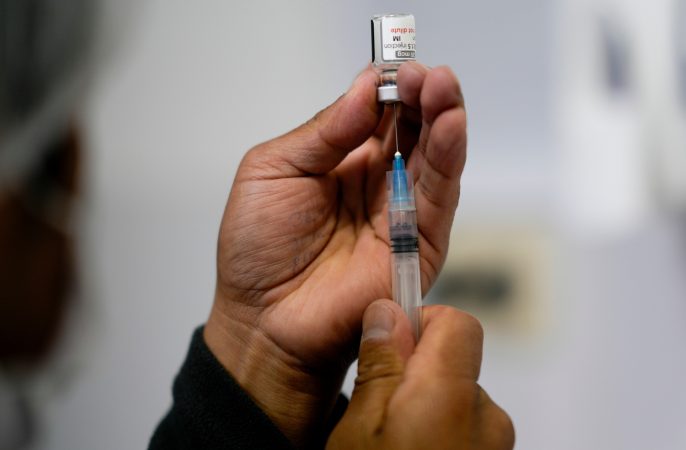
    The coronavirus vaccine reduced the risk of major cardiovascular events linked to COVID-19 — strokes, heart attacks, and hospitalization from heart disease — by about 40%, according to a new study. The findings, the latest in a growing body of research about the vaccine’s benefits for heart health, suggest such benefits observed in earlier studies have persisted for years.

    The study, published Monday in JAMA Internal Medicine, also suggested the vaccine has a broader public health benefit. The vaccine modestly reduced cardiovascular conditions, hospitalizations, and deaths of all causes, including those not linked to COVID, researchers said.

    “It tells us that these vaccines have actually brought beneficial effects even in people who don’t really know that they actually have contracted COVID-19,” said Ziyad Al-Aly, a physician-scientist and senior clinical epidemiologist at Washington University in St. Louis and co-author of the study.

    Previous studies have indicated the coronavirus vaccine reduces the incidence of heart attacks and strokes, including a study of around 46 million adults in England between 2020 and 2022.

    Researchers behind the latest findings set out to determine if those benefits persisted in the years after the onset of the pandemic.

    “Vaccine formulations have changed, and also the virus itself has changed over time,” Al-Aly said. But he said they found the more recent vaccine formulas still protected against heart conditions.

    The study, conducted among veterans who used the Department of Veterans Affairs health system, examined around 1 million veterans between 2024 and 2025. The research compared those who took the seasonal influenza vaccine and those who opted to take both the flu vaccine and the updated COVID-19 vaccine that season. The research reviewed multiple types of vaccines, including mRNA shots and Novavax.

    The researchers followed up with the cohorts after around eight months, noting whether they had a COVID-19-associated cardiovascular event, defined as a severe heart condition contracted soon after a COVID-19 infection.

    The cohort that took the COVID vaccine had a 37.7% lower risk of COVID-associated heart conditions, the study found. The benefit was most pronounced among patients over 75 and those with preexisting conditions such as cardiovascular disease, diabetes, or chronic lung disease.

    “To me, this continues to emphasize that we should be encouraging vaccination, especially amongst older individuals,” said Nisha Viswanathan, a physician and director of the Long COVID program at the University of California Los Angeles, who was not involved in the study.

    Patients who took the COVID vaccine were also around 6% less likely to suffer from severe heart conditions overall, including ones not linked to a COVID-19 infection, according to the study. The vaccine was also associated with reduced deaths and hospitalizations of all causes by around 7%.

    Al-Aly said that while those percentages appeared low, it still translated to averting around 23 major cardiovascular events, 30 hospitalizations, and 16 deaths per 10,000 vaccinated individuals.

    “Extrapolating these estimates to a population of 1 million people, vaccination could plausibly be associated with averting approximately 2370 [major cardiovascular] events and 1580 deaths over an 8-month period,” the study states.

    Al-Aly and Viswanathan both noted that the study’s population was largely older, white, and male, and that the extrapolations on the vaccine’s public health benefit should be treated with caution.

    Why did the vaccine produce some protection against heart conditions not connected to a COVID diagnosis? Al-Aly suggested that the trend could suggest patients are contracting mild cases of the virus without realizing it.

    “This study actually gives us a glimpse of the hidden burden of COVID-19 that’s actually still likely circulating in the population,” Al-Aly said.

    Viswanathan said that was plausible, but that it was also possible that the COVID vaccine could have additional benefits and side effects on the body. She noted studies have shown that other vaccines can help prevent a wider host of illnesses and chronic conditions, and that research is ongoing on the potential secondary effects of mRNA vaccines such as the COVID vaccine.

    COVID vaccines have also been linked to a risk of myocarditis and pericarditis, inflammation of the heart muscle and lining, but cases are rare and generally mild, and experts have said the benefits of vaccination outweigh the risk of side effects.

    In October, researchers at the University of Florida and the University of Texas published a study that found the COVID vaccine improved cancer patients’ responses to immunotherapy.

    “MRNA vaccines are doing something else to our system that we haven’t completely understood yet, and I do think there’s probably a lot of positive that is going to come,” Viswanathan said.

  • ICE removed detainee protections after private outreach from top contractor

    ICE removed detainee protections after private outreach from top contractor

    When U.S. Immigration and Customs Enforcement was revising the federal standards that govern immigration detention centers, one of its top contractors privately asked for changes that could benefit its business, according to a person briefed on the discussions.

    Geo Group, which oversees more than a dozen ICE detention facilities, has faced lawsuits in three states alleging it violates minimum-wage laws by paying some immigrant detainees $1 a day to work. The company maintains that the work is voluntary and that it operates the program at the direction of the government.

    Geo asked that ICE remove lines saying contractors needed to follow state and local laws around the treatment of detainees and that ICE amend language to support its legal position in these cases, the person said, speaking on the condition of anonymity for fear of reprisal. The company also asked that the standards specify that detainees are not employees of the facilities where they work.

    The new national detention standards, which ICE posted to its website Monday, include some of Geo’s requested changes. The document says detainees are not employees “and are not entitled to wages or benefits under applicable wage laws or labor regulations.”

    The revised rules no longer say detainees must be paid at least $1 per day, and no longer include several references to contractors having to comply with state or local laws.

    ICE standards are the key rules that govern the conditions of detention centers, where hundreds of thousands of people are held each year. The policies, which ICE enforces through its contracts with private companies and local governments, cover a wide range of facility operations, including how body cavity searches must be conducted as well as when detainees should be placed into solitary confinement.

    Geo’s input in the new standards, which has not been previously reported, highlights the ICE contractor’s influence over the agency that is both its regulator and, corporate filings show, its biggest customer.

    Two of the Trump administration’s top immigration officials — border czar Tom Homan and ICE’s acting director, David Venturella — previously worked for Geo Group, prompting Sen. Elizabeth Warren (D., Mass.) to question in a letter last month “whether ICE enforcement priorities are being driven by the financial interests of politically connected detention contractors.”

    As the administration has ramped up arrests of immigrants, it has relied on Geo to help it significantly expand the nation’s capacity for holding ICE detainees. Advocates for immigrants and some state regulators say poor oversight at many of these facilities has led to the mistreatment of migrants.

    This month, New Jersey sued Geo for refusing to allow state health inspectors full access to its Delaney Hall facility, in Newark, where the state says detainees have staged hunger strikes to protest being fed spoiled or rotten food and not being given access to basic hygiene products. Geo’s lawyers have said in court filings that only ICE can grant state inspectors access to the facility.

    In the new standards, ICE said part of the goal of the revisions was to “reduce the burden on our detention operators.” At least one other detention contractor, CoreCivic, was consulted on the new standards, the person said. It’s unclear whether CoreCivic offered input.

    “As part of the revision process, ICE consulted with a variety of stakeholders, including facility operators responsible for implementing the standards,” Lauren Bis, a spokesperson for the Department of Homeland Security, said in a statement. “ICE considered that input alongside operational, legal, and policy requirements when making a final decision on the standards.”

    Ryan Gustin, a CoreCivic spokesman, said that the company is sometimes asked by government partners for input on standards but that “ultimately, government officials decide on the standards and policies they develop and enforce.”

    Abigail Jackson, a White House spokesperson, said Homan adheres to federal ethics and conflict-of-interest rules. Geo Group did not respond to requests for comment.

    It’s not uncommon for federal agencies to solicit feedback on policy changes from the industries they regulate, said Steve Schooner, a professor of government procurement law at George Washington University.

    But typically, these discussions are done through a comment period that is open to businesses, advocacy groups, and other members of the public, he said. ICE did not hold a public comment period on the new standards.

    “The reason we do public commenting is because there are various stakeholders,” Schooner said. ICE’s contractors, he added, “are probably not the best voice to represent the people who are being detained.”

    Venturella, who was picked to lead ICE last month, is a former senior executive at Geo Group, where he earned millions of dollars overseeing the company’s detention business, corporate filings show. He worked as an executive at Geo from 2012 to 2023 and as a paid consultant for Geo through Jan. 31, 2025, the company said in a filing.

    Venturella joined DHS as a senior adviser less than two weeks later, and was granted a waiver from a federal ethics rule that generally bars government employees from working on contracts awarded to their former employers for one year, the Washington Post reported last year, based on interviews and documents.

    DHS declined a request to share this waiver, arguing that doing so would jeopardize the privacy of a government employee.

    Geo Group and CoreCivic each donated $500,000 to Donald Trump’s presidential inaugural fund in December 2024, election spending data shows. A Geo Group subsidiary, Geo Reentry Services, has contributed $2 million to MAGA Inc., a Trump-aligned super-PAC, since last October, the records show.

    Gustin said CoreCivic has consistently contributed to inauguration events for both Democrats and Republicans.

    New versions of ICE standards go into effect gradually, as they become incorporated into new or modified contracts. At least one new detention center in Appleton, Minn., already has agreed to follow the 2026 rules, federal procurement records show.

    It’s unclear how the revisions would help Geo fend off legal challenges to its $1-a-day work program, said Jacqueline Stevens, the founding faculty director of Northwestern University’s Deportation Research Clinic. Federal law and state laws define employees broadly as people who work for pay, she says, and ICE cannot override those laws by changing its contractual standards.

    “ICE cannot magically wipe out those protections,” Stevens said.

    ICE previously has made two revisions to the standards under Trump, and each time critics accused the agency of weakening protections for immigrant detainees. Revisions in 2019 removed the mandatory minimum ratio of toilets per detainee, as well as a line that banned the use of “hog-tying” or unnecessarily tight restraints.

    The 2026 standards added some protections for detained immigrants, including an effort to expand access to language translation services, stricter rules around who can be put into solitary confinement, and a requirement that facilities alert ICE when they cannot accommodate the medical needs of any detainee.

    ICE also specified in the new standards that facilities do not have the right to refuse any person that the agency decided to detain.

    One of Geo’s recommendations, which proposed stipulating that the government would reimburse contractors up to $100 million for legal losses associated with wage lawsuits, was not reflected in the new standards, the person familiar with the discussions said.

  • Records reveal $600M estimate for Trump’s ballroom project, with half from taxpayers

    Records reveal $600M estimate for Trump’s ballroom project, with half from taxpayers

    Five months after the demolition of the White House’s East Wing, President Donald Trump claimed that the project to construct a massive ballroom and a bunker in its place would cost up to $400 million and that private donors would pay for all of it.

    “This is taxpayer-free. We have no taxpayer putting up 10 cents,” Trump told reporters in the Oval Office on March 31, describing the project as including bomb shelters and major medical facilities.

    But a detailed project summary prepared for the White House by the contractor more than three weeks before Trump’s comments estimated the total construction cost at $600 million — with more than half coming from taxpayers, according to a copy of the contractor estimate obtained by the Washington Post.

    By the time Trump made his comments in March, the federal government had already approved more than a dozen payments to the contractor overseeing the work, Clark Construction, totaling tens of millions of dollars in public funds, according to a log of the contractor’s invoices obtained by the Post.

    Since first announcing the East Wing project last July, Trump has repeatedly said that the price tag would not exceed $400 million and that private donations routed through a nonprofit would cover its entire cost. At other times, he has said that the Secret Service and the military would contribute security enhancements, without elaborating on the price of those upgrades.

    Multiple project summaries provided to the White House by Clark Construction show that internal cost estimates have been significantly higher than administration officials have acknowledged in public comments or court filings. They also show that the work was projected to rely heavily on taxpayer dollars from the moment it was announced.

    The White House did not answer questions about the internal cost estimates or taxpayer funding.

    “President Trump and generous American patriots are funding the ballroom to the tune of approximately $400 million, which will be a secure and appropriate venue for Presidents for generations to come,” White House spokesperson Davis Ingle wrote in a statement.

    A spokesperson for McLean, Virginia-based Clark Construction said all project details are confidential and referred questions to the White House.

    The Post obtained six cost estimates for the entire East Wing project, dated from July 2025 to March of this year, that show an increasing price tag as well as the expected sources of funding. Those records, as well as invoice logs and correspondence, provide the clearest accounting yet of Trump’s most ambitious construction project in the nation’s capital. The project is deeply unpopular with most Americans, and even some Republican lawmakers have balked at funding it.

    When the White House first announced the plan to build a ballroom on July 31, 2025, it said in a news release that contributions from Trump and “other patriot donors” would cover the cost of the project, which it said would be $200 million. The White House added that the “United States Secret Service will provide the necessary security enhancements and modifications.” There was no mention of an underground military bunker.

    The records obtained by the Post show that the administration and Clark worked hand in hand starting last June to determine the scope and cost of construction.

    White House officials received a preliminary estimate, dated July 11, projecting that construction would cost $270 million, with over $100 million coming from taxpayers through the Secret Service and the White House Military Office, the records show.

    Emails from that time show that administration officials planned to use $3.6 million of Secret Service money to cover initial expenses for site preparation before demolition.

    A White House lawyer explained in an email to colleagues on July 30 that she had added a line to contract language “to tie the project more closely to security-related issues since USSS [U.S. Secret Service] is providing the funding.”

    “We believe this edit is important to comply with fiscal law principles,” wrote Caroline C. Hunter, general counsel in the White House Office of Administration. Hunter did not respond to messages seeking comment.

    More than $1.6 million in Secret Service funds was also budgeted to cover part of the demolition itself, according to a cost estimate. The U.S. Secret Service did not provide answers to questions before publication of this report.

    Three contracting and procurement experts who reviewed the documents at the Post’s request said the demolition of the East Wing appeared to fall outside the scope of the Secret Service’s mission of protecting government leaders.

    “That is a stretch,” said Anthony Costa, a former General Services Administration official who oversaw complex government real estate projects during a career that spanned four presidential administrations. “How is that something Secret Service should do and fund?”

    On Oct. 22, in the same week Clark began demolishing the East Wing, Trump told reporters that the price had risen to $300 million. He said that the military was involved but that the project would be paid for “100% by me and some friends of mine.”

    However, a project summary dated Oct. 20, the day the demolition began, shows that Clark expected the full project to cost $478 million. Taxpayers were expected to fund nearly half of that, the documents show.

    Speaking at the White House in December, Trump said the cost could reach $400 million. “We’re donating a building that’s approximately $400 million,” he said.

    By March, Clark had informed the White House that the projected cost had increased to $600 million. A project summary dated March 5 shows that nearly half of that, $293 million, was expected to come from “private sources.” The estimate said an additional $155 million would come from the Secret Service, $149 million from the White House Military Office, and $3 million from the Executive Residence, all sources funded by taxpayers.

    That month, the administration acknowledged that the project included underground security features, including what Trump has described as a hospital.

    A court issued an injunction in March, pausing construction above ground but allowing work to continue on the secure underground bunker after a historic-preservation group filed a lawsuit arguing that the White House had failed to seek necessary reviews.

    In April, an alleged would-be assassin attempted to access the White House Correspondents’ Association dinner before he was apprehended by law enforcement. Within days, the administration said that rebuilding the East Wing, including the ballroom, was a national security imperative.

    Trump and some elected Republicans said a new ballroom could more securely host events like the correspondents’ dinner. Sen. Lindsey Graham (R., S.C.) and others introduced legislation that would have authorized $400 million in spending “to upgrade the presidential ballroom and strengthen the White House’s security infrastructure.” Seven Republican senators joined Democrats to block the idea.

    “President Trump indicated that the ballroom was going to be built with private donations,” said Sen. Susan Collins (R., Maine), one of the senators who opposed it. “I think that’s the commitment that should be kept.”

    In May, with the legislative proposal pending, Trump provided reporters with another update, showing off the construction site and saying all the parts of the project were intertwined. “This is one well-knit building. One thing doesn’t work without the other,” he said.

    This time the president made more of a distinction over who would pay for each part of the structure. The government would pay for part of the construction on the new East Wing, he said, describing that work as “for the security of that and the whole White House premises.”

    “They have a budget in Secret Service and the military to do some of the work that you see right here,” Trump said. The ballroom itself, he said, “is not going to be paid for by the taxpayer. This is a gift to the United States of America.”

    The Secret Service and the White House Military Office (WHMO) have long held roles in securing the White House complex for the president, his family, and staff members.

    The three experts who reviewed documents related to the project said it was appropriate for the Secret Service and the WHMO to pay only for parts of the project that fall within their mission. Trump said some security spending would go toward defenses including “the greatest drone empire … to protect Washington” on the building’s roof.

    But the experts also said the project documents contradicted the administration’s statements claiming that the East Wing would be paid for by donors. Stan Soloway, a former Pentagon acquisition official who is board chair at the National Academy of Public Administration, said that from a contracting and budget perspective, “you can’t disentangle the entertainment space from all of the other parts that are in here.”

    He said it was clear from the documents that taxpayers are footing the bill for parts of the ballroom: “I think it’s inevitable that it bleeds over. It’s one structure.”

  • A look at the rare historic documents heading to the Lincoln Memorial

    A look at the rare historic documents heading to the Lincoln Memorial

    The workers brought the copies of the Emancipation Proclamation and the 13th Amendment to the Constitution into the warehouse display room and carefully placed them on a table covered with blue blankets.

    Both documents, which date to the 1860s, bear the original signature of President Abraham Lincoln. Both are treasured milestones in the nation’s bloody struggle to eradicate slavery, and are worth millions.

    And both are now being loaned for public display in a new exhibit area under the Lincoln Memorial, which is due to open June 25 to honor the nation’s 250th birthday.

    The Washington Post was given an up-close look at the historic documents in a private storage facility, before they were to be sent to the memorial.

    The copy of the 1863 proclamation, which freed enslaved people in the rebellious states, also bears the faded signatures of Secretary of State William H. Seward and Lincoln’s private secretary, John Nicolay. The 1865 copy of the 13th Amendment, which outlawed slavery in the United States, is handwritten on lined parchment.

    The National Park Foundation said that the documents are being loaned by hedge fund billionaire, collector, and philanthropist Kenneth C. Griffin, who bought them last year at auction for a reported $18 million. (The originals are in the National Archives.)

    The foundation, the nonprofit fundraising partner of the National Park Service, said the artifacts will be on loan through June 2027. The documents will be part of a new, state-of-the-art exhibit space in the rarely seen area beneath the Lincoln Memorial called the undercroft.

    The 15,000-square-foot space will allow visitors to see through floor-to-ceiling glass the massive concrete foundations that support the memorial — and view part of 50,000-square-foot undercroft itself.

    “Everyone who’s been there just raves about it,” said Jeff Reinbold, president and CEO of the foundation. “We’ve talked about this for so long and now can actually see that vision come to life.”

    “It will be one of the hottest tickets in D.C.,” he said. “Talk about powerful. You have a chance to see these documents under the memorial for the president who signed them.”

    Griffin said in a statement: “The Emancipation Proclamation and the 13th Amendment marked a profound step forward, abolishing the scourge of slavery and moving the country closer to its founding ideals.”

    The foundation said the copy of the Emancipation Proclamation is one of 27 known remaining copies from the limited number printed for a large patriotic fundraising fair in Philadelphia in 1864. The proclamation, issued on Jan. 1, 1863, in the midst of the Civil War, freed enslaved people in the states or parts of states still in rebellion, and allowed Black men to join the Army and Navy, according to the National Archives.

    The copy that will be on display at the Lincoln Memorial was one of 48 signed by Lincoln to raise money for hospitals, injured Union soldiers, and the families of soldiers killed in the war, said Selby Kiffer, international senior specialist for books and manuscripts at Sotheby’s, where the documents were sold.

    Each copy was sold for $10 — roughly $200 today. They did not sell out.

    The 13th Amendment, ratified by the states in 1865, ended slavery in the United States.

    The rare copy of the amendment on loan to the memorial dates to 1865, and is one of only 15 known copies like it.

    In addition to Lincoln’s signature, it has those of other notable political figures of the era — Sen. Charles Sumner, Rep. Thaddeus Stevens, and Vice President Hannibal Hamlin, among others.

    “It was such a big moment that many legislators wanted to sort of capture it for themselves,” Kiffer said in a video interview.

    So various members of Congress hired clerks to write out special copies of the amendment.

    Then, “a little bit like a high school yearbook, you would take it around and get everyone who had worked on this monumental piece of legislation and amendment to the Constitution to sign it,” Kiffer said.

    “They were really mementos,” he said. “They were all individual, unique creations.”

    The Griffin copy “is one of the most complete, with the signatures of the senators and congressmen who voted in favor of the amendment,” he said. (Not all members of Congress voted for the amendment.)

    It is signed by 37 senators and 114 members of the House. They were among the legislators who voted to send the amendment to the states for ratification, he said.

    The exhibit area where the documents will be displayed will also tell the story of how the Lincoln Memorial was built and examine its role in American history and civil rights, the foundation said.

    The project includes new restrooms, a larger bookstore, and new elevators, the Park Service said. It will also feature an immersive theater presentation that projects images of historic events onto the memorial foundations.

    The undertaking is believed to be the most extensive of its kind at the memorial since it was dedicated in 1922, the Park Service said.

    The undercroft, essentially the memorial’s basement, is the huge area beneath the 38,000-ton structure, which sits on a platform supported by 122 concrete pillars. The undercroft is so large that the entire memorial, flipped upside down, would fit in it, officials have said.

    The project opening the area to visitors has been in the works since 2016, when another billionaire, David Rubenstein, donated $18.5 million to the effort. But major work did not get underway until 2023, the National Park Service has said.

    The memorial, which includes the 175-ton marble sculpture of Lincoln, was built on a spot called Kidwell Flats, a tract on the Potomac River that had been reclaimed with mud dredged from the river.

    Ground was broken in 1914. The statue of the seated Lincoln was made from 28 blocks of Georgia marble carved by sculptor Daniel Chester French in the New York studio of the Piccirilli brothers, a team of renowned Italian stonecutters.

    The blocks were then shipped to Washington and assembled inside the memorial in 1919.

    The memorial was dedicated in 1922 in the presence of Lincoln’s son, Robert, then 78. About 50,000 people attended. African Americans, as was the cruel custom in then-segregated Washington, were shunted off to the rear.

    On Easter Sunday in 1939, the African American opera star Marian Anderson elevated the significance of the memorial when she sang there after being barred from performing at whites-only Constitution Hall seven blocks away.

    Twenty-four years after Anderson’s performance, the Rev. Martin Luther King Jr. gave his “I Have a Dream” speech there before 250,000 people.

    And 50 years later, President Barack Obama, the country’s first Black president, spoke there on the anniversary of King’s speech.

  • Colleges are finally making it easier to transfer academic credits

    Colleges are finally making it easier to transfer academic credits

    Hannah Fleckner was in the midst of a premed track at Case Western Reserve University in Cleveland when she realized that what she really wanted to do was teach. But the idea of transferring to a new school was scary. She had to start over, figure out the policies at each school, and she realized she wouldn’t get credit for many of the classes she had already taken.

    It wasn’t just the fear.

    “The transfer process is frustrating,” said Fleckner, who is among the more than a million students who transfer colleges each year. “It’s self-inflicted pain.”

    Transferring academic credits is a perennial problem in higher education. Coursework at one school may not align with the requirements at another. Students may have to retake classes, spending more money and time on their education. And the frustration of it all can derail students from earning bachelor’s degrees.

    As students wrap up the school year and look ahead to the next, more colleges and universities are making a concerted effort to simplify the process to get more students across the finish line.

    There are potential benefits to the schools as well as to the students — especially at a time when many school officials are concerned about enrollment and hope to reach a wider mix of students.

    “We see some hope on the horizon,” said Tania LaViolet, director of the Aspen Institute’s College Excellence Program. “There are community colleges and universities that have created transformational transfer models that are serving students much better than what we’ve seen in the past.”

    The Aspen Institute, a Washington think tank, has tracked the national outcomes for transfers since 2016. While 80% of community college students aspire to earn a bachelor’s degree, only 16% are successful within six years of entering school. LaViolet said transparency regarding student success rates and the workforce shortages has helped build urgency around the issue for many states and schools.

    Colleges are increasingly partnering to design transfer programs with tailored advising and course plans that map out the classes needed for community college students to progress in their majors.

    At American University — where Fleckner transferred — a new program will allow students to bring as many as 75 previously earned credits, and could cover up to half the cost of tuition at the private university.

    American, like many schools, has been concerned about enrollment, and transfers could be an opportunity for growth. School leaders said they have heard from local community colleges that their students who want a four-year degree are apt to assume that private colleges are out of reach.

    “I don’t know that it was always just perception that we were out of reach,” said Vicky Wilkins, the school’s provost and chief academic officer. “This is a true effort to make sure we’re not out of reach to them.” The school has made the financial commitment, she said, so that they can tell students, “You can plan to be at a private place like AU. You can come in and take advantage of the pledges and commitments we’ve been making in our strategic plan, and we’re going to help you get there and do it.”

    Colorado State University and Front Range Community College launched the Ram Transfer Academy in 2024 to give enrollees immediate access to academic and student services at both institutions. Lebanon Valley College, a private institution in Pennsylvania, teamed with Harrisburg Area Community College to offer a dual-admission program in which students can take up to four free courses at the four-year school while completing a degree at the community college.

    Last fall, the City University of New York rolled out Universal Transfer Path (UTP), a program that ensures students at CUNY community colleges follow the same coursework as those at CUNY four-year schools. That way, students can seamlessly transfer within a major across the system of 18 undergraduate colleges.

    “The way in which material was covered in similar courses varied quite a bit from school to school,” said Alicia Alvero, executive vice chancellor and university provost at CUNY, who is overseeing the transfer initiative. “It was demoralizing for students because they had to repeat so much content.”

    The university system focused on eight majors with the highest transfer rates — accounting, biology, business, computer science, engineering, math, psychology, and sociology — which account for 85% of CUNY’s transfer students.

    If a student takes an accounting class with the UTP designation at the Borough of Manhattan Community College, those credits are guaranteed to count toward a bachelor’s degree in accounting from Baruch College. According to CUNY, more than 345 courses are now universally equivalent to each other across all colleges, a system that is expected to save students an average of $1,220 in excess credits.

    At American University, the new program is open to students nationally. But school officials have been working particularly closely with local community colleges to make transferring credits seamless and to show students there’s a direct path to completing their degree, one they could be thinking about as early as high school.

    “We wanted to move transfers to the front of the conversation,” said Jeremy Lowe, American’s assistant vice president for undergraduate admissions. The country’s demographics are changing, and community college may become a more common starting point for a four-year degree, he added.

    Evelyn Thimba, the vice president for undergraduate enrollment, said the school realized some of its policies weren’t as transfer-friendly as they could be. Now officials are increasing financial aid, adding a transfer-specific orientation, starting academic advising even before students arrive on campus, and ensuring they have a career adviser who can help them find professional experiences such as internships.

    Benny Geller, a 21-year-old from Charlotte, N.C., who transferred from Berklee College of Music in Boston, appreciated that American grouped transfer students together for orientation, which helped the older students make friends quickly. “It just helped me feel a bit less like a stranger on campus,” he said.

    “I was worried about making friends, finding community,” Fleckner said. “I was just very nervous about being older going into a college environment,” where most entering students had recently finished high school. The transfer orientation group was more diverse — with veterans, people with associate’s degrees, students from public and private universities — and Fleckner said she found the experience welcoming.

    Her adviser met with her several times in the first two weeks of school to help her transfer as many credits as possible. “She has been amazing,” Fleckner said.

    Now, with the new initiative, she’s hopeful that she’ll be able to get credit for even more of her hard work from Case Western, finish her classes and graduate next spring — in time to start teaching in the fall.

  • Trump endorses Mike Collins in Georgia Senate runoff

    President Donald Trump endorsed Rep. Mike Collins (R., Ga.) early Sunday ahead of Tuesday’s runoff in Georgia’s GOP Senate primary, wading into a race that could determine control of the chamber this fall.

    “Mike is strongly supported by the most Highly Respected MAGA Patriots in Georgia and beyond,” Trump wrote on his Truth Social platform, touting his alignment with Collins on a number of policies. “He is a WARRIOR and WINNER!“

    Collins, a second-term congressman and former trucking company executive, is facing Derek Dooley, a former football coach backed by Georgia Gov. Brian Kemp (R), in the closely watched race. Collins captured more than 40% of the vote in the GOP primary, powered by support from across the state, to Dooley’s 30%, fueled by Atlanta and its suburbs.

    The winner of the runoff will face Sen. Jon Ossoff (D., Ga.), a 39-year-old first-term senator who has amassed a large campaign war chest as he seeks reelection.

    Republicans are eying Georgia as perhaps their best opportunity to pick up a Senate seat this fall, while Democrats are mobilizing to defend Ossoff as they try to flip control of the chamber. The GOP holds 53 of the Senate’s 100 seats, but Democrats hope Trump’s poor polling and voters’ resistance to some Republican policies will boost their party.

    Trump’s involvement could help determine Tuesday’s runoff while injecting even more national significance into this fall’s general election. Ossoff has dismissed both Collins and Dooley as “Trump puppets.”

    Collins, who has led Dooley in fundraising, argues that his experience as a trucking executive helps him connect with voters. He is also the son of former representative Mac Collins (R., Ga.), who served a dozen years in the House of Representatives.

    Collins has faced criticism for his provocative social media posts, including some that promoted the conspiracy theory that President Joe Biden ordered the 2024 assassination attempt against then-candidate Trump in Butler, Pa.

    Dooley has also portrayed Collins as scandal-plagued because he faces an ethics investigation over allegations that his then-chief of staff misused taxpayer money to pay a friend. In January, the House Ethics Committee said it was reviewing a complaint detailing the alleged abuse of funds, which Collins’ office has denied.

    Kemp, the state’s popular governor, argues that Republicans should not nominate a controversial candidate, saying that approach has cost the party in the past. Herschel Walker, a former football star who faced Sen. Raphael Warnock (D., Ga.) in the 2022 Senate election, struggled to overcome scandals and lost that race by nearly three percentage points.

    Trump’s endorsement of Collins follows his intervention in other Senate races, including his decision last month to endorse Texas Attorney General Ken Paxton against incumbent Sen. John Cornyn. Some GOP leaders had urged Trump to either sit out the race or support Cornyn to avoid a divisive nominee and a costly general election fight.

    On Sunday, Trump criticized Dooley, a former state high school football star who received a law degree from the University of Georgia, where his father was the football coach for decades. Dooley has also served as the head coach at Louisiana Tech University and the University of Tennessee, and he has held other jobs at prominent college and pro football programs.

    “I don’t know Derek Dooley, and neither does anyone else,” Trump wrote.