MEXICO CITY — The United States announced Wednesday that it had suspended all government operations in the Mexican state of Michoacan because of a “threat to U.S. interests,” including a halt to the inspections of avocados required for their export.
While the U.S. Embassy did not specify the nature of the threat in its security alert, Michoacan Gov. Alfredo Ramírez Bedolla said on social media that the temporary halt to inspections was intended to safeguard workers following recent arrests linked to extortion. The inspections are necessary for avocados to be shipped to the United States and their suspension could disrupt exports.
The western state of Michoacan is the leading exporter of avocados to the U.S. and has a high level of organized crime activity with at least four cartels — designated as terrorist organizations by the Trump administration — operating in the region. Besides trafficking drugs, cartels also make money through extortion, including of the avocado industry.
Michoacan State Security Secretary Antonio Cruz told The Associated Press that one of the arrests mentioned by the governor was of “El Poncho,” the alias of Alfonso Fernández Magallón, leader of a local cartel operating in the avocado-growing region around Los Reyes.
U.S. Ambassador to Mexico Ronald Johnson welcomed the arrest, which came over the weekend. The U.S. government had offered a $5 million reward for Fernández Magallón’s arrest.
Cruz said his department was unaware of any direct incidents involving the avocado inspectors. Nevertheless, 300 security personnel were deployed to the Los Reyes area as a preventive measure.
The governor said the priority was to “ensure the security conditions necessary for these operations to resume normally,” as has happened in the past.
Mexico supplies approximately 80% of U.S. avocado imports — a product known in the region as “green gold.” Its cultivation generates around 200,000 jobs in Michoacán alone.
In 2025, Mexico sold $3.65 billion worth of avocados to the United States, and in the first four months of this year, those exports rose by 35% compared to the same period in the previous year.
The U.S. Department of Agriculture sends inspectors in Mexico to monitor plantations and packing houses to ensure that exported produce is free of pests. Threats and violence against the inspectors have caused the U.S. to suspend inspections in the past.
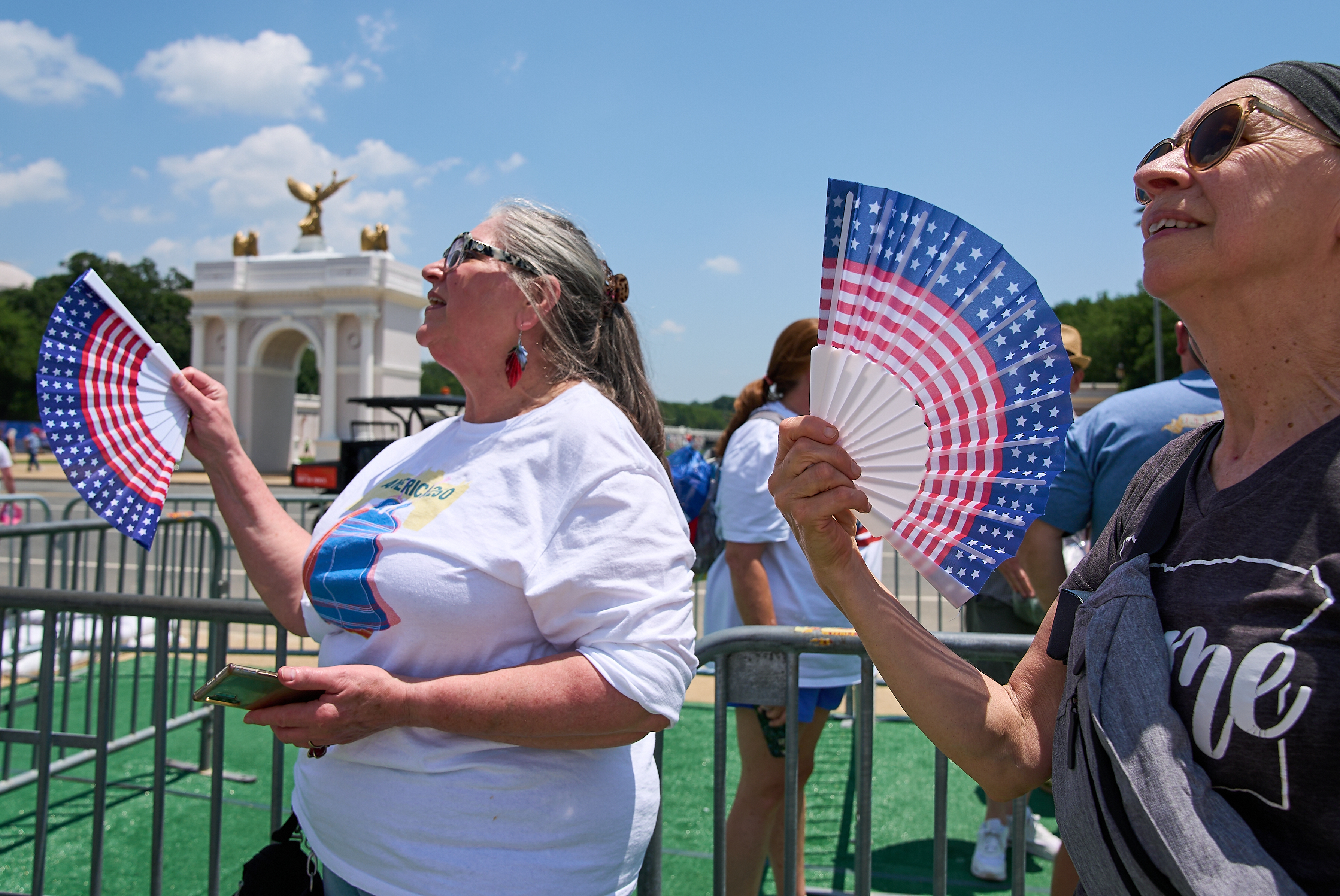
Elisa Bracamonte has lived in Arizona her whole life, so she’s used to adjusting her schedule and outdoor activities around high temperatures, especially during the summer months.
But the 74-year-old retired nurse from Tucson said she feels the heat has been impacting more of her day-to-day: summer plans with family members across the region, meetups with friends, road trips and her daily morning walk routine.
“I’ve noticed at least a 10 degree difference in the weather,” Bracamonte said. “Every summer, it seems to be getting hotter and hotter.”
According to the survey, U.S. adults are more likely to say extreme heat has had either a “major impact” or “minor impact” on their travel or vacation plans, electricity bills, their sleep, their family’s outdoor activities and more parts of their day-to-day life than in July 2024.
Much of that shift was among people who live in the West or Midwest.
Democrats are also more likely than Republicans to say that extreme heat has had a “major” impact on each item asked about.
Warming has endangered the globe especially in recent years; scientists calculated that Earth’s average temperature in 2025 hovered among one of the three hottest on record, along with 2024 and 2023. The U.S. has sweltered under dangerous heat domes over the past few years, and unusually high temperatures even early in the year.
Now, the poll shows how extreme heat is reshaping Americans’ daily lives.
“I have to get up at 5 in the morning to walk before 6, because by 7 it’s already in the 80s … I lose a couple hours of sleep because I’m having to wake up earlier,” added Bracamonte, who said she identifies as a very liberal Democrat. “You can’t stay outside without being sick unless you’re guzzling water the whole time — it’s just so, so hot.”
Electricity bills going up
About 8 in 10 Americans say their electricity bills have seen a “major” or “minor” impact from extreme heat over the last year, compared with 69% in July 2024, according to the survey.
Just under half of Americans living in the Midwest, 44%, say extreme heat has had a “major” impact on their electricity bills, up from 29% two years ago.
“I feel like my utility costs probably doubled in the last three or four years,” said Daemien Williams, a 50-year-old bridge inspector living in Cahokia Heights, Illinois, who identifies as a Democrat. “I do look at my bills pretty in detail and see that the kilowatts and the usage is actually up, not just the price that they’re charging for it.”
Travel and vacation plans impacted, along with family outdoor activities
Extreme heat is affecting Americans’ lives in other ways, the survey found.
Around 4 in 10 Americans say extreme heat has had either a major impact or a minor impact on their travel or vacation plans, up from about one-quarter in 2024.
“It has affected my entire family because we usually get together a lot during the summer,” Bracamonte said. ”We have family in Texas and we have family in upper Arizona. And we’ve seen that there’s been a lot more fires, a lot of more flooding, all that. So that kind of inhibits our plans to travel.”
Around 7 in 10 Americans say extreme heat has had either a major impact or a minor impact on their family’s outdoor activities, compared with about 6 in 10 in 2024.
Sean Conway, a 41-year-old direct marketer in North Shore, Massachusetts, said his kids’ soccer practice might either be postponed or canceled due to extreme temperatures, for example.
But to Conway, who considers himself a moderate independent, leaning Republican, this is minor. “Sometimes, you’ve got to just be out in the bad weather.”
It’s not surprising many Americans say they are feeling the impacts, said Jennifer Francis, a climate scientist at the Woodwell Climate Research Center who was not involved with the polling.
“Brutal, life-threatening heat waves have become more frequent, more intense, and more persistent in many parts of the globe, including our Western and Midwestern states,” Francis said. ”Extreme heat compounded with long dry spells have affected our health directly, along with indirect effects on our wallets.”
Climate change belief remains largely stable
Even as more Americans say they feel a personal impact from extreme heat, that does not mean an increasing number believe in climate change.
About two-thirds, 66%, of Americans believe climate change is happening, a slight decline from 73% in September 2025. About 17% say they are not sure if climate change is happening, and about 15% say it is not happening.
Williams, the Illinois resident, attributes his belief in climate change in part to extreme shifts in weather including very high and very cold temperatures.
“My biggest indicator of the change in the climate is just the flooding is a lot more often,” Williams said, noting that he believes in both natural and human causes.
John Hazel, a 33-year-old in Waco, Texas, says he’s noticed changes from when he was younger.
“When I was a kid, that seemed like a very rare thing when it did hit 100, everybody was like, whoa. And now it’s just every day,” said Hazel, a crime scene investigator. “Seasons felt a little more balanced. Now it feels like summer’s a bit lingering, it starts earlier and lasts longer.”
Hazel, who identifies as a conservative Republican and believes in climate change, said he plans around the heat.
“As soon as you walk outside, you’re already sweating even if you’re not doing much of anything. I’ve definitely noticed you’re having to take breaks from being outside, you have to bathe, shower more often,” Hazel said. “It’s definitely a bigger consideration.”
___
The poll of 1,165 adults was conducted July 23-27, 2026, using a sample drawn from NORC’s probability-based AmeriSpeak Panel, which is designed to be representative of the U.S. population. The margin of sampling error for adults overall is plus or minus 3.7 percentage points.
___
Alexa St. John is an Associated Press climate reporter. Follow her on X: @alexa_stjohn. Reach her at ast.john@ap.org.
The Associated Press’ climate and environmental coverage receives financial support from multiple private foundations. AP is solely responsible for all content. Find AP’s standards for working with philanthropies, a list of supporters and funded coverage areas at AP.org.
SALT LAKE CITY — Utah can enforce its strict anti-gambling laws on prediction markets such as Kalshi and Polymarket, a federal judge ruled in a win for states seeking to rein in the popular betting platforms.
Utah has been on the front lines of a battle between states and the federal government over who regulates the markets and whether they should be considered finance or gambling. The legal landscape is fragmented, with state and federal courts blocking restrictions in several states and allowing them in others.
Kalshi sued Utah in February, asking a federal judge to prevent the state from enforcing its gambling restrictions on the platform. The lawsuit came as Utah was on the verge of enacting legislation intended to undercut prediction markets from doing business in the state.
State law now bans proposition betting in sports — wagers on certain events happening in a game, rather than the game’s outcome — which is a significant source of revenue for the leading prediction markets.
U.S. District Judge Robert Shelby rejected Kalshi’s request to block the Utah restrictions Tuesday, saying the federal law that Kalshi cited in its argument does not prevent the state from enforcing its laws.
For now, Utah residents can still place bets on the platforms. The state’s attorney general, Derek Brown, said he will enforce state laws on Kalshi, but he was still exploring options.
“Gambling is gambling, no matter what any company calls it,” Brown said.
Kalshi said in a statement that it disagrees with the ruling and plans to appeal.
The company maintains that prediction markets fall exclusively under federal jurisdiction and are not governed by a patchwork of state gambling laws. The Commodity Futures Trading Commission, the federal agency responsible for regulating financial markets, agrees and has defended prediction markets in court.
Courts in Maryland, Nevada, Ohio, New York, and Wisconsin have ruled against Kalshi in similar lawsuits, while judges in New Jersey, Tennessee, Arizona and Minnesota have sided with the company. Other states have been allowed to restrict certain aspects of Kalshi’s operations without banning them entirely.
The Trump Administration has been supportive of prediction markets, which allow anyone with a smartphone to wager on just about anything. The president’s eldest son is an adviser for both Kalshi and Polymarket, and an investor in the latter through his venture capital firm. Trump’s social media platform, Truth Social, is also launching its own cryptocurrency-based prediction market called Truth Predict.
Utah leaders such as Gov. Spencer Cox have treated their fight to keep out anything they deem gambling as a moral crusade. The culture is rooted in the locally headquartered Church of Jesus Christ of Latter-day Saints, known widely as the Mormon church, which views gambling as a vice that leads to selfishness and addiction.
Prediction markets are “causing tremendous harm to countless American families,” Cox said in celebrating the ruling.
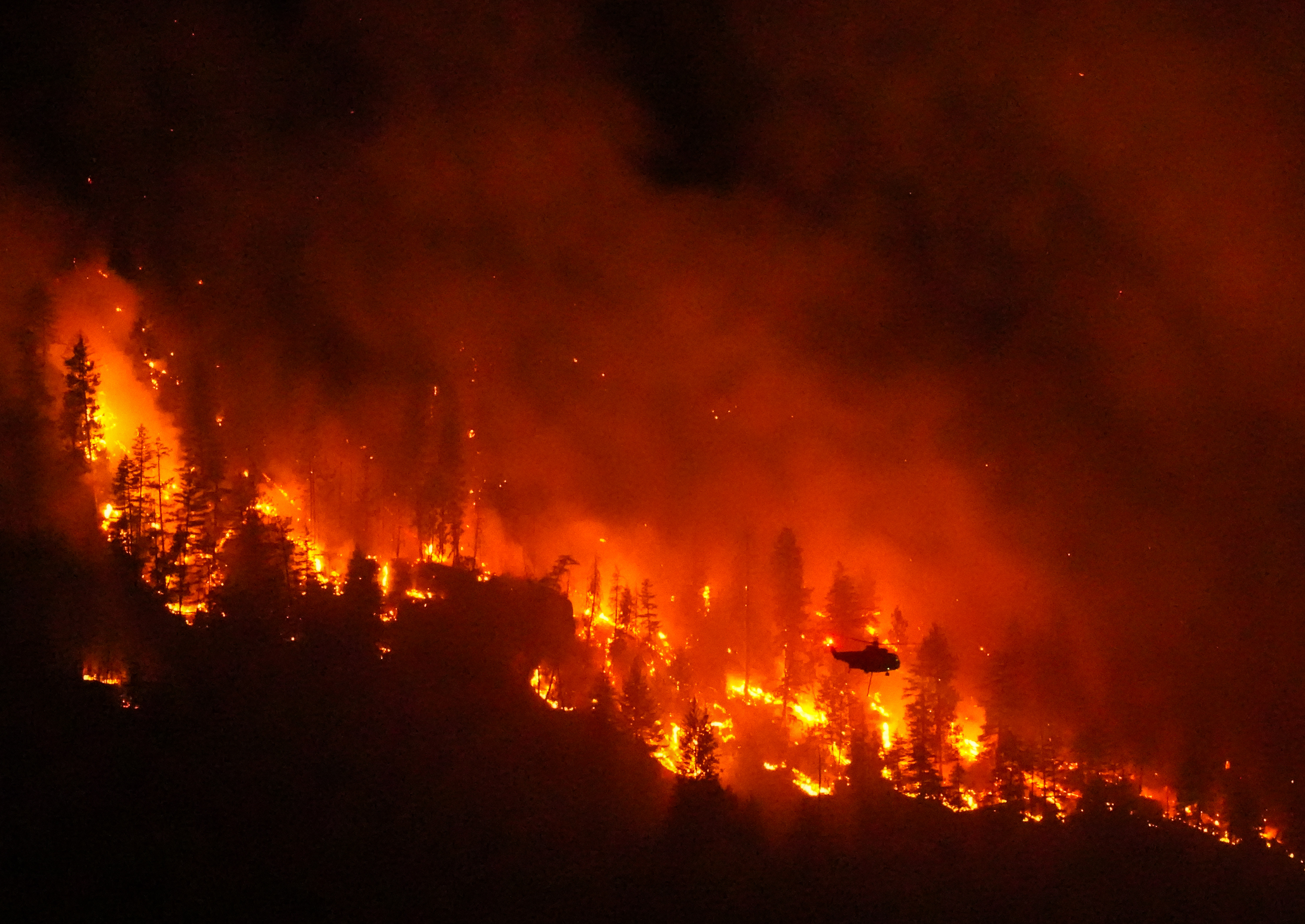
Human-caused climate change doubled the likelihood of the tinderbox weather conditions that sparked Canada’s massive summer wildfires and in turn angered U.S. President Donald Trump, according to a study released Thursday.
And fire and climate scientists said Trump, who has talked about punishing Canada for poor fire management and sending days of choking smoke across the border, should look more in the mirror than up north when it comes to blame. They point to the United States’ huge historical emissions of heat-trapping gases from the burning of coal, oil and gas.
The fire weather conditions in the Northwest Territories and northwestern Ontario, while unusual but not that rare, were still made twice as likely by global warming, said Thursday’s study by World Weather Attribution, a group of international scientists who examine extreme weather conditions to see if there are climate change fingerprints. It’s about the same as the team found for summer fires in France, but not nearly as clear a climate fingerprint as they calculated in Spanish fires, which the scientists said were 20 times more likely because of climate change.
The study, which was done so quickly it has not been peer reviewed yet, looked at the weather conditions that are connected to large wildfires and the Canadian index for those conditions, which are heat, lack of rain, humidity and wind. The researchers found the doubling of frequency when — using scientifically accepted techniques to search for climate fingerprints — they compared current conditions to a world without the 2.5 degrees of warming that’s occurred since the industrial age and burning of fossil fuels started. The weeklong weather conditions that led to the fires in Ontario are now the type that can happen every six years or so, the report said.
“In a pre-industrial climate this would have been much less likely to occur, maybe once in a lifespan. So climate change has made those events more likely,” said study co-author Jonathan Boucher, a fire scientist at Canada’s Forest Service.
Hotter, drier conditions connected to burning
Outside climate and fire scientists said the flash study made sense and reflects a world where hotter and drier conditions are making fires burn more often and more intensely.
“Mother Nature’s been burning. Now she’s on amphetamines and she burns more and more,” said Thompson Rivers University fire scientist Mike Flannigan, a Canadian expert who wasn’t part of the study.
Hazardous smoke spread across both the United States and Canada, choking large cities such as New York.
By burning more and more fossil fuels, “we’re putting nails in our coffins,” Flannigan said.
In the larger and remote Northwest Territories fires, where more than 5,000 square miles burned, it’s clear the spark was from lightning but it was the climate conditions that took that initial ignition and made the fire burn intensely and spread too fast to control, said Boucher and report lead author Theodore Keeping, a climate scientist at Imperial College in London.
While people start about half of Canada’s wildfires — accidentally or on purpose — fires sparked by lightning are responsible for more than 90% of the land area burned in Canada, Flannigan said.
“What we’re facing here is more of a climate related problem than a forest management problem,” Boucher said.
That’s not how Trump sees it.
Trump blames mismanagement, but scientists point to carbon
“A lot of damage has been done. They’re not managing their forests properly,” Trump said July 21. “And the wind has a tendency to blow right over New York City, right over, you saw Detroit, they had to close the whole place. Michigan was really affected. They had to close businesses for four days. It’s very serious what they’re doing, and they don’t seem to be able to do anything about it. If they managed their forests, they wouldn’t have the fires.”
When asked Sunday about punishing Canada, Trump on Air Force One told reporters he has decided on a punishment, adding “you’ll find out about it soon.”
Canadian climate and fire scientists said Trump doesn’t understand the root causes.
“Smoke does not carry a passport, but carbon pollution does have a history. That history shows that the United States contributed more than any other country,” said University of Victoria climate scientist Andrew Weaver. “President Trump is pointing at the smoke while ignoring America’s fingerprints on the climate conditions behind it.”
Study co-author Friederike Otto, an Imperial College London climate scientist, said, “if you care about anyone but the super rich, you have to stop burning fossil fuels because the impacts are here and they’re now and have huge consequences.”
Canada has warmed 65% more than the United States in recent decades. In the past 30 years, the amount of land annually burned by Canadian wildfires has gone up by about 50% while the amount in the United States has more than doubled.
A big problem that Trump doesn’t appear to understand is that much of Canada’s forests are remote, northerly and full of spruce and pine that burns hard and fast, all making it difficult to get a handle on, Boucher and Flannigan said.
“In Canada, when things are extreme, you have about a 30-minute window to put that fire out,” Flannigan said. “If you don’t get there in 30 minutes, you’re out of luck. And many of the fires that start in Canada are northern remote areas that are more than 30 minutes away from an airport. So even with perfect detection systems, we would get there too late and these fires are going to burn.’’
___
The Associated Press’ climate and environmental coverage receives financial support from multiple private foundations. AP is solely responsible for all content. Find AP’s standards for working with philanthropies, a list of supporters and funded coverage areas at AP.org.
SPOKANE, Wash. — Firefighters have taken advantage of cooler weather to begin getting a handle on wildfires that have displaced tens of thousands of people around Washington state’s second-largest city, but hotter, drier and breezier days lie ahead.
Officials reported Wednesday that firefighters had established containment lines around the perimeters of all three fires affecting Spokane and that they were focused on reinforcing those lines. Temperatures were expected to climb from the 80s the past two days into the upper 90s with less humidity, late this week.
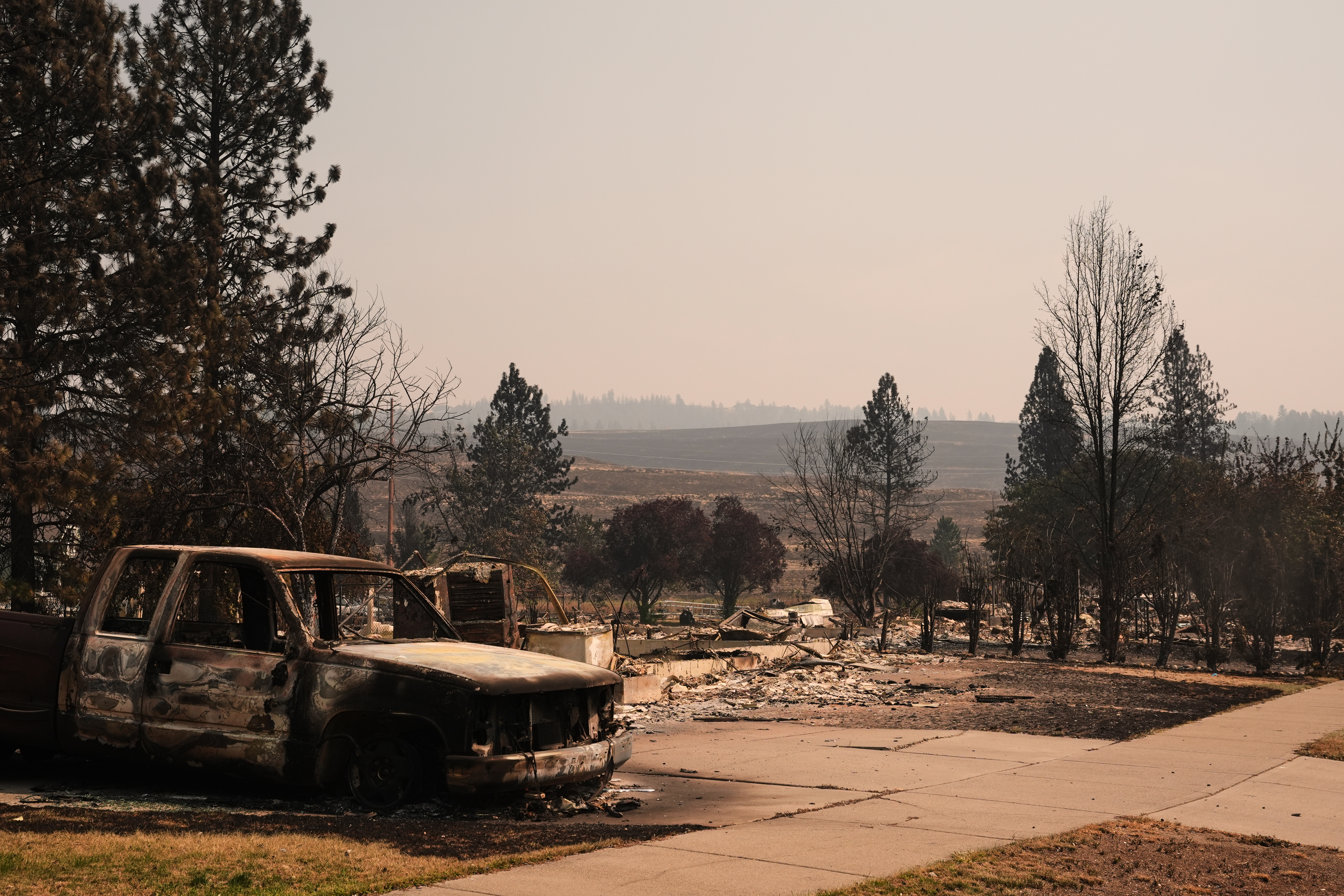
The fires — one of which authorities say was deliberately set by a man who was arrested and charged with arson — have destroyed about 850 buildings and forced the evacuation of around 67,000 people since they erupted last weekend. Damage assessment crews have yet to tally exactly how many houses have been lost or damaged. No deaths have been reported.
The other two fires were also started by people, though not necessarily deliberately, investigators have said. They remain under investigation. Those fires, the Autumn Lane and Fairview fires, started independently of the arson-caused Old Trails Fire, they said.
Unclear how long evacuations will last
Spokane County Sheriff John Nowels said during a Wednesday news conference that the evacuation zones will remain in place due to incoming weather and fire danger.
“We are not going to be downgrading these zones in any large way for many, many more days to come,” he said. “If we let people back in and we don’t have a high degree of certainty the fire lines will hold, we will put people in danger.”
Many evacuees remained in a shelter set up in a Spokane convention center, at hotels or rentals, or at the homes of friends or relatives, with no idea of how soon they might go back — if they have a house to return to.
“We figured it would be a day or two, not four or five. It’s not the best situation,” said Debra Curran, who has been staying at the convention center since Saturday with her husband, who has ALS, also known as Lou Gehrig’s disease. Their house survived, but her husband would need to be transported by ambulance, which officials won’t do until the fire risk in their neighborhood drops.
Among those under evacuation orders are patients and staff from the Mann-Grandstaff VA Medical Center in Spokane. When the fire approached on Saturday, the staff moved 27 patients to local hospitals and temporary shelters, said Bret Bowers, a spokesperson for the center. The medical center was not burned in the fire but several staff lost their homes.
Adam Wilson, a communications officer at the Washington State Auditor’s Office, fled Saturday with his wife and three children, ages 9, 14 and 16. They had moved into their Spokane home a little over a month earlier and were still unpacking, he said.
Since then, they’ve stayed at a hotel 90 minutes to the south and with his father in Idaho. This weekend, they’ll move again, to a rental home in Spokane that their insurance is covering.
Their house is fine, Wilson said, despite flames that leveled an entire cul-de-sac just two blocks away, leaving only chimneys standing in some cases. The neighborhood remains under an evacuation order. Even if they could return, there’s no power and no internet service, and no information about how soon either will be restored.
“What you really want to hear, nobody can tell you,” Wilson said. “It is oddly emotional and disorienting. We did not lose any property. From the outside it looks like a family trip — ‘Hey, kids, we’re going to go visit Papa for a week, pack your bags.’ … And yet you feel like something isn’t right.”
Bad fire season strains resources
The fires were among dozens across the Western U.S. that have stretched the ability of federal, state and local agencies to fight them. In Washington, there are 16 uncontained wildfires burning more than 672 square miles and being fought by more than 7,000 fire personnel, said Thomas Kyle-Milward, a spokesperson for the Washington Department of Natural Resources.
“We’re looking down the barrel at one of the worst fire seasons in state history,” he said.
U.S. Sen. Maria Cantwell of Washington said Wednesday that senators had received a briefing from Interior Secretary Doug Burgum, Agriculture Secretary Brooke Rollins and Wildland Fire Service Director Brian Fennessy, who assured them that keeping firefighting assets, including ground crews and aircraft, in the Northwest is a priority.
“We are still at the highest risk in the nation and appreciate being the highest resourced,” Cantwell said in a written statement.
The man charged with starting the Old Trails Fire, Aaron F. Farinacci, 37, of Spokane, was expected to be arraigned Thursday. According to court documents, he was arrested after a resident reported him being in the area where the fire began. He denied having started it when questioned by deputies.
Authorities said they previously contacted him during two fire investigations last year, including one in a state park that prompted evacuation notices, though he wasn’t charged in either.
In California, authorities said Wednesday that they arrested a 65-year-old man on suspicion of sparking a major wildfire by recklessly operating equipment without complying with state fire prevention requirements. Prosecutors will determine whether to file criminal charges. The blaze that erupted Monday had scorched nearly 15 square miles of forest in Calaveras County southeast of Sacramento.
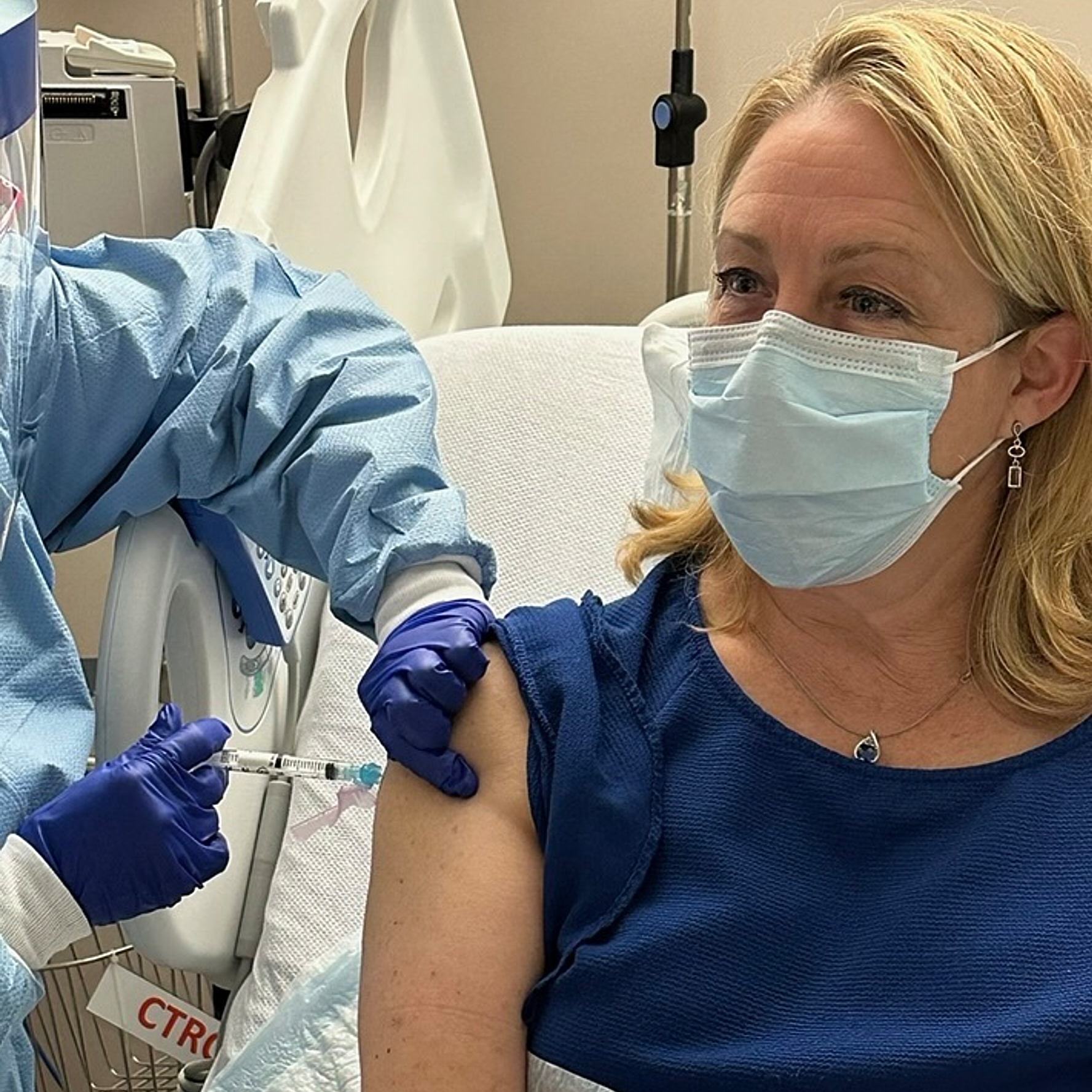
Dr. Stacy Norton was only 7 years old when her mother died of colon cancer, one of several family members struck by aggressive tumors at unusually young ages. Decades later, Norton rolled up her sleeve to help test if a new kind of vaccine might protect her and her own children from cancer.
The Houston doctor is among an estimated 1 million Americans who have Lynch syndrome, a faulty gene passed from a parent that puts them at extremely high risk of colorectal cancer and more vulnerable to certain other cancers, too. They’re often urged to get yearly colonoscopies — far more often than usual — that can spot and remove precancerous growths called polyps.
Now scientists are creating vaccines that aim to go further, teaching the immune system to intercept this type of brewing colon cancer before it turns into a full-fledged tumor. At least three potential Lynch syndrome vaccines are in development, including two in early clinical trials in the U.S. and a third beginning in Britain.
The shot that Norton helped test appears promising enough that its lead researcher, Dr. Eduardo Vilar-Sanchez of the MD Anderson Cancer Center, expects a larger study to begin early next year.
“It gives me hope,” said Norton, 59, of Houston Methodist Willowbrook Hospital. She had already survived a different Lynch-caused cancer and has two children in their 20s who inherited her mutation. If a vaccine pans out, “perhaps they won’t have to have a colonoscopy every single year for the rest of their lives.”
Lynch syndrome is caused by an inherited genetic mutation
Everyone has what are called mismatch-repair genes, which are essentially spellcheckers to help fix DNA mistakes that can occur when our cells multiply. With Lynch syndrome, one of those genes can’t do its job properly, making it harder for the body to stop a buildup of abnormalities that can lead to tumors, often before age 50.
Colorectal cancer is the most common consequence. The average person has a 5% risk of developing it during their lifetime. A Lynch carrier’s risk can reach as high as 80% depending on which faulty gene they inherit, Vilar-Sanchez said.
Another big risk is endometrial, or uterine, cancer. Lynch carriers also are more likely to get other cancers including pancreatic, stomach, ovarian and certain skin cancers — and a kind of brain tumor that killed Norton’s sister at age 25.
Norton knew some of her mother’s relatives had also experienced colon cancer, but she was in her 40s before a gene test confirmed she has Lynch syndrome. She switched from every-so-often to yearly colonoscopies. As an obstetrician/gynecologist familiar with other Lynch risks, Norton also decided to have a precautionary hysterectomy. Surgeons discovered early-stage cancer in her removed uterus.
Possible vaccines to stop gene-caused cancer
Today there are two cancer-preventing vaccines, the HPV and hepatitis B shots that block infection from those tumor-causing viruses. But developing vaccines to prevent gene-caused cancer is more challenging than alerting the body to foreign intruders like a virus.
Lynch-fueled growths “tend to accumulate hundreds of mutations that are going to generate proteins that are novel, not made by our normal cells,” Vilar-Sanchez said. “You can train the immune system to recognize those proteins.”
In a first-step study, Norton and 44 other Lynch carriers tested a vaccine made by Swiss biotech Nouscom that teaches the immune system to spot 209 of those abnormalities in Lynch-caused precancers. That revved up tumor-eliminating T cells and a year later, colonoscopies showed fewer precancerous growths and no advanced polyps, the MD Anderson team reported in Nature Medicine.
“Can we even further stimulate the immune system” to keep up with Lynch syndrome-spurred tumor formation, asked Dr. John Marshall, a Georgetown University oncologist and adviser to the Colorectal Cancer Alliance who wasn’t involved with the study. “This early paper suggests that yeah, maybe we can.”
For the first time since 2014, Norton’s own colonoscopies one and two years after vaccination were polyp-free. She’s also part of a subset of study participants given a booster shot a year later; more data on that is expected this fall.
Oxford University researchers are beginning initial testing of a similar approach to attack Lynch-spurred precancers, a vaccine made by Massachusetts-based Moderna using the mRNA technology behind its COVID-19 shot.
And scientists are awaiting results from a slightly larger study comparing California-based ImmunityBio’s Tri-Ad5 vaccine, which flags some different cancer markers, to a placebo.
Is Lynch syndrome tied to the rise in young adult colon cancer?
About 158,000 people are diagnosed with colorectal cancer in the U.S. each year, most of them over 50. Cases in younger adults are increasing, though it isn’t clear why.
Lynch syndrome affects about 1 in 279 people. While most don’t know it, more may be learning they have the inherited disorder, Vilar-Sanchez said, as genetic testing is increasingly discussed with people with Lynch-related cancer in the family or who get certain tumors at young ages. That in turn can show if close relatives might also be at risk.
For the average person, U.S. guidelines call for routine colorectal cancer screening — with a colonoscopy or other kinds of tests — to begin at age 45. But at any age, get a checkup for symptoms such as blood in stool or rectal bleeding; changes in bowel habits such as diarrhea, constipation or narrowing of stool that lasts more than a few days; unintended weight loss; and cramps or abdominal pain.
WASHINGTON — The Food and Drug Administration has approved a new kind of flu vaccine for older people, the first made with the same mRNA technology that was key to ending the COVID-19 pandemic, manufacturer Moderna said.
The shot, named mFlusiva, is intended for adults age 50 or older. Other brands of flu shots already have begun arriving in pharmacies ahead of fall vaccination season, and Moderna said late Wednesday that it expects some of its new version to be available soon at select retailers.
While there already are multiple flu vaccine options in the U.S., including three specifically recommended for people age 65 or older, tens of thousands of Americans die from influenza every year, and older adults are among the most vulnerable.
Flu vaccines must be updated annually to best match circulating strains of the virus. Vaccines made with the Nobel Prize-winning mRNA technology are faster to manufacturer than other types, and experts say this additional option might help if the shape-shifting flu virus mutates in a way that requires suddenly brewing new doses.
Moderna said the FDA granted full approval for mFlusiva’s use in people ages 50 to 64, based on a study of 40,000 people that found 27% fewer flu cases among people who got the new shot compared with those who got a different common flu vaccine brand. For people 65 or older, the Cambridge, Massachusetts-based manufacturer said the FDA granted what’s called accelerated approval for the shot — based on a smaller study showing it generated a strong immune response compared with an existing high-dose vaccine for seniors — while it conducts an additional study.
Moderna’s data showed no major safety issues although the shot did cause some temporary reactions including injection site pain, fever, headache, tiredness and aches that occurred somewhat more than with today’s flu shots.
The FDA action comes after a highly unusual public dispute over mFlusiva earlier this year. A then-top FDA official blocked the company’s application, a sign of the agency’s heightened vaccine scrutiny under Health Secretary Robert F. Kennedy Jr. Days later, the agency changed course after Moderna publicly challenged the ruling — and in June a panel of independent advisers to the FDA unanimously recommended the vaccine’s approval.
SAN DIEGO — At Blue Star Learning, a vocational school that defrauded taxpayers of $29 million in GI Bill funds, learning was not the point.
Over four years, more than 1,100 military veterans packed Blue Star Learning’s classrooms next to a Jack in the Box fast-food joint here, ostensibly to learn basic computer skills. In reality, most enrolled just to collect a GI Bill housing allowance of about $3,000 per month, according to court documents and law enforcement records obtained by the Washington Post as part of a Freedom of Information Act lawsuit.
Veterans logged 18 hours in class a week to conjure the illusion that they were full-time students entitled to housing subsidies. Most spent the time snoozing, scrolling through YouTube or “just hanging out,” Justin Foose, Blue Star Learning’s former admissions director, told federal agents.
Meanwhile, Blue Star’s instructors pretended to teach while the school received millions of dollars in GI Bill tuition from the federal government, according to investigators’ files.
Foose said the hoax revealed itself when a government regulator showed up unexpectedly and poked his head in a classroom. “Clear as day, everybody’s on videos, and there’s one instructor up there, picking his nose,” Foose told the agents in a recorded interview. “You don’t even have to run a school or even be in education to walk into this place and realize that it’s a joke.”
Blue Star Learning was what federal agents call a “ghost” or “shell” school. Before its owner was convicted of fraud and sent to prison in 2020, Blue Star was in the vanguard of a GI Bill racket that has since been mimicked across the country, according to agents.
Unlike fraudulent GI Bill trade schools that exploit veterans by charging the government sky-high tuition to teach simple skills like grass-growing or rock-making, ghost schools rely on vets to be complicit in their schemes.
Since the first Trump administration, the Justice Department has won criminal convictions or imposed civil penalties against the operators of least 12 ghost schools for defrauding the Department of Veterans Affairs (VA) under the GI Bill, according to federal court records and law enforcement files. All were for-profit vocational programs in which large numbers of students habitually skipped class or showed up while doing little to no work, the documents show.
Investigators told the Post that they suspect they’ve uncovered only a fraction of the ghost schools that are cheating the federal government. They noted that ghost operations can be surprisingly difficult to detect, in part because GI Bill students who profit from such scams are unlikely to file complaints.
Besides defrauding taxpayers, such rackets undermine the legitimacy of the GI Bill and make it harder for other veterans to trust that they can get a quality education from any school bearing the government’s stamp of approval.
Since the GI Bill’s passage toward the end of World War II, its purpose has been to help former service members gain skills to join the civilian workforce. The $11 billion-a-year program run by VA funds 36 months of tuition for veterans at a college or trade school.
VA also pays a housing subsidy directly to student veterans based largely on the cost of living in their area. Last year, the median subsidy nationwide was $2,161 per month, according to VA data. In some parts of the country, the monthly allowance can exceed $4,000.
For veterans who are eligible for the GI Bill but don’t want to further their education, ghost schools have provided a benefits shortcut.
“Some veterans maybe aren’t that interested in getting their education,” Michelle Wasserman, then a federal prosecutor who oversaw the investigation into Blue Star Learning, said during a court hearing. “They go to a school like this, where they don’t have to do very much or not very much is asked of them. It’s kind of a fakey education and everyone is happy. The school owner gets a bunch of money and the veterans get to keep their benefits.”
Lax oversight has contributed to the problem. Under federal law, VA auditors are required to visit schools funded by the GI Bill every two years to examine financial records and student files. But a July report by VA’s Office of Inspector General found that of roughly 7,600 schools nationwide, 479 had not received a routine compliance visit in more than three years — and 153 others had never had one.
In addition, few standards exist to ensure that trade schools are delivering a quality education. Most colleges that grant degrees must obtain academic accreditation to qualify for GI Bill money, but trade or vocational schools are not required to do so.
Ten of the 12 schools that the government took action against were unaccredited, according to federal court records and law enforcement files.
While some ghost-school owners and operators have gone to prison, veterans have almost never been prosecuted for participating in such ruses. The Post could identify only one case in the past decade in which veterans faced criminal charges for swindling VA out of housing money by enrolling at a ghost school.
In that instance, the Justice Department won a fraud conviction in 2019 against the owner of a California truck-driving school — an Army veteran — who pleaded guilty to running a $4.2 million phantom-class racket. Two school employees also pleaded guilty to fraud.
More than 100 veterans enrolled in courses at the trucking school that never took place, according to the Justice Department. Federal authorities left it to the California attorney general’s office to determine whether to file state criminal charges against veterans who allegedly collected housing stipends under false pretenses.
Ultimately, California prosecutors charged 35 of the veterans with conspiracy to commit grand theft, forgery and other fraud-related counts. The rest were not charged.
To charge veterans who enrolled in such programs, authorities must prove intent to defraud, not just that students were lazy or failed to complete coursework.
VA Inspector General Cheryl Mason, whose office acts as an independent watchdog that investigates cases of suspected fraud, said it can be difficult to distinguish between veterans who con VA for housing money and those who enroll in unchallenging schools just so they can pad their resumes.
“While veterans can be colluding in these cases,” she told the Post in an interview, “oftentimes the veteran is a target. And they’re sold on it as, you know, this easy thing. ‘Oh, it’s easy. You can do this. And let’s go tell all your friends.’”
To better understand the ghost-school schemes, the Post sought GI Bill enrollment and complaint databases from VA under the Freedom of Information Act (FOIA), as well as records from law enforcement investigations conducted by the inspector general’s office.
The government denied the requests, citing privacy exemptions. But the Post sued to compel the release of the material, arguing that it was in the public interest. After a year-long legal battle, VA and its inspector general’s office released some of the databases and thousands of pages of law enforcement files. The Post also reviewed court records from ghost-school prosecutions across the country.
The Post made multiple requests with VA to interview Kenneth Smith, the executive director of its Education Service. The department declined. VA officials also declined to respond directly to written questions about the problem of ghost schools and the abuse of GI Bill housing benefits by some veterans.
In a statement, VA Press Secretary Quinn Slaven said a White House anti-fraud task force led by Vice President JD Vance “is moving at unprecedented speed and ferocity to root out the waste, abuse and criminal exploitation of government programs in these areas and others.” Earlier this year, he added, VA created a tool that assigns a fraud risk score to schools and started a compliance and enforcement division to refer cases to the inspector general’s office.
At the same time, he blamed state governments for enabling fraud within the GI Bill program in general. “The problem is that many state-level bureaucrats have looked the other way for years as fraudsters robbed government programs blind,” he said.
VA has contractual arrangements with state governments to help approve and monitor GI Bill schools. Some states, in turn, have blamed VA and federal lawmakers for not doing more to deter fraud and for not giving them more resources to conduct oversight.
In the case of Blue Star Learning, a staffer working for the California Department of Veterans Affairs, or CalVet, in 2016 became the first regulator to report signs that the school might be a sham, according to law enforcement records. But it took three more years until federal and state officials jointly forced Blue Star to close.
CalVet declined to respond directly to written questions from the Post about ghost schools in the state. A spokeswoman, Kate Hoit, released a statement saying that California veterans “deserve programs that deliver real training and opportunity.”
“CalVet takes any allegation of fraud involving GI Bill benefits seriously and is committed to protecting both veterans and taxpayers through rigorous oversight, accountability, and close coordination with state and federal law enforcement, and oversight partners,” she added.
A 230-mile commute
During the first Trump administration, the VA inspector general’s office formed a specialized unit to ferret out education fraud with sophisticated data-analysis tools.
Under GI Bill rules, colleges and universities can teach classes online, but veterans enrolled at trade schools must attend in person. Federal agents had grown suspicious that many vets were abusing the rule so they could collect housing benefits.
Using public records and other databases, analysts examined vocational school rosters to pinpoint where students lived. At some schools, they discovered that large numbers of students lived unusually long distances from campus — often in another state, according to Michael Missal, who served as VA inspector general from 2016 to 2025.
“They’re supposed to be in class, but how could somebody in Hawaii be showing up for a class in Kansas, you know, every Tuesday?” Missal told the Post in an interview. “That doesn’t make any sense.”
One of the most blatant examples was California Technical Academy, a computer-training school that taught hundreds of veterans at three hubs near Los Angeles and San Diego. In 2020, analysts determined that about 40 percent of its GI Bill students lived more than 75 miles away from the school’s campuses, a clue that they were probably not meeting VA’s requirement that students attend 18 hours of class in person each week, according to investigators’ files.
Agents knocked on the door of one veteran’s residence in Las Vegas — about a 230-mile drive from the campus in Riverside where he purportedly attended classes. When they questioned whether he was really driving all that way to go to school, he replied unconvincingly that he was, according to the agents’ notes.
The veteran ended the interview by stating, “I hope I am not going to prison for this.” (He did not.)
Investigators theorized that California Technical Academy became a magnet for ghost students because of its location, according to law enforcement files. At the time, veterans attending school in Southern California typically received GI Bill housing subsidies exceeding $3,000 per month.
Analysts cross-checked another set of databases and discovered that 56 veterans who were registered as full-time students at California Technical Academy also held full-time jobs working for the Department of Veterans Affairs, according to law enforcement files.
While it was conceivable that people were putting in a combined 60 to 80 hours a week at school and the office, agents concluded it was more likely that the VA employees were skipping class and double-dipping to get their full-time paychecks and housing money.
Undercover agents placed the school’s campuses under surveillance and conducted surreptitious interviews. Staffers acknowledged that few veterans showed up for class. They also told agents that the academy falsified transcripts and enrollment records before submitting them to VA, according to law enforcement files.
In 2022, federal agents raided the three campuses and seized the academy’s financial assets. The next year, the school’s chief executive and two other administrators pleaded guilty in federal court to defrauding VA in a scheme that involved nearly 1,800 veterans and lasted a decade.
The federal government said its losses from California Technical Academy totaled about $105 million, two-thirds of it on housing subsidies and the rest on tuition. The Justice Department said it was the costliest GI Bill scam of any kind since lawmakers expanded the program in 2008.
During sentencing, defense attorneys for the two other administrators sought leniency from the judge on the grounds that their clients were uneducated or unsophisticated, court records show.
One, Philip Abod, a longtime instructor, had dropped out of ninth grade with a 0.25 grade point average; the other, Eric Bostock, a former janitor who served as director of student services, had “cognitive limitations” and an IQ of 82, according to court filings and statements by their lawyers. Each was sentenced to a year and a day in prison. Neither responded to requests for comment.
Michael Bostock, the school’s chief executive and founder, and brother of Eric Bostock, pleaded guilty in 2022 to conspiracy to commit fraud. He admitted falsifying transcripts and attendance records to deceive VA and received a five-year sentence. A judge ordered him to pay $105 million in restitution.
In an interview last year with the Post while serving part of his sentence in home detention in Idaho, Bostock said California Technical Academy provided a legitimate education to those who wanted it. “We knew that there was cheating going on and things like that and we just, I made my instructors focus on the students that really wanted to be successful,” he said.
But he acknowledged that many veterans signed up just to receive housing allowances. He said he told the staff to let those veterans skip class under the guise that they were conducting “independent study,” an arrangement that violates GI Bill rules. Veterans who did little or no academic work still received passing grades so they could sign up for more courses, he added.
Typically, Bostock said, those students were in their late 50s or 60s and had no motivation to learn because they were already settled in their careers or retired.
“They were very open about it. They’d say, ‘We want, I want the easiest program. What’s the least amount I can do?’ And several of them would enroll in that program,” he recalled. “And then they would stay there as long as they could.”
Bostock received a five-year sentence in the case, and a judge ordered him to pay $105 million in restitution. Kyle Green
‘We’re here to earn, not to learn’
At other ghost schools across the country over the past decade, operators did little to conceal the bogus nature of their classes. In some cases, they offered kickbacks to recruiters who signed up veterans, according to court records and law enforcement files obtained under FOIA.
In Hawaii, a massage school owner pleaded guilty last year in federal court to defrauding VA of more than $9 million. Brian Matsudo, who ran the Elite Massage Academy in Honolulu, admitted arranging kickbacks for recruiters who enrolled no-show vets in courses that cost VA as much as $21,455 in tuition per student.
In Virginia, the owner of a small welding school paid a recruiter to induce veterans to register for fake courses in “fine arts welding” and “exotic welding,” then charged VA as much as $34,200 per course, according to court records and investigators’ files. In comparison, welding classes at a nearby community college cost between $500 and $1,000, the files show.
Undercover federal agents staked out the school — the Hampton Roads Skills Center in Newport News — and spied students clocking in and then, a few minutes later, clocking out, the files show. Other times, agents found the school doors locked during the day and the parking lot empty.
One veteran who purportedly received 600 hours of instruction told agents that he didn’t put on a welding mask even once. “I never had no interest in no welding,” he admitted, law enforcement files show.
The owner, Wilbert J. McNair Jr., a church pastor, pleaded guilty in 2017 to defrauding VA of $1.4 million in tuition for 83 students. He was sentenced to more than three years in prison and ordered to repay the money.
In court filings, prosecutors called Hampton Roads Skills Center “a sham school.” They calculated that veterans enrolled there received a combined $1.2 million in housing subsidies. Yet none of those veterans faced charges for accepting that money.
One veteran signed up for nine welding classes so he could collect $46,000 from VA for housing and books — even though he already had worked as a professional welder for nearly a decade and as a welding instructor at another school, according to McNair’s plea agreement.
Six of the ghost schools that the federal government has investigated over the past decade were barber or cosmetology programs.
In Mississippi, a hairstyling school called April’s Mane Attraction certified to VA that veterans received 1,500 hours of instruction to prepare for the state barbering exam. Federal agents, however, discovered that classes were rarely taught, that some registered students lived hundreds of miles away from the school, and that the coursework included word puzzles designed for children learning their colors, according to investigators’ files.
The GI Bill requires schools to charge veterans and civilians the same tuition. Yet the hairstyling academy billed VA $22,400 per student — about 10 times more than what it charged nonveterans, investigators’ files show.
In 2024, a judge ordered the school and its owner, April Tucker Beard, to pay more than $900,000 in civil damages and penalties after the Justice Department sued, alleging violations of the False Claims Act. Beard did not respond to messages seeking comment.
In Chesapeake, Va., the College of Beauty and Barber Culture served veterans who, on paper, were looking to launch careers as hairstylists. Most collected about $1,500 from VA for housing each month and up to $1,000 annually for books and supplies, according to court records and investigators’ files.
But of the more than 350 veterans who enrolled in the college, only seven were able to pass a state exam to obtain a barber or cosmetology license, the files show.
Veterans later admitted to federal agents that the school was full of “ghosts” and that their unofficial motto was, “We’re here to earn, not to learn.” They said students were instructed to sign attendance logs each day so VA auditors would think that classes were taking place, according to investigators’ files.
The school’s husband-and-wife owners, William and Katherine Grobes, pleaded guilty to defrauding VA of $4.5 million in tuition. Each was sentenced in 2017 to five years in prison and ordered to repay that amount of money. They did not respond to requests for comment.
Prosecutors said veterans who attended the school received a total of $10.5 million in GI Bill money for housing, books and supplies.
None of the students faced charges.
‘We were desperate’
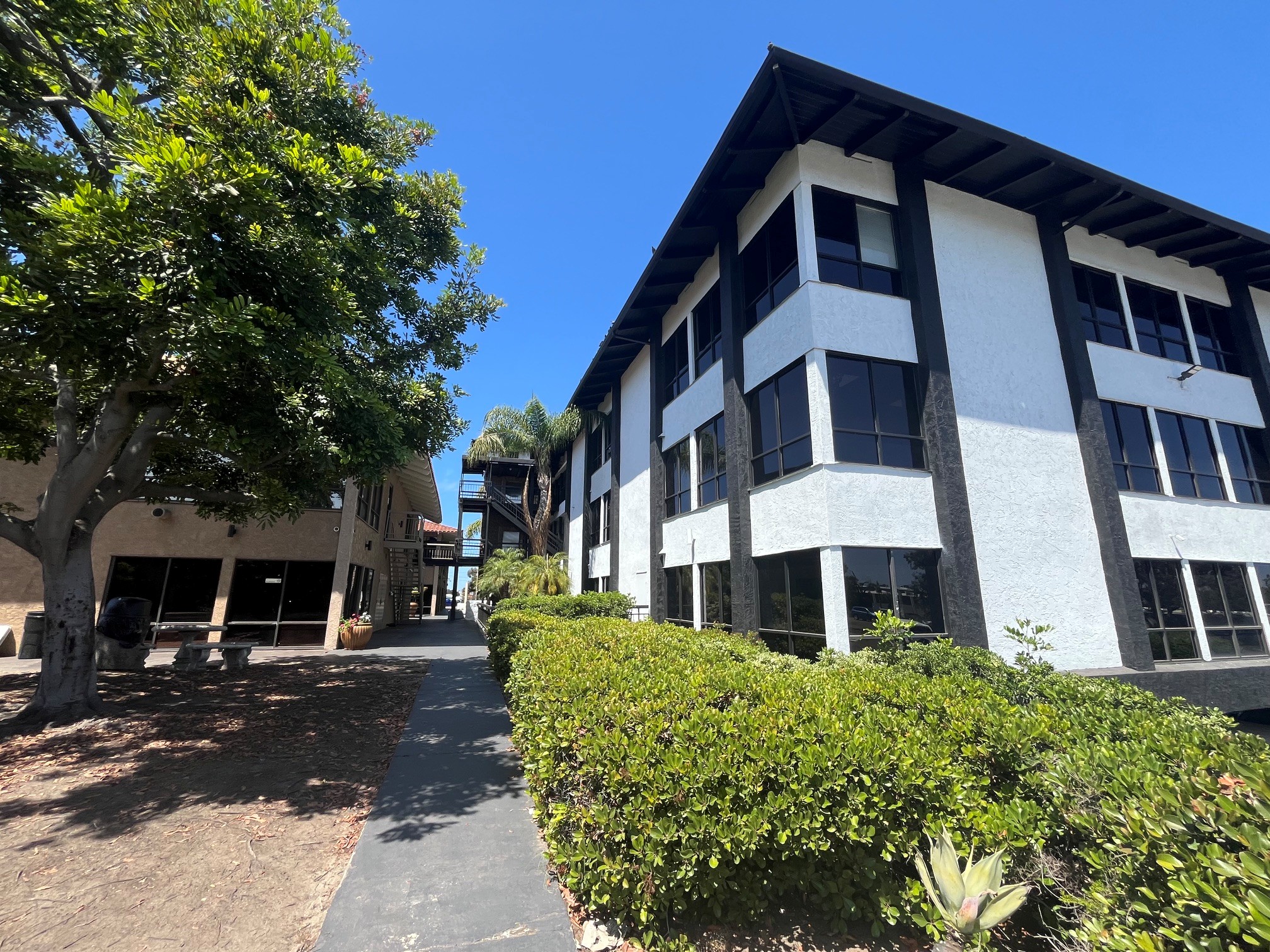
Before veterans flocked to it, Blue Star Learning was a tiny IT service business that taught basic hardware and software courses in a strip mall north of downtown San Diego. Most of Blue Star’s clients were private companies or state agencies with entry-level personnel looking to improve their computer skills.
The San Diego building at right was home to Blue Star Learning, a vocational school that defrauded taxpayers of $29 million in GI Bill funds.Craig Whitlock
The owner, Nimesh Shah, told the Post in an interview that he bought the school in 2010 for $50,000 but struggled to make ends meet. After two years, Blue Star was generating just $3,500 a month in revenue, he said. Some weeks, Shah couldn’t find enough students to hold a class. “We were just sitting there,” he recalled.
Around 2012, a consultant suggested that Shah seek VA approval to offer computer training for veterans under the GI Bill. Shah said he knew “nothing” about the GI Bill then but was aware San Diego was a military town with lots of veterans. He paid the consultant about $4,000 to prepare Blue Star’s application.
“I was like, doesn’t hurt,” he said. “We were desperate.”
In 2013, VA cleared the school to accept GI Bill students. A handful of veterans signed up for three-month courses that cost between $2,000 and $5,000, and the school’s finances stabilized, Shah said. “We were able to pay the rent,” he added.
Then, in 2015, Blue Star’s fortunes transformed almost overnight. One evening, a Navy veteran walked in and offered to triple Blue Star’s business by rustling up scores of his old Navy buddies.
“He’s like, ‘Look, I have 80 to 100 folks and we are happy to bring them over to you,’” Shah recalled. There was just one catch. Instead of attending classes Monday through Friday, these veterans could come only twice a week because most had full-time jobs.
Shah said he knew that arrangement might conflict with VA rules, which required veterans enrolled in trade schools full-time to attend in person 18 hours each week.
He said he didn’t think it was feasible to teach nine hours at a clip. He also wondered how these veterans could juggle a heavy class load while staying employed full-time. So he proposed a compromise: classes three days a week, for six hours each. The Navy veteran agreed, Shah said, adding: “Right there and then, he’s like, ‘You’re on!’”
Privately, Shah figured it was too good to be true. But the following Monday, he said, Navy veterans swamped Blue Star with phone calls and emails, wanting to register for class. The school immediately had to scramble to find more classroom space.
Things snowballed, and within a year, the number of veterans enrolled at Blue Star nearly quadrupled. In 2016, VA paid the school $7.4 million to cover their tuition, investigators’ files show.
“Word of mouth got out really quick, and five guys brought five guys, and they each brought five guys. It was just insane,” Foose, the school’s former admissions director, told federal agents. “It was like 800-something people. They didn’t even fit in the school because they would just line up out the door.”
What soon became apparent, however, was that these GI Bill students were not there to learn, according to Shah and Foose. They said most were men in their 50s and 60s who had good-paying government jobs: at the post office, at the VA medical center in La Jolla, or at nearby military bases as defense contractors. Others were retired and collecting military pensions, as well as disability compensation from VA.
“When you start teaching them, they were nonchalant about it,” Shah recalled. “They’re like, ‘OK, fine. You know, teach me, don’t teach me. I don’t care.’” They didn’t explicitly say they just wanted their GI Bill housing money. But Shah and his staff caught on. “We got the point,” he said.
As he became more savvy about the GI Bill, Shah said he realized the school could charge much higher prices for undemanding classes as long as he didn’t exceed VA’s annual tuition cap. He increased tuition fourfold, to more than $20,000 per course — about three times what San Diego State University charged in tuition for a full year of classes, court records show.
To obtain VA’s approval for the tuition increase, Blue Star had to certify that it was obeying two federal regulations: that it was charging veterans and nonveterans the same amount, and that at least 15 percent of the students in every course were civilians. Those requirements for GI Bill schools are based on the logic that if at least a small number of civilians were willing to pay full tuition, then the class must be legitimate.
In his interview with the Post and in court records, Shah admitted that he and Blue Star repeatedly lied to VA about following the rules because it couldn’t find enough civilians to pay the higher tuition. It took regulators years to uncover the extent of his deceit, despite obvious warning signs that Blue Star had become a fraudulent operation.
Fake companies and burner phones
In 2016, while Shah was vacationing in Mexico, a senior education specialist with the California Department of Veterans Affairs named Shane Ferrebee arrived at Blue Star for an unannounced visit.
Under an arrangement with VA, California officials were responsible for monitoring GI Bill schools in the state and ensuring they adhered to regulations.
Blue Star had recently submitted an enrollment form stating that it had 700 GI Bill students, according to an account Ferrebee later gave to investigators. He said he thought that was fishy because Blue Star only had a few classrooms, according to an account he later gave to investigators.
His suspicions were already heightened because he had warned Shah the year before that the ratio of veterans to civilians at Blue Star was out of balance. “I never trusted the guy,” Ferrebee recalled in an interview with federal agents. “He was just too nice, and just too friendly and just [had] too many veterans.”
He decided he had grounds to conduct a surprise inspection.
Ferrebee looked in a classroom and found 50 students watching videos and “just hanging out,” with no instruction taking place, investigators’ files show. He also determined that Blue Star was still violating the 15 percent rule because it had too few civilians. Soon after, he notified the school in writing that it was being removed from the GI Bill program.
Shah knew he had been breaking the rules, he told the Post. He said he was forced to lay off most of his staff.
But Blue Star had become dependent on GI Bill money, so Shah hatched a risky and complex plan to get back in, court records show.
To persuade VA and California officials that the school now had enough civilian students, Shah submitted falsified enrollment data, according to court records and investigators’ files. He included a spreadsheet with the names of recent graduates and their employers — but most of the names and companies were fake, the records and files show.
Shah also paid someone to create individual websites for 30 phony companies. He had a Blue Star staffer buy 30 cell phones so that if regulators called the contact numbers listed on the websites, his staff could answer, court records show.
The gambit initially worked. In 2017, one year after removing Blue Star, California and VA officials readmitted the school to the GI Bill program. Veterans eager to cash in their housing allowances returned in droves, according to investigators’ files.
But the following year, Blue Star caught the attention of investigators working for VA’s inspector general.
As they did with California Technical Academy, analysts cross-checked names of Blue Star students with a database of VA employees. They found 50 people who were claiming to be studying full time at Blue Star while collecting full-time paychecks from VA.
Over several months, agents secretly interviewed former students and employees. Many described the computer classes as a farce and said that it was an open secret that veterans enrolled just to get their housing benefits, according to investigators’ files.
One former administrator told them about the list of fake names and companies that Shah maintained, the files show.
In June 2019, agents working for VA’s inspector general and the FBI raided Blue Star’s offices. Other agents arrived at Shah’s home to question him. He promptly confessed to falsifying records, according to investigators’ files and court records.
“I admitted it because, see, once you have the feds kicking in your door, there’s no point in lying,” Shah told the Post.
He also acknowledged that he was driven by greed. “It was lucrative,” he said. “I mean, there’s no ifs, ands or buts.”
In November 2019, Shah pleaded guilty in federal court to wire fraud and making false statements. Prosecutors calculated that VA lost $29 million in the Blue Star scam. Of that, $11 million was tuition paid to the school and $18 million was housing money paid to veterans.
At Shah’s sentencing the next year, his attorney, Michael Lipman, said Blue Star was “not a total sham” because some courses were actually taught, even if veterans were not paying attention. But he acknowledged that Shah “chose to do something really stupid” and that he “lied repeatedly,” including by inventing “totally fictitious students” to increase the number of civilians enrolled.
At the same time, Lipman argued, veterans who attended Blue Star just for housing allowances were culpable, too — and he criticized prosecutors for not going after them.
“The government doesn’t appear to be interested in making any attempts to get back any of the money from these people,” he said.
Wasserman, the lead prosecutor, acknowledged in court that “some of the veterans are complicit here.”
That prompted U.S. District Judge John A. Houston to ask why the Justice Department hadn’t charged any veterans as co-conspirators.
“They are taking money from the government, knowing that they didn’t earn it,” he said, adding later: “There have been veterans who caused Americans and taxpayers to lose as well, and there has been no look-see into that.”
“It’s a difficult case to bring,” Wasserman responded. She said it was part of a pattern that federal authorities were seeing around the country but suggested that it was easier to hold ghost school owners accountable than veterans.
“The scheme is, in part, scammy schools and veterans who are willing to go there” for the housing benefits, she said. “And that’s unfortunate.”
The judge sentenced Shah to 45 months and ordered him to pay $29 million in restitution.
Nate Jones and Caitlin Gilbert contributed to this report.
Methodology
The Washington Post obtained comprehensive records spanning 2018 to 2024 from the Department of Veterans Affairs’ GI Bill Comparison Tool via the Freedom of Information Act (FOIA) and merged them with VA’s 2025 Comparison Tool data pulled from the Internet Archive. Data is current as of May 2025.
The Post grouped non-degree-granting schools into categories — such as unaccredited trade specialization or flight schools — based on their accreditation status, facility codes and specific course offerings. VA tracks two separate enrollment statuses, counting all GI Bill participants and those who served after 9/11. Unless specified, enrollment figures were based on whichever figure was higher in the data. Tuition rates were based on post-9/11 enrollment because tuition figures were available only in post-9/11 data. Information on unaccredited and vocational programs is often incomplete, so reporters used school addresses found in the FOIA data to query the Google Places API and gather missing business statuses and classification types.
Six years after COVID-19 thrust the world into the fear and uncertainty of a global pandemic, Republicans in power aren’t leaving it in the past. Instead, they’ve returned its familiar political arguments to center stage for new scrutiny, demanding accountability for the scientists and media figures whom they feel deceived and mistreated Americans years ago.
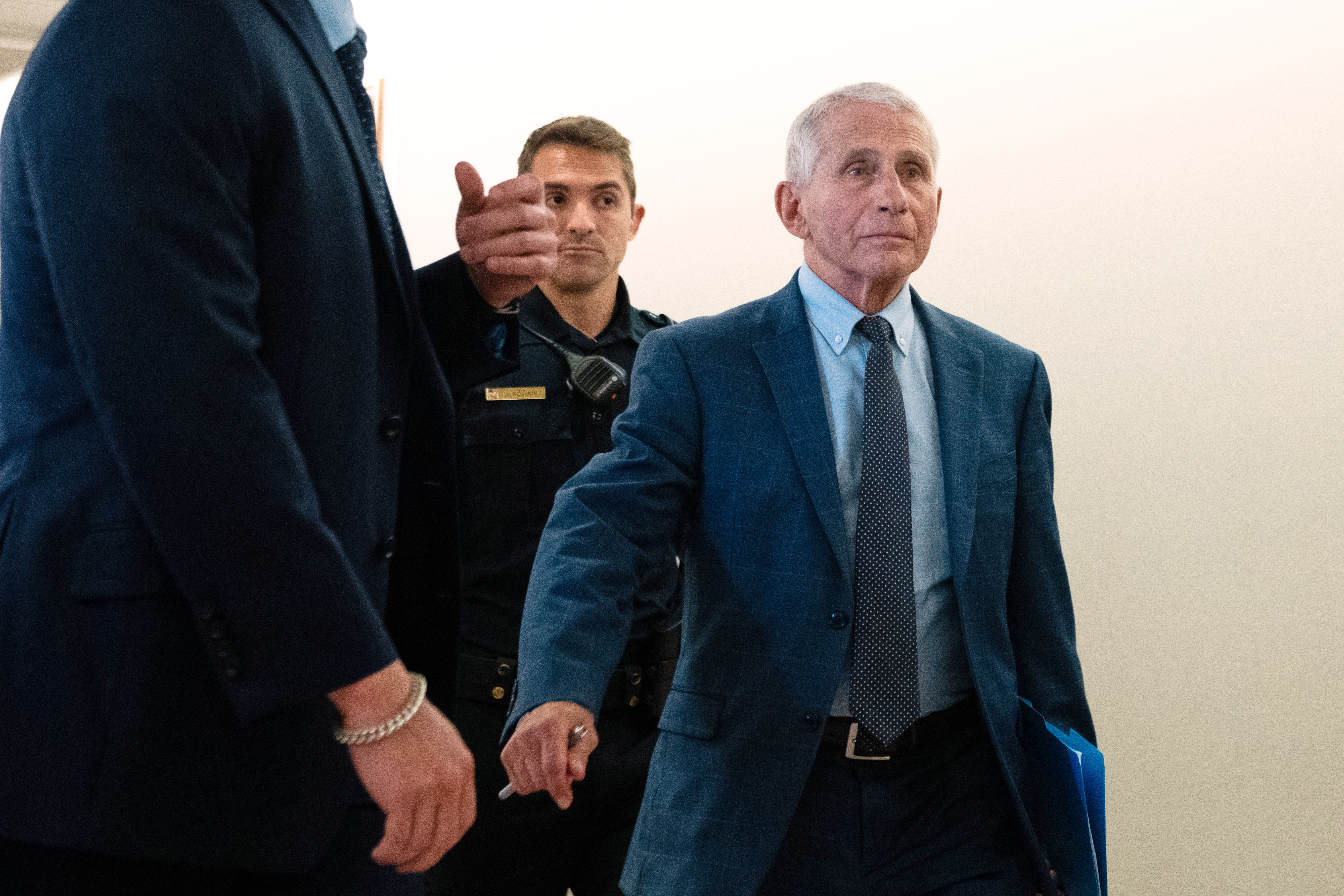
The efforts ramped up last week, when a Republican-led Senate committee chaired by Kentucky Sen. Rand Paul subpoenaed the now-retired, 85-year-old Fauci to testify about his handling of the COVID-19 pandemic.
The former National Institutes of Health immunologist repeatedly invoked the Fifth Amendment, after accusing the lawmakers of trying to coerce him to perjure himself to justify criminal charges. In response to his choice, on Thursday, the committee passed a vote to hold Fauci in contempt, a stunning move that could motivate the Justice Department to initiate an investigation.
Separately, Kennedy, a politically independent former anti-vaccine activist who now serves as the Republican President Donald Trump’s health secretary, spent part of his weekend in a combative live debate with CNN host Dana Bash about the pandemic’s management and the media’s role.
Political scientists and historians say the focus on COVID grievances half a decade after the virus’ peak demonstrates how some wounds it opened have never been closed. Democrats, meanwhile, have slammed the federal government’s blaming of Fauci as a performative distraction that’s not based in facts.
While both Paul and Kennedy have spent years airing their frustrations about COVID, the Republican takeover of Congress and the White House last year created a new platform for them to steer how America remembers the pandemic, and who is held responsible for it, according to Matt Dallek, a political scientist at George Washington University.
It’s also allowed them to use the administration’s resources to surface new information.
“The response to COVID has become a touchstone for Trump’s Republican Party,” Dallek said. “They’re using their power now to argue they were right all along.”
Pandemic grievances have simmered for years
When the coronavirus began spreading widely in 2020, under Trump’s first administration, groups of Americans revolted against requirements imposed by local authorities and businesses telling people to wear masks and stay at home to control the spread of the virus.
Vaccines supercharged those sentiments. Figures like Kennedy, then a leader of the anti-vaccine movement, accused the federal government of trampling on personal liberties by supporting vaccine mandates and social media takedowns of dissenting ideas.
While Trump has long expressed pride in his first-term Operation Warp Speed effort to disseminate COVID-19 vaccines quickly, saving millions of lives, his second administration has taken a different tone.
Under Kennedy’s leadership, U.S. regulators have limited the availability of COVID-19 vaccines for Americans. Kennedy on CNN on Sunday questioned whether the COVID-19 vaccines protected children, even as the Centers for Disease Control and Prevention says on its website that they “help keep children from getting really sick from COVID-19.”
Frances Lee, a Princeton University political scientist, said debates over COVID-19 have erupted on the fringes for years. Now that some of the leaders of those debates are in power, they’re hashing it out on the national stage — something she said needed to happen eventually.
“There are aggrieved parties, people who have a sense that they were done wrong during the pandemic and that there’s never been an accounting for that,” Lee said. “Most people don’t want to think about this topic, but nevertheless there are constituencies – so Congress is speaking to those constituencies.”
Lee said Kennedy’s decision to surface numerous diary entries that Fauci had made on a government computer – and Paul’s decision to publicize them last week – created an opening for “the first real showdown” in years around the pandemic’s handling.
While some of the entries – including Fauci’s uncertainty in the pandemic’s earliest days about how best to curb the virus — already were reflected in a 2024 memoir and in interviews at the time, they have nonetheless drawn attention from people who blame Fauci for policies they believe infringed on their rights as hundreds of thousands of people were dying.
Also discussed at Fauci’s hearing last week was whether NIH-funded research in China played a role in how the pandemic started. The day of the hearing, Trump’s White House also directed social media followers to a federal website that used to feature information on COVID vaccines, testing and treatment that now promotes the theory that the pandemic originated with a lab leak.
Many scientists believe the virus most likely emerged in nature and jumped from animals to people, coming to light when it spread at a wildlife market in the Chinese city of Wuhan. There’s no new scientific evidence supporting the theory that the virus might instead have leaked from a laboratory, a theory Paul champions. A GOP-led subcommittee that studied the question in 2024 found no evidence linking Fauci to wrongdoing.
Fauci has long said publicly that he was open to both theories but that there’s more evidence supporting COVID-19’s natural origins.
Republican lawmakers aren’t stopping at the contempt vote. Sen. Ron Johnson said Thursday that Kennedy’s department had given a subcommittee he chairs a copy of Fauci’s cellphone from his time in government. Johnson indicated he intended to investigate it.
“Hopefully, this device will address many of the questions he refused to answer at last week’s hearing,” he wrote on social media.
Many doubt that Republicans’ COVID fact-finding is genuine
As Republicans hold up scrutiny of Fauci as important accountability, Democrats have called it disingenuous. Paul said Thursday he’d invited Fauci to appear for a private, transcribed interview, but Democrats accused him of not allowing the full, bipartisan committee to be present for it.
Paul also referred the committee’s contempt vote directly to the Justice Department, instead of to the full Senate. He said he did not “want to waste time” with that route, while Democrats insisted all senators should get a chance to vote.
Last week’s hearing, at which Fauci pleaded the Fifth, came after the immunologist had repeatedly appeared before Congress over the years and talked about his thinking in the beginning of the pandemic and how it changed over time. Critics have raised concerns that the ordeal surrounding him will deter scientists from taking government jobs for fear of being similarly targeted.
Paul has long argued that Fauci should be criminally investigated, based on his belief that the scientist has been dishonest to Congress about National Institutes of Health-funded research and COVID’s origins. Fauci’s attorney last week called Paul’s accusations about the scientist “false and disgraceful.” More than 150 infectious-disease experts also came to Fauci’s defense, writing that “no credible evidence has been produced to support these absurd charges.”
Norm Ornstein of the American Enterprise Institute said the hearing didn’t represent legitimate truth seeking.
“They were looking for a platform in which they could attack him, and he would not respond, and he would say ‘plead the Fifth’ over and over again,” Ornstein said.
He said while some Republicans are likely true believers that Fauci committed crimes, bringing him to the forefront serves a dual purpose in a midterm election year — distracting voters from less favorable headlines, including on the economy and foreign conflicts.
Michael Osterholm, an epidemiologist at the University of Minnesota, said there are real lessons to learn from the pandemic, including more deeply examining which efforts to contain the virus worked and didn’t work. But he said Republicans in Congress aren’t chasing those.
“A review of revisionist history will accomplish nothing,” he said. “We won’t be any better prepared for the next pandemic.”
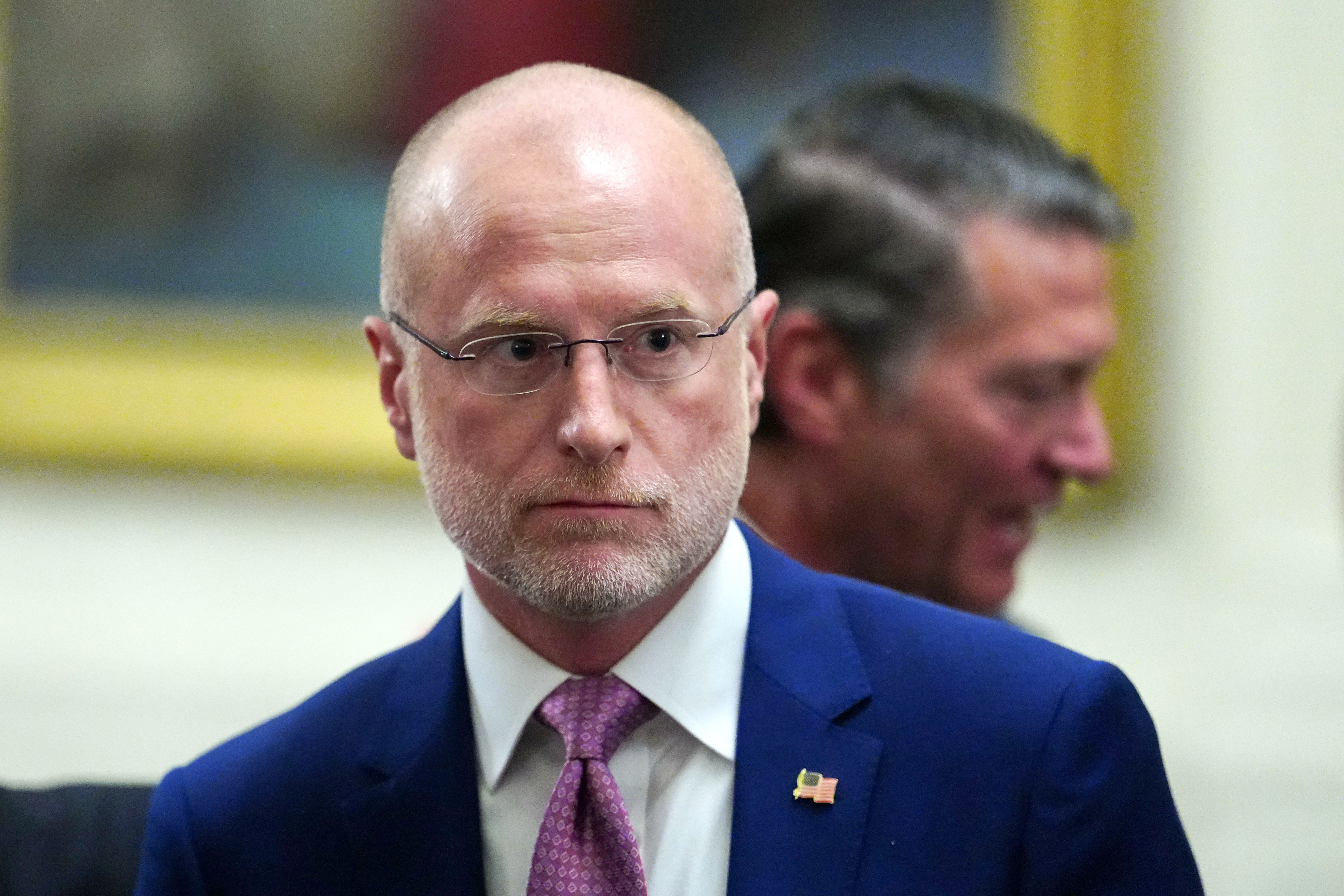
The Federal Communications Commission on Thursday voted to eliminate a long-standing regulation constraining the size of large television broadcasting companies, a major deregulatory move pushed by FCC Chairman Brendan Carr.
The FCC’s commissioners voted 2-1 to replace the cap, which prevents a company from owning broadcasting stations that collectively reach more than 39% of U.S. households, with a case-by-case review. The agency has said that the new process would “empower the FCC to approve deals that promote the public interest while allowing the agency to reject any deals that do not meet that standard.”
Carr already sidestepped the ownership cap earlier this year when the FCC approved Nexstar’s $6.2 billion merger with rival Tegna, which would give the country’s largest TV owner an 80% reach into American homes. That deal was subsequently blocked by a federal judge after DirecTV and several state attorneys general sued, alleging antitrust violations. The case is ongoing.
In a July op-ed on the right-wing website Breitbart, Carr lamented that “New York and Hollywood interests” have become too powerful and have “steamrolled” local TV station owners. He added that the commission needs to remove the ownership cap so broadcasters can better compete with cable TV companies and large tech platforms.
“The cap no longer constrains the power of national programmers,” he wrote. “Instead, it prevents local broadcasters from competing on a level playing field.”
Anna M. Gomez, the lone Democratic FCC commissioner, said during the Thursday meeting that Congress has the authority to lift the ownership cap. She added that the change won’t solve competition problems for local stations.
“Eliminating the cap does not free local broadcasters from economic pressure, it just changes who is doing the squeezing,” she said. “Trading a squeeze from Big Tech for a squeeze from Big Media does nothing to protect the communities this cap was designed to serve.”
Former House majority leader Tom DeLay (R., Texas), who helped institute the 39% cap in 2004, made a similar point in a Monday op-ed for the conservative website the Daily Wire, writing that it’s up to Congress to change it — and not the FCC.
“I am a Republican. I support deregulation and the Trump administration. But my ultimate loyalty rests with the Constitution, which gives certain prerogatives to Congress,” Delay wrote. “Regulatory agencies cannot defy or modify laws enacted by Congress. If Chairman Carr wants to raise the statutory cap, he should ask Congress to pass a law giving him authority to do that.”
Since taking the helm of the FCC at the outset of President Donald Trump’s second term, Carr has initiated a bevy of investigations into media companies. His actions have garnered some criticism from fellow Republicans concerned about the government pressuring private companies over issues of speech. When Carr threatened Disney-owned ABC stations’ licenses in September over comments made by late-night host Jimmy Kimmel in the aftermath of conservative activist Charlie Kirk’s murder, Sen. Ted Cruz (R., Texas) called Carr’s comments “dangerous as hell.”
That long-simmering fight between Carr and Disney has boiled over in recent weeks. Disney has alleged that the FCC’s early review of its eight ABC station licenses, probe of The View, and review of Disney’s diversity practices violate the media company’s free press protections under the First Amendment.
The Republican discomfort with Carr, meanwhile, hasn’t abated. During a Senate Judiciary hearing on Wednesday, Sen. John Kennedy (R., Louisiana) expressed frustration about the commission’s actions. “Sometimes the FCC scares me right now,” he told FCC general counsel Adam Candeub. “I don’t like some of the stuff that is said on television, but what business is it of the FCC?”
“All I’m saying is, y’all be careful,” Kennedy added. “You’re getting into the foothills of violating the First Amendment.”
The nonprofit Free Press said Thursday that it plans to sue the FCC and challenge its authority to remove the cap.
“Changing this limit requires congressional action, but Carr doesn’t care,” Matt Wood, the group’s vice president of policy and general counsel, said in a statement. “He’ll do whatever it takes to clear the way for Trump-aligned billionaires to swallow up stations wherever and whenever they please.”