Category: Wires

  • Senate blocks cryptocurrency regulation as Democrats push back on Trump investments

    Senate blocks cryptocurrency regulation as Democrats push back on Trump investments

    WASHINGTON — Senate Democrats on Tuesday blocked legislation to create a new regulatory framework for cryptocurrency, stalling an industry-backed effort to place new guardrails around digital assets after demanding more limits on President Donald Trump’s investments.

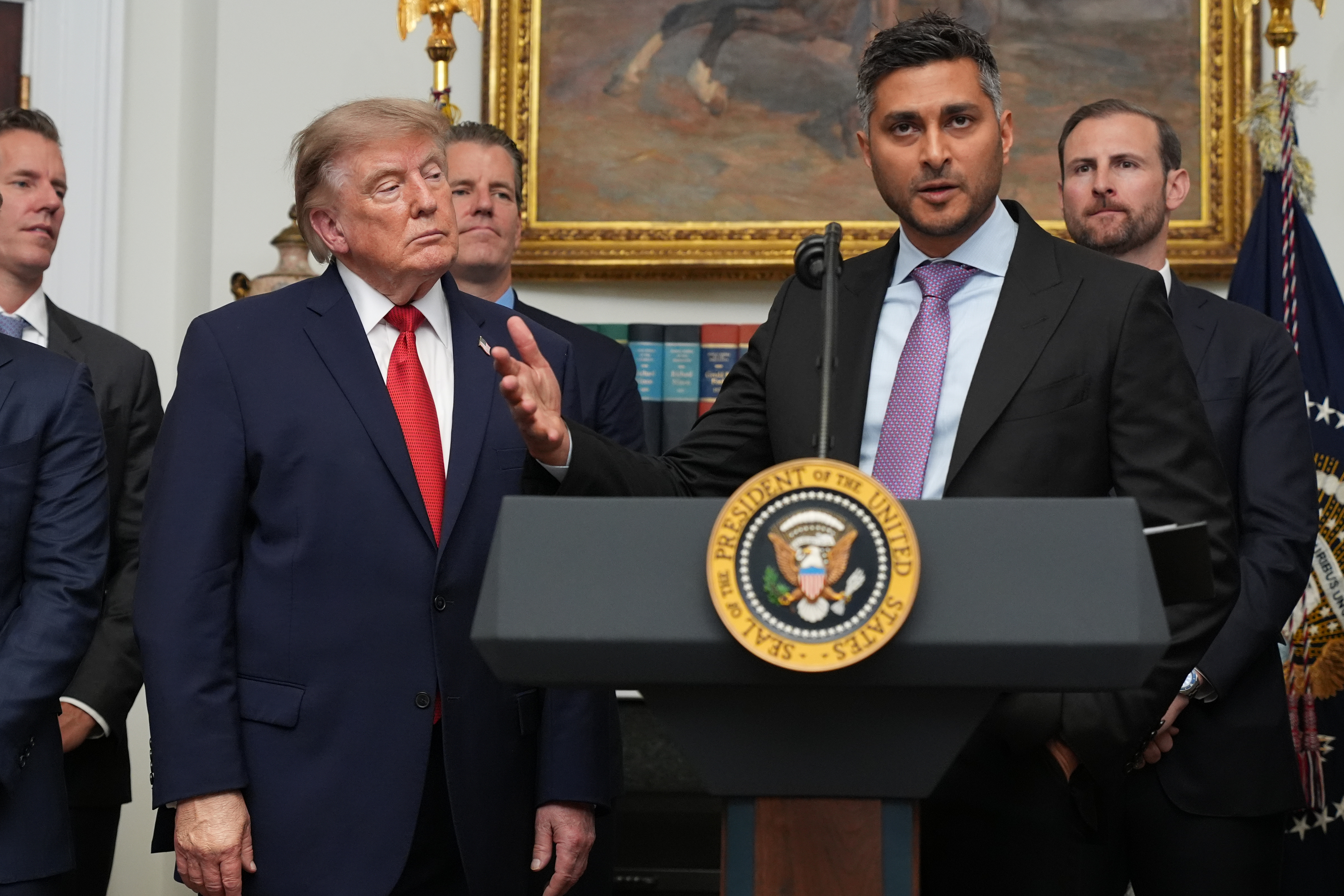
    The 49-50 vote on whether to move forward with the legislation was a pivotal election-year test for the $2.3 trillion cryptocurrency market as the industry has pushed aggressively for a uniform set of rules. The Senate debate came as cryptocurrency companies have become a major political force, and as Trump has amassed significant wealth in crypto while in office.

    While some Democrats are friendly toward the industry and support the idea of regulation, they have been adamant that the bill include strong ethics safeguards to prevent the president and his family from enriching themselves while he’s in office. The opposition appears to have only solidified two months before the midterm elections, despite significant donations that crypto groups have given to some Democrats in recent years. In the end, no Democrats supported it.

    “Let’s make sure that we do not pass a crypto bill that will let Donald Trump continue to rake in billions of dollars in crypto profits while working families across this country struggle to deal with higher prices and an economy that gets worse by the day,” said Massachusetts Sen. Elizabeth Warren, the top Democrat on the Senate Banking Committee.

    Several Democrats who have been supportive of the bill aside from the ethics concerns said they were still open to negotiating.

    Virginia Sen. Mark Warner said he still wants regulation of the crypto industry, but “we cannot pass landmark legislation governing this industry while allowing the president of the United States to personally profit from it.”

    The White House indicated Tuesday that it would now turn to agencies to implement parts of their crypto agenda and warned that the failed vote would continue to stifle financial innovation domestically while it flourishes abroad.

    “The full cost of today’s result may not be known for years to come, but this much is clear: It increases the risk that the standards that global financial markets adhere to in the future will be those of Brussels or Beijing, rather than Washington and New York,” Patrick Witt, the White House’s crypto adviser, said.

    Trump agrees to some changes as Democrats push back

    As Democrats made clear they would block the bill, Trump agreed to some concessions on ethics, including new restrictions on federal elected officials from issuing digital assets like the presidential meme coins he and his wife Melania launched before he took office for his second term. He agreed to new concessions Sunday, such as additional powers for state attorneys general that Democrats had sought to enforce the crypto measures.

    Those concessions were not enough for Democrats, who sent a counteroffer late Monday to expand the ethics provision but were not able to strike a final deal. Among other issues, they said the bill still needed stricter enforcement and a requirement for Trump or any future president to divest if holdings reach a certain value.

    “Instead of spending their time twisting themselves into knots to appease President Trump, Republicans should have worked more closely with Senate Democrats to craft a bill that could pass with strong ethics provisions,” said Arizona Sen. Ruben Gallego, who was involved in last-minute talks with GOP senators on the bill.

    Republicans needed Democratic support to win the 60 votes necessary to move forward on the bill in the 53-47 Senate.

    North Carolina Sen. Thom Tillis, a Republican who worked with Gallego to strengthen the ethics provision, said before the vote that he was pleased with Trump’s latest concessions.

    “We’re so close,” Tillis said. “It’s just a shame to not take this opportunity.”

    Trump has amassed big crypto profits

    Trump’s family has raked in big profits in the crypto sector since he was reelected, including the meme coin, announced the day before Trump took office. Top investors were invited to a private reception with the president.

    Trump’s family also has a controlling stake in World Liberty Financial, a crypto firm co-founded with the president’s special envoy Steve Witkoff. Trump reported more than $500 million in revenue from World Liberty Financial sales of crypto products, including “governance tokens,” in his annual disclosure report filed with the Office of Government Ethics. That is a significant share of the more than $1.4 billion that the president reported from crypto businesses last year.

    A measure enacted into law last year regulating stablecoins, a type of cryptocurrency, barred members of Congress and their families from profiting off them, but it did not extend to Trump or his family.

    Legislation aims to give crypto firms legal certainty

    Republicans who have been working on the legislation for more than a year say it could now stall indefinitely. The House and Senate will be out of session during October and before the elections, and the dynamics could significantly shift if Democrats win back the majorities of the House or Senate, or both, in November.

    Republican Sen. Cynthia Lummis of Wyoming, a lead sponsor of the bill, said beforehand that a no vote means ”opposing real ethics reforms on politicians’ personal investments, handing American leadership in digital assets to our foreign competitors, and leaving Americans with zero protections in the digital asset markets.”

    Supporters say the legislation aims to give the industry more legal certainty and protect consumers by creating a broad set of guardrails and regulatory requirements, including better enforcement to prevent bad actors and protections to prevent a market collapse.

    As talks continued Tuesday morning, Lummis posted on X that it was “now or never for the Clarity Act,” referring to the bill’s name.

    “The time for negotiating is over,” she wrote.

    Crypto cash has flooded campaigns

    Opponents, mostly Democrats, say the bill is a giveaway to the industry as crypto companies have become generous donors to candidates in both parties around the country.

    “It’s no secret that they are seeking to ram a bill through Congress based upon not the merits of the bill, but the threat that they will spend even more money in elections against people who vote against it,” said Democratic Sen. Chris Murphy of Connecticut.

    In 2024, the crypto industry spent more than $130 million in congressional races, including $40 million in Ohio and $10 million each in Arizona and Michigan.

    “DC received a clear message that being anti-crypto is a good way to end your career, as it doesn’t represent the will of the voters,” Brian Armstrong, the CEO of Coinbase, the nation’s largest crypto exchange, wrote in a social media post the day after the 2024 election.
  • Trump bars some South Africans over claims of anti-white discrimination

    Trump bars some South Africans over claims of anti-white discrimination

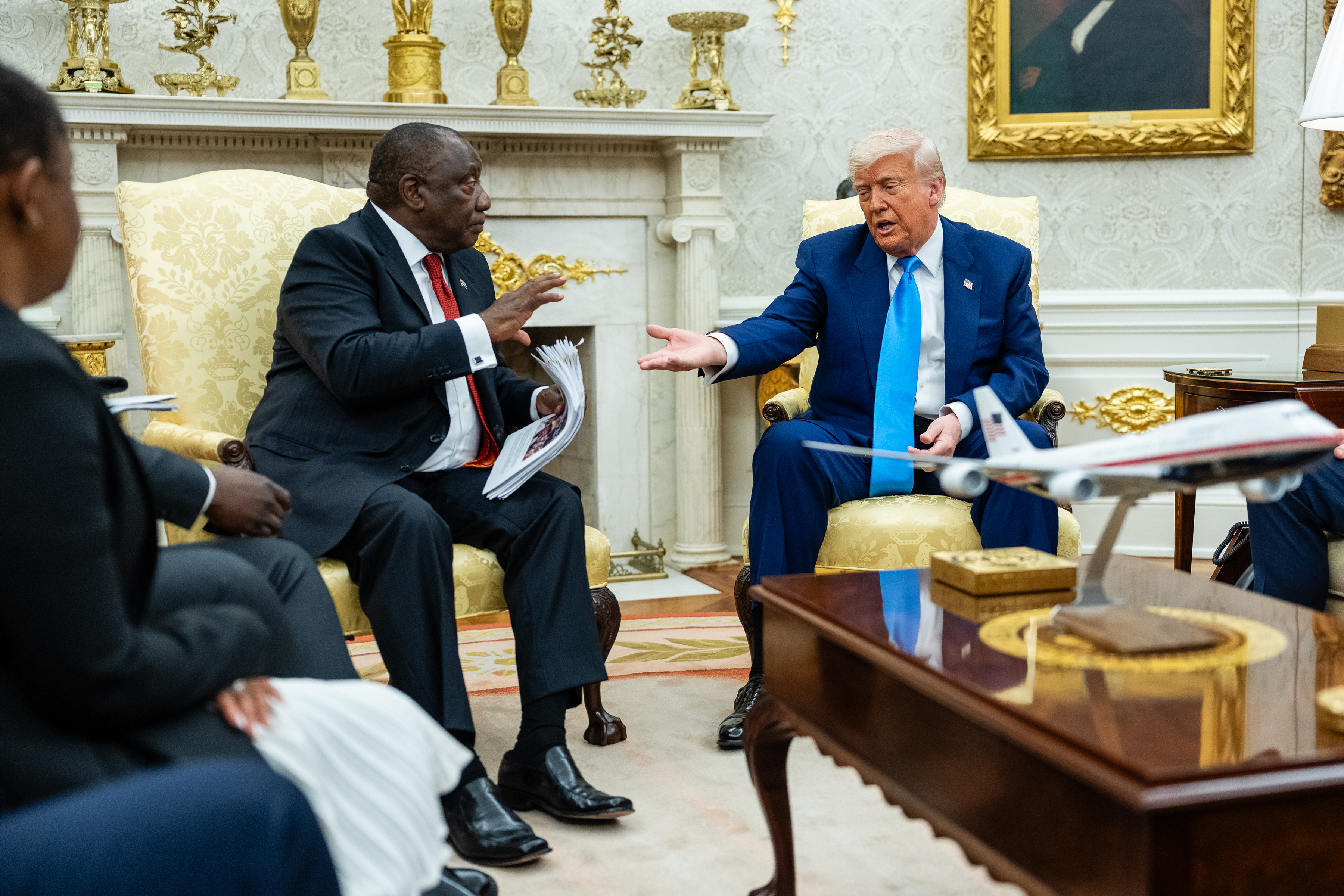
    JOHANNESBURG — The Trump administration imposed visa restrictions on selected South Africans on Tuesday and warned that it could take further punitive actions if South African leaders did not address President Donald Trump’s concerns over what he sees as discrimination against white people.

    The visa policy expands the administration’s efforts to punish South Africa since Trump last year accused the government of seizing land from Afrikaners, a white South African minority, and allowing them to be killed in what he has labeled genocide. Claims of genocide against white South Africans are widely acknowledged as false, and President Cyril Ramaphosa has said Trump’s policies toward South Africa are racist.

    The visa restrictions will prevent selected individuals from entering the United States. Under law, the government is not allowed to publicly disclose who is affected.

    In a statement, Secretary of State Marco Rubio said the United States remained “gravely concerned about racially motivated crime and government-sponsored discrimination occurring against the Afrikaners and other minority populations in South Africa.”

    He said the restrictions would target South Africans involved in race-based discrimination, those responsible for a law that enables the government to seize land without compensation, and those who incite violence against racial minorities.

    In a statement, South Africa’s foreign minister, Ronald Lamola, said Washington’s unilateral action “once again aligns with the misrepresentation of South Africa’s domestic policy by fringe groups.” He called on the United States to respect South Africa’s sovereignty on handling domestic issues.

    The policy was announced less than three weeks after Ramaphosa met with the U.S. ambassador, Leo Brent Bozell III. The South African government described the engagement as “an opportunity to strengthen and recalibrate” the relationship between the countries.

    In a social media post Wednesday, Bozell said he had “attempted time and again to express” that South Africa could face severe consequences if it did not take action on the administration’s demands, which include exempting American companies from Black ownership requirements and rolling back a land expropriation law.

    “This visa restriction policy is only the first step in a series of escalatory measures that will show America’s firm resolve in this matter,” Bozell wrote.

    The U.S. move was the latest sign of the deteriorating relationship between the United States and South Africa.

    This article originally appeared in the New York Times.

  • Charlie Kirk’s family accuses university of ‘stunning’ security failures

    Charlie Kirk’s family accuses university of ‘stunning’ security failures

    The family of slain conservative activist Charlie Kirk has accused the Utah university where he was killed last year of “stunning” security failures that made him an easy target for a rooftop assassin.

    In a legal notice filed this month, lawyers for Kirk’s wife, parents, and children said Utah Valley University did not have a written security plan or hold a security briefing before Kirk arrived for an open-air debate last September that drew a crowd of thousands.

    They also said the university’s police chief had failed to address concerns raised by Turning Point USA, the conservative activist group founded by Kirk, about how easily people could climb onto the rooftops that overlook the sunken plaza where he was shot.

    The accusations came in a “notice of claim” that lawyers for the Kirk family sent to the state of Utah earlier this month and made public Wednesday. Kirk’s family has not yet sued, but the notice is a potential precursor to a wrongful-death lawsuit against the public university or the state.

    “His murder was entirely preventable,” Brett Parkinson, a lawyer for the Kirk family, said in a statement.

    In a statement Tuesday, Utah Valley University said its “focus remains on supporting our campus community” but declined to comment further on the notice. It is conducting its own review of security surrounding the shooting.

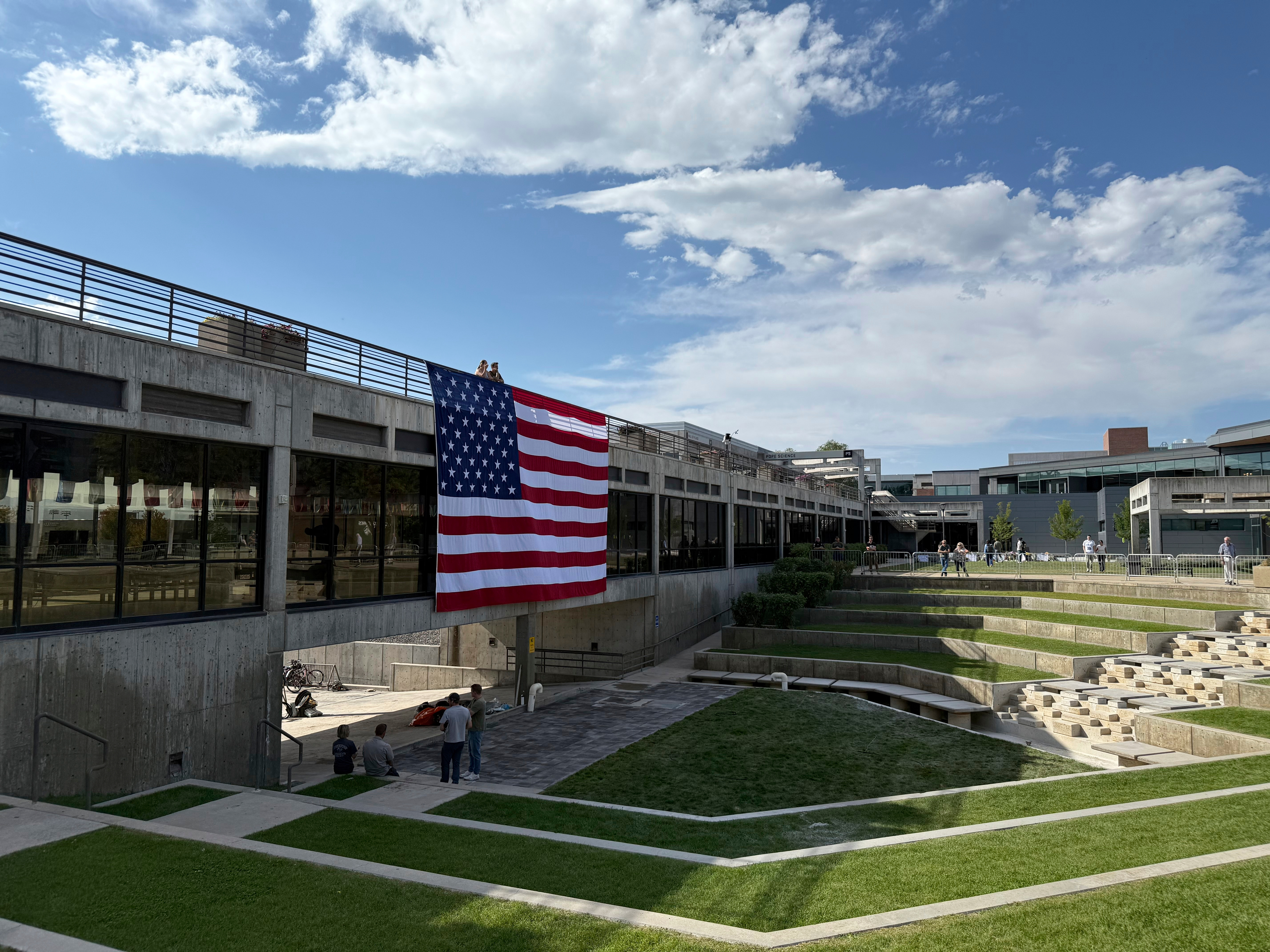
    Kirk, one of the country’s most influential and visible conservative activists, made Utah Valley University in Orem the first stop of his “American Comeback” tour of college campuses. About 3,000 people showed up on Sept. 10, 2025, to see him debate political opponents on a sunny afternoon.

    He was just minutes into the event and answering an audience member’s question when he was shot in the neck by a gunman perched on a rooftop about 400 feet away.

    In the legal notice, lawyers for Kirk’s family said the university’s security decisions “ultimately rendered Mr. Kirk helpless to the rooftop shooter in an assassination that could have been avoided.”

    According to the notice, a Turning Point USA official texted Jeff Long, the university police chief, before the event to relay concerns from a Turning Point campus chapter about students’ ability to take staircases to building rooftops.

    “It would be nice to either have it controlled access or allow one of my guys to be there as well. If possible,” a Turning Point official texted Long, according to the legal notice.

    Kirk’s lawyers say Long responded, “I got you covered.”

    Lawyers for the Kirk family argued in the legal notice that the university should have been on alert for a rooftop sniper after a would-be assassin fired at President Donald Trump in 2024 from a roof outside a rally in Butler, Pa.

    Surveillance videos and testimony from investigators suggest that Tyler J. Robinson, the 23-year-old man charged with aggravated murder in Kirk’s killing, encountered virtually no obstacles or resistance on his way to the roof. Robinson, who could face the death penalty, has pleaded not guilty.

    Surveillance videos from the morning of the shooting captured the gunman as he walked to a railing on the roof of a campus building and then left. When he returned later, he “crawled to a sniper perch” along the edge of the roof, took aim at Kirk, and fired, according to a legal filing by prosecutors.

    The legal claim filed by Kirk’s family said the university did not fly drones or monitor its surveillance cameras in real time during the event — actions that might have spotted the gunman.

    It also says that despite Kirk’s fame and the size of the crowd, the university only had six officers on duty that day and did not ask police in Orem or nearby Provo for help until after the fatal shot was fired.

    This article originally appeared in the New York Times.

  • Change in human trafficking policy could make some minors easier to deport

    Change in human trafficking policy could make some minors easier to deport

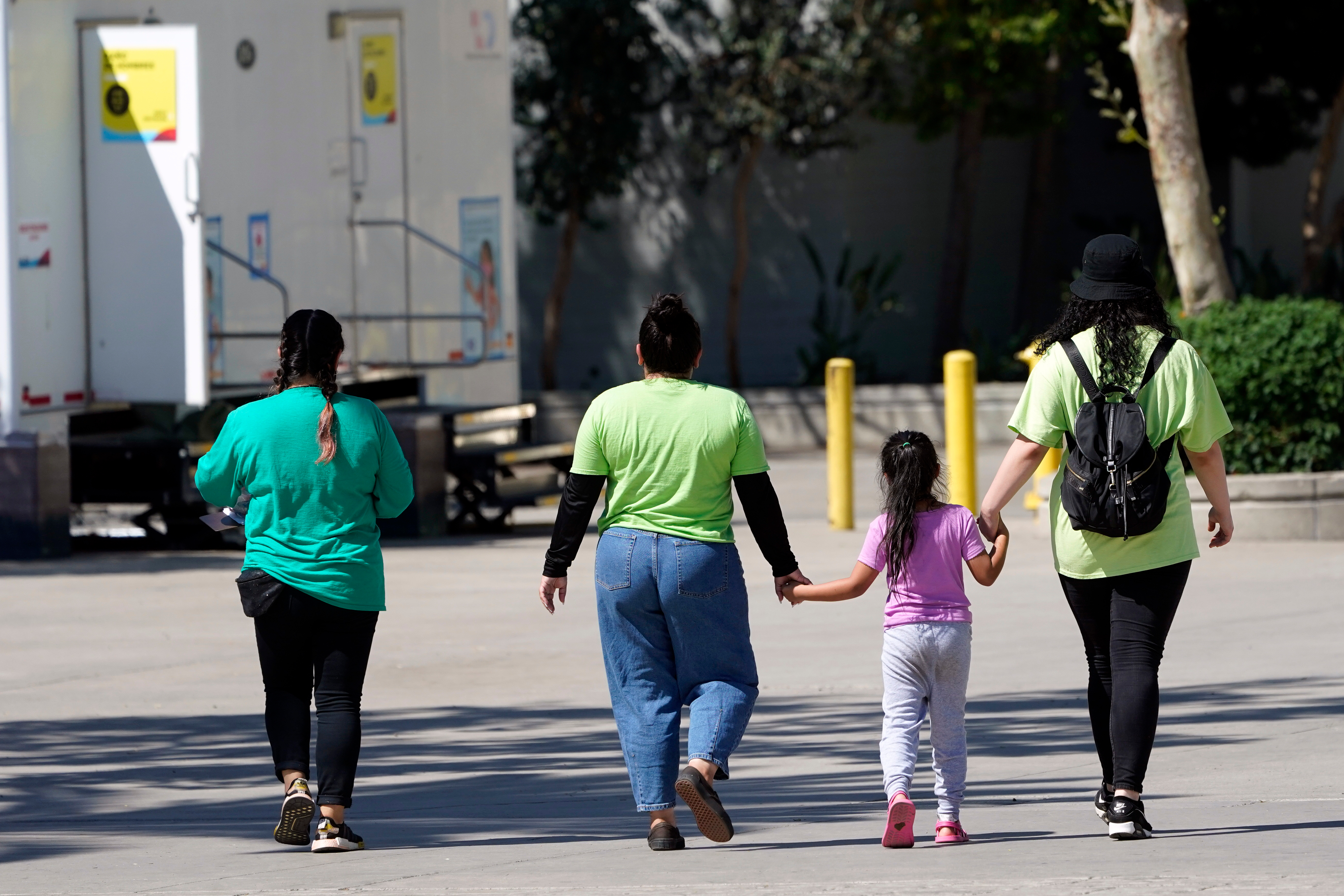
    The Trump administration has ordered caregivers for migrant children to stop reporting human trafficking concerns directly to the office created to help victims, a change that critics say could make some vulnerable minors easier to deport.

    The directive, in a Sept. 10 memo reviewed by the Associated Press, could mean that some victims would be denied services and face tougher odds of obtaining asylum and visas allowing them to stay in the United States.

    “This is going to harm children,” said Jean Bruggeman, co-executive director of Freedom Network USA, a coalition that advocates for human trafficking survivors. “This makes it more likely they will be deported before they get the services they need and put back into harm’s way.”

    The order added another plank to the Trump administration’s hard-line immigration agenda that has forged the most restrictive policies toward immigrants in more than a generation. Some of those efforts have been stopped by courts but many others have taken root.

    The memo said the change would “streamline the reporting, tracking, and referral of trafficking-related concerns.” An administration statement said the change was an effort to reduce the high number of claims that did not rise to the level of criminal human trafficking but nonetheless triggered the award of benefits and relief.

    But Democratic Sen. Ron Wyden of Oregon said the change requires children and their advocates to report human trafficking to the same agency that is holding them in custody. “This move to sideline human trafficking experts is more evidence that the Trump administration will deport kids to score political points rather than actually protect them,” he said.

    Office has helped thousands of trafficking victims

    The change applies to 1,800 children who are in federal custody after arriving in the United States without parents or being arrested with parents who were not legally present, and others who have been released but remain under supervision.

    Under longstanding policy, caregivers are required to conduct an initial screening of unaccompanied children for potential labor or sex trafficking within five days of admission to a facility or shelter. If they suspect the child is a victim, they have been required within 24 hours to notify the Office of Trafficking in Persons, which was created in 2015 to prevent human trafficking and protect victims.

    If the office certifies the claim, the minors become eligible for a program that gives them greater freedom by allowing them to move out of short-term housing, placing them in foster care, and allowing them to attend public school. It does not protect them from deportation immediately, but they can use the determination to pursue visas for victims of trafficking or asylum claims. It also grants eligibility for nutrition, housing, and other public benefits once they are released from federal custody.

    Thousands of unaccompanied minors have benefited from the office’s determinations. They are particularly susceptible to labor and sex trafficking, including in their home countries, on their way to the U.S., and after they arrive, and that’s why Congress has given them protections, Bruggeman said.

    Administration says change will target improper claims

    Under the change ordered last week by the administration, federal employees and care providers were told to no longer report labor and sex trafficking claims involving the minors to the Office on Trafficking in Persons.

    Instead, the memo said those claims should be submitted only to the Office of Refugee Resettlement, which oversees the housing of unaccompanied minors. That office will now investigate the claims and decide which ones should be forwarded to the Office on Trafficking in Persons for further review, the memo said, warning that providers “must respond promptly to requests for information.”

    In a statement, the Office of Refugee Resettlement said the change was driven by a review last year that found 95% of more than 9,000 reports “were determined not to be viable trafficking leads” for criminal investigators.

    “The vast majority of the reports detailed instances of alleged abuse or neglect, not forced labor or commercial sex as defined in human trafficking statutes,” the statement said.

    Even so, 58% of reports from shelter employees and case managers qualified for trafficking-related benefits. The change in reporting will “strengthen integrity, reduce improper referrals, reduce fraud, and ensure that children who may have experienced trafficking receive immediate support,” the statement said.

    Former official questions rationale

    Jen Smyers, who served as deputy director of the Office of Refugee Resettlement during the Biden administration, said the claim that the change will streamline reporting is questionable. She said ORR already gets the human trafficking reports but has no special expertise in evaluating them, unlike the office created for that purpose.

    The fear is that legitimate claims will get delayed or missed during the new layer of review, and career employees will face political pressure to refer fewer cases, she said.

    “It’s the opposite of streamlining,” Smyers said.

    Smyers noted the change comes after what she called an “onslaught” of Trump administration policies that have undermined the ability of unaccompanied minors to gain legal status, including making it harder to leave federal custody, arresting sponsors in the middle of the release process, and cutting their legal representation.

    “What they are trying to do is deport as many as possible. What interferes with deporting children is if they are eligible for protections Congress has given them,” she said.

  • Fed rate hike likely means more expensive credit cards and mortgages, but savers may rejoice

    Fed rate hike likely means more expensive credit cards and mortgages, but savers may rejoice

    WASHINGTON — The Federal Reserve just raised the cost of money — bad news for borrowers, good news for savers.

    The Fed increased its benchmark interest rate Wednesday by a quarter-point, the first rate hike since the summer of 2023. The hike will likely make it even costlier to borrow for homes, autos, and other purchases. But if you’ve been socking money away, you’ll probably earn a bit more interest on your savings.

    The increase boosts the Fed’s target rate to a range of 3.75% to 4.00%.

    Here’s what to know:

    Why is the Fed raising rates?

    The short answer: inflation.

    Inflation has remained above the Fed’s 2% target for more than five years. The Labor Department reported Friday that consumer prices rose 3.4% in August compared to a year earlier, while the monthly increase quadrupled from July to hit 0.4%.

    The Fed’s goal is to slow consumer and business spending by raising the cost of borrowing, thereby reducing demand for homes, cars, and other goods and services, eventually cooling the economy and reducing upward pressure on prices.

    Kevin Warsh, Fed chair since May, has assured Congress that central bank policymakers “have no tolerance for persistently elevated inflation.”

    Speaking to reporters Wednesday after the Fed’s meeting, Warsh argued that the rate hike will benefit lower-income Americans because they are hurt most by higher prices. “The least well off are the ones that have the most to gain from stable prices,’’ he said. ”The decision we made today was the right decision to deliver on the remit that Congress gave us to ensure stable prices.”

    Which consumers are most affected?

    Anyone borrowing money to make a sizable purchase, such as a home, car, or large appliance, will likely take a hit eventually. The new rate will also increase monthly payments and costs for any consumer who is already paying interest on credit card debt.

    Then again, said Matt Schulz, chief consumer finance analyst at the online loan marketplace LendingTree, “the reality is that a single quarter-point rate increase isn’t really going to have a huge impact.’’ But it would be different if Wednesday’s hike marks the first in a series of rate increases. ”When this all becomes impactful to people is when you stack a few these on top of each other over time, and it adds up to something bigger,” Schulz said.

    Fed policymakers signaled Wednesday that they expect to hike the benchmark rate again this year — to 4.1%.

    For now, U.S. household debt payments are relatively low overall as a percentage of after-tax income. So even if borrowing rates rise, many households might not feel a heavier debt burden immediately.

    Do savers get a break?

    Most likely. Wednesday’s move probably means interest rates on savings accounts and certificates of deposit are headed higher. The Fed doesn’t set rates on savings accounts and CDs but it “sets the tone″ for them, the credit reporting agency Experian says. When the central bank started raising rates to combat an outbreak of inflation in March 2022, the average rate on a 1-year CD was stuck at a miserly 0.15%, according to FDIC data published by the Federal Reserve Bank of St. Louis. The rate shot up to 1.88% by September 2024 and has remained above 1.5% ever since. It was 1.71% last month.

    Online banks and others that offer high-yield savings accounts typically compete aggressively for depositors. (The catch: They sometimes require significantly larger deposits.)

    What does this mean for mortgage rates?

    Mortgage rates don’t necessarily follow what the Fed does. At least not directly. They tend to track the yield on 10-year Treasury notes instead. Unfortunately for home shoppers, 10-year yields have been surging. On Monday they topped 5% for the first time since 2023 due to unease over surging energy prices and massive government debt that continues to grow. Treasury yields have continued to rise despite an intervention from the Treasury after Secretary Scott Bessent ordered the U.S. to buy back government bonds in a bid to push yields down.

    The rate on the benchmark 30-year fixed-rate mortgage rose to 6.76% last week, the highest in more than 14 months, mortgage buyer Freddie Mac said.

    The high cost of home loans is already taking a toll on the housing market. The Realtors association reported last week that sales of previously occupied U.S. homes dropped for the third straight month in August, growing at the slowest pace in more than a year.

    Adjustable-rate mortgages could rise in order to price in a Fed hike. But many homeowners locked in low mortgage rates when COVID-19 slammed the economy and sent borrowing costs tumbling; so they are protected if mortgage rates rise in the wake of a Fed rate hike. The National Association of Realtors reports that nearly half of mortgages outstanding are locked in at 4% or lower and almost a fifth were at 3% or lower in the first three months of 2026.

    And credit-card rates?

    Most credit cards have variable interest rates that track the prime rate banks charge their best customers. And the prime rate responds quickly — within a month — when the Fed raises or lowers its benchmark “fed funds” rate, ”meaning that the Fed’s policy changes flow through to credit card rates rapidly,’’ researchers at the Boston Fed wrote in March.

    Schulz at LendingTree reckons that most credit card holders will see their rates rise by a quarter-point over the next couple of months.

    Many Americans, coping with the high cost of living, are increasingly relying on credit cards to help maintain their spending. Total credit card balances hit $1.26 trillion in the second quarter — near the record $1.28 trillion set at the end of 2025 (though the numbers are not adjusted for inflation), according to the New York Fed.

    Car loans, too?

    The Fed indirectly influences auto loan rates by influencing the prime rate. Cars, especially new ones, are already prohibitively expensive. The average cost of a new car rose to $50,089 last month, according to Kelley Blue Book. The average loan rate last month was 7% for a new car and 10.6% for a used car, according to Edmunds. And the average monthly payment, Experian reported, was $765 in the second quarter of 2026.

    “Most Americans are generally doing OK,’’ Schulz said. ”But it wouldn’t take a whole lot for them to not be doing OK. People’s financial margin for error is generally pretty small, and just the rising cost of most everything just squeezes them more and more.’’

  • House holds billionaire Leon Black in contempt of Congress over Epstein investigation

    House holds billionaire Leon Black in contempt of Congress over Epstein investigation

    WASHINGTON — The House approved a resolution Wednesday holding billionaire Leon Black in contempt of Congress, referring the matter to the Department of Justice after he defied the Oversight Committee’s subpoenas in its investigation into disgraced financier Jeffrey Epstein.

    The action was swift, and without a formal vote, and now leaves it to the Justice Department to decide whether to seek criminal prosecution. Black has refused to respond to the subpoenas’ requests to appear and to turn over any potential nondisclosure agreements involving the investigation into Epstein.

    Republicans and Democrats from the Oversight Committee joined in a bipartisan effort to advance the resolution.

    “No one is above the law,” Rep. James Comer (R., Ky.), the Oversight Committee chairperson, said in a statement. “We will continue to seek transparency for the American people and justice for survivors in our investigation of the federal government’s handling of the Jeffrey Epstein and Ghislaine Maxwell criminal cases.”

    California Rep. Robert Garcia, the panel’s top Democrat, called the vote “an important step towards justice and accountability.”

    Black’s lawyers have denounced the Oversight Committee’s pursuit of the former head of a private equity firm as an abuse of congressional power. They said he “had no knowledge of any of Epstein’s heinous conduct.”

    “The Committee has continued to insist on looking for information that does not exist,” attorneys Susan Estrich and Aaron Cutler said in a statement.

    They called the action “politically motivated” and have sued the committee and asked the Office of Congressional Conduct to open a probe into Comer’s tactics.

    “This an outrageous action that ignores the facts and the truth about Mr. Black,” they said.

    Epstein investigation churns in Congress

    Black is the latest among several prominent figures, including Bill Clinton and Bill Gates, who have been asked to appear as part of the Oversight Committee’s long-running probe of Epstein. Survivors of Epstein’s alleged sexual abuse have told personal stories of being young women in a trafficking enterprise organized by Epstein and his colleague Maxwell.

    In June, Black did appear for a voluntary interview at the committee. Lawmakers said later that he refused to answer their questions about the nondisclosure agreements.

    The committee issued two subpoenas seeking to compel Black to produce the NDAs and to appear for a deposition July 16. The committee said it had accommodated Black’s request to delay the deposition to Sept. 3, but he refused to appear.

    On Tuesday the Oversight Committee voted unanimously to approve the contempt recommendation, sending it to the full House.

    Black co-founded the private equity firm Apollo Global Management and stepped down in 2021 during the fallout over his ties to Epstein.

    Lawmakers have alleged that Black paid Epstein $180 million during their yearslong relationship.

    A 2021 review commissioned by Apollo found that Black paid Epstein $158 million from 2012 to 2017, after Epstein pleaded guilty in 2008 to soliciting prostitution from a minor. The review said the payments were for “bona fide tax, estate planning, and other related services.”

  • Sudan gold mine collapse kills at least 82 people with many more missing

    Sudan gold mine collapse kills at least 82 people with many more missing

    SHENDI, Sudan — The death toll from the collapse of an informal gold mine in a remote area of Sudan has risen to 82, according to local officials and activists, as rescuers struggled on Wednesday to search for the missing with limited equipment.

    It’s the latest tragedy in a nation mired in a devastating war.

    Survivors said that the collapse happened at the al-Zara gold mine, in Nuhud, a town in West Kordofan province, which is controlled by the paramilitary Rapid Support Forces, or RSF. The group has been fighting against the Sudanese military for more than three years.

    Suleiman Abu Hmeida, a member of the Emergency Response Rooms, said that rescuers had pulled out 82 bodies by Wednesday afternoon. “But dozens remain unaccounted for,” Abu Hmeida told the Associated Press.

    The Emergency Response Rooms is a grassroots network that monitors the conflict and provides support for communities across war-torn Sudan.

    A local administration official also said that 82 bodies were recovered.

    The official said that the collapse began on Sunday in one of the mine shafts and spread to the other interconnected shafts. He said that only one privately owned forklift is available for the rescue efforts, complicating the search for survivors.

    The official spoke on condition of anonymity because he wasn’t authorized to speak to the media.

    “The collapse is massive and the situation is very dire,” Khairal-Sayed Gabara, one of the survivors, told the AP when reached by phone. He said that the machinery needed to remove the collapsed soil and rubble wasn’t available.

    “We do not have the machinery to lift dirt and stones and search for survivors at depths of more than 30 meters (around 100 feet),” he said. “There were dozens of people working in the mine.”

    The al-Zara gold mine is one of thousands of small-scale and informal mines scattered across Sudan, which has been engulfed in a war that has at times pushed parts of the country into famine.

    Despite Sudan being a major gold producer, deadly mine collapses aren’t uncommon in a country where safety standards aren’t widely applied. A 2023 collapse killed 14 miners and one in 2021 claimed 38 lives.

    Al-Amin Suliman, another survivor, said that 60 bodies had been recovered as of Wednesday morning.

    “There are still people stuck inside,” he said.

    The Sudan Doctors Network, a medical group tracking the war in Sudan, reported earlier that 67 bodies were pulled from the rubble, predicting that the death toll could increase as rescuers continued their search. The group said that the mine — an informal site that employs unregulated workers — lacked basic safety and protective measures.

    Earlier, survivors reached by phone and the physicians network said that the tragedy took place on Tuesday evening.

    The Kordofan Observatory monitoring group said that at least 70 miners were killed or missing at the site, which stretches around a half-mile across a wide swath of fragile, sandy soil. It described the miners as unregulated and informal workers.

    Large quantities of gold have been smuggled out of the country to finance the RSF, which controls gold-producing areas in the Darfur and Kordofan regions, according to experts commissioned by the United Nations.

    Sudan plunged into an all-out war in April 2023 as fighting erupted between the RSF and the Sudanese military in the country.

    The conflict has killed at least 59,000 people, according to Armed Conflict Location & Event Data, a monitoring group. Aid organizations say that the figure is an undercount, and the true number could be many times higher.

  • Lawmaker requests emergency hearing as Kennedy Center remains closed

    Lawmaker requests emergency hearing as Kennedy Center remains closed

    The Kennedy Center’s decision to immediately close its doors for roughly two years of repairs is facing a new legal challenge Wednesday, escalating the fight over President Donald Trump’s transformation of the national cultural institution.

    Rep. Joyce Beatty (D., Ohio), a Kennedy Center trustee who has repeatedly challenged Trump’s transformation of the institution in court, filed a motion requesting an emergency hearing so center officials can explain the closure despite a federal judge’s instructions hours earlier that he needed to approve it.

    “It seems Defendants may be violating the ‘clear and unambiguous order of the Court,’” lawyers Nathaniel Zelinsky and Norm Eisen wrote in the emergency motion.

    The challenge puts the question of the Kennedy Center’s physical future back before U.S. District Judge Christopher Cooper barely 24 hours after he blocked another attempt to put Trump’s name on the building. It also escalates a legal battle that has come to encompass nearly every element of Trump’s transformation of the national cultural institution: its name, its finances, the condition of its aging building, and now whether its doors can remain closed while its Trump-appointed leadership pursues a roughly $250 million renovation.

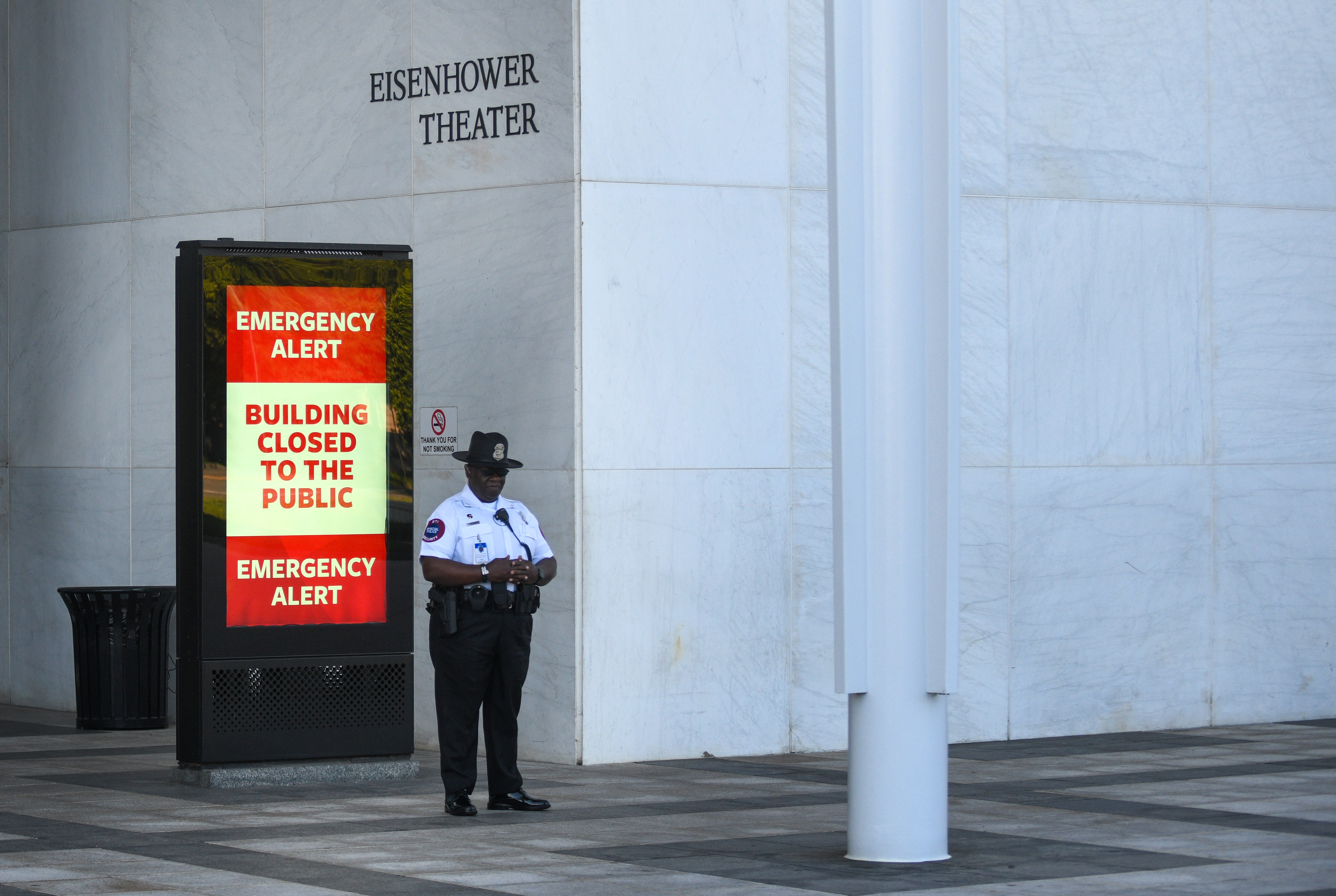
    The center remained closed Wednesday after trustees voted Tuesday afternoon to shutter its main building “forthwith.” At about 4:30 p.m. Tuesday, a message played over the center’s speakers announcing the closure and security guards escorted visitors out through the Hall of Nations. By about 6 p.m., all of the doors were locked.

    On Wednesday, fencing went up around the main building and security guards continued to turn away visitors.

    The Kennedy Center did not immediately respond to a request for comment on the motion.

    The closure came hours after Cooper addressed the issue in court Tuesday morning. Although the proceeding was largely intended to deal with scheduling in Beatty’s lawsuit, the judge confronted a rapidly changing situation: Center management had recommended an immediate shutdown after a section of ceiling plaster fell about 60 feet into the Grand Foyer during a Sept. 4 storm, and trustees were preparing to vote on the proposal later Tuesday.

    The proposed closure carried particular significance because Cooper had already blocked an earlier version of it.

    In May, Cooper overturned a March board resolution to close the building, finding that trustees had acted on insufficient information and failed to adequately consider the consequences. But he did not prohibit the center from ever closing. Instead, while his order remains in place, he left trustees free to reconsider the issue after conducting a more thorough review.

    Trustees returned to the question in August and approved a roughly two-year shutdown. On Tuesday, they went further, voting to make the closure immediate.

    Center officials say new evidence made the acceleration necessary. During the Sept. 4 storm, according to the center, a roughly 4-by-5-foot section of plaster broke loose from the Grand Foyer ceiling. No one was injured. Inspectors subsequently found at least seven other areas with visible water-related deterioration.

    Management has cited those findings, along with water intrusion into electrical areas, deteriorating parking-garage steel, and aging mechanical and theatrical systems, in arguing that the building cannot safely remain occupied during construction. Center spokesperson Roma Daravi said Tuesday that the board had demonstrated “a clear prioritization of safety above all else.”

    Beatty’s lawyers have challenged that characterization. In a filing Monday, they said Delta Consulting Group, which reviewed the center’s renovation plans, had expressly disclaimed concluding that the building was “unsafe for continued occupancy.” They have accused center leaders of using long-standing maintenance problems to justify a closure the Trump-led board already wanted.

    Tuesday’s court hearing also produced a decisive ruling in a separate part of Beatty’s case. Cooper barred trustees from carrying out their Aug. 13 plan to add an inscription reading “Restored and Renovated by President Donald J. Trump” to the facade and rename the grounds “President Donald J. Trump Plaza.”

    “Simply put, Defendants cannot install memorials for President Trump or anyone or anything else at the Kennedy Center without Congress’s blessing,” Cooper wrote, reiterating his May conclusion that Congress reserved the national memorial for honoring President John F. Kennedy.

    Hours later, Trump tied the renovation directly to that legal fight. He said the building would close immediately but that construction “cannot begin until such time as the D.C. Circuit rules on the Board’s approved name.” If the center ultimately loses the naming dispute, including at the Supreme Court, Trump said, “the Reconstruction and the Renovation of The Kennedy Center will not take place.”

    That leaves the Kennedy Center in an unusual position: Its main building is closed because trustees say an immediate shutdown is necessary for safety and renovation work, while the board chairperson says that renovation may never proceed if the center loses the name dispute.

  • Trump’s arch will harm historic sites but must proceed, federal officials say

    Trump’s arch will harm historic sites but must proceed, federal officials say

    Federal officials acknowledge that President Donald Trump’s planned triumphal arch will unavoidably harm historic sites if built as planned, but they say the project must move forward, according to a National Park Service document and emails obtained by the Washington Post.

    Trump’s 250-foot-tall proposed arch would be built in Memorial Circle, a traffic roundabout tucked inside Washington’s boundaries near Arlington National Cemetery. Historic preservationists, veterans groups, and others have called on the administration to shrink the monument’s planned size or build it elsewhere, warning that the towering structure would overshadow the cemetery, interrupt the solemn corridor that was intended between the cemetery and the Lincoln Memorial, and create other disruptions.

    National Park Service officials agree that the arch would adversely affect the cemetery, the Lincoln Memorial, and several dozen other historic sites.

    The “adverse effects cannot be fully avoided,” Park Service officials wrote in a document circulated Tuesday and obtained by the Washington Post. But, they said, the project cannot be constructed somewhere else because “the proposed location at Memorial Circle is central to the undertaking,” according to the NPS document.

    The document is a proposed agreement that the administration wants local historic-preservation officers to sign on to as part of a federally required process to offer feedback on the project.

    The NPS proposal says that since the harms cannot be avoided, federal officials would pursue efforts that they contend would mitigate the arch’s impact, such as creating new signs and webpages to explain the project to the public.

    Officials also said they would manage construction to reduce interference with burials at the cemetery and document the current landscape before construction begins.

    “NPS recognizes that Memorial Circle is located within a highly sensitive historic and commemorative landscape and that the Undertaking’s location contributes to adverse effects to historic properties whose significance is associated with setting, design, feeling, association, spatial organization, circulation, and contributing views and vistas,” the proposed agreement says.

    Tammy Stidham, a senior NPS official, asked the preservationists, local historic preservation officers, and other groups to review and sign the agreement by 12 p.m. on Monday, according to an email obtained by the Post. Their assent would help conclude the administration’s required consultations under the National Historic Preservation Act and expedite the process of securing final approval for the arch.

    Stidham said last week that the administration hopes to submit the project for approval from the National Capital Planning Commission, a review panel that oversees federal construction projects, as soon as November.

    Stidham and spokespeople for the Interior Department, which oversees NPS, did not immediately respond to questions about the proposed agreement.

    Trump has said that the arch should be the tallest in the world and be specifically 250 feet high to mark the nation’s 250th anniversary, which was celebrated this year. The president and his deputies have also asserted that the arch must be built in Memorial Circle because lawmakers a century ago authorized a somewhat similar project that was never built there.

    “The Triumphal Arch in Memorial Circle is going to be one of the most iconic landmarks not only in Washington, D.C., but throughout the world,” White House spokesperson Davis Ingle said in a statement. “It will enhance the visitor experience at Arlington National Cemetery for veterans, the families of the fallen, and all Americans alike, serving as a visual reminder of the noble sacrifices borne by so many American heroes throughout our 250 year history so we can enjoy our freedoms today.”

    Local historic preservationists have said that the administration’s timeline to wind down public input and begin building the arch is overly aggressive. They also criticized the proposed agreement, saying it falls short under federal requirements that the administration must avoid or minimize the harms of a project, rather than just mitigate those harms.

    “This is not consistent with NPS practice, NPS regulations, or the intent of the National Historic Preservation Act,” Rebecca Miller, executive director of the DC Preservation League, wrote Tuesday to Stidham, other federal officials, and colleagues at preservation organizations. Miller also called for the administration to continue its efforts to consult with local preservationists about alternative approaches to building the arch. The email was shared with The Post.

    NPS officials previously said that they have explored changes to the arch proposal.

    “We looked at a smaller arch height. We considered a relocation of the project altogether,” Stidham said at a meeting with preservationists last week, according to audio posted online by NPS. “It was determined that the options would either create a greater impact on historic properties or would not meet the undertaking’s location-dependent purpose need.”

    Federal officials also say they would create several webpages, including one devoted to triumphal arches, to help explain the significance of Trump’s project.

    “The webpage would address the origins and use of triumphal arches in different historical and cultural contexts, their association with military victory, civic identity, national celebration, and public memory, and how the proposed Arch relates to or differs from those traditions,” according to the NPS document obtained by the Post.

    Historic preservationists say that the proposed mitigations are insufficient and that officials should slow their process.

    “The administration is being very transparent in their overt hostility to public input and the regulatory process and the result will be to permanently disfigure one of the nation’s most revered and richly symbolic cultural landscapes,” Charles Birnbaum, founder of the Cultural Landscape Foundation, a local advocacy and education organization, said in a statement.

    If the local preservation officers refuse to sign the agreement, it could trigger a process overseen by the Advisory Council on Historic Preservation, a federal agency led by Trump officials, to address disputes under federal preservation law. The administration does not need the preservationists’ consent to move forward.

    The Advisory Council on Historic Preservation declined to comment Wednesday.

  • Trump administration outlines plan for signs outside Smithsonian museum

    Trump administration outlines plan for signs outside Smithsonian museum

    President Donald Trump remains determined to install warning signs outside the Smithsonian’s National Museum of American History to alert the public that the institution, in his view, does not accurately present U.S. history.

    In letters to two senators, the Interior Department outlined a plan for 12 temporary signs to be installed at a total cost of $84,000. The letters did not specify the dimensions or language of the signs, which were originally ordered in July, but it went into considerable detail about the kind of information they plan to convey.

    In the letter to Sen. Lisa Murkowski (R., Alaska), dated Sept. 3, Doug Burgum, the interior secretary, said he was responding to questions about Trump’s March 2025 executive order, “Restoring Truth and Sanity to American History.” The order described a “revisionist movement” across the country that it said “seeks to undermine the remarkable achievements of the United States by casting its founding principles and historical milestones in a negative light.”

    Americans should enter the National Museum of American History “with relevant information about the curators’ interpretation of history and their stated goal of changing the viewpoints of visitors,” said the letter, which was earlier reported in the Atlantic on Tuesday. Instead, the letter argued, the museum and Smithsonian’s leaders “have altered the museum’s role from accurately and coherently telling America’s story to using the museum as a tool to advance personal, radical ideologies.”

    “We believe the public should enter the museum fully equipped with the information needed,” the letter said, “to evaluate whether to invest their time viewing these exhibits and programming.”

    The museum’s director, Anthea M. Hartig, has contested the thrust of a July 4 White House report that accused her of “radical activist ideology” and the museum of undermining “faith in American institutions.”

    Although the letter said the language of the signs had not been finalized and gave no installation timeline, it described some of the topics they were intended to address, all of which had been outlined in the White House report.

    For example, the letter said the signs should “ensure parents bringing young children to the museum are equipped to protect the well-being of their children” regarding exhibits that “present ideological viewpoints inconsistent with biology, including ideologies that sex is not binary, that biological men can be women, and that biological men should be permitted to compete in women’s sports.”

    Burgum’s letter said a copy had also been sent to Sen. Jeff Merkley (D., Ore.).

    In laying out a case for the signs, the letter was particularly critical of the Smithsonian’s secretary, Lonnie Bunch III, who announced his resignation last week.

    “Visitors should be aware of Smithsonian Secretary Lonnie Bunch’s history of invidious discrimination and anti-white animus,” the letter said, citing a 2000 essay in which Bunch “described the museum profession as ‘awash in whiteness’; wrote that ‘the real issue is not money but the monochromatic nature of our institutions’; and stated, ‘until we change the tint and tone of our workforce, we are just dancing around the edges of our greatest failure.’”

    Bunch and the Smithsonian did not immediately respond to requests for comment.

    Mike Gonzalez, a senior fellow at the conservative Heritage Foundation who has written critically about the Smithsonian, welcomed progress on the signage in an interview. “It is in the interest of transparency that museum visitors be warned in advance of the ideological baggage that the Smithsonian leadership has heaved on these exhibits,” he said.

    The letter also took aim at Hartig. “It is disheartening,” the letter said, that “Hartig has stated that history is ‘a prime tool of social justice’; that she views one of her roles as connecting ‘research and scholarship to activism and advocacy.’”

    Trump originally ordered the signs just days after Republican legislators grilled Hartig in two congressional hearings, where she was accused of teaching “national self-loathing.”

    Hartig, in those hearings, insisted that the report “does not fairly or accurately characterize the full body of work at the museum” while acknowledging that “there is always room for improvement.”

    “When historians talk about reframing a traditional narrative, we don’t mean erasing it,” she continued. “We mean adding the evidence, the voices, the objects that earlier tellings left out so that more Americans can see themselves reflected in the national story.”

    This article originally appeared in the New York Times.