Category: Wires

  • Iran war renews concerns about the lasting toll of traumatic brain injuries to U.S. troops

    Iran war renews concerns about the lasting toll of traumatic brain injuries to U.S. troops

    WASHINGTON — When Joe Shearer was a Marine fighting in Iraq, a blast from an enemy mortar round knocked him down and made him vomit. He got up and kept going despite a searing headache.

    When a roadside bomb struck his Humvee convoy months later, the explosion’s shock wave swept through his body before headaches and sleeplessness set in for days.

    “As long as you got back up and could go back on patrol, that’s kind of what you did,” he said.

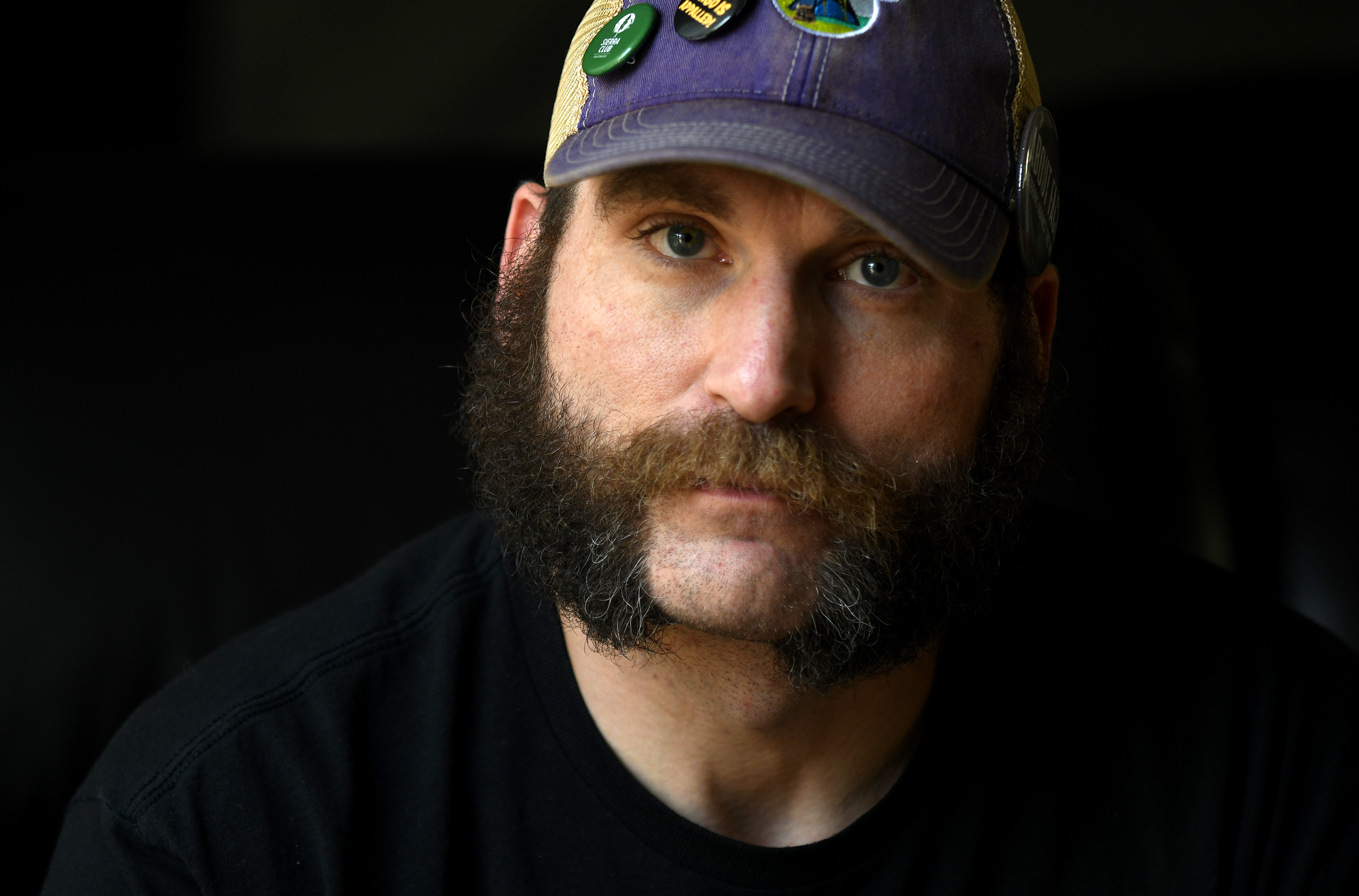
    Shearer, 40, of Colorado Springs, Colorado, links both events in 2005 to traumatic brain injuries, which were only recently diagnosed. He’s still plagued with symptoms ranging from dizziness and migraines to forgetting daily tasks and responsibilities to his wife and children.

    The lasting effects of traumatic brain injuries are raising fresh concerns about the toll of the Iran war on American troops who are suffering those wounds during a conflict without a clear end. Nearly 700 U.S. service members have been wounded by drone and missile attacks on bases in the Middle East and other fighting. Most have experienced traumatic brain injuries, or TBIs, and returned to duty, according to public statements from military officials.

    The Pentagon’s chief spokesman, Sean Parnell, last month called the vast majority of injuries over a two-week period “minor concussions.”

    Doctors can’t predict who may have lasting effects from a TBI

    Concussions often are termed “mild” TBIs, and many people recover within weeks. But sometimes those with seemingly mild initial symptoms go on to have problems persisting for months or years, such as headaches, dizziness, or difficulties with memory or attention that’s sometimes called “brain fog.”

    Doctors have no way to predict who will suffer lasting problems, a vexing enough question that there’s medical debate over whether to retire the term “mild TBI.” Repeated blows are known to increase the chances of lasting problems, including a degenerative brain disease called chronic traumatic encephalopathy, or CTE. It has gained attention for links to deaths in the National Football League and other sports.

    It’s imperative that people recover from a concussion before doing activities that put them at increased risk of another, said Dr. David Okonkwo, a University of Pittsburgh brain trauma specialist.

    Doctors also are still learning how explosive blasts injure the brain versus a physical blow.

    “The blast wave itself can be injurious,” said Dr. James Kelly, an emeritus professor of neurology at the University of Colorado School of Medicine and chief medical scientist at the Invisible Wounds Foundation, which is focused on military brain injuries. “It’s a different cellular injury. Blast is a different thing than a blunt injury to the head.”

    Troops have been facing a new type of warfare with Iran in which drones may explode closer to their heads, as opposed to the ground-level roadside bombs and improvised explosives that were more common in the wars in Iraq and Afghanistan.

    Democratic lawmakers are calling for an investigation into the care that wounded troops received following an Iranian drone strike in Kuwait that killed six U.S. soldiers early in the war. Wisconsin Sen. Tammy Baldwin pressed the military in a letter on Wednesday to release the findings of its investigation into the March 1 attack.

    “I spoke directly with Wisconsinites who sustained traumatic brain injuries from (President Donald) Trump’s war in Iran and went weeks without so much as a screening, let alone specialized care, for their injuries,” Baldwin said in a statement.

    Defense Health Agency spokesman Peter Graves said in an email that “it is policy that service members are screened for TBI.”

    Experts say the military has made strides in screening and treating TBIs, a signature injury in Afghanistan and Iraq. More than 500,000 service members were diagnosed between 2000 and 2025, with 82% of cases considered mild and not all of them related to combat. But advocates say the injuries could still be undercounted because symptoms often overlap with post-traumatic stress disorder and other conditions.

    A TBI diagnosis can emerge years later

    Neither of the two blasts Shearer experienced in Iraq produced obvious injuries, and medics prioritized Marines who were more badly hurt.

    “You don’t want to be the guy who goes to sick call or says, ‘Oh, I’m hurt,’ because you’re away from your team,” Shearer said. “There’s this culture of you don’t want to be seen as lesser or weak, so you hide injuries inherently.”

    When he came home at age 19, he denied he had PTSD and didn’t know what a TBI was. Plagued by nightmares, sleeplessness and headaches, he initially turned to drugs to self-medicate and considered suicide.

    Shearer eventually got help for PTSD, but it took years for him to consider that he suffered traumatic brain injuries. He was working for the Wounded Warrior Project and screening fellow vets for TBIs when he realized he checked many of the same boxes.

    He’s since been diagnosed and received treatment. But challenges remain, including vertigo and light sensitivity. He also forgets important conversations with his family.

    “I know that some of that stuff is stereotypical, but for me, it’s got a different ring to it,” Shearer said. “There will be no memory of the conversation happening.”

    The brain can adapt with treatments and therapies

    Memory loss is something Army veteran Frank Sonntag also experienced following a TBI from a mortar blast in Iraq in 2004.

    He was in his 50s and training reservists when he felt a blast of wind against his ear from an explosion 70 feet (21 meters) away. He didn’t know he was hurt and didn’t seek treatment for two years, ignoring intensifying headaches and brain fog.

    It got to the point where it took 30 minutes to write an email, while colleagues told him he spoke one word every 10 seconds. He considered suicide and was diagnosed only after he got lost driving home. Neurologists prescribed medication for his migraines, among other treatments.

    “Speech therapy was one of the greatest things I had,” added Sonntag, 75, of Queen Creek, Arizona. “They taught me how to practice the words I was speaking and how to put sentences together again.”

    Kelly Parker, director of independent services at the Wounded Warrior Project, said it’s hard to predict an injury’s trajectory.

    “If you’ve seen one TBI, you’ve seen one TBI,” she said.

    Screening, early treatment and support can be crucial to returning to a more normal life. Physical, speech and art therapies can lead to improvements, she said.

    “There’s still so much we don’t know about the brain, but one thing that we do know is it can heal itself,” Parker said. “We know that new neural pathways can be created, and we absolutely believe that the brain can adapt. We’ve seen it happen.”

    Army veteran Spencer Milo said some people struggle to understand why he’s still dealing with migraines, seizures and forgetfulness after so many years out of uniform.

    His first TBI occurred in Iraq in 2008, when his Humvee smashed into a wall to evade fire. His second came from the blast of a suicide bomber in Afghanistan in 2011.

    “I’ve had fellow service members that were even with me on those days, and they’re like, ‘Dude, why can’t you just kick it?’” said Milo, 41, of Parker, Colorado. “I really wish it was that simple. It’s tough because when you can’t see something, it’s hard to believe that it’s really there.”

  • At least 230 Black boys died in jail. Their families want answers — and justice.

    At least 230 Black boys died in jail. Their families want answers — and justice.

    Phyllis Hammond knew she needed to act the moment she emerged from her walk through the woods. She climbed into her car, tears streaming, and said a prayer.

    God use me, in whatever and however way possible, to bring justice.

    A week earlier, Hammond, 69, had received a letter from a genealogist with an unsettling revelation.

    Her uncle, Amos Hammond, had died in 1921 at the age of 18 at the House of Reformation and Instruction for Colored Children, a segregated juvenile jail in Maryland with a documented history of abuse and neglect. He was among hundreds of Black boys and teens the state buried across the road from the facility in a forest in Prince George’s County.

    Hammond had never heard of an uncle named Amos. But the more she learned, the more she realized Amos was family. This spring she visited the graves, marked by crumbling cinder blocks with no names, and left resolved: “I’m going to be that voice those boys didn’t have.”

    Hammond began that work this week, when she was recognized by Maryland Attorney General Anthony G. Brown as a voting member of the state’s newly formed Commission on the House of Reformation and Instruction for Colored Children — an investigative body created by lawmakers earlier this year to unearth buried truths the state ignored for more than a century.

    “We are determined to be the voice and to take a role in major decision-making throughout this entire process,” Hammond said Tuesday at the first commission meeting. “We are firm and committed in our belief that no decision should be made about our children without full engagement and participation with the families.”

    Hammond articulated her priorities: to ensure the commission is independent, unflinching and centered on the wishes of the boys’ living relatives as they weigh whether to exhume the remains, identify them, and determine the children’s true manner of death.

    The commission will be chaired by Brown, the first Black attorney general in state history, and is composed of two dozen voting members and another 10 nonvoting advisory members, all with interest or expertise in forensic anthropology, archaeology, state history, juvenile justice policy and civil rights law. Members include Sen. Will Smith (D-Montgomery) and Del. Jeffrie E. Long Jr. (D-Calvert), who sponsored the commission legislation, and Prince George’s County Executive Aisha Braveboy.

    In addition to Hammond, two other living relatives will serve on the commission: Dorothy Givens, 83, representing her uncle Fred Ames Jr., and Linda F. Gorham, on behalf of her cousin Richard Saunders.

    The Washington Post first reported on the abandoned and overgrown graves a year ago, after former leaders of the Maryland Department of Juvenile Services (DJS) made their existence public. A Post investigation found that at least 230 children died at the House of Reformation between 1870 and 1939, the most comprehensive public accounting to date based on state records, newspaper archives and death certificates.

    Black Caucus lawmakers visited the site last August, and its members later championed a law signed by Gov. Wes Moore (D) that allocates $1 million for the commission’s initial budget. The African American Heritage Preservation Program awarded another $200,000 in grant funding.

    “This is the state of Maryland, all of us, finally doing what should have been done long ago,” Brown said at the meeting, explaining that the body is expected to submit a preliminary report on its work by the end of 2027 and a final report in December 2029. He told members that the House of Reformation commission may be the most significant investigative body that Maryland has created in the past decade, especially as the Trump administration works to strip recognition of the legacy of racism from the nation’s history.

    “We’re meeting at a time when many in our federal leadership are turning away from acknowledging the history that made this country what it is,” Brown said. “That makes what we’re doing here more important, not less. The state of Maryland is choosing to look clearly at a painful chapter of its own history, not to perform accountability, but to actually pursue it.”

    The year since the House of Reformation gravesite’s public rediscovery has been both revelatory and fraught, a navigation of tensions over institutional racism, state power and the people impacted by both. Those tensions were made clear at the Tuesday afternoon meeting, where the families reminded commission members that for them, this process is personal.

    “We are mourning,” said Gorham, a licensed psychologist. “I know we talked about remains and records, but just know that … we have souls that need to be tended to.”

    Running parallel to the commission’s efforts is the Forgotten Children Initiative at Georgetown University — a first-of-its-kind research effort founded by youth justice advocate and former DJS deputy secretary Marc Schindler that is working to identify similar abandoned cemeteries nationwide. He and former DJS secretary Vincent Schiraldi oversaw the state’s earliest efforts in 2024 to uncover the House of Reformation’s history, and Schindler wanted to continue the work after he left the government.

    To date, the Forgotten Children Initiative’s lead genealogist, Malissa Ruffner, has contacted 73 potential living relatives for 24 of the boys. Family members for about a dozen of the boys have responded.

    Ruffner’s previous genealogical work includes helping to identify the living descendants of the 272 enslaved people who were sold in 1838 by Georgetown’s Jesuit founders. She said that she has been able to find some family members for the House of Reformation children within a few hours and others have taken days — a process that includes sifting through decades of birth and death certificates, state records, newspaper archives, census information and obituaries.

    The families identified so far have already developed an intense bond, forged by shared grief and righteous rage. In June, they visited the abandoned cemetery in the woods to hold a funeral — the kind of dignified ceremony the boys did not receive a century ago.

    So far, the families have met privately with Brown. They were not in attendance at a May ceremony at the Cheltenham juvenile detention facility where the House of Reformation once stood. That gathering, held by current DJS leaders, state lawmakers and the governor, served as a history lesson for the broader community and ended with the unveiling of a road marker that acknowledges the institution’s segregated past.

    “Loving your country does not mean lying about its history,” Moore said that day. “Loving your country does not mean pretending like the awful and dark and bad spots did not happen. It means being able to embrace everything, flaws and all, and say that every day is an opportunity for us to be better.”

    Moore said he was “committed” to honoring the boys, including locating the grave of each one in the woods.

    That work will likely take years and a great deal more money than the $1.2 million currently allocated, the attorney general said at Tuesday’s meeting. The commission will rely on the expertise of forensic anthropologists and archaeologists who have overseen similar investigations, including Erin Kimmerle, who led a years-long excavation project at the Dozier School for Boys in Florida, a reform facility where officials buried dozens of children who died in state custody.

    Kimmerle, an advisory commission member, told the group that they should approach this process with the sensitivity of a homicide investigation.

    “For them, the past is the present,” she said of the families. “Historic justice and modern justice are interwoven.”

    Gorham emphasized that point.

    “It doesn’t matter that Richard, my cousin, died when he was 15 in 1935. I still feel it,” she said. “There’s a really deep thing that’s happening here. If you’re serving, I want you to feel it.”

    For Hammond, among the commission’s most important missions is using their power to ensure no child detained in state custody is ever treated the way her uncle Amos was. To crystalize that conviction, she read the room a poem she wrote after visiting the abandoned cemetery for the first time.

    “If these woods could talk, I wonder what they would say?” she read. “If these woods could talk, do you think they could share each of these boys’ tragic lives and deaths while entrusted in the hands of the juvenile system? If these woods could talk, could they share the pain and the scars that they endured across their fragile bodies?”

    “If these woods could talk,” she continued, “I wonder if these woods would have raised their voices loud and clear against the lawlessness of what they’d seen, heard and became a part of.”

    “If only these woods could talk,” she said, “maybe many lives could have been saved.”

  • HHS proposes cutting many federal education and health guidelines for Head Start

    HHS proposes cutting many federal education and health guidelines for Head Start

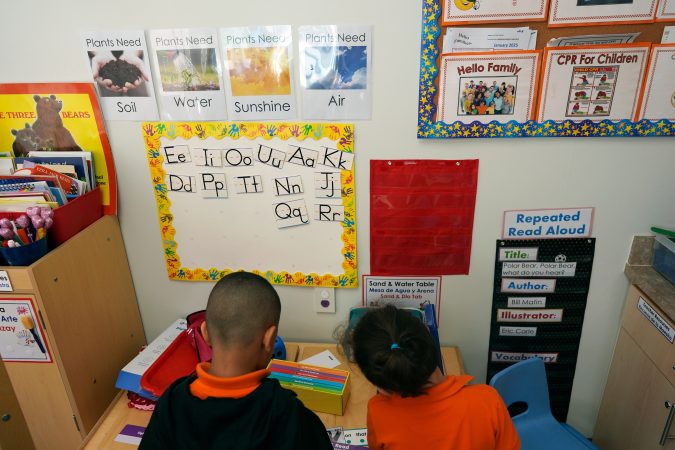
    The Trump administration unveiled a proposal Thursday to overhaul the regulations for Head Start, the early-education program that serves roughly 700,000 children across the country.

    The proposal would eliminate many existing federal rules, shifting some authority to states and local authorities; add new dietary and physical fitness requirements for students; and cap administrative overhead payments. The changes could free up $2.2 billion to serve as many as 268,000 more children, administration officials said.

    “It’s a program that works for the most vulnerable, of course, kids in our society,” Health and Human Services Secretary Robert F. Kennedy Jr. told reporters. “And it’s really important we protect it.”

    Over the past few weeks, reports that the administration planned to eliminate many federal regulations have alarmed some Head Start advocates about the future of the program. In June, a report from the conservative Heritage Foundation called on the administration to deregulate the program and eventually eliminate it altogether. And an early draft of a White House budget last year reportedly proposed zeroing out the budget for Head Start, though the final version maintained funding for the program after widespread pushback.

    Also last year, the Government Accountability Office found President Donald Trump’s administration improperly withheld about $825 million from Head Start for months.

    The Trump administration, however, said the latest proposal is intended to eliminate red tape, cut administrative costs, and create more flexibility for programs.

    “We built this rule around trusting local leaders to make the decisions that are best for their local communities,” said HHS Assistant Secretary Alex Adams, who leads the Administration for Children and Families.

    Administration officials said the proposal would also strengthen dietary regulations to “provide nutrient-dense, whole foods” for children and require sites to give students at least 30 minutes of physical activity for every 3.5 hours in the classroom.

    They also said they hope to free up enough money to serve more children by eliminating other regulations and reducing the cap on administrative costs from 15% to 5%.

    “If we get this proposed rule right, we will grow the number of Head Start spots,” Adams said. Officials said the proposal would preserve requirements that programs involve families in children’s learning and recognize parents as children’s primary teachers.

    Sen. Patty Murray (D-Washington), a longtime advocate for Head Start, immediately blasted the proposal to remove many federal regulations.

    “After Congress and the nation forcefully rejected Trump’s efforts to destroy Head Start, this administration now wants to quietly gut Head Start by eliminating the basic health and safety standards our kids rely on,” she said in a statement.

    Khari Garvin, who oversaw the Head Start program during the Biden administration, said he was deeply concerned by the Trump administration’s plans to eliminate many regulations, including those governing class size and teacher compensation.

    “It’s the health, safety and quality benchmarks that the federal standards bring,” Garvin said. He said the HHS proposal would “take the program backwards significantly.”

    The American Civil Liberties Union said in a statement that doing away with the regulations would violate the laws governing Head Start.

    “This proposed rule is an illegal attempt to dismantle the Head Start program by removing the very standards that Congress required to be in place to ensure children receive high-quality early education and comprehensive services,” said Ming-Qi Chu, deputy director of the ACLU Women’s Rights Project. “The administration cannot defy the laws that Congress wrote simply because it disagrees.”

    The administration said it plans to formally publish the proposal in the Federal Register on Friday, kicking off a 60-day public comment period. Administration officials would then need to review the comments and issue a final rule, a process that can take months. Any changes could be delayed even further if the ACLU or another organization challenges the move in court.

    “This will take a lot of time to implement,” said Tommy Sheridan, deputy director of the National Head Start Association, a nonprofit that advocates for Head Start.

    The Head Start program was started more than 60 years ago as part of President Lyndon B. Johnson’s War on Poverty. Local sites typically provide free early education, child care, health screenings, and other services for children up to 5 years old from low-income families. Though it has an educational component, Head Start is overseen by HHS, not the Education Department.

    Research on the program has found mixed results. A federal study of the modern Head Start program, released in 2010, found most of the benefits faded by the end of first grade. But another study in 2022 found the children of former Head Start participants saw meaningful increases in wages and graduation rates as adults, suggesting the program may have a positive impact across generations.

    Some conservatives have long sought to eliminate the program, saying it hasn’t produced enough tangible results to justify the annual $12 billion cost.

    “While the program should sunset, it is reasonable at this point to deregulate the program and provide more autonomy to local operators,” said ​​​​Jonathan Butcher, acting director for the Center for Education Policy at the Heritage Foundation, the conservative group behind Project 2025, the policy blueprint that called for the government to “eliminate the Head Start program.”

    Trump administration officials also noted that Head Start has gradually shrunk over the years, including a reduction of roughly 100,000 slots for children during the Biden administration.

    Sheridan of the National Head Start Association said many sites have been forced to shrink over time because they haven’t received enough money to keep up with inflation. Garvin, the former director of the Office of Head Start, also noted that the Biden administration allowed some Head Start programs to add more infants and very young children, who require smaller class sizes. And some programs needed to spend more on compensation to help attract and retain instructors.

    Both the National Head Start Association and the First Five Years Fund, an advocacy group for early-childhood education, said they plan to review the Trump administration’s proposal closely and submit formal comments.

  • Europe maintains World Cup boycott threat after Gianni Infantino’s FIFA crisis meeting

    Europe maintains World Cup boycott threat after Gianni Infantino’s FIFA crisis meeting

    European soccer’s governing body has retained its threat to boycott FIFA competitions despite FIFA apologizing for its failed plan to sell stakes in the World Cup.

    UEFA on Thursday reiterated that it had lost confidence in FIFA president Gianni Infantino and said conditions to withdraw its boycott threat had not been met.

    “UEFA’s associations were very clear about the conditions attached to the non participation in FIFA competitions,” it said in a statement. ”First, the proposals to sell off the major competitions had to be withdrawn and secondly, assurances have to be made that such attempts to disfigure the game in this way will never be made again.

    “These conditions have not been met. In addition, UEFA made it abundantly clear in its statement on Saturday that it has lost confidence in Gianni Infantino’s presidency. That position holds.”

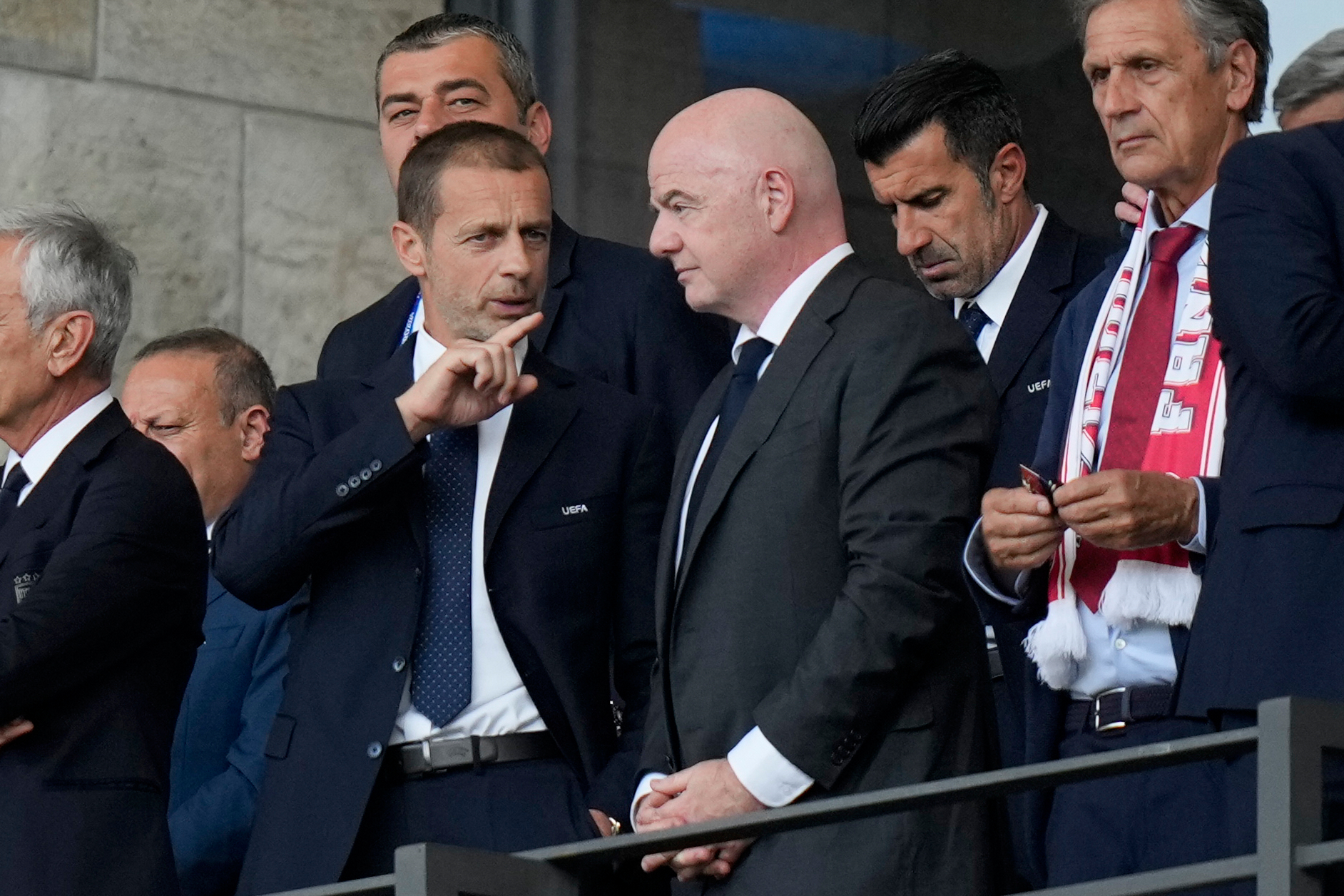
    FIFA president Gianni Infantino (center) with secretary general Mattias Grafstrom (left) and Moroccan soccer federation president Fouzi at a women’s Africa Cup of Nations game in Morocco on Wednesday.STR

    It was another bruising day for Infantino, with global soccer players union FIFPRO accusing him of “a profound abuse of presidential power.”

    The English Football Association has also withdrawn its support for Infantino’s reelection.

    Even Amnesty International said the “current crisis spotlights the need for governance reforms.”

    FIFA and Infantino tried to present a united front following a high-level summit in Morocco on Wednesday when it announced the president had the full support of top staff in attendance.

    The world governing body also apologized for errors made over its controversial plan to sell profits in the World Cup through a commercial subsidiary and committed to “ensure they do not happen again.”

    FIFA said it hoped its meeting would “help restore confidence” in the organization after the turbulence created by Infantino’s now abandoned project, which provoked widespread condemnation.

    UEFA voted to abandon FIFA competitions if it went ahead. And even after Infantino’s hasty climbdown, Europe’s governing body said it had lost confidence in FIFA’s leadership — paving the way for a challenge to his presidency.

    In its defiant statement, UEFA made it clear its position still held.

    “Yesterday’s announcement that some people employed by the FIFA president (and whose careers depend on his favor) agree with him changes nothing,” it said.

    The next FIFA event on the calendar is the under-20 women’s World Cup from Sept. 5-27 in Poland.

    Inquirer staff writer Jonathan Tannenwald contributed to this article.

  • Trump, Hegseth clashed at Camp David over Iran missile depletion concerns

    Trump, Hegseth clashed at Camp David over Iran missile depletion concerns

    President Donald Trump’s frustration over the Iran war boiled over at Camp David last week, where he demanded answers from Defense Secretary Pete Hegseth on why he had apparently been misled on extreme munitions shortages that now threaten to limit military options with Iran, two people familiar with the exchange told The Washington Post.

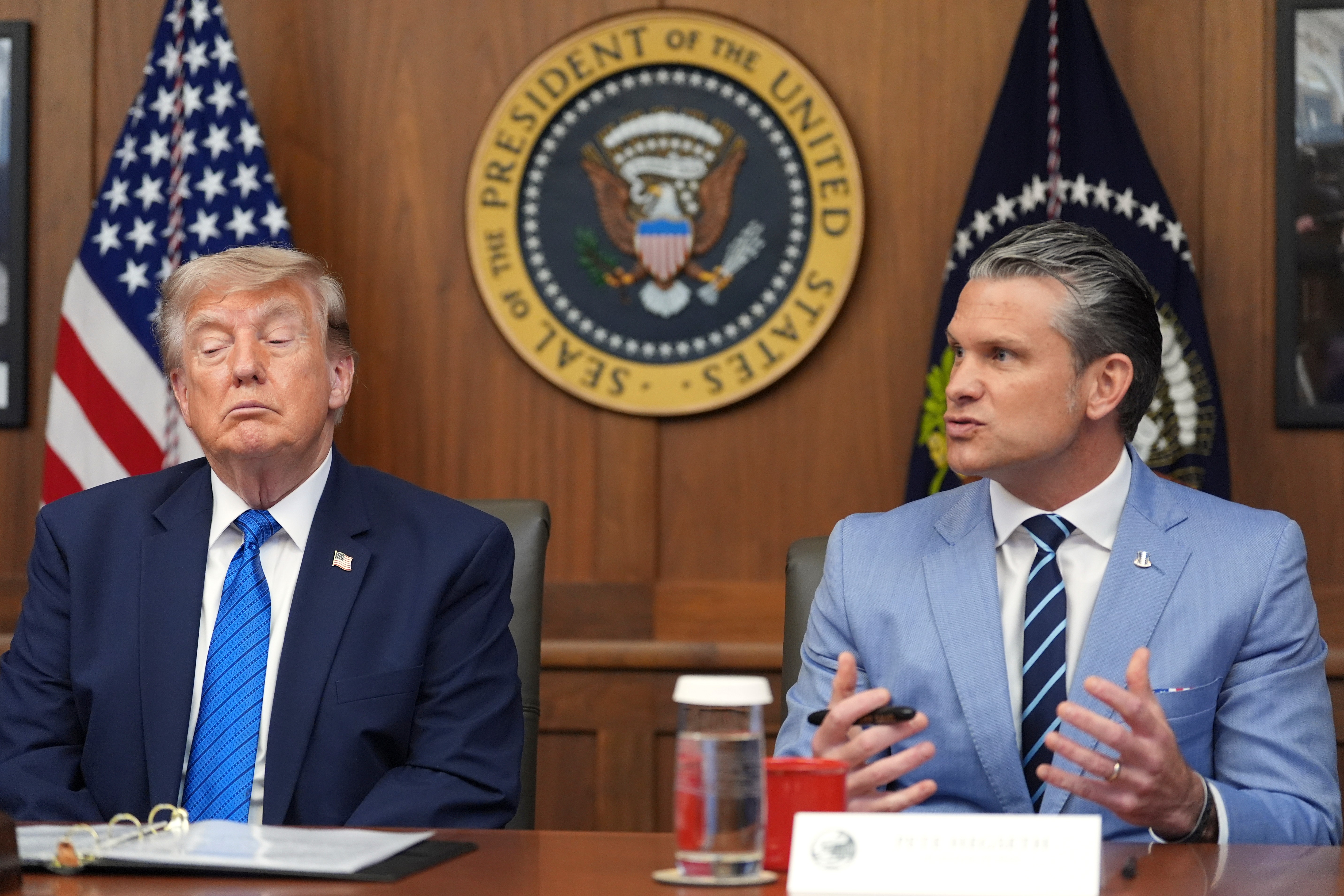
    The encounter took place on the sidelines of his Cabinet meeting at Camp David on Friday where Trump vented at Hegseth that he thought the munitions issue “had been fixed,” according to both people familiar with the conversation, who, like others, spoke on the condition of anonymity due to fear of retaliation.

    The shortages, particularly in long-range guided missiles and air-defense interceptors, have been part of the reason Trump has pulled back from launching additional massive strikes against Iran in recent days, one of the sources said.

    Trump said Monday that he had ordered and subsequently called off “the biggest attack since World War II,” pending claims of new negotiations over the Strait of Hormuz.

    The president asserted overnight that the United States has “massive amounts” of munitions, saying in a post on Truth Social that “large amounts are being manufactured and shipped to the U.S. as needed.” The “‘leakers’ of these treasonous statements are being hunted down,” he added.

    While the United States has announced new production agreements for some of the most critical munitions, such as Patriot air defense missiles, the munitions themselves can take as long as two years to produce, and there’s no immediate relief in sight for the shortages.

    In the first month of fighting alone, the U.S. fired off more than 850 Tomahawk cruise missiles and more than 1,000 Patriot and Terminal High Altitude Area Defense (THAAD) systems, The Post previously reported.

    The U.S. also used more than 1,300 of the Army’s tactical ballistic missiles in the initial weeks of fighting, one U.S. official told The Post. The ATACMs stockpile — a short-range missile also in demand by Ukraine — is drained to the extent that there’s basically none left, said one of the people familiar, an assessment also reported earlier this week by Reuters.

    The scarcity of defensive munitions has had an impact beyond the Middle East. Ukraine is running out of air defenses, and there are few options with which to replenish from Western stockpiles, leaving them exposed to Russia’s long-range attacks.

    The lack of interceptor missiles is also altering how the U.S. decides whether to employ munitions against an incoming threat, based on where it’s assessed to be heading and whether or not it’s “a factor,” the U.S. official told The Post, a change in tactics that was first reported by NBC News.

    Back at Camp David, as he was confronted by Trump over the bare weapons stockpile, Hegseth defended himself and blamed his deputy, Stephen Feinberg, for the shortages and for not ensuring Trump was fully apprised of the issue, both people familiar said.

    The exchange underscored Trump’s increasing frustration with his defense secretary, who was one of the biggest early advocates for taking military action against Iran, convincing Trump it would be a quick and relatively easy win, according to multiple officials.

    “This is 100% fake news. Literally never happened. And President Trump has the utmost confidence in Secretary Hegseth,” said White House press secretary Karoline Leavitt in response to questions from The Post.

    More than five months after the start of the conflict, and with 18 U.S. service members killed and hundreds injured, Iran and the U.S. remain at a stalemate, with increasing concern from Arab neighbors about the long-term economic effects of the war and the impact of the closure of the Strait of Hormuz.

    “Secretary Hegseth did not mislead anyone about our munitions posture, and he did not blame Deputy Secretary Feinberg. These claims about depleted stockpiles, internal disagreements, the Secretary’s position on Iran … are equally fictional,” Pentagon chief spokesman Sean Parnell said.

    In a July Senate hearing, Hegseth sparred with Democrats over whether he had provided Trump with honest assessments of the Iran war, including the risks an extended campaign would pose for U.S. military inventories.

    During the hearing, Hegseth declined to discuss his advice to the president and repeatedly blamed any shortages on the Biden administration’s handling of the military, not on the operations that have occurred under Trump’s watch.

    Hegseth, Feinberg and Joint Chiefs Chairman Gen. Dan Caine have asked lawmakers to provide them $67 billion in additional military funding to help cover the costs of the Iran war, with Hegseth telling lawmakers in testimony last month the request filled an “urgent, necessary” need to refill the military’s stockpiles.

    Senate Republicans have yet to agree on a strategy to take up the package.

    The administration’s overall defense budget request for the coming fiscal year is a record $1.5 trillion and includes tens of billions of dollars to build missiles. But the proposal has stalled as Democrats object to the massive increase, leaving the Pentagon without a clear path to replenishing critical weaponry.

    Ever since Signalgate, where Hegseth sent classified information to a chat group that included a reporter just months after being confirmed to the role, rumors have swirled about how long the defense secretary would remain in Trump’s good graces. The president has consistently praised Hegseth, saying he looks straight out of “central casting” and that “he loves war.”

    Since taking office, Trump has launched military operations in seven countries: Yemen, Somalia, Syria, Iran, Iraq, Nigeria and Venezuela.

    The successful operation to capture former Venezuelan strongman Nicolás Maduro appeared to further secure Hegseth’s position. But the stalemate over the Strait of Hormuz and the massive cost and length of the Iran war has eroded Trump’s confidence in him, one of the people familiar with the Camp David conversation said.

    “Secretary Hegseth isn’t going anywhere, and he’s going to continue to work side by side with Deputy Secretary Feinberg to execute President Trump’s agenda,” Parnell said in response to questions about that exchange and the munitions depletion.

    Stockpile pressures are not a new challenge. Before the war even started, Caine warned Trump that the U.S. did not have the stockpiles necessary to sustain a prolonged conflict.

    But the pace and sheer volume of munitions expended by both sides has rapidly accelerated the depletion of key U.S. offensive and defensive munitions.

    From Feb. 28 to April 7, which marked the first day of the ceasefire, the U.S. struck more than 13,000 targets in Iran. It has also defended against more than 8,500 incoming Iranian munitions or drones.

    The U.S. launched Operation Epic Fury already facing shortfalls in critical munitions.

    In the summer of 2025, it expended more than a quarter of its total inventory of THAAD interceptors during Israel’s 12-Day war and Operation Midnight Hammer, where U.S. forces struck Iran’s nuclear sites. The current conflict “has made those inadequacies even worse,” said Brad Bowman, an Army veteran and senior director at the Foundation for Defense of Democracies.

    While Hegseth and the Pentagon have announced numerous new industry framework agreements to rebuild the arsenal, defense firms “aren’t going to start bending metal until you have a contract and congressional appropriations,” Bowman said.

    As a result, it could be years before the inventories are rebuilt. “We’re often talking years between spending what we need to spend, getting the contracts signed, and delivery,” he said. “You don’t just flip the switch and suddenly the munition appears in the hands of the warfighter.”

  • Tupac Shakur was killed in Las Vegas in 1996. Here’s who was there that night

    Tupac Shakur was killed in Las Vegas in 1996. Here’s who was there that night

    LAS VEGAS — New details about one of hip-hop’s most enduring mysteries — the 1996 killing of rap icon Tupac Shakur — could finally come to light in the upcoming trial of Duane “Keffe D” Davis.

    Davis, 63, is accused of orchestrating the drive-by shooting near the Las Vegas Strip that also wounded rap music mogul Marion “Suge” Knight. Davis’ jury trial will begin Monday, nearly three years after he was arrested in 2023. He pleaded not guilty.

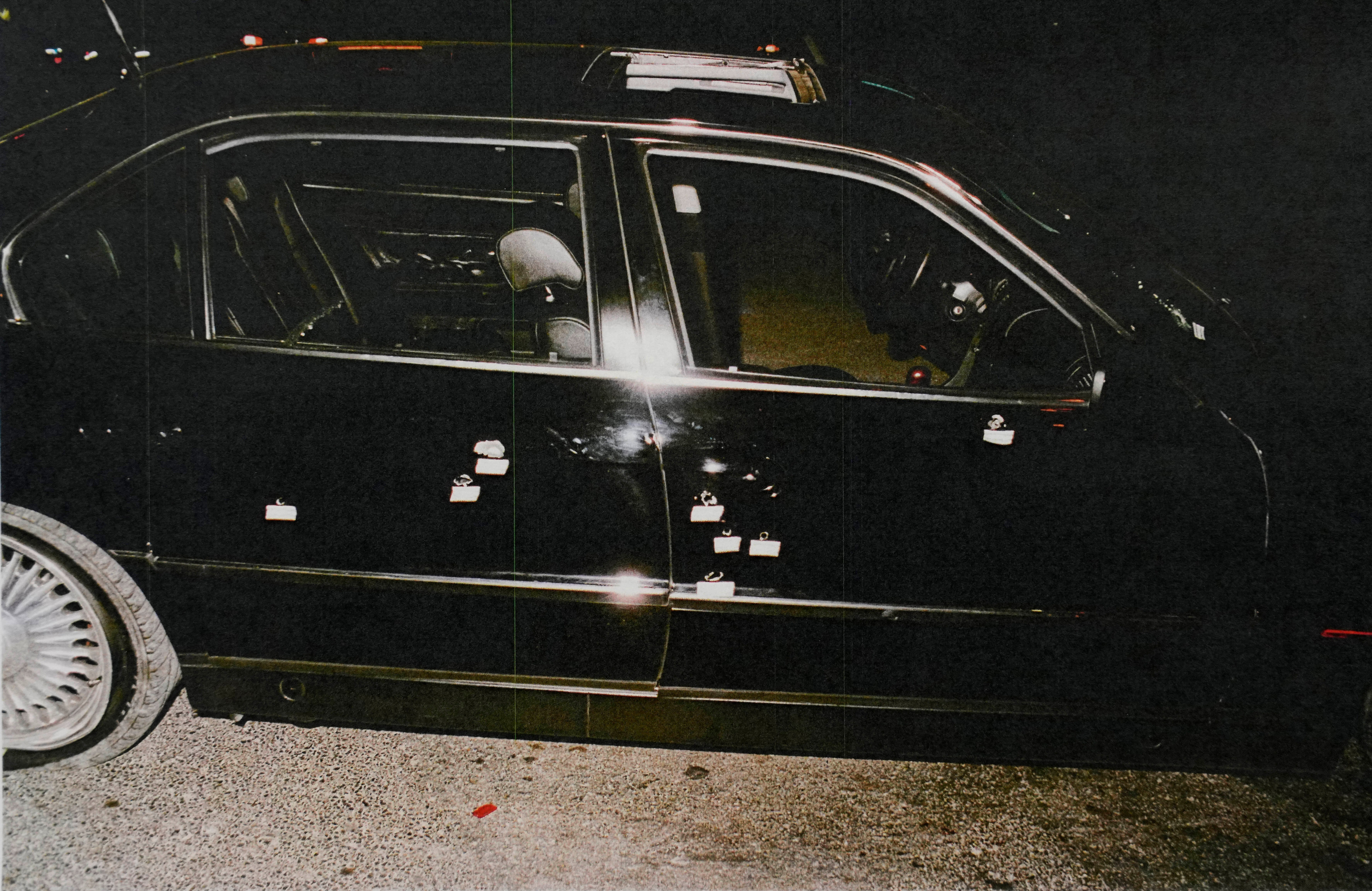
    On the night of Sept. 7, 1996, Shakur was in the passenger seat of a black BMW that Knight was driving when a white Cadillac pulled up on their right side and gunfire erupted. Knight was wounded but survived. Shakur died a week later at the age of 25.

    Police and prosecutors say the shooting stemmed from a fierce competition for dominance in a musical genre that pitted East Coast members of a Bloods gang sect against West Coast members of a Crips sect that Davis has said he led in Compton, Calif.

    That night, three others were with Davis in the Cadillac, but none of them faced charges in Shakur’s killing before they died.

    Here’s what we know about who was in both vehicles from authorities, court records, grand jury testimony, interviews, and Davis’ 2019 tell-all memoir, Compton Street Legend.

    Tupac Shakur

    Shakur is considered one of the most influential rappers of all time. He had five No. 1 albums, was nominated for six Grammy Awards, and was inducted into the Rock & Roll Hall of Fame in 2017. He received a posthumous star in 2023 on the Hollywood Walk of Fame and he will appear in the upcoming video game Stranger than Heaven.

    His death came as his fourth solo album, All Eyez on Me, remained on the charts, with some 5 million copies sold. He also used the stage names 2Pac and Makaveli. As an actor, he starred in several films.

    Shakur was born Lesane Parish Crooks in New York in 1971, and his name was changed a year later. His late mother, Afeni Shakur, and late stepfather Mutulu Shakur were active in the Black Panther Party in New York. Tupac Shakur was not close with his biological father, William “Billy” Garland.

    Two of the rapper’s siblings, Sekyiwa “Set” Shakur and Maurice “Mopreme” Shakur, have criticized authorities for inaction and slowness in charging anyone with their brother’s death.

    Marion “Suge” Knight

    Knight founded Death Row Records, a Los Angeles-based music label that represented Shakur at the time of his death. Knight’s moniker was shortened from “Sugar Bear,” his nickname growing up in Compton.

    Knight and Shakur were headed to a nightclub when their car was shot at near the Las Vegas Strip. Knight was grazed by a bullet or shrapnel.

    Now 61, Knight is serving a 28-year prison sentence in California for running over and killing a Compton businessperson outside a burger stand in January 2015. The case capped the former rap music mogul’s downfall from his heyday as one of the biggest — and most feared — names in the music industry.

    Davis said he and Knight knew each other growing up and even played on the same youth football team in Compton. Knight went on to play college football at the University of Nevada, Las Vegas. Briefly, during the 1987 NFL players’ strike, he was a replacement player for the Los Angeles Rams.

    In his memoir, Davis describes Knight and himself as the “only living eyewitnesses to what truly happened.”

    “Like two rams locking horns, Suge and I looked each other dead in the eye,” he writes when describing the moments right before the shooting.

    Orlando “Baby Lane” Anderson

    Law enforcement authorities long suspected that Anderson was the gunman. He was 22 at the time. Though Davis was his uncle and 12 years older, he described their relationship as that of brothers, friends, and even father-son.

    Shortly before the drive-by shooting, Anderson was beaten in a brawl at the MGM Grand casino involving Shakur and his associates, including Knight. Authorities, authors, and Davis himself say the shooting was an act of retaliation for beating up Anderson.

    “Them jumping on my nephew gave us the ultimate green light to do something,” Davis writes in the book.

    Davis said he obtained a handgun from an associate and tossed it into the back seat of the Cadillac but did not say who fired the fatal shots. Anderson was sitting in the backseat of the car, behind his uncle.

    Neither the Cadillac nor the gun used in the shooting were recovered, according to retired Las Vegas police Detective Clifford Mogg, who was assigned to the investigation in early 2018.

    “We were never able to identify the person who rented the car, where it was rented from, and then when it comes to the gun, we have never recovered as of this date, the weapon that was used in the murder,” Mogg said in testimony to the grand jury.

    Anderson, who denied involvement in Shakur’s killing, died two years later in what police said was an unrelated shooting at a Compton car wash.

    Deandrae “Freaky” Smith

    Also known as “Big Dre,” Smith was in the back seat of the car that night, sitting next to Anderson.

    Although authorities have said they believe Anderson pulled the trigger, the grand jury testimony challenged that theory.

    Denvonta Lee, a former associate of Davis, told the grand jury that it was Smith who shot Shakur and Knight. He said Anderson tried reaching over Smith but didn’t have a “clear shot” out the left-rear passenger window.

    The former associate, who wasn’t in the car but recounted a conversation he had with Smith days after the shooting, said Smith took the gun from Anderson, opened fire and let Anderson take credit for Shakur’s death.

    Smith was 30 when he died in 2004 of natural causes, according to the Los Angeles County coroner’s office.

    Terry “Bubble Up” Brown

    Brown was driving the Cadillac from which the shots were fired.

    Davis said in his memoir that they were driving toward Las Vegas Boulevard that night but spotted Shakur “hanging out of the window” of the BMW and waving to fans. Davis told Brown to make a U-turn, and they drove slowly past the rapper’s convoy until Davis said they “found who we were seeking.”

    Brown died in a 2015 shooting at a medical marijuana dispensary in Compton.

    The Los Angeles County coroner’s office said his full name was Terry Tyrone Brown, although Brown has been referred to as both “Terrence” and “Terrance” in investigative records.

  • National Gallery studied whether Freedom 250 IndyCar vibrations will affect art

    National Gallery studied whether Freedom 250 IndyCar vibrations will affect art

    When the Freedom 250 Grand Prix kicks off this month as part of President Donald Trump’s summer celebrations, IndyCar racers will weave at speeds up to 185 mph among federal buildings, the National Gallery of Art, the National Archives, and the Smithsonian Institution’s Hirshhorn, Air and Space, and American Indian museums.

    One of those institutions, the National Gallery of Art, has studied vibrations ahead of the race as it prepares for possible effects on its art — but it’s declining to say what it found.

    “In preparation for the Freedom 250 Grand Prix, the National Gallery conducted an extensive vibration study and based on the results we have implemented a set of measures to ensure the safety of our staff, visitors, collection, and facilities during the race,” gallery spokesperson Chris Abanavas said in a statement. “While we are not releasing the specifics, I can share that any such measures are only being taken out of a great abundance of caution.”

    The study didn’t raise concerns about structural risk to the buildings, Abanavas added. The race will also limit attendance at the free museum to ticket holders to the event’s secured area.

    The Smithsonian determined the race, which will take place Aug. 22-23, will not threaten any objects in its collections and has taken no special precautions as a result, a Smithsonian official said. But the institution will monitor the situation before and during the race, so it can protect exhibits if that changes.

    While the event is a first for D.C., it is not the first such race to pass through city streets and near museums, which commonly face vibrations from construction, musical events, and large crowds. But some historic preservationists worry the risk to delicate art pieces, historic documents, and priceless murals near the circuit has been underexamined.

    In March, the National Park Service consulted with the D.C. State Historic Preservation Office about the IndyCar event, noting that it saw “no adverse effects.” The letter did not mention the museums along the route. (The National Park Service and the National Archives did not respond to a request for comment.)

    Some preservationists who spoke with the Washington Post called the analysis insufficient and said a more comprehensive review of potential damage to historic properties or artifacts would have taken years, not months.

    “I can’t think of any place in that whole area that goes where the speed limit is higher than 25 miles an hour,” said Michelle Arcari Rose, a former associate general counsel at the National Trust for Historic Preservation, which has sued to stop Trump’s White House ballroom project. “So whereas people think these grand prix races aren’t a problem, we certainly don’t know, right? It’s a huge risk to then unleash cars at 185 miles per hour in a place where we’ve never had cars really going more than 25 miles an hour.”

    Mary Okin, assistant director of the nonprofit Living New Deal, sent a letter last week to the National Park Service and other agencies expressing concern that the event was permitted “without meaningful” consultation with “known preservation stakeholders.” The letter and the National Gallery of Art’s vibration study were first reported by the New Republic.

    “Such vibrations are well above normal street traffic and even go beyond those of jackhammers, pile drivers, and even freight trains,” she wrote.

    Okin is calling for safeguards including temporary sound barriers and damage assessments to help protect buildings such as the Wilbur J. Cohen Building, which sits on the circuit’s south edge and houses fragile New Deal-era murals.

    “They’re vulnerable,” said Okin, whose organization has worked on the building’s preservation. “Excess vibrations and sound, as well as the construction of the racetrack itself, could very well cause damage.”

    The General Services Administration, the body that manages real estate for the federal government, reviewed the proposed route for potential impacts on its assets and identified no areas of concern, a spokesperson said in a statement.

    “The White House and [IndyCar owner] Penske have followed all appropriate protocols and been in close coordination with all relevant agencies to ensure this is also the safest and most secure race for all visitors to enjoy,” said Davis Ingle, a White House spokesperson.

    While many major motorsport races are held on permanent road courses or oval tracks, temporary street circuits are a familiar part of international racing.

    IndyCar stages several events on public roads in cities such as St. Petersburg, Fla.; Long Beach, Calif.; Detroit; and Toronto, while Formula One also races on street courses in places including Monaco, Singapore, and Las Vegas. The roads are closed, lined with concrete barriers, and transformed into racecourses for the events before reopening to traffic.

    One of the closest comparisons with D.C.’s race is the Firestone Grand Prix of St. Petersburg, in which the street circuit runs next to the Dalí Museum. A museum spokesperson said the collection has remained safe and secure throughout the event’s history. The museum has not conducted race-specific vibration studies, but its galleries were built to museum standards and the collection is continuously monitored.

    Green Savoree Racing Promotions, which organizes the St. Petersburg race, said the museum closes to visitors while racing is underway and reopens after the event concludes. The promoter also noted that the museum is housed in a hurricane-rated building constructed to Florida standards, allowing the artwork to remain in place during extreme weather, and said it was not aware of any additional precautions being necessary during the race.

    In a statement, a Freedom 250 Grand Prix spokesperson said race organizers have “tremendous respect for the history and the structures surrounding the racing circuit in Washington, D.C.”

    “IndyCar has successfully hosted races on downtown street circuits in urban areas for decades,” the spokesperson said. “With this excellent track record and the thorough preparation we have done for this event working closely with all the appropriate local and federal agencies, we do not anticipate any impact on the structures surrounding the circuit” as a result of the race.

    Researchers have started paying closer attention to how vibrations from construction, live music, and major events may affect the art and artifacts inside museums.

    One 2023 report studied the effects of vibrations from music and a NASCAR street race on museums in Chicago. In that case, racecars passed a south wall of the Art Institute of Chicago, near galleries holding a Van Gogh exhibition.

    Advisers who reviewed data and consulted with NASCAR beforehand told the museum vibrations from the cars shouldn’t pose a major risk, according to the report. Afterward, they found museumgoers’ foot traffic caused greater vibrations in gallery floors than the race outside. (An author of the report declined to be interviewed, and the Art Institute says it works with specialists before any major activity that might cause vibrations.)

    On Tuesday, there were few apparent changes at the National Gallery of Art except for enclosures set up around some artworks outside.

    The I.M. Pei-designed triangular skylights, which abut a cascading sunken fountain and illuminate the underground cafe, have been boarded up. Between the West Building and the Sculpture Garden, a massive Alexander Calder sculpture made of sheet metal, Tom’s, has been enclosed in a protective barrier.

    Some sculptures and installations were boarded up “out of an abundance of caution,” said Abanavas, citing “the increased visitor traffic around the National Mall this summer for events including the Grand Prix.”

    As of publication, the Post did not identify significant changes to public collections inside the National Gallery of Art’s East Building, which closely faces the racetrack on Pennsylvania Avenue.

  • Caitlin Clark, Angel Reese, Paige Bueckers set for World Cup debuts; Kahleah Copper returns to Team USA

    Caitlin Clark, Angel Reese, Paige Bueckers set for World Cup debuts; Kahleah Copper returns to Team USA

    NEW YORK — Caitlin Clark, Angel Reese, and Paige Bueckers will make their World Cup debuts as members of the U.S. women’s national team next month.

    The trio will try to help the U.S. win its fifth consecutive FIBA World Cup title. The young stars will be joined by 2024 Olympic gold medalists A’ja Wilson, Breanna Stewart, Napheesa Collier, Chelsea Gray, Jackie Young, Kahleah Copper, and Kelsey Plum.

    “It’s always good when you compete for a gold medal, it’s a big honor,” said Wilson, a four-time WNBA MVP. “It’s something I don’t take lightly. Time to go there and have some fun and also win.”

    Rhyne Howard and Aliyah Boston also will be making their World Cup debuts to round out the team.

    “I’m so excited to announce the 2026 USA Basketball Women’s National Team,” USA Basketball national team managing director Sue Bird said. “This is an incredibly talented group that has earned the opportunity to compete in Berlin. Wearing a USA jersey is a privilege, and I know these 12 players will embrace that responsibility as we go after another gold medal. I can’t wait to see what this team accomplishes together.”

    Copper, a North Philly native and Prep Charter alumna, is among five returners from the 2022 World Cup squad that won gold. Copper also recently was a WNBA All-Star for the fifth time. She’s currently averaging 21 points for the Phoenix Mercury, good for fifth in the WNBA.

    Wilson leads the league in scoring (26.6 points per game) and blocks (2.0 per game) and is third in rebounds with 9.6 per game. Clark is fourth in scoring (21.5 points per game) and second in assists (8.0 per game).

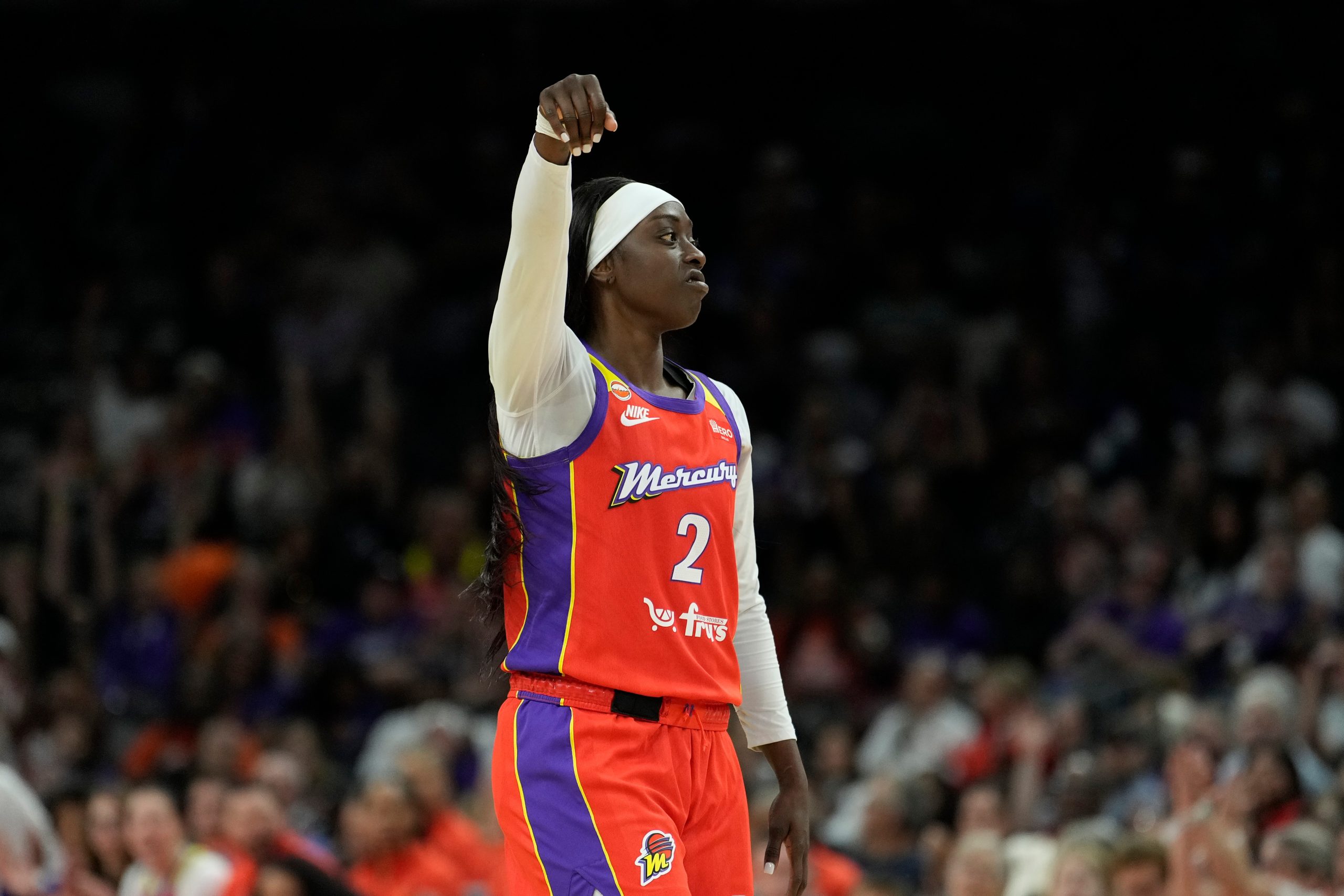
    Phoenix Mercury guard Kahleah Copper, a North Philly native, is heading to the FIBA World Cup with Team USA.Ross D. Franklin

    This is the first time that USA Basketball has had a managing director choose the team; in the past, it was a committee. Duke women’s basketball coach Kara Lawson, an assistant on the 2022 team, will coach this year’s squad.

    Stewart is the third player in USA Basketball history to appear in four World Cup tournaments, joining Bird, who played in five; and Diana Taurasi, who also played in four.

    The Americans will face China, Italy, and the Czech Republic in pool play at the World Cup, which will be held Sept. 4-13 in Berlin. The WNBA will take a nearly three-week break in its season to accommodate the event.

    Clark, Bueckers, and Reese helped the Americans win a World Cup qualifying tournament in March in Puerto Rico.

    Sabrina Ionescu has been a big part of the U.S. roster the last few years but was left off this season’s team.

    Bird said she called many of the players who didn’t make the team this time, including Ionescu.

    “I think we can all agree the hardest part, which is a problem I would never trade, is that we have so much talent,” Bird said. “The beauty of that is it means almost all players are wanting to be on this team, willing to be on this team. It is a sacrifice. It is a time commitment.”

    Alyssa Thomas helped the U.S. win gold at the Paris Olympics but hasn’t taken part in any USA Basketball camps since. Minnesota rookie Olivia Miles also hadn’t taken part in any USA camps, either.

    “Tremendous player. So much fun to watch,” Bird said of Miles, who is the frontrunner for the WNBA Rookie of the Year. “It’s been amazing watching her grow in this league. … She’s played with USA Basketball before. She will undoubtedly be in the mix for teams in the future.”

  • The first small steps taken in Neil Armstrong’s childhood home inspired a giant leap for mankind

    The first small steps taken in Neil Armstrong’s childhood home inspired a giant leap for mankind

    WAPAKONETA, Ohio — Inside Neil Armstrong’s boyhood home, at the top of a creaky stairway, sits his bedroom where he launched model airplanes out of the rear window to measure how far they’d fly.

    Hanging in the room now are autographed photos of astronauts who have visited the privately kept house to see where Armstrong’s first steps to the moon began.

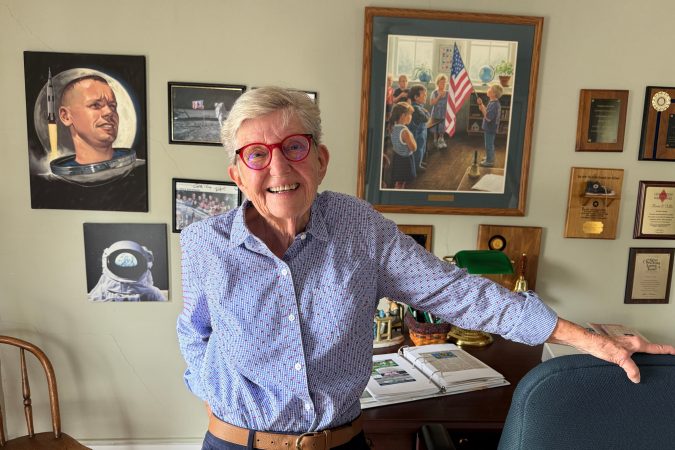
    Owned by a retired history teacher devoted to preserving its past and charming character, the home is for sale for the first time in nearly 40 years. What will become of it remains uncertain.

    All over Armstrong’s hometown of Wapakoneta, there are reminders of his history-making moonwalk. But few places played a bigger role early in his journey than 601 W Benton St. — the house where the Armstrong family settled in western Ohio when he was a young teenager.

    It’s where Armstrong built planes out of balsa wood and glue in the dining room and constructed a basement wind tunnel to test his models. He’d often pedal his bike from home to take flying lessons at an airstrip.

    At age 16, Armstrong made his first solo flight and got his pilot’s license. Just 20 years later, he rocketed into space for the first time. After the 1969 moon landing, he taught at the University of Cincinnati.

    A parade of astronauts has visited Armstrong’s house

    Today, Armstrong’s two-story boyhood home is an occasional stop for visitors to the Armstrong Air and Space Museum in Wapakoneta, even though the house isn’t open for tours.

    When Karen Mikesell bought the place in 1988, she had no idea who once lived there until another teacher soon told her.

    As a history teacher who later became a school principal, Mikesell felt a responsibility to “keep it like the Armstrongs had it,” she said.

    She’s hosted nine astronauts, including Buzz Aldrin, who flew to the moon with Armstrong and Michael Collins in 1969.

    Aldrin stepped inside the bedroom upstairs a few years after Armstrong died in 2012, Mikesell recalled, “and the tears just streamed down his cheeks.”

    Over the years, she’s been given a moon rock and received a piece of gold foil that covered the Apollo 11 capsule — a gift from one of the Navy frogmen who helped recover the command module and its crew.

    Some astronauts autographed their photos with personal messages to Mikesell — “thanks for taking such great care of Neil’s home!” wrote Mike Foreman, who flew on two space shuttle missions.

    “You can read books, but you can never have those kinds of experiences that I was able to have because I lived here,” she said. “I could go on and on.”

    House holds many reminders of the first man on the moon

    Armstrong’s family bought the home in 1944 after his father had moved them about a dozen times with his job as a government auditor. The oldest of three children, Neil was born in a farmhouse just outside Wapakoneta, today a city of just under 10,000 people.

    The house on Benton Street with its big front porch has changed little on the outside. Inside, the layout is similar too, though it has been updated.

    In the backyard, a garage that Armstrong and his father built with scrap lumber still stands, though a chicken coop where he and his friends gathered for Boy Scout meetings is long gone.

    Armstrong’s old bedroom is now decorated with photos and paintings of the moon landing. Hanging from the ceiling is a model of the Wright brothers’ first production airplane — the aviation pioneers were from nearby Dayton and an inspiration for Armstrong.

    Mikesell never met Armstrong, who was famously private. She did talk with his parents, siblings, and children about the 1908 home and its place in Armstrong’s upbringing.

    A part of American history is for sale

    Mikesell, who’s 82, said she hopes someone might be willing to buy the house and donate it to the Armstrong museum, which doesn’t have the funds to acquire the property, according to Logan Rex, its spokesperson.

    She is just one of a handful of people who’ve owned the home since the Armstrongs sold it in the mid-1960s. By the time she bought the house, the rooms were covered with wallpaper in a rainbow of colors, so she sought to restore its original look.

    While the house, which is listed at $430,000, isn’t legally protected from alteration, Mikesell is also optimistic that the new owners will respect it — whether it remains a private residence or becomes a place for overnight stays.

    “It’s time to let someone else have the opportunity to be as blessed as I’ve been,” she said, “and to take care of it and keep it as a part of history.”

  • Stefon Diggs is signing with the Washington Commanders, AP source says

    Stefon Diggs is signing with the Washington Commanders, AP source says

    Stefon Diggs is signing with the Washington Commanders, a big addition at wide receiver to give quarterback Jayden Daniels and the offense a proven commodity who showed last season he can still be productive more than a decade into his NFL career.

    The Commanders agreed with Diggs on a contract for this season, according to a person familiar with the agreement. The person spoke to The Associated Press on condition of anonymity Wednesday because the deal had not been announced.

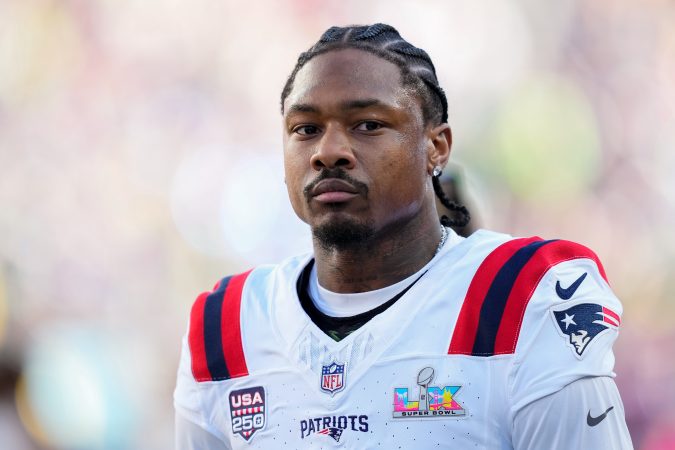
    Diggs, a native of nearby Gaithersburg, Md., joins Washington for a 12th year in the league and reportedly can make up to $12 million. He spent last season with New England, making 99 catches for 1,123 yards and five touchdowns in 21 games, including the Patriots’ playoff run to the Super Bowl.

    Stefon Diggs had 99 catches for 1,123 yards and five touchdowns in 21 games last season, including the Patriots’ playoff run to the Super Bowl.Robert F. Bukaty

    New England released him in March, and the 32-year-old went unsigned in free agency while facing strangulation and other criminal charges in connection with a dispute with his former private chef. Diggs was found not guilty in May, and the NFL said in June that he wouldn’t face any discipline after a review determined there was not enough evidence to punish him under its personal conduct policy.

    The Commanders had a hole at the position, and they are banking on Diggs filling it. The in-house options of Treylon Burks and Luke McCaffrey would have put Daniels in a tough spot and likely made No. 1 receiver McLaurin deal with plenty of double teams this coming season.

    Signing Diggs could rule out going after Brandon Aiyuk, a friend of Daniels’ who is still under contract with San Francisco. Aiyuk said on social media in June that he would join Washington immediately if the 49ers released him.

    Aiyuk remains on the reserve/left squad list out West, while Diggs is now in an NFC East that features receivers CeeDee Lamb and George Pickens with Dallas, DeVonta Smith with Philadelphia and Malik Nabers with the New York Giants.

    Diggs previously played for Minnesota, Buffalo and Houston during a career that included him being an All-Pro selection in 2020, when he led all players with 127 catches and 1,535 yards. Since making his debut in 2015 after the Vikings took him in the fifth round of the draft that year, Diggs has 1,025 catches for 12,523 yards and 79 TDs in the regular season and playoffs combined.

    That included the “Minneapolis Miracle” catch for Minnesota in the divisional round in January 2018. With 10 seconds left, Diggs leapt and evaded a tackle to score a 61-yard touchdown and beat New Orleans 29-24.

    Stefon Diggs (left) will join his fifth team in the NFL.Greg M. Cooper

    Off the field, it has been a more tumultuous ride, including getting fined more than $200,000 by the Vikings during his final season with them in 2019 for unexcused practice absences. Diggs was traded to Buffalo in March 2020.

    Diggs led the Bills in receiving four seasons in a row, but sideline outbursts and cryptic social media messages were also part of his tenure before being traded to Houston in April 2024. A torn ACL ended his time with the Texans, and skipping a voluntary offseason workout got him off to a bumpy start with the Patriots before he turned out to be a reliable option for QB Drake Maye.

    Cut in part because he was owed $20.6 million, Diggs now is teaming up with Daniels, who was taken one spot ahead of Maye when they were the No. 2 and 3 picks in the 2024 draft.