Category: Wires

  • Trump says son has paid back Russian for wedding party

    Trump says son has paid back Russian for wedding party

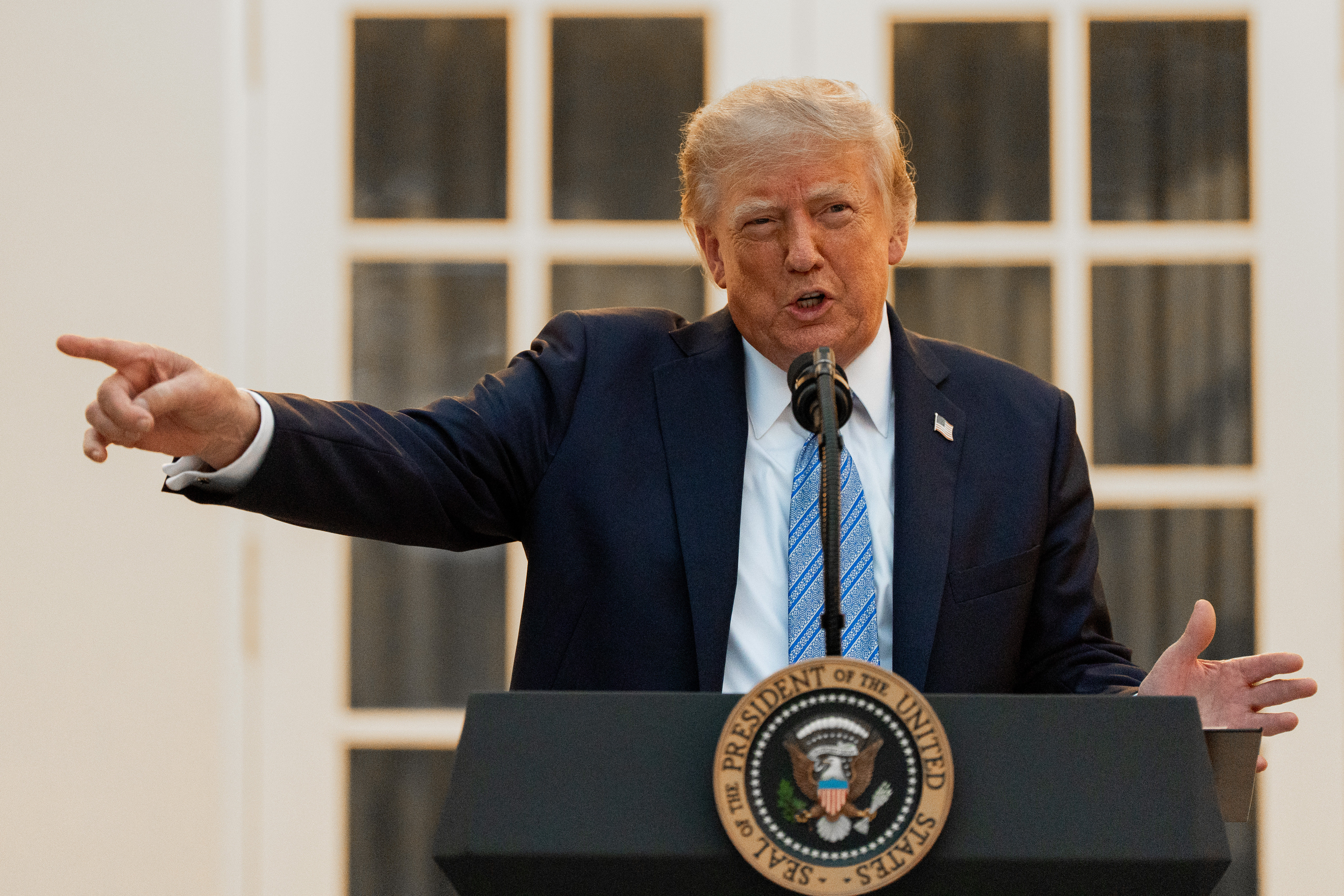
    President Donald Trump said Friday that his son paid back the well-connected Russian businessperson who funded his wedding celebrations.

    A person close to Donald Trump Jr. confirmed the repayment.

    The contribution of hundreds of thousands of dollars, revealed Monday by the investigative news website ProPublica, came from Umar Kremlev, a boxing executive who does business with the Russian state and has received honors from Russian President Vladimir Putin.

    President Trump did not attend the wedding, which included about 50 people and occurred on private Bahamian islands.

    The president defended the contribution, calling it “common” for people to give a wedding party to a friend.

    “It’s totally allowed, but as I understand it, he paid him back,” Trump told reporters Friday in the Oval Office. “He didn’t want to have that.”

    The bride, Bettina Trump, confirmed the gift, but denied that it came with any sinister or political motive.

    Kremlev met Trump Jr. several years ago and speaks limited English, according to ProPublica.

  • Rejecting Trump, South Korean leader says he will not send troops to Iran

    Rejecting Trump, South Korean leader says he will not send troops to Iran

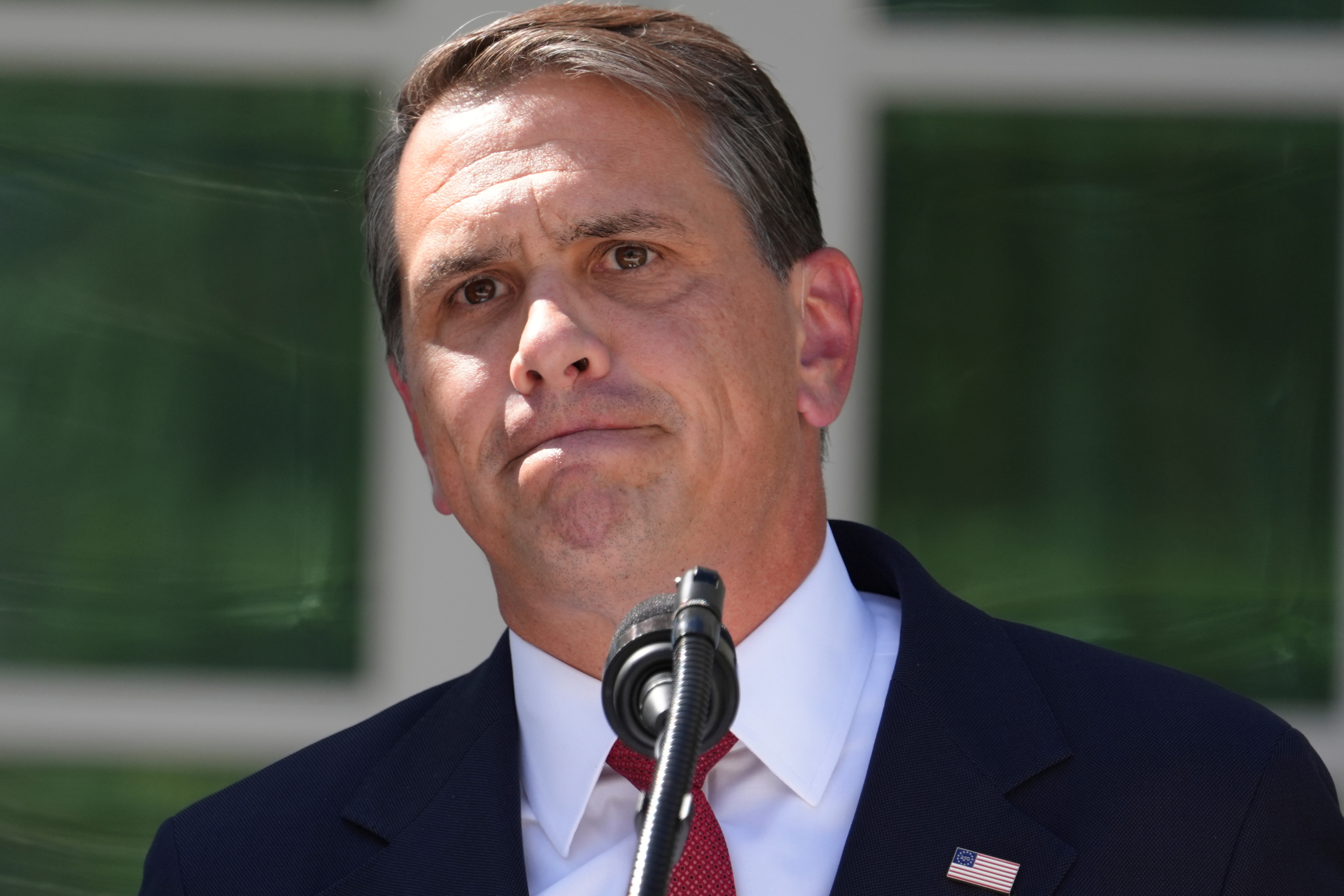
    SEOUL, South Korea — President Lee Jae​ Myung of South Korea pushed back against pressure from the Trump administration Friday, declaring that his country would not deploy troops or military assets to support the U.S.-led war against Iran.

    In recent weeks, President Donald Trump has publicly taunted the South Korean leader, venting frustration over ​what he described as Seoul’s refusal to help defend the Strait of Hormuz — once the world’s main transit point for oil — while American troops remain stationed on​ ​the Korean Peninsula to shield ​South Korea from North Korea.​ On Friday, Lee ​firmly rejected any ​military involvement in the Middle East conflict.

    “There will be no deployment of troops or dispatch of military assets to​ be involved in or intervene in this war,” Lee said in a news conference.

    Instead of a combat deployment, Lee noted that Seoul is considering expanding the operational scope of a South Korean navy destroyer and its support ships stationed off the coast of Somalia for antipiracy operations. He emphasized that even if those assets move closer to the Red Sea or the Strait of Hormuz, their sole focus would be protecting South Korean ​oil tankers and other commercial vessels. They will not participate in any operations that could be interpreted as supporting the war against Iran​, he said.

    ​While Trump has not specified the exact type of assistance he expects from Seoul, he complained last month that he had asked Lee “to give us a little hand” in the conflict, reminding him of the U.S. military presence in South Korea.

    “He said, ‘No, thanks,’” Trump ​recalled. “I see. Well, why are we involved in helping you?”

    It was not the only issue that a grim-faced Lee addressed Friday. Fifteen months into his single five-year term, his approval rating has fallen to a new low of 37%, battered by troubles brewing not only at home but also by strains with South Korea’s most important ally, the United States.

    Last month, Trump unilaterally scaled down one of the United States’ annual joint military exercises with South Korea, calling the drills not only “costly” but also “totally inappropriate and hostile” toward North Korea. He said that, for as long as he had been in office, North Korea had been “unthreatening and respectful.” Trump also boasted of having a “very good relationship” with North Korea’s leader, Kim Jong Un, even as the North has become a bigger nuclear threat against the South.

    At home, South Korea’s main stock index — once lauded as a premier beneficiary of the global artificial intelligence boom — has crashed, devastating the portfolios of millions of individual investors who were encouraged by Lee’s government to buy stocks. Lee has also failed to deliver on his repeated pledges to curb rising housing costs.

    The opposition has accused him of seeking a constitutional amendment that would allow him to run for a second term, a move explicitly barred by the current constitution. His presidency also remains marred by his suspended criminal trials on charges including violating election laws and inducing perjury. The opposition has claimed that Lee was plotting a special bill to erase those charges, ​which he has insisted were fabrications orchestrated by his conservative adversary and predecessor, the impeached and ousted former President Yoon Suk Yeol.

  • Duncan Sheik, who traded pop stardom for Broadway, dies at 56

    Duncan Sheik, who traded pop stardom for Broadway, dies at 56

    Duncan Sheik, an introspective singer-songwriter whose alt-pop hit “Barely Breathing” became a Generation X touchstone, but who squirmed under the label of MTV heartthrob and eventually decamped to Broadway, winning two Tonys for composing the smash musical Spring Awakening, died Thursday in Manhattan. He was 56.

    His death, in a hospital, was confirmed by his mother, Suzanne Sheik, who said that the cause was organ failure.

    Soft-spoken and cerebral — complete with a degree in semiotics from Brown University — Mr. Sheik seemed like a long shot for fame when he arrived in Los Angeles in 1992 with a demo tape and a deep unease with the spotlight.

    Though he had played guitar in a band with future hitmaker Lisa Loeb in college, he “could barely sing in public to save my life at that point,” he recalled in a 2011 interview with the site Pop Dose.

    Yet in just a few years, he was a rising star. In 1996, Rolling Stone called his first album, Duncan Sheik, a “defiant debut — beautiful and benevolent of spirit” and praised his “raw and articulate singing.”

    The single “Barely Breathing,” an unvarnished sketch of a dying relationship that was propelled by candy-sweet hooks, saturated the radio airwaves. It earned a Grammy nomination and rose to No. 16 on the Billboard Hot 100, remaining on the chart for 55 weeks — at the time, the fourth-longest run ever.

    In the decade of Nirvana and Soundgarden, Mr. Sheik intended his artfully crafted record “as a reaction against the existing alternative music,” he said in a 1997 interview with the Palm Beach Post, complaining that alt rock had become “this kind of monolithic distorted guitar chord.”

    With a grounding in classical composition, and influences as diverse as Joni Mitchell, the Cocteau Twins, and Estonian composer Arvo Pärt, Mr. Sheik mixed heart-rending melodies with lyrics that mined Buddhist philosophy and brimmed with existential angst.

    In a review of his second album, Humming (1998), in the New York Times, Stephen Holden wrote that Mr. Sheik’s “beautifully orchestrated meditations suggest that pop can still aspire to a lofty, searching classicism.”

    Fans embraced him as a tortured troubadour, like Jeff Buckley or Elliott Smith. Critics often noted his musical similarities to Nick Drake, the haunting and haunted British singer-songwriter of the late 1960s and early ’70s.

    But Mr. Sheik — with looks that called to mind the Gen X dreamboat John Cusack and a female-tilting fan base — was also cast in the news media as a sensitive, soulful sex symbol. The Palm Beach Post noted his “name straight out of a romance novel and the face of a GQ model.”

    “Don’t hate Duncan Sheik because he’s beautiful,” critic Ann Powers wrote in a review of a 1998 concert in the New York Times. “He is trying very hard to distance himself from that fact.”

    Duncan Scott Sheik was born Nov. 18, 1969, in Glen Ridge, N.J., to Jack and Suzanne (Tracy) Sheik. By the time he was 6, he was learning piano from his grandmother, who had studied at Juilliard. After his parents divorced, his mother moved to Hilton Head Island, S.C., where Duncan got his first electric guitar and played in a band that performed Def Leppard and Van Halen covers.

    After graduating from Phillips Academy in Andover, Mass., in 1988, he enrolled at Brown, where he holed up in the campus recording studio working on his own material, when he wasn’t playing with Loeb, a fellow student who in 1994 would hit No. 1 with “Stay (I Missed You).”

    It took a few years of living in Los Angeles after college for his career to take off — but once it did, he found fame to be at times overwhelming.

    “I was put in situations that I didn’t have the experience to handle,” he recalled in a 2003 interview with University Wire, adding that he had performed on David Letterman’s and Jay Leno’s late-night shows when he had “just made one album and I had played maybe 30 or 40 shows in my life. And I’m sure I sucked.”

    An adherent of Nichiren Buddhism, rooted in 13th century Japan, since he was 19, he found that daily chanting helped him to be “just a bit more positive about life in general,” he told the Palm Beach Post.

    Despite critical plaudits, Humming sold modestly. Sheik’s somber third album, Phantom Moon (2001) — a collaboration with the poet and playwright and his fellow Buddhist Steven Sater — was, according to Holden’s Times review, “the most entrancing collection of pop dream songs since Nick Drake’s 1969 album, Five Leaves Left.”

    That, Holden added, was “not to suggest that this hauntingly melancholy suite is poised to hurtle up the charts anytime soon.”

    By that point, Mr. Sheik said in a 2015 interview with HuffPost, “the ‘authenticity’ of the alt-rock era of the early and mid-90s was over and the music business took a hard right turn back toward artifice and the more overtly pop sound of Britney, Christina, ’N Sync, and Backstreet Boys.”

    He scored an unlikely dance hit in 2002 with the percolating “On a High,” from the album Daylight, but he was growing ever more weary of the industry hustle.

    “I thought, I’m not going to win in this game of trying to be Justin Timberlake,” he recalled in a 2022 interview with the Houston Chronicle. “Maybe I should try and do something different.”

    Mr. Sheik met Sater through the Buddhist association Soka Gakkai, and in 1999, Sater broached the idea of working together on a musical based on Spring Awakening, Frank Wedekind’s 1891 play exploring the tormented inner lives and flowering sexuality of a group of teenagers.

    After initial doubts, Mr. Sheik ended up feeling a kinship with the material. “Being a recording artist who tours and performs and who has never had a normal job or anything, I have never really evolved past my 17-year-old self,” he said in a 2014 interview with Broadway World.

    In development for years, the rock-meets-folk-meets-emo musical — striking for its raw treatment of topics such as abortion, abuse, and suicide — ran off-Broadway at the Atlantic Theater Company starting in spring 2006, before opening on Broadway that December.

    “It was really about ‘Can we make a musical score that sounds as cool as the music that any alternative rock kid is listening to on their iPod?’” Mr. Sheik recalled in a 2020 interview.

    Before the show premiered, he coached the cast — which included future stars like Lea Michele, Jonathan Groff, and John Gallagher Jr. — to steer clear of traditional Broadway bombast.

    “Imagine that you’re Thom Yorke,” he said he told them. “Imagine that you’re a young David Bowie. Imagine that you are Fiona Apple. And please forget about all the vocal training you’ve ever had.”

    In a rave review in the Times, critic Charles Isherwood praised Mr. Sheik’s “ravishing rock score,” calling the show a “brave new musical, haunting and electrifying by turns.”

    Spring Awakening won eight Tony Awards, including best musical, with Mr. Sheik taking home two, for the score — an honor he shared with Sater, who wrote the book and lyrics — and for his orchestrations. The show ran for over two years on Broadway, where it was revived in 2015; a new production opens off-Broadway in November.

    Mr. Sheik wrote the scores for several other musicals, including Alice by Heart, a version of “Alice’s Adventures in Wonderland” set in London during World War II, and American Psycho, an adaptation of the blood-soaked Bret Easton Ellis novel, which flopped on Broadway in 2016.

    He is survived by his parents; his wife, Nora Ariffin; their daughter, Ines Sheik; and his half siblings, Peter and Kacie.

    Along the way, Mr. Sheik continued to release nontheater albums, including a 2011 collection of covers of songs by British acts of the 1980s like Depeche Mode and Tears for Fears. His final album, Claptrap (2022), wove his trademark delicate melodies into an ambient electronic soundscape.

    In interviews over the years, his Buddhist outlook came through as he described fame, critical success, and even life itself as capricious and beyond anyone’s control.

    “I subscribe to the death-of-the-author theory,” he said in a 1997 interview with the Orange County Register, “that once a cultural product has been created and sent out into the world, it no longer has any attachment to its author.”

    This article originally appeared in the New York Times.
  • Judge isn’t swayed by government’s claims that plans for an ‘anti-weaponization fund’ are dead

    Judge isn’t swayed by government’s claims that plans for an ‘anti-weaponization fund’ are dead

    ALEXANDRIA, Va. — A federal judge who blocked the creation of a $1.8 billion “anti-weaponization fund” for compensating President Donald Trump’s political allies wasn’t swayed by a government attorney’s assurances Friday that the administration has abandoned the concept.

    U.S. District Judge Leonie Brinkema in Virginia didn’t rule from the bench on the government’s request for her to dismiss a lawsuit challenging the fund’s formation and operation. But the judge rejected the notion that the case’s claims are moot because the Trump administration says the fund is dead and won’t go forward.

    “The issues that underlie this case are still alive and kicking, in my view,” Brinkema said.

    The fund for compensating Trump’s political allies encountered a fierce bipartisan backlash and threatened to derail Attorney General Todd Blanche’s Senate confirmation. On Aug. 2, Blanche issued a formal order terminating the fund after negotiating for weeks with two Republican senators who wanted to see the promise in writing before they endorsed his nomination.

    “The case is moot,” Justice Department attorney Andrew Block told Brinkema. “The mootness has been addressed at every stage.”

    But the judge noted that Blanche’s assurances have been undercut by the president and other administration officials. Trump, a Republican, continued to publicly express support for the fund even as Blanche insisted it was dead.

    “They contradict themselves all the time,” Brinkema said.

    The administration created the settlement fund to resolve Trump’s lawsuit against the IRS over the leak of his tax returns. The plan stoked outrage over the notion that Trump supporters who attacked police officers while storming the U.S. Capitol on Jan. 6, 2021, could be eligible for payments.

    Attorneys from the legal advocacy group Democracy Forward sued in May, asking the Alexandria, Va., court to suspend the fund’s implementation temporarily and stop the Trump administration from disbursing any payouts. Plaintiffs’ attorneys argued the government can’t divert taxpayer money to a slush fund for enriching Trump’s allies.

    Brinkema, who was nominated to the bench by Democratic President Bill Clinton, agreed in June to extend an order blocking the fund until further notice from the court.

    Democracy Forward attorney Pooja Boisture told the judge on Friday that the administration will most likely move forward with the fund — “either in its current iteration or a new one” — if her order is lifted.

    The Virginia lawsuit’s plaintiffs include a fired prosecutor and a college professor acquitted of assaulting federal agents at a protest. Also named as plaintiffs are the government watchdog Common Cause; the city of New Haven, Conn.; and the National Abortion Federation, an association of abortion providers.

    “This scheme is an unprecedented, unlawful, and corrupt attempt to manipulate the legal process and laws intended to prevent political interference to achieve benefits that President Trump and his political allies could not have obtained lawfully,” the plaintiffs’ attorneys wrote.

    Justice Department attorneys argue the plaintiffs don’t have a legal basis for claims challenging a fund that “has never existed and will not exist.”

    “The time has come to stop this inquisition,” they wrote.

  • Hundreds of thousands attend Iran’s biggest government-organized rally since the war began

    Hundreds of thousands attend Iran’s biggest government-organized rally since the war began

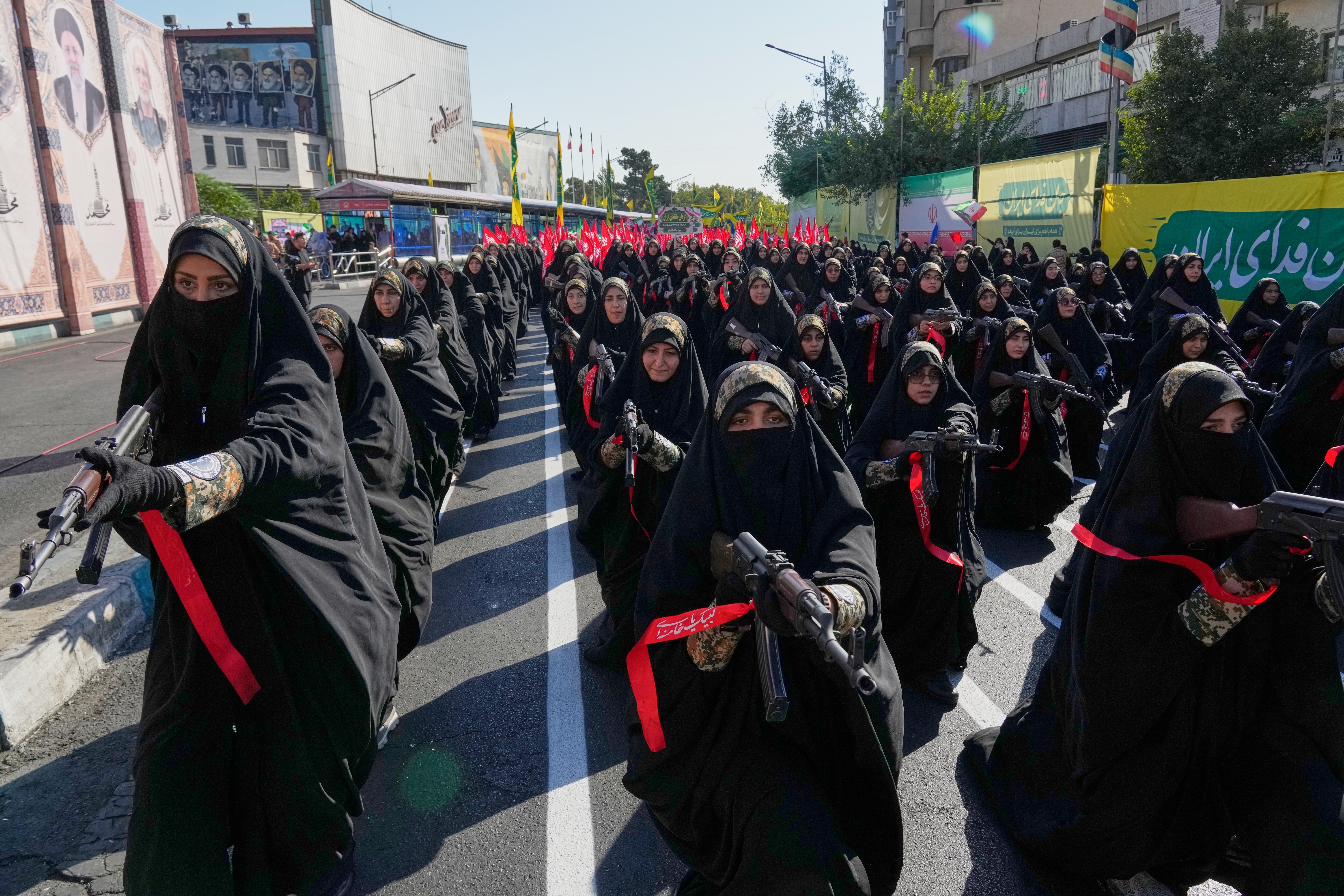
    CAIRO — Hundreds of thousands of Iranians rallied Friday in a government-organized show of defiance after months of war, pledging their readiness to take up arms in the biggest such demonstration since the United States and Israel attacked in February.

    Iran’s government has sought to rally the people and stress national unity, even as the economy worsens under a U.S. naval blockade of Iranian ports and new U.S. sanctions. On Friday, it claimed another attack on a tanker in the Strait of Hormuz, a key waterway it has sought to control since the start of the war.

    Estimates varied of the number of people volunteering to receive limited military training and defend the country in an effort described as “Janfaday-e Iran,” or the “ones who sacrifice their lives for Iran.” They marched through downtown Tehran in combat uniform, carrying flags, as onlookers cheered.

    For days, state media have encouraged Iranians to join the campaign, saying training with assault rifles would begin soon. The volunteers would be an additional layer of security to the paramilitary Revolutionary Guard and the Basij militia, which has played a key role in quashing anti-government protests.

    Rally seeks to project strength under U.S. pressure

    Tehran’s Guard chief, Gen. Hassan Hassanzadeh, told the state broadcaster that over 600,000 people had registered to participate, with over 1 million expected to take part in the training. On Friday morning, the broadcaster estimated over 300,000 people were on the streets.

    The new head of the Basij, Hossein Taeb, declared in a speech as the rally began that the volunteers will be ready for “full-fledged defense” and similar rallies will take place in other cities soon.

    The new trainees will make a “nightmare” for Iran’s enemies, Taeb added, as President Masoud Pezeshkian, military commanders, and other senior officials watched the march.

    Some participants trampled flags of the U.S. and Israel. Others chanted “Death to America” and “Death to Israel.”

    “I am here to tell (U.S. President Donald) Trump that we Iranians have no fear about his threats against our homeland,” said Marzieh Afaghi, 24, who attended the rally with her toddler and husband. “No one in history could invade Iran and remain there.”

    The rally was also a chance for Iran to show off military hardware. Anti-aircraft batteries were on display, while female Guard members in black headscarves sat with truck-mounted machine guns.

    Iran says it attacked another tanker in the Strait of Hormuz

    The Guard displayed drones that have been used against ships in the Strait of Hormuz, where Iran’s attacks and threats have severely affected the Gulf region’s shipments of oil and natural gas to the rest of the world.

    Iran said it had attacked a Togo-flagged oil tanker, the Trend, for what it called an “illegal attempt” to pass through the Strait of Hormuz, the state broadcaster reported. The U.K. Maritime Trade Operations center said a tanker was hit by a projectile, sparking a fire on board that was extinguished.

    The UKMTO in a separate update said ship transits facilitated by the U.S. military off Oman have averaged 24 a day over the past week but overall traffic remains about 90% lower than before the war.

    Iran’s new volunteers could help suppress future dissent

    Friday’s events also suggested that hard-liners like Taeb among Iran’s leadership will be more prepared to suppress any future demonstration against the theocracy.

    In January, shortly before the war, Iran saw some of its largest nationwide protests in history, which began over the struggling economy and turned to wider grievances. Activists have said a crackdown killed over 7,000 people and saw tens of thousands detained.

    In May, government officials said more than 30 million people in Iran — which has a total population of some 90 million — had volunteered via an online form or at public gatherings to lay down their lives for the theocracy. The Associated Press could not independently confirm that.

  • More U.S. troops have died amid Iran war than Pentagon has disclosed publicly

    More U.S. troops have died amid Iran war than Pentagon has disclosed publicly

    More American service members have died in the Middle East during the ongoing Iran war than the Pentagon has disclosed publicly, according to six U.S. officials familiar with the Defense Department’s internal casualty accounting data.

    Five of the officials said there have been at least 22 military fatalities — four more than what appears in the Pentagon’s public database, known as the Defense Casualty Analysis System, or DCAS.

    A sixth official, who like the others spoke on the condition of anonymity to discuss the figures, said 23 service members have died since Feb. 28, when the Trump administration, in concert with Israel, initiated the Iran war. Not all of the undisclosed deaths are directly tied to the conflict but have involved U.S. personnel who were in the Middle East amid ongoing hostilities, this person said.

    Additionally, the official said, three U.S. contractors who were based in the region have died since combat operations began.

    As of Friday, the Pentagon’s DCAS database lists 18 U.S. military fatalities, including deaths caused by hostile and nonhostile action dating to the start of the Iran conflict.

    Details surrounding the undisclosed deaths — including the service members’ identities, as well as when, how, and where they died — remain unclear. Officials familiar with the higher casualty number expressed frustration that the additional loss of life is not reflected in the Pentagon’s public casualty portal.

    The Pentagon declined to address questions about the accounting discrepancy.

    The Iran war, which polls show is deeply unpopular with the American public, has become a political liability for President Donald Trump and the Republican Party ahead of November’s midterm elections. The administration’s casualty accounting practices faced intense scrutiny earlier this year when the names of four U.S. troops who died as a result of the Iran war were briefly excluded from the Pentagon’s official tally.

    The proper accounting of military fatalities has implications beyond public transparency. Whenever a U.S. service member dies, the military conducts a line of duty investigation to determine whether the death occurred while performing official duties. Those findings affect the survivor benefits for which service members’ families are eligible.

    As of Friday, 14 fatalities are listed in the database as having occurred during Operation Epic Fury, the Trump administration’s name for the Iran war. Four others, reflected in a separate category called Overseas Operations, date to a July ceasefire between Washington and Tehran that later collapsed leading to the resumption of attacks.

    Separately, the Pentagon has said that, since February, two U.S. service members died in the Middle East while participating in missions unrelated to the Iran war. Their deaths, which occurred at bases that have been attacked by Iranian forces, are not reflected by name in the DCAS database either.

    Sgt. Devin Seibel died in Irbil, Iraq, on May 31 in a training accident, the Defense Department said in a news release. The announcement specified he was assigned to Operation Inherent Resolve, the ongoing campaign against Islamic State militants. Seibel’s name is not included among the Inherent Resolve tally in DCAS.

    Maj. Sorffly Davius suffered an unspecified medical emergency in Kuwait and died on March 6. It is unclear whether his death was tied to an Iranian attack. An announcement of Davius’ death said he deployed under Operation Spartan Shield, a mission to partner with regional militaries.

    More than 820 U.S. service members have been wounded in action since the Iran conflict began, the public casualty database says. Many have suffered traumatic brain injuries as a result of Iranian counterstrikes on U.S. bases throughout the Middle East.

    The war has taxed the military’s stocks of precision weapons, damaged U.S. bases across the Persian Gulf, and roiled global energy markets after Tehran closed the Strait of Hormuz, a vital waterway for oil and fertilizer.

    According to a document reviewed by the Washington Post, U.S. Central Command, which oversees operations in the Middle East, has estimated that the Iran war has cost about $43.6 billion through early September. The total includes $28 billion in munitions expended during the conflict but does not account for the damage to U.S. bases.

    As the Post reported last month, several top U.S. military officials have warned Defense Secretary Pete Hegseth that prolonging large-scale operations against Iran is unsustainable and risks weakening their ability to confront threats elsewhere, including the U.S. homeland.

    According to a September Reuters-Ipsos poll, 28% of Americans support Trump’s approach to Iran, whereas 62% disapprove.

    On Tuesday, a record seven GOP lawmakers joined Democrats and helped pass a largely symbolic measure intended to halt the war — the latest of several war powers resolutions to advance in Congress.

    All war deaths and injuries are supposed to be publicly reported on the Pentagon’s public DCAS system, where the military accounts for personnel lost or injured in its conflicts.

    Over the summer, when the four combat deaths were temporarily excluded from the casualty database, the Trump administration reclassified renewed hostilities with Iran as Overseas Operations instead of being tied to Operation Epic Fury.

    The change, which occurred as U.S. negotiators struggled to broker a permanent peace deal with Tehran, coincided with efforts by the administration to portray the war as a success even as Iran continued to fire on American forces and continued to target shipping in the Strait of Hormuz.

    Senate Democrats have pledged to investigate the Pentagon’s handling of casualty notifications if they retake the majority after the midterms.

    Reps. Pat Ryan (N.Y.), Jason Crow (Colo.) and 10 other House Democrats, all of them military veterans, on Friday said they were pursuing legislation that would prevent the Pentagon from manipulating government data on troop casualties. Sen. Tammy Duckworth (D., Ill.) is leading a companion effort in the Senate.

    One Republican, Rep. Thomas Massie (Ky.), moved this week to force a House vote on impeaching Hegseth over the war, alleging the defense secretary violated provisions of the War Powers Resolution of 1973 by pursuing hostilities without congressional authorization.

  • Build columns, not Trump’s arch, D.C. official tells administration

    Build columns, not Trump’s arch, D.C. official tells administration

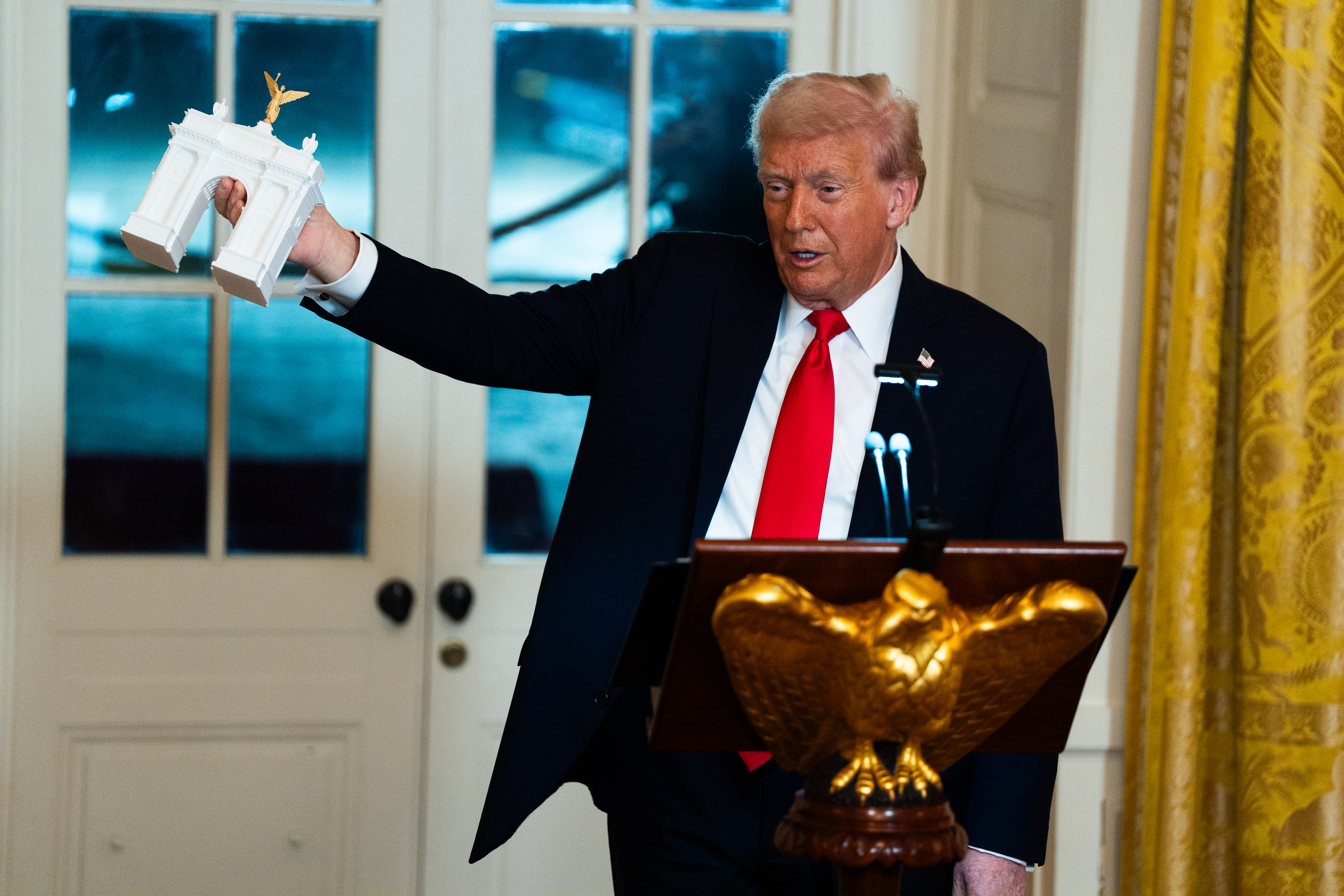
    President Donald Trump has insisted that a 250-foot-tall triumphal arch should be built near Arlington National Cemetery, citing long-abandoned plans to construct a monument there.

    Local officials, preservationists, and historians are now pushing an alternate idea: Abandon the arch and consider building the slender columns that were originally envisioned by architects and lawmakers a century ago.

    “We request meaningful consideration of an alternative that more accurately reflects the spirit and intent of the 1924 McKim Mead & White design and the 1925 Act of Congress,” C. Andrew Lewis, an official in Washington’s historic preservation office, wrote in a letter to the Trump administration on Wednesday and obtained by the Washington Post.

    “Specifically, we request the [National Park Service] to evaluate design concepts consisting of two columns that truly frame, rather than limit the historic view corridor.”

    The administration has been consulting with D.C.’s and Virginia’s historic preservation offices as part of a required federal preservation process before building the new structure.

    Other officials and advocates have raised the idea of erecting columns, rather than a large arch, including in a meeting last week with National Park Service officials overseeing the planned project.

    The requests represent advocates’ latest effort to delay or prevent the construction of the new arch, which has been widely opposed in Washington. It is unlikely, however, that Trump would agree to discard his plans for a large triumphal arch. The president has been attached to the idea of an arch since being privately pitched on the project and publicly announcing it last year

    “We’re the only important and major city that doesn’t have one. We don’t have a triumphal arch,” Trump said in the Oval Office in May. “So, it was meant to be built for many years.”

    The issue centers on lawmakers’ intent for Memorial Circle, a traffic roundabout tucked inside Washington’s boundaries, located near the entrance to the military cemetery and managed by the National Park Service.

    The administration is pursuing a plan to begin construction as soon as November, despite objections from veterans groups, historic preservationists, and others. Opponents say the arch will overshadow the cemetery, alter pedestrians’ views of the Lincoln Memorial and other historic sites, and cause other disruptions.

    The Trump administration has acknowledged that the large arch will unavoidably harm local historic sites if built as planned.

    The administration contends that it does not need approval for the arch from Congress since lawmakers a century ago authorized the columns. In that case, advocates say, the administration should hew to the original, congressionally authorized plan.

    Historic preservationists also note that the 250-foot-tall, roughly 165-foot-wide arch that Trump wants in Memorial Circle is very different from the narrow, 166-foot-tall columns that were initially envisioned to be built about 300 feet apart.

    “In terms of size, scale, massing, and design, the proposed arch is not in any way comparable to the unbuilt columns contemplated in the 1924 design proposal,” Judy Chesser and Paul Edmondson, of the Committee of 100 on the Federal City, wrote in their own letter to the Interior Department on Wednesday. The letter was shared with the Post.

    Chesser and Edmondson added that the Arlington Memorial Bridge Commission, which was overseeing the original project, dropped plans for the columns in 1931 amid concerns about the planned design and the proximity to a nearby airport, among other factors.

    The Interior Department, which oversees the Park Service, did not respond to questions about whether the administration would consider building columns instead of an arch. The department referred to social media posts by Interior Secretary Doug Burgum that referenced the past efforts in Congress to build a monument near Memorial Circle.

    Burgum’s posts did not specifically mention columns.

    Tammy Stidham, a Park Service senior official helping oversee the arch project, said last week that the administration had not considered building columns instead of an arch.

    “Different sizes were considered of the same structure, but not different structures,” Stidham said at a meeting with preservationists and other groups, according to a recording of the meeting posted by the Park Service.

    Asked about how the arch envisioned by Trump complied with plans in 1924 to build a structure that would not interfere with the views between the cemetery and the Lincoln Memorial, Stidham said the arch was a “replacement” for the original concept.

    “It is not intended to be the same structure,” Stidham said.

    One federal commission, which Trump has packed with allies, has already approved the planned arch. A second commission is expected to offer final approval as soon as Nov. 5. The Trump administration has laid out a plan to build the arch within two to three years, which they say would require 20 hours per day of construction.

    In his letter to the administration, Lewis said that Trump officials had not heeded or fully acknowledged the widespread objections to the plan.

    “Approximately 93% of the roughly 11,000 comments submitted from within the District of Columbia expressed very strong opposition to the proposal,” he wrote.

    He also said that the administration’s acknowledgment of harms from building the arch did not go far enough to capture its impact on other historic sites.

    “The arch would not merely be ‘prominently visible,’” Lewis wrote. “Instead, it would visually overwhelm the surrounding historic context.”

  • Trump says he is banning CNN, MS NOW, and Politico from the White House

    Trump says he is banning CNN, MS NOW, and Politico from the White House

    President Donald Trump said on Friday that he would ban CNN, MS NOW, and Politico from the White House, although it was unclear how such a prohibition would be enforced or legally defended.

    The president’s abrupt proclamation, which he said was “effective immediately,” came in a post on Truth Social, the social media platform he owns.

    Journalists from those news outlets were still working as usual on the White House grounds on Friday afternoon, and there were no immediate signs that they were being evicted.

    Speaking later with reporters in the Oval Office, Trump said he announced a ban “because they’re fake news. You get so tired of reading and seeing fake news.” He added, “You get sick of it.”

    Asked exactly what he meant by a ban, the president replied: “A very simple ban. I don’t want them in my office. I don’t want them here. I would say the ban would go as far as you can. And if they could straighten themselves out, I’d love it.”

    Asked if his ban could survive a court challenge, Trump replied, “I don’t think that a court should allow fake news to be written day after day after day.”

    CNN said in a statement that Trump’s ban would be “an illegal assault” on a “fundamental and constitutionally-protected right.”

    “We have a right under the U.S. Constitution to do that reporting without hindrance or interference from the government,” the network said.

    A spokesperson for MS NOW declined to comment. A spokesperson for Politico did not immediately respond to a request for comment. An inquiry to the White House Correspondents’ Association was not immediately returned.

    A prospective ban would open yet another front in Trump’s ever-expanding battles with the news media, whose output he has increasingly attempted to control using a variety of bureaucratic levers and intimidation tactics. The president has filed lawsuits and used government tools like subpoenas to target newspapers, late-night talk show hosts, corporate media conglomerates, and journalists whose reporting he dislikes.

    In his social media post on Friday, Trump warned that he might add other organizations to his prospective ban, writing, “Other Fake News Media Outlets to follow.”

    Trump expanded on his feelings at his Oval Office appearance, echoing the usual protestations about the media that he unspools at rallies, news conferences, and in interviews. “They purposely write negative news,” the president said. “And they do that because they want to try and diminish the Republicans and a Republican administration.”

    Any prospective ban on journalists from specific news outlets would almost certainly prompt a legal challenge.

    Trump has tried to bar some news organizations from parts of the White House in the past. During his first term, he revoked a White House pass for Jim Acosta, the former CNN journalist. CNN succeeded in restoring Acosta’s press credentials in court.

    This term, Trump has attempted to bar Associated Press journalists from parts of the White House, including the Oval Office and Air Force One. The AP has sued to restore its access, but that case remains in litigation; in the meantime, AP photographers have had continued access to the Oval Office. Its print journalists have had more limited access.

    His administration has also taken command of the daily White House press pool, a small, rotating group of reporters who relay the president’s daily activities to the public. Previously, the Correspondents’ Association chose which outlets participated; now, the administration handpicks the news outlets that are included.

    Jameel Jaffer, the executive director of the Knight First Amendment Institute at Columbia University, said that the ban floated by Trump on Friday is clearly unconstitutional because it would punish news organizations for the content of their reporting.

    “If President Trump means to expel these news organizations from the White House press pool, his action is doubly unconstitutional because the press pool is a ‘public forum’ under the First Amendment, which means the president can’t exclude journalists from it on the basis of their viewpoints,” Jaffer said.

  • Civil rights groups sue to keep armed agents away from voting sites

    Civil rights groups sue to keep armed agents away from voting sites

    WASHINGTON — Civil rights groups and labor unions sued the Trump administration Friday, asserting that its aggressive immigration enforcement and suggestions that it could send armed agents to polling sites amounted to voter intimidation and violated the Voting Rights Act.

    Brought by a coalition of Black, Asian, and Latino civil rights groups and unions, including the NAACP and the Service Employees International Union, the lawsuit seeks to block any effort by the Trump administration to deploy federal agents at voting locations, which the groups contend can deter citizens trying to legally vote.

    The lawsuit, filed in the U.S. District Court for the District of Columbia, argues that President Donald Trump, Secretary of Homeland Security Markwayne Mullin, and other members of the administration had created a climate in which “voters, especially voters of color, are intimidated and fearful of engaging in the democratic process.”

    They had done so, the suit says, by simultaneously pushing false narratives of rampant voting by noncitizens, conducting sweeping immigration enforcement in communities of color, and repeatedly suggesting that they could send armed agents to polls.

    The White House and the Department of Homeland Security did not immediately respond to requests for comment sent Friday morning. But in the past, Mullin has said that opponents were fearmongering and that U.S. Immigration and Customs Enforcement was not patrolling polling places. “The only reason why we would be at polling places is if there is a threat to that polling place,” he said, “or we’re serving a warrant.”

    The lawsuit points specifically to the Trump administration’s recently expanded efforts to identify noncitizens registered to vote, despite no evidence of rampant voter fraud by noncitizens.

    Taken together, the lawsuit argues, the actions and statements constituted a violation of Section 11(b) of the Voting Rights Act, which broadly prohibits actual or attempted intimidation, threats, and coercion directed at voters and anyone helping to facilitate voting. This section of the Voting Rights Act was not affected by a recent Supreme Court decision weakening the landmark civil rights legislation.

    The act, the lawsuit says, broadly protects against voter intimidation, and requires only that voters reasonably fear being subject to harassment or violence for casting a ballot. “The breadth of Congress’s words was by design,” the lawsuit says.

    This is at least the second lawsuit seeking to block the Trump administration from deploying armed federal agents near polling stations. Last week, the city of Denver, Latino civil rights organizations, and government watchdog groups argued in a lawsuit that allowing immigration agents at voting locations violates a separate federal law protecting free and fair elections.

    For months, Democrats have voiced concerns that Trump is seeking to assert greater control over the coming elections and sow doubt about the outcome. While Trump administration officials have said there is currently no plan to deploy armed agents to polling sites, they have also not ruled out the possibility of doing so.

    This article originally appeared in the New York Times.

  • Early voting begins in US midterm elections that could flip control of Congress

    Early voting begins in US midterm elections that could flip control of Congress

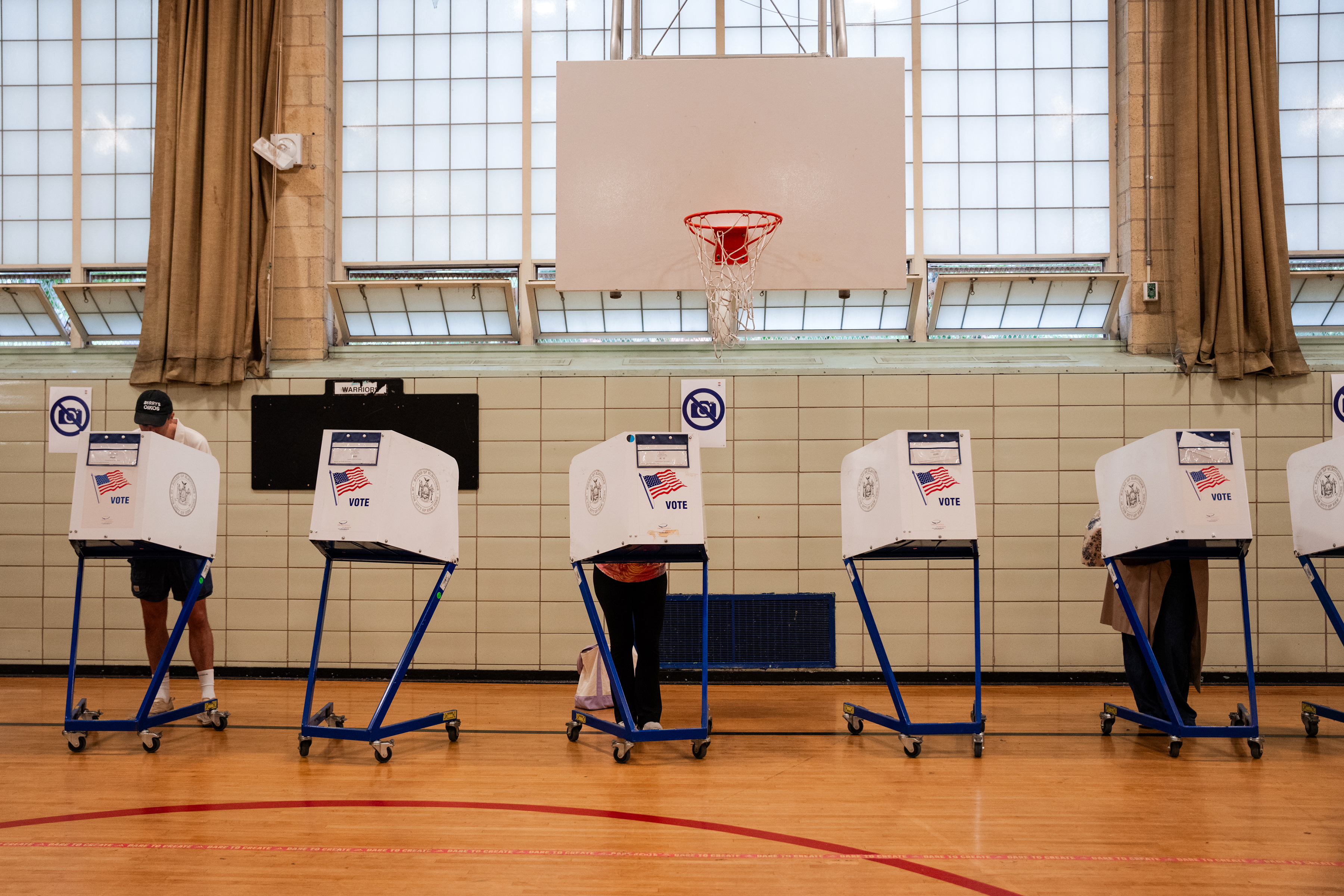
    HENRICO, Va. — In-person voting for this year’s midterm elections began Friday, ushering in the final six weeks for Americans to decide which party they trust to lead Congress through a cost-of-living crisis, a prolonged war in Iran, and other pressing issues.

    Election administrators say they are prepared and confident the vote will be accurate and secure. Nevertheless, President Donald Trump has continued efforts to denigrate certain voting methods and reshape how elections are run, through court challenges, a federal hunt for noncitizen voters, and a pressure campaign to force election officials to share sensitive voter data.

    Friday was the start of early voting in Virginia. Voters in a few other states, including Minnesota and South Dakota, can cast absentee ballots in person, typically at a local election office or voting center. More expansive early voting is scheduled to begin in those and other states in the coming weeks.

    At a voting location in Fairfax, Va,. 18-year-old college student Sanya Singhal was among the first to vote early in person Friday morning, arriving well before the site opened to get in line.

    “Why not just have a little fun in life, you know, try to be the first early voter?” she asked. “I really want to participate in my democracy.”

    At a voting location in suburban Richmond, a poll worker rang a bell as the building opened and about a dozen voters in line began to file in. Stephen Gura was excited to be the first.

    “This election is critical. We need to stop the Trump agenda,” said Gura, who added that he voted for U.S. Sen. Mark Warner, a Democrat, and Shannon Taylor, the Democratic nominee against Republican incumbent Rob Wittman in the 1st Congressional District.

    The Nov. 3 election includes votes for governor and state legislature in most states and will determine whether Republicans maintain control of the U.S. House and Senate. If Democrats retake Congress, it will alter the trajectory of the final two years of Trump’s term, most likely leading to investigations and other oversight efforts.

    Votes underway after redistricting, Trump’s bid to control elections

    At the suburban Richmond voting center, a steady stream of voters flowed in and out. William Curry, a 74-year-old retiree who described himself as a libertarian-leaning independent conservative, voted for Warner’s Republican challenger, Bert Mizusawa, and Wittman. Curry said he generally approves of the job Trump has done, apart from the war with Iran.

    “He’s in a mess he can’t get rid of,” Curry said of the conflict.

    On a rainy day in Sioux Falls, S.D., Bill Goehring, 67, said he voted early at the county office because he will be traveling later. He voted for a mix of Democrats and independents, and said Trump’s “dictatorial tendencies are bad for America.”

    John Thomas, a conservative retired police officer at the Sioux Falls office, said his biggest concerns were public safety and election integrity. He said he doesn’t want to see votes in federal elections from immigrants living in the country illegally. Such fraudulent voting has been found to be extremely rare.

    Trump’s immigration agenda is “spot on,” the 77-year-old said.

    “We wouldn’t be a country that much longer if it had stayed the same for another four years,” he said.

    The start of early voting comes at a time of deep angst and division among many Americans about issues including rising gas and grocery prices, the war in Iran, the looming risks of artificial intelligence, and Trump’s aggressive immigration enforcement campaign.

    It also follows an unprecedented spate of mid-decade redistricting for the House that began when Trump urged the Republican-controlled legislature in Texas to redraw its congressional map to help the party. California and other states followed.

    The changes affect millions of people: Research shows 1 in 10 Americans this fall is a resident of a different congressional district than in 2024.

    Those partisan efforts are expected to continue before the 2028 elections after a landmark ruling this year from the U.S. Supreme Court weakened the federal Voting Rights Act’s protections against racially discriminatory redistricting.

    As the start of early voting approached, Trump was focused on efforts to assert federal control over election administration, even as the Constitution bestows the power to run elections on the states and, in some cases, Congress. The nation’s highest court this week rejected Trump’s bid to restrict mail ballots, but several of his administration’s other efforts to influence the voting process and investigate state voter lists continue.

    Virginia’s Democratic attorney general warned Thursday that Trump’s administration may have violated the state’s laws after a whistleblower accused federal employees of misrepresenting themselves on voter lookup tools to hunt for noncitizen voters.

    Trump for years has raised the specter of widespread noncitizen voting in U.S. elections, and this year is no exception. But research continues to show noncitizen voting is exceptionally rare.

    David Becker, executive director and founder of the Center for Election Innovation and Research, said he wouldn’t be surprised if the Republican president continues “his disinformation campaign and his attack on election officials.” But he said he thinks “the process will hold as it has in past years.”

    At least a few Friday voters were motivated to vote early in part because of Trump’s actions.

    In Minneapolis, 47-year-old business processing engineer Dragan Colakovic said he didn’t want to wait until Election Day for fear of being stopped by immigration agents. He said Trump’s surge of agents to Minnesota in an immigration crackdown earlier this year terrified him. He is a naturalized U.S. citizen who moved from Bosnia in 1997 and saw the horrors of war in the former Yugoslavia.

    “This echoed what I saw in Bosnia,” he said of the heavily armed immigration agents who repeatedly swept through his neighborhood, which has many immigrants.

    “These were my neighbors, my friends,” being arrested, he said.

    Democratic voter Laura Bland, 63, in Virginia’s Henrico County said she cast a ballot early to send “a signal that we’re still here” despite Trump’s efforts to curtail mail voting.

    “Regardless of whether you vote for a Democrat, Republican, people are not going to be stopped or intimidated from participating in our elections,” Bland said, nearly moved to tears.

    Advocates suggest voters cast their ballots early

    Voting rights advocates have encouraged voters this year to cast mail ballots early, in part because of concerns about recent changes in U.S. Postal Service operations that could delay the application of postmarks to ballots.

    Voting early “gives voters options, eases lines on Election Day, and can even mean faster results,” said Hannah Fried, co-founder and CEO of the voting rights group All Voting Is Local.

    The top official at the U.S. Postal Service also encouraged voters who cast ballots by mail to get them in a week before they’re due.

    “Everything is solved if people vote early,” Postmaster General David Steiner said in an interview.

    In a news briefing Thursday, Minnesota Secretary of State Steve Simon urged people not to be swayed by stories they might have seen or read that cast doubt on election operations. They would be able to vote “just like they always have,” he said.

    “I just want to reaffirm that Minnesota’s elections are fundamentally free, fair, accurate, honest, and secure,” he said.