Category: Wires

  • Trump cannot deport students for criticizing Israel, judge rules

    Trump cannot deport students for criticizing Israel, judge rules

    SAN JOSE, Calif. — Citing the importance of the First Amendment, a federal judge in California says the U.S. government is unconstitutionally silencing critics of Israel’s war in Gaza and others as part of the Trump administration ‘s quest to deport noncitizens who it says disrupted college campuses while expressing their views.

    Judge Noël Wise, in a ruling Friday, delivered a victory for the student newspaper at Stanford University, which has said some international students were afraid to speak out because of the deportation threat.

    The decision largely piggybacks on findings from nearly a year ago by a U.S. district judge in Boston, who ruled that the Trump administration violated the Constitution when it targeted people who are not citizens for deportation solely for supporting Palestinians and criticizing Israel.

    Wise wrote that the freedoms of speech and the press are “foundational to America’s enduring democracy.” The judge cited free-speech and vagueness flaws that violate the First Amendment and Fifth Amendment as she struck down portions of the provisions that the federal government follows regarding deportations.

    Wise cited retaliation in March 2025 by U.S. immigration authorities against people who engaged in speech supporting the Palestinians and against Israel’s actions — which a growing number of experts, including those commissioned by a U.N. body, have said amount to genocide. The judge also cited retaliation against people who were critical of Charlie Kirk after the Turning Point USA co-founder was assassinated last September.

    “Tomorrow, or perhaps even today, targets may include anyone in the United States who exercises their freedom of speech to simply express opinions the government does not like,” the judge in San Jose said.

    “This downward spiral is antithetical to our Constitution that recognizes our right to speak freely,” she added. “Here you can simultaneously hate the content of a person’s speech and love the country that cherishes the freedom to allow it. Zealous protection of our Constitutional right to free speech is a provocative demonstration of our country’s powerful lack of fear.”

    The Justice Department did not respond Saturday to a message seeking comment on the decision.

    Conor Fitzpatrick, an attorney with the Foundation for Individual Rights and Expression, which brought the lawsuit, praised the ruling.

    “In America, free speech doesn’t just belong to the people who say things the government agrees with,” Fitzpatrick said in a release.

  • ‘Immense’ devastation as Nepal continues search for 2,400 missing in floods

    ‘Immense’ devastation as Nepal continues search for 2,400 missing in floods

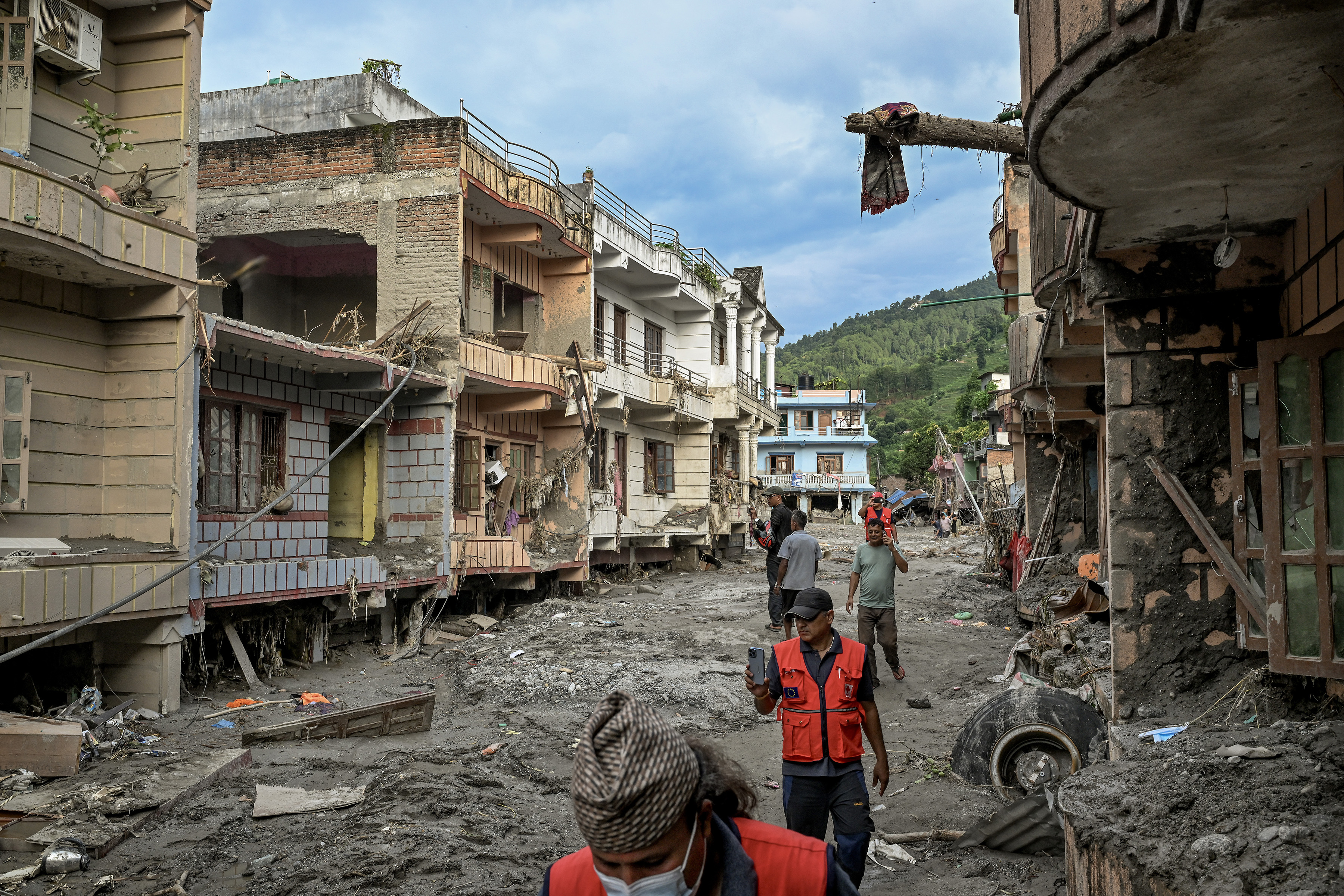
    KATHMANDU, Nepal — Entire towns wiped out. Roads, bridges, and communication lines washed away. In just a matter of moments, tens of thousands of people were left devastated and disoriented as catastrophic floodwaters tore through the tranquil Himalayan valley.

    Four days later, as the rescue efforts in Nepal and neighboring Tibet continued Saturday, the staggering scale of the flood’s devastation was coming into focus.

    The official count of missing people jumped to more than 2,400, more than double the figure from a day before. The death toll rose to at least 675 and was expected to keep climbing. Morgues in several of the towns downstream from the deluge have been overwhelmed by the number of bodies, with officials forced to improvise makeshift arrangements.

    “In living memory, we haven’t seen a mountain hazard event like this,” Kamal Kishore, the United Nations’ top official for disaster risk reduction, said Friday. “The impact on lives, livelihoods, buildings, infrastructure, bridges, hydroelectric projects, power generation is really immense.”

    The recovery will be daunting.

    Nepal is one of the poorest countries in the world. Its economy, long stagnated, is heavily reliant on the tourism industry and the remittances its workers send from abroad.

    The catastrophe comes amid a shortfall in global humanitarian funding, as some of the largest traditional donors, particularly the United States under President Donald Trump, have pulled back from international aid in recent years.

    The United States, for example, has announced that it will contribute $500,000 to the rescue effort — a fraction of what it had promised in the days immediately after a devastating earthquake hit Nepal in 2015. Sri Lanka, still emerging from its own economic crash, has pledged $1 million.

    The limited pledges so far do not bode well for funding the reconstruction effort, said Pradeep Gyawali, a former foreign minister.

    “The contrast with the 2015 earthquake is staggering, when Nepal struggled even to manage the huge volume of relief materials that arrived from around the world. Assistance came almost immediately, and on a much larger scale,” he said. “This time, however, the response has been much weaker.”

    The small Himalayan nation also remains highly susceptible to climate change. Scientists have long warned about potential flooding from the lakes that melting glaciers have formed in the mountains. Even in normal years, smaller floods related to monsoon rains cause mudslides and block roads, straining the country’s vulnerable infrastructure.

    The threat of fresh flooding hangs heavy over the rescue and relief efforts.

    China reported Friday that a barrier lake, created when the landslide that started Wednesday’s deluge blocked the river system, had begun overflowing in Tibet, near where the floods originated. Nepali authorities issued repeated alerts downstream, and police officers hurried through nearby towns with megaphones, asking people to move to higher ground. China’s state broadcaster, CCTV, later reported that the risk of a breach at the barrier lake had “gradually decreased,” though the threat of another flood remained.

    Much of the rescue effort on the Nepali side of the border appeared focused on several hydropower plants that were swept away by the torrent of water and debris. Army rescue teams rushed to recover workers from the muddy tunnels in dramatic scenes.

    In a sign of how uncertain the situation remained, hundreds of workers from those plants had not been counted among the initial missing tally, Nepali officials said in explaining the sudden jump in the number of missing.

    The threat of flooding temporarily paused the rescue efforts in Tibet on Friday. But on Saturday, Chinese rescue workers resumed their search efforts, looking for survivors near the Gyirong border crossing between Nepal and Tibet, CCTV reported. The footage showed firefighters combing the leveled site, tapping on the ground with shovels and shouting, “Is anyone there?”

    The government in Nepal, which swept to power this year on the back of Gen Z protests, is trying to assert control and restore order in the face of the overwhelming tragedy.

    Balendra Shah, the 36-year-old prime minister, has not addressed the nation but has been seen visiting the sites of destruction and leading meetings to coordinate the country’s response.

    His government has deployed more than 30,000 security forces for rescue and recovery efforts. Possibly drawing on lessons from the response to a previous natural disaster in the country, which was criticized as chaotic and disorganized, authorities this past week initially declined foreign rescue teams.

    But by the end of Friday, news media in Nepal reported that the government was easing that restriction.

    On Saturday, Shisir Khanal, Nepal’s foreign minister, said the country was seeking support for tunnel rescues, with an Indian team already in the country and two teams from China also coming. He said the government also required outside help with forensic capabilities, and teams that can help identify bodies with DNA sampling.

    More than 7,000 people had been rescued by late Saturday, many of them pulled out of flooded villages in helicopters before being sent to hospitals and relief camps, where they have been given meals and medical help.

    Soon, the focus will have to shift to rebuilding. But for those who survived the surging waters — losing loved ones, livelihoods, and homes — a path to recovery may seem distant. It is unclear whether many survivors will be able to return home or if they will need to resettle elsewhere.

    The damage has also been particularly heavy at the site of hydropower projects built along the Bhotekoshi and other rivers downstream. Tens of miles of roads and more than 40 bridges have been destroyed.

    Initial government estimates in Nepal have put the cost of physical damage at more than $1.3 billion, and the country’s finance minister has predicted that recovery efforts could run into “a few billions.”

    This article originally appeared in the New York Times.

  • 37 killed near Kyiv as Russian drone blitz exposes air defense gap

    37 killed near Kyiv as Russian drone blitz exposes air defense gap

    KYIV, Ukraine — For several terrifying days, air raid sirens have wailed nonstop in Kyiv, Ukraine’s capital, as waves upon waves of armed Russian drones surged into the city, straining its limited air defenses and exhausting a population worn down by years of war.

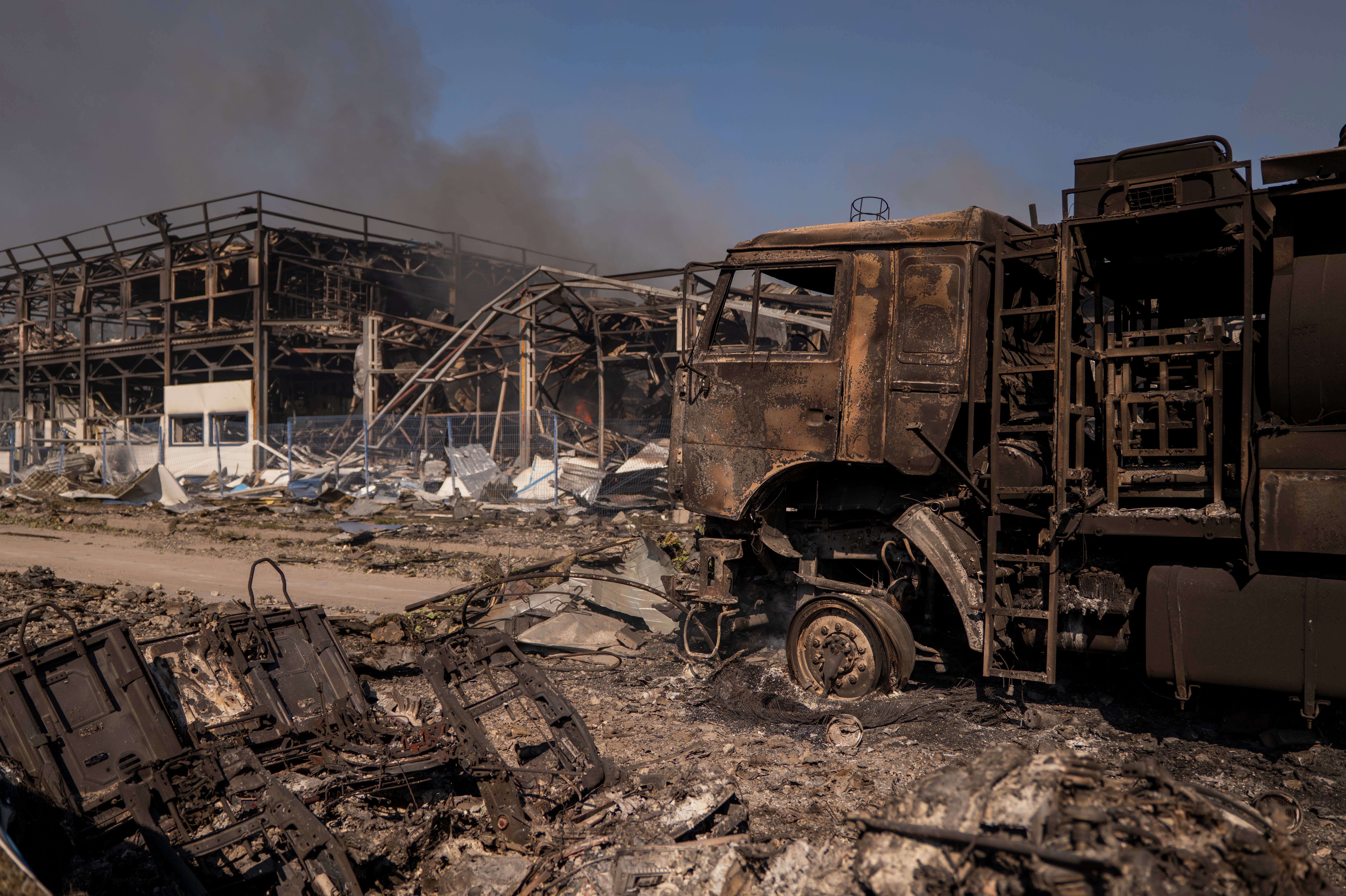
    This latest stage of Russia’s air campaign has targeted warehouses and shopping centers, and on Saturday, the Ukrainian authorities said that a strike on a facility just outside Kyiv had killed at least 37 people.

    The strike, which took place late Friday, caused huge secondary explosions that engulfed an entire suburban area in plumes of smoke. The Ukrainian authorities did not say what the facility was, but their comments suggested it was a warehouse with ammunition.

    President Volodymyr Zelensky of Ukraine said on Saturday that a criminal investigation was already underway into the management of the warehouse, which is near private homes and a facility for older adults and people with disabilities. The capital region will observe a day of mourning on Sunday, officials said.

    An ammunition depot in another area outside Kyiv was destroyed last month, killing several people and prompting a separate investigation into the decision to store dangerous arms in civilian areas.

    “Making the same mistakes for the fifth year of the full-scale invasion is criminal negligence,” Serhii Koretskyi, Ukraine’s prime minister, said on Saturday. “And all those responsible, without exception, must face severe punishment so that such situations do not happen again.”

    Ukraine is struggling to counter the onslaught of Russian drones, many of which are powered by jet engines that allow them to fly at nearly 400 mph.

    The latest drone campaign has coincided with Ukraine’s dire shortage of Patriot interceptor missiles, the only weapon the country has that can shoot down ballistic missiles.

    Russia has seized on that gap in Ukraine’s arsenal this summer. Civilians are bracing for the possibility that waves of Russian drones are intended to wear down air defense units before an even larger ballistic attack in the coming days.

    In the past, Russia often launched daytime waves of reconnaissance drones before combined drone and missile attacks overnight. But the droves of armed drones that now swarm the capital daily suggest that Russia is using a new tactic to spread fear and anxiety.

    Most shops and restaurants remain open in Kyiv, but the constant attacks have caused major traffic jams and delays on the metro system. They could also significantly complicate plans for students to return to school on Tuesday.

    This article originally appeared in the New York Times.
  • Governor joins push to rename airport for Dolly Parton

    Governor joins push to rename airport for Dolly Parton

    An effort to rename Nashville International Airport for Dolly Parton has exploded since her death Tuesday.

    More than 150,000 people, including singer Sheryl Crow, had signed an online petition for the change as of Friday afternoon, and now Gov. Bill Lee of Tennessee has backed the effort.

    Tributes have poured out globally since Parton, the country music superstar, actor. and philanthropist, died at 80 after a battle with cancer. She is especially beloved in Tennessee, her home state, where vigils, singalongs, and tribute performances have taken place.

    “We want the love, acceptance, and good times that Dolly espoused to be what people experience when arriving in Tennessee for the first time, or coming home,” said Lydia Popovich, a 49-year-old comedian and lifelong fan. She started the petition last year with the photographer Dan Dion, and the number of signatures has more than doubled since Parton’s death.

    “Dolly represented the best of Tennessee, and the best of what we can be as human beings,” Popovich added. “Who doesn’t want to be ‘departin’ from Parton’?”

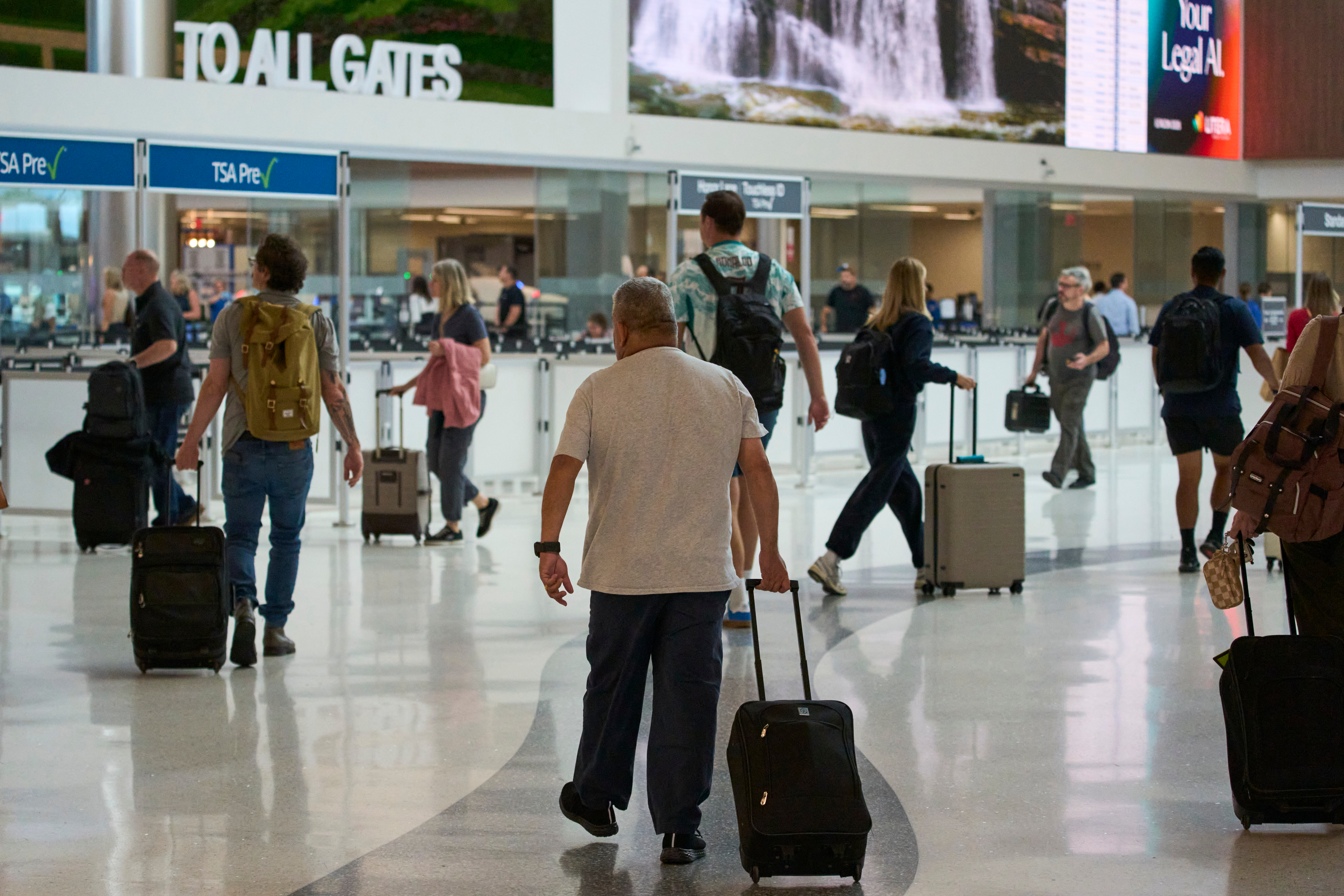
    The airport has already leaned into celebrating the city’s roster of music stars and celebrities, featuring outposts of the Country Music Hall of Fame and Museum, the Grand Ole Opry, and some downtown music venues. The outpouring of support for a Dolly Parton rebranding has not gone unnoticed by local and state lawmakers.

    Lee, a Republican, said Friday that he would put a proposal before the state-run airport authority at its next meeting, in September, to rename the airport. He did so, he said, after consulting with Parton’s team.

    “At a place where Tennessee welcomes the world, it is fitting that Nashville International Airport would bear the name of our state’s favorite daughter and greet travelers with the enduring legacy of Dolly’s music, generosity, faith, and kindness,” Lee said in a statement.

    The Metropolitan Nashville Airport Authority, which oversees the airport and controls its name, has rules that prohibit naming any property after a person who has not been dead for at least two years. The policy also dictates that the honoree should have contributed to aviation in Tennessee or made a “substantial personal contribution” to the airport authority.

    The Sept. 17 meeting will also include discussions about changing the naming policy in order to accommodate plans to rename the airport for Parton, Lee’s office said in a statement.

    Since Parton’s death, the authority has received several inquiries about renaming the airport, a spokesperson said.

    There were also questions about whether Tennessee politics would add to the bureaucratic tangle: Local and state leaders are battling over who oversees the airport. The Republican supermajority in the General Assembly approved a law this year giving the state power over major municipal airports. Nashville leaders have challenged the law and refuse to recognize the state-controlled authority.

    The General Assembly does not convene again until January. But lawmakers stressed they were considering a number of ways — including airport renaming — to commemorate a figure who is broadly cherished in the state.

    “We will work with legislative leaders, as well as the Parton family, to find the most fitting way to honor Dolly’s extraordinary legacy in a manner that will reflect her and her family wishes,” Speaker Cameron Sexton, a Republican, said in a statement.

    At least one state senator, Jessie Seal, also a Republican, has proposed legislation naming Sept. 25 as “9 to 5” Day, in honor of Parton’s famous anthem.

    The United States already has numerous airports named in honor of performers and athletes: Louis Armstrong New Orleans International Airport; John Wayne Airport, in Orange County, Calif.; and Louisville Muhammad Ali International Airport in Kentucky among them.

    Only a few U.S. regional airports or airport facilities are named solely for women. Examples include Amelia Earhart Memorial Airport in Atchison, Kan., and Barbara Jordan Terminal at Austin-Bergstrom International Airport in Texas.

    Major international airports rarely change names. The most recent example, Palm Beach International Airport in Florida was renamed President Donald J. Trump International Airport in July.

    Nashville International has only had its current name since 1988. The airport opened in 1937 as Berry Field — after Col. Harry S. Berry, a World War I veteran who ran the Works Progress Administration in Tennessee — and still uses the three-letter code BNA.

    Fans have also called on the General Assembly to revive a previous effort to honor Parton with a statue on the state Capitol grounds in Nashville — one she politely rebuffed at the time.

    “Somewhere down the road several years from now, or perhaps after I’m gone, if you feel I still deserve it, then I’m certain I will stand proud in our great state Capitol as a grateful Tennessean,” she wrote on Instagram in 2021.

    This article originally appeared in the New York Times.
  • Trump administration asks Supreme Court to uphold ban on transgender troops

    Trump administration asks Supreme Court to uphold ban on transgender troops

    The Trump administration has asked the Supreme Court to allow the U.S. military to fully enforce its ban on transgender service members, setting up the latest test of the administration’s policy priorities in front of the court.

    The justices are expected to consider whether to review the legality of the administration’s ban this fall and, if they accept the case, could schedule oral arguments during the Supreme Court’s term that begins in October.

    A few days after returning to office, Trump issued an executive order banning all trans troops and characterizing transgender identity as a “falsehood” that “conflicts with a soldier’s commitment to an honorable, truthful, and disciplined lifestyle.”

    The ban was one of a series of actions by the administration targeting transgender rights. The president also directed government agencies to withdraw federal funding from schools that allow transgender athletes in girls’ and women’s sports.

    The Defense Department implemented Trump’s military order in February 2025, effectively forcing trans troops out of the military.

    “No more dudes in dresses,” Defense Secretary Pete Hegseth announced then.

    Transgender service members quickly sued. About 4,200 openly transgender people were in the military last year, according to government court filings — about 0.1% of the armed forces. They worked as infantry platoon leaders, pilots, nuclear engineers, doctors, intelligence analysts, police, and other key professionals.

    A series of lower-court rulings have protected a group of transgender troops who challenged the ban from being discharged while litigation continued. But last May, the Supreme Court’s conservative majority agreed in a separate case to generally allow the administration to dismiss troops while litigation continued.

    Solicitor General D. John Sauer urged the justices in a filing Thursday to reverse the lower courts on a permanent basis and defer to the nation’s military leaders by upholding the Defense Department’s “considered military judgment” that accommodating trans troops would undermine “military effectiveness and lethality.”

    “The authority of the U.S. military to determine who may serve in the nation’s armed forces is a matter of exceptional importance,” he wrote, pushing back on lower-court rulings that said the administration’s policy was discriminatory.

    In the past year, many transgender service members have left the military voluntarily rather than face uncertainty and possible harm by contesting the new policy. Hundreds of others have stayed, insisting that their cases be considered individually by military retention boards consisting of fellow service members. Discharge has generally been a foregone conclusion, given the president’s order.

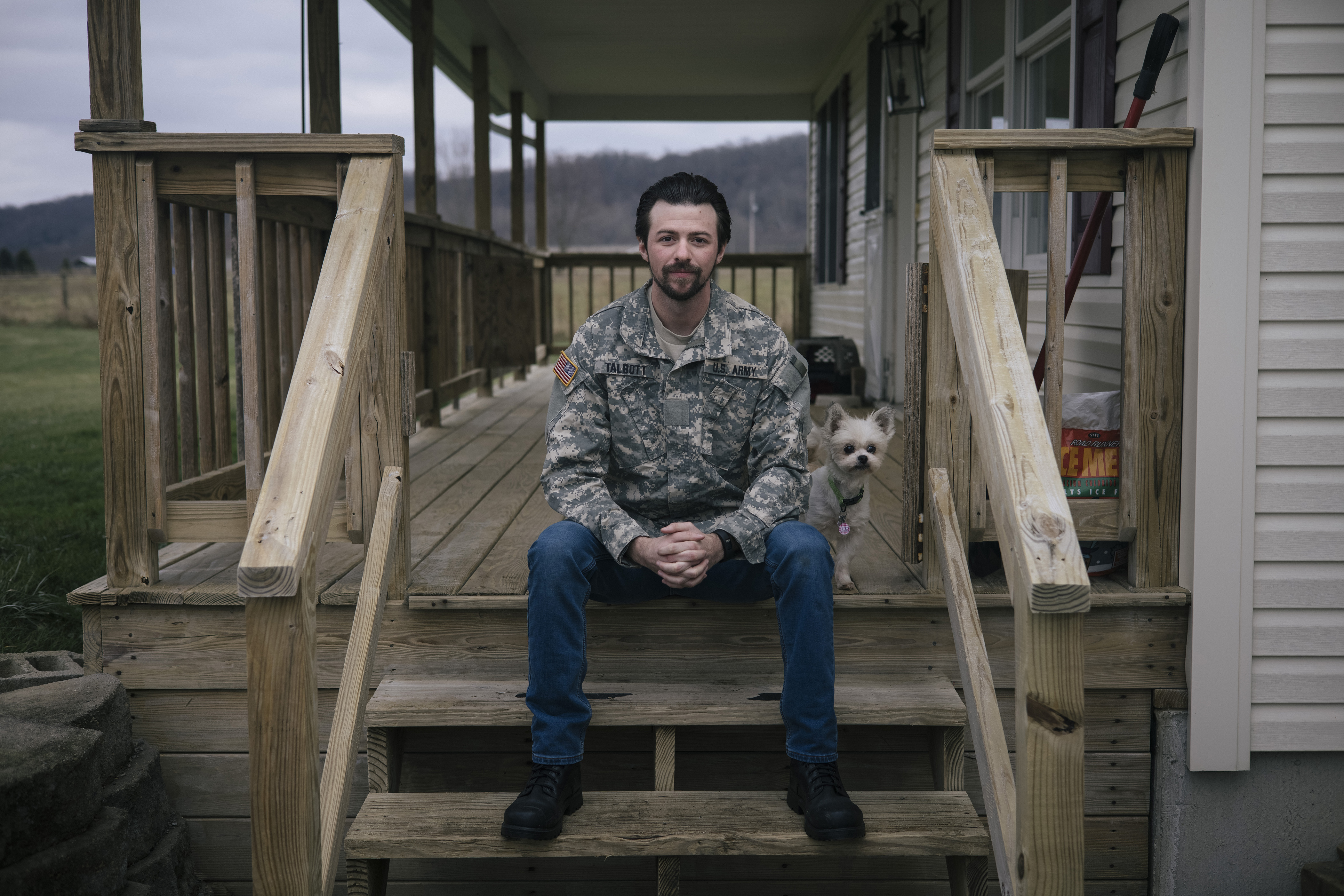
    The 28 challengers in the case before the justices are led by Nicolas Talbott, a second lieutenant in the U.S. Army Reserve. The group claims the policy unfairly and illegally directs hostility and prejudice against a group of people.

    In a 2-1 decision in June, the U.S. Court of Appeals for the District of Columbia Circuit sided with the group, but its lawyers have asked a lower court to extend protections to all transgender troops.

    The policy seemed to be “driven by the bare desire to harm a politically unpopular group,” wrote Judge Robert L. Wilkins, who was joined by Judge Judith W. Rogers.

    Judge Justin R. Walker dissented, saying courts do not have the power to make such decisions about the military: “The Constitution assigns that authority to Congress and the commander in chief,” he wrote.

    In the meantime, the 28 service members have been in limbo, still technically in the military but on leave, according to their lawyers.

    Attorneys for the service members urged the justices Friday to deny the administration’s request and allow the case to first go to trial in January. The service members are meeting the military’s standards and the government should not “kick out thousands of highly trained, skilled, and decorated troops based on nothing but hostility,” Jennifer Levi, GLAD Law’s senior director of transgender and queer rights, said in a statement.

    When the Supreme Court first dealt with the issue on an emergency basis last May, the majority did not explain its reasoning, as is common when the court issues emergency orders. The court’s three liberal justices — Sonia Sotomayor, Elena Kagan and Ketanji Brown Jackson — said they would have kept Trump’s policy on hold.

    In his first term, Trump also announced a transgender ban, but two federal judges blocked the policy.

    The Supreme Court lifted those injunctions in 2019 by a 5-4 vote, allowing a revised ban to take effect while legal challenges moved forward. The cases were dropped after Trump left office, and President Joe Biden rescinded the ban.

    This article originally appeared in the New York Times.
  • FBI no longer treating an applicant’s experience with prostitution as automatic bar against hiring

    FBI no longer treating an applicant’s experience with prostitution as automatic bar against hiring

    WASHINGTON — The FBI is dropping a categorical hiring ban on applicants who have had sexual encounters with prostitutes and will instead consider in a more holistic manner at least some candidates who have engaged in the practice in the past, according to people familiar with the matter.

    The move away from an automatic disqualification falls along a continuum of evolving recruitment standards within federal law enforcement and at the buttoned-up bureau, which several years ago relaxed its approach to candidates’ past marijuana use and has drawn more recent concern among some current and former agents about a perceived loosening of recruitment requirements as it seeks to replenish its ranks.

    The bureau still intends to dismiss applicants who are revealed during the vetting process to have engaged in prostitution within the last 10 years, three or more times overall, or while in a position of trust such as public safety, according to guidance issued this past spring and described by a person familiar with the matter who was not authorized to discuss internal decision-making and spoke on condition of anonymity. For others, it will allow for consideration of the context of the conduct rather than treat it as grounds for an automatic rejection from the FBI’s hiring process.

    The practical impact is not immediately clear since many who have engaged in prostitution may still be either immediately disqualified or weeded out upon further scrutiny from FBI polygraphers and security officials.

    The FBI said the change was meant to account for the fact that some otherwise suitable candidates, including service members, may have engaged in the practice in places where it is legal and to accommodate applicants who may done so as a young child or have themselves been victims of sexual abuse.

    “It is false to suggest criminal behavior like this is no longer disqualifying at the FBI. Any applicant who has engaged in criminal sexual acts like those referenced would of course not be eligible for employment, and it is ridiculous to suggest otherwise,” the FBI said in a statement that described the background check process as “wide-ranging and extensive.”

    “The FBI has and always will maintain some of the highest suitability standards for its applicants and employees in the US Government,” the statement added.

    Justice Department easing recruitment requirements in general

    Even so, the shift is being made at a time when current and former officials worry that the FBI, and the Justice Department more generally, have eased recruitment requirements while facing a mass personnel exodus brought on by retirements, voluntary resignations, and firings. The bureau, for instance, has taken steps to make it easier for its own professional staff to become agents and has offered a truncated training academy for applicants from other federal law enforcement agencies.

    “If they’re moving the bar for sexual encounters to include prostitution, what is that saying about the applicant pool? They’re trying to bring in more people, which to me indicates that the applicant pool is extremely shallow right now,” said Daniel Brunner, a retired FBI agent who spent two decades in the bureau.

    In 2015, then-Attorney General Eric Holder issued a memo reiterating that all Justice Department employees were prohibited from soliciting or accepting prostitution, including in places where it was legal. But both before and since that directive, the FBI and other federal law enforcement agencies have confronted periodic episodes in which agents serving abroad have been accused of sexual encounters with prostitutes.

    As recently as last year, for instance, the Justice Department inspector general substantiated allegations that a supervisory special agent solicited and used prostitutes on multiple occasions while overseas and used a bureau-issued cell phone for the transactions.

    Chris Piehota, a retired top FBI executive, said he would be more troubled if the bureau were to loosen its standards for current employees who require periodic renewals of their security clearances. But he said he could understand the FBI leaning “toward leniency” for actions taken as a teenager or college student.

    “I don’t think you get a better or worse candidate from something you did in your college years,” Piehota said. “That’s why they have the screening process, that’s why they have the vetting process. And the people who do the recruiting and hiring, they look at all those things.”

    Background checks, polygraph tests, and more

    Applicants to the FBI undergo a multistep application and vetting process that includes, among other things, a background check, a detailed questionnaire, credit checks, interviews with neighbors and colleagues, and a polygraph test. The comprehensive regimen is meant to uncover any prior criminal conduct in an applicant’s past as well as embarrassing personal information that could make an employee vulnerable to blackmail.

    Felony convictions, domestic violence convictions, failure of a urinalysis, and violations of the bureau’s drug policies are among factors treated as automatic disqualifiers.

    Though the new guidance will allow for a broader and more contextual evaluation of applicants who disclose past experience with prostitution during their polygraph admission, such an admission has historically been typically regarded as a “death knell” for potential employees at agencies including the FBI, CIA, and NSA, said Daniel Meyer, a Washington lawyer with the Tully Rinckey law firm who specializes in the background check and the security clearance process.

  • Trump plans to mark 9/11 at the Pentagon, not ground zero

    Trump plans to mark 9/11 at the Pentagon, not ground zero

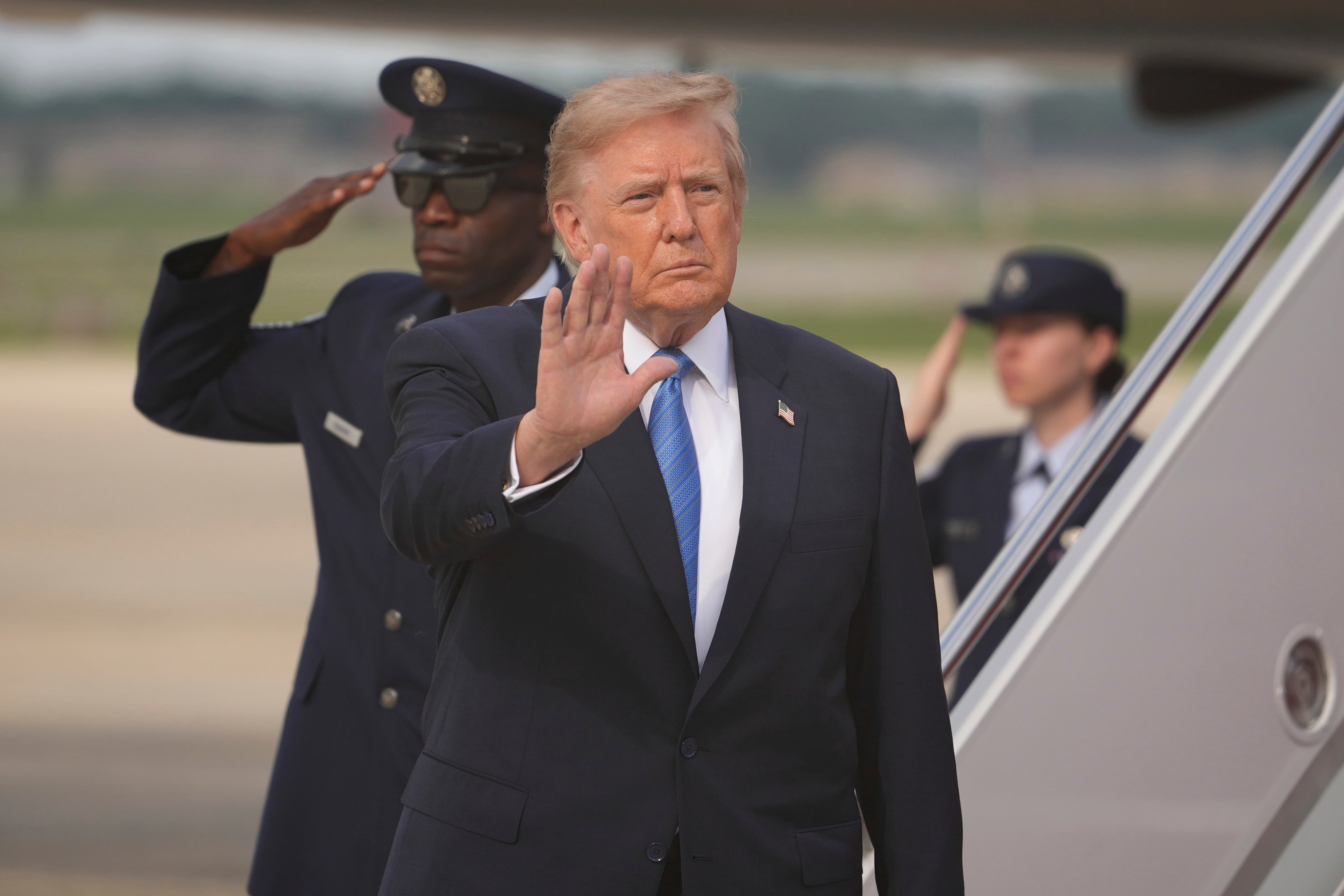
    President Donald Trump is not planning to attend a ceremony in New York for the 25th anniversary of the terrorist attack on the World Trade Center, in part because he wanted to deliver a speech and the annual event has long barred remarks, according to four people with knowledge of the events.

    Trump’s team had conducted advance visits at the site and had initially signaled to officials in New York and in Washington that the president intended to visit the memorial space known as ground zero, two of the people with knowledge of the events said.

    The president’s interest in speaking on 9/11 was conveyed to memorial planners in recent weeks, three of the people with knowledge of the events said. But since 2012, politicians have been barred from speaking at the site. The National September 11 Memorial & Museum, which oversees the site, has worked rigorously to keep the venue nonpartisan and focused on the solemnity of the day.

    Trump, a native New Yorker who talked often about the 9/11 attacks during his 2016 presidential campaign, is now expected to commemorate them at the Pentagon, two of the people with knowledge of the events said. The Pentagon also came under attack on 9/11.

    Vice President JD Vance is expected to represent the White House in New York.

    The president will go to the Pentagon after he attends a midterm political convention in Texas. Officials have discussed some kind of tribute to the terrorist attack victims during that convention, which takes place Sept. 9 and 10.

    There are other considerations that led to Trump honoring the day in Washington, including that he will depart the next day for his golf course in Doonbeg, Ireland, where the Irish Open tournament will take place. Leaving from John F. Kennedy International Airport in New York City, or from Newark Liberty International Airport in New Jersey, would snarl air and motor traffic to a much greater extent than with Trump leaving from Joint Base Andrews in Maryland.

    Trump last attended the ceremony at ground zero in 2024, when he stood alongside Vance, former Mayor Michael Bloomberg, President Joe Biden, and Vice President Kamala Harris.

    None of the officials made formal remarks. Trump visited a fire station in New York City after the event.

    This year’s anniversary marks a quarter-century since the worst attack on the United States after the assault on Pearl Harbor. Anna Kelly, a spokesperson for the White House, did not address the president’s plans in a response to an email seeking comment.

    “On the 25th anniversary of this tragic day, the president will remember those who were killed at the hands of evil terrorists, honor their loved ones, and pay tribute to the brave first responders who put their lives on the line to rescue their fellow Americans,” she said.

    At the Pentagon, Trump will be allowed to speak, as he did last year, when he attended the remembrances there. His speech that day came less than 24 hours after conservative activist Charlie Kirk, whose efforts to draw college-age voters into the MAGA movement were seen as significant to Trump’s 2024 victory, was shot and killed while speaking on a campus in Utah.

    The ceremony had been intended to be held in a different spot that day but was moved to a new one amid security concerns about the president after Kirk was assassinated.

    “We recall the light of America’s best and bravest and the love that they showed in their final moments,” Trump said at the time. “In their memory, we make a solemn pledge and a noble promise. We will honor always our great heroes, and you are our heroes.”

    The president has faced two assassination attempts and other murder-for-hire plots by alleged Iranian proxies. He has faced an uptick in threats since he began a war against Iran on Feb. 28.

    This year’s event in Manhattan is expected to include former Mayor Rudy Giuliani; former President Bill Clinton and his wife, Hillary Clinton; former President George W. Bush and his wife, Laura; and former President Barack Obama, among others, according to several people who have been close to the planning.

    In the first decade after 9/11, elected officials would read poems and historic American documents, like the Gettysburg Address, at the ceremony. But since 2012, the memorial has barred any speeches by politicians. Instead, politicians stand alongside their peers from opposing parties as families step onto a stage to read the names of the dead over the course of hours.

    Trump’s advisers have discussed possibly taking federal control of the National September 11 Memorial & Museum, including as recently as last year. Families of the Sept. 11 victims have in recent years criticized the site over its leadership and finances.

    Trump, who was in New York on the day of the attacks, spoke to a New Jersey television station in the aftermath, saying that a building he owned had gained in stature because the twin towers had fallen. That building, 40 Wall Street, “actually was the second-tallest building in downtown Manhattan, and it was actually — before the World Trade Center — was the tallest.”

    He went on, “And then, when they built the World Trade Center, it became known as the second-tallest. And now it’s the tallest.” (The statement was not correct; 70 Pine Street, nearby, was taller than Trump’s building.)

    This article originally appeared in the New York Times.
  • Trump says U.S. has entered deal with Venezuela to take control of 65 billion barrels of oil reserves

    Trump says U.S. has entered deal with Venezuela to take control of 65 billion barrels of oil reserves

    WASHINGTON — President Donald Trump said Friday that his administration has entered a sweeping agreement with Venezuela that, if realized, could give the U.S. access to vast amounts of the South American country’s untapped oil reserves, at cost.

    Trump in a social media post announcing the agreement said it was negotiated by Secretary of State Marco Rubio, Defense Secretary Pete Hegseth, and Venezuela’s acting President Delcy Rodríguez.

    “The United States of America has just entered into an Agreement with the Country of Venezuela on, THE BIGGEST OIL DEAL IN WORLD HISTORY!” Trump wrote.

    Rodríguez’s government in a statement said the deal involves the development of 17 fields with a proven potential of 65 billion barrels. It said the agreement could draw $100 billion in investment into Venezuela’s oil industry and yield over $209 billion in taxes for Caracas.

    Rodríguez in a posting on Telegram predicted the deal “will have a significant impact on our nation’s revival.”

    The agreement allows for the United States to partner with an unnamed private operator in Venezuela to create a new private company to take hold of the reserves, according to a U.S. official familiar with the contours of the deal.

    The official, who was not authorized to comment publicly and spoke on the condition of anonymity, added that Rodríguez granted the company 100-year rights to develop the oil fields.

    The deal gives the United States 55% effective output of the new private company — including an ownership stake and rights to buy oil at cost. The company would be the second largest corporate holder of proven reserves after Saudi Aramco, according to the official.

    Trump is under pressure to show he’s lowering oil costs

    The announcement comes nearly nine months after the U.S. military at Trump’s direction carried out an operation to capture Venezuela’s then-President Nicolás Maduro and spirit him to the United States to face federal narcoterrorism and drug trafficking charges.

    Trump faces mounting pressure to address high gas prices as the war in Iran on Friday reached a six-month milestone with no conclusion in sight. The U.S. has tapped its strategic petroleum reserves, which in early August fell below 300 million barrels, down by more than 100 million barrels since the start of 2026.

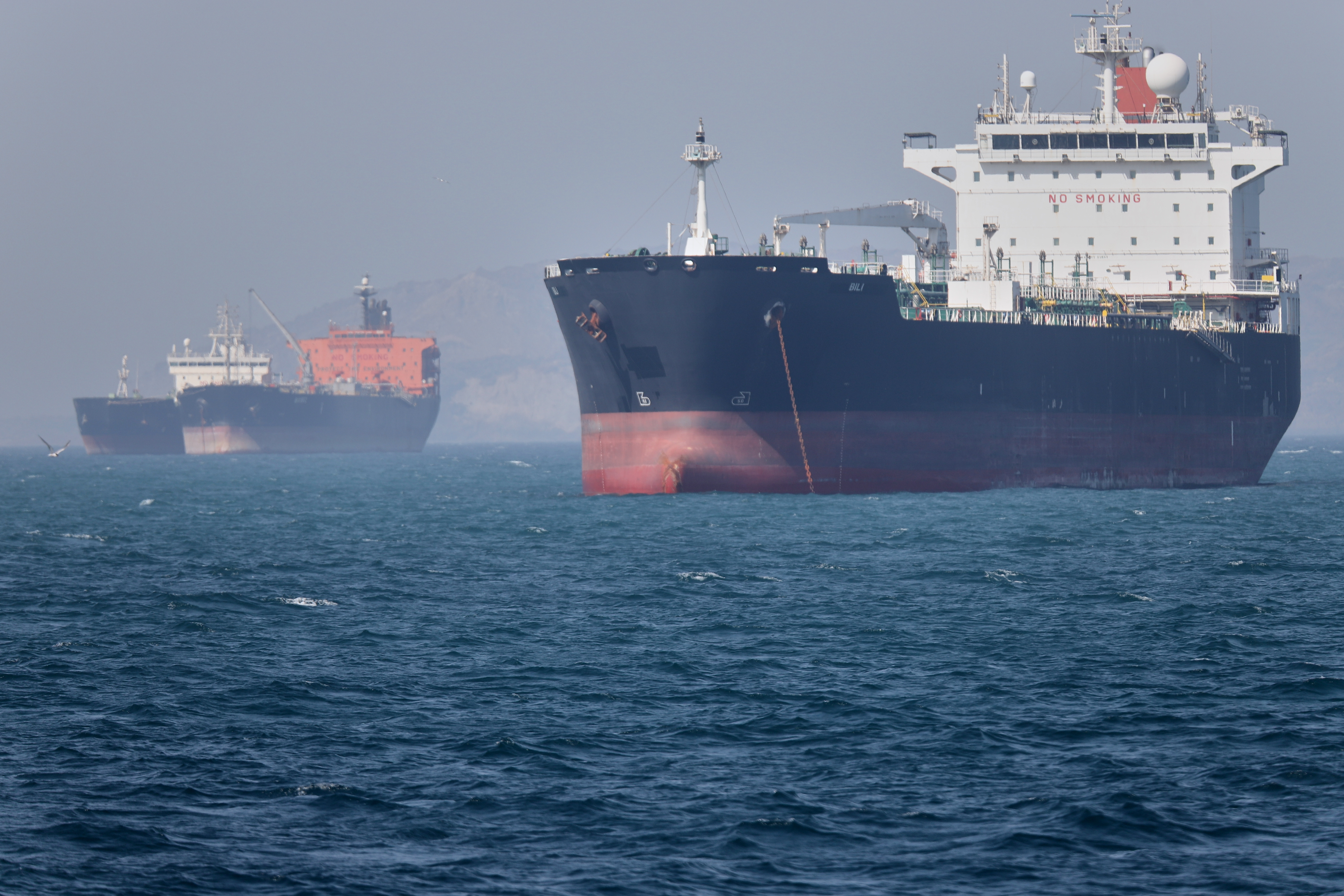
    The U.S.-Israel war against Iran has led to a dramatic slowdown of Gulf oil moving through the Strait of Hormuz, which about 20% of the world petroleum passed through prior to the conflict.

    The average price of gas in the U.S. stood at about $4.09 a gallon on Friday, according to AAA. The average price was $3.21 at the same time last year.

    A significant drop in U.S. gas prices tied to the agreement should not be expected immediately. Experts have repeatedly warned that a substantial boost in Venezuelan oil production will not happen quickly as repairing and expanding infrastructure takes years and requires billions of dollars.

    Persuading big American oil companies to return the region could face headwinds given the political uncertainty and decades of badly damaged infrastructure.

    Days after the ouster of Maduro, Trump gathered oil executives at the White House and called on them to rush back into Venezuela. Executives expressed interest in the opportunity but there was also a measure of caution given their past experience in the country.

    Darren Woods, CEO of ExxonMobil, the largest U.S. oil company, said at that moment he saw the country as “uninvestable.”

    But Trump has insisted that his administration has brought a measure of stability to Venezuela.

    He has argued that Venezuela stole U.S. oil when former Venezuelan President Hugo Chávez moved decades ago to nationalize hundreds of foreign-owned assets, including those owned by American oil companies.

    Rodríguez, in one of her early moves after taking power, signed a law that opens the nation’s oil sector to privatization and reversed a bedrock tenet of the self-proclaimed socialist movement that has ruled the country for more than two decades.

    Rubio said on X that the agreement would usher in billions in private investment into Venezuela and lead to lower gas prices in the United States.

    “This deal is a huge win for both the American and Venezuelan people,” Rubio posted.

    The oil bought from the new company would go toward filling the U.S. strategic petroleum reserve and toward military use, according to the U.S. official.

    Venezuela has one of the largest oil reserves in the world, with an estimated 303 billion barrels of crude oil in the ground. That’s about 17% of the world’s supply, according to the U.S. Energy Information Administration.

    Unlike other parts of the world, where geologists have to search for untapped oil, the reserves under Venezuela’s soil are largely mapped and known, experts say. But because of dilapidated infrastructure, the country only produces about 1% of the world’s oil.

    Maduro remains jailed in the U.S. He has pleaded not guilty.

  • These 109-year-old friends say this is the secret to their longevity

    These 109-year-old friends say this is the secret to their longevity

    Dorothy Boggess starts every day the same way: with exercises in her kitchen.

    She plugs in an old boom box and hits play on the “Cha Cha Slide.” Then she stands with a hand on the counter, swinging one leg and then the other back and forth. When DJ Casper asks how low she can go, she bends her knees and sinks her hips and shimmies, laughing. On her shelf is a mug that says “109 and fabulous.”

    Reaching this age puts Boggess in an exclusive club. Just 0.03% of Americans live into their 100s. But Boggess is lucky enough that one of them is her friend of more than eight decades, Velma Long.

    Long celebrated her 109th birthday this month by inviting Boggess to church with her. (Long went to Boggess’s church for her 109th birthday, in May.) Both wore sensible shoes on their birthdays this year, but Long’s daughter noted that her mom was dancing in heels on her 100th birthday.

    Called to serve

    In the early 1940s, Boggess was in Atlanta studying social work when she decided to come to Washington to join the war effort.

    Both Boggess and Long were “Rosie the Riveters” — women who joined the workforce during World War II to help fill the factory lines, shipyards, and offices vacated by the young men sent overseas.

    “It was very exciting,” Boggess said. “I didn’t know anyone at all in Washington, D.C.” She took the train up, and a friend of a friend picked her up from Union Station, bringing her along on an errand in Baltimore before taking her home.

    “That was really exciting — to go to a whole other state. Of course, now we know Baltimore is nowhere. But to me, that was a really big deal,” Boggess said, laughing.

    Both Boggess and Long went to work as clerk typists for the government — Long for the Navy and Boggess for what was then called the War Department, earning a salary of $1,440 annually. They met their husbands through work, and their respective romances started with lunch dates.

    “We used to walk over to the Interior Department at lunchtime because it was not segregated,” Boggess said. “The food was better.”

    It was soon after that Boggess and Long met each other and became fast friends. Their husbands were cousins and were very close, so nearly every date was a double date.

    “My husband loved her husband,” Boggess said. “We spent a lot of time together and traveled everywhere.”

    Boggess and her husband were very involved in the civil rights movement, and her home is full of mementos from that era. At the time, she didn’t realize she was helping make history.

    “I was just having fun,” Boggess said.

    In the late 1990s, The Washington Post ran a story about women known as “The War Girls” for their role in World War II, but the piece referred only to white women. Boggess wrote a letter to the editor correcting the record, and it ran in the paper the following month.

    Friendship and humor

    For more than 80 years now, Boggess and Long have lived near each other in and around D.C. When they were younger, they went to exercise classes together and threw parties for the kids’ birthdays in Boggess’s backyard. It’s harder to get together as often now, but they check in by phone almost every day.

    “We’ve both lost so many close friends,” Boggess said. “It’s amazing that we’re still functioning.”

    They exercise and eat well, but when asked about the secret to their longevity, they say it’s being social. And while they’ve made many friends through church and their kids and grandkids (Long has a great-great-granddaughter, age 4), there’s something different about a friend who has known you since you were 23.

    “They’ve been friends for years,” said Kenneth Boggess, Boggess’s son. “They are close, and they can relate to one another.”

    Dorothy Boggess still makes Long laugh like no one else. But they stay engaged with the world outside, too.

    “I go out with my daughter a lot,” Long said. “She always insists that I come along. I say, ‘I’m really too old.’ She says, ‘No, you’re not. People love to see you — to see a person that’s your age.’”

    “All my friends say she’s their mom, too, now,” said Long’s daughter, Phyllis Valentine, 78.

    Both Long and Boggess have been involved with their churches, neighborhoods, social clubs, and sororities. They stay as active as possible, and Boggess learned to swim later in life, at age 69, which she said is her proudest accomplishment.

    “All I can say is I’m very proud of her,” Kenneth Boggess said of his mom. “I’m proud of the people who have supported her.”

    Both Dorothy Boggess and Long have traveled extensively since retiring from careers in social work in the 1970s: Boggess has a list of the countries she’s visited on the wall in her basement, in alphabetical order, from Argentina to Turkey. Places Long loved the most were Bermuda, Montreal, and Hawaii.

    “She loves to fly,” Valentine said of her mom. Valentine brought Long to Texas last year for a celebration at Long’s college marking the school’s 150th anniversary. “As we were descending into Austin, she was looking out the window just like a little kid. And I asked her, I said, ‘What are you thinking about?’ She said, ‘I just never thought I’d get to come back.’”

  • How the war in Iran is redrawing the global energy map

    How the war in Iran is redrawing the global energy map

    Six months after U.S.-Israeli strikes disrupted Middle Eastern fossil fuel production and turned the Strait of Hormuz into a naval battleground, the world is getting a fuller picture of how the Iran war has reshaped the economics of energy.

    A handful of new reports show how, by dramatically raising fossil-fuel prices, the conflict has also been pushing governments, companies, and consumers toward renewable energy, with a clear set of winners and losers emerging.

    Global fossil fuel importers have paid more than $330 billion in extra costs — an amount equal to Finland’s 2025 gross domestic product — since the war began on Feb. 28, according to data from the Centre for Research on Energy and Clean Air (CREA), a Helsinki-based nonprofit. Meanwhile, higher energy prices have been a boon to a handful of oil- and gas-producing countries outside the war zone.

    Economies that had moved to ditch fossil fuels prior to the war have withstood the crisis better, too. In China, for example, renewable energy projects added since 2020 allowed the country to avoid nearly $8 billion in fossil fuel imports between March and July, CREA estimated.

    These transformations could eventually have an effect on the environment: Overall, global greenhouse gas emissions were relatively contained during the first half of the year, inching up just 0.2% compared with the same period a year earlier, according to an early analysis of emissions through mid-year 2026 by the nonprofit Climate Trace.

    “Renewables continue to grow. That does seem like good news,” said Ting So, lead analyst for Climate Trace. But he added that the volatility of disruptions in the Strait of Hormuz makes it hard to predict long-term trends.

    Winners: Clean tech and non-Gulf fossil-fuel producers

    China has emerged as a beneficiary of the realignment, leveraging its dominance in green technology manufacturing at a time when soaring oil and gas prices are boosting interest in solar panels, batteries, and electric vehicles.

    Since the start of the conflict, China has logged five consecutive months of record clean tech exports measured in dollar terms, according to BloombergNEF. In July, Chinese carmakers sold more than half a million EVs and plug-in hybrids to overseas markets, a roughly 150% increase from a year earlier.

    Oil-and-gas producers in North and South America have also reaped windfall profits. As buyers shunned Gulf suppliers, fossil fuel companies in the U.S., Canada, and Latin America ramped up production.

    While a ceasefire could erode wartime supply premiums, researchers expect some of these market shifts to persist. “The boost to Latin America’s mining sector could remain,” said Rafael Rabioglio, a BNEF analyst, in the report. As high fuel costs accelerate global electrification, demand for critical minerals such as copper and lithium will benefit major producers including Chile and Peru in the long term.

    Losers: Gulf states and import-dependent regions

    In the Persian Gulf, drone strikes and explosions have damaged key facilities, including Saudi Arabia’s largest oil refinery and a key liquefied natural gas export terminal in Qatar. Coupled with shipping bottlenecks, initial export losses across the Gulf averaged nearly $2 billion per day in March, according to an estimate from Rice University.

    Beyond lost revenue, the war also damaged as much as $58 billion worth of energy infrastructure, which requires costly repairs, according to an April estimate by consulting firm Rystad Energy. The conflict also threatens to stall the region’s transition into a greener economy. “The war has driven up the cost of debt in the region, undermining clean power project economics in the near term,” BNEF analysts said in their report.

    Import-dependent economies like Japan and South Korea, meanwhile, are suffering collateral damage. The two Asian nations, which depended on shipments through the Strait of Hormuz for most of their oil supplies prior to the Iran war, had no choice but to absorb higher fuel prices. In Africa, where many countries are net importers of refined oil products, the soaring prices have fueled a broader economic crisis. Ethiopia, for instance, recently experienced currency sell-offs, forcing the country to draw down billions of dollars in its foreign exchange reserves to defend the weakening birr.

    Accelerated transition

    The burden of higher energy prices has fallen disproportionately on developing economies. Poorer nations spent an additional 1% of their GDP absorbing the price shock, CREA found. That’s more than double the economic drag experienced by wealthier states.

    As they seek to break up with fossil fuels, African nations are scrambling to add renewable energy. The region as a whole imported 37% more solar equipment from China in the first half of 2026 than in the same period last year, BNEF data showed. The current boom has spread across the entire continent, from South Africa to Nigeria and the Democratic Republic of the Congo and Egypt.

    “In countries where consumers are not being well shielded from higher fuel prices, they are moving very quickly to adjust their energy consumption pattern,” said Ethan Zindler, a BNEF analyst.

    That same trend is also happening across developing Asia. For instance, in the Philippines — where initial fuel shortages prompted the government to mandate a four-day workweek to save on energy — demand for solar products has surged. In March, the country’s imports of Chinese solar equipment jumped 262% year-over-year.

    EV adoption has accelerated, too. Monthly EV sales almost doubled in the Philippines and Indonesia in June and July compared with the same period in 2025, according to BNEF. In India, monthly passenger EV sales reached 30,000 units in those two months, up from fewer than 20,000 units last year.

    In the first half of 2026, slight emissions reductions by China and the U.S., the world’s largest polluters, were balanced out by increases in India and Brazil, the Climate Trace analysis found.

    At the same time, fears that this year’s energy-market disruptions would lead to a major near-term increase in coal-fired power did not become a reality, according to the results. Instead, over the first six months of the year, renewable energy actually expanded more quickly, Climate Trace’s So said.

    “That’s a positive development that maybe not everyone thought” would happen, he said.