Category: Wires

  • Oil prices rise as Iran steps up attacks and Houthi-Saudi fighting intensifies

    Oil prices rise as Iran steps up attacks and Houthi-Saudi fighting intensifies

    Oil prices remained elevated Wednesday, amid increasing attacks on ships passing through the Strait of Hormuz and an escalation of fighting between Saudi Arabia and the Houthis, an Iran-backed militia.

    The Houthis, emboldened by regional instability, late Tuesday struck a building owned by state-owned energy giant Saudi Aramco, the kingdom’s Energy Ministry said, as Saudi and Houthi forces traded attacks. Saudi Arabia, one of the world’s most important energy suppliers, has bombed Houthi positions in Yemen in support of the internationally recognized Yemeni government, which is fighting to retake territory seized by the Houthis.

    At the same time, more ships were attacked in the Strait of Hormuz in the past week than in the entire month of September. More than 100 ships have been struck since the start of the war in Iran, now in its eighth month.

    In Saudi Arabia, the Houthis over the weekend carried out the deadliest attack on the kingdom in more than a decade, striking King Khalid International Airport and killing at least 13 people and wounding more than 300.

    The Houthi assault on the headquarters of Saudi Aramco, in Dhahran in the east of the kingdom on Tuesday, resulted in no casualties or injuries but caused a “limited fire,” Saudi authorities said.

    The strike damaged the office tower’s top three floors, according to two people with knowledge of the impact who spoke on condition of anonymity. No oil production or export infrastructure was damaged in the attack.

    The global oil benchmark, Brent crude, was trading about 1% higher Wednesday, a relatively modest rise that pushed the price above $106 a barrel. The global price was just less than $70 a barrel on the eve of the war in late February.

    “Given the attack did not impact oil operations, the market did not react,” said Amena Bakr, head of Middle East & OPEC+ Insights at Kpler, a maritime data firm.

    Saudi Aramco is the world’s largest oil producer, and its headquarters — as well as a large residential community of employees — has been in Dhahran for about 90 years. From there, the company manages its vast network of onshore and offshore oil rigs, pipelines, refineries, and export terminals.

    The strike on Aramco’s nerve center came during the third day of the WPC Energy Congress, a weeklong oil and gas summit in Riyadh, Saudi Arabia. The conference went forward as planned Wednesday, with panel discussions on topics such as the future of hydrogen and the outlook for natural gas.

    But most of the prominent attendees canceled their trips to Riyadh, including the CEOs of BP, Exxon, Shell, Chevron, and TotalEnergies.

    More oil has been getting out of the region to global customers in the past several weeks, in large part because U.S. military forces have been guiding and protecting tankers through the Strait of Hormuz along the Omani coast, opposite the strait from Iran.

    In addition, Saudi Arabia is exporting from both of its coasts again, weeks after it was forced to reduce its Red Sea exports when a drone hit Saudi Arabia’s critical East-West pipeline in September.

    In a report Wednesday, the International Energy Agency said that Saudi Arabia and other crude oil producers in the Persian Gulf exported 13.9 million barrels per day last month, or 75% of prewar levels.

    The rebound in exports from the region helped push up the global supply of oil. But the agency said it left its projections for global supply for the rest of the year mostly the same because of the uncertainty caused by this month’s “heightened security concerns.”

    This article originally appeared in the New York Times.

  • In which Winnie-the-Pooh turns 100 and Britain wants its bear back

    In which Winnie-the-Pooh turns 100 and Britain wants its bear back

    LONDON — Once upon a time, a very long time ago now, a real stuffed bear called Winnie-the-Pooh lived near a small forest in England with a real little boy called Christopher Robin Milne.

    Then Winnie-the-Pooh took a Very Long Trip, because that’s what bears do when Publishers ask, and the Trip turned into a Stay and now he lives in a glass case at the New York Public Library, which very much wants to keep him.

    But this week his book, also called Winnie-the-Pooh, turned 100, and some people in Britain who love him very much want him to come home.

    Oh, bother.

    It has been a century since A.A. Milne published the first collection of stories based on his son’s little stuffed menagerie — on Oct. 14, 1926 — and Winnie-the-Pooh has been beloved ever since as a cuddly, comforting, and quintessentially English icon.

    Britain is celebrating with anniversary editions, commemorative stamps, LEGO sets, and a newly authorized sequel, A Little Boy and His Bear.

    But for some, the absence of the bear himself spoils a bit of the fun, and they have renewed a decades-long campaign to repatriate the actual Pooh, Piglet, Eeyore, Tigger, and Kanga from New York.

    Or at least to have them visit. If Paddington Bear can get to London from Darkest Peru, they reason, what’s keeping Pooh Bear trapped in the Big Apple?

    Christopher Robin Milne died in 1996, at the age of 75. But two years ago, Gyles Brandreth, an author and friend of Christopher’s, traveled to New York as an emissary of Queen Camilla hoping to arrange an anniversary stay at Buckingham Palace for the 105-year-old fleecy émigrés.

    The library, citing the toys’ age and their talent in attracting tens of thousands of visitors a year, wouldn’t budge, Brandreth said.

    “It would be wonderful if it happens, but I can’t see it happening anytime soon,” he said. “The ball is now really in the court of the New York Public Library.”

    The library, which did not respond to a request for comment, has resisted high-level entreaties before. Efforts to bring Pooh home over the years have entailed questions in Parliament, motions in Congress, pleas from prime ministers, and mediation by two presidents. In 1998, they drew a defiant speech by then-New York Mayor Rudy Giuliani.

    Now, the requests are coming from Camilla, who paid her own royal visit to the library earlier this year.

    The palace declined to comment on the queen’s discussions with library officials, confirming only that she reunited the aged Kanga with a replica of Roo, a Very Small member of the Milne collection.

    The actual Pooh, a 20-inch Farnell teddy bear purchased at Harrods in 1921 for Christopher’s first birthday, has been on display with his mates since the late 1980s as part of the library’s vast “Treasures” collection.

    The toys were not purloined, kidnapped, auctioned by Sotheby’s, or flipped by greedy collectors on eBay.

    A.A. Milne, with the adult Christopher’s blessing, gave them to his U.S. publisher for a publicity tour in 1947. The publisher donated them to the library 40 years later. And they are in good company, alongside Charles Dickens’ desk, a first-edition Plato, and a Shakespeare First Folio.

    In 2016, they got a professional refresh by conservationists that the library documented on Instagram.

    But the clean provenance and their New York highlife has never appeased Pooh partisans who think Fifth Avenue is much too far from the Hundred Acre Wood.

    “Just like the Greeks want their Elgin Marbles back, so we want our Winnie-the-Pooh back, along with all his splendid friends,” Gwyneth Dunwoody, a Labour member of parliament, said in the House of Commons in 1998.

    Dunwoody’s motion that the government raise the issue with the Americans kicked off official efforts to bring back “the Pooh Five,” as she called them. Then-Prime Minister Tony Blair had just arrived in Washington for talks with President Bill Clinton. Reporters were ready with the softball, er, toy questions.

    Blair told ABC’s Good Morning America that the issue would be low on the agenda. His spokesperson later said the government position was that the Americans would properly care for the aging playthings.

    Clinton reportedly said losing them would be “unbearable.” State Department spokesperson James Rubin said the U.S. would take no position on the issue since the toys were privately owned, while also denying he would ever “pooh-pooh an issue of this significance.”

    “GET STUFFED!” was the New York Post headline.

    Bronx-born Democratic Rep. Nita M. Lowey introduced a congressional resolution to keep the critters where they were. Giuliani showed up at the library with reporters to say they were better off in the U.S. than the U.K.

    “Winnie-the-Pooh is an example of the very best in immigration,” the mayor said, according to an account in the Washington Post, holding the bear with white-gloved hands. “Hey Winnie,” he said, “you got a green card?”

    And so nothing happened, which is a thing that often happens after a great deal of Official Fuss. It was — as Eeyore might have said if anyone had bothered to ask him, which nobody ever does — about what you’d expect.

    But the effort didn’t die.

    Prime Minister David Cameron brought it up years later during a meeting with President Barack Obama. Reportedly, an aide in the Oval Office called the head of the library, Anthony Marx, asking if the two leaders could announce that the toys were going home during their news conference.

    Brandreth, who interviewed Marx, recounted the episode in his new biography of Milne, Somewhere, a Boy and a Bear.

    “You don’t understand,” the aide said. “I’m speaking on behalf of the president of the United States.”

    “You don’t understand,” Marx replied. “I am the president of the New York Public Library — and the answer is no.”

    The rebuff, Brandreth said, persuaded Pooh’s British admirers to try a gentler approach that they hope will bear fruit, or bear bears, eventually. The king and queen have offered Winnie and friends a room at Buckingham Palace or Windsor Castle whenever they would like to visit.

    “It’s not a campaign,” Brandreth said. “It’s an invitation.”

    And so the invitation continues to stand. And Winnie-the-Pooh continues to sit, in a thoughtful sort of way, which is what very old bears in very nice glass cases mostly do.

  • House Democrats plan agenda for first 100 days if they sweep to power in midterm elections

    House Democrats plan agenda for first 100 days if they sweep to power in midterm elections

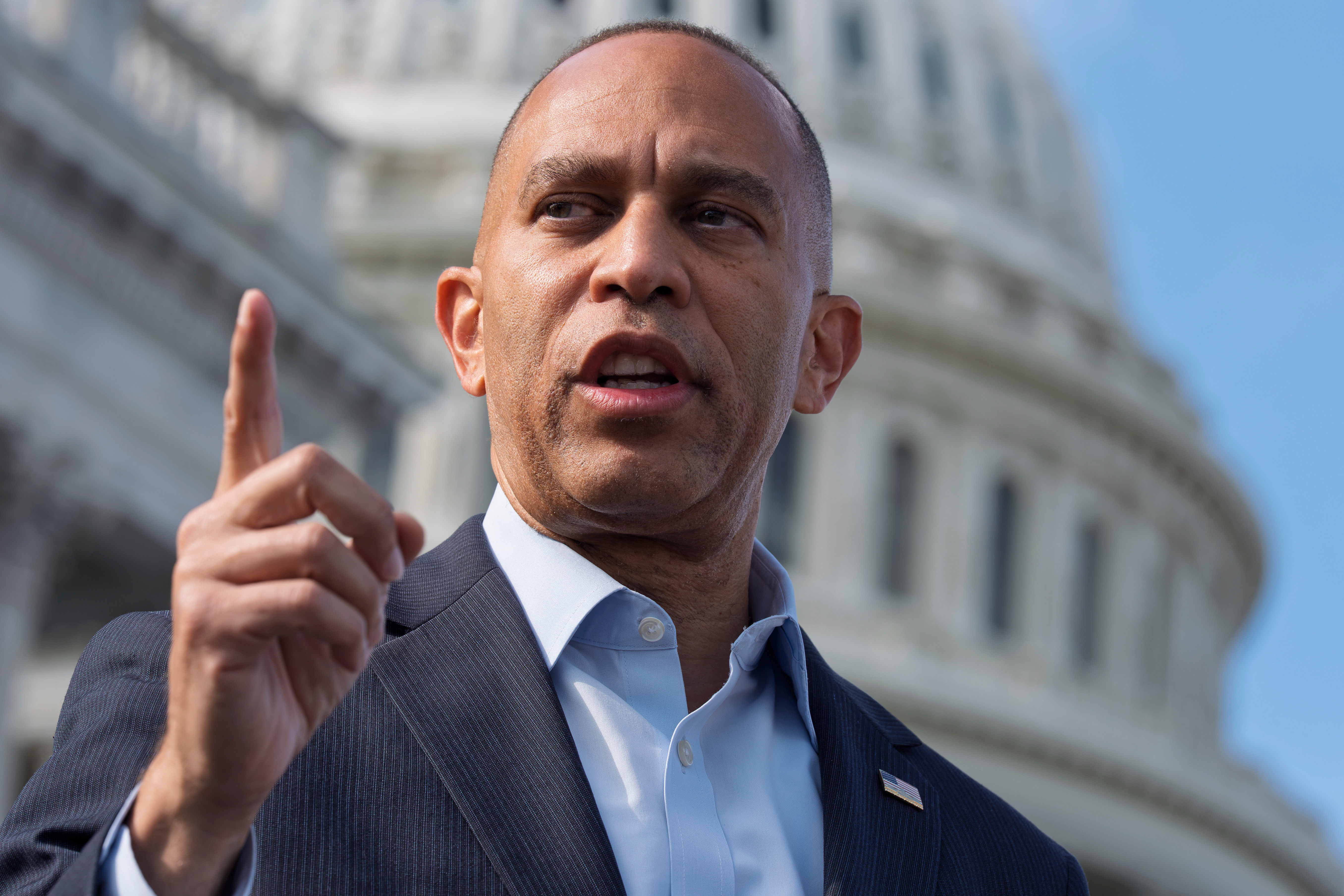
    WASHINGTON — House Democrats are preparing an ambitious 100-day agenda focused on delivering their campaign promises — making life more affordable and conducting vast oversight of the Trump administration — if the party seizes majority control in next month’s elections.

    Democratic leader Hakeem Jeffries, who is in line to become House speaker if the party wins power, said the Democrats will be united “right out of the gate” on reinstating Affordable Care Act tax breaks, reversing Republican Medicaid cuts, holding votes against the Iran war, and undoing President Donald Trump’s tariff regime.

    They expect to launch the agenda in the first 100 hours, once the new Congress is seated in January.

    “Fighting for an affordable America — that’s what unites Democrats all across the country,” Jeffries said recently at the party campaign headquarters in Washington.

    “That’s our commitment to the American people, because the cost of living is way too high and far too many people who are working hard, playing by the rules, can’t thrive and can barely survive — and are drowning — in the Trump economy.”

    It’s a hyper-focused agenda tapping into the voter sentiment that is driving much of the midterm election as Americans wrestle with affordability concerns and inflationary costs from the Iran war and other policies.

    The undertaking will also test the ability of the sprawling House Democrats to work together and avoid the chaotic divisions and disruptions that have hobbled Republicans under Speaker Mike Johnson’s leadership.

    Democrats have been out of power in the House since 2023. If Jeffries takes the helm, he would be the first Democratic speaker since Nancy Pelosi, leading a new generation of lawmakers that includes a handful of far-left candidates who are aligned with the Democratic Socialists of America.

    “The antidote to that is getting things done,” said Illinois Rep. Nikki Budzinski, who is poised to become chair of the New Democrat Coalition, the largest caucus within the House Democrats. She said the party is determined to show the American people that “Democrats know how to govern.”

    A Freedom Caucus of the far left?

    Rep. Greg Casar (D., Texas), the chairperson of the Congressional Progressive Caucus, said he is often asked if Democrats will be confronting their own version of the Freedom Caucus, referring to the far-right Republicans who often grind the House agenda to a halt.

    “It doesn’t work that way,” Casar told the Associated Press in an interview. “The Freedom Caucus breaks things. But if you’re a progressive, you want to pass things.”

    Leader Jeffries, Casar, and other Democrats have been in touch with the progressive candidates, many of whom are backed by the DSA as the party focuses on shared priorities.

    “This notion that because we’ll have new members somehow we’re going to be disjointed — not so,” said Louisiana Rep. Troy Carter, who hopes to become chair of the Congressional Black Caucus. “All those banking on that, save the popcorn for another day.”

    The Republicans, who are confronting an increasingly difficult election-year climate to hold onto their majority, portray Democrats as beholden to a far-left socialist agenda.

    If Republicans retain power, Johnson has said they would press on with what they have already accomplished alongside Trump, which has been an agenda focused on cutting taxes and federal spending.

    “What we would do in the next two years is exactly what we have been doing already,” Johnson said on CNBC’s Squawk Box, “and that is putting the conditions in place for a strong America again.”

    Fix healthcare, stop the war, end the tariffs – and investigate Trump

    Months ago, Jeffries launched five working groups to tackle the affordability agenda focused on healthcare, housing, groceries and goods, gas and utilities, and caregiving.

    Each group is headed by a progressive and a centrist Democrat — the healthcare working group, for example, is run by Rep. Alexandria Ocasio-Cortez of New York and Rep. Terri Sewell of Alabama — with the goal of striking common ground on draft policies that all House Democrats can support.

    At the same time, Jeffries has tasked the ranking Democrats on the House Oversight and Judiciary committees with preparing investigations. They are focused on Trump, his family, and his administration, as part of a sweeping anti-corruption agenda. Impeachment, Jeffries has said, is neither on nor off the table.

    “We need to lower the cost of groceries and gas. Two, we need to make healthcare affordable for every single American. Three, we’re going to hold the crooks accountable who’ve visited unprecedented corruption on the American people,” Jeffries said. “Beginning on day one.”

    Democrats plan to vote quickly to reinstate the healthcare tax credits for the Affordable Care Act, which expired in 2025, leaving millions of Americans confronting higher health insurance costs.

    Proposals are also ready to reverse the Medicaid cuts that Republicans put in place as part of their One Big Beautiful Bill of tax breaks and program cuts, including new work requirements for recipients.

    There are measures to reverse Trump’s tariffs as Congress works to claw back power from the White House.

    And Democrats, who have forced multiple votes on ending the Iran conflict, plan to pressure the Trump administration to end the military action by pushing forward more war powers resolutions.

    Much of the House Democrats’ agenda, if they regain power, would depend on the size of the majority. Details also depend on the Senate, and whether it flips to Democrats.

    “We cannot simply go back to the status quo,” said Usamah Andrabi, a spokesperson for Justice Democrats, an outside group that supports the far-left progressives.

    And Trump, at the White House, has ultimate say, with veto power at the stroke of a pen.

    “We’re going to do a lot and we’re going to be very busy,” Carter said. “We will not be able to fix everything overnight.”

  • Sally Rooney’s publisher withdraws her books from U.K. sale over support for Palestine Action

    Sally Rooney’s publisher withdraws her books from U.K. sale over support for Palestine Action

    LONDON — Irish novelist Sally Rooney said on Wednesday that her books are being withdrawn from sale in the United Kingdom because of her support for Palestine Action, a protest group the British government has outlawed as a terrorist organization.

    Her publisher, Faber, confirmed that the ban “has led to circumstances where Faber cannot pass on U.K. earnings to Sally Rooney for her work.”

    “To sell a writer’s work and not be able to pass on earnings is an unconscionable situation for a publisher. As such, and in full agreement with Sally, we have taken the decision that we can no longer supply her works in the U.K. in any format,” Faber said in a statement.

    Rooney said Faber’s decision to withdraw her books from sale in the U.K. was made “with my full agreement.”

    “I have made every effort to be honest with the public about my beliefs and intentions, and I am wholly prepared to accept the consequences,” she said in a statement.

    Rooney, 35, is the critically praised author of four novels: Conversations with Friends, Normal People, Beautiful World, Where Are You and Intermezzo. Her books have sold millions of copies, and both Conversations with Friends and Normal People were adapted for television by the BBC.

    A strong supporter of Palestinian causes, she wrote in The Irish Times in August 2025: “I too support Palestine Action. If this makes me a ‘supporter of terror’ under U.K. law, so be it.”

    She said she would use proceeds from her novels and TV fees to continue to support the group.

    Britain’s center-left Labour government outlawed Palestine Action after activists from the direct-action group broke into a Royal Air Force base in June 2025 to protest British military support for Israel’s military offensive in Gaza. The ban makes membership in or support for the group a crime punishable by up to 14 years in prison.

    More than 3,000 people have been arrested since the group was outlawed, including for holding signs declaring “I support Palestine Action.” More than 1,200 have been charged under the Terrorism Act, though none has yet been convicted.

    Civil liberties groups say the ban and subsequent arrests unjustifiably restrict the rights to protest and free speech.

    Lawyers for Palestine Action will ask the U.K. Supreme Court next month to overturn the ban. All cases involving people charged with breaching it have been put on hold pending the court’s ruling.

  • In blistering ruling, judge says Trump’s golf plans spurred ‘breakneck’ tree removal

    In blistering ruling, judge says Trump’s golf plans spurred ‘breakneck’ tree removal

    The federal judge who halted work at the Washington golf course President Donald Trump plans to redevelop issued a sharply worded opinion Tuesday night arguing that officials raced to remove hundreds of trees because Trump wanted quick action on his project, not because the National Park Service suddenly decided to implement a years-old preservation plan.

    “The Court concludes, on this limited record, that government officials raced to undertake the [tree-management plan] because President Trump demands haste on his redesign, and not because of some newfound zeal to implement a small part of a seven-year-old” report, U.S. District Judge Ana C. Reyes wrote.

    The 21-page opinion formalized the temporary restraining order Reyes issued earlier Tuesday, barring the government from removing additional trees at East Potomac Golf Links through Oct. 26. The administration must also provide the court and plaintiffs, who are suing to block Trump’s project, three business days’ notice before making any irreversible change to a permanent feature of the historic public course.

    Reyes summarized her concerns about the project’s speed and lack of scrutiny in a blistering passage early in her ruling.

    “Breakneck speed to clear trees that posed no harm,” she wrote. “The reason? Disputed. The budget? Unclear. The environmental impact? Unstudied. The urgency? None. Next steps: bulldoze hundreds more.”

    The government has maintained that the recent work stems not from Trump’s proposed redesign but from a 2019 cultural-landscape report that recommended thinning vegetation and restoring the course’s historic links-style character.

    But Reyes rejected the notion that the cutting was unrelated to Trump’s plan to remake East Potomac into a championship-level course.

    “It is a coincidence, the Government seems to suggest, that [Department of the Interior] cut down hundreds of trees at the Course weeks after the President asked DOI to cut down trees at the Course,” Reyes wrote, “and not, say, any other time in the last seven years.”

    “That asks rather a lot of coincidence,” she added.

    The opinion followed an extraordinary hearing Monday in which Reyes repeatedly rebuked Justice Department lawyers for allowing the removals despite her warnings, saying the government had squandered the court’s trust and could no longer be relied upon to provide meaningful notice without a formal order.

    Reyes found that the DC Preservation League and two golfers challenging the project are likely to succeed on their claim that the Park Service violated the National Environmental Policy Act by failing to adequately study the work’s environmental consequences.

    The opinion traces how the tree-removal plan moved through the administration in five days last week. Interior Deputy Chief of Staff Gregory Wischer instructed a senior Park Service official Oct. 5 to implement recommendations from a 2019 cultural-landscape report “as soon as practical.” Acting NPS director Jessica Bowron approved the plan the following day.

    Three days later, on Friday, the government notified the court at 4:55 p.m. that work would begin the next morning. Though two Park Service officials testified Monday that there was no urgency to complete the cutting, by the end of Saturday crews had removed approximately 430 healthy, noninvasive trees. And government attorneys told the court nearly 300 more remain targeted.

    Reyes also focused on the Park Service’s compressed environmental review. The agency issued one document exempting the work from fuller analysis Friday, the day before cutting began. A second document was completed Sunday, after crews had removed roughly 200 more trees than the first review anticipated.

    Reyes contrasted the East Potomac process with a previous tree-removal project at Rock Creek Golf Course, where the Park Service spent six months preparing an environmental assessment exceeding 250 pages and a finding of no significant impact exceeding 300 pages.

    “Presumably that assessment of the forest did not miss half its trees,” Reyes wrote.

    The judge also ruled that the tree-management plan itself qualifies as final agency action subject to judicial review, even if Trump’s broader redesign remains conceptual. That finding allows the plaintiffs’ challenge to the tree plan to proceed without requiring Reyes to decide whether the larger golf course proposal is final.

    The Interior Department did not respond to a message seeking comment about the judge’s ruling. Attorneys for the plaintiffs hailed the temporary order while emphasizing that they will seek longer-lasting relief.

    “The administration has time and again tried to avoid the law in their mad rush toward converting a public recreation space to a high-end golf course, and today’s order will stop them from doing further irreparable harm to a precious public resource,” they said in a joint statement. “We are pleased that the court intervened and will prevent additional work while we seek more lasting relief.”

    On Wednesday, the plaintiffs asked Reyes to issue a preliminary injunction that would extend the prohibition on tree removal beyond Oct. 26 while the case proceeds. They argued that the tree cutting cannot be separated from Trump’s redesign because the 2019 report cited by the government calls for preserving Walter Travis’ historic layout, while Trump has tapped prominent golf architect Tom Fazio to design a course that would replace it. That tension, they said, undercuts the administration’s contention that the removals serve an independent purpose unrelated to the broader overhaul.

    Reyes is scheduled to hear testimony next Monday from Bowron and Wischer about how the plan developed and why officials moved so quickly. The temporary order will remain in effect while the court considers whether to issue a preliminary injunction.

  • Reflecting Pool liner failed in 85 places after flawed renovation, inspection found

    Reflecting Pool liner failed in 85 places after flawed renovation, inspection found

    The blue coating applied to the bottom of the Lincoln Memorial Reflecting Pool this summer failed in at least 85 places because of errors in the renovation, including the premature refilling of the basin before the liner had fully dried, according to an inspection report obtained by the Washington Post.

    The Aug. 6 report, commissioned by the contractor that did the work, documents far more damage than has been previously reported. President Donald Trump has generally attributed the damage to vandals, but the report makes no mention of vandalism to the liner and blames the problems on the use of improper materials and a rush to complete the job. The administration wanted the project finished in time for the celebration of the nation’s 250th anniversary.

    The 75-page “failure analysis” by Atlantic Coating Inspection includes scores of photos documenting the liner’s deficiencies — ranging in severity and including blisters, peeling, and cracks — and identifies their likely causes.

    The blue coating buckled along eight of the 10 expansion joints that divide the concrete slabs of the pool’s basin, according to the report.

    Blisters appeared in nearly 40 places due to moisture or chemical fumes trapped beneath the liner.

    Peeling occurred in nearly two dozen spots, where layers of coating separated from each other or detached from the basin.

    Some of the peeling probably occurred because workers were still applying the coating the day before the pool was refilled with water on June 4, even though the material needed 72 hours to “cure,” or dry completely, according to the report.

    The extensive failures at the pool occurred after Virginia-based Atlantic Industrial Coatings (AIC) completed the $14.7 million renovation under a no-bid contract awarded by the Trump administration this spring. The administration justified skipping competitive bidding by asserting in an Interior Department memo that “only a limited pool of contractors possess the qualification and equipment” necessary for the job.

    The contractor offered a repair plan in its own report to the federal government later in August, summarizing the failures found by the inspection. In its Aug. 14 report, AIC described the majority of the failures as “cosmetic” but noted that others were “systemic.” The cost of the needed repairs, which the company has said it would cover under its warranty, was not included in its report.

    The contractor blamed “human oversight,” adding that workers probably misapplied or did not spray enough primer. That Aug. 14 report, obtained by the Post and previously reported by the New York Times, does not list the number of damaged spots or include some of the causes found by the inspection.

    Neither AIC nor the unaffiliated company it hired to perform the inspection and produce the Aug. 6 report responded to questions or requests for comment.

    In a statement Tuesday, an Interior Department spokesperson said “AIC is contractually obligated to fix the Reflecting Pool” and is “well on its way to doing so.” The spokesperson said the contractor will ensure the “the work is perfect” and will replace “sections of damage by vandals” who repeatedly “ripped at the coating.”

    White House spokesperson Taylor Rodgers did not address the inspection report’s findings but said in a statement that the pool had been “neglected” and the repairs are “another example of President Trump restoring our nation’s capital for the American people.”

    The Reflecting Pool has had problems with algae and leaks almost from the time construction was completed in the early 1920s. In 2012, a two-year, $34 million renovation shored up its floor support system to prevent the pool from sinking and added a new filtration system.

    In April, Trump vowed to clean up what he called the “filthy” water in the pool by resurfacing the more than 300,000-square-foot basin with a color Trump called “American Flag Blue.”

    The contractor began work late that month, leaving a small window to complete the job in time for the America 250 anniversary events. The pool was first resurfaced with a light blue primer called Rhino 406. That was followed by a dark blue coating called Rhino Pipeliner 5000. Contracting documents show the federal government specified the use of those materials.

    By early June, the pool was refilled. Within days, a massive algal bloom turned the water green. Then flakes of peeled blue paint began to poke through the water’s surface. Publicly, Trump and other senior administration officials blamed vandals for the pool’s failures.

    An internal report compiled by the National Park Service late that month, when the pool was still filled with water, listed 13 damaged areas along the outer edge of the pool, as well as a slash through the foam joint around the pool’s perimeter. The document, which was reviewed by the Post and has not been previously reported, said that damage at four of those locations could “possibly” have been caused by vandalism. It estimated repairs at those locations and the perimeter joint, which the report said had been “cut” as the pool was refilled, would cost more than $49,000.

    In July, federal prosecutors brought charges against four people they accused of damaging the liner, including a felony indictment against former Olympic canoeist David Hearn.

    Those charges were later dismissed, and U.S. Attorney Jeanine Pirro faulted officials at the Interior Department, which oversees the Park Service, for initially providing “less than fulsome information” about the causes of the pool’s failures. Prosecutors would not have indicted Hearn if they had known contractor error was to blame, she said.

    The U.S. attorney’s office did not respond to a request for comment.

    The pool was drained following the July Fourth festivities, and AIC tasked Atlantic Coating Inspection with doing what the Aug. 6 report calls a “100% inspection” of the pool’s liner to identify even the smallest defect.

    The inspection identified the 85 points of failure. It also documented 88 additional instances of damage that it said the Army Corps of Engineers caused while testing the strength of the liner after the pool was drained. Most were surface-level damage, but 12 cut to the concrete, according to the report.

    The Army Corps of Engineers did not respond to the Post’s request for comment.

    The most significant damage attributed to the flawed renovation was peeling along the pool’s interior expansion joints. Each of those joints extends about 80 feet from the edge of the pool to its center and is designed to widen or narrow with temperature changes to prevent the concrete basin from cracking.

    Before the renovation began, the inspection report said, AIC was instructed by the coating’s manufacturer on how to layer the dark blue coating over the expansion joints to create a seamless finish. The San Diego-based manufacturer, Rhino Linings, did not respond to requests for comment.

    Interior Secretary Doug Burgum posted on X at the time that the final expansion joint materials passed a test with “flying colors.”

    But the material was not flexible enough for the “dynamic movement” of the expansion joints, the inspection report said.

    For other areas of the liner that peeled or split, the report cited three possible contributing factors: the improper mixing of materials in the application gun, mist from sprayed material drifting onto dried coating, and insufficient drying time.

    Photos in the report from June 3, the day before the pool was refilled, show crews still applying the liner. The work continued as the pool started to refill, including along the edge of the pool near the area that Hearn was accused of vandalizing, an Interior Department video shows. That area was later found to have 22 defects, according to the report.

    An additional photograph in the report shows crews continuing to apply coating from spray guns the day after water began flowing into the pool.

    Caulk applied between the expansion joint that runs along the perimeter of the pool also came loose from the concrete after it was prematurely submerged in water, according to the inspection report. That caulking requires five to seven days to cure, the report said.

    The report does not address who made the decision to refill the pool or whether there was any discussion about whether it posed a risk to the new lining and caulking.

    Blisters on the liner, mostly located on the southwest side of the pool, appeared to have been caused by moisture or chemical gases trapped between layers of coating, the report said, potentially as a result of unspecified issues with “mixing” the two parts of the material.

    The inspection report distilled the “lessons learned” to two points: Curing time guidelines should be met, and products used for coating should be tested before they are applied.

    Days after the Aug. 6 report was completed and the vandalism charges against Hearn were dropped, Trump continued to insist that the Olympian had damaged the pool.

    “As with many jobs, there was also some contractor error done by rushing the job for a July Fourth opening,” Trump posted on Truth Social on Aug. 9. “But it was a very small area of this massive Pool, and was relatively inconsequential.”

    In its Aug. 14 report, AIC detailed how it would adjust its approach as it repaired the pool.

    AIC wrote that the dark blue Pipeliner 5000 would not be reapplied over the expansion joints, allowing a more flexible material to “move with the joint.” It wrote that it would also use a different primer for most of the repairs, after Rhino Linings, the manufacturer, revised its prior recommendation.

    The contractor added that it would also use a smaller crew to work in concentrated areas of the pool. This would ensure more supervision, the contractor wrote, leaving the pool “as close to perfect as is possible.”

    AIC warned that the warranty would be voided if water touches the repaired surface within 24 hours of installation, or the perimeter caulking joint within seven days.

    Last Tuesday, as the repairs were nearing completion, Trump told reporters that the latest fixes would make the pool “as vandal-proof as you can get.”


  • Judge extends order blocking Trump from banning CNN, MS NOW, and Politico reporters from White House

    Judge extends order blocking Trump from banning CNN, MS NOW, and Politico reporters from White House

    A federal judge has extended an order blocking President Donald Trump’s administration from banning reporters for three news outlets from the White House, broadening his support for the journalists by arguing that the restriction violates their constitutional rights to free speech as well as due process.

    U.S. District Judge Timothy Kelly ruled that CNN, MS NOW, and Politico are likely to succeed in the extraordinary case pitting the president against the news outlets that cover him. In a victory for the journalists, Kelly expanded a previous, temporary ruling that the administration had violated the news outlets’ Fifth Amendment right to due process.

    In a late-night ruling Tuesday, he also sided with a second argument by the outlets: that Trump’s ban breached their First Amendment right to free speech.

    Kelly rejected Trump’s reasoning that the ban was driven by policy goals, such as protecting national security. He argued the ban was the result of Trump’s stated belief that the outlets’ reporting was inaccurate and biased.

    “Simply put,” Kelly wrote, “That is unlawful viewpoint discrimination” — the government taking action against types of speech or coverage it does not like.

    “Still,” he added in his late-night order, “no one should interpret the Court’s decision to suggest that President Trump’s concerns about accuracy and fairness in the media’s reporting are unfounded, or that the government is powerless when its true aim is to protect national security when classified information is unlawfully disclosed.”

    But Trump’s standoff with the press is far from over. Kelly’s order did not address whether Trump can ban the three outlets from the rotating pool of broadcast networks that cover the president in tight spaces and share the reporting.

    Stepped-up disputes between the president and the press

    The fight reflects Trump’s increasing combativeness against news outlets and reporters whose content he does not like — including sharply curtailing Pentagon access for the press corps that covers the Defense Department. Trump or other parts of the executive branch have also, in policy and in the courts, grappled with the Wall Street Journal, the Associated Press and the New York Times — in addition to using the FCC to target broadcast networks.

    The case of the three news outlets is increasingly messy and expensive. After the five-outlet rotating pool stood by CNN and canceled its coverage of Trump, the Justice Department over the weekend announced it was investigating whether those five companies violated antitrust laws in doing so.

    Kelly’s ruling stood largely by the news outlets. He wrote that without a preliminary injunction blocking Trump’s ban, the outlets “are likely to suffer irreparable harm, and that the balance of the equities and the public interest tip in their favor.”

    An email to the Justice Department, which is arguing the case on behalf of the administration, was not immediately returned. The White House also did not immediately respond to an email requesting comment.

    Theodore Boutrous Jr., attorney for the three media organizations, hailed the judge’s ruling.

    “When the President issued his ‘ban on the free press,’ he blatantly and explicitly violated due process and the First Amendment,” Boutrous said in a statement. “The harm this ban did to our clients, the First Amendment, and the public as a whole is profound. The Court was right to enjoin the White House from enforcing this ‘unconstitutional ban on the free press’ for the foreseeable future.”

    Judge says no warning given before banishment

    Kelly, who was nominated to the bench by Trump, previously ordered the White House to restore the reporters’ “hard pass” press credentials while he weighed their claims. With that temporary order expiring Tuesday, the judge issued a preliminary injunction that preserves the status quo indefinitely while the case is pending.

    Kelly said that, “to put it mildly,” the White House didn’t give the plaintiffs any warning that they were in danger of losing their hard passes before Trump’s Sept. 18 social media post about their bans.

    The judge also said the impact of the White House ban goes far beyond a single reporter’s ability to do their job.

    “The ban threatens to cut off all Plaintiffs’ access to the White House press area—a space open to many of their competitors—thereby restricting their ability to observe happenings there firsthand, immediately report on those activities, and try to engage with government officials,” the judge wrote.

    Hard passes give journalists who regularly cover the White House longer term access to its campus without having to get permission ahead of time.

    The government asked Kelly to suspend his own decision pending an appeal, but the judge said it didn’t justify that request. Kelly said the bans impacted a total of 78 reporters at the three news organizations.

    Earlier judicial action against White House was temporary

    Trump provided no notice before announcing the bans in a Sept. 18 social media post, which criticized their reporting as “fake news.” Kelly temporarily blocked the bans on Sept. 24 at the request of the news outlets, which jointly filed a lawsuit in Washington, D.C.

    Attorneys for the outlets have described Trump’s move as “unprecedented and blatantly unconstitutional” under the First and Fifth amendments. They argued that it’s illegal for Trump to punish the journalists because he doesn’t like the content of their reporting.

    “The ban also inflicts an injury on all news media organizations — which now risk a similar fate if they engage in fact-based, independent reporting the President deems insufficiently favorable,” plaintiffs’ lawyers wrote.

    Government lawyers argued that access to the White House is a privilege — not a right — and said the president can impose the bans to protect national security and to stem the spread of misinformation.

    “The White House is the official residence and workplace of the President,” Justice Department attorneys wrote. “Presidents have had a relationship with the press since the beginning. They have long decided which journalists should receive privileged access, which has varied substantially from administration to administration.”

  • Trump adds another giveaway to his midterm pitch: Pardons

    Trump adds another giveaway to his midterm pitch: Pardons

    WASILLA, Alaska — As President Donald Trump has crisscrossed the country in recent weeks, he has offered voters a variety of financial rewards before the midterms: $500 Obamacare “refund” checks, $90 to seniors to offset Medicare premiums, and $5,000 for every American adult — called the “Trump Dividend” — if Republicans retain control of Congress.

    On Tuesday, the president added another giveaway to his midterm gift basket: pardons.

    With Republicans’ political fortunes declining, Trump has stepped up his Oprah-style handouts to voters in an effort to eke out any last votes he might be able to find for endangered Republicans.

    As evidence of the difficult electoral landscape, top Republican super political action committees aligned with Trump cut off financial support this week for two Republican House members seeking reelection in an effort to prevent more losses.

    After all, Trump was in Alaska to help Republicans in a state he won by large margins in the last three presidential elections, including by more than 13 percentage points in 2024.

    So in the middle of his rally in Wasilla, Alaska, the president called up two young men to join him onstage. Also joining them was Natalie Harp, the president’s personal aide, who carried two black folios.

    The two men, Zachary Czubak and Patrick Fleming, pleaded guilty to modifying diesel vehicles in violation of the Clean Air Act. A third, Michael Hanzuk II, also pleaded guilty. The Department of Justice said the three men, co-owners of Arm Rippin Toys, removed emission control systems that are designed to reduce pollutants being emitted from vehicles.

    But the president framed the men’s actions as helping their neighbors fix engines so they would survive cold weather. He said he read about their cases and decided all three deserved pardons.

    “That means you’re as clean as a newborn baby’s ass,” he said to the two men standing behind him. “I never understood that. Why is that so clean?”

    He added: “I love doing this stuff. This is worth the eight hours in the plane.”

    Trump then ushered Fleming to the lectern to address the crowd.

    “Well, I’m not too good at this but he asked me to say something,” he said. “This means the world to me. It really did destroy us. It destroyed friendships. It destroyed families. We’re not criminals. We’re not trying to hurt anyone. We want to help Alaskans.”

    Czubak then stepped up to the microphone: “Cut to the chase here and let’s reelect Dan Sullivan. Let’s reelect Nick. Let’s get it done,” he said referencing Sen. Dan Sullivan and Rep. Nick Begich, the two incumbent Republicans on the ballot next month.

    The giveaways started with Trump floating the $5,000 payout at the midterm convention he demanded his party throw last month in Dallas. The proposal immediately drew bipartisan criticism, with Democrats accusing him of trying to buy people’s votes and some Republicans panning it as a socialist-style giveaway. The feasibility of the proposal is also in question, as it would cost more than $1 trillion and likely require congressional approval.

    Even some of Trump’s supporters on Tuesday were skeptical of the electoral benefit of the giveaways.

    “There’s probably an amount of skepticism about it now, but we’ll see how it does,” Frank Tomaszewski, a Republican state representative in Alaska, said of the proposed $5,000 checks. “We really need to consider all the amazing things President Trump has done for Alaska.”

    Tomaszewski said he has not heard any voters bring up the $5,000 or other financial bonuses from the White House.

    “That’s not what’s concerning them,” he said, noting that the high cost of energy was at the top of voters’ minds.

    Dez Martinez, 61, an Anchorage resident, also said the $5,000 payout was not a motivating factor for him. But he did appreciate the public pardons.

    “They were arrested publicly,” he said. “He did a great thing to show they did something good.”

    This article originally appeared in the New York Times.

  • Ukraine’s vulnerability grows as Starlink is restricted and Russia escalates

    Ukraine’s vulnerability grows as Starlink is restricted and Russia escalates

    KYIV, Ukraine — Nearly five years into its fight for national survival, Ukraine has entered a moment of intense vulnerability, under growing pressure not only from Russia but also now from the United States.

    A double blow came overnight Wednesday.

    Ukraine said that its military, with no warning, had lost access to a military version of Starlink, a pillar of its battlefield communications. Ukraine relies on the satellite internet network, known as Starshield, which is paid for by the Pentagon. That led Ukrainian officials and analysts to surmise that the restrictions had come from Washington, as President Donald Trump is locked in his latest feud with Ukraine’s leadership.

    At the same time, Russia unleashed dozens of ballistic missiles in a broad attack on Ukraine’s energy infrastructure early Wednesday, cutting power to 600,000 people in the capital, Kyiv. It was a dark omen for a rapidly approaching winter in which Russia is gearing up to try to push Ukraine to the breaking point as Ukraine runs low on lifesaving air defenses.

    It was unclear how long the Starshield restrictions would remain in place. Still, the Trump administration’s treatment of Ukraine has caused outrage in a country already reeling from a string of challenges.

    Its energy system is at risk of collapse in the coming months as Russia pounds power plants and substations, trying to deprive Ukrainians of heat and water. Its economy is being pushed to the brink by Russian strikes on ports, warehouses, and steel factories. And its budget faces a multibillion-dollar gap this year and next that could leave its military severely underfunded.

    The Starshield development was interpreted in Ukraine as part of a Trump administration pressure campaign to limit Ukraine’s ability to fight. Trump is pushing Ukraine to stop attacking oil refineries so Russia can pump more diesel onto global markets as high prices threaten the prospects of Trump’s Republican Party in the midterm elections.

    “Clearly, this action cannot be a coincidence and is linked to the current political situation,” Serhiy Beskrestnov, a Ukrainian military expert who advises President Volodymyr Zelensky on weapons technologies, wrote on social media about the Starlink restrictions.

    SpaceX, which operates Starlink and Starshield, and its CEO, Elon Musk, did not respond to requests for comment.

    Ukraine was stunned to discover the Starshield restrictions, which it said caused disruptions to several combat operations. The Ukrainian military uses Starshield in part to guide its ever-growing fleets of drones, including interceptors used to down Russian drones. The restrictions, Ukrainian officials said, tied Ukraine’s hands while leaving Russia free to wage war.

    Perhaps nowhere was that imbalance clearer than in the Russian air assault overnight. The barrage included 39 ballistic missiles, Zelensky said. That would be the largest such salvo during the entire war, according to a New York Times data set based on Ukrainian air force figures.

    Even as Russia pounds Ukraine day after day, leading to some of the highest civilian death tolls seen in years of war, Ukraine says it is abiding by Trump’s demand not to strike Russian oil refineries. Its campaign against refineries, which had led to fuel shortages across Russia, made Russians feel the war as never before.

    Ukraine has said it is unfair that Russia is still attacking Ukraine’s power plants and substations. Zelensky has asserted that the strikes violate Trump’s self-declared energy ceasefire in Ukraine. The Trump administration views the ceasefire as covering only strikes on oil refineries, even though Ukraine has none that are operational.

    Ukraine has set aside its most potent tool against Russia in part because it is worried that Trump could follow through on an apparent threat to stop providing intelligence that Ukraine needs to warn its people of incoming Russian strikes.

    While Ukraine’s European partners have so far stepped in to patch Ukraine’s ballooning budget gaps as Russia batters the Ukrainian economy, Europe is not believed to be able to fully fill intelligence deficits if the United States were to pull back.

    Ukrainian fears have been elevated over the past two days as Zelensky has reported that Ukraine did not receive early warnings about Russian missile strikes, though Trump said Tuesday that intelligence was still being shared.

    The Ukrainian air force clarified Wednesday that while it had received no advance warning before a Russian missile struck at about 10:40 p.m. Tuesday, it did receive warnings related to three subsequent waves of attacks that night. Such intelligence sharing is separate from Ukraine’s use of the Starshield system.

    Serhii Sternenko, a former Ukrainian defense ministry adviser, said it was galling that Ukraine had complied with Trump’s demand that it stop attacking Russian oil refineries and had gotten only more restrictions in return.

    “Trump was looking for any opportunity to undermine our defense capabilities,” Sternenko wrote in on social media.

    The Starshield limitations, if they continue, could cripple Ukraine’s military operations. Starshield terminals are used for nearly everything the Ukrainian army deploys on the battlefield: the cars that carry troops and matériel, the drones that ferry food and water to soldiers at the front, and the attack drones that fly long distances to hit Russian positions.

    The Ukrainian military uses thousands of terminals connected to Starshield, a version of the Starlink network that is harder to hack or jam. Musk said earlier this year that Starshield was “operated by the U.S. government.”

    Officials from Ukraine’s Defense Ministry said Wednesday that, without warning, SpaceX had restricted the use of Starshield for devices traveling faster than 100 mph. When the device exceeded this speed, the terminals lost connection. The officials said the Defense Ministry was in touch with the U.S. government, SpaceX, and NATO partners to address the issue.

    Starshield provides connections to the interceptor drones that Ukraine uses to shoot down the Russian attack drones known as Shaheds, especially the fast-flying jet-powered models that Russia is now launching toward Ukraine en masse, Beskrestnov said.

    “In effect, our partners’ actions are depriving us of one of the few ways we have to defend the country against jet-powered Shaheds,” Beskrestnov said.

    On Wednesday, official digital chats among military units at the front warned soldiers driving vehicles and pilots flying drones that the speed at which Starlink worked had been lowered, according to exchanges seen by a reporter for the Times.

    Starlink does not operate in Russia, meaning the restrictions are not related to Trump’s demands that Ukraine stop its strikes on oil refineries. Instead, the restrictions appear designed to hobble Ukraine’s ability to fight within its own territory, just as its forces are regaining territory through counterassaults.

    As Ukraine faces the new Starshield challenge, Russia is escalating its campaign against Ukraine’s energy system, aiming to make life unbearable for civilians, Ukrainian officials say.

    The overnight attack Wednesday hit all three of Ukraine’s combined heat-and-power plants, Prime Minister Serhii Koretskyi wrote on social media.

    The assault followed a handful of strikes on the energy infrastructure earlier this month that caused power and water outages in Kyiv — a sign that it now takes only a few strikes to disable a power grid battered by years of attacks.

    This article originally appeared in the New York Times.

  • Social Security says retirees will get a 3.6% raise for 2027

    Social Security says retirees will get a 3.6% raise for 2027

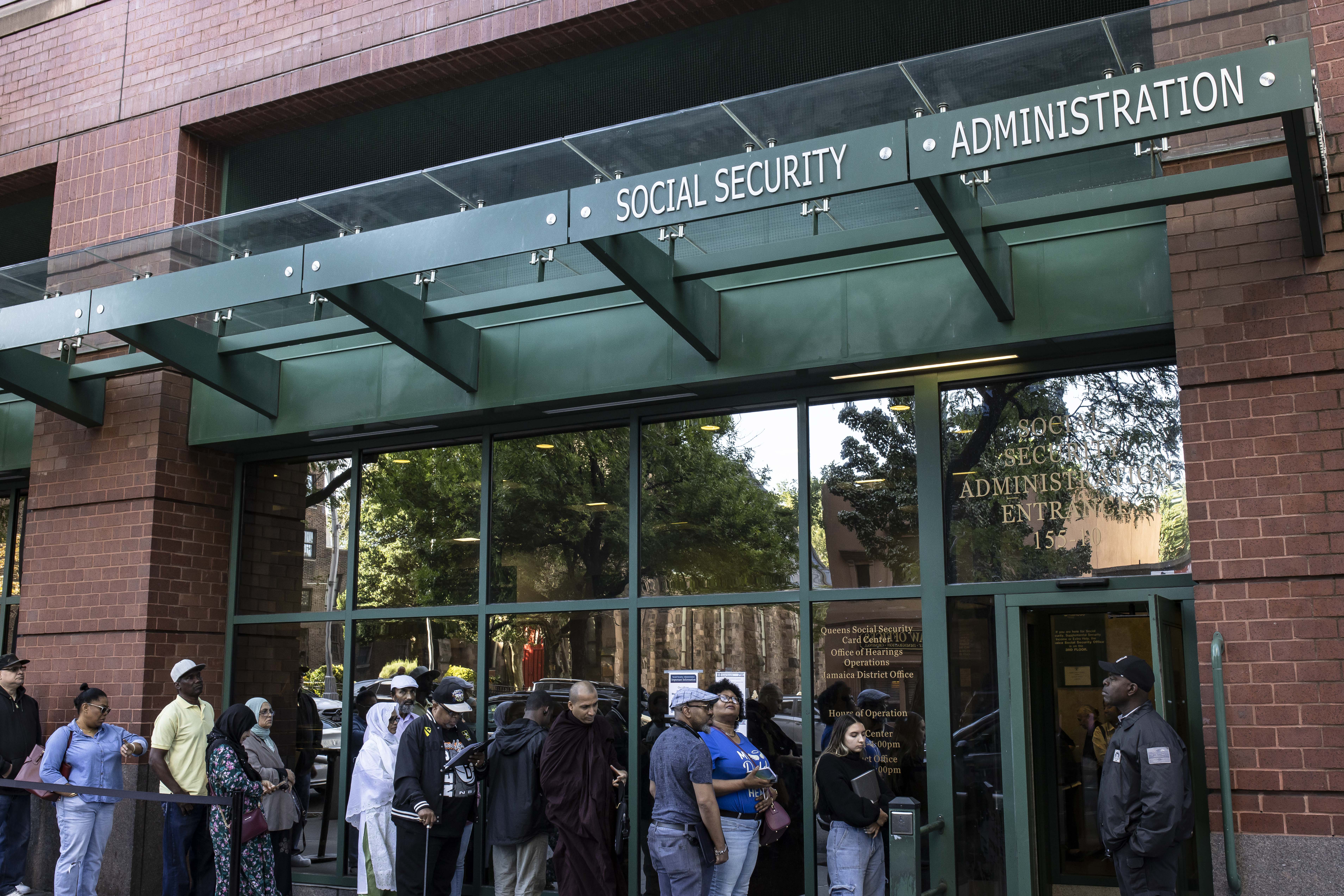
    Retirees and other beneficiaries will receive the largest annual cost-of-living adjustment since 2023 in their Social Security checks next year, driven mainly by persistently high inflation.

    The Social Security Administration announced a 3.6% annual cost-of-living adjustment, or COLA, on Wednesday after the release of government inflation data for September. The COLA is determined using the Consumer Price Index for Urban Wage Earners and Clerical Workers, or CPI-W. The index values for July, August, and September are averaged to produce the official adjustment figure.

    For the average Social Security beneficiary, the COLA will translate to a $75 monthly increase, the government said. However, the actual amount for any retiree enrolled in Medicare will vary. The Part B premium, which covers outpatient care, is usually deducted from Social Security benefits, changing net COLAs. Separately, Social Security said the maximum amount of earnings subject to the Social Security payroll tax would rise to $192,300, up from $184,500 this year.

    The Medicare board of trustees has projected that the monthly Part B premium will rise $6.60 in 2027 to $209.50. The final figure will be released this fall, but if the projection holds, most beneficiaries will receive net COLAs of at least 3%.

    Other Medicare costs are rising, too. Monthly premiums for some prescription drug plans, which are known as Part D, will jump $50 or more next year — although plenty of lower-cost options are available for people who shop the market during the annual enrollment period that begins Thursday. In addition, costs will rise and supplemental benefits will be reduced in private Medicare Advantage plans next year.

    The CPI-W reflects price changes for goods and services that working people buy and use, and it is underweighted for healthcare costs, which have an outsize impact on older Americans. The health spending burden for people enrolled in Medicare is more than twice as large as that of other households, accounting for 14% of total spending in 2024, according to KFF, a healthcare research nonprofit.

    The COLA announcement comes at a time when Americans are feeling less confident that they will have enough money to live comfortably in retirement. An annual survey released this year by the Employee Benefit Research Institute found that 61% of workers were confident they will have enough money to be comfortable in retirement, down from 72% in 2021; retiree confidence fell to 73% from 80% during the same period.

    “For retirees who aren’t confident, inflation and the rising cost of living are overwhelmingly the top reason,” said Craig Copeland, director of wealth benefits research at EBRI.

    The automatic COLA is one of Social Security’s most valuable features, but some advocates have long argued that it isn’t adequate to help seniors cope with inflation — and that the CPI-W should be replaced by a yardstick that does a better job measuring the inflation that affects retirees.

    A new AARP survey found that just 23% of adults over age 50 think a 3.5% COLA keeps up with rising prices. “For most people, the COLA just isn’t enough to keep up with what they see as rising costs in their life,” said Bill Sweeney, AARP’s senior vice president for government affairs. “When they go to the grocery store or fill up their tank with gas or get a notice that their rent is going up, it’s almost always higher than those numbers.”

    Worries about the future of Social Security itself also are eroding confidence.

    Social Security’s trustees projected in June that the retirement trust fund would be exhausted in 2032 — just six years from now. The combined retirement and disability funds are projected to run dry in 2034. Those are likely best-case projections, as key underlying factors have deteriorated over the past year, including lower long-range assumptions about the size of the U.S. population, which were affected by lower projections on the number of children women will have.

    Trust fund exhaustion does not mean Social Security would stop paying benefits altogether, but it would set off an across-the-board cut of about 22% for retirement benefits in 2032, absent congressional action, according to the SSA. The top concern for retirees in this year’s EBRI survey was possible government changes.

    “People are realizing that they’re going to have to make adjustments in their expectations of what the benefits are going to be in the future,” Copeland said.

    The AARP survey found that 46% would cut back on dining out if benefits were reduced 5% — but a nearly equal share, 45%, said they would have to cut back on groceries and basic household items.

    Retirement savings and investments can help plug the gap in meeting living costs, but those savings are available mainly to higher-income people. Among households ages 55 to 64 that have a 401(k) account, the median balance for the lowest fifth in 2022 was just $25,000 — and $220,000 in the third fifth, according to the Center for Retirement Research at Boston College.

    At the same time, poverty rates for the lowest-income households are rising. The Census Bureau reported recently that the rate of poverty for Americans 65 and older rose to 15.4% in 2025 — the highest rate for all age groups, and up sharply from 12% in 2019.

    The Social Security Administration will notify recipients about their new benefit amounts by mail and online starting in early December, and the COLA will be added in January to the benefits of millions of Americans, a group that includes retirees and their spouses and survivors, as well as those who receive disability benefits and Supplemental Security Income.

    Some older people also will receive a separate one-time payment of $90 this month from the government. Characterized by the Trump administration as a Part B “premium rebate,” the payment will be sent by direct deposit or check to 21 million people enrolled in Part B under traditional fee-for-service Medicare. The payments, before the midterm elections, were described by the White House as a “historic action to help senior citizens,” but KFF noted that the 2027 projected Part B premium increase alone would consume most of the $90 — and that less than half of all beneficiaries will get it, since Medicare Advantage enrollees are ineligible.

    “An extra $90 in the bank won’t hurt,” said Juliette Cubanski, vice president and director of the program on Medicare policy at KFF. “But it’s not likely to stretch very far to cover higher costs for everyday essentials like putting food on the table, filling up the gas tank, and paying the utility bill.”

    This article originally appeared in the New York Times.