Category: Wires

  • Aaron Donald ends his 2 1/2-year retirement and returns to the Los Angeles Rams

    Aaron Donald ends his 2 1/2-year retirement and returns to the Los Angeles Rams

    LOS ANGELES — Aaron Donald returned to the Los Angeles Rams on Sunday, ending his retirement after 2 1/2 years to chase another Super Bowl title.

    The 35-year-old Donald made his decision after several weeks of discussion and nearly three months of intensive workouts for a star defensive lineman who reigned atop his position in a Rams uniform from 2014 until his retirement in early 2024.

    Donald joined a light practice at the Rams’ training complex later Sunday, shaking hands and exchanging hugs with Myles Garrett and the rest of his teammates, both old and new.

    While he hasn’t decided whether he will play in the Rams’ season opener against the 49ers in Australia next month, Donald is eager to complete a comeback that seemed improbable only three months ago.

    “Do I feel like I can play at a high level? Yes,” Donald said. “Do I feel like I can still be myself? One hundred percent, and if I didn’t feel like that, I wouldn’t be here.”

    Donald agreed to a one-year contract, and ESPN reported he will make at least $20 million in an incentive-laden deal.

    Donald became one of the greatest defensive players of his era during a decade spent entirely with the Rams in St. Louis and Los Angeles. He won three AP NFL Defensive Player of the Year awards while earning 10 Pro Bowl selections, eight All-Pro selections and a Super Bowl ring before he retired somewhat abruptly following the 2023-24 season.

    After two years of tending to his business interests and enjoying ample family time, Donald began to entertain the notion of a comeback this summer after the Rams traded young lineman Jared Verse in a deal for Garrett, one of Donald’s few peers in contemporary defensive line play.

    “I already thought it was a stacked D-line with Verse … and then you bring a guy like Myles Garrett, a generational talent, and then it’s like, ‘Gosh, that could be fun,’” Donald said with a grin.

    Donald and Garrett have combined to win five of the AP’s past nine Defensive Player of the Year awards, including two of the past three for Garrett with the Cleveland Browns. While Garrett said he wouldn’t attempt to influence Donald’s decision, the two have exchanged numerous text messages while Donald went through the training necessary to become his teammate.

    With MVP Matthew Stafford returning to lead the league’s most productive offense, Los Angeles was already the betting favorite in most sportsbooks to win its second Super Bowl title under coach Sean McVay even before Donald’s comeback. Along with Garrett, Los Angeles added cornerbacks Trent McDuffie and Jaylen Watson from Kansas City to a defense that now looks more equipped to keep pace with the Rams’ offense, which returns every major contributor around Stafford.

    “I think this is a complete team with me here or without me here, so for me to even have the opportunity to be a part of this, to be with this team, I take nothing for granted,” Donald said. “It’s a blessing to be retired from the game for two years and then have the opportunity to come back and be a part of something special.”

    McVay has seemed confident for weeks that Donald was leaning toward a return. Donald said he finalized his decision to return about two weeks ago after being in almost daily contact with McVay for several weeks.

    “He means a lot to me, and it’s way bigger than football,” McVay said. “There’s a lot of history. There’s a lot of experiences that we’ve shared, a lot of love for each other’s families. I’m excited to start this journey.”

    Donald stayed in decent shape during his retirement, and he was pleasantly surprised by the way his body responded to its return to NFL-level training. He also says his famed defensive line technique hasn’t declined.

    “I’ve been in a football mindset for the last 14 weeks,” Donald said. “If anything, it’s just getting back on the grass and knocking the rust off as far as playing football again, 11 on 11. Work on my eyes, getting the feel for the game, certain reaction things that made me who I am. I put myself in the best position the best way I can with training to get to where I’m at now.”

    Donald’s 111 career sacks are the Rams’ franchise record and the second-most in NFL history among linemen who primarily played on the interior. His ability to generate a pass rush between the tackles is the primary basis of his greatness, but Donald also was a run-stuffer whose agility and technique forced defenses to double-team him regularly, freeing up his teammates to excel.

    The decision resets Donald’s eligibility clock for his all-but-automatic induction into the Pro Football Hall of Fame, but he’s much more interested in seizing the strong opportunity to play for a second ring while lining up alongside Garrett and talented young contributors Byron Young, Kobie Turner and Braden Fiske on what should be an opponents’ nightmare of a defensive front.

    Donald joins a significant group of recent NFL stars who have ended retirements and returned to this punishing sport, including Philip Rivers, Jason Witten, Marshawn Lynch, Rob Gronkowski and Eric Weddle, the safety who came back from 2 1/2 years away and joined Donald on the Rams’ short-handed defense for its playoff run to a championship in early 2022.

  • Dozens evacuated from Grand Canyon after flash flood hits creek leading to the Colorado River

    Dozens evacuated from Grand Canyon after flash flood hits creek leading to the Colorado River

    FLAGSTAFF, Ariz. — A major flash flood at the Grand Canyon forced the evacuation of dozens of people and swept large boulders, metal structures and other debris into the Colorado River that runs through it, the National Park Service said.

    The flooding in Bright Angel Creek, which flows into the river, happened Saturday afternoon and has left the park service seeking information about 15 people who may be missing or unaccounted for. Torrents of water wiped out footbridges over the creek and significantly altered the landscape, widening the creek bed and creating what appeared to be a new river rapid.

    As the park service tries to account for everyone in the area, it is asking anyone with details about people hiking or camping there to get in touch. It said it was working with the Arizona Department of Public Safety to continue evacuations Sunday.

    “This is a reminder of what a dynamic and active landscape Grand Canyon is,” said Jack Schmidt, director of the Center for Colorado River Studies at Utah State University.

    Popular tourist spots including the Bright Angel Campground, Phantom Ranch and parts of the North Kaibab trail remained closed on Sunday while park officials surveyed the damage, the park said. Rafting trips on the Colorado River also have been halted for now.

    More than 60 people were evacuated from Phantom Ranch, which has a historic canteen and dorms, and is a common spot for rafters to get off and on the river. More evacuations were planned Sunday, the park said. No injuries have been reported.

    Erica Viola said she was at Bright Angel Campground when the rain started Saturday afternoon, and she and about 50 other hikers watched the creek rise and then debris start to flow by, including what looked like a bunkhouse. The group was taken by helicopter to safety, ending her adventure two days early, she said.

    About half an inch to 1 inch of rain fell within about 30 minutes in the rocky area where there’s a steep drop in elevation, said National Weather Service meteorologist Justin Johndrow in Flagstaff.

    “Most of it ran off instantly,” Johndrow said.

    He said the flooding happened on the north side of the Grand Canyon, where Bright Angel Creek comes from the North Rim down to the Colorado River, dropping around 6,000 feet.

    More rain and thunderstorms were possible for the area into Monday.

  • U.S. forces strike Iranian rocket launchers on the Strait of Hormuz in first military action in weeks

    U.S. forces strike Iranian rocket launchers on the Strait of Hormuz in first military action in weeks

    WASHINGTON — U.S. forces struck Iranian rocket launchers on the Strait of Hormuz in the first military action in a month on Sunday, according to a U.S. official, breaking a lull in fighting during an intermittent war that has lasted more than six months.

    Forces with the Revolutionary Guard Corps were observed preparing to launch rockets with sea mines into the strait, according to the official, who spoke on condition of anonymity to detail sensitive military movements.

    The U.S. military last week completed clearing sea mines from the strait’s international shipping routes.

    Semiofficial news outlets in Iran reported sounds of explosions near Larak island on the strait. The Guard in a statement carried by Iran’s state broadcaster noted “the martyrdom and injury of several of our fighters and compatriots.”

    The statement said the attack will “result in punishment of the aggressor.”

    The fighting comes just days after the Trump administration said it would turn its focus to increasing economic pressure — rather than military action — to try to end its war with Iran. The shifting strategy centers on threats to punish any country or entity that continues to conduct business with Tehran.

    The turn to using sanctions as the cudgel of choice comes as the administration weighs diminished munitions stockpiles after months of war, sparking concerns that the prolonged conflict could undermine U.S. military readiness in other parts of the globe.

    As the conflict grinds on, Trump’s talk of finding a quick end to the war also appears to be fading. He stressed last week that he’s “not in a hurry” to get Iran back to the negotiating table, and he continues making the case that the Islamic Republic’s leadership is on the ropes.

    Trump has consistently emphasized that the U.S. and Israel campaign has been devastating for Iran’s navy and air force. Iranian officials have said the country has suffered $270 billion in direct and indirect damage. Israeli military strikes in the first weeks of the war wiped out much of the theocratic government’s leadership structure.

    But Iran has found leverage through its own strikes in the critical Strait of Hormuz, where relatively few vessels carrying oil and liquefied natural gas are risking passage. Iran still has enough drones and missiles to fire at vessels transiting the vital energy waterway, through which 20% of the world’s oil normally flows, effectively controlling much of the traffic in the strait.

    Trump has repeatedly declared that the “Strait of Hormuz is open,” saying 24 vessels passed through last week. But that’s a fraction of the roughly 130 vessels that passed through the vital waterway daily before the war began.

    Earlier on Sunday, a multinational coalition overseen by the U.S. Navy said commercial traffic through the strait remained at “reduced levels.” And a monitoring agency run by the British military said an unknown projectile struck a tanker ship on Saturday north of Khasab, Oman, in the strait.

    The United Kingdom Maritime Trade Organization said the ship had been moving inbound and no casualties or environmental impact had been reported. It cited unspecified military authorities. There was no immediate claim of responsibility.

  • In one Nepal district, flood catastrophe is measured in bodies and burial trenches

    In one Nepal district, flood catastrophe is measured in bodies and burial trenches

    KATHMANDU, Nepal — The devastating flash floods in the Himalayan region swept so many people downstream that authorities in one Nepalese district have begun burying bodies in temporary graves before they can be identified, prompting accusations that Hindu funeral traditions are being ignored.

    In south-central Nepal’s Chitwan district, the scale of the catastrophe was evident in some 250 bodies awaiting identification and the hastily dug trenches for their temporary burial following Wednesday’s catastrophic floods and mudslides, which killed at least 800 people and left more than 3,000 missing in Nepal and Tibet.

    The bodies were carried hundreds of kilometers downstream by the Bhotekoshi River from the flood’s epicenter before being recovered in Chitwan.

    Authorities carried out a temporary burial of about 100 victims on Saturday, officials said, as forensic teams struggled to cope. A convoy of vehicles carrying bodies entered a lush, forested area as an excavator dug a wide trench in the red earth while officials and media looked on.

    Anil Thapa, a police inspector coordinating the handling of the bodies, said another 50 bodies were having DNA samples taken ahead of their likely burial Sunday.

    Authorities preserve the DNA samples, photograph distinguishing facial features and record other identifying details, Thapa said. The bodies are assigned a reference number to help families claim them later.

    Thapa said many of the bodies had remained submerged in floodwaters for about four days and were already decomposing by the time they were recovered.

    Across the region, homes, vehicles, and farm tractors still lay partially buried in mud.

    Limited forensic infrastructure and inadequate morgue capacity in the district further strained efforts to manage the overwhelming number of bodies recovered from the disaster, officials said.

    High humidity and sweltering heat accelerated decomposition, compounding the challenges as health experts warned that leaving the remains exposed could increase the risk of disease.

    Fresh landslides in the area on Sunday closed the main highway linking the capital city of Kathmandu and Chitwan, a day after it partially reopened, complicating efforts to move bodies and relief supplies.

    As survivors grappled with the aftermath, criticism of the burials mounted. Some residents said the dead had waited days for their last rites and were denied dignity in death. Families still waiting to locate missing relatives and some public figures questioned whether authorities moved too quickly.

    The issue is particularly sensitive in Nepal, a predominantly Hindu nation where the dead are traditionally cremated.

    Ruby Chaudhary, who has two missing relatives, said the burials should not proceed without families’ consent.

    “The dead deserve to be treated with dignity,” she said. “Our tradition is to cremate them on the riverbank, surrounded by their immediate family.”

    A former prime minister, Baburam Bhattarai, said it was inappropriate to dispose of unidentified bodies before search and rescue operations were complete and without broader consultation with families of the missing.

    If morgues were insufficient, authorities could have mobilized emergency resources to set up temporary morgues or secure cold storage facilities, he said in a social media post Saturday night.

    Officials said the burials were a temporary measure necessitated by health concerns and limited capacity.

    “People are worried that this could be a permanent burial, but it is only temporary management,” Thapa said. “If someone is able to verify the identity later using the available information, they can take back the body and perform the appropriate funeral rites.”

    Amrit Bahadur Rai, Nepal’s foreign secretary, said the temporary burial of unidentified bodies was carried out in line with internationally accepted disaster-management protocols, including those of the International Committee of the Red Cross.

    “Families can match records later, and will be allowed to exhume (the remains later) for necessary rituals,” Rai said at a news briefing in Kathmandu.

  • Azriel Blackman, airline mechanic for 80 years, dies at 100

    Azriel Blackman, airline mechanic for 80 years, dies at 100

    Azriel Blackman’s love of aviation did not lead him into daring adventures in the air but into ensuring that aircraft were sound to fly.

    For 80 years, he was a plane mechanic working mostly at American Airlines — a record-breaking career in which he wielded wrenches, screwdrivers, and other tools like bucking bars on everything from Sikorsky flying boats built in the 1930s to modern jets like the Boeing 747.

    “He could do anything with his hands, and he was infatuated with the workings of an aircraft,” his son, Mitchell, said in an interview. “It captivated him.”

    In 2012, on Mr. Blackman’s 70th anniversary at American, the airline commissioned a mural of him at the maintenance hangar where he worked at John F. Kennedy International Airport in New York. It depicts him at the center, wearing his yellow vest, surrounded by four airplanes from his past and present.

    In 2017, his 75th anniversary was commemorated by Guinness World Records, which cited him for having the longest career as an airline mechanic. That same year, American dedicated a Boeing 777-200 in his name.

    “Every day, the job is different,” Mr. Blackman, a maintenance crew chief since 1960, told the New York Times in 2017. “You’re not doing the same thing repetitively, and that’s good. If, in my journey around the hangar I see something I can help on, I do that.”

    Mr. Blackman, who was known as Al or Blackie, died July 24 at a nursing home in Queens. He was 100.

    Four years ago, his son said, Mr. Blackman fell at work, broke two vertebrae in his neck and suffered a traumatic brain injury. Spinal cord damage led to a loss of mobility.

    Azriel Blackman was born in Manhattan on Aug. 30, 1925, and grew up in Brooklyn. His father, Aaron, a tailor, was from Russia, and his mother, Mary (Goldberg) Blackman, who managed the home, was from Poland.

    In 1942, Mr. Blackman graduated from Aviation High School, which was then in Manhattan and is now in Long Island City. He was 16 when he was hired as an apprentice in the sheet-metal shop at American Export Airlines (which was later acquired by American Airlines) at New York Municipal Airport — LaGuardia Field (now LaGuardia Airport). His skills in the shop enabled him, for the rest of his career, to mold parts needed to fix aircraft.

    The first aircraft he worked on was the amphibious Sikorsky flying boat. He serviced more than a dozen kinds of planes over the next eight decades, including the Douglas DC-3, the Convair CV-240, the Lockheed Constellation, the Boeing 377, and the McDonnell Douglas MD-80.

    After enlisting in the Army, he served in the Korean War, repairing helicopters for Mobile Army Surgical Hospitals. Following his discharge in 1952, he returned to American at LaGuardia, then moved as a crew chief to New York International Airport, better known as Idlewild Airport, in 1960, three years before it was renamed for President John F. Kennedy.

    “Behind-the-scenes aircraft mechanics, when they succeed, you don’t hear about them, because they’re not glamour jobs,” said Gary Santos, a mechanic who started working at American in 1988. “To have a career as long as his is just mind-boggling.”

    Mr. Blackman’s love of airplanes continued in volunteer work on his days off, like helping to restore aircraft for an ongoing project at Floyd Bennett Field in Brooklyn and a Sikorsky flying boat at the New England Air Museum in Windsor Locks, Conn., near Hartford.

    By 2017, Mr. Blackman’s age led to restrictions on his ability to perform some physical tasks that might injure him, and he was supervised by a crew co-chief. At first, he objected to the limitations but eventually accepted them.

    Even though Mr. Blackman’s job had become more paperwork than mechanical, his experience remained important to American.

    “He represents a valuable institutional memory that says, ‘This is how we do it at American,’” Robert L. Crandall, the president of American from 1980 to 1998, said at Mr. Blackman’s 75th anniversary ceremony. “He’s the guy who sits with the new kids at lunch and passes it on.”

    Wayne Hanna, an aircraft maintenance technician whose father was Mr. Blackman’s crew chief in the 1950s, said that, for the past few years, a group of mechanics visited Mr. Blackman at his home to celebrate his birthday, including his 100th last year.

    “He was older than American Airlines,” he said in an interview. The company has been celebrating its 100th anniversary this year, noting the first flight of Robertson Aircraft, one of the dozens of small airlines that combined in 1930 to form American Airways; it became American Airlines in 1934.

    In addition to his son, Mr. Blackman is survived by a granddaughter. His daughter, Adrienne Larrain, died in March. His wife, Dolores (Cooperstein) Blackman, whom he married in 1954, died in 2011.

    In 2012, American honored Mr. Blackman’s tenure by flying him around New York City in a restored, propeller-driven DC-3, part of the airline’s fleet that carried passengers between the mid-1930s and the late 1940s. He sat in the cockpit as it flew along the Hudson River, over Central Park, and past the former site of Aviation High.

    “He was taken aback by all of that,” his son said. “He didn’t really know how to accept praise of that magnitude. In his mind, he didn’t feel he had done anything extraordinary. He loved going to work. He considered the people he worked with family, and it was enjoyment to him. That was his real reward.”

    This article originally appeared in the New York Times.

  • These Democrats used to be Republicans — and hope that will help them win midterms

    These Democrats used to be Republicans — and hope that will help them win midterms

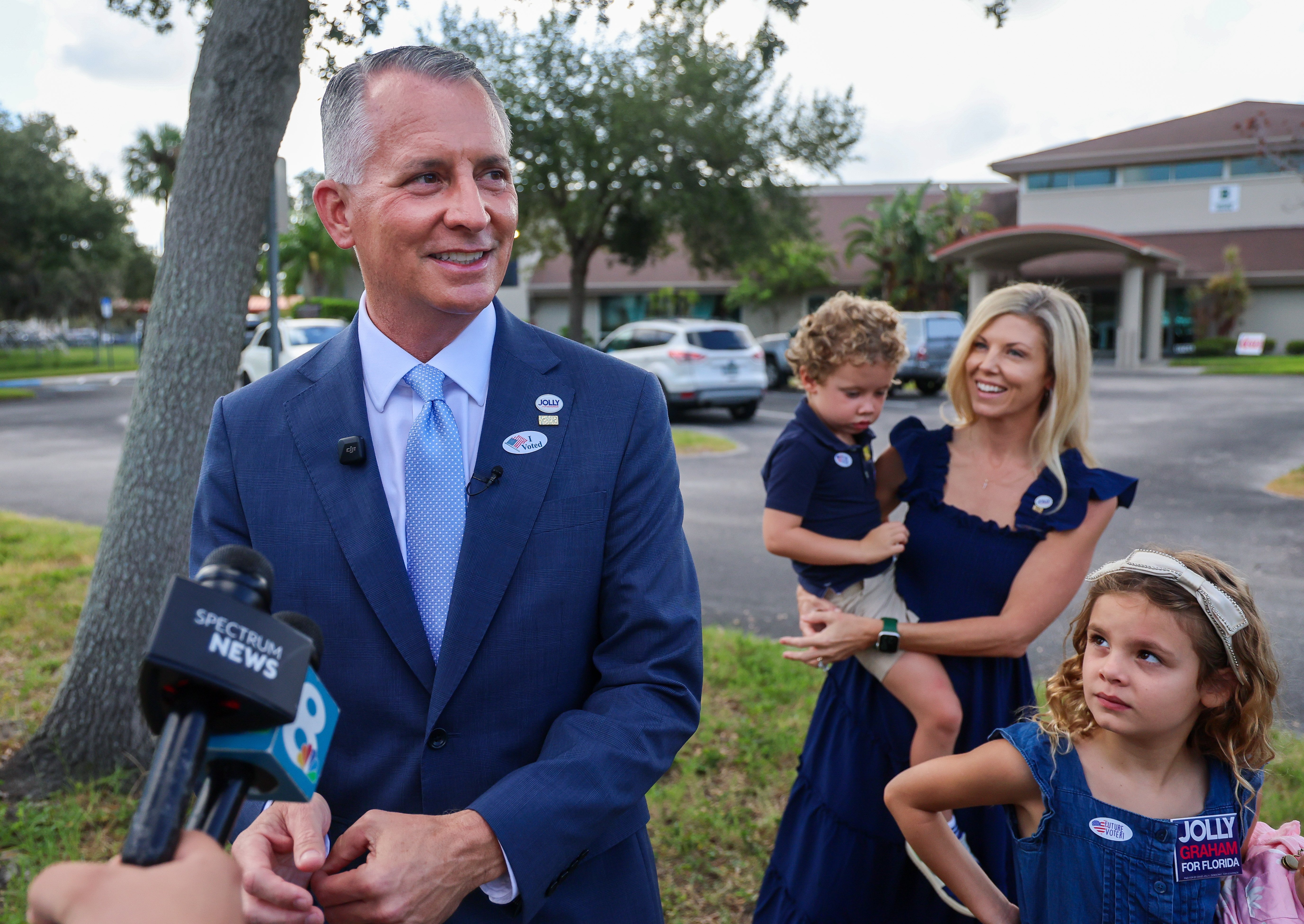
    Democrats have struggled to win over Republican voters in recent elections. This year, some Democratic candidates argue they can change that — because they were once Republicans.

    These party switchers say that they have unique insight into the concerns of voters distrustful of party politics, as well as those who feel they have no real home in either party, and that this knowledge will give them an edge in the upcoming midterm elections.

    “It is a big tent, right?” said Nancy Lacore, who is looking to flip Rep. Nancy Mace’s (R) seat in South Carolina and who left the GOP for the Democrats a decade ago. “There is room … in there for everybody.”

    There are at least three Democratic House candidates running in this year’s general election who are former registered Republicans. While the phenomenon isn’t new, in a midterm year where President Donald Trump’s popularity is slipping among some Republican and independent voters, it is indicative of what polling suggests is broader dissatisfaction with partisan politics.

    In past cycles, party switchers sometimes have struggled in general elections. But Democrats hope that Lacore and other ex-Republicans such as former TV anchor Janelle Stelson in Pennsylvania and Navy helicopter pilot Rebecca Bennett in New Jersey can help their party win in districts where the odds are against them — and perhaps, in the case of Florida gubernatorial candidate David Jolly, manage to find a way to take a statewide seat that has eluded them for decades.

    Part of the hope is that these party-switching candidates can reach Republicans who, like they did, have soured on Trump.

    Lacore, who left the GOP in 2016, said she constantly runs into voters at Democratic events who go up to her and say, “I [am] a former Republican, too.”

    “I’m really glad that I’ve got those folks on my side because that’s who we need going forward,” she said, noting that she wants to show fatigued Republicans that they have a place in the Democratic Party.

    Though Trump’s support has slipped during his second term, 81% of Republicans still support him, and his GOP support has fallen by only seven percentage points since the beginning of his second term, according to polls taken by the Washington Post. The party-switching candidates acknowledge that they probably will not be able to swing any elections by attracting only disaffected Republicans.

    Jolly, for instance, said there is a large pool of Republican voters who are not available to him — about 31% of the state, by his estimate, that makes up the hardened MAGA crowd. Because of that, part of his strategy, he said, is to focus on independents who are “just fatigued with Trump.”

    A growing number of Americans identify as independents; a January Gallup poll found that a record-high 45% of U.S. voters called themselves independents in 2025. Most of them said they lean more toward the Democratic Party than the GOP — 20% Democratic leaders to 15% Republican leaders. According to Gallup, independents’ approval of Trump collapsed, causing them to align with Democrats. And that’s something the party-switching candidates hope to capitalize on.

    “They say, ‘OK, let me look at Jolly,’ and they kick the tires of this former Republican who says: ‘Look, I think the private sector should lead. Economic growth is good. I think we should stay out of your bedroom,’” he said. “And they start to say, ‘Maybe I could work with this guy.’”

    In Florida, voters who aren’t registered with either party split 39% for Rep. Byron Donalds, the Republican gubernatorial candidate, and 38% for Jolly, according to a July poll from the University of North Florida, conducted before this month’s primary.

    Democrats also aren’t completely in love with their party right now. And that has some candidates emphasizing their fidelity to the United States rather than their politics.

    Bennett, the Navy helicopter pilot running in New Jersey against Republican Rep. Tom Kean Jr., expressed frustration with the hyperpartisan environment in Congress, arguing that partisanship has led only to a higher cost of living for Americans, including in her district.

    “I led missions in some of the most challenging environments on earth,” Bennett said of her 15 years in the military. “We served not as Democrats or Republicans, but as Americans who were there to serve our nation and get the mission done.”

    Similarly, Lacore, who served 35 years in the Navy and is running in a district with a lot of military personnel, is convinced that voters will look beyond party labels and see her as “somebody who understands what our military should be and where we need to get it back to.”

    Many of the party switchers face tough races in traditionally GOP-held areas. And while all won their primaries, several other former Republicans (including prominent ones such as Republican lieutenant governor Geoff Duncan in Georgia and longtime conservative lawyer George Conway in New York) lost theirs.

    Some strategists point to those losses as evidence that former Republicans running as Democrats may struggle to win both longtime Democratic voters and disaffected Republicans in a general election.

    Jason Roe, a Republican strategist who has never supported Trump but remains in the GOP, said party-switching candidates generally face an uphill battle because partisan voters have a hard time accepting that someone “can just switch parties and embody the DNA of that party.”

    Historically, party switchers have seen mixed results, with their success largely depending on whether their home states or districts underwent partisan realignment ahead of their change in affiliation. In the postwar era, for example, Southern Democrats such as Strom Thurmond (S.C.) and Richard C. Shelby (Ala.) found success after joining the Republican Party because their states shifted to the right.

    In more contemporary history, however, party switchers have encountered skepticism from their new party’s base over their conversion, as in the cases of Reps. Michael Forbes in 2000 and Parker Griffith in 2010, who lost their new parties’ primaries.

    Republican-turned-Democrat Charlie Crist, of Florida, was able to win House races under his new party banner but lost statewide races, unable to convince enough Democrats that he was one of them or enough Republicans to see themselves in him.

    Asked about Crist, Jolly brushed aside any parallels between them, arguing that Crist’s 2022 gubernatorial loss happened during a hyperpartisan moment in which Gov. Ron DeSantis’s (R) hold on the state was impenetrable.

    “This is not an ideological, partisan cycle,” Jolly said about this year’s gubernatorial race. “This is a change cycle.”

    Political strategists, however, have argued that only very specific types of party flippers succeed: those who are able to convince voters that they’ve fully embraced their new party’s outlook.

    “I think it takes a special kind of former Republican to be able to pull it off in a Democratic primary,” said Eric Stern, a Democratic strategist. “That’s true on the other side of the aisle, too.”

    Stern worked on the campaign of Bob Brooks, a firefighter who ran against former federal prosecutor Ryan Crosswell in the Democratic primary in Pennsylvania’s 7th District. Crosswell left the Republican Party in 2024, shortly before leaving the Justice Department. While Brooks ultimately beat Crosswell, Stern said he hopes “there are more Republicans out there who see the light.”

    “I would be skeptical of them, and I think it is incumbent on Democratic primary voters to view them with skepticism,” he said. “But I also would absolutely encourage them to come on over — the water’s warm.”

    Roe, the GOP strategist, predicted that the party switchers will not find a “warm embrace” from Democratic general elections voters because, in his view, “ever embracing Republicans is a character flaw” in the eyes of many Democrats.

    “[The] difference between the two parties today versus 20 years ago is just so stark,” Roe said. “Just not liking Trump is not enough.”

  • Russian strikes on food warehouses pose threat of shortages in Ukraine

    Russian strikes on food warehouses pose threat of shortages in Ukraine

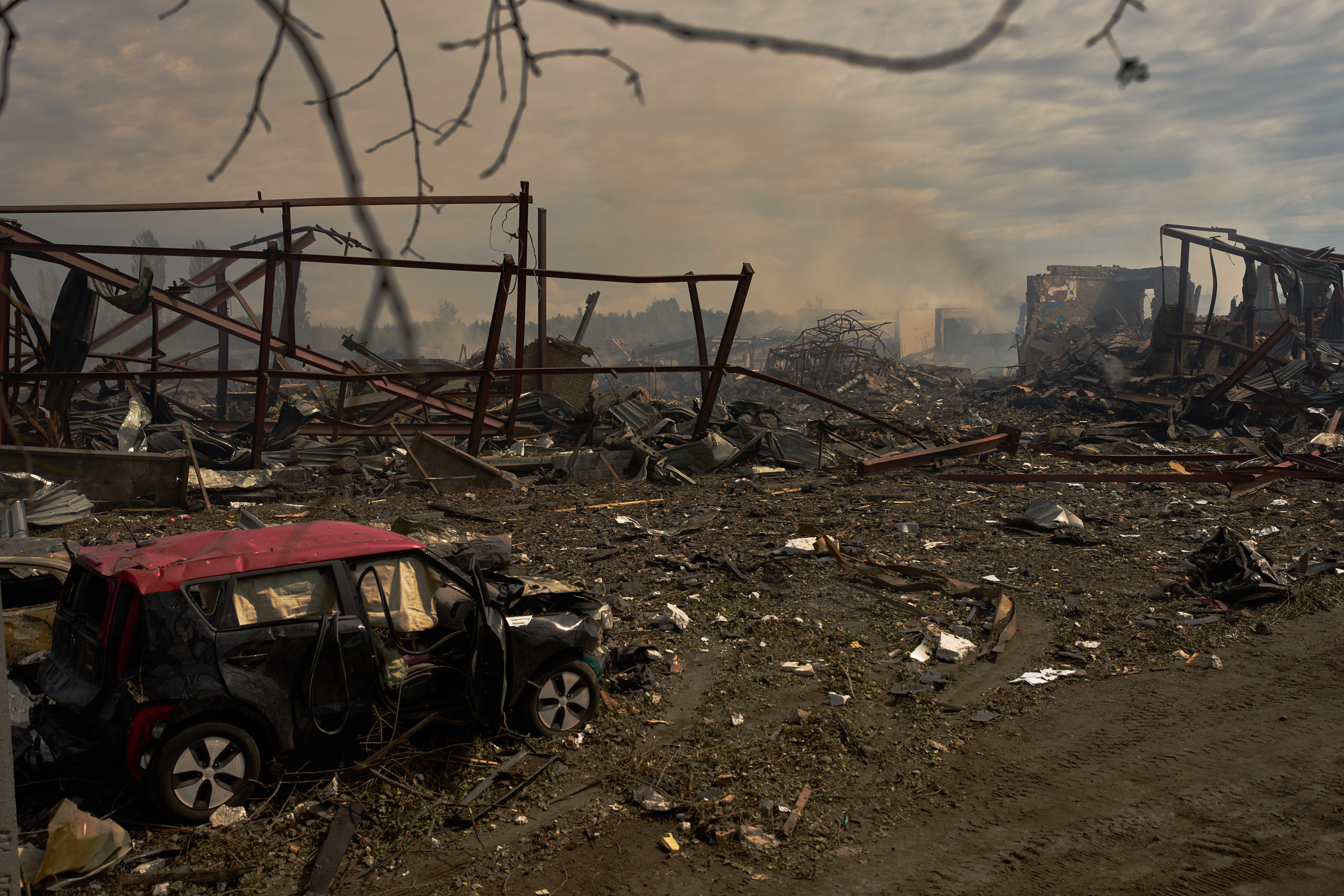
    Russian airstrikes on civilian targets have destroyed shopping centers and food distribution warehouses across Ukraine, raising the specter of food shortages and price hikes as supermarkets in Kyiv and other cities struggle to keep their shelves stocked.

    Moscow shifted tactics this month to focus on civilian targets, including shopping malls, after Ukrainian drones destroyed major e-commerce warehouses in Russia.

    Russia initially bombed two distribution centers for Silpo, a major Ukrainian supermarket chain, and a main logistics center in Kyiv for Novus, another grocery and convenience store operator.

    Shelves emptied of fresh produce, as well as dairy products including sour cream, yogurt, and cheese.

    A wave of attacks in recent days has battered Kyiv and the surrounding region, hitting more warehouses and raising questions about how long retailers can keep stores stocked.

    Some stores filled the empty space with kombucha and other surplus products, trying to minimize the sense of scarcity. The government, seeking to avoid public panic, has not issued any alerts.

    The supermarkets, however, have warned customers of temporary disruptions. Silpo, for example, said: “Some goods will take longer to be delivered.”

    “As of today, roughly speaking, 90% of food logistics operated by retail chains have been destroyed, but that doesn’t mean Ukrainians will be left without food,” the country’s agriculture minister, Taras Vysotskyi, told the Ukrinform news agency on Friday.

    “There will be no threat of famine or a systemic physical shortage of food,” Vysotskyi said.

    After 4½ years of full-scale war and a brutal winter that often left whole neighborhoods without heat or electricity, some Ukrainians were taking the food shortages in stride.

    “I’m not worried because, first of all, it’s summer and we can buy whatever we need at farmers markets,” said Tata Verbetska, 39, a Kyiv resident. “Also, it’s not like everything is gone. In one supermarket, you’ll find one thing, at another supermarket, you’ll find something else you need. You just need to shop around more.”

    Verbetska said items produced locally that typically aren’t warehoused, like bread and meat, were still available, while conserved foods and grains were in short supply. “There is almost no beer to be found,” she said.

    On Friday evening, a Russian drone hit an ammunition depot in Myla, a village in the Bucha district west of the capital, triggering a massive explosion that killed 38 people in the surrounding residential area.

    Explosions continued through the night and well into Saturday as more than 300 emergency workers tried to contain the disaster.

    President Volodymyr Zelensky said Sunday that four people were still missing and at least 20 were injured.

    About 130 houses were damaged, and a section of a nearby highway was closed as emergency crews searched for unexploded ordnance and struggled to extinguish fires that continued to burn nearby.

    The Myla strike raised renewed concerns about ammunition depots and other military infrastructure being situated close to residential areas. Zelensky called that “unacceptable” and promised accountability for those responsible.

    In early July, Russian forces similarly carried out a massive attack on the Kyiv region and hit an ammunition depot in Vyshneve, southwest of the capital, killing nine people.

    More than 500 civilians were evacuated because of the risk of further detonations. And on Aug. 21, a Russian attack on military infrastructure in Kryvyi Rih killed 16 civilians and injured 130 others.

    Following the Myla strike, the Defense Ministry ordered an audit of ammunition and weapons storage facilities, but the military’s general staff also sought to remind the public that Russia was primarily to blame.

    In recent days, Russian strikes have repeatedly hit large shopping malls and other retail centers across Ukraine, including three Epicentr K big-box stores in the Zaporizhzhia region.

    Similar stores in Sumy and Kryvyi Rih have been hit, as well, raising concerns that Russia is increasingly targeting large retail centers and their logistics networks to frighten and exhaust the civilian population.

  • World mostly shrugs off Bessent’s ‘D-Day’ Iran sanctions threat

    World mostly shrugs off Bessent’s ‘D-Day’ Iran sanctions threat

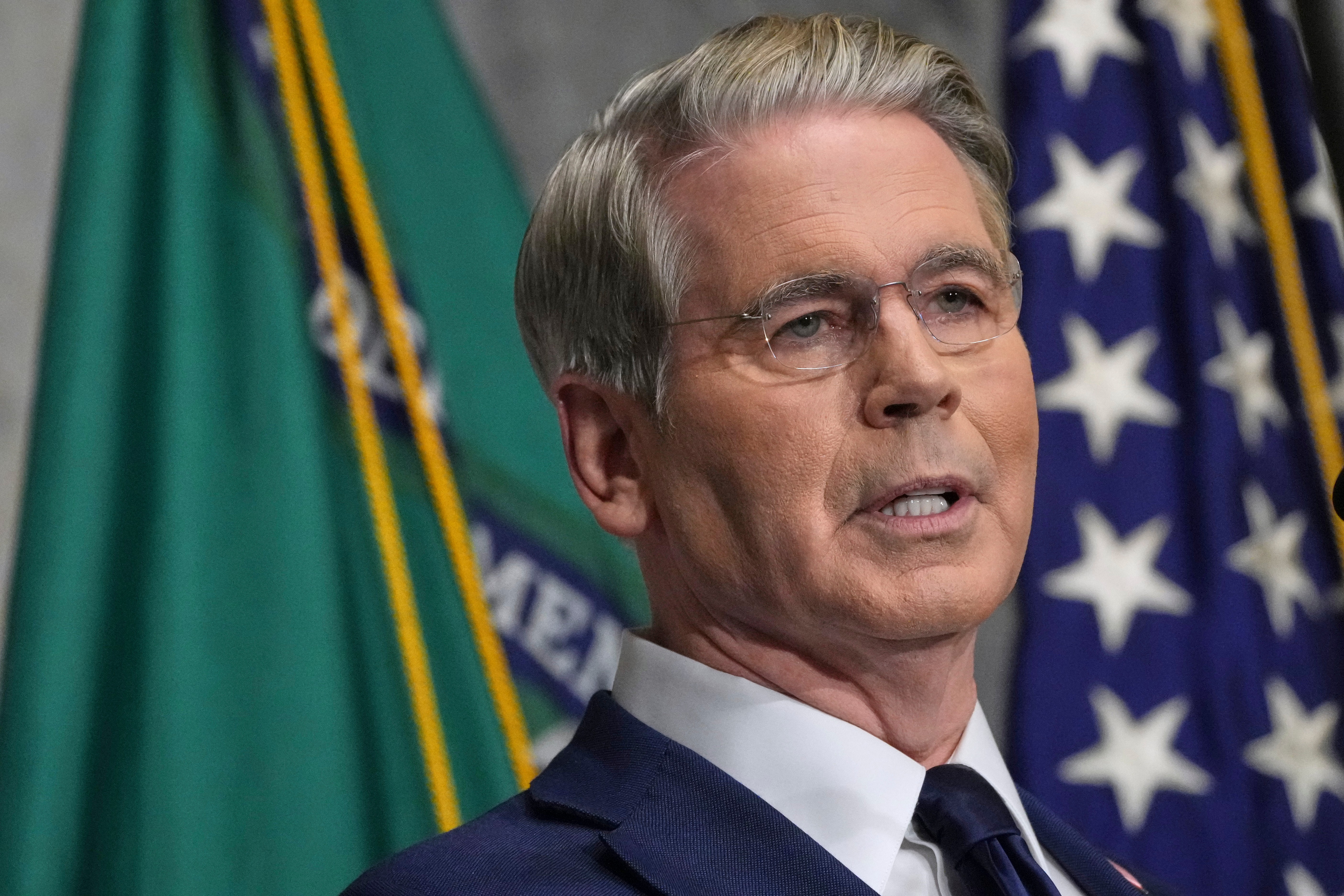
    Treasury Secretary Scott Bessent began the week vowing an “economic onslaught” against Iran and its trading partners in a fresh bid to end the war. By the week’s end, countries with ties to Tehran had so far shrugged off the threat and analysts were left underwhelmed by the U.S. actions.

    China, which buys 90% of Iran’s oil, issued a defiant warning to Washington rather than back down. Iranian bank branches remained open in Dubai. At one Bank Melli branch in Abu Dhabi, staff were busy typing away and one employee explained that they were still open for business.

    Commercial flights also continued between Iran and Turkey as well as Iran and the United Arab Emirates, which had promised last week to sever all trade and financial transactions with Tehran. Routes flying to Thailand and Azerbaijan, as well as multiple destinations in both Russia and China, remained unaffected.

    As the week came to a close, the U.S. announced plans to sanction the UAE-based branches of Egypt’s Banque Misr. That fell well below expectations after Bessent’s warning that the world would see “a major announcement of a financial institution being sanctioned by the end of this week.”

    “As the war passes the six-month mark, the public actions taken by the Treasury Department this week do not match the hype,” said Alex Zerden, a former U.S. Treasury official and founder of Capitol Peak Strategies.

    “Operation Economic Outcast is a continuation of 47 years of restrictive economic measures against Iran but does not provide a clearer theory of economic or military victory in this current campaign,” Zerden said.

    The Treasury Department didn’t respond to a request for comment on Friday.

    Bessent’s threats — and the collective global shrug so far — underscore the Trump administration’s main conundrum as it seeks to sanction Iran into meeting its demands. Any effective sanctions campaign would need to hit China, a move that risks sparking retaliation and potentially massive global economic fallout. Anything less would add to Iran’s economic pain but not enough to budge its strategic calculus.

    U.S. credibility is also at stake. Bessent repeatedly compared the U.S. response to the historic 1944 D-Day landings in Normandy, France — a coordinated land and air invasion aimed at toppling the Nazi regime. But the U.S. acted unilaterally with its latest move, pressuring other countries rather than working with them, and Bessent openly acknowledged that going too fast and too hard risked tanking the global financial system.

    Further muddying the picture, Bessent also said the U.S. was engaged in “quiet diplomacy” to get its way. U.S. officials turned to counterparts in the U.K. asking for a statement of support, according to people familiar with the matter.

    The Treasury chief was also expected to speak with fellow finance ministers this weekend at a Group of 20 gathering in Asheville, N.C. One of the biggest questions attendees will likely have for Bessent is whether the US is willing to hit a Chinese financial institution, according to Josh Lipsky, chairperson of international economics at the Atlantic Council.

    The UAE, a key U.S. strategic ally, said earlier this month it would cut financial ties with Iran. But some flight and banking links with Tehran appear to continue, and the UAE’s government described its move in a statement to Bloomberg News as a “sovereign decision reflecting its strategic assessment of the national interest and the requirements of regional security.”

    Asked on Thursday which countries the U.S. had approached so far, President Donald Trump responded, “About Iran? There’s not a lot to speak to. We don’t want to speak to them. We’re not looking to meet or anything.”

    “You can’t unleash meaningful economic warfare on Iran while ignoring the one country that absorbs 90% of its oil exports,” said Leland Miller, the CEO of China Beige Book data platform and a commissioner on the U.S.-China Economic and Security Review Commission, which advises the U.S. Congress.

    In the meantime, the U.S. appears no closer to ending the war that Trump launched alongside Israel in late February. Iran has endured decades of harsh sanctions and has recently faced a full U.S. Navy blockade of its ports that has dried up oil exports.

    Officials in nations that have traditionally had strong economic links with Iran have not heard much from the U.S. this week. Turkey has not received any formal guidance from the U.S. on the restrictions and how they apply to Iran, according to people familiar with the matter. But they believe they’ll have adequate time to discuss and implement requirements once they are informed, they said.

    The response from Pakistan indicated that even countries with close ties to the US are feeling little immediate pressure from the new campaign, at least so far.

    While Islamabad has won praise from Trump for its mediation efforts to end the war, there was no indication that its overland trade with the Islamic Republic — such as in rice and mangoes — had slowed down. Pakistan’s Foreign Ministry spokesperson Tahir Andrabi told reporters this week that the country “is not obliged” to respond to unilateral sanctions.

    “The idea Iran can be knocked out with this is risible — it’s not going to move the needle,” said Stephen Fallon, principal adviser at DBM Consulting. “It’s not possible to get a completely airtight seal on this thing. There are too many actors, and it’s too rewarding for the people involved.”

  • ‘A new form of U.S. colonialism’: Venezuelans bristle at Trump oil takeover

    ‘A new form of U.S. colonialism’: Venezuelans bristle at Trump oil takeover

    BOGOTÁ, Colombia — Many Venezuelans suspected that there was going to be a price to pay for President Donald Trump’s brazen capture of their autocratic leader, Nicolás Maduro, who was arrested by U.S. forces in January.

    On Friday, that cost became clear when Trump announced that the U.S. would be taking majority control of a vast part of Venezuela’s oil reserves — national resources long considered by many in the country to be a birthright.

    By Saturday, many Venezuelans were grappling with whether they were willing to pay that price. So far, the U.S. ouster of the autocrat has done little to change the country — Maduro’s successor, Delcy Rodríguez, remains in power, while millions of everyday Venezuelans remain in poverty, electricity blackouts continue to plague the nation, and no date has been set for an election.

    The new deal could bring major investment. But many Venezuelans want overall economic and political change. The accord guarantees neither and could deepen the relationship between Trump and Rodríguez, further entrenching her in power.

    In Valencia, about two hours from the capital of Caracas, José Leal, 68, a retired educator, said the $100 billion in promised U.S. investment sounded small compared to the 65 billion barrels Venezuela was giving up. But after decades under a repressive government, he was willing to put up with this deal — and hope that Trump would push for democratic change.

    “Obviously, the United States comes out ahead, enormously so,” he said. But “the Americans hold the power,” he said, and without them “we won’t manage to break free from the socialism of Chávez and Maduro. Without them, we’ll remain trapped like Cuba, China, or North Korea.”

    “It’s not that I love it or even like it,” he said of the deal. “I consider it a necessary evil. If we manage to escape this entire disaster — which we’ve endured for 27 years and the Cubans for 68 — if we manage to get out of this mess, then even though I don’t like it, it will be worth it.”

    Others were not so optimistic. The Venezuelan government has a long history of doling out beneficial contracts to the wealthy and connected, known inside the country as “enfuchados” — people who are “plugged in” — while everyday Venezuelans suffer. Trump’s announcement on Friday included no mention of a democratic transition.

    A meme began circulating in the region almost as soon as the deal was announced. “I want you to get rid of Chavismo,” says a cartoon Venezuelan man, referring to Maduro’s movement, “and leave us our oil.”

    A cartoon Trump responds: “Take the oil and leave you with Chavismo, got it!”

    Venezuela, home to some of the largest oil reserves in the world, nationalized those resources in the 1970s. Sovereign control over wells then became a core pillar of the ideology of the socialist government founded by former President Hugo Chávez.

    Rodríguez’s decision to turn over much of that oil to the U.S. government represented an astounding about-face, one that few Venezuelans could have imagined before the January attack.

    That turnaround was evident in a statement released by Rodríguez’s Socialist Party on Saturday, which said that “true to its historic commitment to national sovereignty,” the party was extending its full support for the deal and the decisions made by “Comrade Delcy Rodríguez.”

    The irony of this was not lost on many Venezuelans. A government that once proudly thumbed its nose at Washington was now handing over the resources at the center of its identity.

    Another meme circulating in Venezuela changed the logo of the national oil company, PDVSA, to PDUSA.

    On social platform X, Rafael Ramírez, a Chávez loyalist and former head of PDVSA now living in exile, accused Rodríguez of “opening the doors to a new form of US colonialism.”

    In Maracaibo, a Venezuelan city that anchors much of the country’s oil industry, Dario Nava, 67, a former PDVSA manager, said he opposed the deal and did not believe it would improve his life.

    “The United States is going to manage our oil industry,” he said, “and sovereignty is lost there.”

    In Caracas, Carlos Arenas, 24, a university student, said that he might be willing to cede some control of Venezuelan oil for economic improvement.

    “If there were an economic benefit for the country that eventually translated into a better quality of life for Venezuelans, then yes, I would be willing,” he said. “But that doesn’t seem to be the case here — at least not initially.”

    “Unfortunately, it doesn’t look like there will be a political change in Venezuela anytime soon,” he added. “Trump seems very comfortable with Delcy.”

    Venezuela’s leading opposition figure, María Corina Machado, has in the past floated the idea of privatizing the oil sector. For years the idea was mocked by Rodríguez’s party. And it was so controversial that Machado did not make it a core part of her platform in a 2024 presidential election.

    On Saturday, a prominent supporter of Machado, Walter Molina, said on X, “Venezuelans always knew that our freedom would come at a cost.”

    “If that price is 65 billion barrels over the course of decades, so be it,” he said. “But let it be just that: the price of our freedom. Not the price we pay to keep a criminal tyranny in de facto power — only now kneeling before the United States.”

    This article originally appeared in the New York Times.

  • Military leaders warn Hegseth against extending Iran war operations

    Military leaders warn Hegseth against extending Iran war operations

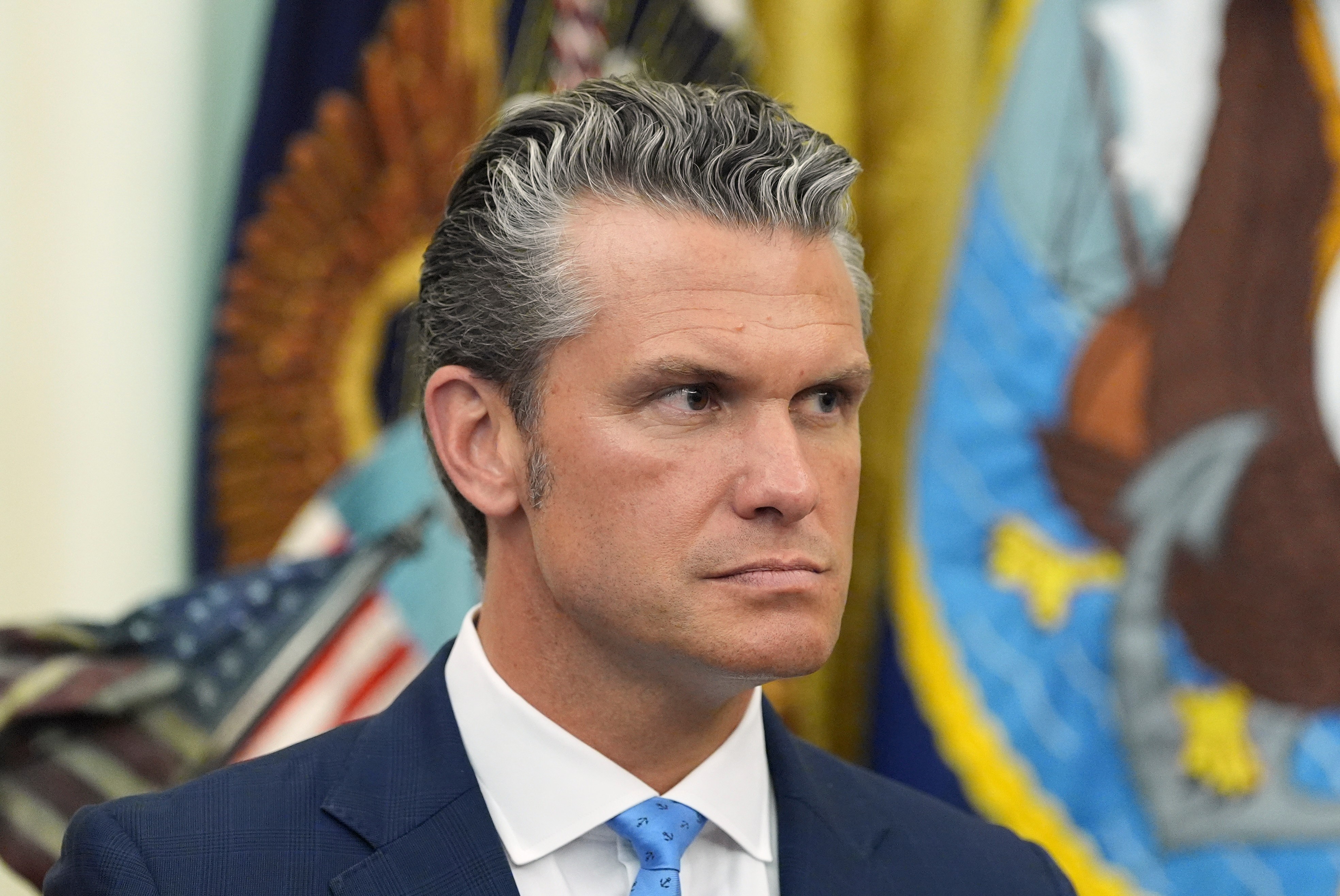
    Several U.S. military leaders have advised Defense Secretary Pete Hegseth that prolonging large-scale operations against Iran is unsustainable and risks weakening their ability to confront threats elsewhere, including the U.S. homeland, according to people familiar with a recent assessment prepared for the Pentagon chief.

    The warnings — detailed for Hegseth by the heads of the Army, Navy, and Air Force and the four-star commanders overseeing U.S. operations throughout Europe, Asia, and Latin America — appear in the Aug. 14 edition of the Secretary of Defense Orders Book (SDOB), these people said. They described the assessment to the Washington Post on the condition of anonymity because the document is classified.

    The SDOB, typically produced twice monthly, outlines the worldwide availability of U.S. warships, aircraft, personnel, and weapons systems. It reflects the president’s priorities for the force, which are carried out by the defense secretary, and includes insights from the military’s top generals and admirals that inform the directives the Pentagon issues.

    As President Donald Trump has pressured Tehran to reopen the Strait of Hormuz and accept several U.S. provisions for ending the stalemated conflict, he has been adamant that all options remain available to him — including further military action. Consequently, U.S. Central Command, the headquarters responsible for prosecuting the Iran war, has kept a force of more than 50,000 troops on alert for months in case the president orders additional attacks.

    The Aug. 14 orders book directs some troops deployed in the Middle East to remain there through September and some others into 2027, said those familiar with the document. The prospect of extending those forces further compelled military leaders to voice their concern, these people said.

    Leaders of the U.S. European Command, the U.S. Pacific Command, and the U.S. Southern Command, along with the Navy’s top admiral, responded with what is characterized in the SDOB as a “non-concur,” those familiar with the assessment said — meaning they disagree with the secretary’s order to extend their forces but will execute it nevertheless.

    The geographic combatant commands overseeing U.S. operations in Europe, Asia, and Latin America have had their ships, aircraft, and other equipment pulled away to support the Iran conflict. This has limited their ability to conduct missions and ensure proper training, those familiar with the assessment said. The Navy, in particular, has had to stretch its capacity to keep up with wartime demands.

    Army and Air Force leadership concurred with Hegseth’s desire to extend their deployed forces, but each emphasized that doing so would come with significant risk, these people said.

    Overall, the tenor from the military leadership is that the ongoing Iran operation, having reached the six-month mark, has been “too much for too long,” said one person familiar with the assessment.

    The military’s warning to Hegseth, which has not been previously reported, offers new insight into the administration’s dilemma as Trump seeks to end the conflict on terms favorable to the United States while Iran, cognizant of the war’s unpopularity with most Americans and its mounting toll on the U.S. arsenal, refuses to capitulate.

    “Decisions regarding the scope and duration of specific force commitments to any Combatant Command are made based on the current threat assessment, strategic priorities established by the President, and the advice of the Chairman of the Joint Chiefs of Staff and Combatant Commanders,” Sean Parnell, a spokesperson for Hegseth, said in a statement to the Post.

    The Pentagon “does not discuss internal operational processes,” including the Secretary of Defense Orders Book, “or specific concurrences, non-concurrences, or risk assessments provided by the Services or Combatant Commands during force allocation deliberations,” he added.

    The Secretary of Defense Orders Book also is reviewed by Gen. Dan Caine, chairman of the Joint Chiefs of Staff. A spokesperson for the chairman declined to comment and referred questions to Hegseth’s office.

    The orders book is one avenue for senior military leaders to surface resource concerns and provide Hegseth with assessments on how gaining or losing assets will impact their objectives.

    It’s common for commanders to discuss risk, said the one person familiar with the recent assessment. But the outlook now is “more dire” overall, this person explained, adding that certain generals and admirals were more expansive and frank than is usual in telling Hegseth they disagreed with orders to keep providing equipment and personnel when the operation’s trajectory remains uncertain.

    The top military officials at European Command and Southern Command each cautioned Hegseth that lending their ships and surveillance aircraft to Central Command has degraded their ability to fulfill homeland-defense obligations, said those familiar with the assessment.

    Adm. Samuel Paparo, the chief of Pacific Command, disagreed with the level of support he was ordered to continually provide, including an aircraft carrier strike group and naval destroyers, those familiar with the assessment said.

    A spokesperson for European Command declined to comment. Spokespeople for Southern Command and Pacific Command did not respond to requests for comment.

    Adm. Daryl Caudle, the chief of Naval Operations, provided Hegseth with the dimmest picture, saying in the SDOB that the Navy cannot sustain its current level of support for the Iran conflict because there is no anticipated end date, those familiar with the assessment said.

    The Navy has shouldered an extraordinary burden. It has been asked to supply dozens of vessels for the Iran campaign — first to take part in the U.S. assault and defend against Iranian counterattacks and, for several months since, to enforce Trump’s blockade of Iranian ports as he attempts to force open the Strait of Hormuz. Deployments for some vessels and crews have been extended by months.

    Caudle conveyed to Hegseth that barely one-fourth of the Navy’s destroyer fleet is ready to deploy, a sharp decline from prewar levels, said those familiar with the assessment.

    More broadly, the document says that the impact on ship maintenance, if demands imposed by the Iran operation continue unchanged, jeopardizes the fleet’s availability should other conflicts arise, people familiar with the assessment said.

    A spokesperson for Caudle did not respond to a request for comment.

    At a recent event in Norfolk, he talked about the deployment extensions, calling them “very challenging for our sailors.”

    “I typically am not a big fan of extensions, and I push back hard on that, but the enemy gets a vote,” Caudle said, according to a transcript of his remarks provided by the Navy.

    Although Army and Air Force leadership concurred with Hegseth’s current path for the Iran conflict, they conceded the challenges it has imposed, said those familiar with the assessment.

    Elements of the Army’s 82nd Airborne Division, which in March mobilized 2,000 soldiers in response to the Iran war, will see their deployment extended to a year, Maj. Gen. Brandon R. Tegtmeier, the division commander, said in a letter dated Sunday.

    The letter to the division community, reviewed by the Post, acknowledges the difficulty of the unknowns throughout the mobilization and that leaders “understand that a longer tour weighs heavily on every household, including our own.”

    Those troops would be central to any ground invasion of Iran.

    Deployments for units operating the Army’s Patriot air defense systems, which shoot down missiles and drones targeting U.S. bases, also are expected to be extended, said those familiar with the assessment.

    A spokesperson for the Army did not respond to a request for comment.

    The depletion of Patriot interceptors — as a result of the Iran war and previous donations to Ukraine — has limited the Trump administration’s ability to re-escalate the war, as Tehran retains the ability to successfully target U.S. facilities throughout the Middle East.

    As the Post and others have reported previously, the Iran war also has drained U.S. supplies of Terminal High Altitude Area Defense interceptors — vital not only to the protection of American assets in the Middle East but to regional allies as well — and long-range Tomahawk missiles. About 25% of the Pentagon’s Reaper drone fleet has been lost, and U.S. bases there have sustained billions of dollars in damage.

    The Trump administration has maintained that reports of munitions shortages are inaccurate.

    Many of the Air Force units sent to the Middle East to conduct bombing runs and other around-the-clock operations also are slated to stay in the region into 2027, those familiar with the assessment said.

    The Air Force declined to comment, citing the classification of the orders book.

    A spokesperson for Central Command declined to comment and referred questions to Hegseth’s office.

    The recent “non-concurs” from some uniformed leaders mark the latest warning from military leaders about the war.

    As the Post and others reported previously, Caine advised the White House before hostilities began that the U.S. lacked sufficient munitions — and support from allies — to conduct an extended large-scale campaign.

    More recently, Gen. Alexus Grynkewich, the head of European Command, privately warned the Pentagon that he lacked adequate naval forces to shield Israel and the U.S. homeland from missile attacks, as the Post reported this month.

    In the Pacific, key U.S. allies have raised alarm that the Pentagon’s depletion of missiles and air defense interceptors leaves them vulnerable to China. The Navy’s only dedicated aircraft carrier in the Pacific, a linchpin of the military’s plan to deter Beijing, was sent to the Middle East to relieve another carrier that has been deployed for more than 300 days.