Category: Wires

  • Judge issues new block on Trump’s sweeping restrictions on mail-in voting

    Judge issues new block on Trump’s sweeping restrictions on mail-in voting

    A federal judge in Massachusetts on Thursday once again blocked major pieces of the Trump administration’s plan to impose sweeping restrictions on mail-in voting for November’s elections, but the legal fight will continue.

    U.S. District Judge Indira Talwani issued a temporary restraining order halting parts of the effort that would bar the U.S. Postal Service from delivering mail-in ballots to voters not on a list of citizens created by federal agencies. It also requires mail-in ballot envelopes to have bar codes to thwart fraud.

    The judge’s move continues a week of intense legal action over the controversial executive order on mail-in voting issued by President Donald Trump. It is the subject of multiple legal challenges.

    Trump has claimed voting by noncitizens is rampant, while court records and independent studies have found it to be rare.

    Talwani said it would be impossible for many states to issue new envelopes for voting by mail, since some are supposed to send out ballots as early as next week. She also said the Trump administration had presented no evidence that noncitizen voting is a major issue.

    The League of Women Voters and other voting rights groups are challenging the administration’s initiative, saying the measure could inject chaos into pivotal races that will decide control of the House and Senate.

    Talwani echoed those concerns.

    “The USPS’s interest in correcting an unsubstantiated problem through likely unconstitutional means is dwarfed by the overwhelming risk of pervasive disenfranchisement of citizens who need access to mail ballots in order to vote,” Talwani wrote.

    The Associated Press reported that the White House plans to appeal the order.

    Spokesperson Lauren Bis said in statement Friday that the Trump administration will immediately appeal the order handed down late Thursday.

    In a separate challenge to the executive order brought by 23 states and the District of Columbia, the Supreme Court on Monday found the plaintiffs’ lawsuit was premature because the U.S. Postal Service had yet to issue final rules for how the order would be carried out.

    After those rules were finalized Wednesday, the states and D.C. filed a new lawsuit challenging the executive order.

    The injunction Talwani issued Thursday marked the second time she has blocked the executive order in the case brought by the voting rights groups. She lifted the earlier injunction after finding the Supreme Court’s logic applied to that case as well, but allowed the plaintiffs to ask for a new block.

    Ultimately, the issue could end up before the Supreme Court again, but even if the administration prevails it’s unclear whether there is enough time to implement the changes before November.

    Many states will begin sending out mail-in ballots by mid-September, and election administrators have said it would be exceedingly difficult to comply with the executive order in time for the fall contests since preparations have been going on for months.

  • Rescuers retrieve flood survivors caked in mud as death toll in Nepal-China border disaster climbs

    Rescuers retrieve flood survivors caked in mud as death toll in Nepal-China border disaster climbs

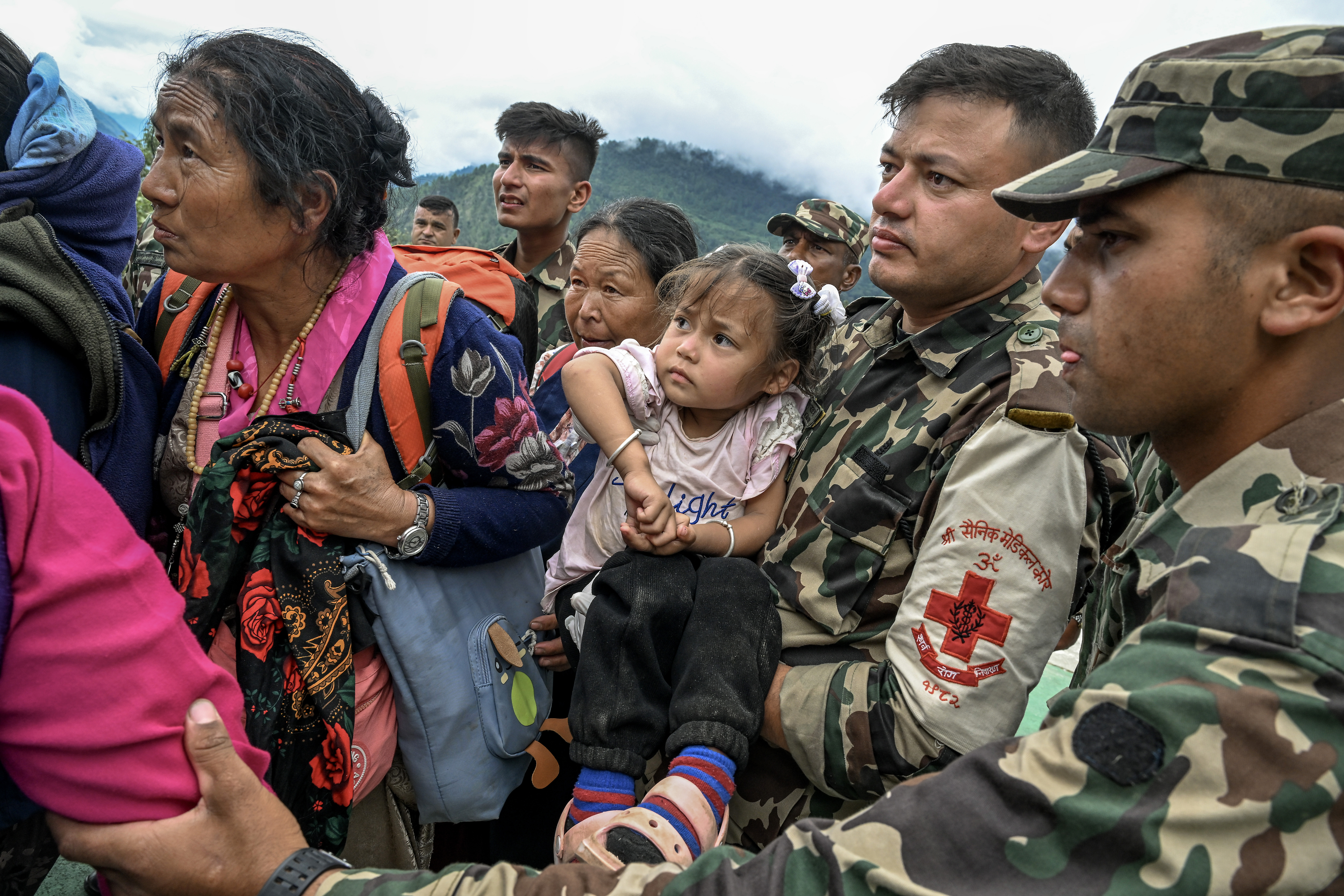
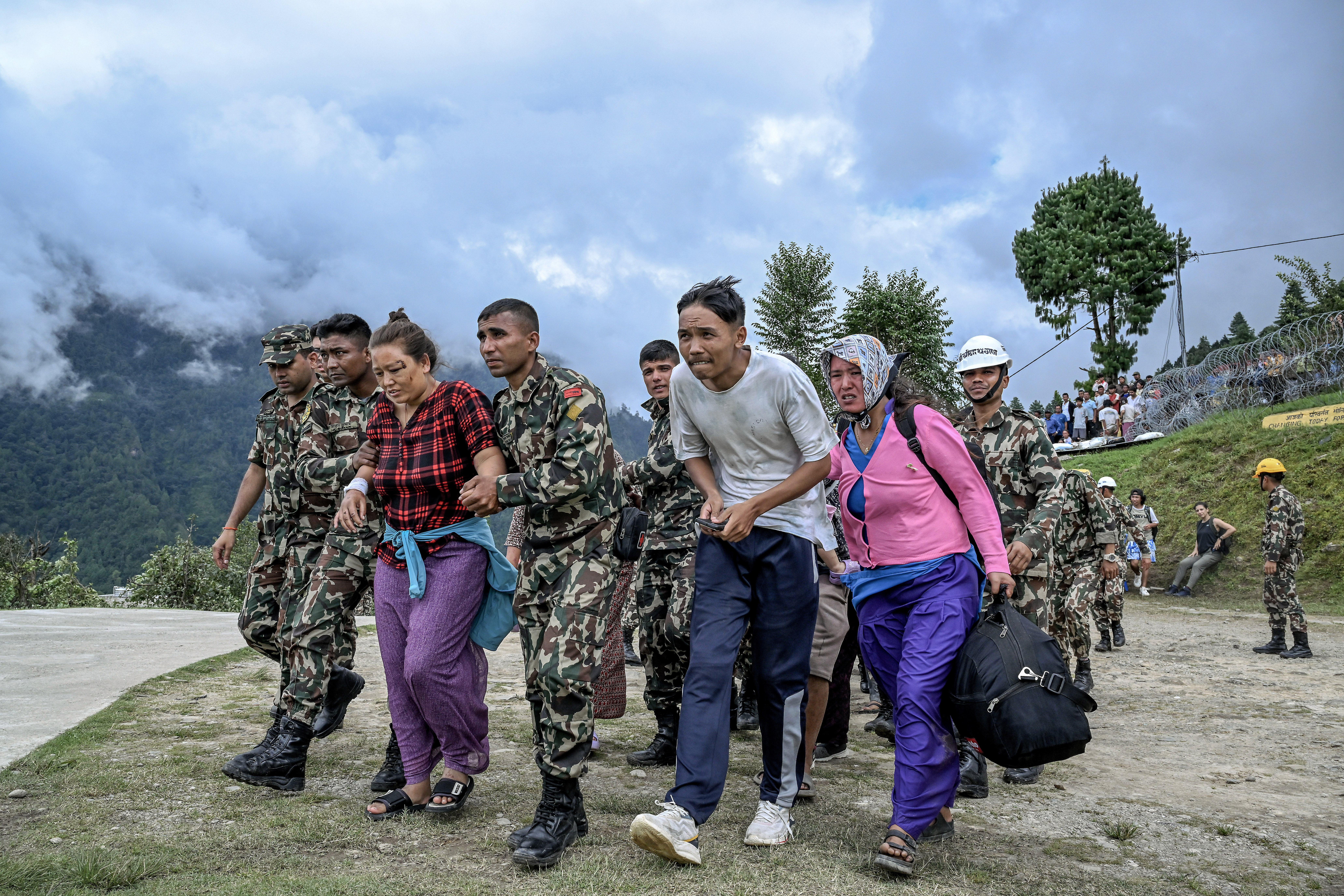
    KATHMANDU, Nepal — Rescuers pulled out survivors caked in dark brown mud and helicopters lifted stranded people to safety, as Nepal and China raced to respond to catastrophic flash floods that killed nearly 600 people and left almost 2,500 missing.

    The rescue efforts included a team that rappelled into a severely damaged checkpoint area on the Chinese side of the border between the two countries. Rescuers were on high alert for more flooding from a new lake that formed high up in the Himalayan mountains after the initial floods Wednesday. Experts warned that the lake, created after a glacier collapse that triggered the floods, was starting to overflow.

    Nepal’s army was deployed to help rescue more than 100 people believed trapped inside a tunnel at a hydropower plant located in the country’s worst-hit district. Like elsewhere in the disaster zone, their work was complicated by thick layers of mud that covered the site.

    The rappelling rescue team descended into the once-bustling border-crossing area from wooded mountain slopes, the state broadcaster China Central Television said.

    “As far as I can see, it’s nothing but debris,” rescue official Zou Mingqi told state media. The area where travelers went through border control to enter or leave China has been flattened to a muddy area, according to satellite images.

    The floods have killed 579 in Nepal, the country’s disaster-management authority said Friday. Nepali police later put the number of deaths at 553. There was little information on survivors on the Chinese side, where the death toll rose to five Friday as state media showed evacuations of villages and leaders’ efforts to direct the relief response.

    More than 3,700 people have been rescued in Nepal so far. Meanwhile, the number of people who were unaccounted for in the country nearly doubled to 1,924 as more local residents were added to the tally. China’s state media previously said 558 people were missing on the Chinese side. Hundreds of the missing are foreigners in the area to work, trek, or make a pilgrimage to a sacred peak.

    Authorities warn of flooding from a new lake

    Nepali police issued a fresh alert Friday after receiving information that a dam on the Tibet side had burst. Security personnel and rescue and relief workers were told to stay on high alert and move to a safe location if necessary.

    It was unclear if the dam bursting was related to flooding concerns over the lake that formed after the initial flash floods. Chinese broadcaster CCTV said the newly formed lake, located more than 6 miles from Gyirong Port, the hard-hit border crossing with Nepal, sits at an elevation of 9,680 feet.

    Nepali and Chinese authorities earlier warned of more flooding from the lake, which was already overflowing. Rescue workers heading to the disaster zone were ordered to stop temporarily Friday due to concern the lake would release more water and debris, and people in potentially affected areas were urged to move to safer ground.

    Monitoring data from the Chinese Ministry of Water Resources later showed that the lake had dwindled in size. The water level dropped by 32 feet from the high point on Thursday morning, the state broadcaster said.

    Some 680 rescuers eventually reached the Gyirong area by foot and via rafts. Some were dropped down from drones flown to the area, CCTV footage showed. “Anyone, anyone?” rescuers yelled, according to footage by the broadcaster.

    It was not immediately known how many people were at the border checkpoint building when the floods hit.

    Thousands have been evacuated while others await rescue

    In Nepal’s Rasuwa district, Nepali army rescuers struggled to help more than 100 people believed to be trapped by thick mud in a tunnel that’s part of the Upper Trishuli-1 Hydropower Project. The army said it had rescued 350 people from the tunnel so far.

    Video from the scene showed rescuers helping a man covered in mud out of the tunnel by pulling and pushing.

    “It is complicated to find the entry and exit points of the tunnel because everything has been covered by mud,” Army spokesperson Brig. Gen. Raja Ram Basnet said.

    Nepal’s disaster-management authority said 3,253 people had been airlifted by helicopter from the disaster area.

    The search-and-rescue efforts have been supported by an outpouring of financial support from neighboring countries, including small, poorer countries like Sri Lanka, said Kanni Wignaraja, the United Nations development agency’s regional director for Asia and the Pacific.

    “Sri Lanka has its own huge fiscal problems, but it has just sent $1 million immediately to the Nepal government,” Wignaraja said. “So you can see that while this devastation is happening, it has also really brought together countries in that neighborhood, who have stepped in for each other.”

    Some felt the ground shake, then saw a ‘black storm’

    Scientists who studied satellite images said bedrock underneath a glacier high in the Himalayan region had collapsed, taking part of the glacier with it. The rockfall was so extreme that it registered as magnitude 5.2. The rocks and melted water then swelled the rivers in the valleys below, causing a torrent of water that swept buildings, bridges, and earth downstream in Tibet and Nepal.

    Customs officer Karbir Gaire was among some of the survivors in Timure, the closest Nepalese village to the border with China, where some 1,500 people had lived.

    Gaire reached his office around 8 a.m. Wednesday and was working on his computer when he first felt the ground shake.

    “Right after the shake, I noticed a black storm coming towards us,” he recalled from Kathmandu, where he is back with family. “We all immediately started running out, and within a few seconds, we were climbing uphill on the opposite side of our office building. I think those 10 or so seconds saved some of us.”

    Fifteen of Gaire’s colleagues are missing. “It was like a Hollywood movie scene. I don’t call it a flood. It was a tsunami.”

    Families around the world hope for news of loved ones

    Nepal’s tourism board has said that among the missing are more than 500 foreigners.

    While the Nepal government shared a public list of people they rescued, there was little information about victims on the Chinese side of the border.

    Chinese government officials stuck to their tight media controls. Information about major disasters is typically released with a delay and without personal stories of victims. State media has focused on stories of rescuers working to reach the disaster site or reporting on instructions from top leaders.

    About 90 Americans were unaccounted for.

    Some of the missing may have been on a pilgrimage to Mount Kailash in Tibet, a sacred site for Hindus, Buddhists, and others.

    Vishnuram Ramaswamy, who works at a private company in the southern Indian city of Puducherry, said that he last spoke to his mother and two sisters who were on that pilgrimage Wednesday morning. It was a highly anticipated trip, something his mother had always wanted to do, he said.

    “My mother said they were on their way towards the border area and said they’ll reach their hotel and call us,” he said. He’s in touch with government officials and the travel agency, but there’s been no news.

    “This was the last we spoke to them. They have been unreachable since.”

  • Norway’s King Harald V, who fled Nazis as a child and modernized monarchy, dies at 89

    Norway’s King Harald V, who fled Nazis as a child and modernized monarchy, dies at 89

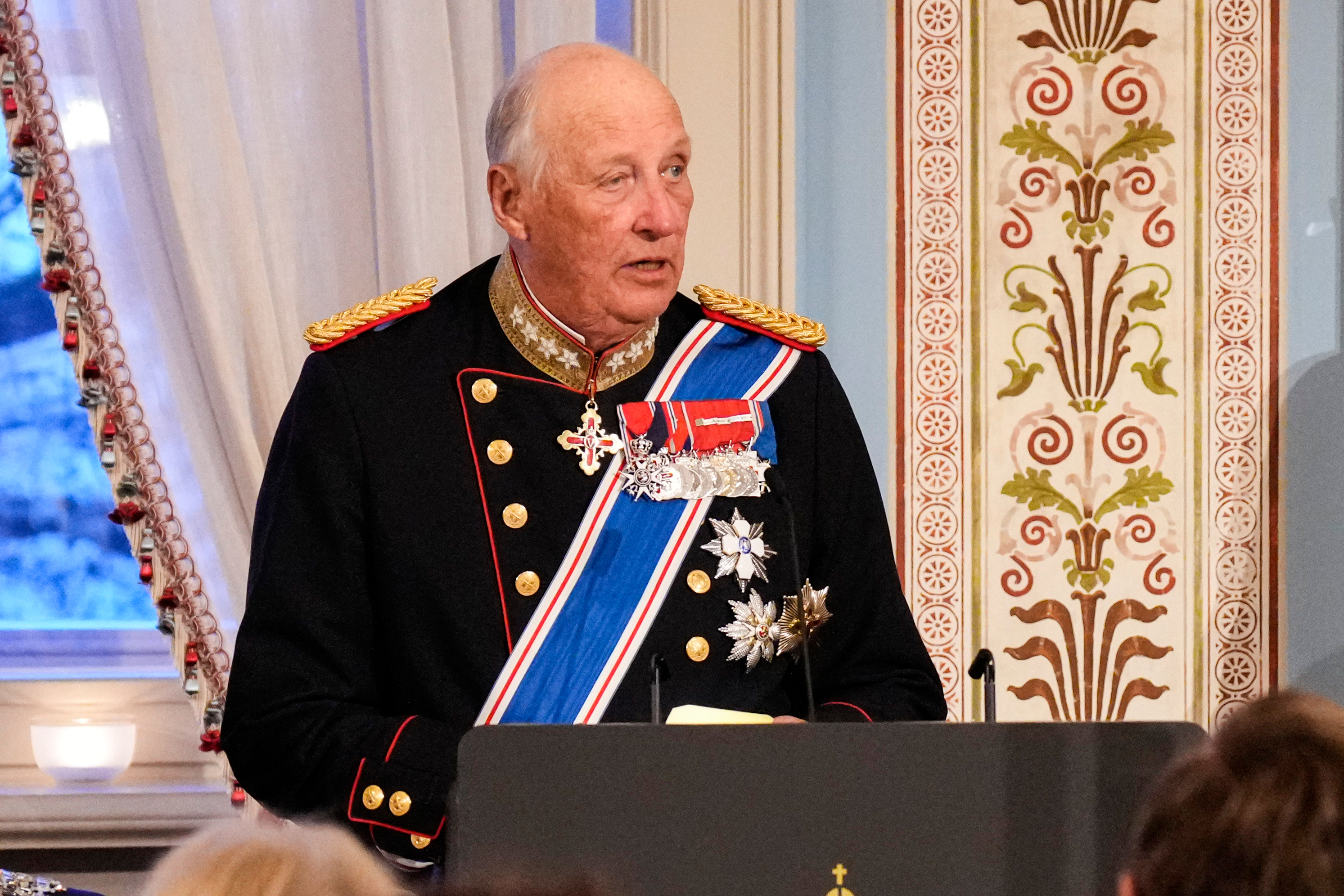
    Norway’s King Harald V, who fled Adolf Hitler’s invasion with his family to take refuge in the White House as a boy, and who later helped modernize the country’s monarchy during his popular 35-year reign, died Friday at a hospital in Oslo. He was 89.

    His death was announced by Norway’s royal family, which did not cite a cause.

    Norway’s Prime Minister Jonas Gahr Store said the “whole nation is in mourning” in a statement Friday, adding that King Harald had “helped us to see the best in ourselves — and in one another.”

    “King Harald had a profound love for Norway. And Norway had a profound love for King Harald,” he said. Other ruling families from across Europe including the United Kingdom, Denmark, Sweden, and the Netherlands shared tributes, alongside political leaders.

    The Norwegian ruler was spirited to safety as a child while war gripped Europe. He spent his formative years in the United States before returning home at age 8, furnished with an American accent and a memory of standing behind President Franklin D. Roosevelt at his inauguration.

    As an adult, King Harald defied tradition by marrying commoner Sonja Haraldsen in 1968. Their marriage shocked the establishment and sparked warnings of the monarchy’s downfall but proved to be one of several ways he charted his own course as ruler. The couple were married more than five decades.

    The avid sportsman and nature lover represented his country in sailing at three Olympic Games — Tokyo in 1964, Mexico City in 1968, and in Munich 1972 — before finally declaring an end to his competitive days in 2022, at age 85. He led the Norwegian chapter of the World Wide Fund for Nature (WWF) for 20 years and is the first king to have a portion of the Arctic named after him.

    As leader of Norway’s constitutional monarchy, King Harald had a largely ceremonial role. But he endeared himself to the country of 5.6 million with his emotional openness and support of diversity and religious tolerance. He sought to modernize the monarchy and make it more transparent, engaging in media interviews and publishing annual financial reports.

    In 1997, King Harald publicly apologized to the Arctic Sami people for government efforts to eradicate their culture over more than two centuries. In the aftermath of the 2011 massacre in which far-right extremist Anders Behring Breivik killed 77 people in a bombing and shooting rampage, he drew praise for a speech in which he struggled to contain his emotions while trying to console the nation. During the speech, he reiterated his belief in a strong, multicultural society.

    In 2016, he went viral for his passionate speech at a royal palace garden party in support of diversity, religious tolerance, and LGBTQ rights.

    “Norwegians are enthusiastic young people — and wise old people. Norwegians are single, divorced, families with children, and old married couples. Norwegians are girls who love girls, boys who love boys, and girls and boys who love each other. Norwegians believe in God, Allah, the Universe, and nothing,” he said at the time.

    “In other words,” he added, “Norway is you.”

    King Harald V was born Feb. 21, 1937, at Skaugum, outside Oslo, the first Norwegian-born prince in 567 years, after the country’s earlier union with Denmark and Sweden. His grandfather, King Haakon VII, became Norway’s sovereign in 1905, establishing a new independent monarchy. The family are relatives of Britain’s royals, and King Harald and Queen Elizabeth II were second cousins.

    He was the third child of Crown Prince Olav and Crown Princess Märtha, who already had two daughters. But at the time, only male heirs could inherit the throne, ensuring his place in the line of succession. (This was amended in 1990 so that the eldest child takes precedence, regardless of gender.)

    His peaceful early childhood was shattered when German troops invaded the country in April 1940. As members of the government and royal family sought to escape the capital by train, Princess Märtha fled to Sweden with her three children and sailed on to the United States at Roosevelt’s invitation.

    In the U.S., they stayed at the White House and at Roosevelt’s home in Hyde Park, N.Y., while King Harald’s father and grandfather escaped to London to set up a government in exile. Princess Märtha and the children eventually settled in a Tudor-style mansion north of Bethesda, Md.

    King Harald would speak of his time in the U.S. fondly, saying in a 1999 speech to President Bill Clinton that he clearly remembered “standing right behind President Roosevelt when he was sworn in.” Images show the Norwegian royal children standing on the White House steps at the time.

    In 2015, King Harald said in a speech in Seattle that he was “deeply grateful for the generosity and hospitality we felt throughout those five years in the United States.”

    “Your country has had a special place in my heart ever since,” he added.

    Upon returning home in 1945, King Harald attended school in Oslo before training at a military academy and studying at the University of Oxford in Britain.

    When Haakon died in September 1957, he became Crown Prince, working alongside his father, King Olav V, before ascending to the throne after his father’s death in 1991.

    Survivors include Queen Sonja; two children, Princess Märtha Louise and Crown Prince Haakon, who will succeed him as king; an elder sister, Princess Astrid; and two grandchildren.

    While initially controversial, King Harald and Sonja’s love story endeared them to the Norwegian public. In 2016, the couple shared unseen photos of their courtship with Norway’s national broadcaster, NRK, describing how they met in 1959, when Crown Prince Harald was 22, and quickly fell in love.

    Though filled with guilt over expectations he would marry a member of European nobility, King Harald said attempts to end their romance amid disapproval from the establishment and Norwegian press were not “entirely successful.” He ended up delivering his father an ultimatum: If he could not marry Sonja, he would remain unmarried. Olav relented, and the couple married at Oslo Cathedral.

    Crown Prince Haakon’s decision to marry a former server and single mother in 2001 would also draw controversy. King Harald supported their relationship, and the fairy-tale wedding drew thousands of flag-waving well-wishers.

    The royal family has faced controversy this year, with Crown Princess Mette-Marit under scrutiny for her friendship with the late sex offender Jeffrey Epstein. Files released as part of a U.S. Justice Department investigation revealed more than 100 messages between Mette-Marit and the disgraced financier. Mette-Marit also came under the spotlight this summer after her eldest son, Marius, was convicted of rape and sentenced to four years in prison. King Harald said he had sympathy for “all those affected” by the trial, and declined to comment on his daughter-in-law’s ties to Epstein.

    Being a sovereign, he once said, was a “lifelong learning period.” But he said he believed the monarchy is in good hands with his son. In 2024, he announced a permanent reduction in duties, citing health issues, but ruled out abdicating as monarch, saying the oath he swore “lasts for life.

    “It’s that simple for me. We’re going to keep going until the bitter end.”
  • President Donald Trump loses again in bid to erase his hush money conviction


    President Donald Trump loses again in bid to erase his hush money conviction

    NEW YORK — A federal judge on Friday once again spurned Donald Trump’s effort to erase his hush money conviction, rejecting the president’s bid to move the state court case to federal court and have it dismissed on presidential immunity grounds.

    Judge Alvin K. Hellerstein reiterated his earlier finding against Trump, saying that the reasons Trump cited for renewing his request were “neither new nor legally sufficient.”

    The judge added: “He has failed to show good cause and diligence.”

    It is the third time Hellerstein has blocked Trump from having the U.S. District Court in Manhattan seize control of the case from the New York court where he was tried and convicted.

    And, like before, Trump will appeal, according to a spokesperson for his legal team who called Hellerstein’s ruling “baseless and lawless.”

    “The Supreme Court’s historic decision on Immunity, the Federal and New York State Constitutions, and other established legal precedent mandate that the Witch Hunt perpetrated by the Manhattan DA be removed to federal court, and immediately overturned and dismissed,” a statement issued on behalf of the legal team said. “President Trump will be filing a powerful appeal, and will continue defeating Democrat weaponization at every turn.”

    The guilty verdict, reached in May 2024 while Trump was between terms, made him the first former — and now current — U.S. president to be convicted of a crime. Trump is also challenging his conviction through the state court appellate process, which is pending.

    Hellerstein’s decision came after a federal appeals court last year ordered him to reconsider his prior denial. The judge previewed his ruling during oral arguments in February, slamming Trump’s lawyers for legal maneuvers that amounted to taking “two bites at the apple.”

    State prosecutors did not immediately respond to a request for comment.

    Case centered on a payment to Stormy Daniels

    Trump was convicted in May 2024 of 34 felony counts of falsifying business records to conceal a $130,000 hush money payment to adult film actor Stormy Daniels, whose claim of a sexual encounter with Trump a decade earlier had threatened to upend his 2016 presidential campaign.

    Trump was sentenced to an unconditional discharge, which left his conviction intact but spared him any punishment. He had long denied Daniels’ claim and said he did nothing wrong. He has sought to get the conviction overturned both by attempting to move the case to federal court and through the appeals process in state court, which is pending.

    Hellerstein rejected Trump’s requests to move the case twice before. The first was after Trump’s March 2023 indictment. The second was after Trump’s trial, as his lawyers sought to nix his conviction in the wake of the Supreme Court’s July 2024 ruling that presidents and ex-presidents can’t be prosecuted for official acts and prosecutors can’t use official acts as evidence that unofficial actions were illegal.

    Trump appealed Hellerstein’s posttrial ruling and, last November, the 2nd U.S. Circuit Court of Appeals ordered the judge to reconsider his decision, finding that he had failed to consider “important issues relevant” to the president’s request to move the case.

    A three-judge appellate panel said it expressed no view on how he should rule but instructed Hellerstein to closely review evidence that Trump claimed was related to official acts and whether Trump could argue those actions were taken as part of his White House duties.

    The judges also instructed Hellerstein to determine if Trump had “diligently sought” to have the case moved to federal court and whether the case can even be moved to federal court now that Trump has been convicted and sentenced in state court.

    Judge questioned the Trump legal team’s strategy

    During oral arguments in February, Hellerstein took issue with the Trump legal team’s decision-making after the Supreme Court ruling.

    Instead of immediately seeking to move the case to federal court, he noted, Trump’s lawyers first asked the trial judge in state court, Juan Merchan, to throw out the verdict on immunity grounds. Normally, such a request must be made within 30 days of an arraignment, but a federal appeals court in Washington, D.C. has ruled that exceptions can be made if “good cause” is shown.

    Trump, a Republican, did not attend the arguments.

    Trump lawyer Jeffrey Wall argued that prosecutors rushed to trial instead of waiting for the Supreme Court’s presidential immunity decision and that Trump’s legal team was crunched for time after the high court’s ruling because his sentencing was scheduled for just 10 days later.

    Trump’s lawyers did not ask Hellerstein to intervene until nearly two months later, while their request to Merchan was still pending. The judge called that a “strategic decision” and suggested that by going to the state court first, Trump’s lawyers cost him the right to pursue remedies in federal court.

    “No, your honor,” Wall replied. “It is what any sensible litigant would do” in that situation.

    “Not so,” Hellerstein replied.

    “That is a decision on your part,” the judge added. “You didn’t have to do that. You could have come right to the federal court. Just by filing a notice of removal, there would be no sentencing.”

    Trump’s lawyers “made a choice,” Hellerstein said, “and you sought two bites at the apple.”

    In his written ruling Friday, Hellerstein said Trump was asking for a “‘second bite at the apple,’ a result the law disfavors.”

    The judge added that “Trump’s delay in filing for removal constitutes a ‘quintessential strategic decision,’ and the ‘fact that he later came to view that decision as a poor one is not sufficient, by itself, to establish cause.’”

  • Judge excludes key confession in Sept. 11 case

    Judge excludes key confession in Sept. 11 case

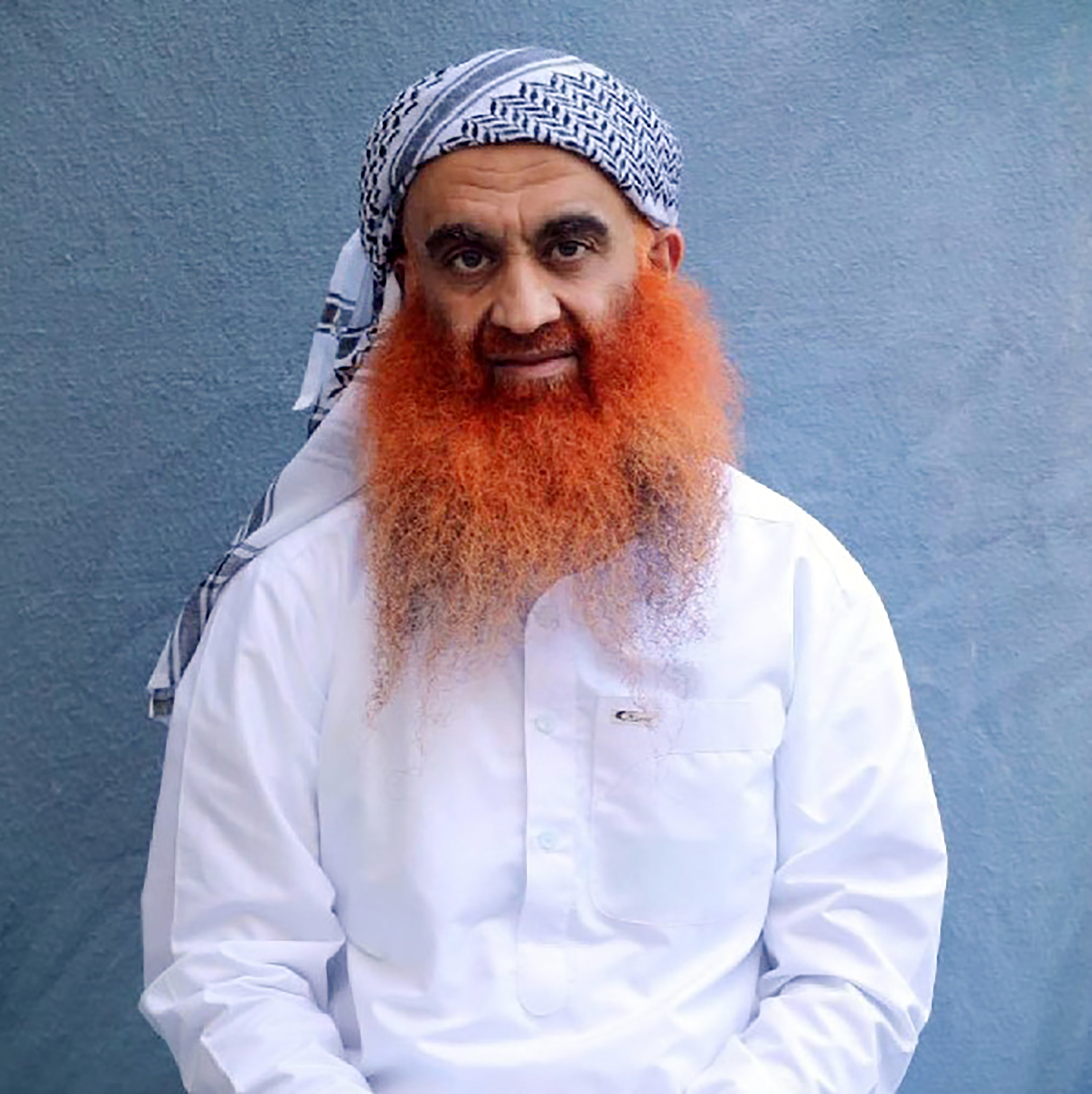
    In a major blow to the U.S. case against Khalid Sheikh Mohammed, the man accused of plotting the Sept. 11 attacks, a military judge ruled Friday that the prisoner’s confessions to FBI agents were not voluntary and cannot be used against him at trial.

    Prosecutors have described Mohammed’s interrogations in 2007 at the U.S. Navy base in Guantánamo Bay, Cuba, as the government’s most crucial evidence in the long-running death penalty case.

    The ruling, just before the 25th anniversary of the attacks, could further delay the start of a trial if prosecutors decide to appeal to reinstate it. Aging survivors and families of victims have said they worry they may never see a final resolution to the case.

    Just this week, the judge set a trial date of June 5, 2028.

    Mohammed is accused of being the mastermind of the hijacking attacks that killed nearly 3,000 people in New York, Pennsylvania, and the Pentagon.

    He was brutally interrogated by the CIA in secret overseas prisons after his capture in 2003 and held incommunicado until his transfer to Guantánamo in 2006. Prosecutors excluded statements from those interrogations from the case.

    But the trial judge, Lt. Col. Michael Schrama, went further, concluding that Mohammed’s subsequent interrogations in 2007 at Guantánamo were also inadmissible.

    “The prosecution has failed to prove by a preponderance of the evidence that Mr. Mohammad’s statements to the FBI were voluntarily given,” Schrama wrote in the conclusion of his 45-page ruling, which was not immediately released to the public but whose unclassified contents were confirmed by several lawyers who had seen it.

    Schrama cited several factors, including an “unbroken continuation of the CIA’s psychological conditioning and severe coercion” at the time of Mohammed’s questioning at Guantánamo in 2007.

    He also found that FBI agents intentionally failed to explicitly tell Mohammed that he had a right to be silent and to consult a lawyer, and that what he told them could be used against him at a trial.

    The chief prosecutor, Rear Adm. Aaron C. Rugh, said his team would review the ruling “and will make a decision on whether to appeal in the near future.”

    The judge gave prosecutors five days to decide but said they could request an additional five days.

    The question of the taint of torture has hung over the case for years.

    Defense lawyers had argued that Mohammed was essentially conditioned by the CIA through torture coupled with years of isolation and solitary confinement to later tell the FBI what it wanted to hear. He was not allowed to consult a lawyer until long after he had confessed and was charged.

    Schrama has yet to rule on the confessions of two other defendants in the Sept. 11 case, Walid bin Attash and Mustafa al-Hawsawi. An earlier judge, Col. Matthew McCall, threw out the confessions of Mohammed’s nephew, Ammar al-Baluchi, who is accused of helping some of the 19 hijackers with finances and travel arrangements.

    A different judge, Col. Lanny Acosta, suppressed the confession of the defendant in the USS Cole bombing case, Abd al-Rahim al-Nashiri, in an explicit finding that he had been tortured by the CIA. His death penalty trial in the 2000 attack, which killed 17 U.S. sailors, is scheduled to start in October.

    The Sept. 11 case has been mired in pretrial proceedings since arraignment in 2012. Over the years, four other judges gathered evidence on the question Schrama decided Friday. An earlier judge found a fifth man, Ramzi Binalshibh, mentally incompetent to stand trial, a condition the defendant’s lawyer blamed on torture.

    This article originally appeared in the New York Times.

  • Judge will hear recantation of sexual abuse claim against ex-Penn State coach Jerry Sandusky

    Judge will hear recantation of sexual abuse claim against ex-Penn State coach Jerry Sandusky

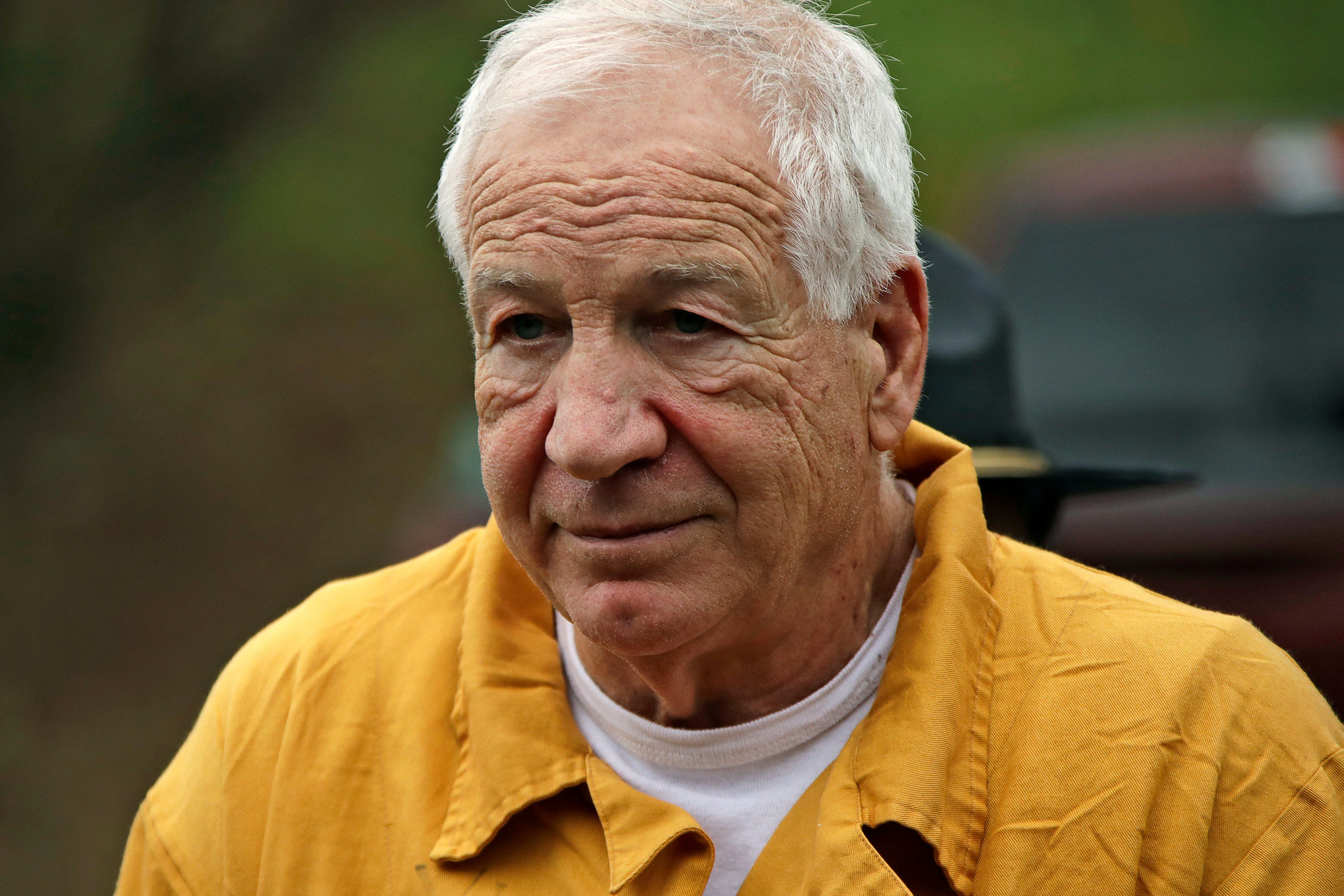
    BELLEFONTE, Pa. — A judge has granted a hearing to explore claims that a man wants to recant allegations of sexual abuse years ago by Penn State assistant football coach Jerry Sandusky.

    Sandusky, 82, has been serving a decades-long prison sentence since he was convicted of 45 counts of sexual abuse involving multiple boys in 2012. He has repeatedly lost efforts to get a new trial.

    A man identified in court documents as R.R. said he was coached extensively by authorities.

    “I was told — both directly and indirectly — that trauma may have fragmented my memory, and that I could safely affirm details I did not fully recall. I was assured this was common and even expected,” R.R. said in an affidavit filed by Sandusky’s attorneys.

    A court hearing in Centre County has been scheduled for Sept. 8. Messages left with attorneys were not immediately returned Friday. State prosecutors said Sandusky’s petition is untimely.

    Sandusky coached the defense at one of the country’s top football programs under Hall of Fame head coach Joe Paterno. The scandal led to Paterno’s firing, and the university paid more than $100 million to people who said they had been abused by Sandusky. He has repeatedly declared his innocence.

    “I apologize that I’m unable to admit remorse for this because it’s something that I didn’t do,” Sandusky said during a 2019 court appearance.

    Authorities said Sandusky found and groomed victims at the Second Mile, a charity that he started for at-risk youth. Eight young men testified against him.

    At trial, R.R. was 25 years old. He testified that he was 11 when Sandusky performed oral sex in the coach’s basement in 1998, a transcript shows.

    “He told me that if I told anybody that I would never see my family again,” said R.R., who was in foster care at the time.

    Sandusky later apologized and said “he loved me,” R.R. testified.

  • Fed chair Warsh, concerned about inflation, says bank ‘has work to do’

    Fed chair Warsh, concerned about inflation, says bank ‘has work to do’

    JACKSON HOLE, Wyo. — Federal Reserve Chair Kevin Warsh said he was “impressed” with the economy’s overall strength but is concerned by signs that “underlying trends” in inflation have not improved.

    Making his first appearance here as Fed chair, Warsh stopped well short of clearly signaling an interest-rate increase at the Fed’s next meeting. He also defended his controversial decision to provide only limited public comments about Fed thinking, which critics say has left markets confused about the central bank’s intentions.

    But many investors viewed Warsh’s remarks as hawkish. Nearly 60% of traders now anticipate a Fed rate hike in mid-September, up from just over a third on Thursday, according to CME FedWatch, which tracks futures market activity.

    Speaking in a rustic lodge beneath elk antler chandeliers, Warsh hailed developments in artificial intelligence as a “hinge point in history” that offered the “potential for substantially higher growth.” But that long-term promise is eclipsed for now by the need to vanquish inflation, he said.

    “The Fed’s predominant focus right now should be on prices,” Warsh said. “We must be confident that underlying inflation is moving to our objective, clearly and at sufficient speed. Otherwise, we have work to do.”

    Warsh endorsed the Fed’s traditional inflation goal of an annual 2% rise in prices, according to the personal consumption expenditures index (PCE), calling it “a firm fixed target.”

    Over the past six months, almost half of the individual product prices that the Fed tracks have increased at an annual rate of more than 3%. That share is down from the pandemic high point but “is still quite elevated,” Warsh said.

    The central bank chief also responded to critics who questioned his inflation-fighting plan by saying the Fed’s control over short-term interest rates remained “the predominant tool” to achieve its goals. His embrace of rate-setting and the PCE index appeared aimed at clarifying remarks he made at his news conference in July, which suggested alternatives deserved consideration.

    But Warsh doubled down on his controversial strategy of providing investors less explicit “forward guidance” about future Fed moves. “A quieter Fed,” he said, will be better able to steer the economy to stable prices and full employment.

    “Transparency in communications about future policy decisions is not a virtue unto itself. Communications must be in service to the Fed’s paramount responsibility: getting monetary policy right,” Warsh said.

    In the run-up to Friday’s speech, investors were eager for any hint of Warsh’s thinking on when and if the Fed might raise short-term interest rates. His continued haziness on that point seemed to frustrate some in the audience.

    Michael Strain, a former Fed economist, said Warsh had made similar comments in July while opposing an interest-rate increase. While his remarks Friday suggested that the Fed would eventually raise rates if inflation did not subside, Warsh offered no hint of the likely timing or what additional evidence he required before acting, said Strain, who is now with the American Enterprise Institute, a center-right think tank.

    “Markets are looking for clarity,” Strain said. “You don’t know the timing that he has in mind about when the Fed should respond to the combination of a full employment economy with inflation stuck above target.”

    Adam Posen, president of the Peterson Institute for International Economics, said Warsh was suggesting that “the best thing to do is to make up your mind at the last minute in a nontransparent way which has no consistent record” of success.

    The yield on the two-year Treasury note, which is most sensitive to Fed rate increases, rose to 4.35% Friday, compared to 4.22% before he began. Stock markets closed lower.

    Warsh’s remarks were among the most highly anticipated by any Fed chair at the central bank’s annual late-summer conference, which is hosted by the Federal Reserve Bank of Kansas City and draws global central bankers, economists, and journalists to Wyoming’s spectacular Grand Tetons.

    Since taking over from his predecessor, Jerome H. Powell, Warsh has been unsparing in his criticism of the Fed for failing to control inflation, which has been elevated for more than five years, since the COVID pandemic. In a nod perhaps to the populist president who appointed him to his job, Warsh said “hardworking Americans,” not “financial highfliers,” are suffering the most from the Fed’s failure to bring inflation under control.

    The chair faces a daunting landscape. He leads a divided Fed with at least three members of its rate-setting committee on record supporting an increase in interest rates to slow rising prices. Long-term bond yields have ticked higher this month amid concerns over the nation’s $40 trillion gross public debt. And Treasury Secretary Scott Bessent has intervened in financial markets in a way that some analysts say could conflict with Warsh’s goals.

    While managing those immediate concerns, Warsh seeks to pilot the economy through an era of epic change. The rules-based global order constructed at the end of World War II is breaking down as the United States and other nations seek greater self-sufficiency. And a disruptive new technology, artificial intelligence, is reshaping markets and economies at a rapid clip.

    Since taking command of the Fed in late May, Warsh has disappointed some investors by refusing to provide the routine guidance that his predecessors offered for nearly two decades about the Fed’s next moves.

    After his tight-lipped news conference late last month, analysts at investment banks including JPMorgan said Warsh’s refusal to elaborate on how he planned to fight inflation raised doubts about whether he was willing to raise short-term borrowing costs to do so. Those concerns were amplified by President Donald Trump’s vocal insistence that rates should move down, not up, under the new Fed chair.

    But Warsh said he is determined to force investors to make their own decisions independent of expectations about moves by the nation’s central bank. Although forward guidance was “essential” during the 2008 financial crisis, he said Friday, “I believe the practice has outstayed its welcome.”

    Financial markets have shown little concern about Warsh’s public reticence. Inflation expectations are little changed since the day he was sworn in as Fed chair. Volatility in stock and bond trading also has remained within normal ranges, according to standard market measures.

    Recent economic data suggesting an improved outlook for the economy may explain part of the recent uptick in bond yields. While the economy grew at an unremarkable annual rate of 1.5% in the second quarter, underlying measures of activity were far stronger, according to a Commerce Department update this week.

    Final sales to private domestic purchasers, which some economists consider a better gauge of the economy’s condition, rose by an updated 4.2% compared with an initial estimate of 3.9%, the Commerce Department said. Both consumer spending and business investment are keeping the economy aloft.

    A separate report showed that inflation remained elevated in July, with the Fed’s preferred gauge up 3.7% from the same month one year ago. That pace was unchanged from June, but it remained well above the Fed’s 2% target.

    At its last meeting in July, the Fed policymaking committee left short-term interest rates unchanged. But three voting members of the Federal Open Market Committee dissented from the 9-person majority that favored keeping rates in the current 3.5% to 3.75% range.

  • More states pilot 3-year college degrees, seeking to address rising tuition

    More states pilot 3-year college degrees, seeking to address rising tuition

    A growing number of colleges are offering three-year bachelor’s degree programs, providing students a faster and less expensive path toward graduation, but worrying critics who say the trend could devalue college education.

    Instead of the typical 120 credits earned in four years, some programs now require students to complete around 90 credits. Proponents say that helps students get into — or back into — the workforce more quickly and with less debt. But some question whether the shortened degrees will be fully accepted by graduate schools, employers, and accreditors.

    At least 70 U.S. schools are either already offering three-year degrees or are actively considering them, according to a report this year by the American Association of Collegiate Registrars and Admissions Officers, and multiple states have required or encouraged public universities to add them.

    On Wednesday, Texas Gov. Greg Abbott (R.) took steps to join that group, directing the Texas Higher Education Coordinating Board to create a statewide framework for three-year-degree pathways.

    “Every semester adds tuition, fees, housing, food, transportation, and other living expenses and delays students’ ability to begin their careers,” Abbott said in a news release. “Texas students deserve the option to receive a degree in a high-demand, high-wage field in less time.”

    The trend is spreading in both red and blue states, as well as across many types of institutions, public and private, large and small. This summer, the Massachusetts Board of Higher Education approved applications from two schools to pilot three-year-degree programs.

    In June, Grambling State University and Southern University Law Center, historically Black schools in Louisiana, announced a partnership that would allow students to accelerate their way to a law degree, with three years of undergraduate work and three years of law school.

    Todd Wolfson, president of the American Association of University Professors, said the three-year degree is the wrong answer to a real crisis. He said decades of public disinvestment have shifted the cost of higher education onto students and families, and schools should not respond by shrinking the degree and asking students to make do with less.

    “We need to address the problem at its root,” he said. “Reinvest massively in higher education and build a free public higher-education system that gives every student access to a full, high-quality college education without taking on crushing debt.”

    Robert Zemsky, professor emeritus at the University of Pennsylvania’s Graduate School of Education who has been advocating for three-year degrees for more than 15 years, said many state agencies have now encouraged their public universities to explore the idea. Zemsky said he supports that approach.

    “Don’t bet the whole bundle on an instant change from three-year degrees. Start a few experimental programs,” he said, and “see what happens.”

  • ICE awards $16.7M contract to buy 6,000 pairs of gloves that deliver electric shocks

    ICE awards $16.7M contract to buy 6,000 pairs of gloves that deliver electric shocks

    U.S. Immigration and Customs Enforcement has awarded a $16.7 million contract to purchase 6,000 pairs of gloves that can deliver painful electric shocks, saying officers would use them to control detainees and protesters who resist.

    ICE moved forward with the purchase despite opposition from civil rights advocates and Democratic members of Congress, who said ICE officers cannot be trusted to use them appropriately.

    A notice published in a federal database Thursday said ICE entered into a no-bid contract to purchase the gloves from Compliant Technologies LLC, a Kentucky-based firm that manufactures them. The deal includes acquiring 6,000 of the devices along with support equipment and services over the next six months.

    Civil rights advocates have said ICE officers already face criticism for their use of force with little oversight or accountability while enforcing President Donald Trump’s immigration crackdown.

    ICE published the notice hours after a group of U.S. senators, led by Democrat Catherine Cortez Masto of Nevada, urged the agency to cancel its plan to buy the gloves. In a letter to ICE’s acting director Thursday, Cortez Masto and 15 of her colleagues in the Democratic caucus questioned ICE’s need for the devices.

    “The blatant and tragic misuse of force in Los Angeles, Chicago, Minneapolis, Houston, Maine, and other locations around the country raises significant skepticism about the agency’s professional capability to safely deploy a new tool that could be used to harm Americans without cause,” the letter said.

    The senators were the latest to express opposition to the plan, which became public this month when ICE published a notice outlining its intent to purchase thousands of “conductive distraction and de-escalation devices” for officers and investigators.

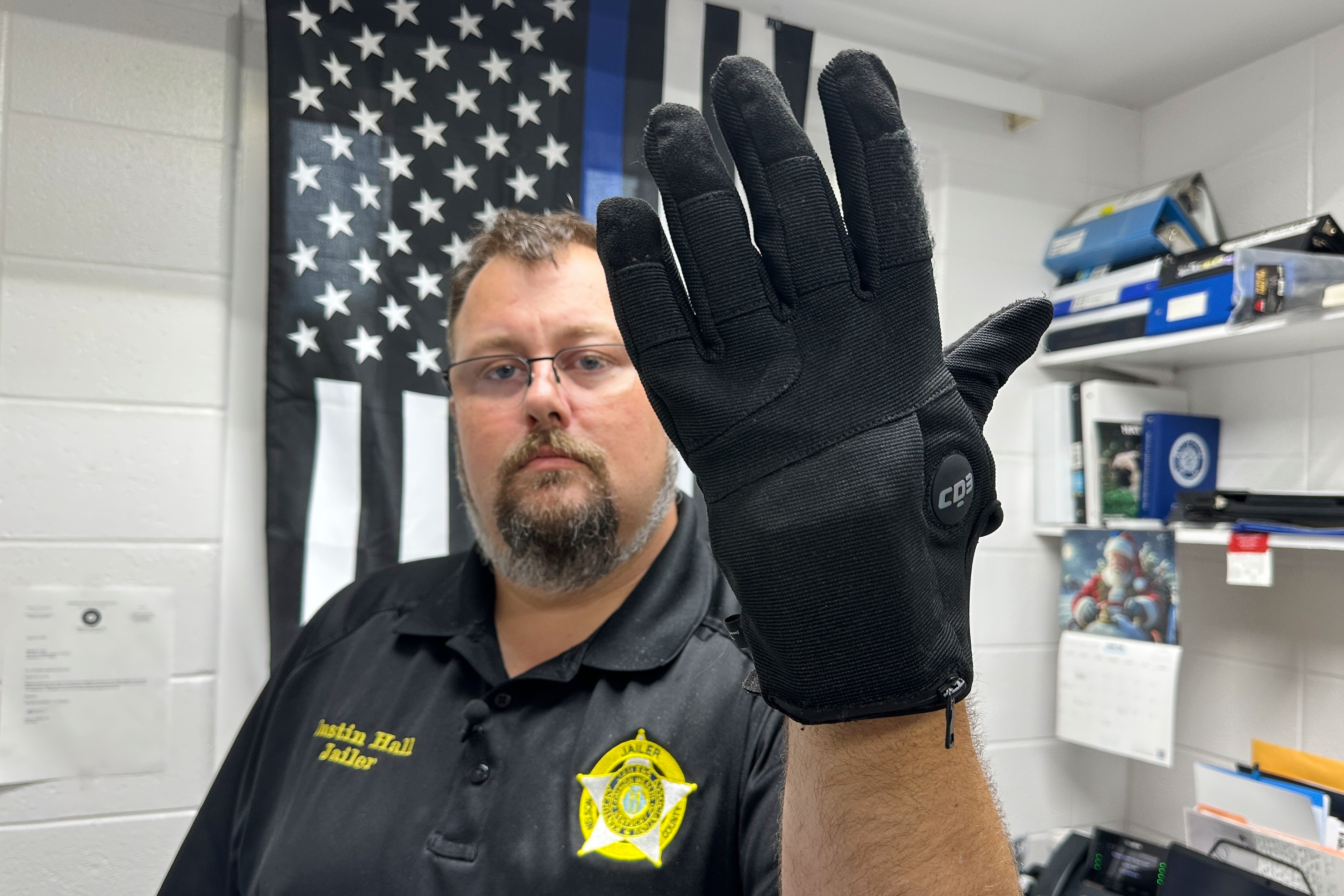
    The devices are normal patrol gloves until an officer presses a button to activate the electrical mode. They must be applied directly to someone’s skin to produce a shock that causes pain, which is promoted as a way to gain compliance from people who are resisting. They have been used by some local jails and police departments in recent years.

    ICE’s notice said officers would use them in “high-tension environments,” including while making arrests, transporting combative detainees and responding to civil disturbances outside detention facilities.

    “It will be used when a subject is actively or passively resisting and an officer needs to gain control quickly to prevent injuries to both parties,” the document said.

    It said that the shocks would help “maintain control over inmates and prevent aggression or escape attempts,” allow officers to handcuff people hiding their hands, and assist in crowd control. The goal would be to avoid using “more severe force,” including firearms. The notice said the gloves would be used with “approved policy, training, and accountability standards,” but it did not elaborate.

    Cortez Masto and the other senators said in their letter that the device “presents substantial risks if deployed during civil arrests — even more so if it is deployed without clear limits, appropriate training, and comprehensive oversight.” They said ICE must make public details about how officers will be trained and how use of the gloves will be documented and reviewed internally to avoid misuse.

    ICE’s parent agency, the Department of Homeland Security, reacted defiantly Thursday to critics of the purchase.

    “Sanctuary politicians attempting to ban our federal law enforcement from any safety equipment is despicable and a deliberate attempt to undermine and endanger our officers,” the agency said in a statement.

  • In Nepal, a catastrophe so sudden there was no time to react

    In Nepal, a catastrophe so sudden there was no time to react

    KATHMANDU, Nepal — It was already too late when the call came.

    Rajan Khatri, 41, a police officer, was working at his station in a mountain village in northern Nepal when a friend rang Wednesday morning to warn that a flash flood was thundering downriver in his direction. As soon as he hung up, giant waves slammed into the station.

    “I cannot explain how big the waves were,” Khatri said from a hospital bed in Nepal’s capital, Kathmandu, on Thursday. “They engulfed several meters-high buildings in a fraction of seconds. It wasn’t just water. It was a combination of boulders, sand and thick sludge.”

    The onslaught flung Khatri out of the building, and he lost consciousness and suffered chest injuries. Two of his colleagues survived, but four were missing on Thursday.

    They were among the more than 1,400 people missing in the devastating deluge of rock, ice, trees, mud and water that blasted through river valleys on the border between Nepal and Tibet, washing away bridges, smashing homes, schools, and hydropower plants, and swallowing people who tried to run away.

    On Thursday, emergency workers climbed across steep Himalayan valleys and used helicopters to ferry shocked survivors to safety as they carried out a sprawling search for anyone who had managed to escape the flood.

    Nepali officials said at least 389 people had been killed, while the authorities in China, where far less information was being released, reported three deaths in the Tibet region of China.

    The death toll was expected to rise.

    In Nepal, more than 900 people, including about 500 foreign visitors, were unaccounted for, the country’s disaster management agency said. The missing foreigners included at least 288 from India, as well as travelers from the United States, Australia, Britain, Canada, and Malaysia.

    In Tibet, at least 558 people were missing in Gyirong County, including 260 foreigners, Chinese state media reported. China’s Foreign Ministry said 100 Chinese citizens were missing in Nepal.

    The U.S. State Department said in a statement that about 90 U.S. citizens “may be impacted by the floods” and three had been rescued in Nepal. It said it was not aware of any Americans who had died.

    Survivors described having almost no time to react before giant waves came roaring down the Bhotekoshi and Trishuli rivers.

    Smriti Ojha, 17, said she had been getting ready for school Wednesday morning when she felt the ground shaking. She ran out of her house, believing an earthquake had struck. Then she saw the flood. She said her immediate family had survived, but four of her relatives were missing.

    “It was terror,” Ojha said from a hospital bed in Kathmandu. “I cannot believe everything was swept away before my eyes.”

    Officials and aid organizations were still assessing the scale of the destruction in the remote region, renowned for its high-altitude lakes and steep peaks.

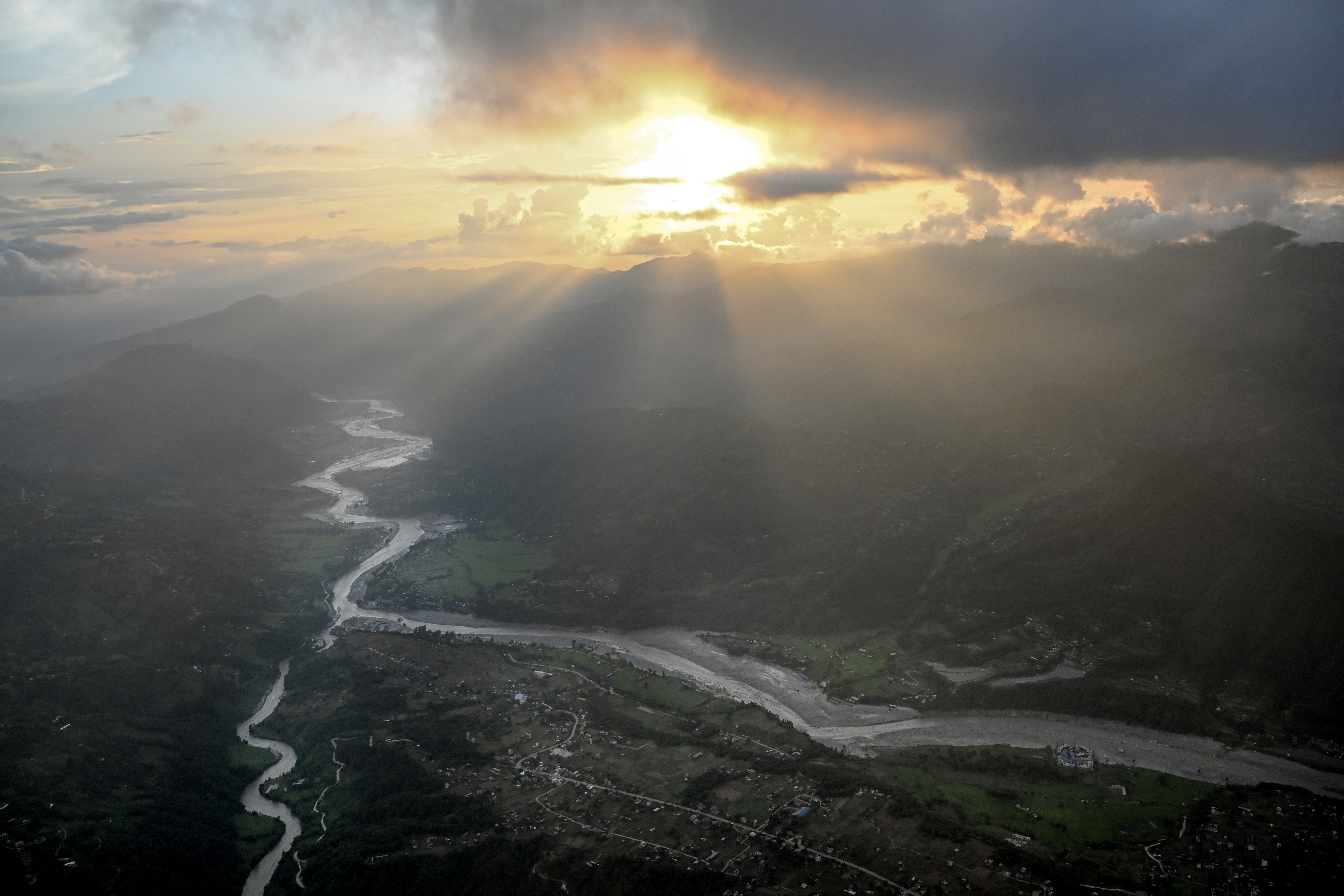
    New York Times journalists traveling with the Nepali military Thursday surveyed the devastating aftermath. One highway, near the Bhotekoshi River, had mostly disappeared. Scars on hillsides showed that in some places, the river had risen more than 650 feet during the flood.

    Rescue efforts were being hampered by communication lines that had been cut and the destruction of dozens of bridges and about 25 miles of roads, Nepal’s government said.

    The Nepali army’s search-and-rescue base was packed with hundreds of army personnel and survivors, some of whom wept after arriving by helicopter. The area had no electricity or phone networks after the flood, and soldiers and other rescuers were using military radios to communicate.

    Nepal’s foreign minister, Shisir Khanal, called it “one of the largest natural disasters we have experienced in recent memory.”

    President Donald Trump, speaking in the Oval Office, said he had offered U.S. aid to Nepal. “We are sending aid, and we’ve spoken to the leadership, and we let them know anything they want will happen,” he said.

    Scientists piecing together satellite imagery and seismological data said that a high-altitude landslide coinciding with a glacial collapse most likely caused the flash flood. The collapse happened on the north face of Langtang Lirung, a Nepalese mountain near the border with Tibet, at an elevation of around 17,000 feet, scientists said.

    After a huge chunk of the mountainside broke off, it sent millions of tons of rock and ice crashing into the river valleys below, said Kristen Cook, a geomorphologist at the Université Grenoble Alpes in France.

    “It was a much larger collapse than we were initially able to see in the satellite imagery,” she said.

    The shaking caused by the falling rock and ice was so powerful that the U.S. Geological Survey registered it at a magnitude of 5.2, as if it were a moderately powerful earthquake. Warming temperatures caused by climate change may have destabilized the glacier and rock face, scientists said, adding that it was too early to determine a precise cause.

    “Earthquakes, landslides, slope failures all could happen even without climate change,” said Austin Lord, an anthropologist and senior fellow at the Stimson Center in Washington who has studied natural disasters in Nepal. “It’s just that climate change is this additional factor that increases the likelihood, scale, frequency and intensity of these events.”

    Nepal has a flood warning system, but it relies on a conventional network of river and lake gauges that was not equipped to alert people to the sudden collapse of part of a mountain, according to scientists and disaster response researchers.

    The river gauges are designed instead to detect slower-rising water levels that typically precede a monsoon-driven flood or glacial lake outburst, which occurs when a pool of glacial meltwater bursts its banks.

    “We didn’t have the right information at the right time, so we couldn’t save more people,” said Basanta Raj Adhikari, director of Tribhuvan University’s Centre for Disaster Studies in Nepal. “The Nepalese government is very good on monsoon floods and perennial floods, but we were not prepared for this fast-moving flash flood,” he added.

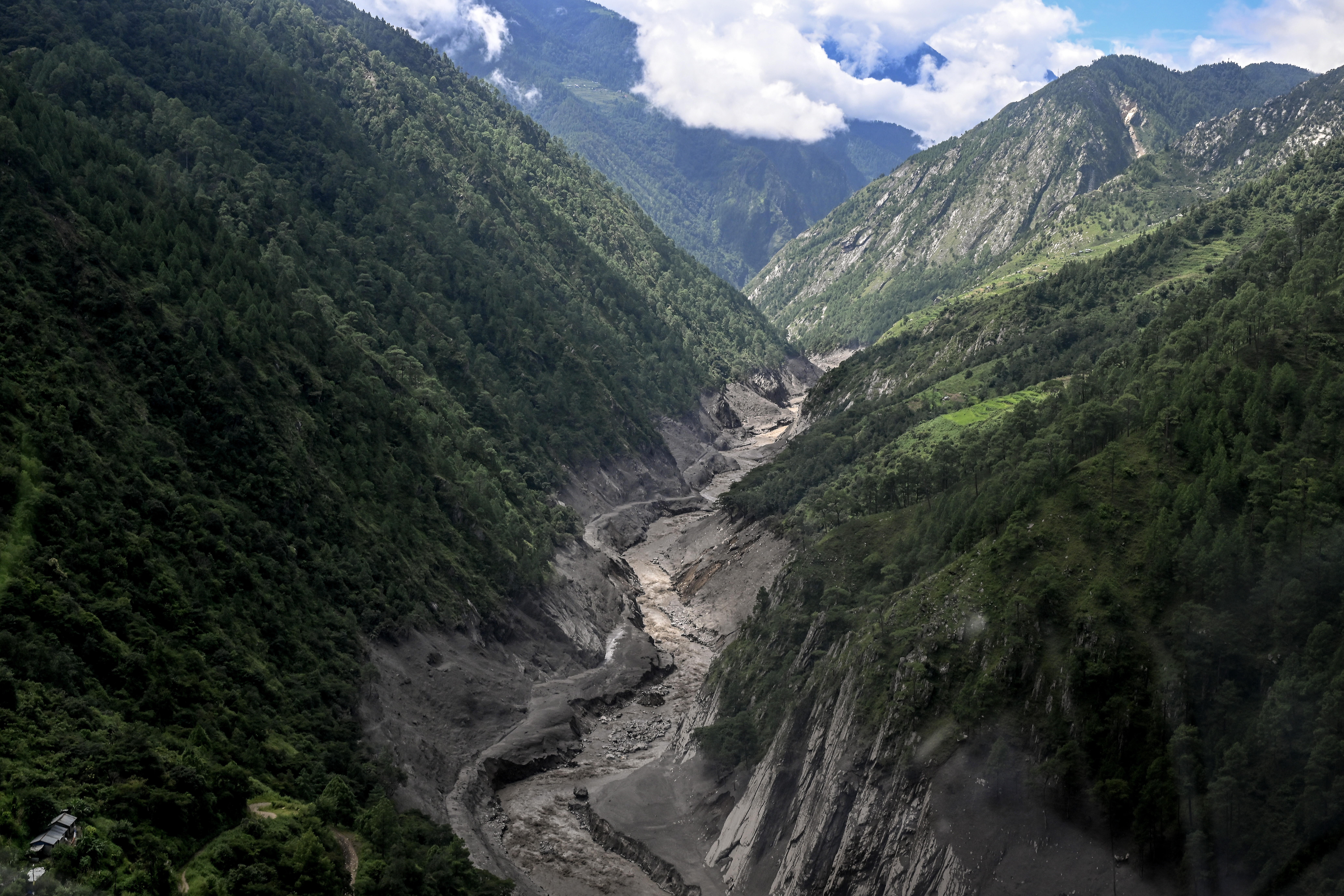
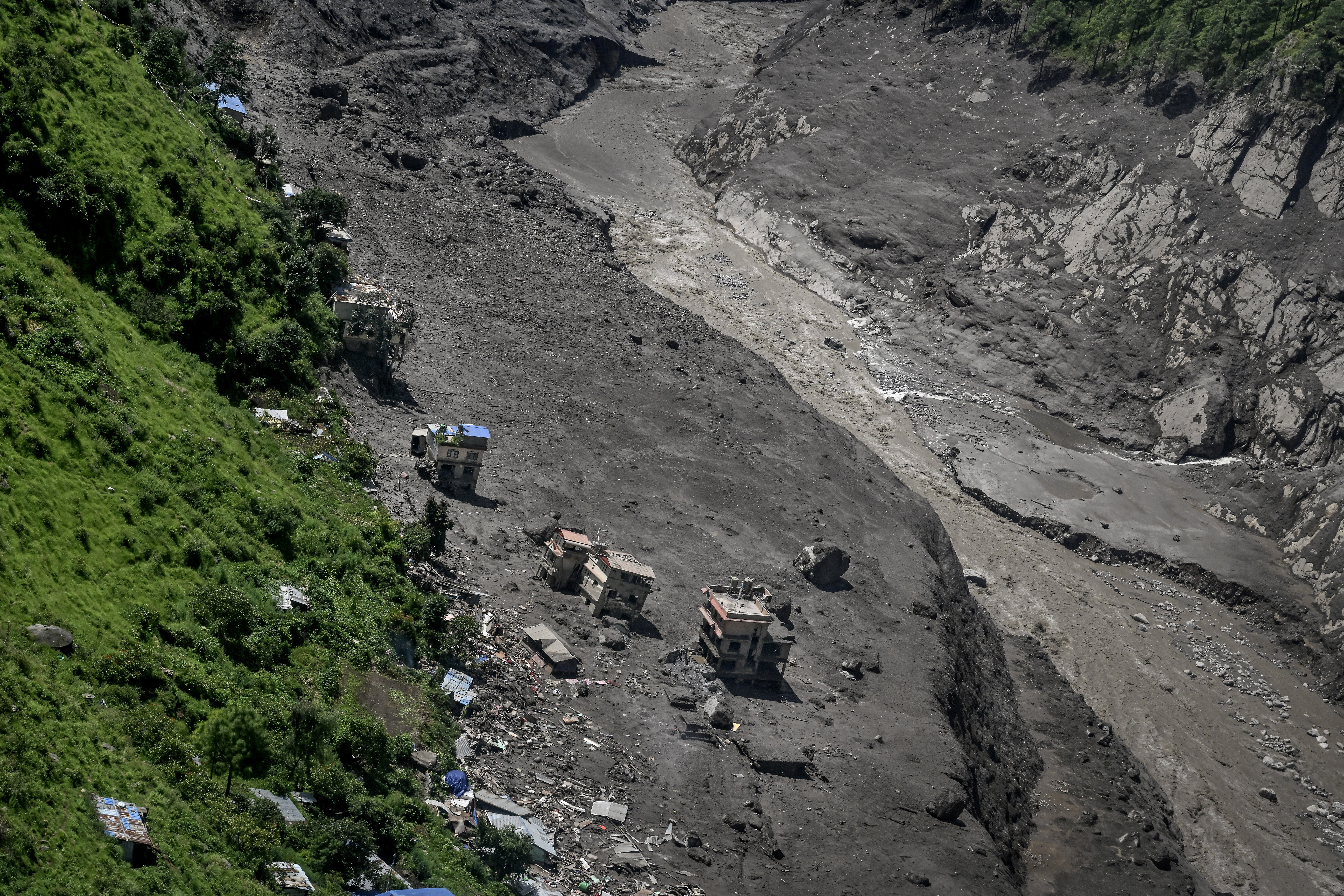
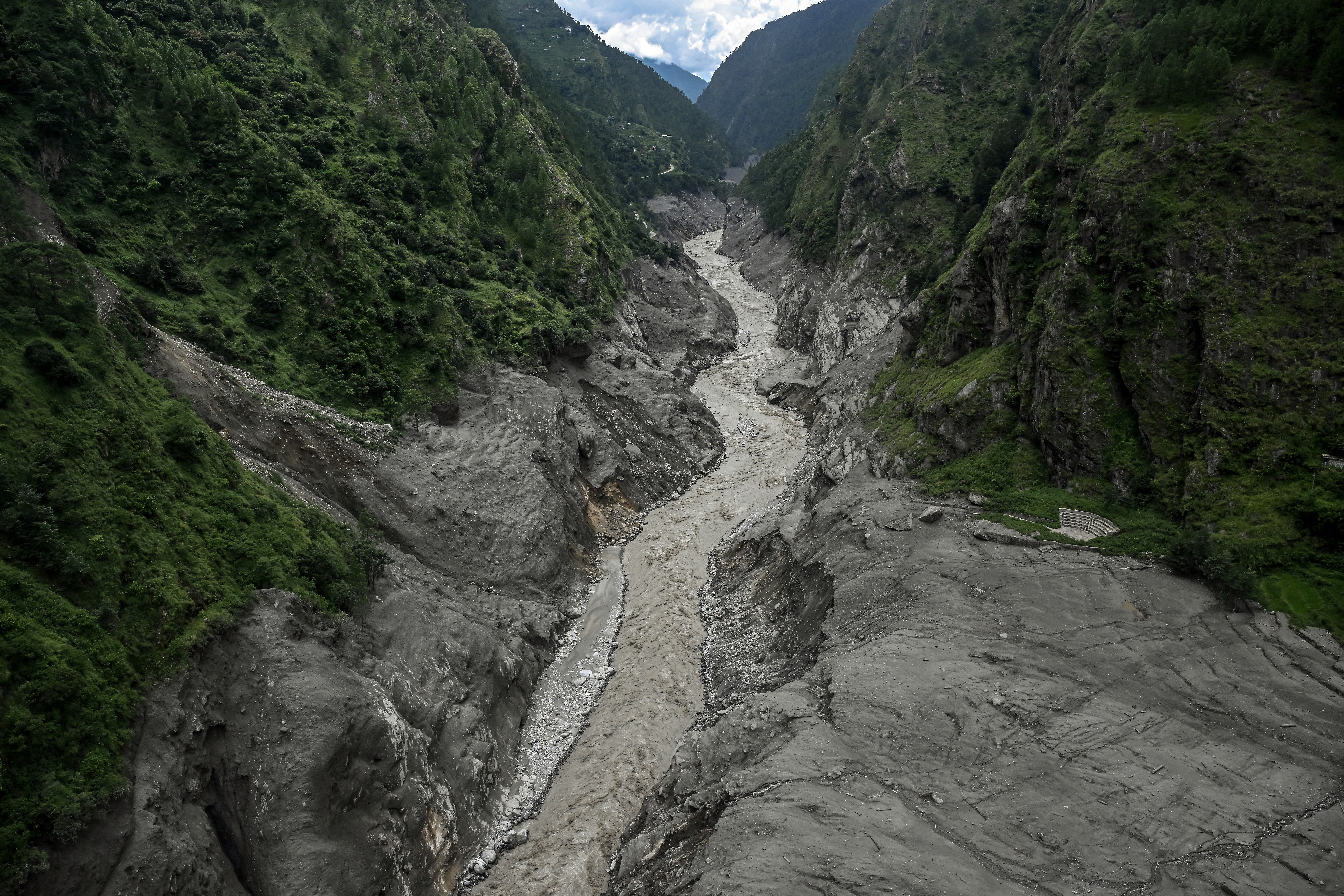
    The banks of the debris-choked Bhotekoshi River show signs of the giant torrent of water, mud and ice that swept through the remote river valley in the Rasuwa district near Nepal’s border with Tibet, on Thursday, Aug. 27, 2026. Emergency workers and helicopters scoured steep Himalayan valleys on Thursday in a desperate search for survivors after a torrent of water, mud and ice killed hundreds — and perhaps many more — as it swept through a river valley that runs through Tibet and Nepal. More than 1,400 people are still missing. (Atul Loke/The New York Times)ATUL LOKE
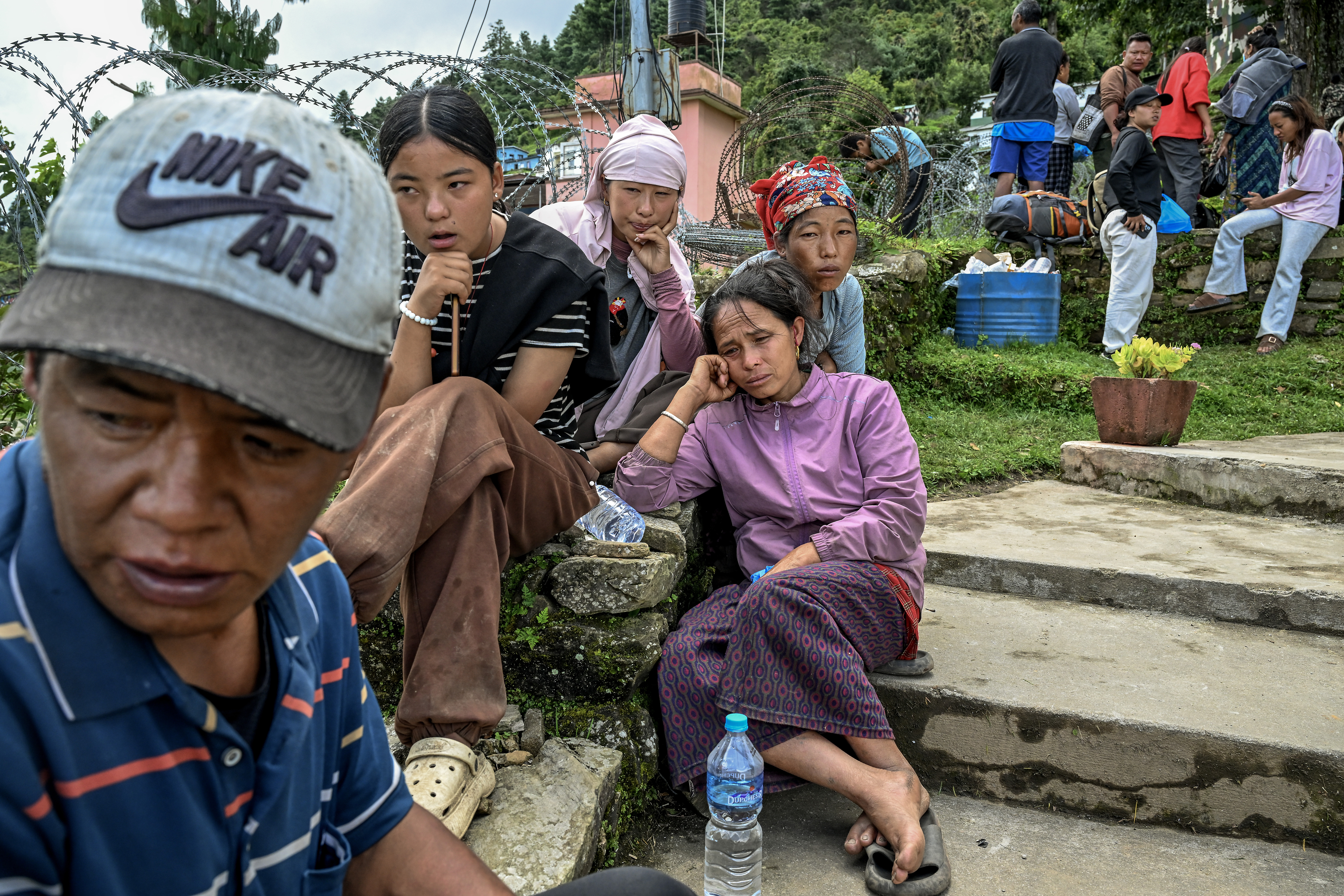
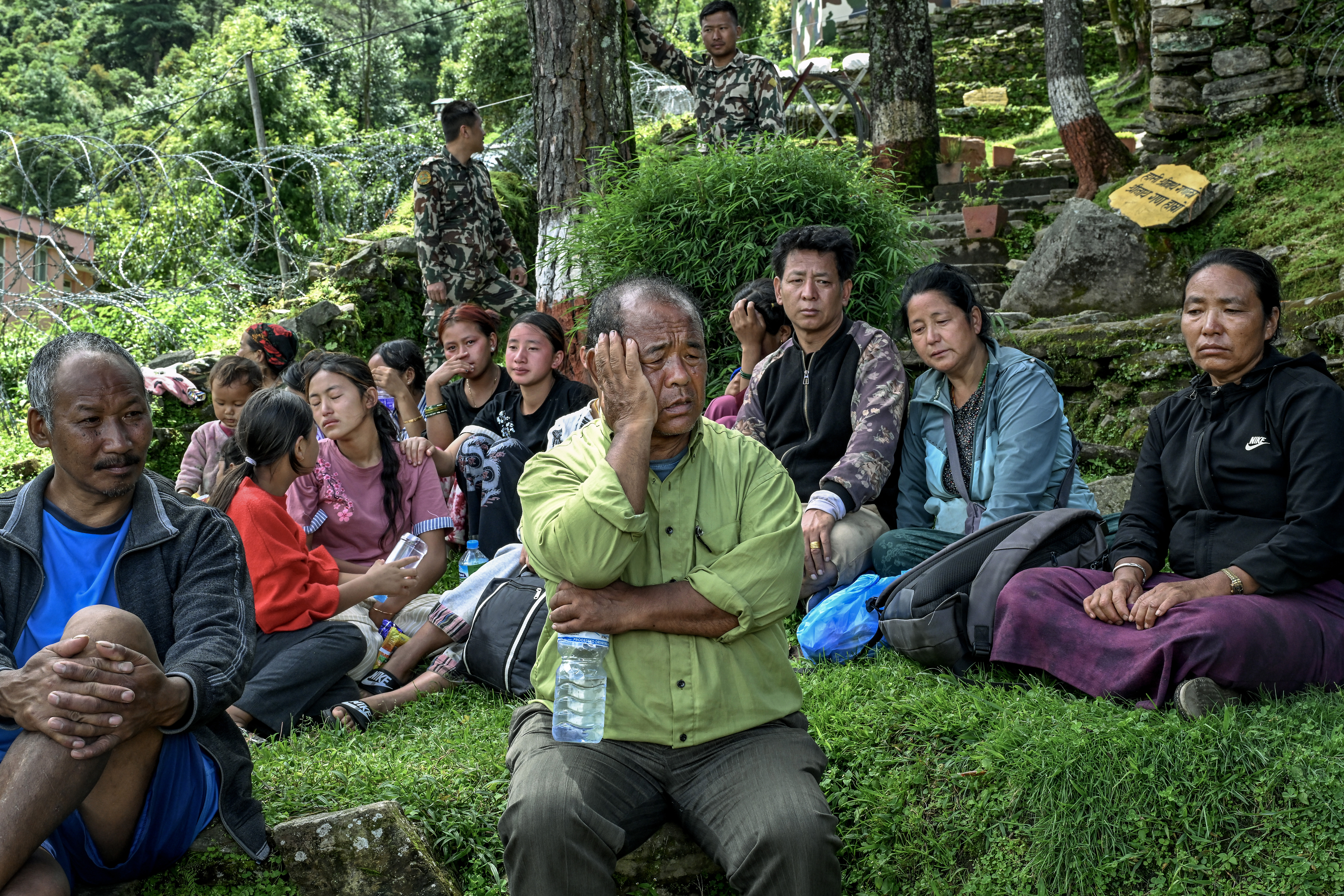
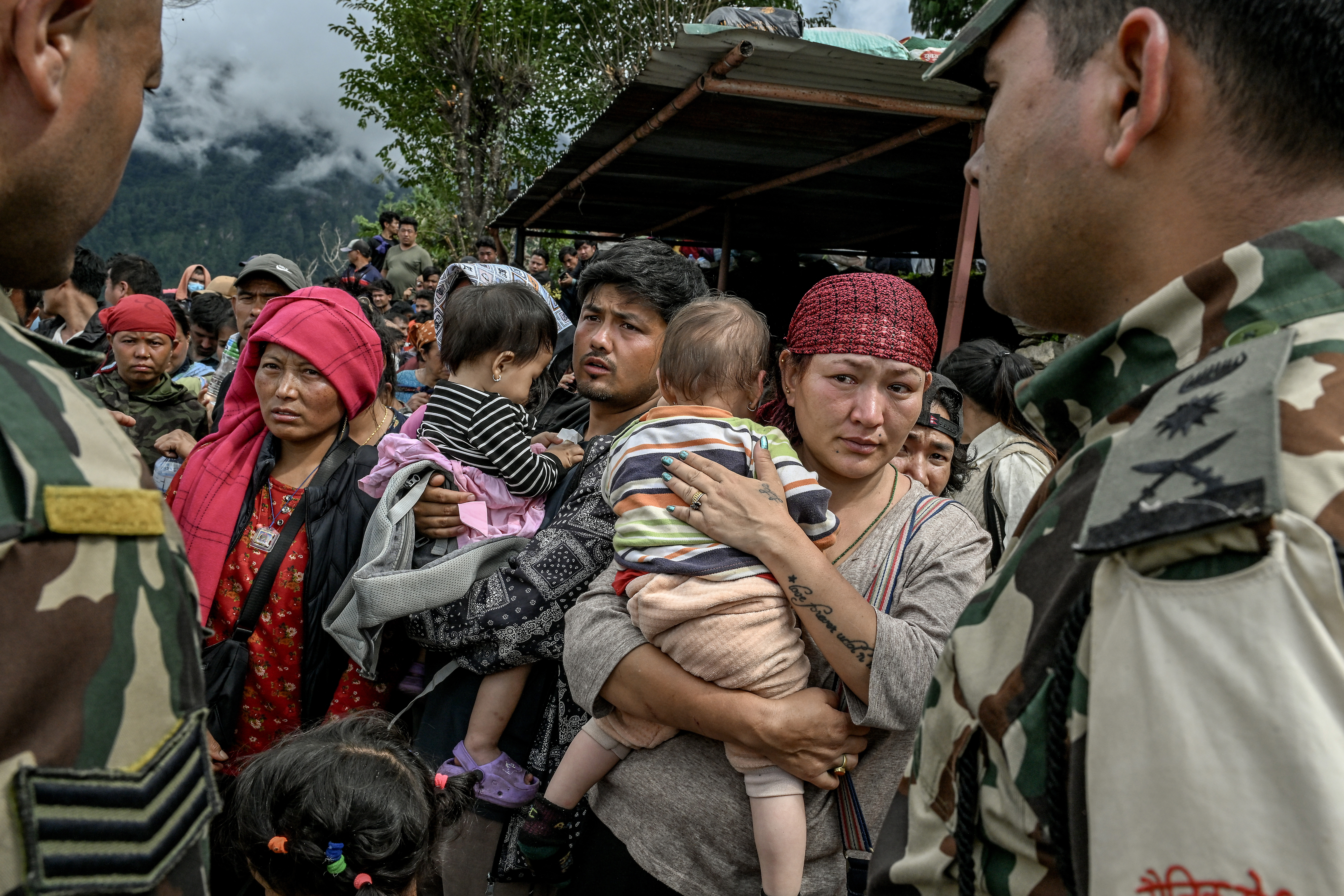
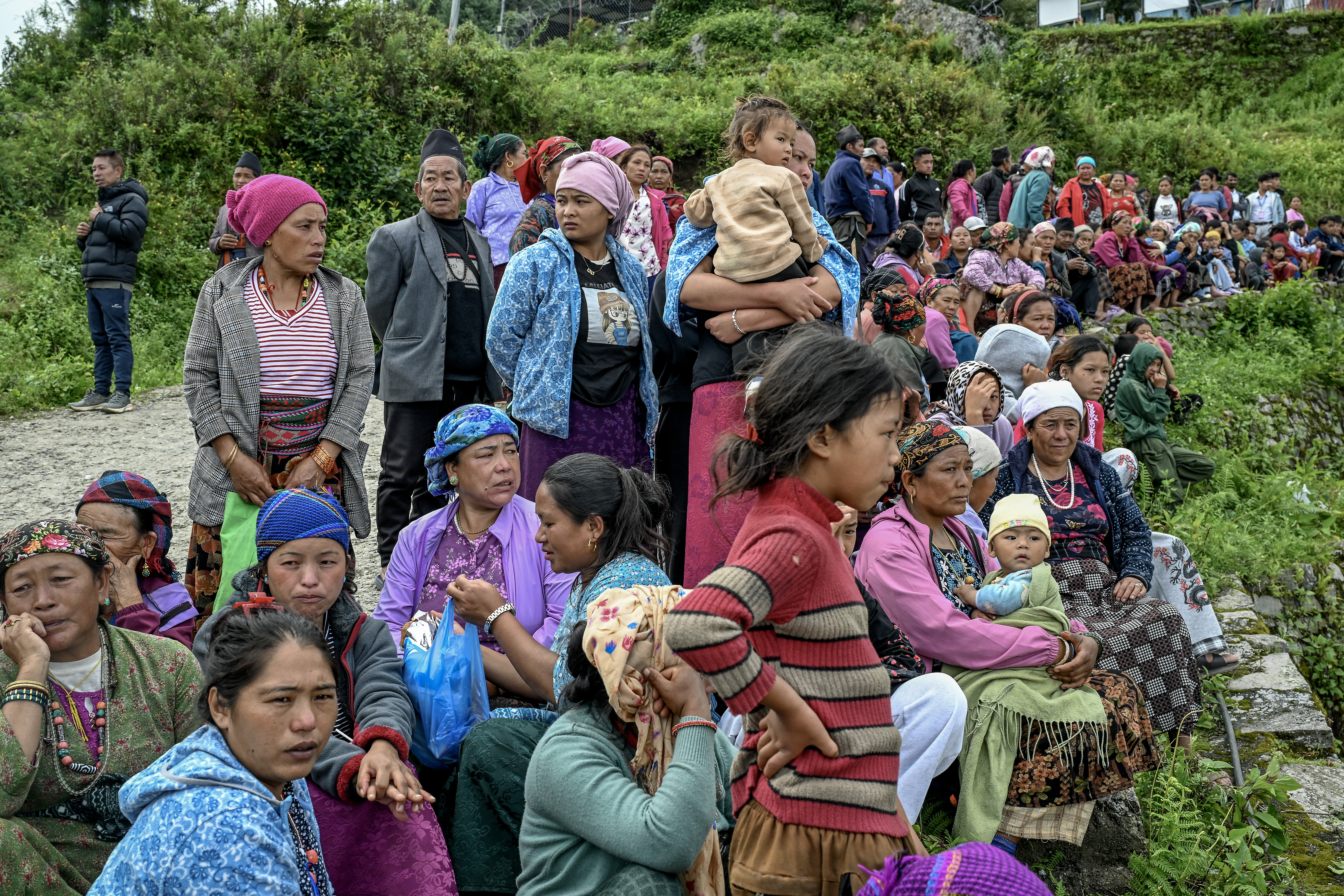
    People wait to board rescue helicopters in the disaster-stricken Rasuwa district near Nepal’s border with Tibet, on Thursday, Aug. 27, 2026. Emergency workers and helicopters scoured steep Himalayan valleys on Thursday in a desperate search for survivors after a torrent of water, mud and ice killed hundreds — and perhaps many more — as it swept through a river valley that runs through Tibet and Nepal. More than 1,400 people are still missing. (Atul Loke/The New York Times)ATUL LOKE
    People wait to board rescue helicopters in the disaster-stricken Rasuwa district near Nepal’s border with Tibet, on Thursday, Aug. 27, 2026. Emergency workers and helicopters scoured steep Himalayan valleys on Thursday in a desperate search for survivors after a torrent of water, mud and ice killed hundreds — and perhaps many more — as it swept through a river valley that runs through Tibet and Nepal. More than 1,400 people are still missing. (Atul Loke/The New York Times)ATUL LOKE
    The banks of the debris-choked Bhotekoshi River show signs of the giant torrent of water, mud and ice that swept through the remote river valley in the Rasuwa district near Nepal’s border with Tibet, on Thursday, Aug. 27, 2026. Emergency workers and helicopters scoured steep Himalayan valleys on Thursday in a desperate search for survivors after a torrent of water, mud and ice killed hundreds — and perhaps many more — as it swept through a river valley that runs through Tibet and Nepal. More than 1,400 people are still missing. (Atul Loke/The New York Times)ATUL LOKE
    People wait to board rescue helicopters in the disaster-stricken Rasuwa district near Nepal’s border with Tibet, on Thursday, Aug. 27, 2026. Emergency workers and helicopters scoured steep Himalayan valleys on Thursday in a desperate search for survivors after a torrent of water, mud and ice killed hundreds — and perhaps many more — as it swept through a river valley that runs through Tibet and Nepal. More than 1,400 people are still missing. (Atul Loke/The New York Times)ATUL LOKE
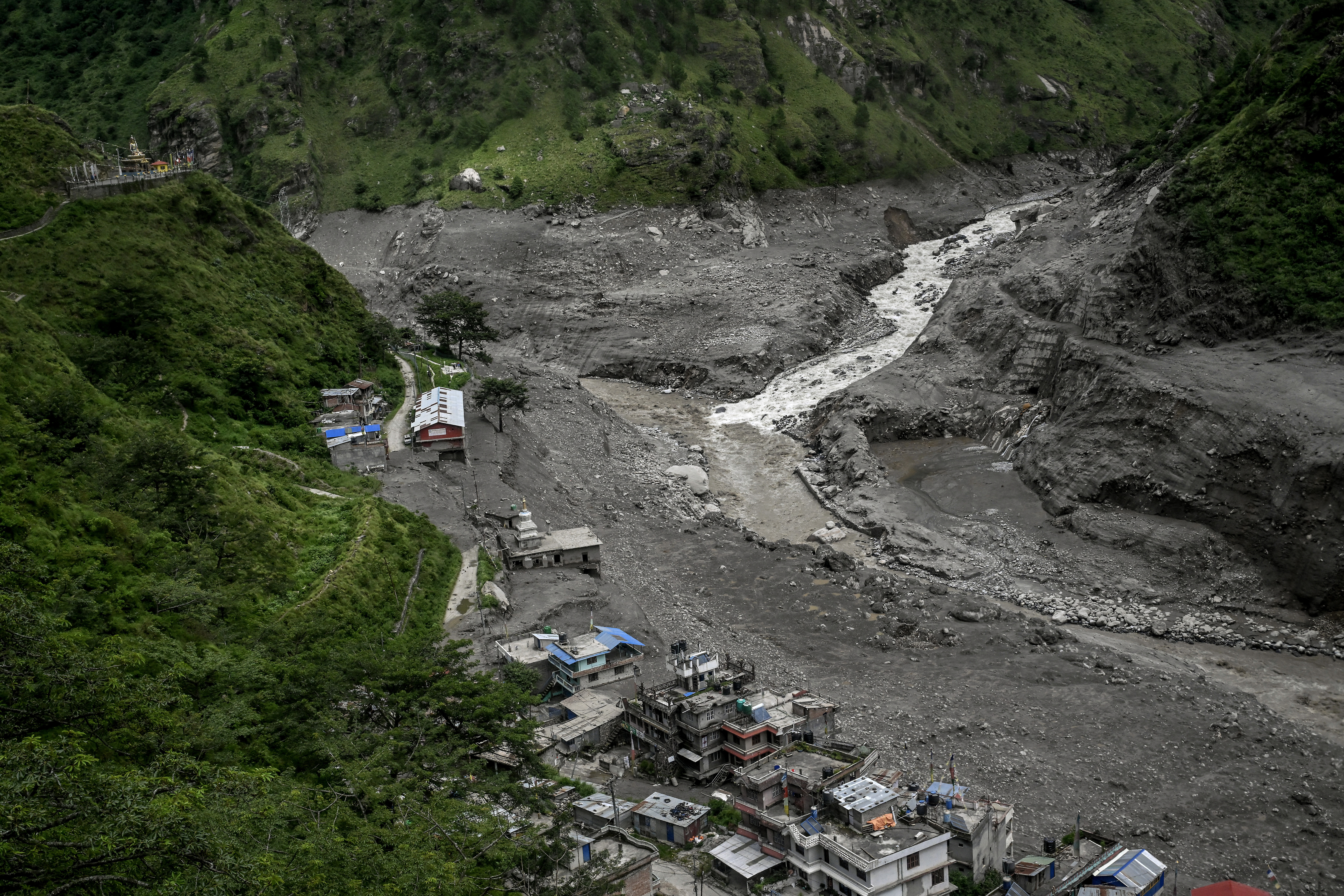
    Structures damaged by the giant torrent of water, mud and ice that swept through a remote river valley in the Rasuwa district near Nepal’s border with Tibet are seen on Thursday, Aug. 27, 2026. Emergency workers and helicopters scoured steep Himalayan valleys on Thursday in a desperate search for survivors after a torrent of water, mud and ice killed hundreds — and perhaps many more — as it swept through a river valley that runs through Tibet and Nepal. More than 1,400 people are still missing. (Atul Loke/The New York Times)ATUL LOKE
    People wait in line to board rescue helicopters in the disaster-stricken Rasuwa district near Nepal’s border with Tibet, on Thursday, Aug. 27, 2026. Emergency workers and helicopters scoured steep Himalayan valleys on Thursday in a desperate search for survivors after a torrent of water, mud and ice killed hundreds — and perhaps many more — as it swept through a river valley that runs through Tibet and Nepal. More than 1,400 people are still missing. (Atul Loke/The New York Times)ATUL LOKE
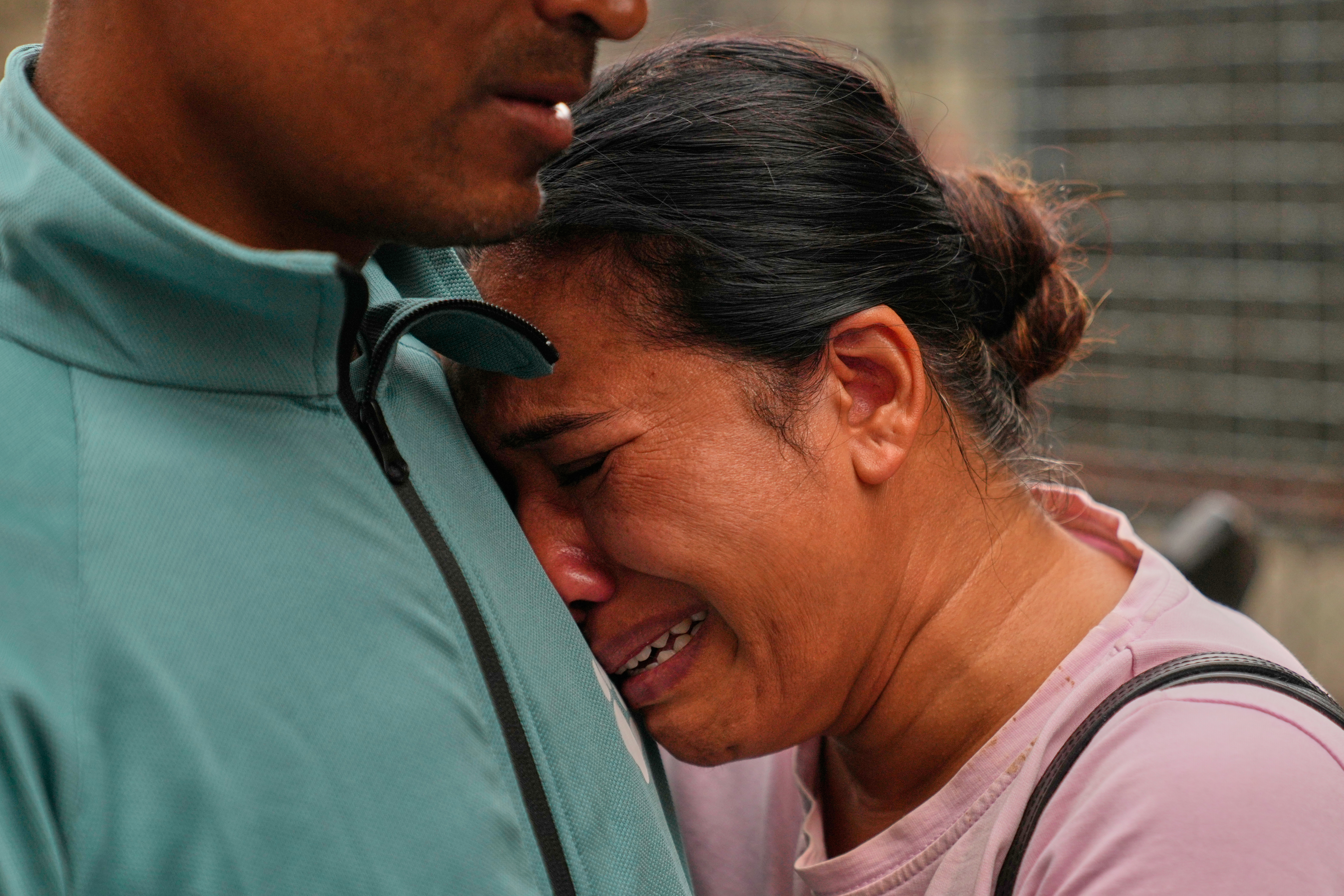
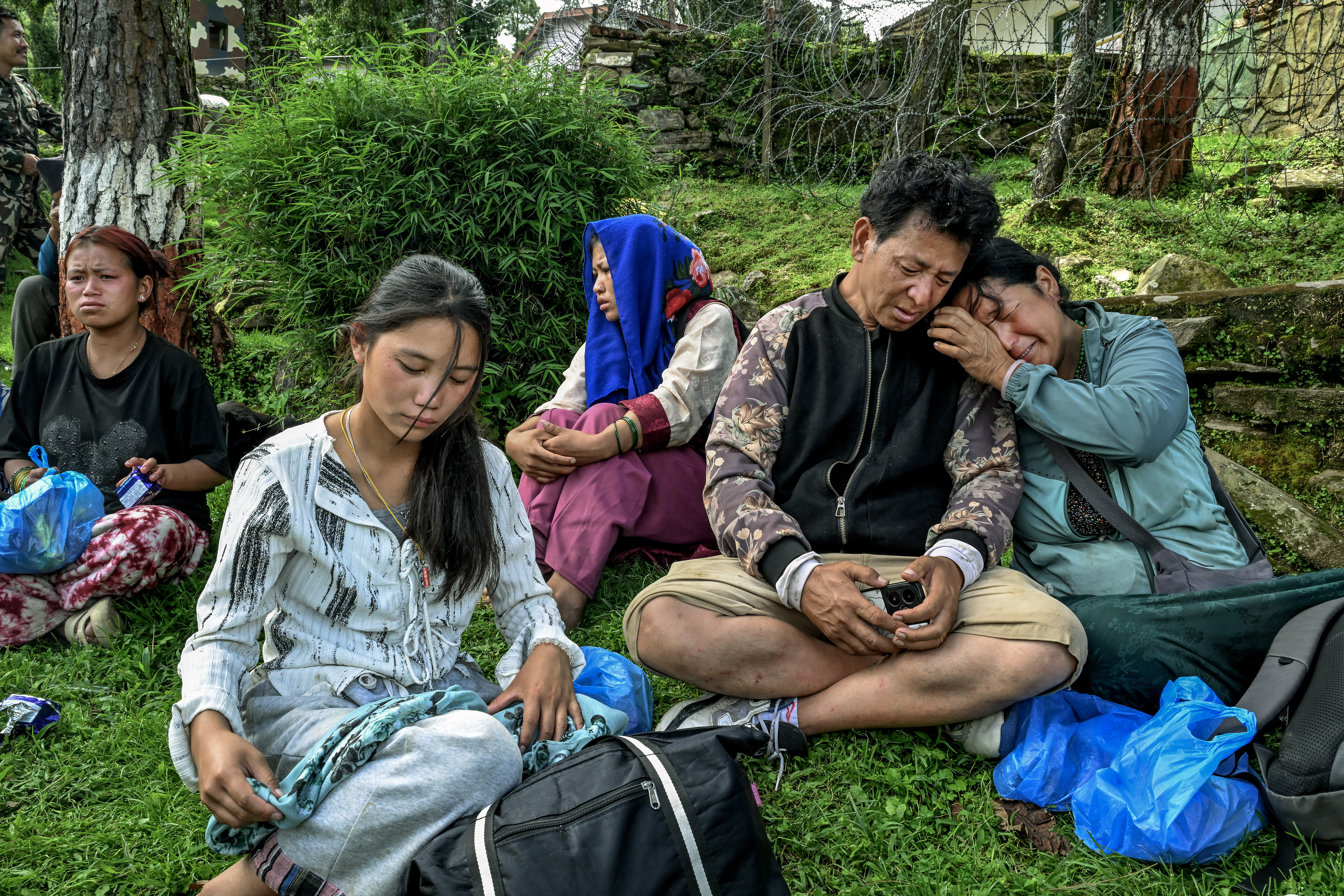
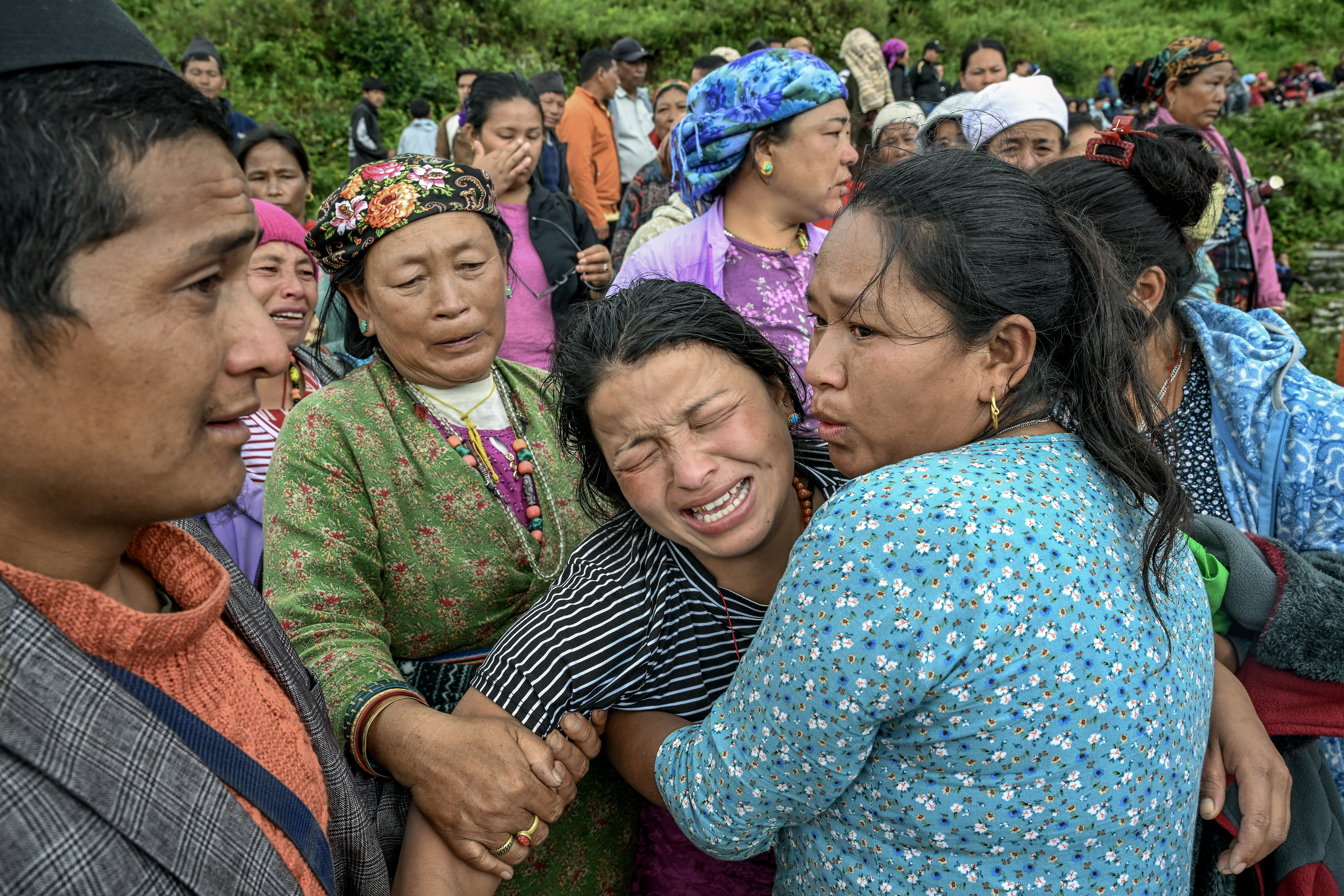
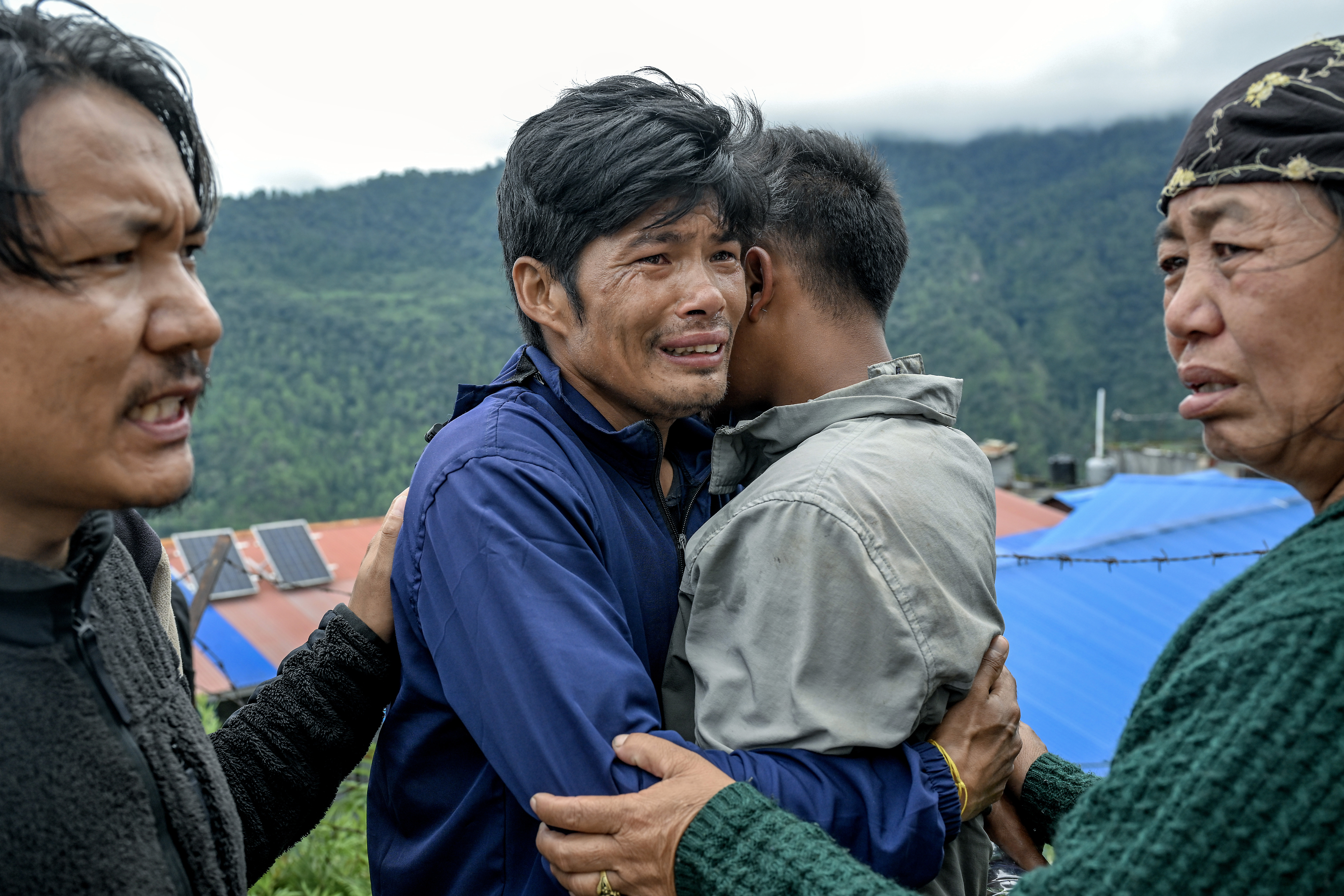
    A woman is overcome as she waits for his turn to board a rescue helicopter in the disaster-stricken Rasuwa district near Nepal’s border with Tibet, on Thursday, Aug. 27, 2026. Emergency workers and helicopters scoured steep Himalayan valleys on Thursday in a desperate search for survivors after a torrent of water, mud and ice killed hundreds — and perhaps many more — as it swept through a river valley that runs through Tibet and Nepal. More than 1,400 people are still missing. (Atul Loke/The New York Times)ATUL LOKE
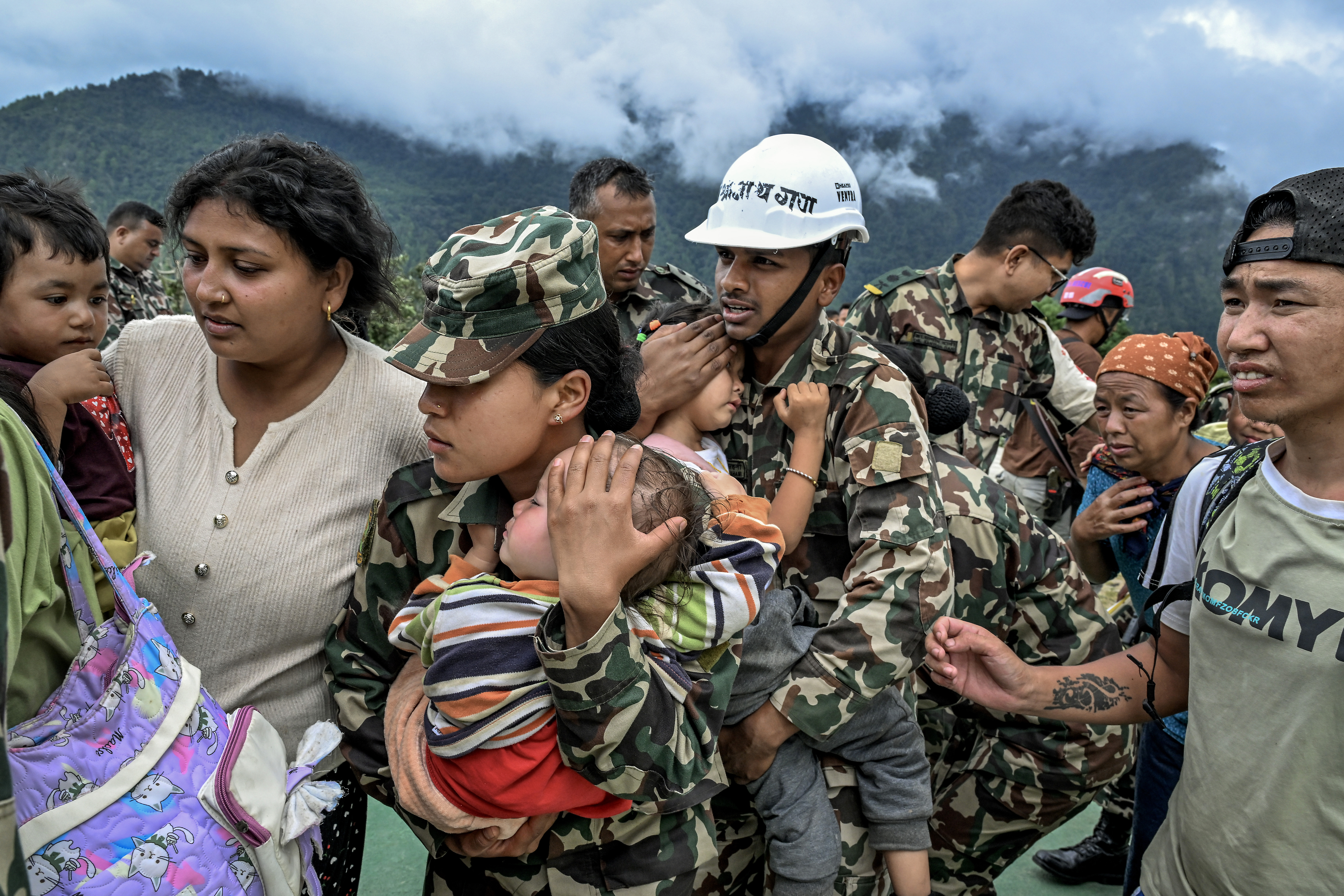
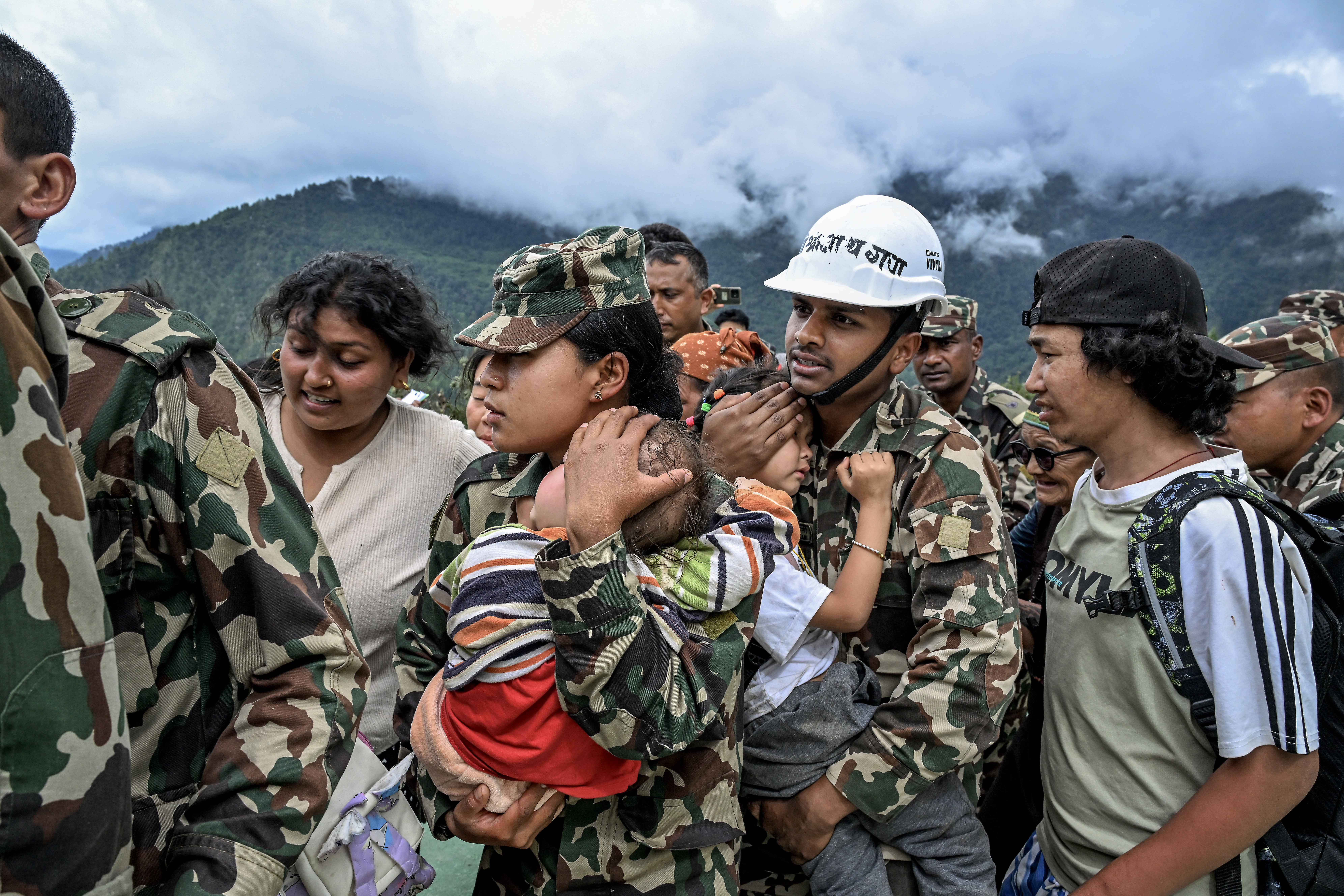
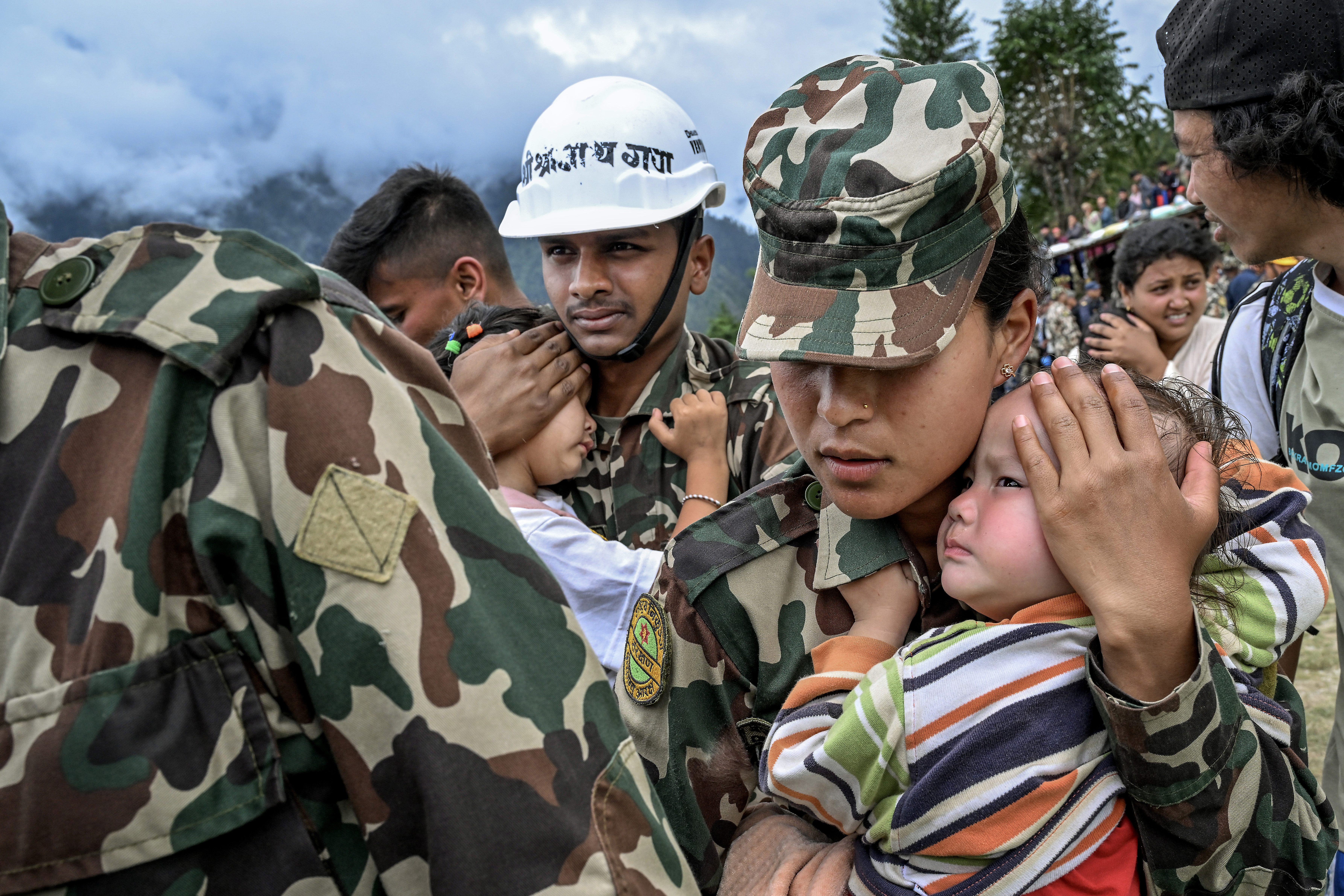
    Children are carried to a rescue helicopter by military personnel in the disaster-stricken Rasuwa district near Nepal’s border with Tibet, on Thursday, Aug. 27, 2026. Emergency workers and helicopters scoured steep Himalayan valleys on Thursday in a desperate search for survivors after a torrent of water, mud and ice killed hundreds — and perhaps many more — as it swept through a river valley that runs through Tibet and Nepal. More than 1,400 people are still missing. (Atul Loke/The New York Times)ATUL LOKE
    People wait in line to board rescue helicopters in the disaster-stricken Rasuwa district near Nepal’s border with Tibet, on Thursday, Aug. 27, 2026. Emergency workers and helicopters scoured steep Himalayan valleys on Thursday in a desperate search for survivors after a torrent of water, mud and ice killed hundreds — and perhaps many more — as it swept through a river valley that runs through Tibet and Nepal. More than 1,400 people are still missing. (Atul Loke/The New York Times)ATUL LOKE
    A man is overcome as he waits for his turn to board a rescue helicopter in the disaster-stricken Rasuwa district near Nepal’s border with Tibet, on Thursday, Aug. 27, 2026. Emergency workers and helicopters scoured steep Himalayan valleys on Thursday in a desperate search for survivors after a torrent of water, mud and ice killed hundreds — and perhaps many more — as it swept through a river valley that runs through Tibet and Nepal. More than 1,400 people are still missing. (Atul Loke/The New York Times)ATUL LOKE
    The banks of the debris-choked Bhotekoshi River show signs of the giant torrent of water, mud and ice that swept through the remote river valley in the Rasuwa district near Nepal’s border with Tibet, on Thursday, Aug. 27, 2026. Emergency workers and helicopters scoured steep Himalayan valleys on Thursday in a desperate search for survivors after a torrent of water, mud and ice killed hundreds — and perhaps many more — as it swept through a river valley that runs through Tibet and Nepal. More than 1,400 people are still missing. (Atul Loke/The New York Times)ATUL LOKE
    The banks of the debris-choked Bhotekoshi River show signs of the giant torrent of water, mud and ice that swept through the remote river valley in the Rasuwa district near Nepal’s border with Tibet, on Thursday, Aug. 27, 2026. Emergency workers and helicopters scoured steep Himalayan valleys on Thursday in a desperate search for survivors after a torrent of water, mud and ice killed hundreds — and perhaps many more — as it swept through a river valley that runs through Tibet and Nepal. More than 1,400 people are still missing. (Atul Loke/The New York Times)ATUL LOKE
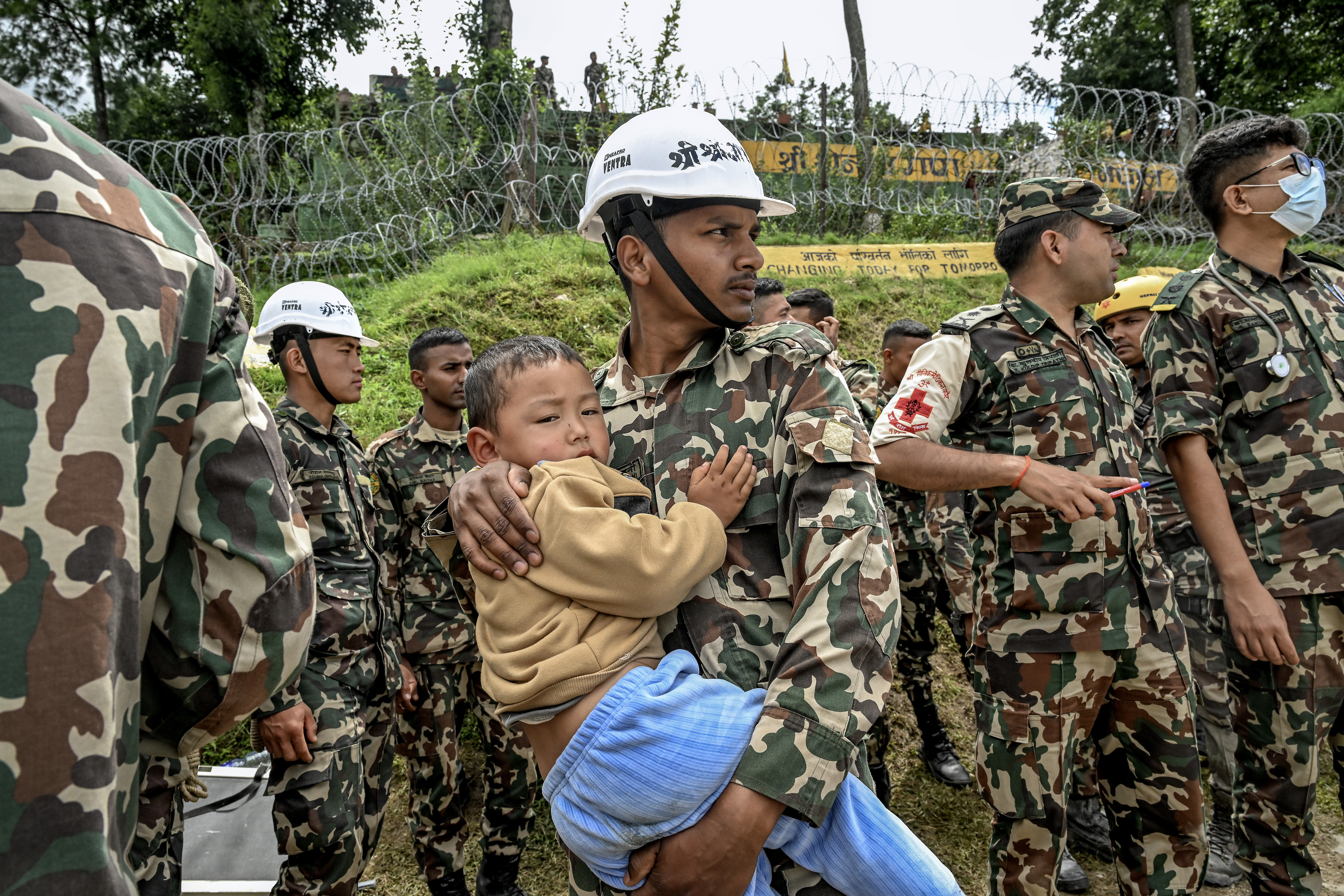
    A child is carried to a rescue helicopter in the disaster-stricken Rasuwa district near Nepal’s border with Tibet, on Thursday, Aug. 27, 2026. Emergency workers and helicopters scoured steep Himalayan valleys on Thursday in a desperate search for survivors after a torrent of water, mud and ice killed hundreds — and perhaps many more — as it swept through a river valley that runs through Tibet and Nepal. More than 1,400 people are still missing. (Atul Loke/The New York Times)ATUL LOKE
    Flooding survivors are assisted by military personnel as they walk to board a rescue helicopter in the disaster-stricken Rasuwa district near Nepal’s border with Tibet, on Thursday, Aug. 27, 2026. Emergency workers and helicopters scoured steep Himalayan valleys on Thursday in a desperate search for survivors after a torrent of water, mud and ice killed hundreds — and perhaps many more — as it swept through a river valley that runs through Tibet and Nepal. More than 1,400 people are still missing. (Atul Loke/The New York Times)ATUL LOKE
    Children are carried to a rescue helicopter by military personnel in the disaster-stricken Rasuwa district near Nepal’s border with Tibet, on Thursday, Aug. 27, 2026. Emergency workers and helicopters scoured steep Himalayan valleys on Thursday in a desperate search for survivors after a torrent of water, mud and ice killed hundreds — and perhaps many more — as it swept through a river valley that runs through Tibet and Nepal. More than 1,400 people are still missing. (Atul Loke/The New York Times)ATUL LOKE
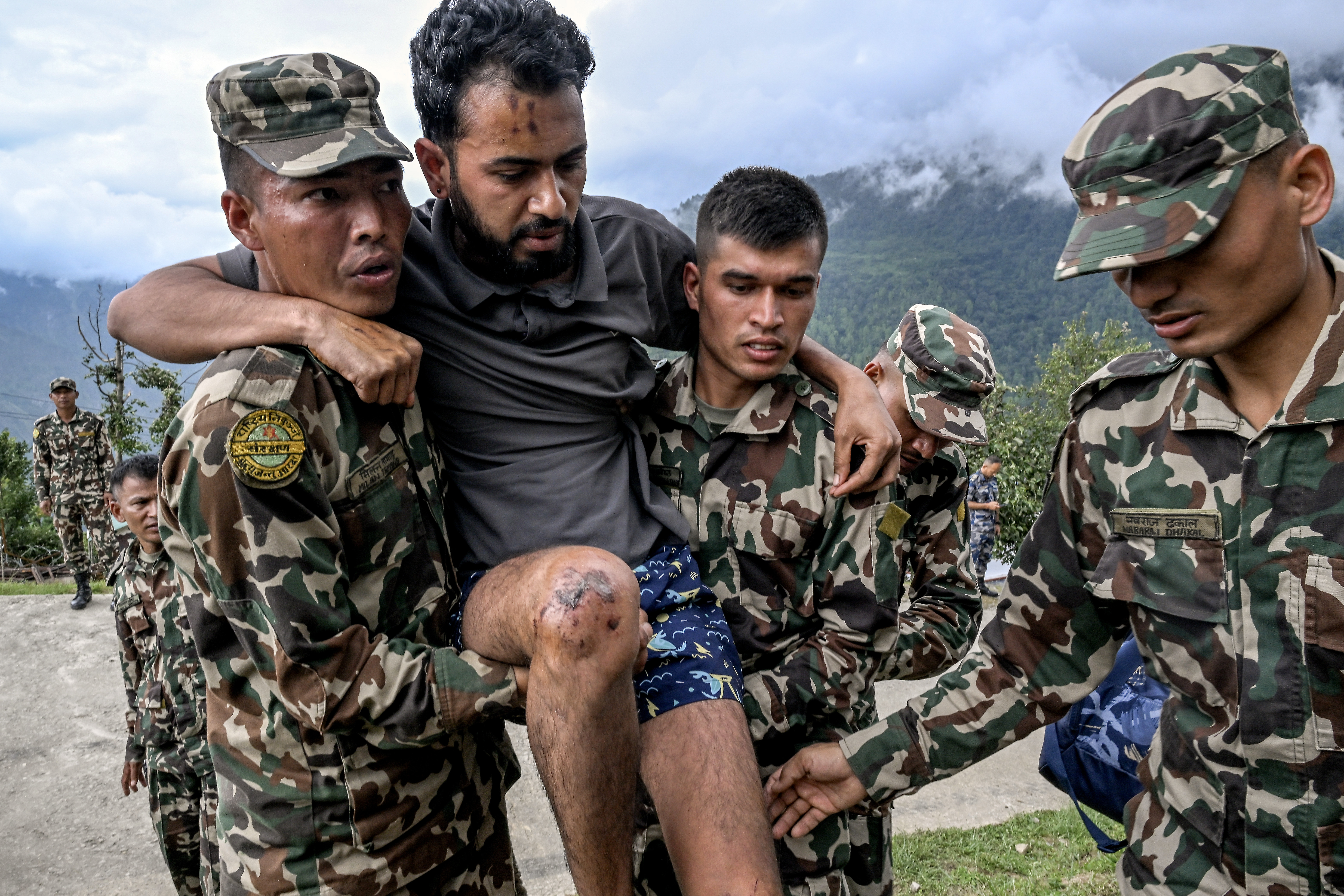
    An injured man is carried to a rescue helicopter by military personnel in the disaster-stricken Rasuwa district near Nepal’s border with Tibet, on Thursday, Aug. 27, 2026. Emergency workers and helicopters scoured steep Himalayan valleys on Thursday in a desperate search for survivors after a torrent of water, mud and ice killed hundreds — and perhaps many more — as it swept through a river valley that runs through Tibet and Nepal. More than 1,400 people are still missing. (Atul Loke/The New York Times)ATUL LOKE
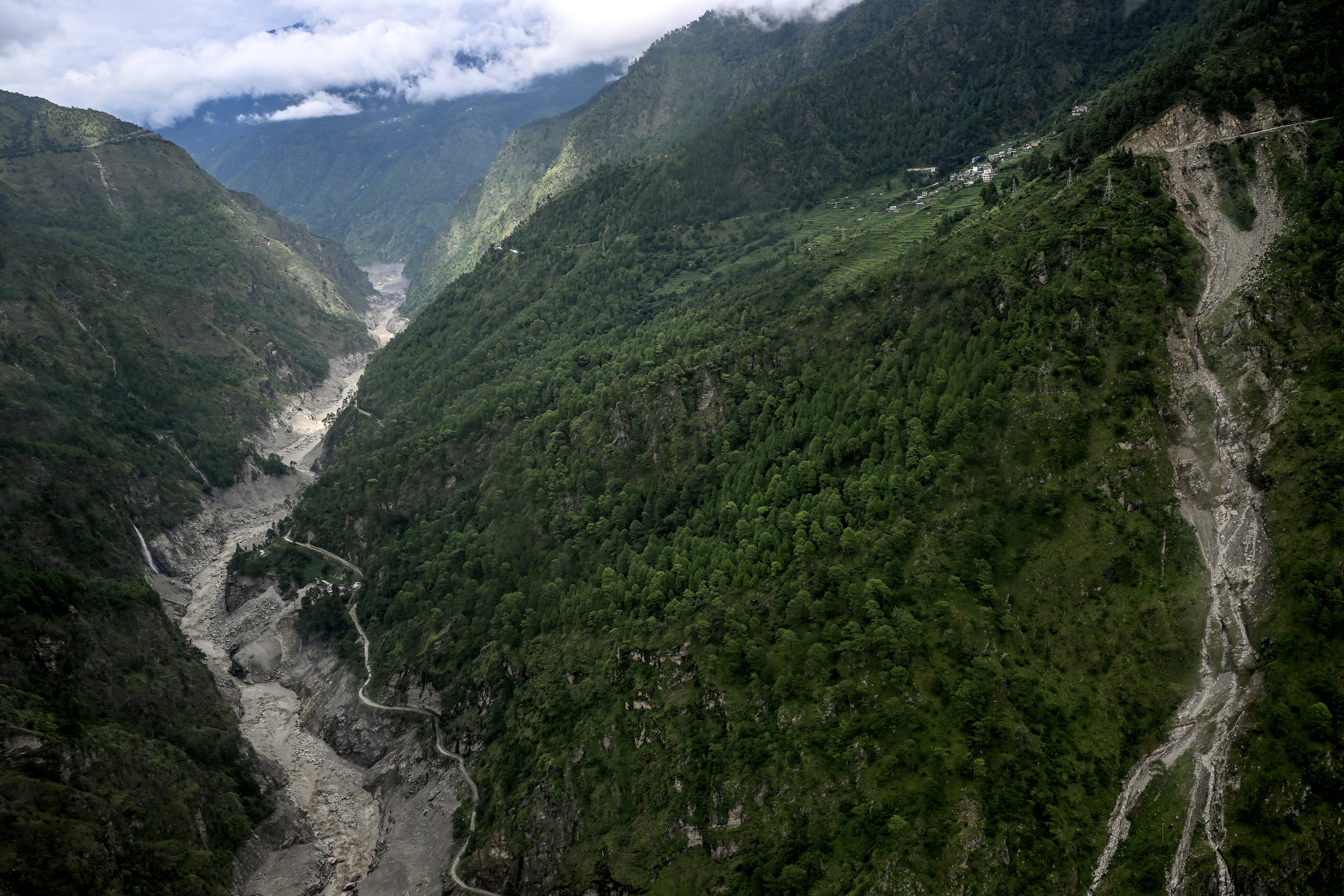
    The banks of the Trishuli River show signs of the giant torrent of water, mud and ice that swept through the remote river valley in the Rasuwa district near Nepal’s border with Tibet, on Thursday, Aug. 27, 2026. Emergency workers and helicopters scoured steep Himalayan valleys on Thursday in a desperate search for survivors after a torrent of water, mud and ice killed hundreds — and perhaps many more — as it swept through a river valley that runs through Tibet and Nepal. More than 1,400 people are still missing. (Atul Loke/The New York Times)ATUL LOKE
    A young flooding survivor is carried to a rescue helicopter by military personnel in the disaster-stricken Rasuwa district near Nepal’s border with Tibet, on Thursday, Aug. 27, 2026. Emergency workers and helicopters scoured steep Himalayan valleys on Thursday in a desperate search for survivors after a torrent of water, mud and ice killed hundreds — and perhaps many more — as it swept through a river valley that runs through Tibet and Nepal. More than 1,400 people are still missing. (Atul Loke/The New York Times)ATUL LOKE