Category: Wires

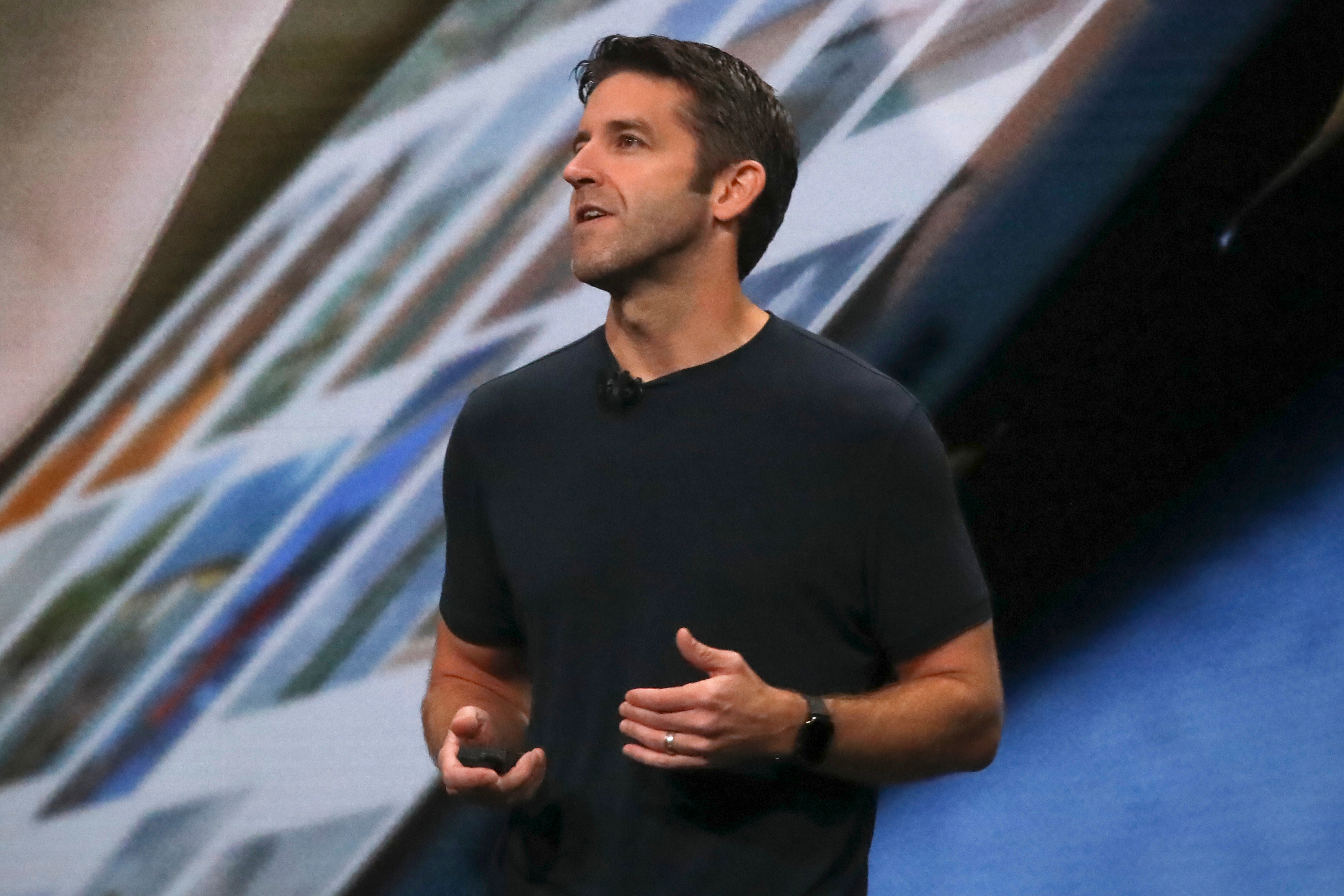
  • Apple’s new CEO, John Ternus, takes over from Tim Cook after 15 years

    Apple’s new CEO, John Ternus, takes over from Tim Cook after 15 years

    Apple’s new CEO John Ternus took the helm of the iconic tech giant on Tuesday, ending Tim Cook’s 15-year tenure during which the company’s value skyrocket to $4.6 trillion thanks to the iPhone’s enormous popularity.

    The transition to a new CEO comes at a pivotal time for Apple. Artificial intelligence has unleashed the greatest upheaval within the industry since Steve Jobs unveiled the first iPhone in 2007. Apple has gotten off to a rough start in AI after stumbling in its efforts to deliver new features built on the technology, as promised nearly two years ago.

    Earlier this year, it unveiled new artificial intelligence advances, including upgrades to its Siri assistant, emphasizing a focus on privacy and day-to-day use as the iPhone maker tries to catch up with rivals.

    Ternus faces challenges that will force him to step outside his comfort zone in hardware engineering. Beyond finding ways to keep Apple competitive in the artificial intelligence race, he will need to navigate supply chain questions and relationships with figures such as President Donald Trump, who offered public praise for his predecessor on Tuesday.

    Serving as Apple CEO will also require soft skills, including developing relationships with important figures. Cook cultivated ties with Trump as he navigated the company through business challenges, including Trump’s trade and tariff war targeting countries in Asia, where Apple has extensive manufacturing supply chains. Although he is handing over the CEO reins at Apple, Cook is widely expected to help the company maintain a good relationship with Trump after he shifts to his new role as executive chairman.

    Ternus worked on some of Apple’s signature products under Cook, including the Apple Watch, AirPods, and Apple Vision Pro. He will headline next week’s launch of the latest iPhone at Apple’s Cupertino, Calif., headquarters.

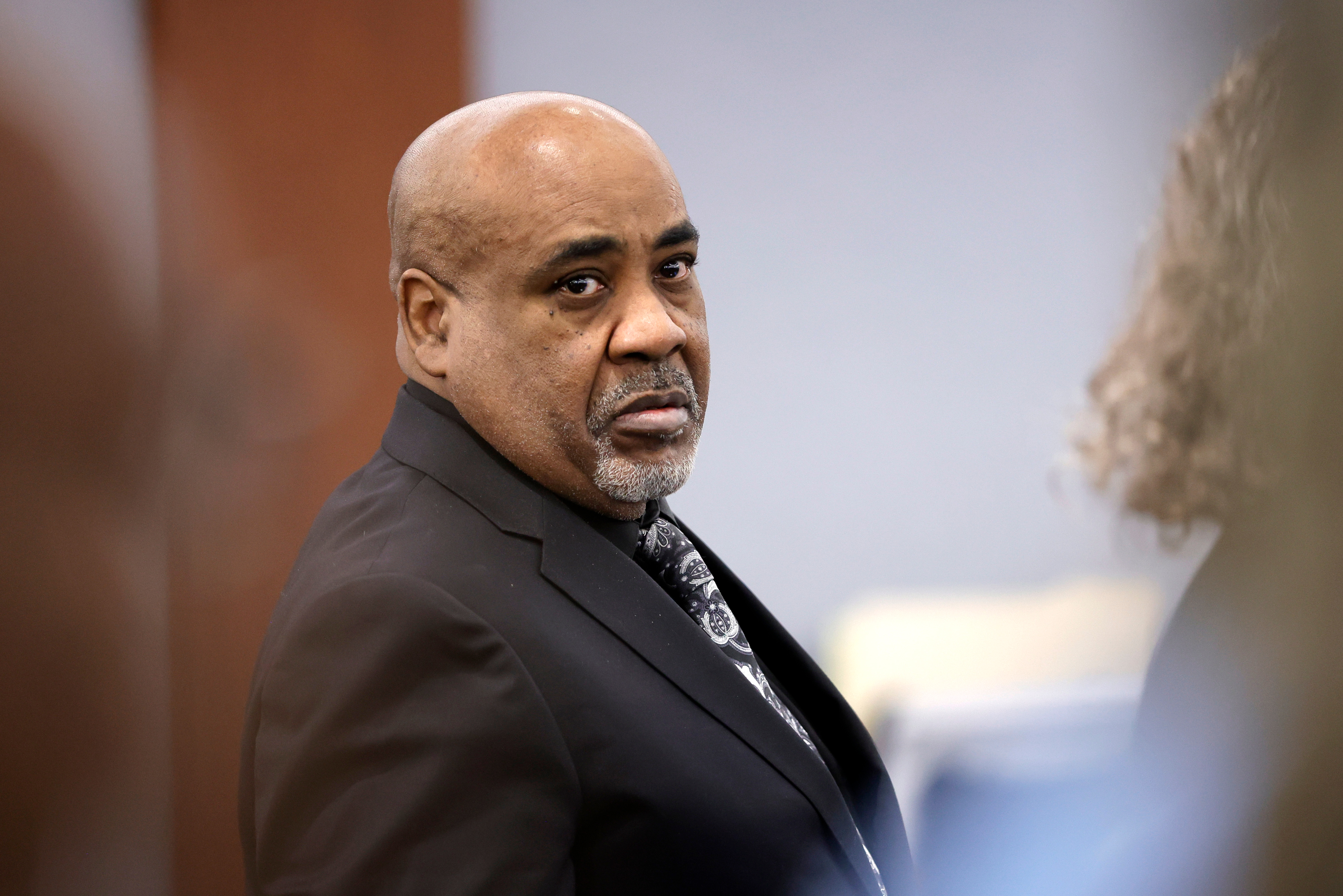
  • Jury convicts Davis of first-degree murder for the 1996 killing of rap icon Tupac Shakur

    Jury convicts Davis of first-degree murder for the 1996 killing of rap icon Tupac Shakur

    LAS VEGAS — A jury found Duane “Keffe D” Davis guilty of orchestrating the 1996 killing of rap icon Tupac Shakur, finally bringing a measure of resolution to a case that had gripped hip-hop fans and lingered in the public imagination for decades.

    The 63-year-old Davis was convicted Monday of a single count of murder with a deadly weapon and could be sentenced to life in prison. The jury deliberated for less than three hours after a weekslong trial in Las Vegas.

    After the verdict was read, Shakur’s sister, Sekyiwa “Set” Shakur, cried and hugged the prosecutors. Davis’ son covered his face with one hand.

    Chief Deputy District Attorney Binu Palal told jurors in closing arguments earlier Monday that Davis acquired a gun and “went hunting” for Shakur and Death Row Records co-founder Marion “Suge” Knight after the men had beaten up Davis’ nephew earlier that night.

    “He is responsible of the murder of Tupac Shakur,” Palal said. “Tell him you hear him. Find him guilty.”

    Prosecutors said that while his story had changed over the years, Davis repeatedly placed himself inside a white Cadillac from which the shots were fired. And they said that while he did not pull the trigger, evidence showed he’d called for the gunfire as a powerful gang leader the younger men in the car, including his nephew, were going to listen to.

    Defense attorney Michael Sanft asked jurors if there was any evidence that Davis had ever called the shots before or after the shooting.

    The panel of 16 jurors, four of whom are alternates, heard testimony from 24 prosecution witnesses and three defense witnesses over nine days.

    The prosecution said the state would dismiss a gang enhancement charge due to witness logistics. Prosecutors declined to comment following the verdict, and members of Shakur’s family said they were waiting until sentencing, which is scheduled for October.

    Decades-old case has drawn attention of hip-hop fans and crime experts alike

    The trial brought to a head a decades-old case that for years has drawn the attention of hip-hop fans and true crime experts alike. Shakur, who was considered one of the most influential rappers of all time, was in Las Vegas on Sept. 7, 1996, and stopped at a red light when a white Cadillac pulled up beside him, and shots were fired. He died six days later from his wounds. Knight was also wounded but survived.

    For years, nobody had been charged in the rapper’s death until Davis began making public statements, saying he was in the Cadillac and gave the gun to others in the backseat, calling the shooting a retaliation for the earlier beating of his nephew. Davis is the only person still alive among the four men prosecutors say were in the Cadillac.

    Defense argued public statements were untrue, physical evidence was lacking

    Sanft, Davis’ attorney, argued there was no physical evidence connecting his client to the shooting. He said the book Davis co-authored and the public statements he made were dramatized bravado designed to make money, not to tell the truth.

    Throughout the trial, Sanft poked holes in prosecutors’ narrative. He said investigators did not back up the claims made by his client, and he repeatedly pointed out a lack of physical evidence, such as phone records, that showed Davis was the shot caller.

    “They have nothing in this case that says that man was here in Las Vegas on Sept. 7, 1996,” Sanft said during his closing argument.

    In a rebuttal argument, prosecutor Marc DiGiacomo pointed to a scrapbook Davis kept containing articles about Shakur.

    “This guy’s scrapbooking his murder, for God’s sake,” DiGiacomo told jurors.

    Davis’ own words were front and center

    Palal held up Davis’ 2019 memoir, Compton Street Legend, and played an interview in which Davis encouraged people to buy it to get the “real truth.” Although the book contains a disclaimer saying some facts were changed, prosecutors argued the central account did not.

    Sanft also turned to his client’s memoir during his closing argument. While reading an excerpt, he said the N-word aloud, prompting people watching in an overflow courtroom to recoil and shake their heads.

    In multiple interviews, Davis said he handed the gun to the back seat, but in others as well as in his book, Davis wouldn’t say who pulled the trigger.

    Gang and record label rivalries provided the backdrop

    While insisting Davis’ words alone were enough to convict him, prosecutors said a gang rivalry helped explain why the shooting happened.

    Witnesses described the hostile rivalry between the Los Angeles gang sects leading up to Shakur’s death, and how the gangs became affiliated with two rival labels — Mob Piru with Knight’s Death Row Records and the South Side Compton Crips with Sean “Diddy” Combs’ Bad Boy Records.

    The shooting death of Bad Boy’s the Notorious B.I.G. six months after Shakur came up many times during the trial, with law enforcement witnesses saying Davis was briefly a suspect in that killing before being discounted. That case, which has also been an obsession of hip-hop fans, remains unsolved.

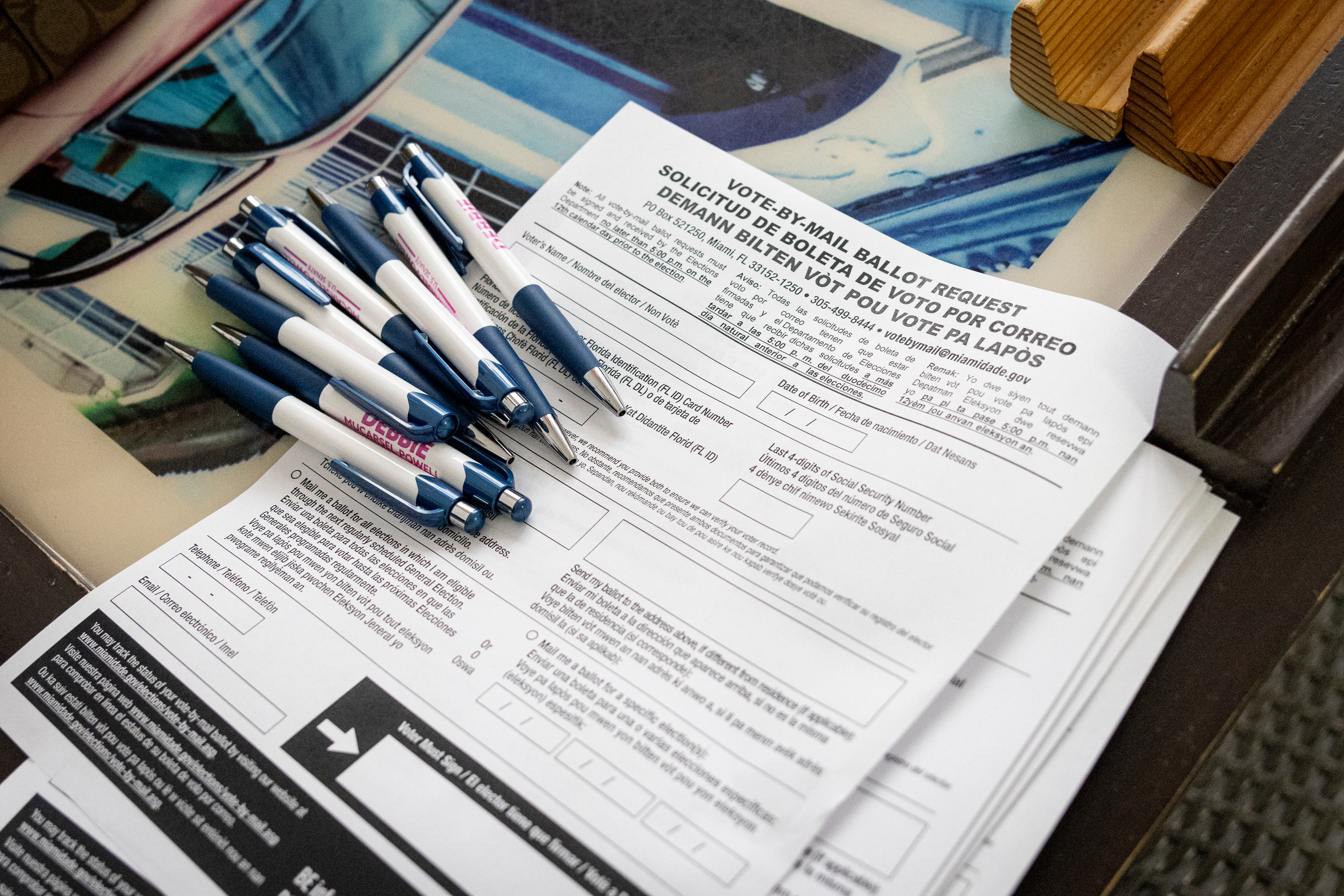
  • Postal Service plans may keep voters from getting ballots, whistleblower says

    Postal Service plans may keep voters from getting ballots, whistleblower says

    An anonymous federal official warned in a disclosure to Congress that a rushed and insufficiently tested U.S. Postal Service system could prevent large numbers of Americans from receiving mail ballots this fall if courts approve President Donald Trump’s plans for the midterm elections.

    The disclosure, made public Tuesday morning by Sen. Richard Blumenthal (D., Conn.), says the Postal Service has adopted an internal “zero-percent failure policy” under which an entire batch of ballots would be rejected if a single barcode sampled by a postal employee could not be scanned or matched with information submitted through a new online portal. A batch could contain tens of thousands of ballots, according to the disclosure.

    “The Postal Service has designed a system to disenfranchise millions of Americans,” Blumenthal said in a call with reporters.

    Postal officials and the White House did not immediately provide comment.

    In public statements, the Postal Service has previously said information submitted through the portal will be updated immediately. It has said postal employees will not determine voter eligibility or check names and addresses for accuracy. The rule does not disclose the sampling formula or zero-failure policy described in the whistleblower disclosure.

    The fight over the Postal Service’s plans is rooted in an executive order from Trump that seeks to overhaul mail voting. A judge has blocked those plans for now, but the administration is seeking to reinstate them ahead of this fall’s midterm elections.

    If the administration gets its way, state and local election officials would have to upload lists of voters to an online portal the Postal Service is designing. Postal employees would refuse to deliver to anyone who is not on those lists.

    The unnamed official alleged that the portal was assembled under constantly changing requirements and with as few as four working days available for customer testing before a planned launch.

    If the Postal Service’s plans go into effect, election officials will confront new challenges when they mail ballots in large batches. Postal workers plan to scan barcodes on a sample of envelopes to ensure the voters appear on the state’s list, according to the whistleblower. If they find even one mismatch, they will refuse to accept the entire batch, the whistleblower said. That means a single mismatch in a batch of 10,000 ballots would prevent the 9,999 other ballots from being mailed until discrepancies were resolved.

    “As designed, the process is entirely unforgiving,” the disclosure said. “It could delay ballots by the thousands in repeated verification cycles — and thus prevent states from mailing enormous numbers of ballots.”

    State and local officials often mail ballots in large batches to manage them as effectively as possible. Some states send ballots to all registered voters, and they must place millions of ballots in the mail in a short period.

    Many election officials have expressed alarm about the Postal Service’s overall plans under Trump’s executive order because they don’t believe they have been adequately thought through for a fast-approaching election.

    Among the issues they worry about are potential mismatches for mundane reasons. States constantly update their voter rolls, and the lists they send to the Postal Service could be out of date within minutes as new voters register and existing ones update their registrations because they’ve moved.

    The Postal Service has said states can update their voter lists, but election officials have expressed concerns that the new online portal won’t be able to handle a steady stream of updates.

    The whistleblower disclosure could add to those concerns and bolster legal challenges to the executive order and postal rules.

    The disclosure, dated Sunday, was submitted to Blumenthal by Whistleblower Aid on behalf of an anonymous federal official it represents.

    The organization described the unnamed whistleblower as a “federal official with direct knowledge of potentially catastrophic problems in the development” of the Postal Service’s plans and said the official feared reprisal by administration officials if identified.

    Blumenthal sent the disclosure late Monday to Postmaster General David Steiner and asked him to provide documents about the Postal Service’s plans.

    Blumenthal is the ranking Democrat on the Permanent Subcommittee on Investigations for the Senate Committee on Homeland Security and Governmental Affairs.

    States and voting rights groups sued over the executive order soon after Trump signed it in March. The Supreme Court last week allowed work on the executive order to proceed for the moment, but days later a lower court blocked it.

    The administration is seeking to get it reinstated but faces timing challenges. Officials in North Carolina are preparing to start mailing ballots on Friday under a state law requiring them to send them to those who ask for them starting 60 days before an election. Other states are set to start mailing their ballots in the following days and weeks.

    The whistleblower said the Postal Service stopped working on the portal around June 25 after a federal judge blocked implementation of Trump’s directive, then resumed work around July 29 while that order remained in effect.

    The disclosure said work continued after the judge issued a new order on Thursday barring the Postal Service for 14 days from taking further preparatory steps that would apply to all states for the November election. In a brief ruling Monday, the judge said the Postal Service could work on the portal for states that want to voluntarily use it.

    Postal officials planned to launch the portal on Tuesday, according to the whistleblower. One of the whistleblower’s attorneys, David Kligerman, said work on the portal had continued in recent days but didn’t know whether the Postal Service was sticking with its plan to make it available on Tuesday.

  • House lawmakers return to Washington with a stopgap funding bill atop the list of priorities

    House lawmakers return to Washington with a stopgap funding bill atop the list of priorities

    WASHINGTON — House lawmakers returned to Washington on Monday with a short to-do list after five weeks back in their home districts. The first order of business is most likely a vote on a stopgap spending bill designed to keep the federal government fully funded through early December, removing the possibility of a shutdown before the midterm elections.

    With election season getting underway, votes are also expected on measures designed to amplify the GOP’s messaging strategy going into November, most notably a resolution condemning socialism. Republicans are trying to tie the Democratic Party in general to the democratic socialist candidates who have succeeded this year in running for office.

    “The first thing is we’ve got to make sure this government gets funded and we don’t have another Democratic shutdown,” Speaker Mike Johnson told reporters as he prepared to open the chamber for business. The funding vote will most likely take place today.

    One significant item that did not make its way onto the House schedule this week is a Senate-passed bill that imposes sanctions on key segments of the Russian economy and allows President Donald Trump to impose steep tariffs on goods imported from countries that buy the vast majority of Russian oil and gas. The effort led by the late Sen. Lindsey Graham aims to deprive Russian President Vladimir Putin of revenue used to finance the war against Ukraine.

    The bill passed 86-11 in the Senate. House passage would send the bill to Trump’s desk for his signature. However, some key House Democrats oppose the bill. Democratic leader Hakeem Jeffries said the legislation risks providing Trump and his administration with new sanction and tariff authorities that “we believe they will abuse.”

    “I have serious concerns with the legislation,” he told reporters.

    The return to Washington also brings a renewed focus on improper behavior by lawmakers as the House will have its first chance to act on a recommendation from the House Ethics Committee to censure Rep. Chuck Edwards (R., N.C.) for engaging in persistent unprofessional and inappropriate conduct toward two young female aides in his congressional office.

    Edwards implores colleagues to reject censure vote

    Edwards has disputed the committee’s conclusion that he failed to adhere to the spirit of the rules prohibiting sexual harassment and unwanted advances toward House staffers. He points to the committee’s conclusion that found no evidence he “engaged in sexual activity or explicitly propositioned any individual under his employ.”

    Edwards said he was not asking lawmakers to approve of every gift, compliment, or social interaction, but to distinguish between conduct that someone might find unconventional and conduct that actually establishes sexual harassment.

    “Individual acts that were not themselves prohibited were gathered together, assigned the most damaging possible interpretation, and then used collectively to support a conclusion far more serious than the underlying evidence,” Edwards wrote in a letter to colleagues first reported by NOTUS.

    The committee said Edwards provided the two staffers with lavish and recurrent gifts, made comments regarding their dress and appearance, invited them to intimate dinners and vacations, sent notes regarding his effusive affection, and invited them to other activities as a way to spend time together.

    A vote to censure registers the House’s deep disapproval of a lawmaker’s conduct that does not meet the threshold for expulsion. Edwards dropped his reelection plans after the committee’s report came out.

    Lawmakers are working to avoid another shutdown

    The short-term funding bill underwent some significant changes in the Senate, which made it more palatable for Democrats. It delays a proposed rule from the Office of Management and Budget that would give political appointees more power over the distribution of federal grants. It also includes language to ensure the administration can’t transfer funds to the Border Patrol.

    But a provision that delays for one month a federal ban on intoxicating hemp THC products has prompted criticism from many GOP lawmakers. As a result, GOP leaders will likely place the bill on a fast-track process that avoids a separate procedural vote, bypassing any Republican efforts to block or stall the legislation. Suspension bills require a two-thirds vote to pass, meaning a significant number from both parties need to support the measure for it to pass and advance to Trump’s desk.

    Lawmakers are anxious to avoid the possibility of a shutdown as voters weigh their options going into November. The funding bill passed by a 90-6 vote in the Senate, showing that lawmakers from both political parties want to avoid a repeat of the two historic shutdowns that occurred this past year.

  • Army Secretary Dan Driscoll is stepping down after 18 months on the job, White House says

    Army Secretary Dan Driscoll is stepping down after 18 months on the job, White House says

    WASHINGTON — Army Secretary Dan Driscoll is stepping down after 18 months on the job, the White House said Monday, in the latest departure of a top military leader during the Trump administration.

    No reason was given for the departure of Driscoll, who is a friend of Vice President JD Vance, but tensions with Defense Secretary Pete Hegseth have been widely reported. It marks the latest in a series of shake-ups of top military leadership, with the Army especially seeing major upheaval.

    “Secretary Driscoll has been highly effective in advancing President Trump’s agenda to Make America Strong Again at the Department of the Army by providing outstanding leadership during historic military operations, restoring an emphasis on readiness and lethality, assisting with negotiations between Russia and Ukraine, and more,” White House spokesperson Anna Kelly said in a statement.

    “The United States Army is more powerful than ever thanks to his work alongside the Commander-in-Chief and Secretary of War,” she added.

    The Pentagon referred questions to the Army. The Army had not immediately responded to an email seeking comment. A spokesperson for Driscoll had not responded to a text message.

    Hegseth suddenly ousted the service’s top uniformed leader, Gen. Randy George, in April, while the Army’s commander in Europe and Africa, Gen. Christopher Donahue, unexpectedly stepped down in June.

    Gen. Christopher LaNeve, who has made a meteoric rise under Hegseth, took George’s place as the Army’s acting chief of staff. Under LaNeve, the service is pulling the plug on a drone modernization program that Driscoll had heralded. An Army unit based in Europe was building its own drones before LaNeve directed it to end its efforts and return to being a traditional infantry battalion, officials said this week.

    Driscoll was a George ally and lamented his departure, along with both Republican and Democratic lawmakers. He told Congress in April that he and his family drove to George’s house following his resignation “and we all gave him a hug.”

    “That being said, the civilian leadership, the design of our system, is that they get to pick the leaders that they want,” Driscoll added.

    Driscoll is an Iraq war veteran, tech investor, and former adviser to Vance, whom Driscoll met at Yale Law School. When nominating Driscoll in 2024, President Donald Trump called him “a disruptor and change agent.”

    As Army secretary, Driscoll was tapped for the unusual role of key negotiator to try to end the war between Russia and Ukraine. He was also a major force behind trying to cut the red tape for military contractors to quickly develop more drones and counterdrone capabilities as warfare rapidly changes around the world.

    The Senate confirmed him in February 2025, voting 66-28, following an Armed Services Committee hearing that was largely unconfrontational and focused on how the Army could modernize its systems, improve recruiting and beef up the military industrial base.

    Driscoll noted that his father and grandfather served in the Army and he vowed to be a secretary focused on the needs of soldiers. According to the Army, Driscoll served as an armor officer from August 2007 to March 2011, deploying to Iraq from October 2009 to July 2010.

    He also ran unsuccessfully in the Republican primary for a North Carolina congressional seat in 2020, getting about 8% of the vote in a crowded field of candidates.

    His departure comes after Hegseth ousted several other generals and admirals, including the head of the Navy.

    The Pentagon abruptly announced in April that Navy Secretary John Phelan was leaving the job, becoming the first head of a military service to depart during Trump’s second term.

  • DA says a teen who recorded San Diego mosque shooting livestream has been charged with murder

    DA says a teen who recorded San Diego mosque shooting livestream has been charged with murder

    A 17-year-old North Carolina girl who recorded a livestream of a shooting that killed three people at a San Diego mosque and disseminated the attackers’ white-supremacist writings has been charged with murder by aiding and abetting, a district attorney said Monday.

    Forsyth County District Attorney Jim O’Neill said at a news conference in Winston-Salem that the girl, identified in court records as Sarah Lindsey Santiago, was arrested last week. A grand jury indicted her on three counts of murder and one count of conspiracy Monday.

    Santiago’s attorney did not immediately return a message from the Associated Press seeking comment Monday.

    Under North Carolina law, the aiding-and-abetting charges carry the same penalties as if the girl had committed the attack herself, O’Neill said. According to the indictment, Santiago agreed prior to the attack that she would record the livestream, distribute it, and release a document written by the attackers. She carried out those tasks, it said, and she purchased a patch bearing a white-supremacist symbol and sent it to one of the gunmen to wear during the attack.

    “The individual here, locally, was the person who was recording the livestream,” O’Neill said. “She disseminated that information and she published their manifesto.”

    Cain Clark, 17, and Caleb Vazquez, 18, stormed the Islamic Center on May 18 before being driven back outside by a security guard who exchanged gunfire with them as he initiated a lockdown, helping to protect 140 children who were just steps away.

    The pair killed the guard, Amin Abdullah, and two other men before taking their own lives in a vehicle nearby. They left behind rambling writings full of vitriol against a wide range of people, and cited the shooter who killed 51 people at two mosques in Christchurch, New Zealand, in 2019, as one of their models for their violence.

    The two also planned subsequent attacks on two other targets: a Jewish temple and a predominantly Black high school, O’Neill said. He credited the guard and other victims at the mosque with having saved countless lives.

    The attackers’ writings cited a range of far-right ideological inspirations, including the notion that white people are being replaced by other populations, and detailed their motives and goals. They included hateful rhetoric toward Jewish people, Muslims, and Islam, as well as the LGBTQ+ community, Black people, women, and the political left and right.

    They indicated they were trying to accelerate the collapse of society. Vazquez wrote of having “some mental health issues” and being rejected by women.

    In a written statement, the Vazquez family said Caleb Vazquez was on the autism spectrum and had grown to resent parts of his identity. The family said they believed that, combined with exposure to hateful rhetoric online, contributed to his radicalization.

  • Supreme Court clears way for White House ballroom construction to continue

    Supreme Court clears way for White House ballroom construction to continue

    The Supreme Court on Monday allowed construction to continue on the White House ballroom, handing President Donald Trump a victory as he races to complete the largest expansion to the executive mansion in decades.

    The justices found that the historical preservationists who challenged the controversial project had not suffered the direct personal harm required to bring a lawsuit. The ruling means their legal action appears to be dead.

    The National Trust for Historic Preservation had argued that work on the ballroom, which Trump has said is part of a larger complex necessary for national security, must stop until approved by Congress.

    That argument prevailed in lower courts, which twice ordered the White House to pause work on the ballroom. But amid legal machinations, those orders were put on hold, allowing construction to move forward without interruption.

    The high court ruled the National Trust had not shown that it suffered a real-world injury from the ballroom project, meaning it did not have what is known as standing to bring its case.

    The ballroom, which is expected to be able to hold about 1,000 guests, is being built in conjunction with a five-story underground military complex that will include a hospital and shelters to protect the president and senior officials.

    Trump has said that the total cost of the ballroom may be $400 million and will be paid for with private donations, but contractors’ invoices obtained by the Washington Post show that the cost of the project will be $600 million and that taxpayers will foot about half the bill.

    Lower courts have not blocked work on the underground complex, and the justices’ decision pertained only to the aboveground portion.

    The majority in the unsigned ruling said the Trust had not met the required legal standard to bring its case.

    “Today, we do not pass upon the legality of the government’s East Wing project,” the majority wrote. “We conclude only that, based on the submissions before us, the government is likely to prevail in showing that the Trust lacks … standing to challenge the project in federal court.”

    The ruling came over the objections of an unusual coalition of justices, who often are on different sides. Chief Justice John G. Roberts Jr., a conservative, joined with the court’s three liberals in dissent.

    Writing for the group, Roberts said the decision “is no victory for the separation of powers.” He referenced Alison Hoagland, a Trust board member.

    “The White House is not just any building, and — when it comes to historic preservation — Hoagland is not just any person,” Roberts wrote. “In failing to appreciate as much, the Court misconceives the plaintiff’s injury, allowing the Executive’s likely infringement of the Legislature’s power of the purse and authority to regulate federal property in the District of Columbia to continue.”

    The White House and the National Trust did not immediately respond to questions about the ruling.

    Before the Supreme Court order, the U.S. Court of Appeals for the D.C. Circuit upheld a federal judge’s April ruling that work on the 90,000-square-foot addition to the executive mansion probably requires congressional approval to continue.

    Shortly after U.S. District Judge Richard Leon ordered work to stop, the appeals court stepped in and paused that ruling while it decided whether to issue its own injunction.

    The appeals court blocked aboveground construction anew on Aug. 7, finding that Trump had exceeded his power in authorizing the destruction of the East Wing of the White House and the building of the ballroom.

    That decision was stayed for two weeks to give the Trump administration time to appeal to the Supreme Court.

    “We are aware of no instance in American history in which a President unilaterally and using privately collected funds demolished substantial portions of the White House that Congress authorized to be built and American taxpayers paid for. Until now,” the appeals panel wrote.

    In its filings with the high court, the Trump administration argued that it was too late to stop ballroom work because the project was 65% complete, and that the injunction put the lives of Trump and others at risk.

    The filing cited a number of alleged attempts on Trump’s life, including a 2024 incident at a Pennsylvania rally when a would-be assassin’s bullet grazed his ear.

    “The injunction would wrongfully install a single district judge as sole arbiter of what further construction is ‘strictly necessary’ to protect the safety of the President, his family, staff members, and visitors to the White House, including foreign dignitaries, and presidents and prime ministers of other countries,” Solicitor General D. John Sauer wrote.

    Trump initially characterized the ballroom as necessary for presidents to entertain VIP guests, but in recent months he has shifted to arguing it was crucial on security grounds.

    The Trump administration has said the ballroom, which will be built with missile-resistant columns, a drone-proof roof and blastproof windows, will shield the military complex below and the White House more generally.

    To bolster the claim, the administration shared affidavits from Secretary of State Marco Rubio, FBI Director Kash Patel, and others who claimed that completing the ballroom was necessary to protect the president.

    Trump recently posted on Truth Social that the ballroom was a “desperately needed National Security structure” and derided the preservationists as “treasonists.”

    The White House announced the project in July 2025, saying at the time that the privately funded addition would hold 650 guests and cost $200 million. But both the capacity and the price have spiraled upward.

    The National Trust sued to block construction of the ballroom in December, saying that the Trump administration had not gone through the legally mandated review process and that Congress has sole authority to authorize major White House construction.

    The group was skeptical of the claims that pausing the project would create a security risk. In recent court documents, the National Trust argued that the Trump administration was racing to complete the ballroom to thwart oversight.

    “Rather than obtain permission from Congress, Petitioners have instead decided to try to outrun judicial review,” the National Trust wrote in its filing.

    The group also cited a National Park Service environmental assessment that found the ballroom would interfere with sight lines and disrupt the historical continuity of the White House grounds.

    About 30 congressional Democrats filed an amicus brief supporting the National Trust in the case.

    “Questions about how best to protect current and future White House residents, staff, and visitors fall well within the ambit of Congress’s powers over federal property and federal spending,” the Democrats wrote.

    The Post reported in June that an internal contractor’s estimate put the final cost of the project at about $600 million and that roughly half the money would come from taxpayers. The administration has approved a $500 million no-bid contract to construct the ballroom.

  • Congo authorities report more than 6,000 confirmed Ebola cases and nearly 3,000 deaths

    Congo authorities report more than 6,000 confirmed Ebola cases and nearly 3,000 deaths

    BUNIA, Congo — Congo’s authorities said Monday that the fastest-growing Ebola outbreak in history has topped 6,000 cases with 2,911 deaths.

    More than 1,360 people have recovered from the virus, in what authorities said was an “encouraging” development.

    The outbreak in eastern Congo is spreading under extremely difficult conditions, fueled by insecurity, displacement, a health workers’ strike, and intense population movements. The situation is particularly concerning at displacement sites, where residents already live in extremely precarious conditions.

    Last week, the virus spilled into two new health zones in the region.

    The World Health Organization has said that it remains out of control and is on track to surpass the 2014-2016 West Africa Ebola outbreak, the deadliest on record, which killed more than 11,000 people, primarily in Guinea, Liberia, and Sierra Leone.

    On Saturday, an Ebola response team was attacked on the outskirts of the town of Mambasa in Ituri province while responding to a call to secure a body. Young people armed with machetes stormed the site of the funeral, forcing the team to flee and injuring one member, a representative told the Associated Press.

    “We demand greater security so we can operate in the field and do our work without endangering our lives,” said Floribert Magene, a member of the response team.

    Bodies of those who died of Ebola can be highly contagious and lead to further spread when people prepare them for burial and gather for funerals.

    In response to the outbreak, Congolese authorities have mandated that the dangerous work of burying suspected victims be managed wherever possible by authorities, which can be met by protests from families and friends.

    The outbreak is caused by the Bundibugyo virus, a rare type of Ebola that has no approved vaccine or treatment.

    Last week, Congo began vaccinating health and other front-line workers with the Ervebo vaccine that was effective in past Ebola outbreaks caused by a different, more common type called Zaire.

    Clinical trials are underway to find a licensed vaccine for the Bundibugyo virus.

    Although the current outbreak was declared in mid-May, officials believe it had been spreading since February. It has spread from three health zones to nearly 60, with most cases and deaths occurring outside the network of monitored contacts and within communities.

    Efforts to bring the outbreak under control — from limited public gatherings to social distancing and airport closures — have disrupted life in the six provinces, particularly Ituri, which also has been ravaged by rebel violence.

    The government has introduced some measures, including installing health and sanitary equipment at some locations, but advocacy groups say more needs to be done to build trust with the community.

    While neighboring Uganda declared itself free of Ebola last month, the risk of further cross-border spread remains, WHO said last week.

  • Pentagon secretly installs military influencers in civilian roles

    Pentagon secretly installs military influencers in civilian roles

    The Pentagon has secretly installed several conservative military veterans with large online followings in government roles, declining to disclose their assignments as they amplify Defense Secretary Pete Hegseth’s viewpoints and attack those who scrutinize the Trump administration, according to people familiar with the matter and corroborating material.

    At least some of the influencers have been assigned to civilian roles that could lead to changes in policy, the people familiar with the matter said. Like others, they spoke on the condition of anonymity because of the sensitivity of the issue.

    Neither the Pentagon nor those involved have disclosed the government roles despite the Trump administration’s claims that they are running the most transparent Defense Department ever.

    Those involved include Rob Maness, a retired Air Force colonel, and Kurt Schlichter, a retired Army colonel, people familiar with the matter said. Pentagon records reviewed by the Washington Post show that both have active official government email addresses as of this past week and are assigned to the office of Anthony Tata, the undersecretary of defense for personnel and readiness. The email addresses include a “.civ” suffix, meaning they are labeled as civilian employees, rather than as military personnel or contractors.

    Both served for decades in uniform and, since retiring, have turned from the military to conservative commentary. Maness has more than 135,000 followers on X, while Schlichter has nearly 620,000.

    Another retired Army colonel and influencer, Thomas Anderson, was listed in Pentagon records earlier this year with a “.civ” email address and assigned to Tata’s office, according to people familiar with the matter and records reviewed by the Post. An attorney, he writes online under the pen name Cynical Publius and has more than 323,000 followers on X. He was no longer listed in Pentagon records late this past week, the people familiar with the issue said.

    The assignments for all three have not previously been reported. Questions have been raised online about influencers’ connections with the Pentagon, including in an article last week by the Bulwark.

    Pentagon spokesperson Joel Valdez declined to comment to the Post about whether any of the three are drawing a taxpayer-funded salary, what roles they have, or how long those jobs are expected to last. Tata did not respond to a request for comment.

    Maness and Schlichter did not respond to emails or other messages requesting comment. Anderson declined to comment in a short phone call.

    The individuals are assigned as either “special government employees” or “highly qualified experts,” people familiar with the issue said. Schlichter appears in a government database with an “HQE” designation after his name, according to material reviewed by the Post.

    SGEs are limited by law to working no more than 130 days in any 365-day period. Those with HQE status can work full or part time, with or without compensation, according to government guidance on the issue released in 2023. It was not clear what financial agreements were reached with Maness, Schlichter, and Anderson, and when each of their assignments began.

    Tata’s team has taken on a number of culture-war issues, including scrutinizing war colleges for “woke” ideology and reviewing how the Biden administration adopted COVID vaccine mandates for U.S. troops.

    Hegseth, a former Fox News personality and Army National Guard officer, has attempted to reshape the public discourse about Pentagon affairs. Last year, he imposed new restrictions on Pentagon press corps members that forced dozens of journalists out of the building and later introduced a new, primarily right-wing press corps to replace them.

    The increased attention on the Pentagon’s influence efforts comes after another conservative influencer, Jennica Pounds, accused a State Department official this month on social media of attempting to entrap her into publishing government secrets. Pounds, writing under the pen name DataRepublican, posted text messages online that showed the official approached Pounds with documents to publish and tout as a journalistic scoop.

    Sarah Rogers, the undersecretary of state for public diplomacy, later disclosed on social media that she was the official who had reached out to Pounds. Rogers posted the documents herself, saying it was not a “trap,” and Pounds later said that she regretted “making a public spectacle” and “pulling people I respect into the swirl.” Rogers has been nominated by President Donald Trump to lead the U.S. Agency for Global Media, which oversees Voice of America and other government-funded media.

    The dustup was followed by the Pentagon and Pounds disclosing that she works as a special government employee for the Defense Department. She posted on social media that she became an employee in July, after holding a credential as a journalist in Hegseth’s new Pentagon press corps until June. Pounds has said on social media that she applied for a Pentagon press pass and received it in April.

    Pounds did not respond to a request for comment.

    The disclosure has roiled social media, where some fellow influencers have defended Pounds’ work amid criticism that she should have disclosed she was working for the government.

    Adam Kinzinger, a former Republican congressman and Air Force veteran, posted that it appears the Pentagon “is using your tax dollars to hire influencers on X to put out partisan talking points.”

    “How many more people that are blue checkmarks on X that are putting out information on behalf of the federal government, and Donald Trump, and the Republican Party … are actually special government employees?” said Kinzinger.

    Maness, Schlichter, and Anderson appeared on behalf of the Pentagon’s Senior Service College Task Force at the Army War College in Carlisle, Pa., in May, two people familiar with the visit said. The task force was organized in the spring with the goal of rooting out ideology deemed “toxic” or “woke,” Hegseth said in March.

    The task force has completed its research and prepared a report that has not yet been released, one of the people familiar with the visit said.

    After initial publication of this story, Anderson said on social media on Sunday night that he was asked to join the task force after he published an article in February recommending changes to the war colleges. Anderson said he was a special government employee through July 26 with work “exclusively limited” to the task force.

    “At no time have I ever received any compensation of any kind from any government source of any kind for anything I write or have ever written on X or in any magazine or other source,” Anderson wrote.

    While in Carlisle task force members met with students and professors over a number of days and asked questions about the performance of leaders like Hegseth and Gen. Dan Caine, chairman of the Joint Chiefs of Staff, one of the people familiar with the visit said. Some students were uncertain how candid they should be and whether there would be negative consequences if administration officials did not like the answers, this person said.

    The other person familiar with the visit said the task force members had concerns about the syllabus for a class focused on how military officers communicate with Congress.

    Maness retired from the Air Force in 2011 and has run unsuccessfully for a U.S. Senate seat in Louisiana. He is listed as the chairperson of GatorPAC, a political action committee that says on its website that it wants to “drain the swamp” in Washington and find more military veterans to run for office. The PAC’s website also includes videos of an online political commentary show starring Maness.

    In an article published last month by the conservative Daily Caller, Maness argues that Hegseth’s team needs to root out “disloyal” career employees in the department and laments “careerists who treat the Pentagon as their permanent fiefdom.” That article cites his decades of military experience, but does not say whether he is a current Pentagon employee.

    In an article published Wednesday on the website Campus Reform, Maness attacked a decision made by Army leaders to pull back efforts to toughen academic requirements for college students in Reserve Officers’ Training Corps programs. “Secretary Hegseth’s outrage is justified,” Maness wrote. The article likewise does not mention any government assignment.

    Maness also had a letter to the editor published in the Post in July in which he defended Hegseth’s efforts to reduce the number of military officers who attend elite universities for fellowships. He describes himself there as a retired Air Force officer, but no government role is mentioned. A Post spokesperson said that Maness did not disclose any connection to the Pentagon before publication.

    Schlichter is a columnist with the conservative site Townhall, writing and podcasting on politics, immigration, and military affairs. On Aug. 6, he published a column calling Trump a “hero for finally fighting back against Iran.”

    “He could have waltzed into the midterms, dragging Republicans behind him toward success,” Schlichter wrote. “But he had the courage to do what was necessary to stop these bastards before they made it impossible to prevent them from getting a [nuclear] bomb.”

    On social media, Schlichter posted a video earlier this month of Hegseth praising sailors aboard the USS Abraham Lincoln, an aircraft carrier that has faced morale problems during a long deployment.

    “We are,lucky to have @PeteHegseth,” Schlichter wrote on X on Aug. 14. He describes himself on X as a retired Army colonel, lawyer, and columnist, but does not disclose current Pentagon employment.

    On social media, Anderson has been a frequent critic of journalists, fellow veterans, and others opposing the Trump administration and has defended Hegseth’s efforts to overhaul military affairs. Writing for the Federalist in April, he assessed that there is “a cancer in America’s military ranks, and it must be expunged before it’s too late.”

    This past week, he repeatedly defended Pounds on X for serving as a special government employee as he also declined to answer questions from several people about whether he was an SGE employee, too.

    “The law does not view such people the same as civil servants, and they are legally allowed to continue whatever other private endeavors they were undertaking,” Anderson wrote. “In many cases, they are prohibited from revealing their status because of the sensitive nature of their work.”

    Another military influencer, John Konrad, also defended Pounds while noting he had discussions with the administration this spring about becoming a special government employee at the Pentagon. Konrad, a former member of the U.S. Merchant Marine and founder of the maritime website gCaptain, said that the Pentagon sought him out for a role and he later felt “ghosted.”

    The Pentagon also brought on Jerry Dunleavy, a journalist with the conservative Just the News, to assist Hegseth’s team with an ongoing review of the fall of Afghanistan. The Pentagon disclosed Dunleavy’s involvement in May.

    Dunleavy previously worked as an investigator for the GOP-led House Foreign Affairs Committee during an earlier investigation of the collapse in Kabul and quit in protest, saying the committee had not gone far enough.
  • U.S., Iran exchange attacks after monthlong lull in fighting

    U.S., Iran exchange attacks after monthlong lull in fighting

    DUBAI, United Arab Emirates — The United Arab Emirates said that it intercepted an Iranian drone over its waters Monday, an attack that comes after the United States and Iran exchanged fire over the weekend for the first time in a month.

    Iranian officials said two people were killed and several others wounded in the U.S. attack Sunday night on Larak Island in the Strait of Hormuz. Iran responded by launching missiles at U.S. sites in Jordan, which were intercepted.

    During the lull in fighting, the U.S. has been ratcheting up economic pressure on Iran with the hope of forcing concessions out of Tehran, including reopening the Strait of Hormuz to shipping.

    After the U.S. and Israel attacked Iran on Feb. 28, Iran established a chokehold on the vital strait, through which a fifth of the world’s traded oil passed in peacetime, slowing ship traffic to a trickle. That has roiled the global economy, raising prices worldwide for energy and other goods.

    As the fighting resumed, the price of Brent crude oil, the international standard, climbed above $90, up about 25% from the start of the war, presenting a growing problem for U.S. President Donald Trump before the midterm elections.

    A return to open conflict would be dangerous for the region, where Iran has targeted U.S. military bases and infrastructure in Gulf countries since the war began.

    In the wake of the renewed violence, Anwar Gargash, a diplomatic adviser to the UAE’s president, said on social media that “the state of neither war nor peace cannot be a sustainable solution.”

    He called for a political solution that would return normal navigation to the Strait of Hormuz, but also a “more realistic approach” than the June memo of understanding between Iran and the U.S., which, he said, “failed to outline a practical and acceptable” road map.

    UAE says Iranian attack is a ‘dangerous escalation’

    In a short statement earlier, the UAE Defense Ministry said it “dealt with” an Iranian drone that was detected over its waters approaching from Iran. There were no reports of damage.

    “This dangerous escalation constitutes a blatant violation of the UAE’s sovereignty, security, and stability, and a direct threat to the safety of its citizens and residents,” the Foreign Ministry said.

    The Defense Ministry later issued a second statement denying a claim by the Iranian army that the Al Minhad Air Base in Dubai had been targeted, saying it was false.

    In the wake of the U.S. attack on Sunday, Iran’s military warned that any further U.S. attacks would draw a far heavier response, including strikes on bases or other points from which attacks against Iran are launched, state-run IRNA reported.

    “The U.S. military has no choice but to leave the region,” the statement from Iran’s Armed Forces General Staff and the Khatam al-Anbiya Central Headquarters said.

    Iran says it has right to defend itself and will ‘respond decisively’

    Speaking after the first day of the Shanghai Cooperation Organization’s summit in Kyrgyzstan, Iranian Foreign Minister Abbas Araghchi said the United States must abide by the June memo before the current conflict can end, state television reported.

    Araghchi said Iran would continue defending its rights and that the solution to ending the conflict remained “completely clear.”

    The summit brings together a group billed as a counterweight to U.S. global influence, and includes Chinese President Xi Jinping, Russian President Vladimir Putin, and Indian Prime Minister Narendra Modi. Iranian President Masoud Pezeshkia was scheduled to meet with Putin on the sidelines Tuesday.

    U.S. weekend attack comes after weeks of rising economic pressure

    Meantime, U.S. Treasury Secretary Scott Bessent opened meetings of the Group of 20 finance ministers in North Carolina on Monday, as Washington pressures other countries to help the U.S. economically isolate Iran.

    The shifting strategy centers on threats to punish any country or entity that conducts business with Tehran.

    Two weeks ago, the UAE suspended all trade with Iran after saying it had come under renewed fire from Iran with two missiles splashing down harmlessly in the Persian Gulf. Iran denied the attack.

    Bessent later suggested it was pressure from Washington that led to the UAE decision.

    Trump stressed last week that he is “not in a hurry” to get Iran back to the negotiating table, and he continues making the case that the Islamic Republic’s leadership is on the ropes.

    Appointments to Iran’s senior security leadership in the past month, however, have signaled Tehran’s defiance after weathering decades of sanctions.

    U.S. military says strike on Iranian rocket launchers ‘precise’

    On Sunday, U.S. Central Command said it struck Iranian launchers after observing forces with Iran’s Revolutionary Guard Corps preparing to launch rockets with sea mines into the Strait of Hormuz. The U.S. military said last week that it had completed clearing sea mines from the waterway’s international shipping routes.

    U.S. military officials disputed Iran’s claim that the latest American strikes were an act of aggression, calling them a “limited, precise action” against what they said were minelaying forces.

    Iranian state television later showed what it said were ballistic missiles being fired at American bases in Jordan, and Jordan’s military said it intercepted eight that had entered its airspace.

    The last time the U.S. military confirmed targeting Iran was July 29, when it announced a “heavy wave of strikes” on dozens of Revolutionary Guard targets.