Category: Wires

  • LSU cracks top 10, Michigan falls out of AP Top 25, Penn State moves up to No. 16

    LSU cracks top 10, Michigan falls out of AP Top 25, Penn State moves up to No. 16

    LSU jumped back into the top 10 in the first Associated Press Top 25 college football poll of the regular season on Tuesday, Oregon slipped out of the top five and Michigan fell out of the rankings altogether after it needed a second-chance Hail Mary try at home to beat Western Michigan.

    Ohio State remained No. 1 by a wide margin entering its showdown with No. 4 Texas on Saturday. The Buckeyes received 46 first-place votes from the voting panel of 69 writers and broadcasters. The other 23 first-place votes were divided among six teams.

    Georgia, Notre Dame, Texas, and Indiana each moved up one spot with Oregon going from No. 2 to No. 6 following a 34-27 win over Boise State as a 25.5-point favorite. Miami, LSU, Mississippi and Texas A&M rounded out the top 10.

    Defending national champion Indiana received the second-most No. 1 votes, with eight. LSU got five, Notre Dame four, Oregon three, Texas two, and Miami one.

    LSU’s promotion bumped Oklahoma out of the top 10. The Sooners shut out UTEP 51-0 and will take a No. 11 ranking into their visit to Michigan. That matchup lost some luster in light of Michigan’s slogging offensive performance against Western Michigan, a game the Wolverines won 13-12.

    In and out

    Virginia rode an impressive Week 0 win over North Carolina State to a No. 25 ranking. It’s the first time since 2005 the Cavaliers have been ranked in a first regular-season poll. They finished No. 16 in the final Top 25 last season but received just one vote in the preseason poll.

    Michigan went from No. 16 — where Penn State moved up to from No. 18 — out of the Top 25. It’s first time since at least 2008 that a team ranked so high was bounced after a win. Kansas State went from No. 17 to unranked after holding off North Dakota of the Football Championship Subdivision last year.

    Full rankings

    1. Ohio State
    2. Georgia
    3. Notre Dame
    4. Texas
    5. Indiana
    6. Oregon
    7. Miami
    8. LSU
    9. Ole Miss
    10. Texas A&M
    11. Oklahoma
    12. Alabama
    13. Texas Tech
    14. USC
    15. BYU
    16. Penn State
    17. SMU
    18. Tennessee
    19. Washington
    20. Utah
    21. Iowa
    22. Houston
    23. Missouri
    24. Louisville
    25. Virginia
  • Smithsonian’s secretary to resign as Trump tries to rule the institution

    Smithsonian’s secretary to resign as Trump tries to rule the institution

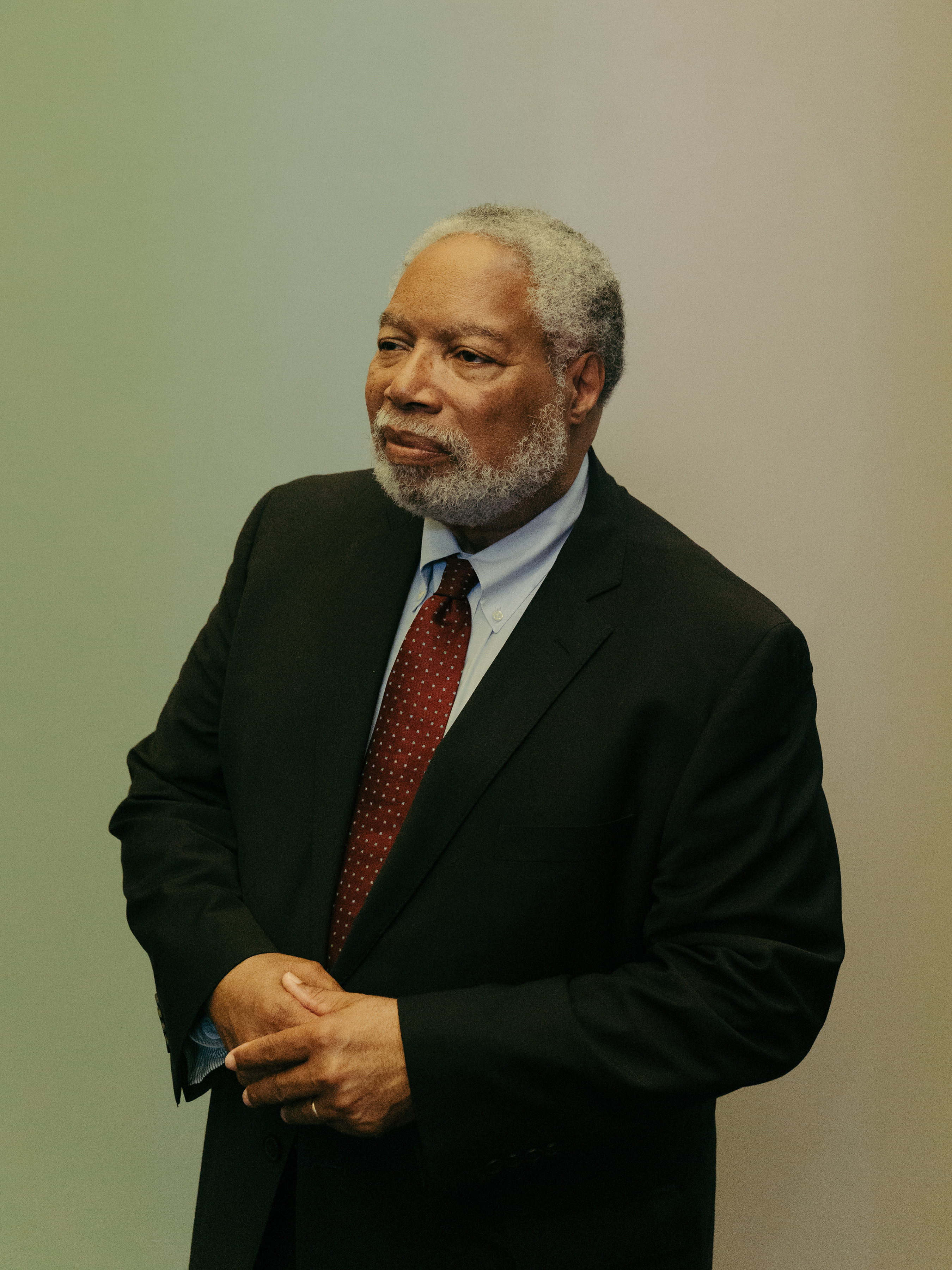
    After a seven-year run marked most recently by attacks from the Trump administration, Lonnie Bunch III announced Tuesday that he was stepping down as secretary of the Smithsonian.

    The White House has escalated its criticism of how the Smithsonian presents American history and values, prompting concern from some about what they see as an assault on the institution’s autonomy and commendation from others for reining in an organization they view as overtaken by liberal bias.

    In an interview, Bunch, 73, said it was not the pressure that had led to his departure.

    “It was really just saying, now’s the time,” he said.

    “I’m a fighter,” he added.

    At the same time, he acknowledged the strain of the role.

    “I have to be honest, it has been stressful,” he said. “And at a certain point, I’d like to wake up in the morning and not look at my cell phone.”

    In a statement, Chief Justice John Roberts, who serves as the Smithsonian’s chancellor, said that Bunch had “pursued excellence in the telling of our nation’s story” and that the Smithsonian had “benefited greatly from his wisdom, vision and leadership.” The Smithsonian said Bunch was expected to depart at the end of the year.

    For more than a year, Bunch has tried to balance diplomacy and openness to criticism with a determination to resist a White House push to present what President Donald Trump calls “patriotic” history. Some admire how Bunch has managed to quietly hold the line against the White House. Others believe the Smithsonian has shown too much deference to Trump and even engaged in self-censorship.

    Last year, painter Amy Sherald withdrew her blockbuster show at the National Portrait Gallery over a disagreement about how the museum would display her portrait of a transgender Statue of Liberty.

    But Bunch said he had no regrets. “My goal has been to win, not to make me feel good,” he said. “To win — to protect the Smithsonian — there were times I would fight, make clear what the red lines were. And there were other times I let things go.”

    Bunch, a widely respected historian who previously oversaw the creation of the National Museum of African American History and Culture, said his next chapter would most likely include teaching or a fellowship.

    Created by Congress as a trust in 1846, the Smithsonian has long been viewed as independent of the executive branch. Its governing Board of Regents must now appoint a new leader in the face of withering attacks from the administration.

    The 17-person panel, led by Roberts, includes six members of Congress, split along party lines; nine private citizens; and Vice President JD Vance. The terms of three citizen members have recently expired, and the names of replacement nominees have not made it to Congress, an unusual holding pattern that appears to be evidence of the shadow war over control of the Smithsonian.

    In the short term, Bunch seemed to have sufficient board support to stay on. But he has indicated that he is weary of the fray and ready for some form of retirement.

    “When you’re Black in America, you’ve got to figure out how to get through, right?” he told the New York Times in May. “You’ve got to figure out how to build allies, when to stand firm, when to bang the table. So in some ways, all of that prepared me for this moment.”

    “But do I wish I was in it?” he continued, referring to scrutiny by the Trump administration. “Of course not. Good Lord, I wish that I was doing my goodbye tour.”

    Over nearly 40 years in various roles at the Smithsonian, Bunch developed a reputation as a soft-spoken diplomat adept at raising money and dealing with public officials. As the institution’s first Black secretary, he has at times been a forceful voice on issues of race, particularly after the 2017 white nationalist rally in Charlottesville, Va., and in the wake of George Floyd’s murder in Minneapolis in 2020.

    Trump did not pay much attention to Washington’s cultural organizations in his first term but has made them a focus of his second, including through his efforts to govern, close, and renovate the John F. Kennedy Center for the Performing Arts. The Smithsonian has been forced to respond to White House demands or risk potential cuts to its $1 billion budget, which is largely funded by the federal government.

    Last month, in a letter to the board, Doug Burgum, the interior secretary, and Vince Haley, a senior White House adviser, made the stakes clear.

    “The Smithsonian enjoys support from executive departments and agencies,” the letter said. “Those executive departments and agencies cannot in good conscience continue to support the Smithsonian under current leadership.”

    The president’s attempt to overhaul the Smithsonian began last year with an executive order that accused the institution of promoting “narratives that portray American and Western values as inherently harmful and oppressive” and called for an end to spending on exhibitions or programs that “degrade shared American values, divide Americans based on race or promote programs or ideologies inconsistent with federal law.”

    After the White House demanded that the Smithsonian turn over information about the content of its exhibitions, Bunch reasserted the institution’s independence while saying that materials had been submitted in an effort to be “transparent.”

    The board adopted a resolution that called for its 21 museums to review their content for partisanship or bias. But the administration began its own review of exhibitions, wall text, and social media to assess “tone, historical framing and alignment with American ideals.”

    Trump has been unrelenting in his criticism, posting on social media that “the Smithsonian is OUT OF CONTROL, where everything discussed is how horrible our Country is, how bad Slavery was, and how unaccomplished the downtrodden have been — Nothing about Success, nothing about Brightness, nothing about the Future. We are not going to allow this to happen.”

    The president also announced online that he was dismissing the director of the National Portrait Gallery, Kim Sajet, calling her “a highly partisan person, and a strong supporter of DEI.” (The Smithsonian insisted it controlled personnel matters, but Sajet resigned, citing the institution’s best interests.)

    The White House pressure reached a new pitch this year with a July 4 report about the National Museum of American History that accused its director of “radical activist ideology” and the museum of undermining “faith in American institutions.”

    Many historians expressed serious concern about the report, but some conservatives applauded it, joining Trump in arguing that exhibits had become overly focused on race, identity, and injustice.

    “Hardworking Americans don’t want their taxpayer dollars dedicated to Marxist indoctrination,” Sen. Mike Lee (R., Utah) wrote on social media.

    After the report, Anthea Hartig, the museum’s director, came under fire at two congressional hearings. Then Trump ordered warning signs and exhibits installed to convey his view that the museum did not accurately reflect American history. The signs have yet to materialize.

    Bunch said it had been difficult to have his colleagues attacked by the administration. “I have always tried to protect people,” he said. “So I’ve always said, ‘Let the most of the weight fall on me. They don’t deserve it.’ We’re in a time when people are being hurt.”

    His priority has been “How do I always make sure that we put the Smithsonian in the strongest position?” Bunch said. “That we articulate what we believe in, the importance of nonpartisanship and scholarship?”

    When Bunch became the leader of the African American museum in 2005, that institution remained a distant dream.

    He worked with Congress to fund it and attracted big-name donors including Oprah Winfrey. He appointed Republicans such as Laura Bush and Colin Powell to the board and won support by arguing that the museum should recognize the horrors of slavery and the struggle for civil rights while celebrating historical Black achievements. Bunch said the museum needed to tell “the quintessential American story” of progress.

    It opened to great fanfare in 2016 and was the Smithsonian’s fourth-most-popular destination last year, with 1.6 million visitors. Bunch ascended to the Smithsonian’s top job in 2019.

    In the spring, Bunch said he was proud of what the Smithsonian had achieved under his leadership despite the barrage of Trump attacks. “Nothing can take that away,” he said. “So I’m trying to make sure I don’t let this moment steal my joy.”

    This week, he spoke of how important it was for the Smithsonian to continue to explore the country’s past in all its complexity. “Americans are an amazingly brave people, who have accomplished so much,” he said. “They’ve got to be brave enough to face their own history.”

    “To me, that is essential,” he continued. “And I will stand against wind and tide to prevent history from being erased, softened, and made palatable. That’s wrong.”

    This article originally appeared in the New York Times.

  • Lindsay Clancy’s attorney makes public plea for Trump pardon

    Lindsay Clancy’s attorney makes public plea for Trump pardon

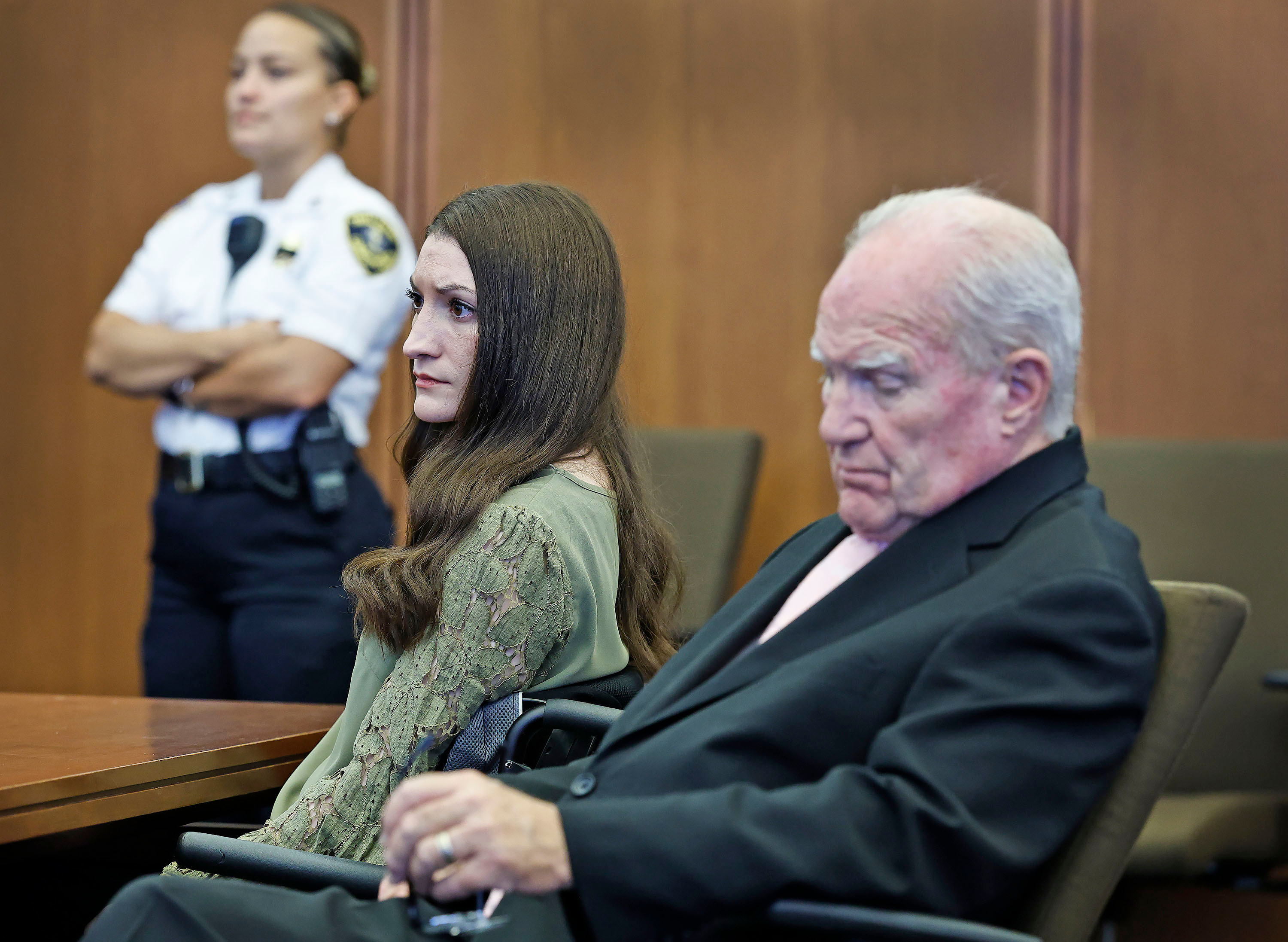
    An attorney for Lindsay Clancy, the 36-year-old Massachusetts mother who admitted to killing her three children, said he hopes President Donald Trump would consider a pardon for his client after the high-profile murder case ended in a mistrial last week.

    “Mr. President, I would hope that you would consider this young lady, the type of person she is, what she’s been through, and consider a pardon,” Kevin Reddington said Tuesday on Good Morning America.

    The president cannot pardon state-level crimes, and Clancy’s case is being tried in state, not federal, court.

    Governors can grant clemency for state crimes; under pressure from Trump, Colorado Gov. Jared Polis (D) in May reduced the state prison sentence of former county clerk and election conspiracy theorist Tina Peters, who was convicted for a scheme to copy her county’s election computer system.

    Asked about the trial and pardon request, the White House referred the Washington Post to Trump’s comments on Friday in which he described the case as a “horrible tragedy.”

    “It’s a terrible situation. Look, she did a horrible, horrible, thing. Can’t be worse,” he said. “But you’ll find out what the price to pay is. There’ll be a price. It’s going to be mental institution or jail or something.”

    Reddington also said he hoped he would “be able to work something out that would be acceptable to both sides,” after a mistrial was declared on Friday. Prosecutors have not said whether they will seek another trial.

    Clancy’s case captured the public’s attention and became a cultural touch point, putting postpartum mental health issues in the spotlight. She had said she killed her three children by strangling them at home in 2023, and the jury was asked to decide whether she should be held legally responsible for her actions. Reddington had argued that she was suffering from postpartum psychosis at the time, which prosecutors disputed.

    The jury was dismissed after failing to reach a unanimous decision after deliberations hit nearly 40 hours following a trial that stretched more than six weeks.

  • Travel chaos at U.K. airports as over 600 flights canceled due to air traffic control issue

    Travel chaos at U.K. airports as over 600 flights canceled due to air traffic control issue

    LONDON — More than 600 flights were canceled on Tuesday due to a technical issue in Britain’s air traffic control system that caused disruptions at major airports across the U.K., the flight monitoring website Flightradar24 reported.

    Britain’s National Air Traffic Services said a problem had been identified in its flight processing system and engineers were urgently working on the issue, which affected flights across the U.K.

    In an update, it said it had “implemented a fix and our flight system is starting to recover.”

    At least 625 flights to and from U.K. airports, including London Heathrow, were canceled, affecting services operated by multiple airlines, including British Airways, EasyJet, KLM, and Lufthansa, according to Flightradar24.

    Some passengers took to social media to complain about being stuck on the tarmac for hours, before their flights were eventually canceled. Many expressed frustration about a lack of communication from airlines.

    The affected airports included Stansted and City in London, as well as those in Manchester, Birmingham, Gatwick, and Scotland. They warned passengers to check the status of their flight with their airline.

    Budget airline EasyJet said some of its flights were “unable to operate” and that the system failure caused “delays to flights across Europe.”

    Heathrow’s website showed that many short-haul flights departing for European destinations had been canceled or delayed.

    It was not immediately clear what caused the technical problem.

  • Veterans and Democrats intensify fight against Trump’s planned arch

    Veterans and Democrats intensify fight against Trump’s planned arch

    Veterans and Democrats are escalating efforts to prevent construction on President Donald Trump’s planned arch as the anticipated start of site work approaches, arguing the project is illegal and would diminish the experience of visiting nearby Arlington National Cemetery.

    VoteVets, a political organization aligned with Democratic veterans, on Tuesday launched a new messaging campaign to mobilize more veterans against the planned 250-foot-tall arch.

    In a 2½-minute video, which was first shared with the Washington Post, speakers call attention to the Trump administration’s stated plan to spend 20 hours per day building the arch over several years, which they note could conflict with military burials. The arch also would feature an observation deck for tourists to gaze at the city — and look out at the cemetery.

    “We don’t need tourists overlooking funerals. I’m just appalled,” Karen Meredith, a Gold Star mother whose son is buried at Arlington, said in the video.

    Home of the Brave, a political advocacy group whose leaders and advisers include prominent Trump critics such as commentator Bill Kristol and former Biden administration official Susan Rice, is also supporting the campaign. In an interview, people involved in the effort said they would start with social media posts this week and could expand to paid promotion.

    Meanwhile, Rep. Chellie Pingree (D., Maine) on Tuesday urged House Speaker Mike Johnson (R., La.) to sue and halt construction before it begins. Johnson and other Republican leaders have shown no interest to date in blocking Trump’s construction projects.

    “Congress has neither appropriated funding nor granted authority for this project under the Commemorative Works Act. The Administration is building it anyway, betting this body will do nothing to stop it,” wrote Pingree, the top Democrat on a House subcommittee that oversees funding for the Interior department. “I am asking you to take all necessary steps to file suit immediately, while there is still ground left to save.”

    Trump officials, emboldened by a Supreme Court ruling last week that allowed construction of the president’s ballroom to proceed, signaled Thursday that site work on the arch would begin this month.

    The court’s decision, which found preservationists seeking to stop Trump’s planned ballroom likely lacked standing, has become part of the administration’s construction strategy. Justice Department lawyers cited the ballroom ruling in asking a federal judge to dismiss a legal challenge brought by three military veterans and a historic preservationist, who are seeking to halt the triumphal arch.

    The high court’s ruling also sent advocacy groups scrambling to reconsider how to oppose the president’s construction projects. Some say they are reassessing whether they need to have other individuals or organizations join their challenges.

    Several legal experts pushed back on the Trump administration’s efforts to invoke the Supreme Court’s ballroom ruling to dismiss the arch and other projects.

    “The Justice Department would like to turn the ballroom decision into a universal immunity card for presidential construction projects,” said Greg Werkheiser, a co-founder of Cultural Heritage Partners, a law firm that has advised preservation organizations. “But the Supreme Court decided one standing question involving one plaintiff, one project, one factual record.”

    Trump has spoken for nearly a year about his plans to build a triumphal arch that will honor the nation’s 250th anniversary, vowing that it will be the largest triumphal arch in the world — about 86 feet taller than France’s famed Arc de Triomphe. The administration plans to erect it on federal parkland in Memorial Circle, a traffic roundabout near Arlington National Cemetery and just inside the city’s boundaries.

    Interior Secretary Doug Burgum said last week that construction would soon begin.

    “We are pleased to announce that after a very long wait (over 125 years!), we are preparing to start, over the next two-week period, the excavation work necessary for the Great Triumphal Arch and Military Observation Deck,” Burgum wrote on X.

    While Burgum’s announcement catalyzed a wave of new legal filings, Trump officials have argued that it is too soon for a federal judge to decide whether the project can be halted because Trump and other officials’ statements are not binding and the project has not been formally approved. The National Capital Planning Commission, a federal review panel that reviews the administration’s construction projects, has issued preliminary approval for the arch but has yet to award final approval.

    Trump officials also said last week that the work they plan to do soon at the arch site is for informational purposes.

    “This activity is not construction, or demolition in preparation for construction, of an arch,” Justice Department lawyers wrote in a court filing Friday.

    U.S. District Judge Tanya S. Chutkan ordered that the administration provide her with 48 hours’ notice “before engaging in any activity on Memorial Circle” other than on-site information gathering.

    Preservationists have stressed that an arch does not belong in the solemn corridor between the Lincoln Memorial and Arlington National Cemetery.

    Charles Birnbaum, the founder of the Cultural Landscape Foundation, a Washington-based advocacy organization, invoked 1916 comments by Frederick Law Olmsted Jr., a landscape architect who helped design Washington.

    Olmsted said that “to build a monumental feature such as an arch would be a ‘slap in the face’ to the Lincoln Memorial,” Birnbaum said in the VoteVets video.

    Paul Eaton, a retired major general and VoteVets adviser, told the Post that he has heard from Republican veterans who are also opposed to a new structure towering over the cemetery. He called for veterans to submit comments to their lawmakers and to the National Capital Planning Commission.

    “There’s nothing partisan about what we’re doing right now. It has everything to do with how the United States honors its dead,” said Eaton, whose father’s remains are interred at the cemetery. “That’s why we are so focused on this particular vanity project on the part of Mr. Trump.”

  • As Social Security fund runs dry, some Republicans say it’s time to raise taxes

    As Social Security fund runs dry, some Republicans say it’s time to raise taxes

    For decades, Washington has replayed the same fight over taming the soaring national debt: Democrats cite a need for more taxes. Republicans refuse. And anyone who suggests cutting the biggest source of spending — federal retirement benefits — gets attacked.

    But a coming crisis in Social Security appears to be pushing at least a few Republicans off the GOP’s long-standing pledge never to raise taxes.

    This summer, Sen. Bernie Moreno (R., Ohio) joined Sen. Elizabeth Warren (D., Mass.) in proposing to raise the payroll tax cap so people with higher incomes pay more into the program. Now the idea is emerging as an acceptable fix among other GOP lawmakers, including Rep. Tom Cole (Oklahoma), the influential chairperson of the House Appropriations Committee.

    “We’ve got too many people who say, ‘Well, we have to stay within the current income level or stay at the current tax rate,’” Cole said in an interview. “I’m willing to look at the tax rate. I am willing to raise the amount of income through tax.”

    The rare GOP concessions on taxes come as lawmakers begin to confront a Social Security shortfall so large and so imminent that the party’s traditional demand for curtailing benefits is unlikely to suffice. In just six years, millions of Social Security recipients will absorb a 22% cut in benefits unless lawmakers provide an immediate infusion of nearly $500 billion.

    “Twenty or thirty years ago,” when the shortfall was far in the future, “you could come up with a straight-faced solution” that solved the problem entirely by cutting future benefits, said Charles Blahous, a senior research strategist at George Mason University’s Mercatus Center who served from 2010 to 2015 as the Republican public trustee for Social Security.

    Now the problem is so big and urgent, Blahous said, “I don’t think you can look at it with a straight face and not do all of the above.”

    Grover Norquist, founder of Americans for Tax Reform and the longtime enforcer of Republican anti-tax orthodoxy, dismissed the crack in party discipline, arguing that Republicans should stick to demanding spending cuts. Otherwise, he said, they risk infuriating voters already angry about the high cost of living.

    “When Republicans say no to tax increases, they win. When they say yes to tax increases, they lose,” Norquist said. “They don’t get spending cuts — at all. And, they get smeared in the next election.”

    But Cole, at least, said he thinks the political blowback from Social Security benefit cuts would be far worse than a comprehensive solution that includes raising taxes.

    “I love Grover. But … you’ve got to deal with Social Security,” Cole said. “And believe me, you’ll have a lot bigger problem if it goes bankrupt than you’ll have keeping it whole, because people will feel cheated.”

    Created during the Great Depression, Social Security provides monthly cash benefits to more than 70 million Americans. It is the single largest program in the $7.4 trillion federal budget, paying out $1.7 trillion this year, according to the nonpartisan Congressional Budget Office. (Medicare is a close second at $1.3 trillion.)

    The program is funded by a payroll tax on wages up to a “cap” of $184,500 a year, with workers and employers each paying 6.2%. Workers who pay into the system can receive monthly checks as early as age 62, though the full retirement age is 67.

    For years, annual tax collections exceeded the cost of benefits, allowing the program to amass a surplus known as the Social Security trust fund. As the baby boom generation retired, however, the math flipped: Social Security now pays out far more than it collects and is draining the trust fund to make up the difference.

    The trust fund is projected to run dry in 2032. At that point, Social Security would have to rely solely on incoming tax collections — meaning monthly checks would shrink by $440 on average unless Congress acts, according to the Bipartisan Policy Center, a Washington think tank.

    Closing the shortfall would require $459 billion in cuts or fresh revenue in 2033 alone, according to the BPC — and the sum would grow larger every year.

    That relentless math persuaded Moreno, a former car dealership owner who rode into office with President Donald Trump’s endorsement in 2024, to break ranks with his party on tax hikes. In his proposal with Warren, Moreno calls for eliminating the payroll tax cap so highly compensated workers pay the tax on their entire income.

    “Why should a middle-class nurse pay a larger share of her paycheck than a wealthy corporate lawyer?” Moreno and Warren wrote in an op-ed for the New York Times, noting that one recent poll found that 62% of Republicans support lifting the cap. “This is doubly unfair in an economy in which top earners’ wages, over time, have pulled far ahead of those of the average worker.”

    Moreno declined an interview request. His spokesperson Reagan McCarthy said in an email: “Sen. Moreno promised Ohioans he would fight for them in DC and make sure they get the benefits they were promised and that’s exactly why he’s leading this effort.”

    Removing the cap without increasing benefits for high-earning workers would close more than half the program’s shortfall, according to the Committee for a Responsible Federal Budget, a nonpartisan group focused on deficit reduction. Blahous and others have cautioned against that approach, saying it would sever the connection between contributions and benefits that makes Social Security different from — and more popular than — other social welfare programs.

    Uncapping the payroll tax alone would push the top marginal federal tax rate over 50%, according to the Manhattan Institute, a conservative think tank.

    Some Democrats would go further. Sen. Sheldon Whitehouse (D., R.I.) argues not only for lifting the payroll cap but also for taxing the investment income of wealthy households and closing a loophole that lets business owners shrink their personal tax bills.

    That proposal, which would fall entirely on the backs of the wealthy, would raise enough cash to fully fund Social Security for at least 75 years, according to a 2023 estimate by the program’s chief actuary.

    The historic link between contributions and benefits makes changing Social Security politically perilous. That’s why many in Congress want negotiations to be outsourced to a bipartisan commission or advisory board.

    Cole has introduced one of several proposals to form such a panel. He argues that more tax revenue, including from raising the payroll tax cap, “ought to certainly be on the table” alongside adjustments that would reduce future spending, such as raising the retirement age.

    A third GOP lawmaker, Rep. Lloyd K. Smucker of Pennsylvania, has also said he sees more tax revenue as part of a Social Security fix. “You’ll probably have to do something on the payroll half of the money being paid into the system,” Smucker told Roll Call last week.

    Smucker said lawmakers should also consider means testing, so benefits are reduced for the wealthy while low-income retirees are protected. Smucker’s office did not respond to requests for comment.

    Though raising taxes is unpopular among Republicans, it has long been part of bipartisan plans to solve the Social Security puzzle. In 1983, President Ronald Reagan, a Republican, and House Speaker Tip O’Neill, a Democrat, saved the program from its last bout with insolvency, agreeing to a mix of solutions that included increasing payroll taxes and gradually raising the retirement age.

    In 2005, Sen. Lindsey Graham (R., S.C.) argued for raising the payroll cap and trimming benefits. Weeks later, President George W. Bush said he was open to a “variety of options,” though his plan to curtail future benefits for all but low-income retirees and divert some tax dollars to new private retirement accounts was dismissed by Congress.

    And in 2010, several Republicans on a commission formed by President Barack Obama voted in favor of a debt-reduction plan that included raising the payroll cap, raising the retirement age to 69 and trimming benefits for wealthy retirees. The plan offered by the so-called Bowles-Simpson commission never received a vote in Congress.

    Sen. Mike Crapo (R., Idaho) was among the commission’s yes votes. Crapo now serves as chairperson of the powerful Senate Finance Committee, which has jurisdiction over both taxes and Social Security.

    At a committee hearing last month, Crapo said the Bowles-Simpson plan “has informed subsequent Social Security solvency discussions.” His office did not respond to questions about his current position on tax hikes.

    Another hallmark of Social Security reform has been deep involvement by the White House. Cole said he has urged Trump to take on the hard work of fixing the program, calling it a potential “crowning achievement.” Since Trump is not running for office again, he could “do it with no political risk,” Cole said, adding, “I think he’ll get enormous political credit for it.”

    But while Trump has warned Republicans not to cut “a single penny from Medicare or Social Security,” he has not said how he would raise the vast sums needed to bolster the programs’ deteriorating finances.

    White House spokesperson Liz Huston did not respond to questions about fixing the program, saying via email only that “there will be zero reductions to Social Security payments” under Trump’s leadership.

  • Charles views the Bayeux Tapestry, this time as king

    Charles views the Bayeux Tapestry, this time as king

    LONDON — The last time King Charles III of Britain saw the Bayeux Tapestry, in September 1987, he had to travel to its home in northern France. Accompanied by Diana, Princess of Wales, the then prince marveled at the over 900-year-old embroidery depicting William the Conqueror’s invasion of England in 1066, and he impressed local residents with a brief speech in French about its impact.

    On Sept. 2, almost 40 years later, Charles got to view the tapestry in notably different circumstances — now as king, just like the tapestry’s main characters, and this time without having to leave his home soil. Instead, he went to the British Museum in London, accompanied by Queen Camilla, to witness the tapestry’s return to Britain for the first time since it was made.

    The tapestry is not just a historic artifact, but a personal reminder of “what I like to think of as the French side of my family’s history,” Charles joked during an eight-minute speech at the museum. He also spoke of his joy at seeing the 220-foot-long embroidery in London, where it is the focus of a blockbuster exhibition that opened on Thursday.

    “The tapestry’s story is one of ambition and uncertainty, of oaths and journeys, of ships, councils, kings, comets, and consequences,” Charles said, calling it “70 meters of memory and artistry.”

    The British Museum hopes that attendance for the show, which runs through July 11, will rival the 1.6 million visitors who flocked to its “Treasures of Tutankhamen” exhibition in 1972.

    Before the speeches, British Museum curators had walked Charles along the tapestry and pointed out key scenes, including one showing the coronation of Harold Godwinson, England’s last Anglo-Saxon monarch, and another depicting Godwinson’s death at the Battle of Hastings. In that scene, the dying monarch clasps an arrow that has thwacked his eye.

    Although the tapestry shows a time of conflict between France and England, the recent event was a sedate affair, bringing together President Emmanuel Macron of France and Prime Minister Andy Burnham of Britain and their wives, alongside Charles and Camilla.

    The tapestry recounts a conflict, Charles said during his speech, “yet here it is today, nearly 1,000 years later, as a precious symbol of trust at a time when trust seems sadly to be in short supply between nations.”

    Macron also spoke at the museum, saying how the Norman invasion depicted in the tapestry “was just the start” of events that have entwined Britain and France, including “marriages, alliances, inheritances, and successions” as well as shared cultural artifacts.

    The tapestry’s reappearance in Britain was a long time coming. Embroidered in the 11th century, most likely in Canterbury, England, it was later moved to Bayeux, France, where it eventually was listed in a 1476 inventory of the town’s cathedral.

    Over the past 70 years, British officials have repeatedly tried to borrow the artwork — including for the coronation of Elizabeth II, Charles’ mother — but French art experts insisted that it was too fragile to travel.

    That situation changed in 2018, when Macron announced that France had agreed to lend the tapestry to Britain as a gesture of friendship between the two nations. The loan has been able to go ahead thanks to techniques developed by conservation experts to ensure that the tapestry could travel to London.

    Last year, Macron said in a speech at the British Museum that Charles had been a key figure behind the scenes encouraging the project.

    Charles has long been a supporter of arts and culture, and as a prince, he often discussed his love of traditional art and architecture in interviews. In 2004, he co-founded an academy for traditional arts, whose short courses include training in weaving and embroidery. And his foundation, in collaboration with Chanel, runs specialist embroidery courses aimed at students who want to work in high-end ateliers.

    The royal has also added stitches to several artworks inspired by the tapestry. In 2000, he sewed the final stitch for the New World Tapestry, an attempt to depict British colonialism in the Americas that has since been accused of perpetuating racist stereotypes.

    In 2012, on a visit to Alderney, one of the Channel Islands, Charles contributed a few stitches to a work of embroidery that aims to continue the Bayeux Tapestry’s story beyond its current end point depicting William the Conqueror’s successful invasion of England.

    Kate Russell, a founder of that tapestry project, said in an interview that during his visit Charles urged people to go and see the original tapestry in Bayeux. She also said it was obvious why he would love the tapestry given the story it relays: “You can’t be a member of the English royal family and not have a sense of the ties to those events.”

    Toward the end of Charles’ speech, the king switched to French and pointed out that the tapestry’s final scenes were missing. (They were likely worn away over time.)

    “It falls to each generation to add its own stitch to the fabric of our shared history,” Charles said, “from this evening and into many generations to come.”

    This article originally appeared in the New York Times.

  • Trump shuns EVs and wind power, but he’s pouring billions into batteries

    Trump shuns EVs and wind power, but he’s pouring billions into batteries

    WASHINGTON — President Donald Trump has been scornful of electric cars for years. But his administration is now pouring billions of dollars into the battery technology that powers them.

    Large lithium-ion batteries have become one of the rare energy technologies that both parties in Washington strongly support — though for very different reasons.

    The Biden administration saw batteries as a green energy tool crucial for addressing global warming and sought to encourage manufacturing them, for use in electric vehicles and to backstop wind and solar power on electric grids. The Trump administration has rolled back efforts to expand clean energy, but officials have nonetheless come to see batteries as essential for many of Trump’s priorities, including powering data centers for artificial intelligence and manufacturing drones for the military.

    The Trump administration has been particularly alarmed by China’s dominance of global supply chains for lithium-ion batteries, and in recent months has made a major push to bolster domestic production of many battery components and associated critical minerals.

    “There has been a growing appreciation for just how important batteries are for so many things,” said Tom Moerenhout, who leads the critical minerals initiative at Columbia University’s Center on Global Energy Policy. “It’s not just EVs, it’s automation, robotics, data centers, drones for defense. And there’s a real move to making sure China doesn’t have a choke point here.”

    In August, the Energy Department awarded $500 million to seven companies that make battery components or process critical minerals like cobalt in the United States. Also last month, the Pentagon announced a $1.4 billion loan to an advanced battery start-up building a factory in Washington state. Federal agencies are funding various domestic efforts to produce graphite and lithium, two raw materials for batteries.

    “For too long, America has depended on foreign actors for critical materials essential to modern life that underpin our economy, energy security, and national security,” Energy Secretary Chris Wright said in announcing the battery awards.

    Still, loosening China’s grip on the global battery industry could be difficult without boosting the domestic market for electric cars, which are by far the largest source of demand for lithium-ion batteries, experts said. Last year, Republicans in Congress repealed a $7,500 tax credit for consumers to buy electric cars with U.S.-made components, which provided a significant incentive for domestic battery manufacturing.

    “If you really want to onshore supply chains, you need electric vehicles, it’s as simple as that,” said Moerenhout. “The defense sector alone is just too small to underwrite a full supply chain for batteries.”

    For years, the Chinese government has made a concerted effort to lead the world in electric vehicles and heavily subsidize its battery industry. The country now sells roughly as many EVs each year as the rest of the world combined, and it has become the preeminent producer of lithium iron phosphate batteries, or LFP, which have become widespread in electric vehicles and stationary storage. The country also dominates the refining of raw materials like lithium and graphite and the production of key components like cathodes and anodes.

    Many officials in Washington have been eager to reduce dependence on China for national security reasons. The U.S. military uses batteries in lasers, hand-held radios, night vision goggles, satellites, and drones, and Chinese components are still needed to make many of these items. AI data centers are increasingly using lithium-ion batteries for backup power.

    China recognizes the leverage it has. Last fall, amid a period of trade tensions, the country threatened to limit exports of a range of battery materials, including graphite, which businesses said would have devastated the nascent U.S. battery industry.

    When Trump returned to office, his administration initially froze billions of dollars in Biden-era grants for battery manufacturing, grouping batteries in with electric vehicles, solar farms, wind turbines, and other clean energy technologies that officials wanted to downplay.

    But that stance quickly shifted.

    While the administration has throttled funding for other clean-energy technologies, the Energy Department has allowed many Biden-era grants for battery makers to proceed. The government has also invested in firms that develop battery components or critical minerals, including Eos, a next-generation battery company.

    The Trump administration has also been more active than the Biden administration in encouraging U.S. mining, and the government has begun taking direct financial stakes in mining companies. That has prompted pushback from Democrats in Congress, who have called for investigations into some mining deals and raised questions about conflicts of interest.

    Last month, Trump held an event at the White House with mining executives and announced more than $2 billion in funding to help revitalize the domestic mining industry, including for battery materials.

    That included a $1.4 billion loan from the Pentagon’s Office of Strategic Capital to Sila Nanotechnologies, a company that has developed a type of lithium-ion battery that uses silicon materials instead of Chinese graphite.

    The company has spent nearly 15 years developing its technology, and its factory in Moses Lake, Washington, can now make enough material for tens of thousands of batteries each year. But that’s still only enough to supply less than 0.1% of the global market, and Sila is hoping to expand production drastically while competing against ferocious Chinese competition.

    “It takes an immense amount of time and effort to expand and do this right,” said Gene Berdichevsky, CEO of Sila. “And for investors to bet on that, they need confidence that we have the right policies to support this kind of industry and not just let it go offshore.”

    This article originally appeared in the New York Times.

    Gene Berdichevsky, the chief executive of Sila Nanotechnologies, at the company’s facility in Moses Lake, Wash., Nov. 3. 2025. Sila Nanotechnologies received a conditional $1.4 billion loan commitment from the Trump administration.GRANT HINDSLEY
  • Why Amy Klobuchar wants to run a state beleaguered by Trump

    Why Amy Klobuchar wants to run a state beleaguered by Trump

    ST. PAUL, Minn. — On a sweltering summer morning, Sen. Amy Klobuchar (D.,Minn.) was making small talk with merchants at the St. Paul farmers market when a cheesemaker expressed a sentiment that has kept coming up as Klobuchar campaigns for Minnesota governor.

    “We’re going to miss you in Washington,” the cheesemaker, Brenda Carlson, told Klobuchar while bagging a piece of Tilsit.

    Klobuchar acknowledged having mixed feelings about leaving her seat as the chamber’s third highest-ranking Democrat. “But we need to get this sorted out,” she said, frowning slightly.

    By “this,” Klobuchar meant the current condition of Minnesota, which has become a punching bag in the Trump administration’s quest to portray Democratic-run states and cities as hopelessly dysfunctional.

    As she gears up for what could be the capstone of a decades-long political career, Klobuchar is pitching herself as uniquely qualified to clean up the messes at home and reset the state’s poisonous relationship with the White House.

    Her reputation makes the case, supporters say: She is known as both a hard-charging workaholic who scrutinizes program details to a fault and a centrist with allies on both sides of the aisle in Washington, including in President Donald Trump’s administration.

    But both qualities could also cause friction. Minnesota agencies are bracing for turbulence as Klobuchar vows to audit every state program. And many residents remain shell shocked from the Trump administration’s immigration crackdown early this year, which paralyzed the Twin Cities for weeks and left two U.S. citizens dead.

    When it comes to relations with the president, some residents say they want a fighter in the governor’s office, not a conciliator.

    Nekima Levy Armstrong, a civil rights lawyer who is facing trial over her role organizing a protest against Immigration and Customs Enforcement at a church, said Klobuchar did not speak out stridently enough about the wintertime deportation campaign.

    “Many of us felt abandoned by our elected officials during Operation Metro Surge,” Levy Armstrong said. “We felt abandoned by Amy Klobuchar in particular.”

    In an interview, Klobuchar said she was “as angry about some of the things Trump has done as anyone.”

    “But I have decided that I’m going to get us to a higher place and not act like him,” she said. Her first goal, she added, “is to earn back the trust of the people of Minnesota in state government.”

    For now, Minnesota Democrats have expressed almost uniform relief that Klobuchar is their nominee rather than current Gov. Tim Walz.

    They began 2026 in panic mode as a scandal over widespread fraud in state-run safety net programs dogged Walz’s bid for a third term. State lawmakers openly fretted that his name at the top of the ballot in this year’s midterm elections would give Republicans a strong shot at winning the governor’s mansion for the first time in two decades and controlling the tightly divided Legislature.

    “I would definitely be lying if I said that the worry meter wasn’t ticking up, up, up by the week,” said state Rep. Mike Howard, a Democrat from the Twin Cities.

    They exhaled when Walz dropped his reelection bid in early January, as the Trump administration was sending thousands of immigration agents to the state in what the president called a campaign of “RECKONING & RETRIBUTION.”

    Klobuchar announced her run for governor later that month as Minnesotans were reeling from the killings of Renee Good and Alex Pretti, two American citizens shot by immigration agents in Minneapolis. “These times call for grit and resilience,” Klobuchar proclaimed.

    The announcement amounted to a reversal of fortunes for Democrats, making Klobuchar the clear favorite in the general election race against Lisa Demuth, the Republican speaker of the Minnesota House. Even far-left lawmakers in the state Capitol — where the party has a one-seat majority in the Senate and is tied in the House — have emerged as enthusiastic surrogates for Klobuchar.

    “People in the Democratic Party here in Minnesota understand she’s our best path to winning a majority and defending ourselves from Donald Trump,” said state Sen. Zaynab Mohamed, a member of the democratic socialist wing of the party.

    Klobuchar kicked off her run by calling all 101 Democrats in the Legislature, keeping several on the phone for more than an hour. There was talk of campaign strategy, lawmakers said, but Klobuchar was most interested in their policy goals.

    When she ran for president in 2020, Klobuchar was the subject of several critical articles depicting her as a perfectionist and difficult boss whose office had among the highest turnover in the Senate.

    Klobuchar has a tendency to personally tackle tasks most elected officials delegate and to fire off all-caps emails to aides, which often land in inboxes between midnight and dawn.

    Some supporters now call that feverish approach an asset.

    State Rep. Zack Stephenson, the Democratic leader in the Minnesota House, recalled being startled by a 3 a.m. email from Klobuchar in 2006 when he served as a lowly aide in her first Senate campaign.

    “The lesson I took away from that race is that to be successful in politics, the secret is to work really hard,” he said.

    The sense of relief extends to Democratic voters like Carlson, the cheesemaker, who says she has soured on Walz, a former schoolteacher and coach who oversaw the adoption of a raft of progressive policies and made a splash on the national stage by running for vice president in 2024.

    In recent years, Carlson said, small-business owners like herself have grown frustrated by tax increases and red tape that seem to grow each year. Then came revelations about rampant fraud in state programs meant to feed low-income children, treat minors with autism, and help people at risk of homelessness.

    “I just think things got away from him when he did the whole run,” said Carlson, 54, who lives in Center City, a conservative town 40 miles north of the Twin Cities. “He couldn’t keep a watchful eye, and whoever was wasn’t doing their job.”

    She said she hoped Klobuchar would be different.

    That is the senator’s pitch.

    Having enthusiastically backed Walz’s vice-presidential bid two years ago, Klobuchar has now distanced herself from him.

    She kicked off her campaign in May by announcing a detailed plan to combat fraud. Evoking the years she served as the elected county prosecutor in Minneapolis, she stood alongside the former U.S. attorney in Minnesota against a backdrop of law books.

    “You are right to be angry about the fraud,” Klobuchar said at the time.

    Klobuchar has also questioned how Walz and allied lawmakers spent a $17 billion surplus in 2023. After Walz granted a pardon in June to a man convicted of child sexual abuse who was facing deportation to Laos, Klobuchar said she would have let the conviction stand.

    A spokesperson for Walz did not respond to a request for comment.

    Demuth, the Republican candidate for governor, has sought to portray Klobuchar’s bid as a de facto third term for Walz, questioning why she wasn’t outspoken about the fraud problem before jumping into the race.

    “She will not be able to enact the changes that are desperately needed,” Demuth said in an interview.

    Klobuchar has called Demuth a “rubber stamp for Donald Trump.”

    But how Klobuchar will approach the Trump administration — and whether that will satisfy Democrats in a state with a strong leftist streak — remains unclear.

    Activists have pressed her to adopt a statewide sanctuary policy for immigrants without legal status, which would ban local jurisdictions from signing cooperation agreements with ICE. One activist recently confronted Klobuchar about the issue as she marched in a small town parade.

    So far she has refused. In the interview, Klobuchar, who has long championed a broad overhaul of the immigration system, said she intended to make a case that immigrants are vital to Minnesota’s economic growth.

    “I cannot tell you the number of small businesses that we have run by immigrants in our state,” she said.

    Klobuchar trounced a handful of little-known candidates in the Aug. 11 primary, winning nearly 90% of the vote. That dominance meant she avoided being meaningfully drawn into fraught policy debates playing out in other national races, said Kobey Layne, 26, a democratic socialist who placed a distant second.

    Layne said she worried that as governor, Klobuchar would prioritize bipartisan cooperation and incremental change over bold overhauls, such as the creation of a state-run, single-payer healthcare system.

    Asked about the growing clout of democratic socialists, Klobuchar said she welcomed intraparty policy debates and expected pushback from all sides if elected. She also acknowledged rumors that she was considering appointing Republicans to her cabinet.

    “Spoiler alert,” she said. “You’re not going to like everything I do.”

    This article originally appeared in the New York Times.

  • Party’s over for crypto scammers who went on a spending spree after a $240 million bitcoin theft

    Party’s over for crypto scammers who went on a spending spree after a $240 million bitcoin theft

    WASHINGTON — They pulled off one of the largest cryptocurrency thefts in U.S. history, duping a stranger out of bitcoin worth over $240 million. They tried to hide their digital fingerprints, carrying out a sophisticated scheme to launder the proceeds.

    And then the party started.

    The scammers — a network of young men in their late teens or early 20s — celebrated the August 2024 heist by embarking on a wild spending spree. They purchased fleets of sports cars, flew on private jets, hired security guards, and rented mansions in Miami and the Hamptons. An alleged ringleader, 22-year-old Malone Lam, spent over $569,000 in one evening at a Los Angeles night club.

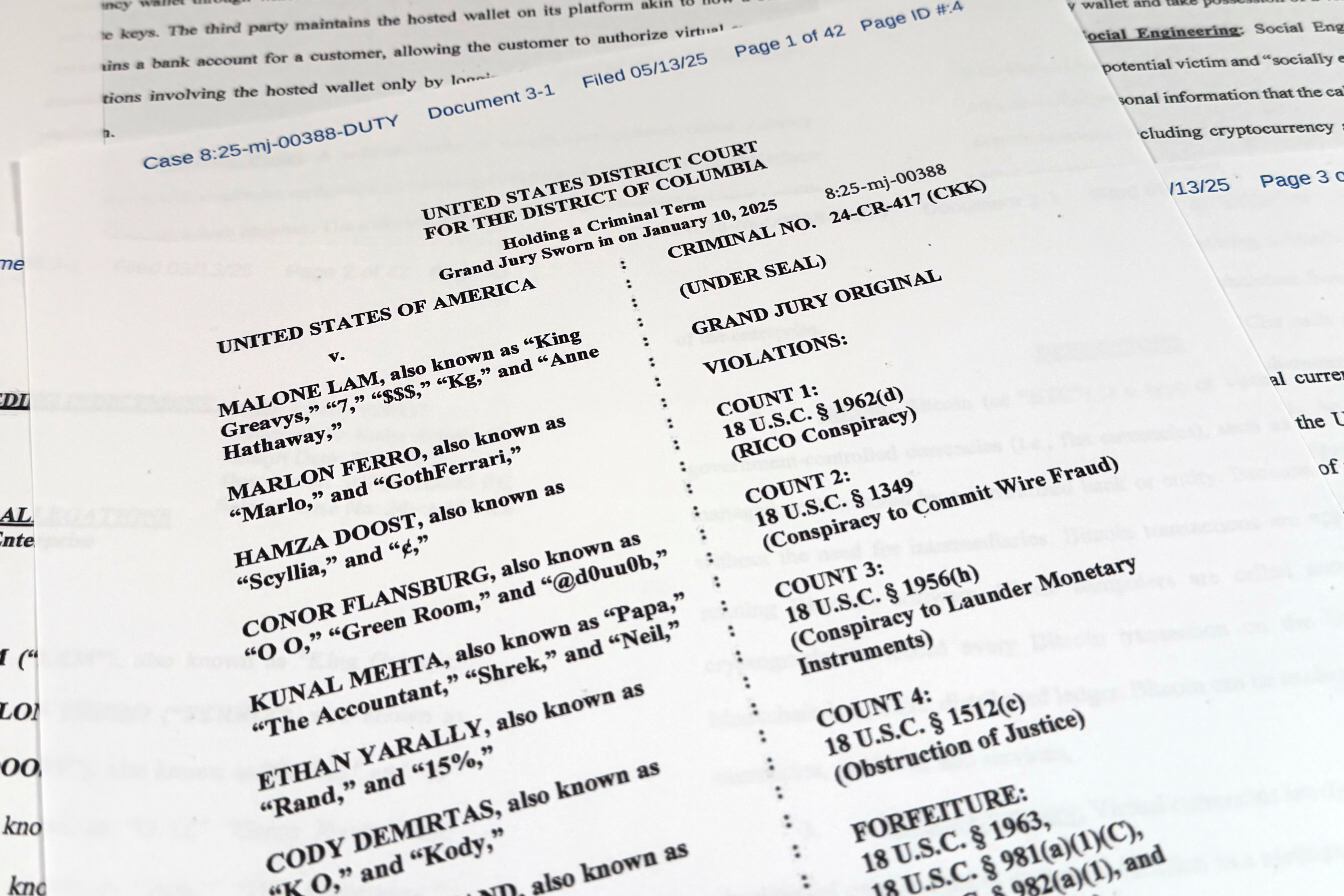
    Their bender lasted a month before FBI agents arrested Lam on charges that he organized a “social engineering” attack on the Washington, D.C., resident. Lam, an eighth-grade dropout from Singapore, has a plea agreement hearing set for Tuesday. His conviction would be a capstone for the government’s investigation.

    The charges against Lam and 17 others are an extreme example of an increasingly common form of cybercrime. Complaints of cryptocurrency investment fraud to the FBI rose by nearly 50% in 2025, while Republican President Donald Trump’s administration largely abandoned a regulatory crackdown on the volatile industry.

    Last year, the Justice Department disbanded a unit dedicated to prosecuting crypto-related crimes. Meanwhile, crypto companies that complained of unfair treatment during Democratic President Joe Biden’s presidency are enjoying the government’s hands-off approach under Trump, who took in roughly $1.2 billion from his crypto businesses in 2025.

    Cybersecurity researcher Allison Nixon, who has spent years tracking the Com, an underground subculture of young hackers united by the “insane amount of money” that crypto fraud can generate, advocates for more law enforcement resources to go after them.

    “If we don’t seriously ramp up the resources to take these people down and do it faster, then it’s going to spread more and more,” she said.

    Scammers nabbed millions though ‘social engineering’ heist

    A man identified as “Victim 7” in court filings was at home in Washington on Aug. 18, 2024, when his phone rang. The first caller identified himself as a Google representative inquiring about attempts to breach his account. A second, claiming to be from the Gemini crypto exchange, warned the man of a malware attack affecting his crypto wallet.

    The callers manipulated the man into giving them access to his Google Drive and revealing security codes that allowed Lam to siphon off over 4,100 bitcoin, according to prosecutors. They said Lam and his friends on the calls — Veer Chetal and Jeandiel Serrano — targeted the man because he was a wealthy, longtime crypto investor.

    A private recording captured the moment when the friends realized how much money they just stole, according to a video posted by a well-known private investigator of cryptocurrency crimes who goes by ZachXBT.

    “Oh, my God! Bro, bro, I’m going to spaz out!” a voice on the video said.

    Once they swiped the man’s savings, they used money laundering specialists to wash it through multiple exchange platforms and convert virtual currency into government-issued cash.

    It wasn’t the first social engineering scam for the friends, who met in online gaming forums. They had teamed up on other multimillion-dollar thefts since late 2023 using a similar playbook, according to prosecutors.

    This time, however, one of them made a costly mistake: Serrano failed to conceal his IP address when he created an account on a cryptocurrency exchange to hold nearly $30 million in stolen crypto, according to prosecutors. Investigators linked the IP address to a home in Encino, Calif., that Serrano was renting for $47,500 a month.

    Lavish spending quickly drew attention

    Serrano was vacationing in the Maldives when investigators identified him as a suspect. Lam was in Los Angeles, where he and friends spent $4 million at nightclubs in one month, authorities say. Chetal gifted a Lamborghini to his parents and hid a duffel bag filled with $500,000 in cash in their laundry machine.

    Word of their windfall quickly spread in crypto scammers’ circles. A week after the big score, Chetal’s parents were driving in Danbury, Conn., when several masked men cut them off, forced them out of their new car, beat Chetal’s father with a baseball bat, shoved the couple into a van, and bound their hands.

    The captors, from Miami, had intended to use Chetal’s parents as leverage for extorting him into giving up his share of the stolen crypto. But the ransom plot fell apart when witnesses notified police, who apprehended the carjackers.

    The FBI showed up to search Chetal’s apartment in Brunswick, N.J., on Sept. 9, 2024, and found $37 million in stolen crypto in his possession. He agreed to cooperate with their investigation.

    Lam was attracting attention, too, for spending hundreds of thousands of dollars a night at clubs and tossing handbags worth tens of thousands of dollars to women in the crowds. He also used stolen cryptocurrency to buy a $2 million watch and over 30 cars, including custom Porsches, Lamborghinis, and Ferraris, according to the FBI.

    “This luxury lifestyle, of which so many young men and women could only dream, was just built on a foundation of fraud,” a prosecutor, William Hart, said during a recent sentencing hearing for a money laundering co-defendant.

    ‘Ferris Bueller gone bad’

    Serrano was wearing a $500,000 watch when FBI agents arrested him at Los Angeles International Airport on Sept. 18, 2024. He initially professed his innocence but soon admitted to having roughly $20 million of the D.C. man’s stolen crypto, prosecutors said.

    Lam was arrested at one of his Miami mansions on the same day as Serrano. An off-duty law enforcement officer had tipped off Lam that authorities were on their way to arrest him, the indictment says.

    “We always talked about what it would be like if I were to go down, but never thought it would be this crazy,” Lam told associates from jail on a recorded call, according to his indictment.

    The judge for Lam’s initial court appearance in Miami sounded astonished by a prosecutor’s summary of his lavish spending.

    “I could only think of Ferris Bueller gone bad,” U.S. Magistrate Alicia Valle said, referring to the school-skipping protagonist of the 1986 movie Ferris Bueller’s Day Off.

    Lam’s capture didn’t stop the splurging. Ferro, who pleaded guilty to a racketeering conspiracy charge last year, used stolen funds to cover Lam’s legal expenses.

    Judgment days

    Eighteen defendants have been charged. Lam would be the 11th to plead guilty. At Lam’s first court appearance, a prosecutor estimated that his sentencing guidelines would recommend a prison term of at least 14 years upon conviction.

    U.S. District Judge Colleen Kollar-Kotelly, who presides over Lam’s case, already has sentenced three of his co-conspirators. She sentenced two money launderers to prison terms of approximately six years.

    Chetal pleaded guilty to conspiracy charges in November 2024 and awaits sentencing. Serrano’s charges remain pending.

    Tucker Desmond, who pleaded guilty to destroying evidence of other plotters’ crimes, was sentenced to probation. Desmond apologized at his sentencing hearing in March, saying he “got obsessed with the image of success rather than actually becoming a hard-working individual myself.”

    Ferro declined to address the court during his sentencing hearing in May. His attorney, Kevin Wilson, described the co-defendants as mischievous “young kids,” but the judge didn’t accept that as an excuse.

    “Being young only goes so far,” Kollar-Kotelly said.