Category: Wires

  • Gene Shalit, film critic bristling with hair and puns, dies at 100

    Gene Shalit, the Muppet look-alike who reviewed movies and other cultural arts with a whimsical bent and a shtick for puns as the resident wit on NBC’s Today show for four decades, one of the longest tenures on an American television program, died Friday at 100.

    NBC reported the death, citing a family statement. No further details were immediately available.

    For millions of Americans tuned in to the Today potpourri of news, interviews, entertainment, and weather, a dose of literate, wacky commentary from Mr. Shalit’s “Critic’s Corner,” often with cackles of appreciation for his own incorrigibility, was as much a part of the morning as a cup of coffee.

    With his handlebar mustache, bushy hair, black-rimmed glasses, and extravagant bow ties, he was one of the nation’s most recognizable characters, a composite caricature of Groucho Marx, William Howard Taft, and a Jim Henson puppet. His punchy, wry wit may have borrowed from Woody Allen and Mark Twain, but it played well in Peoria.

    “Ishtar ish tarrible!” Mr. Shalit concluded in a review of Elaine May’s 1987 comedy about two lounge singers looking for work in Morocco and stumbling into Cold War machinations.

    After seeing The Longest Yard, a 1974 flick in which Burt Reynolds organizes a prison football team, he suggested: “This movie should be penalized half the distance to the goal — twice.”

    And joining a chorus of critics panning Hudson Hawk, a 1991 Bruce Willis world-domination vehicle, he warned: “This movie is awful, spelled o-f-f-a-l.”

    His most controversial criticism came in a negative review of Brokeback Mountain, the widely acclaimed 2005 Ang Lee film depicting the romantic and sexual relationship between two men in the American West. Shalit called Jake Gyllenhaal’s character, Jack Twist, a “sexual predator” who “tracks Ennis (Heath Ledger) down and coaxes him into sporadic trysts.”

    The Gay and Lesbian Alliance Against Defamation, now known as GLAAD, accused Mr. Shalit of promoting anti-gay prejudice and demanded an apology. Mr. Shalit, the father of six children, including a gay son, replied with a letter expressing regret, acknowledging that he had “angered, agitated and hurt many people,” and saying that he had had “no intention of casting aspersions on anyone in the gay community or the gay community itself.”

    Besides reviewing movies, books, plays, and other cultural offerings, Mr. Shalit interviewed authors and entertainers, including Barbra Streisand, Warren Beatty, Robert De Niro, and Sophia Loren. He did cameos of himself in several movies and television shows, and was a familiar figure on television game and talk shows and charity fundraisers.

    On Today, a program sensitive to ratings and notable for personnel changes, Mr. Shalit was the durable mainstay in a cast that over the years included Barbara Walters, Jim Hartz, Tom Brokaw, John Chancellor, Hugh Downs, Joe Garagiola, Deborah Norville, Jane Pauley, Katie Couric, Bryant Gumbel, Al Roker, Willard Scott, Matt Lauer, and Ann Curry.

    Mr. Shalit joined Today in 1968 as a book reviewer, became a regular in 1970, and was the culture critic from 1973 until he retired in 2010.

    His producer, Guy Ludwig, reflecting on Mr. Shalit’s long career in 2010, recalled seeing Mr. Shalit, late in his career, entering a theater for a screening with a look of glee on his face.

    “My God, how could you?” he said. “You’ve seen 2 million movies.”

    “Yeah,” Mr. Shalit replied, “but I’ve never seen this one!”

    Eugene Theodore Shalit was born in New York City on March 25, 1926, to Latvian immigrants, Isadore and Anna (Michelovich) Shalit. He grew up in Newark and Morristown, N.J., where his father owned a drugstore. He graduated from the University of Illinois in 1949.

    Arriving in New York City in 1951, he was hired by a press agent to attend stage shows at the Paramount and laugh at the comics for $5 a day. “They weren’t funny,” he recalled in a 2012 interview for this obituary. “I couldn’t laugh. One other person was laughing. He got $5 too.” Mr. Shalit quit after one day.

    He next landed in the publicity department of Look magazine, doing promotionals with “two other kids” — Lawrence K. Grossman, who became president of NBC, and Marvin Josephson, who founded the talent agency International Creative Management.

    Mr. Shalit was married to Nancy Lewis from 1951 until her death in 1978, and they had six children: Peter, Willa, Emily, Amanda, Nevin, and Andrew. Emily died in 2012. A complete list of survivors was not immediately available.

    In the 1950s and early ’60s, Mr. Shalit wrote columns and culture reviews for Ladies’ Home Journal and Look magazine. An NBC executive spotted his writing and, worried about how audiences might react to his mustache and hair, hired him in 1967 for network radio work. A year later, NBC took a chance, and he began appearing on the Today show.

    “Once Gene was on, he’d get letters like, ‘Who is this part-time anarchist that you have on television?’” Ludwig recalled. “But what resonated above his unusual appearance was his incredible wit, his remarkable intelligence.”

    From 1970 to 1982, Mr. Shalit produced a daily essay for NBC Radio, “Man About Anything,” which was heard on more stations than any other NBC network feature. He was an occasional panelist on What’s My Line?; hosted programs on the Masterpiece Mystery series; and wrote for TV Guide, Cosmopolitan, Seventeen, Glamour, McCall’s, the New York Times, and other publications.

    Laughing Matters: A Celebration of American Humor, a compendium of works by 200 authors, scriptwriters, and cartoonists selected by Mr. Shalit, was published in 1987. Mr. Shalit loved classical music, played the bassoon, and performed with the Boston Symphony in Boston, at the Berkshire Music Center at Tanglewood near his home in Stockbridge, Mass., and at Lincoln Center in New York. He once conducted the Pittsburgh Symphony in a full concert. He liked to say that in none of these venues was he ever invited back.

    In 1974, Jim Henson’s Muppets appeared on the Today show with Bert gussied up in Shalit-style hair and mustache. Side by side, they looked like fraternal twins. In 1983, he appeared in the Great Muppet Look-Alike Contest in Muppet magazine’s first issue, and in 1996 he contributed a recipe for Movie Crumb Cake for the cookbook In the Kitchen With Miss Piggy.

    Mr. Shalit wrote many letters to the Times about baseball. In 2003, he suggested help for the New York Mets lineup: Sign Rickey Henderson, then in his last season.

    “With his walks, bunts and an occasional extra-base hit, he will get on base far more often than the current troupe,” he wrote. “And when Rickey gets to first, he’ll soon be on second. Sure, he’ll be stranded there, but won’t it be fun to see a Met in scoring position?”

    This article originally appeared in the New York Times.
  • Trump administration says it will restart asylum and immigration processing

    Trump administration says it will restart asylum and immigration processing

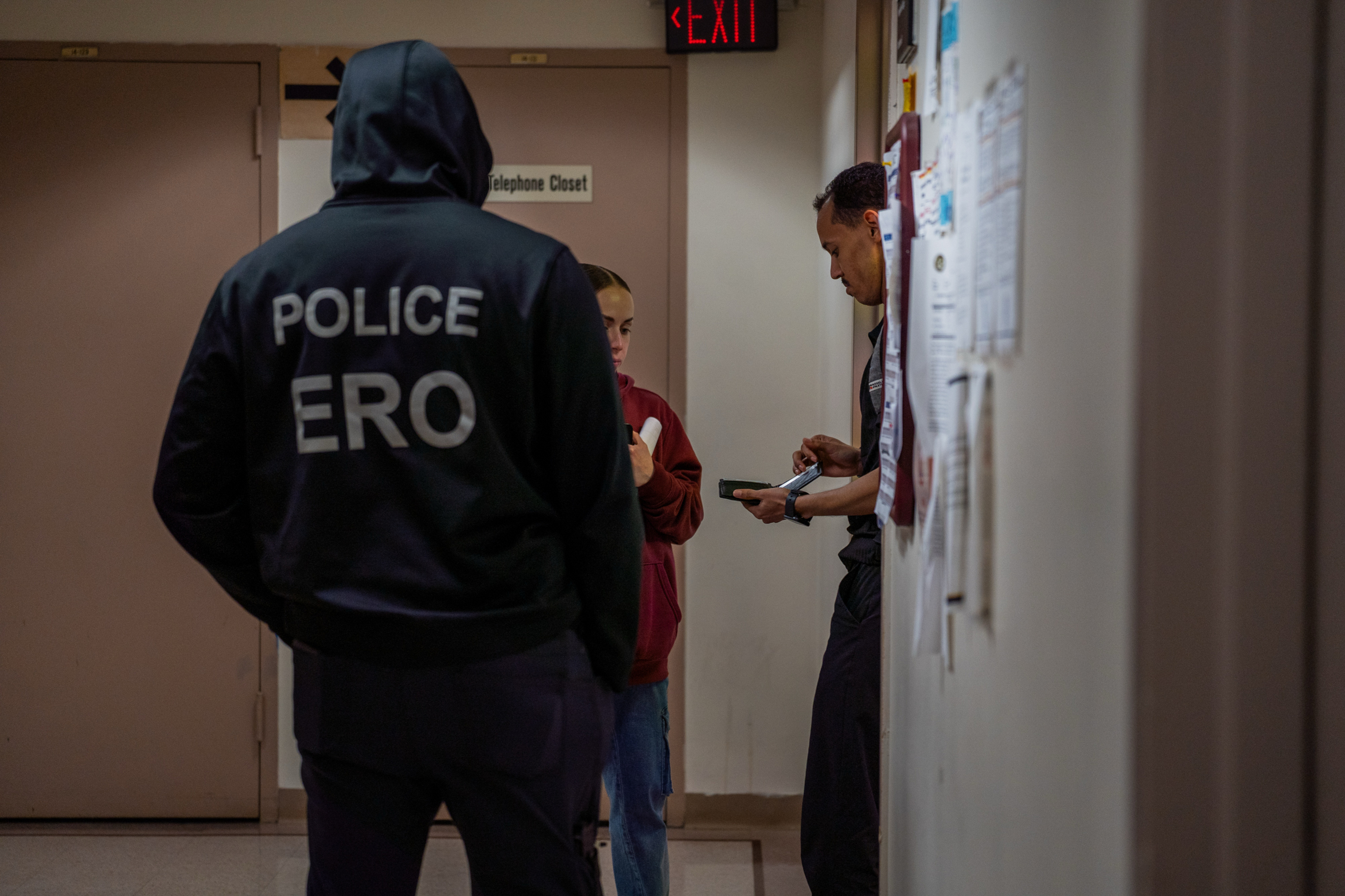
    WASHINGTON — The Trump administration said Friday that it would comply with a court order to restart processing asylum and other immigration applications filed by a broad swath of people who had been left in legal limbo for months.

    The move comes after a federal judge in Rhode Island last week struck down a suite of policies imposed by U.S. Citizenship and Immigration Services, a major blow to the administration’s expanding efforts to restrict legal immigration. The policies included a global hold on asylum applications filed with the agency and a freeze on immigration applications filed by people from 39 countries, largely in Africa and the Middle East, that are subject to President Donald Trump’s travel ban.

    More than 1 million applications had ground to a halt as a result, preventing many people from obtaining green cards, citizenship, and other immigration benefits. The halt also disrupted people’s ability to legally work and left them waiting indefinitely for decisions on their applications.

    In a court filing Friday, Angelica Alfonso-Royals, deputy director of U.S. Citizenship and Immigration Services, said the agency instructed employees to treat the policies “as if they are no longer in effect.” The agency also said in a memo posted on its website that it “strongly disagrees with the court’s order” but that it would “follow its terms pending possible further judicial review.”

    As of Friday evening, it was unclear whether the agency had restarted making immigration application decisions. Also on Friday, the administration filed an appeal with the 1st U.S. Circuit Court of Appeals seeking to pause the decision.

    The response came after Judge John J. McConnell Jr. rebuked the Trump administration for failing to immediately comply with the order he issued last week.

    The administration argued in a filing Tuesday that the initial order by McConnell, an appointee of President Barack Obama, was preliminary and therefore had not “become effective,” indicating that the department had yet to resume making application decisions.

    In response, McConnell quickly entered his judgment Thursday, ordering the government in blunt terms not to stall any further.

    “There is no excuse this time,” he wrote. “The government has an obligation to immediately comply with this order.”

    McConnell gave the administration until Friday evening to file an update “advising the court as to what specific steps it has taken to comply.”

    Democracy Forward, the legal organization representing the assorted unions and immigration aid groups, had accused the government of playing procedural games to deliberately dodge last week’s court order.

    “The Trump-Vance administration’s cruel immigration policies have been about chaos, confusion, and inefficiency, and we are proud to challenge these unlawful measures and to have secured a court order blocking the policies,” Skye Perryman, the organization’s president, said in a statement. “The federal government cannot shut down lawful immigration pathways or discriminate against people based on where they come from.”

    The policies at the center of the case were issued in November after authorities said an Afghan national had shot two National Guard members in Washington. The man, Rahmanullah Lakanwal, has pleaded not guilty.

    In his searing 135-page opinion last week, McConnell wrote that the policies effectively made it impossible for many people to remain in the country and that they were improperly fueled by “anti-immigration sentiments.”

    This article originally appeared in the New York Times.
  • A Tren de Aragua leader is killed in a joint strike, U.S. and Venezuela say

    A Tren de Aragua leader is killed in a joint strike, U.S. and Venezuela say

    A joint strike by the United States and Venezuela killed a leader of the Tren de Aragua transnational gang, President Donald Trump and officials in both countries said Friday, dealing a blow to a syndicate the Trump administration has blamed for an influx of violent crime and illicit drugs.

    The strike took place this past week alongside Venezuelan security forces, Defense Secretary Pete Hegseth said, without providing a precise date. He said it targeted a compound housing Hector Rusthenford Guerrero Flores, a founder of Tren de Aragua.

    A statement from Venezuela’s communications ministry said the operation took place in Venezuela, in the southeast of the state of Bolívar. Hegseth and Venezuelan officials said Guerrero Flores had been killed in the strike.

    Guerrero Flores, 43, was better known by the alias Niño Guerrero, meaning “warrior child.” He was wanted in the United States on federal charges of directing acts of terrorism, alongside other charges.

    The CIA, which has dedicated expanded resources to Latin America during Trump’s second term, supplied the intelligence that led to the strike, according to a senior administration official, who spoke on condition of anonymity given the sensitivity of the operation.

    Trump said on social media that the U.S. military’s Southern Command had conducted the strike at his direction as part of his pledge to dismantle foreign gangs. His administration designated Tren de Aragua as a foreign terrorist organization last year.

    Trump said the operation had been conducted with the Venezuelan government, which has become more cooperative with the United States since the United States captured former Venezuelan leader Nicolás Maduro and helped install a more pliant replacement, Delcy Rodríguez.

    Trump posted a video of a building exploding and invoked the names of crime victims in Georgia and Texas, calling the operation “retribution” for their families.

    Trump has often railed against the gang, using it to push his deportation agenda and to justify his military strikes on vessels purportedly ferrying illegal drugs from Venezuela to the United States. Critics have questioned whether Tren de Aragua has truly played the dangerous role that Trump says it has.

    Gen. Francis L. Donovan, who leads U.S. Southern Command, thanked Venezuelan security forces in a social media post for their support in what he described as a joint operation.

    The Venezuelan government said in a statement Friday that a combined operation had targeted organized crime structures. The operation was based on the exchange of intelligence between the two countries, the statement said.

    Tren de Aragua originated as a prison gang in Venezuela in the mid-2000s and has since expanded across Latin America and several U.S. cities. The organization is one of the most notorious in the region, focused on sex trafficking, human smuggling and drugs, drawing intense scrutiny from U.S. law enforcement.

    The Biden administration in 2024 issued a reward of up to $5 million for information leading to Guerrero Flores. He was charged last year in a New York federal court under the second Trump administration with racketeering, terrorism, drug importation and firearms offenses.

    This article originally appeared in the New York Times.

  • Trump, Pakistan say Iran deal could be signed Sunday

    ISLAMABAD — Key mediator Pakistan on Saturday said a deal to end the Iran war was closer than ever and U.S. President Donald Trump asserted it would be “signed tomorrow,” while Iran made some of its most optimistic statements yet but indicated a bit more time was needed.

    Trump said the Strait of Hormuz would open immediately after the signing.

    Pakistani Prime Minister Shehbaz Sharif said a deal was expected to be finalized within 24 hours. Each side was expected to sign electronically. Pakistan’s foreign ministry said the signing ceremony was scheduled for Sunday but did not provide details.

    Iran foreign ministry spokesperson Esmail Baghaei in statements carried by state media said the signing “will not happen tomorrow,” but “the likelihood of finalizing the memorandum of understanding in the coming days is high.”

    A tenuous ceasefire has been in place since April 7. Trump has asserted multiple times in recent weeks the countries were on the cusp of a deal.

    Iran has long expressed wariness in negotiations, pointing out that previous talks with the U.S. last year and early this year ended with attacks by the U.S. and Israel.

    Trump to discuss demining the strait at G7 summit

    Trump was expected to discuss demining the Strait of Hormuz during the Group of Seven summit that starts Monday.

    A senior U.S. official, who briefed journalists on condition of anonymity under rules set by the White House, said Trump planned to meet on the G7 sidelines with the leaders of Egypt, Qatar, and United Arab Emirates to discuss efforts to wind down the war.

    G7 members Britain and France have expressed interest in assisting with demining once the conflict is paused.

    It was not clear how many mines are in the strait that Iran has effectively controlled since shortly after the war began, virtually shutting down oil and natural gas shipments from the Persian Gulf. The U.S. has blockaded Iranian ports in response.

    The nuclear issue remains elusive

    Iran’s foreign ministry spokesperson said the memorandum of understanding under discussion was focused on ending the war and “at this stage, it has been decided that there will be no discussion of the nuclear issue.”

    Iran’s nuclear program and highly enriched uranium have long been at the center of tensions with the U.S. and Israel and an international source of concern.

    Trump on social media asserted that “when all is calm,” the U.S. would go in and “downblend and destroy” the enriched uranium in Iran or in the U.S.

    The apparent breakthrough in negotiations came after Iran exchanged fire with the U.S. and Israel earlier in the week, threatening to rupture the ceasefire and push the Middle East back into full-scale war.

    Iranian Foreign Minister Abbas Araghchi posted on X on Friday that an agreement “has never been closer.” Trump on Thursday claimed significant progress in negotiations, hours after he threatened to seize Iran’s oil industry.

    Iran’s former supreme leader will be buried in July

    Iran’s state-run television said funeral ceremonies for former Supreme Leader Ayatollah Ali Khamenei, killed in the war’s opening attack, will take place in July.

    The funeral, burial, and farewell events for Khamenei will occur between July 4-9 during Muharram, a traditional period of mourning in the Shiite Muslim calendar.

    Khamenei is succeeded by his son, Mojtaba, who is considered less compromising and has not been seen publicly since the war began.

    Funeral ceremonies are expected to begin in Tehran and move to Qom, a stronghold of many senior Shiite clerics, then to Mashhad, Khamenei’s birthplace. He’ll be buried there at the Imam Reza Shrine, considered the holiest place among Shiite devotees.

    Khamenei remolded the Islamic Republic following the death in 1989 of Ayatollah Ruhollah Khomeini, the fiery, charismatic ideologue who led the overthrow of the shah and installed rule by Shiite Muslim clerics.

    Khamenei ruled far longer than Khomeini. He greatly expanded the Shiite clerical class and built the paramilitary Revolutionary Guard into the most important body underpinning his rule. The Guard became a military and business behemoth, the country’s most elite force and head of its ballistic missile arsenal — a key target for Israel and the U.S. in the war.

  • Trump’s name gone from the Kennedy Center’s facade

    WASHINGTON — The curtain may have come down for President Donald Trump at the Kennedy Center but the tarp stays up for now.

    Matt Floca, executive director and chief operating officer of the performing arts venue, told a federal court Saturday that the institution had complied with an order to remove Trump’s name from the facade. In a filing, Floca said the board of trustees and the center had removed “all physical signage on the Kennedy Center building and grounds, including the front portico, that purports to rename the Kennedy Center after President Trump.”

    But for onlookers who have gathered on the plaza in front of the center over the past day hoping to witness a dramatic moment symbolizing the limits of Trump’s power, it was virtually impossible to see whether the signage was gone. A tarp hung over the scaffolding constructed for workers to perform that task. It was unclear when the tarp might be removed to reveal the original lettering that had endured for decades: “The John F. Kennedy Memorial Center for the Performing Arts.”

    A reporter was able to peer through a slight opening in the tarp, which was pulled tightly against the wall, and saw that the letters for Trump’s name were no longer affixed to the building.

    By the end, the Kennedy Center’s leadership had dug in against a federal judge’s order to erase Trump’s name from the building. Two courts rejected the institution’s last-minute request to retain Trump’s name pending an appeal. After severe thunderstorms raked Washington on Friday evening, the Kennedy Center sought one more extension before complying with a noon Saturday deadline.

    Those who pushed for the scrubbing of Trump’s name were in a celebratory mood. Rep. Joyce Beatty (D.,Ohio), an ex officio member of the board who sued to remove references to the president from the building and the center’s operations, was spotted in the plaza late Friday and Saturday morning. She posted a video to social media that purported to show her performing the “Trump dance” in one of the Kennedy Center’s great halls.

    “Today’s victory is the beginning of returning the Kennedy Center to the American people,” Beatty said in a statement. “The rule of law prevailed, and that is worth celebrating.”

    Leo Bartholomaus, a recent graduate of Syracuse University who lives in Virginia, said he was walking by the Kennedy Center on Friday afternoon after visiting the National Mall to see events related to this weekend’s UFC match at the White House. He said he was not happy that Trump added his name to the building.

    “My grandmother had a big love of the arts,” he said. “I’ve been here to see The Lion King. I wasn’t a fan of Donald Trump putting his name on it. I thought it was better as the Kennedy Center.”

    Closing an unusual chapter

    The removal of Trump’s name closes one of the more unusual chapters in the history of the Kennedy Center, which began construction in 1964 and was dedicated to the memory of the slain president, Democrat John F. Kennedy. At what is typically one of the few relatively nonpartisan spaces in Washington, Trump has wielded tremendous influence over the venue during his second term.

    Though he rarely discussed the Kennedy Center during his 2024 campaign, Trump moved quickly to oust the institution’s leadership when he returned to office in January 2025 and replaced it with a board of trustees that named him chairman. His name was quickly added to the building.

    While the removal of his name marks a setback for Trump, he is moving forward with plans to reshape the physical landscape of the nation’s capital in ways that have few modern parallels.

    He demolished the East Wing of the White House and is building a controversial ballroom in its place. He remodeled the Lincoln Memorial Reflecting Pool and plans extensive renovations of a golf course in East Potomac Park, moves that could significantly reduce the public’s access to running and biking paths. He is also moving forward with a triumphal arch that will sit near Arlington National Cemetery across the Potomac River in Virginia.

    Indeed, as Trump’s name was being removed from the Kennedy Center, the South Lawn of the White House has been transformed into a venue for a UFC match intended to celebrate the 250th anniversary of American independence but also coinciding with Trump’s birthday on Sunday.

    Questions linger about the Kennedy Center’s future

    Back at the Kennedy Center, there are many questions about the institution’s future. The same May court decision that ordered Trump’s name to be removed from the building also blocked a planned two-year closure for renovations that was set to begin next month.

    The Kennedy Center’s calendar for the weeks ahead include performances of Moulin Rouge! The Musical and Bluey’s Big Play. Comedian Bill Maher is to be awarded the Mark Twain Award for American Humor during a ceremony on June 28.

    But little is scheduled for the stages beyond that and, after substantially reducing staff, it is unclear how quickly the Kennedy Center could build out a robust performance list. Trump, angered by the court’s order to remove his name, has said he would turn the Kennedy Center over to Congress and has suggested it might simply shutter because of public safety concerns.

    In its unsuccessful appeal on Friday seeking a pause on the order removing Trump’s name, the Kennedy Center’s leadership argued, in terms that seemed similar to the president’s speech patterns, that the lower court was interfering with needed renovations.

    “The District Court is not allowing us to close in order to properly fix up and repair the Building, including potentially life threatening structural damage like beams and parking garage ceilings that are rusted, and in serious danger of falling onto people below,” according to the appeal. “Indeed, total collapse!”

    The institution also suggested that the president’s name could return to the building if the Kennedy Center later wins its appeal.

    If the court denied the venue’s request for a pause, the Kennedy Center argued it would “be forced to squander time and money — by both removing the signage and then potentially returning it after appeal.”

  • Judge blocks national parks from removing ‘negative’ signs

    Judge blocks national parks from removing ‘negative’ signs

    WASHINGTON — A federal judge Friday temporarily blocked the National Park Service from removing or revising signs, films, and other materials at national parks across the country to comply with a directive from President Donald Trump.

    The ruling pauses enforcement of an executive order that called for removing or covering up materials at national parks that “inappropriately disparage Americans” or cast the United States “in a negative light.”

    The judge, Angel Kelley of U.S. District Court for the District of Massachusetts, also ordered the park service to restore within three weeks any exhibits that it had dismantled or altered.

    The ruling provides a temporary reprieve for the plaintiffs, a coalition of advocacy groups that sued over the executive order in February, while the litigation continues to unfold.

    To comply with the president’s directive, the park service has taken down plaques about slavery at the President’s House in Philadelphia, a sign about climate change at Fort Sumter in South Carolina, and a sign about Indigenous people at Acadia National Park in Maine.

    Another federal judge has already ordered the park service not to make further changes to the slavery exhibit at the President’s House Site at Independence National Historical Park, as she considers a separate lawsuit filed by Philadelphia.

    Kelley, who was nominated by President Joe Biden, sharply rebuked the Trump administration for taking down materials. “Not only does this undermine the integrity of the national parks; it sets a dangerous precedent of censorship and sanitization,” she wrote.

    Kelley began her 63-page ruling by listing examples of national parks that help educate visitors about difficult periods of American history, as well as contributions made by people of color, gay and transgender figures, women and other marginalized groups.

    “From the echoes of abolition in John Brown’s Fort in Harpers Ferry, to the genesis of the modern LGBTQ+ civil rights movement at the Stonewall National Monument, to the retreating ice of Glacier National Park in Alaska, the national parks preserve the multifaceted and multilayered history of our nation, including the good, the bad and the ugly,” she wrote.

    In the lawsuit, the plaintiffs argued that removing the materials was “arbitrary and capricious,” in violation of the Administrative Procedure Act. They also accused the park service of exceeding its legal authority.

    Katie Martin, a spokesperson for the Interior Department, the parent agency of the park service, suggested that the administration would appeal the ruling.

    “This ruling is from a liberal activist judge,” Martin said in an email. “The department will look at our appeal options while we celebrate U.F.C. Freedom 250 on the South Lawn of the White House this weekend in honor of our nation’s 250th with the greatest president in the history of our country — President Donald J. Trump.”

    Emily Thompson, the executive director of the Coalition to Protect America’s National Parks, one of the advocacy groups that brought the lawsuit, applauded the ruling.

    “National parks are not propaganda tools, nor should they be used for partisan purposes,” Thompson said in a statement. “They exist to preserve and interpret the full American story, not just the parts that make some politicians comfortable. This ruling is an important step to help ensure that remains the case.”

    In an email sent after the ruling, a copy of which was reviewed by The New York Times, a park service official directed regional supervisors to pause carrying out Trump’s directive “for the time being.”

    “Parks can continue to submit items for review, but implementation actions should pause pending further guidance,” the email said.

    This article originally appeared in The New York Times.

  • Ford and Honda issue recalls for thousands of vehicles

    Ford and Honda issue recalls for thousands of vehicles

    Ford is recalling more than 250,000 vehicles that were incorrectly repaired under a previous recall meant to fix a problem that caused the engine to stall while driving.

    The recall includes 255,404 Ford Focus automobiles, model years 2012-2018. Ford said the canister purge valve may malfunction, causing the engine to stall unexpectedly while driving, increasing the risk of crash and injury.

    To fix the problem, dealers will provide a powertrain software update free of charge.

    Owner notification letters are expected to be mailed July 6. Owners may contact Ford customer service at 866-436-7332.

    Ford’s number for this recall is 26S40. The National Highway Traffic and Safety Administration’s number for this recall is 26V369. The original NHTSA recall number for this issue is 18V735.

    Vehicle identification numbers involved in this recall will become searchable on NHTSA.gov on July 6.

    Earlier this week Honda announced a recall of more than 800,000 vehicles because rear suspension components may fail and cause drivers to lose control, increasing the chances of a crash or injury.

    American Honda Motor Co. said the recall covers certain 2016-2022 Honda Pilot, 2017-2023 Ridgeline, 2019-2023 Passport, and 2014-2020 Acura MDX vehicles. The recall includes 880,514 vehicles that were sold in Connecticut, Delaware, the District of Columbia, Illinois, Indiana, Iowa, Kentucky, Maine, Maryland, Massachusetts, Michigan, Minnesota, Missouri, New Hampshire, New Jersey, New York, Ohio, Pennsylvania, Rhode Island, Vermont, Virginia, West Virginia and Wisconsin.

    The problem centers around the rear subframe, which can corrode at suspension mounting points and cause the rear suspension to fail. Honda estimates that just 1% of the vehicles listed have the defect.

    Honda has had no warranty claims and no reports of an injury or death related to the problem.

    As a remedy, Honda and Acura dealers will inspect the rear subframe and install a reinforcement kit if necessary, or repair or replace the rear subframe components at no cost to vehicle owners.

    Owner notification letters are expected to be mailed July 7.

    The National Highway Traffic Safety Administration’s campaign number for the recall is 26V367000. Honda’s numbers for this recall are AOU and AOT. Vehicle Identification Numbers applicable to this recall will be searchable on NHTSA.gov beginning June 10.

    Owners may contact Honda’s customer service at 888-234-2138.

  • Sleep Number files bankruptcy to sell itself, blames tariffs

    Sleep Number files bankruptcy to sell itself, blames tariffs

    Mattress maker Sleep Number Corp. filed bankruptcy with an agreement to sell the firm to one-time retail partner Sleep Country Canada Inc. after years of weak demand, mounting financial pressure, and unpredictable tariffs.

    Sleep Number blamed its bankruptcy, in part, on “the unpredictable shifting of trade rules imposed by the current U.S. government on top of an already vulnerable global supply chain,” according to a court filing Friday.

    Even after the U.S. Supreme Court struck down some of President Donald Trump’s tariffs, “the broader trade landscape remained complex and the company continued to manage ongoing regulatory uncertainties, particularly regarding potential alternative tariff frameworks that may be imposed” on U.S. imports, chief financial officer Amy O’Keefe said in the filing.

    Sleep Number filed for Chapter 11 protection from creditors in order to hold an auction, at which Sleep Country would be the so-called stalking horse bidder. Its all-cash opening offer for “substantially” all of the firm’s assets is $415 million, O’Keefe said.

    Because the firm tried to sell itself in the months leading up to the Chapter 11 filing, O’Keefe said Sleep Number is seeking a 26-day sale process. Any competing bids would be due July 8 and the sale would close by July 31 under the company’s proposed timeline.

    Sleep Number, which operates 572 stores and is known for its customizable beds, will continue operations while seeking a quicker-than-usual court-supervised sale process, according to the filing.

    The company, whose shares have plunged more than 95% the past four months, has been hurt by declining store traffic amid broader industry pressures.

    In response to mounting financial woes, O’Keefe said Sleep Number restructured its real estate portfolio and launched a number of cost-cutting initiatives in recent years. The firm had reported its operating costs fell by $136 million last year, but its net loss still widened as net sales dropped 16%.

    Sleep Number said in a statement that it will continue to review its footprint with the aim of retaining as many retail locations as possible. It added that as much as $65 million of new borrowing has been arranged to pay for the restructuring process. Sleep Number would also refinance $195 million of older debt should the loan package be approved by the judge overseeing the bankruptcy case.

    The company listed assets of between $500 million and $1 billion and liabilities of between $1 billion and $10 billion, with lenders owned about $672.5 million.

  • Solar power hits new milestones in the U.S. even as Trump boosts coal over clean energy

    Even as President Donald Trump boosts coal over clean energy, solar power is hitting new milestones in the U.S. and remains the leading source of new power.

    Data released Wednesday by global energy think tank Ember, along with a report by the Solar Energy Industries Association and analytics firm Wood Mackenzie, show the continued growth of solar and decline of coal in the United States despite federal policy. In May, for the first time, solar supplied more of the nation’s electricity than coal, or 12.8%, Ember said. Coal supplied 12.2%, its fourth-lowest monthly share ever.

    “For years solar power has risen in the U.S. electricity mix,” said Nicolas Fulghum, senior energy and data analyst at Ember. ”At the same time, coal power has lost its status, first as the largest source in the U.S. mix, and then gradually over the years has fallen even further.”

    Solar also became the third-largest source of electricity in the U.S. in May, behind natural gas and nuclear, Fulghum said. Coal generation hit an all-time monthly low in April and rebounded only modestly in May, allowing increasing solar generation to overtake coal, he added.

    Electricity is produced by converting sources of energy — fossil fuels, renewable resources and nuclear — into electrical power. Burning coal, oil, and natural gas for electricity emits carbon dioxide, trapping heat in the atmosphere and warming the planet. By contrast, solar, wind, geothermal, hydropower, and nuclear are carbon-free.

    After about two decades of essentially flat electricity consumption in the U.S., electricity demand is increasing to power artificial intelligence, grow domestic manufacturing, and electrify transportation and heating. Fulghum said he expects to see more months when solar exceeds coal generation, before overtaking it on an annual basis in a few years.

    These milestones signify that solar “has staying power” at a time when there’s less support for renewable energy at the federal level, he added.

    Wind and solar combined have overtaken coal in the past, and wind power alone has outpaced coal during spring months when wind speeds pick up. Ember gets its hourly and monthly data from the U.S. Energy Information Administration.

    Globally, electricity generation from renewables is growing rapidly. Renewables will become the largest global energy source, used for almost 45% of electricity generation by 2030, according to the International Energy Agency.

    Trump helps the struggling U.S. coal industry while curtailing solar and wind

    Last week, Trump, a Republican, announced a plan to boost the struggling U.S. coal industry by spending nearly $700 million to support coal-fired power plants and coal exports. Trump said at a White House event that “coal’s a great business” and that “in terms of power, there’s really nothing like it.”

    Martin Pochtaruk, CEO and founder of Canadian-based solar panel manufacturer Heliene, said Trump can say that coal is coming back but investors will invest their money in whatever brings the best return. And for power generation that is solar, making it the fastest-growing fuel, he added.

    A White House spokesperson defended the Trump administration’s overall energy policies, saying they were geared toward strengthening the country’s security.

    “The President has reversed the Left’s devastating policies, saved the American coal industry, prevented the retirement of more than 17 gigawatts of power, and saved lives during heightened demand periods,” Taylor Rogers said in a statement.

    While Trump is trying to reverse the coal industry’s decline, solar has been the top source for new power for five years, SEIA said. SEIA and Wood Mackenzie said solar and battery storage were practically the only energy resources being built in the first quarter, making up 91% of all new generating capacity.

    The Trump administration has canceled solar and wind projects, implemented policies that slowed clean energy permitting and development, and terminated $7 billion in funding intended for affordable solar energy projects across the U.S.

    “As power demand skyrockets, political and regulatory attacks are slowing down the exact resources we rely on,” Darren Van’t Hof, interim president and CEO of SEIA, said in a statement. “Impeding the only sector that is actively building new power is a reckless gamble that will only drive electricity bills higher.”

    Several groups sued the Environmental Protection Agency over canceling the Solar for All program. A district court dismissed the case last week citing lack of jurisdiction. The plaintiffs have another filing pending in the Court of Federal Claims.

    In a ruling Saturday, a federal judge struck down guidance from the Internal Revenue Service restricting tax credits for wind and solar projects.

    Trump has blamed renewable energy sources such as wind and solar power for skyrocketing energy costs. But energy analysts say recent price hikes are based on growing demand, aging infrastructure, and increasingly extreme weather events that are exacerbated by climate change. Most recently, the war in Iran that Trump launched has also led to a spike in energy costs.

    Blaming clean energy is “nonsensical,” said U.S. Rep. Jared Huffman. The California Democrat said that “not even lighting $700 million of taxpayer money on fire” can save the dying coal industry.

    “The rest of the world will move ahead toward a clean energy future with countries other than the United States leading the charge, unfortunately,” he said Wednesday. “Trump will fail in this agenda. But, he will do enormous damage to our global leadership on clean energy and to the cost of living for struggling Americans.”

    Top states for solar voted for Trump

    States won by Trump in the 2024 election accounted for 74% of all solar capacity installed in the first quarter of 2026, with Texas, Florida, Ohio, Indiana, Michigan, Arizona, and Mississippi ranking among the top 10 states for new solar additions, SEIA said. The U.S. now exceeds a total of 6 million installations nationwide across all solar sectors, which includes large-scale solar arrays, commercial, community solar, and residential or rooftop solar.

    Johanna Neumann, at the Environment America Research and Policy Center, said it’s “good news for our health and our planet that solar continues to grow,” and also, not surprising.

    “Today we can harness solar more affordably than any other energy source. It’s scalable. And it’s also our most abundant renewable energy source,” said Neumann, senior director of the center’s campaign for 100% renewable energy. “So I think it’s hard to keep the lid on a good idea, especially if the economics are tilting in your favor as well, which they are in the case of solar.”

    Environment America’s renewable energy dashboard shows that 32 U.S. states generated at least 10% of their retail electricity sales from solar, wind and geothermal energy last year, compared to 18 states in 2016. Clean energy in the South is booming, particularly in Florida, Arkansas, and Mississippi, Neumann said.

    “I think there is a misconception in the United States that clean energy is something for the coasts and liberal cities,” she said. “The true story of renewable energy is a 50-state story.”

  • Trump’s name poised to be removed from Kennedy Center after court denies last-minute move to keep it

    WASHINGTON — The Kennedy Center was running out of options Friday evening to keep President Donald Trump’s name on the facade of the iconic performing arts venue.

    A judge earlier in the afternoon rejected a request to pause a court-ordered deadline of Friday to remove references to Trump from the building and other aspects of the Kennedy Center’s operations. The institution appealed that ruling, an effort that was also rebuffed Friday evening.

    Scaffolding was erected earlier in the day around a section of the building that includes Trump’s name, though there was no effort to remove it by 7 p.m. Eastern Time. Storms with lightning were dancing around Washington, adding to the challenge for workers.

    After ignoring the Kennedy Center for much of his first term, Trump has wielded tremendous influence over the venue during his return to office. Just a month into his second term, he ousted the center’s previous leadership and replaced it with a board of trustees that named him chairman. Trump’s name was quickly added to the building.

    In his ruling that only Congress could make changes to the Kennedy Center’s name, U.S. District Judge Christopher Cooper also blocked the administration from closing the cultural and arts venue for major renovations that had been planned to start in July and last for two years.

    The Kennedy Center’s leadership argued in its appeal Friday that the renovation was badly needed and accused the lower court, in terms that seemed similar to Trump’s speech patterns, of interfering in the effort.

    “The District Court is not allowing us to close in order to properly fix up and repair the Building, including potentially life threatening structural damage like beams and parking garage ceilings that are rusted, and in serious danger of falling onto people below,” according to the appeal. “Indeed, total collapse!”

    Even as the Kennedy Center has fought efforts to remove Trump’s name from the building, it has taken steps to comply with Cooper’s initial ruling.

    A June 4 memo to staff from the Kennedy Center’s Office of General Counsel said email signatures, letterhead and other documents must reflect the name as “The John F. Kennedy Center for the Performing Arts” or “Kennedy Center.”

    The Kennedy Center’s website has dropped Trump’s name. And an earlier email sent to members offering ticket packages for the June 28 Mark Twain Award for American Humor ceremony came from the Kennedy Center without including Trump’s name.