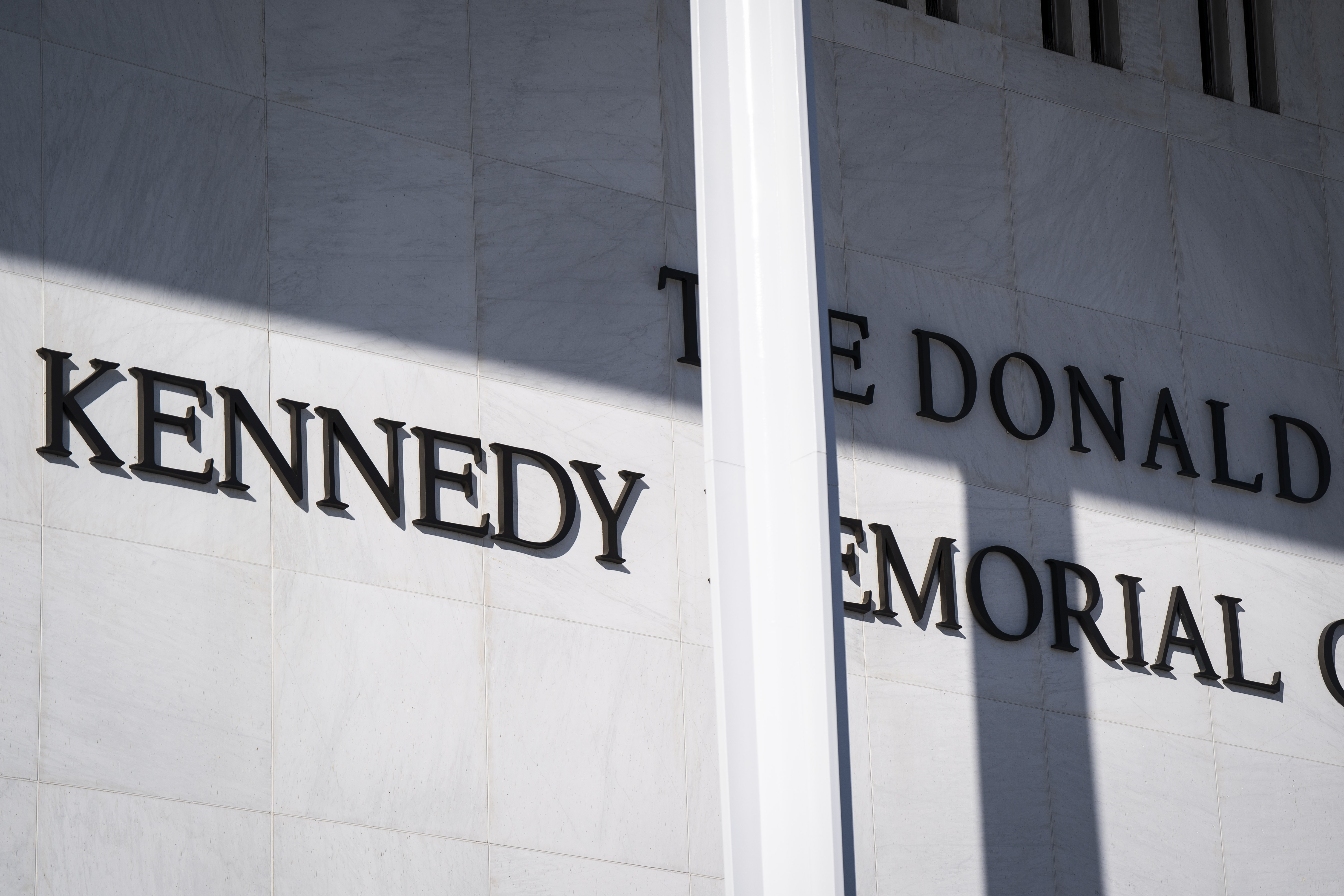
A federal judge Friday denied the Kennedy Center’s last-ditch motion to delay removing President Donald Trump’s name from the performing arts venue, as crews erected scaffolding next to the building less than 12 hours before the court-ordered deadline to do so.
U.S. District Judge Christopher Cooper ruled Friday afternoon that the Kennedy Center’s lawyers failed to demonstrate they were likely to win their appeal or that the center would suffer “irreparable harm” if Trump’s name were removed.
Justice Department lawyers representing the center filed the motion to stay after the center’s trustees voted Thursday to appeal Cooper’s May 29 ruling.
The Kennedy Center’s leadership appealed Cooper’s Friday ruling to the Court of Appeals for the D.C. Circuit and requested action by the court by 7 pm ET. That appeal was also denied Friday evening.
Scaffolding had been erected earlier in the day around a section of the building that includes Trump’s name and crowds gathered to cheer the workers, though there was no effort to remove it by 7 p.m. Eastern Time. Storms with lightning were dancing around Washington, adding to the challenge for workers.
Removing Trump’s name would be the most tangible setback in the president’s 15-month effort to take over the storied arts institution. On Monday, the center removed “Trump” from the title of its website, restoring it to “The Kennedy Center.” That came four days after the venue’s administration directed employees to erase references to Trump from official center materials — signs, social media accounts, email signatures, webpages, documents, and promotional materials.
In February 2025, Trump purged the center’s board of trustees and replaced them with political allies who then elected him board chair. In December, those loyalists voted to rename the venue, and a day later, crews added Trump’s name to the exterior.
Trump claimed that the board’s vote to do so was a surprise, but he had joked about naming the center after himself for months. Within hours his name was on the website, and the next morning the building’s sign read: “The Donald J. Trump and The John F. Kennedy Memorial Center for the Performing Arts.”
Justice Department lawyers representing Trump later acknowledged that, given the speed with which the signage was installed, it had been “prepared and/or purchased prior to the Board’s vote the day before.”
The addition of Trump’s name sparked immediate backlash from the arts community and members of the Kennedy family, who argued that the renaming desecrated a living memorial to the assassinated president. Congress established the center in 1964, two months after Kennedy’s death, designating it “the sole national monument to his memory within the city of Washington and its environs.” Critics noted that under the law creating the institution, only Congress has authority to change the center’s name.
Rep. Joyce Beatty (D., Ohio), an ex officio board member, sued fellow trustees in December after she was muted during a virtual board meeting when she tried to voice opposition to the name change.
In his May opinion, Cooper ruled that Congress was “crystal clear” in 1964 when it passed legislation changing the name of the National Cultural Center to the John F. Kennedy Center for the Performing Arts, designating it as “a living memorial” to the president who had been assassinated the year before.
“Congress gave the Kennedy Center its name,” Cooper wrote, “and only Congress can change it.”
Washington National Opera sues Kennedy Center board
The Washington National Opera on Thursday filed a lawsuit seeking to force the Kennedy Center to turn over $17 million in gifts and donations to the opera company.
The Kennedy Center has “wrongfully held” years’ worth of donor gifts, bequests, and endowment funds that belong to the opera, according to the complaint filed in the U.S. Court of Federal Claims, five months after the two institutions ended a roughly 15-year affiliation.
“These funds represent years of gifts from loyal supporters who gave specifically to advance WNO’s mission, its performances, its artists, and its education and community programs,” the company said in a statement. “WNO has a fiduciary responsibility to its donors to ensure their contributions are honored and used as intended to support the work of WNO’s artists and its programs.”
The lawsuit alleges the Kennedy Center not only refused to return the funds but also put a significant portion of them at risk.
In a Jan. 8 email, the center’s chief financial officer claimed for the first time that millions held in a fund for WNO’s benefit actually belonged to the Kennedy Center — and disclosed that the center had used the money to collateralize its own line of credit, according to the complaint. The WNO board voted to terminate the affiliation agreement the next day.
The breakup was swift and acrimonious, the complaint states. Within hours of WNO’s termination notice, the Kennedy Center allegedly cut off the opera’s access to its emails, donor records, and board minutes dating to 2011; locked staff out of their offices; sent termination letters to WNO employees; and scrubbed the opera’s remaining season from the center’s website. Then-President Richard Grenell announced on X that the “Trump Kennedy Center has made the decision to end the EXCLUSIVE partnership” with the opera.
WNO said it spent months trying to resolve the dispute short of litigation, proposing meetings and invoking the mediation clause of the parties’ agreement, but the Kennedy Center never responded to its request to select a mediator.
The complaint asks the court to award at least $17.1 million in damages and seeks a complete accounting of all WNO funds the center holds.
The Kennedy Center did not immediately respond to a request for comment.
Elon Musk became the world’s first trillionaire Friday when shares of his rocket company SpaceX began trading on the stock market, signaling a new era of ultra-affluence and widening wealth inequality.
Musk reached the milestone when trading of SpaceX shares opened at $150, up 11% from their initial public offering price of $135. His net worth — which comprises his stock in SpaceX and his electric carmaker, Tesla, as well as ownership stakes in other ventures including brain implant company Neuralink and tunneling firm the Boring Co. — stood at around $1.1 trillion.
Musk, 54, was already the world’s richest person. He claimed that title from Amazon founder Jeff Bezos in January 2021, after Tesla’s shares surged to take his net worth past $185 billion.
Since then, the South African-born entrepreneur’s fortune has more than quintupled in a 5½-year period, during which he bought social media company Twitter, founded an AI startup, fused them together with SpaceX, and then took the conglomerate public. In that time, Musk also spent more than $250 million to help elect Donald Trump and advised the president.
And Musk’s wealth-making has only accelerated, cementing his influence over society, culture, and global politics. Since October, his net worth has doubled.
“The fact is that wealth for some and wealth inequality is growing in dimensions that we’ve never seen before,” said Steven Durlauf, the director of the Stone Center for Research on Wealth Inequality and Mobility at the University of Chicago.
When oil tycoon John D. Rockefeller’s fortune was at its height in 1937, his $1.4 billion net worth amounted to about 1.5% of U.S. gross domestic product, Durlauf said. Musk’s net worth is now equivalent to more than 3% of U.S. GDP.
Such wealth is so extraordinary that it can be hard to make meaningful comparisons. The median American household had a net worth of just under $200,000 in 2022, the year with the most recent data available from the Federal Reserve. That means Musk’s net worth is 5 million times as large as that of the typical family.
His wealth dwarfs even that of the everyday wealthy. The top 10% of households by income had an average net worth of $6.5 million in 2022, less than 0.001% of the SpaceX leader’s total. The world’s second-richest person, Google co-founder Larry Page, is worth around $304 billion, according to the Bloomberg Billionaires Index.
Inequality is notoriously difficult to measure, but the explosion of wealth at the top is hard to dispute. The net worth of the middle 40% of households, adjusted for inflation, has risen slightly more than 50% over the past decade, according to data from French economists Emmanuel Saez and Gabriel Zucman. The top 1% have seen similar gains. But the richest 0.001% have seen their wealth roughly double over the same period.
Beyond Musk, the ultrawealthy have experienced significant increases in their fortunes. In 2016, a net worth of $100 billion — a mark that Musk crossed about six years ago — would have easily placed someone at the top of the Forbes Billionaires list. Today, $100 billion would rank them as the 20th richest person in the world.
“Christ, when I was a kid, we only talked about millionaires,” said Bernie Sanders, 84, the progressive senator from Vermont. “If this isn’t an example of oligarchy, I don’t know what is.”
Musk’s rapid accumulation of wealth largely comes down to the appreciation of his nearly 50% stake in SpaceX, which is worth more than $900 billion. During its IPO, the company sold more than 555 million shares, which valued it at $1.77 trillion, up from a $400 billion valuation on the private market last summer. Starting in January, SpaceX also granted Musk pay packages totaling 1.3 billion shares, which he cannot sell until he hits certain operational milestones.
Musk did not respond to a request for comment. But he has previously acknowledged the trillionaire milestone.
In February, he replied to a post on X about possible trillionaire status by noting that he had created significant wealth for shareholders and held less than 0.1% of his net worth in cash. In May, he responded on X to the financial musings of Peter Diamandis, a friend and SpaceX investor, saying he would reach “$10T or bust.”
Musk has also recently said that “money won’t matter” in the future because Tesla and SpaceX would develop robotics, AI, and rockets so powerful that no human would ever have to work again. In his utopian world of “amazing abundance,” everyone would have “universal high income,” he has said.
Musk’s allies said his net worth was justified by his impact, providing an example and incentive for those who want to build successful companies. Diamandis, the head of the XPrize Foundation, an organization that holds contests to encourage scientific breakthroughs, said Tesla and SpaceX were “raising the floor.”
“The fruits of his labor are making him into a trillionaire, and they’re uplifting humanity,” Diamandis said.
Adeo Ressi, Musk’s college roommate at the University of Pennsylvania, said the SpaceX chief never cared as much about financial gain as obtaining resources to help him achieve his entrepreneurial goals. For Musk, “money is a means to an end,” Ressi said, comparing his friend’s mindset with a gamer accumulating coins in a video game to beat a level.
“He’s amassing resources to do things, and the thing he wants to do most is colonize Mars,” Ressi said. “That’s a really big driving force behind his wealth accumulation.”
He added that Musk was “not a poster child of wealth inequality” and pointed to the tech leader’s lifestyle, in which he is known to work around the clock and avoid the typical trappings of the rich, like islands and megayachts.
“It’s not like he’s planning to leave this in a massive family trust,” Ressi said. “It’s literally going to be used to make humanity into a multiplanetary species.”
But critics say the way Musk chooses to lead his life is beside the point. His net worth has already provided him with the means to personally acquire companies and spend hundreds of millions of dollars to help elect a preferred presidential candidate, Durlauf of the University of Chicago said.
Becoming a trillionaire will only magnify how “economic inequalities are spilling over into the political domain,” he added.
Sanders called Musk’s trillionaire status “a moral travesty,” noting that 60% of Americans live paycheck to paycheck.
The senator also agreed with the assessment that Musk was probably not as interested in owning islands or yachts. The trillionaire, in his view, was interested in just one thing.
“This guy is into power,” Sanders said. “And he is now the most powerful person on Earth.”
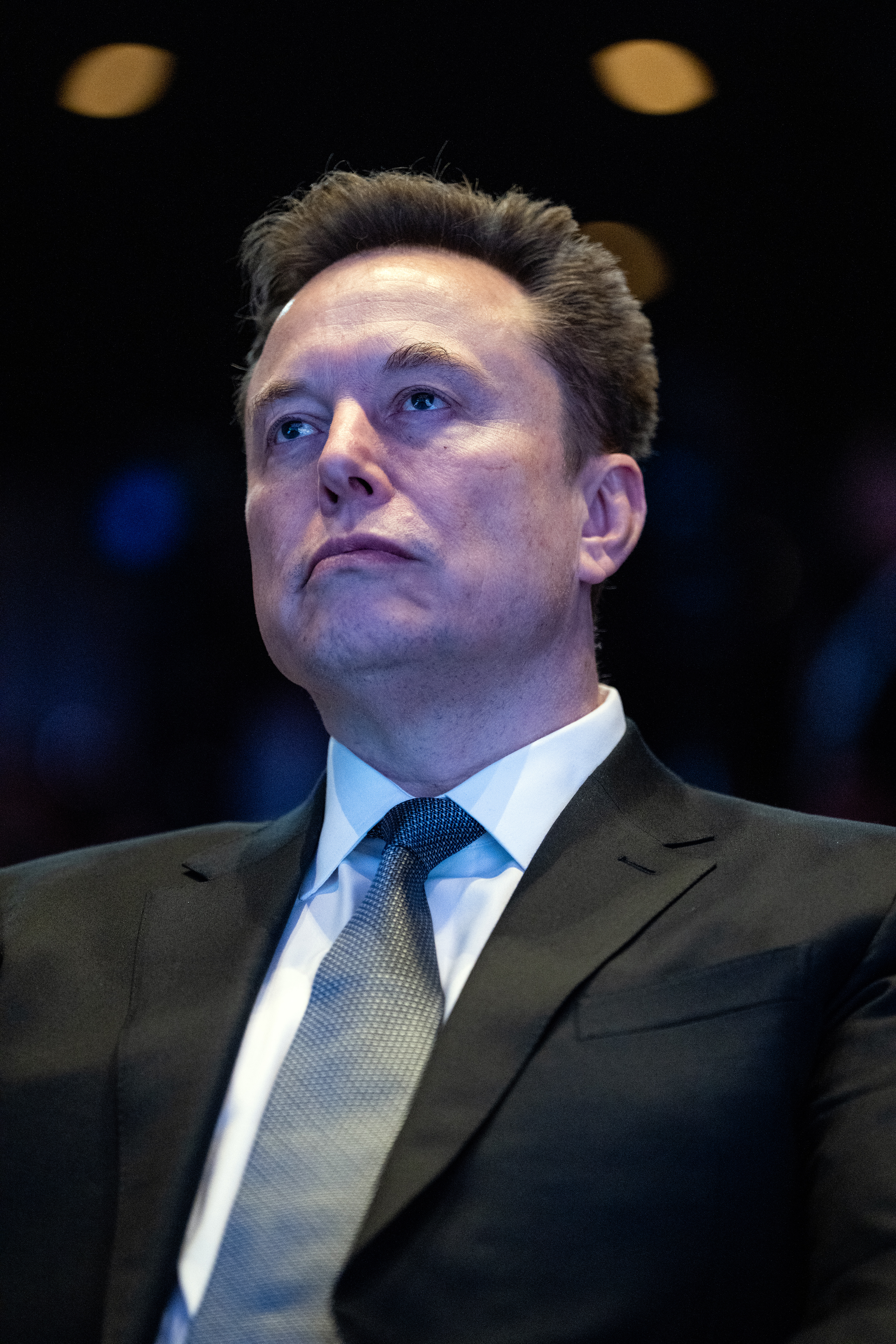
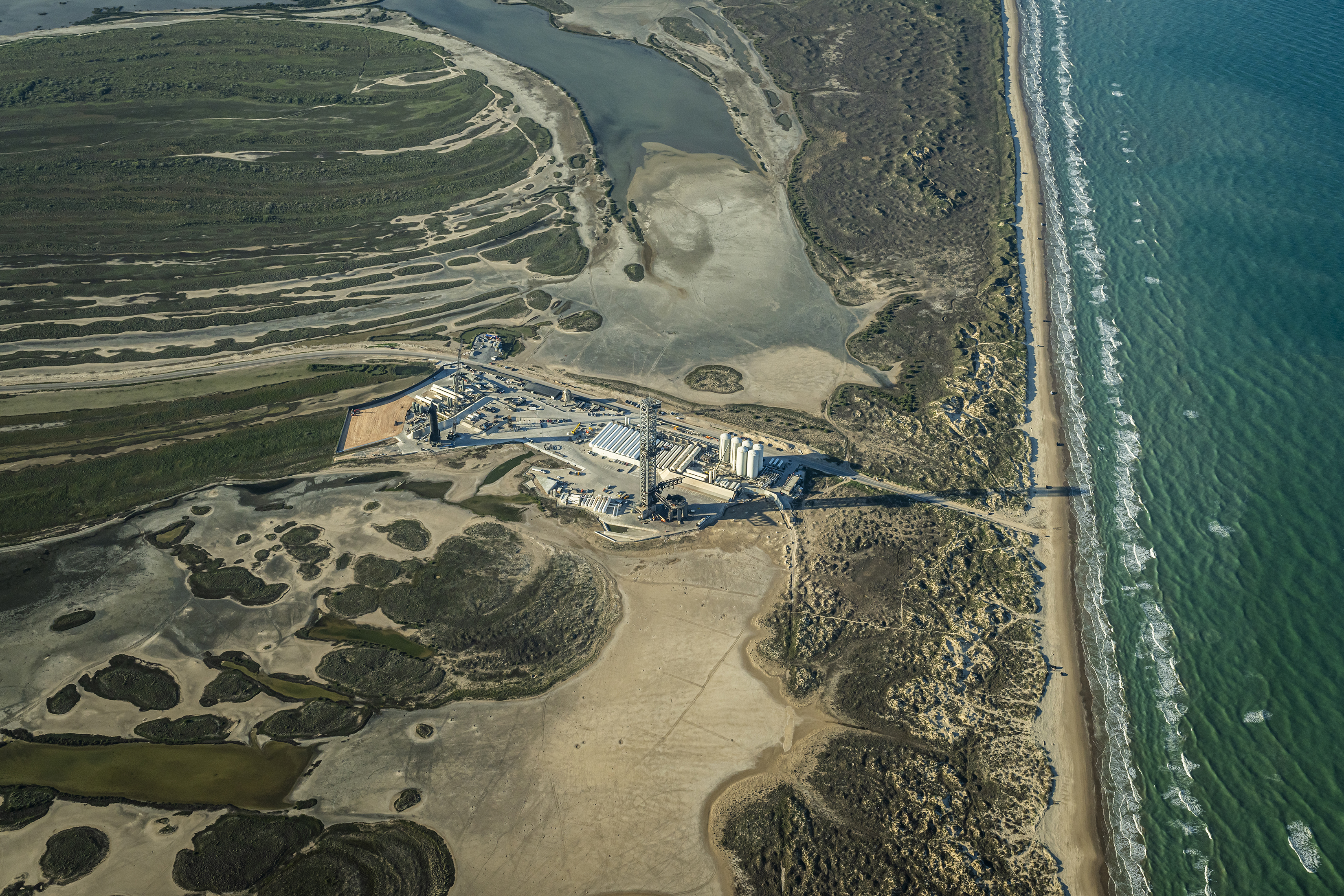
FILE — Elon Musk in Washington on Nov. 19, 2025. Elon Musk became the world’s first trillionaire on June 11, 2026, as shares of his rocket company SpaceX began trading on the stock market at $150, up 11 percent from their initial public offering price, signaling a new era of ultra-affluence and widening wealth inequality. (Haiyun Jiang/The New York Times)HAIYUN JIANGFILE — The SpaceX Starbase rocket launch site near Boca Chica beach, in Cameron County, Texas, on Feb. 24, 2024. Elon Musk became the world’s first trillionaire on June 11, 2026, as shares of his rocket company SpaceX began trading on the stock market at $150, up 11 percent from their initial public offering price, signaling a new era of ultra-affluence and widening wealth inequality. (Meridith Kohut/The New York Times)MERIDITH KOHUT
The Kennedy Center’s board plans to fight a federal judge’s order to remove President Donald Trump’s name from the performing arts center.
The center’s trustees on Thursday voted to seek a last-minute stay of U.S. District Judge Christopher Cooper’s directive to take Trump’s name off the center’s exterior by Friday as they appeal his ruling that renaming the center was illegal, according to a meeting attendee and someone briefed by a meeting attendee, who both spoke on the condition of anonymity for fear of retribution.
The board’s decision came a day before Cooper’s deadline for the center to remove Trump’s name from its building and branding, part of a ruling in which the judge also granted a request from Rep. Joyce Beatty (D., Ohio) to temporarily block steps toward a planned two-year shutdown.
Cooper’s order, the most significant legal blow yet to Trump’s effort to remake the Kennedy Center, found that the board exceeded its authority in December when it voted to rename the venue “The Donald J. Trump and The John F. Kennedy Memorial Center for the Performing Arts.” Congress gave the center its name, Cooper wrote, and only Congress can change it.
In February, Trump announced that he planned to close the center for two years starting in early July. The closure was necessary, he said, to make roughly $250 million in renovations, a decision that blindsided staff, artists, and even some trustees. The board — stacked with loyalists who elected Trump chairman after he purged his predecessors’ appointees in February 2025 — voted in March to approve the closure. The center’s executive director, Matt Floca, testified in April that the building’s deterioration is so severe that staying open during construction would be “irresponsible,” citing failing roof panels and water seeping into electrical vaults.
But Cooper ruled that the closure decision was made rashly, without the board weighing enough information about the potential harms. He did not bar trustees from ever shuttering the building, leaving the door open for the board to reconsider whether it should “come to this decision anew after independently balancing its multiple obligations to the Center in a prudent fashion.” The center’s general counsel highlighted that language last week in a memo to staff, noting that the court did not require the center to stay open during renovations or present any particular programming.
The center has so far signaled that it will comply. In last week’s memo, the general counsel’s office ordered employees to erase all references to Trump from official materials, starting immediately with email signatures, letterhead, and other documents, followed by signs, brochures, ID cards, and the building’s exterior by Friday’s court-ordered deadline. On Monday, the center erased Trump’s name from its website and YouTube page, and by Thursday, it had done the same with its Facebook, LinkedIn, and X accounts.
“We are complying with the court’s order while evaluating all legal options to preserve this revitalization and recognize President Trump’s leadership,” spokeswoman Roma Daravi said.
Late Thursday afternoon, the center’s Instagram account was still branded “The Trump Kennedy Center,” and the president’s name remained emblazoned across the building’s facade.
Hours after Cooper’s rulings, Trump lashed out at the judge and suggested he would abandon his involvement in the Kennedy Center altogether. In social media posts after the ruling, the president insisted that the building must close for renovations to proceed safely and said that unless he was “free to do what I do better than anyone else,” he had no interest in continuing. Trump said he had instructed the Commerce Department to arrange a “full and complete transfer” of the institution to Congress, a proposal that puzzled lawmakers and legal observers, since federal law vests management of the center in its board of trustees.
Last week, Trump appeared to walk that back. When asked on Friday how he wanted to be involved at the center, Trump said, “The same way it is.”
“I’m the chairman, so we’ll just keep it going,” he told reporters aboard Air Force One.
On Wednesday, a White House official said the president will remain engaged in the center’s affairs as administration officials devise plans to fix “the facility’s major issues.” The White House contested the notion that Cooper’s rulings were a “defeat” for Trump.
SAN JUAN, Puerto Rico — The U.S. government on Thursday announced sanctions against Cuba’s state-owned oil and gas company in a move some experts say will only deepen the island’s crises and hit vulnerable Cubans the hardest.
Secretary of State Marco Rubio asserted that key assets of the company, known as Cupet, were “unlawfully expropriated from American owners years ago.”
He also accused Cuba’s government of weaponizing energy.
“While the Cuban people have suffered fuel shortages and blackouts because of decades of under-investment in critical infrastructure, Cuba’s Communist leaders have diverted energy resources to line their own pockets,” Rubio said in a statement.
He further noted, without providing evidence, that Cuban officials “resell countless barrels of scarce energy on the secondary market, hoarding energy supplies for its military, intelligence and repressive forces, and rationing energy as a tool of social control.”
Bruno Rodríguez, Cuba’s foreign affairs minister, pushed back against Rubio’s comments in a post on X.
“The U.S. Secretary of State, driven by ambitions of conquest, presidential aspirations, and the vindictive sentiments of the elitist clique that propelled his political career, is now further tightening the economic and energy blockade against Cuba,” he wrote. “To justify this, he doesn’t resort to excuses prepared by his State Department, but rather to the usual vulgar lies, the most aggressive, ignorant, and rabid rhetoric among Cuba’s enemies.”
Cuba’s government has previously said that sanctions punish all Cubans and are aimed at strangling the economy to destabilize both the government and its people.
Cupet’s fuel sales to the public are almost nonexistent and are currently rationed.
William LeoGrande, an expert on Cuba at the American University in the United States, said the latest U.S. measure seems like an effort to block any major oil shipments.
“It appears that they’re all in on strangling the Cuban economy,” he said. “Their policy is a contradiction. They claim they don’t want to create a humanitarian crisis, although that’s exactly what they’re doing.”
‘Risk of triggering mass migration’
Ricardo Herrero, a Cuban economist based in the U.S. and executive director of the Cuba Study Group, a nonpartisan organization based in Washington, D.C., said he was “genuinely vexed” by the move.
“How are private importers supposed to store diesel and get it into vehicles without using CUPET facilities?,” he wrote on X. “This undermines what, until this morning, had been a humanitarian priority for the US. Either something much bigger is afoot, or we’ve entered the ‘indiscriminate cruelty’ phase of this policy.”
It’s unclear whether Cupet has any assets in the U.S., although it’s unlikely, LeoGrande said.
He said he could understand the logic of the measure to decentralize the government and strengthen and empower the private sector by enabling it to sell gasoline to state enterprises, or force those enterprises to move toward privatization so they could be oil recipients.
“Now, the Cubans are not going to privatize Cupet in the hope that might work and that somehow the U.S. might allow oil to go through in that way,” LeoGrande said.
He noted that most private businesses in Cuba are small and don’t have the infrastructure to land an oil tanker, unload the product and distribute it.
“They’re running a huge risk of triggering mass migration,” he said of the U.S. government.
Rubio said in a statement that all property or interests of Cupet located in the U.S. or in possession or control of U.S. people are blocked.
“President Trump wants a new future for the Cuban people with greater economic and political freedom and opportunity,” Rubio wrote on X. “Until then, we will continue to target the Communist regime’s ability to leverage its energy trade to further its corrupt agenda and violently repress the Cuban people.”
Cuba is already struggling under a decades-old embargo and a lack of petroleum as the U.S. keeps pushing for a change in its economic and political model.
Power outages — already common given the economic and energetic crisis gripping the island for the past five years — have only intensified since U.S. President Donald Trump threatened tariffs in late January on any country that sells or provides oil to Cuba.
Both countries have acknowledged that they’ve held talks, but the scope of them is unknown.
Meanwhile, Trump has been threatening military action in Cuba ever since the U.S. military invaded Venezuela and arrested former President Nicolás Maduro.
Last Thursday, Trump said Cuba has “sort of collapsed” and said “we’re going to handle that as soon as we’ve finished” military operations in Iran.
WASHINGTON — President Donald Trump said Thursday that he plans to nominate Jay Clayton, the U.S. attorney for the Southern District of New York and a former Securities and Exchange Commission chairman, as director of national intelligence.
Trump announced the nomination on social media amid pressure from Congress to name a permanent replacement for Tulsi Gabbard, who announced her resignation last month. Trump faced intense pushback over his decision to name Bill Pulte, head of the Federal Housing Finance Agency, as acting director. The job oversees the coordination of 18 intelligence agencies.
The resulting uproar led to a standoff in Congress after Democrats said they would refuse to renew foreign intelligence powers unless Trump pulled Pulte’s nomination and named a permanent nominee.
“Few people anywhere in the Legal Community are respected at the level of Jay,” Trump wrote. “I encourage the United States Senate to confirm Jay as soon as possible.”
Speaking later Thursday in the Oval Office, Trump said he still plans to keep Pulte in the role “for a little while” after earlier saying he wants Pulte to downsize the office. He called Clayton an “incredible talent” and said, “Nobody has better credentials.”
As the U.S. attorney in Manhattan, Clayton oversees the most prestigious of the Justice Department’s prosecution offices, with a vast portfolio ranging from terrorism and espionage cases to security fraud and public corruption.
He took over from interim U.S. Attorney Danielle Sassoon, who resigned in February after refusing to carry out orders from the Justice Department to drop corruption charges against Mayor Eric Adams. The case was eventually dropped after prosecutors from Washington submitted a request to a judge.
Republicans hope to move quickly on nomination
The Senate Intelligence Committee plans to hold a confirmation hearing for Clayton on Wednesday, according to a person who requested anonymity to discuss it ahead of an official notice.
Senate Majority Leader John Thune (R., S.D.) told reporters that the Senate hopes to receive Clayton’s nomination paperwork from the White House as soon as Thursday. “We will move quickly,” he said.
Democrats are holding up the renewal of a key surveillance law, the Foreign Intelligence Surveillance Act, in protest of Trump’s decision to temporarily tap Pulte. They say they won’t support an extension of the law, which expires at midnight Friday, until Trump withdraws Pulte’s appointment.
Trump previously said Pulte would take over on June 19. It is unclear whether the Senate could move quickly enough to confirm Clayton before that date.
“I don’t know what realistic is, but we’re gonna probe the limits of it,” Thune said.
Connecticut Rep. Jim Himes, the top Democrat on the House Intelligence Committee, said that he has “known and respected” Clayton for decades and that if Trump had named him as the DNI nominee last week, “lots of pain might have been avoided.”
“His intelligence, temperament and deep commitment to public service will make him a terrific DNI,” Himes said.
Asked about Clayton’s nomination, Senate Democratic Leader Chuck Schumer said, “Pulte has to go.”
“He cannot be in the DNI role,” Schumer said. “It’s too important.”
Trump’s pick has led SDNY during a tumultuous period
Clayton navigated his way through a 14-month tenure in the Southern District of New York without clashing with the federal judges in the busiest court in the nation, unlike his counterparts in upstate New York and New Jersey. After his interim term expired after 120 days, the judges of the Southern District appointed him as U.S. attorney.
Clayton was sworn in April 2025 on the same day three prosecutors resigned, saying they felt pressured to admit wrongdoing or regret about prosecuting the case against Adams.
Then, weeks later, the office had to withstand controversy over the Trump administration’s firing of one of its most respected and successful prosecutors, Maurene Comey. She claims she was fired because of Trump’s dislike of her father, former FBI Director James Comey.
Under Clayton, the Manhattan U.S. Attorney’s Office facilitated the unsealing of thousands of pages of court records from the prosecutions of Jeffrey Epstein and Ghislaine Maxwell — documents that were made public as part of the Justice Department’s release of records related to the late sex offender and his longtime confidant.
Clayton filed documents with the court explaining the process the government followed in releasing the materials.
Clayton has also overseen the prosecution of former Venezuelan President Nicolás Maduro and Maduro’s wife, Cilia Flores, on drug trafficking charges.
Clayton has overseen cases involving national security threats
Several recent terrorism cases brought by Clayton’s office touch on the global threats and influences that he’ll be navigating if confirmed as director of national intelligence.
They include the May arrest of Mohammad Baqer Saad Dawood al-Saadi, an Iraqi and Iranian citizen accused of plotting 20 attacks in Europe and Canada and planning to attack a Manhattan synagogue and Jewish centers in Los Angeles and Scottsdale, Ariz., in retaliation for the U.S. war on Iran.
“There are foreign nations and terrorist organizations that see our success as a threat. A threat that they want eliminated,” Clayton said at a recent press briefing. “That is a stark truth.”
“And don’t take my word for it,” he added. “Take their words and their actions. When your enemies tell you something, and when they act, you should know that they mean it.”
The first Trump administration tried in June 2020 to install Clayton, then the chairman of the SEC, as U.S. attorney in Manhattan, but backed down and instead allowed Deputy U.S. Attorney Audrey Strauss to serve in the post. The reversal came after then-U. S. Attorney Geoffrey S. Berman agreed to step down, following assurances that probes into Trump allies would not be disrupted and that Strauss could lead the office.
At the time, the office was looking into dealings by Rudy Giuliani, who was serving as Trump’s personal attorney, and was also investigating the actions of a state-owned Turkish bank.
DETROIT — Former Associated Press reporter Marlene Louise Johnson, whose lawsuit against the wire service for race and gender discrimination led to affirmative action plans to spur hiring of female, Black, and Hispanic journalists, has died at 89.
Ms. Johnson died May 9 in a Los Angeles-area care facility after being released from a hospital. She had been suffering from dementia, according to her daughter, Morenike Joela Evans.
Born in Rochester, N.Y., Ms. Johnson earned an associate degree from the University of Buffalo and a bachelor’s degree at Wayne State University in Detroit. At the age of 75, she graduated from Howard University’s School of Divinity with a master’s degree in religious studies.
While working in the Detroit office of the late-Rep. John Conyers in the early 1970s, Ms. Johnson met and befriended late civil rights icon Rosa Parks. In 1955, Parks helped spark a bus boycott in Montgomery, Ala., when she was arrested for refusing to give up her seat to a white man, ultimately leading to the desegregation of the city’s public buses. Parks died in 2005.
Ms. Johnson was hired in 1972 as a general assignment reporter in the AP’s Detroit bureau. She covered stories on Black capitalism, court-ordered busing in Detroit’s public schools, tensions between the predominately white police department and the city’s Black residents, breast cancer screening, and women empowerment in business and culture.
Minority hiring program brings Johnson to AP
Ms. Johnson, who was Black, sued the global news organization for race and gender discrimination the year after she joined. She had been hired as part of a minority hiring program meant to bring in diverse talent to the AP — but after several months on the job, Ms. Johnson claimed she had received no training. She also believed she was being held to a performance standard different from her white, male counterparts.
“What the suit was about originally was racism,” Ms. Johnson said in a 2013 interview with History Makers, a nonprofit research and educational institution that keeps an online oral history of both well-known and unsung Black Americans.
“I was filing a copy, and there was nothing wrong with the copy,” Ms. Johnson said. “And so, like nine months in, the boss decides that he’s going to retire, and he’s going to dump me. And I said ‘oh, my gosh.’ And so, I was very upset.”
Ms. Johnson said the Newspaper Guild helped her file the suit, which later became a class-action claim involving several other female minority journalists. Ms. Johnson then took a leave of absence in June 1975, according to AP records. Newspaper archives show her AP byline appearing on a Detroit-datelined story in 1975.
“It was a scary thing for her to do,” Evans said about her mother’s discrimination claim against the AP. Much later, “she ended up getting like $700. I remember her being very upset over that — it kind of got taken away from her getting justice.”
Class-action lawsuit nets bonuses, training for women and minorities
The Newspaper Guild’s sex and race discrimination class-action lawsuit against the AP was settled about decade later in 1983 for more than $1 million. Ms. Johnson was not listed as one of the plaintiffs. Under the agreement, which involved the U.S. Equal Employment Opportunity Commission, the AP was required to establish affirmative action plans for female journalists, as well as Black and Hispanic journalists.
“The suit turned from all Black and one white [plaintiff], to all white and one Black [plaintiff],” Ms. Johnson recalled in the interview with History Makers. “And the one Black — the one that went to the civil suit — they took my name off and put another woman’s name on it. A Black woman who I had never heard of before.”
The seven women listed as plaintiffs shared $83,120, according to a 2019 NewsGuild International article. Part of the settlement agreement included provisions for training and bonuses for AP’s minority and female journalists.
“I wasn’t in it for the money,” Ms. Johnson said, also noting that she couldn’t find jobs in the journalism industry for some time after filing her lawsuit.
“We should be grateful that someone like Marlene, a Black woman in the 1970s at a major news organization who had the courage,” said veteran journalist Vincent McCraw, who also is Black and worked with Ms. Johnson later in her career at the Washington Times. “Whether she, willingly or not, knew there would be a sacrifice, she took it.”
Johnson returned to journalism, ventured into public relations
Ms. Johnson later moved to Washington where she worked for the Newspaper Guild, the National Urban League, and the National 4-H Council. She also worked with the White House Council On Aging and was part of the press office for President Jimmy Carter’s inauguration committee, according to her obituary.
McCraw, a regional manager for Report for America, said he learned of Ms. Johnson’s death from Evans. He met Ms. Johnson in the early 1990s in Washington when she was working in communications and he was covering city government for the Washington Times.
“We struck up a conversation and I learned she’d been in journalism,” McCraw said. “What I did not know then was the suit she had against AP. After a year or so she mentioned how she wanted to get back into journalism.”
It was through McCraw that Ms. Johnson would come to work at the Washington Times in 1994, where she was an assistant features editor, he said. Ms. Johnson retired from there in 2004.
She held memberships in the National Association of Black Journalists, the Capital Press Club, and the Public Relations Society of America.
‘Somebody you could count on’
For about a decade prior to her death, Ms. Johnson lived in the Los Angeles area where she was cared for by Evans.
“She loved being a reporter, a journalist,” her daughter said. “She was really an advocate for people and telling the truth.”
In the interview with History Makers, Ms. Johnson said she would like to be remembered “as a friend, as somebody you could count on, as a good Christian woman, as a strong woman, as a loving person, as a good mom, as a wonderful grandmom.”
Ms. Johnson also is survived by two grandchildren, a son-in-law, and two siblings.
Oil and gas executives have warned the White House that gasoline prices could surge in coming months as fuel inventories fall to critical lows, complicating the Trump administration’s efforts to contain inflation that has already rattled American consumers.
Industry officials say they are doing everything they can to sound an alarm that prices are about to soar as the commercial and government inventories that have mitigated price rises so far are rapidly depleting, according to multiple people familiar with the conversations, who spoke on the condition of anonymity for fear of retaliation from the administration. Some inventories could be wiped out within weeks, the executives have warned, coinciding with the peak summer travel season.
“I have absolutely no doubt the White House — from the president on down — is fully aware of the nearly universal alarm among oil companies and analysts about the direction of travel for oil prices this summer,” said Bob McNally, who was an energy adviser in the George W. Bush administration and founded the research firm Rapidan Energy Group.
The warnings underscore the rising political and economic risks confronting President Donald Trump as the conflict with Iran drags into its fourth month, with little indication that a diplomatic breakthrough is imminent, despite periodic White House predictions of progress.
Already Trump’s administration is confronting the highest rate of inflation in three years, which has led to a significant drop in his standing among voters and deepened concern among Republicans about widespread losses in the midterm elections, which could cause them to lose control of one or both houses of Congress.
The Labor Department’s Consumer Price Index rose at a 4.2% annual pace in the year ending in May, driven by surging gas prices.
Trump has publicly brushed off concerns about the rising prices. “I love it. I love the inflation,” Trump told reporters Wednesday when asked about the new figures. Oil prices will drop “like a rock” once the war concludes, he said.
Industry executives suggest otherwise.
The war with Iran has snarled the Strait of Hormuz, the waterway that transported about one-fifth of the world’s oil and natural gas supplies before the war. Trump has repeatedly sought to assure the public that he is close to a deal to reopen the strait, but that has not happened.
Senior oil executives who typically avoid making alarming projections in public have been doing exactly that.
“We’re sounding the alarm on these inventories going to record lows,” said American Petroleum Institute CEO Mike Sommers on Mornings With Maria, a Fox Business program that Trump frequently watches. “We should be concerned about what prices we’re going to see over the next few weeks. We have to solve this problem in the Strait of Hormuz.”
Industry officials, who spoke on the condition of anonymity to avoid antagonizing the White House, said the administration’s reception to their worries has been mixed. Some officials, they say, are taking the posture that the warnings are hollow. Prices have not shot up toward $200 a barrel, despite warnings since the war against Iran started in late February that they would quickly head there.
The U.S. Strategic Petroleum Reserve has dropped to 349.2 million barrels, approaching a multi-decade low last seen in 1983. The exact date reserves start to run dry can be difficult to calculate, because they cannot be run all the way down.
Millions of barrels of oil need to remain in pipelines and refineries to keep the systems from breaking down. Analysts and industry executives warn the critical moment could come anywhere from the end of this month to closer to the end of summer. But they are universally anxious about how quickly the supply is declining.
Industry models show the collapse of crude inventories within a matter of weeks could push the cost of oil up by 50% or more — sending the price of gas at the pump soaring past $5 per gallon. Oil executives worry that will send the administration scrambling to impose emergency measures like restricting the export of U.S. fuel.
A senior White House official said more information from the industry “is good,” and the administration will continue to take information from oil and gas executives into account.
“But that is one piece of a larger picture that only the president has,” said the official, who spoke on the condition of anonymity to describe the private deliberations.
The price of gas has “consistently gone down for the past couple of weeks,” the official said. The official attributed that to steps the administration has taken to ease prices, including waiving the Jones Act, which governs the ships that can serve U.S. ports, and coordinating the release of 172 million barrels from U.S. reserves.
The national average for a gallon of gas on Wednesday was $4.15, down from $4.52 a month ago, according to data from AAA. The prices fell in part because of reports of peace negotiations in the conflict with Iran, but the latest exchange of attacks has jeopardized a fragile ceasefire.
“The president is focused on finishing the job,” the official said. “We have heard projections again and again throughout this entire conflict that the price would jump higher and higher, that the price of crude barrel would be $150 or $200, or the average price of oil would be upwards of $5. None of that has played out.”
Other administration officials are frustrated that the industry has not moved faster to drill more and expand domestic production to create a buffer, some of the people said.
But companies have been reluctant to invest too heavily in multibillion-dollar drilling operations, which would not yield substantially more barrels for months when the administration is expressing confidence that the strait will reopen within days.
“Both camps know exactly what is at stake,” said one industry official who frequently interacts with the administration. “The industry folks are intent on making sure that if the worm turns, the White House does not point fingers that the industry did not do enough.”
“Everyone everywhere fully appreciates that the standoff cannot go on for another 30-45 days without the political calculations changing,” the official said.
“The White House knows and understands the severity of the potential situation. … They are politically constricted from saying that publicly.”
The potential for a dramatic price hike that would ripple around the world does not align with Trump’s narrative that the United States holds all the cards in negotiations and that oil disruption is but a minor, short-lived inconvenience.
A further hike could carry political consequences for Trump, whose allies now acknowledge the risk that a prolonged conflict poses to the Republican Party’s prospects in the midterms.
“High oil price is like a tax on the economy, and it’s a tax on the incumbent party,” said economist Steve Moore. “This is why Trump is so eager to get this done.”
Trump said that he had conducted a secret military operation to remove 100 million barrels of oil that were stuck in the strait. Military officials said his remark referred to a previously announced plan to share information with shipping companies about safe routes through the waterway.
Experts tracking movement of oil on through the strait say that some shipments have gotten through, but the volumes are extremely limited and do not do very much to solve the inventory problem.
Before the war, some 130 tankers traversed the strait daily. Even if White House alleges that dozens of tankers are slipping through each week are accurate, that would amount to only a fraction of the crude moving through the strait before. Ship-monitoring data suggests the White House claims are exaggerated.
“The president is making a remarkably dubious claim,” said Brett Erickson, managing principal at Obsidian Risk Advisors, which specializes in financial crime and sanctions, and is closely monitoring oil shipments in the Persian Gulf. “And even if some ships are getting through, this is not a long-term solution. Are we going to perpetually be the chauffeur for the Gulf?”
Even if some stranded oil can be smuggled out, ships cannot get back into the strait to reload.
“They don’t even need to hear from us directly to know there is a problem,” said an executive with a major oil company. “There is no shortage of people out there saying this publicly. The inventories are at historic lows.”
WASHINGTON — Rachel Griffin Accurso — Ms. Rachel, to her millions of followers — made her first visit to Capitol Hill on Tuesday afternoon, wearing a bubblegum-pink linen suit and wheeling a black suitcase filled with stapled packets of handwritten letters and drawings. They were the words and artwork of children, all of whom have been — or remain — in the custody of U.S. Immigration and Customs Enforcement at the nation’s only family immigration detention center.
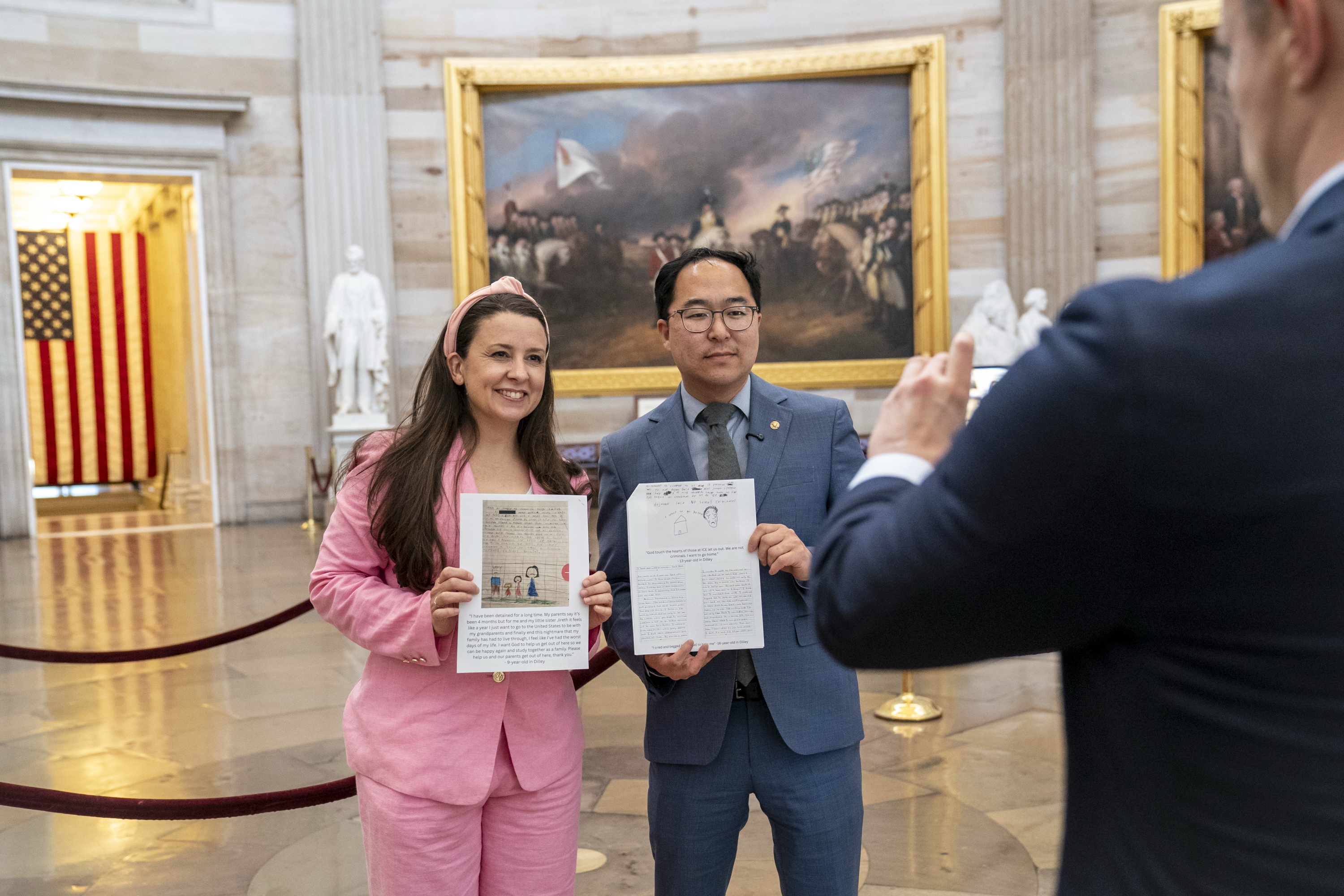
“I cry a lot,” read one letter from a 7-year-old boy held at the Dilley Immigration Processing Center in South Texas. “I want to get out of here.” Among the illustrations were portraits of crying faces, families standing together behind bars and a red house that a 9-year-old child longed to return to. Accurso clutched one packet in her hand, ready to offer it to the first lawmaker she encountered.
She had come with a plan: Over a brief two-day visit to Washington, she wanted to deliver the letters and drawings to members of Congress and tell them about the children she’d met. Her goal was to urge every official she spoke with — Democrats and Republicans alike — to end family detention and reunite the children and parents who had been separated by ICE enforcement.
Sen. Andy Kim (D., N.J.) holds the letter of a child detained at the Dilley Immigration Processing Center in southern Texas. Maxine Wallace
It was a new foray into the political realm for the early-childhood educator, who became the reigning star of children’s media with her wildly popular educational videos on YouTube and Netflix. Through her adult-facing social media platforms, Accurso has also emerged as a powerful advocate for vulnerable young people around the world, making headlines — and sometimes drawing backlash — for speaking out on behalf of children in Gaza, Sudan, and other humanitarian crisis zones.
Now her efforts include children closer to home. Over the past few months, Accurso has become an increasingly prominent voice in the debate over family immigration detention and the mounting concerns about conditions at the Dilley detention center. She has spoken directly to 10 families there via video calls, she said, and has publicly shared clips from several of those conversations with her 5 million Instagram followers. Accurso helped launch a petition to close the Dilley facility that has more than 324,000 signatures, including dozens of celebrities (Ben Stiller, Ayo Edebiri, Cynthia Nixon, and John Legend are among the many signatories). She also shared an open letter addressed to CoreCivic, the private prison contractor that has operated Dilley since its Obama-era construction in 2014: “What we have to agree on is not harming children,” she wrote.
When Accurso arrived on Capitol Hill along with her husband, Aron Accurso, they were welcomed by Sen. Andy Kim (D., N.J.). He offered them a brief tour through the Capitol, noting that the Senate had voted just days before to approve $70 billion in funding for President Donald Trump’s immigration enforcement agencies. “When you’re talking about this,” he said, nodding to the packet in Accurso’s hand, “what’s funding this? That’s what’s happening in this building.” As they spoke, the House was preparing to vote on the same funding package.
Accurso and Kim in the Capitol Rotunda on Tuesday.Maxine Wallace
Accurso and Kim posed for photos and filmed a brief video together in the Capitol Rotunda, then parted ways before she headed to the Hart Senate Office Building.
She was stopped repeatedly by enthusiastic interns and staff members who asked for selfies to show their own children, or their nieces and nephews. “What’s their name?” Accurso always asked, before deftly switching the phone setting to record a personalized video for each child: Hi, Ava! Hi, Maeve! Hi, Hugh!
Then she would steer the conversation toward the names of other children — some she had spoken with personally, and others whose circumstances were recounted to her by lawyers, advocates and journalists working with families at the Dilley facility. There was Amalia, an 18-month-old who suffered a near-fatal health crisis while in ICE custody at Dilley; Deiver, a 9-year-old who missed his friends at school and wanted to participate in the state spelling bee; Guri, a 12-year-old who has been detained with his family since February and has experienced chronic blood in his stool for months.
Accurso poses for a group photo with some staff from the office of Sen. Jeff Merkley (D., Ore.) on Tuesday. Maxine Wallace
Accurso was greeted with joyful shouts of recognition in the office of Sen. Jeff Merkley (D., Ore.). She left a packet with the staff of Sen. John Cornyn (R., Texas) and noted that they seemed friendly. She walked into the office of Sen. Lisa Murkowski (R., Alaska) with a cheerful, lilting “Hi, friends!” and the staff member’s subsequent gasp — “Oh my gosh!” — was audible down the hall.
“Well, I hope this works,” Accurso said, as the clock ticked to a quarter past 6 and it became clear that most of the offices were now closed. She had visited 10.
So she headed for the exit and learned the news as she was leaving: Minutes before, the House had narrowly passed the $70 billion funding package — including $38 billion for ICE enforcement and $26 billion for the Border Patrol. The vote paved the way for the agencies to build a detention system and pursue what Trump had pledged would be the largest mass-deportation operation in the country’s history.
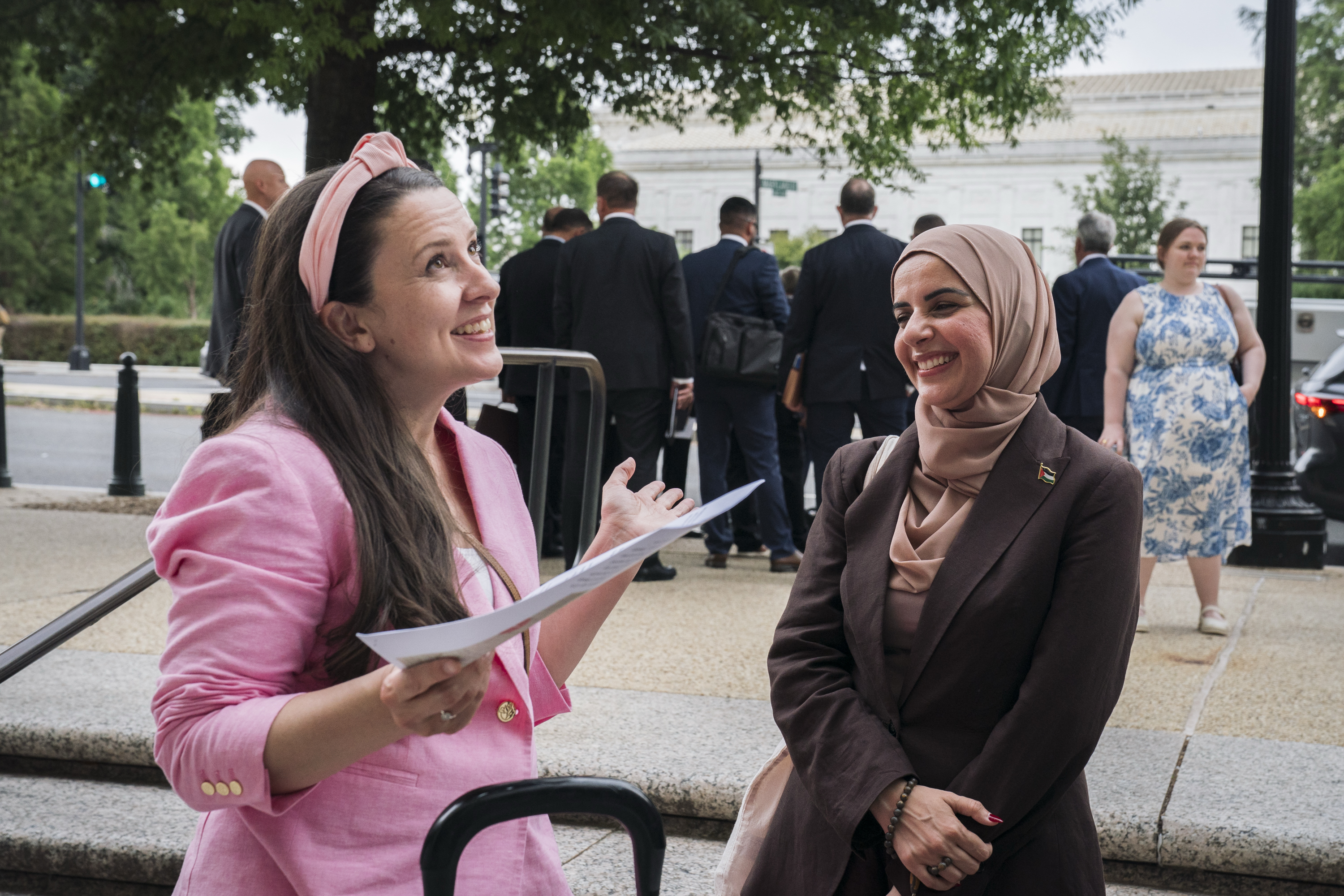
Accurso on Tuesday outside the Hart Senate Office Building with Leqaa Kordia, a Palestinian woman detained for a year amid a Trump administration crackdown on protesters last spring.Maxine Wallace
The day before she took the train to Washington from her home in New York, Accurso visited children and families at a hospitality tent set up by volunteers outside Delaney Hall, an immigration detention center in New Jersey where demonstrators and law enforcement have clashed in recent weeks.
Accurso delivered toys and art supplies to the tent and, with the families there, sang a song written by the Peace Poets along with children detained at Dilley: “I’ll sing from here and you sing from there, together we’ll sing down the walls everywhere.”
She spoke with a 13-year-old girl who described what it felt like to have only brief visits with her father, a truck driver who has lived in the United States for 20 years and supports his wife and three children, the youngest of whom has complex special needs.
“We went to go and visit my dad, and it was really sad,” the teen told Accurso, who wiped away tears as she listened. “He looked like a prisoner. But I knew in my heart that he shouldn’t be in there.”
Earlier this year, as she read more about the children being swept up in ICE enforcement operations, Accurso said, she began contacting legal experts, advocates, and journalists on the ground in Texas who detailed alarming conditions at the facility and helped connect her to families detained together there.
Those parents described children who were deteriorating physically and mentally; several kids said the water in the facility made them feel ill. Autistic children were suffering in particular, Accurso said; one nonverbal 5-year-old named Gael had not had a bowel movement in nine days and had begun hitting himself in distress. Families told her that their children couldn’t sleep because the lights were on all night.
She felt haunted by those conversations, Accurso said later, in an interview with the Washington Post: “I kept thinking, ‘How is this happening?’”
Several children and teens who were included on Accurso’s social media platforms were subsequently released from detainment, including Gael; Deiver, the 9-year-old who begged to go to the state spelling bee; and Olivia Mabiala Andre, a 19-year-old asylum seeker and nursing student. Accurso posted about her gratitude and relief in those moments, but she said she is acutely aware of how many children remain behind, including those who don’t feel safe speaking publicly about what’s happening to their families.
As of early June, about 320 people were at the Dilley center, including nearly 90 children, according to Faisal Al-Juburi, co-CEO of the Texas-based nonprofit Refugee and Immigrant Center for Education and Legal Services (RAICES). In the past year, he said, RAICES has documented roughly 1,500 medical concerns from families held at Dilley.
Accurso has highlighted concerns voiced by medical experts: In April, responding to mounting reports of dangerous conditions for children at the Dilley center — including unsafe water, the spread of measles, delayed medical care and declining mental health — the American Academy of Pediatrics requested urgent access to the facility, reiterating that “no time in detention is appropriate for a child.”
A spokesperson for CoreCivic said in an emailed statement that its facilities are safe, and noted that while some lighting is on during overnight hours, “lighting over sleeping areas is turned off during sleeping hours.”
The spokesperson referred to a statement by Kristen Dauss, the company’s vice president and chief medical officer: “The children and their families at DIPC receive care that is clinically rigorous, federally overseen and delivered with dignity.” Dauss added that children receive clean water from the same regularly tested municipal source that supplies local drinking water, appropriate nutrition and hygiene supplies.
Dauss echoed those points in a recent response to Accurso’s letter to CoreCivic. In a separate emailed statement, a spokesperson for the Department of Homeland Security echoed that families at Dilley are provided appropriate living conditions and medical care.
When Accurso talks to people about the firsthand accounts she has heard, “they’re shocked,” she said. “Why don’t people know? But I also feel like I didn’t know the extent of what was happening, either. We have to get the information out.”
This underscores the value of Accurso’s work and platform, said Elora Mukherjee, an attorney who represents numerous families detained at Dilley and serves as director of the Immigrants’ Rights Clinic at Columbia Law School. With her vast audience, Accurso represents a different way to inform people, beyond the reach of mainstream media: “Overwhelmingly, the American public still does not realize that, as a nation, we are imprisoning babies, toddlers and children who have done nothing wrong,” she said. “Sustained attention on cruelty against children is critically important.”
Al-Juburi noted that although the country’s current immigration policy represents “generations-long, systemic issues that need to be addressed, fundamentally, by our legislative branch,” there is a meaningful impact when prominent people raise their voices.
Culture often shifts before the law does, he said: “We will not see policy change until the public demands it. And that is what gives me hope when people like Ms. Rachel turn their spotlight onto a cause like this.”
The sun was falling through mottled clouds as Accurso left the Hart Building and wheeled her suitcase down Constitution Avenue toward the Capitol. She wanted to record a video there for the children detained at Dilley and the ones waiting in the tent outside Delaney Hall. She would tell them that she’d brought their letters and their artwork to the place where decisions about their future were made. “I have your words right here,” she would say into her phone camera, holding the stapled packet close to her chest. “I’m always going to stand with you.”
But when she arrived at the building, she first took a moment to sit quietly on the empty steps. The House’s vote, and its ramifications, were at the forefront of her mind. She felt a heavy sense of sorrow and defeat, she said.
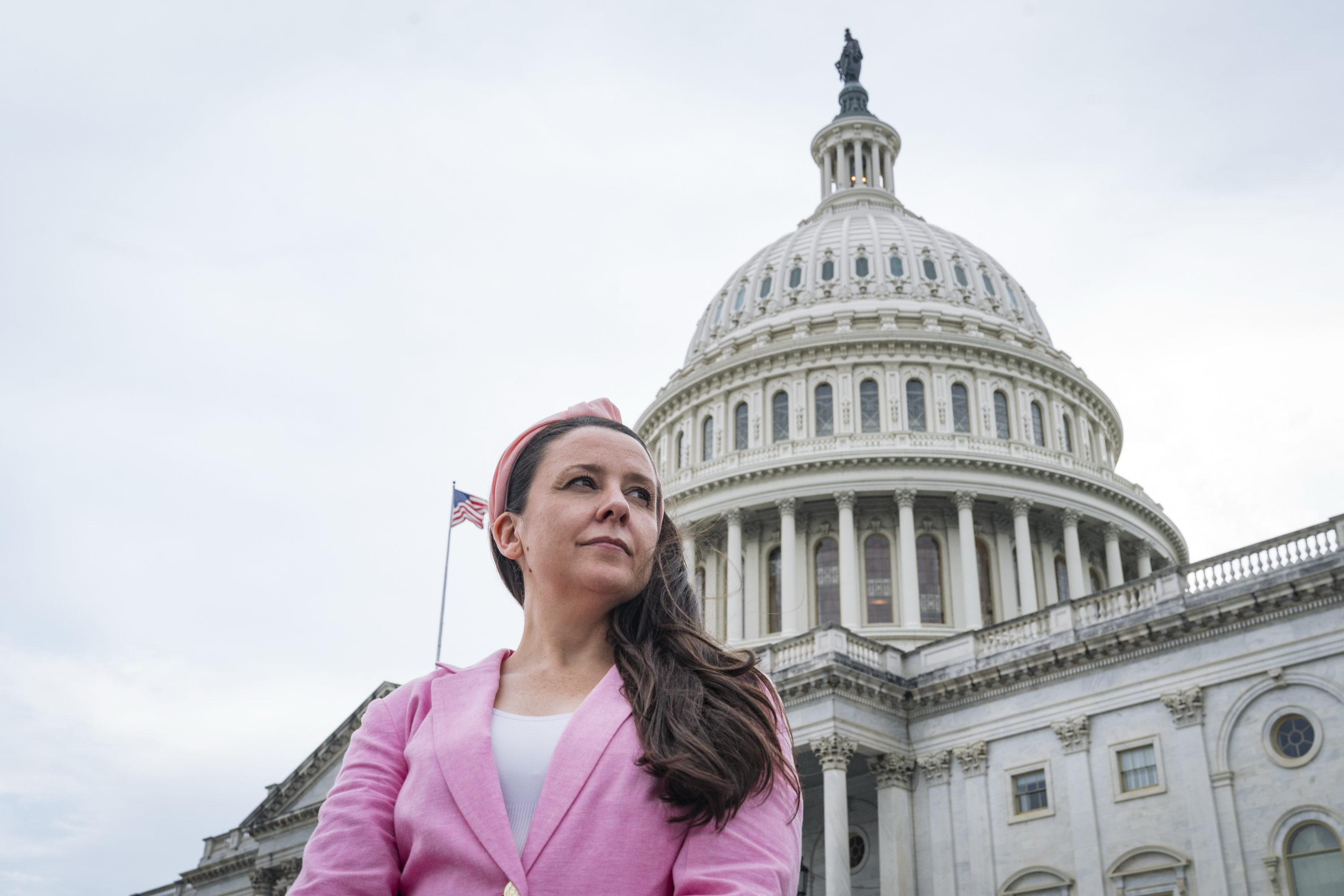
She adjusted her knotted pink headband and looked up toward the towering dome, bathed in the softening light of dusk. She thought about how young people often stop her — more than a dozen had done so just in the past few hours — to thank her and urge her to keep going. The next day, she would come back and meet with more elected officials in the House. She would make sure that all 535 packets of letters and drawings were delivered to every member of Congress. She would keep telling the stories of the children she’d met.
“I’ll never stop trying, for them,” she said. “I can’t say, ‘I’m just one person, so I’m not going to make a difference.’ What if everyone said that?”
The FDA last month gave its first OK to fruit-flavored vapes — essentially endorsing them as a less-harmful alternative to traditional cigarettes. The decision came despite the agency’s longstanding position that such flavors appeal to children and must show extra health benefits to warrant approval for adults.
Health groups and Washington lawmakers quickly condemned the decision and have called for an explanation.
A six-page FDA memo released this week provides more details about the agency’s rationale. In it, FDA regulators appear to sidestep previous statements about the risks of sweet vaping flavors while acknowledging shortcomings in the data submitted by vape manufacturer Glas Inc.
Smokers who tried Glas vapes were much more likely to completely switch from cigarettes over the course of a three-month study, according to the memo.
But the data did not show “statistically significant differences” between adults using the company’s mango and blueberry flavors and those using a tobacco-flavored e-cigarette.
That means the new vapes failed to meet the same bar as a handful of other flavored products previously sanctioned by the FDA, including menthol-flavored vapes from Juul and NJOY. Those companies showed that adults who used menthol were significantly more likely to cut down or quit cigarettes compared with those vaping tobacco flavors.
Elsewhere, FDA regulators explained that the Glas flavored vapes “did not have to demonstrate added adult benefit,” because young people were unlikely to use them. Glas requires users to unlock each e-cigarette with an age-verifying cellphone app.
The agency’s authorization also runs counter to recent FDA guidelines advising companies that fruit and dessert flavors would have to meet “a high evidentiary burden” for adult use, given their risks to children. Tobacco-flavored products are not popular with teens and generally face lower regulatory hurdles at the FDA.
The FDA document is also unusual in its brevity.
Previous FDA memos on new vaping products typically run dozens of pages. For example, last year’s document authorizing Juul’s menthol e-cigarettes was more than 90 pages and included detailed scientific data from research involving 50,000 people.
The short memo on Glas does not include key details, such as how many smokers the firm studied.
Previously, the FDA almost always posted such memos immediately after announcing an authorization. The document on Glas appeared on the agency’s website more than a month after regulators OK’d the products.
The agency has faced questions from members of Congress about the decision. Last month, 10 Democratic senators sent a letter to the agency requesting more information about the authorization, calling it a “shortsighted and reckless decision.”
The application from Glas, which also included menthol and tobacco-flavored vapes, followed a winding path to authorization. The small, Los Angeles-based company submitted a marketing request to the FDA in 2021.
In February, FDA scientists authorized several of the flavors. But that decision was blocked by a senior official reporting to then-FDA Commissioner Marty Makary, according to internal memos later released by the agency.
The mango- and blueberry-flavored products were finally OK’d during Makary’s last full week leading the agency. He resigned the post after months of criticisms from industry stakeholders, including tobacco companies that have lobbied President Donald Trump’s Republican White House for looser regulations on vaping flavors.
A spokesperson for the company could not immediately provide comment when reached Thursday morning.
The global economy — tested by years of war, pandemic, and trade tension — is beginning to fray, as fallout from the U.S.-led war on Iran dents prospects for growth, the World Bank said in a new forecast.
World output this year is expected to grow at an annual rate of just 2.5%, down from 2.9% in each of the past two years, and the slowest pace since the onset of the COVID pandemic in 2020, the bank’s top economists said.
Soaring costs for oil, gas, fertilizers, and industrial chemicals caused by the prolonged near closure of the Strait of Hormuz, which the bank calls “the biggest supply shock in 50 years,” is straining developing and advanced economies alike.
“The global economy is not falling off of a cliff, but it has downshifted sharply, and many developing economies are entering this shock with thinner buffers and fewer shock absorbers,” said Ayhan Kose, the World Bank’s deputy chief economist.
The new forecast is gloomier than the bank’s January outlook, which saw the global economy largely weathering an era of trade uncertainty arising from President Donald Trump’s tariffs.
Bank specialists cut their January forecasts for two-thirds of the world’s nations, with Turkey, Bangladesh, and South Africa suffering notable downward revisions.
Nations adjoining the Persian Gulf war zone are expected to be hit hardest: Kuwait, Iraq, and Qatar will see “near zero” growth in 2026, Kose said. The United Arab Emirates is projected to grow at a 2.4% rate this year, less than half the pace the bank expected before the war.
The 2020s appear almost certain to become a “lost decade” for dozens of developing nations that have made no progress closing the income gap with the advanced economies, the bank’s Global Economic Prospects report said.
The United States — fueled by mammoth investments in artificial intelligence — remains a relative bright spot, expected to grow at a 2.2% annual rate, up slightly from last year’s pace, and much faster than Europe and Japan. U.S. investments in AI-related infrastructure exceed such spending by all other nations combined, the bank said.
China is set to grow at a 4.2% rate, down from 5% last year and 0.2 percentage points below the bank’s January outlook.
The war-related shock is occurring against a downbeat long-run backdrop. Global growth has softened steadily since the early 21st century, sapped by the impact of aging populations, declining private investment, trade tensions, and rising public debt, said Indermit Gill, the bank’s chief economist.
“The world economy is a lot less resilient today,” Gill said.
The bank’s new forecast assumes that Middle East energy and commodities trade will return to normal by the end of July and that Brent crude, the global benchmark, will average $94 per barrel this year.
But with the U.S. and Iran continuing to trade blows, despite a nominal ceasefire, bank officials noted the risk of further economic erosion.
If the war continues beyond July, oil prices will average $115 a barrel for the year, driving global growth to an anemic 2.1% rate, the bank said.
An energy shock that drives down stock and bond prices would take an even larger toll on the global economy. Growth in that case would struggle to reach a 1.3% rate.
Public debt burdens are another worry. With annual budgets already deep in the red, the U.S. and other major nations would have limited ability to increase public spending in response to an economic crisis, as they did during the pandemic and the 2008 financial crisis, the bank warned.
For now, the global lending body is making available at least $50 billion in financing to buttress social programs in developing nations hurt by the slowdown. If the crisis persists, the bank said, it is prepared to roughly double that figure over a 15-month period.
“Our job is to help countries steady the ship, keep reforms moving, and emerge stronger on the other side,” said Ajay Banga, the bank’s president.