Category: Wires

  • Putin, Zelensky speak with Trump by phone as drone strikes kill 2 in Russia

    Russian President Vladimir Putin and Ukrainian President Volodymyr Zelensky each spoke by phone with U.S. President Donald Trump on Sunday, as Trump marked his 80th birthday and the war in Ukraine remained a flashpoint ahead of this week’s G7 summit.

    Putin’s call with Trump lasted just under an hour, according to Russian presidential aide Yuri Ushakov, who briefed reporters afterward.

    On Ukraine, Ushakov said Trump emphasized the need to end hostilities and stated his readiness to influence European allies and Kyiv toward that goal, including at the upcoming G7 summit.

    Trump also said that recent strikes on civilian targets in Russia complicate a settlement — though the White House has not confirmed that, nor commented on the call — and said that ending the war quickly could open the door to “a truly new quality of U.S.-Russian relations,” Ushakov quoted him as saying.

    Putin, for his part, argued that attacks on Russian civilian infrastructure by Kyiv would not change Ukraine’s position on the battlefield, and said that if Zelensky wants a meeting with him, “let him come to Moscow,” according to Ushakov.

    U.S. envoy Steve Witkoff and Trump’s son-in-law Jared Kushner are expected to travel to Russia soon, Ushakov said.

    The leaders also discussed Iran, where Trump said a U.S. agreement with Tehran was close and that he hoped the results of the talks could be made public Sunday, Ushakov said.

    Zelensky said in a statement on Telegram Sunday that he had a “wonderful conversation” with Trump.

    Beyond congratulating Trump on his birthday, the Ukrainian president said he thanked the U.S. president for supporting Ukraine.

    He said they discussed “what could help bring peace closer now,” without providing details. Zelensky also informed Trump about how Ukraine’s position along the eastern front line has improved and strengthened.

    “We agreed to discuss more during our meeting at the G7 summit,” he said.

    The calls came as Trump prepared to mark his birthday with a UFC fight on the White House lawn Sunday evening, an event without precedent in American history. Once it concludes, Trumpwas set to fly overnight to France for the G7 summit, where Ukraine is expected to be a major topic of discussion Tuesday and Zelensky is due to join the gathering.

    Russia’s war in Ukraine has long frustrated Trump, who as a candidate claimed he could end the conflict within 24 hours of taking office. He has since stopped making such claims and tends to pivot away from the topic when pressed. He has also grown increasingly vexed by the war between Israel and Iran, which has driven up gas prices, rattled financial markets, and stoked concerns about inflation.

    The diplomatic exchanges came against the backdrop of continued fighting. Ukrainian drone attacks killed one person and wounded nine others overnight in a residential building in the regional capital of Russia’s Oryol region, Gov. Andrei Klychkov said Sunday. Another drone attack killed one person Sunday in Russia’s Bryansk region, local authorities said.

    A separate drone strike hit fuel storage facilities in Russia’s Yaroslavl region, around 440 miles from the Ukrainian border, sparking fires. Zelensky said the strike had hit “an oil facility that was important for the reserve of the aggressor state.”

    Ukraine has stepped up attacks on Russian oil and gas infrastructure in recent months, arguing the sector funds Moscow’s invasion.

  • Deal is reached to end Iran war and Trump orders stop to US naval blockade

    ISLAMABAD — The United States and Iran have reached an initial agreement to end their war and open the Strait of Hormuz, offering relief to the Gulf region and global economy more than three months since fighting began.

    Details of the deal were not immediately released and Iran signaled implementation would not start until the signing, which key mediator Pakistan said would occur Friday in Switzerland. It was expected to extend the tenuous ceasefire reached in April so that negotiators can try to resolve thorny issues such as Iran’s nuclear program and related sanctions.

    There was no immediate word from Israel, which together with the U.S. started the war on Feb. 28 but has expressed skepticism about the negotiations.

    But even as it became clear the parties still have days to influence what lies ahead, the announcements had an air of relief.

    “Congratulations to all!” U.S. President Donald Trump wrote on social media, adding: “I hereby fully authorize the toll free opening of the Strait of Hormuz, and, simultaneously herewith, authorize the immediate removal of the United States Naval blockade,” imposed in retaliation for Iran’s grip on the crucial waterway.

    He soon hedged, however, saying the strait wouldn’t open until Friday’s signing. The U.S. previously said it would ease its blockade of Iranian ports as the strait reopens, and would agree to relax sanctions to allow Iran to sell more of its oil and strengthen its battered economy.

    Iran’s deputy foreign minister, Kazem Gharibabadi, confirmed the agreement on state television but said Iran would not start implementing it until it was signed on Friday. He said the deal followed talks with Qatar, another mediator.

    Qatari mediators later left Tehran following 17 hours of negotiations, said an official briefed on the developments who spoke on condition of anonymity due to sensitivity of the talks. Separate preparatory meetings with each side will take place in Doha this week, the official said.

    After months of fighting, a ‘critical step’ is taken to end the war

    “This represents a critical step towards the peaceful settlement of the conflict,” the spokesperson for the United Nations secretary-general said of the deal and framework for further negotiations.

    Pakistan first announced the deal after a day in which Israel, sidelined from the negotiations, attacked Beirut’s southern suburbs while pursuing the Iranian-backed Hezbollah. Iran’s deputy foreign minister hinted at the tensions that caused, saying “our armed forces were fully prepared to give a decisive response to Israel’s actions.”

    Pakistani Prime Minister Shehbaz Sharif said “both sides have declared the immediate and permanent termination of military operations on all fronts, including in Lebanon,” adding that mediators this week will facilitate meetings to “lay the foundation for the technical talks.”

    There was no immediate comment from Israel, which had criticized the emerging deal. Iran wanted a ceasefire deal to include Lebanon, where Israel has pushed its invasion deeper than at any point in over a quarter-century.

    Iranian state TV later cited the secretariat of the Supreme National Security Council saying the war on all fronts “will end immediately and permanently beginning tonight” — but that the U.S. blockade “will be terminated immediately and in full.”

    It was not clear who from Iran would sign the deal on Friday. U.S. Vice President JD Vance told Fox News the White House was still figuring out who would attend: “I certainly plan to be there, but it’s possible the president himself could be there.”

    The deal came under criticism even in the final hours

    Broader negotiations on outstanding issues like Iran’s nuclear program would continue over the next 60 days, two senior Pakistani officials said earlier Sunday, speaking on condition of anonymity because they were not authorized to discuss the matter publicly. If the sides fail to reach a resolution within that time, the timeline could be extended.

    The deal likely returns the region to a status that existed before the war, but with thousands of people dead and Iran wielding a new source of negotiating pressure with its ability to influence shipping in the strait. The waterway is crucial to significant shipments of oil, natural gas and related products like fertilizer, and its effective closure rocked the global economy.

    Even with a deal, it will take months for oil and gas supplies to flow freely enough for the world’s needs to be met because shipping and insurance companies want to be confident the agreement will last, energy experts said.

    Of the stated targets by the U.S. and Israel when they launched the war on Feb. 28 with strikes that killed Iran’s supreme leader, Ayatollah Ali Khamenei, Tehran still has a missile program, support for armed proxies in the region like Hezbollah and a stockpile of highly enriched uranium for its nuclear program.

    Khamenei’s son is now supreme leader, though he has not been seen in the public since the war began. His approval was needed for Iran to sign off on the deal.

    There was apparent friction inside Iran in the hours before the announcement, as the government warned that division at home over the deal weakens its negotiating position. Iranian President Masoud Pezeshkian called it a “disgrace” when someone stands before parliament and calls anyone who negotiates a traitor.

    The emerging deal had been sharply criticized by critics in Trump’s own Republican Party. Some said it did not improve on the terms of the 2015 Iran nuclear deal that Trump withdrew the U.S. from during his first term and still describes as “bad.”

    The central question of Iran’s nuclear program remains

    After the war began, Iran attacked Israel and several Arab Gulf nations with missiles and drones. A ceasefire was reached on April 7. Ten days later, the U.S. military imposed its blockade. A historic face-to-face meeting between Vice President JD Vance and Iranian parliament speaker Mohammad Bagher Qalibaf ended without success.

    Throughout negotiations, Trump alternatively threatened to destroy Iranian infrastructure, even its civilization, and praised the relationship with Iran as “more professional” as his administration sought an exit from the war with midterm U.S. elections coming later this year.

    Iran’s government, with its own tensions around hard-liners as it scrambled to replace several top officials killed in the war, repeatedly expressed wariness of negotiations after rounds of talks last year and early this year ended with U.S. and Israeli attacks.

    Tehran has emphasized that it wanted a deal to focus on ending the war, with discussions put off until later on its nuclear program — the issue at the center of it all.

    Iran has 440.9 kilograms (972 pounds) of uranium that is enriched up to 60% purity, a short, technical step from weapons-grade levels of 90%, according to the International Atomic Energy Agency.

    Iran has long maintained its nuclear program is peaceful and has not publicly committed to giving up the enriched uranium, which is believed to be buried under three nuclear sites that were badly damaged by U.S. strikes last year.

    At times, the U.S. had sought the removal of the enriched uranium from Iran as part of a deal. Russia has offered to take it. At other times, Trump said he wanted the uranium destroyed.

  • Sports betting was once widely outlawed. Now it’s promoted at the White House.

    Sports betting was once widely outlawed. Now it’s promoted at the White House.

    The walls of the eight-sided cage where fighters will pummel each other Sunday on the South Lawn of the White House were plastered with logos for Polymarket, the prediction market where traders had staked millions on the fights.

    Across sportsbooks, fans are placing bets on whether President Donald Trump will receive a birthday cake at the event, whether first lady Melania Trump will appear at his side, or whether the now-80-year-old president will fall asleep during a bout.

    Less than a decade ago, wagering on a sporting event was a crime in all but a handful of states. On Sunday, the mat of the octagon Trump ordered placed on White House grounds advertised for Stake, a Caribbean-based online casino and sportsbook.

    Welcome to UFC Freedom 250 — and to the latest improbable milestone in the transformation of betting from a shadowy, mostly illegal pastime into a mainstream force in American sports, culture, and politics.

    The event marks a triumph for an industry that has grown into a multibillion-dollar juggernaut in eight years — and is now expanding beyond sports through prediction markets such as Polymarket, which allow users to wager on everything from Ultimate Fighting Championship fights to election contests and more. But the industry’s embrace by the White House comes as lawmakers and regulators face the consequences of an explosion in legal gambling, including addiction and mounting consumer debt.

    “Right now it’s certainly in its heyday,” said Bradley Tusk, a political strategist who helped FanDuel navigate gambling laws more than a decade ago and is now advising prediction markets.

    Trump, a former Atlantic City casino owner, has emerged as a natural ally for the sports betting and prediction market industries. He purchased $35,000 to $50,000 of stock in DraftKings earlier this year, according to his financial disclosure filings, and his social media company, Truth Social, also has said it is working with Crypto.com to launch its own prediction market, Truth Predict. Crypto.com’s logo appeared on the steps to the UFC cage, and it was a primary sponsor of the Sunday fights.

    In April, Trump said that he was “never much in favor” of prediction markets but later told reporters, “A lot of other countries are doing it, and when the other countries do it, we get left out in the cold if we don’t do it.”

    “I know people that are in the prediction market business, and they’re pretty happy with it,” he added. Trump’s son Donald Trump Jr. has invested in Polymarket through his venture capital firm, and he has advised both Polymarket and Kalshi.

    Trump “sort of embodies the casino capitalism of the late 20th and early 21st century,” said Jonathan D. Cohen, who leads gambling policy at the American Institute for Boys and Men. “It makes too much sense that his family would have personal investments in the prediction markets and support the rise of gambling on everything, and place a UFC fight on the White House lawn.”

    The White House said in a statement that the Trump family’s investments do not pose a conflict of interest, promising that the UFC fights would be “one of the greatest and most historic sports events in history.”

    “President Trump only acts in the best interests of the American public — which is why they overwhelmingly reelected him to this office, despite years of lies and false accusations against him and his businesses,” White House spokesperson Davis Ingle said. “President Trump’s assets are in a trust managed by his children.”

    UFC and Stake did not respond to requests for comment. Polymarket said in a statement that it was “proud to sponsor” the White House fight.

    The White House fights were not expected to generate an unusual volume of betting for UFC matches, said Chris Grove, partner emeritus at Eilers & Krejcik Gaming, a research firm focused on the global gambling industry. He anticipated that the total volume of wagers and trades would be measured in the tens of millions, rather than the hundreds of millions — far smaller than for major sports betting events such as the Super Bowl or FIFA World Cup.

    But the event’s role as a billboard for the betting industry has attracted criticism.

    “It’s an abomination that we have these sports betting markets sponsoring something that’s happening on the lawn of the chief executive officer of the United States,” said Joel Griffith, a senior fellow at Advancing American Freedom, a conservative think tank founded by former Vice President Mike Pence. “It shows that there’s a lot of money to be made in this business. Unfortunately, [sports betting] is harming Americans.”

    Griffith also said he’s “deeply troubled” by the potential conflicts of interest posed by the president’s investments in betting markets and in UFC while hosting an event that advertises both businesses.

    Congress advanced bipartisan legislation in 1992 that outlawed sports betting in every state except Nevada, highlighting how politically unpopular it once was to support the practice. Oregon, Delaware, and Montana had limited carve-outs.

    But since the Supreme Court struck down that law in 2018, 39 states have legalized sports betting, and bettors have wagered more than $650 billion, according to estimates from Legal Sports Report. The decision enabled the rise of companies such as FanDuel and DraftKings, which allowed people to bet on games directly from their cellphones.

    Internet searches for help with gambling addiction, such as “am I addicted to gambling,” have cumulatively increased 23% nationally since the 2018 Supreme Court decision, according to 2025 research from the University of California at San Diego Qualcomm Institute and School of Medicine.

    The rise of prediction markets such as Kalshi and Polymarket also has provided a new avenue for people to bet. Combined monthly global trading volume on the platforms has risen from less than $5 billion in September 2025 to about $24 billion in April 2026, according to Pew Research Center’s analysis of data from the Block, a digital assets media and information firm.

    The administration proposed new regulations for prediction markets Wednesday that are aimed at allowing most wagering, while restricting bets that are particularly vulnerable to manipulation and those that aren’t in the public interest, such as bets related to terrorism, assassination, or war.

    Multiple lawmakers have proposed bills that would regulate prediction markets. One from Sens. Adam Schiff (D., Calif.) and John Curtis (R., Utah) would bar prediction markets from offering sports betting, which they argue circumvents state gaming laws and legalizes sports betting nationwide.

    The administration’s proposed rule is “a backdoor for legalized sports gambling,” Schiff said in a statement, adding, “the sight of profiteering and gambling on the White House lawn in celebration of [Trump’s] birthday is problematic enough, we must ensure it is not compounded by insider trading and other conflicts of interest.”

    Other proposals would regulate the markets and ban elected officials from trading on them, or ban betting on sensitive events such as war, terrorism, and elections as well as sports.

    Lawmakers in Congress also are trying to rein in their own access to prediction markets, raising concerns about conflicts of interest and insider trading. The Senate passed a resolution in April prohibiting senators and staff from using prediction markets, and Rep. Bryan Steil (R., Wisc.) is working on legislation to ban current and former members and candidates from betting on political events.

    But such legislation faces an uncertain future as long as Trump is in the White House and holds veto power.

    “There’s lots of concern from both sides of the aisle about prediction markets, but there’s also this gnawing sense that the White House will block any attempt to rein them in,” said Cohen, who also wrote Losing Big: America’s Reckless Bet on Sports Gambling. “It’s going to get bigger before it gets smaller.”

  • The NBA’s Wemby era is clearly underway. But he’s still waiting for his first NBA title

    SAN ANTONIO — Victor Wembanyama had to watch the visiting team become champions, again.

    The Wemby era of the NBA is fully underway, with the 7-foot-4 French star unanimously winning the Defensive Player of the Year award this season, finishing third in the Most Valuable Player balloting and making first-team All-NBA for the first of what could be many, many times if all goes according to his plan.

    But the ultimate moment has escaped his grasp for the second time in three years. In 2024, he tearfully watched the U.S. celebrate winning Olympic gold at the Paris Olympics — and now, he relived that moment by seeing the New York Knicks celebrating their first championship in 53 years by winning Game 5 of the NBA Finals in San Antonio on Saturday night.

    “This is the biggest lesson of my life, the biggest learning moment,” the 22-year-old Wembanyama said. “I can’t tell you exactly what the lesson is, but we’re learning from that, for sure. I’m learning more than any other time in my life before.”

    His numbers in the finals: 26 points, 11.2 rebounds. 3.6 blocks per game. They were good, just not good enough.

    And his series, fairly or unfairly, will also be remembered for some mistakes: The turnover that led to Jalen Brunson’s go-ahead free throw in New York’s Game 2 win (a game where Wembanyama missed a jump shot to win at the buzzer); and missing a pair of crucial free throws with 1:47 left in Game 4, the one where the Spurs wasted a 29-point lead and lost by one in what became the biggest collapse in finals history. The Spurs wasted double-digit leads in all four losses, including a 16-point cushion in what became the season finale.

    “The margin of error is very thin,” Wembanyama said. “Our domination stints are absolute. We absolutely dominated for most of the series. But our errors, our mistakes, are punished so hard that we can’t have ups and downs like this. … The ups are OK. The downs are the reason we lost.”

    It’s only Year 3 for Wemby. It’s not like every star wins right away.

    It took Michael Jordan seven seasons to win his first championship. LeBron James needed nine years. Jerry West needed 12 years for his one and only title. John Stockton and Karl Malone never got one. Charles Barkley, Chris Paul and Carmelo Anthony didn’t get one, either.

    “He’s definitely the future of this league, man,” Knicks legend Larry Johnson said during the series when asked about Wembanyama. “He’s a heck of a ballplayer.”

    Wembanyama knows the history, knows that it took some of the greatest to ever touch a ball several years to win a title.

    Doesn’t mean he likes it.

    “It’s painful. It’s painful,” Wembanyama said. “But I’m not running away from that. I’m using it to fuel me. … I’m not satisfied with not winning. But as I said, this is the biggest lesson of my life. As a team, there’s no better experience than what we just lived.”

    His numbers are like almost nothing the game has ever seen before. There have been four seasons in NBA history where someone had 150 blocks, 150 assists and 100 3-pointers. Chet Holmgren did it for Oklahoma City in 2023-24, and the other three instances are all from Wembanyama — who has hit those totals in each of his first three seasons.

    “I think for a lot of people, this team seems to be ahead of schedule,” NBA Commissioner Adam Silver said Saturday on NBA TV. “I don’t think they feel that way. I’m amazed at Victor. Not just his play on the floor, but he’s such a curious young man. He’s a pleasure to talk to. He’s very worldly. I mean, he’s got amazing interests off the floor. He’s really dedicated to his craft and he’s got such a bright future ahead of him.”

  • After 53 years, the New York Knicks are NBA champions. And the wait sure seemed worth it

    SAN ANTONIO — Knowing New York had waited 53 years to see the Knicks hoist the NBA championship trophy, owner James Dolan didn’t even wait to be handed the 30-pound gold-plated prize.

    He grabbed it and lifted it skyward with a yell.

    “I want to say something to New York,” Dolan shouted. “Hey New York! I’m sorry it took so long! But here we are, and hopefully it won’t take that long again!”

    The New York Knicks are champions of the NBA for the first time since 1973, beating the San Antonio Spurs in five games for this title. The clincher came Saturday night in a 94-90 victory, the Knicks’ fourth comeback win of the series.

    Some will say it’s the first “major” professional sports championship for New York in more than 14 years; that would be true when counting only Major League Baseball, the NFL, the NHL, and the NBA, though it would be wrong to ignore the New York Liberty’s run to the 2024 WNBA title and New York City FC winning the MLS Cup in 2021.

    But as far as the teams that have been part of the city’s fabric for generations and generations, yes, this 14-year drought is finally over. The New York Giants won the Super Bowl in 2012, capping the 2011 season.

    The Yankees — the most decorated team in U.S. major pro sports history — haven’t won a World Series since 2009. The Mets haven’t brought a World Series title to New York since 1986. The Rangers last hoisted the Stanley Cup in 1994, the Islanders in 1983. The New York Jets haven’t won a Super Bowl since 1969.

    None of that matters, at least not right now. The Knicks — who won 13 consecutive games at one point in this playoff run and rallied from 29 points down to win Game 4 of the finals at MSG — are the toast of the town.

    “Of course I’ve never seen anything like it, because it’d never happened before,” NBA Commissioner Adam Silver said of the Game 4 comeback in an interview on NBA TV on Saturday. “But it’s been amazing.”

    The Amazin’ Knicks, indeed.

    A third title, finally

    It took them 80 years — the Knicks won the first game in NBA history in 1946, three years before what was then the Basketball Association of America started being known as the National Basketball Association — but the franchise has now become the ninth that can say it has at least three championships.

    Boston has 18, the Los Angeles Lakers have 17, Golden State has seven, Chicago has six, San Antonio has five, and Philadelphia, Detroit and Miami all have three.

    Welcome to the club, New York.

    “I enjoy watching these guys,” Knicks legend Larry Johnson said. ”The Garden is back. … It’s back like when we played and made our little run. The city is behind us.”

    It’s a franchise that has gone through 24 different coaches and more than 400 players since what was, until now, the most recent championship season. Some of the game’s biggest superstars called Madison Square Garden home and couldn’t end the title drought, names like Patrick Ewing, Allan Houston, Bernard King, and Carmelo Anthony.

    The Knicks lost a Game 7 in the 1994 finals to Hakeem Olajuwon and Houston, then made a miracle run to the 1999 finals in a shortened season only to lose to San Antonio in five games — the first of what became five championships for Gregg Popovich and the Spurs.

    “We didn’t get it done. … I always say the third time is the charm,” former Knicks guard John Starks said.

    Starks was right. It took the Knicks 27 years to get back to the finals, had the Spurs again standing in their way, and to fully flip the script, it was New York prevailing in five games.

    MSG, a banner is coming

    And finally, the world’s most famous arena — which has raised banners for Billy Joel, Elton John, and Harry Styles more recently than it had hoisted one for the Knicks — will be adding to the collection swaying from the rafters. If it follows form from the others, the banner will only have the Knicks logo, then “2025-26 World Champions” beneath that.

    A simple message. Getting to the place where the Knicks could say those words again, that wasn’t so simple.

    “There are a couple of franchises that are pretty iconic just because of the history that they have, the location that they’re in, sometimes even the building that they’re in,” said Knicks coach Mike Brown, who won this title in his first season with the club. “New York is definitely one of the few that you could say that to in all three facets.

    “Everybody goes through their ups and downs. I don’t really think much about the tough times that they had, because everybody has tough times, including individuals. You just want to try the best you can to be a part of whatever you can to bring joy to the city, to the organization. At the end of the day, the chips are going to fall how they fall. I feel blessed, fortunate, lucky, to be a part of what is going on now.”

    It is, to put it mildly, an interesting organization. Dolan — who rarely speaks publicly — isn’t afraid of clashes, even including ones with former Knicks greats like Charles Oakley, who was at road games in this title run but has remained away from MSG for years. Leon Rose, the team’s president, typically doesn’t make himself available to reporters either. There is an absolute mystique around the team and how it operates.

    It has not always worked. Over a 25-year stretch that ended with the 2021-22 season — not that long ago — the Knicks had the worst record in the NBA. In the four years since, starting with the acquisition of Jalen Brunson from Dallas, the Knicks have the NBA’s fifth-best record.

    And now, Brunson — the finals MVP — is the best player on the best team in the world.

    “It means the world to me,” Brunson said.

    Start spreadin’ the news …

    And this year, as Frank Sinatra said, the Knicks are king of the hill, top of the heap. Some in the fan base grumbled when the Knicks declined to hang an NBA Cup championship banner after beating San Antonio for the in-season tournament title earlier this season. Turns out, the Knicks were just waiting for something better.

    So, the 53-year wait is over. It was a very different league, and a very different game, in 1973.

    There were 17 teams in the NBA that season, barely half of the 30 that there are now. Teams called Buffalo, Baltimore, Kansas City-Omaha, and Seattle home then; the league has expanded many times since, adding 13 teams in nine different states, plus Canada and the District of Columbia.

    The top salary in the league then was about $380,000, or roughly $2.9 million in today’s dollars. There was no 3-point line then, no multi-billion-dollar television deal, no international players.

    The Knicks flew home on a United Airlines flight from the 1973 title clincher in Inglewood, Calif., and officials at Kennedy Airport expected what was then called a “rabid” crowd of fans present to greet the plane. They braced for “hundreds” of people that day.

    This celebration might be a little bigger.

    “To have the fans that we have in New York City and be able to bring home a championship after all these years is absolutely amazing,” Brown said. “It’s a surreal feeling.”

  • Independent Cascadia? Greater Idaho? Disunited states look toward divorce

    Independent Cascadia? Greater Idaho? Disunited states look toward divorce

    SEATTLE — The revolution begins with a poetry reading.

    Last month, a journalist turned organizer named Andrew Engelson invited friends and fellow Pacific Northwesterners to a small club in Seattle’s Capitol Hill neighborhood for an evening of verse, in which his guests would ponder what it means to be from “Cascadia,” the bioregion stretching from Northern California, through Oregon and Washington, into British Columbia.

    Odes to volcanoes, woods, and rivers would help the audience reach the same conclusion he has: The region might be better off leaving the United States.

    Engelson and his group, Cascadia Democratic Action, are trying to drive conversations that could lead to 2028 ballot measures in Washington and Oregon on secession if things don’t improve. The effort is hardly an outlier in these Disunited States, where frustration on the left and right has created small but vocal collections of Americans so fed up with feeling disempowered that they’re talking about redrawing state lines or dissolving them altogether.

    “The salmon don’t pay attention to the 49th parallel,” Engelson said, referring to the U.S.-Canada border. “I have way more in common with someone in Vancouver, B.C., than someone in Arkansas.”

    Separatism is “in the zeitgeist,” said Ryan Griffiths, a Syracuse University political scientist who wrote the 2025 book The Disunited States: Threats of Secession in Red and Blue America and Why They Won’t Work.

    Activists in Texas and California continue to push independence. Lawmakers in inland California have pitched splitting the state in two or three. Organizers in southeastern New Mexico want to join Texas.

    Republican lawmakers in Indiana approved legislation last year inviting conservative counties in Illinois to become Hoosiers. A state senator in West Virginia followed suit in late 2025, inviting 30 border counties from Virginia and Maryland to join the Mountaineers.

    North of the 49th parallel, conservative Alberta is moving toward a referendum in October asking: Do you want to stay in Canada or have a separate, binding referendum to secede?

    The people Griffiths interviews often sound remarkably similar, he said.

    “Whether they’re libertarian or conservative or liberal,” he said, they complain that government is “in their face, it’s dysfunctional, and it’s distant.”

    One of the most successful of those efforts is, like Engelson’s, based in the Northwest, but on the opposite end of the political spectrum. The Greater Idaho movement, a 6-year-old campaign to move a large swath of rural, conservative Oregon into neighboring Idaho, has won support in 13 county ballot measures and turned a once-fringe idea into a subject of state capital debate.

    “Our system is not quite functioning the way it’s supposed to,” said Matt McCaw, a spokesperson for Greater Idaho.

    Greater Idaho proponents argue that their movement reflects frustrations that date to Oregon’s earliest days. At the 1857 meeting to draft Oregon’s founding document, 59 of the 60 delegates came from west of the Cascade Mountains.

    Today, eastern Oregon makes up roughly two-thirds of the state’s land mass but only 10% to 15% of its population. Lawmakers from Portland and the Interstate 5 corridor dominate policy debates and have pushed through gun laws, environmental regulations, and tax changes that many in rural Oregon oppose.

    As western Oregon transitioned from an economy built on timber, farming, and manufacturing to one driven by technology and services, the disconnect has grown.

    “They just don’t understand us on the other side of the mountains,” said Dan Joyce, the county judge in Malheur County, Ore., whose voters were among the earliest and strongest supporters of Greater Idaho.

    Semir Dzebo, a postdoctoral researcher at Oxford University who worked on a 2025 study on Greater Idaho, said public polling conducted through the study showed that the effort was less a partisan fight than an economic one.

    In other parts of the world, efforts to redraw boundaries are often rooted in long-standing ethnic, linguistic, or national identities tied to particular places, such as Scotland in the United Kingdom or Catalonia in Spain. Since the Civil War, America has felt “inoculated” against separatist movements, Dzebo said, “because it rests on a civic understanding of nationalism, that there’s no particular ethnicity that is ‘American.’”

    But as electoral politics have become more polarized, and as the gap between the rich and everyone else has grown, the sense of a shared American identity has eroded.

    “What propels these movements is when that sense of feeling different really comes with economic consequences,” Dzebo said.

    In that regard, the Greater Idaho movement and the Cascadia secession effort are cousins. McCaw doesn’t think elected leaders in the Oregon capital represent him. Engelson feels the same about Washington, D.C.

    Cascadians argue that people are often bound more closely by geography, ecology, and regional economies than by national borders, particularly when the borders stretch so far in every direction. Engelson said Washington and Oregon progressives could get more value from their tax dollars if they formed their own smaller political unit and paid for priorities such as universal healthcare and free college tuition.

    A number of states are already engaging in a form of “soft secession,” by conducting multistate public health efforts during the COVID-19 pandemic or forming compacts to address climate change.

    But none of the secessionist movements are close to achieving their goals.

    The Constitution provides a mechanism for changing state boundaries with the approval of legislatures in both affected states and Congress. But that tends to go only one direction. Neither Virginia nor Illinois has responded to the overtures of its neighbors.

    Oregon Democrats have declined to meet with proponents of Greater Idaho, and neither President Donald Trump nor Oregon’s lone Republican Congress member, Cliff Bentz, has answered calls for help. And voters in two of the counties that initially embraced the idea have since backtracked.

    The Cascadia movement faces an even larger obstacle. In the 1869 case Texas v. White, the Supreme Court ruled that the nation was “indestructible” and that states could not unilaterally secede. The court left open the possibility that a state could leave through “revolution” or with the consent of the other states but rejected the idea that a state could simply vote its way out.

    Hugh Spitzer, a retired University of Washington law professor who began studying separatist movements in law school, laid out a possible path through a treaty negotiated by the president and ratified by two-thirds of the Senate. But that would take decades and require momentum driven by more than a single political moment.

    Engelson said the second Trump administration had convinced him that conversations about separation could no longer remain theoretical.

    “We’re in an abusive relationship with the federal government,” he said. “Divorce is a valid response.”

    This article originally appeared in the New York Times.

  • One of the pope’s best friends works in Spain. They often talk cars.

    One of the pope’s best friends works in Spain. They often talk cars.

    VALLADOLID, Spain — As Pope Leo XIV prepared last month to issue a major statement about the perils of artificial intelligence, he briefly turned his attention to an evening WhatsApp message about a car part.

    One of the pope’s close friends, Armando Jesús Lovera, had sent Leo an image of a flashing sign on his car’s dashboard warning about the state of the vehicle’s catalytic converter.

    “What’s going on with the Citroën?” the pope texted back.

    “It’s dying,” Lovera responded.

    “Is it running or is it stopped somewhere?” the pope asked.

    Lovera informed “Bob” — the name he uses for the pope in his contacts — that he was on the way back to his home city in Spain after an event to promote his new book, From Roberto to Leo, about their friendship.

    “How much further do you have?” the pope asked, in an exchange Lovera showed me on his phone. Then the pope implored his friend to “keep a close eye on the engine temperature” and to “drive carefully.” Finally, the Holy Father signed off with a word of fatherly advice to Lovera, an editor at a Catholic publishing group, whom he has known for decades.

    “Sometimes at low speed it doesn’t run well,” the pope wrote. “But at a higher speed, the oil flows normally.”

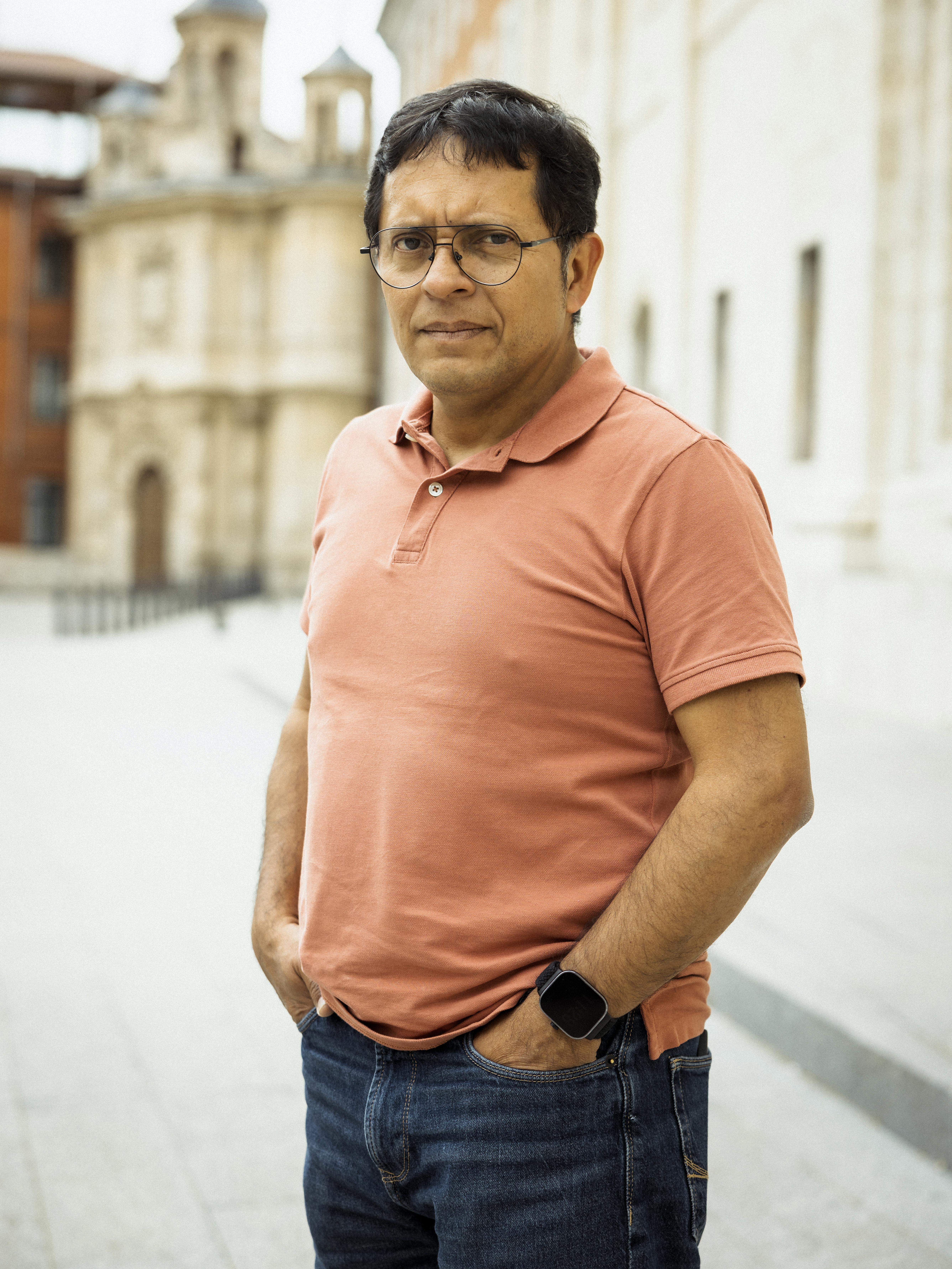
    Armando Jesús Lovera in Valladolid, Spain, at the local headquarters of the Augustinian order.Gianfranco Tripodo for The New York Times

    Lovera, 52, and Leo, 70, have been close friends since they lived together for seven years in Peru, in a formation house, a live-in community for Catholics considering a life dedicated to the faith. Leo, then a missionary priest known by his pre-papal name of Robert Prevost, ran the house.

    Over the decades — as Lovera moved to Spain and Prevost became a bishop, cardinal and then pope — the two have stayed tight.

    Lovera and his family visited the pope for five days in July, and they will join the pope again in Rome this August, Lovera said.

    “To play tennis,” he said, “to feed the fish.”

    This past weekend, as Leo began his weeklong visit to Spain with a tight schedule of events, he found time to send his old friend a greeting in a text message. “We said hello,” Lovera said.

    Lovera, left, and the future Pope Leo in Orlando, Fla., in 2000.Armando Jesús Lovera via The New York Times

    Originally from a Roman Catholic family in Iquitos, a town in the Peruvian part of the Amazon, Lovera moved to Colombia with the goal of becoming an Augustinian missionary. There, in 1991, he first met the man who would become Leo; soon after, Lovera moved with other Augustinians into the formation house, in Trujillo, Peru.

    Leo taught the small, tight-knit group spiritual exercises and also how to manage money — “because you cannot give what you don’t have,” Lovera said, in an interview at the vast Augustinian headquarters in Valladolid, the city where he lives, a two-hour drive north of Madrid.

    “He used to tell me that a community isn’t made of superheroes, but of brothers who decide together what is best,” Lovera added.

    The two shared a love of music, mathematics and long road trips.

    “We’ve been travel buddies,” said Lovera, who became the group’s driver, even though he didn’t have a driver’s license. The future pope filled their long hauls with car talk, expounding on how to drive cars through flooded streets. When he once spent the night at the Lovera family’s modest home, they had no bed to offer him, only a sofa.

    It was so hot and humid that the future pope elected to sleep in a rocking chair. “My mother was dying of embarrassment,” Lovera recalled.

    The future pope officiating the church wedding of the Loveras in Trujillo, Peru, in 2013.Armando Jesús Lovera via The New York Times

    Leo left Peru in 1999 after being elected to lead the Augustinian Order in the Midwest, and soon after, Lovera decided to leave the missionary track. Community living, he decided, wasn’t for him, and he wanted to do more to protest against the economic policies of the Peruvian government at the time. He also didn’t take well to an order to travel to Rome to study the teachings of St. Augustine: “I wanted to be more independent,” he said.

    Lovera said Leo had talked to him about the change and, instead of giving him a teacher’s lecture, had offered a friend’s understanding.

    “Don’t feel obligated,” Lovera recalled his friend telling him, emphasizing that a holy life could be lived in different ways. Mostly, Lovera recalled, they joked about the Y2K bug that people at the time feared would wipe out the world’s computers at the turn of the millennium.

    Soon after, Lovera moved to Spain for a job with a Catholic publisher. Leo later became the global leader of the Augustinian Order, a job based in Rome that required constant international travel, including to Spain, where he visited Lovera.

    Lovera would often visit Chicago and catch up with the future pope’s family, including Leo, who happened to be there in November 2004. At that meeting, Lovera told his friend about a young Peruvian woman in Spain who had caught his eye. But when he had asked her out, Lovera explained, she had told him only that she would think about it — and mentioned a teddy bear that she coveted.

    “I told him, ‘I have to find a teddy,’” Lovera recounted. The men hit the road, driving to malls looking for the right stuffed toy, finally finding what Lovera was looking for in a Target near New Lenox, Illinois.

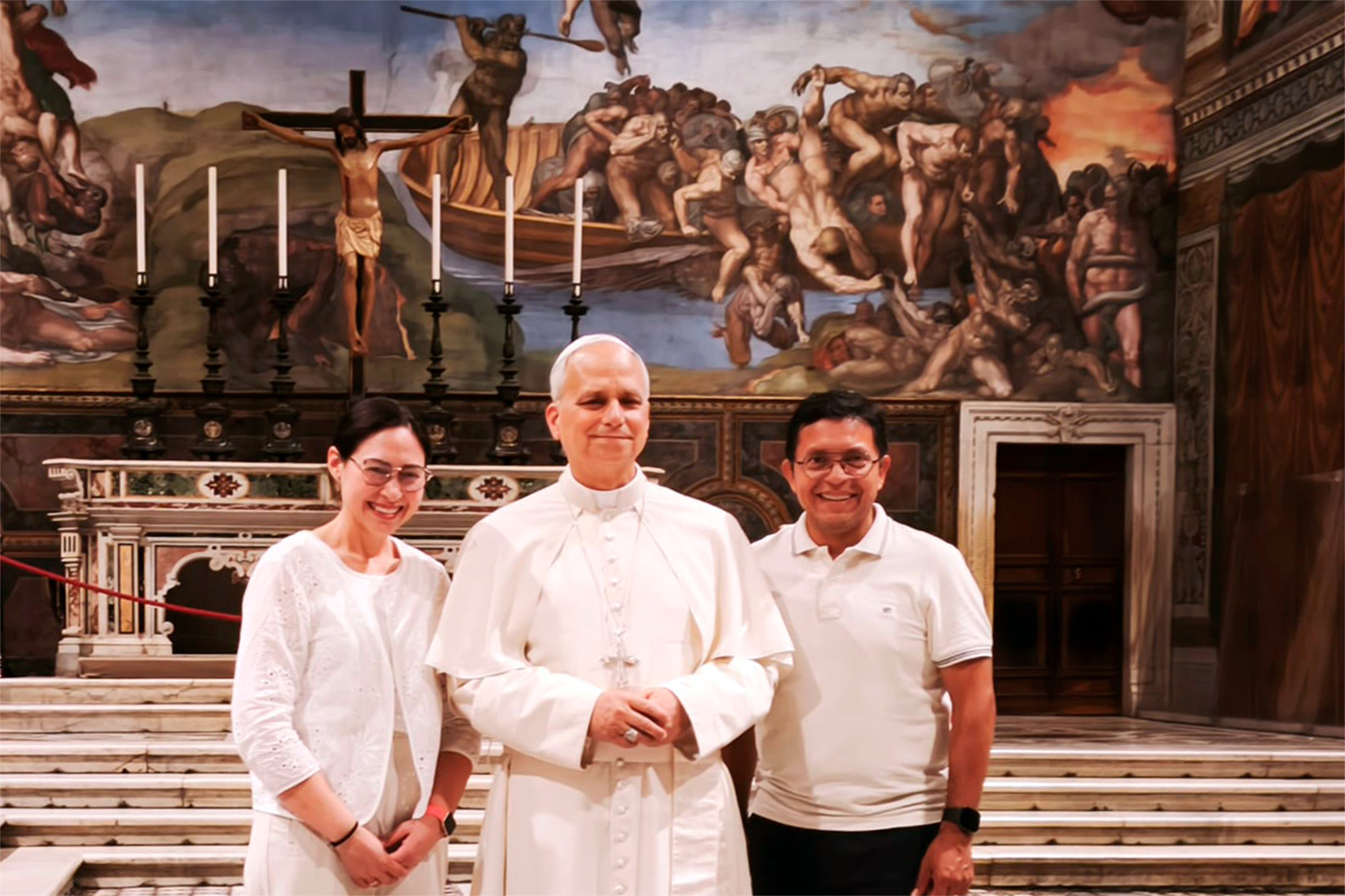
    The Loveras with Pope Leo at the Vatican in 2025.Armando Jesús Lovera via The New York Times

    Back in Spain, the woman accepted the gift but initially rejected Lovera. He persisted, though, and they eventually married in a civil ceremony with the future pope as their witness.

    In 2010, Leo landed in Spain for meetings with Spanish Augustinians, and Lovera picked him up at the airport. It was the day of the final of the soccer World Cup, and the future pope — a professed Real Madrid fan — decided that they should pull over to watch the match. In a pizza bar, they watched Spain defeat the Netherlands with a late goal in overtime, and both men chanted, “I am Spanish,” with the crowd, Lovera said.

    For Lovera, the pope was his co-pilot. In 2012, for instance, Leo drove with Lovera to check out a house in Valladolid that Lovera and his wife wanted to buy. “I have never stopped consulting him,” Lovera said.

    In December 2013, after the Loveras’ civil wedding, Leo married the couple in a church in Trujillo, and he later traveled to see them after the birth of their two daughters, whom he baptized. The girls, now 9 and 11, don’t quite understand that he is pope, Lovera said, and “see Roberto as part of the family.”

    Once they reached school age, Lovera began to call his friend from the car when driving to pick the girls up from school, he said. When Leo became pope, those frequent calls became texts, but they remained in regular contact, Lovera said.

    Last May, he asked the pope’s permission to write a book about their friendship, and the pope approved. “I trust you. You are my friend,” the pope said, according to Lovera.

    In October, they posed together with the published book, which highlights their efforts to build solidarity among marginalized Peruvians in a time of upheaval.

    Last month, Leo mentioned to Lovera that his brother, John Prevost, still called the pontiff from Chicago for information technology support.

    “And Roberto says, ‘John, I’m the pope,’” Lovera recalled.

    “‘Oh, sorry, pope,’” the pope’s brother responded, according to Lovera. “‘My computer is broken.’”

    On his own calls to the pope, Lovera said that he didn’t talk about tech or politics or about the church’s future. Instead, he said, “I talk about cars!”

    This article originally appeared in The New York Times.

  • After decades of pelvic pain and 100-plus doctor visits, one question changed it all | Medical mystery

    After decades of pelvic pain and 100-plus doctor visits, one question changed it all | Medical mystery

    Andy L. was a 19-year-old philosophy student at the University of Southampton, in England, when he first experienced a general malaise that left him with persistent headaches and feeling like he had a constant hangover.

    A visit to the university’s health clinic yielded a normal blood test; the doctor suggested Andy’s ailments were due to a bumpy transition to university life.

    But even after another normal blood test nine months later, the malaise continued. Then anxiety set in. After a panic attack, Andy returned to the doctor, who was now more emphatic that the problem was psychological. Andy was not convinced. After graduation, he hitchhiked from Britain to Ethiopia, a trip that gave him confidence he could function even as his health deteriorated.

    At age 25 he began experiencing jabbing pain in his bladder after urinating. A physician said it was probably a mild urinary tract infection or, perhaps, a bladder spasm. Drink plenty of water, the doctor advised.

    The following year, Andy awoke with pain in his perineum, the area that extends from the base of the scrotum to the anus, and he felt a lump deep in the tissue. His general practitioner sent him to a urologist, who diagnosed Andy with “atypical Peyronie’s disease,” a condition where plaques — sometimes painful — form in the deeper tissues under the skin of the penis, causing it to bend during erections.

    The diagnosis came as a relief at the time: “I thought: ‘Oh, good, something they can give a name to,” said Andy, who spoke on the condition of partial anonymity given the sensitive nature of his medical condition.

    That relief would not last. Follow-up tests over the years involved MRIs using Caverject, a drug injection into the penis that induces an erection so clinicians can assess vascular function and more clearly view the anatomy.

    “It was an unpleasant experience,” Andy said. “Walking around the hospital and then in the MRI machine for 45 minutes with an erection.”

    Still, the test ruled out cancer. But Andy knew his various symptoms did not fully align with Peyronie’s, partly because his pain was constant.

    That was just the start of Andy’s medical odyssey — a sometimes surreal quest that led him to more than 100 doctor appointments that included urologists, gastroenterologists, psychologists, and rheumatologists. He also saw an andrologist focusing on men’s reproductive health, sexual function, and urology problems.

    His physical symptoms — and extensive medical research — left him certain something biological was wrong. But the medical establishment often disagreed, leaving him questioning his own sanity and wondering if he was doomed to a life of unrelenting pain even while building a successful career and family.

    “I have the feeling that I am made up of two people traveling in different directions,” he wrote in his journal. “The person who feels ill and alone, and the person with some momentum behind them.”

    Constant pain

    Despite the pain, Andy’s life went on. He worked as a software engineer at the BBC, where he met his future wife. The couple had three children. During this period, from about 2004 to 2010, Andy said he experienced perineal pain “all the time.”

    It grew so intolerable that Andy asked his doctor about the viability of cutting out the aching lumps in his perineum. His doctor strongly advised against it.

    In 2010, he saw yet another urologist. This doctor’s note described Andy’s “constant pain … which feels like someone is pulling … his penis with a wire.” In response, the urologist told Andy it was time to stop fixating on his condition.

    “I strongly reassured him he does not have a serious medical condition, i.e. cancer, however, clearly he has a debilitating problem because he is very preoccupied with it,” the doctor wrote, adding that Andy had “a phenotype for chronic pain.” Finally, the doctor suggested a book on alternative healing called Teach Us to Sit Still — which, the clinician noted, he had never read.

    Further demoralized, Andy did not see another specialist for five years. He began running, which offered distraction, and threw himself into work, including leading a digital consultancy and building an analytics business with his brother. He started drinking wine every night to sleep.

    In 2014, he sold his analytics company and, with new private medical insurance, “embarked on another fruitless expedition” for a diagnosis. He also tried a range of treatments — various antidepressants, psychotherapy, beta-blockers, acupuncture, and a pain clinic — with little or no success. He saw a new urologist who said his condition “can’t be Peyronie’s,” but additional specialists could not find anything conclusive.

    Andy grew so weary of feeling ill with no explanation he remembers thinking, “How long can I go on?”

    A simple question

    Then Andy began losing weight — about 14 pounds in a few months — and experienced intermittent diarrhea. He was referred to Tom Creed, a consultant gastroenterologist in Bristol.

    Creed said it was clear Andy had been “traumatized” both by his painful symptoms and his experience in the medical system. “Nobody was really listening to him, and it struck me from the get-go that this was a genuine story, and he was really struggling,” Creed said.

    Creed ordered a colonoscopy, which he described as “very unexciting” until the end, when a bit of low-grade inflammation in the rectum caught his eye.

    “I thought, ‘it doesn’t look quite right,’” so he removed a tissue sample for biopsy. The pathologist identified something curious: a granuloma in the rectum — a foreign body surrounded by inflammatory cells.

    That’s when Creed asked Andy a question no doctor ever had: “Have you traveled anywhere exotic?”

    It turned out he had: nearly 30 years ago Andy spent a gap year teaching in Tanzania, where he washed and swam every day in Lake Tanganyika.

    “That was the moment the penny dropped for me,” Creed said. He remembered something from medical school and, thinking it was a long shot, sent the tissue off for another test and ordered blood work to look for antibodies that could confirm a rare condition he had never seen in a patient.

    Results validated Creed’s hunch: Andy had been suffering from schistosomiasis, a disease caused by parasitic worms, for nearly three decades.

    “Suddenly [there was] a unifying diagnosis,” Creed said.

    Schistosomiasis is a “neglected tropical disease,” according to the World Health Organization, most prevalent in sub-Saharan Africa, where parasitic worms live in certain freshwater snails that inhabit lakes and rivers. The worms infect people by burrowing into human skin as larvae, then traveling through veins into the bloodstream. There, they pair up, migrate to the liver, bowels, or bladder, and adult females start pumping out eggs — hundreds of them — which can lodge in various organ tissues, triggering an immune response. Humans pee or poop the eggs back into the water, where the cycle begins again.

    Andy had urogenital schistosomiasis, said one of his doctors, Mike Brown, a consultant physician at the Hospital for Tropical Diseases in London. In this disease, worms can take a “wrong turn” and wind up in the genital tract, where they can get trapped in the tissue and cause the kind of pelvic pain Andy experienced, Brown said. If left untreated, the eggs continue to penetrate the tissue lining, causing inflammation and scarring that can result in kidney failure, bladder cancer, and infertility in women. Brown said that adult worms can survive for 30 years or more and continue to produce inflammation-triggering eggs.

    When Andy got the phone call confirming the diagnosis, he was stunned. At 47 years old, he could finally see the path of his illness. He remembered a diagnosis of malaria in 1993 while he was living in Tanzania and spiked a 102 degree fever. The malaria test was negative, but the doctor insisted, “What else could it be?” This, Andy now believes, was most likely the acute phase of schistosomiasis.

    “When Creed called, he thought he was giving me bad news, but I was over the moon,” Andy said. “Having a diagnosis overruled any feeling of unease about the parasites living inside of me.”

    Following treatment with the drug praziquantel, the high level of antibodies in Andy’s blood decreased. “It’s an easy parasite to kill with the drugs,” said Brown, the tropical disease doctor. But even though the worms are dead, eggs already in the tissue remain and can cause ongoing problems.

    For Andy, now 51 and a tech consultant living with his family in Bristol, that means continued pelvic pain and a higher risk of bladder cancer, among other issues. But his headaches and malaise are gone, and he gained back the weight he had lost. “In terms of hardship, this all pales in comparison to battling against the misapprehension that I was suffering from an imaginary condition.”

    These days, Andy just wants to raise awareness about the disease to prevent others from suffering.

    “What happened to me happens to countless people in Africa,” he said.

    Indeed, the WHO estimates that more than 93% of people requiring treatment for the illness live in Africa.

    “Hundreds of thousands die every year, often from organ failure or bladder cancer. Many more are subjected to chronic illness,” Andy said.

    “But despite its prevalence,” he said, “schistosomiasis is a disease that most people in the developed world have never heard of.”

    Rachel Zimmerman is a journalist and writer based in Cambridge, Massachusetts. Her book “Us, After: A Memoir of Love and Suicide” was published in 2024.


  • Is AI replacing tech workers or providing an excuse for job cuts?

    Is AI replacing tech workers or providing an excuse for job cuts?

    SAN FRANCISCO — Meta, Coinbase, and Block have each laid off at least 10% of their employees in recent months and partly blamed artificial intelligence. About 13,000 jobs were eliminated among the three companies.

    But the cuts also came after big changes and growing questions about their businesses. Meta backed away from its big bet on the so-called metaverse, which cost the company about $80 billion. Coinbase’s CEO, Brian Armstrong, said its business remained volatile and there was “a down market” for cryptocurrency. And Block’s top executive, Jack Dorsey, acknowledged that the company had grown too much during the pandemic, tripling its workforce from 2019 to 2022.

    Layoffs in the tech industry are accelerating, whatever the motivations of executives. So far this year, more than 150 technology companies have cut a total of at least 115,000 employees, according to Layoffs.fyi, which tracks job cuts in the industry.

    That drip-drip of layoffs has become a steady stream in recent weeks. Companies slashing their staffs have run the gamut from software providers Atlassian and Autodesk, to social networking apps Pinterest and LinkedIn, to financial technology companies Intuit and PayPal.

    But in more than a few cases, the recent layoffs have coincided with other business issues. Wall Street loves an AI story right now. That, analysts and economists say, has offered a smoke screen for companies looking to beef up profits or patch over old mistakes.

    Cutting jobs to make way for AI is “a nice excuse, but some of these aren’t necessarily the best, most well-run companies,” said Mark Mahaney, an analyst at investment bank Evercore. “They may have overhired, or they may be losing market share. There may be other issues.”

    When Snap’s CEO, Evan Spiegel, laid off 1,000 people in April, for example, he said the company needed to turn a profit, which it has done in only three quarters since going public in 2017. But he also said AI was improving efficiency at the company, with “small squads leveraging AI tools to drive meaningful progress across several important initiatives.”

    Meta’s turn toward AI was timed with a big shift away from its giant metaverse project. During the pandemic, the company hired thousands of people to work on the effort, saying it would add 10,000 employees in the European Union. From 2019 to 2022, Meta doubled in size to about 87,000 employees.

    Since then, Meta has steadily trimmed from its augmented and virtual reality unit as it has funneled money into AI. In April, Meta said it would spend $125 billion to $145 billion this year on capital expenditures like data centers, more than double its spending last year. Last month, Meta laid off 8,000 people, or 10% of its workforce, even though its most recent quarterly profit was nearly $27 billion.

    “All these cuts are happening, and there are record profits,” said Ava Sazanami, who worked for Meta from 2022 to 2025. AI “is actually not costing any less money,” she added. “It is an excuse to some extent.”

    Last month, Meta also reassigned 7,000 employees to work on AI tools and apps. The company has been pushing its workers to adopt AI, factoring their use of the technology into performance reviews and tracking employees’ computers to gather training data for its own AI.

    “We’re seeing more and more examples where one or two people are building something in a week that would have previously taken dozens of people months,” Mark Zuckerberg, Meta’s CEO, said during a call with investors in April.

    Meta said its layoffs, reassignments, and other personnel changes varied by team. Coinbase and Snap declined to comment. Block did not respond to requests for comment.

    Many other companies have said they are cutting jobs to help free up money for AI projects. Intuit laid off about 3,000 people last month so it could devote more resources to its “big bets,” including expanding its “AI-native platform,” Sasan Goodarzi, its CEO, said in a memo to employees.

    Cisco’s CEO, Chuck Robbins, said the company would invest “in our employees’ use of AI across the company” as it cut 4,000 employees last month. And Microsoft offered early retirement in April to roughly 7% of its employees in the United States, or thousands of people, as it planned to spend about $190 billion this year on capital expenditures like data centers.

    Perhaps the most blunt explanation for job cuts has come from Cloudflare’s CEO, Matthew Prince. When the company, which provides various internet services, laid off 1,100 people last month, he said in a memo to employees that the cuts were “not a cost-cutting exercise or an assessment of individuals’ performance.”

    Prince said his company was restructuring for “the agentic AI era,” referring to digital assistants that can do tasks by themselves. In an opinion essay in the Wall Street Journal, he said the technology would replace workers he called “measurers” — people with jobs in sectors such as internal audit, compliance, finance, marketing and operations — and middle managers.

    Intuit, Cisco, Microsoft, and Cloudflare declined to comment.

    The rest of the economy has not yet seen sweeping job cuts because of AI, said Daniel Keum, an associate professor of management at Columbia Business School.

    “There are certain segments of the labor market where we’re starting to see real impact,” like “tech-concentrated sectors for juniors and new graduates,” Keum said. “If you’re a junior who graduated in the past two years — or, even worse, if you graduated this year — then hiring is getting cut.”

    But relief for tech workers doesn’t appear to be on the horizon. Andy Jassy, Amazon’s CEO, said last year that the company expected to operate with fewer corporate employees in the coming years “as we get efficiency gains from using AI extensively across the company.” Amazon laid off 14,000 corporate employees in October and 16,000 more in January, saying those cuts were to reduce bureaucracy.

    For college graduates with computer science degrees just entering the workforce, getting a job could be a struggle. In addition to the layoffs, Meta said it would close 6,000 roles it had planned to fill. Snap said it would close 300 open roles. Although AI companies are still hiring, the technology has led some start-ups to hire many fewer people.

    “AI is causing this isolated recession for college graduates now,” Keum said. “Is that going to slow down? My answer is no. It’s going to accelerate.”

    This article originally appeared in the New York Times.

  • Ships stranded by war face costly dilemma: Wait it out or risk attack

    LONDON — Pankaj Khanna, the CEO of Heidmar Maritime Holdings, knows what it’s like to be stranded at sea in a war zone. Long before he became a shipping executive, he was a seafarer himself, a crew member on a ship during the Persian Gulf War of 1991 as a Scud missile flew overhead. He recalled the paralyzing fear of some seafarers on board.

    Today, the stress on the roughly 11,000 stranded sailors in the Persian Gulf may be even greater. Seafarers now have internet access and are often watching livestreams of attacks happening around them while seeing explosions from their ship decks.

    “The fact that they are sitting on board the ships with real-time information — it is psychologically very traumatic,” said Khanna, 55.

    Three commercial vessels have been hit by U.S. forces this week. One of the strikes killed three people, bringing the number of seafarers killed since the start of the war to 14. All told, there have been 46 attacks on international ships in and around the Strait of Hormuz since Feb. 28, most by Iran and some by the United States.

    The war in Iran is approaching its 15th week. For the shipping industry caught in the middle, pressure is mounting — on the sailors, the shipowners, and operators losing hundreds of thousands of dollars a day, and the customers awaiting the delivery of oil and goods. At stake is not only the safety of those in the line of fire but the functioning of the global economy.

    A tense calm prevailed in the Gulf on Friday on hopes that a deal to end the fighting could be near.

    “We have heard this, like, 20 times,” Khanna said. “So what are the prospects? I don’t know.”

    Even after a reopening of the strait, he added, ships will need a “framework” before they attempt to get out. “We need to know which parts of the strait are clear,” he said.

    Heidmar Maritime, based in Athens, Greece, manages a fleet of 60 vessels that operate all over the world, including off the coasts of Europe, South America, and northern Asia and in the Red Sea. Just two weeks ago, one of its ships was attacked by Somali pirates.

    The company’s ship in the Persian Gulf, carrying Saudi crude oil, is one of about 500 large vessels operated by established companies that have been stranded there since the early days of the war in late February. Some vessels have taken advantage of windows of calm to slip out of the Gulf. But departures have slowed recently, according to Lloyd’s List Intelligence, as tensions have increased.

    And it seems less likely that conditions faced by shipping businesses will quickly return to their prewar state even if a deal is reached.

    “Even if a solution for peace is put in place in the coming weeks, there’s no guarantee there won’t be another crisis later on, and we can’t be prisoners to Hormuz,” Rodolphe Saadé, the CEO of CMA CGM, the French shipping giant, said at a French parliamentary hearing Tuesday.

    The world’s third-largest container line, CMA CGM has 11 vessels stranded in the Gulf after three others were able to leave. “I won’t be fixated on the idea that the Strait of Hormuz is going to reopen and everything will return to how it was,” Saadé said.

    As the strait remains effectively blockaded, shipowners are subject to marine insurance fees as high as $6 million to $7 million to exit the gulf, said Khanna of Heidmar Maritime. Perishable cargoes are expiring, and insurance premiums are adding up. Still, shipping companies have, in some ways, benefited from higher tanker rates and longer journeys needed to reroute around risky areas like the Red Sea.

    For the companies with ships stuck in the gulf, Iran has offered a way out: Pay a fee to secure safe passage. But sanctions imposed on Iran by the United States and Europe make it illegal for companies with American or European connections to pay.

    The shipping industry has more or less steadfastly maintained that the resumption of free passage through the strait is essential for global trade. Now the rising costs have led to some cracks in that argument.

    Last week, Evangelos Marinakis, the owner of one of Greece’s biggest shipping businesses, said at a conference in Athens that paying $100,000 or $200,000 tolls to secure safe passage through the strait would be better than having the strait closed.

    “I would prefer to pay a toll for the right to navigate through the Strait of Hormuz immediately and safely, rather than pay huge extra war risk premiums,” he said in a statement.

    And the stress for seafarers keeps mounting.

    Mohamed Arrachedi, the Middle East coordinator of the International Transport Workers’ Federation, a seafarers union, said he was receiving WhatsApp messages at all times of day from seafarers requesting repatriation or reporting unpaid wages.

    “They were hopeful, but now, observing that it is starting again, people are not only anxious, worried, and concerned, but people are desperate,” Arrachedi said.

    In recent weeks, more seafarers reported shortages of fresh fruit and vegetables than in the first couple of weeks, he said. On some ships, people are surviving on dry food alone. Drinking water, too, has become an issue since vessels have to be moving in deep water to generate their own supply.

    “It’s kind of like being on the front line of a war that you have absolutely no involvement in,” said Michelle Wiese Bockmann, an analyst at the maritime intelligence firm Windward. “You don’t have a dog in the fight, and you’re just there.”

    This article originally appeared in the New York Times.