Category: Wires

  • How redistricting pitted Wasserman Schultz against Black Democrats in Florida

    How redistricting pitted Wasserman Schultz against Black Democrats in Florida

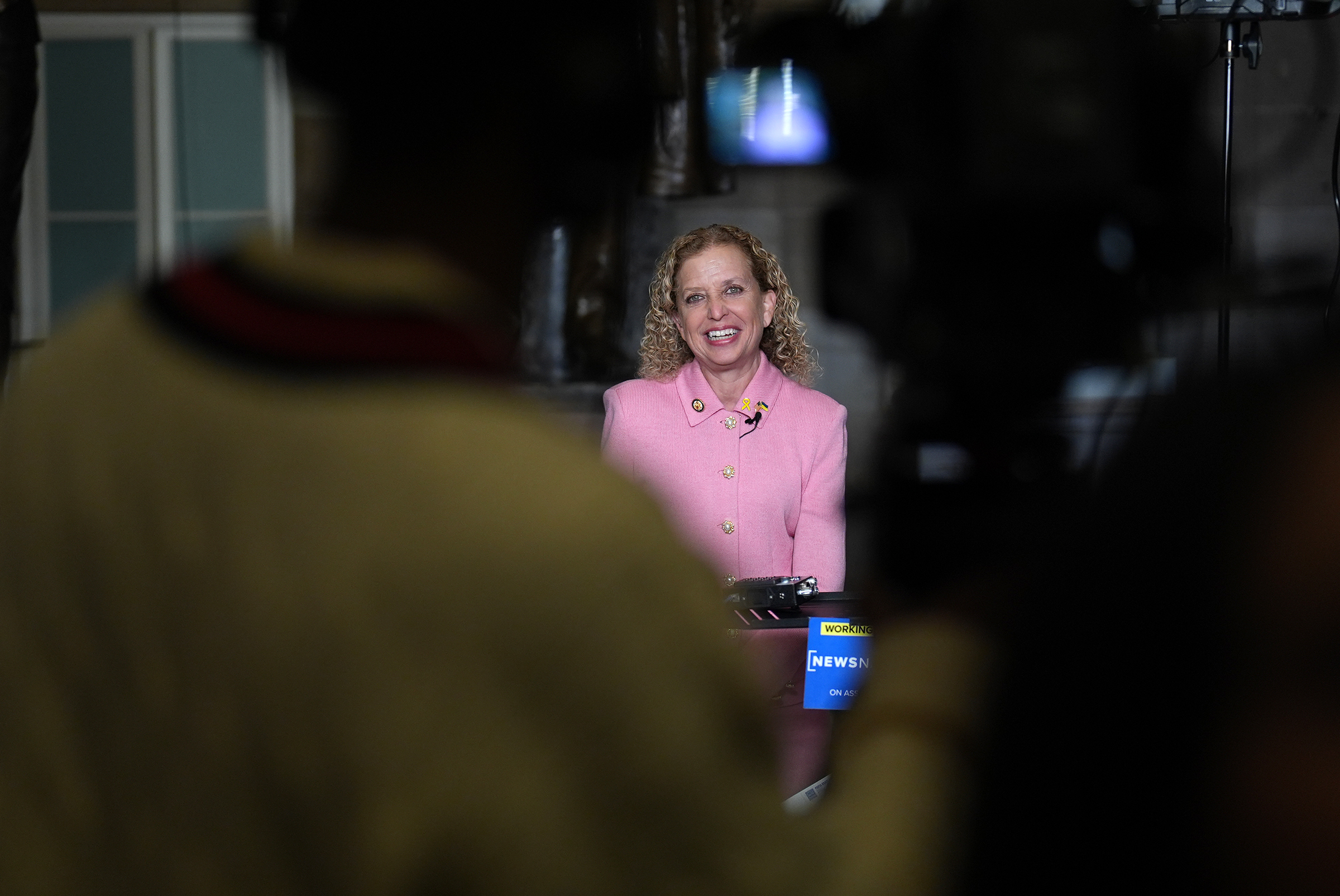
    MIAMI — Four Black Democrats running for Congress in the same South Florida district met last week for a highly unusual discussion. Should three of them drop out and rally around a consensus Black candidate in the Democratic primary against Rep. Debbie Wasserman Schultz?

    Wasserman Schultz, who is white, had announced a few weeks earlier that she would run in the safely Democratic 20th Congressional District in Broward County, after Republican state lawmakers redrew Florida’s congressional map and eliminated her seat.

    But the 20th District is historically Black and has elected a Black representative for decades. The Black Democrats running felt affronted by Wasserman Schultz’s decision to enter the race, especially with a spate of Republican gerrymanders across the South this spring almost certain to reduce Black representation in the House.

    The race to redistrict before the midterm elections has forced Democratic candidates in Republican-led states to make rushed decisions about where to run based on cold electoral math, as the number of winnable districts has shrunk. In Florida — a state that sends 28 representatives to Congress, and where 43% of voters cast ballots in 2024 for Kamala Harris — the Republican-drawn map cut the number of Democratic-leaning seats from eight to four.

    Nowhere in the state has Democrats’ dilemma been more evident than in South Florida. Before Friday’s candidate-qualifying deadline, Wasserman Schultz’s announcement turned Democrat against Democrat.

    The 20th District includes most of Broward County’s African American and Caribbean American communities. So the four Black Democrats huddled last Monday, thinking that, if they consolidated behind one of them, he or she might have a chance of defeating Wasserman Schultz, an 11-term incumbent and a former chair of the Democratic National Committee who has far out-raised them all.

    In the end, though, they could not agree on who among them should remain in the race.

    “Everybody thinks that they can be the one who will win,” said Dale V.C. Holness, a former Broward County mayor.

    Holness and three others — Luther Campbell, known as Uncle Luke, from the hip-hop group 2 Live Crew; Elijah Manley, a teacher and political activist; and former Rep. Sheila Cherfilus-McCormick — all qualified to run. They remained in the race knowing that they would likely split the Black vote, improving Wasserman Schultz’s odds of winning.

    Under the new map, only one majority-Black district will remain in Florida: the 24th, which is based in Miami-Dade County and safely Democratic. The incumbent, Rep. Frederica Wilson, announced her retirement last month.

    The 20th District, with its plurality of Black voters, can still elect a Black representative, the Florida Legislative Black Caucus noted in a statement last month that called Wasserman Schultz’s decision “disheartening.”

    “This district was established to remedy decades of racial exclusion and to ensure that Black communities have the opportunity to elect leaders who truly reflect their experiences and needs,” the statement said.

    The discomfort has stretched to Washington. When asked this month about the landscape in the 20th District, Rep. Hakeem Jeffries (D., N.Y.), the minority leader, who typically endorses incumbents, said he had not “made a decision” in the race.

    “Everybody has a right to run where they see fit,” he said, praising Wasserman Schultz’s “strong record of accomplishment.” He added, however, that the country was experiencing “an unprecedented Jim Crow-like assault on Black political representation.”

    The Supreme Court issued a decision in April weakening a key provision of the landmark 1965 Voting Rights Act, finding that Louisiana lawmakers had unconstitutionally relied on race when they created a majority-Black district. The decision set off a rush to redraw maps in Southern states.

    Last week, the House Democratic Caucus, led by Jeffries, appointed Wasserman Schultz to the House Foreign Affairs Committee. In a statement, Wasserman Schultz thanked her colleagues for “this vote of confidence.” She has blamed President Donald Trump, Gov. Ron DeSantis, and their fellow Republicans in the Florida Legislature for eliminating four Democratic-leaning districts. Two are in Broward County — hers and that of Rep. Jared Moskowitz — while two more are in the Tampa and Orlando areas.

    Voting and civil rights groups have challenged the map in court, saying it violates a state ban on partisan gerrymandering. A judge declined to temporarily block the map from taking effect, so it will stand for this year’s elections.

    “I’m just as angry” as other Democrats, Wasserman Schultz said in an interview last month. “DeSantis and Trump have intentionally dismantled Broward County’s power.”

    She added that, over her 34-year political career, she had represented nine of the 14 cities in the district.

    “I know the people, and the people know me,” she said. “It was critical that we not start over with a beginner and ensure that someone like me with the seniority and clout represents this community.”

    Moskowitz is running in the new 25th District, along coastal Miami-Dade, Broward, and Palm Beach counties. It leans Republican but is considered competitive. He lamented the gerrymandering “race to the bottom” that he said will lead to more partisanship and gridlock.

    “If you think Congress is dysfunctional now, just wait for us to prove you wrong,” he said.

    The other two Democrats whose districts were eliminated, Rep. Kathy Castor of Tampa and Rep. Darren Soto of Orlando, are also running, but in seats that Trump won by 10 percentage points and nearly 18 points in 2024.

    Castor, who is in her 10th term, said she was undeterred, in part because of her expectation of an anti-Trump wave this year. She pointed to some of the president’s seemingly tone-deaf statements, such as “I love the inflation,” which he said last week in the Oval Office.

    “I see a big change election for the GOP in power in Congress,” she said.

    With Democrats having to defend three formerly safe seats, it seems less likely that they will have many resources to try to flip other seats that they had hoped to keep competitive. Florida Republicans have outpaced Democrats in voter registration and fundraising for years.

    “Democrats are running on empty in Florida,” Maureen O’Toole, a spokesperson for the National Republican Congressional Committee, said in a statement.

    Holness, Manley, and Cherfilus-McCormick said that Wasserman Schultz should have run in the new, Republican-leaning 22nd District, which includes her home. She might have given the GOP a real race there, they said.

    “The fact that she’s abandoning her district and coming into our district, it doesn’t give people any faith that she will stand and she will fight,” Cherfilus-McCormick said.

    Cherfilus-McCormick resigned from office in April before a House panel was scheduled to consider expelling her. She has been indicted on criminal charges of embezzling $5 million in federal disaster aid and using it for her campaign. She has denied the accusation and pleaded not guilty.

    Manley said Wasserman Schultz represents the establishment at a time when Democratic voters are frustrated with the status quo.

    “To have somebody running here and try to divide and conquer the district is going to hurt the party in irreparable ways,” he said. “People may stay home in November. People may leave the party.”

    This article originally appeared in the New York Times.
  • 12 dead in crash of plane on skydiving outing in Missouri, authorities say

    BUTLER, Mo. — A plane carrying a pilot and 11 passengers planning to spend a sunny afternoon skydiving crashed Sunday in Missouri, killing all aboard, authorities said.

    The Missouri State Highway Patrol said in a statement that troopers were at the crash site, assisting the Butler Police Department and Bates County Sheriff’s Office. The crash occurred near the Butler Memorial Airport. The small town of Butler has a population of around 4,300 people and is roughly 65 miles south of Kansas City.

    Missouri Highway Patrol Sgt. Justin Ewing said the plane was taking people up to skydive. Emergency responders got a call that a plane was down and engulfed in flames around 11:30 a.m. Sunday, he said.

    “It landed in a field adjacent to the airport, but I think they’re shutting down the roadway just as a precaution,” Ewing said.

    A heap of blue and silver mangled metal lay in the grass near the airport with a massive line-up of emergency vehicles on the street beside it.

    Teams from the National Transportation Safety Board and Federal Aviation Administration were en route to the crash site Sunday afternoon to investigate, according to the Missouri State Patrol.

    The private plane was operated by Skydive Kansas City, said Dennis Jacobs, the acting airport manager and Bates County Emergency Management Agency director.

    “It had just taken off and made a left turn” before the crash, Jacobs said. “In my opinion I think it was losing power, and he was trying to make it over to the highway and land, and he stalled and went down nose first and caught fire.”

    Emergency responders were able to put out the fire shortly after the crash, Jacobs said, calling the scene “brutal.”

    First responders have checked the area under the flight path and did not find anyone who might have tried to jump out before the crash, Jacobs said.

    The Pacific Aerospace 750XL that crashed is a single engine turboprop plane model that’s popular for skydiving but is also used for cargo, aerial surveying, and medical evacuation flights. The aircraft can carry as many as 17 skydivers and is capable of taking off and landing on short runways. The plane that crashed Saturday was manufactured in 2010, according to FAA records.

    The small airport serves around 30 aircraft, all privately owned, including crop dusting companies and skydive operators, Ewing said.

    Skydiving companies operate in the region eight or nine months a year, with the season usually starting in late March or early April and lasting into October or November. Someone answering the phone at Skydive Kansas City declined to speak to a reporter from the Associated Press.

    It’s not yet known what factors may have contributed to the crash or caused it, Ewing said, and those details will be part of the investigation carried out by NTSB officials.

    Aviation safety expert Jeff Guzzetti said that poor maintenance has been a factor in a number of previous skydiving plane crashes because these companies are not held to a high standard under FAA rules. Guzzetti said skydiving companies are governed by the same rules any private plane owner has to follow and not the more stringent rules that charter flight operators and airlines adhere to.

    “There’s been a whole history of skydiving accidents for inadequate maintenance and deficient safety culture,” said Guzzetti, who used to be a crash investigator for both the NTSB and FAA.

  • Trump endorses Mike Collins in Georgia Senate runoff

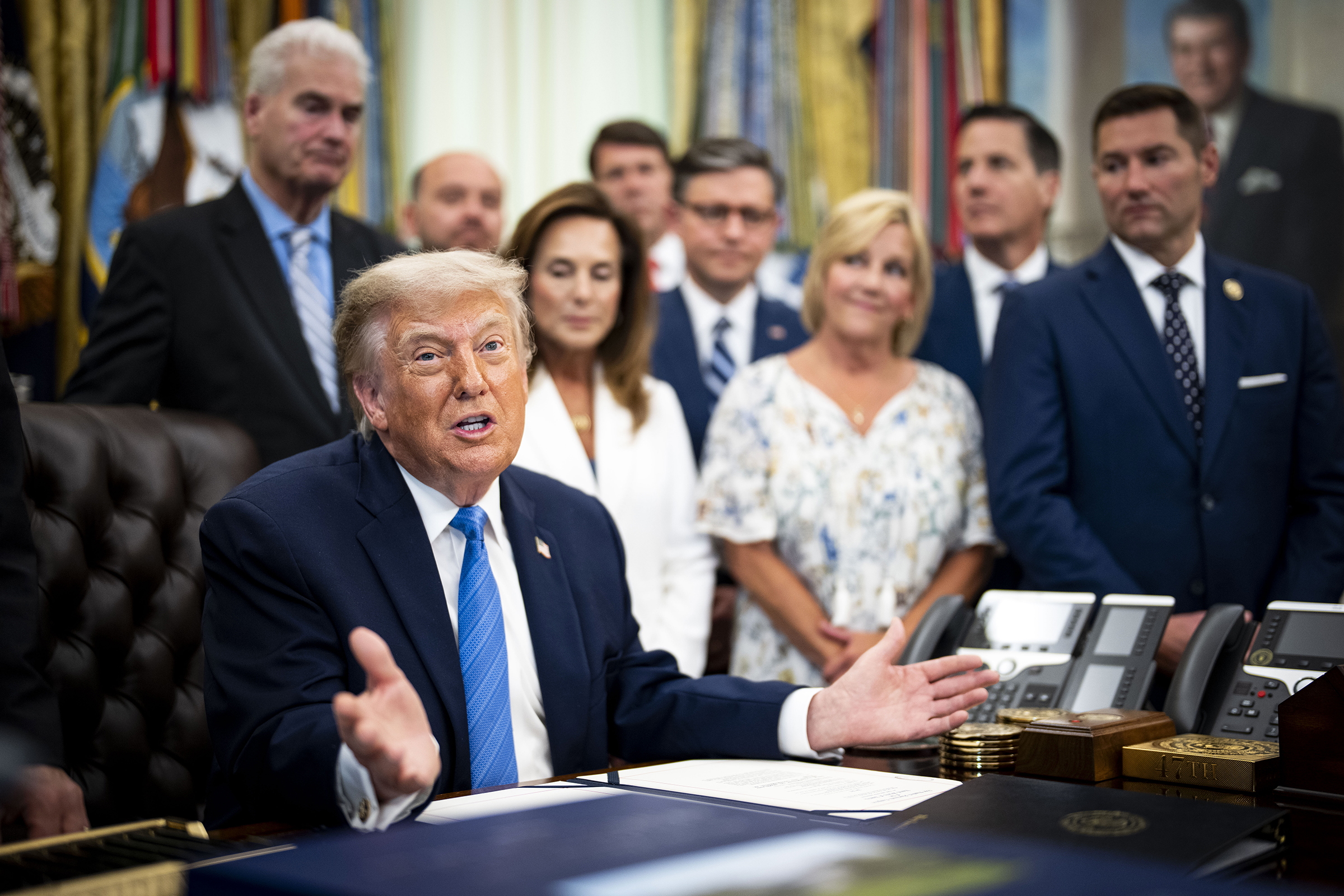
    President Donald Trump endorsed Rep. Mike Collins (R., Ga.) early Sunday ahead of Tuesday’s runoff in Georgia’s GOP Senate primary, wading into a race that could determine control of the chamber this fall.

    “Mike is strongly supported by the most Highly Respected MAGA Patriots in Georgia and beyond,” Trump wrote on his Truth Social platform, touting his alignment with Collins on a number of policies. “He is a WARRIOR and WINNER!“

    Collins, a second-term congressman and former trucking company executive, is facing Derek Dooley, a former football coach backed by Georgia Gov. Brian Kemp (R), in the closely watched race. Collins captured more than 40% of the vote in the GOP primary, powered by support from across the state, to Dooley’s 30%, fueled by Atlanta and its suburbs.

    The winner of the runoff will face Sen. Jon Ossoff (D., Ga.), a 39-year-old first-term senator who has amassed a large campaign war chest as he seeks reelection.

    Republicans are eying Georgia as perhaps their best opportunity to pick up a Senate seat this fall, while Democrats are mobilizing to defend Ossoff as they try to flip control of the chamber. The GOP holds 53 of the Senate’s 100 seats, but Democrats hope Trump’s poor polling and voters’ resistance to some Republican policies will boost their party.

    Trump’s involvement could help determine Tuesday’s runoff while injecting even more national significance into this fall’s general election. Ossoff has dismissed both Collins and Dooley as “Trump puppets.”

    Collins, who has led Dooley in fundraising, argues that his experience as a trucking executive helps him connect with voters. He is also the son of former representative Mac Collins (R., Ga.), who served a dozen years in the House of Representatives.

    Collins has faced criticism for his provocative social media posts, including some that promoted the conspiracy theory that President Joe Biden ordered the 2024 assassination attempt against then-candidate Trump in Butler, Pa.

    Dooley has also portrayed Collins as scandal-plagued because he faces an ethics investigation over allegations that his then-chief of staff misused taxpayer money to pay a friend. In January, the House Ethics Committee said it was reviewing a complaint detailing the alleged abuse of funds, which Collins’ office has denied.

    Kemp, the state’s popular governor, argues that Republicans should not nominate a controversial candidate, saying that approach has cost the party in the past. Herschel Walker, a former football star who faced Sen. Raphael Warnock (D., Ga.) in the 2022 Senate election, struggled to overcome scandals and lost that race by nearly three percentage points.

    Trump’s endorsement of Collins follows his intervention in other Senate races, including his decision last month to endorse Texas Attorney General Ken Paxton against incumbent Sen. John Cornyn. Some GOP leaders had urged Trump to either sit out the race or support Cornyn to avoid a divisive nominee and a costly general election fight.

    On Sunday, Trump criticized Dooley, a former state high school football star who received a law degree from the University of Georgia, where his father was the football coach for decades. Dooley has also served as the head coach at Louisiana Tech University and the University of Tennessee, and he has held other jobs at prominent college and pro football programs.

    “I don’t know Derek Dooley, and neither does anyone else,” Trump wrote.

  • Swiss voters reject right wing’s bid to cap population at 10 million, early results show

    GENEVA — Nearly 55% of voters in Switzerland on Sunday rejected an initiative championed by the top right-wing party to cap the rich Alpine country’s population at 10 million, early results showed.

    The populist Swiss People’s Party, which has the most seats in parliament, has stirred up and fostered anti-migration sentiment over the years, notably about an influx of workers from the neighboring European Union.

    Some have dubbed the proposal a “Swiss Brexit” because it could jeopardize Switzerland’s deep ties to the European Union, anchored by deals that foster economic growth, cultural ties, and cross-border travel, among other things. Switzerland is not one of the EU’s 27 member states, but it is all but surrounded by four of them

    Recent polling from the gfs.bern agency suggested that it could be a close contest.

    Preliminary results shared by the federal government showed that nearly 55% of voters rejected the proposal, with nationwide turnout almost 59%. Results were still pending from many of Switzerland’s 26 cantons.

    Party says Swiss way of life strained by growing population

    The number of people living in Switzerland has soared by nearly one-quarter over the last generation, and foreigners today make up nearly one-third of the population.

    Critics say the boom in migration has brought foreign labor and skills to sectors such as healthcare, finance, pharmaceuticals, and technology.

    The right-wing party put forward the “sustainability initiative” measure, saying Swiss infrastructure, housing, social programs, natural resources, and way of life have been strained by the spike in demographic growth.

    The federal government, Parliament and EconomieSuisse, a major business association, oppose the idea.

    In Geneva, Switzerland’s second-largest city and a hub of U.N. institutions and humanitarian groups, early results showed about two-thirds of voters in the region opposed the measure.

    Maria Lalu, a former diplomatic mission worker from the Philippines who arrived in Switzerland in the early 1980s, said she supported the proposal. “I have nothing against immigration. I also am a stranger,” she said after casting her vote, adding that she wants immigration to be more orderly.

    Schoolteacher Natascha Robert said she voted against the bid, expressing concern that approval could hurt Switzerland’s relationship with the EU. She also said Switzerland’s growing diversity is an asset.

    “I think people always have something to bring us,” she said outside a polling station in the central Paquis neighborhood, emphasizing that she was born in Switzerland to two Swiss parents. “Does that mean that we have more foreigners, I feel less Swiss? Really, not.”

    International migration is a controversial issue across Europe

    Swiss democracy gives voters a direct say in policymaking through referendums typically held four times a year. Most ballots are cast through the mail, and in-person voting ended at noon local time on Sunday.

    A “yes” vote would require the Swiss government to take action to cap the population by 2050.

    If the population reaches 9.5 million before then, the government would be forced to restrict asylum, family reunification, and residency permits, and may have to scrap Switzerland’s EU deal on the free movement of people.

    The Organization for Economic Cooperation and Development has reported that Switzerland had a foreign-born population of 32% as of 2024, behind only Luxembourg and Australia among the group’s 38 member countries.

    International migration has long been a sensitive issue in Europe, as nations grapple with an aging population and increasing anti-foreigner sentiment. While that sentiment in other European countries centers on migrants from the developing world, most foreigners in Switzerland are Europeans.

    Since Switzerland and the EU eased restrictions on citizens living and working across their borders in 2002, the Swiss population has grown by 23%, to 9.1 million as of the end of last year. Economic output has also increased, up 24% over the same period, government data show.

    Swiss voters have repeatedly tackled the immigration issue over the last half-century. Only one such referendum — “Against mass immigration” in 2014 — narrowly passed, after campaigners stoked fears about overpopulation and rising numbers of Muslims in the country.

    While many countries have limits on immigration, none has ever voted to limit its population, Swiss experts say.

  • It was meant to unify, but the G7 is now dogged by chaos and divided by Trump

    It was meant to unify, but the G7 is now dogged by chaos and divided by Trump

    PARIS — The last time the leaders of the world’s richest countries gathered in Évian-les-Bains, France, in June 2003, the United States had just invaded Iraq over the strident objections of France and Germany. President George W. Bush got chilly handshakes, but he and the other leaders worked to maintain the veneer of like-minded countries uniting to confront the perils of an unruly world.

    Twenty-three years later, as leaders gather in the same town amid another American war in the Middle East, the veneer has been stripped away.

    When President Donald Trump arrives Monday afternoon in Évian, an Alpine spa town on the southern shore of Lake Geneva, he will be greeted by European leaders who no longer view the United States as a partner on key issues such as climate change and security. In some cases, they view the United States as a threat, after Trump’s destabilizing attacks on Iran that have roiled the world economy, his deepening disdain for NATO, and his threats to take over Greenland.

    “From the beginning of Trump’s second term, up until Greenland, the rule of thumb for America’s allies was, ‘Let’s bite our tongue and be nice to Trump,’” said Charles A. Kupchan, a professor of international relations at Georgetown University. “Greenland and Iran are a double whammy, where allies now say, ‘We’ll work with Trump where possible, but we have to say no when necessary.’”

    However rancorous the split over the Iraq War in 2003, Kupchan said that it did not fracture the foundations of NATO or of other multilateral institutions like the Group of 7. “That’s not where we are now,” he said, adding, “There isn’t a consensus within the G7 about what to do.”

    That does not mean the leaders will not seek to find some common ground. Wars are rumbling on in Ukraine and Iran. Global energy supplies are being disrupted by Iran’s closure of the Strait of Hormuz. Worries about how artificial intelligence will upend the labor force are prompting calls for government regulation.

    But the split does mean that France’s goals for the meeting are necessarily less ambitious than at previous such gatherings. For the host, President Emmanuel Macron, the biggest challenge will be personal: persuading Trump not to bail out early, as he has from previous G7 summits.

    Macron made progress on that score by inviting Trump to dine with him at Versailles, the opulent palace of France’s kings, on Wednesday, after the meeting ends. The dinner will celebrate the 250th anniversary of American independence, which, French officials noted, was enshrined in a treaty signed at Versailles in 1783. Macron had pushed back the start of the G7 to accommodate Trump, so he could attend an evening of cage fights at the White House on Sunday, his 80th birthday.

    Jeremy Shapiro, a director at the European Council on Foreign Relations, a research group with offices in Berlin and London, said, “The recipe for this summit, as with every summit involving Trump, is not to have a blowup, and to suggest that everything is OK, which none of them believe anymore.”

    Trump’s mercurial style has long made these meetings unpredictable. He cut short his attendance at two G7 gatherings hosted by Canada, in 2018 and 2025. But Shapiro said the rupture between the United States and its allies had become more profound after the start of the Iran war, which Trump began without consulting Europe’s leaders, and especially after his threats to take over Greenland.

    On the security issue that most concerns Europe’s leaders, Ukraine, Trump shows little interest in reengaging in a peace negotiation. On Iran, the issue that has most preoccupied Trump, the G7 leaders have refused to join the war effort, drawing bitter rebukes from the American president.

    Part of the problem for Europe’s leaders is that Trump’s vitriol toward Europe has made it harder to support the United States. The president has become so unpopular with Europeans that even onetime political allies, like Prime Minister Giorgia Meloni of Italy, are distancing themselves from him.

    “Trump has made everything so toxic,” Shapiro said. “The leaders in Europe are saying, ‘It is so hard to help the U.S. because he has been so nasty to them.’”

    Yet the leaders of the G7 diverge on how far to pull away from the United States, differences that reflect history and geography. Germany and Japan are situated closer to threatening neighbors — Russia and China — than is Canada. Analysts said that allowed the Canadian prime minister, Mark Carney, to speak more freely than his German and Japanese counterparts about a definitive split from Washington.

    France has historically charted a more independent course toward the United States than Britain has. Macron began calling for Europe to pursue “strategic autonomy” in Trump’s first term. Until recently, Britain’s prime minister, Keir Starmer, had emphasized the need to stay in sync with Washington on key security issues.

    But that is changing, too. London refused to allow American warplanes to use British air bases for offensive operations in Iran, though it does let U.S. planes take off for what it describes as “defensive” ones. Some Britons were inflamed when Vice President JD Vance waded into domestic issues, like the stabbing of Henry Nowak, an 18-year-old college student, which he blamed on the “politics of self-hatred and the mass invasion of migrants.”

    “Trump is practicing foreign politics, not foreign policy,” said Ben Judah, who advised David Lammy when he was Britain’s foreign secretary and is now a visiting fellow at Chatham House, a London think tank. “On a political level, it is very clear that the United Kingdom has an America problem.”

    Macron has scheduled topical lunches and dinners for the leaders and invited guests, including President Volodymyr Zelensky of Ukraine and President Abdel Fattah el-Sissi of Egypt. But French officials cannot predict what role Trump will play.

    The French also want to focus on economic imbalances between China and the West. Trump, who has just returned from a meeting with President Xi Jinping in Beijing, would be well placed to lead a discussion on that issue. But French officials said they were not certain what to make of Trump’s China policy.

    According to Shapiro, “What they’d like to do is to get the U.S. in a room and hash out some issues.” Instead, he added, half in jest, “Six of them will excuse themselves and go to the bathroom.”

    Then, he said, “They’ll have those conversations.”

    This article originally appeared in the New York Times.
  • Kash Patel keeps suing the press

    Kash Patel keeps suing the press

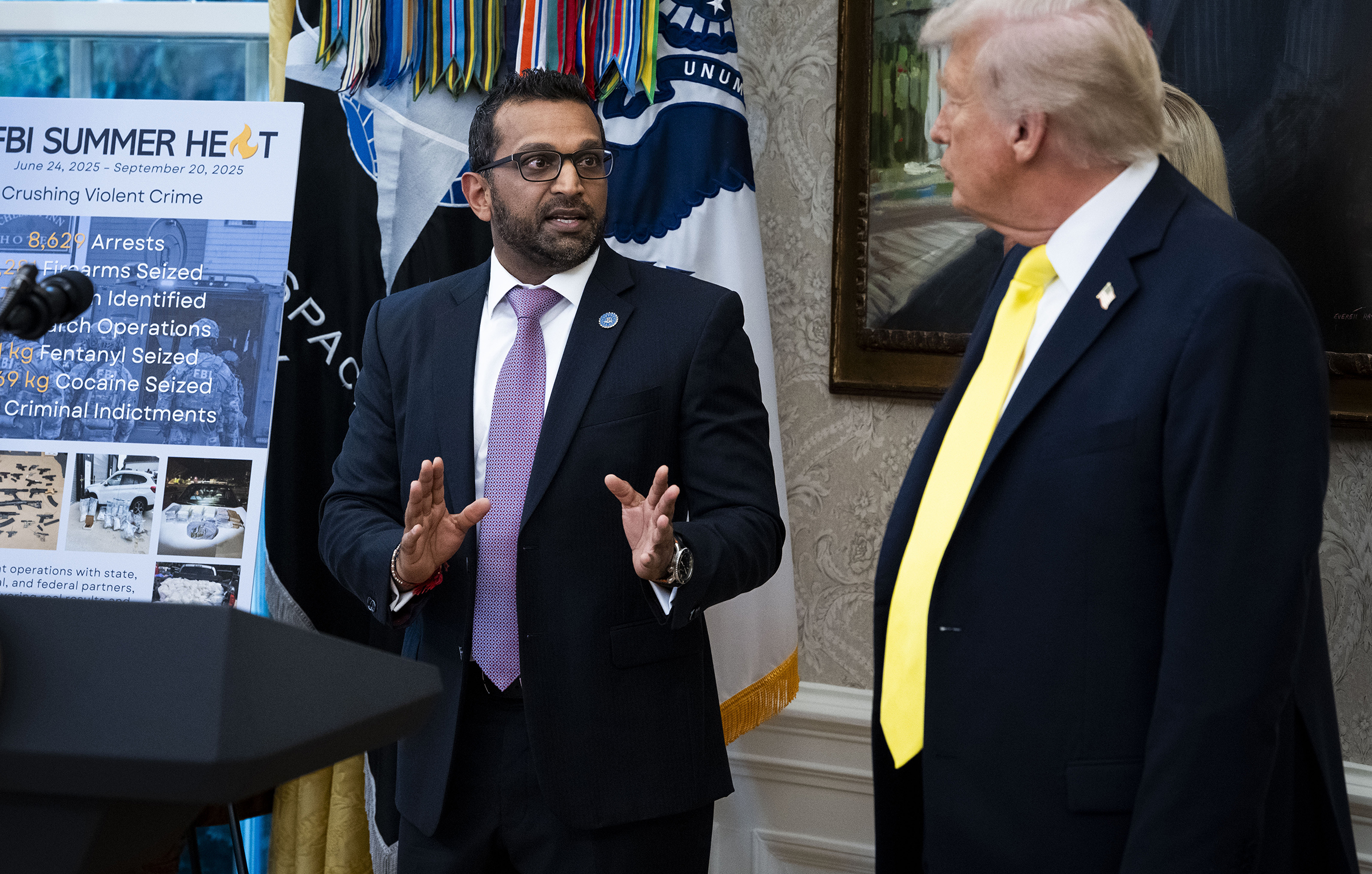
    In 2019, Kash Patel, then a White House aide, objected to how news outlets portrayed his role in President Donald Trump’s dealings with Ukraine. “It’s time that I began fighting back,” Patel said at the time. He sued Politico, the New York Times, and CNN.

    In 2023, Patel, then a roving pro-Trump commentator, took offense at the work of a blogger who had bashed his record and called him a “chud,” a derogatory term progressives use to describe MAGA followers. He sued the blogger, Jim Stewartson, for $10 million in damages.

    And in April, Patel, now the director of the FBI, seethed over an article in the Atlantic that reported alarm among some colleagues over his “erratic” behavior and alleged heavy drinking. He soon sued the publication, demanding $250 million in damages.

    Patel has yet to reach a settlement or a favorable jury verdict in the cases. Each of the news organizations he has sued has defended its journalism and said it was protected by the First Amendment.

    But the strategy is a familiar one. Trump, the man who appointed Patel to lead the FBI, has long turned to the courts when faced with unfavorable press coverage. And perhaps no one in his two administrations has followed his lead as closely as Patel, who has filed at least six defamation lawsuits against news media companies and commentators in nearly seven years.

    In some of the cases, Patel filed strongly worded complaints only to allow them to languish in the ups and downs of civil litigation — a trajectory that some legal experts said raised questions about his objectives.

    “The goals here,” said Sonja R. West, a professor at the University of Georgia School of Law, “appear to be to muddy the narrative, run up opponents’ legal bills, and send a message to journalists that if you cover us critically, it’s going to cost you a lot of time and money.”

    Jesse R. Binnall, a lawyer in Virginia who represents Patel, said in an email, “Director Patel pursues these cases to win them — and anyone who thinks he would tolerate anything less than aggressive, expeditious accountability simply doesn’t know the man.” He added that the number of defamation lawsuits filed by Patel is a “direct reflection of the volume of lies published” about him.

    The suits constitute another front on which news organizations have been forced to spend time and money to defend their work in the Trump era. Others include steady public criticism from top officials, including Trump; limitations on access to the White House and the Pentagon; leak investigations that ensnare national security reporters; and investigations by the Federal Communications Commission.

    Exact numbers on public officials who file defamation claims are hard to come by, said Michael Norwick, a lawyer at the Media Law Resource Center, a group that assists news organizations. Even so, Norwick, who has worked at the center for 15 years, said, “I don’t remember this being a thing, and now it’s a thing.”

    RonNell Andersen Jones, a professor at the University of Utah S.J. Quinney College of Law, said via email that there were examples of defamation suits from officials who had completed their time in public service, but that she was unaware of cases predating Trump in which officials had wielded “law enforcement or other executive-leverage power that they can couple with the pressure of the suit.”

    Andersen Jones said the suits against news media companies had forced her to remove a line she had used in lectures for her entire career, which had said top government officials, including the president, do not sue for libel.

    An FBI spokesperson said that even government officials should have recourse to address what they deemed to be malicious lies in the news media.

    Patel and Binnall face an uphill battle in court. To recover damages in a defamation suit against a news organization, a public official like Patel would have to prove not only that the journalists had published a damaging falsehood, but also that they had done so knowingly or with reckless disregard of the truth — a legal standard known as actual malice.

    When Patel sued the Times in 2019 over its coverage of Trump’s dealings with Ukraine, his complaint contained about 750 words of biography. He called himself a “brilliant attorney, trusted adviser, staunch proponent and defender of the rule of law”; and he demanded nearly $45 million in damages, along with “prejudgment interest” and “postjudgment interest” at 6% per year.

    After all that buildup, Patel failed to serve court papers to the Times and later dropped the case.

    A similar situation unfolded after Patel sued Politico for what he argued were “malicious efforts” to destroy his career through its coverage of Trump’s interactions with Ukraine. Politico moved to dismiss the case after Patel did not serve the company with court documents for more than a year, leading to a “reasonable presumption that he had abandoned his claims,” according to a court filing.

    Patel dropped that suit but filed a new one, which is still active. (His suits against the Times, Politico, and CNN were filed by his previous counsel, not by Binnall’s firm.)

    And Patel drew a rebuke from a federal judge in Nevada for failing to pursue his case against Stewartson, the blogger, for more than a year, a gap that Binnall, in an email to the Times, attributed to a careful and deliberate legal strategy. The litigation is ongoing.

    In his public statements, Patel is prone to sweeping condemnations of news organizations. Traces of that language surface in his lawsuits. His complaint against CNN, for instance, included claims of a “brutal attack on Kash’s reputation” and a “continuation of past smear campaigns to discredit Kash.”

    It also said CNN had defamed Patel by reporting that he “worked to discredit” special counsel Robert Mueller’s investigation into Russian interference in the 2016 presidential election — an odd claim from a man who would go on to characterize that investigation in a book as a “taxpayer-funded hit job from a group of government gangsters.” He abandoned his claims related to the matter during an appeals court hearing.

    In affirming the dismissal of Patel’s 2020 suit against CNN, a Virginia appeals court found that his claims were “conclusory and not binding” and fell short of actual malice. It also awarded CNN $150 in damages. The network declined to comment on whether Patel had paid.

    The Supreme Court declared in 1964 that public debate may feature “vehement, caustic, and sometimes unpleasantly sharp attacks” on government officials, as Patel is now learning.

    In April, a federal judge in Texas dismissed a lawsuit filed by Patel against Frank Figliuzzi, a retired FBI official and TV commentator who had knocked Patel’s work habits last year on the MS NOW program Morning Joe, saying the FBI director was “far more” visible at nightclubs than at the agency’s headquarters. The judge dismissed the suit on the grounds that Figliuzzi’s remark amounted to “rhetorical hyperbole that cannot constitute defamation.”

    In an email, Binnall said, “Although we agree that Mr. Figliuzzi is not a serious person, the notion that the more you exaggerate a lie, the more legally protected you become, is not a coherent reading of the law.” Patel is appealing the ruling.

    Stewartson, the blogger, also stood by the insults that he had slung at Patel on social media. “I thought it was hysterical that he put that in there,” Stewartson said in an interview, referring to Patel’s references to being called a “chud.” “Because how do you prove he’s not a chud?”

    This article originally appeared in the New York Times.
  • Former Senate leader Mitch McConnell is in the hospital, but little more information is known

    WASHINGTON — Republican Sen. Mitch McConnell was admitted to a hospital Sunday, his spokesperson said, but there was no immediate information about why he was there or his prognosis.

    McConnell, 84, was the longest serving Senate leader in history before stepping aside from that role while finishing his final term, which ends in January.

    “Senator McConnell was admitted to the hospital this morning. He is receiving excellent care,” spokesperson David Popp said in a statement without elaboration. It was not immediately clear whether the Kentucky lawmaker was in Washington, his home state, or elsewhere.

    McConnell’s health has been a subject of scrutiny for years.

    He fell and sprained his wrist while walking out of a GOP luncheon in December 2024. He was hospitalized with a concussion in March 2023 and missed several weeks of work after falling in a Washington hotel. After he returned, he twice froze up during news conferences that summer, staring vacantly ahead before colleagues and staff came to his assistance.

    McConnell had polio in his early childhood and he has long acknowledged some difficulty as an adult in walking and climbing stairs. In addition to his 2023 fall, he also tripped and fell in 2019 at his home in Kentucky. He had surgery for a fractured shoulder.

    McConnell was first elected to the Senate in 1984 and was the Republican leader from 2007 until last year, serving as both majority and minority leader during that period.

    He remains active in the Senate, showing up for work when the chamber is in session, and recently chairing public hearings and grilling officials from his perch as the chairperson for the Senate Appropriations subcommittee on defense. He has intermittently used a wheelchair to navigate the Capitol and routinely has his security detail, as a former congressional leader, at his side.

  • Britain detains sanctioned oil tanker believed to be linked to Russia’s shadow fleet

    LONDON — Armed British forces boarded and detained a sanctioned tanker Sunday that is suspected of being part of the Russian “shadow fleet,” shipping oil in violation of international sanctions over Moscow’s war on Ukraine, British Prime Minister Keir Starmer said Sunday.

    Royal Marine commandos rappelled from helicopters onto the vessel, the Smyrtos, in the English Channel, in what the country’s Defense Ministry called “the first U.K.-led operation of its kind.”

    The vessel will be held and monitored off the south coast of England for investigation, according to the Defense Ministry. The operation was carried out “in close coordination” with French authorities, who have previously intercepted a number of vessels linked to the shadow fleet.

    “This operation delivers yet another blow to Russia and reminds those fueling Putin’s war in Ukraine that they cannot hide,” Starmer said.

    Russia is believed to be using a fleet of hundreds of ships to evade sanctions over its war against Ukraine.

    Sailing under a Cameroon flag, the Smyrtos left the Russian Baltic port of Ust-Luga on June 5 destined for Port Said, Egypt, according to the MarineTraffic website.

    U.K. authorities said that such operations were “directly bearing down on the resources sustaining Russia’s aggression in Ukraine and reducing its capacity to threaten security across Europe and beyond.”

    Ukraine President Voldymyr Zelensky thanked Starmer and the British people for their “principled resolve.”

    “It was Russia’s hubris, fueled by high oil and gas revenues, that paved the way for this war, and every decision by partners that deprives Russia of money also limits the war itself,” Zelensky said on X.

    “Europe urgently needs to take legislative steps to enable not only the detention of tankers and restrictions on oil shipments, but also the confiscation of the oil they carry.”

  • Palestinian death toll in Gaza tops 73,000 as Israel launches strikes despite ceasefire

    DEIR AL-BALAH, Gaza Strip — The Palestinian death toll from the Israel-Hamas war has surpassed 73,000, Gaza’s Health Ministry said Sunday, as Israeli military operations continued despite a stalled and fragile ceasefire in place since October.

    Israel says it is targeting Hamas and other militants who pose a threat, and responding to ceasefire violations, including occasional attacks.

    Nearly 1,000 people have been killed in Gaza since the start of the ceasefire, according to the health ministry. Five Israeli soldiers have been killed since the truce.

    The number of deaths since the beginning of the war is now 73,001, according to the health ministry’s tally. Over 173,200 people have been wounded since the start of the war on Oct. 7, 2023, following the Hamas-led attack into Israel. That attack killed some 1,200 people and took 251 others hostage.

    The health ministry, part of the Hamas-led government, is staffed by medical professionals and maintains detailed records viewed as generally reliable by United Nations agencies and independent experts. It does not distinguish between civilians and militants but says women and children make up around half of all fatalities.

    Israel says it tries to avoid harming civilians and blames their deaths on Hamas because the militants operate in densely populated areas.

    Stalled ceasefire

    The U.S.-brokered ceasefire deal reached in October ended full-scale military operations and led to the return of all the remaining hostages. But other elements of the deal have stalled as Hamas has refused to disarm and Israeli troops have advanced in Gaza, rather than withdrawn. Both sides accuse the other of violating the agreement but say it is still in effect.

    Progress on all other issues — including reconstruction, Israeli troop withdrawals, and the establishment of a new Palestinian government — is being held up by the deadlock over disarming Hamas, the top diplomat overseeing the U.S.-brokered ceasefire in Gaza, Nickolay Mladenov, has said.

    The war displaced most of the Palestinian population of over 2 million, left large parts of the territory in rubble and created widespread shortages of food, medicine, and other basic supplies as the border crossings with Gaza — all but one controlled by Israel — slammed shut.

    At least eight more Palestinians killed in the weekend

    An Israeli strike on Sunday afternoon in northern Gaza’s Jabaliya refugee camp killed at least four people and wounded others, according to health officials at the Shifa hospital, where the casualties were taken. An Israeli military official, who spoke anonymously in line with military guidelines, said the military “struck terrorists” in the area, without elaborating.

    A 13-year-old boy was among five Palestinians killed in Gaza on Saturday night and into the early hours of Sunday, according to Palestinian health officials. In response to the Saturday night strike that killed two of the five, the Israeli military claimed that it was striking Hamas militants.

  • Trump administration reignites its feud with Anthropic over latest AI models

    Trump administration reignites its feud with Anthropic over latest AI models

    WASHINGTON — The feud between Anthropic and the Trump administration escalated again Saturday after the government took the unusual step a day earlier of demanding that the artificial intelligence company cut off foreign access to its latest models, as top officials suggested the dispute was unlikely to resolve quickly.

    Late on Friday, Anthropic disclosed in a blog post that it had disabled access for all customers to its most advanced AI systems, known as Fable 5 and Mythos 5, after receiving a directive from the administration to suspend access to any foreign national. The move shocked former U.S. officials and cybersecurity experts, many of whom questioned the validity of the action and noted that it diverged from the hands-off approach to policing the booming AI industry that President Donald Trump had endorsed earlier this month.

    Anthropic said the directive did not explain the national security concerns that prompted it. But the company added that the government had said that it became aware of a method to “jailbreak,” or bypass, security restrictions on Fable 5 intended to limit a customer’s ability to abuse the product for hacking or other potential harms. Anthropic countered that the fears about the jailbreak method were overblown.

    The announcement inflamed tensions between the Trump administration and Anthropic, which earlier this month confidentially filed for an initial public offering following a funding round valuing it at nearly $1 trillion. The two sides have sparred for months over how Anthropic’s AI systems could be used in military and intelligence settings, culminating with the Pentagon labeling the company a supply-chain risk.

    On Saturday, top Trump administration officials and allies of Trump’s stepped up their attacks on Anthropic.

    “Three months ago, @DeptofWar kicked @AnthropicAI out of our building — forever,” Defense Secretary Pete Hegseth said on the social platform X. “Every passing day proves why that was the right move.”

    David Sacks, a venture capitalist who until recently worked in the administration as an AI czar, accused Anthropic in a lengthy social media post Saturday of being reckless with the release of its latest model, dubbed Fable 5.

    Sacks, who said he had spoken to many people inside and outside the administration about the directive, said the administration had asked Dario Amodei, Anthropic’s CEO, to fix the jailbreak issue after a “highly credible trusted partner” of Anthropic’s and the government’s came forward with research.

    “Dario refused,” Sacks said.

    A person briefed on Amodei’s conversations disputed the account, saying that Anthropic was happy to discuss the concerns.

    Sacks did not name the “trusted partner” he referred to in his post. But multiple technology firms, including Amazon, spoke with the White House about the security issues, according to people familiar with the matter. Several of the people said a message from Amazon’s CEO, Andy Jassy, detailing security issues was the most influential, raising concerns about the capabilities of the new Anthropic model.

    But several of these officials said a separate document from Amazon explaining the security concerns with Anthropic’s model was misleading. The concerning capabilities that the document highlighted with Anthropic’s model are also present in OpenAI’s top model, 5.5.

    An Amazon spokesperson declined to comment on the exact nature of its discussions with the White House. “It’s not uncommon for governments to seek our counsel on potential security risks,” the spokesperson said. “When they occur, we don’t share the details of these discussions.”

    Administration officials called Anthropic officials at 1:15 p.m. Friday and gave them 90 minutes to pull their most advanced models down, citing an undefined national security concern, according to people briefed on the discussions. Anthropic officials asked for more information and worked to learn what the precise concern was, since the Commerce Department’s review and testing of Fable did not reveal significant concerns.

    Then, at 5:21 p.m., Anthropic was notified that the Trump administration was imposing export controls that effectively forced the company to pull down its model, which consumers had just begun to have access to.

    Discussions about resolving the dispute are continuing. Howard Lutnick, the commerce secretary, spoke to Anthropic officials Friday, and was set to have another session with senior company officials Saturday evening, according to people briefed on the discussions and plans.

    Some experts said the Trump administration was either misunderstanding or deliberately misconstruing what transpired. Katie Moussouris, the CEO of Luta Security, said on social media that she had seen the research paper that prompted the administration’s actions.

    “It’s not a jailbreak,” she said, but rather a defensive maneuver designed to limit the misuse of a model. “If national defense is the goal, this is an own goal.”

    Earlier this month, the Trump administration issued an executive order that asked technology companies to voluntarily let the government review their new models before releasing them to the public. But it did not give the government an official role in approving their release.

    The order had been delayed after a fierce debate in which AI companies — and some sympathetic government officials — had pushed back against the government interfering in model deployment. The dispute came on the heels of Anthropic’s very limited release of Mythos, an AI model so good at discovering and weaponizing new cybersecurity vulnerabilities that it sparked widespread concerns about its potential to wreak havoc.

    The new restrictions on Anthropic have raised questions about the implications for other AI models that may have similar capabilities. Former officials and technology experts said the administration did not appear to have thought through the longer-term ramifications of such a move.

    But the measure could be limited to Anthropic, which received a fusillade of attacks from the administration in recent months.

    In February, amid the Pentagon’s clash with Anthropic, Trump called the company a “radical left, woke company” and “Leftwing nut jobs” working to dictate how the government wins and fights wars.

    “I am directing EVERY Federal Agency in the United States Government to IMMEDIATELY CEASE all use of Anthropic’s technology,” the president wrote on social media. “We don’t need it, we don’t want it, and will not do business with them again!”

    Some administration officials have in recent weeks been looking for an off-ramp in the dispute, U.S. officials say. White House and intelligence officials have pushed forward a classified contract between Anthropic and the National Security Agency, which would allow the spy agency to use the company’s technology for a variety of purposes, including intelligence analysis and detecting new computer vulnerabilities.

    Officials at the NSA, which is responsible for digital eavesdropping and government cybersecurity, were not involved in Friday’s decision, according to people familiar with the matter.

    Many U.S. officials said the new technology Anthropic had developed was too important to national security to allow the dispute with the Pentagon to block cooperation. But inside the top ranks of the Pentagon, officials remain upset with the company, insisting that the firm sign on to the same contractual provisions that other AI companies have embraced.

    In a June 12 letter viewed by the New York Times, Lutnick told Amodei that a special license would be required for the company to distribute its Mythos and Fable 5 models “to all destinations worldwide,” as well as to share them with non-U.S. citizens.

    “Failure to comply will result in prompt criminal and civil penalties, as provided for by law,” Lutnick wrote.

    The government has controlled AI models before, but past restrictions were more targeted. A measure introduced early last year by the Biden administration placed restrictions on companies’ ability to export the so-called weights for specific AI models — the proprietary numerical values that tell the model how much importance to place on different pieces of data.

    The measure taken by the Trump administration goes far beyond that, by barring Anthropic from sharing the model with any foreign country or any foreign national without first obtaining a license.

    The restrictions on the involvement of foreign nationals, even those with green cards, could be particularly chilling in an industry that relies on foreign talent. In the past, government officials have often reserved that type of restriction for the most sensitive technologies, like weapons systems.

    Chris McGuire, a former Biden administration technology official who is now a senior fellow at the Council on Foreign Relations, said that the administration’s current policy is that AI chips can be exported to China, but Canadian green card holders in the United States cannot access leading U.S. models.

    “That’s absurd,” he added.

    This article originally appeared in the New York Times.