LONDON — A Russian warship fired warning shots at a U.K.-registered pleasure yacht in the English Channel on Tuesday, authorities said, an incident that caused no damage but illustrated heightened tensions between the two countries.
Britain’s Defense Ministry said it was investigating an “incident” after the yacht reported being fired on by a Russian navy vessel about 23 miles south of the Isle of Wight, outside U.K. territorial waters.
There were no reports of injuries or damage to the sailing yacht, which continued its journey from the U.K. toward France.
The BBC reported that the yacht, which has no motor, had drifted toward the Russian vessel in foggy conditions.
Russia’s Defense Ministry said the crew of the frigate Admiral Grigorovich tried to contact the yacht when it was seen sailing on a “dangerous course in close proximity with the warship.” It said the ship’s crew launched flares and issued sound signals when the yacht did not respond.
“After the distance had closed to 150 meters (500 feet), the frigate’s commander decided to fire warning shots across the vessel’s bow using small arms,” the ministry said. It said the yacht then changed course and sailed away.
The ministry said the ship’s crew “acted in strict accordance” with international navigation rules to avoid a collision.
Russian warships passing through the English Channel are routinely shadowed by the Royal Navy, and patrol vessel HMS Mersey was monitoring the Russian ship at the time of the reported incident. The ministry said it was investigating Tuesday’s incident.
The British military said last month that it had monitored the Admiral Grigorovich throughout April as the Russian ship escorted six Russia-linked civilian vessels near the U.K.
The altercation occurred two days after British commandos boarded and detained a sanctioned tanker in the Channel that is suspected of being part of the Russian “shadow fleet.” Officials are not linking the two events.
The tanker’s captain, an Indian national charged with shipping Russian oil in violation of international sanctions over Moscow’s war on Ukraine, was ordered held in jail after appearing Tuesday in court.
The British military has had several close encounters with Russian vessels in the region and warned Moscow in November that it was ready to deal with any incursion into its territory after the spy ship Yantar was detected on the edge of U.K. waters north of Scotland.
In April, Britain and Norway said they had tracked a Russian attack sub and two spy submarines operating north of the U.K. for several weeks.
A Royal Navy frigate, aircraft, and hundreds of personnel spent weeks following the Russian vessels and prevented them from carrying out “nefarious” activities against underwater infrastructure, then-Defense Secretary John Healey said.
He accused Moscow of using the distraction of the Iran war to ramp up malign activity against Europe.
Five years ago, Russia said one of its warships fired warning shots and a warplane dropped bombs in the Black Sea to force the British destroyer HMS Defender out of an area near Crimea that Moscow claimed as its territorial waters.
The U.K. denied that account and insisted its ship wasn’t fired upon. It was the first time since the Cold War that Moscow acknowledged using live ammunition to deter a NATO warship, reflecting the growing risk of military incidents amid soaring tensions between Russia and the West. The incident occurred about six months before Russia invaded Ukraine.
Federal prosecutors on Tuesday unsealed conspiracy, assault, and other charges against 15 people accused of violently impeding immigration enforcement officers in Minneapolis during an immigration crackdown this year.
Daniel N. Rosen, the top federal prosecutor in Minnesota, said the defendants were members of two Minneapolis-based antifa groups, a far-left movement. Twelve of the defendants were arrested Tuesday, Rosen said, one was already in custody for other charges, and two remained at large. Antifa, named for its anti-fascist political alignment, is not an organization with a leader but a diffuse protest culture of activists who want to stop the far right.
The defendants were charged with conspiracy to impede or injure a federal officer; solicitation to commit a crime of violence; interstate stalking; assault on a federal officer; and destruction of government property.
“Today’s charges and arrests reflect a broad federal effort to address organized lawless behavior, which seeks to disrupt the execution of federal law, endanger law enforcement, and importantly endanger the very communities that these defendants falsely claim to be protecting,” Rosen said during a news briefing Tuesday.
It was unclear whether the defendants had legal representation and whether they had entered pleas.
The 94-page conspiracy indictment was filed at a particularly fraught moment for Minnesota federal prosecutors, who have had trouble sustaining many criminal cases they have filed against Immigration and Customs Enforcement protesters since the Trump administration’s crackdown in the state began late last year. Defense lawyers say that about half the 36 cases charging individual defendants with assaulting or interfering with federal agents assigned to the crackdown have been dismissed. Judges have questioned the evidence underlying the accusations.
At the news conference Tuesday, reporters confronted Rosen with the struggles that his office has faced in prosecuting officer assault cases, and he sought to defend the new indictment. “You watch how this case plays out; you watch how the evidence plays out,” he said.
The Trump administration, through executive actions, has prioritized bringing criminal cases against anyone associated with antifa, especially those who have protested his aggressive immigration crackdown. Democrats have said that the administration was attempting to silence dissent.
EVIAN-LES-BAINS, France — The United States could soon reimpose sanctions on Russian oil shipments after President Donald Trump and fellow leaders at the Group of Seven summit of major industrialized democracies moved Tuesday to put the war in Ukraine back on top of their agenda, more than four years after Russia launched its full-scale invasion.
The Iran war has recently overshadowed Ukraine, but Trump said he wants to shift the focus following the announcement of an agreement to end the 3½-month-old conflict in the Gulf.
Trump said Iran will soon be “back in the rearview mirror.”
Trump said the sanctions on Russia that were eased during the Iran war to help lower oil prices can go back in place as more oil moves through the Strait of Hormuz.
“Soon we’ll be able to do that because the oil is now flowing,” Trump told reporters in Evian, the French spa town close to the Swiss border that is hosting the summit. “We’re in a position to do that soon.”
The U.S. in March temporarily eased some sanctions on some Russian oil shipments as crude prices sharply increased. The waiver has been extended.
Zelensky joins G7 leaders for talks
Ukrainian President Volodymyr Zelensky joined the G7 leaders for talks on the war in his country. They wrapped quickly, after just 75 minutes.
Zelensky said Ukraine is serious about peace while Russia toys with world leaders. “The entire ‘Seven’ supports Ukraine unanimously today,” he said.
Zelensky added that G7 leaders supported Ukraine’s need for more Patriot missiles and discussed how to increase production by licensing it. Patriot missiles are able to counter Russian ballistic missile attacks on Ukraine’s power grid and cities.
As the U.S. under Trump has cut back aid to Ukraine, France and its European allies are now the biggest providers of military and financial support to Kyiv.
Trump downplayed the impact of the Russia-Ukraine war on the U.S. but lamented the death toll.
“The whole thing is ridiculous,” Trump said. “So, yeah, I’m going to do whatever I can.”
Meanwhile, the U.K. announced new sanctions targeting the “shadow fleet” Russia uses to ship oil and gas, and the finance networks used by Moscow to evade Western sanctions. The ships targeted include several recently purchased by Russia to transport liquefied natural gas from its sanctioned Arctic LNG 2 project.
Russia fires again at Ukraine’s biggest cities
Hours before the summit began Monday, Russia fired hundreds of drones and dozens of missiles at Ukraine’s biggest cities in a barrage that killed 11 people and set fire to a religious landmark.
The attacks came after Zelensky and Putin spoke separately by phone with Trump on Sunday, the U.S. leader’s 80th birthday.
While campaigning in 2024 for a return to the White House, Trump claimed he could end the Russia-Ukraine war within 24 hours of taking office. However, negotiations have faltered and Trump has acknowledged it has proved much harder than he thought.
Ukraine sees EU membership as a security guarantee for a stable future once the war ends. Its best guarantee would be membership in the NATO military alliance, but the Trump administration insists that cannot happen, and others are wary of Ukraine joining while the war continues.
Trump says he may send Iran deal to Congress
The U.S.-Iran ceasefire deal got plenty of attention at Tuesday’s sessions, with Trump voicing his openness to sending the deal to Congress for review. The text has not been made public.
“I like the idea, send it to Congress please,” Trump said at the start of a meeting with United Arab Emirates President Sheikh Mohammed bin Zayed Al Nahyan on the summit’s sidelines. He added, “I mean, who wouldn’t approve it?”
Republicans on Capitol Hill say they want Trump to provide more information about the agreement, with some expressing skepticism that the deal can deter Iran from pursuing a nuclear weapon.
Trump also met with the Emir of Qatar, Sheikh Tamim bin Hamad al-Thani. The Gulf nations are not part of the G7, but French President Emmanuel Macron extended invitations to their leaders at a fraught moment for their region.
Trump said Israeli operations to target Hezbollah “should have been able to deal with them faster,” adding: “It just goes on forever. And when that happens, it throws a negative light on the big deal. And that’s the deal with Iran.”
Macron said France and other Western partners are “ready to take action very quickly” to help reopen the Strait of Hormuz peacefully to ease the economic impact of rising oil prices. France and the U.K. have championed a mission to restore maritime security there as soon as conditions allow.
The G7 comprises France, the United States, Canada, Germany, Italy, Japan, and the United Kingdom. Other guest nations, including Brazil, India, Kenya, and South Korea, were invited to participate in some discussions.
Five months after the demolition of the White House’s East Wing, President Donald Trump claimed that the project to construct a massive ballroom and a bunker in its place would cost up to $400 million and that private donors would pay for all of it.
“This is taxpayer-free. We have no taxpayer putting up 10 cents,” Trump told reporters in the Oval Office on March 31, describing the project as including bomb shelters and major medical facilities.
But a detailed project summary prepared for the White House by the contractor more than three weeks before Trump’s comments estimated the total construction cost at $600 million — with more than half coming from taxpayers, according to a copy of the contractor estimate obtained by the Washington Post.
By the time Trump made his comments in March, the federal government had already approved more than a dozen payments to the contractor overseeing the work, Clark Construction, totaling tens of millions of dollars in public funds, according to a log of the contractor’s invoices obtained by the Post.
Since first announcing the East Wing project last July, Trump has repeatedly said that the price tag would not exceed $400 million and that private donations routed through a nonprofit would cover its entire cost. At other times, he has said that the Secret Service and the military would contribute security enhancements, without elaborating on the price of those upgrades.
Multiple project summaries provided to the White House by Clark Construction show that internal cost estimates have been significantly higher than administration officials have acknowledged in public comments or court filings. They also show that the work was projected to rely heavily on taxpayer dollars from the moment it was announced.
The White House did not answer questions about the internal cost estimates or taxpayer funding.
“President Trump and generous American patriots are funding the ballroom to the tune of approximately $400 million, which will be a secure and appropriate venue for Presidents for generations to come,” White House spokesperson Davis Ingle wrote in a statement.
A spokesperson for McLean, Virginia-based Clark Construction said all project details are confidential and referred questions to the White House.
The Post obtained six cost estimates for the entire East Wing project, dated from July 2025 to March of this year, that show an increasing price tag as well as the expected sources of funding. Those records, as well as invoice logs and correspondence, provide the clearest accounting yet of Trump’s most ambitious construction project in the nation’s capital. The project is deeply unpopular with most Americans, and even some Republican lawmakers have balked at funding it.
When the White House first announced the plan to build a ballroom on July 31, 2025, it said in a news release that contributions from Trump and “other patriot donors” would cover the cost of the project, which it said would be $200 million. The White House added that the “United States Secret Service will provide the necessary security enhancements and modifications.” There was no mention of an underground military bunker.
The records obtained by the Post show that the administration and Clark worked hand in hand starting last June to determine the scope and cost of construction.
White House officials received a preliminary estimate, dated July 11, projecting that construction would cost $270 million, with over $100 million coming from taxpayers through the Secret Service and the White House Military Office, the records show.
Emails from that time show that administration officials planned to use $3.6 million of Secret Service money to cover initial expenses for site preparation before demolition.
A White House lawyer explained in an email to colleagues on July 30 that she had added a line to contract language “to tie the project more closely to security-related issues since USSS [U.S. Secret Service] is providing the funding.”
“We believe this edit is important to comply with fiscal law principles,” wrote Caroline C. Hunter, general counsel in the White House Office of Administration. Hunter did not respond to messages seeking comment.
More than $1.6 million in Secret Service funds was also budgeted to cover part of the demolition itself, according to a cost estimate. The U.S. Secret Service did not provide answers to questions before publication of this report.
Three contracting and procurement experts who reviewed the documents at the Post’s request said the demolition of the East Wing appeared to fall outside the scope of the Secret Service’s mission of protecting government leaders.
“That is a stretch,” said Anthony Costa, a former General Services Administration official who oversaw complex government real estate projects during a career that spanned four presidential administrations. “How is that something Secret Service should do and fund?”
On Oct. 22, in the same week Clark began demolishing the East Wing, Trump told reporters that the price had risen to $300 million. He said that the military was involved but that the project would be paid for “100% by me and some friends of mine.”
However, a project summary dated Oct. 20, the day the demolition began, shows that Clark expected the full project to cost $478 million. Taxpayers were expected to fund nearly half of that, the documents show.
Speaking at the White House in December, Trump said the cost could reach $400 million. “We’re donating a building that’s approximately $400 million,” he said.
By March, Clark had informed the White House that the projected cost had increased to $600 million. A project summary dated March 5 shows that nearly half of that, $293 million, was expected to come from “private sources.” The estimate said an additional $155 million would come from the Secret Service, $149 million from the White House Military Office, and $3 million from the Executive Residence, all sources funded by taxpayers.
That month, the administration acknowledged that the project included underground security features, including what Trump has described as a hospital.
A court issued an injunction in March, pausing construction above ground but allowing work to continue on the secure underground bunker after a historic-preservation group filed a lawsuit arguing that the White House had failed to seek necessary reviews.
In April, an alleged would-be assassin attempted to access the White House Correspondents’ Association dinner before he was apprehended by law enforcement. Within days, the administration said that rebuilding the East Wing, including the ballroom, was a national security imperative.
Trump and some elected Republicans said a new ballroom could more securely host events like the correspondents’ dinner. Sen. Lindsey Graham (R., S.C.) and others introduced legislation that would have authorized $400 million in spending “to upgrade the presidential ballroom and strengthen the White House’s security infrastructure.” Seven Republican senators joined Democrats to block the idea.
“President Trump indicated that the ballroom was going to be built with private donations,” said Sen. Susan Collins (R., Maine), one of the senators who opposed it. “I think that’s the commitment that should be kept.”
In May, with the legislative proposal pending, Trump provided reporters with another update, showing off the construction site and saying all the parts of the project were intertwined. “This is one well-knit building. One thing doesn’t work without the other,” he said.
This time the president made more of a distinction over who would pay for each part of the structure. The government would pay for part of the construction on the new East Wing, he said, describing that work as “for the security of that and the whole White House premises.”
“They have a budget in Secret Service and the military to do some of the work that you see right here,” Trump said. The ballroom itself, he said, “is not going to be paid for by the taxpayer. This is a gift to the United States of America.”
The Secret Service and the White House Military Office (WHMO) have long held roles in securing the White House complex for the president, his family, and staff members.
The three experts who reviewed documents related to the project said it was appropriate for the Secret Service and the WHMO to pay only for parts of the project that fall within their mission. Trump said some security spending would go toward defenses including “the greatest drone empire … to protect Washington” on the building’s roof.
But the experts also said the project documents contradicted the administration’s statements claiming that the East Wing would be paid for by donors. Stan Soloway, a former Pentagon acquisition official who is board chair at the National Academy of Public Administration, said that from a contracting and budget perspective, “you can’t disentangle the entertainment space from all of the other parts that are in here.”
He said it was clear from the documents that taxpayers are footing the bill for parts of the ballroom: “I think it’s inevitable that it bleeds over. It’s one structure.”
WASHINGTON — President Donald Trump’s administration is further dismantling the Education Department, moving oversight of special education and civil rights to other agencies.
The Department of Justice will take on enforcement of civil rights in education, while the Department of Health and Human Services will oversee special education. With the transfers announced Tuesday, the vast majority of Education Department functions now have been assigned to other agencies.
Trump, a Republican, campaigned on shutting down the Education Department, saying he would “move education back to the states where it belongs.” While only Congress can close the department, Trump’s education secretary, Linda McMahon, a billionaire and former CEO of World Wrestling Entertainment, has formed agreements with other federal agencies to handle much of her department’s work.
McMahon said the agreements align federal responsibilities with the agencies best positioned to support them.
“The Trump Administration has been clear: as we scale back federal micromanagement when it hinders success, we are equally committed to bolstering the efficacy of federal oversight where it is essential,” McMahon said in a written statement.
Critics warn of impacts to student services
Advocates said the changes would create uncertainty around services relied upon by millions of students and families.
“As is too often the case, traditionally underserved students — including students with disabilities, Black and Latino students, multilingual learners, students from low-income backgrounds, and students in rural communities — will bear the greatest burden created by this reckless decision, to which the disability and civil rights communities have already been vehemently opposed,” said a written statement from EdTrust, a Washington, D.C.-based think tank that advocates for educational equity.
The Education Department already has offloaded some of its programs through 10 earlier internal agreements, but the agencies involved in Tuesday’s announcement — the Office of Special Education and Rehabilitative Services and the Office for Civil Rights — were among the most closely watched.
The Office of Special Education and Rehabilitative Services manages billions of dollars in grants and oversees state compliance with the Individuals with Disabilities Education Act. The Office for Civil Rights, which has been thinned by mass layoffs, investigates complaints of discrimination at the nation’s schools and universities.
The Department of Justice also will take over work protecting student privacy and will provide some training and advisory help to schools.
While HHS and the Department of Justice will take over most day-to-day duties of the assigned offices, the Education Department will continue to perform some tasks, such as responding to audits and issuing final determinations in civil rights cases, that it is explicitly required to do by law.
The agreements are scattering education programs to agencies that do not have the expertise to manage them, said Sen. Patty Murray (D., Wash.).
“Instead of helping kids get a great education, this administration is spending its time, energy, and taxpayer resources fixated on where employees sit and illegally trying to shutter the Department of Education,” Murray said in a written statement.
Rachel Gittleman, president of the union that represents department employees, said the moves will create chaos for families, students, and schools.
“This will leave our most vulnerable students and families who have been shut out of our education system without the services they need and without protection when they face discrimination,” Gittleman said in written a statement.
Families of students with disabilities opposed the decision
The transfer of special education to Health and Human Services most alarmed disability advocates, who say oversight of whether schools are adequately serving children with disabilities is best handled by education experts — not medical experts.
“The IDEA is intended to equip students as they learn alongside their peers, not cure them — the HHS is not prepared to oversee and administer the IDEA program effectively. Health and education systems speak in entirely different languages, including variations in terminology, training, and disciplines,” said Jennifer Coco, interim executive director of the Center for Learner Equity.
The Education Department said McMahon spent over six months in listening sessions with families, advocates, and educators to better understand concerns around how the department’s dismantling could affect special education. Many families raised concerns about obstacles to obtaining proper services for their children, but Coco said participants in those sessions were united in their opposition to moving special education oversight out of the Education Department.
“I think we agree on the problem,” Coco said. “We have stark disagreement on the solution and these transfers today don’t feel like a solution to that problem.”
The workers brought the copies of the Emancipation Proclamation and the 13th Amendment to the Constitution into the warehouse display room and carefully placed them on a table covered with blue blankets.
Both documents, which date to the 1860s, bear the original signature of President Abraham Lincoln. Both are treasured milestones in the nation’s bloody struggle to eradicate slavery, and are worth millions.
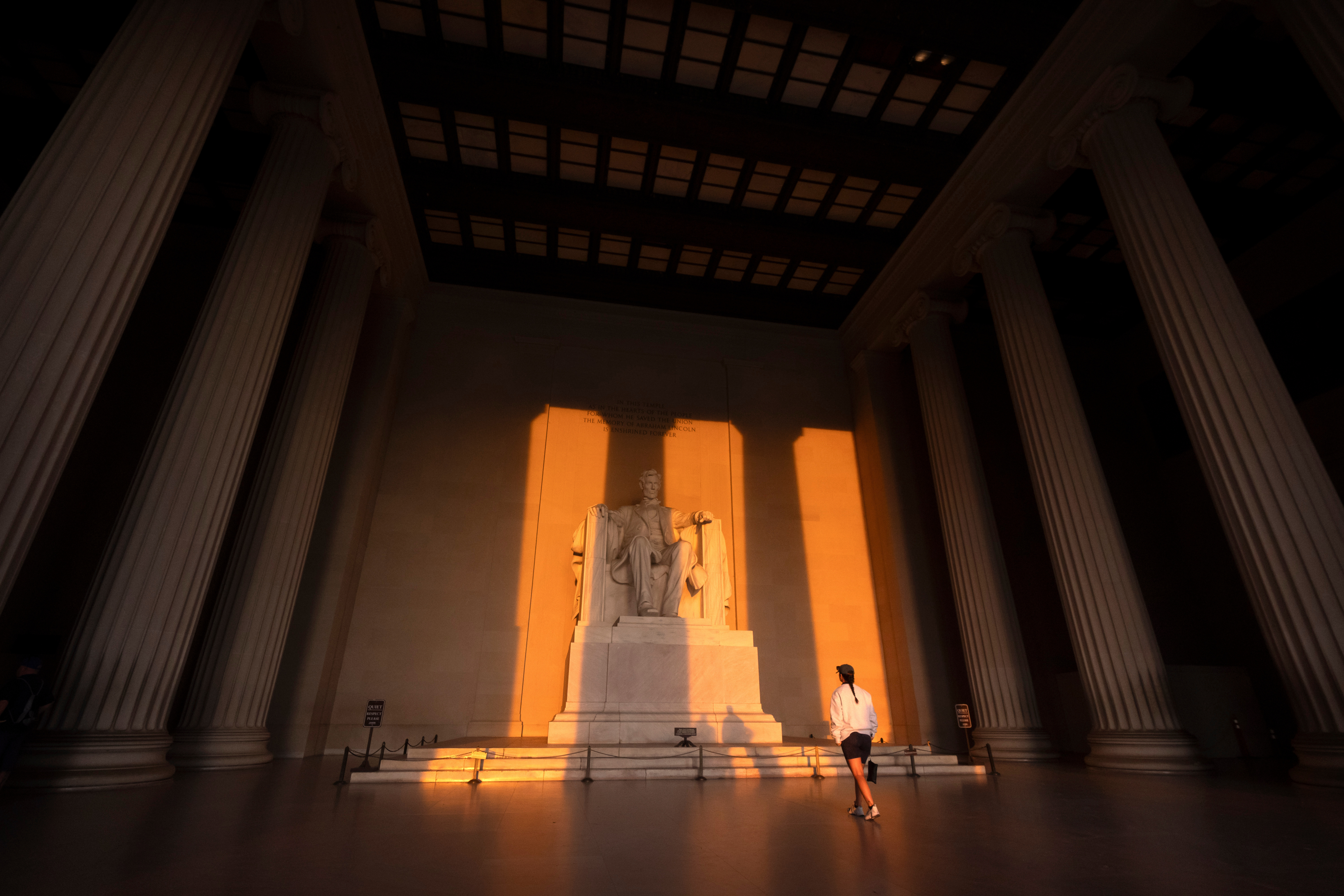
And both are now being loaned for public display in a new exhibit area under the Lincoln Memorial, which is due to open June 25 to honor the nation’s 250th birthday.
The Washington Post was given an up-close look at the historic documents in a private storage facility, before they were to be sent to the memorial.
The copy of the 1863 proclamation, which freed enslaved people in the rebellious states, also bears the faded signatures of Secretary of State William H. Seward and Lincoln’s private secretary, John Nicolay. The 1865 copy of the 13th Amendment, which outlawed slavery in the United States, is handwritten on lined parchment.
The National Park Foundation said that the documents are being loaned by hedge fund billionaire, collector, and philanthropist Kenneth C. Griffin, who bought them last year at auction for a reported $18 million. (The originals are in the National Archives.)
The foundation, the nonprofit fundraising partner of the National Park Service, said the artifacts will be on loan through June 2027. The documents will be part of a new, state-of-the-art exhibit space in the rarely seen area beneath the Lincoln Memorial called the undercroft.
The 15,000-square-foot space will allow visitors to see through floor-to-ceiling glass the massive concrete foundations that support the memorial — and view part of 50,000-square-foot undercroft itself.
“Everyone who’s been there just raves about it,” said Jeff Reinbold, president and CEO of the foundation. “We’ve talked about this for so long and now can actually see that vision come to life.”
“It will be one of the hottest tickets in D.C.,” he said. “Talk about powerful. You have a chance to see these documents under the memorial for the president who signed them.”
Griffin said in a statement: “The Emancipation Proclamation and the 13th Amendment marked a profound step forward, abolishing the scourge of slavery and moving the country closer to its founding ideals.”
The foundation said the copy of the Emancipation Proclamation is one of 27 known remaining copies from the limited number printed for a large patriotic fundraising fair in Philadelphia in 1864. The proclamation, issued on Jan. 1, 1863, in the midst of the Civil War, freed enslaved people in the states or parts of states still in rebellion, and allowed Black men to join the Army and Navy, according to the National Archives.
The copy that will be on display at the Lincoln Memorial was one of 48 signed by Lincoln to raise money for hospitals, injured Union soldiers, and the families of soldiers killed in the war, said Selby Kiffer, international senior specialist for books and manuscripts at Sotheby’s, where the documents were sold.
Each copy was sold for $10 — roughly $200 today. They did not sell out.
The 13th Amendment, ratified by the states in 1865, ended slavery in the United States.
The rare copy of the amendment on loan to the memorial dates to 1865, and is one of only 15 known copies like it.
In addition to Lincoln’s signature, it has those of other notable political figures of the era — Sen. Charles Sumner, Rep. Thaddeus Stevens, and Vice President Hannibal Hamlin, among others.
“It was such a big moment that many legislators wanted to sort of capture it for themselves,” Kiffer said in a video interview.
So various members of Congress hired clerks to write out special copies of the amendment.
Then, “a little bit like a high school yearbook, you would take it around and get everyone who had worked on this monumental piece of legislation and amendment to the Constitution to sign it,” Kiffer said.
“They were really mementos,” he said. “They were all individual, unique creations.”
The Griffin copy “is one of the most complete, with the signatures of the senators and congressmen who voted in favor of the amendment,” he said. (Not all members of Congress voted for the amendment.)
It is signed by 37 senators and 114 members of the House. They were among the legislators who voted to send the amendment to the states for ratification, he said.
The exhibit area where the documents will be displayed will also tell the story of how the Lincoln Memorial was built and examine its role in American history and civil rights, the foundation said.
The project includes new restrooms, a larger bookstore, and new elevators, the Park Service said. It will also feature an immersive theater presentation that projects images of historic events onto the memorial foundations.
The undertaking is believed to be the most extensive of its kind at the memorial since it was dedicated in 1922, the Park Service said.
The undercroft, essentially the memorial’s basement, is the huge area beneath the 38,000-ton structure, which sits on a platform supported by 122 concrete pillars. The undercroft is so large that the entire memorial, flipped upside down, would fit in it, officials have said.
The project opening the area to visitors has been in the works since 2016, when another billionaire, David Rubenstein, donated $18.5 million to the effort. But major work did not get underway until 2023, the National Park Service has said.
The memorial, which includes the 175-ton marble sculpture of Lincoln, was built on a spot called Kidwell Flats, a tract on the Potomac River that had been reclaimed with mud dredged from the river.
Ground was broken in 1914. The statue of the seated Lincoln was made from 28 blocks of Georgia marble carved by sculptor Daniel Chester French in the New York studio of the Piccirilli brothers, a team of renowned Italian stonecutters.
The blocks were then shipped to Washington and assembled inside the memorial in 1919.
The memorial was dedicated in 1922 in the presence of Lincoln’s son, Robert, then 78. About 50,000 people attended. African Americans, as was the cruel custom in then-segregated Washington, were shunted off to the rear.
On Easter Sunday in 1939, the African American opera star Marian Anderson elevated the significance of the memorial when she sang there after being barred from performing at whites-only Constitution Hall seven blocks away.
Twenty-four years after Anderson’s performance, the Rev. Martin Luther King Jr. gave his “I Have a Dream” speech there before 250,000 people.
And 50 years later, President Barack Obama, the country’s first Black president, spoke there on the anniversary of King’s speech.
BASTROP, Texas — Many of the tech bros who swing by Found Fine Art in Bastrop, Texas, are smitten with Schoolgirl Witchblade, a bronze statuette of a manga-style character with pigtails, a barely there bodice and a clawed hand ready for a supernatural brawl (price: $3,200).
The preference seems on-brand. These bros work for SpaceX, the reusable rocket and internet satellite megacorporation led by Elon Musk, who created a sexy, pigtailed, manga-style digital girlfriend for premium users of his Grok chatbot.
“They ask a lot about these,” said Alexandria Lagos, a gallery sales associate, pointing to Schoolgirl and similar works. “Though I haven’t seen anyone buy one.”
That could change. On June 12, SpaceX raised $75 billion in the largest initial public offering in history. The company employs 1,600 people near Bastrop, which means that a sizable chunk of the town’s 14,000 residents just got rich or at least richer. On Thursday, the gallery’s owner, Jamie Howard, wore a look of subdued delight, as if she were waiting for a piñata to get whacked and the candy to drop on the floor.
“I definitely have clients who plan to celebrate by investing in various things,” she said with a smile. “Once they cash out their shares, there is going to be some delightful fallout around here.”
The bounty has been five years in the making. Musk started buying land in Bastrop and Travis counties, near Austin, in 2021, using about a dozen different private companies to snap up more than 1,000 acres. His tunneling enterprise, the Boring Co., opened here first, and Starlink, part of SpaceX, opened an operational plant two years later. The companies — plus social platform X and a fledging residential community — form a compound on about 600 acres located 10 miles northwest of downtown Bastrop, known to locals as “Elon Land.”
Soon after the stock market closed on June 12, Elon Land was briefly a scene of pure jubilation. Ten SpaceX employees, dressed in jeans and black T-shirts with YOLO printed on them in large letters, gathered to celebrate at the Boring Bodega, a warehouse-sized convenience store, bar, and hair salon next to the Boring Co. and across the street from SpaceX.
They were bubbling about their windfall. A woman announced she was ready to buy a Jeep she’d been eyeing for years. A man discussed plans to borrow against the money he now had in shares that would be locked up for a period.
The party moved outside to a grassy lawn, where everyone grabbed bottles of sparkling wine, shook them up, and doused each other, hooting like they’d just won the Super Bowl. They would drive off and head to Austin for more toasts that night.
The revelers declined to talk to me, explaining that they were not allowed to speak to the media.
The scene would have been unfathomable six years ago, when the area’s most significant employers included a rendering plant for pet food and companies that dug up and sold dirt.
Not that Bastrop was a backwater, pre-Musk. Founded in 1832, when Texas was still part of Mexico, it has a charming downtown of late 1800s-era brick buildings, one of which is an opera house. Around the corner, there’s the Bastrop County Museum and Visitor Center, where you can hear a highly sanitized biography of the Baron de Bastrop, the man for whom the city is named. More than a few residents described him as a “bit of a con man.” He wasn’t a baron, for starters, and he fled the Netherlands after he was accused of embezzling tax funds.
Musk has said he was drawn to Texas because of its business-friendly approach to regulation. He built his SpaceX headquarters and main production and rocket-testing site, Starbase, as a newly incorporated corporate town near Brownsville on the U.S.-Mexico border. But Bastrop, just 30 miles southeast of Austin and not far from the city’s international airport, became a hub for orbital hardware manufacturing. The more Musk built, the more people poured in. Today, the “Population 7,000” sign on the way into town is badly in need of an update.
The center of gravity is the 1.1 million-square-foot SpaceX plant, which on a recent sweltering afternoon seemed to shimmer ominously in the heat. White and black, a few city blocks wide and tapered at both ends, it looks like an extraterrestrial vessel about to disgorge aliens whose intentions are unclear.
Few people have ever laid eyes on the Willy Wonka of this vast factory. Musk is a figure of legend, like a yeti. One woman said she had a friend who years ago spotted him in a local H-E-B, a Texas supermarket chain. Lagos, the gallery employee, used to work for X and said she once saw him at a distance.
His impact, by contrast, is palpable. Beyond the dense little downtown, Bastrop — it’s pronounced “bass-drop” — is rolling pine forests and rural farmland mixed with sprawling subdivisions. Judah Ross, a real estate agent, drove me around, pointing out new retail and restaurants, including chains such as Chuy’s and Texas Roadhouse, as well as homes that doubled in value “almost overnight” when Musk turned up. A few hit the $1 million mark for the first time. There was also a boom in a high-end development called the Colony, where sales of $600,000 homes are now pretty common. Del Webb, a developer of communities for people over 55, opened a location in Bastrop this year.
“A lot of, like, older couples moving out here,” Ross said. “Oftentimes their kids or grandkids are coming here to work for SpaceX, and so the parents want to follow along to be nearby.”
Much of this growth can be attributed to non-Musk factors, including low interest rates circa 2021 as well as COVID-19 and the rise of remote work. Bastrop had the advantage of proximity to the red-hot Austin market. Other Texas towns near major cities — Fulshear, for example, which is not far from Houston — have grown just as fast or faster.
What sets Bastrop apart is its demographic mix. As several women here approvingly noted, there are now a lot more single men in their 30s at area bars and restaurants. (Another woman said the city was desperately in need of interior designers.) Less happily, there’s traffic. Trips that once took 20 minutes now take 40 minutes if you dare to hit the road near rush hour.
For longtime Bastrop residents, the Musk Effect has been greeted with a combination of tentative appreciation and nothing-to-do-about-it shrugs. John Kirkland is a Bastrop City Council member and also mayor pro tem — the “back up mayor,” as he put it. Over lunch, he noted that the state of Texas provided few tools to constrain or block Musk. Elon Land is in Bastrop County but outside Bastrop’s city limits. An agreement about how to handle wastewater is the only deal that the city has with the entire Musk complex.
“None of us wants growth, but we can’t stop it,” Kirkland said. “As long as he isn’t breaking the law, he is allowed to build.”
At the Copper Shot Distillery, a handful of longtime Bastropians who regularly meet up on Thursday nights said they grasped the benefits of Musk’s corporate presence, but they had some complaints.
In 2024, the Boring Co. was fined a mere $11,876 for environmental violations in its Bastrop-area site. That hardly amounts to a tap on the shoulder, let alone a slap on the wrist, and locals were furious. Cheryl Green, one of the Thursday-night gatherers, wondered why the planet’s first trillionaire wouldn’t pony up a few bucks for something in the city.
“How about a YMCA?” she said, plaintively. “But I don’t think he’s known for that kind of thing.”
Musk has far grander construction in mind. Last week he announced plans for an 11 million-square-foot factory to build data centers that would operate in space. More quietly, an array of developers have been devising plans of their own. Joshua Bingaman, a real estate broker, said that last week he fielded a handful of calls from developers seeking parcels for sale near downtown. Ready or not, he predicted that Bastrop would eventually get a men’s fashion boutique, a spot for coffee connoisseurs, and a high-end cocktail bar. And that’s just the beginning.
“I don’t think people here have any idea of what’s coming,” Bingaman said. “There’s going to be a tidal wave.”
On my second visit with Nancy Wexler at her Manhattan apartment, she had a gift for me. It was a copy of her newly published memoir, My Life, My Science: Pursuing a Cure for Huntington’s Disease.
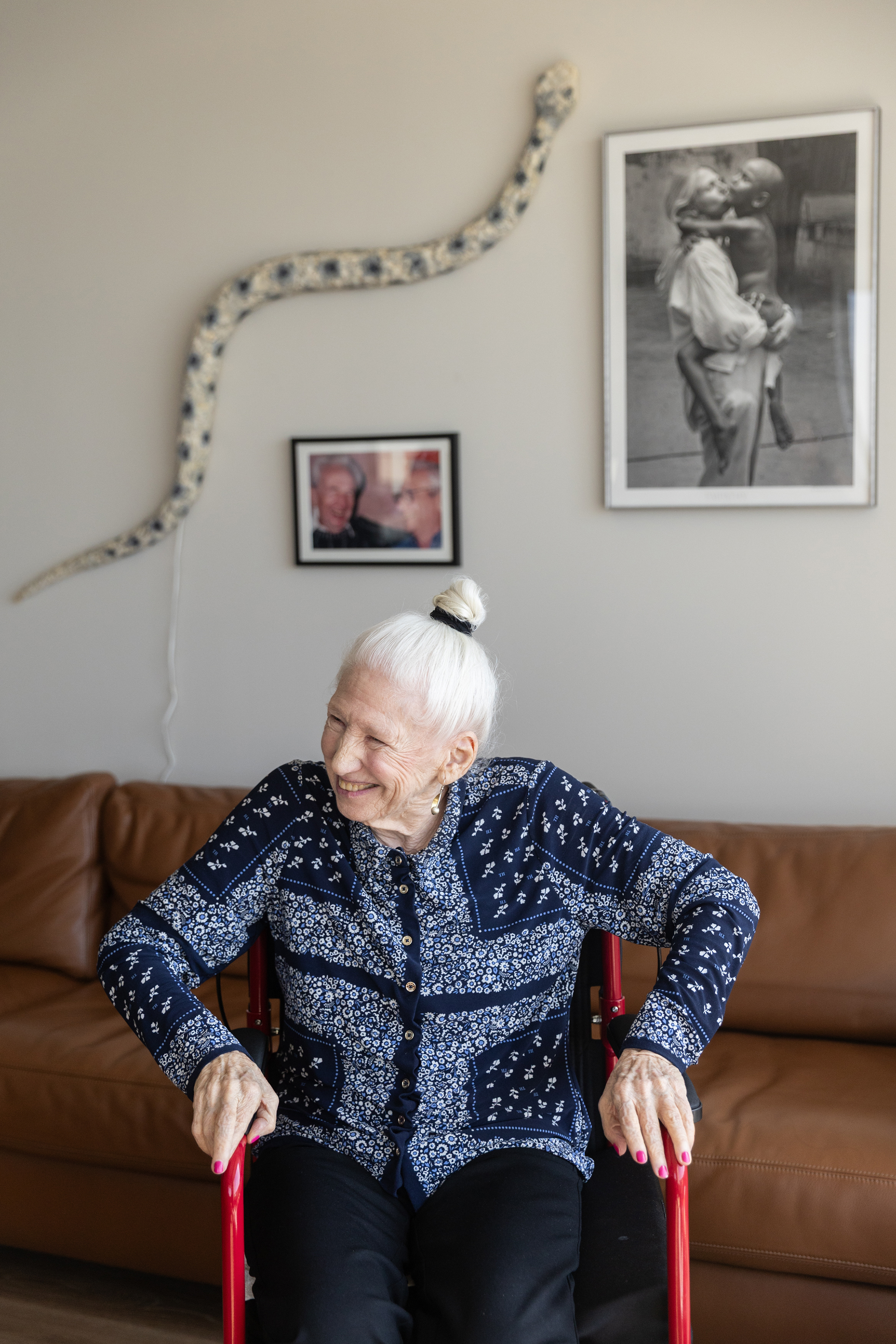
It had been signed with a stamp of her signature — she isn’t able to sign it herself. Nor could she rise from her brown faux-leather recliner to greet me — she can’t get up unassisted. Speaking requires effort. She can manage at most a few badly slurred words or phrases or, with great difficulty, a short sentence.
On that bright windy afternoon, Nancy and her sister, Alice Wexler, sat side by side in recliners, their backs to windows that offered a stunning view of the Hudson River far below. Alice lives in California, but she visits Nancy every other month.
At age 80, Nancy Wexler has Huntington’s disease, a dreaded brain disease that destroys a person’s ability to control movements. There is no treatment. There is no cure.
The disease is inherited: Nancy’s grandfather, three uncles, and mother had it. Alice, however, does not: If a parent has Huntington’s, each child has a 50% chance of getting it. Their mother attempted suicide, a path that others with the disease have chosen, but ultimately died from Huntington’s.
Nancy is not just any Huntington’s disease patient. For decades, she led a research effort in a remote area of Venezuela that found the gene responsible for Huntington’s. That work yielded a blood test that enable at-risk people to find out if they are destined to get the disease. In honor of this work, Nancy has garnered numerous accolades and prizes, including a Lasker award, among the most prestigious in science. She devoted her life to understanding what it’s like to be at risk for Huntington’s disease, what it’s like to have it.
What she did not know, though, was that she would get it herself. After helping lead the crucial research that allowed those at risk to find out if they would contract this terrible disease, Nancy chose not to be tested.
Now that the disease has progressed long past the point where she can keep contributing to the fight against Huntington’s, it is natural to wonder: How would her life and research have been different had she made the other choice? If your fate is sealed, is it better or worse to know?
Nancy Wexler can no longer sign her own name or get up unassisted.Jackie Molloy
Huntington’s disease was first described in a paper published in 1872 by an American doctor, George Huntington. It affects an estimated 41,000 people in the United States. Symptoms start slowly, with clumsiness or a stumbling walk; patients are often thought to be drunk as they stagger down a street. As years go by, patients become plagued by constant involuntary movements.
Huntington described the misery in unsparing detail: “If the patient attempt to protrude the tongue it is accomplished with a great deal of difficulty and uncertainty,” he wrote. “The hands are kept rolling — first the palms upward, and then the backs. The shoulders are shrugged, and the feet and legs kept in perpetual motion; the toes are turned in, and then everted; one foot is thrown across the other, and then suddenly withdrawn, and, in short, every conceivable attitude and expression is assumed, and so varied and irregular are the motions gone through with, that a complete description of them would be impossible.”
Patients and family members, Huntington added, spoke of the disease “with a kind of horror.”
Nancy’s acquaintance with that horror began in 1968. After graduating from Radcliffe College, she was in Europe on Fulbright fellowship when she was called home to learn her mother had the disease.
She had grown up in luxury in Pacific Palisades, Calif. — her father, Milton Wexler, was a psychoanalyst to Hollywood stars. Her mother, Leonore, had a master’s degree in zoology from Columbia University and a teaching certificate, but did not work. She did, however, have a secret that she kept from her children and even from her husband: Leonore’s father had Huntington’s disease.
Leonore didn’t mention it even when her three brothers — Nancy’s uncles — started exhibiting the telltale signs: clumsiness, a stumbling walk, sudden jerky movements.
Nancy Wexler’s memoir, “My Life, My Science” on a table in her apartment.Jackie Molloy
When his wife’s slide into the disease could no longer be denied, Milton called both sisters home and sat them down in his bedroom. The 50-50 chance now hung over both of them, too. He gave them some advice they never forgot: Don’t waste your life.
Alice decided to ignore Huntington’s and her own risk. “I didn’t want to have anything to do with it,” she told me. She became a historian.
Nancy had a different reaction. She would make Huntington’s the focus of her life, getting a Ph.D. in clinical psychology from the University of Michigan. Her thesis subject: the experiences of people with Huntington’s, and of those at risk for getting it. She thought of that choice as a way of coping with her situation. She wrote that it was a version of something the American Psychiatric Association called implosion theory — “a technique used in behavior therapy where the client is flooded with experiences believed to be relevant to the client’s fear.”
“I could talk about Huntington’s without seeming selfish and whiny,” she explained. “I could talk about how people felt in the context of helping them.”
Nancy’s father started a chapter of the Committee to Combat Huntington’s Disease, or CCHD, which later became the Huntington’s Disease Foundation. Its express goal was to find the Huntington’s disease gene and search for a cure. Nancy started a chapter in Michigan and also worked with her father in California.
Her first job, at age 29, was at the New School for Social Research in New York where she continued her studies of Huntington’s sufferers and those at risk. But she never told her academic colleagues about her own risk. Her work, she later wrote, “taught me how a genetic condition such as HD can shape the ways people see and react to you.”
She added: “I also learned the high emotional costs of keeping it hidden.”
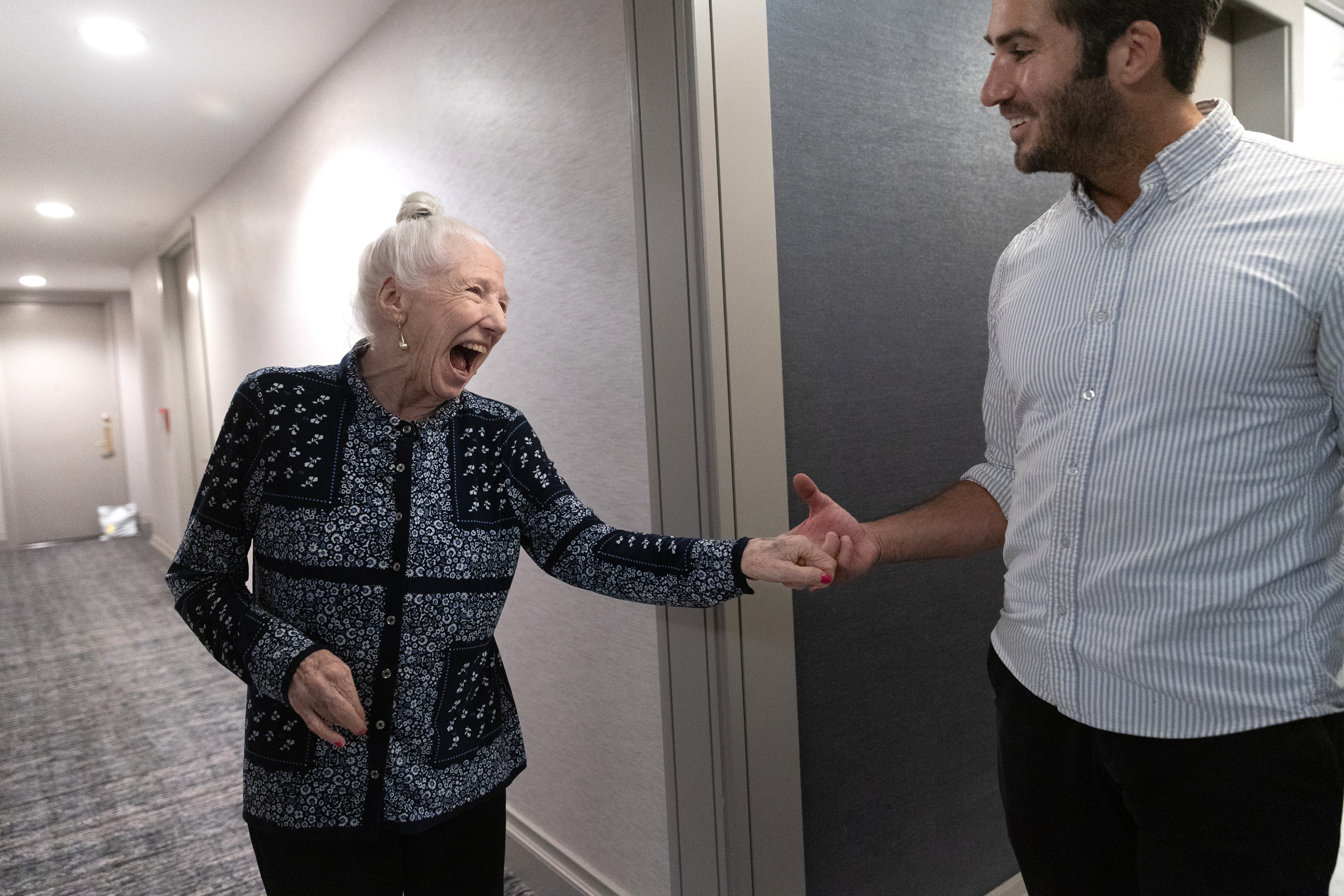
Nancy Wexler works with her physical therapist, Sean Conroy, who visits three times a week.Jackie Molloy
On frequent trips to California, Nancy was also helping her father lead the Huntington Disease Foundation. The group’s gatherings couldn’t be further from the staid scientific meetings that are the main staple of academic life. There were no traditional talks, no slides. Instead, Nancy and her father invited creative scientists — who may or may not have ever thought about Huntington’s before — to brainstorm about ways to find the gene, scrawling their ideas on a whiteboard. The meetings always included a Huntington’s patient, or the family member of a patient, so the scientists could understand what was a stake.
Back in New York, as part of her social science work, Nancy held hearings with Huntington’s disease families and people who worked with them, including social workers, neurologists, insurance representatives, police, teachers, nurses and other public officials.
What she heard was all too familiar. She had, she wrote, experienced almost everything the families had told her: “the stigma and silence surrounding Huntington’s; the ignorance of most doctors about the disease, including about the hereditary pattern; the denial on the part of family members who knew about the disease but refused to discuss it; the fear and anxiety suffered by those at risk waiting for years to see if symptoms would emerge; the anxiety that should a predictive test be developed, it could reveal future onset but do nothing to forestall or prevent it; the divisions within families over how to respond to the illness; the sense of belonging to a tainted lineage; the shame and embarrassment about relatives with the symptoms; the tremendous financial burden of care; and the sense that there was nowhere to go for help.”
As part of her research, Nancy asked people who had Huntington’s in their families whether they would have a test for the gene if one were developed. Two-thirds said yes.
Nancy thought she’d want to be tested too.
Nancy Wexler’s walker has visual laser cues, multiple wheels, and weights to keep steady. Jackie Molloy
The search for the gene began in earnest in 1980, focusing on three communities around Lake Maracaibo, Venezuela, that had the greatest prevalence of Huntington’s disease in the world. The researchers traced the disease there to one woman, Maria Conception, who lived in the area early in the 19th century. Maria apparently had Huntington’s disease, and passed it on to generations of descendants who called it El Mal.
Huntington’s was so feared that the residents of those communities had been isolated and ostracized. They ended up intermarrying, increasing the likelihood that the gene would be passed on.
Nancy led the research team, returning to Venezuela regularly for 22 years and collecting more than 4,000 blood samples from Venezuelans. She cared deeply for them, and even helped establish a nursing home for Huntington’s patients.
Three years after the gene search in Venezuela began, that question — would you want to be tested? — was no longer hypothetical. The researchers found a marker, like a flag on DNA, that was present only when someone had the Huntington’s gene. It wasn’t the actual gene — that would come later — but it could be used to tell people if they had the gene.
The decision to be tested, though, turned out to be a more difficult one than it might seem. Is it better to know you are doomed, or to hope you are not?
In Nancy’s doctoral thesis, she had cautioned that when a test became available, many who thought they’d want it would change their minds. She hadn’t realized that she would be one of them.
Huntington’s is one of just a handful of diseases — others include early onset Alzheimer’s, as well as some prion diseases — in which a positive genetic test takes away all hope of escaping your fate. With other genetic diseases, a test can only signal a likelihood, not a certainty, that a person will get the disease. In both cases, people often opt not to be tested. In colon cancer, for example, a recent national study found that only 3.7% of those with a mutation that increases risk actually had the genetic test.
The phenomenon of avoidance is so common that IVF clinics offer a special test to couples at risk for a hereditary disease: examining each embryo for the disease gene and implanting only those that don’t have it, without informing the prospective parents about the result.
In her book, Nancy explains that she had been too cavalier about the idea of testing before there was actually a test.
“I realized I hadn’t thought through all the ramifications, both psychological and social, of what a positive test might mean in my life,” Nancy wrote, adding: “I wasn’t sure I could live with the foreknowledge that one day the dreaded symptoms would emerge. I preferred to meet the devil when he was on my doorstep.”
Alice had a similar reason for declining the test. “How would I live with a positive test result?” she asked herself. “I thought the idea of ambiguity, uncertainty, was kind of appealing. I thought I could live with that.”
And, she told me, “once you have that knowledge you can’t take it back.”
In 1996, after Nancy’s research effort helped find the gene, Alice began noticing little abnormal movements in her sister.
Nancy was just 51, two years younger than her mother had been when a police officer saw her weaving as she walked down a street and accused her of being drunk.
But Nancy denied anything was wrong. She had an active life; she felt fine. She met her partner, Herbert Pardes, a psychiatrist and executive vice-chair of New York-Presbyterian Hospital, late but had a happy relationship. (He died in 2024.)
Yet friends and colleagues started asking Nancy if she had Huntington’s, watching her closely. She was furious and upset. How dare they try to diagnose her? They weren’t her doctors.
Nonetheless, Nancy was startled to see herself in videos making sudden jerky movements. She hadn’t realized she was doing that.
She worried about impulsive behavior — telling Alice that she couldn’t seem to stop buying things she couldn’t afford. (Impulsivity is a hallmark of Huntington’s.)
By 2015 she had lost a lot of weight, as is typical in Huntington’s, because of the constant involuntary movement. And she was unsteady when she walked.
Finally, in 2019, there was a clinical trial of an experimental Huntington’s drug. Nancy wanted to participate — but she would have to have a Huntington’s diagnosis to do so.
She asked a neurologist, Linda Lewis, to tell her the truth. Did she have Huntington’s?
“Yes, Nancy, you do,” Lewis said.
She was too old for the trial, but the researchers were willing to make an exception for her. Before she could start taking the drug, the trial was halted: It was making people worse.
There remains no treatment for Huntington’s disease.
Nancy Wexler has a video chat with her sister, Alice, who does not have Huntington’s.Jackie Molloy
Now, in retrospect,I asked Nancy and Alice, would it have been better to have had had the test?
The answer, for each, is a resounding no. Neither lives a life of regret.
As Alice sees it, testing does not resolve the big questions. “While the test was marketed as a choice between certainty and uncertainty, for me it always seemed more a choice between one form of uncertainty — will I get Huntington’s? And another — when will I get Huntington’s?” she said.
After all that uncertainty, Alice escaped the family disease. I asked whether she felt survivor’s guilt. “More than guilt, I feel the injustice of it,” she replied. “How unfair it is that she has Huntington’s and I don’t. Just cruel arbitrary luck of the draw.”
The only reason she might have wanted to be tested, Alice said, was so that, if she did not have the gene, she could have biological children. She had not wanted to take a chance on passing the gene on to another generation. But she was in her mid-40s when a test was available — too late for her.
Nancy’s answer was briefer, but succinct: “The predictive test would not have helped. It would have been too threatening,” she said, struggling to get the words out.
Nancy, too, longed for children. She tried the in vitro fertilization method that allowed her to avoid knowing if any embryos were affected. But she did not succeed in having a baby.
Now, being cared for by full-time assistants, confined to her apartment, unable to feed or bathe herself, robbed of her charismatic personality by her struggles to speak, I asked what life is like for her.
A cruise ship passenger who was exposed to hantavirus in early May is still being held at a quarantine facility in Nebraska, against her wishes and against the recommendation of a medical review from the Centers for Disease Control and Prevention.
On Monday, Health Secretary Robert F. Kennedy Jr., a staunch proponent of medical freedom, signed an order to continue quarantining Angela Perryman, 47, even though others who had been held at the facility have, since May 31, been allowed to return to their homes if they wished to do so.
In a telephone interview with the New York Times, Perryman, who has tested negative for the virus and says she has not had any symptoms, expressed anger and frustration. She said she learned of Kennedy’s decision when a copy of his order was slipped under the door to her room.
After a hearing to dispute her quarantine order, Michael Bell, the CDC’s quarantine medical reviewer, recommended Thursday that Perryman be allowed to return home for the remainder of her 42-day quarantine, with remote symptom monitoring once daily and access to 24-hour help “in the event she develops symptoms.”
“In my professional judgment, this less restrictive alternative is adequate to protect public health,” Bell wrote in the review.
“This is the final proof that there is no check and balance on a basically indefinite detention under the public health law,” Perryman said.
The Department of Health and Human Services declined to comment.
Perryman is one of 18 passengers who were on a cruise ship that became the center of a hantavirus outbreak that killed three people, sickened several others, and unnerved people around the world. They were flown back to the United States on May 11 and quarantined at the National Quarantine Unit in Omaha, Neb.
The passengers were initially set to return to their own states, but were then ordered to remain in Omaha at least until May 31. Perryman publicly challenged the order.
“I think this is obvious malice and retaliation,” she said Monday.
Some passengers were allowed to quarantine at home until June 22, or 42 days, provided local health officials committed to having a law enforcement or community health worker monitor them. Perryman is one of 10 passengers still in Omaha, she said, but the only one being held against her will.
Perryman lives in Florida part of the time and wished to quarantine there. But Florida refused to comply with the administration’s requirements, according to Steven Hyman, Perryman’s lawyer.
But now, the order by Kennedy to keep Perryman in Omaha “flies in the face of the findings of the medical reviewer,” Hyman said.
At the Omaha facility, officials take Perryman’s temperature twice a day and provide her with food on request. She can also request access to a rooftop for about an hour each day, under the watch of armed guards.
“They’re polite and they’re not using physical violence against me, but otherwise it’s a prison,” she said.
Federal agents have questioned friends and associates of Gov. Gavin Newsom of California and his wife, Newsom said Monday in a video in which he accused President Donald Trump of using the Justice Department to punish a political enemy.
The full scope of any investigation remains unclear. But Newsom’s aides say part of the federal investigation appears to focus on his wife, Jennifer Siebel Newsom. Former employees of the governor and people affiliated with his wife’s nonprofit groups are among those who have been questioned by agents, according to the governor’s office.
A person familiar with the matter confirmed that multiple federal investigations were underway related to the governor, including one looking at his wife’s finances. But the person disputed Newsom’s assertion that the investigations were politically motivated and said they had been initiated by federal law enforcement officials in California, not launched by officials in Washington. The person spoke on condition of anonymity because they were not authorized to discuss it publicly.
Newsom, a Democrat, described the investigation as a fishing expedition in which federal agents had started sifting through “years and years of random documents” and knocking on the doors of family friends and associates of the Newsoms to try to find evidence of an unspecified crime.
“Donald Trump isn’t just coming after me because of my mean tweets,” Newsom said in the video. “He’s coming after me because I am considering running for president.” He added, “To get me, he’s coming after my wife.”
Several people associated with the Newsoms have been contacted by federal agents in the past week, according to the governor’s office. Newsom’s aides believe the agents have also subpoenaed banking records but said they had seen no written evidence of that.
An FBI spokesperson and a Justice Department spokesperson declined to comment. A White House official referred all questions to the Justice Department.
Siebel Newsom, who calls herself California’s first partner, is a documentary filmmaker whose work focuses on the social impacts of sexism. She founded a nonprofit organization called the Representation Project that advocates for gender equity, in part by developing educational materials based on her documentaries.
Siebel Newsom also owns a film-production company called Girls Club Entertainment. It is listed as a contractor of the Representation Project on the nonprofit’s tax returns. Tax records show that the Representation Project makes annual payments to Girls Club Entertainment. In 2024, the nonprofit paid Girls Club Entertainment $161,250 for film production work.
Siebel Newsom is also a co-founder of the California Partners Project, a nonprofit that works to get more women onto corporate boards, address the gender pay gap, and make technology safer for children. Some of the donors that support the California Partners Project are groups with business before the state government.
For years, critics have raised the possibility of self-dealing, but no public evidence of wrongdoing by any of the entities tied to Siebel Newsom has surfaced, and it remains unclear what precise issues and actions investigators have been asking questions about.
Newsom has reported soliciting $4.3 million in donations to the California Partners Project since 2020, according to disclosures filed with the state’s ethics agency. That includes $1.8 million from a Native American tribe that has an agreement with the state to operate a casino in Sonoma County. In California, public officials must disclose donations to charities that are made at the official’s request.
Another nonprofit group with ties to Newsom is called the California Protocol Foundation. Its board includes some of Newsom’s top advisers during his time as governor and previously as the mayor of San Francisco. The foundation pays for initiatives that the governor says he does not want state taxpayers to cover, including his travel overseas for conferences and other meetings.
Newsom’s office said the investigation is a fresh attempt to smear him after the federal prosecution of his former chief of staff revealed no misconduct by the governor. The former chief of staff, Dana Williamson, pleaded guilty last month to three felonies in a corruption case.
One of the crimes Williamson pleaded guilty to was lying to the FBI about information she had access to while working in Newsom’s office. In her plea agreement, Williamson said she gave her former business partner confidential information about state litigation that involved one of their clients and then lied about it when questioned by the FBI.
The agreement does not name the client, but details in the indictment align with a sex-discrimination lawsuit that California regulators filed in 2021 against video game maker Activision Blizzard. The company had been a client of Williamson’s consulting business before she joined Newsom’s office. In 2022, Newsom fired the state lawyer leading the suit against Activision, prompting complaints that he was interfering.
When Williamson was indicted last year, her attorney said that federal agents first approached her during the Biden administration. She was working for Newsom at the time, and the agents asked her if she would cooperate in an investigation of the governor. She replied that she had no information to give them because she had never witnessed any criminal conduct by Newsom.
Earlier this year, Newsom’s office responded to questions from Trump’s Justice Department about his 2022 termination of the lawyer involved in the Activision lawsuit, according to a spokesperson for Newsom. Then the communication from federal officials ceased, the spokesperson said.
The latest inquiries into associates of Newsom and Siebel Newsom began around the time Trump said that he planned to nominate Todd Blanche as attorney general, according to the governor’s office.
Blanche had previously defended Trump in three of the four criminal cases he was facing.
Nominated to be the No. 2 official at the Justice Department at the beginning of Trump’s second term, Blanche — now the acting attorney general — has pursued prosecutions of Trump’s perceived enemies. He also signed an agreement granting the president and his companies immunity from audits of past tax returns to settle a $10 billion lawsuit the president brought against his own government earlier this year.
Newsom has been highly critical of Blanche’s nomination to the top Justice Department position, recently calling Blanche “the guy covering up the Epstein Files” and saying he “gave Trump and his family a lifetime pass to commit tax crimes.”
(END OPTIONAL TRIM.)
Newsom, in his video address, mentioned that Trump had called for his arrest last year, and he said he was proud to join the “hit list” of people standing up to the president. He accused Trump of “selling the presidency” for golf course approvals, cryptocurrencies and a private jet, and pledged to continue calling out what he saw as corruption from the White House.
“You can subpoena my records. You can investigate me. You can harass me,” Newsom said. “Put my name on every and any enemies list you have, but leave my wife and family out of your personal vendetta.”