Category: Wires

  • In defiant speech, Pezeshkian calls out Trump and says Iran will fight ‘until our last breath’

    In defiant speech, Pezeshkian calls out Trump and says Iran will fight ‘until our last breath’

    UNITED NATIONS — Iran’s president said Wednesday that his people have been “victims of terrorism” by the United States, delivering a rare wartime speech at the U.N. General Assembly a day after President Donald Trump said he may “annihilate” the Islamic Republic if a deal isn’t reached soon to end the nearly seven-month war.

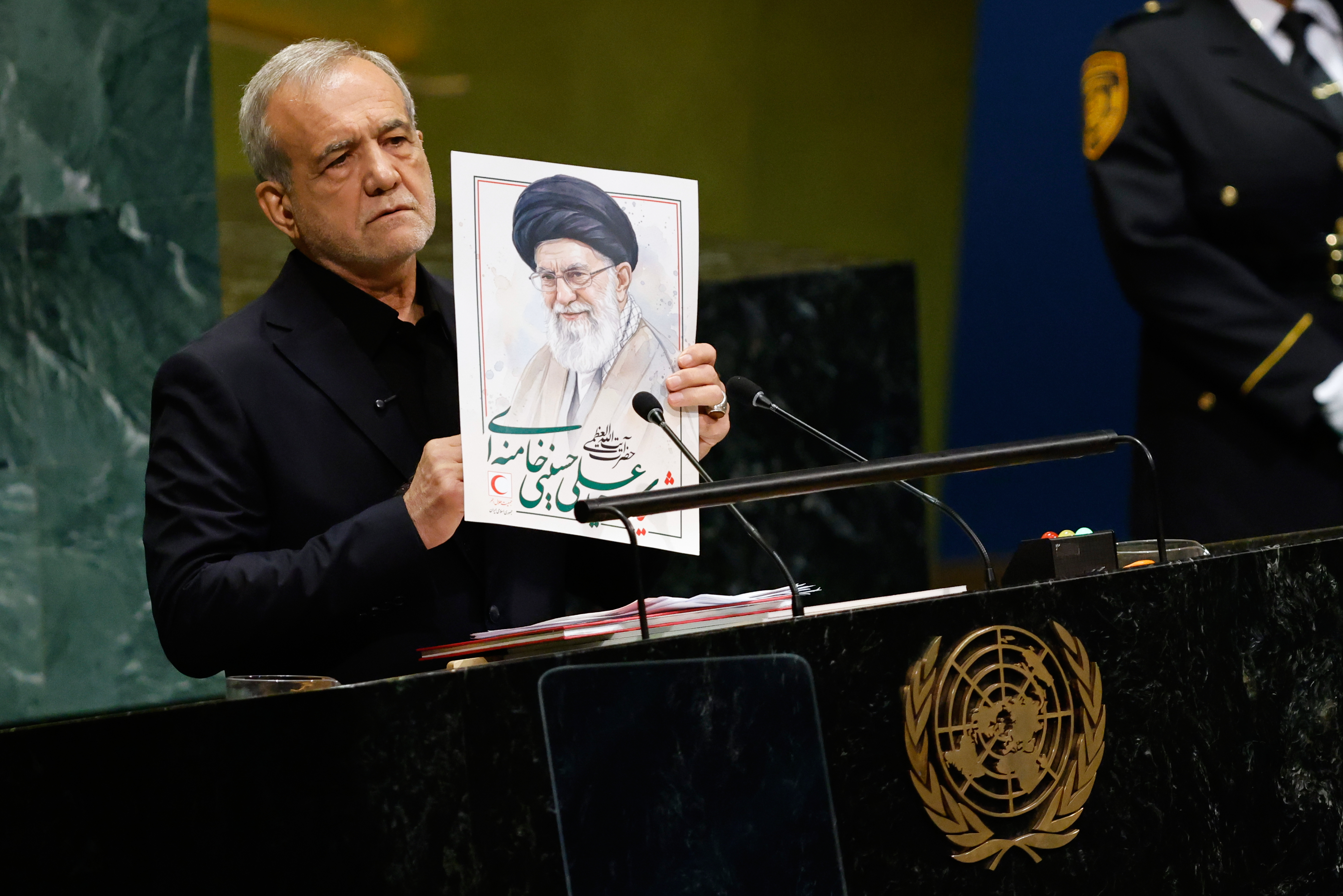
    The defiant speech by President Masoud Pezeshkian marked a striking instance of a foreign leader addressing the world body while their country is at war with the host nation. While defending his country, Pezeshkian held up large photos of the late Supreme Leader Ali Khamenei and the more than 150 Iranian schoolchildren killed in the first days of the war.

    “We have only defended ourselves. We are not terrorists,” Pezeshkian said at the General Assembly. “Our innocent people have been the targets of cowardly attacks and aggressions imposed upon our country. And we defended ourselves with utmost strength. America and Israel attacked us.”

    He added of the United States: “Yes they did hit us, but we did not bend the knee.” Toward the end of his speech, Pezeshkian called out Trump by name.

    “It must be understood by Mr. Trump and those who seek to bully us that we are ready for dialogue and diplomacy and negotiations without accepting the language of force,” he said.

    Shortly after, both U.S. and Israeli officials blasted the speech, saying that it was hypocritical for the Islamic Republic to present itself as the victims of the world.

    U.S. Secretary of State Marco Rubio told reporters: “I don’t know what standing Iran has to lecture anyone on human rights or the international system when they habitually violate it.”

    A busy 24 hours for U.S.-Iran relations

    Arriving in New York under heavy security and scrutiny, Pezeshkian — who, within Iran’s political landscape, is considered a moderate politician — addressed world leaders a day after Trump used the same stage to mull whether to massively escalate a war that has already spiraled out of control.

    “I have a big decision to make,” Trump said in his wide-ranging address Tuesday. “Will a deal be made with Iran that lets them rebuild and create a far greater country than it ever was before, maybe one of the greatest in the Middle East or even the world. Or do I annihilate the Islamic Republic and do it quickly, never giving them a chance to kill and destroy people and countries again?”

    Hours after those stunning threats, Trump told reporters that his chief envoys, Steve Witkoff and Jared Kushner, met for about three hours with the Iranian officials on the sidelines of the annual gathering. But he offered few details about how the discussions transpired or the substance of the exchange.

    “It was a very good meeting,” Trump said. The president later added that the Iranian officials were “not the highest level, but it’s something.” Also on Tuesday, Rubio said Trump is open to meeting with Pezeshkian while he’s in New York.

    But Tehran downplayed Tuesday’s unscheduled exchange, which were the first indirect talks between U.S. and Iranian officials since a June ceasefire unraveled. Esmail Baghaei, an Iranian Foreign Ministry spokesperson, maintained the country’s negotiating position in talks with U.S. officials, demanding that Washington end its blockade of Iranian ports and release frozen Iranian assets.

    Baghaei said the talks — conducted indirectly through Qatari mediators — were “not anything new.”

    Rubio echoed that sentiment Wednesday, saying that “it was a continuation of conversations that have occurred in the past.”

    “If there’s an opportunity to exchange ideas and messages, we will. And that’s what largely yesterday was — it was positive in that regard,” he said. “But ultimately, I don’t want to mischaracterize this as a major breakthrough.”

    More than a year of negotiations have taken place

    Pezeshkian’s address elaborated on where Tehran stands as more than a year of start-stop negotiations between the two longtime adversaries have failed to produce a sustainable solution. His speech came as intermittent attacks continued in the Strait of Hormuz off Iran’s coast, where commercial shipping remained below prewar levels.

    His address last year came months after the 12-day Israel-Iran war that saw the assassination of many of the Islamic Republic’s highest military and political leaders and once again broke down weeks of negotiations with the United States.

    “Ladies and gentlemen, you all bore witness that this past June, my country was subjected to a savage aggression and flagrant contravention of the most elementary principles of international law,” Pezeshkian said at the time.

  • Harvey Weinstein is sentenced to 15 years in prison for 2006 sex crime in New York

    Harvey Weinstein is sentenced to 15 years in prison for 2006 sex crime in New York

    NEW YORK — Harvey Weinstein, the disgraced movie mogul, was sentenced in Manhattan to 15 years in prison Wednesday for a felony sex crime in another #MeToo reckoning.

    Weinstein’s sentencing for sexually assaulting one-time TV production assistant Miriam Haley followed a legal odyssey spanning more than six years. His 2020 conviction was overturned by New York’s highest court. A second jury found Weinstein guilty again at a retrial last year.

    Once among the most powerful figures in the entertainment industry, Weinstein was an Oscar-winning producer whose hits included Shakespeare in Love, Pulp Fiction and Chocolat. But his downfall came quickly after sexual assault allegations in 2017 set off the #MeToo movement.

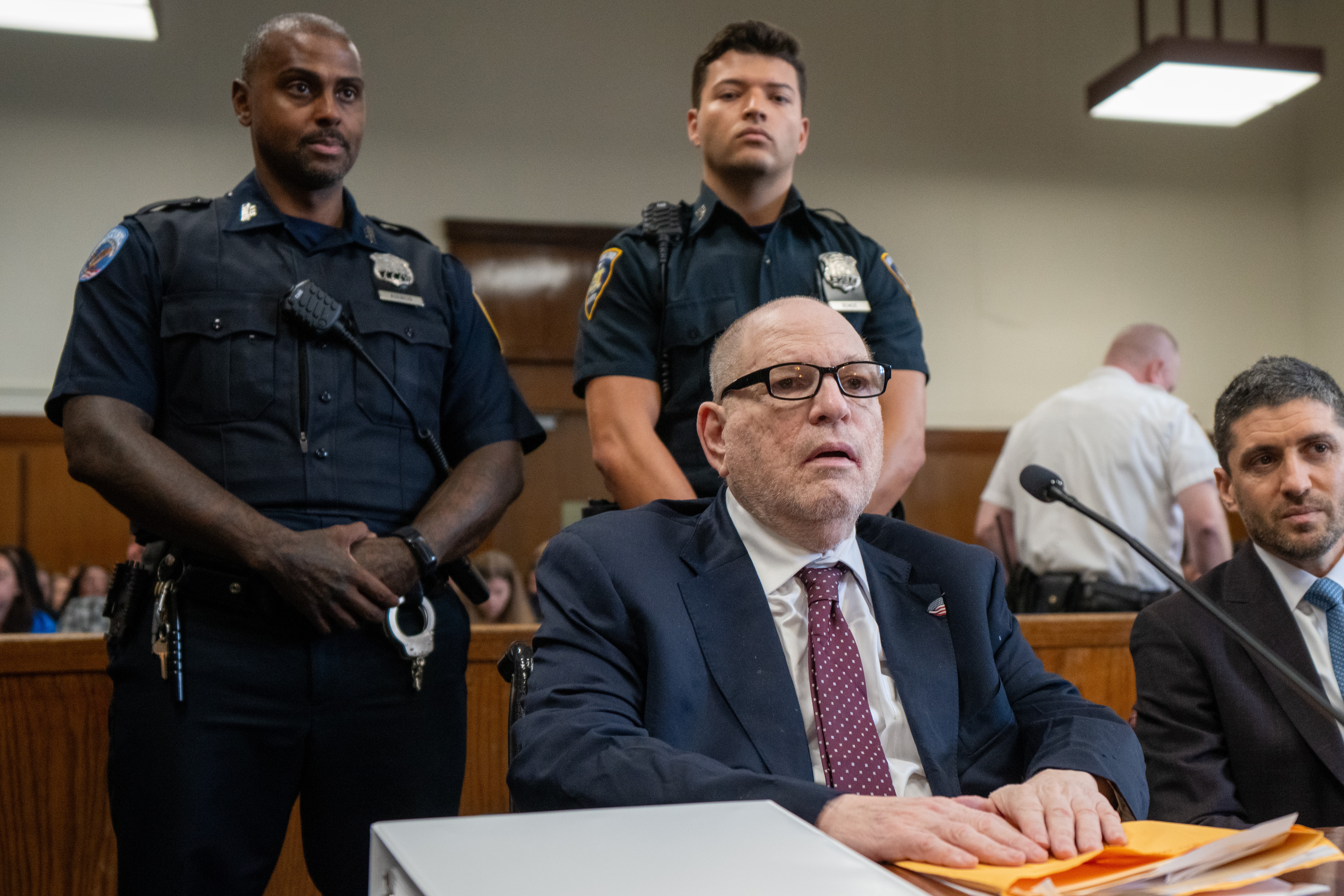
    Weinstein, 74, is expected to appeal and maintains that he never raped or sexually assaulted anyone. He is now likely to remain behind bars well into his 80s. Seated in a wheelchair, he was quickly moved out of the courtroom after the sentencing, while some of his accusers hugged and brushed away tears.

    Weinstein and his victim both spoke in court

    Weinstein faced up to 25 years in prison for sexually assaulting Haley at his Manhattan apartment in 2006. He has already served more than six years as his case cycled through the criminal justice system. Haley gave her account of the assault at two trials, and again addressed the court Wednesday.

    “Having been sexually assaulted by Harvey Weinstein has had a devastating effect on my life and sense of security that may never go away. Making the decision to speak up will have me looking over my shoulder for years to come,” Haley said.

    “It’s a life sentence for me,” she added.

    Minutes later, Weinstein apologized while reiterating his innocence.

    “Reflecting on all that has happened since 2017 has helped me recognize how my past conduct has negatively affected others. I live with many regrets and sincerely apologize to anyone I have affected with my actions,” he said.

    Some of his accusers who were in court shook their heads while he spoke.

    Weinstein is the face of MeToo, judge says

    Judge Curtis Farber said Weinstein was once a king in the movie industry, “but recognition for these achievements will pale in comparison to what you did.”

    He said Weinstein is now known as “a sexual predator, the literal face of the MeToo movement.”

    The judge said Weinstein treated women as “mere objects to be played with and discarded” and still hasn’t accepted responsibility, portraying himself as a victim during jailhouse interviews.

    Haley afterward said she was happy with the sentence, while saying it’s clear that Weinstein has not acknowledged what he did. “I think he still feels entitled, and that’s part of the problem,” she said.

    Haley’s lawyer, the famed victims’ rights attorney Gloria Allred, rejected any suggestion that Weinstein’s sentencing means the MeToo era is over.

    “Women are empowered in a way they have never been before,” she said.

    Why Weinstein is being sentenced a second time

    Weinstein was originally sentenced to 23 years in prison after a jury convicted him of assaulting Haley and raping an aspiring actress, Jessica Mann, in 2013.

    Tried for a second time last year, he was again convicted of a first-degree criminal sex act for assaulting Haley, who has also gone by the name Mimi Haleyi. In a messy split verdict, the jury acquitted him of forcibly performing oral sex on another woman, Kaja Sokola, and could not reach a verdict on a rape charge involving Mann.

    After another retrial ended in a hung jury in May, Manhattan prosecutors dropped the rape charge rather than pursue a fourth trial after Mann said she could not bear to testify again.

    Weinstein’s health issues pushed the defense to ask for leniency

    Defense lawyer Jacob Kaplan wanted three more years on top of the six years Weinstein already served, saying a longer sentence would make it more likely that Weinstein dies in prison.

    Weinstein has been in the hospital six times since 2025, Kaplan said, while dealing with blood cancer, congestive heart failure, and kidney issues.

    Weinstein is also awaiting resentencing in a separate rape case in Los Angeles. A California appeals court upheld the 2022 conviction but threw out his original 16-year sentence because the judge had considered his New York convictions — that were later thrown out — as an aggravating factor.

    After shuffling between state prison, where he tested positive for COVID-19 early in the pandemic, and New York City’s notorious Rikers Island complex, Weinstein has been housed at a medical unit for inmates at Bellevue Hospital in Manhattan.

    Haley describes the assault that led to Weinstein’s conviction

    Haley, 49, is a former entertainment producer now working in advertising.

    She said she met Weinstein through a mutual connection and worked briefly as a production assistant on Project Runway, a reality competition show that he produced.

    Haley said she accepted an invitation to visit Weinstein’s apartment and after chatting briefly, he lunged to kiss her, she testified. She said she rebuffed him, but he grabbed her, forcibly backed her into a bedroom and sexually assaulted her, ignoring her pleas to stop.

    She recalled Weinstein asking, “Don’t you think we’re much closer now?” after either the alleged assault or a subsequent occasion when she says she had unwanted, but not forced, sex with him.

    She also recalled telling him after the second encounter, “You know you can’t keep doing this.”

    The Associated Press does not typically identify people who say they are victims of sexual assault unless they grant permission, which Haley, Sokola and Mann have done.

  • What endlessly searching for a job can do to your mind

    What endlessly searching for a job can do to your mind

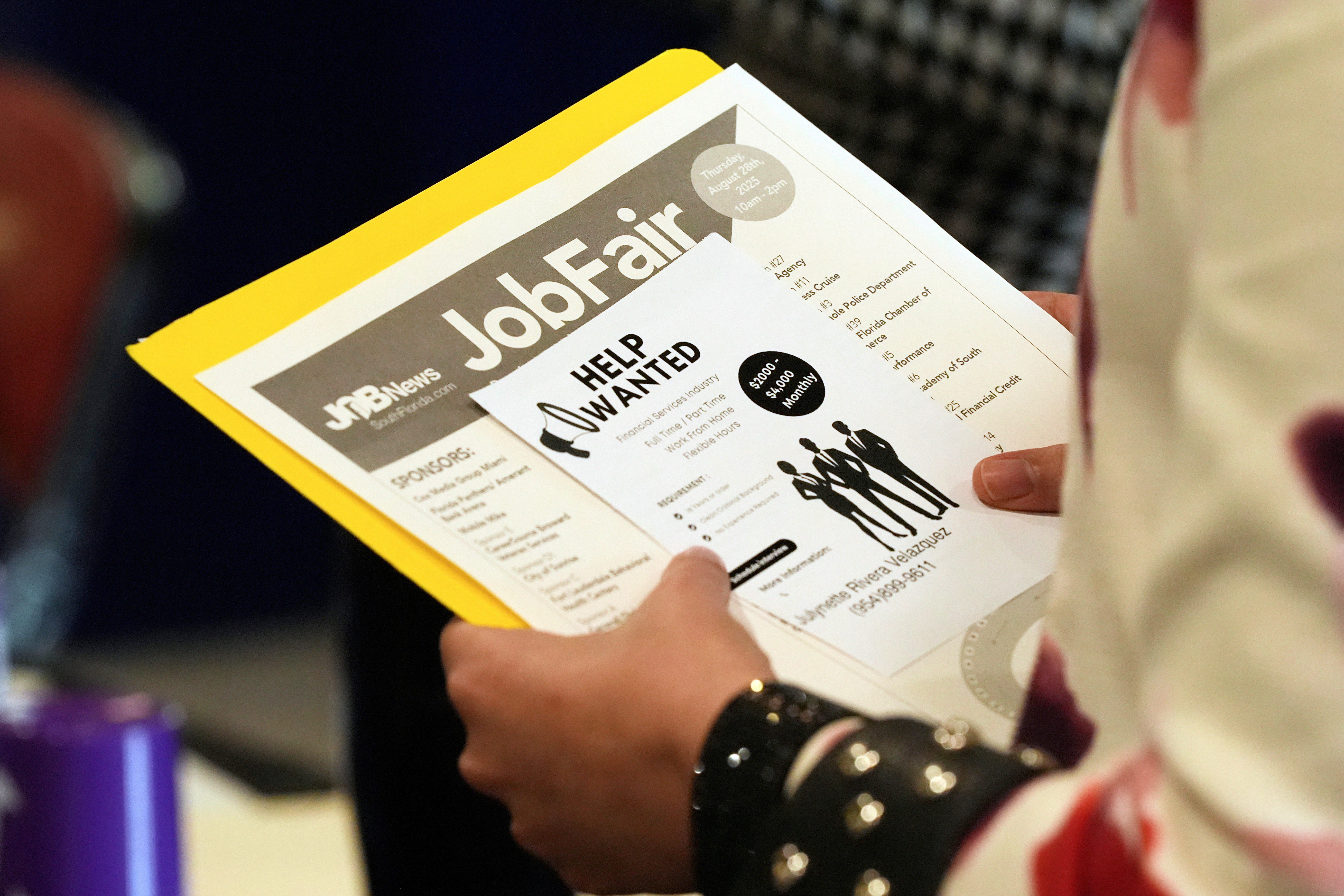
    A prolonged job search doesn’t just sap job seekers of time, money and energy — for many, the hunt takes a devastating toll on their mental health.

    Although unemployment rates in the United States have been historically low, the Bureau of Labor Statistics reports that more than a quarter of jobless people qualify as “long-term unemployed,” meaning they have been hunting for 27 weeks or more.

    And unfortunately for many out-of-work Americans, that probably isn’t changing any time soon. For every open role in 2026 there are twice as many applicants as there would be for similar roles in 2022, according to a recent study from LinkedIn Research. All of this is contributing to an overwhelming sense of discouragement among job seekers — and many of them are struggling to hold on to hope.

    Contemplating the ‘black hole’

    Mythili Sampathkumar, a 44-year-old writing and communications professional, has spent months polishing her résumé, filling out forms, and preparing cover letters. But she said she hasn’t been landing the sort of interviews that might lead to a full-time job.

    “You’re just talking to a black hole,” she said. “You feel like you’re floating in space, untethered from the spacecraft.”

    In the current job market, the problem often doesn’t have anything to do with the merits of a particular applicant, said Washington-based career counselor Amanda Langer. But still, every rejection or nonanswer can be taken as a personal referendum on your skills and worth, she said.

    “A prolonged job search isn’t simply a logistical challenge,” she said. “It erodes a person’s confidence over time and their sense of agency, along with their financial security, obviously.”

    Studies show unemployment is linked to the development of mental disorders, including anxiety and depression. Long-term job seekers describe heightened stress and exhaustion, which can make the everyday work of a job hunt feel even more burdensome, said Mindy Shoss, professor of industrial and organizational psychology at the University of Central Florida.

    “Ghost job” postings, AI interviewers, and a lack of in-person connection do little to help. So much of a person’s sense of self comes from their profession, their work, and how they spend their days, Shoss said. Watching résumés and cover letters disappear into a hiring portal does little to replenish that same well.

    Getting off the screen

    Because long-term joblessness can exacerbate underlying mental health conditions and even lead to some people developing serious problems, support from mental health professionals is key, and sometimes required.

    A peer group of other jobseekers can also help normalize the difficulty of a long-term job hunt and restore some optimism, Langer said. “Sometimes having that feedback from others helps people realize and have those ‘aha!’ moments of ‘OK, I look at this person and this person is super great, really skilled and really qualified, but they’re having a hard time too.’”

    Sampathkumar started working with a career coach, which she said has been hugely helpful. She also launched a personal newsletter and has been limiting the time she spends on LinkedIn and other social media.

    “There is no one to actually be angry at, right?” she said. “It’s a weird frustration. Whatever is happening is happening.”

  • ‘Toxic multitasking’ is breaking your brain. Here’s how to take control.

    ‘Toxic multitasking’ is breaking your brain. Here’s how to take control.

    In our busy, always-on world, multitasking — performing several tasks or engaging in more than one activity concurrently — has become a default setting. At work and at play, our focus is increasingly given to more than one thing at a time: checking emails during a Zoom meeting, scrolling Instagram while watching television, switching browser tabs, or responding to notifications while engaged in deep or focused work.

    “Toxic multitasking is the illusion of productivity,” says Sandi Chapman, the chief director at the Center for BrainHealth and a professor of psychology at the University of Texas at Dallas. “Multitasking is often seen as a sign of high productivity. Unfortunately, your brain experiences it as a performance bottleneck. We think we’re getting two complex things done at once, but our brains simply aren’t wired for it.”

    Not all forms of multitasking are unhealthy, but multitasking can, and often does, turn into problematic behavior that can become addictive, and that has a real effect on how our brain and nervous system function.

    Toxic multitasking is the norm, but that doesn’t make it normal

    “Today, more and more people are doing multiple things at the same time, double- and triple-booked on meetings,” says Ashish Kothari, founder and CEO of Happiness Squad, a consulting group focused on employee engagement. Although it may give the appearance and feeling of productivity, multitasking that is characterized by constant “context switching” is detrimental without breaks.

    “When you switch between tasks, your brain doesn’t instantly reset,” Chapman says. “It burns through your mental energy. Your brain works harder and produces less.” She compares multitasking to trying to read two books at once. “You don’t absorb twice as much information from reading both at the same time. Instead, you simply keep losing your place in both.”

    This way of working doesn’t stop at work. The urge to multitask continues outside of business hours, permeating our nonwork time. “We’re on phones all the time,” Kothari says. “We might be watching TV and doing something else. As a result our sleep is affected and, combined, creates a heavy toxic effect on our holistic well-being, physically, emotionally, mentally, and spiritually.”

    Digital multitasking, such as looking at more than one entertainment device at a time (e.g., watching TV while scrolling on TikTok), has a particularly strong negative effect on our attention — and, ironically, on our ability to multitask. “These types of inputs actually reduce your ability to handle multiple inputs at once,” says neuroscientist Kay Linker.

    Linker distinguishes between good multitasking and bad, pointing out that multitasking can be beneficial when used correctly. “Once a task becomes automatic, it is transferred to a different part of the brain, allowing for parallel processing,” she says. Examples of this include listening to a podcast or book while taking a walk or calling a friend while commuting to work, in contrast to what Linker calls “task switching, which drains your control and focus.”

    The effects of toxic multitasking are real, and so are the drivers

    There are consequences to all this multitasking, and the effects can be serious, affecting performance at work and creating a high degree of exhaustion, stress, and burnout that leads to the inability to think clearly, i.e., brain fog. There are also emotional and interpersonal repercussions, including irritability, a reduced ability to connect with others, a shallow or insincere affect, and a loss in satisfaction at work and life.

    Chapman says that toxic multitasking is a natural extension of American hustle culture. “There’s pressure on us, both professionally and personally, to prioritize output and quantity over quality,” she says. The pressures of expectation, driven by technology, have created a constant hunger for productivity, in which we feel the need to always be on and to give our attention away to social media and smartphones.

    “We have become dopamine addicts,” says Kothari, who adds that the pace at which we’re expected to take in and respond to information is “putting us in a constant fight-flight-freeze mode, wanting us to keep taking action and feeling like we can’t stop.”

    Because toxic multitasking has been so normalized, you may not even be aware of how much you’re engaging in it, but there are clear signs that it has become a problem. “Usually, the first symptom of toxic multitasking is emotional strain,” Chapman says. “If a quick question from a co-worker makes you want to snap, that’s often a sign your brain is overwhelmed from constant distractions or overload.”

    There are other ways to determine whether multitasking is a problem, and Kothari recommends using these assessments to identify an attention problem:

    Do you know how often you pick up your phone? Counting the number of times you pick up your phone during the day provides a data point to quantify a digital multitasking habit. “Most people pick their phone up over 150 times a day,” Kothari says. “It’s a clear indicator that we have lost our ability to focus.”

    Are you addicted to dopamine? To determine whether the problem is a dopamine addiction, set a timer and sit quietly while doing nothing. Doing so will tell you how long you can go without being distracted.

    Is your wearable telling you to cool it? “If you wear an Oura ring or another wearable,” Kothari says, “look at the amount of time you spent in a high-stress zone.”

    How to break a toxic multitasking habit

    It can be difficult to wrest back control of your time and attention in a world full of distractions, but here are some ways to exert power over technology and the pressure to appear productive:

    Try meditation. Kothari calls meditation and other mindfulness practices “foundational” to increasing focus and our ability to stay in the moment.

    Practice single-tasking. Linker recommends improving your attention span by engaging in a single task such as writing or reading for a sustained period, which she defines as an hour or more.

    Design your environment for success. Silencing notifications, closing unnecessary browser windows, and keeping your phone out of sight and out of reach will help deepen your focus. “Keeping a scratch pad on your desk lets you quickly log random errands or stray thoughts on paper without interrupting your workflow,” Chapman says.

    Use technology that cuts off a digital multitasking habit. To address the overuse of smartphones, Kothari recommends the Brick device. “It’s a tile that you can use to turn off all apps or even access to your phone completely.”

    Recalibrate norms at the office to encourage deep work. In workplaces where multitasking makes it impossible to get things done well, or even at all, Kothari says, “set norms for focused, deep work time where all of your notifications are off and your colleagues commit to not disturbing you.”

    Take regular brain breaks. Giving your brain a break by taking a short walk, going outside, stretching or simply sitting quietly for a few minutes will restore your mental energy and attention span — and prevent late-afternoon crashes. “A break is not switching from your laptop to your phone,” Chapman says. “A true brain break means stepping away from screens altogether.”

    Engage in one form of entertainment at a time. “Limiting concurrent device usage and social media short-form videos will improve the … assault this type of entertainment has on our ability to focus,” Linker says.

    Make a deliberate choice. Chapman says that reclaiming our attention spans is entirely in our control but that it requires making the deliberate choice to stop multitasking and start single-tasking. “With this one simple change, many people notice an immediate improvement in their focus, mental energy, and productivity,” she says.

  • GLP-1 prescriptions for people with no medical need are climbing

    A large new study confirms what many people have long suspected: A sizable number of people taking drugs like Ozempic have no medical reason to do so.

    The study, an analysis of the medical records of more than 92 million U.S. adults, identified more than 1.1 million who were taking GLP-1 medications, without any record of an issue that would make them eligible, like obesity or diabetes. While the researchers didn’t examine why people took these medications, doctors said many people are probably using them simply to shed some pounds or in the hope they might deliver other, buzzy potential benefits.

    “You see it all over the place. You have people describing publicly their experience with these medications, some good, some bad,” said Dr. Babak Orandi, an obesity medicine specialist and transplant surgeon at NYU Langone Health. Orandi is the lead author of the study, published Tuesday in the journal Obesity.

    The positive anecdotes, he said, “may open up people’s curiosity to say, ‘Hey, maybe that could work for me.’”

    Technically, GLP-1s have only been approved for a few conditions, including obesity and diabetes. The Food and Drug Administration has also approved some GLP-1s to prevent heart attacks and other cardiovascular issues and to treat sleep apnea, both in people with obesity, and to treat kidney disease in those with type 2 diabetes.

    But the drugs have become a cultural phenomenon, with the public discourse about them and the aggressive marketing of the medications generating far broader interest.

    “It’s the first time that I can recall that the general public knows so much” about a drug, said Dr. Nils Krüger, a researcher at Harvard Medical School who has studied GLP-1s.

    These “off-label” prescriptions, as doctors call them, became far more common as the study went on, jumping 15-fold between 2021 and 2025. And researchers say those findings are almost certainly an undercount, since they may not capture people who are accessing the drugs through telehealth platforms or taking compounded versions.

    Shedding some weight is perhaps the most obvious reason people without obesity or diabetes might turn to the drugs. More than one in three of those taking a GLP-1 drug off-label had a normal body mass index. Patients taking the drugs off-label were also much more likely to have had a documented eating disorder than those who were not taking one of these medications. While the number of patients with eating disorders was a small fraction of patients, doctors said it was still cause for concern.

    Beyond weight loss, there are a host of other reasons people may be seeking out these drugs, outside experts said. For example, the study found that patients taking a GLP-1 drug off-label were more likely to have high blood pressure or high cholesterol.

    People might think, “‘Oh, it’s being used for vanity purposes,’” Orandi said. But he said that he has talked with patients who are interested in whether the drugs might help for other issues that aren’t included on their labels.

    Scientists are in the early stages of studying the drugs for other possible uses, including improving fertility, curbing cravings for alcohol, and alleviating brain fog. While researchers need far more data to determine if the drugs work for these purposes, doctors said they are already seeing patients try them, in the hope that they will.

    Dr. Andrew Kraftson, a clinical professor at the University of Michigan Medical School who treats patients with obesity, noted that the new study also highlights how many doctors seem to be prescribing these drugs to patients who do not appear to qualify for them.

    Busy primary care doctors whose patients request the drugs may think, “Well, what can it hurt,” he said.

    “But still,” Kraftson added, “we totally are not giving comprehensive care in these situations.”

    Kraftson expressed concern that some doctors might not fully be assessing whether a patient could benefit from the medication, and whether any potential benefits outweigh the possible risks.

    There is little data on how the drugs might affect people without obesity or diabetes because they were largely excluded from major clinical trials.

    These medications might pose unique risks to people who are not overweight, Krüger said. Those risks include malnutrition, as well as muscle mass loss, side effects of the drug that can affect anyone but that could be especially concerning in people with lower starting BMIs.

    “We don’t know how this will play out,” Krüger said. “It’s like this big Ozempic experiment.”

  • Mets hire interim manager Andy Green for full-time job, giving him three-year contract

    Mets hire interim manager Andy Green for full-time job, giving him three-year contract

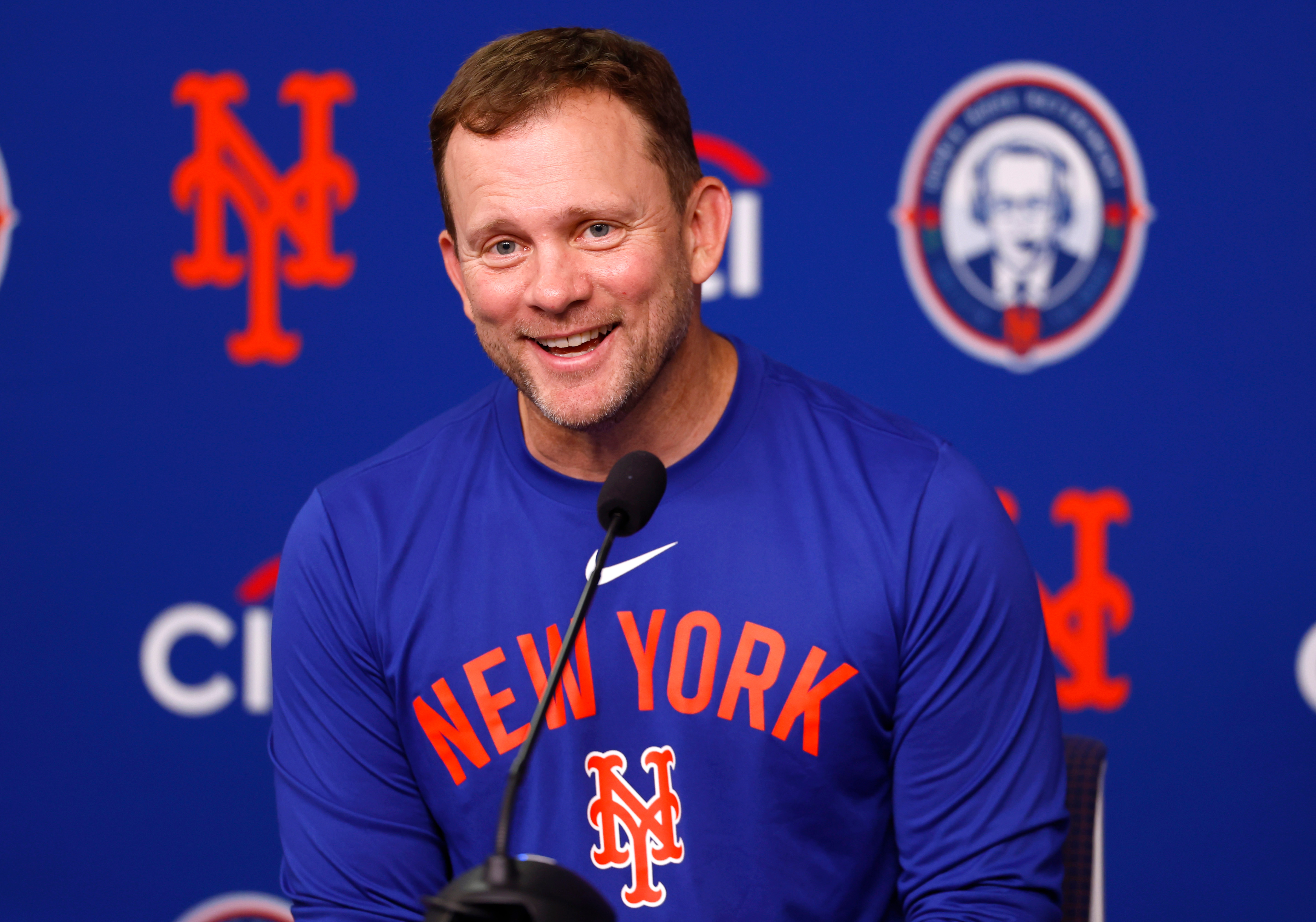
    NEW YORK — In a change of course, the New York Mets hired interim manager Andy Green for the full-time job on Tuesday, giving him a three-year contract.

    The team made the announcement before opening a three-game series in Texas against the Rangers.

    Green had been running New York’s farm system before taking over as interim manager when Carlos Mendoza was fired in late June. At the time, Green said he wasn’t particularly interested in managing beyond this year, and Mets president of baseball operations David Stears said Green would return to a front-office role after the season — a stance Stearns stuck to in the months that followed.

    The last-place Mets have played better baseball under Green, however, going 37-38 since he took over, and the club chose not to conduct a search for a new manager this offseason.

    Green also managed the San Diego Padres from 2016-19.

  • Source: Bears QB Tyson Bagent placed in the NFL concussion protocol

    Source: Bears QB Tyson Bagent placed in the NFL concussion protocol

    CHICAGO — Chicago Bears quarterback Tyson Bagent has been placed in the NFL concussion protocol, according to a person familiar with the situation, adding another wrinkle to the team’s plans for Monday night’s game against the Eagles.

    The person confirmed Bagent’s status to The Associated Press on Tuesday on condition of anonymity because the Bears hadn’t released their first injury report of the week.

    Bagent was expected to take most of the first-team reps in practice after Caleb Williams left Sunday’s 9-3 loss to Minnesota with a right hamstring injury. Coach Ben Johnson said Williams is “week to week,” and he left open the possibility that the No. 1 pick in the 2024 draft could play against the Eagles.

    If Williams and Bagent are unable to play Monday night, the Bears likely would turn to Case Keenum. The 38-year-old Keenum has 66 career starts, but he hasn’t thrown a pass in a regular-season game since Dec. 24, 2023, for Houston against Cleveland.

    Bagent was 5 for 9 for 54 yards against the Vikings. He was sacked by Dallas Turner on the final play of the game.

    Bagent, 26, had a record-setting career at Division II Shepherd University before signing with the Bears in May 2023 as an undrafted free agent.

    He made four starts while appearing in five games as rookie, passing for 859 yards and three touchdowns with six interceptions. He signed a two-year contract extension in August 2025.

  • Trump praises new British PM Andy Burnham but slams UK deal on Indian Ocean islands

    Trump praises new British PM Andy Burnham but slams UK deal on Indian Ocean islands

    UNITED NATIONS — Freshly in office, Prime Minister Andy Burnham got off to a strong start with U.S. President Donald Trump at their first meeting on Tuesday, with the president brushing aside differences over the Middle East and calling the British leader “a natural business person.”

    The two men met for more than the scheduled 30 minutes on the sidelines of the U.N. General Assembly, which Burnham was due to address later in the day.

    It was a baptism of fire for the neophyte leader, who has gone from mayor of the northwest England city of Manchester to leader of a G7 country in a matter of weeks.

    But despite U.K. nerves about how it would go, as they sat in front of U.K. and U.S. flags, Trump declared that trans-Atlantic relations were “more up than they were with your last prime minister.”

    “Based on our relationship with the prime minister, Andy, I think we’re doing very well,” he said.

    U.K. officials know that the president can be fickle. Trump initially warmed to Burnham’s predecessor, Keir Starmer, before falling out over the U.K.’s unwillingness to join the U.S.-Israeli war on Iran. But there was relief that Burnham emerged largely unscathed from his first meeting with a president who once dismissed him as “the mayor of a town.”

    “We don’t hold it against you,” Burnham said.

    Burnham nodded at U.S.-U.K. differences, noting that Trump had been “good enough to listen to us” on issues including trade and the Falkland Islands. Trump has recently mused about the future of the British-controlled South Atlantic archipelago, which is also claimed by Argentina, which calls it the Malvinas. The two nations fought a brief 1982 war over the islands.

    But on one potential flashpoint, the U.K.’s decision to ban trade with Israeli settlements in the West Bank, Trump professed ignorance.

    Chagos Islands remain a point of contention

    Trump’s harshest words were reserved for Britain’s plan to hand sovereignty of the Chagos Islands in the Indian Ocean to Mauritius. The U.K. says the deal will preserve the future of a strategic U.S. military base on one of the islands, Diego Garcia. But ratification of an agreement stalled after the Trump administration withdrew its support. U.K. officials acknowledge the deal is now in limbo.

    Trump called it “a terrible deal” over a “very important piece of real estate, militarily and strategically.”

    “I think the prime minister is going to be looking at it,” he said.

    Before the meeting, Burnham said he would raise with Trump ways to end the on-off war between the U.S. and Iran, which has choked off oil tankers moving through the Strait of Hormuz and sent global fuel prices soaring. Houthi attacks on Saudi energy infrastructure are making the problem worse while rendering Burnham’s pledge to ease cost of living pressure for British voters even harder.

    As he flew to New York for the annual gathering of world leaders, Burnham announced he had authorized limited military support for Saudi Arabia to repel attacks from Iran-backed Houthi rebels in Yemen. A Royal Air Force plane will refuel Saudi jets engaged in “defensive” action to shoot down Houthi missiles, he said.

    Burnham also said he would urge Trump to step up U.S. support for Ukraine by providing air-defense missiles to Ukraine ahead of another winter of Russian attacks.

    Burnham to focus on AI in his U.N. speech

    In his speech later Tuesday, Burnham was set to try to send a message that Britain can play a key role in solving the world’s biggest challenges, from conflict in the Middle East to the dizzying evolution of artificial intelligence. And he will attempt to turn the page on a decade of Brexit-driven discord with the U.K.’s European neighbors.

    Burnham said he would focus on artificial intelligence, arguing it’s possible to be “clear-eyed” about both the benefits and risks of the technology. He will argue the U.K. is well placed to be an “honest broker” in seeking global agreement to guide its development, because London has good relations with both the U.S. and Europe and “a strong dialogue” with China.

    In another potential point of tension with Trump, Burnham called for a global alliance to guide the development of AI.

    Burnham told a meeting of business leaders on the sidelines of the UN General Assembly that he wants to see “a single set of global principles and standards” that can unlock AI’s potential while mitigating its risks.

    Trump told the U.N. on Tuesday that the U.S “totally rejects any attempt to construct a globalist scheme” to regulate AI.

  • Ro Khanna is the left’s busiest midterm surrogate. Can he raise his own profile, too?

    Ro Khanna is the left’s busiest midterm surrogate. Can he raise his own profile, too?

    Rep. Ro Khanna of California leaned forward in a patterned armchair as a rooster crowed outside, listening as a group of farmers in rural Sharpsville, Pa., told him that Democrats came across as inauthentic and insincere.

    “Don’t promise the farm and not come up with it,” said Joe McCann, who grows hay and raises pigs. “And don’t lie to people. I can take anything, but if someone’s standing there physically lying to me and blowing smoke up my butt, that’s not going to cut it.”

    Khanna agreed, fretting that his party had for too long “looked down” on blue-collar voters. Then he quipped: “How do you think I’m doing? Lying?” McCann, 78, said he didn’t think so.

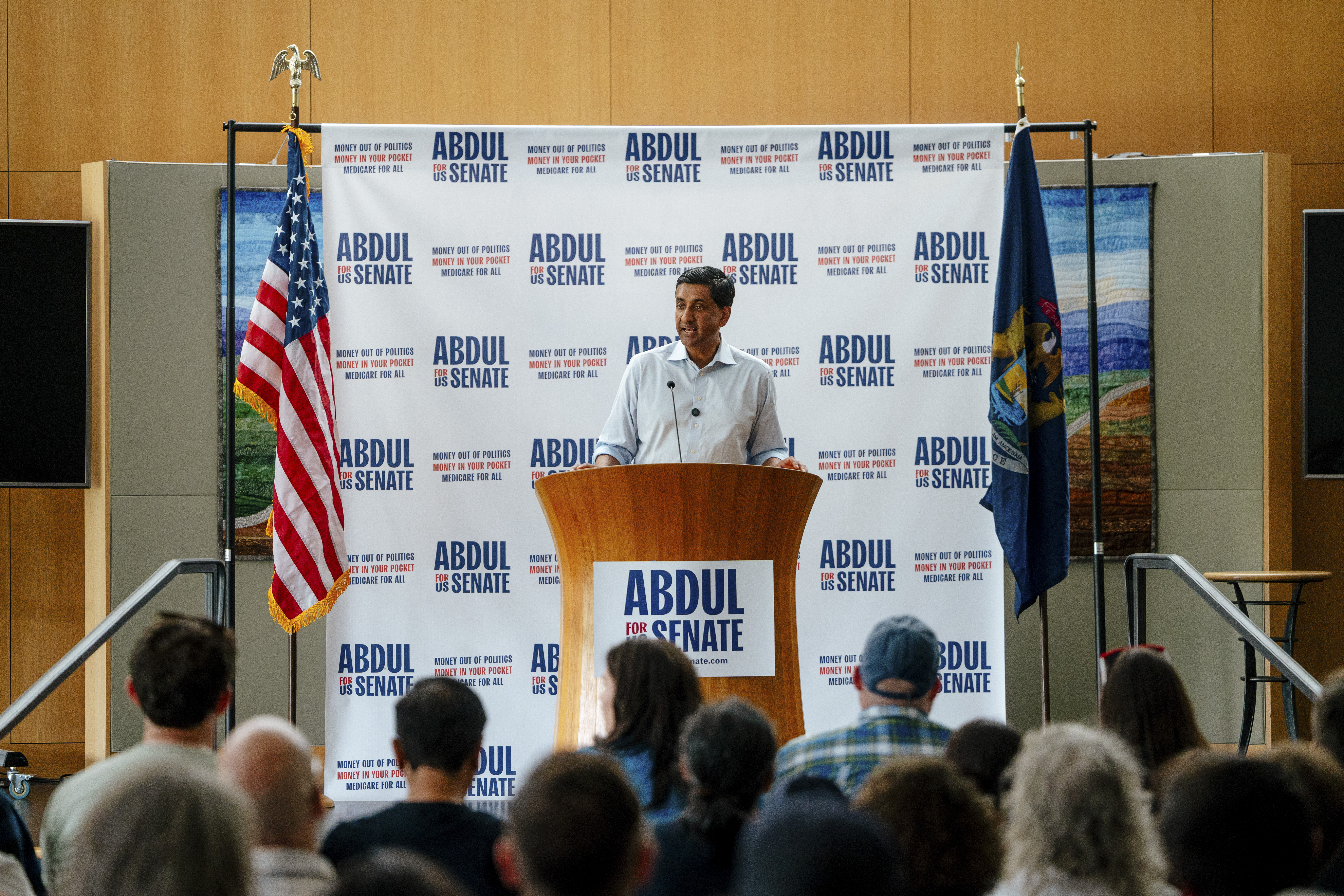
    Khanna (D., Calif.) has emerged as one of the most prolific surrogates of the 2026 cycle. He has endorsed more than 70 candidates for seats in the House, Senate, and state legislatures, positioning himself on the front lines of a burgeoning progressive movement as discontent with the status quo has propelled a series of left-wing candidates to primary victories.

    But there was another reason for his vigorous political itinerary this campaign season: a possible presidential run in 2028. He wants to see the left’s power grow within the Democratic Party. He wants its policy prescriptions, such as universal healthcare and taxing the rich, to shape the conversation about who the party’s nominee for president should be.

    And he knows that none of that is likely to happen if the left bombs in November.

    A little 2026, and a little 2028

    Despite their major wins in primaries this season, progressives’ ability to sway the general electorate in competitive races remains untested. A new poll released by the New York Times and Siena University on Sept. 15 found that a slight majority of voters disliked socialism.

    In Khanna’s view, the only way the movement can change that perception is if it figures out how to talk to the working class.

    Khanna, born outside Philadelphia to immigrants from India, has been preparing for his political future out in the open. In the past two months, he has taken many of the steps of an early presidential candidate.

    He held a town hall with Latino voters in Nevada. He told the Democratic National Committee in a searing speech that the party needed to turn its back on corporate interests and military aid to Israel. He also ventured abroad, leading a congressional trip to the Vatican to discuss safeguards against artificial intelligence with Pope Leo XIV and visiting the West Bank, where he was detained by armed Israeli settlers.

    Icons of the progressive movement, such as Sen. Bernie Sanders of Vermont and Rep. Alexandria Ocasio-Cortez of New York, have been choosier with their high-profile endorsements this year. Khanna is lesser known, and has work to do to change that. The eagerness can occasionally backfire; he has expressed regret for his endorsement of Graham Platner, the Maine Democrat who withdrew his Senate bid in July after a woman accused him of rape.

    “He’s hustling,” said Bill Hyers, a progressive strategist who worked with two House candidates — Kat Abughazaleh in Illinois and Chris Rabb in Pennsylvania — whom Khanna endorsed in primaries this spring. Rabb won. Abughazaleh lost.

    Added Hyers: “He’s just been out there really working hard and he’s the only person on the left I have seen where there’s no doubt he’s running.”

    Over five days in Pennsylvania in July, Khanna, who grew up outside Philadelphia in suburban Bucks County, rallied for two House candidates whose primary victories in May stood out as early triumphs for the progressive movement. Their very different districts illustrated both the advantages and challenges facing the progressive left this fall.

    In Philadelphia, Khanna talked about liberal priorities like “Medicare for All” with Rabb, a democratic socialist who is virtually assured of victory in November in his deep-blue district. In a battleground district in Allentown, Khanna discussed tariffs and job losses with union factory workers to help the candidacy of Bob Brooks, a firefighter and labor leader who faces a more difficult path to victory in November against Rep. Ryan Mackenzie, a Republican.

    On behalf of both candidates, Khanna offered a similar pitch: The wealth and technological innovation of his high-income Silicon Valley district should be shared more widely. His agenda of “new economic patriotism,” he said, would spread technology jobs among Midwestern states and redistribute profits through a wealth tax.

    “If we just are running on centrist mush that is put out by ChatGPT, bland and inoffensive, we’re not going to win,” Khanna told a reporter in the SUV he was riding in for the Pennsylvania swing. “It has to be a transformative vision.”

    Khanna was generally well-received by an electorate in Pennsylvania that has soured on Republicans and seems increasingly willing to give Democrats another chance. But he also encountered the enduring skepticism of voters who see their leaders as having failed them.

    “He comes across very progressive with his plans, but I don’t know that he’ll be able to carry them through,” said McCann, after Khanna’s conversation in Sharpsville. “This area that I live in right now is a depressed area — and anybody that gives anybody around here a vision of hope is the person they’re leaning toward. They just have that vision of hope that this might happen, and it never does.”

    In an interview, Khanna said he planned to decide about 2028 between Thanksgiving and Christmas, after talking to his family and determining how viable he could be in battleground states.

    His trip across Pennsylvania was intended in part to assess that. A progressive contender for president, Khanna said, would have to “do well in the Black South” and “do well in states like Pennsylvania.”

    He said he was also forging bonds in southern states, including in South Carolina, where his partnership with Rep. Jim Clyburn and his daughter Jennifer Clyburn connects students at historically Black colleges and universities with scholarships from tech companies.

    Khanna has recruited alumni of both progressive and establishment campaigns. He is being advised by Ron Klain, the chief of staff to former President Joe Biden, and has enlisted longtime advisers to Sanders such as Julian Mulvey and Jeff Weaver, according to a person familiar with the partnerships who requested anonymity to describe internal staffing issues.

    The road ahead, plus AOC

    A dismal progressive showing in November could instantly set back Khanna’s fortunes. So could something else: Ocasio-Cortez. If Ocasio-Cortez, the breakout star of the left, runs for president, she would appeal to the same liberal constituency as Khanna but with an enormous head start in popularity.

    Khanna called Ocasio-Cortez an “extraordinary talent,” and dismissed the idea that she is a rival.

    “I have a tremendous amount of respect and admiration for her,” he said, adding, “I have genuinely never discussed what she wants to do in the future.”

    Khanna said he talked with Ocasio-Cortez occasionally in the halls of the Capitol. He communicates more frequently with Sanders, speaking with him on the phone about AI and answering the senator’s queries about the chances of California voters passing a tax on billionaires this fall.

    Khanna readily acknowledged that he lacked the political “star power” of his left-wing compatriots. “I’m not delusional,” he said.

    His speeches are also a little heavy on policy and light on the kind of soaring rhetoric that voters often look for in a president.

    That was the case in Pennsylvania, but he also tested catchphrases such as “economic patriotism,” and retail politicking seemed to come easily enough for him. One particular line, when he argued that President Donald Trump had not followed through on a simple promise — to replenish sand that had washed away along Lake Erie — got a good response from voters.

    “I’ve seen a lot of clips of him online — I thought he was much more charismatic in person,” said Gideon Tsoutsouris, a college student in Pittsburgh.

    Khanna portrayed his low profile as an asset, noting that other successful candidates — including former Presidents Jimmy Carter and Bill Clinton — began their bids as long shots. It’s an advantage, he said, “to go meet people and interact without the entourage.”

    Khanna, a multimillionaire, likewise dismissed potential criticism of his wealth, which largely stems from his wife’s father, the founder of an automotive company.

    “I tell people my own story of growing up middle-class in Bucks County, taking out loans for law school in my 20s, having forbearance and massive credit card debt,” Khanna said. “I think people will see that I had a middle-class life and even economic challenges.”

    Hyers, the progressive strategist, said Khanna would likely face criticism for his long-standing relationships with the tech industry.

    “The perception in a lot of the circles that I run in is, ‘How much money has he taken from the bad guys?’” Hyers said. (Khanna has since broken ties with many wealthy tech executives and called for taxing them more heavily.)

    When Khanna’s tour rolled into Pittsburgh, he hopped around town, chatting wi,th union leaders who are faculty members at a local university, nurses fighting for a labor contract and a group of college students.

    Before addressing the students, he spoke with two groups protesting his visit on nearby street corners: the pro-Israel Beacon Coalition and the pro-business Americans for Prosperity, a creation of the conservative Koch family. One of the AFP protesters urged him to reject socialism.

    The moment illustrated another challenge that Khanna would face in a presidential primary. He may be too progressive for moderates, and not progressive enough for some on the fractious left.

    “I don’t believe the government should take over the means of production,” Khanna told the protesters. But, he added, many young people were turning to socialism “because they can’t afford rent, they don’t have a good job. They lost the American dream.”

    This article originally appeared in the New York Times.
  • Netanyahu, before U.N. appearance, targets Mamdani in video

    Netanyahu, before U.N. appearance, targets Mamdani in video

    NEW YORK — Prime Minister Benjamin Netanyahu of Israel released a video broadside against New York City Mayor Zohran Mamdani, one of his most high-profile critics in the United States, hours before CNN aired a new interview in which the mayor again called the prime minister a war criminal.

    Mamdani has called on the federal government to arrest Netanyahu, who is expected to arrive in New York this week to address the U.N. General Assembly. In the video posted Tuesday, the prime minister falsely accused the mayor of supporting Hamas and inciting riots against Jewish New Yorkers.

    Addressing the mayor directly, the prime minister said he was coming to the U.N. “to tell the truth about our heroic soldiers” and “to tell the truth about you.”

    Mamdani, New York’s first Muslim mayor and an outspoken supporter of Palestinian rights, has condemned Hamas as a terrorist organization and described the attack it led against Israel on Oct. 7, 2023, as “a horrific war crime.”

    And while New York has seen an increase in antisemitic hate crimes since the Oct. 7 attacks and Israel’s subsequent bombardment of the Gaza Strip, as well as widespread pro-Palestinian demonstrations, there have been no riots targeting Jewish New Yorkers in the city since Mamdani was elected mayor in November or during his time serving in the state Assembly.

    Netanyahu is the subject of an arrest warrant from the International Criminal Court, which has accused him of war crimes in Gaza; he vigorously denies the charges. After Mamdani’s previous comments calling Netanyahu a war criminal outraged many pro-Israel Jewish leaders, the mayor’s office convened a meeting at which prominent rabbis urged the mayor to tone down his rhetoric on Israel and its leaders.

    Asked about Netanyahu’s remarks at an unrelated news conference Tuesday morning, Mamdani said, “We all know that what the prime minister has said in that video is not true.”

    On Monday night, CNN released clips from a wide-ranging interview with Mamdani, which also touched on his working relationship with President Donald Trump and his desire to see the Democratic Party focus on policies to lift up the working class. The full interview aired Tuesday afternoon.

    In one part of the interview with CNN’s Christiane Amanpour, Mamdani was asked directly about his opinion of Netanyahu, and he said he owed it to New Yorkers to share his honest views.

    “When it comes to Benjamin Netanyahu,” the mayor said, “I have described him as I believe him to be: a war criminal and an architect of a horrific genocide of the Palestinian people.”

    Mamdani has described Israel’s conduct of the war in Gaza as genocide, a claim that has upset many pro-Israel Jewish leaders. A United Nations commission and international and Israeli human rights groups have also said that Israel’s actions amounted to genocide.

    During the campaign, Mamdani pledged to have the Police Department execute the International Criminal Court warrant against Netanyahu if he were to come to New York. He repeated his desire to do so in an interview with the New York Times in July. But days later, the mayor released a video saying the city’s Law Department had told him the city did not have the authority to arrest the prime minister, and challenged the federal government to do so.

    Netanyahu, who is in the midst of a pivotal electoral campaign in Israel, has frequently condemned the mayor, calling him a danger to Jewish New Yorkers. On the second day of Mamdani’s term, the Israeli government accused him of antisemitism, citing his decision to cancel two executive orders signed by his predecessor, which had barred city agencies from boycotting Israel and defined some criticism of Israel as antisemitic.

    While Mamdani’s stance on Israel has caused deep unease among many Jews in New York, which has the largest Jewish population outside Israel, many others have supported the mayor, especially his fellow progressives. On Monday, Mamdani attended a meal marking the end of the Yom Kippur fast at the home of Ruth Messinger, a political ally who has served as Manhattan borough president and as the president and CEO of the American Jewish World Service.

    This article originally appeared in the New York Times.