Category: Wires

  • Man shot and detained by ICE hospitalized for partial paralysis, attorney says

    Man shot and detained by ICE hospitalized for partial paralysis, attorney says

    The Venezuelan man shot by an immigration officer in Austin over the weekend was taken to a hospital late Monday after experiencing paralysis on the left side of his body, his lawyer said.

    Attorney Kate Lincoln-Goldfinch also has filed a lawsuit in Texas asking a federal court to order the immediate release of Wilber Garcés Pérez from U.S. Immigration and Customs Enforcement detention and halt his potential deportation to Venezuela. U.S. District Judge Orlando L. Garcia scheduled an in-person hearing for Sept. 30 and ordered that Garcés be present, according to court records.

    Garcés had been transferred from a local hospital to a federal detention facility four hours after he was shot by an ICE officer on Sunday, despite having a bullet still lodged in his back, Lincoln-Goldfinch said. She said doctors chose not to remove it because the bullet was too close to his spine but argued it was reckless to release him from the hospital that quickly.

    Garcés, a 28-year-old delivery driver, told reporters on Monday by cell phone that he remained in pain and had spent the night sleeping on the floor in the South Texas ICE Processing Center in Pearsall, about 130 miles southwest of Austin. His attorney said on social media that he was taken to another hospital late Monday after complaining of paralysis.

    Rep. Joaquin Castro (D., Texas) said Tuesday that Garcés had been discharged and returned to the Pearsall facility. Castro said he and another lawmaker plan to visit Garcés on Wednesday to demand his release.

    “It is nothing more than a prison,” he said of the detention facility. “None of this should have ever happened.”

    Department of Homeland Security officials have not responded to questions about the shooting or the claims from Garcés and Lincoln-Goldfinch about his medical care and the events that led to the shooting. Earlier Monday, DHS said Garcés was in stable condition and in federal custody “pending removal” from the country. The agency said he is subject to a final deportation order.

    Garcés’s supporters are calling on DHS to release any video footage of the incident and are demanding an independent investigation.

    Garcés worked as a DoorDash driver and was making a delivery Sunday when an unmarked black truck operated by ICE sideswiped his car, Lincoln-Goldfinch said. After he attempted to make a U-turn to find a place to pull over, the ICE vehicle struck his car again before an officer shot him, she said.

    Lincoln-Goldfinch has said that Garcés is the main provider for his young family. He has a young son with a disability and is responsible for the costs of his treatments.

    In the lawsuit seeking his release, Lincoln-Goldfinch and attorney Kristin Etter argued that Garcés should be allowed to apply for a U visa for crime victims because he is a “victim of a violent crime, namely, being shot by a federal officer.” Deporting him would violate his constitutional right to due process, the attorneys said.

    Congress members and his attorneys have also expressed fear for Garcés’ health in the ICE detention facility, alleging he may need surgery and requires further evaluation.

    Garcés alleges that an ICE officer shot him in the torso at 12:56 p.m. on Sunday, in an intersection in Austin, according to court records his attorneys filed on his behalf. Hours later, he was discharged to ICE custody, his attorneys wrote, “with the bullet still lodged in his body.”

    He was then “forced to sleep on a cement floor” until around 4 a.m. Monday, when ICE transported him to the Pearsall facility, according to the records.

    After he spoke to the media that day, ICE revoked Garcés’s communication privileges and moved him from the infirmary into “an isolated room with a flat, nonadjustable bed,” Lincoln-Goldfinch said in a statement.

    Around 5 p.m. Monday, she said Garcés became unable to move his left arm and was taken back to the hospital. During the transfer, she said ICE handled him “roughly, despite his gunshot injury,” placing him in handcuffs and shackling his ankles.

    DHS did not immediately respond to a request for comment about those claims.

    Lincoln-Goldfinch said that the gunshot fractured Garcés’s clavicle and that he is suffering “significant swelling and pain,” and wearing a sling. At the hospital, she said, doctors gave him intravenous morphine for pain.

    Garcés entered the country legally seeking asylum, Lincoln-Goldfinch said. An immigration judge issued him a final removal order after he missed a hearing. Lincoln-Goldfinch said officials sent a notice advising him of his upcoming court date to an old address.

    The Associated Press reported Tuesday that more than 100 Democratic lawmakers are calling on Homeland Security officials to cease any efforts to interfere with a comprehensive investigation into the shooting.

    The lawmakers said in their letter to DHS Secretary Markwayne Mullin and acting ICE Director David Venturella they are deeply concerned ICE is attempting to swiftly deport Garcéss to impede an independent investigation.

    “Mr. Garcés Perez is a key witness to this shooting, and given ICE’s history of obscuring the facts in similar investigations, he must not be removed,” the lawmakers wrote.

    They said Garcés and the ICE agent who shot him must remain in Texas until a thorough investigation is complete.

    The Democratic lawmakers called on DHS officials to respond by next Monday on why agents used deadly force, whether they followed policy requiring them to render medical aid, and whether ICE will release all bodycam footage.

  • Weird and wonderful, the Lucas Museum lands in LA

    Weird and wonderful, the Lucas Museum lands in LA

    LOS ANGELES — From scruffy Exposition Park in South Los Angeles, there is no missing the new Lucas Museum of Narrative Art.

    It hovers like a spaceship on the skyline, at the park’s edge, snow white and ginormous. Its billowy, aerodynamic curves and swoops, capped by tufts of greenery, spill down to lavish gardens on what had been the site of a gated asphalt parking lot.

    Design-wise, the museum’s galleries seem an afterthought, its circulation a puzzle. But this is one you won’t want to miss. Both surgically somber and proudly over the top, the Lucas is a weird kind of wonderful and an instant city landmark. It opened to the public Tuesday.

    The 300,000-square-foot goliath was designed by prominent Chinese architect Ma Yansong and built to house the art collection of Star Wars filmmaker George Lucas and his wife, businessperson Mellody Hobson. The couple have picked up the project’s no-expense-spared tab: more than $1 billion.

    That whopping sum has paid for more than 80,000 square feet of black-box exhibition space on the building’s fourth floor, where Luke Skywalker’s X-34 Landspeeder from Tatooine now idles in a Star Wars display.

    Bridge-of-a-cruise-ship-style viewing ports at either end of the exhibition floor, and another in between, add pizazz and a respite from the gallery crawl.

    Other rooms are devoted to Norman Rockwell paintings, manga art, motherhood, and love, among various folksy themes.

    There are two state-of-the-art movie theaters, along with a shop and a cafe tucked into the building’s cinched podium. The roof, which has a restaurant, is a landscaped aerie of colorful plantings, winding paths, and sweeping vistas. A separate pavilion contains a library with arts and crafts furnishings, of all things, and a student center. A yellow Naboo N-1 Starfighter dangles from its lobby ceiling.

    An artisan of biomorphic megastructures, Ma, who founded MAD Architects in Beijing, made his bones designing showstoppers including the Harbin Opera House in China and the Ordos Museum in the Gobi Desert. The Lucas Museum is his first major American cultural commission. Its arrival, across the street from the University of Southern California campus, where Lucas studied film, seems like destiny.

    Lucas acquired his first work of art, a V.T. Hamlin Alley Oop comic, for a song in the 1970s. Over the decades his collection ballooned to include more than 40,000 works by famous comic artists and graphic novelists; film production designers and anime fabulists; golden-age American magazine illustrators and figurative painters of the 20th century such as Frida Kahlo and Thomas Hart Benton.

    These were artists after Lucas’ own heart, naturally — fellow populists, visual virtuosos, and storytellers. Lucas came to believe modern art museums shortchanged or ignored them.

    So he decided to build a cathedral to kindred spirits. He and Hobson first floated the idea to the Presidio in San Francisco in 2010. City officials there rejoiced at the prospect. But when the Presidio’s trustees balked, Lucas and Hobson looked to Chicago, Hobson’s hometown, hiring Ma to design a museum for a lakefront site.

    Ma came up with a volcano-shaped design rising from the flat plains of the Windy City, which ran aground after a Chicago nonprofit parks preservation group sued, tying the project up in the courts.

    After a second pass fizzled in the Bay Area, this time for a site on Treasure Island, Lucas and Hobson turned to Los Angeles.

    By destiny I didn’t just mean that Lucas is synonymous with Hollywood. I mean that Los Angeles is also home to the Getty, the Huntington, the Norton Simon, the Hammer, and the Broad. Vanity museums, some of the most memorable on the planet, have been a big part of what makes the city’s cultural landscape so lively, diverse, and deep.

    These institutions belong to a strain of American entrepreneurial individualism that has also given us the Barnes Foundation in Philadelphia, Donald Judd’s Marfa spaces in Texas, and the Guggenheim in New York — go-it-alone ventures founded on contrarian principles. The Guggenheim proselytized the mystic healing powers of Wassily Kandinsky, Bach organ chorales, and incense.

    The Lucas joins that company.

    Its architectural goal was a blockbuster with contours inspired by trees and clouds, so as to blend into and anchor the edge of Exposition Park, alongside giants like Memorial Coliseum. The exterior is clad in 1,271 school-bus-size, hand-finished, fiberglass-reinforced polymer panels, combined like puzzle pieces, manufactured by a shipbuilding company in the Bay Area. Ma’s pièce de résistance is the museum’s central plaza: a four-story-high, 185-foot-wide arching gateway and oculus linking the neighborhood with Exposition Park.

    A curator told me he has heard people compare the building to a sneaker. I’ve heard Angelenos talk about a mountain suddenly rising in South LA, and, of course, an Imperial Star Destroyer. It’s as svelte as an F1 car.

    It is now the second museum to arrive this year and shake up the city’s architectural geography. Like the new Los Angeles County Museum of Art, the Lucas also has civic ambitions. Tickets are $25, but anyone younger than 18 and/or living in the museum’s ZIP code, many of them low-income Angelenos, can enter free.

    Footpaths and garden crossings, where that gated surface parking lot had been, aim to knit the area’s streets and sidewalks.

    We’ll see how well those green spaces will be maintained, how open those neighborhood connections remain.

    But it’s a safe bet that millions of children raised on their phones — who couldn’t care less about the definition of narrative art — will embrace the museum.

    They’ll whoosh up and down the tubular glass elevators, run under the hanging gardens and across lawns devised by Mia Lehrer’s landscape team at Studio-MLA.

    And be wowed by Ma’s architecture.

    Who knows, some of them may even be inspired to put down those phones and pick up a pencil to draw.

    This article originally appeared in the New York Times.

  • Bush and Cornyn leave out Paxton as they raise cash for Senate candidates

    Bush and Cornyn leave out Paxton as they raise cash for Senate candidates

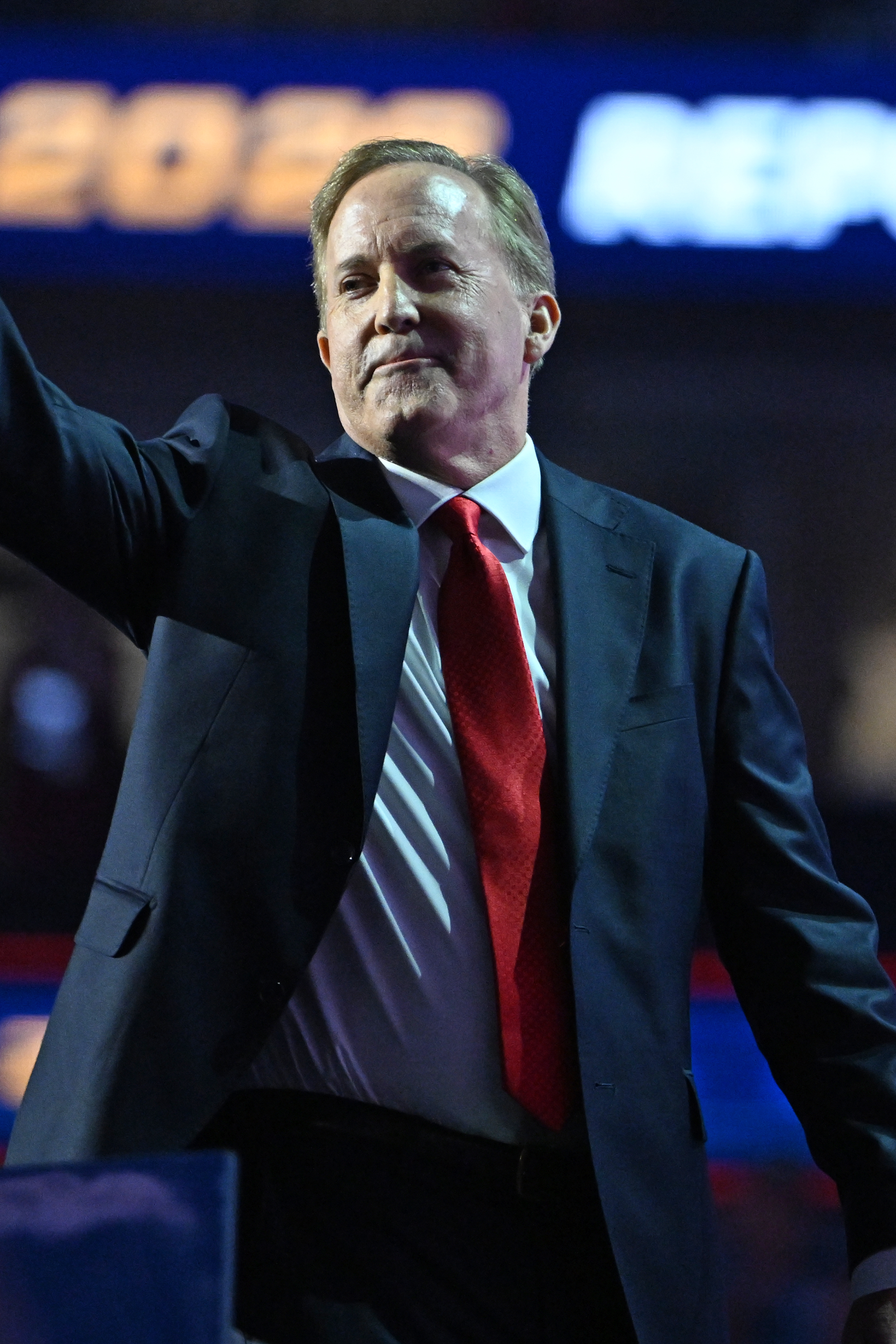
    Former President George W. Bush and Sen. John Cornyn, two top Texas Republicans, are rallying conservative donors behind the party’s Senate candidates — except for the one running in their own state, Ken Paxton.

    Cornyn hosted a fundraiser Monday evening in Dallas for six Republican nominees in battleground states, according to an invitation to the event that was obtained by the New York Times. Bush, listed on the invitation as a “special guest,” was attending the event, his spokesperson confirmed.

    The event benefits Maintain the Majority, a new joint fundraising committee supporting the Senate candidates, who are defending Republican-held seats in Maine, Ohio, Alaska, and Iowa and looking to flip seats in Michigan and New Hampshire.

    But Paxton, the Republican nominee in Texas, who defeated Cornyn in a costly and bitter primary, was not included. His campaign declined to comment on the fundraiser.

    The fundraising omission of Paxton is another escalation in the standoff between old-guard Bush Republicans and the fiery insurgent wing represented by the party’s Senate nominee, Paxton, President Donald Trump, and their allies.

    And it comes as the parties battle for cash and advertising time in the Texas Senate race, one of this year’s top contests. Paxton has badly trailed his Democratic opponent, James Talarico, in campaign fundraising, but super political action committees tied to Trump and Senate Republicans have come to Paxton’s aid, reserving more than $80 million in outside advertising in Texas.

    Paxton, the state attorney general, has long been a polarizing figure among Texas Republicans. He was impeached by the Republican-dominated Texas House on corruption charges in 2023, though he was acquitted in the state Senate, and he pushed to oust Republican lawmakers and judges who disagreed with him in his party’s primaries in 2024.

    This year, Cornyn and establishment Republican donors spent more than $130 million on advertising backing the senator and bashing Paxton in their contentious primary. (Bush chipped in $5,000 for Cornyn.) In the months since, Cornyn has continually criticized Paxton’s character and campaign.

    “Paxton’s a poor campaigner,” Cornyn told the Texas Tribune in August. “He’s lazy and doesn’t raise money. And he basically is not offering a very compelling case for his election. He’s making this harder than it needs to be.” (Paxton countered the attacks, saying on Fox News’ The Sunday Briefing that “John Cornyn doesn’t know my schedule. He doesn’t know how many hours I’m putting in every day, 18 hours a day.” )

    The fundraiser comes as long-simmering tensions between Bush- and Trump-era Texas factions burst to the surface.

    Last week, Karl Rove, Bush’s former senior adviser, announced that he would not vote for Bo French, the Republican nominee for the Texas state agency that regulates oil and gas, because of a racist social media post by French. Paxton declined to condemn French’s post, and Trump posted on Truth Social that Rove was a “stone-cold loser.”

    Paxton has attacked Rove in the past, including in an interview with conservative pundit Tucker Carlson in 2023.

    Paxton has also gone head-to-head with a scion of the Bush dynasty, soundly defeating Bush’s nephew, George P. Bush, in the 2022 Republican primary for Texas attorney general. And Paxton has long criticized Cornyn for his willingness to work with Democrats on bipartisan legislation.

    The host committee of the Monday fundraiser included paragons of the Bush-era Republican Party like Harriet Miers, Bush’s onetime nominee for the U.S. Supreme Court; former Sen. Kay Bailey Hutchison; and Republican megadonor Harlan Crow.

    One of the candidates the event seeks to support is John E. Sununu, the Republican nominee for Senate in New Hampshire. His father, also named John Sununu, served as the White House chief of staff for Bush’s father, George H.W. Bush. Contributions ranging between $1,000 and $61,500 were required for entry, according to the invitation.

    Some of the donors invited to the event on Monday have also contributed to Paxton’s campaign.

    The gathering and the new fundraising committee will benefit Sens. Susan Collins of Maine, Jon Husted of Ohio, and Dan Sullivan of Alaska, who are defending their seats in competitive general-election races, as well as three other Senate candidates: Sununu, Rep. Ashley Hinson of Iowa, and former Rep. Mike Rogers of Michigan.

    Two Republican Senate nominees in states that Trump won in 2024, Michael Whatley of North Carolina and Mike Collins of Georgia, are also not part of the fundraising effort. Democrats have shown strength in polls in those states.

    Collins “appreciates the support of Sen. Cornyn and President Bush,” said Blake Kernen, a spokesperson for Collins’ campaign. Representatives for the other candidates did not immediately respond to requests for comment.

    This article originally appeared in the New York Times.

  • Jaxson Dart injures his knee as several Giants stars get banged up in loss to Rams

    Jaxson Dart injures his knee as several Giants stars get banged up in loss to Rams

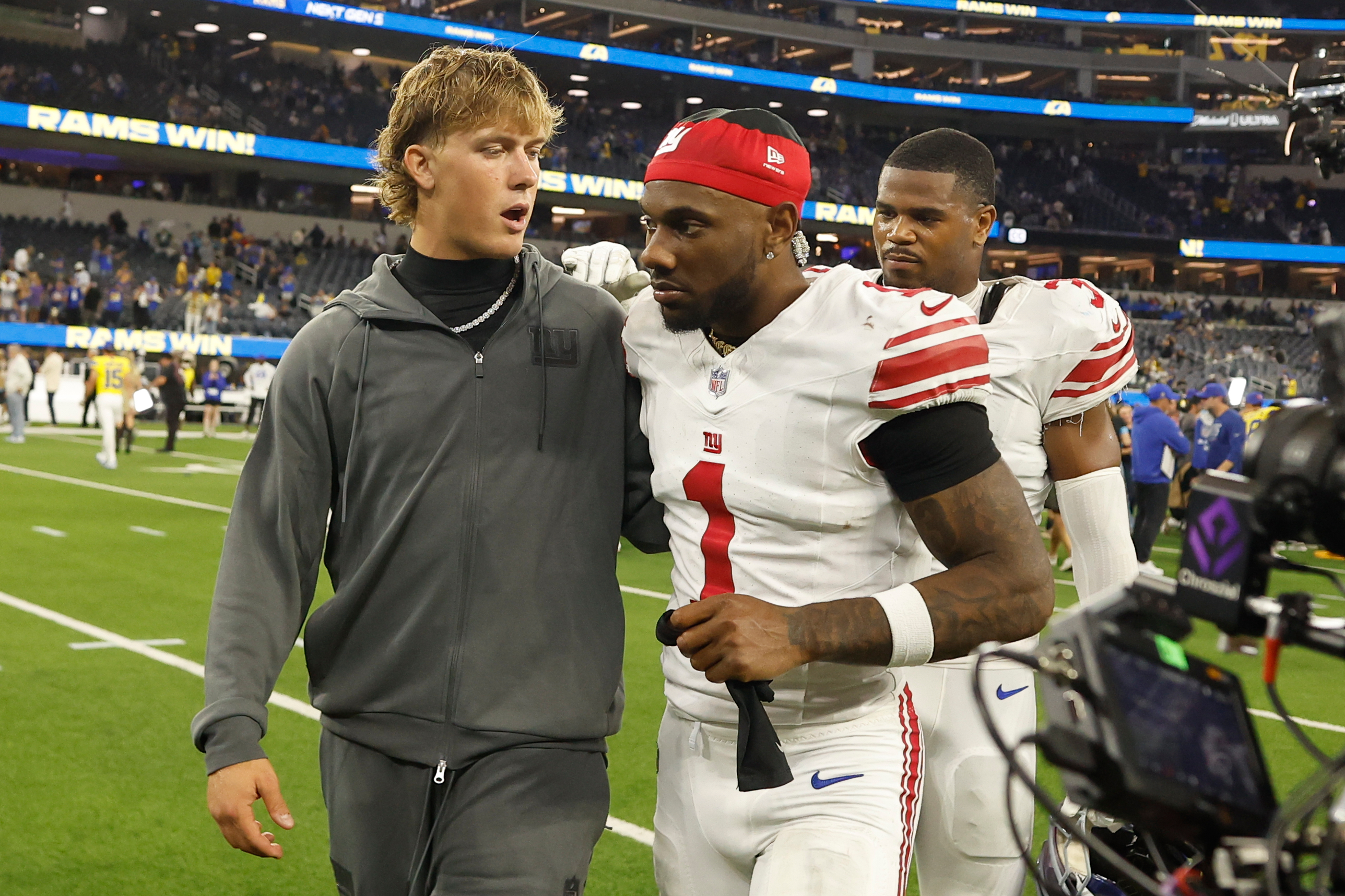
    INGLEWOOD, Calif. — If there were a list of most important New York Giants, seemingly all those key players got hurt at some point during a 28-6 loss to the Los Angeles Rams on Monday night, starting with quarterback Jaxson Dart injuring his left knee during his team’s first series.

    Coach John Harbaugh would not confirm reports that Dart sprained his MCL, choosing to wait for further testing.

    “That’s in the neighborhood of it, I would say,” Harbaugh said. “We’ll get an MRI (on Tuesday) and have a real good feel for it, and give you more information from there.”

    The Giants also saw top pass rusher Brian Burns sprain his left ankle and left tackle Andrew Thomas sustain an apparent lower-body injury in the fourth quarter. Wide receiver Malik Nabers had to pop his right shoulder back into place after dislocating it on the second-to-last play of the first quarter.

    “But that’s just part of football,” Burns said. “Guys go down every day, and it’s always next guy up. That’s why you try to develop a culture where you don’t slack off in production with the guys that’s behind.”

    Even with that mentality, the Giants were never able to get back on track after Dart was hurt less than four minutes into the game while being pressured on third and 8. Rams linebacker Byron Young hit Dart from the quarterback’s right side, sending him into linebacker Josaiah Stewart, who undercut Dart’s legs, resulting in a hard fall. Dart was eventually able to walk gingerly to the sideline under his own power, and he went into the medical tent for further evaluation before walking to the locker room.

    Gameday Central: Is it time for the Eagles to start Willie Lampkin?
    Video: Gameday Central: Is it time for the Eagles to start Willie Lampkin?

    Jameis Winston replaced Dart on the ensuing Giants drive.

    Dart, who was 3-of-5 passing for 20 yards, spent the second half on the sideline in street clothes.

    “Any time your quarterback goes down, obviously that’s a gut punch to the team, right?” said Winston, who was 11 of 27 for 111 yards with one interception.

    The body blows kept on coming.

    Nabers was injured jockeying with Rams cornerback Trent McDuffie when he was targeted on a first-down pass. Nabers immediately grabbed his right shoulder and ran to the sideline, where he was clearly in pain. He was able to return on the next series, finishing with one reception for 1 yard on four targets, while clearly laboring at times.

    “Nah, I ain’t gonna make no excuse for anything that happened in the game,” said Nabers, who indicated he would undergo X-rays on Tuesday. “Yeah, I’m battling through injuries, but it doesn’t make a difference on how the performance was.”

    Burns got stepped on by Rams center Coleman Shelton but shook off a cart ride back to the locker room when the game ended. He would not speculate on his chances of playing against the Tennessee Titans on Sunday.

    “I’ve dealt with this,” Burns said. “It just depends on how fast you can get the swelling and inflammation out. So I’m just going to do everything possible to get it as tamed as I can.”

    The Giants had to navigate the absences of many of these same players last season. Dart sustained a concussion in Week 10 against the Bears during his rookie campaign, and Nabers missed most of the year with a torn ACL in his right knee.

    But the enthusiasm of Harbaugh’s victorious debut against the Cowboys now gives way to the likelihood Winston will be running New York’s offense for the near future. An 11-year veteran who was drafted first overall in 2015, Winston started two games and appeared in three for the Giants in 2025, throwing for 567 yards with two touchdowns and two interceptions.

    Harbaugh said the Giants can’t get discouraged by their change in fortune.

    “All around the league, everybody deals with it,” he said. “This is football. This is the NFL. This is what you do. So our task is not to lament it.”

  • Trump’s plan to militarize proposed arch raises new legal, safety concerns

    Trump’s plan to militarize proposed arch raises new legal, safety concerns

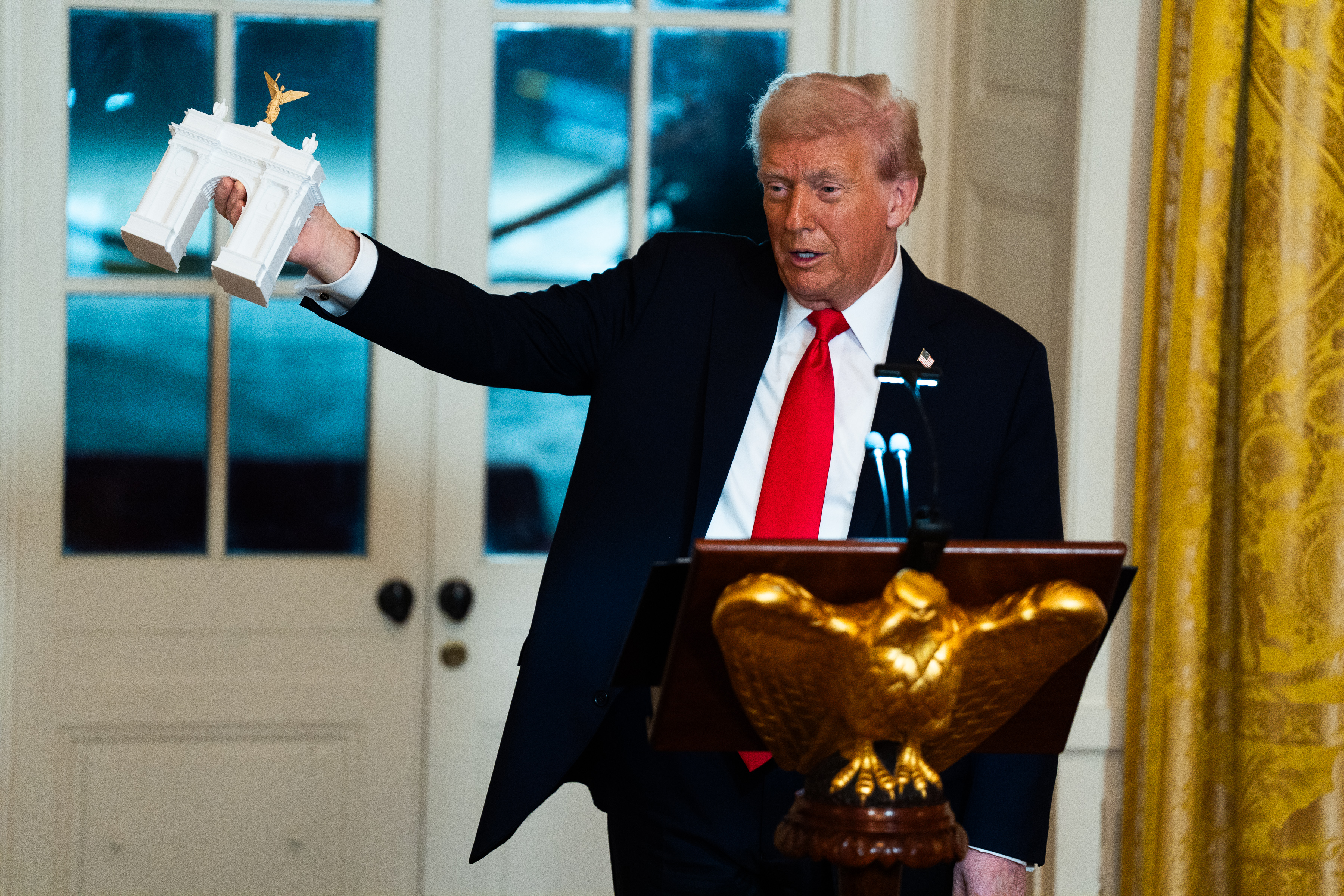
    President Donald Trump’s push to convert his planned triumphal arch near Arlington National Cemetery into a military complex has complicated a required federal review process and raised new legal and safety concerns.

    Trump unveiled his new national security rationale Sunday in a post on Truth Social, saying that the 250-foot-tall arch project — which he has framed for nearly a year as a tourist attraction — will now house drones, snipers, and ammunition. The president said he was making the change at the request of the U.S. military.

    Critics of the plan saw echoes of Trump’s shifting security case for the White House ballroom, which the administration has used to defend that project in court. But while presidents have historically had some leeway to revamp the White House grounds, the arch would stand on federal parkland more than a mile away, where Congress has set stricter rules for construction.

    “There is nothing that authorizes or justifies a massive arch, even if Trump tries to disguise it as a military facility,” said Rep. Jared Huffman of California, the top Democrat on a House committee that oversees federal parkland. “This is cartoonishly illegal, but he’s obviously trying to find a way to do it anyway.”

    Aviation experts warned Monday that using drones at the planned arch site — Memorial Circle, a roundabout near Reagan National Airport — could pose risks in the airport’s crowded airspace.

    “Anything you add to the airspace complicates the airspace and increases the operational risk,” said Tom Lintner, a former safety official at the Federal Aviation Administration (FAA).

    Other military and safety experts have questioned the implications of storing ammunition in the middle of a heavily used traffic circle and whether tourists could still enter the arch as previously planned.

    Historic preservationists participating in a required federal review process said they could not move forward until the administration clarifies Trump’s plans for the arch. Administration officials last week had asked Washington’s and Virginia’s preservation offices to agree to a memorandum of agreement (MOA) by Monday as part of that process, and they invited other preservationists to participate.

    “This MOA is DOA,” Charles Birnbaum of the Cultural Landscape Foundation wrote in an email to the administration on Monday. An official for Washington’s historic preservation office also wrote in an email that the office needed clarity on Trump’s post. Both emails were shared with the Washington Post.

    Administration officials have declined to offer further details about Trump’s plans to convert the arch to a military complex. They have previously said that they will not begin construction on the arch until they have received “all necessary approvals.”

    But Trump has pushed his deputies to expedite the arch and other construction projects, particularly in the wake of a Supreme Court ruling on Aug. 31 that let him continue building his ballroom, according to two people who spoke on the condition of anonymity to discuss private conversations. The ruling did not decide the merits of the case.

    Spokespeople for the White House and Pentagon said on Monday that they had no additional information to provide beyond the president’s social media post. A defense official, speaking on the condition of anonymity because of the sensitivity of the issue, said it was not clear if U.S. Northern Command, which oversees domestic military operations, has been asked to develop any related plans.

    Military officials with Joint Task Force-National Capital Region, which oversees military operations to protect D.C., did not respond to requests for comment on Monday. Spokespeople for the Interior Department and the National Park Service also did not respond to questions about the project. The Federal Aviation Administration referred questions to the White House.

    Until Sunday, the Trump administration had largely portrayed the arch as a prominent tourist attraction. Architectural plans posted by the National Park Service last month include a “ticket booth,” a “family restroom,” and other features atypical of any active military complex.

    Interior Secretary Doug Burgum mentioned that the arch would also offer a “military observation deck” in a social media post earlier this month.

    The administration had already faced safety questions, in part because the 250-foot-tall structure would sit directly in National Airport flight paths. Aviation safety there has garnered significant attention since a 2025 collision between an Army helicopter and an American Airlines regional jet near the airport that killed 67 people.

    On Friday, the FAA said it had determined that the arch would not pose a hazard to aircraft, including at National Airport. That finding preceded Trump’s announcement about drones, whose type and frequency of use remain unclear.

    In its final study on the arch, the FAA said the proposed structure should feature “a nonstandard eternal flame” to make it noticeable to pilots. It also said the arch should be continuously floodlighted by searchlight projectors around its base.

    Jeff Guzzetti, a former FAA and National Transportation Safety Board accident investigator, said having drones in the flight path of National would worsen the airport’s congestion problem.

    “Even not knowing how often these things are going to be used, it would certainly increase the risk of a collision with a commercial airliner,” Guzzetti said.

    Michael McCormick, coordinator of the Air Traffic Management program at Embry-Riddle Aeronautical University, said he expected the FAA would need to conduct another study.

    “Whatever the drones are, no matter what, the FAA would have to approve their flight because it’s civilian airspace,” McCormick said. “It cannot be a unilateral decision by the Pentagon.”

  • Bears coach Ben Johnson not ruling out QB Caleb Williams against Eagles

    Bears coach Ben Johnson not ruling out QB Caleb Williams against Eagles

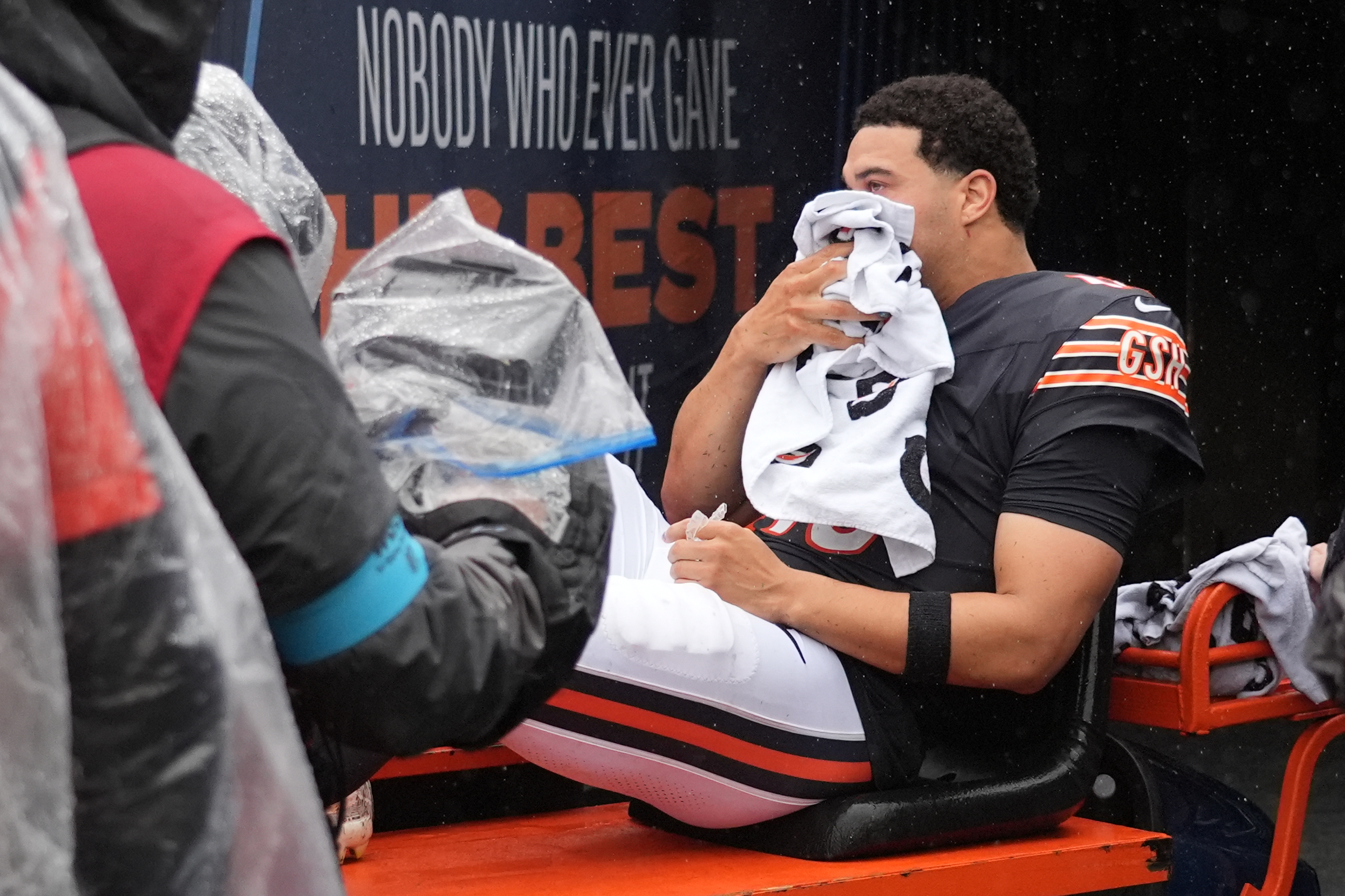
    CHICAGO — Chicago Bears coach Ben Johnson called Caleb Williams’ right hamstring injury a “week-to-week” situation while offering a largely positive update a day after the quarterback was helped off the field and carted to the locker room.

    Williams left Sunday’s 9-3 loss to Minnesota after he got hurt on a scramble deep in Vikings territory with about 7½ minutes left. The No. 1 pick in the 2024 draft was replaced by Tyson Bagent.

    Johnson said he doesn’t think Williams will practice this week, but he isn’t ruling him out for Chicago’s matchup with the Eagles on Monday night.

    “He’s right now working through every avenue that he’s got available to get back on track here,” Johnson said. “We’ll see what that looks like. Here’s what I know: This guy’s a little bit different than the average human being. … He gets back, he has in the past, a lot faster than what people can anticipate. I’m not putting a timeline on this. We’re going to say week to week.”

    After the home game against the Eagles, the Bears (1-1) take on the New York Jets on Oct. 4 before visiting the Green Bay Packers on Oct. 11.

    Playing in a steady rain at Soldier Field, Williams was 15 for 26 for 138 yards with an interception. He also had five carries for 42 yards against Minnesota.

    Gameday Central: Is it time for the Eagles to start Willie Lampkin?
    Video: Gameday Central: Is it time for the Eagles to start Willie Lampkin?

    The 24-year-old Williams had a towel over his head after he first got on the cart for the trip to the locker room. He took the towel off as the cart moved along the sideline and pumped his right arm to rev up the sullen crowd of 58,914.

    “We’ll see where he’s at as the week progresses and how long that means, but it was somewhat encouraging the report that we got,” Johnson said Monday.

    If Williams is unable to go, Bagent would step in vs. the Eagles. The Bears also have Case Keenum on their roster.

    Bagent was 5 for 9 for 54 yards against the Vikings. He had a record-setting career at Division II Shepherd University before signing with the Bears in May 2023 as an undrafted free agent.

    “He’s got full confidence in himself. We have full confidence in him,” offensive lineman Jonah Jackson said, “and we know he can dink and dump the ball around and sling it and also get active with his feet.”

    Bagent, 26, made four starts while appearing in five games as rookie, passing for 859 yards and three touchdowns with six interceptions. He signed a two-year contract extension in August 2025.

    “If it goes that route, I feel strongly about what he’s capable of and our team does, too,” Johnson said. “They know he’s a darn good football player.”

  • Presley Gerber, son of Cindy Crawford and model, dies at 27

    Presley Gerber, son of Cindy Crawford and model, dies at 27

    LOS ANGELES — Presley Gerber, the son of supermodel Cindy Crawford and businessperson Rande Gerber, died Sunday at age 27, a family representative said.

    Mr. Gerber died at a rehabilitation facility, according to online records of the Los Angeles County Medical Examiner. The medical examiner did not provide a cause of death Sunday. An autopsy was performed, but more testing is required before investigators can give a cause, according to the medical examiner’s website.

    The death was confirmed by Allie Jenkins, a representative for Crawford and Rande Gerber, who were married in 1998.

    “The family is asking for privacy during this very difficult and painful time,” Jenkins said in an email Sunday night.

    Mr. Gerber was a model and the older brother of model and actor Kaia Gerber. He had been open about his struggles with mental health and substance abuse, documenting his journey on Instagram. He even started a “Mental Health Mondays” series on the platform to raise awareness and share wellness tips. Across multiple episodes, he related his own experiences with substances ranging from ketamine to kratom, as well as his time at rehabilitation facilities.

    He posted an Instagram video in March from Mexico, where he said he planned to take ibogaine, a potent psychedelic that is being studied as a treatment for opioid addiction, post-traumatic stress disorder and other conditions. Ibogaine — known to sometimes trigger potentially fatal heart problems — is banned in the U.S. under the federal government’s most restrictive category for illegal, high-risk drugs, although President Donald Trump directed his administration to ease restrictions and spur research.

    Raised in Malibu, Calif., Mr. Gerber signed with the management agency IMG as a teenager and made his runway debut for Moschino at 16. In 2018, he appeared alongside his mother — whose famous beauty mark he inherited — in a Pepsi Super Bowl ad that paid homage to her 1992 commercial for the soda brand. That same year, he and his sister shot a campaign for Calvin Klein jeans.

    Mr. Gerber later signed with DNA Models. His biography on the agency’s website describes him as an entrepreneur and model who was inspired by “his mother’s legendary modeling career and his father’s lucrative business career.” Rande Gerber’s businesses have included restaurants, nightlife companies, and Casamigos — a tequila brand he cofounded with George Clooney and Mike Meldman that was sold to Diageo in a $1 billion deal.

    Mr. Gerber’s modeling biography also described him as an “avid surfer and skater.” In an Instagram video posted in July 2025, Mr. Gerber described growing up as a dedicated athlete who spent hours in the water nearly every day — a routine that came to a halt when he started working. With less physical activity, Mr. Gerber said, he was put on more medication and his quality of life suffered.

    “For me it took 10 years of looking back at my life being like, ‘Well, what changed?’ A lot of the time people would ask like, ‘You were such a happy kid; what happened to you?’” he recalled. “What happened was life happened and I wasn’t able to worry about one thing, which was my next meal and then get back in the ocean. Like I had to start making money, I had to start — I got a job.”

    In an interview with Vogue last month, Kaia Gerber praised her brother for being so open about his experience with addiction.

    “My parents for most of our lives were very, very private and didn’t share anything—and now we have this absolute teacher, my brother, who says, ‘I’m gonna be very human for everyone,’” she told the magazine. “There’s only so much you can hide from the world. And trying to put a lid on something just makes the person feel like you’re ashamed of them.”

    In addition to his testimonial videos, Mr. Gerber’s Instagram was a collection of modeling shoots and memories that stretched back to childhood. His life around cameras influenced his own interest in photography as an art form.

    “I have always been the type of person to stop and take a picture when everybody is just focused on the destination,” he told Vogue in 2016, on the occasion of his runway debut. “I feel like people walk by a countless amount of beauty in the world every day, and I hope that I don’t miss all of it.”

  • Tiny wild cat newly identified as a species draws curious visitors in Bolivia

    Tiny wild cat newly identified as a species draws curious visitors in Bolivia

    COROICO, Bolivia — A tiny wild cat hidden away in the cloud forests of Bolivia has become an unlikely tourist attraction, drawing a stream of visitors hoping for a glimpse of the animal that scientists have identified as a brand new species.

    There is just one problem: Tigrino, as he has been affectionately dubbed, doesn’t like the attention.

    The small, spotted feline with large, leopardlike spots is easily stressed, so caretakers at the wildlife sanctuary near La Paz keep him out of public view, turning away the crowds eager for a closer look. When the Associated Press visited Sunday, Tigrino cautiously emerged from his shelter, sniffed the air and paced around for a few minutes before slipping back into the foliage.

    Tigrino belongs to Leopardus tilcayo, the first living wild cat species described by scientists in more than a century. At just 18 inches from head to the base of his tail and 3 pounds, he is smaller than the average house cat.

    The discovery published Thursday in the journal Current Biology set off a flurry of excitement on social media. Visitors from across Bolivia and beyond have flocked to the Senda Verde Wildlife Sanctuary, where Tigrino has lived since 2017, when a family brought him there after trying unsuccessfully to make a house cat of him.

    “Tigrino has become, in just a few days, an ambassador for conservation,” said sanctuary co-founder Marcelo Levy, adding that the new species designation has helped raise awareness about the need to protect wild cats and their habitat in Bolivia’s tropical forests.

    “He’s such a tiny animal, and he has become something so important,” Levy said.

  • Ex-Haitian official, 17 others appear in U.S. court related to 2021 plot to kill Haitian president

    Ex-Haitian official, 17 others appear in U.S. court related to 2021 plot to kill Haitian president

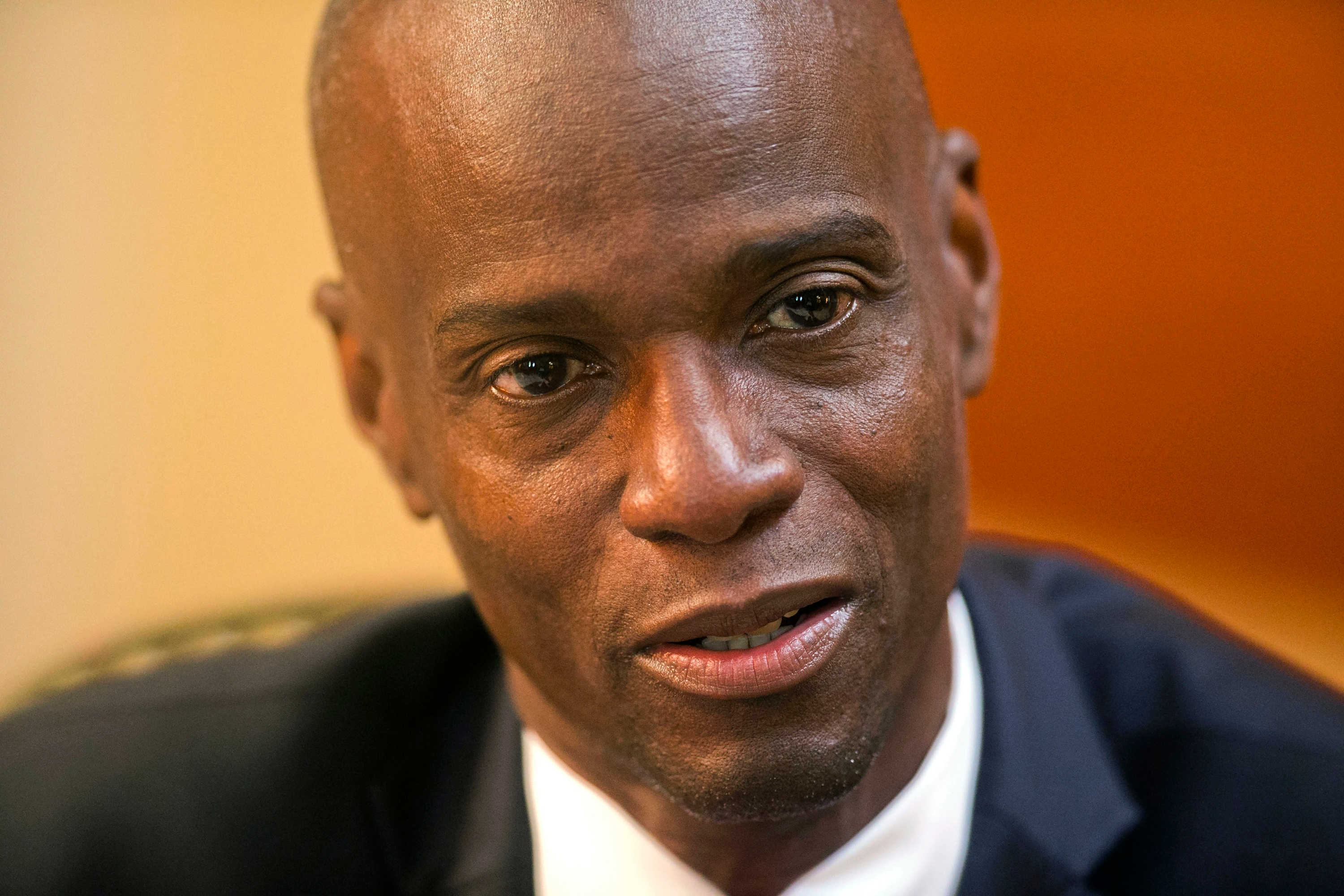
    MIAMI — A former Haitian government official and more than a dozen other people appeared Monday in federal court in Miami on charges related to the 2021 assassination of Haitian President Jovenel Moïse.

    Joseph Badio, a former Haiti Ministry of Justice employee, was brought into the Florida court in a wheelchair. The hearing happened a day after he and 17 others described as Colombian mercenaries were flown to the United States from Haiti, where they had been in custody.

    They’re among 30 people charged in the indictment, including Christian Sanon, a Palm Beach County, Fla., resident and dual Haitian-American citizen who was already preparing to face trial next week. Authorities said he aspired to be Haiti’s president.

    South Florida served as a central location for planning and financing the plot to oust Moïse and replace him with someone of the conspirators’ choosing, U.S. authorities have alleged. At least nine people so far have been convicted at trial or through guilty pleas.

    Moïse was “assassinated by individuals seeking to profit from illicit financial opportunities and business contracts,” U.S. Attorney Jason Reding Quiñones said.

    Moïse was killed on July 7, 2021, when about two dozen foreign mercenaries, most from Colombia, attacked his home near Port-au-Prince.

    In 2025, justice officials in Haiti asked the U.S. and Canada for help after a local court of appeals ordered a new investigation into Moïse’s killing, the third inquiry of its kind since he was shot 12 times at his private residence. His wife, Martine, also was injured in the attack.

    The previous investigations were stalled because Haitian judges kept resigning from the case, fearing for their lives, and gangs seized control of the downtown Port-au-Prince courthouse where the judges were interrogating suspects.

    Any proceedings in Haiti “continue to face significant difficulties,” the Ministry of Justice and Public Security said Sunday.

    The indictment says Badio, who is charged with conspiracy, posed as a U.S. drug agent and participated in Moïse’s killing. A lawyer appointed to temporarily represent him could not immediately be reached for comment.

    Badio once worked in the government’s anti-corruption unit until he was fired for alleged ethics violations weeks before the assassination.

    U.S. Magistrate Judge Lisette Reid assigned lawyers and set additional court dates during a series of brief dialogues with each of the 18 defendants.

    The scheme to kill Moïse included paying mercenaries with money obtained from U.S. government programs that were intended to help businesses during the COVID-19 pandemic, the indictment says.

    Haiti has not had a president in the five years since Moïse’s death. It has instead been overwhelmed by gang violence: More than 3,000 people were killed this year by June and about 1.5 million people were displaced, according to the U.N.

  • The Netherlands is bracing for potentially devastating U.S. sanctions against the ICC

    The Netherlands is bracing for potentially devastating U.S. sanctions against the ICC

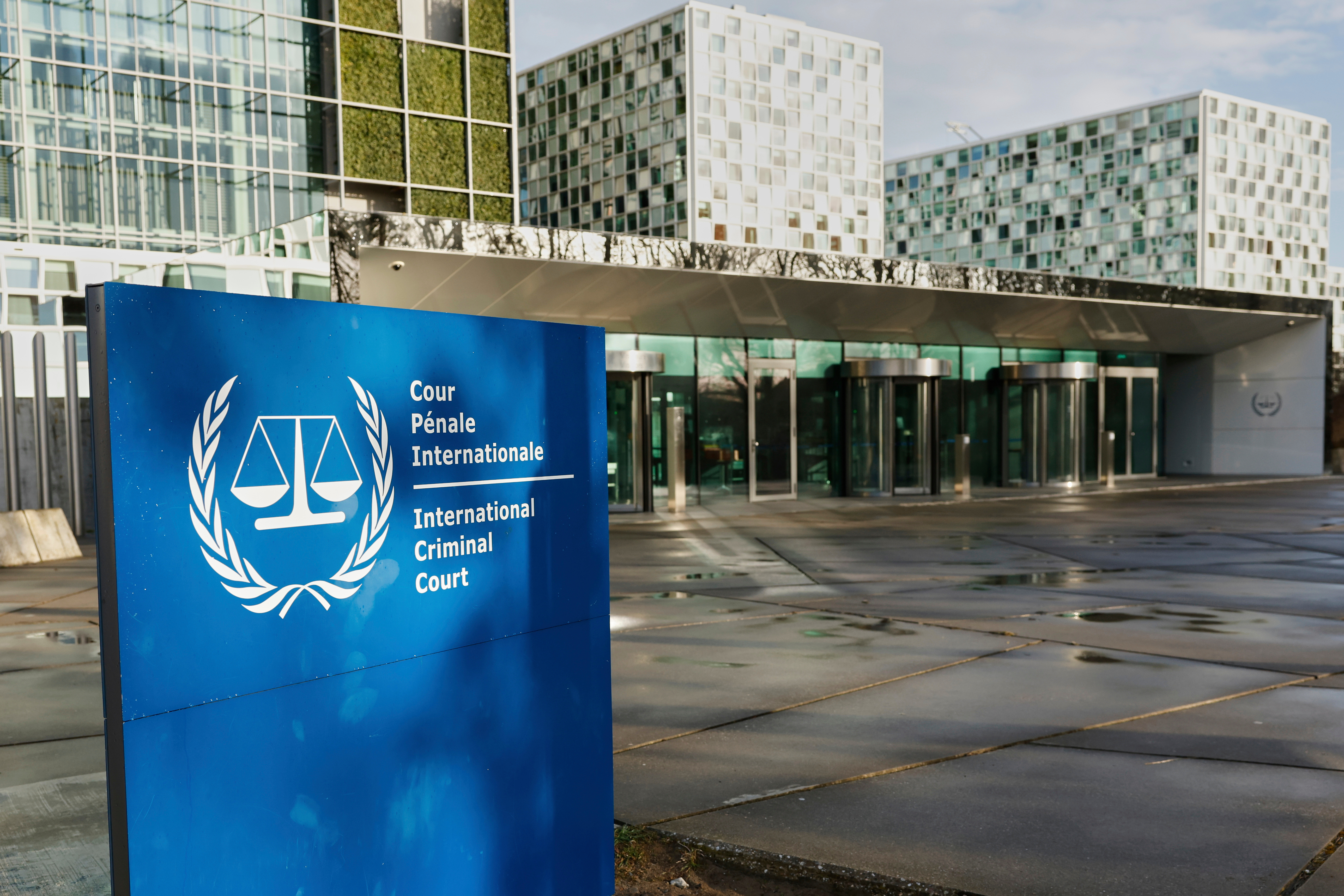
    THE HAGUE, Netherlands — Dutch officials are preparing for the United States to impose a tough new round of sanctions on the International Criminal Court as it seeks to dismantle the global tribunal over what the Trump administration sees as overstepping its authority.

    Officials in the court’s host country, the Netherlands, have been notified that the sanctions are imminent and are looking at ways to help the tribunal keep operating, including paying staff, protecting witnesses, and maintaining the detention facility, diplomatic and government officials with knowledge of the briefings told the Associated Press. They spoke on condition of anonymity because they were not authorized to speak publicly.

    Washington has already sanctioned more than a dozen current and former staff members, including half of the court’s sitting judges, in what U.S. Secretary of State Marco Rubio has described as a “sweeping campaign to dismantle the threat posed by the International Criminal Court.”

    The U.S. and Israel have strongly objected to the court’s arrest warrants for top Israeli officials, including Prime Minister Benjamin Netanyahu, over the war in Gaza. The U.S. also has opposed investigations into its military actions in Afghanistan.

    Like Russia, China, India, and Israel, the United States is among countries that have never joined the panel, with Washington citing fears of politically motivated prosecutions of its military. The court currently has 125 member states.

    The sanctions could prevent the court from accessing financial and IT services, and even paying its U.S. employees. When the court’s former chief prosecutor was sanctioned in 2025, he lost access to his Microsoft email, his bank accounts were frozen, and he was barred from entering the United States.

    According to two sources familiar with the situation, U.S. officials warned their Dutch counterparts that sanctions would be levied as early as Monday and encouraged the court’s host state to withdraw from the institution.

    Two U.S. officials told the AP that more ICC sanctions may be coming, but stressed that the scale and scope of the penalties had not yet been finalized and that no announcement is expected this week. The officials were not authorized to comment publicly on the matter and spoke on condition of anonymity.

    The ICC was established in the Hague in 2002 as the court of last resort to prosecute individuals responsible for the world’s most heinous atrocities: war crimes, crimes against humanity, genocide, and the crime of aggression. It takes on cases when nations are unable or unwilling to prosecute crimes on their territory.

    U.S. officials did not immediately reply to a request for comment. “The Trump Administration has been clear: the International Criminal Court is a corrupt and fatally politicized supranational court that has maliciously abused its authority and exceeded its mandate,” Secretary of State Marco Rubio said in a statement when announcing sanctions on the court president last month. “We will not tolerate its assault on state sovereignty.”

    The ICC has been preparing for months for the possibility of sanctions. Earlier this year, the court migrated off Microsoft products onto a German software provider, according to three ICC staff members who were not authorized to speak on the record. The tribunal has also changed insurance and other financial providers to companies without a footprint in the United States, they said.

    Dutch and court officials are hoping for a six-month grace period before the sanctions come into effect, arguing that the institution needs time to sever itself from American companies, which could face huge financial penalties if they are found to be in violation.

    Beyond migrating to European-based alternatives, the Netherlands and the European Union have few options to protect the institution.

    The EU “blocking statute” can be used to protect European court staff by preventing European companies from complying with the U.S. measures, though it’s unclear whether the statute would shield the ICC itself, because it’s an international body, not a European one. EU citizens are entitled to a basic bank account, but that doesn’t provide access to credit cards or U.S. payment facilities.

    A small but growing number of the global tribunal’s member states have announced plans to leave the institution in recent months, including Venezuela and Chad.

    Chad specifically cited the United States in its decision to withdraw. Foreign Minister Abdoulaye Sabre Fadoul said in a statement that during a phone call with a U.S. official in July, “the American side expressed its concerns regarding the functioning of this institution and requested that Chad reconsider” its membership.