Category: Wires

  • Trump and Xi see tensions flare over AI, trade and Iran but still seek stability

    Trump and Xi see tensions flare over AI, trade and Iran but still seek stability

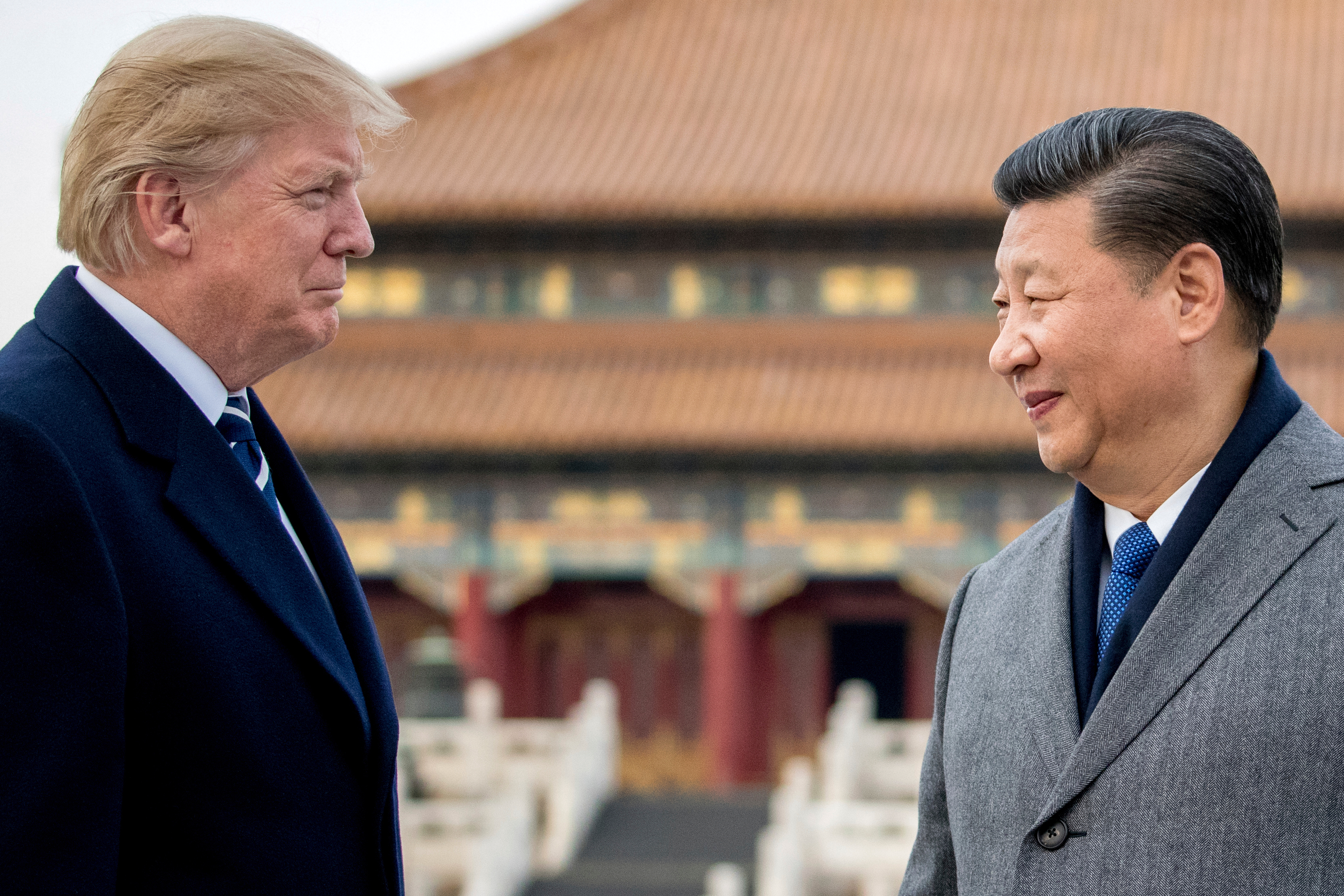
    WASHINGTON — State visits usually occur when two countries are on warm terms, but U.S. President Donald Trump is hosting Chinese leader Xi Jinping in Washington this week as their economic and tech competition is only escalating, especially through an artificial intelligence race.

    Neither expects any grand bargain, but the leaders are expected to play nice in their third meeting since Trump returned to the White House to try to steady fragile ties. That is despite the world’s two largest economies seeking the upper hand on AI developments and trade, while pushing for leverage in persistent hot spots like Iran and Taiwan.

    “The fact that they are meeting, and there’s dialogue occurring and building that relationship, is probably as important as outcomes from the meeting,” said Sen. Steve Daines, a Montana Republican who advises Trump on China and recently traveled there to lay groundwork for the summit.

    Cui Tiankai, a former Chinese ambassador to the U.S., said at a recent forum in Beijing that there are “always problems, sometimes very big problems” between the two countries, but ”we’ll make our best efforts to maintain overall stability.”

    Trump and Xi shifted away from sky-high tariffs, but competition is still intense

    Xi’s visit to Washington, which begins Wednesday, is his first in 10 years. He and Trump are meeting after their countries climbed down from last year’s intense trade war, where they traded tit-for-tat sky-high tariffs that threatened the global economy. China also choked off its world-leading supplies of critical minerals needed in products from electric cars to fighter jets.

    The U.S. is not only trying to balance trade but also maintain its tech dominance to protect national security and global leadership. China, which has amassed tremendous economic, technological, and military power over the past several years to close gaps with the U.S., is seeking to solidify its place in the global order.

    The stability both sides are seeking is “for deeply competitive reasons,” said Evan Medeiros, a senior adviser at the Asia Group consultancy. “This is basically two geopolitical strongmen circling each other on the playground, trying to determine what their next move may be.”

    The countries appeared to be entering a “new normal” of “overall stability” despite blacklisting each other’s companies and restricting the flow of high-tech products, said Da Wei, director of the Center for International Security and Strategy at Tsinghua University in Beijing.

    The leaders now should produce deals that their governments can carry out, he said, noting that “we need to move fast.”

    The AI race could strain any cooperation on technology’s advance

    Developing AI technology has emerged as a key battleground, with both sides showing little interest in slowing down despite warnings from tech CEOs about threats that rogue AI could pose to humanity. “Whoever wins AI wins,” Trump has repeatedly said.

    He claimed on social media Monday that the U.S. is leading over China and that he was “not going to stifle Growth, of something that will be bigger than the Industrial Revolution, or the Internet, itself.”

    China cannot afford to lose either. In a rare, blunt essay, Chen Yixin, head of China’s Ministry of State Security, warned that AI poses a direct threat to Communist Party rule if foreign and hostile forces achieve superior capabilities.

    The U.S. is already restricting exports of the most powerful AI chips to China and has accused Chinese developers of tapping into American AI models at an industrial scale to extract their capabilities.

    Beijing says the practice, known as distillation, is widely used, including by American companies, and has criticized the U.S. for trying to monopolize the industry.

    Beijing also is upset about U.S. efforts to build an alliance that excludes China, so it is seeking to craft new global AI guardrails by appealing to developing nations.

    However, the U.S. and China are taking a small step to cooperate on AI.

    Treasury Secretary Scott Bessent said Sunday after meeting with Chinese Vice Premier He Lifeng in New York that the U.S. has proposed a new “notification mechanism” for AI incidents that could affect national security.

    “We think that just like any cross-border activity, that moving from opaque to more transparency between the No. 1 and the No. 2 AI powers in the world is very important,” Bessent said.

    U.S. and China turn to targeted ways to compete instead of tariffs

    While the U.S. and China have refrained from taking broad, punitive actions that would break their trade truce, they still are blacklisting individual companies and banning specific products.

    “What we’ve seen is kind of testing and probing by both sides to understand what can be done competitively, while still keeping that leader-level rapprochement on track,” said Mira Rapp-Hooper, a visiting fellow at the Brookings Institution’s Center for Asia Policy Studies.

    The U.S. has recently targeted Chinese telecommunications and surveillance equipment, companies accused of using forced labor in the ethnic region of Xinjiang, as well as China’s advanced robots and drones. The Pentagon also has barred Alibaba, BYD, Baidu, and other major Chinese businesses from receiving U.S. defense contracts.

    Beijing responded with export controls on drones and related technologies as well as blacklisting six U.S. companies over their support for the punitive measures tied to Xinjiang.

    Iran, Taiwan and tariffs are persistent issues

    After the Supreme Court struck down Trump’s tariffs on trade partners this year, the administration has been trying to impose them in other ways.

    The White House in July rolled out a 12.5% tariff on imports from 60 trading partners, including China, ostensibly for failing to do enough to prevent the import of goods produced by forced labor. The U.S. is planning an additional 7.5% tariff on China, accusing it of producing far more goods than it can reasonably consume.

    Analysts say the tariff levels are now acceptable to both sides, but any significant uptick could rekindle tensions.

    The Trump administration, however, has launched a campaign to isolate Iran from its remaining economic partners, but Beijing has insisted on its right to trade with Tehran.

    So far, the Trump administration has done little to punish China, partly to avoid jeopardizing the leaders’ summit. But Washington also is losing leverage because China — Iran’s biggest oil buyer and its largest trading partner — has been building up a way to make payments outside the U.S.-led financial system, said Alicia Garcia Herrero, an Asia-Pacific economist at the French investment bank Natixis.

    Taiwan, a self-governing island that Beijing claims as its own territory, also remains one of the thorniest issues in U.S.-China relations. Trump paused a large weapons package to Taiwan following his May trip to Beijing, but the U.S. is obligated by a domestic law to provide it with sufficient hardware and technology for self-defense.

    Analysts say Xi will most likely press Trump to further delay arms sales to sow doubts in Taiwan about Washington’s commitment.


  • Clavicular, ‘looksmaxxing’ influencer, charged with raping a 17-year-old

    Clavicular, ‘looksmaxxing’ influencer, charged with raping a 17-year-old

    Clavicular, a male beauty influencer known for “looksmaxxing,” has been charged with giving a 17-year-old girl vodka on a livestream and then raping her, according to Massachusetts court records.

    Clavicular, whose legal name is Braden Peters, is scheduled for an Oct. 14 arraignment in Orleans District Court, on Cape Cod. The charges, filed Sept. 8, were first reported by the Bulwark.

    One of his lawyers, Jeff Neiman, said his client was innocent but declined to comment further. Mitchell Jackson, a spokesperson for Peters, said Peters had not been arrested. Efforts to reach Peters by call and text were unsuccessful.

    Peters, 20, who is known for his livestreams, is the face of an online subculture dedicated to improving male attractiveness. He compares himself with other men and assesses women’s looks on livestreams.

    The girl accused Peters of attacking her at a family home in Chatham, Mass., after he had streamed live on the internet, according to a police report filed in court. (The New York Times generally does not name people who report sexual assaults.)

    In May 2025, Peters served the girl “cups” of alcohol as he broadcast to the internet, the girl told investigators. He told her to lie on camera by saying that she was 18, according to the police report. After the livestream ended, Peters had sex with her several times, she told the police.

    She lacked the ability to consent, an investigator wrote. Peters was charged with rape, drugging for sex, and serving liquor to a minor.

    The police report, made in June, noted that the teenager “did not tell anyone the full extent of what occurred” for some time after the incident. In April, however, she sued Peters in Miami, making allegations similar to those in the police report.

    Peters had previously paid the girl, who herself was an influencer, to film “looksmaxxing” videos, and she had accepted his offer of a cab ride to the house in Cape Cod because she thought meeting him would boost her online presence, the lawsuit said. Peters’ mother and grandmother were at the house during the attack, the lawsuit says, claiming that his mother knew that excessive amounts of alcohol were being served.

    In addition to sexual assault, the girl’s lawsuit also accuses Peters of improperly injecting her face with a fat-dissolving drug on a livestream in Miami, which she said caused her emotional distress, and of later publicly discrediting her, costing her sponsorships.

    Peters’ lawyers have asked a judge to throw out portions of the suit. They said the girl did not demand legal redress for a sexual assault until three months after the case was originally filed.

    Andrew Moss, the girl’s lawyer, said Monday night that Peters was scheduled for a deposition in the case next week.

    Peters posted several times on the social platform X about the girl on Monday, when the Bulwark’s article on the charges was published. “Trying to get my attention in anyway possible, a lawsuit?” he said in one post. “Seriously… really petty of you.”

    Peters has found himself in legal trouble several times this year. In February, he was arrested in Scottsdale, Ariz., and charged with having fake identification, an Adderall pill, and an oral steroid. The charges were later dropped.

    The next month, Peters was arrested in Florida on accusations that he had arranged a brawl between two women. Prosecutors dropped those charges, too.

    And in May, a Florida judge sentenced him to six months of probation after he pleaded no contest in a case involving the shooting of a dead alligator in the Florida Everglades. The shooting was captured on a livestream.

    This article originally appeared in the New York Times.

  • Pentagon adds 1 death to tally of troop fatalities amid Iran war

    Pentagon adds 1 death to tally of troop fatalities amid Iran war

    The Pentagon has added one death to its public database of U.S. military fatalities that have occurred amid the war with Iran, bringing the disclosed total to 19.

    A U.S. defense official, speaking Tuesday on the condition of anonymity because the Pentagon has not publicly announced the death, said that a female Army officer experienced a fatal medical emergency Friday while flying to the Middle East.

    The death was added to the Defense Department’s public casualty database sometime after Monday afternoon. The service member’s identity has not been disclosed.

    Spokespeople for the Pentagon did not immediately return a request for comment.

    The additional fatality was reported earlier by Task & Purpose.

    The Trump administration’s casualty accounting practices have faced intense scrutiny since earlier this year, when the names of four U.S. troops who died as a result of the Iran war were briefly excluded from the Pentagon’s official tally.

    On Friday, the Washington Post reported that more American service members have died in the Middle East during the Iran conflict than the Pentagon has disclosed publicly. Officials said that as many as five military fatalities are not reflected in the Defense Department’s public casualty database — a discrepancy that remained unresolved as of Tuesday.

    As the Post reported last week, not all of the undisclosed fatalities are directly tied to the Iran conflict but involve U.S. personnel who were in the region amid the hostilities.

    The Defense Casualty Analysis System, or DCAS, is supposed to serve as the Pentagon’s official record of all U.S. troops who have died or were wounded in wartime or other contingency operations.

    On Monday afternoon, the database showed that 18 U.S. personnel had died because of hostile and nonhostile action, while more than 820 had been wounded.

    Five U.S. officials who spoke to the Post last week said that at least 22 service members have died in the Middle East since the Trump administration initiated the Iran war on Feb. 28. A sixth official put the tally at 23.

    Historically, nonhostile deaths documented in the DCAS database have encompassed those caused by accidents, sudden health crises, or self-inflicted wounds, including suicides. In past conflicts, those types of deaths were documented to provide the American public with an unvarnished accounting of the costs incurred by military personnel and their families.

    Polls show that the Iran war is deeply unpopular with the American public and a potential political liability for President Donald Trump and the Republican Party heading into November’s midterm elections.

    After the Post’s story published Friday, Defense Secretary Pete Hegseth claimed that the reporting was not accurate, but he did not address whether the Pentagon has tallied all military fatalities consistent with its long-standing practices.

    “Even if we wanted to attempt to hide a combat death, we never would and we never could,” Hegseth told a reporter.

    The proper accounting of military fatalities has implications beyond public transparency. Whenever a U.S. service member dies, the military conducts a “line of duty” investigation to determine whether the death occurred while performing official duties. Those findings affect the survivor benefits for which service members’ families are eligible.

    As of Tuesday, 14 fatalities are listed in the database as having occurred during Operation Epic Fury, the Trump administration’s name for the Iran war. Four others, reflected in a separate category called Overseas Operations, date to a July ceasefire between Washington and Tehran that later collapsed, leading to the resumption of attacks. The most recent fatality was added to the Overseas Operations dataset.

    Separately, since the start of hostilities, the Pentagon has issued news releases stating that two U.S. service members died in the Middle East while participating in missions unrelated to the Iran war. Their deaths, which occurred at bases that have been attacked by Iranian forces, are not reflected by name in the DCAS database.

  • Trump officials cut 760,000 enrollees from ACA, claiming fraud

    Trump officials cut 760,000 enrollees from ACA, claiming fraud

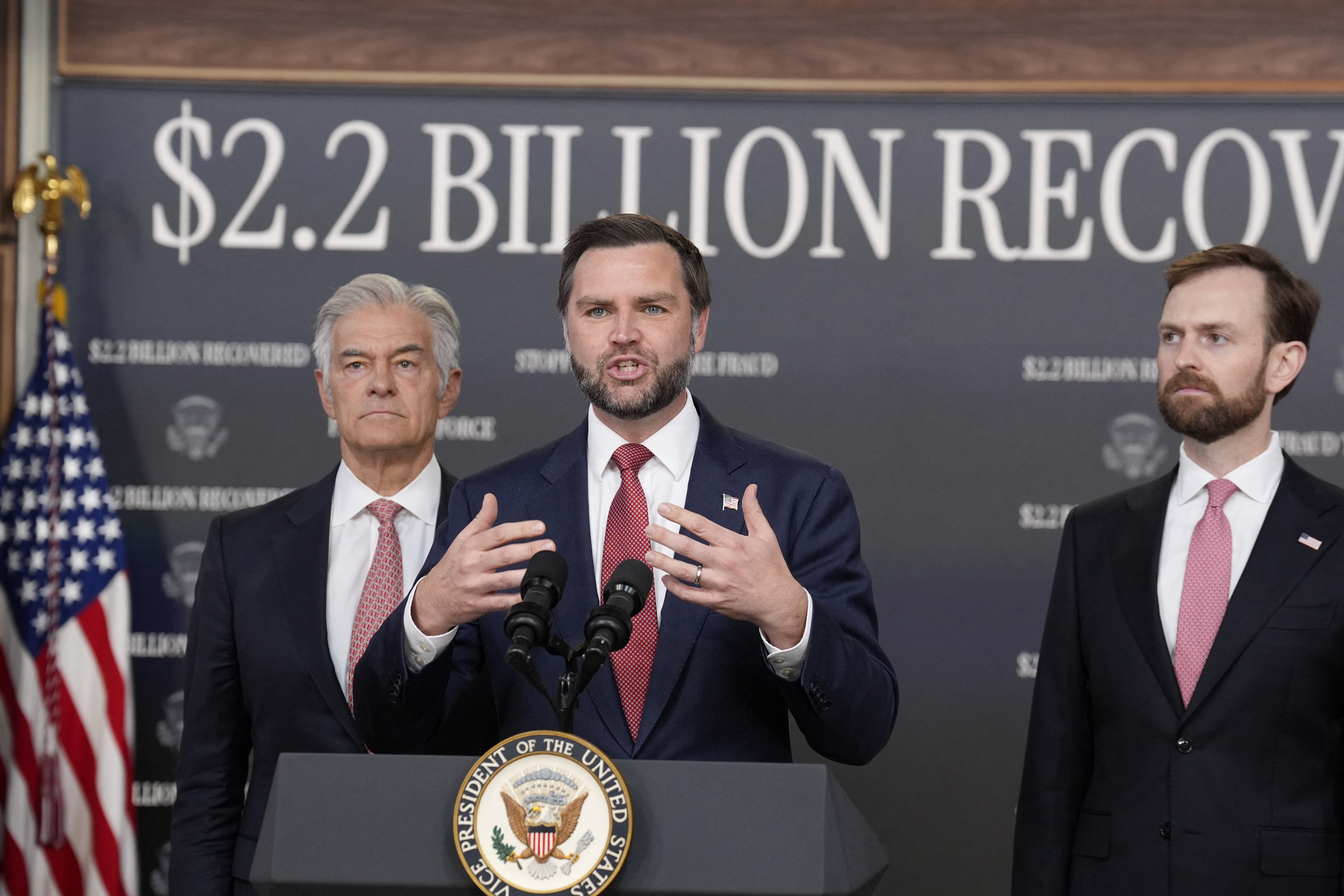
    Vice President JD Vance and administration officials on Tuesday announced that they are removing about 760,000 enrollees from Affordable Care Act coverage, saying that they were fraudulently enrolled in the government health program.

    Speaking at a White House press briefing, Vance said that officials would perform “additional verification” on about 419,000 people that they suspected to be fraudulently enrolled, too. The administration also is suspending some brokers found to have wrongly signed up enrollees for ACA coverage.

    Officials said that the moves would collectively save $2.2 billion in federal spending. The White House anti-fraud task force, which is led by Vance, is working with the Department of Health and Human Services and the Centers for Medicare and Medicaid Services on the crackdown.

    “This is what the fraud task force is all about,” Vance said, flanked by CMS Administrator Mehmet Oz and other senior officials. “Saving the American taxpayers money, and on the other hand, ensuring that these programs that are very important” are protected from waste and fraud.

    Oz said that the fraudulent enrollees were identified based on their lack of healthcare use and other factors, and that officials concluded many were fictitious. He also announced a six-month moratorium on allowing new insurance brokers to sell ACA plans.

    The cuts affect people who enrolled in coverage through healthcare.gov, the federally run ACA marketplace. The Affordable Care Act allowed states to create their own marketplace or use the federal marketplace, healthcare.gov.

    Pennsylvania and New Jersey are among 21 states that operate their own marketplaces. The District of Columbia also operates its own ACA marketplace.

    A spokesperson for Pennie said people who enroll in coverage through Pennsylvania’s ACA marketplace are not affected.

    The Wall Street Journal first reported the administration’s push to remove the ACA enrollees and suspend some insurance brokers. Administration officials told the Washington Post earlier this year that the anti-fraud task force was examining the issue of ACA enrollment fraud.

    About 19 million people are enrolled in health plans offered through the ACA’s exchanges, HHS officials said in June. Enrollment in the program, which shot up under President Joe Biden, has shrunk by more than 1 million people since President Donald Trump took office and is expected to fall by millions more this year.

    Vance and the anti-fraud task force have targeted healthcare programs in their push to trim federal spending by billions of dollars. Vance and Trump have also long criticized the ACA, a sweeping health law established by then-President Barack Obama and Democrats in 2010. The law’s expansion of health coverage is credited with driving the nation’s uninsured rate to historic lows, and past GOP efforts to target the program helped Democrats win back seats in Congress.

    Democrats and some health policy experts have argued that Trump’s polices, including ending pandemic-era subsidies that widely lowered the cost of ACA coverage, have forced people off the program and put them at risk of losing access to care.

    Jason Levitis, who was a senior Treasury Department official in the Obama administration, during which he helped craft and implement ACA policies, credited Trump officials for taking steps to confront fraud in the program. But he criticized Tuesday’s announcement as “chaotic” and questioned whether some people would wrongly lose coverage as a result of the sweeping crackdown.

    “Throwing three quarters of a million people into this bucket of ‘Your coverage is canceled’ and then having to figure it out later is a big concern,” said Levitis, who is now a senior fellow at the Urban Institute.

    He said the administration could have adopted a more structured approach, such as taking lessons from states that run their own ACA insurance exchanges and have reported less fraud in their programs.

    Some also called Vance’s announcement a distraction ahead of the midterm elections, comparing the administration’s fraud crackdown to its efforts to cut spending on Medicaid and other healthcare initiatives.

    “Families need coverage they can afford and count on when they get sick,” Brad Woodhouse, president of Protect Our Care, a liberal-leaning advocacy group, said in a statement Tuesday. “Vance’s task force won’t accomplish that.”

    Republicans contend that dwindling ACA enrollment is the result of necessary initiatives to cut waste and fraud after Democrats focused on growing the program but did too little to scrutinize who was signing up.

    Some conservative lawmakers and policy experts had recently pushed for another crackdown, saying that fraudulent ACA enrollment had spiked after pandemic-era initiatives that made it easier to sign up for coverage — and created incentives for bad actors to take advantage of the program.

    Brian Blase, the founder of the Paragon Health Institute, a conservative think tank that has driven attention on ACA enrollment fraud, welcomed the administration’s move.

    The think tank estimated earlier this year that about 6 million ACA enrollees were fraudulent, a number that includes “phantom enrollees” either unaware they’d signed up or fabricated by brokers.

    “The Trump administration actions to suspend brokers engaged in these activities and disenroll phantoms is welcome and will save taxpayers billions of dollars each year,” said Blase, who was an economic aide to Trump in his first administration.

    Oz, who runs CMS, which oversees the ACA, has previously said that his agency believes perhaps one-third of ACA enrollment is improper.

    “If you care about the ACA, then you’ll want us to take the fraud out,” Oz said at a White House news briefing in June.

    At Tuesday’s event, Oz also singled out several convicted insurance executives who had wrongly enrolled tens of thousands of people into the ACA and used the profits to fund their lifestyles.

    One fraudster has “a very punchable face,” Oz said, as Kim Brandt, a senior CMS official who is helping oversee the fraud crackdown, held up a photo.

    Trump officials also have said that they have adjusted the government’s fraud-fighting tactics, shifting from a long-standing “pay and chase” approach — in which agencies would pay out claims before identifying fraud and then try to claw the money back — to a “stop and caught” model. That strategy has been powered by the use of AI analytics and pattern recognition to spot fraudsters, they added.

    “We’ve learned something: Fraud doesn’t stand still,” Chris Klomp, a senior HHS official, said at Tuesday’s briefing.

    Staff writer Sarah Gantz contributed to this article.

  • Trump says U.S. and Iranian officials met Tuesday, shortly after warning he may ‘annihilate’ Iran

    Trump says U.S. and Iranian officials met Tuesday, shortly after warning he may ‘annihilate’ Iran

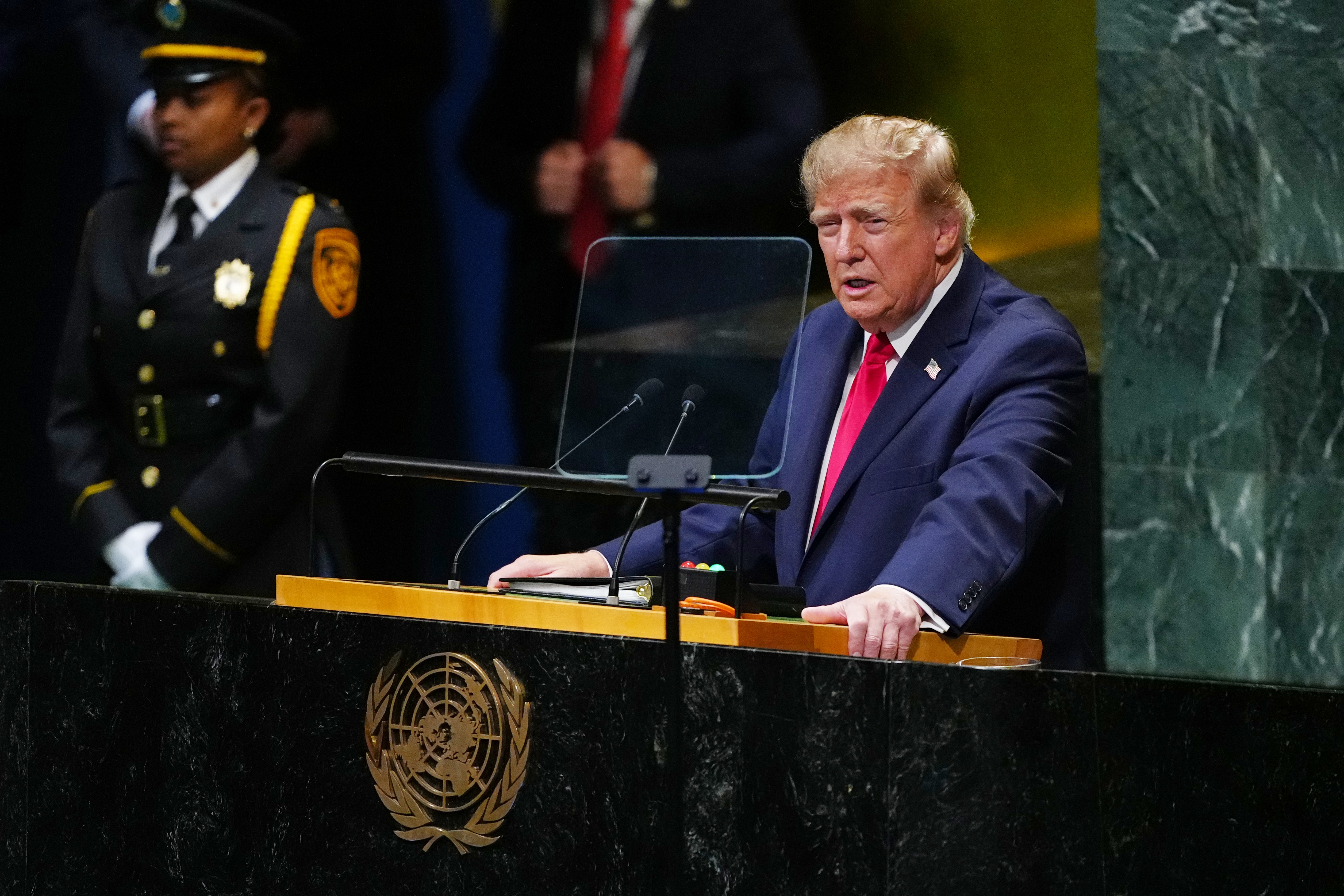
    UNITED NATIONS — President Donald Trump said U.S. and Iranian officials met on Tuesday, an unexpected engagement that came even as he threatened in his address to the U.N. General Assembly that he may “annihilate” the Islamic Republic if a deal isn’t reached soon to end the nearly seven-month war.

    Trump told reporters that his chief envoys, Steve Witkoff and Jared Kushner, met with the Iranian officials on the sidelines of the annual gathering of world leaders but he offered few details about how the discussions transpired or the substance of the exchange.

    “It was a very good meeting,” Trump said. The president later added that the Iranian officials were “not the highest level, but it’s something.”

    The engagement comes after months of U.S.-Iran communications languishing following the collapse of a short-lived ceasefire that was brokered in June. U.S. and Iranian negotiators met separately with Qatari and Pakistani mediators in Doha in early July for indirect talks.

    Earlier Tuesday, Secretary of State Marco Rubio said that Trump is open to meeting with Iran’s president, Masoud Pezeshkian, while he’s in New York for the General Assembly.

    “This is a president that will meet with anybody for the most part, because he believes that engaging with people is important if you’re going to solve problems,” Rubio said on NBC’s Today show. “It doesn’t mean you’re going to end up agreeing with them, but it’s important.”

    Trump also met on Tuesday with leaders and senior officials from Gulf Cooperation Council nations — Bahrain, Kuwait, Oman, Qatar, Saudi Arabia, and United Arab Emirates — as well as Jordan to discuss the way ahead with the war in Iran.

    In his address to the General Assembly, Trump made the case that he’s shown fortitude while other leaders have equivocated as he defended his decision to start a war with Iran.

    But Trump also suggested that he could be at a crossroads in the conflict even as he called on the Islamic Republic to fully reopen the Strait of Hormuz and return to the negotiating table to find a settlement to end the conflict.

    “I have a big decision to make,” Trump said. “Will a deal be made with Iran that lets them rebuild and create a far greater country than it ever was before, maybe one of the greatest in the Middle East or even the world? Or do I annihilate the Islamic Republic and do it quickly, never giving them a chance to kill and destroy people and countries again?”

    The president’s comments came in his wide-ranging address to the international body in which he also celebrated this year’s U.S. military operation to oust Venezuelan President Nicolás Maduro from power and a new agreement to expand the U.S. military presence in Greenland, and pushed back against calls for greater regulation of the artificial intelligence industry.

    But at the heart of the address was a fulsome defense of the war and pushback on the notion that Iran has shown a measure of resilience.

    “The terrorist regime is behaving badly, not because they are strong and confident, but because they are weak and desperate,” Trump said.

    Most of Iran’s delegation walked out of the chamber as Trump railed against the Islamic Republic.

    Trump’s speech began a busy day of diplomacy

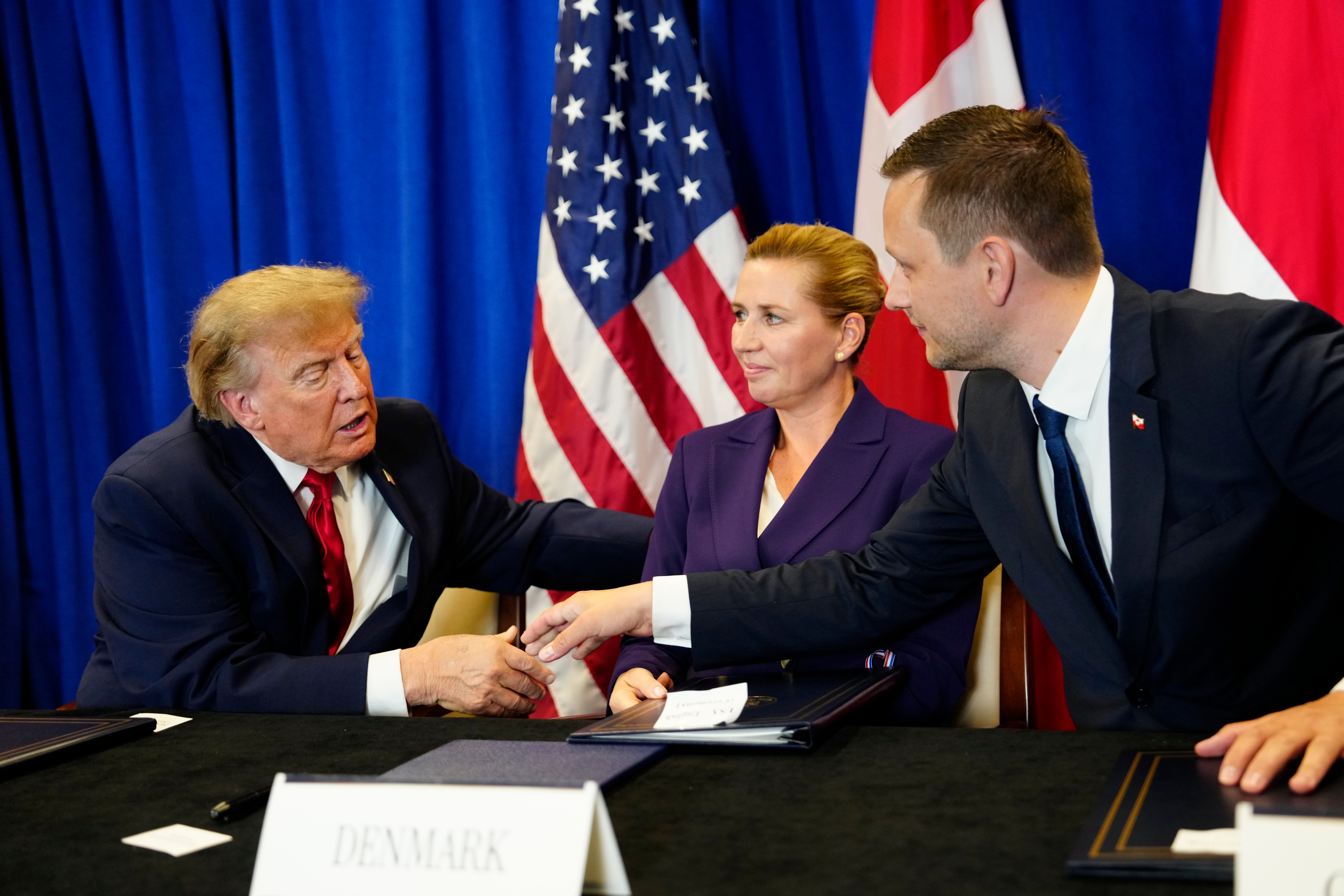
    After his speech, Trump gathered with Danish Prime Minister Mette Frederiksen and Greenlandic Prime Minister Jens-Frederik Nielsen on the sidelines of the General Assembly to sign a new security agreement.

    The deal, announced last week, came together after Trump repeatedly threatened to “take over” Greenland, a territory of NATO-ally Denmark, by military force if necessary. Trump said Tuesday the U.S. will immediately begin the process of developing a larger military presence in Greenland including “building two very major military bases.”

    Under the deal, Greenland remains Denmark’s territory.

    Trump also held talks with new British Prime Minister Andy Burnham, Japanese Prime Minister Sanae Takaichi, and Ukrainian President Volodymyr Zelensky. He was expected to hold a more informal meeting on Tuesday evening with Venezuela’s acting President Delcy Rodríguez, according to the White House.

    Trump also took part in an event on the Shield of Americas, an initiative Trump launched with Latin American countries earlier this year focused on combatting violent cartels.

    Iran war looms large at General Assembly

    The visit to the U.N. comes as Trump’s foreign policy approach — particularly his decision to start a war with Iran — has become a drag on his fellow Republicans’ hopes of retaining control of both chambers of Congress during the coming midterm elections. Nevertheless, Trump made the case in his speech that the world is better off for his leadership.

    “I have no interest in leaving dangers to grow for another day,” Trump said.

    In last year’s address at the U.N., Trump claimed the U.S. had “demolished” Iran’s nuclear capabilities after he ordered the June 2025 bombardment of three key facilities.

    He returned to the General Assembly nearing the seven-month mark of a new war against Iran that he insists is necessary to address a nuclear threat posed by Iran.

    The war has grown more complicated even though strikes by the United States and Israel have killed much of Iran’s top leadership and destroyed its air force and navy, while a U.S. blockade of Iranian oil has left Tehran in economic shambles.

    The energy market continues to be spooked by the war and oil prices remain elevated. Saudi Arabia earlier this month shuttered a key pipeline that acted as a relief valve for oil blocked in the Gulf. The kingdom made the move after the pipeline came under attack by Iran-backed militants in Iraq.

    At the same time, territorial grabs by the Yemen-based Houthi rebels, another Iranian-backed group, near the Bab al-Mandab Strait has now made it treacherous for oil carriers to use that Red Sea shipping lane.

    Trump’s frustration with Russia-Ukraine war mounts

    In his address, the president also touched on Russia’s continuing war against Ukraine — a conflict that during his 2024 campaign he predicted would be resolved on Day One of his second term. He once again expressed hope that the conflict will soon be resolved.

    Trump hasn’t obscured that his patience is being tested by Ukraine’s targeting of Russia’s diesel refineries — an issue that’s added to the global oil markets’ volatility — and Russia’s targeting of Ukraine’s energy grid.

    Trump last week asserted that he got the two sides to agree to not target each other’s energy infrastructure.

    Zelensky had said he was willing to go along with Trump’s plan if Russia abided by it. Russia said it could only go along with Trump’s energy truce proposal if Western energy sanctions on Moscow were lifted first.

    The two sides have continued carrying out strikes on refineries and other energy infrastructure.

    Trump noted that last week he signed a new sanctions bill targeting Moscow. It empowers him to impose up to 100% tariffs on the top five importers of Russian oil or natural gas.

    The legislation includes an exception for countries that import less than 15% of Russia’s natural gas exports and have taken significant steps to reduce those imports. Trump, however, has yet to enact the stiff penalties.

    “If necessary, I will have to use them,” Trump said. “It’s time to stop the killing.”

  • GOP Sen. John Curtis calls for probe of Trump Jr. after wedding party bankrolled by Russian oligarch

    GOP Sen. John Curtis calls for probe of Trump Jr. after wedding party bankrolled by Russian oligarch

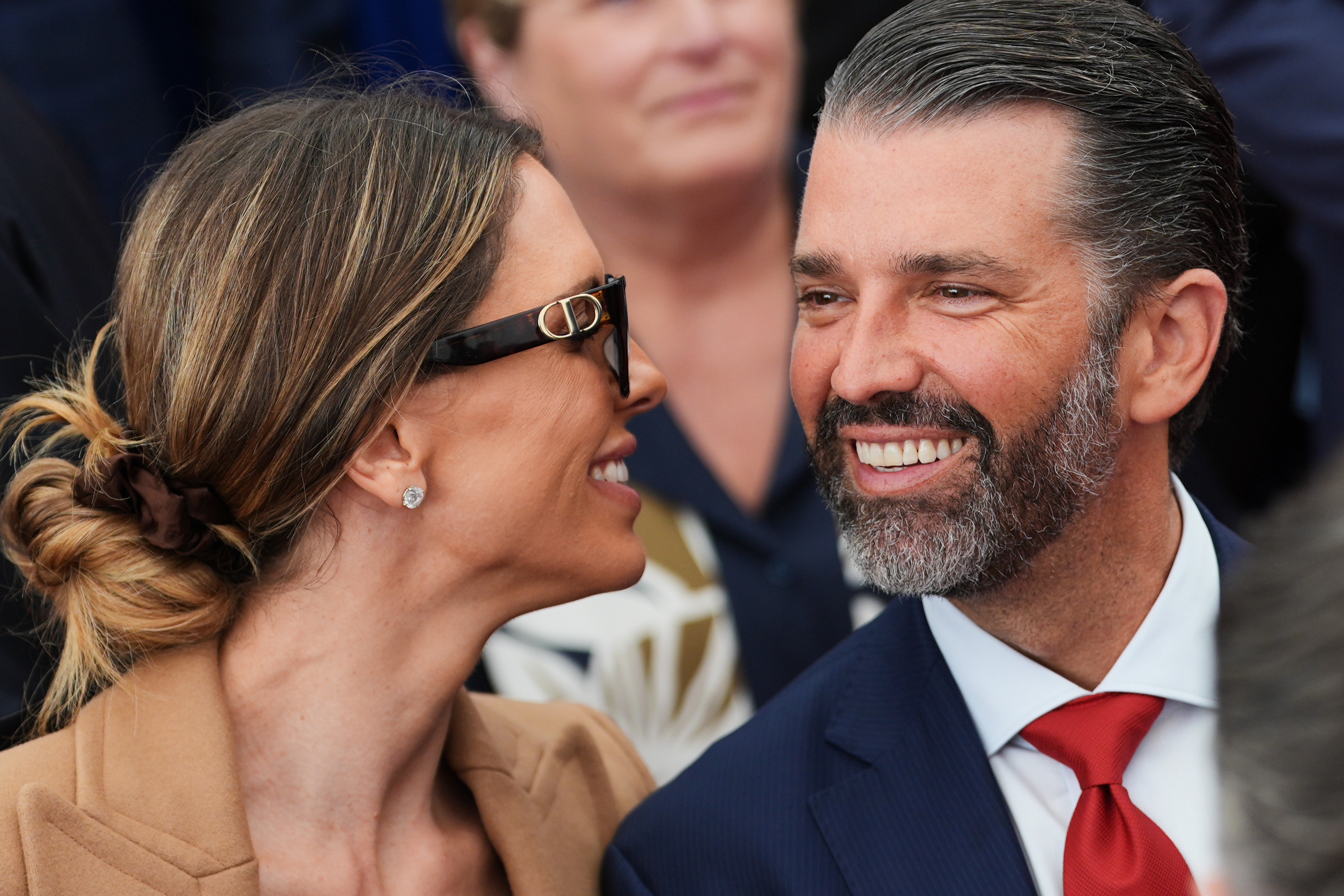
    WASHINGTON — Republican Sen. John Curtis of Utah is calling on the Senate Judiciary Committee to investigate whether Donald Trump Jr. used his proximity to the presidency for financial benefit, after his recent wedding party was partially bankrolled by a Russian oligarch.

    In a letter sent Tuesday, Curtis called on the committee to subpoena Trump Jr. over his business dealings, relationships with foreign individuals and entities, gifts, or other benefits he has received and any instances in which his relationship to President Donald Trump, a Republican, “was invoked or understood to provide value.” Curtis called for the same scrutiny of Hunter Biden, the son of former President Joe Biden, a Democrat.

    “The country should not have to accept one standard for the family of a Republican president and another for the family of a Democratic president,” Curtis wrote in the letter addressed to GOP Sen. Chuck Grassley of Iowa, chairperson of the committee, and Sen. Dick Durbin of Illinois, the top Democrat on the committee.

    The letter comes as a few Republicans have shown a growing willingness to criticize Trump after largely avoiding public breaks with the president during much of his second term. The unpopular war in Iran, high gas prices, and mounting concerns about the GOP’s prospects in November’s midterm elections have brought increased scrutiny of the president from within his own party.

    The Trumps say it was a generous gift from a dear friend

    ProPublica first reported last week that Umar Kremlev, who has close ties to Russian President Vladimir Putin, helped pay to rent a private island and for a fireworks show when Trump Jr. and socialite Bettina Anderson were married in the Bahamas in May.

    In a subsequent post on her Instagram page signed by the couple, Bettina Trump wrote that Kremlev, head of the International Boxing Association, was a “dear friend” who “very generously hosted two incredible nights of celebrations for us AFTER our wedding.”

    The president, who did not attend his son’s wedding, defended Kremlev’s involvement but said the money would be paid back.

    Curtis calls the funding ‘corruption’

    Curtis, first elected to the Senate in 2024, vowed upon taking office not to shy away from disagreeing with Trump. He has publicly broken with the president several times since, including rejecting Trump’s calls to eliminate the Senate filibuster. In a July Wall Street Journal op-ed, Curtis wrote that “under no circumstance” would he support efforts to end or alter the filibuster, which requires 60 votes to advance most legislation in the 100-member chamber.

    Curtis’ criticism involving Trump’s son goes beyond those policy disagreements. Curtis last Friday called the gift “corruption” and vowed to say more in the coming days.

    “A Russian oligarch paid for a lavish wedding after-party for Donald Trump Jr., which to me just stinks. It’s corruption. I don’t like it,” Curtis said in a video posted on social media.

    On Tuesday, Curtis wrote on social media that Republicans “nearly wore out the subpoena machine investigating Hunter Biden’s foreign relationships” and that they “should not unplug it now.”

    Any congressional committee can launch an investigation at any time. In 2017, Grassley led a Senate Judiciary Committee investigation of the Trump campaign’s ties to Russia, including a meeting that Trump Jr. held with Russians in 2016. The panel has also conducted multiple investigations of Hunter Biden.

    Clare Slattery, a spokesperson for the Senate Judiciary Committee, confirmed that the committee had received Curtis’ letter but indicated that a hearing before the end of the year would be difficult, citing the limited Senate schedule and the amount of time it takes to prepare for an investigative hearing. She did not say whether the committee will investigate.

    Durbin said in a statement that Curtis had made a “good faith request” and that while Hunter Biden has given a sworn deposition in the past, Trump Jr. has not.

    “For the Committee to ignore this matter is to run the risk of being complicit in a coverup. I will join in supporting Senator Curtis’ request,” Durbin said.

    Republicans investigated the Bidens

    Grassley worked alongside House Republicans in 2023 and 2024 to investigate whether Hunter Biden used his father’s name and political position to benefit his business dealings with foreign interests. The Biden family dismissed the investigations as politically motivated and denied any wrongdoing.

    The GOP effort culminated in a report accusing Joe Biden of participating in a conspiracy to use his public office to enrich his family. But the House never voted on articles of impeachment against him.

    “‘Trust us’ was not enough then, and it is not enough now,” Curtis wrote.

    Democrats have foreshadowed plans to investigate Trump and his family if they win control of Congress in November, with particular scrutiny on the family’s financial interests. Rep. Robert Garcia, the top Democrat on the House Oversight Committee, said in a statement that the revelations surrounding Trump Jr.’s wedding “may be the most serious allegation against you to date.”

  • Trump signs agreement between U.S., Denmark, and Greenland to bolster Arctic security

    Trump signs agreement between U.S., Denmark, and Greenland to bolster Arctic security

    UNITED NATIONS — President Donald Trump has signed an agreement with Denmark and Greenland aimed at strengthening Arctic and North Atlantic security, easing tensions over his repeated calls for Greenland to become part of the United States.

    The signing Tuesday on the sidelines of the U.N. General Assembly in New York comes days after Trump announced the deal to bolster U.S. military presence on the vast, icy island but keep it under Danish control. The governments provided few details of the agreement before the signing.

    “This is tremendous for Europe and for the United States and for everybody,” Trump said just before the agreement was signed. “And for Greenland, it’s going to be incredible.”

    For months, Trump has expressed his desire for Greenland to become part of the United States and issued threats to seize the semiautonomous territory from Denmark, a NATO ally. On Tuesday, he did not respond to questions about whether a U.S. acquisition of Greenland was off the table.

    U.S. has had a presence in Greenland for many years

    Officials from the U.S., Greenland, and Denmark negotiated for months behind the scenes, searching for solutions to address some of Trump’s security concerns about the mineral-rich island.

    Trump’s designs on Greenland strained relations within NATO, with Danish Prime Minister Mette Frederiksen warning a U.S. takeover would amount to the end of the Atlantic alliance.

    The standoff unsettled many of Greenland’s roughly 56,000 people and drove a wedge between the U.S. and Denmark and its European Union partners, who stepped up security exercises on and monetary support for the island.

    Trade and hopes for a resource grab have all factored into concerns about Greenland’s future: About two-thirds of its territory sits inside the Arctic Circle, where melting sea ice has opened additional shipping routes

    The United States was prominent in Greenland for decades but, since 1945, the U.S. military presence in Greenland has decreased from thousands of soldiers on 17 bases and installations to roughly 200 soldiers on the remote Pituffik Space Base in the northwest. The base supports missile warning, missile defense, and space surveillance operations for the U.S. and NATO.

    Addressing the United Nations General Assembly on Tuesday morning, Trump provided a small window into details of the deal.

    “We will immediately begin the process of developing a large military presence in the appropriate locations,” he said, including “building two very major military bases.”

    Denmark’s parliament approved a bill last year to allow U.S. military bases on Danish soil, widening a 2023 military agreement made with the Biden administration that gave U.S. troops broad access to air bases in Denmark.

    Trump previously insisted the U.S. needed to “take Greenland,” to prevent Russia or China from doing the same. Though Trump said he would rather “make a deal” for the territory, he added: “one way or the other, we’re going to have Greenland.”

    All parties present the agreement as a positive move

    Mikkel Runge Olesen, a senior researcher at the Danish Institute of International Studies, said Greenland and Denmark come away from the deal with the possibility of “ending the crisis without compromising on sovereignty,” while the U.S. gets a “somewhat more favorable” deal than under the existing defense treaty.

    But relations overall between the U.S., Denmark, and Greenland “are likely to be haunted by this long after Trump leaves office, and the crisis is likely to have significant and lasting negative impact on trans-Atlantic relations more generally,” he said. “The lost trust will take decades to rebuild.”

    Frederiksen said Tuesday that the deal being signed was a “deal that can last forever,” labeling it as good for the U.S., Greenland, Denmark, and the broader NATO alliance.

    “Mr. President, you have been very clear: You don’t want adversaries to come too close,” she said. “I fully agree.”

    Jens-Frederik Nielsen, Greenland’s prime minister, called it “a win-win-win agreement.”

    “Your security is our security, and our security is your security,” he said Tuesday.

  • Man shot and detained by ICE hospitalized for partial paralysis, attorney says

    Man shot and detained by ICE hospitalized for partial paralysis, attorney says

    The Venezuelan man shot by an immigration officer in Austin over the weekend was taken to a hospital late Monday after experiencing paralysis on the left side of his body, his lawyer said.

    Attorney Kate Lincoln-Goldfinch also has filed a lawsuit in Texas asking a federal court to order the immediate release of Wilber Garcés Pérez from U.S. Immigration and Customs Enforcement detention and halt his potential deportation to Venezuela. U.S. District Judge Orlando L. Garcia scheduled an in-person hearing for Sept. 30 and ordered that Garcés be present, according to court records.

    Garcés had been transferred from a local hospital to a federal detention facility four hours after he was shot by an ICE officer on Sunday, despite having a bullet still lodged in his back, Lincoln-Goldfinch said. She said doctors chose not to remove it because the bullet was too close to his spine but argued it was reckless to release him from the hospital that quickly.

    Garcés, a 28-year-old delivery driver, told reporters on Monday by cell phone that he remained in pain and had spent the night sleeping on the floor in the South Texas ICE Processing Center in Pearsall, about 130 miles southwest of Austin. His attorney said on social media that he was taken to another hospital late Monday after complaining of paralysis.

    Rep. Joaquin Castro (D., Texas) said Tuesday that Garcés had been discharged and returned to the Pearsall facility. Castro said he and another lawmaker plan to visit Garcés on Wednesday to demand his release.

    “It is nothing more than a prison,” he said of the detention facility. “None of this should have ever happened.”

    Department of Homeland Security officials have not responded to questions about the shooting or the claims from Garcés and Lincoln-Goldfinch about his medical care and the events that led to the shooting. Earlier Monday, DHS said Garcés was in stable condition and in federal custody “pending removal” from the country. The agency said he is subject to a final deportation order.

    Garcés’s supporters are calling on DHS to release any video footage of the incident and are demanding an independent investigation.

    Garcés worked as a DoorDash driver and was making a delivery Sunday when an unmarked black truck operated by ICE sideswiped his car, Lincoln-Goldfinch said. After he attempted to make a U-turn to find a place to pull over, the ICE vehicle struck his car again before an officer shot him, she said.

    Lincoln-Goldfinch has said that Garcés is the main provider for his young family. He has a young son with a disability and is responsible for the costs of his treatments.

    In the lawsuit seeking his release, Lincoln-Goldfinch and attorney Kristin Etter argued that Garcés should be allowed to apply for a U visa for crime victims because he is a “victim of a violent crime, namely, being shot by a federal officer.” Deporting him would violate his constitutional right to due process, the attorneys said.

    Congress members and his attorneys have also expressed fear for Garcés’ health in the ICE detention facility, alleging he may need surgery and requires further evaluation.

    Garcés alleges that an ICE officer shot him in the torso at 12:56 p.m. on Sunday, in an intersection in Austin, according to court records his attorneys filed on his behalf. Hours later, he was discharged to ICE custody, his attorneys wrote, “with the bullet still lodged in his body.”

    He was then “forced to sleep on a cement floor” until around 4 a.m. Monday, when ICE transported him to the Pearsall facility, according to the records.

    After he spoke to the media that day, ICE revoked Garcés’s communication privileges and moved him from the infirmary into “an isolated room with a flat, nonadjustable bed,” Lincoln-Goldfinch said in a statement.

    Around 5 p.m. Monday, she said Garcés became unable to move his left arm and was taken back to the hospital. During the transfer, she said ICE handled him “roughly, despite his gunshot injury,” placing him in handcuffs and shackling his ankles.

    DHS did not immediately respond to a request for comment about those claims.

    Lincoln-Goldfinch said that the gunshot fractured Garcés’s clavicle and that he is suffering “significant swelling and pain,” and wearing a sling. At the hospital, she said, doctors gave him intravenous morphine for pain.

    Garcés entered the country legally seeking asylum, Lincoln-Goldfinch said. An immigration judge issued him a final removal order after he missed a hearing. Lincoln-Goldfinch said officials sent a notice advising him of his upcoming court date to an old address.

    The Associated Press reported Tuesday that more than 100 Democratic lawmakers are calling on Homeland Security officials to cease any efforts to interfere with a comprehensive investigation into the shooting.

    The lawmakers said in their letter to DHS Secretary Markwayne Mullin and acting ICE Director David Venturella they are deeply concerned ICE is attempting to swiftly deport Garcéss to impede an independent investigation.

    “Mr. Garcés Perez is a key witness to this shooting, and given ICE’s history of obscuring the facts in similar investigations, he must not be removed,” the lawmakers wrote.

    They said Garcés and the ICE agent who shot him must remain in Texas until a thorough investigation is complete.

    The Democratic lawmakers called on DHS officials to respond by next Monday on why agents used deadly force, whether they followed policy requiring them to render medical aid, and whether ICE will release all bodycam footage.

  • Weird and wonderful, the Lucas Museum lands in LA

    Weird and wonderful, the Lucas Museum lands in LA

    LOS ANGELES — From scruffy Exposition Park in South Los Angeles, there is no missing the new Lucas Museum of Narrative Art.

    It hovers like a spaceship on the skyline, at the park’s edge, snow white and ginormous. Its billowy, aerodynamic curves and swoops, capped by tufts of greenery, spill down to lavish gardens on what had been the site of a gated asphalt parking lot.

    Design-wise, the museum’s galleries seem an afterthought, its circulation a puzzle. But this is one you won’t want to miss. Both surgically somber and proudly over the top, the Lucas is a weird kind of wonderful and an instant city landmark. It opened to the public Tuesday.

    The 300,000-square-foot goliath was designed by prominent Chinese architect Ma Yansong and built to house the art collection of Star Wars filmmaker George Lucas and his wife, businessperson Mellody Hobson. The couple have picked up the project’s no-expense-spared tab: more than $1 billion.

    That whopping sum has paid for more than 80,000 square feet of black-box exhibition space on the building’s fourth floor, where Luke Skywalker’s X-34 Landspeeder from Tatooine now idles in a Star Wars display.

    Bridge-of-a-cruise-ship-style viewing ports at either end of the exhibition floor, and another in between, add pizazz and a respite from the gallery crawl.

    Other rooms are devoted to Norman Rockwell paintings, manga art, motherhood, and love, among various folksy themes.

    There are two state-of-the-art movie theaters, along with a shop and a cafe tucked into the building’s cinched podium. The roof, which has a restaurant, is a landscaped aerie of colorful plantings, winding paths, and sweeping vistas. A separate pavilion contains a library with arts and crafts furnishings, of all things, and a student center. A yellow Naboo N-1 Starfighter dangles from its lobby ceiling.

    An artisan of biomorphic megastructures, Ma, who founded MAD Architects in Beijing, made his bones designing showstoppers including the Harbin Opera House in China and the Ordos Museum in the Gobi Desert. The Lucas Museum is his first major American cultural commission. Its arrival, across the street from the University of Southern California campus, where Lucas studied film, seems like destiny.

    Lucas acquired his first work of art, a V.T. Hamlin Alley Oop comic, for a song in the 1970s. Over the decades his collection ballooned to include more than 40,000 works by famous comic artists and graphic novelists; film production designers and anime fabulists; golden-age American magazine illustrators and figurative painters of the 20th century such as Frida Kahlo and Thomas Hart Benton.

    These were artists after Lucas’ own heart, naturally — fellow populists, visual virtuosos, and storytellers. Lucas came to believe modern art museums shortchanged or ignored them.

    So he decided to build a cathedral to kindred spirits. He and Hobson first floated the idea to the Presidio in San Francisco in 2010. City officials there rejoiced at the prospect. But when the Presidio’s trustees balked, Lucas and Hobson looked to Chicago, Hobson’s hometown, hiring Ma to design a museum for a lakefront site.

    Ma came up with a volcano-shaped design rising from the flat plains of the Windy City, which ran aground after a Chicago nonprofit parks preservation group sued, tying the project up in the courts.

    After a second pass fizzled in the Bay Area, this time for a site on Treasure Island, Lucas and Hobson turned to Los Angeles.

    By destiny I didn’t just mean that Lucas is synonymous with Hollywood. I mean that Los Angeles is also home to the Getty, the Huntington, the Norton Simon, the Hammer, and the Broad. Vanity museums, some of the most memorable on the planet, have been a big part of what makes the city’s cultural landscape so lively, diverse, and deep.

    These institutions belong to a strain of American entrepreneurial individualism that has also given us the Barnes Foundation in Philadelphia, Donald Judd’s Marfa spaces in Texas, and the Guggenheim in New York — go-it-alone ventures founded on contrarian principles. The Guggenheim proselytized the mystic healing powers of Wassily Kandinsky, Bach organ chorales, and incense.

    The Lucas joins that company.

    Its architectural goal was a blockbuster with contours inspired by trees and clouds, so as to blend into and anchor the edge of Exposition Park, alongside giants like Memorial Coliseum. The exterior is clad in 1,271 school-bus-size, hand-finished, fiberglass-reinforced polymer panels, combined like puzzle pieces, manufactured by a shipbuilding company in the Bay Area. Ma’s pièce de résistance is the museum’s central plaza: a four-story-high, 185-foot-wide arching gateway and oculus linking the neighborhood with Exposition Park.

    A curator told me he has heard people compare the building to a sneaker. I’ve heard Angelenos talk about a mountain suddenly rising in South LA, and, of course, an Imperial Star Destroyer. It’s as svelte as an F1 car.

    It is now the second museum to arrive this year and shake up the city’s architectural geography. Like the new Los Angeles County Museum of Art, the Lucas also has civic ambitions. Tickets are $25, but anyone younger than 18 and/or living in the museum’s ZIP code, many of them low-income Angelenos, can enter free.

    Footpaths and garden crossings, where that gated surface parking lot had been, aim to knit the area’s streets and sidewalks.

    We’ll see how well those green spaces will be maintained, how open those neighborhood connections remain.

    But it’s a safe bet that millions of children raised on their phones — who couldn’t care less about the definition of narrative art — will embrace the museum.

    They’ll whoosh up and down the tubular glass elevators, run under the hanging gardens and across lawns devised by Mia Lehrer’s landscape team at Studio-MLA.

    And be wowed by Ma’s architecture.

    Who knows, some of them may even be inspired to put down those phones and pick up a pencil to draw.

    This article originally appeared in the New York Times.

  • Bush and Cornyn leave out Paxton as they raise cash for Senate candidates

    Bush and Cornyn leave out Paxton as they raise cash for Senate candidates

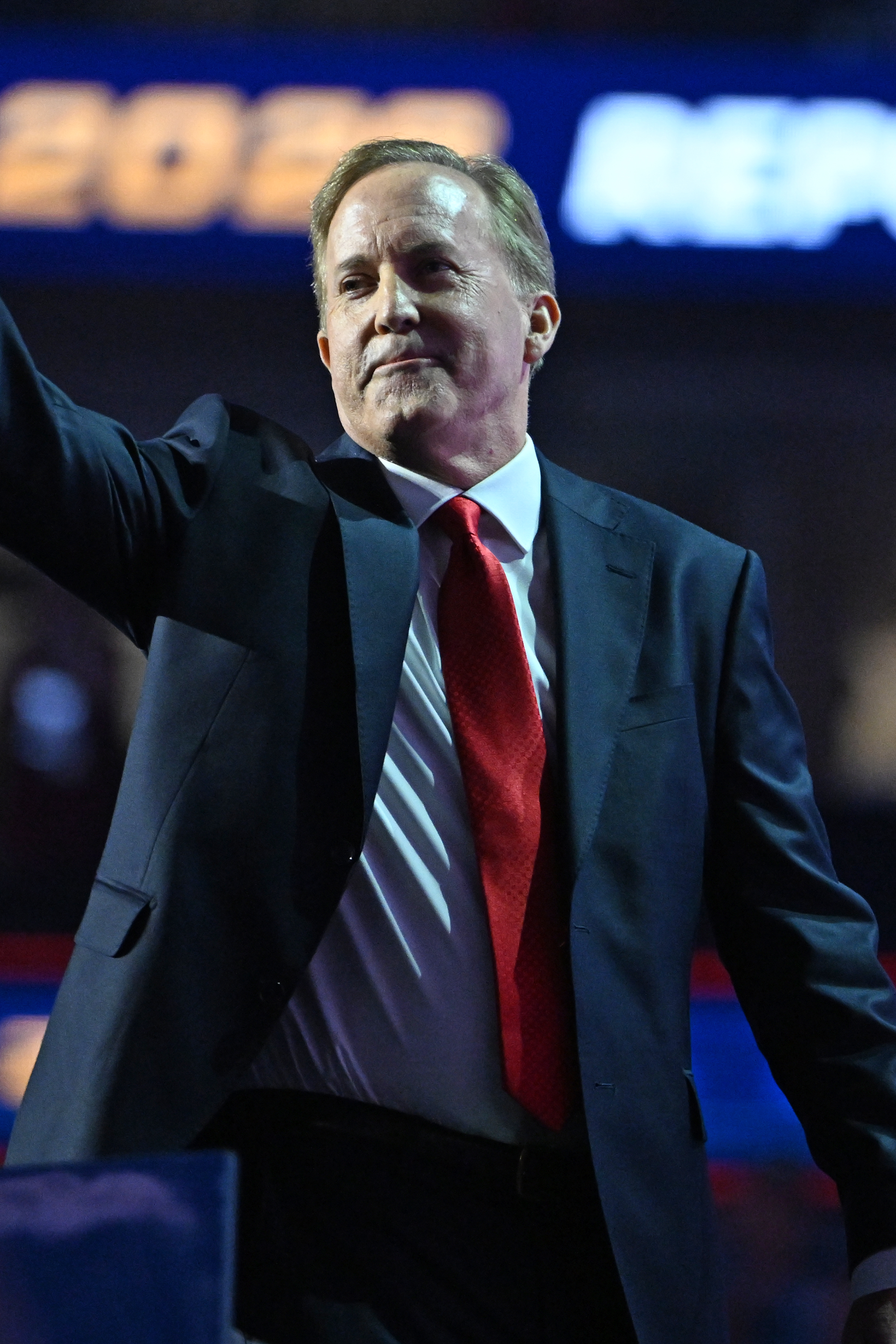
    Former President George W. Bush and Sen. John Cornyn, two top Texas Republicans, are rallying conservative donors behind the party’s Senate candidates — except for the one running in their own state, Ken Paxton.

    Cornyn hosted a fundraiser Monday evening in Dallas for six Republican nominees in battleground states, according to an invitation to the event that was obtained by the New York Times. Bush, listed on the invitation as a “special guest,” was attending the event, his spokesperson confirmed.

    The event benefits Maintain the Majority, a new joint fundraising committee supporting the Senate candidates, who are defending Republican-held seats in Maine, Ohio, Alaska, and Iowa and looking to flip seats in Michigan and New Hampshire.

    But Paxton, the Republican nominee in Texas, who defeated Cornyn in a costly and bitter primary, was not included. His campaign declined to comment on the fundraiser.

    The fundraising omission of Paxton is another escalation in the standoff between old-guard Bush Republicans and the fiery insurgent wing represented by the party’s Senate nominee, Paxton, President Donald Trump, and their allies.

    And it comes as the parties battle for cash and advertising time in the Texas Senate race, one of this year’s top contests. Paxton has badly trailed his Democratic opponent, James Talarico, in campaign fundraising, but super political action committees tied to Trump and Senate Republicans have come to Paxton’s aid, reserving more than $80 million in outside advertising in Texas.

    Paxton, the state attorney general, has long been a polarizing figure among Texas Republicans. He was impeached by the Republican-dominated Texas House on corruption charges in 2023, though he was acquitted in the state Senate, and he pushed to oust Republican lawmakers and judges who disagreed with him in his party’s primaries in 2024.

    This year, Cornyn and establishment Republican donors spent more than $130 million on advertising backing the senator and bashing Paxton in their contentious primary. (Bush chipped in $5,000 for Cornyn.) In the months since, Cornyn has continually criticized Paxton’s character and campaign.

    “Paxton’s a poor campaigner,” Cornyn told the Texas Tribune in August. “He’s lazy and doesn’t raise money. And he basically is not offering a very compelling case for his election. He’s making this harder than it needs to be.” (Paxton countered the attacks, saying on Fox News’ The Sunday Briefing that “John Cornyn doesn’t know my schedule. He doesn’t know how many hours I’m putting in every day, 18 hours a day.” )

    The fundraiser comes as long-simmering tensions between Bush- and Trump-era Texas factions burst to the surface.

    Last week, Karl Rove, Bush’s former senior adviser, announced that he would not vote for Bo French, the Republican nominee for the Texas state agency that regulates oil and gas, because of a racist social media post by French. Paxton declined to condemn French’s post, and Trump posted on Truth Social that Rove was a “stone-cold loser.”

    Paxton has attacked Rove in the past, including in an interview with conservative pundit Tucker Carlson in 2023.

    Paxton has also gone head-to-head with a scion of the Bush dynasty, soundly defeating Bush’s nephew, George P. Bush, in the 2022 Republican primary for Texas attorney general. And Paxton has long criticized Cornyn for his willingness to work with Democrats on bipartisan legislation.

    The host committee of the Monday fundraiser included paragons of the Bush-era Republican Party like Harriet Miers, Bush’s onetime nominee for the U.S. Supreme Court; former Sen. Kay Bailey Hutchison; and Republican megadonor Harlan Crow.

    One of the candidates the event seeks to support is John E. Sununu, the Republican nominee for Senate in New Hampshire. His father, also named John Sununu, served as the White House chief of staff for Bush’s father, George H.W. Bush. Contributions ranging between $1,000 and $61,500 were required for entry, according to the invitation.

    Some of the donors invited to the event on Monday have also contributed to Paxton’s campaign.

    The gathering and the new fundraising committee will benefit Sens. Susan Collins of Maine, Jon Husted of Ohio, and Dan Sullivan of Alaska, who are defending their seats in competitive general-election races, as well as three other Senate candidates: Sununu, Rep. Ashley Hinson of Iowa, and former Rep. Mike Rogers of Michigan.

    Two Republican Senate nominees in states that Trump won in 2024, Michael Whatley of North Carolina and Mike Collins of Georgia, are also not part of the fundraising effort. Democrats have shown strength in polls in those states.

    Collins “appreciates the support of Sen. Cornyn and President Bush,” said Blake Kernen, a spokesperson for Collins’ campaign. Representatives for the other candidates did not immediately respond to requests for comment.

    This article originally appeared in the New York Times.