Category: Wires

  • Iced coffee, tattoos, thank-you notes: The shifting do’s and don’ts of job interviews

    Iced coffee, tattoos, thank-you notes: The shifting do’s and don’ts of job interviews

    When I was a fresh college graduate, interviewing for my first full-time job, I thought about my mother’s interview do’s and don’ts. Don’t wear anything that could reveal tattoos. Don’t start with asking questions about salary. And always — she stressed this above all else — mail a physical thank-you note the next day.

    In the years since I entered the job market, interview etiquette norms have changed dramatically. While each sector, field, and company may have its own rules, former no-nos like tattoos and dyed hair often aren’t deal-breakers. And many interviews take place over Zoom, which introduces a whole new slate of do’s and don’ts.

    But not everyone agrees on which rules to keep and which to toss out.

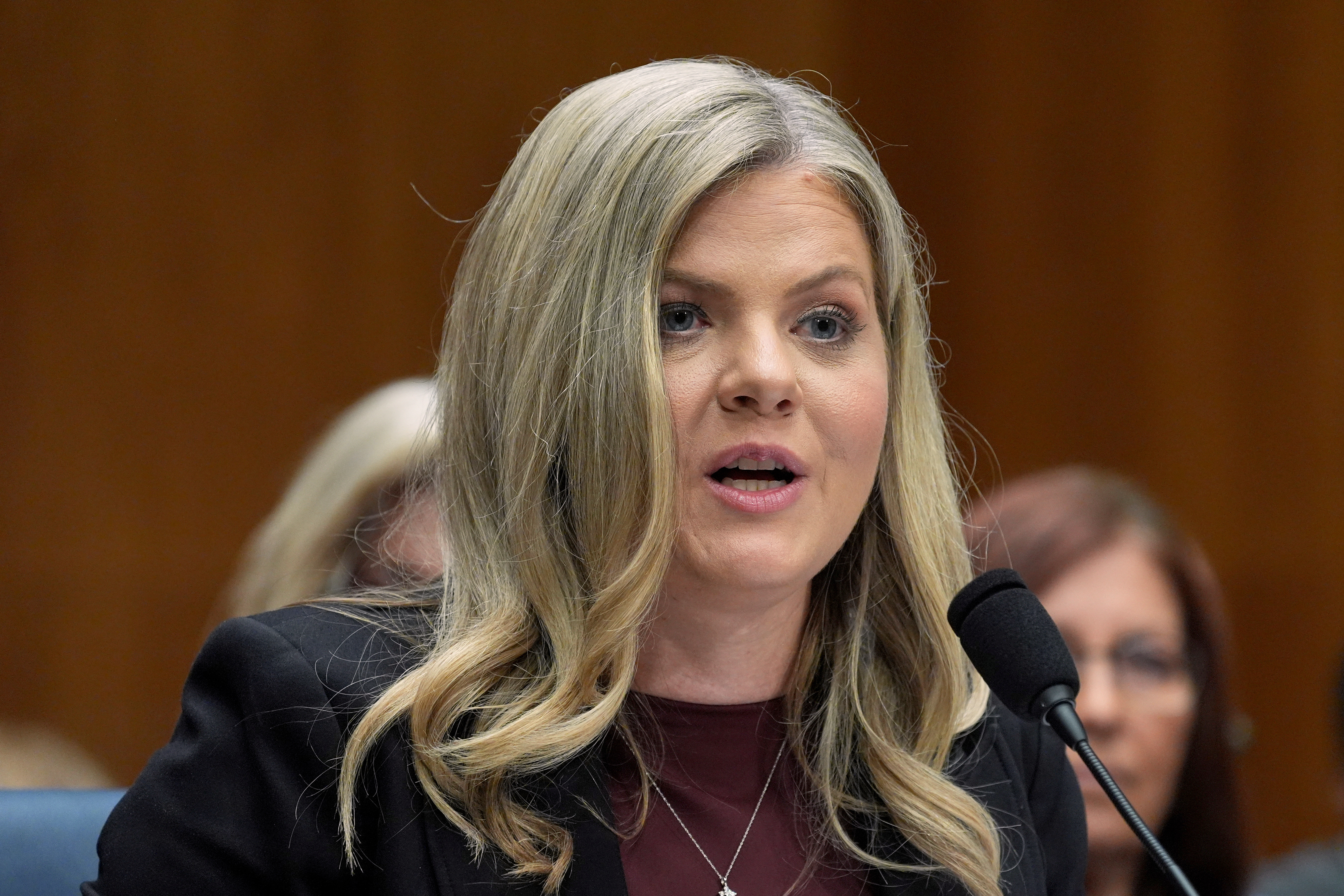
    In a video posted on TikTok last week, recruiter Caitlin Wehniainen introduced a new one: Don’t carry an iced coffee into an interview. Walking in to shake hands while juggling a drink can make a big moment seem like just “another stop on your list of errands for the day,” she said.

    The comments section under her original video exploded. One recruiter agreed that bringing an iced coffee into a meeting can be distracting; one poster asked, “Are you expecting my whole day to revolve around a 30 min meeting?” Satires and skits have spoofed both Gen Z jobseekers and corporate overlords.

    Wehniainen has since posted a follow-up video, saying she wasn’t trying to stoke the flames for the sake of likes and reposts.

    “When you really want a job offer, you need to know certain ways of going about the process and that helps you build confidence, when you know what to expect going in the door,” she said.

    The video and the ensuing debate have exposed a greater challenge: How do you navigate ever-changing interview etiquette when the job hunt can already be so confusing, discouraging, and exhausting?

    “Norms are constantly changing to the ways we do business and technology,” said Keva Dine, a recruiter and founder of the Keva Dine Agency. “There’s a desperation, and everyone is applying to everything. They’re throwing darts in the dark.”

    In Dine’s view, anything you can do to stick out in a good way is a plus. Wearing business attire to an interview or sending a thank-you note the next day may not be the standard in every workplace, but often they can help. When people rely on AI-generated cover letters or apply to jobs without researching the company, they’re much more likely to get lost in the shuffle.

    If you’re interviewing on a video call, keeping the camera on during a video and tidying up the Zoom background are non-negotiables, said Juliet Murphy, an executive career coach based in Irvine, Calif.

    “Put in a bit of extra effort,” she said. “You need to let the other person know how seriously you’re taking the role.”

    In her 15 years working in corporate human resources and recruitment, Vicki Salemi never clocked the beverage in a candidate’s hand. But Salemi, now a career expert at the job site Monster, said she did notice seemingly small things, like how they greeted the reception desk and how they behaved in the lobby waiting area. Those things matter when you’re bringing someone into a workplace, she said.

    “Your behavior and your etiquette are part of the package,” she said.

    And if a candidate doesn’t like a company’s stance on these norms — the iced coffee included — the in-person interview is an opportunity to evaluate that up close.

    “The interview has always been a place to assess fit, both for the applicant and for the company,” said Sara McCord, a former career columnist and founder and CEO of Sara McCord Communications. “If there’s an immediate, visceral reaction on either end — a company doesn’t want a candidate who brings an iced latte, a candidate doesn’t want somewhere where the company cares — that’s actually specifically, exactly how the interview is supposed to work.”

  • Energy Department will spend $2 billion to squeeze more electricity from the aging power grid

    Energy Department will spend $2 billion to squeeze more electricity from the aging power grid

    ALLENTOWN — The Energy Department said Thursday that it will spend almost $2 billion to try to squeeze more electricity out of the nation’s aging and stressed power grid, as President Donald Trump’s administration steps up efforts to avoid blackouts amid skyrocketing energy demand spurred by artificial intelligence.

    The money will go toward 31 projects across 26 states that are expected to produce more than 23 gigawatts of additional electricity capacity — enough to power 16 million homes. The projects will use new technologies such as sensors to measure real-time weather conditions to ensure safe transmission or direct power away from congested paths, the department said.

    The upgrades could improve power reliability and lower electricity costs for about 100 million Americans, officials said.

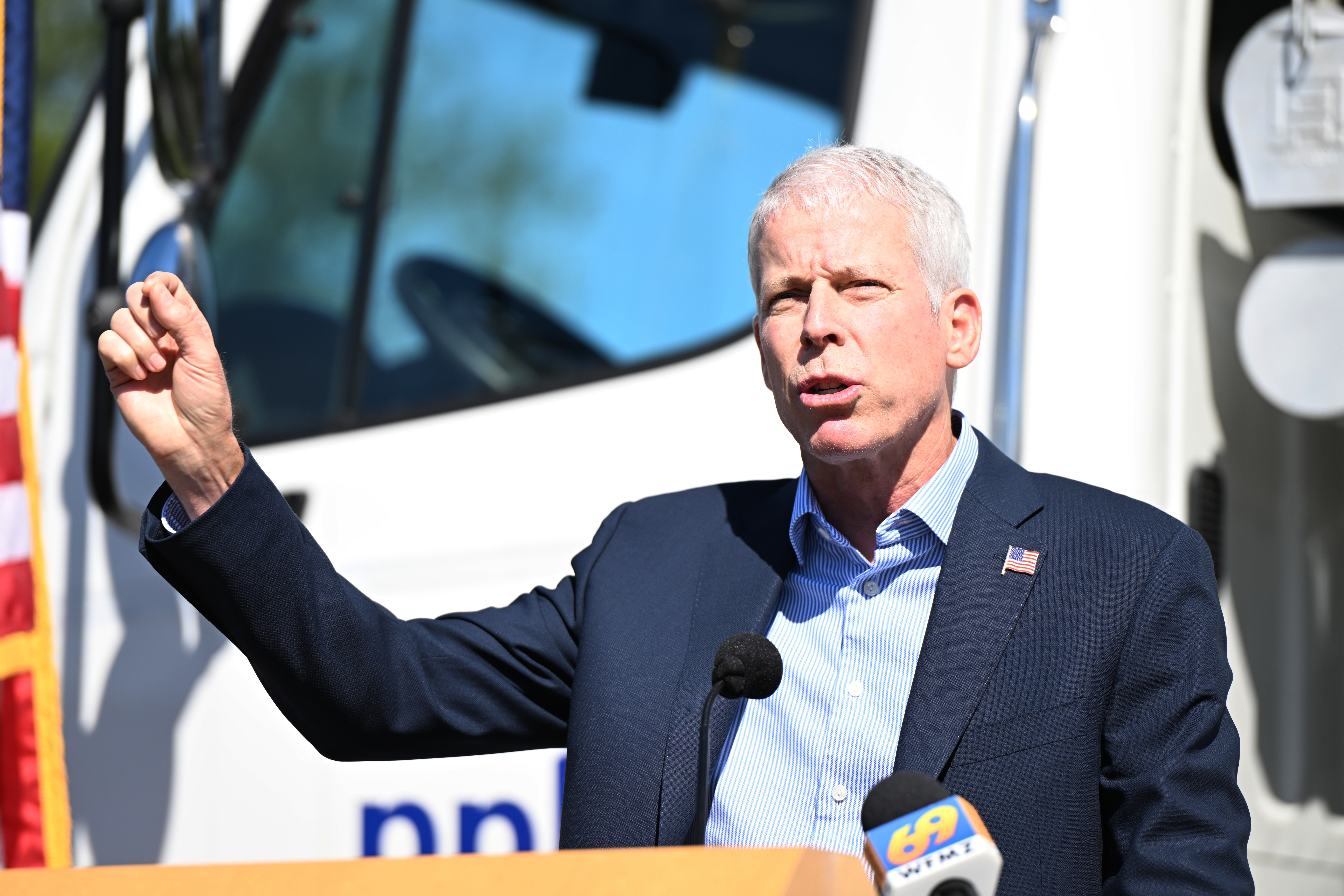
    “This is a quick way to lower electricity prices and increase reliability: using fibers that are already in the transmission lines to analyze what’s the temperature out, what’s the wind out, how can we use this transmission line to distribute more power, but safely and only in the right conditions,” Energy Secretary Chris Wright said in a news conference promoting the grants Thursday at a PPL Corp. facility in Allentown.

    The eastern Pennsylvania electric utility says two data centers in its territory came online this year and six more are under construction, with enough other data centers in the advanced planning stages that its peak electric demand could quintuple by 2032.

    PPL said it is receiving $71.5 million to modernize an existing high-voltage transmission line across roughly 30 miles in northern Pennsylvania.

    The announcement comes amid warnings that AI’s voracious demand for power is threatening to overwhelm U.S. power supplies, as massive new data centers come online faster than new power plants can be built. It also comes as electricity bills rise faster than inflation in many parts of the U.S., blamed in some areas on demand from data centers.

    The snowballing opposition to data centers in communities across the country has thrown a wrench into the plans of the world’s richest companies and transformed the midterm election landscape.

    Trump continues to stick up for data centers, even as politicians from both major political parties criticize them and many communities try to block them.

    In the meantime, Congress and some states are trying to push utilities to use new technology to make grids more efficient, lessening the need to build new power plants.

    Julia Selker, the executive director of the WATT Coalition, a trade association for grid-enhancing technologies, said both the projects and the scale of the investment are significant. Utilities in the U.S. are lagging places like Europe in adopting the technologies, despite federal investment in the past to develop and test them.

    Wright said that work on the projects should begin right away and that he hoped some efficiencies are in place before this winter to tamp down price spikes when extreme weather sends demand skyrocketing.

    He said he didn’t know whether the projects would have gotten done without federal funding. Many, he said, had been under consideration before the grants were offered, but the grant recipients hadn’t “quite pulled the trigger” on them.

    Projects being announced Thursday will involve component enhancements on more than 1,500 miles of transmission lines and technological enhancements across nearly 21,000 miles, the department said.

    Projects were prioritized based on those that can be put into operation quickly, officials said. Money for the grants comes from the bipartisan infrastructure law enacted by Congress under then-President Joe Biden, a Democrat. The government’s $1.9 billion in funding will be matched by $3.35 billion in cost-share funding from the recipients, the Energy Department said.

    Recipients include utilities, cooperatives and four state agencies. The state agencies — in Colorado, Indiana, Ohio, and Oklahoma — were the biggest recipients, collectively drawing at a total of $810 million, with the Colorado and Oklahoma projects promising improvements to the wider regional grid.

    Trump has vowed to “unleash” the nation’s energy sector in his second term, aiming to drive up record-setting domestic oil and gas production, strip away pollution restrictions on power plants and keep expensive coal-fired power plants operating past their retirement dates.

    The administration also has pledged nearly $4 billion to buy back offshore wind leases as Trump seeks to discourage the expansion of wind energy in favor of fossil fuels.

    His administration has pushed to help tech giants build and connect data centers to power plants and high-voltage power lines and convert Cold War-era uranium enrichment plants into data center and power plant complexes.

  • Cubs clinch second straight playoffs trip by beating Marlins as Crow-Armstrong joins 40-40 club

    Cubs clinch second straight playoffs trip by beating Marlins as Crow-Armstrong joins 40-40 club

    CHICAGO — Pete Crow-Armstrong joined the 40-40 club by stealing his 40th base to go along with his major league-leading 45 home runs, and the Chicago Cubs clinched their second straight postseason berth a 2-1 victory over the Miami Marlins on Thursday.

    Seiya Suzuki homered for the Cubs (88-71), who assured themselves of one of the NL’s three wild-card berths.

    Chicago also was a wild card last year, when the Cubs beat San Diego in the first round and lost to Milwaukee in a Division Series. The Cubs will be making consecutive postseason appearances for the first time since four straight from 2015-18, which in 2016 included their first championship since 1908.

    The Cubs clinched their berth shortly after the White Sox earned their postseason trip with a 9-1 win at Kansas City.

    Miami (78-81) was assured its third straight non-winning season.

    A favorite to win the NL MVP award, Crow-Armstrong became the seventh 40-40 player, joining a group that includes Los Angeles Dodgers star Shohei Ohtani and Atlanta Braves outfielder Ronald Acuña Jr. Jose Canseco was the first with the 1988 Oakland Athletics.

    Crow-Armstrong hit his 45th homer during Sunday’s 9-1 win at Cincinnati, extending his career high. The 24-year-old drew a leadoff walk from former Phillie Tyler Phillips in the first inning and swiped second base on the next pitch to Suzuki for his 40th steal in 47 attempts. Fans chanted “MVP” as the Wrigley Field videoboard proclaimed the feat.

    Ohtani was the previous player with a 40-40 season, hitting 54 homers and stealing 59 bases for the 2024 Dodgers. Acuña hit 41 homers and swiped 73 bases for Atlanta in 2023. Alfonso Soriano (2006 with Washington), Alex Rodriguez (1998 with Seattle) and Barry Bonds (1996 with San Francisco) are the other 40-40 players.

    Matthew Boyd (10-5) allowed one run, five hits and two walks over seven innings, and Ryan Zeferjahn pitched a perfect ninth for his seventh save to finish a five-hitter.

    Ian Happ tripled off Jack Ralston (0-2) to start the sixth and came home three pitches later on Nico Hoerner’s single, breaking a 1-1 tie.

    Miami’s Jakob Marsee had an RBI single in the third and Suzuki hit his 26th homer in the fifth, a drive off Jack Ralston.

  • More than 160,000 pounds of meat bearing false USDA inspection labels recalled

    More than 160,000 pounds of meat bearing false USDA inspection labels recalled

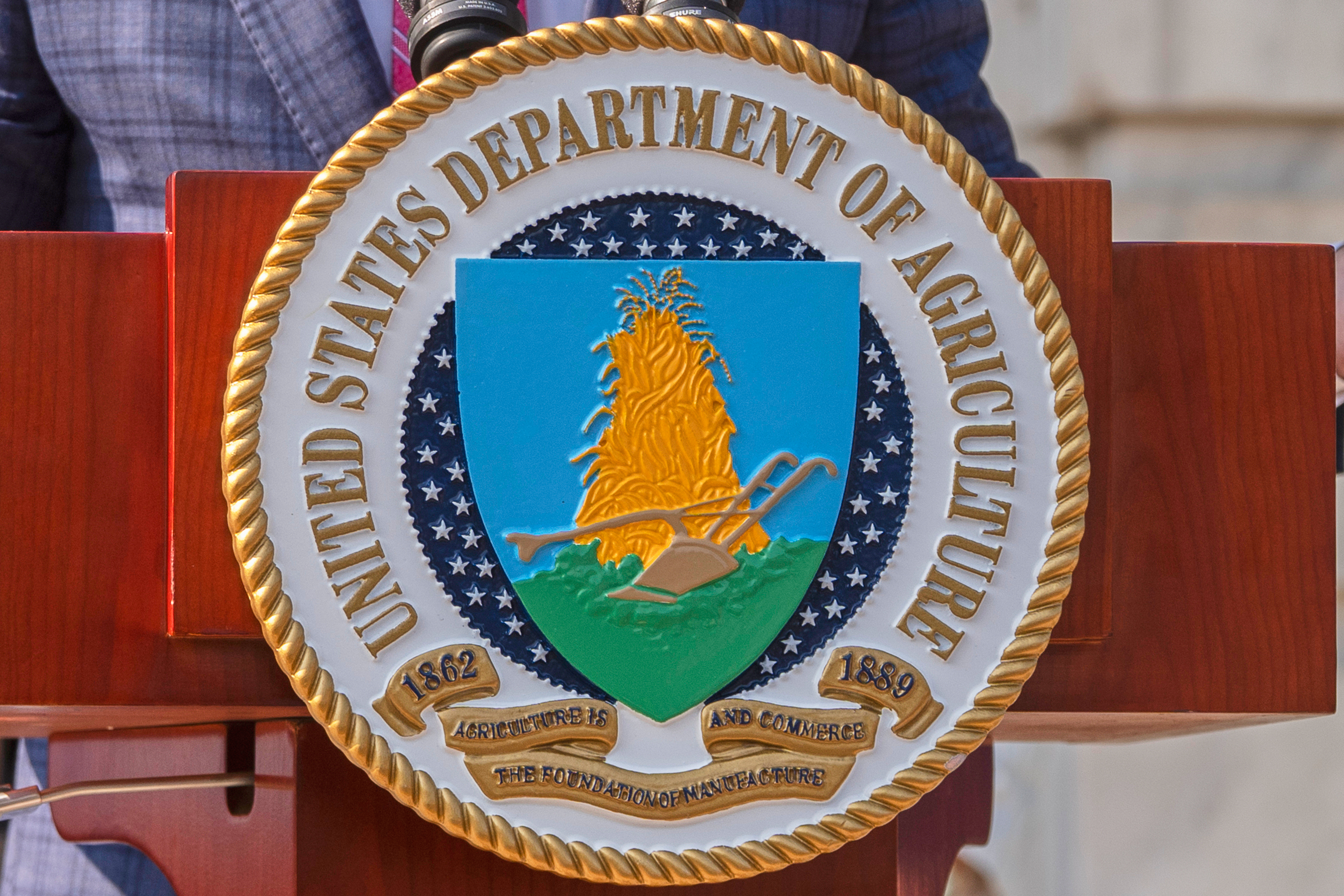
    NEW YORK — More than 83 tons of meat are being recalled across the U.S. because the products were not properly inspected by federal authorities and were shipped out with falsified inspection stickers, the Department of Agriculture said.

    Star Meat Delivery Inc., based in Lucama, N.C., is recalling more than 167,000 pounds of raw pork, beef, and goat nationwide. The USDA said that number could grow as it continues its investigation.

    Food produced without inspection may contain undeclared allergens, harmful bacteria, or other contaminants, the agency said Tuesday in announcing the recall. So far, there have been no confirmed reports of illnesses or injuries from the meats, according to the USDA.

    The meat in question was produced “on various dates” before Sept. 22 and has USDA inspection stickers falsely bearing an establishment number — EST. 1363 — that the agency said “does not have a federal grant of inspection.” However, some packages people purchased may not bear that labeling because retail stores may have applied their own stickers with pricing and safe handling instructions, the agency warned.

    The products were shipped to Georgia distributor A&D Foods to send to retail and restaurant locations nationwide.

    The USDA said the products should be considered misbranded and unsafe to eat and be discarded or returned to the place of purchase.

    The agency said the problem was discovered during the USDA’s Food Safety and Inspection Service’s routine checks. It’s not clear whether anyone has been arrested or criminally charged.

    Star Meat Delivery, in a statement posted on its Facebook page Thursday, pushed back at the notion that the inspection stamps on its products were somehow falsified. It said the establishment number in question was “legitimately reserved” as part of the USDA application process while it seeks approval to process and package meat for the Georgia distributor.

    That approval process is still underway, Star Meat said, although the meat involved was sourced from a USDA-inspected supplier.

    “No other products sold by Star Meat Delivery were mislabeled, and no other products sold by Star Meat Delivery are part of the recall that has been issued,” the company said. “We are cooperating fully with the appropriate authorities to finalize the application and are following the recall procedures that have been put into place.”

    The USDA didn’t immediately respond to Star Meat’s statement.

    Recalls triggered by forged inspection stamps are relatively rare, according to Keith Schneider, a food safety professor at the University of Florida in Gainesville.

    “This is someone taking a shortcut,” he said. “Systems are in place to catch these sorts of things and it appears the system worked as intended. You can’t skip inspections.”

    Last year, some 32,000 pounds of meat, including chorizo, pork chops and ribs, produced by Sabrositos Hondurenos, of New Jersey, were recalled after the USDA determined they had fake inspection stickers.

  • Israel’s Netanyahu, at U.N., calls accusations of genocide in Gaza ‘the biggest lie of the century’

    Israel’s Netanyahu, at U.N., calls accusations of genocide in Gaza ‘the biggest lie of the century’

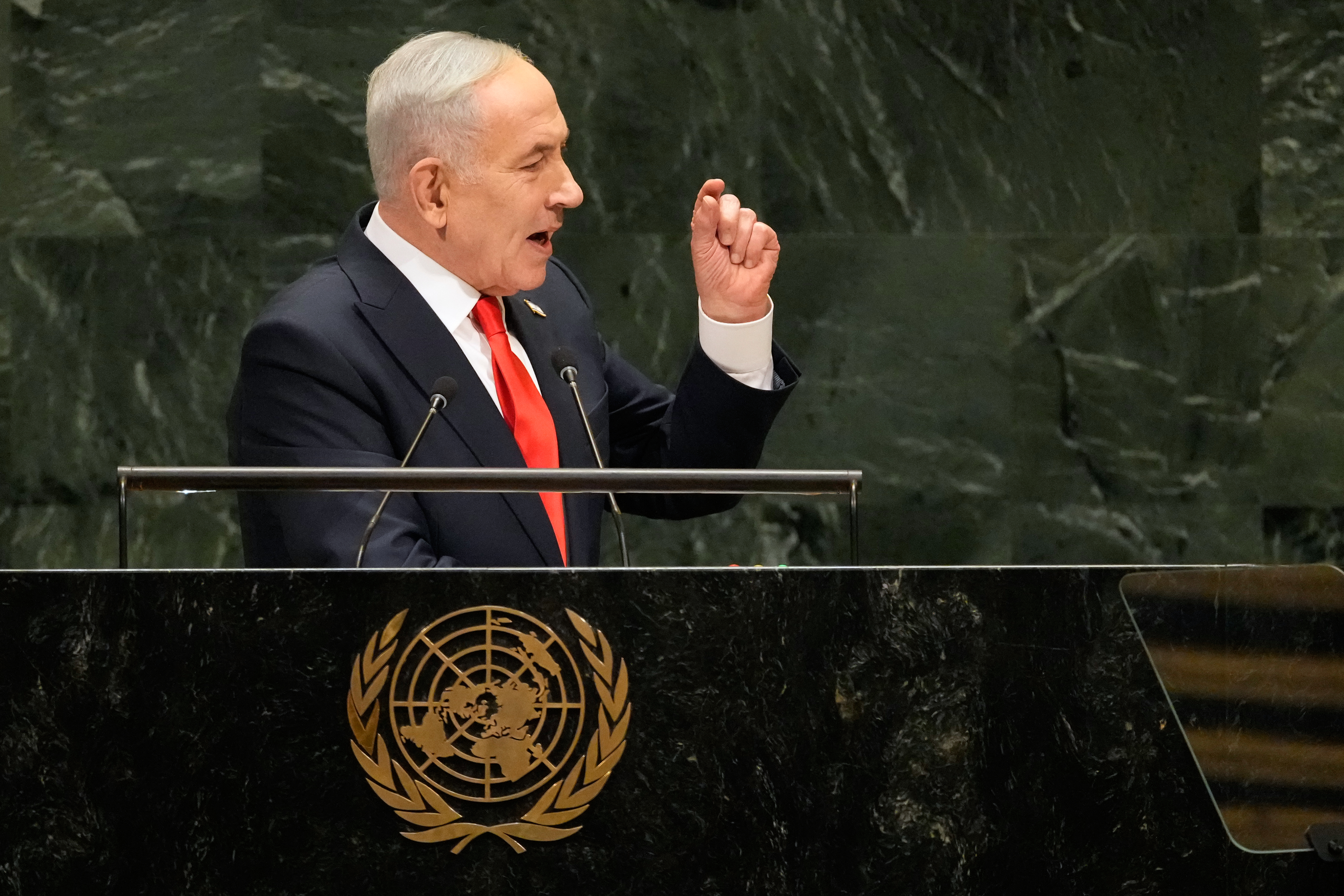
    Allegations of Israeli genocide in Gaza are not only false but “the biggest lie of the century,” Prime Minister Benjamin Netanyahu told world leaders Thursday in a defiant speech that asserted his nation’s right to wage war against Iran — and was not heard by scores of delegates who trooped out before he started speaking.

    Netanyahu, his voice rising in emphasis, said attacking Iran “was one of the easiest decisions I’ve ever had to make” and denounced as “moral cowards” a mass of delegates who walked out of the U.N. General Assembly when he took the podium to speak.

    “In defending itself, Israel is also also defending many of the countries whose delegates just left this hall,” Netanyahu said. “In fact, I want you to know that many of their leaders even thank us privately for taking out Iran’s nukes.”

    When Netanyahu walked to the rostrum, a mix of cheers, boos and mass walkouts erupted. Scores of delegates marched out and a majority of visible seats sat empty afterward. “Order in the hall, please,” General Assembly President Khalilur Rahman said repeatedly.

    “If there are any other moral cowards who have not yet left the hall, please do so now,” Netanyahu said.

    His remarks — which at times sounded like a stump speech as Israel gears up for elections — came after a week filled with speeches by world leaders accusing Israel of genocide and war crimes in Gaza.’’

    Palestinians had called for a mass walkout

    The Palestinian Mission to the U.N. said in a message to many of the 193 U.N. member nations to bring as many staff as possible to the assembly hall and “collectively walk out of the assembly” once the Israeli prime minister is announced.

    “This will send a clear message to Netanyahu and his government that no one is willing to aid, abet, or be complicit in its genocide and war crimes and illegal occupation, which all peace-loving states and peoples demand must come to an end,” the message said.

    Israel rejects allegations that it committed genocide and war crimes and is illegally occupying Palestinian territory. All Israeli settlements are illegal under international law, but the Israeli government insists they are legal.

    Netanyahu, who is prone to using visual aids during his General Assembly speeches, at one point held up a pager while reminding the audience of Sept. 17, 2024, when Israel remotely detonated thousands of pagers that had been distributed to the Iran-backed Hezbollah militant group in Lebanon. The pager attack wounded more than 3,000 people and killed 12, including two children.

    He reminded the assembly of the scale of the Oct. 7, 2023, attack in which Hamas militants killed about 1,200 people. “This is equal to 40,000 innocent Americans slaughtered in less than 24 hours,” he said, or 16 times the death count on the 9/11 attacks that left nearly 3,000 people dead in New York.

    Netanyahu thanked U.S. President Donald Trump for taking decisive action against Iran, and he insisted Israel would prevail: “We will continue to win because we have no other choice.”

    Netanyahu followed the Palestinian president’s remote speech

    Palestinian President Mahmoud Abbas also addressed the U.N. General Assembly earlier Thursday, delivering prerecorded remarks from his office in Ramallah after the United States denied him and other top Palestinian officials visas to attend the gathering for the second year in a row.

    The 90-year-old leader’s popularity at home and relevance abroad have both waned. But in his remarks, Abbas made clear he did not intend to quietly accept being sidelined.

    “We will not leave our homeland. We will not accept displacement. And we will not allow anyone to decide our future on our behalf,” Abbas said.

    Though world leaders have repeatedly invoked the plight of Palestinians in speeches throughout the week, Abbas urged the international community to take more tangible action against Israel.

    “How long will some countries continue to remain silent about Israel, or continue supplying it with weapons that it uses against our people? The world has witnessed the enormous cost in the Gaza Strip and the West Bank,” Abbas said. “What, then, is the international community waiting for before it acts to protect the Palestinian people?”

    Netanyahu is in the city of a mayor who wants him arrested

    In past years, Netanyahu has used his General Assembly speech to both denounce the United Nations as biased and make Israel’s case to world leaders. His address — scheduled for prime time in Israel — is the cornerstone of an abbreviated trip to the United States unfolding under the shadow of New York City Mayor Zohran Mamdani calling him a “war criminal” and pushing for his arrest.

    Mamdani has acknowledged that New York does not have the authority to execute an International Criminal Court warrant but urged federal authorities to do so.

    Israel has grown increasingly isolated throughout the war in Gaza. The war began on Oct. 7, 2023, when Hamas-led militants attacked Israel, killing around 1,200 people and kidnapping 251. At least 73,922 Palestinians have been killed in Israel’s subsequent offensive, according to the Gaza Health Ministry, part of the Hamas-run government whose numbers are generally considered reliable by the international community.

    A ceasefire agreed to by Israel and Hamas last October halted the heaviest of the fighting and led to the release of the remaining hostages yet further steps have since stalled. Israel maintains control of most of Gaza and continues to carry out airstrikes on Palestinians near military-held zones. Hamas not disarmed or relinquished power and there has been no progress toward reconstruction in the mostly destroyed territory.

    Netanyahu has said no Palestinian state will be established while he is Israel’s leader and has argued that the Palestinian Authority is not a partner for peace.

    Netanyahu dismissed incidents of Israeli settler violence against Palestinians in the West Bank as a “handful of young juvenile delinquents” throwing stones, chopping down olive trees and lighting fires.

    “I can’t stand that. I won’t stand for vigilantism,” the prime minister said before accusing foreign leaders and the international press of distorting the scale of violence in the West Bank.

    Netanyahu’s government is dominated by settlers and their allies, including the Cabinet minister who oversees the police. There have been few arrests of settlers involved in attacks on Palestinians.

    Israel captured the West Bank and east Jerusalem in the 1967 war, and the Palestinians want both as part of their future state. The Palestinians and much of the international community view the settlements as illegal and as an obstacle to creating a viable, contiguous Palestinian state.

  • Senate rejects resolution to halt the Iran war as gas prices upend midterms

    Senate rejects resolution to halt the Iran war as gas prices upend midterms

    WASHINGTON — Despite rising political anxiety over the Iran war, senators on Thursday narrowly rejected a war powers resolution seeking to halt President Donald Trump‘s military action, which has been largely blamed for the spike in gas prices and become a flashpoint in the midterm election.

    The Senate tally, 49-50, coming days after Trump’s bombastic address to the United Nations in which he threatened to “annihilate” Iran, was likely the last chance for lawmakers to go on record about the war ahead of November. More Republicans are peeling away from the president as the war drags on and as they campaign for control of Congress. The Senate outcome fell short, with four GOP senators joining most Democrats in favor of the resolution.

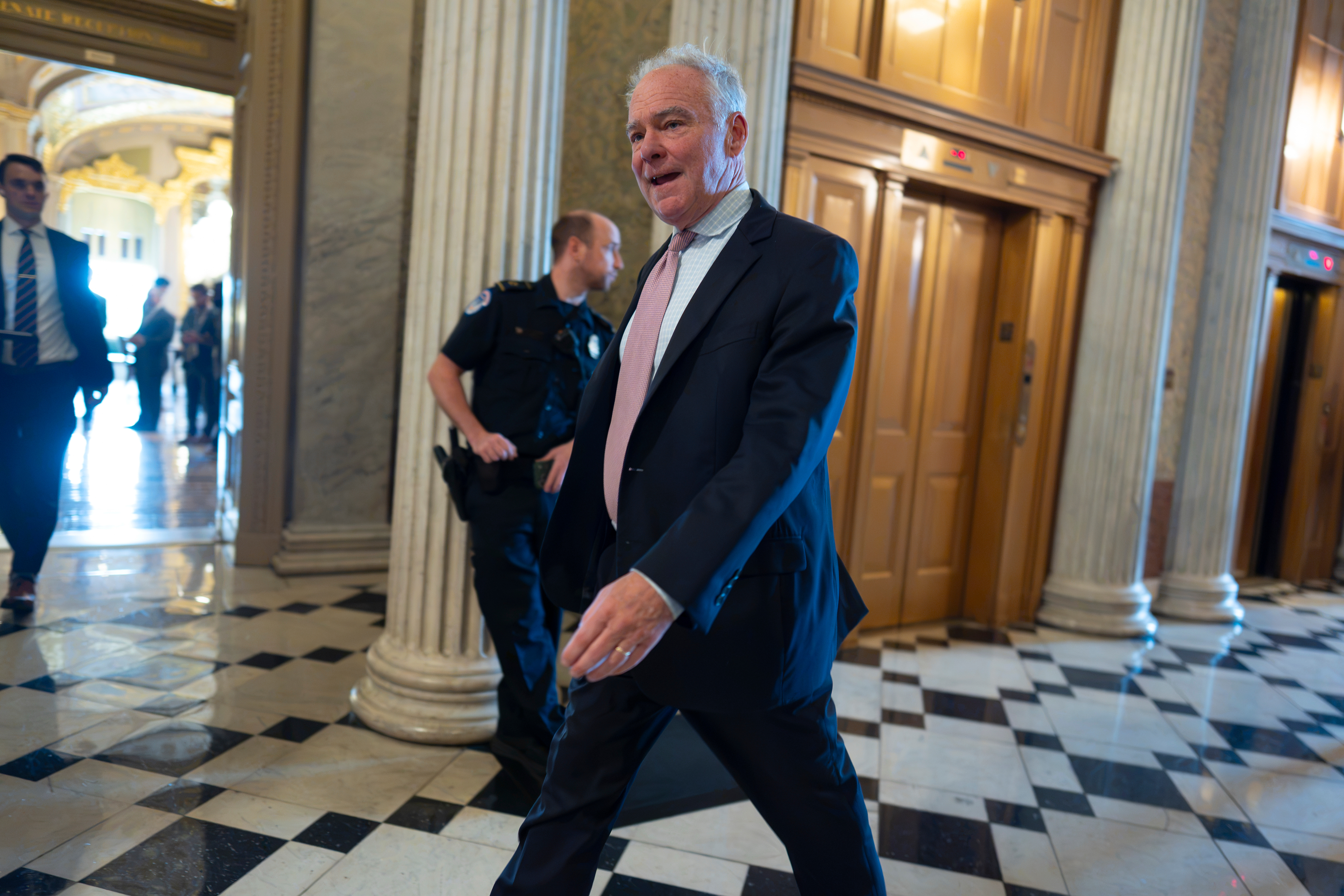
    “They have been carrying water for this ridiculous and illegal war for months and months and months and not listening to their constituents,” said Sen. Tim Kaine (D, Va.), who pushed the war powers resolution forward.

    About half of rural American voters believe the economy is worse off now than when Trump returned to office, according to a new survey from The Associated Press in partnership with KFF. The costs of groceries, gas, and healthcare rank as top pain points for the rural voters.

    “We’ve got to break the cycle,” said Sen. Thom Tillis (R, N.C.), who joined in voting yes.

    Republican Sens. Susan Collins of Maine, Lisa Murkowski of Alaska, and Rand Paul of Kentucky also voted for the resolution to end the war, as they have in many previous tallies. Sen. John Fetterman (D., Pa.) voted against.

    This was the 14th time the Senate has considered a war powers resolution, since Trump launched the conflict on Feb. 28.

    War powers resolutions are largely political statements, without the full force of law, but stand among the sharper tools the House and Senate have to express disapproval of the White House, short of halting funds for Trump’s military actions. As resolutions, they do not go to the president’s desk for his signature.

    As gas prices climb, Republicans start to question the war

    Republicans in control of Congress have shied away from directly confronting Trump over the war, now stretching past the seven-month mark. But their unrest is surfacing as stubbornly high gas prices leave voters in a cash crunch back home.

    Diesel costs, in particular, have almost doubled, topping $6 a gallon, according to AAA.

    Just returning from a swing through Iowa, Kansas, and Nebraska stumping for GOP candidates who are suddenly at risk in their elections, Sen. John Kennedy of Louisiana called on Trump to hold a prime-time address to the nation to explain the Iran war strategy and the end game.

    “People are confused about the war and upset about the cost of living,” he said.

    But he and others were not yet ready to vote against the war.

    “My own view is that the focus right now needs to be on attacking the cost-of-living issues,” said Sen. Josh Hawley (R, Mo.) who opposes the war powers resolution and believes the president is acting within his authority to conduct the military action.

    House Democratic Leader Hakeem Jeffries scoffed at the handful of Republicans now trying to distance themselves from what he called Trump’s failed economy. “Now all of a sudden they’re waking up,” he said.

    Democrats keep pushing war powers votes in Congress

    Earlier this month, the House for a third time approved a war powers resolution, this time with seven Republicans joining the Democrats, including two from battleground Iowa, Rep. Zach Nunn and Rep. Mariannette Miller Meeks, where affordability issues among rural voters are dominating the campaigns.

    Senators, though, have rarely been able to confront Trump by passing a war powers resolution.

    In June, the Senate approved a war powers resolution after four GOP senators joined Democrats, but Republicans abruptly reversed course the next day after Trump berated them during a private lunch over the outcome.

    At the time, Sen. Bill Cassidy of Louisiana, stood up to defend his vote only to end up in a shouting match with Trump. He later switched to oppose the war powers resolution after receiving a personal briefing from the White House.

    Thursday’s vote was on a resolution that had passed the House in July with GOP support. Rep. Pramila Jayapal, D-Wash., who authored the House resolution, said the Senate outcome was “a slap in the face to the millions of American people who want this war to end.”

    Other options to halt the Iran war

    As the war drags on, costing $43.5 billion so far, Congress is also seeking other ways to force Trump to rethink his military strategy in Iran.

    Rep. Thomas Massie, the renegade Republican from Kentucky, pushed forward articles of impeachment against Secretary of Defense Pete Hegseth before the GOP leadership abruptly adjourned the House and sent lawmakers home to campaign for the election, avoiding any potential vote on the matter.

    Lawmakers also have the power of the purse to curtail military spending, something Republicans have been reluctant to do but Democrats are sure to tackle if they win power in the midterm election. The White House’s request for an additional $87.6 billion funding package for the war and other needs has idled in Congress.

    First created in the aftermath of the Vietnam War as a way to hold a president accountable for military actions, the war powers act has long posed a test of the balance of power between the executive and legislative branches of government.

    While the Constitution says only Congress can declare war, the president as commander-in-chief is also able to engage the military. The war powers act seeks to provide clarity by requiring the president, within 60 days of any such action, to seek approval — or risk disapproval — from Congress.

  • Trump hails deep friendship with Xi as China’s leader urges ‘healthy’ competition between 2 powers

    Trump hails deep friendship with Xi as China’s leader urges ‘healthy’ competition between 2 powers

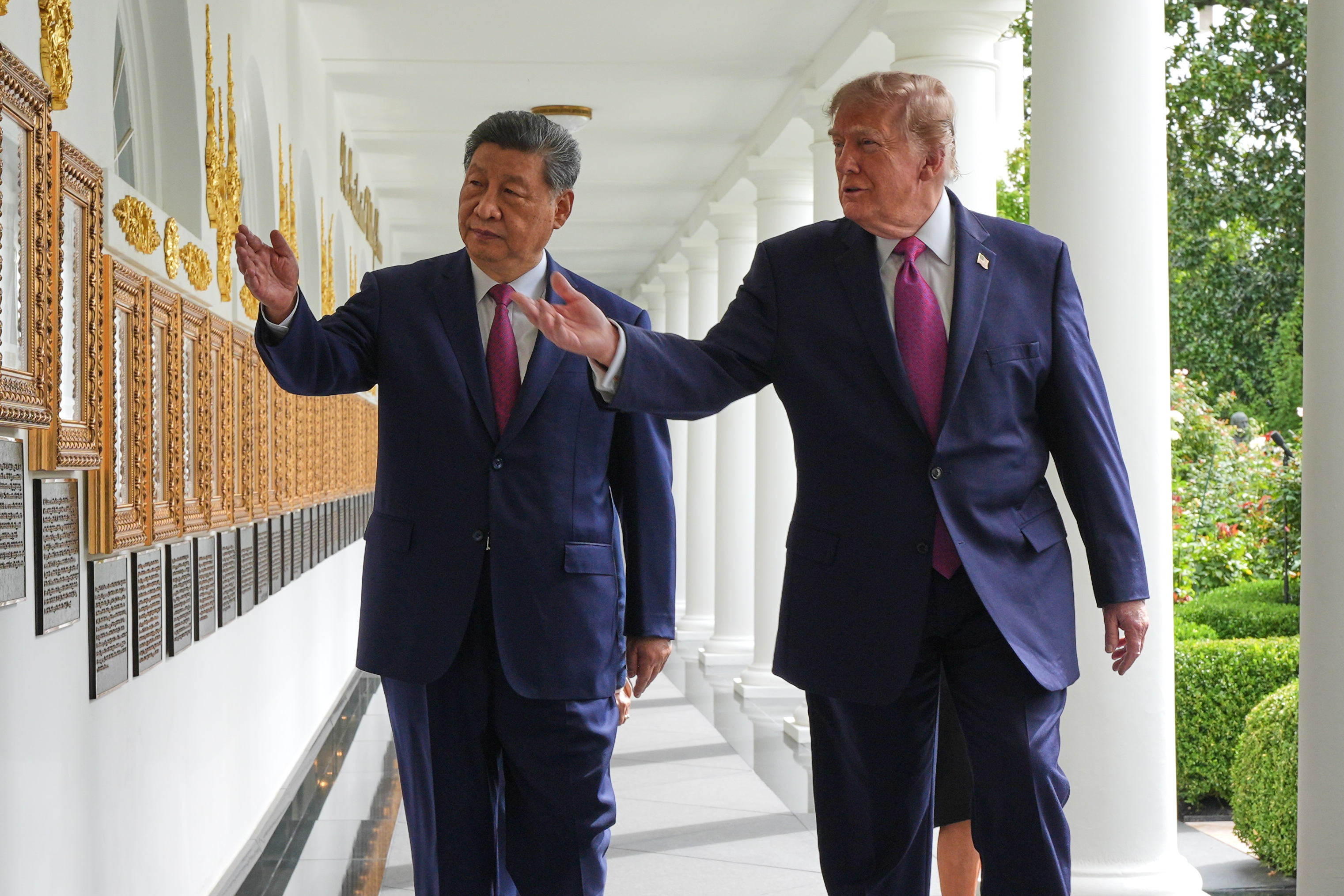
    WASHINGTON — President Donald Trump on Thursday hailed the “truly great friendship” he has forged with Xi Jinping as the Chinese leader began his highly anticipated state visit by pressing for the world’s two biggest economies to work more closely together to avoid friction as they compete.

    While Trump has many thorny issues to discuss with the president of America’s biggest economic rival, he focused on his long relationship with Xi as the two gathered with aides for opening remarks before formal talks.

    “From the time of my first election in 2016, President Xi and I have forged a friendship, a truly great friendship, actually, built on mutual respect and the vital interests of our people,” Trump said.

    China has resisted the Trump administration’s urgings — and economic threats — to use its considerable leverage to prod Iran to agree to U.S. terms to end the nearly seven-month war. Xi wants to see Trump permanently halt arms sales to Taiwan and loosen export restrictions on cutting-edge advanced chips. The two sides on Wednesday agreed to extend by two months a one-year trade truce that was set to expire Nov. 10 as they work to find a more durable agreement.

    Xi presses Trump on Taiwan

    In their private conversation, Xi also urged Trump to “prudently handle the Taiwan issue,” according to the Chinese state media outlet Xinhua.

    China has made clear it views Taiwan as the most sensitive issue in the U.S.-China relationship. Beijing considers Taiwan to be Chinese territory and vows to annex the island by force if necessary. The United States is obligated by law to provide Taiwan with sufficient hardware to deter any armed attack from the mainland. The U.S. has said it opposes any unilateral changes to the status quo by either side.

    China has repeatedly pressed Washington to permanently halt the arms sales, including when Trump and Xi met in Beijing in May.

    After that meeting, Trump said he was holding off on final approval for a record $14 billion arms package that was in the pipeline. He also described arms sales to Taiwan as a “very good negotiating chip” with China.

    Chinese president once more invokes the ‘Thucydides trap”

    Xi was also more pointed than Trump in his public remarks, saying Chinese and American interests are “deeply intertwined” and that the “competition should be a healthy one and should be kept within bounds.”

    He also reiterated his warning that the U.S. and China must avoid the ” Thucydides trap,” referring to the idea that when a rising power threatens to displace an established one, the result is often war. Xi offered a similar warning when Trump visited Beijing in May.

    “It should be a race of catching up with one another, not a wrestle in which one either wins or loses,” Xi added.

    Xi also announced that China will invite 100,000 American youth to come to his country for studies and exchanges in the next five years and that China will send two pandas to the zoo in Atlanta. He called the beloved animals an “envoy of friendship” and that they will meet the American people in a “few days.”

    Xi says China and U.S. should make sure AI is ‘always under human control’

    Trump said in a social media post earlier Thursday that artificial intelligence — “superintelligence” as he is trying to rebrand it — will be high on the agenda amid growing global anxiety that the technology will kill jobs or potentially even wipe out humanity.

    “I want to leave it exactly where it is,” Trump wrote. “That is China’s position also.”

    Xi also touched on AI in his opening comments, saying that the two countries had a responsibility to ensure that humans always operate AI.

    “We have both the capability and responsibility to develop and manage AI for good and ensure that a development of AI is always under human control and serves the well being of the people,” the Chinese leader said.

    The two countries’ finance ministers met earlier this week, with the U.S. proposing a new “notification mechanism” for AI incidents between the two nations.

    Trump rolls out the red carpet for Xi and faces criticism from some White House allies

    Trump has made clear he wants to impress Xi with the visit. The Republican president made sure construction of a new helicopter landing pad on the White House’s South Lawn was completed before the visit and he met Xi and his wife, Peng Liyuan, on Wednesday evening when they flew into Joint Base Andrews outside Washington.

    The White House also arranged for an elaborate military review that the leaders and their spouses observed before the Oval Office talks. Following the military review, first lady Melania Trump accompanied Peng for a visit to the Smithsonian National Museum of Asian Art.

    After about 90 minutes of talks, the leaders stepped out to the South Lawn so Trump could show off the new White House helipad and give Xi a tour of Marine One, the presidential helicopter. Trump and Xi also appeared to peer at the ballroom construction site from afar. Xi left the White House shortly after the quick tour and is to return in the evening for the state dinner.

    “We had a great meeting,” Trump said in a brief exchange with reporters after the tour.

    Later, the leaders will dine on sea bass at a black-tie dinner in the White House East Room, featuring red décor and a toast honoring the late President Richard Nixon, whose 1972 trip to China led to the establishment of diplomatic relations in 1979 and the parallel severing of formal ties with Taiwan.

    Trump’s decision to roll out the red carpet for Xi has spurred criticism from lawmakers in both parties and some White House allies.

    “Quite frankly, had the White House asked me for advice, I would have suggested the president not invite Xi Jinping to Washington for such a lavish welcome here in the United States of America based on all of the troubling issues we have with President Xi and the Chinese Communist Party,” said Sen. Roger Wicker, R-Miss.

    Xi urges U.S. and Iran to return to interim agreement

    The two sides also discussed the ongoing conflict in Iran, according to Chinese state broadcaster China Central Television.

    Trump has argued to little effect that China, which is far more dependent on Gulf oil than the U.S., has plenty of incentive to use its sway with Tehran to help force an end to the conflict.

    But Trump’s war of choice has unnerved Beijing, with the government condemning the U.S. and Israeli military action and Xi previously expressing concerns the conflict signaled a return to what he called the “law of the jungle.” The U.S. administration has warned China, Tehran’s biggest trading partner, not to aid Iran’s military effort.

    Xi, during Thursday’s talks, said China supports the U.S. and Iran returning to a short-lived interim deal from the summer in an effort to wind down the war, according to CCTV. That agreement broke down soon after it was signed in June as the countries traded renewed fire over control of the Strait of Hormuz, a crucial waterway for energy shipments.

  • Trump administration scrambles to stop third-country deportations after court ruling

    Trump administration scrambles to stop third-country deportations after court ruling

    The Trump administration scrambled Thursday to halt a number of imminent deportations after an appeals court blocked authorities from expelling people to third countries without a chance to contest their cases, according to documents obtained by The New York Times.

    The 1st U.S. Circuit Court of Appeals ruled late Wednesday that starting immediately, migrants need “a meaningful opportunity” to present evidence that they fear deportation to a third country.

    Previously, the government had concluded that it could deport the people without such an opportunity by gaining assurances from the nation taking in the migrants that they would not be persecuted or tortured there. This legal interpretation has allowed the administration to sidestep certain processes, such as the fear screening, and rapidly expel people.

    The third-country deportation program has been used by the Trump administration to get around rules barring certain people from being deported to their home countries. James Percival, the top lawyer at the Department of Homeland Security, said this week that more than 25,000 people had been deported to third countries.

    The program has drawn criticism because many immigrants have been sent to countries with records of human rights violations.

    The court decision adds a new burden for the government as it attempts to rapidly remove people from the United States without allowing their lawyers to try to block their deportation.

    On Thursday, as news of the ruling spread inside the U.S. government, officials quickly moved to take deportees off flights to third countries such as Costa Rica, Honduras, and the Central African Republic, according to documents obtained by the Times.

    The U.S. government has concluded that it cannot move forward — for the time being — with rapid deportations by simply relying on the diplomatic assurances, according to the documents.

    Trump administration officials said they would immediately appeal the order.

    “Without even allowing the government a chance to respond, and in the dark of night, a federal appeals court blocked us from conducting all third-country removals of illegal aliens, an entirely legal and invaluable tool to stem the tide of illegal immigration,” Attorney General Todd Blanche said. “We will immediately seek relief from the Supreme Court, which previously granted a stay in this very same case.”

  • FDA nominee voices support for vaccines at Senate hearing scrutinizing Trump administration efforts

    FDA nominee voices support for vaccines at Senate hearing scrutinizing Trump administration efforts

    WASHINGTON — President Donald Trump’s pick to lead the Food and Drug Administration voiced support for the safety of long-established vaccines at a hearing Thursday, even as senators questioned her about the White House’s efforts to upend childhood immunizations.

    Heidi Overton is currently serving as a White House adviser and has worked on a series of Trump health initiatives, including an executive order last month that called for splitting up and spacing out childhood vaccinations, bucking decades-old guidelines. Overton, a physician, stood beside Trump in the Oval Office when he falsely remarked that the combined measles, mumps and rubella vaccine could be “quite lethal.”

    Senate Health Committee Chairman Sen. Bill Cassidy, a physician from Louisiana, pushed Overton to reject that statement and affirm the safety of FDA-approved vaccines.

    “Right now every vaccine that is on the market has been determined to be safe and effective,” including the MMR vaccine, Overton said.

    Cassidy has repeatedly tried to extract commitments from Trump health nominees to uphold vaccine standards, including from Health Secretary Robert F. Kennedy Jr., only to see the Republican administration push forward with efforts undermining their use.

    “Kennedy gave me guarantees, and he did not keep them,” said Cassidy, a Republican. “If the president asks you to do something that goes against those guarantees you give us today, what will you do?”

    Overton said she would “follow the statutory requirements” for FDA commissioners and give Trump her best advice. Later in the hearing, Overton declined to explicitly say that Trump was wrong about the MMR vaccine’s safety.

    “This committee needs to know whether you will be radically honest, whether you will use your authority to stand up for sound science and protect children’s health,” Cassidy said. He didn’t indicate whether he’d support Overton’s nomination or when he might schedule a committee vote on it.

    If confirmed, Overton would inherit a raft of other controversial projects at the agency, including a safety review of the nation’s principal abortion drug and new rules that make it easier to sell flavored electronic cigarettes. Both issues were a focus for Republicans and Democrats on the panel.

    Overton sidesteps past statements on abortion pill

    The FDA approved the abortion pill mifepristone in 2000 and has repeatedly affirmed its safety while broadening access, including allowing it to be sent through the mail. But Kennedy ordered an FDA review of the drug’s safety last year, following calls from anti-abortion groups and lawmakers favoring abortion restrictions.

    While working at the Trump-aligned America First Policy Institute, Overton wrote that the FDA decision to allow mail delivery of mifepristone was “dangerous to women,” referring to the practice as “chemical abortion on demand.”

    In response to questions from Washington Sen. Patty Murray, Overton sidestepped her personal views on the drug, stating that it “has met the safety and efficacy determinations of the FDA.” Overton said she didn’t want to “prejudge” the FDA’s ongoing safety review of the pill.

    “The FDA has said this is safe,” responded Murray, a Democrat. “We need someone in FDA to make sure this is done by science.”

    Republicans on the health committee, including Cassidy, recently published a report suggesting the handful of companies that sell mifepristone may not be complying with rules for overseeing doctors who prescribe the drug.

    “If I’m confirmed as commissioner I would be committed to making sure every company is following the law,” Overton told Republican Sen. Jim Banks of Indiana.

    Overton’s abortion views could complicate her efforts to win over two moderate Republicans on the panel: Maine Sen. Susan Collins and Alaska Sen. Lisa Murkowski. Both have bucked their party on the issue, supporting federal access to abortion. Collins is currently locked in a tight reelection race in which abortion access is a central issue.

    But Collins focused her questions Thursday on a different issue: recent FDA decisions allowing new flavored e-cigarettes onto the market. Under previous administrations, including Trump’s first term, the agency had restricted sweet vaping flavors due to their potential appeal to kids.

    Overton pointed out that approval of several fruit-flavored vapes had the backing of FDA scientists, who determined the products met the standard of “appropriate for the protection of public health,” by helping adult smokers quit cigarettes.

    “They believed that standard was met because so many adult smokers are using flavors preferentially,” Overton said.

    To become commissioner, Overton will need a majority of votes from the 21-member health committee, followed by a positive vote from the full Senate.

    Under the current administration, leading the agency has involved balancing Trump’s demands for slashing regulations — such as those for vaping products — alongside Kennedy’s interests in scrutinizing vaccines, drugs and food ingredients.

    The previous FDA head faced numerous challenges before quitting

    Those challenges dogged the tenure of the previous FDA head, Marty Makary, who resigned in May. Makary’s time at the agency was defined by scientific disputes, leadership changes and a string of media stories detailing low morale and internal dysfunction among staffers. The FDA has lost about 20% of its employees to layoffs, buyouts, retirements or resignations since Trump took office.

    Overton studied under Makary at Johns Hopkins University, where she received a doctoral degree in clinical research after earning her medical degree at the University of New Mexico.

    Like Makary, Overton has no experience running a large bureaucracy, a critical skill for steering the FDA’s 16,000 staffers spread across numerous U.S. and international locations.

    In financial disclosure forms, Overton reported no investments in healthcare or food companies. That’s a stark contrast to Makary and other recent FDA nominees who have had to divest investments or cut other financial ties with companies regulated by the FDA.

    Overton reported $50,000 to $100,000 in student loans.

  • Trump ad airing with government funding despite law against ‘propaganda’

    Trump ad airing with government funding despite law against ‘propaganda’

    A television ad promoting President Donald Trump began airing on cable Wednesday saying it was paid for by the U.S. government, despite a federal prohibition on using taxpayer dollars for “publicity or propaganda.”

    The ad is similar to spots released earlier by the nonprofit arm of Trump’s political operation to promote his record in the midterms campaign. But this one includes a tag reading, “Paid for by the U.S. Government.”

    Since the 1950s, annual appropriations legislation — including the funding bill Trump signed in February — has routinely included a ban on using federal funds for “publicity or propaganda purposes.” The Government Accountability Office has said the prohibition applies to communications that are “purely partisan” and “designed to aid a political party or candidates.”

    The ad consists of a supercut of Trump photos and videos interspersed with text of campaign slogans. The soundtrack features snippets of Trump speeches and a chorus of women singing, “I’ll make them love me.” It ends with Ultimate Fighting Championship CEO Dana White praising Trump over footage of the June match on the White House lawn and military flyovers.

    It has aired so far on Newsmax in Chicago and Fox News in Los Angeles, according to ad-tracking firm AdImpact. More details about who bought the airtime were not available.

    The White House and representatives of Trump’s political team did not immediately respond to questions about the ad.

    Rep. Jamie Raskin (D, Md.), the top Democrat on the House Judiciary Committee, said on social media that the ad could amount to “felony criminal theft and conversion of government property for political campaign purposes.” He also cited the Hatch Act, which prohibits government employees from using their positions or official resources for political activities.

    There is no immediate precedent for a government-sponsored political ad during a campaign.

    In 2004, the administration of President George W. Bush was criticized for releasing ready-to-air video segments showing Bush signing a Medicare prescription drug law, complete with hired contractors posing as reporters. The GAO said the materials violated the propaganda prohibition.

    In the first Trump administration, the Department of Health and Human Services commissioned a $250 million coronavirus ad campaign that congressional Democratic investigators found included partisan interests. The agency backed off using pro-Trump celebrities in the ads.

    Last year, the Department of Homeland Security under then-Secretary Kristi L. Noem spent more than $200 million on ads promoting her and Trump’s immigration policies. In March, Noem testified that Trump approved the campaign, prompting him to fire her.