Category: Wires

  • How the U.S. and Russia weakened a global effort to regulate killer AI

    How the U.S. and Russia weakened a global effort to regulate killer AI

    UNITED NATIONS — Early this month, hundreds of diplomats huddled in a cavernous U.N. conference room in Switzerland, working toward a muscular treaty to regulate the use of lethal autonomous weapons — the first agreement governing the use of killer artificial intelligence arms. On the last day of negotiations, the talks turned aggressive.

    Over the next roughly 15 hours, U.S. and Russian diplomats hammered away at the document, removing a range of provisions designed to safeguard the use of artificial intelligence in weapons, according to three people familiar with the negotiations, who spoke on the condition of anonymity to discuss sensitive closed-door proceedings, and documents reviewed by the Washington Post.

    They stripped language requiring the systems to operate in a “predictable” and “reliable” manner, the people said, and removed a clause mandating that ethical considerations be taken into account when using AI weaponry. The U.S. and Russian teams also removed a provision requiring that humans review military targets developed by AI before a strike, they added.

    In a closed-door session, with U.N. cameras turned off and civil society observers removed, Washington and Moscow deployed their army of about 10 lawyers each — nearly twice the diplomatic presence of other delegations — to make changes that moved so quickly that the smaller delegations were left dizzied, the three people said.

    “It was death by a thousand paper cuts,” said one of the people.

    The U.S. State Department, the Russian Foreign Ministry, and the United Nations did not return requests for comment.

    The erosion of the agreement, the details of which are previously unreported, shows how the United States and Russia have worked to weaken global rules to regulate lethal AI weaponry, as the Pentagon moves to rapidly infuse the burgeoning technology into its battlefield strategy.

    The talks are happening amid a fierce public debate over the existential risks of advanced AI, as tech executives urge world leaders to collaborate to impose limits on the technology. The U.N. has for years tried to regulate AI weaponry with limited progress, and the latest directive is the furthest the effort has advanced.

    Washington’s attempts to neutralize global rules on AI weaponry also provide insight into how it may approach regulating the U.S. military’s use of the technology. U.S. officials are currently revising the military’s own lethal autonomous weapons directive, released in 2023.

    Verity Coyle, the deputy director for arms in the crisis, conflict, and arms division at Human Rights Watch, said weak rules governing lethal AI weaponry could have significant consequences.

    “It could mean machines can make life‑and‑death decisions without human control,” she said. “The practical impact is stark: more civilian harm, less accountability, and a faster slide into riskier, automated warfare.”

    Across the world, the use of artificial intelligence in war has moved from scenarios that are largely theoretical to actual battlefield use. The U.S. military used Anthropic’s chatbot to identify nearly 1,000 targets to strike in the first 24 hours of the war with Iran, according to the Post. Israel has heavily relied on AI for its military operations in Gaza, the Post reported.

    Over the past few months, AI companies have disclosed that their bots have autonomously hacked the servers of other organizations — including U.S. government websites — and that nefarious actors in places such as Yemen and Iran have used chatbots to try to make weapons or target the U.S. military, sparking fears that the technology could become uncontrollable.

    This month, an Anthropic researcher quit the company and warned the public that AI could end the human race, setting off a furious debate in Washington over how to regulate it before it poses an existential threat to humanity.

    Amid this flurry of consternation, tech executives and global leaders have urgently called for AI regulation. At a meeting of the U.N. Security Council this week, OpenAI chief executive Sam Altman and Anthropic leader Dario Amodei called for nations to collaborate to create a model of global AI governance.

    Regulation “must be shaped through democratic processes, by governments accountable to the people they serve,” Altman said. “At the international level, that means cooperation.”

    But domestic attempts to regulate have reached a roadblock, with the Trump administration arguing that any rules on AI will stymie innovation.

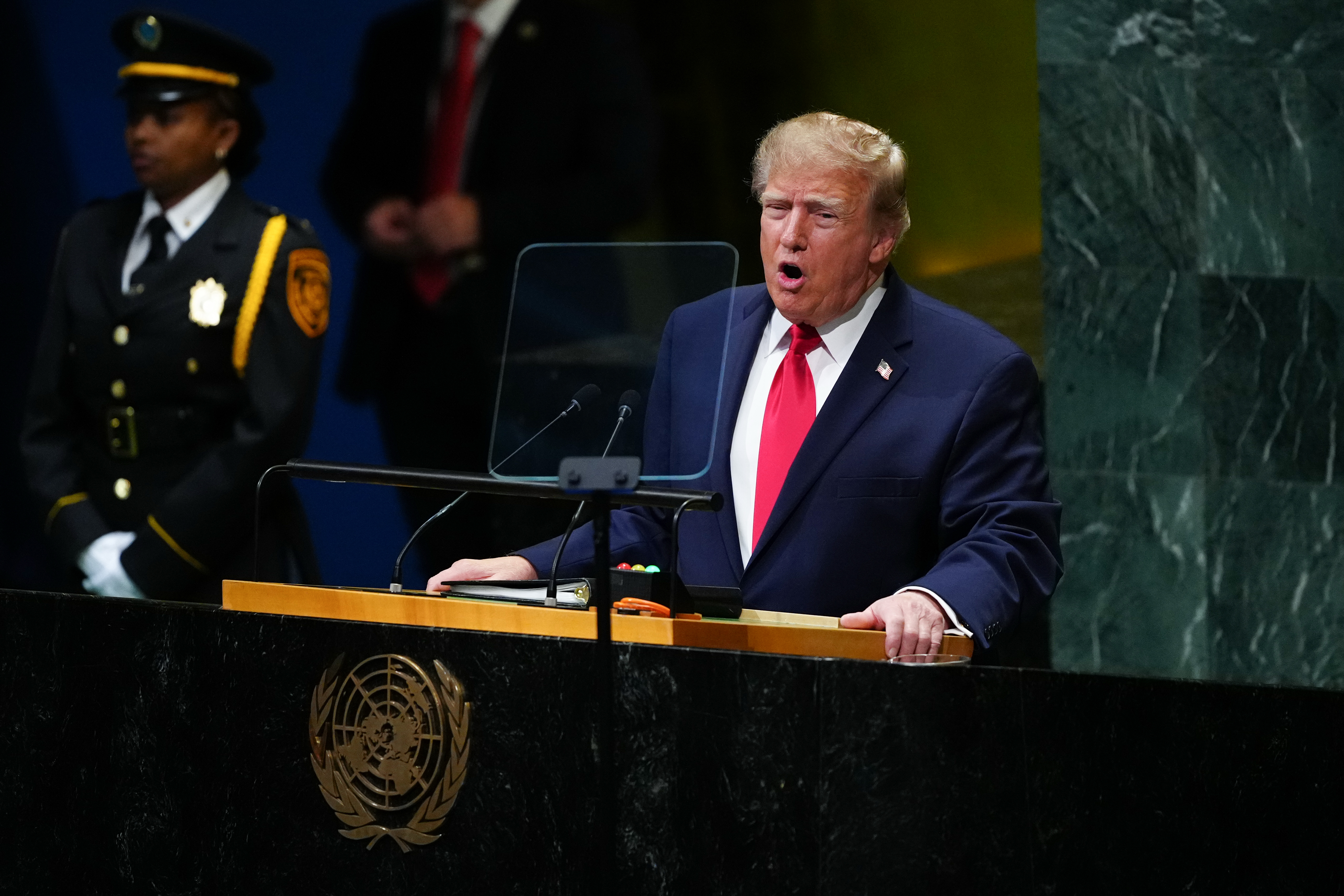
    “The United States also totally rejects any attempt to construct a globalist scheme to control for the artificial intelligence being spoken of so much now — hereinafter officially called ‘super intelligence,’” President Donald Trump said at the United Nations on Tuesday.

    The lethal autonomous weapons negotiations in the U.N. are currently nonbinding, though the talks could open the door to a landmark treaty that is legally binding if member nations agree. It presents the most advanced global effort to regulate how AI weapons are used in the battlefield.

    But at the talks in Geneva in early September, it was apparent that the U.S. and Russia were going to be a major roadblock to progress, the three people said.

    The U.S. team is led by State Department diplomats, Pentagon officials, and legal experts, Coyle of Human Rights Watch said. “It’s a well‑resourced team, and they come prepared to defend U.S. military autonomy,” she said.

    Nicole van Rooijen, the executive director of the global nongovernmental coalition Stop Killer Robots, said Washington and Moscow aren’t in favor of legally binding rules on autonomous weapons and have outsize influence on how negotiations will end.

    The autonomous weapons talks require dozens of nations to reach consensus on what rules will be enacted, she added. The U.S. and Russia do not champion multilateralism — which requires countries to work together to reach agreements — and can use “political capital to exert pressure on other states,” she said.

    “They have the power to block any significant progress that is made by the vast majority of states who do want to move forward on a binding treaty,” she added.

    In November, nations will come together in Geneva to discuss whether talks can turn into an official mandate or potentially a legally binding treaty.

    In the U.S., a parallel discussion is happening as the Pentagon works to rewrite its own directive on the use of autonomous weapons. In June, Trump issued a national security memorandum requiring that the directive be updated within 90 days. As of late September, the U.S. government has not released a new version.

    Established in 2023 during the Biden administration, the directive contained several clauses that echo those eliminated from the U.N. document, including requiring that human judgment be deployed to check autonomous and semiautonomous weapons systems. It also mandated that those who operate AI weapons systems abide by the laws of war and applicable treaties.

    Richard Lennane, the disarmament adviser for the legal team for the International Committee for the Red Cross, said global treaties can be impactful in controlling the use of harmful weapons, citing the effect that directives on chemical and biological weapons, antipersonnel land mines, and cluster munitions have had on limiting use.

    “It’s not about punishment, it’s about setting norms and influencing behavior,” Lennane said. “We believe that a treaty regulating autonomous weapons could be similarly effective.”

    Coyle, however, noted that the U.S. and Russia have the diplomatic muscle, legal teams, and political incentives to keep any global rules on autonomous weapons weak, and she said the actions to water down regulation on AI arms follow a well-trodden playbook.

    “When the U.S. wants to preserve military or technological advantage, it pushes voluntary guidelines instead of binding rules,” Cole said. “We’ve seen the same playbook in cyber, space, and other arms‑control debates. Autonomous weapons are no exception.”
  • Lawmakers slam Trump’s move to cancel $810M in funding approved by Congress

    Lawmakers slam Trump’s move to cancel $810M in funding approved by Congress

    Lawmakers blasted a plan by President Donald Trump to claw back more than $800 million in congressionally approved spending across the government, saying the president had no right to defy Congress in how he directs federal funding.

    The White House late Friday said it was taking a legally contested move to cut funding at federal agencies for a range of programs that direct government services toward immigrants, minority groups, climate change programs, and other issues. It was the latest bid by the Trump administration to assert sweeping control over the government and to trim congressional powers.

    Trump is using his authority under the Impoundment Control Act to do a “pocket rescission” of the funds, the White House said in a statement, a move it also used last year to cut nearly $5 billion in funding for foreign aid, the first time the maneuver had been used in nearly 50 years.

    The Supreme Court allowed the 2025 effort to proceed, though it did so by issuing a stay of a lower court’s ruling that the move was illegal and rested part of its justification on the president’s wide-ranging authority to act on foreign affairs. It held back from declaring that Trump was on solid legal ground. This year’s action is mostly focused on domestic spending.

    The largest slice of funding, $567 million, was clawed back from the Department of Health and Human Services, the White House said, saying that it was cutting money for programs that directed services toward refugees and asylum seekers that it said encouraged a flow of migrants to the United States.

    “These funds previously went to pro-illegal immigration programs and Non-Governmental Organizations that provided services to refugees, asylees, and other non-citizens and put unaccompanied children in harm’s way,” the White House said in its statement.

    Other cuts included an Education Department program for migrant students, a Justice Department program intended to reduce racial tensions in policing, and a Department of Housing and Urban Development program that funded housing counseling for minorities and immigrants.

    Congress typically needs to approve White House rescissions. The White House argues that submitting a rescission request near the Sept. 30 end of the fiscal year allows it to withhold the money until it expires, bypassing Congress.

    The House is out of session until November, while the Senate plans to adjourn in early October to allow lawmakers to campaign for the Nov. 3 midterm elections.

    Sen. Susan Collins (R., Maine), the chairperson of the Senate Appropriations Committee, and top Democratic appropriators have argued that the pocket rescission strategy is illegal. Russell Vought, director of the Office of Management and Budget, has pointed to a Government Accountability Office letter from the 1970s to argue that the strategy has precedent.

    Lawmakers of both parties condemned the move.

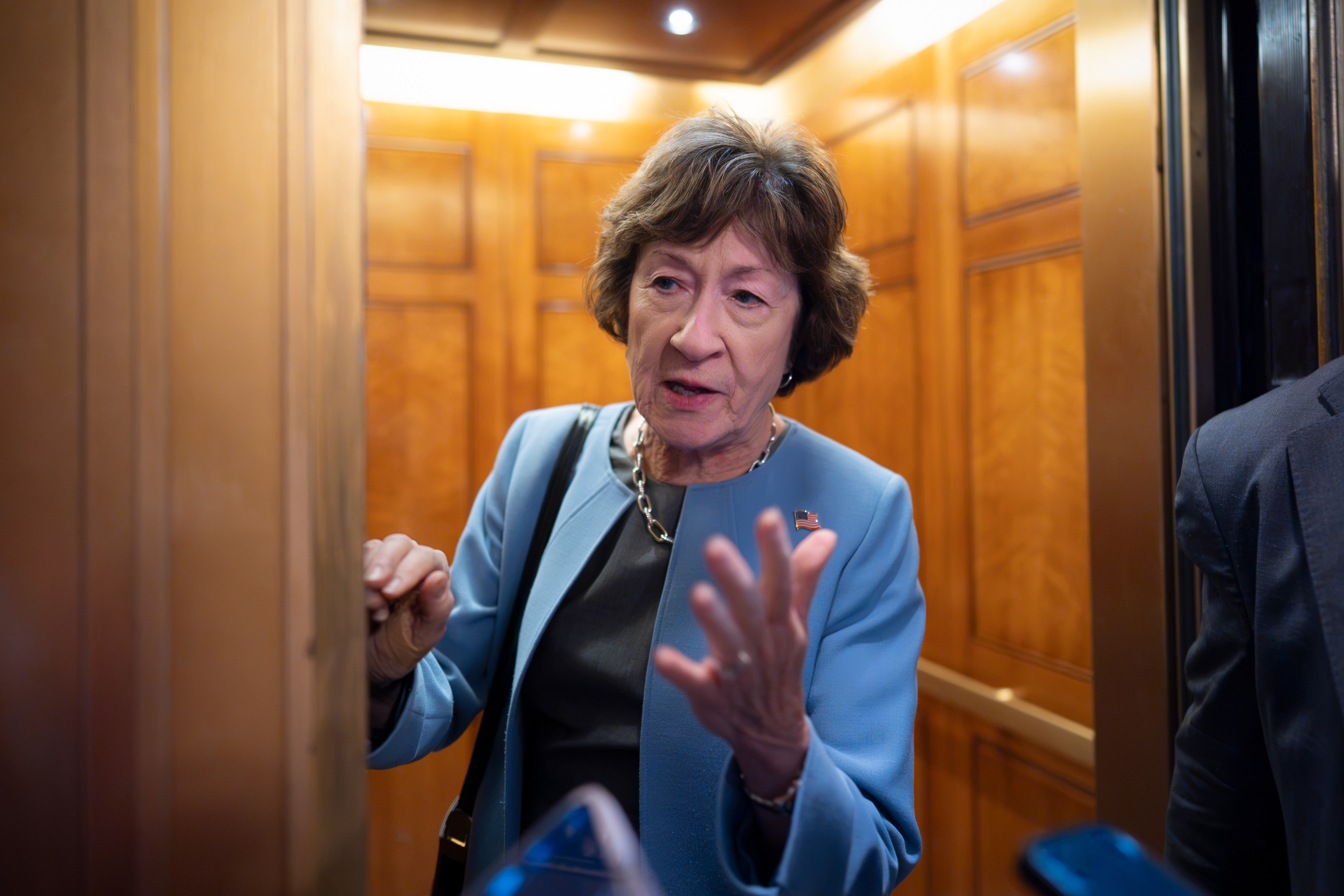
    “Without warning or consultation, Congress just received an $810 million package of pocket rescissions from the Administration. This is the most recent attempt by this Office of Management and Budget (OMB) to undermine Congress’s Constitutional power of the purse,” Collins said in a statement.

    Collins is running a tight race for reelection in November for one of the seats that will help determine which party controls the Senate.

    “The independent Government Accountability Office has concluded that pocket rescissions are unlawful and not permitted by the Impoundment Control Act,” she said. “I will work with my colleagues to address these illegal actions.”

    Collins’s Democratic counterpart also blasted the spending decision.

    “This is theft from the American people, plain and simple,” Sen. Patty Murray (D., Wash.), the top Democrat on the Appropriations Committee, said in a statement. “These are funds Congress has delivered on a bipartisan basis and should be helping people — not cut off by a president more focused on building a ballroom than investing in families.”

    Democratic appropriators unsuccessfully fought to bar the Trump administration from using pocket rescissions in their latest funding extension, Murray said. “Republicans refused to take common-sense action and prevent this from happening,” she said.

  • House Democrats plan vast oversight of Trump administration. Impeachment is an option

    House Democrats plan vast oversight of Trump administration. Impeachment is an option

    WASHINGTON — House Democrats are preparing a vast oversight agenda, with investigations of President Donald Trump, his family, and his administration if the party sweeps control of the chamber from Republicans in the November elections.

    The undertaking is as robust as it is daunting, spanning several House committees. With majority power comes bigger budgets and staff, and the ability to investigate, subpoena, and potentially course-correct what the Democrats say are widespread corruption and abuses of power. Impeachment of the Republican president and cabinet officials is not off the table.

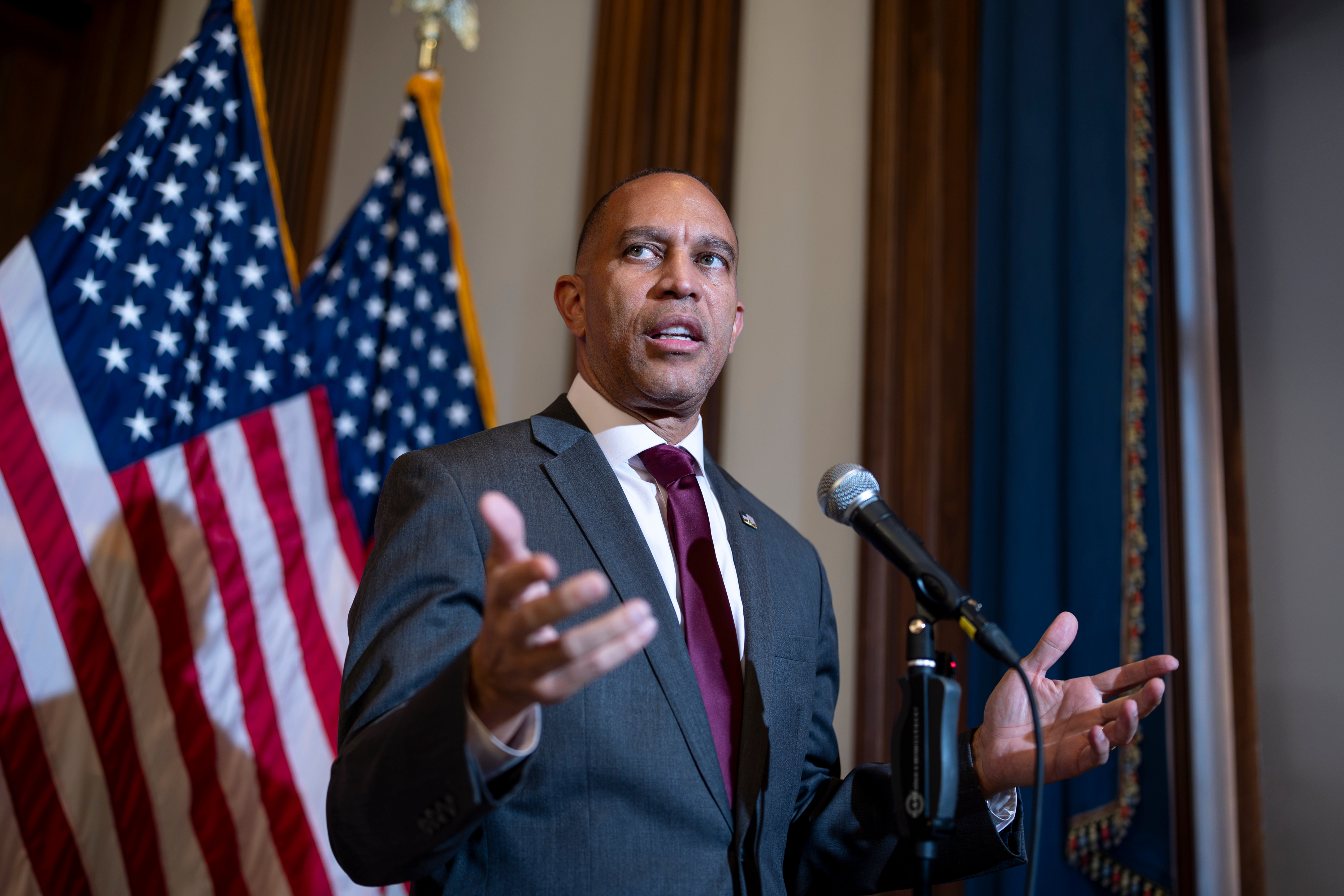
    “There is a cost to the American people of the out-of-control corruption,” said Democratic leader Hakeem Jeffries of New York, who is in line to become House speaker if Democrats win control at the Capitol.

    “If folks have been stealing from the American people, shortchanging the American people, or screwing over the American people,” Jeffries said, “we are going to hold the crooks accountable.”

    Congress has enormous ability to conduct oversight of the executive branch as part of its power as a coequal branch of government, and a road map for the Democratic-run investigations has already been set by the almost daily letters lawmakers send to the administration and in amicus court filings.

    Democrats are asking about the money-making by Trump and his family, whose wealth has grown dramatically since he returned to the White House in January 2025. They are investigating the potential civil rights violations of Americans killed protesting U.S. Immigration and Customs Enforcement operations and of detained immigrants being deported to faraway countries. They have fought the closing of the Kennedy Center, launched investigations into private funding of the America at 250 celebrations, and tracked the shuttering of federal operations, including the U.S. Agency for International Development.

    New questions emerge daily, including the Trump family’s recent acknowledgment that a weekend wedding party for the president’s son Donald Trump Jr. was partly funded by a Russian oligarch, with reportedly close ties to the Kremlin.

    Rep. Jamie Raskin (D., Md.), who is in line to become the chairperson of the Judiciary Committee, characterized the issues involved as “gargantuan.”

    “We need to zero in quickly on the forms of systemic corruption that have cost the public huge amounts of money,” Raskin told the Associated Press, “and where there are legislative cures available.”

    Trump impeachments made history then. Could it happen again?

    Jeffries will almost certainly be under pressure from the far left to move more swiftly to articles of impeachment against Trump, who during his first term became the first president to be twice impeached by the House. Both times, he was acquitted by the Senate.

    Impeaching the president a third time may not hold the currency that it once did. Democrats will more likely focus their impeachment efforts on cabinet members. Defense Secretary Pete Hegseth already faces articles of impeachment from a Republican, Rep. Thomas Massie of Kentucky, over his leadership at the Pentagon and his management of the Iran war.

    “We haven’t ruled anything out,” Jeffries said recently about the tools available to Congress, “and we haven’t ruled anything in.”

    The White House is likely to play hardball if confronted with investigations, and Democrats are bracing for an administration that potentially ignores subpoenas or refuses to turn over paperwork that lawmakers are demanding.

    The Democrats are also reaching beyond the administration into various corporate and business entities for potential wrongdoing.

    ‘We’ll act like the Congress,’ says one Democrat in line to lead a committee

    Ranking Democratic lawmakers who are in line to lead committees if power shifts are beginning to chart the investigations they plan to tackle.

    Rep. Robert Garcia of California, the top Democrat now on the Oversight and Government Reform Committee, has outlined five priorities, including Trump family business dealings, the administration’s handling of the Jeffrey Epstein investigation, and ICE operations.

    “We’re already doing work,” Garcia told the AP.

    He also mentioned the Department of Health and Human Services under Secretary Robert F. Kennedy Jr., as well as broader allegations of corporate corruption.

    The top Democrat on the House Foreign Affairs Committee, Rep. Gregory Meeks of New York, whose jurisdiction includes the State Department, said the committee plans to investigate Trump’s international dealings, including around the Iran war.

    He expects the committee will also look into the administration’s Venezuela operations — from the military strikes on alleged drug boats in the Caribbean and Pacific waters to the U.S. partnership with a private company to develop and access the South American country’s oil.

    Rep. Jared Huffman of California, the ranking Democrat at the Natural Resources Committee, which overseas the Interior Department and its National Park Service operations, has begun digging into Trump’s “vanity projects,” including the demolition of the White House’s East Wing for a new ballroom and the president’s proposed arch.

    Huffman and other committee members have also been eyeing the Trump family’s role in various minerals deals.

    At the committee’s last session before lawmakers recessed to campaign for the midterm elections, Huffman said that if Democrats take charge, he plans to call witnesses, put them under oath, and follow the evidence where it leads.

    “When people ask what will we do,” he said he responds, “My answer is simple. We’ll use those tools. We’ll act like the Congress.”

  • Trump rejects Iranian proposal for ceasefire and opening of strait

    Trump rejects Iranian proposal for ceasefire and opening of strait

    WASHINGTON — President Donald Trump said Saturday that he turned down Iran’s latest ceasefire proposal, which would have reopened the Strait of Hormuz and restarted talks on the country’s nuclear program.

    “They made a proposal, but I rejected it,” Trump told reporters as he left the White House on Saturday morning.

    Trump demurred when asked if he expected to restart military strikes after the November midterm elections, saying Iran wanted “to make a deal where they open the strait immediately because they’re losing so badly.”

    Trump’s rebuff was the latest turn in what has been a cycle of bombings, peace proposals, grandiose threats, and conflicting messages throughout the nearly seven-month U.S.-Israeli war against Iran. Trump’s rejection of Iran’s offer came after his aides held a three-hour meeting with Iranian officials at the United Nations General Assembly this week in New York.

    In his speech at the United Nations, Trump issued an ultimatum to Iran, saying its leaders could strike a deal with the United States or risk annihilation.

    “Will a deal be made with Iran that lets them rebuild and create a far greater country than it ever was before — maybe one of the greatest in the Middle East or even the world?” Trump asked in speech Tuesday. “Or do I annihilate the Islamic Republic and do it quickly, never giving them a chance to kill and destroy people and countries again?”

    Trump also suggested that Iran was dragging the war out to the midterm elections in the hopes of politically damaging Trump and Republicans. The closure of the Strait of Hormuz, a key shipping route for oil and gas, has surged energy prices across the globe.

    Iran’s foreign minister, Abbas Araghchi, told reporters Thursday that the seven-point proposal Trump rejected closely mirrored the commitments laid out in a so-called memorandum of understanding that was struck between the United States and Iran in June but that quickly unraveled.

    Araghchi added “it would be better” if a deal were reached before the U.S. midterm elections.

    He said that the proposed agreement would end fighting for seven days, including in Lebanon, and require the United States to release Iranian frozen assets estimated to be at least $12 billion, waive sanctions on Iranian oil, and lift the naval blockade on Iran. Then, on the last day, the Strait of Hormuz would be opened.

    After the seven days, negotiations over Iran’s nuclear program would restart.

    Trump said Saturday that he was still open to negotiating with Iran.

    “They want to make a deal, and I think that’s fine, I like making a deal too,” Trump said. “But that deal would not be acceptable.”

    This article originally appeared in The New York Times.

  • Taking care of grandchildren may help slow cognitive decline

    Taking care of grandchildren may help slow cognitive decline

    Being a grandparent may mean many things: making the best cookies, giving the warmest hugs, passing along hard-won wisdom, and sharing family stories.

    But beyond giving you a sense of joy and meaning, there’s emerging evidence that being a grandparent has other benefits: It may help protect your brain during aging.

    Recent research has found grandparenthood may be linked to not only slower cognitive decline, but also a lower risk of dementia and even a younger-looking brain.

    There are still relatively few studies looking at how grandparenthood changes cognition and the brain, but more research is underway. “This is kind of a new frontier, and we’re just kind of at the beginning of it,” said James Rilling, a professor of psychology at Emory University.

    But the benefits of caregiving as a grandparent make sense, considering scientists have also identified long-term benefits in mothers and fathers, in which parents with more children had increased functional connectivity in brain networks that tend to thin with age.

    “By taking care of others, it might help us to support healthy brain aging,” Rilling said.

    The cognitive benefits of caregiving

    In one of the first population studies of American grandparents and dementia, researchers looked at over 10,000 grandparents and found that caring for grandchildren was linked to a lower risk of dementia over 16 years of longitudinal data, said Seung-won Emily Choi, an associate professor of sociology at Texas State University who researches cognitive health in aging and conducted the study.

    A study published in 2025 of over 10,000 older adults in China found that caregiving for less than 40 hours a week was associated with a 24% reduced risk of dementia compared with grandparents not providing care for grandchildren. The researchers’ analyses concluded this could be in part because of reduced loneliness and increased digital technology access.

    Also, the act of caregiving itself may be linked to the cognitive benefits. Compared with grandparents not involved in caregiving, those who were involved had higher verbal fluency and episodic memory, according to a 2026 study conducted by Flavia Chereches, a graduate student of developmental psychology at Tilburg University in the Netherlands.

    Grandmothers vs. grandfathers

    Intriguingly, the research suggests there may be differences in the effects for grandmothers and grandfathers. In Choi’s study on the link to dementia risk, for example, grandmothers had the most benefits when they were engaged in lower-intensity caregiving (less than 500 hours over two years), while grandfathers benefited from higher intensity (over 500 hours). And in Chereches’s research, only caregiving grandmothers had less cognitive decline.

    This may be, in part, due to cultural gender differences. Grandmothers tend to be more involved in the more physically demanding labor of feeding, cleaning, and managing care, which may be more beneficial in lower amounts.

    The differences may also relate to the “grandmother hypothesis” for the evolutionary reasons adult female humans live long past their reproductive age, a trait shared by few other mammals, including some whales and chimpanzees. Evidence suggests that grandmothers have a consistently positive impact on their grandchildren’s health, Rilling said.

    However, for cognitive benefits, it might not “necessarily matter if you’re a grandma or grandpa, but more like how you experience caregiving,” Chereches said.

    Bonding across generations

    There are many known ingredients that go into healthy aging, such as being embedded in a social network, staying physically active, and stimulating your mind.

    “Caregiving is one meaningful social role that might provide access to all of this,” Chereches said.

    When grandparents are with their grandkids, they report more instances of feeling sadness or worry — perhaps due to concern over the children’s well-being, as well as bittersweet feelings about the transience of life — compared with when they spend time with others.

    But more often, they report more feelings of pride and love, Chereches and her colleagues found in a 2026 study.

    “There seems to be something special about this connection,” she said.

    Time connecting with grandchildren can connect grandparents with others, too. While “interacting with the grandchildren, they have more chances of getting along with their other children or the other family members and even well in the community,” Choi said.

    At the same time, the kinds of interactions nanas and pawpaws have with their grandkids can be very mentally stimulating, with storytelling, playing make-believe, and reading books.

    And you don’t necessarily need to be an actual grandparent to benefit.

    Research on older adults volunteering with Experience Corps, a program run by AARP that trains teams to volunteer in elementary schools, also found that the experience helped improve memory and executive function, as well as decreased brain volume loss in areas associated with dementia.

    A younger brain

    More recent research suggests that the act of caregiving as a grandparent may also be linked to a younger brain. In a 2025 study, Rilling and his colleagues scanned the brains of 50 grandmothers and compared them to those of 25 women of similar ages who were not grandparents. On average, the grandmothers’ brains looked 5½ years younger according to age estimates calculated by a computer model.

    However, these studies are associational and can’t show causation. It’s very possible that people who are healthier are more likely to provide active grandparent caregiving, for example.

    The grandmothers in the imaging study are “almost like super-grandmothers” because they signed up for a study about grandmothers, Rilling said. “They were very mentally, physically healthy, financially stable. They’re not overextended, and they’re really highly engaged with their grandchildren.”

    The research also points to the importance of balance: Caregiving can be physically and mentally exhausting — perhaps an obvious statement to anyone who has engaged in it — which can detract from the benefits. Research shows that grandparents who are the sole caretakers of their grandchildren are less likely to have cognitive benefits, for example.

    “We should not expect that grandparenthood or grandchild care is the right thing for everyone,” Chereches said. “If grandparents want to provide grandchild care, if the role is important to them, and there’s something they want to do, then it’s definitely a great way to maintain oneself active, engaged with a meaningful social role, but then we also need to acknowledge that there are people that maybe would like to do something else.”

    The key is to take care of your own physical well-being with proper sleep, diet, and exercise and to maintain other social connections, Choi said, and at the same time, enjoy the more stimulating parts of taking care of grandchildren.

  • Kitty Lunn, who expanded the boundaries of dance, dies at 76

    Kitty Lunn, who expanded the boundaries of dance, dies at 76

    In 1987, months before she was to perform in her first Broadway production, Kitty Lunn, an actor and former ballet dancer, was on her way to a date when she slipped on a patch of ice and tumbled down a flight of marble steps.

    The fall shattered vertebrae and damaged her spinal cord. She spent the next three years in acute care, undergoing a series of major surgeries. Dancing again seemed impossible.

    “I couldn’t point my toes. I couldn’t hold my stomach in,” Ms. Lunn recalled in a 2020 interview. “Never mind that I couldn’t stand up.”

    Yet when Andrew Macmillan, her date that fateful night, asked what was stopping her from dancing again, Ms. Lunn said something that surprised even her: “The answer to that question was fear.”

    In 1995, Ms. Lunn went on to serve as a founder and artistic director of Infinity Dance Theater, devoted to breaking down barriers in dance by training and mounting performances featuring dancers both with and without disabilities. She died on Aug. 18 at her home in Manhattan. She was 76.

    The cause was cardiovascular disease, a representative from Infinity Dance said.

    Ms. Lunn performed in hundreds of productions with the company, translating principles of ballet and modern dance into movements designed for dancers with a variety of physical disabilities, and using a lightweight, nimble wheelchair modified by Macmillan, whom she married after her long hospital stay. (She signed her name Kitty Lunn-Macmillan, but maintained Kitty Lunn as her professional name.)

    She performed around the world, including at the first Cultural Paralympiad, a showcase of the talents and experiences of people with disabilities held at the 1996 Paralympic Games in Atlanta. She also performed at the Kennedy Center in Washington in 2000 and 2004. Among the notables who trained with Infinity was Alice Sheppard, the dancer, choreographer, and founder of the disability arts ensemble Kinetic Light.

    “Without my chair, I’m really an invalid,” Ms. Lunn once said. “I never refer to myself as wheelchair-bound — that sounds like I’m in chains. I’d rather describe myself as a dancer who sits down a lot.”

    Kitty Morrison was born on Aug. 5, 1950, in New Orleans, the youngest of three children of Hugh Morrison Jr., who owned an insurance agency with his brother, and Beatrice (McClung) Morrison, a real estate agent and interior decorator.

    Her fascination with dance started at 8, when her grandmother took her to see The Red Shoes — the heralded 1948 British ballet film starring Moira Shearer.

    “I looked up at that beautiful redheaded ballerina, and I wanted to be her,” she told the website Stance on Dance in 2019.

    By her midteens she was dancing principal roles with a regional New Orleans ballet company, which led to a scholarship to the Washington School of Ballet, where she studied with renowned teacher Mary Day and ballet master Edward Caton. Along the way, she also performed in classics like Swan Lake and Giselle.

    She was drawn to ballet roles that required a degree of acting, and eventually decided to pursue a career as an actor. At 20, she moved to New York and studied at the Neighborhood Playhouse School of the Theater, where Diane Keaton and Eli Wallach had trained.

    In 1984, Ms. Lunn took a job as a radio producer at WABC while waiting for her big break in acting; she finally earned a role with Frank Langella’s Sherlock Holmes in Sherlock’s Last Case on Broadway. Then came her accident. “Two seconds and one piece of ice,” she recalled in a 2018 video interview with National Geographic, “and my whole world changed.”

    During her years in the hospital, Macmillan’s suggestion that she might dance again initially seemed absurd. “I was a noodle,” she recalled in a 2009 interview with the Brooklyn Rail. “I couldn’t sit up by myself, wash myself, feed myself or anything.”

    But after seeing an American Ballet Theater production of Pyotr Ilyich Tchaikovsky’s The Sleeping Beauty, the “movie in my mind led me to believe it would be possible,” she told the New York Times in 1997.

    Ms. Lunn worked with Shaw Bronner, a physical therapist and former dancer, five days a week, five hours a day for five years, she told the Brooklyn Rail. By the early 1990s, she felt ready to embark on her reimagined dance career.

    Even so, “no one would let me take a class,” she recalled in a 2020 interview with John Jay College of Criminal Justice in Manhattan, where she had earned a degree in legal studies in 1995. She went to one studio armed with a copy of the Americans with Disabilities Act, and insisted that it was against the law to bar her admittance.

    “I was told that if anyone complained, I would have to leave,” she said. “My response was simple. I said, ‘I can promise you that I will not run into anyone, but I cannot promise you that they will not run into me.’”

    She appeared as a guest artist in a performance featuring dancers in wheelchairs in Cleveland, and eventually started Infinity with dance veterans Robert Koval, Christopher Nelson, and Spider Duncan Christopher.

    In doing so, she adapted traditional ballet movements, as well as those pioneered by dance luminaries like Martha Graham, to be executed from a seated position, using the arms, head, and core to perform actions typically involving the legs.

    “I started transposing the technique of classical ballet,” she said. “When you transpose music into a different key,” she added, “you’re not losing any of the notes.”

    A review of a 2001 performance in Manhattan by the magazine New York Dance Fax noted that she “sensitively and dynamically danced with her wheelchair spins and gorgeous torso extensions,” praising her “rolling movements on the floor around the chair, reflecting her feelings about her disability and changed life.”

    In a review of the same show in the Times, critic Jack Anderson described Ms. Lunn’s artful gyrations to the music of jazz trumpeter Don Cherry: “While Burke J. Wilmore’s lighting created the illusion of a snowfall, Ms. Lunn slipped on and off the chair, tilting it, tipping it over and responding to its presence as if it had a personality all its own.”

    She is survived by a brother, Randy Morrison, and a stepson, Ross Macmillan. Her husband, an actor and television and radio news anchor, died in 2016.

    This article originally appeared in the New York Times.

  • Tasia Fortune’s hanging was ‘staged’ after her death in a drug dispute, Mississippi police say

    Tasia Fortune’s hanging was ‘staged’ after her death in a drug dispute, Mississippi police say

    JACKSON, Miss. — Tasia Fortune was apparently killed in a drug dispute before her body was hung in a tree in a “staged” lynching behind an abandoned home in the Mississippi capital this summer, a detective testified Friday.

    Fortune was killed in a disagreement about drugs, and she fought hard with her attackers before she was killed, Jackson police Detective Samuel Dukes told the court. Citing the medical examiner’s opinion, he also said the hanging was “staged.”

    Fortune was Black, and the Aug. 3 discovery of her hanging body stoked fear and drew widespread attention because the scene recalled actual lynchings in the Southern state, which has a long and troubled history of racial violence.

    Authorities haven’t disclosed the exact cause of Fortune’s death or said why they think her body was hanged afterward, but they ruled it a homicide and arrested two men, both of them also Black, on murder charges. They also issued an arrest warrant for an unnamed third person.

    Outside court, Fortune’s mother, Christy Spivey, told reporters that she had been aware that her daughter died before her body was hanged.

    “What bothered me was they said Tasia fought for her life. I know she did. I know my daughter,” Spivey said.

    The hearing was meant to determine whether there is sufficient evidence to send the case against the first man arrested, Jarques Ratliff, to a grand jury for a possible indictment. It will resume Sept. 30.

    Ratliff, 51, was arrested in mid-September and has pleaded not guilty. He remains jailed without bond. Police arrested a second defendant, 25-year-old Earnest Lloyd Jr., this week.

    During Friday’s hearing, Ratliff blurted out in court that he and Fortune were friends.

    “It sounded sincere. Tasia had a lot of friends,” Spivey said later. ”I hope if he is innocent that he can prove he’s innocent. We don’t want any innocent people going to jail.”

    Ratliff’s stepdaughter, Lashuna Jones, was among her father’s supporters at court.

    “He didn’t do it, and I’m behind him,” she said.

    Spivey has said her daughter, who had four children, struggled with homelessness in recent years, and that she wasn’t sure where Fortune was living at the time of her death. She said Fortune had talked about starting a cleaning business and was trying to get her life in order.

  • For Trump and Xi, a warm farewell and unfinished business

    For Trump and Xi, a warm farewell and unfinished business

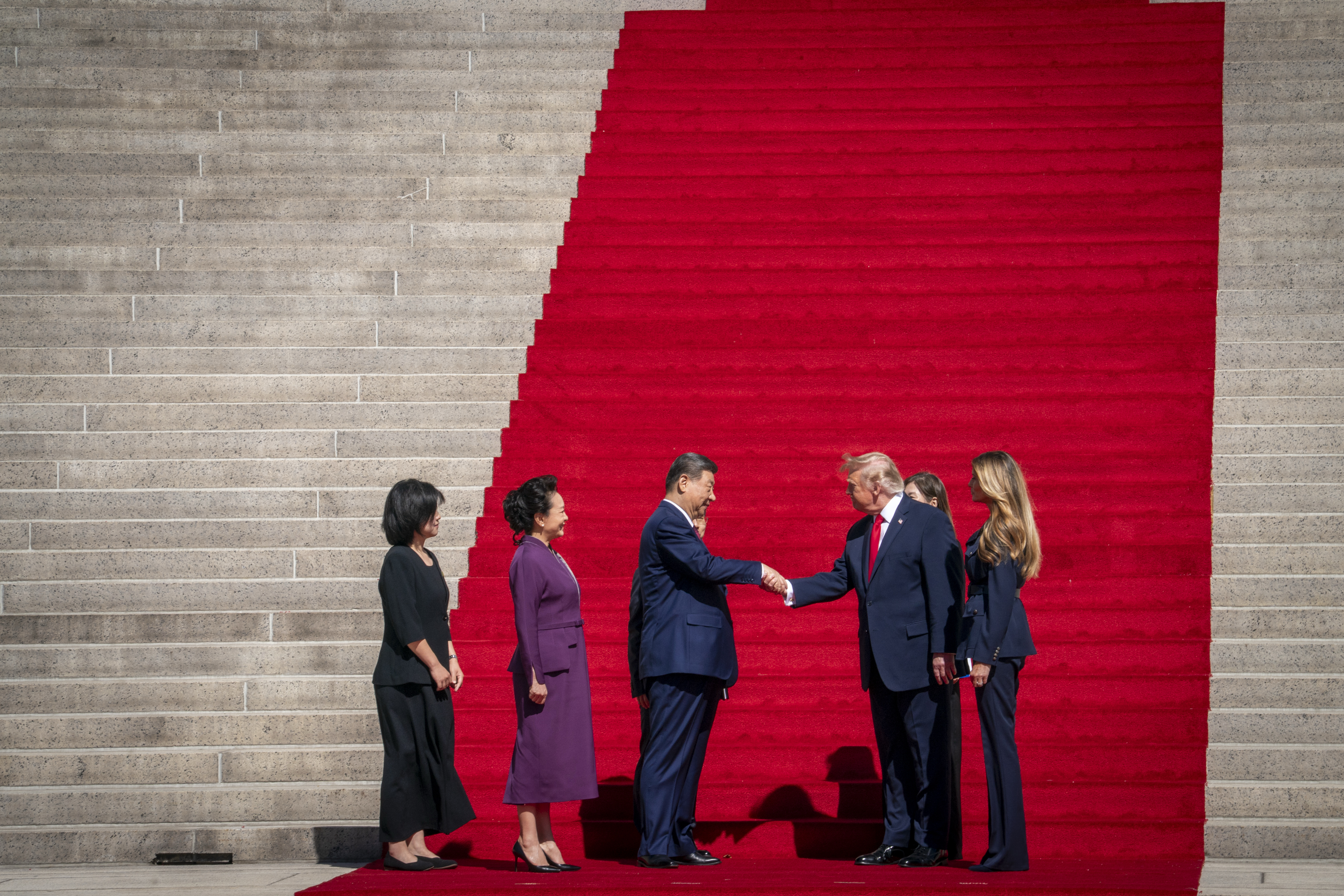
    President Donald Trump showed off the Constitution, the Bill of Rights, and the Declaration of Independence to Chinese President Xi Jinping on Friday, as the two leaders wrapped up a state visit to Washington with friendly gestures but few apparent breakthroughs other than a promise to see each other twice more this year.

    “We’ve made great strides, very positive for both countries,” Trump said over tea Friday before setting out for the National Archives, embracing what he said was a warm personal relationship with Xi.

    He later said that “everything” had been discussed, including the war in Iran, and that the outcome of the summit would be “great for the farmers.”

    Xi focused more on the relationship between the two countries than on his personal chemistry with Trump, continuing a difference that was evident on the meeting’s first day.

    “The president and I are like two people that are charting the course for the great ship of China-U. S. relations,” Xi said. He said that Trump and he had agreed to build a relationship of “strategic stability on the basis of respect, fairness, and reciprocity. So, from this, one can see that the prospects for this relationship will get brighter.”

    He praised his host in terms that were sure to appeal to the U.S. leader, who gained fame early in his career by running hotels and whose family remains invested in the resort business.

    “Everything is done to the highest order of perfection, and there is thought in every little detail, and it’s greatly appreciated,” Xi said.

    After tea, the leaders and their wives toured the National Archives to see the foundational documents of the United States to commemorate America’s 250th birthday year.

    Under a different president, the gesture — parading the authoritarian leader of a communist country in front of the key artifacts that guarantee U.S. democracy — might have been seen as aggressive. Trump, however, offered a genial tour to his guest, and if he commented about democracy, it wasn’t audible to the cameras, which were back in operation after a court order ended Trump’s effort to ban three news organizations from covering him.

    “We’re just comparing. Ours goes 250 years. Which is great, and we’re proud of it. But theirs goes 6,000 years. So there’s a little difference between 6,000 and 250. But we’re very proud of our 250,” Trump said.

    Xi and other Chinese leaders often have focused on their country’s thousands of years of history as a way of emphasizing that they can outlast pressure from Washington — although modern China’s communist government dates to 1949.

    Trump, who Thursday praised Xi’s knowledge of stone and particularly granite, declared his admiration for the rotunda of the National Archives building, which was completed in 1935.

    “This is a great building. Great building,” Trump said. “This is when they built it properly.”

    Trump fought with the news media during the course of the summit after his effort to bar CNN, MS NOW, and Politico from the White House. On Thursday, the White House video pool, which television networks share, remained out of commission as the networks awaited assurances that CNN would be allowed access. That drew complaints from Trump that the press was missing “made for television” moments of the summit.

    By Friday, however, the TV pool was back, and in the end Trump said that he was happy with how the trip had played in the media.

    “We appreciate the fair coverage. It’s been very fair. We appreciate it,” he said.

    The two leaders confirmed plans to meet again in November in China and in December in Miami, making for four face-to-face encounters over the course of 2026.

    The rapid pace of meetings may ease the pressure off any one summit to produce a breakthrough, even as both sides continue to discuss Taiwan, whether to regulate artificial intelligence, and the complex and thorny economic relationship between the two superpowers.

  • White House network TV pool resumes operations after a dayslong ban of news outlets from grounds

    White House network TV pool resumes operations after a dayslong ban of news outlets from grounds

    The U.S. network video pool for the White House was back in operation Friday, for the first time since President Donald Trump banned three news outlets in an extraordinary showdown over media access.

    At noon on CNN, viewers could see Trump and President Xi Jinping touring the National Archives, along with Melania Trump and Peng Liyuan, Xi’s wife. The banner along the bottom of the screen read: “Trump and China’s Xi Visit National Archives.” It was a routine report from a state visit — but for the fact that CNN had not aired live video of Trump in several days.

    “As of now, all systems are go,” said a person familiar with the pool, speaking on condition of anonymity because of the fluidity of the situation.

    The pool consists of five major U.S. broadcast outlets that take turns shooting and sharing video. When the White House banned CNN — which belongs to the pool — from White House grounds, along with MS NOW and Politico, the other four pool providers declined to participate in a show of solidarity.

    A judge temporarily struck down the ban in an overnight ruling early Thursday, but his ruling didn’t directly address the pool. The networks continued to refrain from covering Trump as part of the pool, even as reporters from all three outlets were allowed back in the White House.

    CNN was not commenting directly on Friday, referring instead to its editorial coverage. But Brian Stelter, the network’s media analyst, posted on X that CNN had a pool assignment at the National Archives event and that the White House had approved the network’s credentials.

  • Ukraine weighs legalizing pornography to raise tax revenue and buy drones

    Ukraine weighs legalizing pornography to raise tax revenue and buy drones

    KYIV — For years, Ukraine’s huge but illegal porn industry has operated in the shadows. Law enforcement generally looked the other way, while some officials abused their power to extort bribes from people found to be skirting the law.

    Then, two years into Russia’s full-scale invasion, the federal tax authorities discovered that nearly 8,000 Ukrainian OnlyFans creators had made more than $131 million during 2023 alone.

    Now, with Ukraine facing giant military expenses and a $27 billion budget gap, lawmakers are moving to decriminalize pornography — a momentous step for a country long stained by a reputation for exploiting and exporting women as sex workers.

    The legalization of porn is expected to generate roughly $25 million in tax revenue that Yaroslav Zhelezniak, a co-author of the bill in the Ukrainian parliament, said would be enough to purchase 30,000 drones for the war effort.

    “Ask yourself … who benefits,” Zhelezniak said in a speech during the first reading of the bill in July. “Unfortunately, it’s not the Ukrainian state budget. And we can’t use that money to increase funding or raise salaries for our defenders; all that money remains in the shadow economy.”

    He added, “I believe we are already mature enough as a nation to acknowledge that sex exists.”

    Raising money on the backs of adult-content creators, however, is a fraught proposal in Ukraine, where the women’s protest group Femen rose to worldwide fame by demonstrating topless to decry sexual exploitation and patriarchal authoritarianism.

    Critics of the bill fear that it could undermine public morality, as well as increase the risk of human trafficking and child sexual abuse.

    Former Ukrainian prime minister Yulia Tymoshenko has criticized the bill in parliament, raising concerns about child abuse and arguing that the law could turn Ukraine into a “pornographic hub.”

    The All-Ukrainian Council of Churches and Religious Organizations, meanwhile, has called for the bill to be withdrawn and has issued a statement saying it poses significant harm to the morals and health of Ukrainian society.

    A push by the Ukrainian government to lay claim to tax revenue instigated the legalization campaign after creators suddenly found themselves under pressure to pay back taxes, though doing so could be an admission that they broke the law by making porn.

    Svitlana Dvornikova, who has 1 million subscribers on OnlyFans, said she received a letter from tax authorities demanding that she pay up — which she did, by filing about $900,000 in taxes retroactively even as she suspected a trap.

    Sure enough, last year the police raided her home, as well as the home of her elderly parents, looking for phones, laptops, video equipment — anything that could prove that she was involved in the illicit production of pornography.

    Dvornikova is now facing a criminal case.

    “We paid these taxes with one eye open, suspecting it might end badly,” she said in a phone interview. “I wanted to support my country, give more money to the war, to our soldiers — we really thought this would contribute something.”

    Dvornikova estimates that the taxes she filed alone could finance 100 new military pickup trucks or 2,000 drones.

    Following her encounter with the police, Dvornikova launched a petition to legalize pornography, which has since garnered more than 25,000 signatures. Her petition triggered the formulation of the bill, which passed its first reading by a vote of 231-8 with three abstentions, and is now awaiting its second reading.

    Oksana, the head of management at OFM Models, an agency that manages adult-content creators in Ukraine and abroad, told the Washington Post that since the bill’s first reading, the number of women contacting her agency to apply for work had doubled.

    Oksana, who spoke on the condition that she be identified only by first name because of the risk of criminal prosecution, said decriminalization would empower, not exploit, women in the industry.

    “Women were waiting for a signal from the state; this is the moment when the state finally saw these women as taxpayers rather than criminals,” she said. “Adoption would mean one simple thing: The fear would disappear. Women would be able to work openly with lawyers and banks and defend their rights.”

    Meanwhile, however, more women are under legal pressure.

    The number of criminal cases under Article 301, the law that bans pornography, has increased in recent years, according to Ukrainian media reports.

    In the first six months of 2025 alone, 2,368 criminal proceedings related to pornography were opened in Ukraine.

    In May, police chiefs in three regions were exposed in a massive corruption scandal and arrested on suspicion of accepting bribes to provide “protection” to two dozen webcam and adult-content studios. According to investigators, the police chiefs demanded $20,000 per month in bribes from each studio.

    The threat of arrest and coercion hangs over every woman, Oksana said.

    “Anyone who finds out about her work gains leverage over her,” she said. “Their biggest fear isn’t even about money. It’s that their families will find out about their work. … As long as it remains in the code, most women simply stay in the shadows.”

    For years, Dvornikova said, she traveled from her frontline town to luxury villas in Europe so she could work, operating in disguise, under a pseudonym. She said she lived in constant fear of police harassment and blackmail.

    “If we end up legalizing this, it means we can work calmly, make money properly and pay taxes to the state — that’s what it means to us,” she said. “We want to do our duty, like a gentleman, as they say.”

    But if legalization doesn’t happen, Dvornikova says, she will probably have to leave the country for good. Her criminal case has been paused as the bill proceeds.

    Another creator, Anastasia, 29, also received a letter from the tax authorities. Anastasia said she has been working in the industry for three years, has a young son, and wants to stay out of the limelight. So far, by keeping her earnings modest, she said, she has managed to avoid any harassment from the authorities.

    “The tax authorities are primarily interested in those who are making serious money: The more you earn, the more attention you attract,” she said. “What matters most to me is that a model is treated with respect and seen as a person, rather than simply as a tool for making money.”

    “This all genuinely made me angry because it’s simply unfair,” she said. “They don’t want to legalize it, but they want you to pay taxes.”

    Supporters of legalization say that it will protect women, not encourage abuse.

    “Human trafficking is based on coercion: A person is deceived; their documents are taken away,” Oksana said. “The modern creator economy is completely different. An adult woman verifies her identity and age on the platform and determines her own boundaries.”