Category: Wires

  • Congress looks to charge data centers billions in sweeping energy plan

    Congress looks to charge data centers billions in sweeping energy plan

    WASHINGTON — Weeks after voters lashed out at data centers in the midterms, Congress is debating a sweeping overhaul of federal permitting rules that could help tech companies more quickly build the facilities.

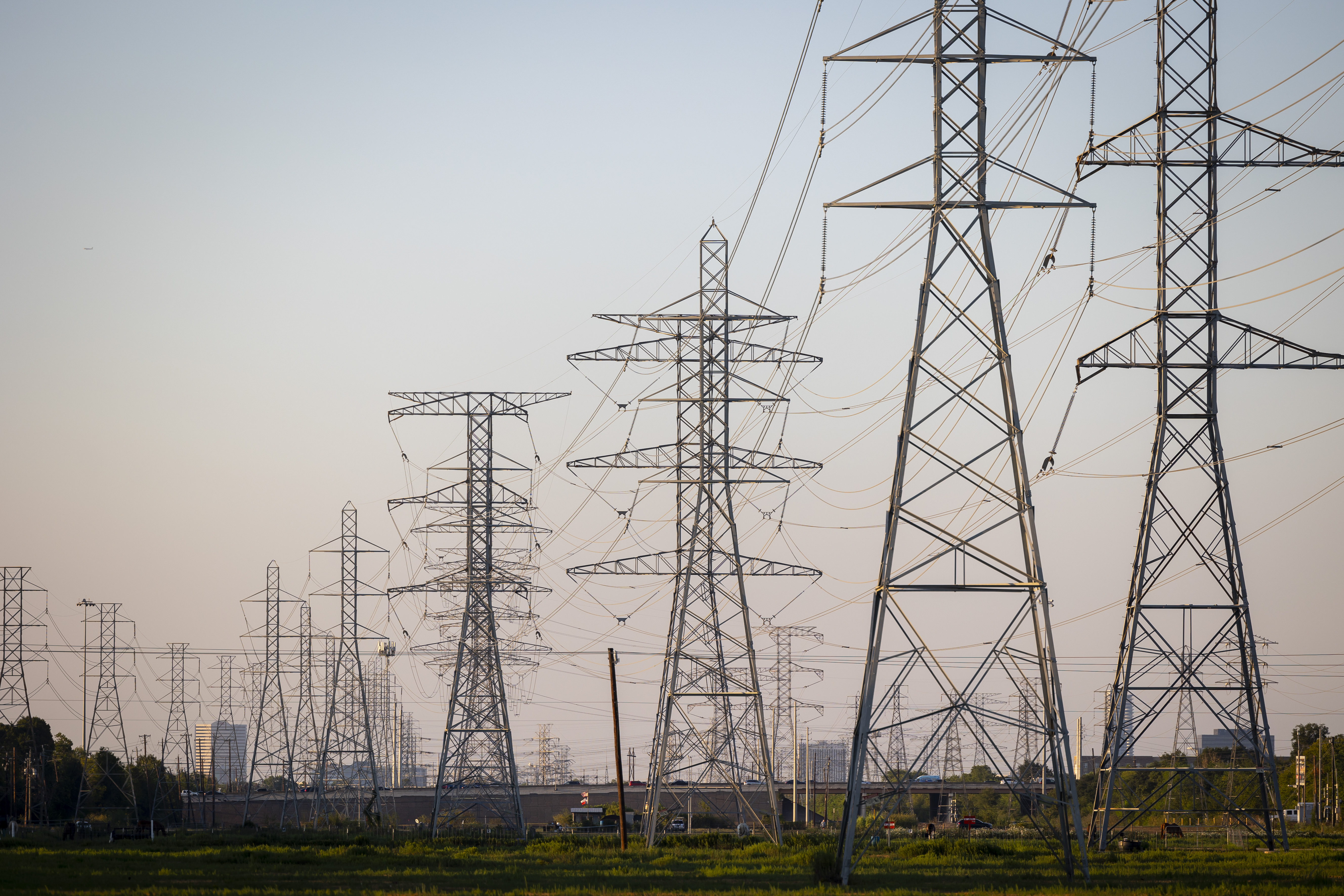
    The bill would speed up federal environmental reviews of a variety of energy projects, including transmission lines and gas pipelines, making it easier for developers to get the power they need to run data centers.

    But that help comes with a huge catch: Data centers would also have to pay much more for their electricity under a provision in the bill that would charge the facilities extra for access to the electric grid. That measure would upend decades of federal power rules and potentially save billions of dollars over the next decade for households and other ratepayers.

    The push to impose higher costs on data centers underscores how thorny the politics around artificial intelligence has become in Washington. Massive, energy-hungry data centers are spreading rapidly across the country, straining electrical networks and triggering anger in many communities. Voters this month approved at least 40 local ballot initiatives to restrict the facilities.

    Some environmentalists who oppose the permitting bill have cast it as a boon to tech companies, arguing that the legislation could accelerate the development of data centers powered by natural gas. The bill would pare back federal environmental laws to speed construction of many types of projects, including gas pipelines, wind and solar projects, high-voltage transmission lines, roads, public transit, and housing.

    By contrast, supporters have framed the bill as an opportunity to get tough on AI firms.

    “The day of data center freeloading ends when this bill passes,” said Sen. Sheldon Whitehouse (D., R.I.), a co-author of the bill. “Data centers now have to pay for the extra costs that they bring to the grid when they come online. They do not get to have all that extra cost dumped out onto the utility’s rate base and picked up by all of the other ratepayers.”

    The data center industry, for its part, has stayed relatively quiet. While numerous business groups, labor unions, and some Silicon Valley companies have endorsed the bill, a leading data center trade group has not. The Data Center Coalition, whose members include Amazon, Google, Meta, and Microsoft, said it was still reviewing the legislation.

    “We are continuing to evaluate its implications with our members, who are doing their part to address affordability and economic growth by investing hundreds of billions of dollars in the U.S. annually,” said Jon Hukill, a spokesperson for the coalition.

    Many data centers being developed to train and run cutting-edge AI models can use as much electricity as small cities, which has triggered debates over who should pay for the billions of dollars in power plants and transmission lines they need.

    Historically, utilities have spread the cost of electrical grid upgrades among all their customers. But as anger over data centers has swelled, President Donald Trump and various governors have urged tech giants to pick up the tab and not pass these costs onto households. Most AI companies have promised to do so, although these so-called ratepayer protection pledges can be difficult to enforce.

    Tucked inside the 494-page permitting bill are several provisions aimed at putting teeth into those pledges.

    One measure would direct the Federal Energy Regulatory Commission to issue new rules within 90 days that would charge data centers both the costs of any grid upgrades needed to serve them and the costs of using the existing electrical network.

    That would overturn long-standing regulatory principles, dating back to 1994, that forbid utilities from charging customers twice for the same grid capacity. In effect, the bill says that large data centers are different and should be charged potentially double what they pay now.

    “It’s a large shift away from how we’ve governed the grid to date, where the benefits of the grid are broadly shared, and we socialize the costs,” said Robin Millican, director of research programs and strategic partnerships at Columbia University’s Center on Global Energy Policy.

    Other provisions would give state regulators more leeway to charge data centers extra for the power plants they need and use the money to credit household bills. The federal government would also, for the first time, be required to track data center energy use.

    Politicians have singled out data centers partly because the sheer scale of the AI boom threatens to overwhelm electric grids. Tech giants have also put a premium on speed and are often willing to pay more to get power sooner.

    The federal grid rules alone could force data centers to pay an extra $35 billion over the next 10 years, according to a report from Grid Strategies, a consulting firm. That money could help offset transmission costs for other customers. It could also be enough to finance thousands of miles of new high-voltage power lines.

    If states were to take full advantage of the bill’s other provisions, they could raise an additional $136 billion, the report estimated.

    Still, there are questions about how the new rules would work in practice. For instance, Texas is one of the largest data center hubs, but the Federal Energy Regulatory Commission lacks authority over the main grid in Texas, ERCOT, and it’s unclear whether the measure would have an effect there. Some state utility commissions would also need to work through details on how to assign transmission costs.

    One big unknown is whether charging data centers more for electricity might encourage tech companies to abandon the grid and build their own polluting power plants instead.

    Already, developers are planning dozens of off-grid data centers that use inefficient gas turbines or even repurposed jet engines. These projects often produce higher levels of air pollution than traditional power plants, but companies build them because that can be faster than waiting years for a grid connection.

    One recent analysis of the permitting bill by the Rhodium Group, a consulting firm, estimated that meeting future data center growth with off-grid gas could lead to 31% to 90% more planet-warming emissions than if those data centers all relied on the grid, which typically has a mix of more efficient gas turbines, coal, nuclear, and renewable power.

    Ben King, a principal at the Rhodium Group, said, “There’s a fair bit of uncertainty” in whether the permitting bill would shift where data centers get built, but there are reasons to be skeptical that many more companies would go off-grid, in part because of the hassle involved.

    The permitting bill could, conversely, encourage more data centers to connect to the grid by making it faster to upgrade and expand transmission lines, although those provisions could take years to have an effect. On balance, the Rhodium Group expects the bill could modestly lower U.S. greenhouse gas emissions between now and 2040 if it passes.

    Environmental groups that oppose the bill have raised other concerns, however, including that more data centers could get built on public lands.

    The government owns vast swaths of land in the West, and to date, no data centers have been built on federal land there.

    But the Trump administration has encouraged developers to propose projects on federal land, and the Interior Department is considering at least 17 data center applications, according to the Center for Western Priorities, a nonprofit conservation group that opposes the permitting bill.

    “We’re very concerned that this bill could lock in a data center binge on public lands,” said Aaron Weiss, the group’s deputy director.

    The permitting bill could make it harder for environmental groups to sue to block those projects by scaling back laws like the National Environmental Policy Act and the National Historic Preservation Act. It could also hinder future presidents from rescinding federal permits for data centers or imposing a moratorium on public lands.

    But the bill would not affect many of the state and local permits that data centers need or prevent communities from imposing their own restrictions.

    This article originally appeared in the New York Times.
  • Third U.S. aircraft carrier arrives in the Middle East as Trump keeps options open in the Iran war

    Third U.S. aircraft carrier arrives in the Middle East as Trump keeps options open in the Iran war

    WASHINGTON — A third American aircraft carrier has arrived in the Middle East, U.S. Central Command said in a social media post Monday, making a dramatic show of military might as President Donald Trump keeps his options open for next steps in the Iran war.

    The USS Theodore Roosevelt brings thousands of additional troops to the Middle East as Trump has oscillated between threatening additional large-scale strikes on Iran and insisting that the more than 8-month-old war “militarily is effectively over.”

    The Roosevelt, along with its accompanying strike force, left San Diego in September. It joins the USS George H.W. Bush and the USS George Washington aircraft carriers, as well as smaller Navy ships, which are in the region to maintain a naval blockade of Iranian shipping.

    Three aircraft carriers deployed in the Middle East is rare

    The H.W. Bush arrived in the region in April, while the George Washington arrived in August. The Navy previously had three carrier strike groups in the Middle East in April, for the first time since 2003.

    In addition to the three aircraft carriers, the flotilla in the Arabian Sea now includes 13 destroyers, two cruisers, and a littoral combat ship, according to the Navy. Two more destroyers are in the Red Sea.

    The Roosevelt had deployed along with the USS Makin Island amphibious readiness group, which includes the USS John P. Murtha and USS Anchorage amphibious landing ships and around 2,000 Marines. Those ships have yet to make it to the region.

    The third carrier arrived nearly two weeks after midterm elections that saw voters deliver major losses to Trump’s Republican Party, driven in part by the unpopularity of the Iran war and its economic effects. The results led Vice President JD Vance to publicly break with Trump over the conflict, posting on social media that “the reason we lost is the war.”

    Trump has insisted it was the right thing to do and has not ruled out restarting the conflict, which has been locked in a stalemate for months.

    Trump says U.S. is prepared to strike but might not need to

    Last week, Trump warned Iran that the U.S. military is “locked and loaded” and that the U.S. was keeping an eye on Pickaxe Mountain, a facility linked to Iran’s nuclear program, for signs of activity.

    “If something does not work out, I would not hesitate” to act, Trump told conservative broadcaster Hugh Hewitt on Thursday.

    Yet, Trump also told reporters last week that he believed it was highly unlikely he would need to order new major strikes on Iran, declaring that the war “militarily is effectively over” after meeting with Qatar’s prime minister.

    Trump also declared that the U.S. no longer needs a deal with Tehran and told Vance — who was a chief negotiator in earlier ceasefire talks — instead to focus on the administration’s domestic anti-fraud campaign targeting Democratic-controlled cities and states.

    Negotiations have stalled due to differences over Iran’s nuclear program, an issue that Trump insists be part of any deal meant to end the war. Iran wants the U.S. first to agree to several core conditions, including lifting the naval blockade that is stopping its oil from getting to world markets.

    Conflict simmers in the Strait of Hormuz

    In the meantime, a focal point of the simmering conflict remains the Strait of Hormuz, a critical waterway where a fifth of the world’s oil passed before the war.

    Commercial ships are still coming under attack or facing other risks, while the U.S. has carried out limited strikes on Iranian targets near the strait and is helping guide vessels through the contested waters.

    Iranian state TV, quoting the naval arm of Iran’s Revolutionary Guard and the army, warned shipping companies Monday that a U.S.-supported route through the waterway is dangerous because of mines.

    Mines have damaged six oil tankers since Sunday, polluting the strait’s coastlines, according to the Revolutionary Guard’s navy.

    Separately, a projectile struck a tanker trying to transit through the strait, starting an engine room fire, but no casualties were reported, the United Kingdom Maritime Trade Organization said.

    U.S. Central Command, which oversees military operations in the Middle East, said it has redirected 150 merchant vessels and disabled five since June under the blockade.

    Independent assessments from Lloyd’s List, a maritime tracking and analysis firm, show that traffic through the strait remains at less than a third of prewar levels.

  • Challenging consensus, scientist says photos show Epstein was killed

    Challenging consensus, scientist says photos show Epstein was killed

    Michael Freeman says he had one thought when he first saw a photo from Jeffrey Epstein’s autopsy: “Wait a minute, that doesn’t look like a hanging mark.”

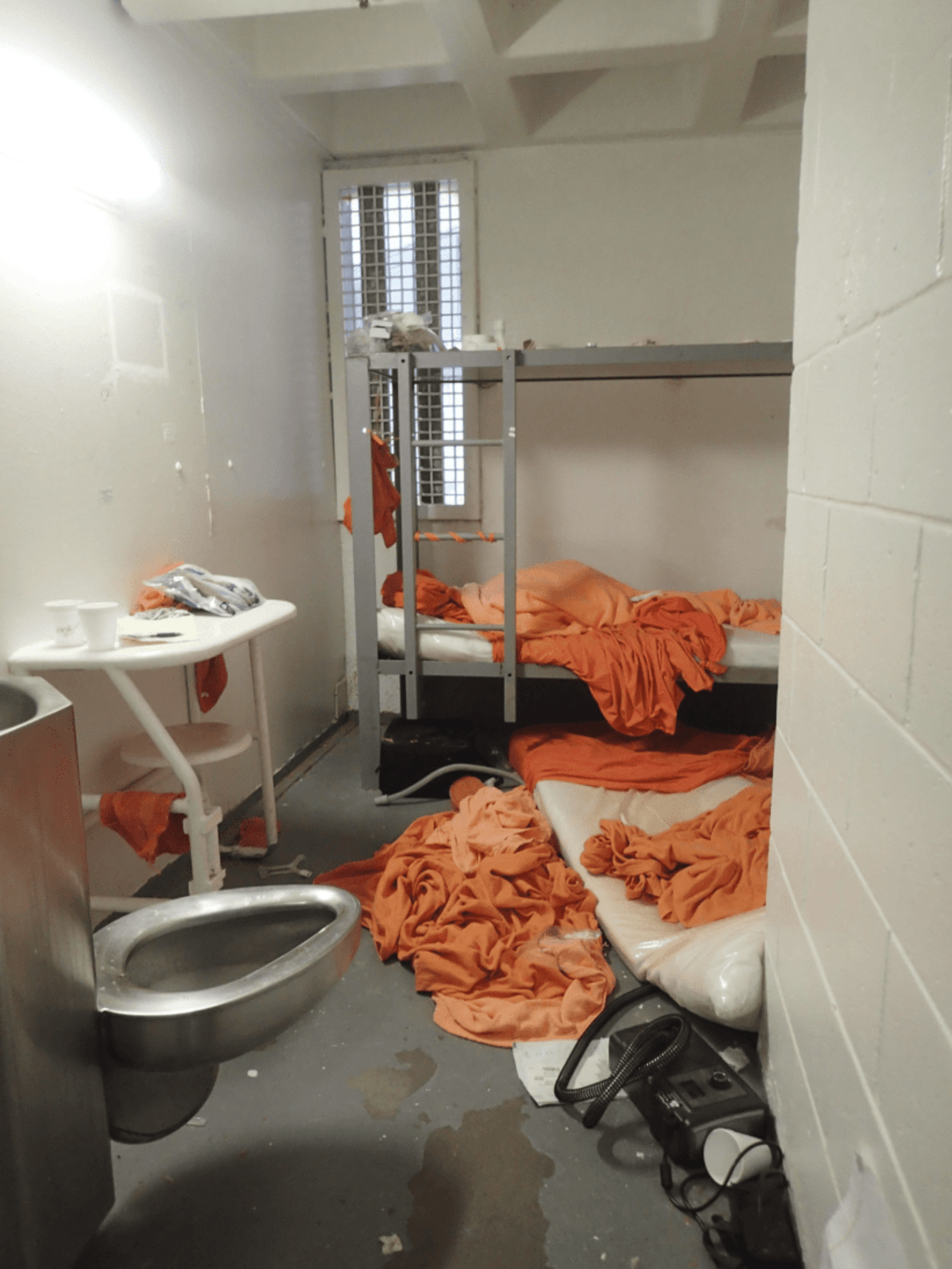
    The noose had not left a smooth, consistent line on Epstein’s neck that slanted to a peak, as in a textbook hanging. Instead, the mark was deep, ragged and branched into a Y-shape on one side.

    Freeman, a forensic scientist who studies bias and error in death investigations, spent a year examining Epstein’s autopsy file, which was given to him by the dead man’s brother.

    Freeman is seeking to publish his findings in a peer-reviewed journal but has been rejected so far. On Monday, he was presenting them at the Middle Temple, a London legal society, arguing that Epstein’s injuries are most plausibly explained by homicidal strangulation. He is also asserting that injuries on the body suggest there was a struggle, contrary to the medical examiner’s findings.

    The totality of the circumstances surrounding Epstein’s death in a federal detention center in 2019 points overwhelmingly to suicide, and several investigations have failed to produce evidence that anyone other than Epstein had a hand in it. Freeman’s analysis, parts of which he floated in a New York Times investigation earlier this year, may rekindle long-smoldering debates about his death.

    Forensic pathologists who have seen some of the autopsy photos, though not the entire set, have agreed that the mark on Epstein’s neck was atypical for a hanging. Some of those experts said the images could still be consistent with suicide, but they cautioned that the injuries alone could not tell the full story and that a cascade of institutional failures would make it difficult to ever conclusively determine what happened.

    The New York City medical examiner’s office, which performed the autopsy, said this week that it “stands by its determination” of suicide.

    Much information that medical examiners would normally use to determine a cause of death was unavailable; the examiner was not permitted to inspect the cell, for example. That has left the autopsy photographs as some of the only concrete evidence.

    After being asked by a journalist to look at the hanging mark, Freeman asked Jeffrey Epstein’s brother, Mark, whether he could see the complete file. As next of kin, Mark Epstein was one of the few people who had access to the autopsy. He shared the file with Freeman last November.

    Epstein said in an interview last week that he had also shown the materials to other experts who had asked to see them — but whom he declined to name — and that the results had been inconclusive. “They were all hemming and hawing,” he said.

    Shortly before Monday’s talk, Epstein posted the autopsy photos online for all to see.

    Freeman said in an interview that he had no idea who might have killed Jeffrey Epstein, nor did he care. He was focused only on what he called oversights in the death investigation and autopsy report. “All I’m interested in is, how did this get so sideways?” he said.

    Epstein, a wealthy financier and convicted sex offender, is far from a typical subject for Freeman. As a consultant and scholar, he has argued that medical examiners too often ignore the most plausible cause of death in favor of one that excuses deadly force by the police or reinforces racial stereotypes.

    He is not a board-certified forensic pathologist, the highest credential for medical examiners in the United States, but he has doctorates in epidemiology and forensic medicine and teaches forensic medicine at two universities. Freeman, an American, is also a fellow of the Faculty of Forensic & Legal Medicine at the Royal College of Physicians in the United Kingdom and the editor of its journal.

    In one case, Freeman argued on behalf of a Black teenager charged with murder in Mississippi after a stillbirth, after tests found trace amounts of a cocaine byproduct in the baby’s blood. The umbilical cord had been wrapped around the infant’s neck, and the state had the country’s highest infant mortality rate. The charges were dropped.

    In 2020, Freeman co-wrote a landmark metastudy on excited delirium, a term often used to explain deaths in police custody. His methodology and conclusions were hotly disputed, but they propelled a widespread rejection of excited delirium as a valid diagnosis or cause of death.

    More recently, he consulted in the prosecution of a police officer who killed George Floyd in Minneapolis, using statistical probability to counter defense claims that drug abuse or heart disease had caused Floyd’s death. Freeman was also part of a panel of experts that identified dozens of deaths in police custody in Maryland that had been misclassified as natural or accidental.

    Forensic pathology is sometimes said to be more art than science, and disagreements among experts are common. Medical examiners point out that they must defend their opinions in court, but Freeman is among critics who have complained that there are too few safeguards against bias and error.

    For his Epstein investigation, he teamed up with two other skeptics, Itiel Dror, a cognitive neuroscientist whose real-world experiments have repeatedly embarrassed forensic practitioners, and Anders Eriksson, a forensic pathologist who led a Swedish government review concluding that “shaken baby” prosecutions had been based on flawed reasoning.

    They are continuing to seek a publisher for their analysis. In the meantime, Freeman prepared his talk Monday, which received a flurry of advance news coverage.

    The talk was to be held at the University College of London, where reservations quickly reached capacity. But on Sunday, the school suddenly announced that it would not take place, citing “well-being implications for our students.” The talk was moved to the Middle Temple, and those planning to attend were told they would have to watch it online.

    In 2019, the medical examiner who performed the autopsy, Kristin Roman, faced limitations. There were no photos of Epstein hanging or with the strip of cloth around his neck. The piece of cloth sent to the medical examiner was not the one that had been used as a noose. The prison employee who found the body initially declined to speak to authorities.

    Still, Roman told federal investigators that she had no doubt it was a suicide. There were no signs of a struggle, and the body was “pristine,” she told them, with no bruises and no debris under the fingernails.

    “This doesn’t look anything like a strangulation,” she said in a statement she gave to federal authorities.

    Roman has since retired from the medical examiner’s office.

    When the jail employee who found the body finally spoke with investigators two years after the fact, he recalled that Epstein’s rear end had been suspended about an inch off the floor.

    Freeman used the employee’s description to reconstruct the hanging, creating 3D computer models based on Epstein’s physique and the autopsy photos. He then used illustrations to argue that strangulation from behind was a better explanation for Epstein’s injuries, including fingernail marks above the ligature line; an abrasion at the base of the neck; and a deep, fresh hemorrhage in the left shoulder muscle.

    He faulted investigators for not testing Epstein’s fingernails for DNA.

    Colleagues are welcome to dispute his findings, Freeman said in an interview.

    “It should be, ‘Here’s my work. You do the calculations. You do the math. You take a look at it,’” Freeman said. “If you agree, great. If you don’t — tell me where I went wrong.’”

    If you are having thoughts of suicide, call or text 988 to reach the 988 Suicide and Crisis Lifeline or go to SpeakingOfSuicide.com/resources for a list of additional resources.

    This article originally appeared in the New York Times.
  • Trump’s Asia trip: Deals in Manila and Shenzhen, nuclear summit with Xi and Putin, maybe Kim meeting

    Trump’s Asia trip: Deals in Manila and Shenzhen, nuclear summit with Xi and Putin, maybe Kim meeting

    WASHINGTON — President Donald Trump departed for Asia on Monday, turning his focus to economic deals and historic three-way nuclear talks with Russia and China as his administration adjusts to a new political reality in Washington. He said he may meet with Kim Jong Un while in China as the U.S. looks to reengage North Korea on its nuclear program.

    Trump also said he plans to talk about Russia’s nearly 5-year-old war in Ukraine during the highly anticipated meeting with Chinese President Xi Jinping and Russian leader Vladimir Putin in China.

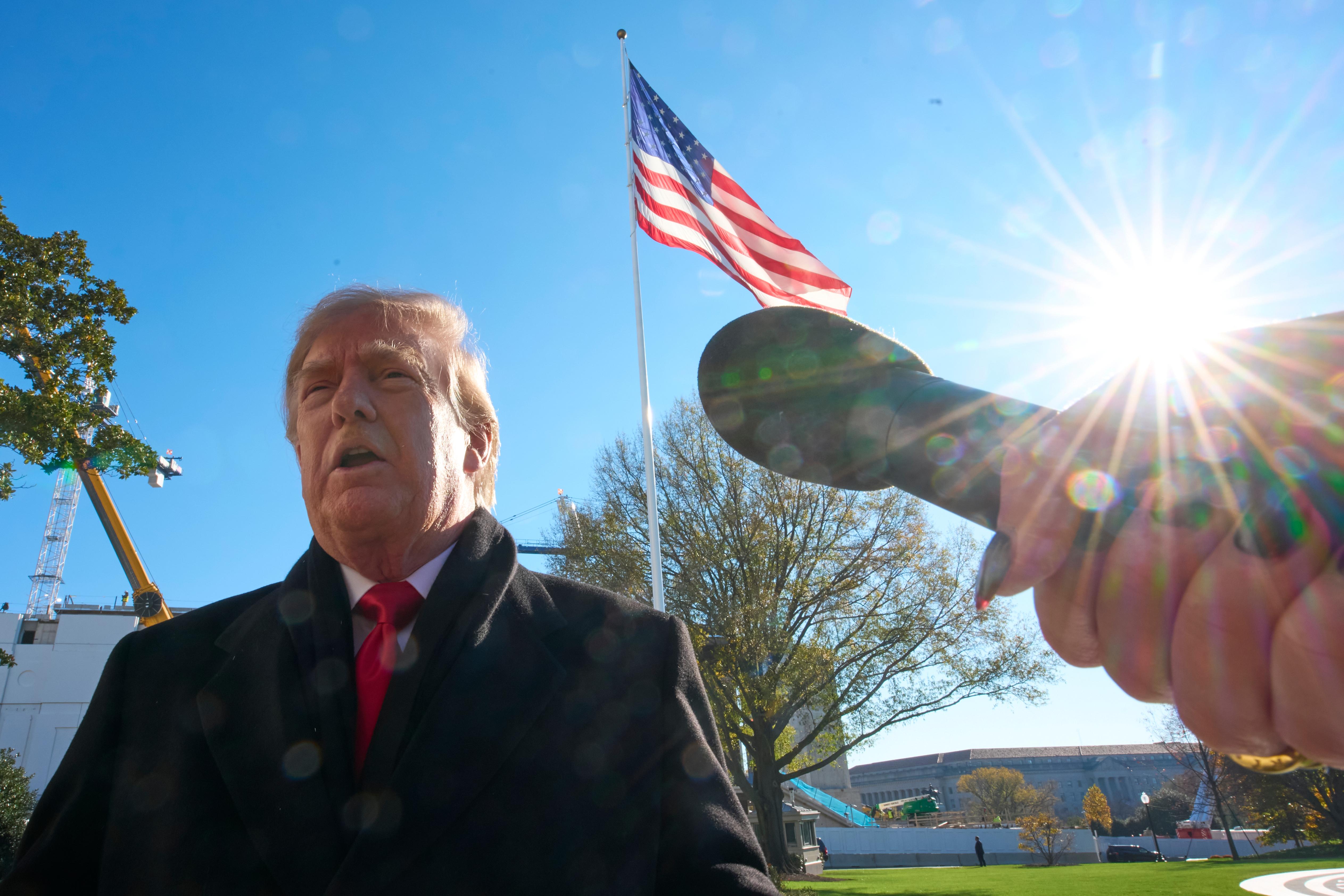
    “We’ll talk about, my favorite subject, Ukraine. Ukraine’s losing Ukraine,” Trump told reporters at the White House on Monday morning before departing for his visit to Asia. “Russia is losing 25,000 soldiers in the month. So we’ll be talking about that.”

    Trump suggested he’ll talk with the leaders about the war even after his administration officials on Friday told reporters that he would discuss nuclear disarmament and the Iran war with his Chinese and Russian counterparts but steer clear of Russia’s war with Ukraine.

    Ukrainian President Volodymyr Zelensky had expressed concern as Trump pushed for the meeting with Putin and Xi about the potential of the three leaders using the moment to redraw global spheres of influence.

    Planning for the summit has drawn comparisons to the Yalta Conference, the 1945 gathering at which the leaders of the U.S., Britain, and the Soviet Union agreed to divide Germany and Berlin into four military occupation zones and finalized plans for establishing the United Nations.

    “We really don’t want this to turn into ‘Yalta 2, 3, 4’ with a redistribution of influence,” Zelensky said last month.

    Trump has been dealing with problems at home

    Trump’s departure comes after the often omnipresent president had remained largely out of public sight for the past several days, even as a nationwide ground stop snarled air traffic and his Republican administration faced tough questions on its handling of the situation.

    Trump said he was kept up to date Friday about the ground stop by Transportation Secretary Sean Duffy and Homeland Security Secretary Markwayne Mullin, who held a briefing Friday evening to address the American public.

    Trump defended his decision to delegate to the cabinet officials to inform the public.

    “I didn’t think there was any reason for me to do it,” Trump said, adding, “I thought they did a very good job.”

    His trip to Asia, which begins in Manila and then continues to the Chinese tech hub of Shenzhen, gives him the opportunity to change the narrative from his domestic woes, including the air travel problems and fallout from the November midterm election where his party lost both chambers of Congress.

    Trump administration’s actions on Nvidia scrutinized

    The controversy over tech powerhouse and chipmaker Nvidia is also certain to hang over Trump’s visit to China, despite efforts by administration officials to downplay the president’s close ties to Jensen Huang, who resigned as CEO last week after admitting to an affair with an alleged Chinese government agent.

    Beijing has said it was not involved. Trump had no plans to raise the issue with Xi when the two leaders meet, said U.S. officials who briefed reporters anonymously about the president’s Asia trip under ground rules set by the White House.

    But the president came to Huang’s defense, asserting he hasn’t been told by officials that it’s been determined that the executive from Megaspeed, a Singapore-based cloud computing and AI infrastructure provider, who Huang had an affair with is in fact a Chinese agent. Trump added he’d like to see Huang reinstated as Nvidia’s CEO.

    “Well, I don’t know that she’s a spy at all. Nobody’s proven that. He probably shouldn’t have been doing on a personal basis what he did,” Trump said. “That’s a different story.”

    Huang accompanied Trump on Air Force One during the president’s last trip to China in May, and he has been a sporadic presence around Trump at the White House while speaking to him frequently. Trump has argued that America needs to preserve its leadership on artificial intelligence, and warned of dire consequences if China wins that competition.

    Scrutiny of the Trump administration’s actions as they relate to Nvidia has been growing, including on the Commerce Department’s delay in placing restrictions on Nvidia chip exports to Megaspeed.

    “We’re having a very good relationship with China right now, and I understand both sides of it, and I’ll make a decision, but I understand very well both sides,” Trump said.

    Trump has been trying to engage with Kim

    Regarding North Korea, Trump met with Kim on three occasions during his first term but has not been able to get him to meaningfully engage since his return to the White House. Trump has sought to set the groundwork for further talks with Kim. In August, he ordered the Pentagon to scale back joint military exercises with South Korea.

    Trump, in an exchange with reporters before departing the White House for his flight for Manila, said that Kim “may come” to Shenzhen but “that’s up to President Xi.”

    Among the travelers on the Asia trip with Trump will be Elon Musk, the head of SpaceX and Tesla, who is shaping up to be a top investigative target of the incoming Democratic majority in Congress.

    In the Philippines, Trump will meet with Southeast Asian leaders who look to the United States for help countering Beijing’s aggression in the region. He plans to sign a trade deal with Thailand while in Manila, the White House said.

    Trump, Xi, and Putin will talk about nuclear stockpiles

    Then he heads to China for the Asia-Pacific Economic Cooperation summit — and at the end of the trip, the first-ever three-way talks with China’s Xi and Russia’s Putin to discuss nuclear stockpiles.

    The three-way meeting will also put in the spotlight the ongoing U.S. war with Iran, a country which has often allied with China and Russia. The war has been widely blamed for the Republican Party’s steep losses in the midterms, and while Trump has tried to play down the chances he will order a resumption of major strikes against Iran, he also has said he does not see the need for talks.

    China’s Foreign Ministry spokesperson Mao Ning said Monday that the trilateral talks would be of “groundbreaking significance” and that China aimed to have in-depth exchanges about safeguarding world peace and promoting stability.

    “Under the current circumstances, the three countries shoulder an important responsibility to work together in addressing global challenges,” she said in a regular briefing in Beijing.

    Kremlin foreign affairs adviser Yuri Ushakov also indicated that a one-on-one meeting between Trump and Putin during the Shenzhen summit was being arranged.

    “I can say with 100% certainty that since both Putin and Donald Trump will be in Shenzhen, they will undoubtedly meet,” Ushakov said.

  • Trump administration moves to close AI chip loophole before China trip

    Trump administration moves to close AI chip loophole before China trip

    WASHINGTON — The Trump administration said Monday that it was moving forward with a new rule that would clamp down on China’s ability to access advanced artificial intelligence chips through the use of data centers outside China’s borders.

    The rule aims to close what many in Washington see as a loophole that has allowed China to sidestep a Commerce Department ban that prevents Chinese firms from buying the most advanced AI chips made by companies like Nvidia. China’s ability to continue accessing the chips by renting them from data centers in Southeast Asian countries and elsewhere has been a significant source of contention within the Trump administration.

    The new rule establishes restrictions for overseas data centers that supply “significant volumes of computing power” to firms with headquarters in a small group of high-risk countries, a list that includes China, Russia, and Iran. Data centers are also required to perform due diligence on their customers. The provision, which goes into effect in 90 days, will “undermine” the ability of companies in those countries to use U.S. chips to train advanced AI models, the release said.

    It will also require a license to export advanced chips to companies with headquarters in Indonesia, Malaysia, Singapore, Thailand, or Brazil, which have a higher than normal risk of smuggling, the administration said.

    The plan to restrict that loophole comes just days before President Donald Trump is scheduled to travel to China for an economic summit, where he will also meet with the Chinese leader, Xi Jinping.

    Share prices of chip stocks tumbled Monday morning. Nvidia fell more than 2%. Intel fell more than 6% and Micron more than 7%. Indexes that track these stocks fell too — the Philadelphia Semiconductor index sank more than 5%, and the broader, tech-heavy Nasdaq opened in the red, too.

    The formerly obscure issue has become more prominent in recent weeks with the revelations about Megaspeed, a Singaporean data center firm created by a woman who had an affair with Jensen Huang, who was ousted as Nvidia’s CEO last week. U.S. authorities deemed the woman, Alice Huang, to be an asset for Chinese intelligence services, and they are investigating Megaspeed over allegations of smuggling chips to China.

    That scandal has turned foreign data centers into a subject of debate at the highest levels of the administration, with the Commerce Department, which oversees the regulations, clashing over them with other parts of the government. The announcement Monday said the new rule was “written by and at the direction of the Department of Treasury and the National Security Council” — both agencies that have pushed for more stringent rules.

    In recent months, Treasury Secretary Scott Bessent, Secretary of State Marco Rubio, and the U.S. trade representative, Jamieson Greer, have all pushed to reinstate broad restrictions on data centers, amid concerns about Nvidia’s advanced chips reaching China.

    But they faced pushback from Commerce Secretary Howard Lutnick, who oversees chip export policy. Lutnick had pushed for a leaner version of the rules, one that would be less onerous for Nvidia and foreign data centers.

    Those tensions spilled out into the open Friday, when Bessent blamed Lutnick’s department in a TV interview for failing to sanction Megaspeed, saying that other departments had pushed for the measure but that the Commerce Department “has the pen.” He added that Nvidia should be “held accountable” if it did not do enough to prevent illegal diversion of chips to China.

    While the new rule appeared to be fairly stringent, analysts said that its enforcement would be up to the Commerce Department, and it remained to be seen how the department would put it in place.

    Megaspeed’s business, the operation of data centers in Southeast Asia that remotely serve Chinese clients, is legal. That means Chinese companies that are blocked from buying advanced Nvidia chips directly can simply rent them through other Southeast Asian firms.

    Nvidia and its proponents contend that the sales help create jobs in the United States and ensure that companies around the world are reliant on American technology.

    But some officials in the Trump administration and in Congress increasingly appear to believe that Chinese access to these data centers has undercut U.S. export controls and allowed China’s AI ecosystem to flourish. Some worry this could give Beijing an economic edge, as well as a military one.

    In a news release, the Commerce Department said the rule was “designed to ensure that existing restrictions on access to sensitive American technology cannot be circumvented through remote computing arrangements involving data centers in third countries.”

    The move would bring U.S. rules on remote access of data centers into alignment with its rules on the physical shipment of sensitive American technology, the department said.

    Just before leaving office, the Biden administration issued global rules on chip sales, including restrictions on Chinese firms remotely accessing data centers. Trump officials said they would no longer enforce the rules after Trump won another term, and in May 2025 they officially rescinded the restrictions.

    Since then, various draft versions of the rules have gained momentum in the government, only to be shot down by opponents.

    It remains to be seen whether the new rules will trigger blowback from China. Trump heads to Asia this week and arrives in China on Wednesday for meetings that are expected to address the war in Iran, nuclear nonproliferation and trade.

    This article originally appeared in the New York Times.
  • Trump’s stake in Nvidia grew to as much as $62 million before scandal broke out

    Trump’s stake in Nvidia grew to as much as $62 million before scandal broke out

    Nvidia’s former CEO Jensen Huang enjoyed extraordinary access to President Donald Trump, traveling with him on Air Force One on his last China trip. Trump allowed the world’s dominant artificial intelligence chip company to sell some of its advanced chips in China, and Commerce Secretary Howard Lutnick held off on restricting a company suspected of diverting Nvidia chips there.

    Meanwhile, Trump benefited from Nvidia’s success.

    Trump, whose portfolio has logged tens of thousands of stock trades in his second term, reported trades this year that suggest he held between $13 million and $62 million in Nvidia stock as of the end of August, according to a Washington Post review of his financial disclosures. The actual value range was probably higher because Nvidia’s share price rose between the end of 2025 and the end of August. Because of reporting lags, the disclosures do not yet show trades from the two most recent months. The figure is dramatically higher than the $615,000 to $1.3 million in Nvidia shares that Trump had at the end of 2024.

    Trump has rejected calls to divest his stocks. The White House has described how his portfolio is managed in two ways. It has said the president’s assets are held in a trust managed by his children. White House spokesperson Davis Ingle also previously told the Post that third-party financial institutions independently manage the portfolio, copy recognized indexes such as the Schwab 1000, and make all investment decisions. Nvidia is among the largest companies in such indexes, so a portfolio that copies them would hold Nvidia among its biggest positions.

    In response to questions about this article, the White House said in an unsigned statement, “The President does not pick or trade individual stocks. Independent financial managers handle his portfolio.”

    Huang resigned as Nvidia’s chief executive last week after acknowledging that he had an affair with an executive at Megaspeed, a Singapore-based Nvidia customer. U.S. officials suspect the woman of spying for China, and the Commerce Department had been investigating whether Megaspeed breached U.S. export restrictions.

    In December, Trump announced that Nvidia could sell its H200 chips to approved customers in China, with 25% of the revenue going to the U.S. government.

    In June, Sen. Elizabeth Warren (D., Mass.) asked Treasury Secretary Scott Bessent whether the Securities and Exchange Commission should investigate Trump’s Jan. 6 purchase of as much as $1 million in Nvidia stock a week before the Commerce Department formalized easing export restrictions affecting the company. Bessent suggested that if Congress wanted to ban individual stock trading, it should start with lawmakers.

    The investments have drawn scrutiny from government ethics watchdogs and Democrats, who are likely to take a closer look at Trump’s trades and Lutnick’s interests once they take control of the House and Senate next year amid broader Nvidia investigations. But ethics attorneys also cautioned that there is no evidence that conflict-of-interest laws have been broken.

    The president is not subject to the federal criminal conflict-of-interest statute that prohibits members of the executive branch from participating personally and substantially in official government matters that affect their own financial interests or the financial interests of their spouses or minor children. Lutnick is subject to that law, as well as an ethics rule that bars federal employees from using their office for the private gain of relatives, said Jessica Tillipman, an associate dean at George Washington University Law School.

    That doesn’t mean that the president, his cabinet, or their families can’t trade stocks.

    “It just gets at the overall problem of allowing government officials to trade stocks,” said Zach Everson, research director for Public Citizen’s Trump Accountability Project. “The American people should never have any doubt that government officials are acting in their best interest and not the best interest of the officials’ portfolios.”

    Democrats, including Senate Minority Leader Chuck Schumer, have also expressed interest in Nvidia’s donation to Trump’s White House ballroom project, made months after the government agreed to allow it to sell chips to China. The company did not disclose the amount, but the Post reported last month that the donation was $25 million and that Nvidia had asked to remain anonymous. A company spokesperson said the company donated “independent of business interests.”

    Lutnick’s oversight of Nvidia has drawn criticism inside the administration. Bessent blamed Commerce on Friday for not restricting Megaspeed, which is suspected of rerouting Nvidia’s chips to China. Other agencies had wanted to for months, “but Commerce has the pen,” Bessent said. Nvidia has said that allegations that Megaspeed diverted chips were investigated and debunked last year.

    A former administration official told the Post that Trump had directed Lutnick three times to pursue restrictions on exports of Nvidia’s most powerful chips, most recently earlier this month. Lutnick resisted, saying it would spark a trade war with China, the official said. Another person familiar with Lutnick’s views said he supported trying to make China reliant on American AI hardware, a view Huang also promoted. Commerce did not respond to the Post’s requests for comment.

    The New York Times reported Sunday that Cantor Fitzgerald, the Wall Street firm that Lutnick led for decades and that his sons now run, has done business with data center companies in Southeast Asia that serve Chinese customers and could be affected by export rules Lutnick’s department is drafting. Among them is Bitdeer, which is building a data center in Malaysia; Cantor also holds a stake in Bitdeer through its investment in Tether, a cryptocurrency company, the Times reported. A Commerce spokesperson told the Times that Lutnick makes policy decisions in the country’s best interest and does not discuss department business with his sons.

    Lutnick does not directly own Nvidia stock, according to his required financial disclosures. His most recent, covering 2025, shows his largest holdings are in money-market funds that hold Treasurys and in index funds that track the S&P 500, which like most broad stock funds include Nvidia.

    The disclosure he submitted in December 2024, before his confirmation, lists no stock in Nvidia or other chip companies. Most of his wealth was tied up in Cantor and companies it controls.

    In an ethics agreement signed before his February 2025 Senate confirmation, Lutnick promised to sell his stake in Cantor. He also agreed to stay out of government matters that could affect its finances until he did, unless he obtained a waiver.

    He stepped down as Cantor’s chairperson and chief executive when the Senate confirmed him and in May 2025 signed agreements to sell his interests at a fixed price, his disclosures show. From that day on, any gains or losses on the stakes belonged to the buyers, according to a White House ethics waiver. The sales closed in October 2025.

    While the sale was pending, the waiver allowed Lutnick to take part in broad policy matters that could affect Cantor, such as giving speeches and receiving briefings, but barred him from matters involving the firm directly and from meeting with its representatives. It did not mention export controls and expired when the sale closed.

    Lutnick sold control of the firm to trusts controlled by his son Brandon for $200,000 in cash, according to Cantor’s filings with the SEC. Who bought the rest of his stake, and for how much, is less clear. Cantor has said the stake went mainly to trusts for his adult children. The waiver lists the buyers as Cantor itself and two outside investment firms, 26North and Oak Hill Advisors. But in May 2025, Lutnick also signed a sale agreement with another family trust, which now owns at least half of the firm’s equity, according to a filing by a Cantor-owned investment firm. Cantor has not disclosed what that trust paid.

    A lien filed in New York the day after the sale closed gives a Tether company a claim on all of the trust’s assets. A Cantor spokesperson told Bloomberg News, which first reported Tether’s loan to the trust, that the purchase was funded through “multiple sources, multiple companies, and multiple trusts at market rates and market prices,” and declined to say whether the loan helped pay for it.

    The waiver had said that no one whose financial interests the law attributes to Lutnick would gain or lose from the stakes. Under the federal conflict-of-interest law, that group includes a spouse and minor children, but not adult children.

    When the Senate confirmed Lutnick, the firm named Brandon Lutnick as chairperson and his brother Kyle as executive vice chairperson.

    Howard Lutnick’s 2025 disclosure lists $192,013,507 in partnership distributions from Cantor, which the form describes as a tax distribution handled in accordance with his ethics agreement.

    Cantor does hold Nvidia shares. In its most recent quarterly report of stock holdings to the SEC, filed in August, it listed about 1.8 million Nvidia shares as of the end of June, worth about $362 million at the time. But it holds them mostly to serve customers, such as hedge funds that want to bet on a stock’s price without buying it.

    Cantor’s filings show that for most of its Nvidia holdings, it also bought “options” — a kind of insurance on the stock price — that pay off if Nvidia’s price falls. If Nvidia’s price goes up, much of the gain goes to the clients making those bets. If it declines, the insurance covers much of the loss.

    In the firm’s filing for the end of June, Nvidia ranked third among its holdings, behind two other chip companies, Marvell Technology and AMD. Those shares were similarly paired with options to insure against price drops.

    Stan Neve, a spokesperson for Cantor, said in an emailed statement that the Nvidia shares in its filings are tied to “client swap transactions,” the deals that let clients bet on a stock’s price without owning it. He said they are “common in institutional markets.” Apart from those, he said, Cantor has had only small and occasional investments of its own in Nvidia.

  • Trump bristles at criticism over grounding of planes, blaming old tech and Biden for the problems

    Trump bristles at criticism over grounding of planes, blaming old tech and Biden for the problems

    WASHINGTON — President Donald Trump bristled Monday at suggestions he’s been too focused on White House building projects, and that they might have distracted him during the nationwide grounding of all planes, even insisting, “You don’t see me on a scaffold.”

    Speaking publicly for the first time about the air traffic snarls caused by a router issue in the aging air traffic control system as he left the White House for his trip to Asia, Trump got defensive during a lengthy — sometimes testy — exchange with reporters.

    He faulted old technology and Democrats for the incident that caused upheaval at the country’s airports — especially his predecessor, President Joe Biden. “I don’t take any responsibility” for Friday’s ground stop, Trump said, explaining his Transportation Secretary Sean Duffy was in charge.

    “What you saw on Friday was very, very old equipment that had a heart attack,” the president said. He later noted, “Incredibly, everybody was safe. Nobody was hurt. No crashes, no nothing” but, referring to his administration’s efforts to make improvements, he added, “the only responsibility should be, for 40 years they should have done this.”

    Trump was silent on the chaos until Sunday, when he posted on social media blasting his Democratic predecessor and asking Congress for more money to cover the cost of system improvements.

    His blame-shifting, as well as congressional Democratic finger-pointing. follow a familiar pattern of Trump seeking to say others were a fault during major crises — and underscore political divisions that could widen when Democrats take control of Congress in January, with scrutiny of his administration accelerating.

    The problems with aging equipment at the FAA date back decades, well before even the first Trump administration, and past efforts to modernize the system have come up short. The last major effort to overhaul air traffic control, called NextGen, started in 2003 and consumed more than $15 billion over the years.

    Trump says he spends ‘very little time’ on White House overhaul

    On Monday, when pressed about his priorities, the president spent far more time defending his extensive efforts to mold the White House to his own, often gold and gilded tastes than he did talking about his administration’s response to the ground stop.

    “I spend very little time” on building projects Trump said, adding, “You don’t see me on a scaffold.”

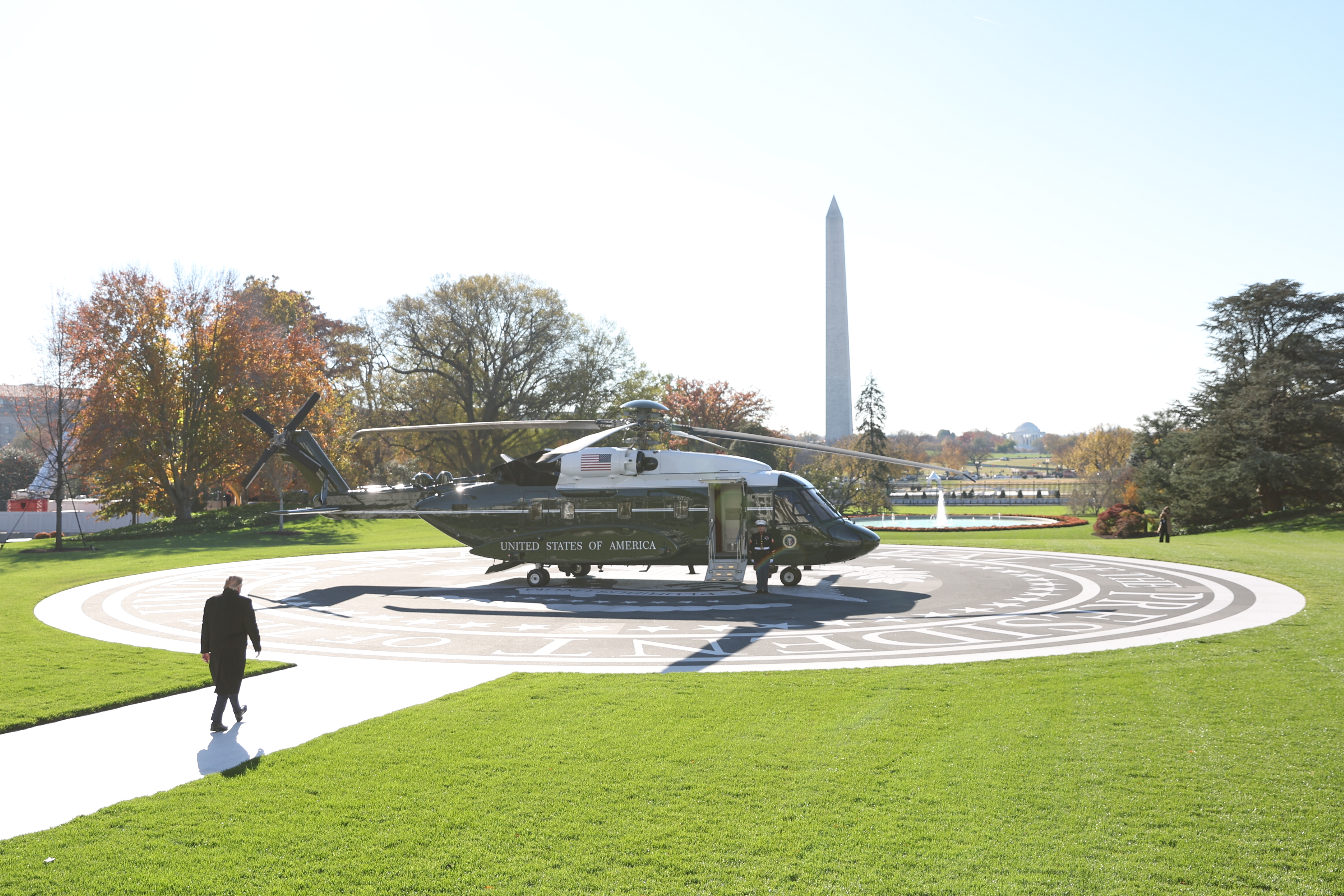
    He said the large granite helicopter landing pad he had built on the South Lawn had received “great reviews” and had replaced broken stone walkways and common areas. He also defended the sprawling ballroom being erected, which is larger than the rest of the White House, saying it “fits like a glove.”

    “See this stone? Get your cameras on it,” he commanded of reporters on the South Lawn. “This stone was badly broken.”

    Pressed further, he told a reporter, “You’re so pathetic,” then continued that he had “a responsibility to make sure the symbol of our country is in decent shape.”

    The president suggested that the White House had previously had broken windows and columns that were “in horrible condition,” even though the extensive damage he described wasn’t visible before he ordered so many building projects.

    Asked further about who was funding so much work, Trump responded, “This doesn’t cost money. This is peanuts.” The full extent of the costs of his many projects is unknown.

    Trump also sought to justify the unusually personal role he’s taken in the parade of building projects at the White House, telling a reporter, “This is called talent. You don’t have talent”

    Trump administration seeks additional funding

    Duffy, who made the decision Friday to ground the planes, has also pushed Congress for billions more dollars to upgrade a system he said had been neglected for decades.

    Duffy said the problem began when a federal contractor was replacing a section of old copper wire with new fiber wire, causing the system to overload.

    The Federal Aviation Administration said in a statement that “excessive data” was flooding the system “at a rate of 1,000 connection attempts every 4 to 5 seconds.” That deluge created instability with “aircraft communications and radar feeds,” the agency said.

    Duffy said on Sunday that billions of dollars are needed to build new architecture for the network and said companies — including AT&T, Verizon, and Lumen — are ready to deploy it as soon as the money is there.

    Upgrading the nation’s air transportation system is an effort that Congress has dedicated significant sums to in recent years.

    Under Biden, Congress approved a massive infrastructure bill that included $25 billion over five years for airport and air traffic control infrastructure improvements. Much of that money went to airport projects like new runways and taxiways and updated terminals.

    After Trump returned to the White House in 2025, a Republican-led Congress approved $12.5 billion in 2025 to modernize the FAA’s air traffic system.

    The Trump administration said the money would provide critical updates to outdated radar systems and traffic control centers, some dating back to the 1960s. Republicans used the same bill to allocate $170 billion for Trump’s immigration crackdown, border security, and immigration enforcement.

  • The Trump administration wants billions to overhaul the FAA. Democrats are demanding answers on the White House’s spending.

    The Trump administration wants billions to overhaul the FAA. Democrats are demanding answers on the White House’s spending.

    WASHINGTON — The Trump administration is pressing for $50 billion to address an aging air traffic control system after problems with routers apparently led to a rare nationwide grounding of all planes, but Democrats are demanding answers about how the administration has spent billions it’s already been given and why its funding request has soared.

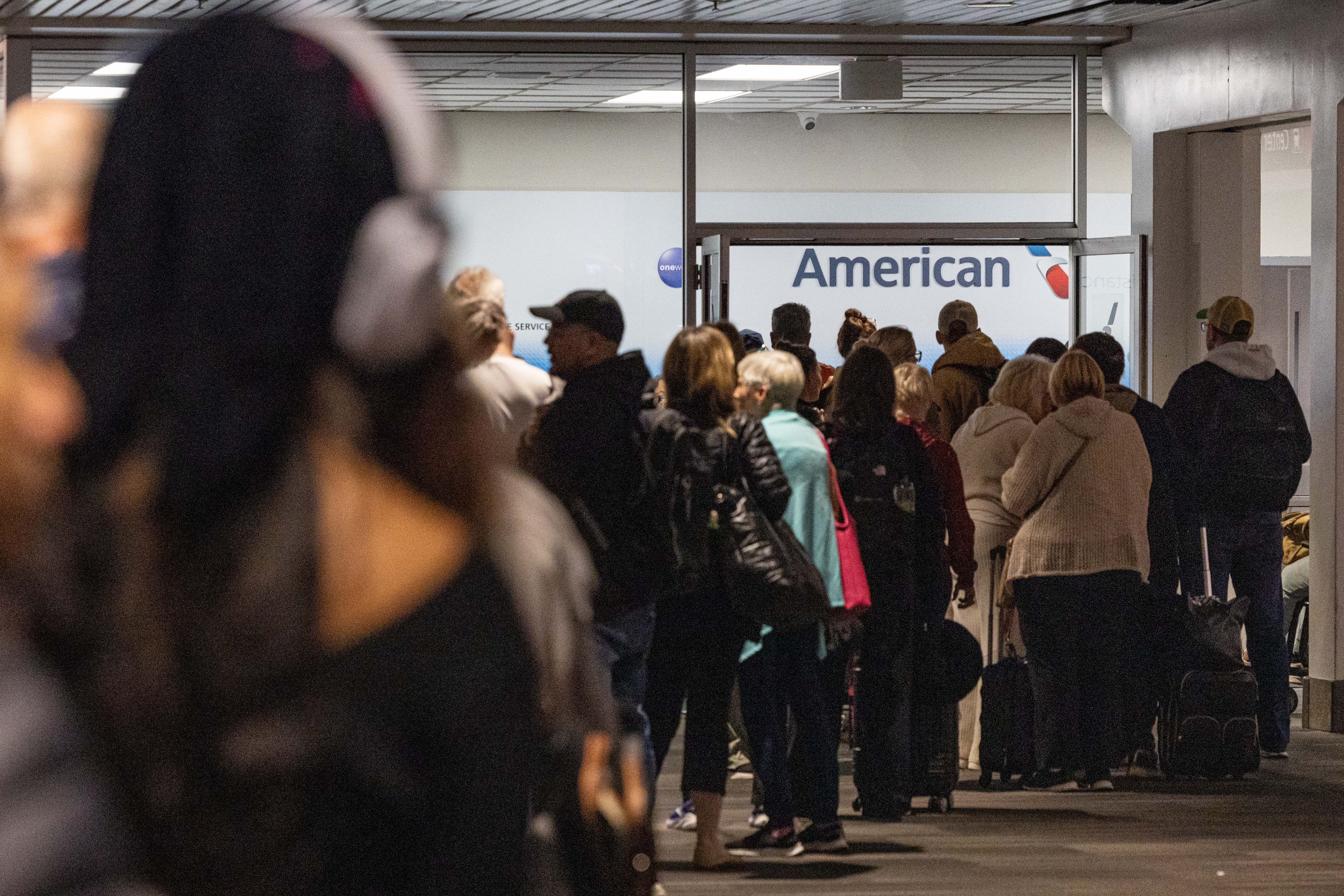
    The growing rift over how to address the Federal Aviation Administration’s vulnerabilities comes as passengers across the country are struggling to get to where they need to go after thousands of flights were grounded Friday, and investigators are still trying to figure out what went wrong.

    President Donald Trump, who hadn’t spoken publicly or commented on the flight grounding, finally weighed in Sunday with comments on social media blasting his Democratic predecessor and calling for more money to pay for improvements to the system.

    The finger-pointing and blame-shifting between the Republican administration and Democrats in Congress underscored the political division that could only grow wider when Democrats take control in January and scrutiny of the Trump administration accelerates, even on a matter that impacts all travelers.

    During appearances on Sunday morning talk shows, Transportation Secretary Sean Duffy detailed what is known — and still unclear — about the problems that led up to his decision Friday to ground the planes, as he also pushed Congress for billions more to upgrade a system he said had been neglected for decades.

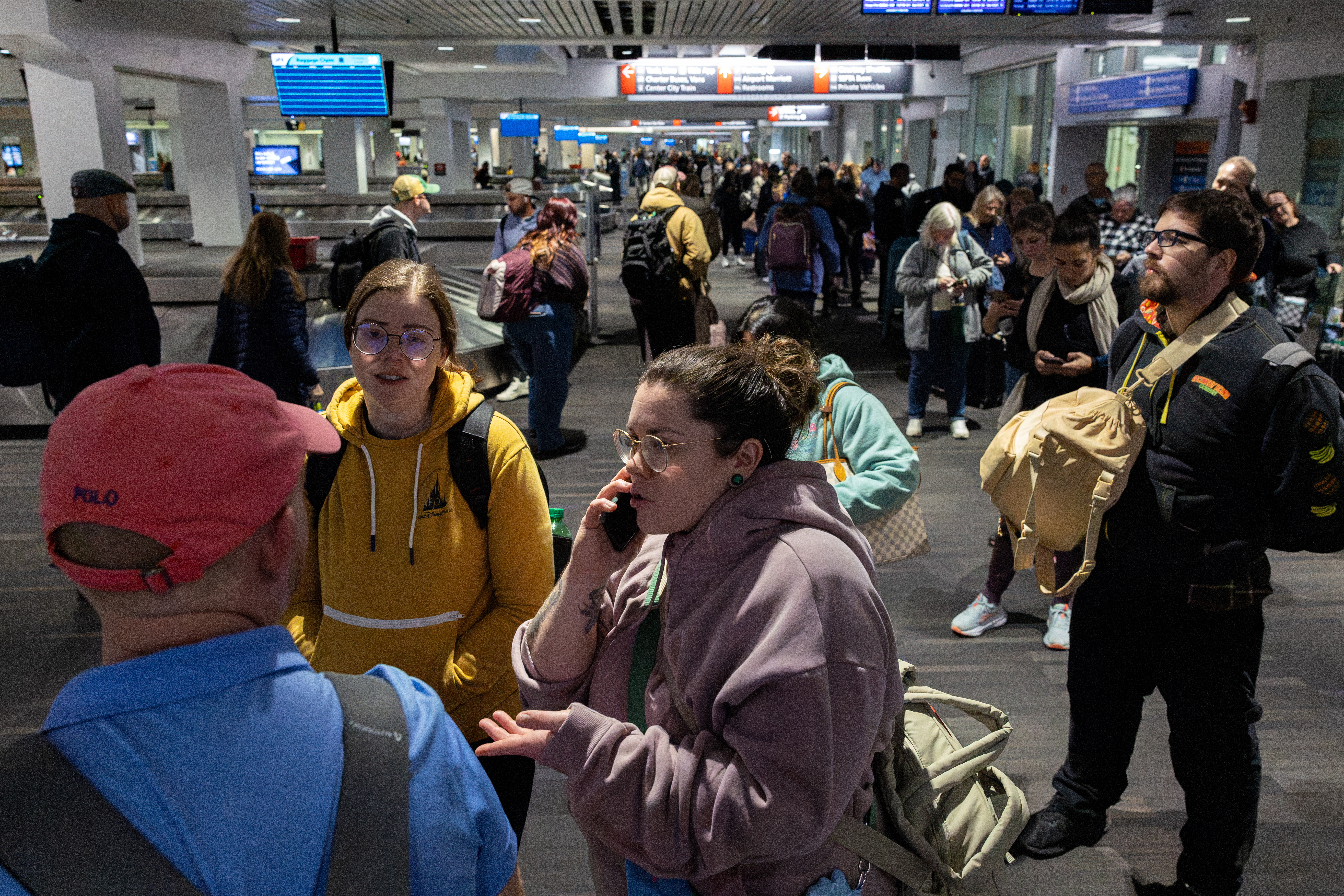
    Robin DeAngelis, 37, of Chester County, talks with Benjamin Glunz alongside sister Mary DeAngelis, 38, while on hold with American Airlines inside the Philadelphia International Airport on Friday. The sisters were planning on going to Walt Disney World for a “girls trip” for the weekend until the cancelations took place. “It is what it is,” Mary said. They hope to receive their luggage soon.Aidan T. Gallo / Staff Photographer

    Duffy details what happened

    In a post on X, Duffy said the problem began when a federal contractor was replacing a section of old copper wire with new fiber wire, causing the system to overload.

    After the wire was replaced at the site in El Dorado, Arkansas, and the router was turned on, a problem then cropped up at a facility in Amarillo, Texas, cascading into the ground stop.

    The FAA said in a statement that “excessive data” was flooding the system “at a rate of 1,000 connection attempts every 4 to 5 seconds.” That deluge created instability with “aircraft communications and radar feeds,” the agency said. The contractor blocked the two locations in Arkansas and Texas, and the agency said that stabilized the network.

    Duffy said billions are needed to build a “brand new architecture” for the network and said companies — including AT&T, Verizon and Lumen — are ready to deploy it “tomorrow” if the money is there.

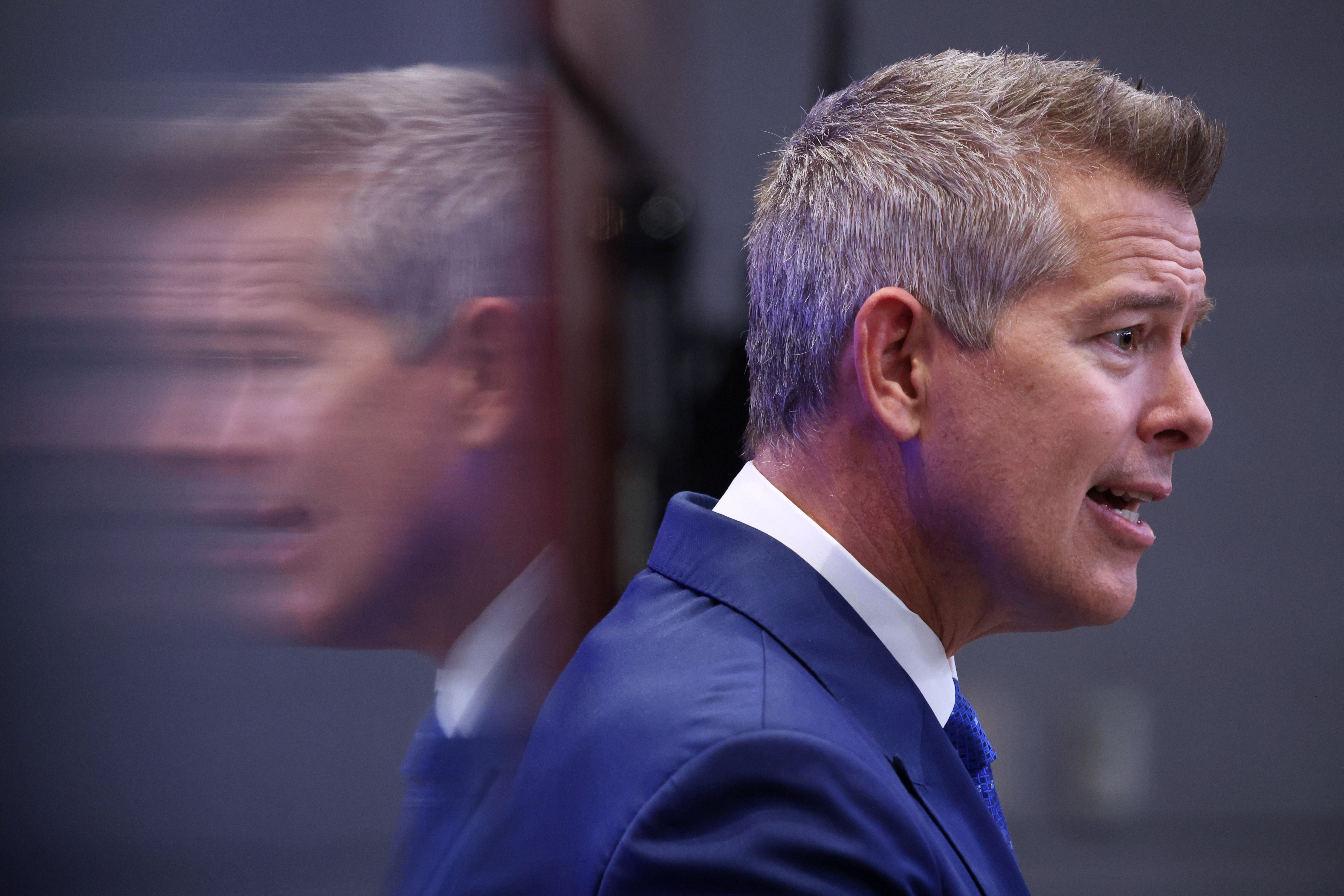
    Transportation Secretary Sean DuffyTom Brenner

    Aging air traffic control system has been a problem for years

    The need to upgrade the nation’s air transportation system is an effort that Congress has dedicated significant sums to in recent years.

    Under President Joe Biden, Congress approved a massive infrastructure bill that included $25 billion over five years for airport and air traffic control infrastructure improvements. Much of that money went to airports for such things as new runways and taxiways, and new and refurbished terminals.

    Under Trump, a Republican-led Congress approved $12.5 billion in 2025 to modernize the FAA’s air traffic system.

    The administration said the money would provide critical updates to outdated radar systems and traffic control centers, some dating back to the 1960s. Republicans used the same bill to allocate $170 billion for Trump’s immigration crackdown, for more border security and immigration enforcement.

    In a hearing on Sept. 15, FAA Administrator Bryan Bedford said with the money Congress provided, “we are executing on the most ambitious modernization and delivering it in record time.”

    The FAA upgrade has two phases. The first, funded by the $12.5 billion, is supposed to be completed by December 2028. A second phase involves developing new systems to track aircraft and optimize traffic. Bedford told lawmakers in September that the second phase will cost at least an additional $10 billion.

    Separately, Sen. Eric Schmitt, a Missouri Republican, in September introduced a bill that builds on the $12.5 billion Congress approved last year and calls for about $30 billion more in new investments in the nation’s air transportation system. Duffy has also pushed for that funding.

    Schmitt’s bill would include the $10 billion Bedford said is needed for the second phase. On top of that it includes money to modernize up to three medium hub airports and to make various airport improvements around the country, from new air traffic control towers to new terminals.

    Then on Friday Duffy said he wants $50 billion, but he hasn’t detailed what it’s for. He said Saturday that he’ll be sending a detailed request to legislators on Monday.

    Democrats question rising costs and why money hasn’t been spent

    Congressional Democrats say they also want to upgrade the country’s aging air traffic control system. But they are questioning the price tag.

    Democrats on the House Transportation Committee said most of the money appropriated last year remains unspent.

    “Explain to Congress, again, why they need more money?” Rep. Rick Larsen, the ranking Democrat on the committee, and Rep. André Carson, the top Democrat on a subcommittee with jurisdiction over aviation issues, said in a statement.

    Democrats on the House Appropriations Committee are asking the same question. Rep. Rosa DeLauro, the top Democrat on the panel, said Congress has shown it’s willing to invest in modernizing the FAA.

    “But we need a competent partner at the Department of Transportation to carry this out in a sustainable, transparent manner. Right now, it is clear that we lack such a partner,” DeLauro said.

    Duffy said Sunday the money appropriated last year by Congress will be spent by the end of 2028. He also said his agency was restricted by Congress in how it could be spent and that didn’t include spending on the FAA’s telecommunications infrastructure.

    Trump conspicuously quiet for two days

    Trump had not commented publicly or on social media after the ground stop was ordered Friday afternoon, although he was active on social media about unrelated matters.

    Sunday morning, he weighed in with a post on Truth Social, saying his administration has begun upgrading the air traffic control system but it should not be done in “drips and drabs.”

    “If Congress approves the desperately needed money for Air Traffic Control, we can get it built quickly and efficiently,” Trump wrote. “It will be the BEST SYSTEM anywhere in the World. Much of our current air control system is 50 years old – RIDICULOUS!”

    Duffy said Trump has been “fully engaged” on the ground stop.

    Travel should return to normal by Monday

    As for the traveling public, Duffy said that “as we look to the end of the day and into tomorrow, we should be running at full capacity.”

    Duffy said the administration feels “pretty good” that the breakdown did not result from a hacking event. He said various intelligence agencies have said they were not finding the “chatter or the footprints that we would normally see if this was a cyberattack.”

    Duffy appeared on CBS’ “Face the Nation,” CNN’s “State of the Union,” “Fox News Sunday,” NBC’s “Meet the Press” and ABC’s “This Week.”

  • Iran targets Bahrain twice after months of quiet, claiming retaliation against U.S.

    Iran targets Bahrain twice after months of quiet, claiming retaliation against U.S.

    ABU DHABI, United Arab Emirates — Sirens sounded and explosions were heard in Bahrain on Sunday in an attack Iran said targeted U.S. military equipment at a helicopter base in retaliation for American strikes in Iran.

    Bahrain, home to the U.S. Fifth Fleet Navy base, was targeted by hundreds of Iranian drones and missiles during the first months of the war, but had been relatively quiet recently.

    Then on Friday, Iran again began targeting Bahrain, with the Islamic Revolutionary Guard Corps saying it had struck “early warning radar of the aggressor U.S. military.”

    U.S. Central Command denied the radar was destroyed and said it had shot down two Iranian drones.

    Tehran said Friday that its attack was in retaliation for U.S. strikes on Iranian sites, including Qeshm Island. It described Sunday’s as the “second phase of a decisive and crushing response” to the United States.

    The resumption of attacks comes as President Donald Trump has said that the U.S. will maintain the “status quo” in its war with Iran — signaling last week that a massive military escalation is unlikely but also saying a diplomatic solution to end the war is unnecessary. In the region, there is widespread concern that the strikes have the potential to once again expand.

    Sunday’s attack marked “a return to using Gulf states’ territory as a stage for exchanging military messages with Washington,” Ebtesam Al-Ketbi, president of the Emirates Policy Center, said in a statement on X.

    “Iran appears to want to increase military pressure without sliding into an all-out confrontation, using that pressure to improve its negotiating position,” Ketbi wrote. “But repeated attacks on Bahrain carry the risk of miscalculation and could open a new round of escalation.”

    Residents in Bahrain, an island nation of 1.6 million, reported hearing sirens from early-warning systems and explosions, as the government urged residents to keep calm and take shelter.

    The IRGC said in a statement, carried by state media, that it had targeted Bahrain’s Riffa Air Base with six drones. Bahrain’s air-defense systems intercepted “several treacherous Iranian aerial attacks,” the military said in a statement.

    Tim Hawkins, a spokesperson for U.S. Central Command, said there had been “no impacts to American forces” as a result of the attacks. Bahrain’s government did not respond to questions about whether there were damages. The Fifth Fleet base suffered extensive damage during the first phase of the war, and few Americans are still operating there.

    U.S. officials confirmed to the Washington Post this month that U.S. strikes hit Iran’s Qeshm Island, with one U.S. official, speaking on the condition of anonymity to discuss the operation, describing them as “defensive.”

  • Richard Sterban, the bass singer for the Oak Ridge Boys, dies at 83

    Richard Sterban, the bass singer for the Oak Ridge Boys, dies at 83

    Richard Sterban, a backup vocalist for Elvis Presley who went on to international acclaim as the bass singer for the Oak Ridge Boys, the country vocal quartet for whom he sang the “oom-papa-mow-mow” refrain on the 1981 blockbuster hit “Elvira,” died on Saturday in Hendersonville, Tenn. He was 83.

    His death was confirmed by his family and the Oak Ridge Boys. They said that Mr. Sterban, who had cancer, had died of complications from bronchitis and pneumonia.

    A singer of extraordinary range and power, Mr. Sterban could hit notes so low they could only be felt, as opposed to heard. He also could hit notes higher than many tenors can reach. His basso profundo not only anchored the Oak Ridge Boys’ gospel-steeped sound; it carried the occasional melodic lead on recordings like the group’s 1979 remake of the Righteous Brothers’ Top 40 pop hit “Dream On.”

    His reverberating vocals galvanized the Oaks’ version of “Elvira,” a song that had previously been recorded by artists including Rodney Crowell and Kenny Rogers and the First Edition.

    It was never more than a minor hit, though, until Sterban’s stentorian “oom-papa-mow-mow” (framed by shouts of “Giddy up!” and “Hi-ho Silver!”) transformed it into a Grammy Award-winning record, and one of the most inescapable earworms of the early 1980s.

    “It absolutely carried us to another stratosphere,” Mr. Sterban explained in his 2012 memoir, From Elvis to Elvira: My Life on Stage, written with Steven Robinson. “The song, especially the lines I sang, was seemingly on everyone’s lips. It was unbelievable.”

    With 2 million copies sold, “Elvira” topped the country chart, crossing over to the pop Top 10 and helping secure the Oaks’ reputation as one of the most popular vocal groups in the history of country music.

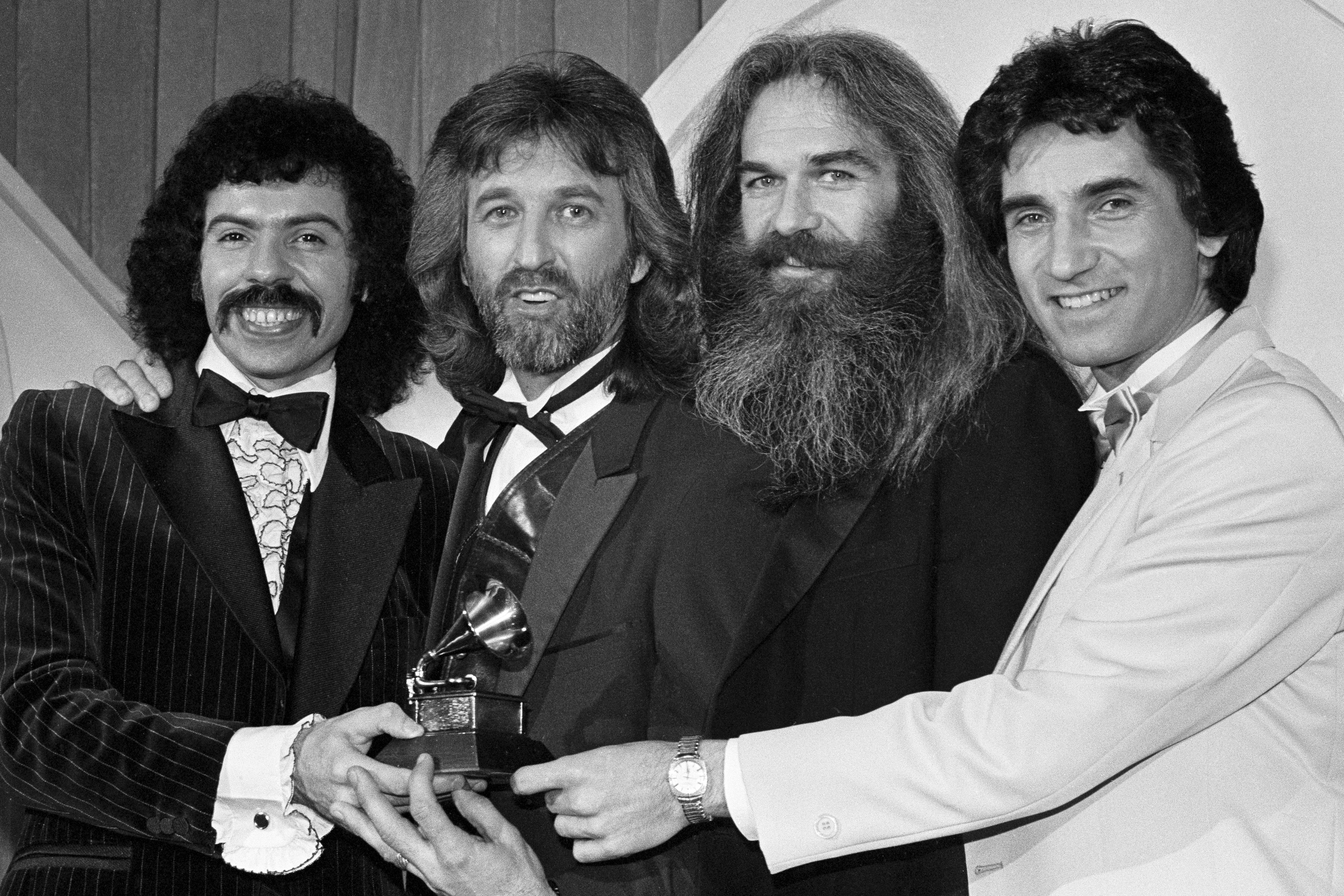
    Besides Mr. Sterban, the group’s classic lineup, formed in the early 1970s, included lead singer Duane Allen; tenor Joe Bonsall, who died in 2024; and baritone William Lee Golden.

    The group was formed as a gospel quartet in Oak Ridge, Tenn., in the early 1940s, disbanding and reforming at least twice before Mr. Sterban and Bonsall teamed up with Allen and Golden, stabilizing what had long been a mercurial lineup. Over the next two decades, the four men modernized the group’s original gospel sound with pop-country elements, placing 17 singles at the top of the country chart and 17 others in the country Top 10.

    With records like “Elvira” and “Bobbie Sue” (1982), Mr. Sterban and the Oaks infused traditional country harmony singing with techniques popularized by R&B vocal groups like the Coasters and the Dominoes. They also contributed vocals to the likes of Paul Simon’s 1977 Top 10 pop hit “Slip Slidin’ Away.”

    This more far-reaching aesthetic was hardly second nature to the group, though — at least, not at first.

    This was especially the case when, at a commercial low point in the mid-’70s before they found a larger country audience, they went into the studio to sing backup on Jimmy Buffett’s “My Head Hurts, My Feet Stink, and I Don’t Love Jesus.”

    “What in the world had we gotten ourselves into?” Mr. Sterban wrote in his memoir, describing how the members of the group felt at the time. They had already been accused of being sellouts by their core gospel following for performing covers of hits by the Eagles and Olivia Newton-John in concert.

    “All we could imagine,” he added, “were headlines confirming what many of our detractors already seemed to believe: ‘Oak Ridge Boys don’t love Jesus!’”

    Richard Anthony Sterban was born on April 24, 1943, in Camden, N.J., one of three children of Edward and Victoria (Giordano) Sterban. The son of Polish immigrants, his father was an electrician. His mother, a native of Salandra, a township in the Basilicata region of southern Italy, worked various jobs, including at a chocolate factory.

    The product of a strict religious upbringing, young Richard began singing at the local Assembly of God church at 6 and went on to play tuba, sousaphone, and an assortment of other brass instruments in high school. While attending Trenton State College (now the College of New Jersey), he majored in music before dropping out to form the Keystone Quartet, a gospel group, in the early 1960s.

    Life on the road, though, didn’t agree with some of the quartet’s members, and the group split up in early 1965, at which time Mr. Sterban took a job selling menswear at the Gimbels department store in northeast Philadelphia.

    Shortly before that, he married Sandra Wilson, with whom he had three sons, Rich, Chris, and Doug.

    In 1970, Mr. Sterban was hired to sing bass in the touring edition of J.D. Sumner and the Stamps Quartet, one of the premier Southern Gospel groups of the day.

    A year later, the Stamps were hired to be Presley’s background singers, appearing with him at his four shows at Madison Square Garden in June 1972, as well as during his five-week residency in Las Vegas later that summer.

    Mr. Sterban also sang on major recordings by Presley including “Burning Love,” a No. 2 pop hit in 1972, and “Always on My Mind.”

    In October 1972, seizing the chance to be part of a headlining act of his own, Mr. Sterban accepted an invitation to join the Oak Ridge Boys, replacing bass singer Noel Fox.

    The newly reconstituted quartet initially struggled to make it in the country market. Buoyed, though, by a stint as regulars in Johnny Cash’s touring revue, they finally broke through to a wider audience with “Y’all Come Back Saloon.” A Top 10 country single in 1977, the record inaugurated a decade-plus string of hits that paved the way for sold-out concert tours, regular appearances on late-night television shows, and five Grammy Awards.

    The Oak Ridge Boys were inducted into the Gospel Hall of Fame in 2000 and into the Country Music Hall of Fame in 2015.

    An avid sports fan, Mr. Sterban was for years a part owner of — and occasional color commentator for — the Nashville Sounds baseball team, the Triple-A minor league affiliate of the Milwaukee Brewers. He also did color commentary for Vanderbilt University’s men’s baseball team.

    In addition to his sons from his first marriage, which ended in divorce, Mr. Sterban is survived by his second wife, Donna (Summers) Sterban; their daughters, Tori and Lauren; and several grandchildren.

    Their early struggles to find their stylistic equilibrium notwithstanding, the Oak Ridge Boys nevertheless continued to push the boundaries of country music decades after they found success with a more wide-ranging approach.

    Maybe nowhere was this more evident than in their haunting 2009 rendition of the White Stripes’ 2003 single “Seven Nation Army.” Recorded with producer Dave Cobb, whose clients include Jason Isbell and Lady Gaga, the collaboration has been likened to Cash’s partnership with iconoclastic producer Rick Rubin.

    “I think Dave took us down some roads we might not have traveled on our own,” Mr. Sterban was quoted as saying about the experience on the group’s website. “The music may be different, but he did not try to change us; he challenged us.”

    This article originally appeared in the New York Times.