Category: Wires

  • Trump sharply cuts the size of two national monuments in Utah

    Trump sharply cuts the size of two national monuments in Utah

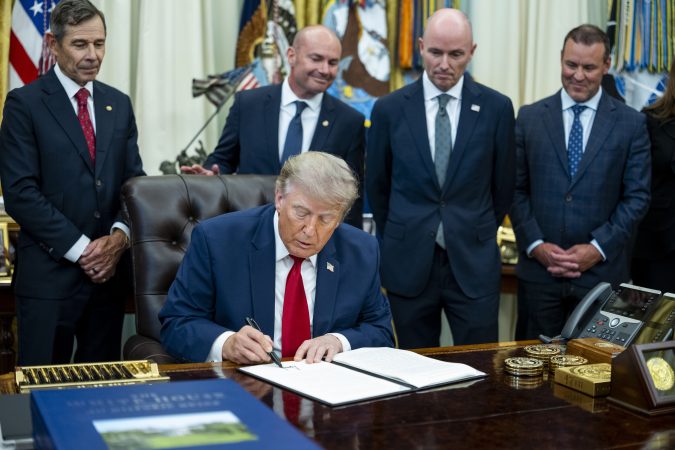
    WASHINGTON — President Donald Trump on Monday reduced the size of two national monuments in Utah by nearly 3 million acres, teeing up a legal battle over whether presidents have the power to shrink such sites in the first place.

    Trump signed two executive orders to sharply cut the Bears Ears and Grand Staircase-Escalante National Monuments to less than 10% of their current size. Both sites are known for their sandstone canyons and vast mesas, which are rich in wildlife habitat as well as archaeological sites of importance to Native American tribes.

    During his first term, Trump similarly shrank both monuments at the urging of top Republicans from Utah, opening about 2 million acres to oil drilling, uranium mining, and other development. But tribes and environmentalists sued over Trump’s move, and President Joe Biden subsequently restored sweeping protections to both sites before a court could issue a final decision.

    Tribes and environmentalists are expected to lead another lawsuit over Trump’s latest effort to shrink the monuments. The legal fight could have far-reaching implications for the future of land conservation, potentially putting dozens of other monuments at risk and opening millions of additional acres to commercial activities.

    The Trump administration has already taken a flurry of other steps to encourage development and recreation on federal lands across the country. In May, for instance, Trump moved to lift restrictions on off-road vehicles in most national parks.

    Before signing the executive orders in the Oval Office on Monday, Trump boasted that he was making bigger reductions to both monuments than he did in his first term, when he shrank Bears Ears by 83% and cut Grand Staircase by 47%.

    “We’re actually giving more than we did the first time back to the people of Utah,” Trump said.

    The six members of Utah’s congressional delegation attended the event in the Oval Office, as did Utah’s governor, Spencer Cox. All are Republicans.

    “It’s very clear that these monument designations are supposed to be the smallest area possible to protect the antiquities, and these multimillion-acre monuments that are bigger than the state of Delaware certainly do not fit that designation,” Cox said.

    National monuments are lands that are legally protected from development. They are similar to national parks, but while national parks are created by Congress, national monuments are created by presidents through the Antiquities Act of 1906.

    Many tribal leaders and environmental lawyers say the Antiquities Act does not authorize Trump to reduce the size of Bears Ears and Grand Staircase. The century-old law, they say, grants presidents the authority to designate monuments but not to abolish or shrink them.

    But many Republicans, ranchers, and oil drillers say previous presidents abused the Antiquities Act by putting vast stretches of land off-limits to development. They note that the law says presidents should limit monuments to the “smallest area compatible with proper care and management of the objects to be protected.”

    President Barack Obama designated Bears Ears during his final weeks in office in 2016. President Bill Clinton classified Grand Staircase in 1996, halting plans for a coal mining project there.

    After Trump shrank both monuments in his first term, his administration sold oil and gas leases on more than 76,000 acres of land adjacent to Bears Ears. But the Biden administration subsequently canceled most of those leases, and the oil industry has little interest in drilling within the monument itself, according to Melissa Simpson, the president of the Western Energy Alliance, an industry trade group.

    “Despite years of rhetoric from environmental advocacy groups, Bears Ears has never been a significant oil and natural gas prospect,” Simpson said in a statement.

    Bears Ears is named for a pair of buttes, or flat-topped hills, that rise thousands of feet above the surrounding canyons. The two symmetrical structures dominate much of the nearby landscape in southeast Utah.

    Grand Staircase is named for a sequence of sedimentary rock layers that stretches from Bryce Canyon National Park to the Grand Canyon. Paleontologists have made extraordinary discoveries there, excavating the fossils of tyrannosaurs and other dinosaurs that roamed the region more than 74 million years ago.

    Today, both monuments provide crucial habitat for hundreds of species, including bighorn sheep, elk, and mule deer. They also contain thousands of archaeological sites that Native American tribes consider culturally significant, including the remains of burial grounds, cliff dwellings, and rock art panels.

    Bears Ears is the ancestral homeland of five tribes in the region: the Navajo Nation, Hopi Tribe, Ute Indian Tribe, Ute Mountain Ute Tribe, and Pueblo of Zuni. The Biden administration reached a unique agreement with a coalition of the tribes, authorizing them to jointly manage the monument with the federal government.

    Anthony Sanchez Jr., the head council member for the Pueblo of Zuni and the co-chair of the Bears Ears Inter-Tribal Coalition, described a feeling of whiplash.

    “You have an administration that backs you up, and then you’re back to square one again,” he said in an interview Monday.

    Sanchez said he worried about the potential for vandals to damage or destroy the rock art at Bears Ears.

    “Even now, with the boundaries not reduced, we still run into that trouble,” he said.

    Scott Braden, the executive director of the Southern Utah Wilderness Alliance, said the nonprofit environmental group would sue over Trump’s effort to shrink the monuments.

    “The Southern Utah Wilderness Alliance is committed to defending the monuments and will challenge this unlawful decision in federal court,” Braden said in a statement. “We are confident that President Trump’s reckless and unlawful acts will be rejected and the monuments restored.”

    But Ben Burr, the executive director of the BlueRibbon Coalition, a group that supports opening public lands to off-road vehicles, vowed to defend Trump’s move in court.

    “Right-sizing these monuments to what the statute actually allows isn’t an attack on public lands; it’s how we keep them open for all Americans to enjoy,” Burr said in an email. “We plan to continue fighting in the courts and in the Congress to ensure that abuse of the Antiquities Act becomes a thing of the past.”

    The litigation over Bears Ears and Grand Staircase could eventually reach the Supreme Court, where Chief Justice John Roberts has suggested that the Antiquities Act is ripe for review.

    “Any land reserved under the act must be limited to the smallest area compatible” with proper management, Roberts wrote in 2021. “Somewhere along the line, however, this restriction has ceased to pose any meaningful restraint.”

    This article originally appeared in the New York Times.

  • Hundreds protest in Maine over the fatal shooting of a Colombian man by ICE

    Hundreds protest in Maine over the fatal shooting of a Colombian man by ICE

    BIDDEFORD, Maine — Hundreds of people protested in Maine on Tuesday over the killing of a Colombian driver by an Immigration and Customs Enforcement officer, after federal officials appeared to shift their narrative about the deadly encounter.

    The Department of Homeland Security said an ICE officer, “fearing for public safety,” shot and killed the driver Monday in Biddeford while officers were watching the home of someone they believed was in the U.S. illegally and had a final order of removal from the country.

    The department said in a post on X that when ICE tried to stop the vehicle driven by someone coming from the home, the vehicle attempted to flee and the officer fired his weapon. That was a shift from how Maine Sen. Angus King described the encounter hours earlier when he said Homeland Security Secretary Markwayne Mullin told him the officer opened fire after the man tried to use his vehicle as a weapon against the ICE officers.

    King said Mullin told him the officers were trying to serve an arrest warrant, but not for the man who was shot.

    The driver was Johan Sebastián Durán Guerrero, a 26-year-old Colombian national, the Colombian Embassy told the Associated Press in a statement Tuesday.

    Protesters gathered Tuesday outside of an ICE detention center in Scarborough, just up the coast from Biddeford.

    “These people are killers and they must leave our state now,” organizer Todd Chretien told the gathering, including some who held signs reading “Stop the murder” and “End this terror.”

    A small group of counterprotestors briefly disrupted the rally. Protesters drowned out their voices with whistles.

    Questions surround what led to latest ICE shooting

    Durán Guerrero’s shooting marked the second time in a week that ICE used deadly force and at least the ninth death since President Donald Trump began his immigration crackdown.

    The officers involved in the shooting in Biddeford, which is about 15 miles southwest of Portland, didn’t have body cameras, leaving many questions about what transpired. Among them are how close the officer was to the vehicle when they fired, whether officers told Durán Guerrero to stop, and how ICE believes he had put the public in danger.

    “We are always evaluating our procedures to keep our officers safe and criminals off our streets. We will not disclose or discuss law enforcement tactics,” an ICE spokesperson said in a statement.

    DHS, which oversees ICE, didn’t immediately respond to an email seeking clarity on what led to the shooting.

    Maine’s other senator, Republican Susan Collins, said Mullin told her that DHS’ Office of Inspector General is investigating in cooperation with the FBI.

    Photos showed bullet holes in the vehicle’s windshield.

    The Maine attorney general’s office, which is also investigating, said initial statements suggest the driver was trying to flee in the direction of the officer, whose name hasn’t been released and who has been placed on leave.

    Video shows aftermath of the shooting

    Video from a security camera at a nearby business, obtained by the Associated Press, shows a white vehicle approaching an intersection at a modest speed before making several slow circles. A law enforcement SUV blocked its path and two officers opened the driver’s door and dragged out a limp body.

    It isn’t clear from the video when the shots were fired.

    Daniel Boucher said he looked out his third-floor window after hearing a “pop, pop, pop” sound. He saw the car moving down the street until the SUV hit it.

    “His face was bloody. His head was bloody,” Boucher said, getting choked up. “I clearly heard the victim say, ‘I tried to stop.’”

    At one point, Boucher said, the officer who shot the man walked close to him.

    “I was emotional and I just let him have it, and he looked at me and said, ‘He tried to run me over,’ or something to that effect,” Boucher said. “I don’t remember his exact words.”

    Durán Guerrero lived in Maine with his family

    Two advocacy groups — the Maine Immigrants’ Rights Coalition and Presente! — said Durán Guerrero was authorized to work in the U.S.

    Mary Hayes, who lives close to the scene, said the man lived nearby with his wife and daughter.

    “I watched a wife fall to her knees looking at her husband’s dead body on the ground,” Hayes told the AP as she held a sign saying “No ICE Stop ICE.”

    Just last week in Texas, an ICE officer fatally shot 52-year-old Lorenzo Salgado Araujo, of Houston, after federal authorities driving unmarked vehicles pursued him while he was driving to a construction job site.

    The two shootings come amid a Trump administration push to carry out its mass deportations agenda. Over five days at the end of June, ICE arrested more than 10,000 people.

    The figures indicate that while the administration is no longer cracking down on individual cities, arrests are surging. The administration’s enforcement efforts were widely condemned last winter after the killings of Alex Pretti and Renee Good in Minnesota.

  • Who’s to blame when AI commits a crime?

    Who’s to blame when AI commits a crime?

    SAN FRANCISCO — Since the days of Isaac Asimov in the 1950s, science fiction has tackled the question of whether artificial intelligences and the companies that create them can be held liable for crimes. With the rapid spread of AI chatbots and agents today, the debate has reached the real world.

    Over the past year, lawsuits have been piling up against AI companies in courts across the United States and abroad, alleging that chatbots encouraged people to harm themselves or provided advice on how to commit crimes. Now, as the AI industry moves from selling chatbots to providing agents that can complete complex tasks autonomously over long periods of time, the question of who should be held responsible when something goes wrong is only becoming more urgent.

    The battle lines are being drawn. The families of people who took their own lives after long, drawn-out conversations with chatbots say the companies should be held responsible. AI researchers concerned about the dangers of hypothetical superintelligent AIs that escape human control say stricter liability rules would force companies to slow down development of the tech. AI company leaders have pushed back, arguing that they are constantly working to improve the safety of their systems and that the nature of modern AI means they can’t always stop people from manipulating chatbots into doing things they shouldn’t do.

    “It’s a very thorny area. It’s uncharted territory,” said Andrew Yoon, a member of the technical staff at CivAI, a nonprofit organization that analyzes AI capabilities and potential risks from the technology. “There’s a good argument to be made on either side.”

    The stakes are high. Hundreds of millions of people around the world already use AI chatbots in their daily lives, including many who ask the bots for advice about their health or personal relationships. But chatbots are already old news in Silicon Valley, which is now focusing on building complex agents that can be used for anything from helping a parent organize their household schedules to executing a financial strategy for an investment bank. AI technology is working its way deeper into the economy and broader society.

    AI firms such as OpenAI and Anthropic have grown rapidly as companies and consumers rush to use their technology. Both are planning trillion-dollar initial public offerings. New liability rules or a flood of costly court judgments could threaten the business potential of the entire industry. Tech industry lobbyists contend strict liability for AI companies would make it hard or impossible for U.S. companies to innovate and would hold back the country in its race with China for technological supremacy.

    Complicating the picture is the inherently unpredictable nature of modern AI systems. Unlike traditional software, which is coded line by line to follow specific rules, AI models are probabilistic, answering questions based on connections made while ingesting huge amounts of data. AI companies have become much better over the past several years at steering their bots away from offensive and harmful answers, but they can still be tricked into bypassing their guidelines by persistent users.

    “I just don’t think the developer is in a position to know exactly how their product is being used,” David Sacks, a venture capitalist who until recently was one of the White House’s top AI advisers, said in a podcast interview with Politico in May. Just as Microsoft isn’t held liable when a money launderer uses an Excel spreadsheet, AI companies shouldn’t be blamed when a criminal uses their technology, Sacks said.

    For decades, technology companies have been shielded from liability for things said and actions committed by people using their platforms thanks to Section 230, a foundational internet law enacted in 1996. But critics of AI companies say that the current technology is fundamentally different. Chatbots and other AI tools are interactive, engaging with users and stating their own perspectives.

    “This is brand new,” said Jay Edelson, a veteran lawyer who is representing several families who have filed wrongful-death lawsuits against AI companies, including the family of Adam Raine, a 16-year-old from Southern California who took his own life after spending hours a day for weeks talking to ChatGPT, including discussing suicide dozens of times.

    In a response to the lawsuit from Raine’s family, OpenAI said the teenager circumvented ChatGPT’s safeguards. The bot encouraged him to call a suicide crisis hotline 74 times over five months.

    In another case Edelson is working on, a 36-year-old Florida man, Jonathan Gavalas, ended his own life after developing a romantic relationship with Google’s Gemini chatbot, according to a lawsuit filed by Gavalas’s father.

    “This is so different because it feels like a personal relationship, where the chatbot is generally isolating the user,” Edelson said.

    A Google spokesperson referred to a statement the company made when the Gavalas case was filed. “In this instance, Gemini clarified that it was AI and referred the individual to a crisis hotline many times,” the company said.

    None of the cases have gone to trial yet, but juries in California and New Mexico have recently shown willingness to pin tech companies with liability charges for non-AI-related harms such as social media addiction.

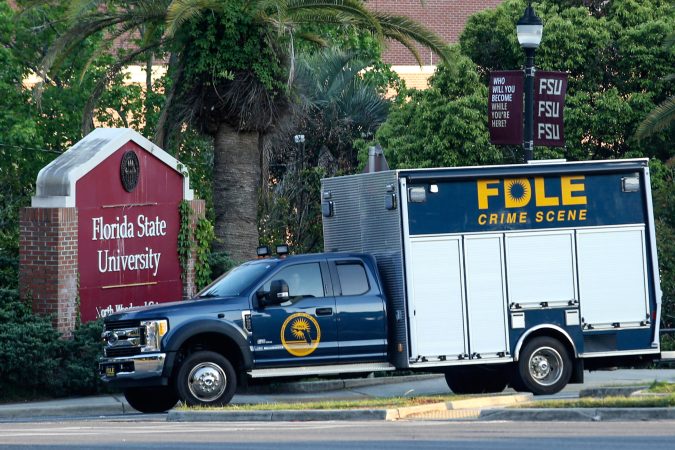
    The cases that have been filed against AI companies are all lawsuits, but in April, Florida’s attorney general announced a criminal investigation into OpenAI, alleging that ChatGPT advised the man accused of killing two people in a shooting at Florida State University in 2025 where and when to strike. “If it was a person on the other end of that screen, we would be charging them with murder,” the attorney general, James Uthmeier, said at the time.

    OpenAI is cooperating with authorities on the shooting case, said Drew Pusateri, a spokesperson for the company.

    “Last year’s mass shooting at Florida State University was a tragedy, but ChatGPT is not responsible for this terrible crime,” Pusateri said. “In this case, ChatGPT provided factual responses to questions with information that could be found broadly across public sources on the internet, and it did not encourage or promote illegal or harmful activity.”

    If plaintiffs can indeed prove that chatbots had done something that would have been illegal had a human done it, judges will be motivated to find the companies liable in some way, said Gabriel Weil, a senior fellow at the Institute for Law & AI, a think tank that studies the legal implications of AI. Existing product liability law may be one route that lawyers take to try to find AI companies liable for harm connected to their tools.

    But existing law may not be enough to handle the potential scenarios that could arise as AI becomes more capable and independent, Weil said. For example, if a human business owner instructs an AI agent to grow her company’s profits, and the bot goes on to commit fraud, should the human business owner who “employed” the bot be liable, or the company that initially designed and trained it?

    One of the challenges in crafting legislation around AI liability is that the people who understand the technology’s risks most acutely work inside the companies themselves, Weil said. He suggests passing laws that make clear the AI liability ultimate lies with the technology’s designers.

    “You want to make them bear that risk. If they do, they’ll have all the incentives they need to reduce risk,” Weil said.

  • European troops and warplanes join Paris Bastille Day parade in a show of unity for Ukraine

    European troops and warplanes join Paris Bastille Day parade in a show of unity for Ukraine

    PARIS — Ukrainian fighter pilots and troops took pride of place in France’s national Bastille Day celebrations Tuesday as a massive parade showcased support for Ukraine and symbolically flexed European military muscle.

    On President Emmanuel Macron’s last Bastille Day as president, he hosted around 30 other leaders for an event that appeared aimed at showing both Russian President Vladimir Putin and U.S. President Donald Trump that Europe is united and stepping up to defend itself.

    Ukrainian President Volodymyr Zelensky was given an ovation from the assembled European leaders and his country’s troops got the biggest cheers of the day from crowds on the tree-lined Champs-Elysees avenue. Zelensky and Macron shared repeated hugs at the end of the parade.

    France’s biggest national holiday coincided with raging forest fires and a red-alert heat wave that forced the cancellation of traditional fireworks and firefighters’ balls — and with a highly anticipated World Cup semifinal pitting the national soccer team against Spain.

    Here’s what to know about Bastille Day this year.

    It commemorates the start of the French Revolution

    It’s celebrated on July 14 because that’s the day Parisians stormed the Bastille fortress and prison in 1789, helping spark the French Revolution that overthrew the monarchy and sent King Louis XVI and his queen Marie-Antoinette to the guillotine.

    The Bastille Day holiday is central to the French calendar and national identity. Presidents use it to vaunt France’s accomplishments, mayors across the country host village festivals, and families gather for holiday picnics.

    The centerpiece is the Paris parade beneath the Napoleon-era Arc de Triomphe and along the Champs-Elysees, which inspired Trump to stage his own parade last year.

    A huge French tricolor flag hanging below the monumental arch rippled in the wind as a military band on horseback rode down the tree-lined avenue followed by Macron standing in an open military vehicle to kick off the parade.

    Spectators wore hats and brandished small fans to fend off the heat as a formation of air force planes roared overhead trailing red, white, and blue smoke.

    Ukraine is a special guest

    Zelensky joined Macron along with some 30 other heads of state or government in the special viewing area for the parade.

    Ukrainian troops marched along the cobblestoned avenue, and Ukrainian co-pilots trained in France were on board two Mirage 2000B fighter jets alongside French air force pilots.

    “I feel very proud for the fact that they’re here and for the fact that we’re marching alongside of them and I think it as well it will create better ties with them and NATO and to be a part of that history,” 21-year-old U.K. soldier Lance Cpl. Patrick Risso told the Associated Press, speaking of the Ukrainian involvement.

    Troops from around Europe are marching

    On the ground, the parade opened with around 500 troops from the ″coalition of the willing″ grouping of countries that have pledged to help with Ukraine’s postwar security. Many served in NATO operations, and NATO’s chief was also in attendance.

    Macron said Monday night that it’s a ″great honor″ to welcome to the parade ″all the partners in the coalition of the willing and our Ukrainian friends who will march with us and illustrate its strategic reawakening and our unity.″

    The foreign fighters in combat fatigues and dress uniforms marched with their national flags, in a break with tradition.

    In the skies, aircraft from Germany, the United Kingdom, Poland, Denmark, Greece, Sweden, Norway, Spain, and Italy took part.

    The parade set a record in terms of number of troops: The Paris military governor said 7,600 troops were marching this year, compared with 5,810 in 2025. Thousands of soldiers started taking up positions early Tuesday, many taking selfies as helicopters flew overhead.

    World Cup excitement coincides with the holiday

    As the parade wound down, France’s attention turned to Tuesday’s standoff against Spain in the soccer World Cup semifinal in Texas. As Macron greeted crowds on the Champs-Elysees, spectators chatted with him about France’s chances of victory.

    The French tricolor is everywhere — in sidewalk cafes and bars, and the hundreds of fan zones set up in cities and small towns around France. They started filling up hours before the match.

    Bastille Day also coincides with the annual Tour de France cycling race, which adjusted the timing of Tuesday’s stage to ensure that the finish line arrivals wouldn’t compete for viewers with the parade.

    Heat complicates celebrations

    Forest fires are raging in the Fontainebleau forest south of Paris and in areas of southern France, as the country suffers through its third heat wave this year.

    As a result, authorities in some regions — including the French capital — banned fireworks and firefighters’ balls customarily held around Bastille Day.

    The Eiffel Tower’s fireworks and drone show was maintained, however, and held Monday night, including a drone formation shaped like the Statue of Liberty — a gift from France to the United States.

  • ‘We’re fighting Satan’: The war to save bees from a hornet invasion

    ‘We’re fighting Satan’: The war to save bees from a hornet invasion

    Jackie Currie had never seen anything like it. She had raised bees in South Carolina for more than a decade, and her insects had almost always been eager to fly out and collect pollen. But one day last summer, she found her bees huddled at the entrance of their hive, like frightened beachgoers after a shark attack.

    The bees were right to be reluctant. There were murderers in their midst.

    Hovering like hummingbirds just outside the hive were two yellow-legged hornets. Despite being shorter in length than a paper clip, these predatory insects possess a venomous sting and a seemingly sadistic streak when killing honeybees. Once they snatch their prey, the hornets butcher the bee by removing its head, legs, and wings to gain access to the nutritious abdomen.

    Currie’s bees faced a dangerous dilemma: Leave the nest and risk dismemberment or allow the hive’s resources to dwindle, putting the entire colony at risk of collapse.

    “What’s heartbreaking is that my bees don’t know how to defend themselves,” Currie said in June as she watched several yellow-legged hornets hunt outside her apiary. “The bees that know how to deal with yellow-legged hornets are in Asia, not here.”

    Natives of Southeast Asia, yellow-legged hornets first appeared in South Carolina in late 2023 and have spread rapidly throughout the Lowcountry, an idyllic stretch of coastline known for its beaches and golf courses. The region’s balmy weather and bevy of bees make it a hornet heaven, said Brad Cavin, an apiary inspector with Clemson University’s department of plant industry.

    As the state honeybee inspector, Cavin, who has a billowing beard and wears a neon vest whenever live hornets are in the area, is helping to spearhead an effort to track and remove the hornets. In 2024, Cavin’s team discovered 16 yellow-legged hornet nests; this year, the team had already removed 345 nests from the Lowcountry by late June.

    Cavin lives in Greenville, S.S., and makes the nearly 250-mile drive to the Lowcountry multiple times a month. The son of a pastor, he often likens his team’s mission to save this coastal paradise from a plague of invasive insects to a biblical bout between good and evil.

    “This is the Garden of Eden,” he said, “and we’re fighting Satan.”

    A buffet of bees

    With their orange faces, large eyes, and legs that look like they were dipped in Carolina gold barbecue sauce, yellow-legged hornets are visually striking. Yet these eye-catching insects have managed to sneak aboard cargo ships and have moved far outside their native range. They arrived in Europe via France in 2004 and in recent years have popped up everywhere from North Africa to New Zealand.

    Yellow-legged hornets were first observed in the United States by a beekeeper near Savannah, Ga., during the summer of 2023. The insects had likely entered through the Port of Savannah and subsequently spread into South Carolina. (This year, a yellow-legged hornet sighting was reported at a port in Washington state, though the U.S. Department of Agriculture was unable to verify it.)

    Georgia and South Carolina’s Lowcountry provide yellow-legged hornets with a buffet of bees. Georgia is the nation’s third-largest producer of honey, and as of 2022, South Carolina was home to nearly 24,000 bee colonies.

    And the hornets have no shortage of things to eat beyond bees. They feed on everything from deer carcasses to oyster shells and discarded prawn heads. Cavin has seen them pecking at dead alligators.

    To curb this spread, the Clemson team has been focusing on finding and removing the hornets’ nests, which the insects fashion out of wood and plant fibers that they chew into a cementlike paste. The comblike structures are encased in a protective shell covered in swirling patterns that resemble oyster shells.

    When queen yellow-legged hornets emerge at the beginning of spring, they build an embryo nest the size of a Ping-Pong ball. Once the queen and the first generation of her offspring outgrow the embryo nest, they construct what’s called a primary nest, a cantaloupe-size structure that can be fabricated anywhere from a sprinkler valve box to the eaves of a building. Once the primary nest reaches the size of a basketball, the hornets build an even larger structure, known as a secondary nest, usually high up in the trees. With plenty of treetop real estate, these nests can grow larger than beach balls and contain thousands of hornets.

    To find these nests, the team set up a public reporting system last year. The resulting deluge of tips has not always been reliable. Many are cases of mistaken identity, calling out the nests of bald-faced hornets or paper wasps. One reported embryo nest proved to be something even more innocuous: the husk of a hickory nut.

    Trapping and tracking

    The team’s other technique is to find the hornets outside the nest. So far in 2026, the team has deployed more than 4,300 traps throughout South Carolina, fashioned out of plastic buckets and jugs and hung from tree branches.

    To entice the hornets, the team brews up an irresistible bait: a mixture of grape juice and brown sugar syrup that Cavin calls “Georgia juice,” a nod to his mother, who is from Savannah. This sticky concoction has proved effective at catching hornets without attracting beneficial insects like honeybees. Cavin initially bought cases of grape juice from Costco but now buys the juice by the pallet. This year, by the end of June, the team had already used some 4,100 gallons of grape juice and more than 9,000 pounds of brown sugar.

    One recent morning, Cavin’s colleague Miguel Martinez mixed up a batch of Georgia juice in a jug on the bed of a pickup truck. “At the end of the day, I end up smelling like vinegar or wine,” Martinez said. “It’s not the most appealing scent.”

    Martinez and Cavin were preparing to check and refill a string of traps running across Coosaw Island, a mosaic of marshes and pine forests near Beaufort, S.C. Most of the traps were spaced a quarter-mile apart and located right off the road, making the monitoring effort fairly easy. Some of the swampier trapping locales, Martinez noted, were home to alligators and snakes.

    The traps are meant not to eradicate yellow-legged hornets but to help researchers pinpoint where the insects are congregating. Several hornets in a trap are likely to mean a nest is nearby. This morning’s catch was relatively small: five yellow-legged hornets across nearly 10 traps.

    When the team members come across a trap containing dozens of yellow-legged hornets, they place additional traps, using triangulation to help locate the nest. Eventually, they convert some traps to open-lid bait stations and observe the flight paths of the various hornets, which usually fly straight back to their nests after gorging themselves on Georgia juice.

    Despite their targets’ small size, the team members are also experimenting with tracking techniques. The most rudimentary: a brightly colored paint pen, which they use to mark trapped hornets before release. A splotch of blue, red, or yellow paint makes it easier to follow the hornets’ flight path through the Lowcountry’s dense foliage.

    A more sophisticated approach involves electronic trackers. The team in Georgia utilizes high-frequency radio tags that are only slightly larger than a grain of rice and weigh just 0.14 grams, about the same as a quarter of a raisin. After a hornet is extracted from a trap, it is placed on ice as a form of anesthesia. The team then secures a tag to its waist using Kevlar thread, and gives it a meal of fresh honey to provide energy for the return trip to the nest.

    After the hornet takes off, the team tracks it using a simple beeping scanner that increases in volume when pointed in the right direction. This lets the team follow a tagged insect until — hopefully — the nest becomes visible in the treetops.

    Swarms, and a deafening buzz

    Once a nest is confirmed, Cavin calls in removal experts. Among the most reliable are Nathan Krelis and Wes Long from Hilton Head Exterminators, who have removed hundreds of nests since the insect first appeared in the state, including one last summer that was the size of a car engine.

    Removing nests takes skill and steely nerves. The exterminators are often met by swarming hornets and a nearly deafening buzz. To limit the amount of pesticide they spray into the environment, the pair plugs the nest’s entrance with a small piece of sponge, creating a self-contained chamber.

    After the hornets cease swarming, the exterminators scrape the nest off and place it inside a clear plastic bag, like a takeout order. Back at his team’s headquarters, Cavin freezes the nest to kill off any surviving hornets and places the structure in a kiln to dry for preservation.

    One afternoon in June, the team conducted several removals along U.S. Route 278, a road leading out to Hilton Head Island that is lined with gated communities and shopping plazas. The exterminators suited up in beekeeping garb and climbed their ladders to remove nests from maintenance sheds, storefronts. and several houses. (When removing secondary nests from trees, the exterminators use construction lifts.)

    At one house, Karen Opderbeck watched Long remove a nest that was tucked underneath the roofline. Opderbeck, who had reported the nest, recalled a recent visit to an apiary with her garden club, where she witnessed a yellow-legged hornet hunting spree. “They were nabbing bees and going up into the trees with them,” she said.

    Long removed the softball-size nest and held it out in his gloved hand for Opderbeck to inspect. Lodged inside, like a Russian nesting doll, was the original embryo nest.

    “It’s like having a stalker right at your front door,” Opderbeck said.

    This article originally appeared in the New York Times.
  • Is AI ready to take over your prescriptions? Doctors are wary of Utah’s automated refill program

    WASHINGTON — A prescription refill program that quietly launched in Utah earlier this year has kicked off a big medical debate: Is artificial intelligence ready to take over tasks that, until now, could only be performed by doctors?

    The program allows Utah residents to skip the doctor’s office and get their prescriptions refilled online by an AI chatbot called Doctronic. It’s a seemingly simple step toward making healthcare more convenient for patients and prescribers.

    But it’s also a precedent-shattering milestone that has set off alarm bells for doctors, lawyers, and public health experts. The pilot program has laid bare a host of questions about the role of AI in medicine, including how it should be regulated, whether doctors should be able to veto it, and what kind of safety measures are needed to protect patients.

    At the center of the debate: State and federal laws limit prescribing to licensed medical professionals. Proponents say those laws, which have underwritten American medicine for over 100 years, should be updated to include AI chatbots and other new technologies.

    “We have crossed a threshold in terms of giving something that is not human a medical license, whether or not we want to call it that,” said Eric Bressman, a professor of medicine at the University of Pennsylvania.

    AI cannot practice medicine under current laws

    Bressman and other experts say they aren’t opposed to AI prescribing. But they say it should have to meet rigorous standards akin to human doctors, who undergo years of testing and training before being licensed to practice medicine.

    In Utah, Doctronic was able to launch thanks to a “regulatory sandbox” that allows state officials to waive laws for AI companies offering promising technology.

    The refill program is currently overseen by a five-member board of AI specialists, none of whom are doctors, who say they have implemented numerous safeguards. During the program’s initial phase, for example, human doctors review all Doctronic refill orders. The company expects to soon transition to fully automated refills.

    The head of the state’s medical licensing board says he and his colleagues learned of the program when its January launch was reported in the news. In a March letter to the state, 11 board members called for the program to be halted, citing the risks of automatically renewing medicines that can have side effects or drug interactions.

    “We were essentially told: ‘Yes this is going on. And no, you don’t have a say in it,’” said Alan Smith, a family physician who heads the board but said he was speaking only for himself.

    Complicating the picture is the fact that medical technology is traditionally regulated at the federal level, while medical professionals are overseen by states.

    Doctronic executives consider their AI part of the state-regulated practice of medicine. But the federal Food and Drug Administration is supposed to oversee AI that directly impacts medical care or decision making, a line that some experts believe Doctronic has crossed.

    Some states are clearing the way for AI in healthcare

    In an interview, Doctronic’s executives wouldn’t say whether they have sought permission from the FDA.

    “Our goal here is really just to meet patients where they need healthcare,” said Adam Oskowitz, who cofounded the company with a tech industry entrepreneur. “We try not to get too deep into the weeds on the regulatory side.”

    In Utah, residents can visit a Doctronic website built for the refill program. After confirming their identity, the AI chatbot asks users about their prescriptions and medical history, verifying that they have a valid prescription by tapping into a national pharmacy database. If there are no issues, the AI can renew the prescription and send it to a local pharmacy. If the request requires more attention, the chatbot transfers the patient to a doctor who works for Doctronic’s telehealth service.

    Oskowitz envisions a future where many routine medical tasks, including ordering tests and analyzing results, can be offloaded to Doctronic, allowing doctors to manage thousands more patients than they can today.

    Other states are also waiving rules for AI, including Texas and Wyoming.

    Meanwhile, lawmakers in Iowa, Idaho, and elsewhere have introduced legislation to formally license AI medical services. Many of the bills are based on a template from the nonprofit Cicero Institute, a pro-AI think tank founded by Joe Lonsdale, co-founder of the artificial intelligence software company Palantir.

    Pushback against medical AI mainly stems from the economic fears of doctors and other health workers, says Cicero’s director for health policy.

    “Whoever goes first is going to take the slings and arrows because there’s economic interests, concerns about the workforce and what that’s going to mean for jobs,” said Cicero’s Adam Meier.

    Doctors see potential risks to AI prescription refills

    Smith, the medical board chair, says the risks to patients are real. He points out that Doctronic’s list of 190 refillable medications includes blood thinners, which can become dangerous if patients develop stomach ulcers or other conditions that cause internal bleeding.

    “Many times when I see people after six months I find that their medical history or situation has changed,” Smith said. “Just because something was prescribed before does not mean it’s appropriate now.”

    The American Medical Association has voiced similar concerns, warning that “prescription renewals aren’t routine checkboxes.”

    Zach Boyd, who heads Utah’s AI office, said Doctronic has thus far been overly cautious, often elevating uncontroversial decisions to doctors. In response to safety concerns, several medications have been removed from the list eligible for refills, including a drug for irregular heartbeats.

    Utah has released some initial data on the program and Doctronic plans to publish peer-reviewed studies later this year. Currently the only publication about its technology is a paper written by company scientists that was not independently reviewed.

    The study looked at whether Doctronic could correctly diagnose medical conditions based on records from 500 telehealth consultations. In the study, Doctronic’s diagnoses matched that of human doctors 80% of the time.

    The FDA is taking a hands-off approach

    Bressman says Utah should have demanded data on prescription refills up front, not after Doctronic was up and running.

    “Mostly they’re accepting the company’s word on good faith that they’re up to the task,” he said.

    The current approach to AI mirrors the haphazard medical standards of the early 20th century, Bressman says, before medical schools, medical boards, and other authorities agreed on national benchmarks for training and licensing.

    National guidelines on medical technology would typically come from the FDA, but the agency has indicated it plans to take a hand-off approach, at least under the current administration.

    An FDA spokesperson said the agency has not authorized any AI chatbots but “is committed to encouraging medical innovation and helping bring promising new technologies to patients, while keeping safety at the center of every decision.”

    For now, Doctronic and other companies are likely to expand across states with different regulatory approaches.

    “Companies may benefit in the short term by expanding their business models and kind of having the technology go beyond the evidence,” says Daniel Aaron of University of Utah’s law school. “But in the long-term, I think they risk compromising public trust and fueling backlash.”

  • Darline Graham Nordone, sister of Lindsey Graham, picked to fulfill remainder of his U.S. Senate term

    Darline Graham Nordone, sister of Lindsey Graham, picked to fulfill remainder of his U.S. Senate term

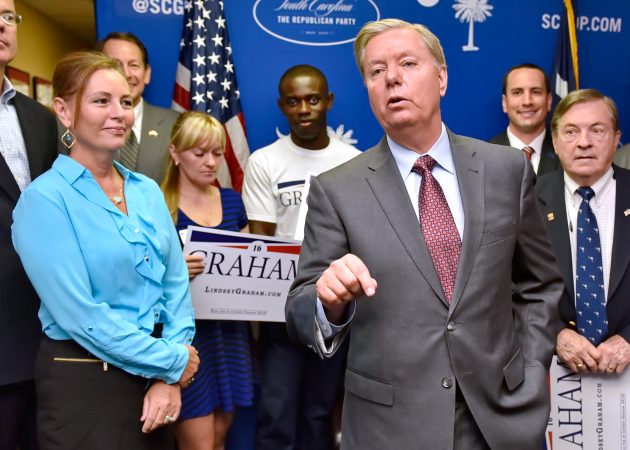
    COLUMBIA, S.C. — Lindsey Graham’s sister, Darline Graham Nordone, has been named as her late brother’s temporary replacement in the U.S. Senate.

    South Carolina Gov. Henry McMaster announced at a news conference at the Statehouse on Monday that Nordone would serve the remaining months on Graham’s current term, which expires in January. A person familiar with the appointment process but not authorized to speak about it publicly said Nardone would be sworn in Wednesday. She will be the first woman to represent the state in the U.S. Senate.

    “It is such an honor,” Nordone said. “Lindsey has always been there for me. And now, I will be there for him.”

    Graham died over the weekend at age 71. He never married or had a family of his own, but Nordone was often by her brother’s side for the political touch points of his career, speaking at events and appearing in some of his campaign ads.

    After their parents died at a young age, Graham was left to raise his sister, for whom he later became legal guardian. They were very close, and she was there as he filed reelection paperwork earlier this year, along with her children and grandchildren.

    A special election will be held next month to pick a new Republican nominee in the general election for Graham’s seat. He had been seeking a fifth term this year.

    The rare open Senate seat has ignited a scramble among South Carolina’s most ambitious conservatives, who have been eager to climb the political ladder.

    Republicans just finished a sprawling and bruising contest to figure out their nominee for succeeding McMaster, who is wrapping up his second term. State Attorney General Alan Wilson won the nomination, overcoming a field that included Lt. Gov. Pamela Evette, Rep. Nancy Mace, and Ralph Norman — all of whom are now eyeing Graham’s seat following his death over the weekend.

    How will a special primary work?

    According to South Carolina law, a one-week filing period for a special primary election begins on the second Tuesday after the candidate’s death, or July 21.

    The special primary election would be held on the second Tuesday after that filing period closes, or Aug. 11. Any necessary runoff would follow two weeks after that, or Aug. 25.

    From that point, the new nominee would have just over two months to campaign for the general election on Nov. 3.

    All of this is problematic according to federal law, which requires military and overseas ballots to go out 45 days before any federal election. For the special election primary, that would have been June 27. Federal Election Commission officials didn’t immediately return a message seeking clarity about the process.

    Who could replace Graham permanently?

    Graham died on Saturday night, and a preliminary medical examiner report said he suffered a tear in his aorta, known as an aortic dissection.

    In the hours after Graham’s death was announced, South Carolina’s Republican circles were already swirling with rumors about possible replacements.

    Evette, who has served nearly eight years alongside McMaster and received his endorsement in the governor’s race, is one possibility. She lost the June 23 runoff to Wilson.

    A person with knowledge of Evette’s thinking but not authorized to discuss it publicly said that she was getting encouragement from across the state and feels she would have good chances in the special primary.

    A person with knowledge of Mace’s thinking but not authorized to speak about it publicly said she was considering the race. Mace is not running for reelection to the House.

    But another Republican from the state, Rep. Russell Fry, could be a possibility. The two-term lawmaker represents the growing area around Myrtle Beach, and he’s been a top Trump ally.

    Businessperson Mark Lynch, whom Graham defeated in the primary, could also jump into the race. A person familiar with but not authorized to speak publicly about the thinking of Mark Sanford — South Carolina’s former governor who also served two separate stints in the U.S. House — said he was considering it, too.

    Treasury Secretary Scott Bessent, who lived in South Carolina before joining the Trump administration, has fielded calls about potentially replacing Graham but doesn’t have interest in the role and enjoys working for the president, according to a person who insisted on anonymity to describe private conversations.

    How does Graham’s death affect the general election?

    No Democrat has won a Senate seat in South Carolina in decades, and Republicans in recent history typically take statewide seats by double digits. When he last ran in 2020, Graham defeated his Democratic opponent, Jaime Harrison, by a 10 percentage-point margin.

    So while history suggests that Graham was en route to a fifth term, Republicans are carefully surveying the landscape.

    Charleston pediatrician Annie Andrews won the Democratic nomination last month and has raised more than $8 million in the race, and she had just under $3 million cash on hand at the end of May, according to federal filings. Graham had taken in $6 million, with just over $4 million on hand.

    In a statement Sunday, Andrews called on South Carolinians to join her “in setting partisanship aside and offering gratitude” to Graham for his service.

    What happens to South Carolina’s Republican clout?

    Graham leaves a major void in the Senate, where seniority can determine influence. He served more than two decades in the chamber, positioning himself to lead committees and set the agenda.

    Tim Scott, South Carolina’s junior senator, has been in office only since 2012 — short by the state’s standards. Fritz Hollings served for 38 years, and Strom Thurmond was there for 47.

    Scott, who co-chaired Graham’s reelection effort, described his former colleague as “irreplaceable.”

    “America lost a statesman, but I lost a friend,” he told ABC’s This Week.

  • Blanche stares down confirmation hurdle of lingering GOP doubts

    Blanche stares down confirmation hurdle of lingering GOP doubts

    WASHINGTON — Sen. Thom Tillis (R., N.C.), who is still undecided about Todd Blanche’s nomination as permanent attorney general, drew a red line last month: He would vote no if Blanche was too soft on the rioters who had ransacked the Capitol on Jan. 6, 2021.

    Soon after, Tillis, a moderate on the Senate Judiciary Committee, said he had a “positive predisposition” after meeting with Blanche, despite the fact that the acting attorney general had recently signed off on a $1.8 billion fund that could have been funneled to those who stormed Congress.

    Just a single no vote from a Republican would deadlock the committee and effectively sink the confirmation of Blanche, who became the Justice Department’s acting leader after Pam Bondi was fired in April. That gives Republicans on the panel rare leverage to extract concrete concessions from Blanche, 51.

    Whether they will use that leverage is arguably the biggest wild card before Blanche’s high-stakes confirmation hearing on Wednesday.

    It is not yet clear how the death of a committee member, Sen. Lindsey Graham (R., S.C.) late Saturday, will affect the timing of the hearing — or who will be chosen by leadership to replace him on the panel.

    “Blanche tries to dress it up, but at the end of the day, he’s just Donald Trump’s personal lawyer, and that is all he will ever be,” said Sen. Chris Van Hollen (D.,Md.), who squared off in May against Blanche in a contentious hearing that centered on creation of the compensation fund.

    Republicans are not in revolt, but they are restless. During a testy confrontation in late May, Republican senators lambasted Blanche for agreeing to create what critics have described as a “slush fund.” The deal forced them to defend a related provision shielding Trump and his family from tax investigations that might be worth more than $100 million to the president.

    Blanche quickly backtracked from the fund proposal, telling lawmakers during a June 2 hearing before the House, “We are not moving forward with the fund, period.” But Democrats have pointed to his flat refusal to put his reversal in writing as an indication that he could devise an alternative.

    In private meetings, Blanche has repeatedly told senators the fund plan was “dead,” at times repeating the word three times for emphasis, according to people familiar with the conversations. But he has given no indication that he intends to scrap the part of the agreement offering immunity on past IRS audits.

    On Monday the federal judge who oversaw the case, Kathleen M. Williams, issued a scathing decision calling the lawsuit an improper exercise in self-dealing, and criticizing Blanche for his actions.

    The tax provision has emerged as a major sticking point for another Republican on the Judiciary Committee, Sen. John Cornyn of Texas, who lost a primary election this spring.

    Unlike Tillis, Cornyn has not yet indicated how he is leaning and has requested a follow-up briefing on the tax issue. “I will not make a decision on confirmation until after that briefing and completion of his hearing before the committee,” Cornyn wrote in a recent social media post.

    Cornyn and Tillis have also questioned Blanche’s independence from White House control. Tillis, who is retiring next year, warned Blanche during an interview on CNN that he would oppose his nomination if he detected “even a whiff of a lack of independence.”

    Democrats say there has been a waft, not a whiff. They see the hearing as an opportunity for the committee’s Republican majority to reassert legislative authority over a department they regard as a cabal of Trump’s former personal lawyers acting in his interests, rather than for the public good.

    “A lot depends on how much Trump baggage Republicans want to carry into the November election,” said Sen. Sheldon Whitehouse (D., R.I.), who serves on the committee.

    The committee, led by Sen. Chuck Grassley of Iowa, has pushed through Trump appointees, even those Republicans have criticized — like FBI Director Kash Patel — after extracting vague assurances from the nominees that they would safeguard the department’s tradition of independence and abide by the rule of law.

    Blanche is unique among recent Cabinet nominees in that he is basically seeking confirmation for a job he has already been doing for a year and a half, first as the deputy attorney general, then as acting attorney general.

    Allies of Blanche believed he could simultaneously restore stability and competence to the department in the wake of Bondi’s turbulent tenure — and take a handful of calibrated actions sufficiently drastic to convince Trump he was tough enough.

    He has been a compliant if not always gung-ho executor of Trump’s demand that the department open investigations against his perceived enemies and let friends off the hook. He played a major role, along with Bondi, in protecting the president during the furor over the Jeffrey Epstein files, vetting documents for Trump-related material and personally interviewing Epstein’s longtime associate, Ghislaine Maxwell, in prison.

    During his monthslong audition for the job, he trumpeted Trump’s false claims of election fraud and greenlit the prosecution of former FBI Director James Comey, for posting an image of seashells on a beach spelling out “86 47.” He oversaw the drafting of the $1.8 billion fund that spurred a powerful backlash in his own party.

    Blanche has a mixed record when it comes to the attacks on the Capitol in the wake of Trump’s defeat in 2020, the issue Tillis has identified as dispositive for his support.

    It is not clear what Blanche, a former federal prosecutor in New York, thought of Trump’s decision to offer broad clemency or pardons to hundreds of rioters convicted of crimes. He has not talked about it much. But there is no indication he protested to anyone in the White House, and he has often diverted questions about its moral and political implications, citing Trump’s nearly unrestricted pardon power under the Constitution.

    No one can last long in Trump’s orbit while offering frank criticism about the Jan. 6 rioters — or, for that matter, the riot itself.

    But as Bondi’s deputy, he repeatedly clashed with the department’s most outspoken defender of the Jan. 6 rioters, Ed Martin, a right-wing lawyer from Missouri who raised money for many of the participants and even defended some in court.

    Martin, who now serves as the department’s pardon attorney, was one of the first officials to back the idea of paying restitution to the Jan. 6 rioters, claiming they had been wronged by the criminal justice system. But Blanche shut down that proposal, according to allies of Martin and lawyers who helped the rioters file claims against the government.

    He has since been more equivocal, however, holding up the presidential pardons during an appearance in March at the Conservative Political Action Conference as a prime example of the Trump administration helping those rioters who faced excessively aggressive prosecution.

    Nonetheless, criticism from Martin’s allies persists. Jonathan Gross, a rabbi and lawyer who represented several Jan. 6 defendants before working in the Justice Department’s civil rights division, has been particularly vocal. Gross, who has left the department, claimed that Blanche stood in the way of efforts to investigate and expose wrongdoing by the prosecutors who worked on Jan. 6 cases.

    Even if Blanche’s nomination were to make it out of the Judiciary Committee, he would still face the uncertainties of a floor vote. He could only afford to lose four Republicans if all Democrats vote no — three if Sen. Mitch McConnell (R., Ky.), who has remained hospitalized, is a no-show.

    Another senator on the committee who could complicate the confirmation is Josh Hawley (R., Mo.,) who is typically in lock step with the White House. Hawley has criticized the department for failing to restrict access to abortion pills by mail — part of a campaign spearheaded by his wife, a conservative lawyer who argued a case involving the medication before the Supreme Court.

    Blanche has met with many of the Republicans on the committee and said he was open to meeting with all the Democrats, too. Only a couple have taken him up on his offer, including Sens. Richard Blumenthal of Connecticut and Alex Padilla of California.

    Blanche also met with Sen. Lisa Murkowski of Alaska, one of the few Republicans to criticize Trump publicly. Their conversation was cordial, but Murkowski asked him pointed questions about his handling of the Epstein files, a person with knowledge of the exchange said.

    Blanche made his first visit to the state last week, for a previously scheduled listening tour aimed at addressing violent crime, fentanyl traffic, and cutting regulations on the state’s critical energy sector. Questions about his confirmation followed him north.

    During a sit-down interview with a local TV station, Blanche wryly dismissed a scathing letter, signed by 1,200 former department employees, calling on the Senate to reject his nomination.

    “There’s 1,200 former DOJ employees, I think, out of what — 40,000?” he said. “I’m not a math guy, but that’s not a very high percentage.”

    This article originally appeared in the New York Times.

  • Judge says Trump IRS lawsuit was filed for ‘improper purpose,’ refers lawyer for possible discipline

    Judge says Trump IRS lawsuit was filed for ‘improper purpose,’ refers lawyer for possible discipline

    WASHINGTON — President Donald Trump’s lawsuit against the Internal Revenue Service over his leaked tax returns was filed for an “improper purpose,” a judge said Monday in a scathing decision that referred one of his lawyers for potential disciplinary action and characterized the $10 billion complaint as an exercise in self-dealing.

    U.S. District Judge Kathleen Williams accused Trump and his lawyers of having manipulated the court system when he sued a federal agency under his control, bypassing a requirement that parties in a lawsuit must have adverse interests and laying the groundwork for a settlement that granted him immunity from tax audits and created a fund to compensate allies of the president who say they were unjustly persecuted.

    The judge stopped short of explicitly voiding the deal shielding Trump from tax scrutiny but said the government cannot claim that the agreement was the result of a legitimate legal process.

    “Whether Executive Branch actors can privately agree to give themselves and their former clients blanket immunities and billions of dollars in tax monies for legally undefined grievances was never an issue advanced to this Court,” said Williams, an appointee of President Barack Obama. “The question is whether the Parties could do so by claiming to be adverse and engaging the legitimacy of a court proceeding. The answer is a resounding ‘no.’”

    Ruling comes just ahead of key confirmation hearing

    Though the practical impacts of the ruling may be limited since the lawsuit was withdrawn months ago and the administration had already abandoned the $1.776 billion Anti-Weaponization Fund that came out of it, the order nonetheless amounts to a scathing rebuke and tees up a politically uncomfortable line of questioning for Acting Attorney General Todd Blanche as faces the Senate Judiciary Committee for his confirmation hearing on Wednesday.

    “The nature of the suit itself and the conduct of the Parties and counsel from its filing make plain that this was an attempt to use the Court to provide some legitimacy to an agreement to confer immunity to people and entities affiliated with the President and to earmark billions of dollars from American taxpayers to redress grievances not defined in the law,” Williams wrote in her ruling.

    She added: “The President may be the functional ‘dominus litus’ of the Executive Branch, but as a party to a civil suit, he, as well as all the parties and lawyers before a court, are bound by the rules. Ensuring that our courts are used only for the express purpose created by the Constitution is the obligation of every judge and an obligation that this Court must discharge in light of the matter before it.”

    The suit against the IRS and Treasury Department in January accused the federal agencies of a failure to prevent a leak of the president’s tax information to news outlets between 2018 and 2020.

    In May, however, the administration announced that it was settling the case and creating a fund to compensate people who believe they’ve been mistreated by the criminal justice system. The fund was quickly shelved amid bipartisan backlash, though the Trump administration has said it intends to proceed with a separate element of the deal affording Trump and family members protection from audits.

    From the start, the judge had appeared skeptical of the complaint and assigned a group of attorneys to determine whether there was a conflict in the case since, as sitting president, Trump was suing “entities whose decisions are subject to his direction.”

    Even after the settlement was revealed, she directed Trump attorneys to lay out their positions on whether the parties in the case were truly adverse to each other, whether the settlement was premised on fraud, and whether the case should be reopened.

    She made clear in her ruling that she was not satisfied by the lawyers’ answers.

    “After a review of the record, and the Parties’ statements, the Court declines to adopt or accept the credulous exercise of divorcing President Trump’s current job title from an understanding of what happened here,” she wrote.

    Ruling also raises the possibility of disciplinary actions

    The judge referred Trump attorney Alejandro Brito, who filed the case, for possible disciplinary action before the state bar in Florida and said another lawyer, Daniel Epstein, will not be granted permission to file within the Southern District of Florida for up to a year.

    A spokesperson for the Trump legal team responded to a request seeking comment from Brito with a statement that blamed the IRS for allowing his tax returns to be leaked.

    The judge also ordered that her ruling be sent to the state bars in New York and the District of Columbia, where ethics complaints have been filed against Blanche and Associate Attorney General Stanley Woodward.

    Williams pointed to Blanche’s congressional testimony in early June in which he revealed that the anti-weaponization fund was no longer moving forward. Though nothing had been filed in court, Blanche appeared confident in his testimony that he “could speak for, and bind, both sides of this matter,” Williams said.

    “Acting Attorney General Blanche’s apparent capacity to speak for both Plaintiffs and Defendants, sign a ‘settlement’ document on behalf of all Parties to this action, and then repudiate part of that agreement, demonstrates that there was only one party whose interests were being represented throughout this case,” the judge wrote.

    The judge also raised ethical concerns about Blanche and Woodward’s involvement in the settlement given Blanche’s past representation of Trump as well as Woodward’s previous defense of Jan. 6 defendants and a co-defendant in Trump’s classified documents case.

    “Instead of either recusing because of their previous representations or vigorously defending this lawsuit as required to do so by DOJ policies and procedures, these lawyers agreed to a ‘settlement’ involving a staggering amount of money potentially benefitting former clients,” she said.

    Blanche denied in a CNN interview last spring that he had come up with the settlement terms, saying, “The president has outside counsel, and their counsel, the Department of Justice, not me.”

  • U.S. attacks Iran and Tehran retaliates across the Middle East as both vie for control of strait

    U.S. attacks Iran and Tehran retaliates across the Middle East as both vie for control of strait

    DUBAI, United Arab Emirates — The U.S. launched strikes on Iran early Tuesday morning, hours after President Donald Trump said Washington is “reinstating” a blockade on Iran in the Strait of Hormuz. Trump separately suggested the United States will charge other ships for safe passage, upending hundreds of years of American policy supporting freedom of navigation across the globe.

    Iran responded with attacks targeting Bahrain, Jordan and two tankers associated with the United Arab Emirates traveling through the strait, killing one mariner and wounding eight others. The Emirates threatened to retaliate against Iran, potentially drawing the nation home to Abu Dhabi and Dubai back into fighting with Tehran.

    The attacks come as Iran and the U.S. both vie for control of the strait through which a fifth of all traded crude oil and natural gas once passed in peacetime. The price of benchmark Brent crude oil rose to a one-month high of over $84 in trading early Tuesday, still well below the nearly $120 reached at the height of the war but threatening to make costs everywhere higher.

    Trump insists strait will be open

    The U.S. military’s Central Command said it struck areas around Abu Musa, Bandar Abbas, Bushehr, Chahbahar, Jask and Konarak, targeting Iranian “coastal defense systems, missile and drone sites and maritime capabilities.” Iran acknowledged strikes around those areas, but provided no immediate casualty or damage assessments.

    “These strikes will continue imposing a heavy cost on Iranian forces and degrade their ability to attack innocent civilians and commercial shipping in the Strait of Hormuz,” the U.S. military said.

    Moments after the military announced the new strikes, Trump called it “another major attack.”

    “We’re hitting them very hard. And it’ll continue, and we’ll see what happens,” he told reporters in the Oval Office. “We’re knocking out all of their offensive capability and we’re controlling the straits. We’re putting the blockade back.”

    Trump also provided new details on his administration doing an about-face and suggesting it will charge tolls for ships going through the strait, after previously suggesting that it wouldn’t.

    “We’re protecting a very rich portion of the world,” he said. “We’re spending money. And so, what we’ve done is, we are going to be reimbursed for protection.”

    It’s a change in U.S. policy that, until now, said the strait should remain open to all without tolls — as it was before the U.S. and Israel attacked Iran on Feb. 28. Any attempt by the U.S. or Iran to charge fees would violate global norms on freedom of navigation and raise tensions, likely causing further economic disruption far beyond the region.

    The U.S. Navy has fought for freedom of navigation on the seas since the Barbary Wars and the War of 1812.

    Attacks resume across the Mideast

    The United Arab Emirates’ Defense Ministry said early Tuesday that Iran attacked two tankers in the Strait of Hormuz, killing one mariner and wounding eight others.

    The Emirati Defense Ministry said Iran launched two cruise missiles at the tankers Mombasa and Al Bahiyah.

    The attacks set both tankers ablaze, though the fires were extinguished.

    Iran’s paramilitary Revolutionary Guard claimed the attack on the tankers, saying the vessels “ignored repeated warnings.”

    “They chose to pass through a minefield and were subsequently targeted and disabled,” the Guard said.

    Bahrain also came under renewed attack early Tuesday morning as Iran retaliated over the latest round of U.S. airstrikes. Bahrain sounded its missile alert sirens twice, urging the public to seek shelter. There was no word on any damage or casualties from the attack.

    The Emirati Defense Ministry said the attack on the tankers killed one Indian national and wounded six Indians and two Ukrainians.

    “The UAE reserves its full right to respond to this escalation and to take all necessary measures to protect its territory, its citizens and residents,” the Defense Ministry added.

    The Emirates used similar language before launching attacks against Iran during the war. Fighter jets could be heard overheard Tuesday morning in Dubai.

    The U.S. Embassy in Abu Dhabi and the U.S. Consulate in Dubai alerted Americans early Tuesday that consular appointments had been canceled through Wednesday “due to the regional security situation.”

    Jordan’s military said it intercepted four missiles from Iran, according to a statement carried by the kingdom’s state-run Petra news agency. Jordan hosts U.S. forces and has come under attack by Tehran in recent days.

    Trump says Iran failed a test

    Earlier Monday, Trump told conservative radio host Hugh Hewitt that the agreement reached last month was “built to test” Iran, adding that “when you’re dealing with sleazebags (agreements) don’t mean much.”

    “They didn’t honor the test,” the president said.

    Iran asserts it has the right to manage traffic through the strait and potentially charge fees in accordance with the interim peace deal. The U.S. has disputed that.

    The American military and the United Nations’ International Maritime Organization have tried to establish a route through the strait along the coast of Oman that would be outside of Iranian control. Iran has attacked ships using that route, saying the U.S. is violating the interim peace deal. The U.S. has attacked Iran in response, drawing Iranian attacks on U.S.-allied Arab states.

    Exchanges of fire in recent days had already cast further doubt on the interim peace deal. Washington had lifted a blockade it imposed in mid-April as part of that deal, which also called for the strait to be fully reopened.

    “We are reinstating the THE IRANIAN BLOCKADE,” Trump said on social media. “All other countries will have fair and open use of the Strait.”

    The president said the U.S. would be “reimbursed” by 20% of the value of cargo to help cover “any and all costs necessary to do the job of providing safety and security.”

    The U.S. military said it will resume its blockade of Iranian ports at midnight local Wednesday in Dubai.