ATLANTA — Defending champion Argentina rallied to beat England 2-1 on Wednesday and reach the World Cup final.
Trailing 1-0 heading into the final five minutes of regulation, Enzo Fernández and substitute Lautaro Martínez scored for Argentina.
Argentina will play Spain in the World Cup final in East Rutherford, N.J. on Sunday (3 p.m., Fox29), while England will take on France in the consolation game on Saturday (3 p.m., Fox29).
Anthony Gordon had given England the lead in the first half. Still, Lionel Messi and Co. rallied for the third straight game, winning down the wire now against Cape Verde in the Round of 16, Egypt in the quarterfinals, and now, England, which was just five minutes plus added time of qualifying for their first World Cup final since they won it all in 1966.
Argentina pushed for an equalizer, and the pressure eventually led to Fernandez scoring in the 85th minute. Martinez headed in the winner two minutes into injury time.
The game resumed one of the biggest rivalries in international soccer, and there was a raucous atmosphere in the stadium even before kickoff as both sets of fans tried to drown out the other team’s national anthem.
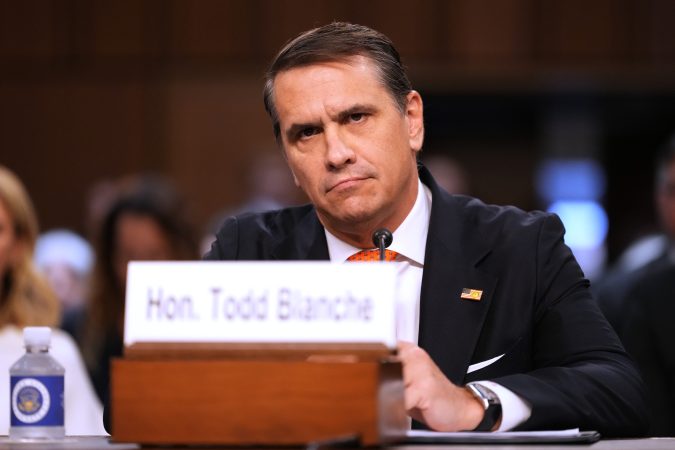
Blanche insisted that the $1.776 billion “Anti-Weaponization Fund,” which was scrapped after fierce bipartisan backlash, was “not moving forward.” But lawmakers, including Republican Sen. John Cornyn, conveyed concerns that the Trump administration has yet to commit in writing that the fund is dead and could therefore conceivably be resurrected.
“Just to be clear, the president of the United States, who’s a plaintiff in this lawsuit, has not agreed in writing to delete the ‘Anti-Weaponization Fund’ and there’s no guarantee that he won’t raise it in the future?” Cornyn asked. Blanche replied that Trump has no power over the fund, which was to have been administered by the Justice Department but never launched.
Cornyn’s questions were closely watched since Blanche requires the backing of all Republicans on the Judiciary Committee and the Texas senator has not committed his support.
The hearing arrived at a tumultuous time for the Justice Department, with mass firings and resignations hollowing out the workforce and Democrats and other critics raising alarms that Blanche is still functioning as the president’s personal lawyer. He has led the department on an interim basis since April, functioning as the public face of the maligned and later-withdrawn fund and accelerating investigations into perceived Trump adversaries.
Even as he said the fund had been shelved, he made clear that immunity from tax audits afforded to Trump this year remained in place.
“You’re in charge of a Department of Justice I don’t recognize, prosecuting the president’s political enemies, firing rank and file prosecutors and FBI agents,” Democratic Sen. Chris Coons of Delaware told Blanche. “These are some actions that in your previous confirmation hearing before us, you said you would not take.”
Blanche, for his part, insisted he has presided over a course correction following Justice Department investigations into Trump during the Biden administration.
“In recent years, we watched the Justice Department turned against many of you and a former president, and it damaged the public’s faith in justice,” Blanche argued. “We are fixing that.”
Blanche will need the support of each Republican on the panel
Key to Blanche’s confirmation are Cornyn of Texas, who in May lost his primary, and Sen. Thom Tillis, a North Carolina Republican who has opted not to seek reelection. Entering the final stretches of their Senate career, both are seen as more likely than before to split from Trump and both have been outspoken critics of the fund the Trump administration created to compensate people who feel unjustly persecuted by the criminal justice system.
After questioning Blanche about the fund, Cornyn told CNN he continues “to have some concerns” and is not “going to make any decisions at this point.” Tillis, meanwhile, indicated during questioning that he is likely to support Blanche, even as he said he wanted “to stick a fork in this turkey of a 1776 fund.”
The death of South Carolina Republican Sen. Lindsey Graham, who was a member of the committee, level 11 Republicans and 10 Democrats on the panel. A no-vote by even a single Republican on the committee could scuttle his nomination.
Blanche insists the fund is dead. Lawmakers aren’t so sure
The fund emerged from a settlement of Trump’s $10 billion lawsuit against the Internal Revenue Service over his leaked tax returns. Blanche had initially defended the initiative only to later reveal that it was being scrapped following fierce bipartisan backlash.
The judge who presided over the case said in a scathing ruling Monday that Trump and his lawyers had manipulated the court system through the lawsuit and subsequent settlement and said she was troubled Blanche had signed the settlement given his prior representation of Trump and was concerned he had given misleading testimony. Blanche said Wednesday that he disagreed “with the judge’s insinuations about me.”
Blanche also defended a separate element of the settlement that afforded Trump and members of his family protection from tax audits and that, he has said, remains on track despite outrage over it even from Republicans. Blanche said the deal covers any existing audits but does not protect the president from examination of future tax filings.
“Nobody is above the law,” Blanche said. Such a settlement “doesn’t make any of those individuals above the law.”
Epstein files are also under scrutiny
Blanche was also pressed on the department’s staggered release of the Epstein files, a process beset by problems, including redaction errors that left exposed nude photos showing the faces of potential victims.
During a podcast interview with Joe Rogan released Wednesday, Vice President JD Vance said the administration “absolutely” mishandled the communications surrounding the files, including when then-Attorney General Pam Bondi distributed binders of Epstein documents at the White House to far-right influencers that contained already-public material.
Blanche acknowledged that “mistakes were made” in the release process but nonetheless defended the work.
“I want to make sure that the American people know that this administration, when it comes to Jeffrey Epstein, has been more transparent than any administration,” he said. The Justice Department only released additional files after Trump bowed to bipartisan pressure to sign a law forcing the department to do so.
A former federal prosecutor and key member of Trump’s defense team as the Republican battled four indictments, Blanche arrived at the Justice Department last year as deputy attorney general. At one point, under friendly questioning from Republican Sen. John Kennedy about whether he and Trump are friends, Blanche responded: “I’m his lawyer,” before quickly correcting himself to say he “was his lawyer.”
He ascended to the top job in April after Trump ousted Bondi, who had frustrated the White House by struggling to bring successful cases against Trump’s political opponents. Blanche has tried to satisfy Trump in that regard, including with an indictment of ex-FBI Director James Comey, another Trump adversary, on charges of threatening the 47th president by posting a social media photograph of seashells in the numerical arrangement of “86 47.”
Comey has said the numbers were not a call to violence.
Blanche was also asked about Jan. 6 violence
Tillis, who has said he would not support for attorney general anyone who equivocates on the events of Jan. 6, 2021, when pro-Trump rioters stormed the U.S. Capitol, denounced the Biden administration Justice Department for what he said were excessive prosecutions and punishments.
Democrats, meanwhile, pressed Blanche on the violence and Trump’s sweeping clemency action benefiting more than 1,500 people, including those convicted of violently attacking police.
Democratic Sen. Sheldon Whitehouse criticized Blanche for comments at a political conference this year where he appeared to characterize the Jan. 6 pardons as an administration accomplishment. Blanche replied that he has “never said that any sort of violence against law enforcement is appropriate.”
“He has the absolute right to pardon anybody for any reason he sees fit,” Blanche said of the president. “I am not celebrating that. It is a fact.”
WASHINGTON — Defense Secretary Pete Hegseth announced Wednesday that he is rolling out a new screening program for “testosterone deficiency” among troops, calling it necessary to allow them to operate at their “absolute best.”
The screenings will be conducted annually as part of service members’ required medical screenings for those 30 and older, he said. Troops under 30 can volunteer to be tested. In a video on social media, Hegseth said receiving testosterone replacement therapy would be voluntary.
In the video, Hegseth simply refers to troops, though it appears he is talking about only testing men in uniform for hormone irregularities.
The move comes as other Trump administration officials have begun to advocate for men to have easier access to testosterone replacement therapies, but the messaging from Hegseth and others blends known science on the hormone with broader, and less substantiated, claims.
When asked about what conditions Hegseth was looking to address with the new policy, the Pentagon referred to Hegseth’s remarks in the video that mentioned keeping troops “strong, resilient, and capable” and that the rigors of the modern battlefield demand “maximum psychological and mental readiness.”
Over the past several years, special operations troops — and specifically Navy SEALs — have come under scrutiny for their use of testosterone and similar substances to enhance performance.
The death of a SEAL recruit during training in 2022 led to a discovery of substances in his possession, including testosterone, and revealed far more rampant drug use among the elite program than was previously acknowledged.
A year after the recruit’s death, the Navy said it would begin a drug-testing program to screen for “any hormonal substance, chemically or pharmacologically related to testosterone, that promotes muscle growth.”
Hegseth said his new initiative is “not about artificial enhancement.”
The Pentagon did not respond to questions about what research or academic studies underpinned the move. It also didn’t say if female troops would be able to be evaluated for estrogen-based therapy as they entered perimenopause.
Testosterone levels in men decline naturally with age and have long been linked to issues like erectile dysfunction, low libido, mood changes, and weight gain. But experts have debated for years how to diagnose those problems and whether they should be treated by replacing the hormone.
Hegseth’s announcement comes as Health Secretary Robert F. Kennedy Jr. and other Trump administration officials are moving to make it easier for doctors to prescribe testosterone. Last month, the Food and Drug Administration proposed easing prescribing limits on testosterone gels, pills, patches, and injections.
The current FDA label specifies that the medications are only for men with hypogonadism, a medical condition that causes drastically low testosterone.
But many influencers and proponents of Kennedy’s “Make America Healthy Again” movement tout testosterone as a way to look younger, build muscle, and stay mentally sharp — although those uses aren’t accepted by most medical experts.
Still, recent studies have bolstered the case for testosterone’s benefits, for certain conditions, while allaying worries about its safety — particularly concerns about heart safety.
Last year, the FDA removed a boxed warning about possible risks of heart attack and stroke from the drugs.
Separately, a series of studies by the National Institutes of Health in older men found that taking testosterone improved erectile dysfunction, libido, and other sexual measures and had a small effect on mood. But there was little or no improvement in other measures like fatigue, memory or overall well-being.
Other studies have shown potential improvements in muscle-building, strength and bone density.
However, current medical guidelines generally recommend against blanket testing of testosterone levels. Typically, doctors are advised to discuss testosterone therapy with men who have troubling symptoms and documented low levels of the hormone on two separate blood tests.
Testing for testosterone is challenging because levels of the hormone fluctuate throughout the day. Accurate testosterone readings are typically measured in the morning after fasting.
Rep. Chrissy Houlahan, a Pennsylvania Democrat and Air Force veteran, said the “announcement proves that Secretary Hegseth takes direction from the far corners of the manosphere.”
The congresswoman on the House Armed Services Committee said she hoped testosterone testing “will be available for both men and women and that servicewomen will be afforded access to the same resources to enable them too to be the most elite warriors” on Earth.
He has made other changes related to the medical treatment of troops.
In April, he announced the repeal of the military’s long-standing flu vaccine mandate, citing “medical autonomy” and religious freedom. In June, a flu outbreak at the U.S. Air Force’s boot camp sickened at least nearly 300 people.
WASHINGTON — President Donald Trump wants Immigration and Customs Enforcement officers to keep pulling over vehicles, signaling his opposition Wednesday to plans announced just a day earlier to suspend most traffic stops following another string of fatal shootings.
It’s not clear whether ICE will quickly reverse course and resume most stops, which have been a key tool in Trump’s immigration crackdown.
Ending those stops, Trump wrote, would be “playing right into the criminal’s hands.”
“We CANNOT give up one of ICE’s most important and effective Crime Fighting tools, THE TRAFFIC STOP!” Trump wrote Wednesday on his social media site.
Hours after Trump made his views known, Homeland Security Secretary Markwayne Mullin issued his own statement saying people illegally in the country would be “arrested and deported wherever they are.” But Mullin didn’t directly say whether ICE officers will be allowed to carry out traffic stops.
Before that, two motorists were shot and killed by ICE officers — one in Texas last week and another in Maine on Monday.
After the Maine killing, Trump administration officials told ICE officers to suspend most vehicle stops, people familiar with the decision said Tuesday.
Since the immigration crackdown began, federal officers confronting drivers have opened fire several times, saying the drivers’ vehicles had posed a danger. Policing experts have long said that shooting into moving cars presents a danger of its own and should almost always be avoided.
There have been at least 10 deaths involving encounters with immigration agents since Trump launched his deportation campaign. At least four of them involved people in vehicles, a trend so troubling that Republican U.S. Sen. Susan Collins of Maine urged Department of Homeland Security leaders “to cease all non-urgent vehicle stops.”
Two shootings in a week, she said Wednesday, “raise very serious questions” and warrant a halt in that approach for the time being.
ICE has been under pressure to beef up arrest and deportation numbers. It says people being sought are increasingly staying in their homes, and it often blames immigration advocates who advise immigrants to stay in homes unless ICE produces a warrant signed by an independent judge.
ICE officers say that means they’re forced to find other ways to make arrests.
DHS says the man killed in Maine came to the U.S. illegally
More protests are planned after hundreds gathered Tuesday to remember Johan Sebastián Durán Guerrero, the 25-year-old Colombian national who was shot in his car Monday.
Karolina Rojas, his partner and the mother of their young daughter, shared a photo on Instagram of the three hugging and smiling.
“I love you, my darling, my life. I love you. I have no words for this pain. You were my everything. Please watch over me. Help me find the strength to carry on. Stay with me always. Don’t leave me alone. I’m begging you, my love,” she wrote.
Durán Guerrero illegally entered the U.S. on Sept. 1, 2023, through the southern border, DHS said Wednesday. Advocacy groups said that when he was killed, he was authorized to work in the U.S.
Sen. Angus King (Ind., Maine) said the Homeland Security secretary told him on Monday that ICE officers were in Biddeford to serve an arrest warrant but that it wasn’t for the person who was shot.
When ICE tried to stop a vehicle driven by someone who came from a home under surveillance, the “vehicle attempted to flee the scene and, fearing for public safety, an officer discharged his weapon,” the department said.
It its statement Wednesday, DHS said Guerrero was released into the U.S. after crossing the border.
The department didn’t answer questions about the agent who shot him.
Photos showed bullet holes in Durán Guerrero’s car windshield, but the officers involved didn’t have body cameras, leaving many questions.
Maine shooting puts a spotlight on ICE
Outgoing Colombian President Gustavo Petro called the shooting of Durán Guerrero a targeted killing “at the hands of the U.S. government.”
In Wednesday’s social media post, Trump told ICE to be “judicious, fair and smart, and go back and do your very important job.”
Border czar Tom Homan told reporters that the investigation needs to play out and that officers will be held accountable if they are found to have acted inappropriately or illegally.
Maine’s Democratic governor, Janet Mills, said ICE should be scrapped as a federal agency if it can’t be fixed.
Mills, who has criticized ICE before, said Wednesday that the agency needs changes “before more families are robbed of a loved one.”
LONDON — For chief executives and business owners around the world, the Iran war is hammering home an essential reality that they are operating in a world that is riskier and more unpredictable.
And that also means more expensive. Even if the attacks end, the increased cost of doing business will linger. Higher prices look to be a long-lasting side effect of the war in Iran.
Every business leader is saying, “I need to get myself options,” said Kevin O’Marah, chief research officer at Zero100, a firm that does research on supply chains. The urgency is felt by executives across sectors from pharmaceuticals to clothing to electronics.
That means having alternative manufacturers in other locales, stockpiling goods in case of unexpected stoppages and developing new supply chains.
“Flexibility is additional plant capacity, it’s additional pockets of inventory, it’s alternate routes,” he said. “But that flexibility costs money. And that’s inherently inflationary.”
Last week, the International Monetary Fund predicted a fresh bout of global inflation, forecasting a rise to 4.7% in 2026 from 4.1% in 2025 because of higher prices for basics like energy, metals, fertilizer, and food.
A market in Daloa, Ivory Coast, on June 11. The International Monetary Fund expects global inflation to climb in 2026, driven by higher energy and food prices.Finbarr O'Reilly
And those calculations were made when oil prices had mostly returned to their prewar levels, before there was a sharp escalation in hostilities between Iran and the United States and oil prices shot up.
President Donald Trump’s vow this week to extract a 20% fee on all cargo moved through the Strait of Hormuz, if it comes to pass, could double the cost of shipping, analysts say.
With disruptions in the strait, shipping companies such as Maersk have had to employ workarounds. As of June, Maersk had delivered 44,000 containers of goods such as furniture, electronics, and food to Persian Gulf countries by rail and truck.
It’s a cumbersome and costly process. Cargo is unloaded from ships at the Red Sea port of Jeddah, Saudi Arabia. Then it is trucked to Kuwait, Qatar, and Bahrain by drivers who have journeyed from Jordan, Iraq, and Turkey to meet the increased demand.
“That is obviously not the most effective way to do it normally, but if the strait is closed, it is the most effective way to do it,” said Vincent Clerc, CEO of Maersk, adding that the alternative route costs the company about $1,000 extra per container.
If the disruptions continue, either the resulting higher costs will be passed on to consumers or retailers will see eroded profits, Clerc said.
Higher costs caused by disruptions will cut into company profits or be passed on to customers, said Vincent Clerc, the Maersk chief executive.Charlotte de la Fuente
The ripple effect has radiated far beyond the Gulf. The cost of sending a container from Shanghai has edged down from levels they hit in late June and early July.
But rates are high by historical standards, according to Rhenus, a global logistic company. “Despite the recent decline, freight rates still remain 84% higher than a year ago,” the company said in an email.
Southeast Asia has been particularly affected. Higher supply chain costs and delivery interruptions are interfering with manufacturing planning and schedules.
“Longer lead times, higher freight costs and elevated energy costs may add pressure to consumer prices,” Rhenus reported.
Longer routes aren’t the only reason delivery times increased by days or weeks during the crisis. When energy prices shot up, some shipping lines engaged in “slow steaming,” or reducing their speeds to save money on fuel, said Tobias Bartz, CEO of Rhenus.
Insurance costs will also stay at the highest risk levels until there is at least six months of stability, Bartz said. But every time there is an incident, as in recent days, the clock resets.
More important, higher costs won’t all disappear when the current crisis in the Gulf recedes.
The heads of companies like Maersk, based in Copenhagen, Denmark, and French shipper CGM CMA have already said they can no longer depend on a single pathway but must develop alternatives.
“This is the new operating environment,” Promixa, a global procurement and supply chain consultancy, concluded after surveying more than 500 CEOs of companies that generate income of more than $500 million a year.
The mindset isn’t just about reacting quickly when a crisis occurs, but rather “creating and running functions that are permanently crisis-ready.” Almost three-quarters of those surveyed said they would accept a cost increase of more than 10% to guarantee the resilience of their supply chains.
Building that strength into oil and liquefied natural gas delivery routes is much more difficult, time-consuming and expensive. Some efforts, including pipeline expansions by the United Arab Emirates and Saudi Arabia, were already underway before the Iran war.
But the push has been turbocharged. Kuwait is so desperate to find alternatives to the Strait of Hormuz that it is looking at resurrecting a Saudi pipeline that runs through the Israeli-controlled portion of the Golan Heights and hasn’t been used in more than 35 years, said Jamie Ingram, senior editor at Middle East Economic Survey, a weekly newsletter and energy intelligence publication.
Oman is expanding ports outside the strait; Iraq is studying pipeline proposals; Saudi Arabia and Turkey are exploring rail connections between Jordan and Syria. As one analyst described it, a “spaghetti junction” will be taking shape in the Gulf as pipelines, roads, rails, and ports sprout up to make sure that energy can get from producers to customers.
For some new projects, Ingram said, “we’re now entering a new era where the benefits of these investments have gone from being pretty abstract theoretical issues to very concrete tangible quantifiable benefits.”
Oil exporters like Saudi Arabia and importers like India are also investing in more storage capacity outside the Gulf region.
All of which means higher costs.
“We’re now in a world of not economizing for the most efficient option,” said David Goldwyn, a former U.S. diplomat and Energy Department official. “We’re in the world of investing in security and investing in resilience and redundancy.”
The U.S. Mint will soon begin producing a new $1 gold-hued coin with President Donald Trump’s face on it to commemorate America’s 250th birthday, Treasury Secretary Scott Bessent announced this week.
The coin’s face features Trump alongside the phrase “In God We Trust.” It is encircled with the phrases “Liberty” and “1776-2026.” The flip side of the coin shows an eagle holding arrows in one talon and olive branches in the other.
Since the start of his second term, Trump and his allies have pushed to reissue federally created currency and documents to feature the president’s name and likeness. Examples include a commemorative passport with Trump’s image inside its pages and the addition of his signature on newly printed $100 bills. There are also proposals to feature the president’s image on 24-karat gold coins and commemorative $250 bills.
Bessent said in a post on X that the coin “celebrates the strength of American values, and the promise of a nation dedicated to preserving freedom for all.”
A Treasury Department spokesperson said the coin “is in production and minted in Philadelphia, and it will be available in the fall.” They also said that there is no gold in the coin but that it has a gold-like finish.
As America commemorates 250 years of independence, the @usmint will begin striking this new $1 gold coin to honor the enduring legacy of liberty and a lasting symbol of patriotism. Featuring President Trump, it celebrates the strength of American values, and the promise of a… pic.twitter.com/PEMrsGqOEA
— Treasury Secretary Scott Bessent (@SecScottBessent) July 15, 2026
Earlier drafts proposals of the $1 coin showed Trump standing with a clenched right fist in front of an American flag and the words “Fight Fight Fight” — a reference to the 2024 assassination attempt at his campaign rally in Pennsylvania.
When plans for the $1 coin were revealed last year, concerns emerged over whether the proposal to include a living president’s image on U.S. currency could violate the law.
Under a law passed in 2020, the Treasury Department can mint $1 coins during 2026 to mark the 250th anniversary “with designs emblematic of the U.S. semiquincentennial.” However, according to U.S. code, “[o]nly the portrait of a deceased individual may appear on United States currency and securities” — a law that sprang from a Colonial-era tradition against putting current presidents on American coins themselves from the British monarchy.
In addition, the 2020 law states that “[n]o head and shoulders portrait or bust of any person, living or dead, and no portrait of a living person may be included in the design on the reverse of any coin” produced for the Semiquincentennial, which could be violated by having Trump’s image on both sides of the coin.
Bessent argued that the $1 coin design was legal, telling Fox News this week that although he is otherwise barred from featuring a living person’s image on U.S. currency, “during the 150th, there was a Calvin Coolidge coin, so we can put living presidents’ images on a coin.”
The design for the coin also was not what the Commission of Fine Arts, which is composed entirely of Trump appointees, recommended when members met in January. The obverse design recommended by the commission featured Trump’s face in profile, while the final design shows the president with his eyes forward. The treasury secretary has the final say on the design.
Megan Sullivan, the acting chief of the U.S. Mint’s office of design management, said during the January commission meeting that “the legal research has been done both at the Mint and up into Treasury, and they have determined that [the proposed coin featuring Trump’s image] does not violate any laws.”
Sullivan described the coins as being “a little bit larger than a quarter” and being composed of “manganese brass” and displaying as “golden in color.”
The $1 coins are distinct from the 24-karat coins created by the Treasury Department that typically sell for thousands of dollars. Senate Democrats, in June, urged the Trump administration to halt production of that solid gold coin, citing concerns that some of the U.S. Mint’s gold could have links to foreign cartels.
NEW YORK — Former President Joe Biden will publish a memoir, Promise Me, America, which he says will touch upon everything from the economy to his decision to drop his bid for reelection.
The memoir is scheduled to come out Nov. 17, publisher Little, Brown and Company told the Associated Press. The timing of the book — two weeks after midterm elections in which Democrats seek to regain control of Congress — could raise concerns within Biden’s party by putting him back into the spotlight.
Democrats remain divided on Biden’s legacy, with many blaming his ill-fated determination to seek a second term for Republican President Donald Trump’s return to the White House. Leaders hope to keep the fall campaign focused on Trump and his record, and any leaks or promotional efforts before votes are cast could draw frustration.
“Promise Me, America is about the challenges we faced as a nation. It’s about the decisions I made and why I made them,” Biden said in a video statement accompanying Wednesday’s announcement. “It’s about why I chose to run for reelection and why I chose to step aside.”
This book cover image released by Little, Brown and Co. shows “Promise Me, America” by Joe Biden.Uncredited
Reports of Biden’s book have circulated for more than a year, and the former president himself has referred to it during public remarks, appearing to suggest it would be released before November’s election.
Biden, who will turn 84 three days after the publication of Promise Me, America, has long presented himself as an upholder of standards and traditions; presidential memoirs are one of them. With a handful of exceptions, modern presidents since Harry Truman in the 1950s have published books about their White House years. Like virtually all of his predecessors, Biden did not work on the book alone but was helped by a “small editorial team,” according to the publisher. Little, Brown declined to release financial details for Promise Me, America, although presidents have usually reached deals worth at least seven figures.
The book’s title echoes a 2017 memoir by Biden, Promise Me, Dad, which centered on the death of his son, Beau Biden.
Vowing as a candidate to “restore the soul” of his country, Biden was sworn into office in the midst of the COVID-19 pandemic and in the aftermath of the Jan. 6, 2021, attack on the U.S. Capitol by Trump supporters seeking to stop his certification as president. Biden’s term was defined by a wide range of conflicts and achievements, from his handling of wars in Ukraine and the Middle East to the passage of ambitious infrastructure and economic aid bills. But many readers will likely want to know more about his health while president, including the disastrous debate in June 2024 against Trump that led to his giving up his reelection bid. Then-Vice President Kamala Harris, who ran instead, lost decisively to Trump.
Former first lady Jill Biden wrote in her own book that her husband seemed so weak and disoriented during the debate that she feared he was having a stroke. In View from the East Wing, published in June, she noted that the White House had initially said he was suffering from a cold.
“The biggest lesson for us, I think, was that if you don’t explain something well enough then the question won’t go away,” she wrote. “There was never a satisfying enough explanation offered for Joe’s debate performance, and a lot of people never got over it.”
Biden was the oldest man to serve as president and his health was a source of speculation for much of his term; Biden and his White House advisers have faced intense criticism from Democrats and Republicans for allegedly concealing the extent of his problems. A notable book release from 2025, Jake Tapper’s and Alex Thompson’s Original Sin, was subtitled “President Biden’s Decline, Its Cover-Up, and His Disastrous Choice to Run Again.”
That year, Biden announced he had been diagnosed with prostate cancer.
Biden’s previous books also include Promises to Keep, a campaign work published to boost his run for president in 2008, when Barack Obama was the eventual nominee and Biden his running mate. Promise Me, America comes out during a year when nonfiction sales have declined and few political books have caught on, although recent bestsellers have included Vice President JD Vance’s Communion and an inside account of Trump’s second term, by New York Times reporters Maggie Haberman and Jonathan Swan, Regime Change.
A Little, Brown spokesperson said that Biden plans to tour on behalf of the book and give interviews. In his video announcement, Biden said that many people had been asking him how he was doing.
“I’ve been spending a lot of time with my family. I’m dealing with a cancer diagnosis, been getting treatment, and it’s going really well,” he said. “I want to thank all those who have offered their prayers and support and well-wishes. It’s meant the world to me and to Jill.”
Welcome to Terlingua, a ghost town in West Texas, where the dogs roam free, parking spots are suggestions, and the night skies feel infinite.
Full moons are bright enough to read by, and on the darkest nights, the Milky Way casts shadows of local flora on the desert floor.
But with a border wall slated to rise, some residents wonder: How long will the natural darkness last?
Unfettered access to the cosmos is an integral part of the landscape in Terlingua and across the Big Bend region of West Texas. It has fostered a community of dark sky defenders, who regularly ward off threats like too-bright store signs and intrusive car headlights.
Now they’re facing something far greater: the construction of President Donald Trump’s border wall, which residents across the Big Bend fear will bring bright lighting along land that is currently untouched.
Lighting has already been installed along stretches of the border in Arizona and farther east in Texas. “That technology is there, and it is literally a flip of a switch away,” said Billy Bartko, the director of Terlingua’s Far Flung Outdoor Center, “which is what we’re all afraid of.”
For residents along the border, it’s about more than just seeing the stars. The natural darkness symbolizes a lack of development, a rural way of life.
According to David Keller, an archaeologist and Big Bend historian, dark-sky maintenance protects the natural country of the place. “That’s why I’m here, and that’s why most people who live here are here,” he said. “It’s a national treasure. It’s too important to lose.”
The preservation of the Big Bend’s dark skies results from laws enacted as far back as 1975, originally to support astronomy at the region’s McDonald Observatory. In 2012, Big Bend National Park was formally certified as the region’s first dark sky site, followed by a state park and a wildlife area.
Today, those places live inside the largest dark sky reserve on Earth, established in 2022 and spanning more than 9 million acres across the U.S.-Mexico border.
“What that timeline shows you is how long dark sky preservation and conservation has been in the minds of the people managing resources here,” said Amber Harrison, who lives in Terlingua and is a leader of the region’s dark sky protections. Any lighting that comes with the wall, she added, could cause the region to lose its dark sky status.
If widespread enough, the illumination could affect science observations at McDonald, according to Stephen Hummel, who coordinates the observatory’s dark sky outreach. But others are more concerned about what it will do to the character of the land.
“Most of us aren’t worried about if we’re going to be able to haul out our telescopes and see Jupiter tonight,” said Keller, a leader of a local coalition called No Big Bend Wall. “It’s an umbrella for other things.”
The loss could also disrupt a budding economic avenue. Stargazing was the second-most reported activity in the region, according to a tourism survey conducted in 2022.
Cosmic attractions in Big Bend have grown over the last few years, especially in Terlingua.
Visitors can camp out in stargazing pods off the highway and participate in astrophotography workshops through the town’s outdoor center.
A group of locals are digging an amphitheater, part of the new Terlingua Star Park, to begin hosting star parties this fall.
Universe enthusiasts abroad can even ship their telescopes to the park’s remote observatory, which opened this month.
Illumination from the wall could abruptly end those business ventures. “If they light this thing up, it’ll kill the tourism dollar,” Bartko said. Referring to the industrial appearance of the wall, he added, “Who goes to prison for vacation?”
Apprehension about the wall in Big Bend surfaced earlier this year. Shifting information about what is being built where has caused more unease from residents, who say the region’s harsh terrain makes a physical barrier unnecessary.
In a statement to the New York Times, a spokesperson for U.S. Customs and Border Protection said that the wall would include “a mix of lighting based on location and operational needs” and that not all parts would be illuminated. They added that lighting would be avoided in remote areas in favor of “other operationally superior methods,” like infrared illuminators.
The latest version of a map on the CBP website shows roughly 165 miles of wall planned for construction along the Big Bend border, adjacent to several small towns and up to the edge of Big Bend Ranch State Park. According to the map, detection technology and patrol roads will be used in lieu of a wall along the border closest to Terlingua and next to the state and national parks.
But in an area that is dark, flat, and open, light can carry for miles. On a clear night, Terlinguans can already spot the artificial glow from Presidio, about 50 miles away, on the western horizon. Preparation for wall construction near Presidio began in June, and locals have already complained about lighting that is out of compliance with dark sky practices.
Dark sky advocates also worry about temporary worker housing, road upgrades, and nearby surveillance stations. “It’s not just the lighting associated with the wall; it’s the lighting associated with all the auxiliary things that are going to be coming with it,” Harrison said. “The impacts are potentially immediate.”
On an evening in April, the sun dipped low in the vast sky over Terlingua. A black dog with a blue Christmas light around her neck (to be seen at night, the owner explained) sauntered toward a saloon called the Starlight Theatre.
As the town plunged into darkness, clouds spoiled any view of the stars. But that did not stop Terlinguans from appreciating the natural darkness of night.
“It’s very important to us,” said Adrienne Evans, one of two sisters shutting up shop at Milky Way Treats, an ice cream truck papered with flyers about the border wall. “We don’t have porch lights.”
The pair explained that Big Bend residents — even those who voted for Trump — were energized and united against the wall because of a desire to keep the place wild.
Valerie Stanley, the sister who owns the ice cream truck, moved from Houston to Terlingua in 2020. “Being able to look up and see the Milky Way, it just kind of shifted my life,” she said. “Now I’m living a different life with all this beauty that I never really knew was here.”
A new report on the Chesapeake Bay’s signature blue crab has documented a steep, long-term decline in the crustacean’s population, raising concerns among environmental groups about the future of one of the region’s most important species.
Scientists aren’t sure exactly what’s behind the drop. The total number of blue crabs can fluctuate sharply, with population estimates varying by tens of millions — or even hundreds of millions — within just a few years. But experts said they’re concerned by what they’re seeing.
“It’s clear the bay’s most iconic species is under immense stress,” according to the Chesapeake Bay Foundation, which was not involved in the assessment but whose scientists closely monitor its results.
There are numerous ways to gauge crab “abundance,” the term researchers use to denote the overall population or that of different subgroups, such as juveniles. Michael Wilberg, the assessment’s lead author, cited one overarching finding: In 2011, the bay had about 1.3 billion crabs. By 2023, that dropped to about 825 million, he said.
Habitat loss, especially the reduction of underwater grasses that shelter young crabs, may be playing a role, experts said. Changes in currents, winds and storms, pollution and runoff, and low oxygen “dead zones” caused by algae blooms, may all also contribute, experts said.
“They’re a short-lived species and the biggest thing we’re seeing is a decline in the number of young crabs entering the population,” said Chris Moore, the Chesapeake Bay Foundation’s Virginia executive director. “That long-term trend of fewer young ones is very concerning.”
Healthy blue crabs are vital to the bay’s ecosystem. They eat worms, clams, and smaller crabs, and are prey for fish, great blue herons and sea turtles. Blue crabs also generate $50 million to $80 million annually for Maryland’s and Virginia’s commercial crabbing industries, experts said.
The assessment is conducted roughly every 10 to 15 years, depending on funding, with the help of environmental research and marine science centers and fishery agencies in Maryland and Virginia. It evaluates the species’ overall health and sustainability, including predator impacts, habitat, mortality rates, harvest levels, and the number of spawning females, and serves as a guide for fishery managers.
The vast number of crabs in the bay in the early 1990s was driven down by overharvesting, experts said. Tighter limits on crabbing helped stabilize the population, but it has since dropped. While some years have seen increases — 2026 was one of them, according to a long-running annual government survey — totals remain far below historic highs.
“We’re still not where we want to be because we’ve been so low,” Wilberg said.
The 290-page assessment helps give a more in-depth sense of what is happening to blue crabs over a longer period than the annual surveys and other reports done by agencies. Moore called it a “guiding light of how we manage the species.”
“We’re seeing a pretty consistent decline in mature female crabs that looks remarkably similar to what we saw in the 1990s,” said Thomas Miller, professor of fisheries science at the University of Maryland Center for Environmental Science. He’s concerned the numbers will stay low.
The dearth of juvenile crabs, scientists and watermen said, is especially troubling because of the species’ short and unpredictable life cycle. Blue crabs live only about three to four years. Females release their offspring near the mouth of the Chesapeake, where it meets the Atlantic Ocean.
After hatching, larvae — barely the size of a pinhead — drift in the ocean before returning on tides and currents, settling in underwater grass beds in the bay. If they don’t return to the bay, they’re essentially lost at sea.
According to the assessment, the invasive blue catfish, which preys on blue crabs, was responsible for reducing the juvenile crab population by an estimated 8% in 2023.
The number of female crabs has also dropped pretty consistently over the last decade, Miller said. He believes one reason is the females have had to compete with blue catfish for clams — and they really need the food. “They carry the energetic cost of bearing the next generation,” he said.
Crab-eating consumers, Miller said, may see a slight increase this year in crab prices at markets and restaurants but they won’t be exorbitant.
Watermen pointed to another possible factor: last year’s cold weather.
“We had a hard winter and we had a number of crabs die because of the cold,” said Robert T. Brown, a third-generation waterman in the St. Clements Island area of Maryland who has served as president of the Maryland Watermen’s Association for 13 years. “That happens. They don’t bury down far enough.”
Because blue crab populations swing dramatically, state fish and wildlife officials tightly regulate how many crabs can be harvested.
Brown said many watermen are frustrated by what they see as overregulation and are worried about the high costs of entering the industry, making it difficult to attract a younger generation.
“People who used to crab aren’t crabbing anymore because they’re in the graveyard,” Brown said. When he began in the mid-1960s, the average age of a waterman was in the early 30s. Now, he said, it’s in the upper 60s.
“You better have $150,000 in your pocket to get started in this business and not expect to get your money back for two or three years,” Brown said. “There’s no vacation with pay, no 401(k) plans and you start at 3:30 or 4 o’clock in the morning.”
This year’s season, which runs roughly from April through November, “hasn’t been great,” Brown said.
But he hopes for better.
“If you look in a crystal ball and try to predict it’s going to be a great year, it ends up being poor,” he said. But when “they’re saying it’s going to be one of the worst seasons we ever had, then it seems like we have crabs fall out of the sky.”
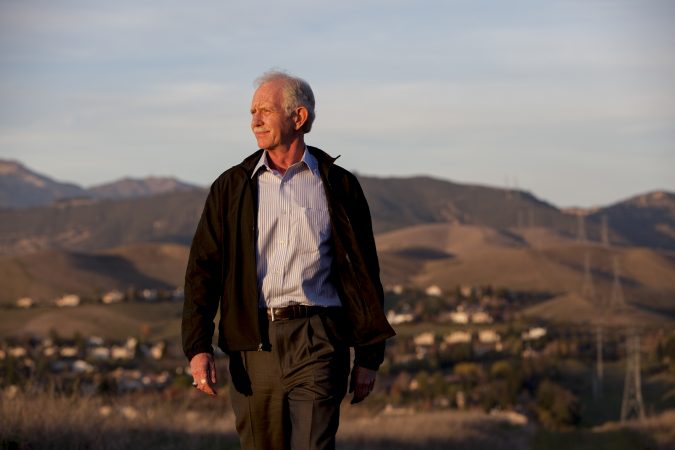
Chesley B. Sullenberger III, the pilot known as Sully who guided a passenger jet to a water landing in 2009 in what became known as the “Miracle on the Hudson” after he saved 155 lives, has been diagnosed with Alzheimer’s disease, he said in a statement Tuesday.
The diagnosis is “early stage,” he said, adding, “I am in the beginning of this long journey.”
Sullenberger, 75, retired as a commercial pilot in 2010, a year after his famous landing on the Hudson River. On Jan. 15, 2009, he was piloting US Airways Flight 1549 on a flight from LaGuardia Airport to Charlotte, N.C., when both of the plane’s engines lost power after it struck a flock of geese shortly after takeoff.
Sullenberger guided the Airbus A320 safely into the Hudson River, and everyone on board was safely rescued. He was hailed as a hero after the landing, with President Barack Obama inviting the captain and his five-person crew to his 2009 inauguration days after the emergency landing.
Significant media coverage followed, as well as the 2016 movie Sully directed by Clint Eastwood and starring Tom Hanks.
After the incident and the attention it brought, Sullenberger called for new safety measures in aviation, including increased pilot training, more pilot rest, and a rule requiring two pilots to be in the cockpit at all times. In 2021, President Joe Biden nominated him to be an ambassador to the International Civil Aviation Organization, a United Nations agency that helps develop policies and standards for global aviation.
In the announcement of his diagnosis, Sullenberger nodded to his work as an ambassador, as well as his time in the U.S. Air Force and as an aviation accident investigator, saying he “spent his life in service.”
“So this new phase of my life has challenged what it means to be of service,” he wrote. “And the answer is to speak up. It is my hope that by sharing this, other families living in the shadows with this disease will feel they too can step forward.”
An estimated 7.4 million Americans are living with Alzheimer’s disease, a form of dementia, according to the Alzheimer’s Association. The disease worsens over time, and early-stage symptoms — as Sullenberger said he was experiencing — include memory loss as well as difficulties with problem solving and completing tasks.
“For now, this means a name may not come easily to me, I forget a story I have recently told, or I don’t sleep as well,” he wrote.
The Alzheimer’s Foundation of America praised Sullenberger’s announcement.
“His decision to publicly disclose his diagnosis will help raise awareness, reduce stigma, and show support for the many others living with Alzheimer’s disease and dementia-related illnesses,” the foundation said in a statement attributed to Charles J. Fuschillo Jr., the organization’s president.