Category: Wires

  • What videos show about ICE’s pursuit of immigrant’s van before Houston shooting

    What videos show about ICE’s pursuit of immigrant’s van before Houston shooting

    Videos that capture the minutes leading up to and immediately after an Immigration and Customs Enforcement agent fatally shot an undocumented Mexican immigrant in Houston early Tuesday morning show agents aggressively following a white work van and then approaching the vehicle on foot.

    Security camera footage from nearby businesses and residences, obtained and analyzed by the Washington Post, provides a nearly continuous, six-minute-long view of Lorenzo Salgado Araujo’s van as he is pursued by federal agents. But the agents were not wearing body cameras, and the videos do not clearly capture the moment an ICE agent fires his gun shortly before 7 a.m. local time — a finding that may complicate any investigation into whether ICE personnel were justified in using deadly force against Salgado Araujo.

    The Department of Homeland Security released a statement hours after the deadly shooting saying that Salgado Araujo, 52, had rammed an ICE vehicle and “weaponized” his white work van “in an attempt to run over” a federal immigration officer. DHS did not identify the officer or say how many times he fired but said he did so in “self-defense.”

    The videos show federal officers in two unmarked SUVs following him closely, at one point cutting off his van and driving on the wrong side of the street toward it. The videos do not appear to show Salgado Araujo ramming a vehicle, but at times, the van and the SUVs are partially obscured from camera view by buildings and trees.

    A DHS spokesperson said the department’s Office of the Inspector General is investigating the agent-involved shooting, and the FBI is investigating “the potential assault on a federal law enforcement officer.” The agency did not comment on the Post’s attempt to confirm the timeline of events.

    Harris County District Attorney Sean Teare said the county was collecting surveillance footage and witness testimony to determine what happened.

    The videos could provide key evidence to corroborate what transpired. The officers involved in the incident had not been issued body cameras and were not wearing them, according to a DHS spokesperson. Surveillance footage and witness recordings have become key in several shootings over the past year involving federal immigration officers, and in some instances have directly contradicted statements by DHS.

    Unlike the shootings of Renée Good and Alex Pretti, two U.S. citizens killed by immigration officers in January, no video recorded by witnesses has emerged so far of Salgado Araujo’s killing.

    In a statement Friday, the agency said the officers who followed Salgado Araujo‘s van had seen two similar vehicles weeks earlier on the property of a person suspected of being in the United States illegally. DHS said officers were on their way to that person’s residence when they saw Salgado Araujo’s van. Rep. Sylvia Garcia (D., Texas), who represents the district where the shooting took place, said in a TV interview Thursday that an ICE official told her that Salgado Araujo was not the person sought by agents.

    Around 5:50 a.m., surveillance video from outside Salgado Araujo’s home shows him getting into his white van and beginning the drive to work. At some point, he picks up the other three men.

    An hour later, the van is captured by a camera as it heads south on Highway 90, driving about 50 mph, according to the Post’s calculations. Two black, unmarked SUVs appear to be in pursuit.

    His white van makes an abrupt turn onto another street, followed by one of the two SUVs.

    The SUV sticks close to the van, pulling up alongside it. Seconds later, the SUV cuts off the van, and Salgado Araujo veers to the left.

    Meanwhile, a second unmarked SUV enters Canal Street and drives onto the wrong side of the road toward the van, which backs up as the SUV approaches. It is not clear in the video whether the van makes contact with either SUV at this point.

    The van then drives forward, going back the way it came.

    As the van drives slowly away from the SUVs, at least three officers are seen pursuing on foot. It is not clear how close the van came to the officers as it turned, but the Post’s analysis indicates at least one officer was close to the passenger side of the van.

    The van rolls less than 200 feet before pulling off to the side. Within seconds, several officers converge on the van. Officers pull out at least one person from the passenger side and put handcuffs on them.

    Aftermath video of the scene shows Salgado Araujo on the ground by the driver’s side. Two officers are next to him, one kneeling. They appear to be checking on Salgado Araujo, who is visibly distressed.

    According to his family, he had been shot in the abdomen. He later died of his injuries.

    The three men who were in the van with Salgado Araujo said a federal officer fired at them almost immediately after exiting his vehicle and that at no point did Salgado Araujo veer in his direction. All three men were arrested and are in immigration detention.

    DHS characterized Salgado Araujo as an “illegal alien” from Mexico, but his son told the Post that his father was doing what he could to legalize his status in the U.S.

    Salgado Araujo’s death marks the first fatal shooting involving ICE agents since Good and Pretti were killed in separate incidents in Minneapolis in January during an enforcement surge in that city.

  • Before Reflecting Pool, algae contractor had troubled project on a trash-infested river

    Before Reflecting Pool, algae contractor had troubled project on a trash-infested river

    A year before Greenwater Services got a $1.7 million contract to clean the algae-infected Reflecting Pool, it had received another no-bid government contract to deploy at the trash-plagued Tijuana River.

    Greenwater, which is owned by a Trump donor, was hired to treat sewage in the Tijuana River with its “nanobubble technology,” a system that injects ozone into water. But the monthlong water purification pilot to evaluate the technology was cut short last October when a storm flooded the river’s banks. The remnants of machinery were washed into the border river, with diesel leaking along the way, frustrating scientists and environmentalists at federal agencies who had questioned internally whether the company’s project would work in a flood-prone area.

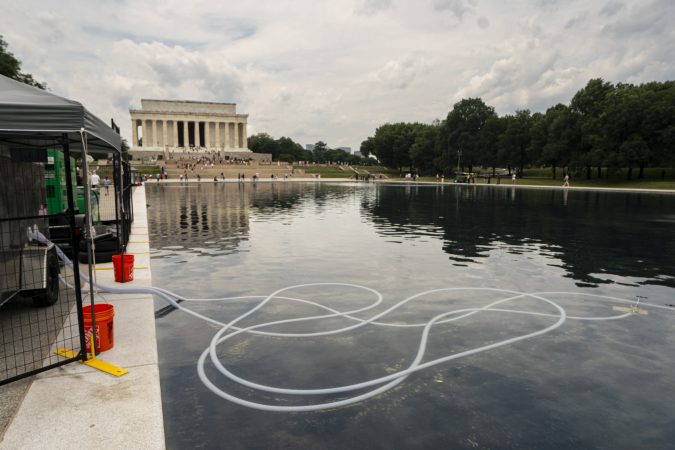
    Eight months later, the company brought its equipment to clean up a mess at the Reflecting Pool in Washington. In April, as part of his effort to remake the nation’s capital city ahead of America’s 250th birthday, President Donald Trump drained the pool at the base of the Lincoln Memorial to add a new coating to the bottom that would make the water shine “American flag blue.” But a week after the $14 million renovation was finished in June, an outbreak of algae floated along the water’s surface, hiding the new blue coating under a thick, mossy shade of green. Algae had long been a problem for the pool, but a Washington Post analysis of satellite data found that the post-renovation bloom was the worst outbreak dating back at least five years.

    The Department of Interior gave Greenwater and its nanobubble technology an expedited, no-bid contract to clean up the muck, even though other companies had expressed interest in the work to the National Park Service. Administration officials cited an urgent need to solve the problem before the 250th celebrations, and said they didn’t have time to allow companies to compete for the bid, according to a federal contracting document.

    Greenwater, founded in 2019 in Ohio, is owned by J.J. Cafaro Investment, according to the contracting documents it filed with the government. J.J. Cafaro is an heir to an Ohio-based mall development company and a Republican donor who has given about $350,000 to Trump-related political committees and owns a $16 million mansion down the road from Mar-a-Lago. He said he considers the president “a friend,” and Trump once described Cafaro as “a man who made a lot of money in Cleveland, does a good job and a fantastic man.” Cafaro has denied his relationship with Trump played a role in securing Greenwater’s contract for the Reflecting Pool.

    Chas Antinone Jr., Greenwater’s president and chief operating officer, has said the company has been expanding on the use of its technology, mostly in small bodies of water under 100 acres — such as a free demo to Trump’s Bedminster resort in 2024, Antinone told the San Diego Union-Tribune. The manager of Trump National Golf Club Bedminster brought Greenwater into conversations with the Interior Department about cleaning the Reflecting Pool, the New York Times reported.

    In total, the federal government has paid Greenwater $2.8 million between the Tijuana River and Reflecting Pool contracts.

    Company spokesperson Erin Kramer said Cafaro is not involved in the company’s day-to-day operations, and she shared research showing the technology has cleaned algae in studies. (Cafaro did not respond to requests for comment.)

    “Private demonstrations, self-funded projects, research partnerships, and public-agency work are ways new environmental technology moves from research to adoption,” Kramer said in response to questions about the Bedminster demo.

    Asked about the Bedminster connections, the Interior Department press office emailed a statement saying the White House was not involved in the selection process for any contract.

    Since the Times reported last month on his company’s no-bid contract, Cafaro has become a sort of bogeyman for liberals online. On Monday, the Democratic National Committee’s rapid response X account shared a photo of Cafaro along with news that the Interior Department planned to use the same contractor that installed the liner to repair the pool, even though Cafaro doesn’t own or operate that company.

    That photo featured Cafaro posing with former Real Housewives of Orange County star Kelly Dodd. But Dodd later posted a video clarifying that she merely posed with him because “he looked a little peculiar, and I liked his whole [get up]” but she only met him once at an event in Palm Beach, where she also saw Trump.

    “This has gone viral. I don’t know why I got lumped in with this guy,” she said. “I can safely tell you I don’t know this man.”

    ‘Hope it doesn’t rain’

    Flowing along the U.S.-Mexico border and discharging into the Pacific Ocean, the Tijuana River has been plagued by untreated wastewater, sewage, and debris dating back decades.

    The U.S. International Boundary and Water Commission gave a no-bid contract for Greenwater last year, initially offering more than $2 million for a pilot that would encompass 120 days of work. Officials said there was an “urgent need to assess the effectiveness of this technology in addressing the public health threat” and that “the technology is proprietary and not in use by any other company.”

    Until permanent infrastructure to address the pollution problems is in place, officials must “think creatively and evaluate every credible tool that can bring relief to affected Americans now,” Frank Fisher, an IBWC spokesperson, said in a statement to the Post.

    After Greenwater secured the project but before work got underway, career scientists exchanged emails asking about the initial $2 million cost and the feasibility of the project. Environmental Protection Agency staff who were consulting IBWC questioned their plans.

    “Wow. $2.4m for 90 days?” Thomas Konner, an environmental engineer for the EPA, wrote to IBWC and EPA officials on July 1.

    “Hope it doesn’t rain on their parade!” he followed up on Aug. 25.

    Months before, another scientist questioned the approach and called it a “Sisyphean task” — and forecast the storm. “I really don’t think the ozone will do any good unless you are able to ozonate the entire flow, but that’s based on my gut feeling and nothing else,” Douglas Liden, then an environmental engineer with the EPA, wrote to colleagues. “I also think the first storm will wash out any equipment you install, just as it did in Nogales, AZ.”

    Phillip Musegaas, executive director of the nonprofit San Diego Coastkeeper, which obtained the emails through a Freedom of Information Act request, said local groups have long hoped for a solution to one of the nation’s worst environmental disasters, which has sickened residents, closed beaches, and contaminated the air and water. Greenwater was supposed to take the nanobubble technology to the noxious hot spot — Saturn Boulevard — where the pungent water foams, an IBWC official wrote in the emails planning the project. But the company’s pilot was cut short by the storm and it never went to Saturn.

    Debris from the equipment washed into a barrier set up to collect trash along the river, according to photos shared with Voice of San Diego.

    “We were skeptical about it, but we wanted to see if it would work properly,” Musegaas said. “The fact that the whole project ended early because they let the equipment get washed away was pretty frustrating.” The company later acknowledged that the nanobubble machines could not operate continuously as intended because trash floating in the river clogged the machines.

    The company also said, in a report to the government about that pilot, that its machines hadn’t been affected by a previous rainstorm. The night of the next big storm, Greenwater said, it moved the machines to “a higher elevation” because of rising water levels, but “an unexpected flooding event occurred” that “carried large quantities of trash and debris that inundated and damaged” the machines. The company then said it shut the project down because of “safety concerns and site conditions.” The IBWC said in a December news release, citing the Greenwater report, that the project was “successfully completed” and the “technology has the capability to kill bacteria and eliminate odors associated with sewage.”

    Heather Raymond, the water quality director for Ohio State University’s College of Food, Agricultural, and Environmental Sciences, has tested Greenwater Service’s technology for years. Raymond, who does not work for the company nor on the Reflecting Pool and the Tijuana River projects, said the technology showed promise in trials when her team tested it in large tanks in controlled settings where algae levels were reduced, and small lakes where they saw some improvements in the local advisories for toxin levels.

    “There’s still a lot to learn in scaling this up in the water quality conditions and amount of treatment needed to be successful,” Raymond said.

    In the case of the Reflecting Pool, workers from the National Park Service used hydrogen peroxide and vacuuming to clear the algae in addition to the temporary units. Greenwater also said it had temporary units running by June 7, but the units were taken offline on June 12. Within 24 hours, an algae bloom developed, and the units returned. The company has since installed a permanent system in the Reflecting Pool’s pipes and said the water has cleared even though green sediment remains at the bottom.

    This week, the Reflecting Pool has been fenced off following the Fourth of July fireworks display, and Interior Secretary Doug Burgum said the workers will drain the pool and repair the peeling coating.

    The nanobubble technology has been turned off ahead of the draining, a person familiar with the plan said, speaking on the condition of anonymity out of fear of retaliation. By the middle of the week, the pool appeared green and murky, its bottom invisible under the mossy shade.

  • Ukraine’s prime minister steps down as Zelensky announces government reshuffle

    Ukraine’s prime minister steps down as Zelensky announces government reshuffle

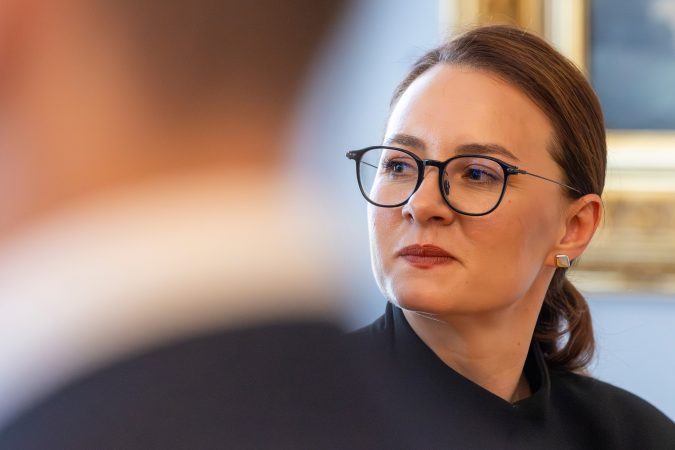
    KYIV, Ukraine — Ukrainian Prime Minister Yulia Svyrydenko stepped down on Sunday as President Volodymyr Zelensky announced fresh changes to Ukraine’s government, saying he had offered a new and important position to the former premier.

    Zelensky, who has remained in office under martial law because wartime elections are prohibited, has periodically reshuffled his government in an effort to bring fresh momentum to his administration.

    Svyrydenko, who has served as Ukraine’s economy minister, was named prime minister in July 2025 at the age of 39 after playing a lead role in securing a mineral agreement between Ukraine and the United States, seen as an important way of tying U.S. interests to Ukraine’s security.

    In a statement on social media, Svyrydenko said she was “proud to have had the honor of leading the government during one of the most difficult periods in Ukraine’s modern history.” She also said she had discussed “next steps” with Zelensky, but did not provide further details.

    “I remain ready to serve the Ukrainian state and carry out every task aimed at strengthening Ukraine’s position, defending our national interests and bringing a just peace closer,” she said.

    Zelensky announced her resignation in a post saying that Ukraine was “changing its political strategy.” He also said he had offered Svyrydenko the opportunity to lead “a new, important area” in Ukraine’s relations with a key international partner.

    “Each priority area of foreign policy will be assigned to a specific person with substantial experience who is capable of implementing what we agree on at the leaders’ level and what the Ukrainian people expect,” Zelensky said, describing the impending reshuffle.

    The Ukrainian leader also said there would be changes among the top ranks of Ukraine’s law enforcement agencies.

    Zelensky met with a series of senior officials following the announcement, including Energy Minister Denys Shmyhal, Interior Minister Ihor Klymenko, and Defense Minister Mykhailo Fedorov.

    The overhaul, which Zelensky has yet to explain in detail, would be the fourth major reorganization of his government since the start of Russia’s full-scale invasion.

    Ukraine continues strikes against Russian oil sites

    Elsewhere, a Ukrainian attack in southwest Russia killed one person and wounded three more, local officials said Sunday, as Kyiv’s forces continued to bombard Russia’s oil facilities.

    The head of Russia’s Samara region, Gov. Vyacheslav Fedorishchev, said that a child was among the injured. He also said that residential homes and apartment buildings were damaged in the strike, as well as an unspecified “industrial site.”

    Russian media outlets reported that the attack’s target was the region’s Syzran Oil Refinery, with many sharing images that appeared to show plumes of black smoke rising over the site. The refinery, which is owned by oil and gas giant Rosneft and sits some 500 miles east of the border, has been a repeated target for Kyiv’s forces.

    Meanwhile the governor of Russia’s Rostov region, Yuri Slyusar, said that a tanker had been damaged in a drone attack in the Azov-Black Sea maritime canal. The tanker was empty and there is no threat of an oil spill, Slyusar said.

    Ukraine’s drone strikes on oil refineries and other infrastructure across Russia have triggered a widespread fuel crisis with gasoline shortages and rationing in multiple regions and motorists waiting for hours to fill their tanks. Moscow has responded by intensifying its bombardment on Kyiv and other cities, exposing Ukraine’s vulnerability to ballistic missile strikes.

    Zelensky has described the strikes on Russia’s energy infrastructure as part of Kyiv’s campaign of “long-range sanctions” carried out in response to Moscow’s refusal to halt its four-year invasion of its neighbor.

    Meanwhile, Russia’s Ministry of Defense said Sunday that it had attacked the ports of Odesa and Chornomorsk in Ukraine’s Odesa region. Ukrainian officials have not yet commented on the claims.

  • Iran reports new attacks on military targets on its largest island near the Strait of Hormuz

    Iran reports new attacks on military targets on its largest island near the Strait of Hormuz

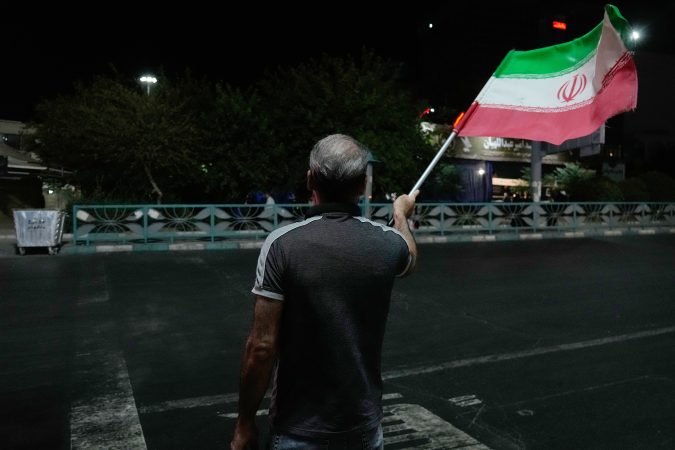
    DUBAI, United Arab Emirates — The United States attacked Iran on Sunday over an Iranian strike on a container ship in the Strait of Hormuz that set it ablaze and left a crew member missing. Iran responded with attacks on countries including Bahrain, Kuwait, Qatar, Jordan, and Oman — the nation on the other side of the strait that Tehran has pressed to join in managing shipping traffic.

    The U.S. struck again later Sunday. Iran’s state-run IRNA news agency cited the governor of Qeshm island near the strait as saying projectiles had been fired at military targets, with no casualties. IRNA said explosions were also heard in the coastal city of Bandar Abbas and Hajiabad city to the north.

    A U.S. official, speaking on condition of anonymity because they were not authorized to publicly discuss military operations, said a few strikes were conducted on missile and air defense systems, as well as small boats of the paramilitary Revolutionary Guard at a couple of locations around the strait to further degrade Iran’s ability to attack commercial shipping.

    Iran and the U.S. are nearly at the midway point of the 60-day period of their interim deal aimed at reaching a permanent end to the war. The strait, a key route for the global supply of oil and natural gas and long considered an international waterway, has become a sticking point in negotiations that seem in danger of collapse.

    The United Nations secretary-general, António Guterres, was “deeply concerned by the serious escalation,” according to a statement.

    Iran says the strait is closed and the U.S. disagrees

    The U.S. military’s Central Command said earlier Sunday that it hit some 140 targets, including missile and drone launch sites, ammunition dumps, communication equipment, and other sites. It said the attacks, heavier than in recent days, would weaken Iran’s ability to threaten shipping.

    “We bombed the hell out of them last night,” President Donald Trump told NBC’s Meet the Press.

    Semiofficial Iranian news agencies reported that a navy officer was killed. Iran retaliated by attacking nations in the region hosting U.S. military forces, while insisting it alone must control the strait and potentially charge vessels for traveling through it.

    “The era of one-sided deals is OVER,” Mohammad Bagher Qalibaf, the speaker of Iran’s parliament and a main negotiator, wrote. “We told you: keep your word or pay the price. Reality is knocking.”

    The U.S. has launched three rounds of airstrikes targeting Iran in the last week over Iranian attacks on ships heading through the strait using a route off Oman, seeking to avoid the Islamic Republic’s territorial waters.

    The U.S. military and Trump asserted that the strait remained open Sunday. Iran said it was closed until calm is restored, and Tehran would consider targeting “additional enemy bases in the region” if it faced more attacks.

    The U.S. military said over 140 ships had transited the strait over the past week. A multinational body overseen by the U.S. Navy said traffic continued “at reduced levels” off both Oman and Iran. It said nearly 140 vessels transited daily before the war.

    About a fifth of all traded oil and natural gas passed through the strait before the war began. Iran’s grip on it led to a global energy crisis, though oil prices have sharply dropped since wartime highs of $120 a barrel.

    Oman summons Iranian envoy to protest attack

    Missile alerts sounded across several Gulf Arab countries.

    Qatar’s military said it intercepted incoming Iranian fire, with explosions heard in the neighboring United Arab Emirates. Three people, including a child, were wounded as a result of shrapnel from the interception of Iranian attacks, Qatar’s Interior Ministry said, giving no further details on their condition.

    Missile alerts sounded in Bahrain, an island kingdom in the Persian Gulf that is home to the U.S. Navy’s 5th Fleet.

    Kuwait’s Defense Ministry said three “land border posts” in the north and an offshore drilling platform of the Kuwait Oil Company were damaged, with one platform worker wounded.

    A day after Oman and Iran held talks on the strait, the Omani state news agency said drones struck sites in an area on the waterway.

    Oman summoned the Iranian ambassador to protest the strikes, the first such move since the war began, calling Iran’s acts “irresponsible.”

    Three Iranian missiles struck areas across Jordan, causing minor damage but no injuries, Jordan’s state news agency reported.

    Sirens also sounded in the UAE, but the government said missiles did not cross into its territory.

    Iranian strike on ship harms Indian crew

    A Cyprus-flagged container ship was hit by Iran and suffered “significant engine room damage,” the U.S. Central Command said.

    Oman’s maritime authority said it rescued 23 crew members but one was missing. India’s Ministry of External Affairs called him an Indian national and it was working with Oman to locate him.

    The United Kingdom Maritime Trade Operations center, overseen by the British military, said the ship had been moving along Oman’s shoreline.

    Iran’s paramilitary Revolutionary Guard said multiple vessels “disregarded our warnings” and ignored instructions to follow what it called an approved route. One “was struck by a warning shot and brought to a stop.”

    Iranian state media later reported U.S. strikes across the country, including southern Iran in the province closest to the strait and military sites in a province near Tehran.

    Attacks followed more diplomatic talks about the strait

    The strait sits in Iran and Oman’s territorial waters. Oman on Saturday said it and Iran agreed to continue discussing the strait “at the technical and political levels.”

    Trump suggested last week that the interim deal on the war was “over.” But mediators, including Pakistan, Qatar, and Egypt, have continued efforts to reach an agreement. A regional official involved in mediation, speaking on condition of anonymity to discuss talks, said efforts to shore up the ceasefire continued Sunday. Pakistan said its foreign minister spoke by phone with Iran’s top diplomat and urged “de-escalation” on both sides.

    Iran’s new supreme leader, unseen since the war began, on Saturday vowed in his first statement since the funeral of his father, Ayatollah Ali Khamenei, that Iranians would avenge his killing in the war’s opening strikes on Feb. 28.

    Such revenge “is the will of our nation and must certainly be carried out,” Supreme Leader Ayatollah Mojtaba Khamenei said in a statement carried on state television.

  • Lindsey Graham was facing reelection in November. What happens now?

    Lindsey Graham was facing reelection in November. What happens now?

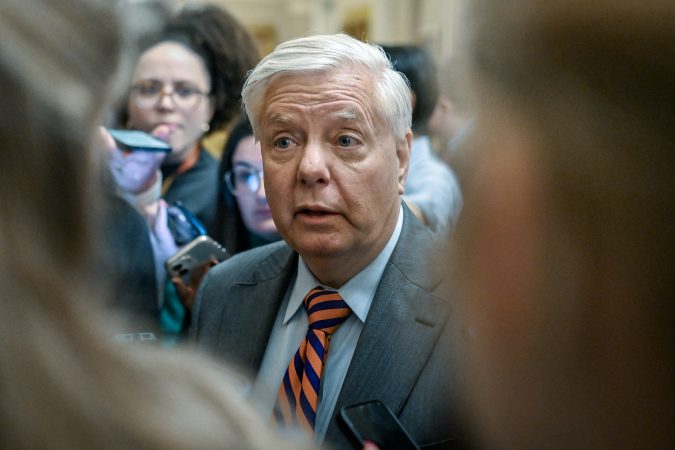
    The sudden death of Sen. Lindsey Graham (R., S.C.) comes less than four months before he was set to appear on the ballot as a strong favorite to win a fifth term.

    Now, South Carolina Republicans are facing a fast-paced scramble to replace him on the general election ballot. (Graham won the Republican primary by a wide margin this year.)

    South Carolina law sets out a timeline for replacing him on the ballot. Its provisions suggest a special primary election will take place Aug. 11, according to the schedule set out in the law.

    Candidates can file for the seat as soon as July 21, the second Tuesday after Graham’s death, and the filing period will close on July 28. State law says that the election must happen on the second Tuesday after that deadline. If no candidate secures a majority, a runoff between the top two finishers would take place two weeks later, on Aug. 25.

    Gov. Henry McMaster, a Republican, can appoint a replacement to serve out the rest of Graham’s Senate term, through Jan. 3, 2027, under state law. The replacement could choose to compete for the Republican nomination in the special primary.

    Graham, 71, died of “a brief and sudden illness” Saturday evening, his office said in a statement just after 2 a.m. ET Sunday.

    Rep. Nancy Mace is looking at a potential run for the seat, according to four people familiar with her thinking, who spoke on condition of anonymity to describe private talks. Mace ran for governor this year, finishing a distant fifth in the Republican primary.

    While Graham drew Republican primary challengers this year, he won the nomination by a wide margin, avoiding a runoff. President Donald Trump supported Graham, a onetime critic of the president who had shifted to a supportive posture in recent years.

    One of Graham’s opponents in the primary was businessperson Mark Lynch, who finished second with nearly 29% of the vote. He said on social media Sunday morning that “while we had our political disagreements, today is not a day for politics.”

    Previously, Lynch had strongly criticized Graham for his support of U.S. military intervention abroad, seeking to appeal to more isolationist members of Trump’s MAGA base.

    The third-place finisher was Thomas Keith Dismukes, a motivational speaker who campaigned on “faith, family, limited government, and the restoration of principles that make America great.” Other Republican contenders included Pat Herrmann, a county Republican Party chair and small-business owner, and Calvin Cowen, an engineer and city council member.

    The Democratic nominee for Senate is Annie Andrews, a pediatrician who has been a strong fundraiser in the race.

    “I hope that South Carolinians will join me in setting partisanship aside and offering gratitude to Senator Lindsey Graham for his service to the great state of South Carolina,” Andrews said Sunday morning, praising him as a “man of great faith who proudly served our nation as a JAG officer and Air Force colonel.”

    This article originally appeared in the New York Times.

  • Whistleblowers accuse Kennedy Center of contracting flaws under Trump

    Whistleblowers accuse Kennedy Center of contracting flaws under Trump

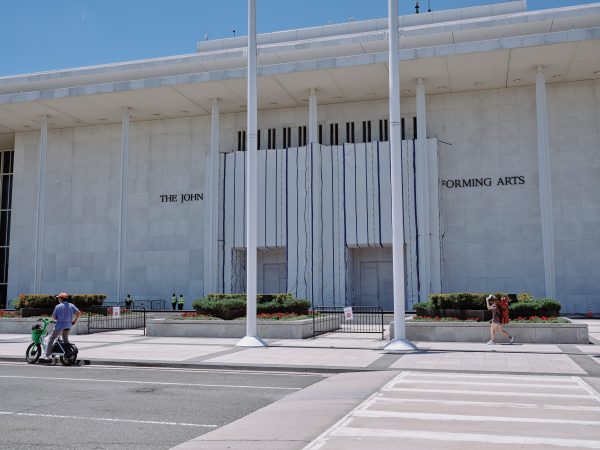
    As the John F. Kennedy Center for the Performing Arts prepares for major renovations, former project managers there have sent Congress internal documents that they say show how the institution bypassed government contracting norms in work carried out under President Donald Trump.

    The documents — sent to a Senate and a House committee last month by lawyers for unidentified clients referred to as whistleblowers — detail how vendors were selected for work without competitive bidding under rationales that are depicted as flawed.

    In one case, a center official described a company chosen for flooring work as the “only identified firm on the mid-Atlantic seaboard that maintains a fully vertically integrated model, vital for acoustic continuity, architectural uniformity, and operational agility.”

    In a letter to the committees, lawyers for the former project managers say their clients question whether the business, located in South Carolina, was the only one available that was qualified to do the flooring work.

    The letter says the center’s decision to skip bidding in another case was designed to help meet deadlines important to the president, such as the Kennedy Center Honors in December, which he hosted.

    “Renovations were rushed to meet the deadlines driven by the president’s desire to host official events at the center,” the letter says. “Federal contracting laws and regulations were ignored.”

    A statement from the Kennedy Center defended its practices, saying that the institution operates with rigorous financial oversight and that the assertions by the whistleblowers that contracting standards had been bypassed were incorrect.

    “As America’s cultural center, the institution makes every decision guided by responsible stewardship and an unwavering commitment to its patrons and the nation it proudly serves,” Roma Daravi, a spokesperson, said in a statement. “We remain fully committed to transparency and to delivering the critical improvements that will preserve this institution for generations to come.”

    Liz Huston, a White House spokesperson, responded to the allegations by accusing past management of allowing the center to fall into disrepair.

    “President Trump did what Democrats wouldn’t,” she said in a statement. “After decades of neglect, he committed the bold leadership and proper resources to fix the Kennedy Center and start the renovations of the finest performing arts facility in the world.”

    Trump, a developer by trade, has taken an intense interest in remaking the center, helping to secure $257 million from Congress last year for renovations. In one case cited in the letter, a new bathroom floor in one of the center’s three presidential boxes was ordered torn up last year and redone after the White House complained about the beige color of the tiles. (The email’s subject line was “tile emergency,” alongside a red siren emoji.)

    “This is a big undertaking for my department to remove the floor tile that was just installed,” the Kennedy Center’s operations and maintenance director replied in a March 2025 email, noting that the beige tiles had been approved by a White House designer.

    In a response email, a White House official confirmed the directive to replace the beige tile with white. (The work was unrelated to the South Carolina flooring company.)

    The center said in a statement that the changes were a standard design adjustment that caused “zero unnecessary burden on the taxpayer.”

    The White House decided to remodel the presidential boxes days after Trump took over as chairperson of the center’s board, according to the documents sent to Congress. The plans included gold plumbing fixtures in the bathrooms, gold covers for electric outlets, marble baseboards, and the tile flooring paid for by the White House, with much of the labor provided by the center.

    The 82-page submission to Congress was made under a law designed to protect federal employees who disclose allegations of wrongdoing from retaliation. The lawyers who sent it, David Seide and Dana Gold, work for a nonprofit that represents government whistleblowers.

    Sen. Sheldon Whitehouse (D., R.I.), the top Democrat on the Environment and Public Works Committee, which received the submission, wrote to the Kennedy Center on Thursday demanding information related to the renovations. Whitehouse, an ex officio member of the center’s board, said the submission raised “serious questions” about whether public funds were being spent properly.

    Nothing in the submission suggests that the firms selected without bidding have any personal ties to Trump or his family, or that the vendors played any role in the decision-making process under which work was awarded.

    Reached by phone, Kent Rogerson, who runs the South Carolina flooring company, declined to comment, citing a nondisclosure agreement.

    Although the Kennedy Center is run as a nonprofit, it has, like Smithsonian museums, traditionally followed federal contracting rules because its building is federal property. But the documents include a new policy, adopted in November, that states the center was exempt from federal rules and replaces them with new procedures.

    Compared with federal contracting regulations, the new policy relaxes the requirements under which sole-source contracts can be awarded, according to several government procurement experts, by adding to the rationales for when it is permissible. Under the policy, contracts can be awarded without bidding when “circumstances beyond the center’s control require an immediate award” or “the requirement is unique or has a compelling business interest.”

    The center said in its statement that it had confirmed with the Office of Management and Budget that, as an independent entity, it was not bound by federal contracting regulations and that it had updated its procurement policy to be both fair and agile when making renovations.

    Trump announced that the center would be shuttered for two years for the project, starting around Independence Day. But a federal judge temporarily blocked the closure after finding that the center’s board, composed largely of the president’s aides and allies, had not properly scrutinized his plan before approving it. The White House statement on Friday accused the judge of being “radical” and allowing the center to remain in disrepair.

    Kennedy Center officials have described renovations to address problems such as water leaks and outdated equipment as urgently needed. The president has said the work would elevate a “dilapidated” building to the “highest level of Success, Beauty, and Grandeur.”

    The administration’s contracting practices have been under scrutiny. The Lincoln Memorial Reflecting Pool project, for example, has been carried out through multiple no-bid contracts. To exempt the project from competitive bidding, administration officials said it needed to be finished in time for the country’s 250th birthday celebrations.

    One contract cited by the former Kennedy Center managers was valued at $4.4 million and awarded last fall for work that included painting the building’s exterior gold columns. Trump has taken issue with their “fake gold color,” and internal documents said they should be repainted white before the Kennedy Center Honors.

    The painting was done by Cypress Painting Systems, a company in Maryland that has done work under prior administrations. But lawyers for the former project managers reported that the work began before any contract had been awarded.

    The contract was later awarded, they said, to a company that primarily works as a furniture dealership, Washington Office Interiors, which used Cypress as its subcontractor.

    The interiors company had been hired through a Small Business Administration program that enables “socially and economically disadvantaged” companies to receive sole-source contracts in some settings. Whitehouse, in his letter, said it appeared that the contract was configured this way because Cypress did not have the same certification that would enable it to receive a sole-source contract through that program.

    In its statement, the Kennedy Center said the contractual arrangement had fully complied with all Small Business Administration guidelines.

    Barbara Barry, who runs Washington Office Interiors, said in an email that she was not authorized to discuss the contract but that her company had been providing construction and furniture services to federal agencies since long before Trump was elected.

    Robin Mertz, president of Cypress Painting, deferred questions to the Kennedy Center.

    Cypress Painting also installed Trump’s name on the building’s marble facade, under a separate arrangement. The name was removed in June by order of a federal judge, and the center is in the process of appealing.

    Matt Floca, the center’s executive director, has denied that the columns were painted simply to satisfy the president. He has said that the center’s leaders had long wanted to address structural degradation and “mismatched paint jobs,” and that hiring subcontractors is standard practice.

    “This is not just a random action,” Floca testified at a court hearing this year. “It was something that we had been planning for before this leadership was in place.”

    Floca has also attested to the special qualifications of Low Country Flooring of Pawleys Island, S.C., the flooring company that was selected without competition to provide services to the Kennedy Center for five years, according to the documents provided to the committees.

    The purchase agreement, not a formal contract, outlined work worth up to $8 million in restoring and replacing hardwood flooring.

    The business has assisted on high-profile projects in Washington, including work on the Supreme Court and the Andrew W. Mellon Auditorium near the National Mall, a federal building used for galas and conferences.

    The center said that the company was selected after what it described as exhaustive market research and that it was capable of purchasing directly from timber mills to avoid markups on materials.

    Last year, on a trip to Washington before the company was selected, its representatives posted photos of themselves and Trump at the Kennedy Center on Facebook.

    In one photo, Jamie Lambert, who helps run the company, is shown praying with Trump inside the center’s concert hall. His colleague, Rogerson, commented on the image online.

    “He asked,” Rogerson wrote, “and the president said of course.”

    This article originally appeared in the New York Times.

  • Judge ends Jan. 6 case against Proud Boys with warning about Trump pardons

    Judge ends Jan. 6 case against Proud Boys with warning about Trump pardons

    A federal judge on Friday night granted the Justice Department’s request to dismiss the seditious-conspiracy case against four top members of the Proud Boys who led a violent mob into the U.S. Capitol on Jan. 6, 2021.

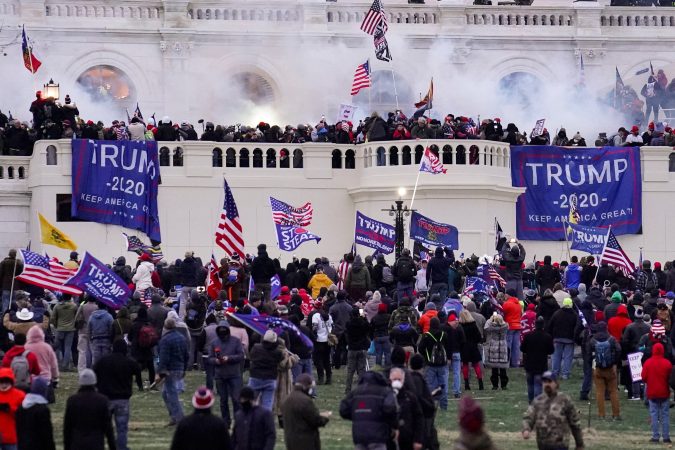
    But in his ruling, U.S. District Judge Timothy J. Kelly gave a stark warning about President Donald Trump’s efforts to lift penalties against those who instigated and carried out the storming of the Capitol. The attack — by the mob seeking to overturn Trump’s loss to Joe Biden in the 2020 election — left more than 140 police officers injured and caused an estimated $3 million in damage.

    The judge indicated he was wiping out the Proud Boys’ charges — against Ethan Nordean; Joseph Biggs; Zachary Rehl, former leader of the Philadelphia Proud Boys; and Dominic Pezzola — under protest, saying legal precedents left him no choice but to accede to the request by the Trump administration’s prosecutors.

    “As the Court has said many times, the attack on the Capitol on January 6, 2021 was a perilous event,” wrote Kelly, who is a Trump appointee.

    “It was an attack on people, including police officers, many of whom were injured. It was an attack on a coordinate branch of government — Congress — that the Founders saw fit to give a place of primacy in Article I of the Constitution. And it was an attack on the Constitution’s mechanism to facilitate the peaceful transfer of power from one president to the next.”

    The Jan. 6 riot followed a rally where Trump repeated his false claims that he won the 2020 election. As rioters rampaged through the Capitol, lawmakers were forced to evacuate, delaying the certification of Biden’s victory for hours.

    Friday’s ruling wipes out some of the most serious criminal charges from the riot, cementing Trump’s bid to unravel the largest Justice Department investigation in U.S. history.

    Trump pardoned nearly all the rioters — more than 1,500 — who were charged by the Justice Department in the wake of Jan. 6. But that blanket pardon, issued on the president’s first day in office last year, did not extend to about a dozen leaders and prominent members of two extremist groups behind the violence, the Proud Boys and the Oath Keepers.

    Those defendants were convicted of carrying out a seditious conspiracy against the United States or related offenses. Trump initially commuted their prison terms, stopping short of a full pardon. But this year, while those cases were being appealed, Justice Department officials filed legal papers to vacate the convictions altogether.

    The D.C. Circuit federal appeals court granted that request in May. U.S. Attorney Jeanine Pirro, a Trump ally who serves as the top federal prosecutor in D.C., then filed motions to dismiss the underlying charges in U.S. district court.

    Kelly said in his opinion on the Proud Boys case that judges are constrained to dismiss charges once prosecutors ask to drop them.

    Under Supreme Court precedent, prosecutors have “exclusive authority and absolute discretion to decide whether to prosecute a case,” and they may drop charges “in the interests of justice” even after defendants have been convicted.

    The moves by the Justice Department were unusual — prosecutors rarely ask to throw out guilty verdicts — and Pirro’s office initially did not give detailed reasons for scrapping the highest-profile cases related to the Jan. 6 attack.

    In a brief court filing, a prosecutor in Pirro’s office wrote only that the government “has determined in its prosecutorial discretion that dismissal of this criminal case is in the interests of justice.”

    Proud Boys leader Enrique Tarrio separately had his conviction vacated and charges dismissed last year, also at the Justice Department’s request. Tarrio, who had been convicted of organizing members of his group, was not present at the Capitol on Jan. 6.

    Pezzola was acquitted at trial of the seditious conspiracy charge but convicted of assaulting a police officer and other offenses from the riot.

    “We took the worst they threw at us the raids, the solitary, the lies and we stood tall,” Tarrio posted on X after the ruling was issued Friday night. “Trump dropped the pardons and now the rest is crumbling. Justice is SERVED!”

    Before dismissing the set of charges against the Oath Keepers, U.S. District Judge Amit P. Mehta, an appointee of President Barack Obama, asked Pirro’s office to supply detailed reasons for its request. Mehta has not yet issued a ruling on the Oath Keepers’ charges.

    A prosecutor, G.A. Massucco-LaTaif, said Trump’s blanket pardon proclamation also directed the Justice Department to drop all pending charges stemming from the Jan. 6 attack. Prosecutors can no longer put any Jan. 6 defendants on trial and judges cannot effectively impose any prison time, he wrote in a court filing, because the presidential proclamation would immediately kick in to prevent those outcomes.

    “In any event, the public’s interest in a trial of these defendants has already fully vested,” Massucco-LaTaif wrote. “This Court presided over two public trials of the charges in this indictment. … Dismissal of these cases with prejudice will not erase this public record.”

    The president and top officials in his administration have moved aggressively to recast and minimize the threat posed by the mob of Trump supporters on Jan. 6.

    Earlier this year, the Justice Department acknowledged that it had deleted reams of news releases it had posted online, which detailed the prosecutions of those charged in the riot.

    The Washington Post identified several webpages that led to error messages, including news releases about the arrest and conviction of Tarrio and other rioters whose convictions were undone by Pirro. The Justice Department said in a social media post that it was erasing what it considered “partisan propaganda.”

    “We are proud to reverse the DOJ’s weaponization under the Biden administration,” the department posted on its rapid-response account on X. “We will do everything in our power to make whole those who were persecuted for political purposes. This includes stripping DOJ’s website of partisan propaganda.”

    Copies of hundreds of those news releases, which had been hosted on the website of the U.S. attorney’s office for D.C., have been archived by an independent website, the Internet Archive’s Wayback Machine.

    A spokesperson for Pirro did not say who ordered the deletions or how many releases were affected, referring questions to Justice Department headquarters. A searchable database of all charges and convictions stemming from the Jan. 6 investigation was taken offline by the Justice Department last year.

    Pirro has denounced political violence in other cases, such as the incident this year in which a lone gunman allegedly tried to assassinate Trump during the White House correspondents’ dinner, but routinely declines to take questions about the Jan. 6 riot at her public appearances.

    She has also pursued Trump’s perceived political foes with shaky allegations of misconduct, including then-Federal Reserve Chair Jerome H. Powell as well as six Democratic lawmakers who angered the president by posting a video on social media reminding U.S. service members that they could refuse illegal military commands. A grand jury refused to indict the six Democrats, and Pirro closed the investigation into Powell after failing to find evidence of a crime.

    In addition to the pardons, commutations, and court filings seeking to dismiss cases, Trump appointees have fired many of the FBI officials and prosecutors who investigated the attack.

    The Justice Department has also taken steps to vacate the conviction of Stephen K. Bannon, a former Trump adviser who was convicted of contempt of Congress for defying a subpoena related to Jan. 6. And the department has stopped defending a similar conviction for Peter Navarro, a top trade adviser to the president who is appealing his case.

    The Trump administration had announced plans for a $1.776 billion fund to provide payments to people who claim they were unfairly targeted by law enforcement, and dozens of Jan. 6 rioters said they intended to apply for a cut of the money. The payments would have been funded by taxpayers, raising bipartisan concerns in Congress. A federal judge issued an injunction blocking the “Anti-Weaponization Fund” from being established, and Trump administration officials have said that effort is dead.

    In dismissing the Proud Boys’ seditious conspiracy charges, Kelly invoked remarks from President Ronald Reagan’s first inaugural address in 1981 describing the peaceful transfer of power as a miracle of self-governance.

    “President Trump’s views about the prosecution of those who attacked the U.S. Capitol on January 6 — whether those views are based on fact or fiction — are well known, as is his intention to extend clemency to them through the Executive Order,” Kelly wrote in the opinion.

    “Moving forward, if this Nation’s experiment in self-government is to last another 250 years, the American people — no matter their partisan preferences — will have to act together to preserve, protect and defend that miracle through our constitutional framework,” he wrote.

  • White House directed Patel to oversee investigation involving Times reporting

    White House directed Patel to oversee investigation involving Times reporting

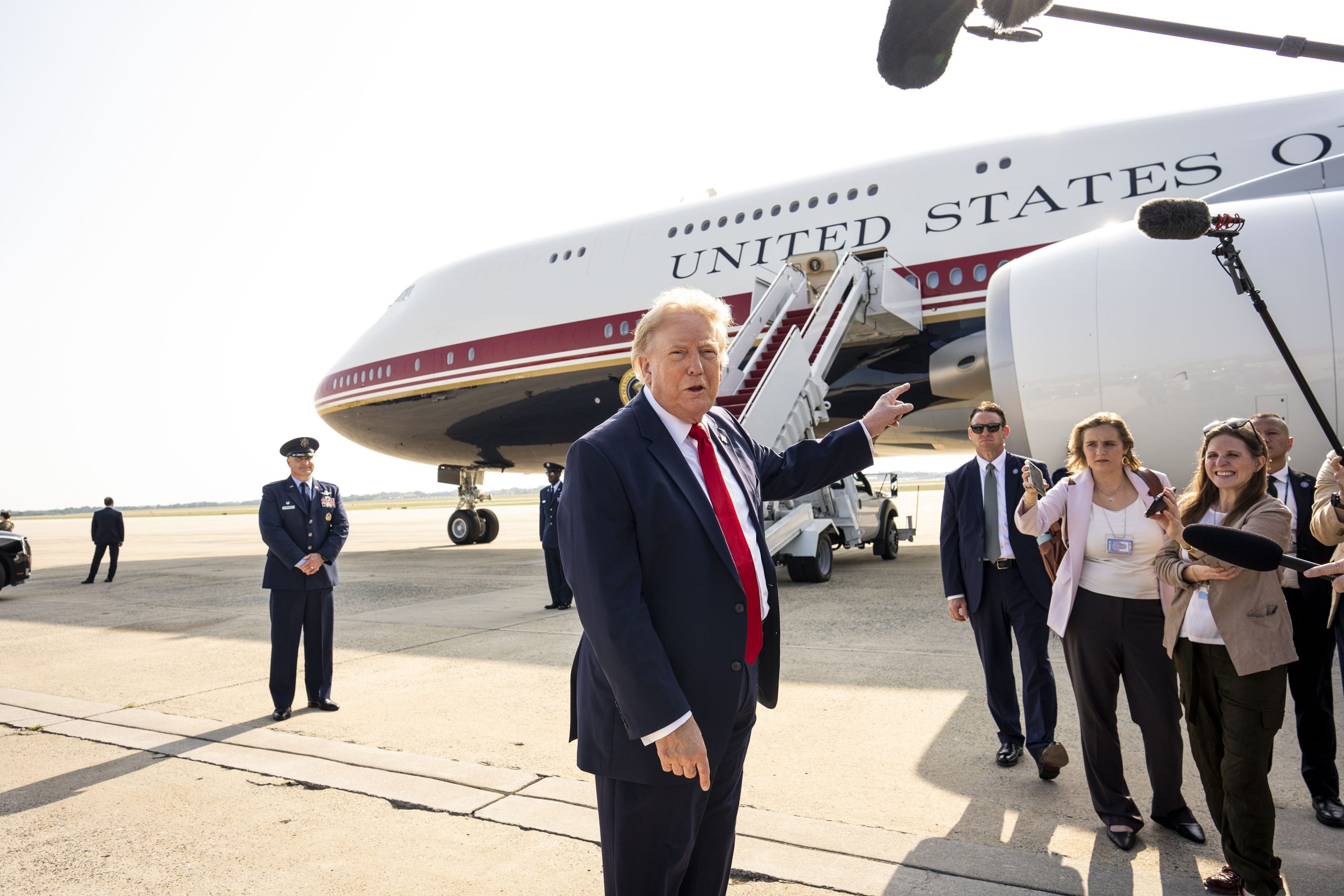
    WASHINGTON — The White House directed FBI Director Kash Patel to oversee a leak investigation into reporting by the New York Times about security issues with the new Air Force One, leading to a flurry of subpoenas to several Times reporters Friday night, according to people with knowledge of the situation.

    Patel scuttled a planned trip to Chicago and spent roughly eight hours at the White House on Friday, running the investigation from there rather than FBI headquarters — a major departure from historical practice. Patel also briefed senior administration officials on the investigation, two people said. The people spoke on the condition of anonymity to describe sensitive internal discussions.

    The White House’s deep involvement in the case came after officials said President Donald Trump was enraged about the coverage of the Qatari-donated plane, which the Times reported Thursday lacks the same defensive countermeasures of the previous Air Force One.

    Trump flew on the new jet to a NATO meeting in Turkey this past week but was forced to change to the old plane when he departed because of Secret Service concerns, as the Times reported Wednesday.

    Patel’s role in the investigation, in close coordination with top administration officials, reflects a further dismantling of the wall that had separated the White House and the FBI in previous administrations. The government’s effort to immediately seek information from journalists, when such cases are typically centered first on identifying potential internal wrongdoing by officials, comes as the Trump administration has intensified pressure on news organizations.

    In response to a request for comment, Steven Cheung, the White House communications director, said, “President Trump is laser focused on helping the American people and keeping them safe. That will always be his priority.”

    Emily Covington, director of the Justice Department’s Office of Public Affairs, sought to downplay the unusual nature of the subpoenas, some of which were delivered late Friday directly to the doors of the reporters’ homes.

    “Every administration has addressed the crime of leaking national security information,” she said in a statement. “To the extent that we have to investigate breaches of national security, that’s something that we will continue to do.”

    She added: “To be clear, reporters are not the targets. Those leaking classified information are.”

    Ben Williamson, an FBI spokesperson, said in a statement: “Director Patel and White House officials agreed to meet on Friday at the White House to brief an ongoing matter. While we would not comment further, other speculative reporting regarding the nature of the meeting is absolutely false.”

    One person briefed on the conversations said that Patel had his own concerns about the type of information publicly disclosed about the plane. Another person said that Patel went to the White House of his own volition to oversee the investigation.

    Trump had sought the rapid retrofitting of the Qatari-donated 747 after he learned that two new Boeing planes that were supposed to replace the aging ones used as presidential aircraft would be delayed for years.

    Trump has basked in the luxury of the new plane, which is more than a decade old but has the kind of opulent furnishings the president prefers. He has repeatedly described the Qatari jet as cost free to the United States. But in reality, hundreds of millions of taxpayer dollars were spent to upgrade its security systems. Officials have said that he plans to take the plane with him as a donation to his presidential library when he leaves office.

    While Trump has said the Qatari plane was upgraded with the necessary security “bells and whistles,” the Times reported Thursday that it lacks the defensive countermeasures that were security features of the old model, including its advanced antimissile capabilities.

    Experts said the absence of the capabilities creates a potential risk when Air Force One is flying overseas, not only for the president but for the large entourage of White House staff members, Secret Service officials, journalists, and guests who fly aboard.

    After the Secret Service urged him to fly the old Air Force One out of Ankara, Turkey, Trump announced that he was making a swap in aircraft. In a post on social media, he claimed that he was taking the older plane to the United Kingdom for “old time’s sake” and that he wanted to show the new jet to U.S. troops on a military base there.

    Once he landed at Mildenhall Air Force Base in England, he walked from the older plane to the Qatari-donated jet, which transported him back to the United States.

    When the Times and other news organizations began reporting this past week on the security issues with the new plane, the president was livid, according to an official with knowledge of his comments who was not authorized to discuss the matter publicly.

    Before the Times’ first article was published, a senior official at the FBI contacted a reporter and a senior editor to ask that the article be held, calling it an issue of national security. The FBI official declined to explain the security issue. The official also asked the Times to disclose its sources for the article. The newspaper refused to do so.

    On Friday, after Patel left the White House, he posted a message on social media confirming that he had been there, and said that “the fake news will find out why soon.”

    That night, 48 hours after the Times had published the first article on the new plane, its reporters were served with subpoenas demanding that they provide evidence before a grand jury Wednesday.

    In a statement, David McCraw, the Times’ top newsroom lawyer, said: “This brazen act should be seen as nothing more than an attempt to prevent the public from knowing what is happening in their country by intimidating journalists from doing their jobs.”

    The rapid escalation of the case is a sharp departure from past national security leak investigations. Typically, officials first seek to establish how many people have had access to the information that was made public. Depending on the size of that group, prosecutors then attempt to determine ways to eliminate potential suspects from the list. In past leak cases, such efforts have often been abandoned if the pool of potential leakers is simply too large to scrutinize.

    Historically, the Justice Department has sought to subpoena reporters only as a last resort after other reasonable options have been exhausted.

    The Trump administration has pushed for a number of leak investigations, several of which have been conducted by federal prosecutors in the Eastern District of Virginia. Those efforts, which included subpoenas to reporters from the Wall Street Journal and the Washington Post, foundered in the face of resistance from a federal judge, according to multiple people familiar with the matter. Federal prosecutors withdrew them last month.

    The subpoenas issued to Times reporters Friday were from a different jurisdiction, the Southern District of New York, and were sought by Jay Clayton, the U.S. attorney in Manhattan, who was recently nominated by Trump to serve as the director of national intelligence.

    The subpoenas seek the reporters’ testimony on the same day Clayton is set to face a Senate confirmation hearing for his new post. The same day, Todd Blanche, the acting attorney general, is set to take part in a confirmation hearing to serve as attorney general on a permanent basis.

    This article originally appeared in the New York Times.

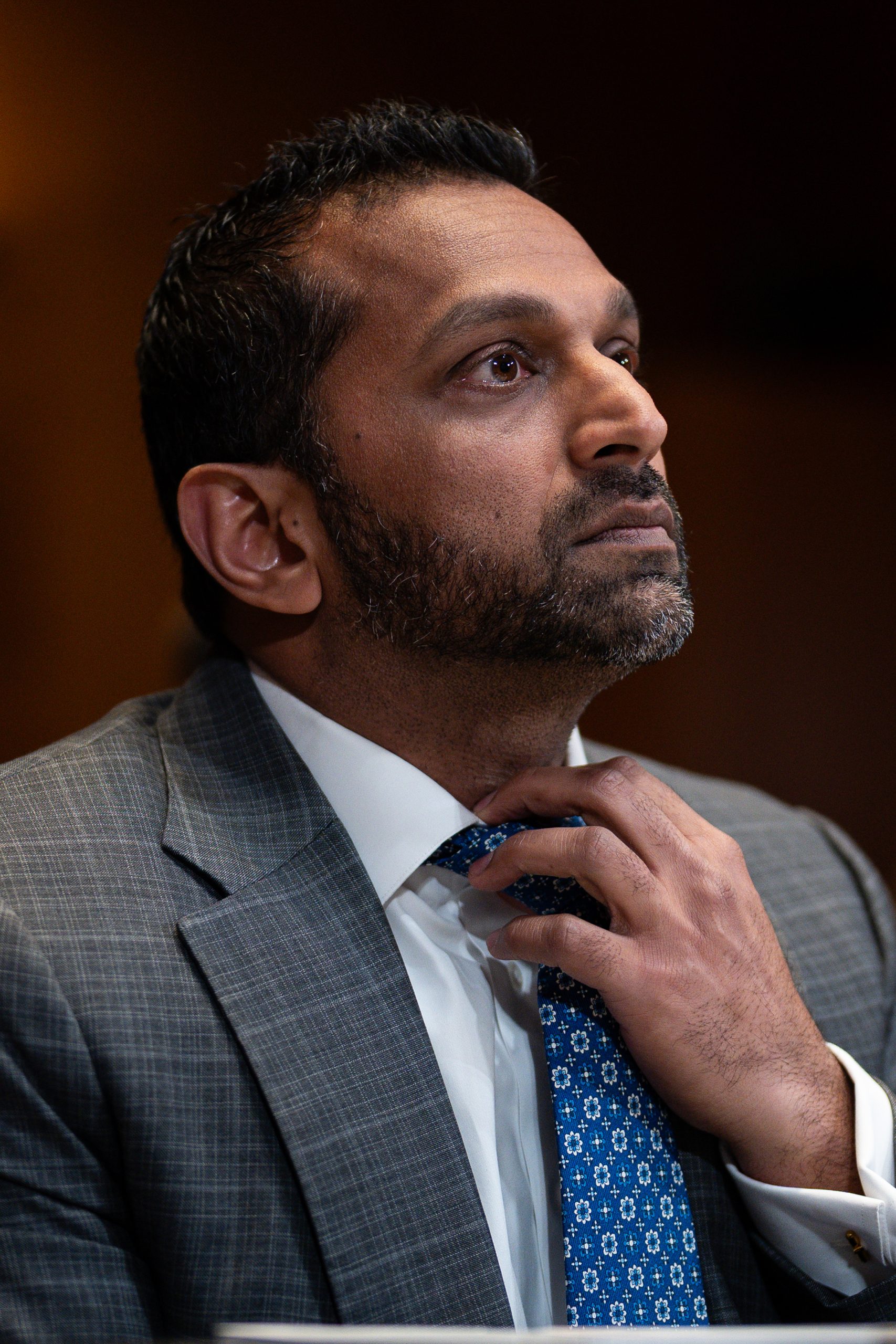
    FILE — FBI Director Kash Patel on Capitol Hill in Washington, on May 12, 2026. The White House directed Kash Patel, the F.B.I. director, to oversee a leak investigation into reporting by The New York Times about security issues with the new Air Force One, leading to a flurry of subpoenas to several Times reporters Friday night, according to people with knowledge of the situation. (Tierney L. Cross/The New York Times)TIERNEY L. CROSS
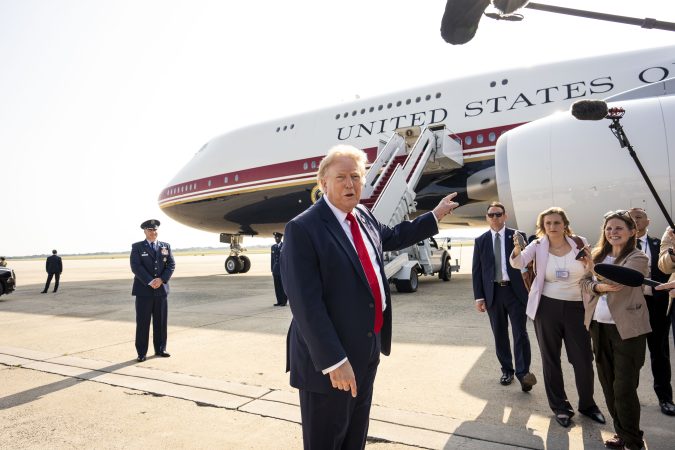
    FILE — President Donald Trump prepares to board the new Air Force One at Joint Base Andrews, Md., Wednesday, July, 1 2026. The Trump administration issued subpoenas on Friday to several journalists for The New York Times, after the news outlet reported this week on security concerns involving President Trump’s new Qatari-donated Air Force One. (Doug Mills/The New York Times)DOUG MILLS
  • Jayson Conner, 48, and Jeffrey Newman, 58, die; gave thousands of backpacks to those in need

    Jayson Conner, 48, and Jeffrey Newman, 58, die; gave thousands of backpacks to those in need

    NEW YORK — Jayson Conner and Jeffrey Newman, a Queens couple who spent years walking the streets of New York and handing out tens of thousands of backpacks filled with supplies — toiletries, socks, notebooks — to people in need, died within days of each other.

    Mr. Conner, 48, died from a heart attack at their home in Queens on June 28, his daughter, Jewlia Conner, said.

    Mr. Newman, 58, died four days later, on July 2, according to his brother Glenn, who did not provide a location or cause.

    Mr. Conner and Mr. Newman began their efforts in 2018 with a few armfuls of backpacks. By 2026, they and almost 40 volunteers had distributed more than 180,000 packs to people living on the streets of Manhattan.

    Once a week, a few dozen people would gather at a rental space in Queens, and Mr. Conner and Mr. Newman would lead them in organizing items into more than 100 backpacks that were loaded onto a moving van.

    They would then drive the van to Manhattan, and over the next several days the volunteers would fan out, backpacks slung over their shoulders. Mr. Conner and Mr. Newman trained the volunteers on the best way to approach and engage with people who might be experiencing extreme physical or emotional pain — or might just want to talk to a friendly face.

    “It was fascinating to see how well they managed to communicate with people on the streets,” Kristina Kashtanova, who began volunteering with them in 2020, said in an interview. “They taught me how to be a better human and how to talk to people who were so different from me.”

    Giving away the backpacks was initially a side project of their nonprofit, Together Helping Others, which provided a range of social services. In moving from place to place, they discovered, homeless people often lacked something as simple as a container to hold their belongings. What people in that situation needed, the two men figured, were sturdy backpacks.

    They announced the idea on social media, and within three days nearly 100 backpacks had been donated, along with countless supplies. They called the program Backpacks for the Street.

    In loading up the backpacks, they gave significant thought to what homeless people might actually need — like Slim Jim beef-jerky sticks, because even people without teeth could suck on them for protein. Every flashlight they distributed came with fresh batteries. In the winter, they included wool socks.

    “We take what we do very seriously,” Mr. Newman told ABC News in 2020. “We’re not making little goody bags. We’re really thinking out what it is people need the most. It’s a labor of love.”

    During the pandemic, when shelters were believed to be hot spots for viral transmission, the need for the backpacks became more acute.

    “The city has great programs for the homeless, but there are many reasons why someone might not want to go to a shelter right now,” Mr. Newman told Good Morning America in 2020. “Every bag we deliver can go a long way, especially during this crisis.”

    In addition to requesting monetary donations, they listed specific supplies that people could donate on the organization’s Amazon wish list.

    Kashtanova said that she and other volunteers were discussing how to continue the program but that no decisions had been made yet.

    For Mr. Conner, the effort was personal; he had experienced sexual abuse, drug addiction, and homelessness himself.

    “It was soul-crushing,” he said on the Backpacks for the Street website. “You never know where you’ll find respite day after day, or if you’ll eat or find warmth.”

    Jayson Conner was born on July 4, 1977, in Stockton, Calif. He attended culinary school and worked at restaurants.

    His marriage to Leslie Manfre ended in divorce.

    Mr. Conner began using drugs and doing sex work to pay for them, a spiral that led to a two-year period of homelessness that continued after he moved to New York.

    He and Mr. Newman met in 2004 and began dating. Mr. Conner found work at restaurants but did not get clean until 2015.

    Along with his daughter, he is survived by a son, Andrew.

    Jeffrey Lawrence Newman was born on Sept. 27, 1967, in Ardsley, a village in Westchester County, N.Y. His father, Ted, was a real estate investor and restaurateur; his mother, Joyce (Fishkin), managed the home and, after the family moved to Florida, served as the first female president of the Jewish Federation of Broward County.

    Mr. Newman graduated from Florida International University in 1991 with a degree in communication and media studies.

    Along with his brother Glenn, he is survived by his parents; another brother, Ric; and a sister, Beth Newman.

    Before starting the nonprofit organization, Mr. Newman worked as a journalist for ABC News and as a financial consultant, and was the founding president and CEO of Out.com.

    One Thanksgiving in the late 2000s, he and Mr. Conner volunteered at a soup kitchen run by a church in Brooklyn.

    “The pastor said she thought it was wonderful that we wanted to do this but that Thanksgiving gets a lot of volunteers,” Newman told the New York Amsterdam News in 2018. “What she needed were people for the other 364 days of the year. We were sold.”

    After eight years of working at the soup kitchen, they decided to start their own organization.

    “Everything about the backpack is about hope,” Mr. Newman told Fox News in 2020. “We understand that it’s not going to cure homelessness; we don’t pretend it’s going to cure homelessness. But it does say to somebody, ‘Hey, you know what? We care.’”

    This article originally appeared in the New York Times.

  • Sen. Lindsey Graham, Trump critic turned ally and foreign policy hawk, dies after a brief illness

    Sen. Lindsey Graham, Trump critic turned ally and foreign policy hawk, dies after a brief illness

    Sen. Lindsey Graham, a longtime Republican lawmaker from South Carolina who went from being one of Donald Trump’s harshest critics to positioning himself in the front ranks of the president’s most deferential supporters, died Saturday. He was 71.

    The senator had a remarkable political trajectory that included election to the House in the 1994 Republican takeover, a high-profile role as an impeachment manager against President Bill Clinton, a Senate career featuring foreign policy hawkishness and bipartisan collegiality, and a prominent position as a confidant of President Donald Trump who epitomized Trump’s capture of the Republican Party.

    On Sunday, the Associated Press reported that a statement from Sen. Graham’s office said the Medical Examiner of the District of Columbia’s preliminary findings are the senator died of aortic dissection due to arteriosclerotic cardiovascular disease. That is an aorta rupture stemming from hardening of Sen. Graham’s arteries. A final report will be issued later.

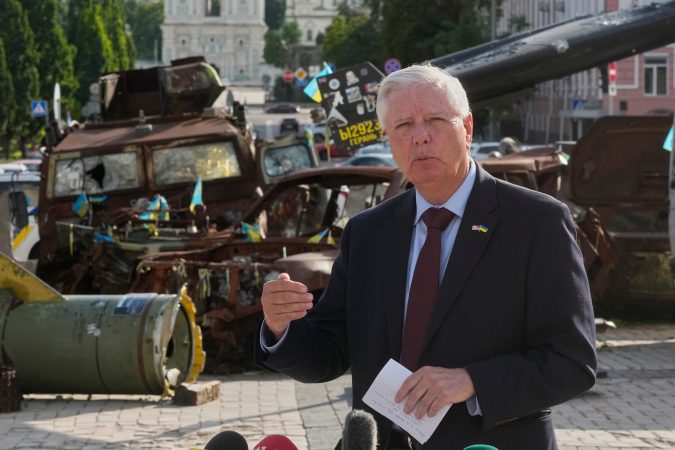
    Over his more than three decades in the House and the Senate, Sen. Graham became nationally known because of a near-constant presence in the news media, where his folksy manner and talent for a good quote put a soft edge on his sometimes hard-line views. On Sunday, he was scheduled to have made what would have been his 64th appearance on NBC’s Meet the Press, following his return from a trip to Ukraine.

    The senator also had a talent for winning elections despite regular attacks from the right and the left. Last month, Sen. Graham won the South Carolina Republican nomination over five challengers in his pursuit of a fifth Senate term, avoiding what many had anticipated would be a runoff and placing him on a glide path to reelection in his deeply Republican home state.

    In celebrating his primary win, Sen. Graham paid tribute to Trump, whom he had in 2016 called “a nut job” unfit to be commander in chief. “I want to thank the big guy, God. Trump comes later. Mr. President, you’re not far behind God, but we’re going to start with him,” he said in the June speech.

    Although Sen. Graham was criticized throughout his political career as a shape-shifter and attention-seeking opportunist, there were some areas in which he was steadfast. Among them was his advocacy of a hawkish foreign policy, often as an ally of Sen. John McCain (R., Ariz.), a longtime friend.

    Sen. Graham championed using the U.S. military and government money to support global allies and confront foreign adversaries, supporting the wars in Iraq and Afghanistan and condemning the withdrawal of troops from both countries.

    Sen. Graham had also pushed both the Biden and Trump administration to provide greater support for Ukraine in its fight against Russia’s invasion. A staunch ally of Israel, Sen. Graham had pressed Trump toward war with Iran and warned him against making a premature deal.

    Israeli Prime Minister Benjamin Netanyahu, speaking Sunday morning on Fox News, praised Sen. Graham as “a great friend” to Israel. “He was absolutely clear. He didn’t bend to fashion, the winds of fashion. He knew who the good guys were, and he knew who the bad guys were. He never confused the two,” Netanyahu said.

    In a social media post written in the predawn hours Sunday, Trump also lauded Sen. Graham — among the few who managed to make it into the president’s good graces after having denounced him — as “one of the greatest people and Senators I have ever known” and “a true American Patriot.”

    A childhood growing up behind a bar

    Lindsey Olin Graham was born on July 9, 1955, in Central, S.C., a town in Pickens County that gets its name for being the midway point of a rail line between Charlotte and Atlanta.

    The future senator grew up in the rooms behind the Sanitary Cafe, a pool hall, restaurant, bar, and liquor store owned by his parents, Millie and Florence James “F.J.” Graham. While his father, also known as “Dude,” tended bar for the millworker clientele, the son racked balls and answered phones.

    He would later say jokingly that he learned everything he really needed to know about politics there, often having to tell a wife who called looking for her husband, “He says he’s not here.”

    The first member of his family to attend college, Sen. Graham set his sights on a military career, joining the ROTC at the University of South Carolina, although a bad ear and his dismal math scores got in the way of his ambition to become a pilot.

    He was still a student when his plans for the future suffered a bigger disruption. His parents died within two years of each other, leaving him to provide for his 13-year-old sister, Darline, who went to live with an aunt and uncle with Sen. Graham as her guardian. After graduating from law school, Sen. Graham legally adopted her, so that she would be eligible for his military benefits.

    “You assume everything’s going to be like Ozzie and Harriet — that doesn’t mean it’s going to turn out that way,” he told the Washington Post in 1998. “So here I’ve got a teenager on my hands. She’s turned out great in spite of me. I was probably a nut. I never let her date. I smelled her clothes if she smoked. I listened in on her phone calls. I was probably pressing too hard, just ’cause I felt such responsibility for her.”

    For her part, Darline Graham Nordone would later describe Sen. Graham as “a brother, a father, and a mother rolled into one.” She survives Sen. Graham, who never married.

    As a newly minted lawyer in 1981, Sen. Graham joined the Air Force’s Judge Advocate General staff, spending four years as a prosecutor and defense attorney in Europe. His defense of an Air Force pilot accused of marijuana use brought him national attention when he was featured in a CBS 60 Minutes report on the Air Force’s faulty drug-testing procedures.

    Upon leaving active duty in 1989, Sen. Graham returned to South Carolina and entered politics. After two years in the state legislature, he was elected to the U.S. House in the Republican wave of 1994, when the GOP recaptured the House after decades in the wilderness.

    The junior member of the House Judiciary Committee enjoyed a star turn as a House manager in Clinton’s 1999 impeachment trial in the Senate chamber. “Where I come from,” he drawled as he described a phone call the president had made to White House intern Monica Lewinsky, “You call somebody at 2:30 in the morning, you’re up to no good.”

    Meanwhile, his military career had continued. He was a member of the South Carolina Air National Guard, called to active duty stateside during the 1991 Persian Gulf War. He joined the U.S. Air Force Reserves in 1995, retiring 20 years later as a colonel. During that time, he did numerous stints in Iraq and Afghanistan, and was the first sitting member of the Senate in decades to do military duty in a combat zone.

    Sen. Graham’s growing celebrity helped propel him when a South Carolina Senate seat opened up in 2002 with the retirement of 100-year-old Strom Thurmond. Sen. Graham won it, in what became the most expensive Senate race in state history.

    Once in the Senate, Sen. Graham became known for working across the aisle and developed a friendship with then-Sen. Hillary Clinton (D., N.Y.) — an unlikely one, given his recent history as one of her husband’s impeachment managers. The two traveled together frequently and co-sponsored legislation.

    Sen. Graham’s independent reputation was boosted by his closeness to McCain, whose presidential candidacy he supported during the bitter 2000 South Carolina GOP primary against the eventual winner, George W. Bush. McCain, the ultimate political maverick and one who shared Sen. Graham’s interventionist foreign policy views, referred to his colleague as “my illegitimate son.”

    As a result, Sen. Graham, like McCain, periodically found himself at odds with the Bush administration. When a scandal broke over torture allegations at Abu Ghraib, a prison run by the U.S. military in Iraq, he demanded accountability up the chain of command. “What are we fighting for?” Sen. Graham asked at a hearing. “To be like Saddam Hussein?”

    On Sunday, Bush issued a statement lauding Sen. Graham as “a knowledgeable Senator who understood how the world works and how important America’s international engagement is to resist tyranny.”

    Hillary Clinton, the Democrats’ 2016 presidential nominee, would later express dismay over Sen. Graham’s transformation during the Trump era. In 2019, she told radio host Howard Stern that he had been someone she “admired and liked enormously” before he became a devotee of Trump, whose bullying, name-calling approach to politics was abhorred by Democrats.

    “I saw him as somebody who, you know, had been working to try to figure out what he believed and how he could do things,” Clinton said. “It’s like he had a brain snatch, you know?”

    From Trump antagonist to Trump loyalist

    In 2015, Sen. Graham announced what would become a quixotic campaign for president.

    Outside of his views on foreign policy, he was seen as a moderate Republican. A year before, he had survived an effort by the tea party movement and right-wing commentators to force him out of office. They branded him “Flimsy Lindsey” and “Grahamnesty” over such apostasies as working with Democrats on climate change and immigration, where he supported widening a path to citizenship for undocumented people.

    “I want to be president to protect our nation that we all love so much from all threats foreign and domestic,” Sen. Graham said in announcing his candidacy. “So, get ready. I know I’m ready.”

    He and Trump, who was running his first and ultimately victorious presidential campaign, clashed often on the debate stage, and Trump at one point gave out Sen. Graham’s personal cellphone number on television, after Sen. Graham called him a “jackass.” As it turned out, the senator was the wrong candidate for the moment in a party that was turning toward Trump’s brand of nativist populism. Sen. Graham left the race in December 2015, before the first votes were cast.

    He subsequently endorsed former Florida governor Jeb Bush and, later, Sen. Ted Cruz (R., Texas), only to see their campaigns go down in flames against Trump.

    Once Trump was in office, Sen. Graham’s began cozying up to the new president, looking past Trump’s demeaning of the Vietnam heroism of Sen. Graham’s friend and idol McCain, who had been a prisoner of war for 5½ years and was diagnosed with deadly brain cancer in 2017.

    Sen. Graham insisted his evolution on Trump was based on acceptance, not opportunism. “I said he was a xenophobic, race-baiting religious bigot,” he told CBS News in 2018. “I ran out of adjectives. Well, the American people spoke, and they rejected my analysis.”

    He and Trump bonded over golf outings, and Sen. Graham constantly fed the president’s famous appetite for flattery.

    “I think Lindsey likes the president a lot more than he thought he would,” Steve Largent, a former congressman and confidant of Sen. Graham, told New York Magazine in 2018. “I think Lindsey feels a little bit like the adult in the room, speaking with the president. … There’s something about, I’m not going to say innocence, but the president’s affability as well as his naiveté that Lindsey is drawn to.”

    Sen. Graham wavered after the Jan. 6, 2021, riot at the U.S. Capitol by Trump supporters seeking to overturn the result of the 2020 presidential election, after Trump did little to stop the violence.

    “Trump and I, we’ve had a hell of a journey — I hate it to end this way. Oh my God, I hate it. From my point of view, he’s been a consequential president, but today … all I can say is count me out. Enough is enough,” Sen. Graham said at the time.

    Still, Sen. Graham did not join seven other Republican senators the following month in voting to convict Trump of inciting an insurrection after he was impeached by the House.

    With the resurrection of Trump’s political career during the 2024 election cycle, Sen. Graham quickly made his way back into the fold. Last month, with his primary approaching, the senator made his pitch to South Carolina voters by noting that he had Trump’s endorsement: “If you want somebody who can go to Washington to help him, I’m your best choice.”