Category: Wires

  • People killed in Bangkok music bar fire were found trapped in windowless bathrooms

    People killed in Bangkok music bar fire were found trapped in windowless bathrooms

    BANGKOK — Most of the people who were killed in a huge fire in a Bangkok music bar were found trapped in windowless bathrooms where they may have sought to escape the flames that claimed at least 27 lives, authorities said Monday as investigations began.

    The blaze at the Rong Beer Na Ladprao bar was the city’s deadliest in 17 years. It broke out late Sunday in a northern part of the Thai capital, and firefighters needed half an hour to bring it under control. The fire left 25 people hospitalized in critical condition, city officials said.

    Bangkok Gov. Chadchart Sittipunt said most of the deaths were caused by smoke inhalation.

    By daybreak Monday, the site had been cordoned off as dozens of forensic officers sought clues about what caused the fire. The bar’s street-facing windows were blown out, and debris littered the sidewalk, including charred television sets, speakers, and an electric guitar. Associated Press journalists looking through the shattered windows could see empty beer bottles still sitting atop burned tables.

    The bar, which in Thai calls itself a brewery or beer hall, claimed to accommodate as many as 600 customers. It was not clear how many were present Sunday night.

    According to Bangkok’s Erawan emergency services center, 73 people were hurt. The Bangkok city government said there were 28 dead, one more than Erawan’s tally.

    The dead were trapped in bathrooms

    National Police Chief Kittharath Punpetch said most of the dead were found trapped in windowless bathrooms near one of the rear exits, where they may have sought shelter from the flames.

    He said the exit was not used, and people may have been blocked from reaching it by a table set up in a hall to sell candy, or because it was too dark to find the way out.

    Access to another exit near the kitchen might also have been narrowed by shelving units and lockers, said Kittharath, who visited the scene Monday. There were signs that at least some of the exit doors might have been locked, he added.

    Investigators focused on the ceiling above a performance stage, where they found materials that may have been used as decorative elements, he said. Police will examine whether flammable materials were used in the interior and how electrical wiring was installed across the ceiling.

    Prime Minister Anutin Charnvirakul told reporters that a musician who was performing at the bar told him he saw smoke coming out of a circuit breaker near the stage before the power went out. Then an explosion was heard, and thick smoke quickly filled the place.

    Video posted on social media showed people fleeing as flames shot out of the single-story building and black smoke billowed into the sky.

    Buddhist monks pray for the dead

    Several Buddhist monks visited the site Monday to pray for the victims, while nurses handed out face masks to help protect people from lingering smoke and fumes from the building.

    A registration site was set up to gather information from relatives looking for loved ones.

    Singer Sukanya Wongwongwai said she was performing nearby when she heard about the fire and rushed to the scene because several of her band mates were performing at the bar. She said one of them died, three were hospitalized, and one had not been located. Her band later announced on Facebook that the missing member was also found hospitalized.

    “From what I heard from people who were inside when the fire started, everything went dark. The power was out, and there was smoke everywhere, so they couldn’t locate other people,” she said.

    In a statement posted on Facebook, the bar offered apologies and condolences and said it was cooperating with investigators. It said the bar’s owner suffered serious injuries and was in an intensive care unit.

    Mourning family members identify the dead

    Family members gathered at Bangkok’s Institute of Forensic Medicine to identify the dead.

    Keo Oudone Poungpany, 24, was at the institute to identify his younger brother’s body. Both of the brothers, migrant workers from neighboring Laos, were working as bar employees when the fire broke out.

    Poungpany said he was using a restroom outside the bar when the fire began.

    He described walking back toward the bar and encountering dozens of people running away from the flames and hearing loud noises.

    From the outside the bar, he began shouting for his brother. “The heat was unbearable, I couldn’t get back in,” he said.

    “For now, I want to bring my younger brother’s body back home,” Poungpany said. “I want to bring him home to my parents. My parents are waiting for their kids to come back together, but now one is gone.”

    In 2022, 14 people were killed by a fire at a music bar in the eastern part of the country. And more than a decade before that, 67 people were killed and more than 200 injured in a fire during a Jan. 1, 2009, New Year’s Eve celebration at the Santika nightclub in Thailand’s capital. That blaze was apparently sparked by an indoor fireworks display.


  • Ukraine and 9 other countries announce a coalition to protect Europe from ballistic missiles

    Ukraine and 9 other countries announce a coalition to protect Europe from ballistic missiles

    PARIS — Ukraine and nine other countries announced Monday they were forming a coalition to protect Europe from ballistic missiles, utilizing Kyiv’s experience in fighting Russia’s full-scale invasion for over four years.

    “Our goal is to build a shared ballistic missile defense capability for Europe,” the 10 nations said in a statement in Paris at talks with Ukrainian President Volodymyr Zelensky.

    He was asking two dozen leaders for help in developing measures against Russia’s missile attacks that have pummeled his country and made the rest of Europe wary of Moscow’s wider ambitions on the continent.

    Zelensky and the leaders of Denmark, France, Germany, Italy, the Netherlands, Norway, Spain, Sweden, and the United Kingdom said they recognized “the growing threat posed by ballistic missiles,” which are harder to stop than cruise missiles or drones.

    “We believe that protecting Europe requires a comprehensive solution, in the form of an integrated missile defense architecture, to deter and neutralize future missile threats,” the statement said. “We recognize Ukraine’s unique experience, gained through its defense against the war of aggression waged by Russia.”

    The statement gave no time frame for setting up the defense system and said the plan remained open to other countries.

    Putin shows no sign Russia is backing down

    Russian President Vladimir Putin was unyielding, vowing Monday emphatic retaliation to Kyiv’s recent long-range attacks on refineries, tankers, and terminals that have caused widespread fuel shortages.

    “Wherever they attempt to strike Russian territory, we will respond in kind, but our strikes will be several times more powerful,” Putin told a meeting with pro-Kremlin activists.

    European foreign ministers were meeting separately in Brussels where they discussed Ukraine’s needs and Russia’s threats to the continent.

    Zelensky is keen to accelerate efforts with European countries to develop its air defenses ahead of winter, when Russia usually intensifies its attacks to deny Ukrainians electricity, heat, and water.

    Ukrainian officials were in Paris to present a proposed Anti-Ballistic Program and meet with government leaders, national security advisers, and defense companies who might take part, Zelensky said.

    U.S. President Donald Trump’s pledge last week to give Ukraine a license to produce Patriot air defense systems to counter the ballistic missiles could mark a major breakthrough for Kyiv. However, experts and Ukrainian officials warn that turning the idea into reality would probably take years. It was unclear how quickly a European system could be built.

    Ukraine wants to push Putin into negotiations

    Kyiv and its European backers want to press home Ukraine’s recent successes and compel Putin to negotiate an end to the fighting, although Moscow has shown no willingness to compromise despite peace efforts by the Trump administration.

    Kremlin spokesperson Dmitry Peskov said Moscow will closely follow the Paris meeting but dismissed its aspirations.

    “This is a coalition of warmongers,” Peskov said. “They are driven by the profound delusion that it’s possible to inflict a strategic defeat on our country, so this is a coalition of the deluded, a coalition of those who incite the war.”

    Ukraine’s advances in drone technology have given it an edge recently, analysts and Western officials say. Its strikes on supply routes behind the front have robbed the Russian army of momentum and made its progress slow and costly, they say.

    Ukraine says it hit 105 Russian vessels in 8 days

    Ukrainian forces struck 105 Russian vessels in the Sea of Azov next to the Crimean Peninsula between July 6-13, said Robert Brovdi, commander of Ukraine’s Unmanned Systems Forces.

    The vessels included tankers, dry cargo ships, a ferry, and tugboats, Brovdi said on the Telegram messaging app.

    The campaign is part of a broader Ukrainian effort to isolate the Crimean Peninsula, which is enduring its worst fuel crisis since it was illegally annexed by Moscow in 2014, and disrupt Russian logistics. Crimea is a key rear base for Russian forces occupying parts of southern Ukraine.

    It was not possible to independently verify the claims, and Russian officials made no immediate comment.

    European leaders demonstrate their commitment to Kyiv

    The Paris meeting of the so-called Coalition of the Willing, which brings together more than 30 countries and about 25 heads of state and government, appeared to be a demonstration of a long-term commitment to Ukraine and a warning to Russia, as Moscow tests Europe’s resilience.

    Zelenskyy’s trip to the French capital followed the death of U.S. Sen. Lindsey Graham (R., S.C.), one of Kyiv’s staunchest supporters in Washington. Lawmaker Oleksandr Merezhko called Graham “the closest link between Ukraine, our president, and Trump.”

    The trip also comes amid a major reshuffle of Zelensky’s government that saw Prime Minister Yulia Svyrydenko step down Sunday.

    French Foreign Minister Jean-Noël Barrot said he would summon the Russian ambassador to France and impose sanctions against Russian hackers. He told BFMTV-RMC that the issue is about “a vast cyber campaign aimed at sabotage and espionage, carried out by Russia in about 10 European countries.”

    Ukraine’s neighbors have also felt the war’s impact.

    In the latest incident, a drone launched during Russian overnight attacks on Ukraine’s Odesa region crashed and exploded on Moldova’s territory, Moldova’s Ministry of Foreign Affairs said Monday. It said the incident was “serious and unacceptable.”

    Ukraine fires over 300 drones toward Moscow

    Ukraine has aimed at targets deep inside Russia with its domestically developed long-range drones and missiles.

    Russian air defenses downed 350 Ukrainian drones heading toward Moscow since late Sunday, including 50 near the capital, its Mayor Sergei Sobyanin said.

    Moscow regional Gov. Andrei Vorobyov said 81 Ukrainian drones were downed overnight, adding that three people were killed and three were injured by the attack in the Pionersky settlement in the western part of the Moscow region.

    The Ukrainian air force, meanwhile, said Russia launched 134 long-range strike drones and three guided aviation missiles at Ukraine.

    A strike on port infrastructure in Ukraine’s Odesa region set fire to a docked merchant vessel carrying fertilizer under the flag of Togo, killing five crew members and wounding 10, said regional military administration head Oleh Kiper.

    Russia says it thwarted a major Ukraine drone operation

    Russia’s Federal Security Service said it had thwarted a Ukrainian plan for a drone attack on the Ukrainka air base in the far eastern Amur region and the Shagol air base in the Chelyabinsk region in the southern Urals.

    Small drones were smuggled into Russia’s Bryansk region using air balloons and bigger transport drones, then taken by car near the air bases by Ukrainian agents, who were arrested, the security service said.

    A covert Ukrainian operation a year ago, dubbed Operation Spiderweb, destroyed or damaged nearly a third of Moscow’s strategic bomber fleet with drones carried secretly into Russia, according to Ukrainian officials.

  • U.K. police rearrest the suspect in Ann Widdecombe killing on terrorism suspicion

    U.K. police rearrest the suspect in Ann Widdecombe killing on terrorism suspicion

    LONDON — The killing of former British politician Ann Widdecombe is being investigated as a terrorist act, police said Monday.

    A 28-year-old man in custody on suspicion of murder was rearrested on suspicion of commission, preparation, or instigation of acts of terrorism, Counter Terrorism Policing South East said.

    Devon and Cornwall Police originally said the killing was not believed to be a terror-related crime and there was nothing to suggest it was politically motivated.

    “We now have new information and evidence that means Counter Terrorism Policing is now leading the investigation,” the head of National Counter Terrorism Policing, Laurence Taylor, said. “We are pursuing multiple lines of inquiry to establish the motivation for this attack.”

    Widdecombe, 78, a former member of Parliament, was found dead last week in her isolated rural home in a southwest England village. Police did not disclose a cause of death, saying only that she had sustained “serious injuries.”

    The death sent shock waves through British politics, where Widdecombe had been a prominent voice for decades, known for her robust personality and socially conservative views opposing abortion and the expansion of LGBTQ+ rights.

    The suspect, who has not been named because he hasn’t been charged, was arrested Saturday in South Yorkshire county in northern England, more than 200 miles from the village of Haytor on the edge of Dartmoor National Park, where Widdecombe was found dead Thursday.

    Police said they believe Widdecombe was attacked at around 12:30 p.m. on Wednesday. Concerns were raised for her after she failed to appear for a scheduled TV interview on Wednesday afternoon.

    Widdecombe was a lawmaker in the House of Commons from 1987 to 2010, serving in roles including prisons minister in Prime Minister John Major’s 1990s Conservative government.

    Widdecombe found fame after leaving Parliament as a contestant on the reality television shows Strictly Come Dancing and Celebrity Big Brother.

    She later joined the Brexit Party, briefly serving as a member of the European Parliament before Britain left the European Union in 2020. Most recently, she joined the anti-immigration Reform UK party, often appearing in the media as a spokesperson.

    Friends and colleagues contrasted her pugnacious political statements with her personal kindness and good humor.

  • EU rallies $1 billion in pledges for Gaza’s recovery

    EU rallies $1 billion in pledges for Gaza’s recovery

    BRUSSELS — The European Union has coordinated efforts to raise 900 million euros ($1 billion) in pledges of aid for Gaza’s rebuilding following two years of Israeli bombardment that left much of the Palestinian enclave in ruins, a senior EU official said Monday.

    How much of the money will be delivered, and when reconstruction of Gaza can begin, is unclear. The ceasefire between Israel and the Hamas militant group that took effect in October is effectively stalled.

    European Commissioner for the Mediterranean Dubravka Šuica announced the fund after a meeting in Brussels of the Palestine Donors Group, which includes EU and Middle East nations along with international organizations and financial institutions.

    “The ceasefire in Gaza remains fragile, and the situation on the ground for civilians is not getting better,” Šuica said. She said the money will move through “trusted partners” but didn’t give details.

    Few places in the Palestinian territory of over 2 million people have been left unscathed, and the United Nations, World Bank, and EU estimate that reconstruction will cost $70 billion.

    The U.N. has said Gaza has more than 60 million tons of rubble, enough to fill nearly 3,000 container ships. It will take over seven years to clear, with additional time for demining.

    The meeting also brought together Nickolay Mladenov, the head of the Board of Peace set up by U.S. President Donald Trump to lead Gaza’s reconstruction; Trump’s son-in-law, Jared Kushner; Ali Shaath, the head of the new Palestinian committee meant to administer Gaza’s daily affairs but still unable to enter; and Palestinian Authority Prime Minister Mohammad Mustafa.

    Mladenov has made clear that the next steps in implementing the ceasefire are stalled over the difficult issue of disarming Hamas militants in Gaza.

    “We are investing not only in the Palestinian future but also in the regional stability, shared security, and just and lasting peace for everyone together,” Mustafa said, calling for “a resilient, sovereign, contiguous, and viable Palestinian state” — something Israel’s current government has opposed.

    The Palestinian Authority seeks a role in Gaza’s reconstruction, but the U.S. 20-point plan only makes a reference to the possibility of a future Palestinian state.

    Meanwhile, EU ministers discuss the West Bank

    Separately, top diplomats from the 27-nation EU debated how to respond to increased Israeli settler violence in the occupied West Bank.

    The bloc’s executive, the European Commission, has tabled options including cutting off trade with Israeli settlements in the territory.

    Nations like Ireland and Spain are calling for forceful action. The Czech Republic, Germany, and others alongside the commission are more cautious, seeking to apply incremental pressure. Some nations have signaled they would veto sanctions.

    Do sanctions “have a meaningful impact or not? What role could they play as a political message, and would this be escalatory in a wrong direction?” said Bulgarian Foreign Minister Velislava Petrova-Chamova.

    The EU’s foreign policy chief, Kaja Kallas, said the European Council’s legal service had found that severing trade ties with Israeli settlements in the West Bank — not technically sanctions — would require a majority vote and not total unanimity from bloc members.

    Luxembourg’s Foreign Minister Xavier Bettel said a clear majority in the EU agrees on severing commercial ties with the settlements. He dismissed arguments that tough action would boost Israeli Prime Minister Benjamin Netanyahu’s chances in an election in October: “I hope that now it’s time for decisions.”

  • Fire in Fontainebleau forest near Paris triggers evacuations; 10 still missing in Spanish wildfire

    Fire in Fontainebleau forest near Paris triggers evacuations; 10 still missing in Spanish wildfire

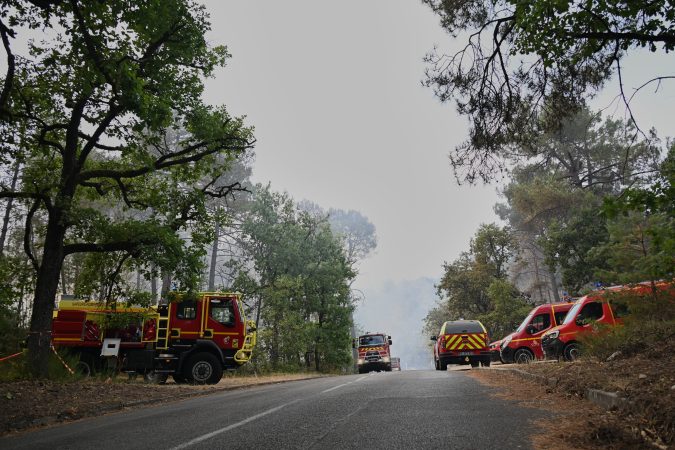
    FONTAINEBLEAU, France — A fire raging in the historic and much-visited Fontainebleau forest south of Paris on Monday prompted evacuations of some residential neighborhoods and disrupted train and highway traffic.

    It was among several wildfires in western Europe as the region bakes under its third red-alert heat wave this year.

    In Spain, 10 people were still unaccounted for Monday from a fire that ripped through a remote southern expatriate community last week, killing 13 people in one of the country’s deadliest blazes.

    The Fontainebleau forest fire is unusual for its proximity to the French capital — about 42 miles away. The region hosts the Fontainebleau Chateau favored by Napoleon and is popular with visitors from Paris and beyond.

    French President Emmanuel Macron said all necessary means were being deployed to fight the fire of ″exceptional scale.”

    Two water-dumping planes were deployed over the area along with hundreds of firefighters, regional fire service spokesperson Paul Laurain told public broadcaster France-Info.

    The head of the regional administration, Pierre Ory, told French media that an investigation is underway and that arson was being considered a possibility.

    A new fire has broken out in another section of the forest, Ory said. The initial fire is still not contained and was continuing to spread at a moderate rate.

    “Winds are turning, which is significantly complicating the work of the firefighters,” he said.

    Trains to and from the bustling Gare de Lyon train station were disrupted late Sunday but were returning to normal Monday morning. A section of the busy A6 highway leading southeast of Paris was shut down because of fire risk.

    Large fires in southern France have already scorched thousands of acres since last week, disrupting the Tour de France cycling race and stretching firefighting resources.

    France is experiencing the peak of its third heat wave of the summer, with temperatures surpassing 104 degrees Fahrenheit across western and central areas and around 98 F in Paris.

    Spain reeling from deadly wildfire

    A 93-year-old British national died Sunday in a hospital from injuries sustained in the Los Gallardos wildfire, elevating the death toll to 13.

    Spanish Prime Minister Pedro Sánchez was expected to visit the site of the fire on Monday. Regional authorities said the blaze was contained Sunday after affecting some 27 square miles of forest and farmland — larger than the size of Manhattan.

    Spain is experiencing extreme heat, which combined with wind and little rainfall is creating the ideal conditions for small wildfires to grow unchecked.

    Europe is the world’s fastest-warming continent, with temperatures increasing twice as fast as the global average since the 1980s, according to the European Union’s Copernicus Climate Change Service.

    Homes evacuated in U.K. due to fires

    In the U.K., people were evacuated from several dozen rural homes in north Wales after a wildfire broke out across a mountainside on Sunday, British media reported.

    Wildfires also burned in several locations across England as another heat wave — the third this year — brought hot, sunny and dry conditions.

    The Met Office said record heat waves since May have led to 2026 becoming the first year to record temperatures of 95 F or higher on six separate days. That broke the previous record set in 1976 and 2020, when five days were recorded with such temperatures.

    Natural England’s fire severity index has put much of England at “very high” risk of wildfires, with some areas in southern England and the Midlands at “exceptional” risk.

  • Minnesota prosecutors obtain long withheld evidence in investigation into protest shooting deaths

    Minnesota prosecutors obtain long withheld evidence in investigation into protest shooting deaths

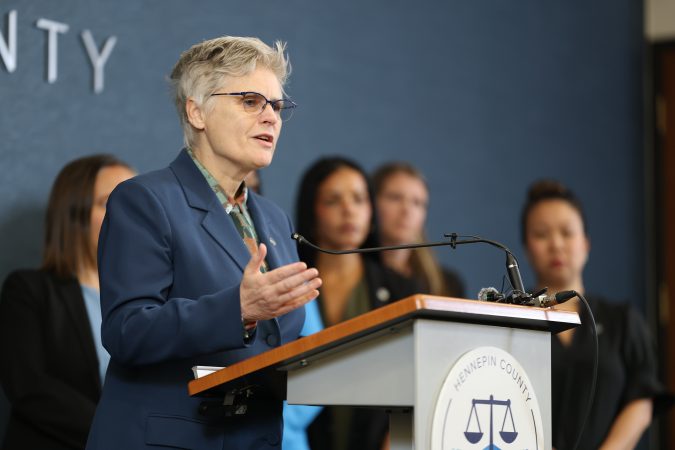
    Minnesota prosecutors announced Monday that they have obtained key evidence in their ongoing investigations into the fatal shootings of Renee Good and Alex Pretti during pitched protests against a federal immigration enforcement crackdown in the state earlier this year.

    “Through the cooperation of our federal partners we have obtained the hard drives of previously withheld evidence in the killings of Renee Good and Alex Pretti and the shooting of Julio Sosa-Celis,” Hennepin County Attorney Mary Moriarty said. “We have also obtained some of the physical evidence that was previously withheld, including Renee Good’s car.”

    Statements, police body camera video, and other evidence had previously been withheld by federal officials in the killings.

    She said state and local investigators now also have in their possession Good’s damaged car.

    Good, a 37-year-old mother of three, was shot and killed in her car while leaving an anti-immigration enforcement protest in Minneapolis on Jan. 7 as U.S. Immigration and Customs Enforcement agents surged through the region.

    Her death and that of Pretti, a 37-year-old intensive care nurse shot and killed by federal officers just weeks later during a Jan. 24 protest, sparked outrage across the country and calls to rein in immigration enforcement.

    “The wonderful thing now is we have all the evidence,” Moriarty said.

    Investigators are going through all the evidence, including hard drives with statements, hours of video recorded by body-worn cameras, and the car Good was driving, Moriarty said.

    “We need transparency. We need cooperation. Our community needs it,” she said. “Our democracy requires it.”

    At the end of June, Minnesota Attorney General Keith Ellison and Moriarty asked a federal judge to push out the deadlines in their lawsuit against the U.S. Department of Justice because they said they were in the midst of recently reinitiated “ongoing discussions” with the FBI about information sharing.

    Those ongoing discussions with the FBI about information sharing are likely to affect Minnesota’s request for summary judgment in the case, Ellison and Moriarty wrote in their motion to the court.

    The attorneys representing the federal government signed onto the motion.

    Ellison said he remains “deeply troubled that the federal government spent more than half a year attempting to conceal this evidence from state investigators.”

    “It should never have taken this long for Minnesota law enforcement to gain access to the federal government’s evidence,” he said in a statement. “I hope that this is the beginning of a major course correction on the part of the federal government.”

    There have been at least eight deaths since the Trump administration’s immigration enforcement campaign began last year, but nobody has been charged in connection with them.

    A Minneapolis resident, Julio Cesar Sosa-Celis, was also shot and injured in his home while ICE agents were in pursuit of another man.

    In May, Christian Castro, an ICE agent, was arrested and charged with assault as well as falsely reporting a crime in connection with that Jan. 14 nonfatal shooting.

    Prosecutors say Castro, 52, fired through a home’s front door and shot Sosa-Celis in the thigh.

    In April, Gregory Donnell Morgan Jr., another ICE agent, was charged with pointing his gun at a motorist and passenger on a Minneapolis highway.

    Prosecutors said at the time it was the first criminal case against a federal officer involved in the Minnesota immigration crackdown.

    On Monday, ICE was involved in a fatal shooting in Maine, according to state House Speaker Ryan Fecteau, a Democrat.

    Details of what transpired in Biddeford, a coastal city of about 23,000 people roughly 15 miles southwest of Portland, remained unclear.

    Last week, an ICE agent in Houston fatally shot a Mexican national who had lived in the U.S. for decades as the homebuilder drove his construction crew to a job site.

    The federal Department of Homeland Security, which oversees ICE, has acknowledged officers were looking for someone else when they attempted to stop Lorenzo Salgado Araujo’s vehicle. The agency maintains Salgado Araujo rammed an ICE vehicle, prompting an officer to open fire in self-defense.

  • ICE shot and killed motorist in Maine. Advocates say he’s a 26-year-old man from Colombia

    ICE shot and killed motorist in Maine. Advocates say he’s a 26-year-old man from Colombia

    BIDDEFORD, Maine — The motorist killed by ICE officers in a Maine shooting Monday was not the target of the warrant the officers were executing, Sen. Angus King said Homeland Security Secretary Mullin told him.

    It’s the second time in a week that U.S. Immigration and Customs Enforcement agents have used deadly force and at least the ninth since President Donald Trump began his immigration crackdown.

    Immigrant rights groups identified the man who was killed as a 26-year-old native of Colombia.

    King, an independent senator from Maine, said Mullin told him the officer opened fire after the man tried to use his vehicle as a weapon against officers in Biddeford, a coastal city roughly 15 miles southwest of Portland.

    “He was in a vehicle — pulled out in the vehicle, and the term the secretary used was ‘weaponized’ the vehicle and was shot by an ICE agent,” King said.

    King had initially said Mullin told him the man was the target of a deportation effort. Mullin later called King with new information he had received, a spokesperson for the senator said.

    The Maine attorney general’s office, which is investigating along with the FBI and other agencies, said initial statements suggest the motorist was trying to flee in the direction of the agent. The man was the target of an enforcement operation related to a final order of removal, the office said, and the agent who killed him has been placed on leave.

    Messages seeking comment were left for ICE and the Maine Department of Public Safety.

    Man was authorized to work in U.S., advocates say

    The advocacy groups Maine Immigrants’ Rights Coalition and Presente! said the man who was killed was authorized to work in the U.S. and had a Social Security number. After the shooting, his family contacted the Immigrants’ Rights Coalition, executive director Mufalo Chitam said.

    “It’s a young family and he was leaving to go to work,” Chitam told the Associated Press. The family, she said, isn’t ready to speak publicly about the shooting.

    Mary Hayes, who lives close to where the shooting happened, said the man lived nearby with his wife and daughter.

    “I watched a wife fall to her knees looking at her husband’s dead body on the ground,” Hayes told the AP as she held a piece of cardboard with “No ICE Stop ICE” written on it. “I watched a little girl crying with a little pink backpack on because she’s never going to see her father again.”

    The Colombian Embassy told the AP in an emailed statement that it is in contact with U.S. authorities and “working to formally confirm the individual’s identity and nationality.”

    Security video but no body-worn camera footage

    Cory Poulin, whose family runs a laundromat near the scene, told the AP that security cameras at the business captured footage of the man’s car rolling into the intersection after shots were fired. Other images from the scene showed the car going in circles and bullet holes in its windshield.

    “Two ICE members ran to the intersection and another ICE member in a Ford SUV went into the intersection to stop the car from rolling,” he said. “I don’t know for a fact, but I don’t believe he was alive when the car started rolling.”

    He said Maine State Police asked that he not release the footage publicly.

    The agents involved in the shooting didn’t have body-worn cameras, King said.

    “The question is, what did he do with his vehicle,” King said. “Were officers threatened? Were the threats rising to the level that justified deadly force?

    “That’s what this investigation is all about and I certainly intend to stay after it to do everything I can to be sure the investigation is as transparent and thorough as possible.”

    Anti-ICE protesters gather near scene

    Dozens of demonstrators critical of ICE and President Donald Trump’s ongoing immigration crackdown gathered in Biddeford within hours of the shooting.

    Amy Goodman, who is from nearby Wells, arrived with a sign that said “Stop Killing Us” and directed it toward police working at the scene.

    “Sadly, it’s something we’re seeing a whole lot more often lately, and I’m mad about it,” said Goodman, who was wearing a shirt that said “ICE is best when crushed.”

    “It’s heartbreaking and I wanted to show up,” Goodman’s friend, Molly Zucker of Cape Neddick, said as she held a sign reading, “No human being is illegal.”

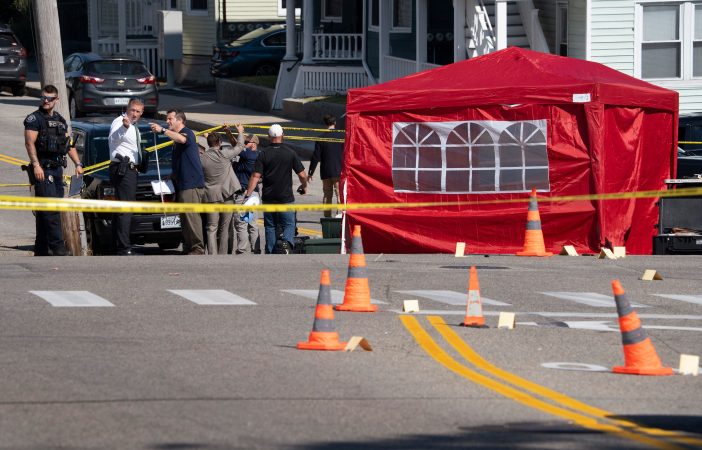
    Police blocked access to the shooting scene, which is in a neighborhood of mostly multifamily homes, churches, and businesses near downtown. Several protesters stood nearby, with some holding signs condemning ICE’s presence in the community and state.

    “We are grieving, we are furious, and we will not allow his death to be treated as routine or inevitable,” Chitam said. “How much more harm must our communities endure before those with the power to act acknowledge that this has gone too far?”

    A recent uptick in Trump’s immigration crackdown

    The fatal shooting in Maine was at least the ninth death from an encounter with federal immigration officials since the start of the Trump administration’s immigration crackdown and the second in a week, following the killing of a Houston man.

    The reported shooting comes amid a newly intensified push by the Trump administration to carry out its mass deportations agenda. During the five-day period at the end of June, ICE arrested more than 10,000 people. The figures indicate that while the administration is no longer cracking down on individual cities, the arrests continue and are surging.

    “More than anything else, I want to know, ‘Why are you in Maine?’” Rep. Chellie Pingree (D., Maine) said in a video posted on social media.

    Maine Secretary of State Shenna Bellows, a Democrat running for Senate, wrote on X: “It’s time to get ICE off our streets.”

    Hundreds of Maine ICE arrests since Trump’s return

    ICE had a significant presence in Maine earlier this year, which prompted several protests.

    The Homeland Security Department named the operation “Catch of the Day,” an apparent play on Maine’s seafood industry, just as it has done for other enforcement surges, like “Metro Surge” in Minnesota and “Midway Blitz” in Chicago.

    Immigration officials said in late January that they had ceased “enhanced operations” in Maine after hundreds of arrests.

    A Homeland Security spokesperson said at the time that some Maine arrests were of people “convicted of horrific crimes” including aggravated assault and endangering the welfare of a child.

    Court records show that while some had felony convictions, others had unresolved immigration proceedings or had been arrested but never convicted of a crime.

    ICE arrested 546 people in Maine between the start of Trump’s second term and March 11, 2026, the most recent data available, according to ICE arrest data provided to the University of California, Berkeley Deportation Data Project and analyzed by the AP. About 45% of those arrested had criminal backgrounds. During the equivalent 416-day period before Trump took office, roughly 69% of those arrested had criminal backgrounds, the data show.

    The Trump administration’s immigration crackdowns were widely condemned last winter after the killings of Alex Pretti and Renee Good in Minnesota.

    Last week, an ICE officer fatally shot 52-year-old Salgado Araujo, of Houston, after he was pursued by federal agents driving unmarked vehicles while he was taking his construction crew to their latest job site.

  • Prosecutors went to prison to ask the prisoners how to fight crime

    Prosecutors went to prison to ask the prisoners how to fight crime

    Except for the portraits of Jesus, the chapel in California’s oldest prison is reminiscent of a high school gymnasium, with cinder block walls and a high, narrow strip of windows. On a recent day, it was the venue for an unusual six-hour event in which the people in prison had a chance to talk to the people who put them there.

    About 60 men in dusky blue work shirts — referred to as “inside people” — congregated with about 20 people in darker business attire — “outside people,” a contingent of district attorneys and their staff members.

    It was the first time that Erik Nasarenko, the district attorney for Ventura County, had visited a prison in his 18 years as a prosecutor. Gripping and grinning, he worked the crowd. “What high school did you go to?” he asked one inmate, who was from Long Beach.

    “Wilson,” the man said, affably. “For one day. Then I went to juvenile hall.”

    Prosecutors rarely visit prisons, and even more rarely converse at length with people doing hard time. This was the second annual such meeting convened by Brooke Jenkins, the top prosecutor in San Francisco, who said that both sides stood to gain from the experience.

    Prosecutors could ask prisoners for ideas about what interventions might have prevented their younger selves from committing crimes. And prisoners could tell their stories of redemption to the very officials who might review their requests for parole or a shortened sentence.

    The location itself, on a stretch of Bay Area waterfront, was a draw for the outside people. Once the infamous home of California’s death chamber, the prison has undergone a rebrand. Three years ago, its name was changed from the San Quentin State Prison to the San Quentin Rehabilitation Center, where prisoners have access to therapeutic and job training programs and can work on the hit podcast Ear Hustle; on the San Quentin News, which is distributed at prisons around the state; or in a soon-to-open cafe.

    Prosecutor visits to San Quentin began in 2012 with George Gascón, Jenkins’ predecessor. Understanding the rehabilitation process helped prosecutors make better decisions, Gascón said then. For her part, Jenkins has supported proposals by San Quentin prisoners to ensure that the money they pay to the courts goes to crime victims first — before fines and fees — and for single-occupancy cells, to make prisoners safer and more productive. The first idea became state law; the latter passed in the state Assembly last year.

    After bagels and coffee, a microphone was passed around the chapel for introductions. The chief prosecutor for Merced County turned out to be seated between a man convicted of carjacking and another convicted of murder; the acting district attorney for Yolo County was rubbing elbows with a former police officer who had kidnapped and raped women, and a man who had killed his own son.

    Many of the residents had worked their way from rougher institutions to San Quentin, where they are encouraged to come to terms with the harm they had caused. Several mentioned their victims by name and made a point of saying they had been “rightfully convicted.”

    The day’s chosen moderator, an inside person, invited everyone in the room to take two deep breaths, in unison. “We just heard a lot of accountability,” he said, “and I really believe in self care.”

    State prison officials permitted the New York Times to observe the event on the condition that prisoners not be identified, except for a handful who were selected to give interviews.

    After a panel discussion, the outside people were given a tour of a new learning complex with floor-to-ceiling windows and benches fashioned from gargantuan wooden beams.

    Stephen Wagstaffe, the district attorney of San Mateo County, who has been a prosecutor for 49 years, was attending for the second time.

    “In California at large, I’m one that would be described as one of the public safety, law-and-order, harsh types. I fully acknowledge that’s what I am,” he said. But, he added, “This is spectacular. This is what we ought to be doing.”

    Wagstaffe said he did not approve of recent changes to California law that allowed prisoners to seek relief from sentences that can exceed 100 years, even in crimes where no lives were lost.

    But he had made one adjustment since his last visit, he said. “I went back to my office and I put in a rule that nobody in my office can request a three-digit sentence without my review and approval.”

    He gestured toward a San Quentin resident. “I see people like this gentleman and I think, ‘You know, he doesn’t have to die here.’”

    For the next two hours, the inmates and the prosecutors gathered in smaller sessions that one DA described as “inmate-led focus groups.” Among the topics: the difficulty of determining when a prisoner is truly rehabilitated, whether prosecutors could hire people with the “lived experience” of having done time, ways to expand prisoner mentoring of at-risk youth, and how to get hip-hop songs, recorded by prisoners and aimed at deglamorizing violence, into the hands of DJs. Prosecutors asked what might have kept the inmates from committing crimes in the first place.

    “To be honest, I don’t know if I could have told anything to my younger self to stop the journey that I was on,” said Ryan Pagan, who was serving 77 years for a murder he committed as a teenager. Now, he makes podcasts and documentary films. People had tried to scare him straight, he said, but he did not listen. “I feel like I needed prison.”

    Jenkins protested. “That makes me feel hopeless,” she said.

    Another inmate, Jason Jenkins, said it might have helped if someone had been around to cultivate his talent for basketball. But his mother had gone to prison for dealing drugs when he was 5, and his father had been shot and killed by police. “No one ever showed up to my basketball games,” he said.

    And Taiosisi Matangi, who regularly speaks to high school students as part of a San Quentin mentorship program, said it was more important to listen to kids than to scare them.

    If he could talk to his younger self, he would say that the abuse he experienced as a child was not his fault.

    “But,” he would add, “we can do something to get you out of there and stop thinking that violence is OK.”

    This article originally appeared in the New York Times.

    Inmates show a film made through the filmmaker training program at the San Quentin Rehabilitation Center in San Quentin, Calif., May 29, 2026. What might stop kids from committing crimes? A group of district attorneys went to San Quentin, once one of California’s most infamous prisons, to ask the inmates for advice. (Rachel Bujalski/The New York Times)RACHEL BUJALSKI
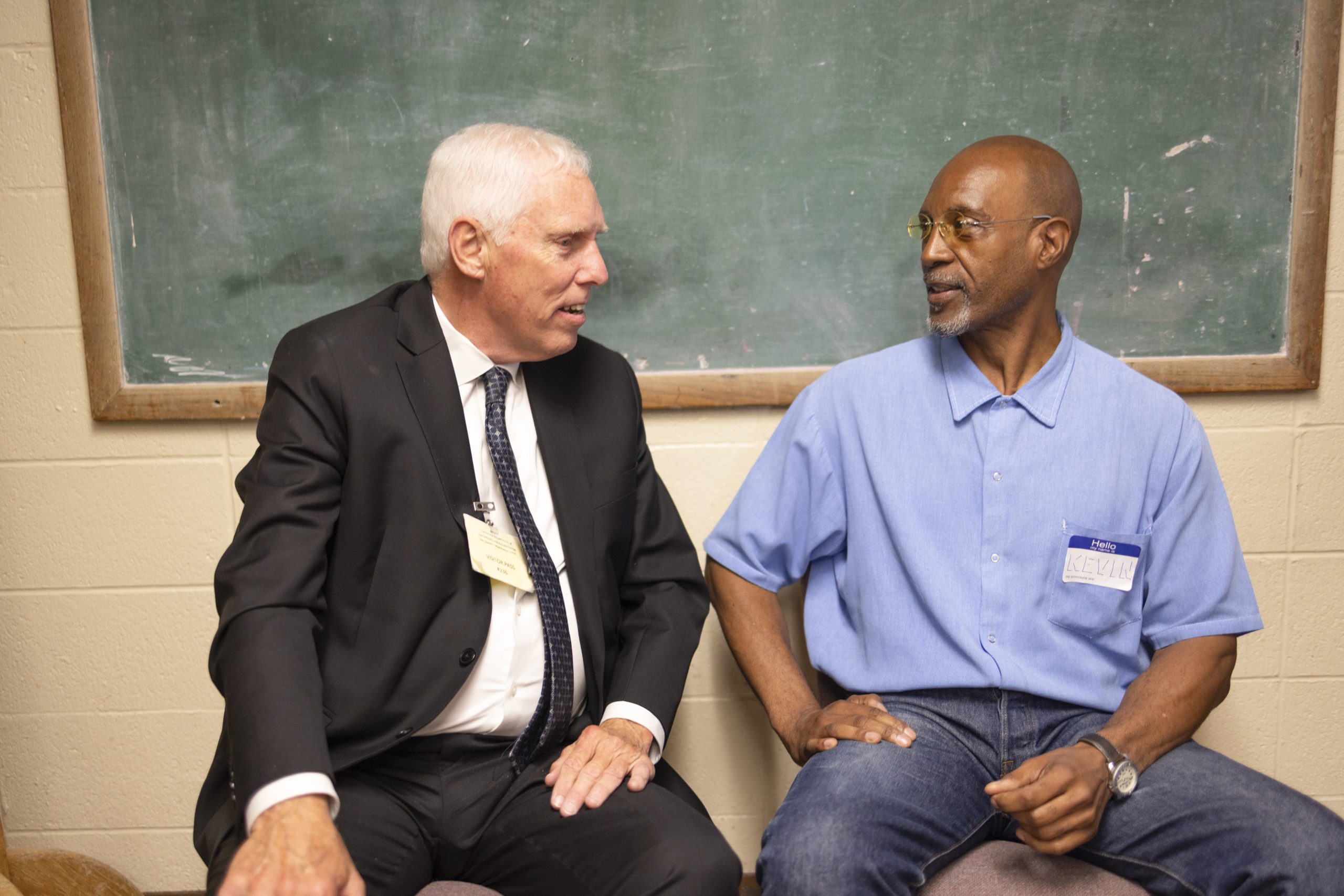
    Stephen Wagstaffe, the district attorney of San Mateo County, speaks with Kevin Sawyer, an inmate at the San Quentin Rehabilitation Center in San Quentin, Calif., May 29, 2026. What might stop kids from committing crimes? A group of district attorneys went to San Quentin, once one of California’s most infamous prisons, to ask the inmates for advice. (Rachel Bujalski/The New York Times)RACHEL BUJALSKI
    District attorneys gather after meeting the inmates at the San Quentin Rehabilitation Center in San Quentin, Calif., May 29, 2026. What might stop kids from committing crimes? A group of district attorneys went to San Quentin, once one of California’s most infamous prisons, to ask the inmates for advice. (Rachel Bujalski/The New York Times)RACHEL BUJALSKI
    Nathan Hochman, the Los Angeles district attorney, speaks with inmates at the San Quentin Rehabilitation Center in San Quentin, Calif., May 29, 2026. What might stop kids from committing crimes? A group of district attorneys went to San Quentin, once one of California’s most infamous prisons, to ask the inmates for advice. (Rachel Bujalski/The New York Times)RACHEL BUJALSKI
    Brooke Jenkins, the top prosecutor in San Francisco, is interviewed by inmates for The San Quentin News at the San Quentin Rehabilitation Center in San Quentin, Calif., May 29, 2026. What might stop kids from committing crimes? A group of district attorneys went to San Quentin, once one of California’s most infamous prisons, to ask the inmates for advice. (Rachel Bujalski/The New York Times)RACHEL BUJALSKI
    A general view of the San Quentin Rehabilitation Center in San Quentin, Calif., May 29, 2026. Inmates at San Quentin have access to self-help and job training programs. (Rachel Bujalski/The New York Times)RACHEL BUJALSKI
  • Eating this food regularly could lead to greater longevity| Expert Opinion

    Eating this food regularly could lead to greater longevity| Expert Opinion

    Q: I’ve heard spicy food can be good for you. Is that true?

    A: Here’s great news for people who love to feel the burn: The purported benefits of spicy foods have a strong scientific basis.

    In 2015, a major study published in the British Medical Journal showed an association between consuming spicy foods and living longer. From 2004 to 2008, scientists enrolled more than half a million adults in China and tracked their health over the next several years. Several thousand in the group, not surprisingly, died during that time.

    But the surprising part? Even after controlling for multiple possible confounders — such as smoking, physical activity, and intake of red meat and fresh fruits and vegetables — adults whose spicy food intake averaged six or seven days a week had a 14% lower relative risk of dying than those whose intake averaged less than once a week. Eating spicy foods was associated with a reduced risk of death from cancer and heart and lung diseases.

    Two years later, a similar study done in the United States corroborated those findings: Americans who consumed hot red chile peppers were about 13% less likely to die at any given point during the study compared with those who did not.

    Scientists think capsaicin — the main active component in chile peppers — may be beneficial because of its effect on the receptors in our nerve cells that perceive heat, both from temperature and spice. Known as TRPV1 receptors, they’re expressed throughout our bodies, including the skin, gastrointestinal tract, and many immune cells.

    So move aside peptides: Should we all grab some chile paste from the grocery store to live longer?

    Well … not necessarily (and, for the record, peptides should stay on the shelf for now too).

    While the benefits of spicy foods are backed by strong research, we haven’t proved that spicy foods cause this apparent boost in longevity. And in some areas, the data are more uncertain. For instance, some — though not all — studies have found an elevated risk of stomach cancer among people who frequently eat spicy foods.

    Here’s what else we know about how spicy foods affect our health.

    Heart health

    Multiple observational studies in humans have shown an association with spicy food intake and a lower risk of heart disease and stroke. The mechanisms aren’t entirely known, but limited human randomized controlled trials point to capsaicin’s ability to increase HDL, or “good” cholesterol, low levels of which are a known risk factor for heart attacks. It may also help burn calories faster.

    Also, the spicier your food, the less you reach for the salt shaker. A 2017 Chinese study of around 600 adults found that people who preferred spicier foods gravitated toward less salty ones, eating about a half teaspoon less salt every day with corresponding decreases in their blood pressure.

    The same researchers performed a separate randomized controlled trial in which they scanned participants’ brains after stimulating them with salt mixtures. They found that capsaicin amplified how intensely people perceive saltiness — meaning, the same splash of soy sauce tastes even saltier when you stir chile into the mix.

    Gut health

    IBS and abdominal pain: What’s fascinating about TRPV1 receptors is that they’re also critical for pain signaling. They’re more concentrated in the colons of people with irritable bowel syndrome, for instance.

    That’s why, seemingly paradoxically, capsaicin creams actually can help treat pain. Capsaicin can overwhelm our pain-sensing nerves and, in doing so, help blunt alarm signals from reaching the brain.

    Capsaicin has even shown a benefit in small human trials for chronic abdominal pain. For some people, capsaicin can make abdominal discomfort worse in the short term. But after a few weeks of habitual consumption, those receptors become desensitized and the discomfort may actually improve.

    Stomach acid and ulcers: Despite a common misconception, capsaicin does not damage a healthy stomach lining. Capsaicin actually reduces acid production in the stomach. Because of this, and because capsaicin stimulates more blood flow to the stomach, it has been shown to protect against the risk of gastrointestinal ulcers.

    So why are spicy foods notorious for making acid reflux symptoms seem worse? We feel like we have heartburn after eating a spicy meal because capsaicin activates TRPV1 receptors in the esophagus. This is what causes that unpleasant burning sensation in the chest, which we would normally attribute to acid.

    Hemorrhoids: While I’m sure I don’t need to overexplain the meaning of the Hungarian saying “paprika burns you twice,” a 2006 randomized placebo-controlled trial found that capsaicin did not aggravate hemorrhoid symptoms. So if that’s your specific concern, the science has your back … side.

    Cancers: Regarding gastrointestinal cancers, the data is a bit mixed: Most studies have found that capsaicin protects against cancer, while some have found that it seems to bolster tumor growth. This is an area where we still need more research, but the overall trend so far is reassuring that spicy foods may well be protective.

    What I want my patients to know

    If you like spicy foods, by all means enjoy them, particularly in moderation. Personally, I get a bit of a thrill eating food spicy enough to make my nose run but not quite cry at the dinner table. But if you’re someone who feels ill when you eat chile peppers, this data shouldn’t push you to do anything that makes you uncomfortable. We’re all different in how we respond to capsaicin, so I wouldn’t regard vindaloo as the elixir of life.

    The eating pattern still most consistently linked to numerous health benefits, including longevity, remains the Mediterranean-style diet, which emphasizes whole foods, complex carbohydrates and polyphenols. Chile peppers can definitely be a part of that pattern, but they’re just one component.

    Trisha Pasricha is a physician and scientist at Beth Israel Deaconess Medical Center and an assistant professor of medicine at Harvard Medical School. She is the author of “You’ve Been Pooping All Wrong.”

  • McConnell says a fall led to his hospitalization, breaking weeks of silence about health condition

    McConnell says a fall led to his hospitalization, breaking weeks of silence about health condition

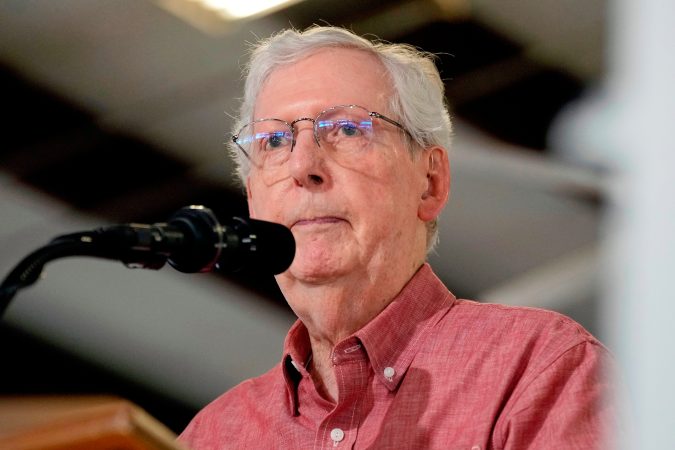
    WASHINGTON — Sen. Mitch McConnell on Sunday revealed for the first time that a fall led to his hospitalization, breaking the silence about his condition after weeks of mounting speculation about the Kentucky Republican’s health.

    McConnell, 84, said in a statement that he has undergone a battery of tests as doctors try to determine what led to his fall. He explained the long silence about his condition by saying that “folks of my generation often hesitate to share the vulnerability that comes with growing older.”

    “Even in the public eye, I feel that same instinct — I can’t help it,” he said.

    McConnell said he is now in a rehabilitation center and will not be returning to the Senate “quite yet.” He said he continues to work with his staff on Senate business in the meantime.

    The statement included a smiling picture of the senator with his wife, Elaine Chao, a tacit response to speculation online that McConnell had died or was incapacitated.

    It comes following his hospitalization on June 14. McConnell’s office for weeks provided little information, insisting only that he was “receiving excellent care” and recovering. As his hospital stay grew longer, speculation mounted about his condition. It grew so intense that Kentucky’s Democratic Gov. Andy Beshear took the extraordinary step of asking that McConnell update the public about his health in a “transparent manner.”