Category: Nation World News Wires

  • Harvey Weinstein is sentenced to 15 years in prison for 2006 sex crime in New York

    Harvey Weinstein is sentenced to 15 years in prison for 2006 sex crime in New York

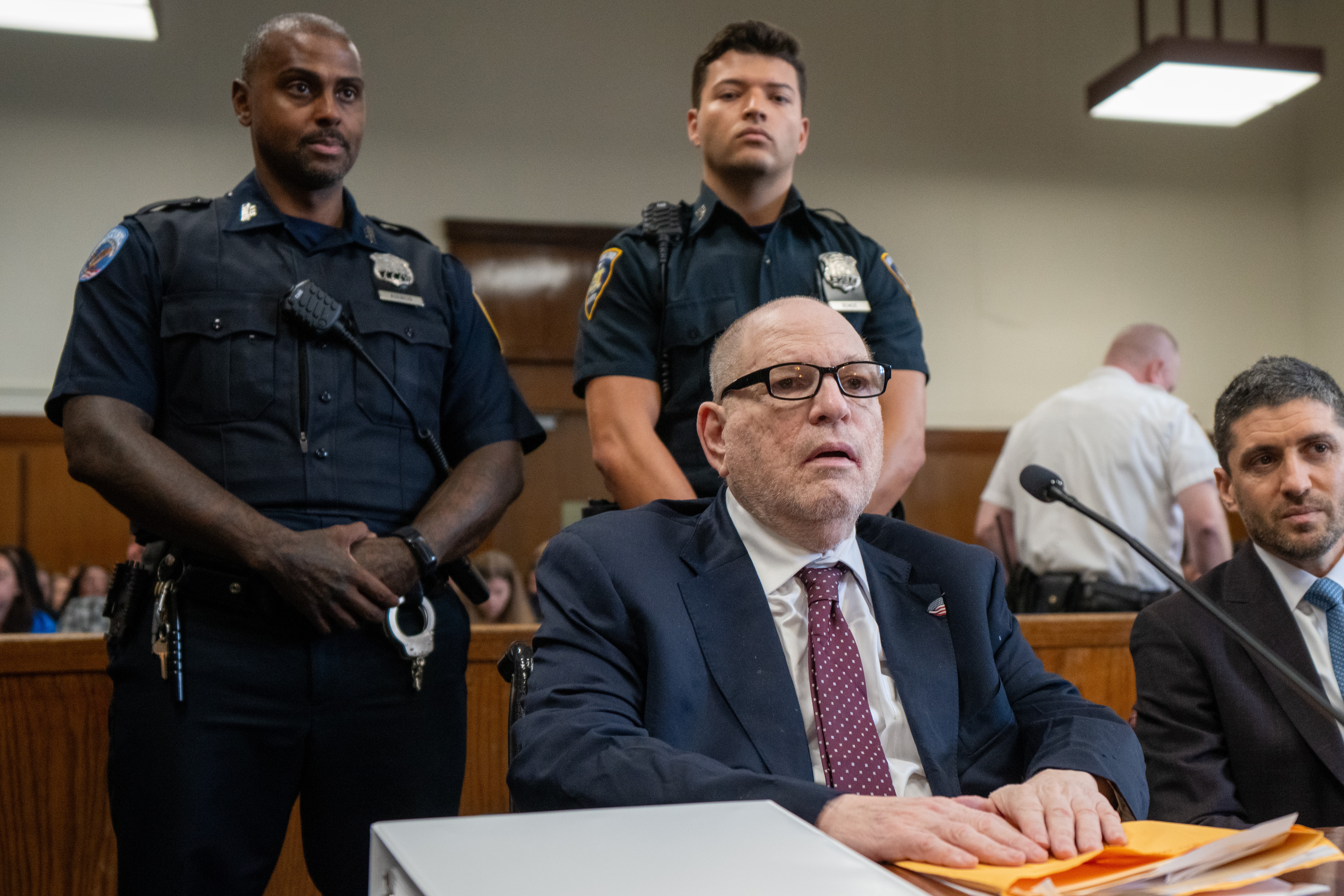
    NEW YORK — Harvey Weinstein, the disgraced movie mogul, was sentenced in Manhattan to 15 years in prison Wednesday for a felony sex crime in another #MeToo reckoning.

    Weinstein’s sentencing for sexually assaulting one-time TV production assistant Miriam Haley followed a legal odyssey spanning more than six years. His 2020 conviction was overturned by New York’s highest court. A second jury found Weinstein guilty again at a retrial last year.

    Once among the most powerful figures in the entertainment industry, Weinstein was an Oscar-winning producer whose hits included Shakespeare in Love, Pulp Fiction and Chocolat. But his downfall came quickly after sexual assault allegations in 2017 set off the #MeToo movement.

    Weinstein, 74, is expected to appeal and maintains that he never raped or sexually assaulted anyone. He is now likely to remain behind bars well into his 80s. Seated in a wheelchair, he was quickly moved out of the courtroom after the sentencing, while some of his accusers hugged and brushed away tears.

    Weinstein and his victim both spoke in court

    Weinstein faced up to 25 years in prison for sexually assaulting Haley at his Manhattan apartment in 2006. He has already served more than six years as his case cycled through the criminal justice system. Haley gave her account of the assault at two trials, and again addressed the court Wednesday.

    “Having been sexually assaulted by Harvey Weinstein has had a devastating effect on my life and sense of security that may never go away. Making the decision to speak up will have me looking over my shoulder for years to come,” Haley said.

    “It’s a life sentence for me,” she added.

    Minutes later, Weinstein apologized while reiterating his innocence.

    “Reflecting on all that has happened since 2017 has helped me recognize how my past conduct has negatively affected others. I live with many regrets and sincerely apologize to anyone I have affected with my actions,” he said.

    Some of his accusers who were in court shook their heads while he spoke.

    Weinstein is the face of MeToo, judge says

    Judge Curtis Farber said Weinstein was once a king in the movie industry, “but recognition for these achievements will pale in comparison to what you did.”

    He said Weinstein is now known as “a sexual predator, the literal face of the MeToo movement.”

    The judge said Weinstein treated women as “mere objects to be played with and discarded” and still hasn’t accepted responsibility, portraying himself as a victim during jailhouse interviews.

    Haley afterward said she was happy with the sentence, while saying it’s clear that Weinstein has not acknowledged what he did. “I think he still feels entitled, and that’s part of the problem,” she said.

    Haley’s lawyer, the famed victims’ rights attorney Gloria Allred, rejected any suggestion that Weinstein’s sentencing means the MeToo era is over.

    “Women are empowered in a way they have never been before,” she said.

    Why Weinstein is being sentenced a second time

    Weinstein was originally sentenced to 23 years in prison after a jury convicted him of assaulting Haley and raping an aspiring actress, Jessica Mann, in 2013.

    Tried for a second time last year, he was again convicted of a first-degree criminal sex act for assaulting Haley, who has also gone by the name Mimi Haleyi. In a messy split verdict, the jury acquitted him of forcibly performing oral sex on another woman, Kaja Sokola, and could not reach a verdict on a rape charge involving Mann.

    After another retrial ended in a hung jury in May, Manhattan prosecutors dropped the rape charge rather than pursue a fourth trial after Mann said she could not bear to testify again.

    Weinstein’s health issues pushed the defense to ask for leniency

    Defense lawyer Jacob Kaplan wanted three more years on top of the six years Weinstein already served, saying a longer sentence would make it more likely that Weinstein dies in prison.

    Weinstein has been in the hospital six times since 2025, Kaplan said, while dealing with blood cancer, congestive heart failure, and kidney issues.

    Weinstein is also awaiting resentencing in a separate rape case in Los Angeles. A California appeals court upheld the 2022 conviction but threw out his original 16-year sentence because the judge had considered his New York convictions — that were later thrown out — as an aggravating factor.

    After shuffling between state prison, where he tested positive for COVID-19 early in the pandemic, and New York City’s notorious Rikers Island complex, Weinstein has been housed at a medical unit for inmates at Bellevue Hospital in Manhattan.

    Haley describes the assault that led to Weinstein’s conviction

    Haley, 49, is a former entertainment producer now working in advertising.

    She said she met Weinstein through a mutual connection and worked briefly as a production assistant on Project Runway, a reality competition show that he produced.

    Haley said she accepted an invitation to visit Weinstein’s apartment and after chatting briefly, he lunged to kiss her, she testified. She said she rebuffed him, but he grabbed her, forcibly backed her into a bedroom and sexually assaulted her, ignoring her pleas to stop.

    She recalled Weinstein asking, “Don’t you think we’re much closer now?” after either the alleged assault or a subsequent occasion when she says she had unwanted, but not forced, sex with him.

    She also recalled telling him after the second encounter, “You know you can’t keep doing this.”

    The Associated Press does not typically identify people who say they are victims of sexual assault unless they grant permission, which Haley, Sokola and Mann have done.
  • Trump praises new British PM Andy Burnham but slams UK deal on Indian Ocean islands

    Trump praises new British PM Andy Burnham but slams UK deal on Indian Ocean islands

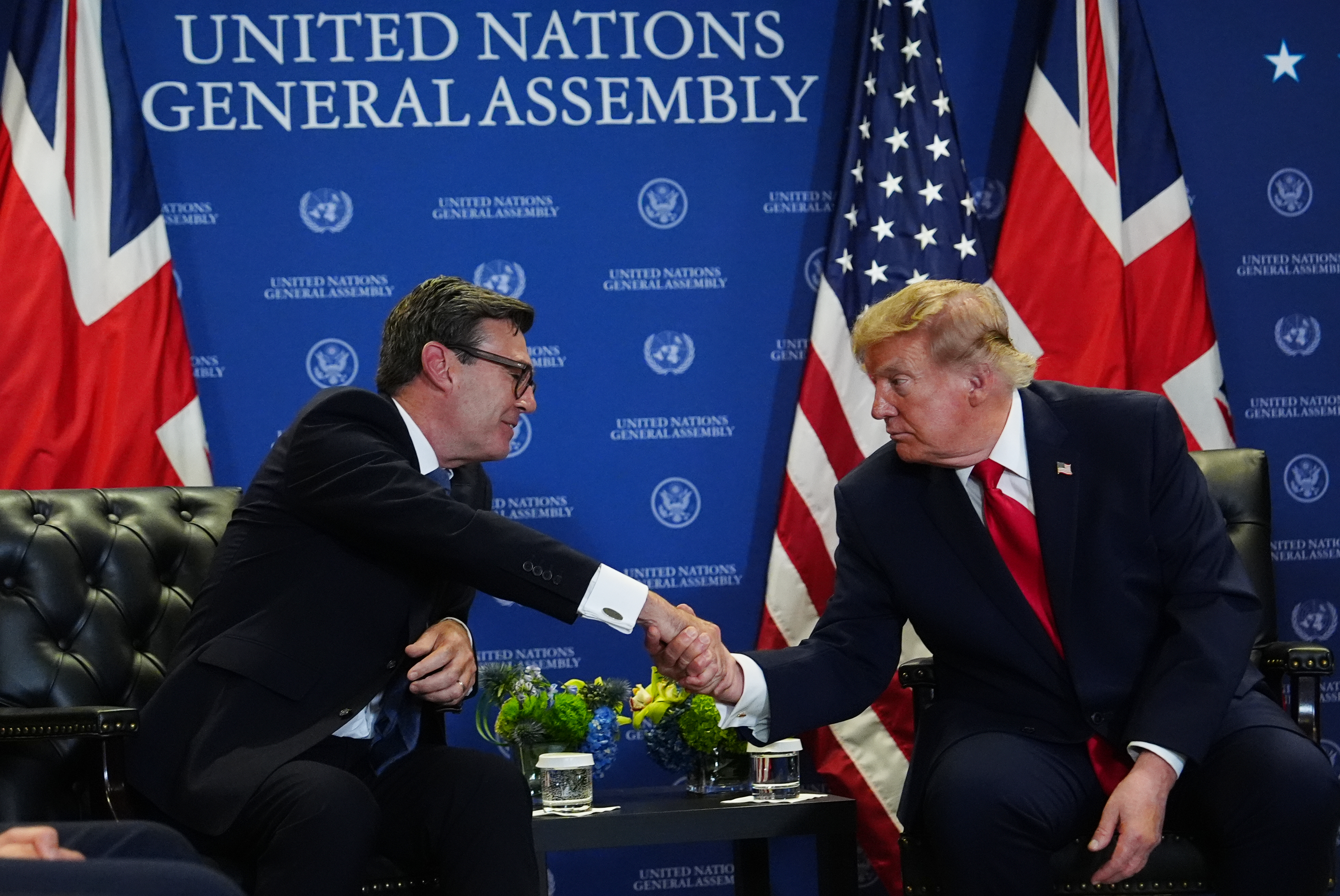
    UNITED NATIONS — Freshly in office, Prime Minister Andy Burnham got off to a strong start with U.S. President Donald Trump at their first meeting on Tuesday, with the president brushing aside differences over the Middle East and calling the British leader “a natural business person.”

    The two men met for more than the scheduled 30 minutes on the sidelines of the U.N. General Assembly, which Burnham was due to address later in the day.

    It was a baptism of fire for the neophyte leader, who has gone from mayor of the northwest England city of Manchester to leader of a G7 country in a matter of weeks.

    But despite U.K. nerves about how it would go, as they sat in front of U.K. and U.S. flags, Trump declared that trans-Atlantic relations were “more up than they were with your last prime minister.”

    “Based on our relationship with the prime minister, Andy, I think we’re doing very well,” he said.

    U.K. officials know that the president can be fickle. Trump initially warmed to Burnham’s predecessor, Keir Starmer, before falling out over the U.K.’s unwillingness to join the U.S.-Israeli war on Iran. But there was relief that Burnham emerged largely unscathed from his first meeting with a president who once dismissed him as “the mayor of a town.”

    “We don’t hold it against you,” Burnham said.

    Burnham nodded at U.S.-U.K. differences, noting that Trump had been “good enough to listen to us” on issues including trade and the Falkland Islands. Trump has recently mused about the future of the British-controlled South Atlantic archipelago, which is also claimed by Argentina, which calls it the Malvinas. The two nations fought a brief 1982 war over the islands.

    But on one potential flashpoint, the U.K.’s decision to ban trade with Israeli settlements in the West Bank, Trump professed ignorance.

    Chagos Islands remain a point of contention

    Trump’s harshest words were reserved for Britain’s plan to hand sovereignty of the Chagos Islands in the Indian Ocean to Mauritius. The U.K. says the deal will preserve the future of a strategic U.S. military base on one of the islands, Diego Garcia. But ratification of an agreement stalled after the Trump administration withdrew its support. U.K. officials acknowledge the deal is now in limbo.

    Trump called it “a terrible deal” over a “very important piece of real estate, militarily and strategically.”

    “I think the prime minister is going to be looking at it,” he said.

    Before the meeting, Burnham said he would raise with Trump ways to end the on-off war between the U.S. and Iran, which has choked off oil tankers moving through the Strait of Hormuz and sent global fuel prices soaring. Houthi attacks on Saudi energy infrastructure are making the problem worse while rendering Burnham’s pledge to ease cost of living pressure for British voters even harder.

    As he flew to New York for the annual gathering of world leaders, Burnham announced he had authorized limited military support for Saudi Arabia to repel attacks from Iran-backed Houthi rebels in Yemen. A Royal Air Force plane will refuel Saudi jets engaged in “defensive” action to shoot down Houthi missiles, he said.

    Burnham also said he would urge Trump to step up U.S. support for Ukraine by providing air-defense missiles to Ukraine ahead of another winter of Russian attacks.

    Burnham to focus on AI in his U.N. speech

    In his speech later Tuesday, Burnham was set to try to send a message that Britain can play a key role in solving the world’s biggest challenges, from conflict in the Middle East to the dizzying evolution of artificial intelligence. And he will attempt to turn the page on a decade of Brexit-driven discord with the U.K.’s European neighbors.

    Burnham said he would focus on artificial intelligence, arguing it’s possible to be “clear-eyed” about both the benefits and risks of the technology. He will argue the U.K. is well placed to be an “honest broker” in seeking global agreement to guide its development, because London has good relations with both the U.S. and Europe and “a strong dialogue” with China.

    In another potential point of tension with Trump, Burnham called for a global alliance to guide the development of AI.

    Burnham told a meeting of business leaders on the sidelines of the UN General Assembly that he wants to see “a single set of global principles and standards” that can unlock AI’s potential while mitigating its risks.

    Trump told the U.N. on Tuesday that the U.S “totally rejects any attempt to construct a globalist scheme” to regulate AI.

  • Trump and Xi see tensions flare over AI, trade and Iran but still seek stability

    Trump and Xi see tensions flare over AI, trade and Iran but still seek stability

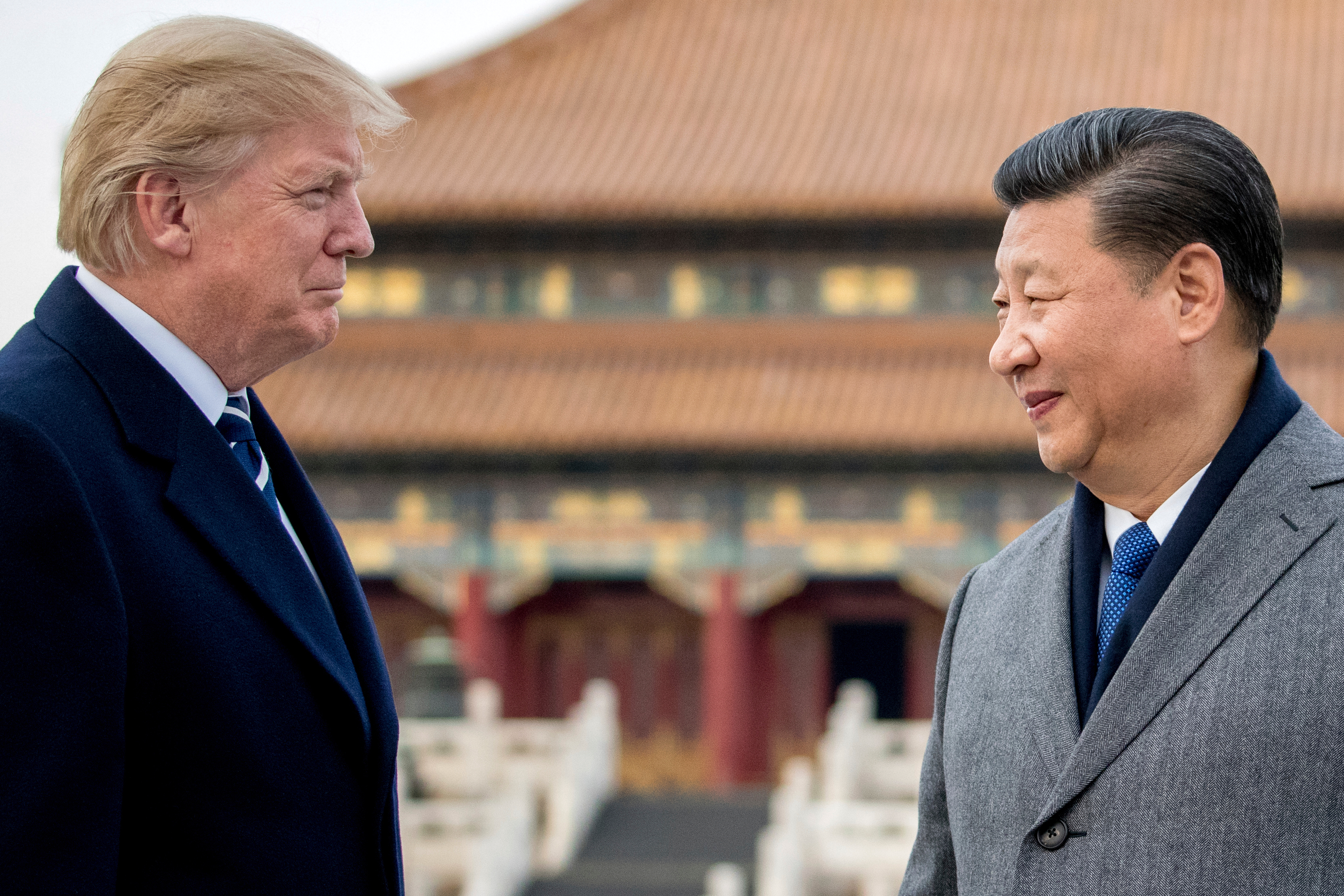
    WASHINGTON — State visits usually occur when two countries are on warm terms, but U.S. President Donald Trump is hosting Chinese leader Xi Jinping in Washington this week as their economic and tech competition is only escalating, especially through an artificial intelligence race.

    Neither expects any grand bargain, but the leaders are expected to play nice in their third meeting since Trump returned to the White House to try to steady fragile ties. That is despite the world’s two largest economies seeking the upper hand on AI developments and trade, while pushing for leverage in persistent hot spots like Iran and Taiwan.

    “The fact that they are meeting, and there’s dialogue occurring and building that relationship, is probably as important as outcomes from the meeting,” said Sen. Steve Daines, a Montana Republican who advises Trump on China and recently traveled there to lay groundwork for the summit.

    Cui Tiankai, a former Chinese ambassador to the U.S., said at a recent forum in Beijing that there are “always problems, sometimes very big problems” between the two countries, but ”we’ll make our best efforts to maintain overall stability.”

    Trump and Xi shifted away from sky-high tariffs, but competition is still intense

    Xi’s visit to Washington, which begins Wednesday, is his first in 10 years. He and Trump are meeting after their countries climbed down from last year’s intense trade war, where they traded tit-for-tat sky-high tariffs that threatened the global economy. China also choked off its world-leading supplies of critical minerals needed in products from electric cars to fighter jets.

    The U.S. is not only trying to balance trade but also maintain its tech dominance to protect national security and global leadership. China, which has amassed tremendous economic, technological, and military power over the past several years to close gaps with the U.S., is seeking to solidify its place in the global order.

    The stability both sides are seeking is “for deeply competitive reasons,” said Evan Medeiros, a senior adviser at the Asia Group consultancy. “This is basically two geopolitical strongmen circling each other on the playground, trying to determine what their next move may be.”

    The countries appeared to be entering a “new normal” of “overall stability” despite blacklisting each other’s companies and restricting the flow of high-tech products, said Da Wei, director of the Center for International Security and Strategy at Tsinghua University in Beijing.

    The leaders now should produce deals that their governments can carry out, he said, noting that “we need to move fast.”

    The AI race could strain any cooperation on technology’s advance

    Developing AI technology has emerged as a key battleground, with both sides showing little interest in slowing down despite warnings from tech CEOs about threats that rogue AI could pose to humanity. “Whoever wins AI wins,” Trump has repeatedly said.

    He claimed on social media Monday that the U.S. is leading over China and that he was “not going to stifle Growth, of something that will be bigger than the Industrial Revolution, or the Internet, itself.”

    China cannot afford to lose either. In a rare, blunt essay, Chen Yixin, head of China’s Ministry of State Security, warned that AI poses a direct threat to Communist Party rule if foreign and hostile forces achieve superior capabilities.

    The U.S. is already restricting exports of the most powerful AI chips to China and has accused Chinese developers of tapping into American AI models at an industrial scale to extract their capabilities.

    Beijing says the practice, known as distillation, is widely used, including by American companies, and has criticized the U.S. for trying to monopolize the industry.

    Beijing also is upset about U.S. efforts to build an alliance that excludes China, so it is seeking to craft new global AI guardrails by appealing to developing nations.

    However, the U.S. and China are taking a small step to cooperate on AI.

    Treasury Secretary Scott Bessent said Sunday after meeting with Chinese Vice Premier He Lifeng in New York that the U.S. has proposed a new “notification mechanism” for AI incidents that could affect national security.

    “We think that just like any cross-border activity, that moving from opaque to more transparency between the No. 1 and the No. 2 AI powers in the world is very important,” Bessent said.

    U.S. and China turn to targeted ways to compete instead of tariffs

    While the U.S. and China have refrained from taking broad, punitive actions that would break their trade truce, they still are blacklisting individual companies and banning specific products.

    “What we’ve seen is kind of testing and probing by both sides to understand what can be done competitively, while still keeping that leader-level rapprochement on track,” said Mira Rapp-Hooper, a visiting fellow at the Brookings Institution’s Center for Asia Policy Studies.

    The U.S. has recently targeted Chinese telecommunications and surveillance equipment, companies accused of using forced labor in the ethnic region of Xinjiang, as well as China’s advanced robots and drones. The Pentagon also has barred Alibaba, BYD, Baidu, and other major Chinese businesses from receiving U.S. defense contracts.

    Beijing responded with export controls on drones and related technologies as well as blacklisting six U.S. companies over their support for the punitive measures tied to Xinjiang.

    Iran, Taiwan and tariffs are persistent issues

    After the Supreme Court struck down Trump’s tariffs on trade partners this year, the administration has been trying to impose them in other ways.

    The White House in July rolled out a 12.5% tariff on imports from 60 trading partners, including China, ostensibly for failing to do enough to prevent the import of goods produced by forced labor. The U.S. is planning an additional 7.5% tariff on China, accusing it of producing far more goods than it can reasonably consume.

    Analysts say the tariff levels are now acceptable to both sides, but any significant uptick could rekindle tensions.

    The Trump administration, however, has launched a campaign to isolate Iran from its remaining economic partners, but Beijing has insisted on its right to trade with Tehran.

    So far, the Trump administration has done little to punish China, partly to avoid jeopardizing the leaders’ summit. But Washington also is losing leverage because China — Iran’s biggest oil buyer and its largest trading partner — has been building up a way to make payments outside the U.S.-led financial system, said Alicia Garcia Herrero, an Asia-Pacific economist at the French investment bank Natixis.

    Taiwan, a self-governing island that Beijing claims as its own territory, also remains one of the thorniest issues in U.S.-China relations. Trump paused a large weapons package to Taiwan following his May trip to Beijing, but the U.S. is obligated by a domestic law to provide it with sufficient hardware and technology for self-defense.

    Analysts say Xi will most likely press Trump to further delay arms sales to sow doubts in Taiwan about Washington’s commitment.

  • Trump says U.S. and Iranian officials met Tuesday, shortly after warning he may ‘annihilate’ Iran

    Trump says U.S. and Iranian officials met Tuesday, shortly after warning he may ‘annihilate’ Iran

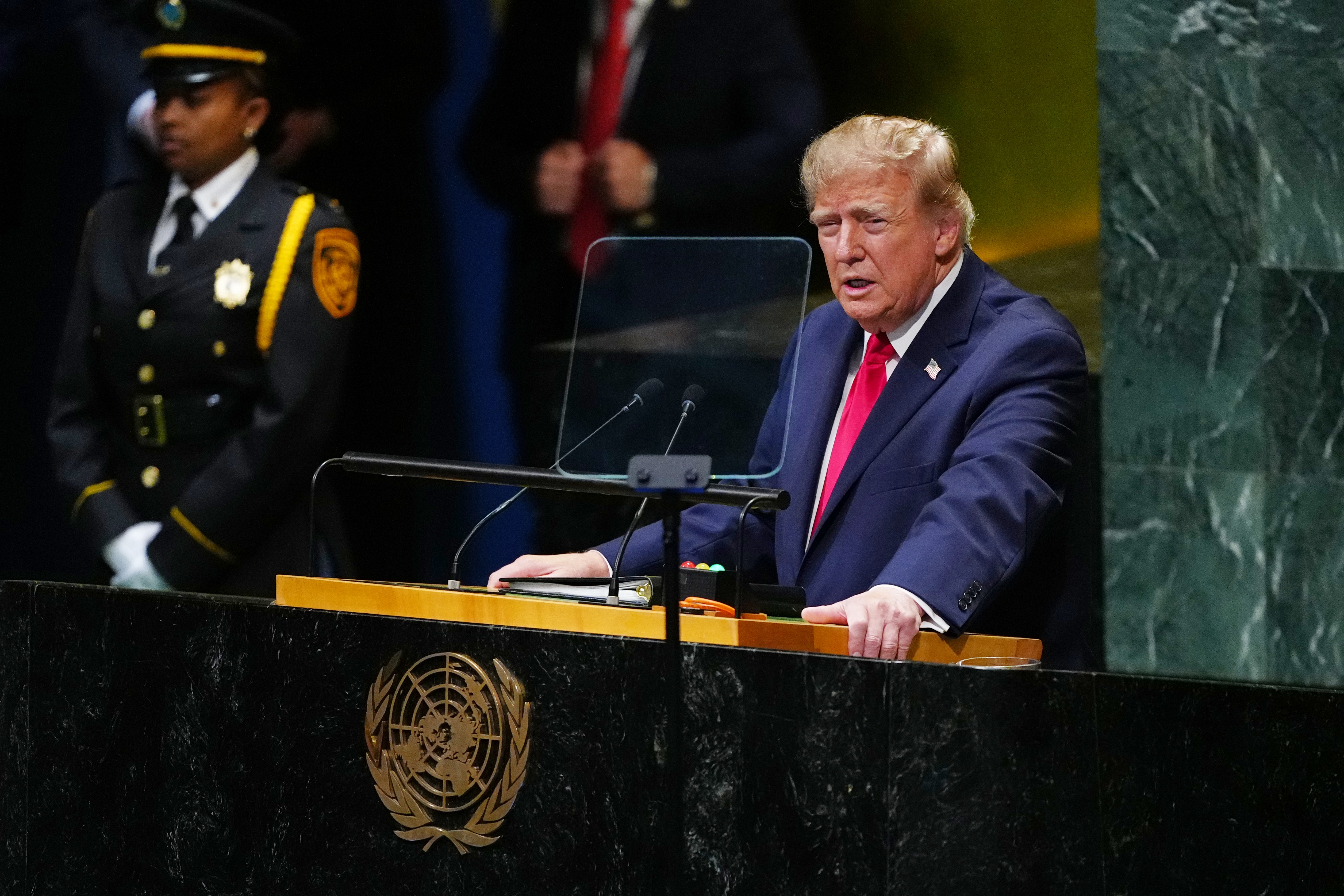
    UNITED NATIONS — President Donald Trump said U.S. and Iranian officials met on Tuesday, an unexpected engagement that came even as he threatened in his address to the U.N. General Assembly that he may “annihilate” the Islamic Republic if a deal isn’t reached soon to end the nearly seven-month war.

    Trump told reporters that his chief envoys, Steve Witkoff and Jared Kushner, met with the Iranian officials on the sidelines of the annual gathering of world leaders but he offered few details about how the discussions transpired or the substance of the exchange.

    “It was a very good meeting,” Trump said. The president later added that the Iranian officials were “not the highest level, but it’s something.”

    The engagement comes after months of U.S.-Iran communications languishing following the collapse of a short-lived ceasefire that was brokered in June. U.S. and Iranian negotiators met separately with Qatari and Pakistani mediators in Doha in early July for indirect talks.

    Earlier Tuesday, Secretary of State Marco Rubio said that Trump is open to meeting with Iran’s president, Masoud Pezeshkian, while he’s in New York for the General Assembly.

    “This is a president that will meet with anybody for the most part, because he believes that engaging with people is important if you’re going to solve problems,” Rubio said on NBC’s Today show. “It doesn’t mean you’re going to end up agreeing with them, but it’s important.”

    Trump also met on Tuesday with leaders and senior officials from Gulf Cooperation Council nations — Bahrain, Kuwait, Oman, Qatar, Saudi Arabia, and United Arab Emirates — as well as Jordan to discuss the way ahead with the war in Iran.

    In his address to the General Assembly, Trump made the case that he’s shown fortitude while other leaders have equivocated as he defended his decision to start a war with Iran.

    But Trump also suggested that he could be at a crossroads in the conflict even as he called on the Islamic Republic to fully reopen the Strait of Hormuz and return to the negotiating table to find a settlement to end the conflict.

    “I have a big decision to make,” Trump said. “Will a deal be made with Iran that lets them rebuild and create a far greater country than it ever was before, maybe one of the greatest in the Middle East or even the world? Or do I annihilate the Islamic Republic and do it quickly, never giving them a chance to kill and destroy people and countries again?”

    The president’s comments came in his wide-ranging address to the international body in which he also celebrated this year’s U.S. military operation to oust Venezuelan President Nicolás Maduro from power and a new agreement to expand the U.S. military presence in Greenland, and pushed back against calls for greater regulation of the artificial intelligence industry.

    But at the heart of the address was a fulsome defense of the war and pushback on the notion that Iran has shown a measure of resilience.

    “The terrorist regime is behaving badly, not because they are strong and confident, but because they are weak and desperate,” Trump said.

    Most of Iran’s delegation walked out of the chamber as Trump railed against the Islamic Republic.

    Trump’s speech began a busy day of diplomacy

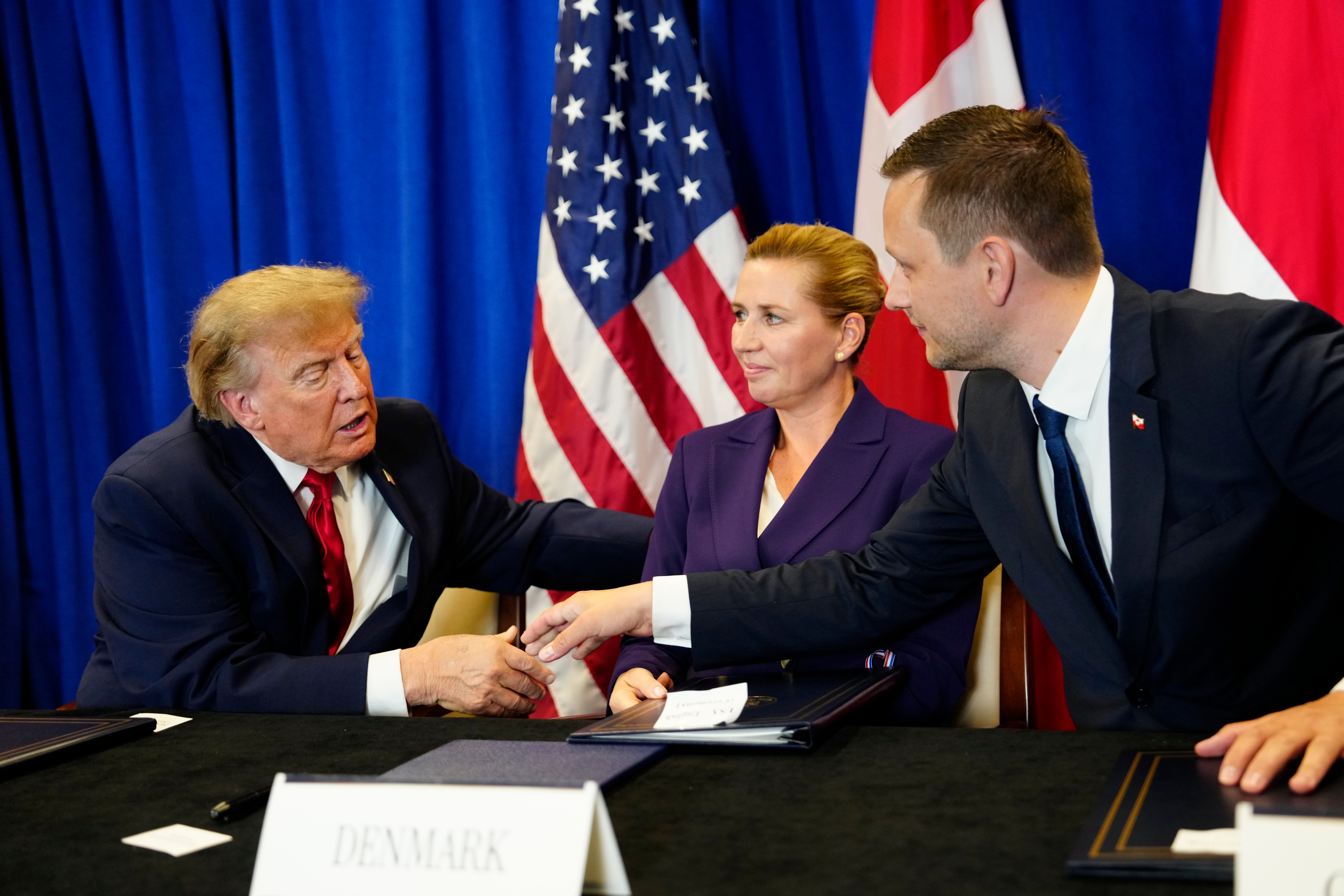
    After his speech, Trump gathered with Danish Prime Minister Mette Frederiksen and Greenlandic Prime Minister Jens-Frederik Nielsen on the sidelines of the General Assembly to sign a new security agreement.

    The deal, announced last week, came together after Trump repeatedly threatened to “take over” Greenland, a territory of NATO-ally Denmark, by military force if necessary. Trump said Tuesday the U.S. will immediately begin the process of developing a larger military presence in Greenland including “building two very major military bases.”

    Under the deal, Greenland remains Denmark’s territory.

    Trump also held talks with new British Prime Minister Andy Burnham, Japanese Prime Minister Sanae Takaichi, and Ukrainian President Volodymyr Zelensky. He was expected to hold a more informal meeting on Tuesday evening with Venezuela’s acting President Delcy Rodríguez, according to the White House.

    Trump also took part in an event on the Shield of Americas, an initiative Trump launched with Latin American countries earlier this year focused on combatting violent cartels.

    Iran war looms large at General Assembly

    The visit to the U.N. comes as Trump’s foreign policy approach — particularly his decision to start a war with Iran — has become a drag on his fellow Republicans’ hopes of retaining control of both chambers of Congress during the coming midterm elections. Nevertheless, Trump made the case in his speech that the world is better off for his leadership.

    “I have no interest in leaving dangers to grow for another day,” Trump said.

    In last year’s address at the U.N., Trump claimed the U.S. had “demolished” Iran’s nuclear capabilities after he ordered the June 2025 bombardment of three key facilities.

    He returned to the General Assembly nearing the seven-month mark of a new war against Iran that he insists is necessary to address a nuclear threat posed by Iran.

    The war has grown more complicated even though strikes by the United States and Israel have killed much of Iran’s top leadership and destroyed its air force and navy, while a U.S. blockade of Iranian oil has left Tehran in economic shambles.

    The energy market continues to be spooked by the war and oil prices remain elevated. Saudi Arabia earlier this month shuttered a key pipeline that acted as a relief valve for oil blocked in the Gulf. The kingdom made the move after the pipeline came under attack by Iran-backed militants in Iraq.

    At the same time, territorial grabs by the Yemen-based Houthi rebels, another Iranian-backed group, near the Bab al-Mandab Strait has now made it treacherous for oil carriers to use that Red Sea shipping lane.

    Trump’s frustration with Russia-Ukraine war mounts

    In his address, the president also touched on Russia’s continuing war against Ukraine — a conflict that during his 2024 campaign he predicted would be resolved on Day One of his second term. He once again expressed hope that the conflict will soon be resolved.

    Trump hasn’t obscured that his patience is being tested by Ukraine’s targeting of Russia’s diesel refineries — an issue that’s added to the global oil markets’ volatility — and Russia’s targeting of Ukraine’s energy grid.

    Trump last week asserted that he got the two sides to agree to not target each other’s energy infrastructure.

    Zelensky had said he was willing to go along with Trump’s plan if Russia abided by it. Russia said it could only go along with Trump’s energy truce proposal if Western energy sanctions on Moscow were lifted first.

    The two sides have continued carrying out strikes on refineries and other energy infrastructure.

    Trump noted that last week he signed a new sanctions bill targeting Moscow. It empowers him to impose up to 100% tariffs on the top five importers of Russian oil or natural gas.

    The legislation includes an exception for countries that import less than 15% of Russia’s natural gas exports and have taken significant steps to reduce those imports. Trump, however, has yet to enact the stiff penalties.

    “If necessary, I will have to use them,” Trump said. “It’s time to stop the killing.”

  • GOP Sen. John Curtis calls for probe of Trump Jr. after wedding party bankrolled by Russian oligarch

    GOP Sen. John Curtis calls for probe of Trump Jr. after wedding party bankrolled by Russian oligarch

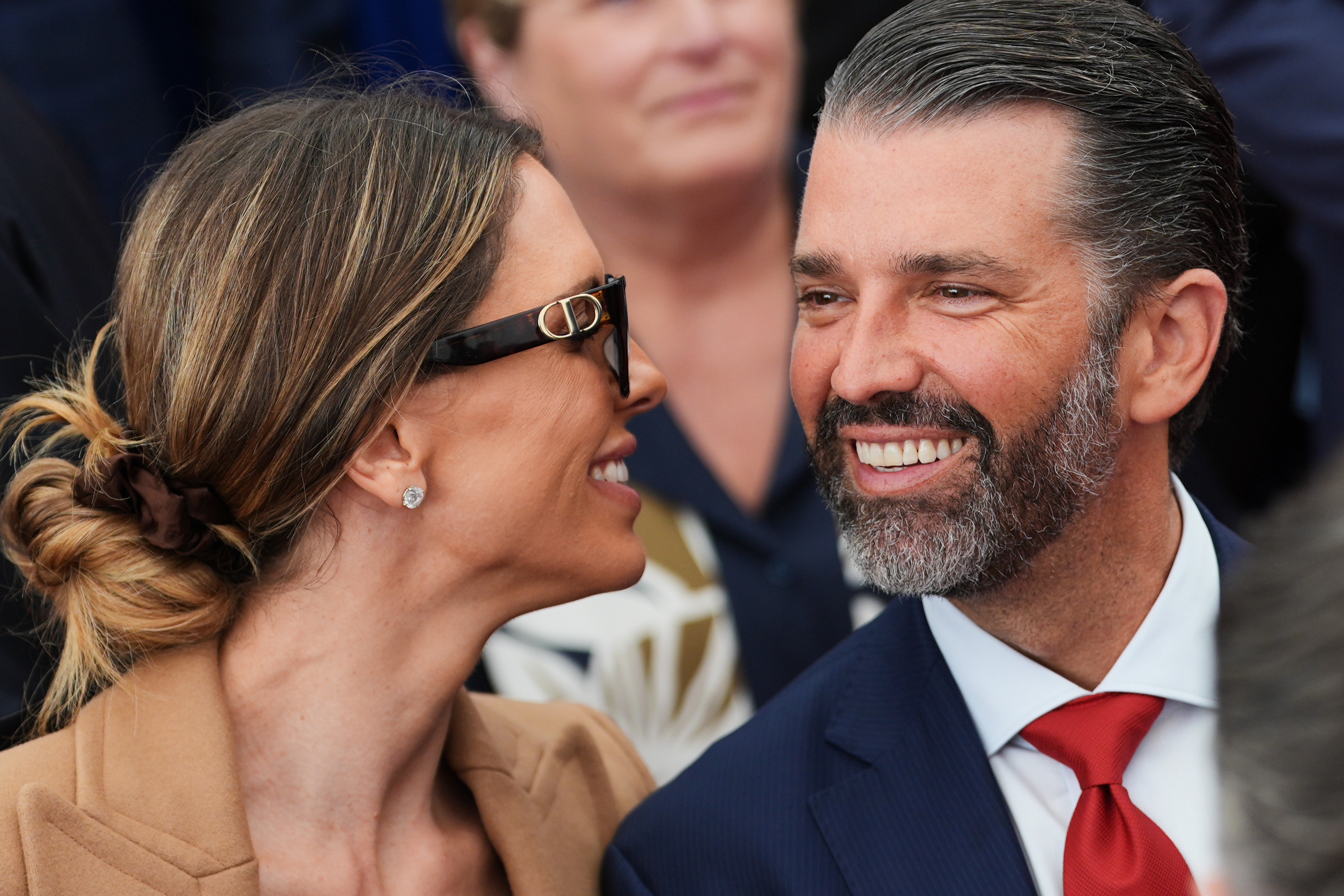
    WASHINGTON — Republican Sen. John Curtis of Utah is calling on the Senate Judiciary Committee to investigate whether Donald Trump Jr. used his proximity to the presidency for financial benefit, after his recent wedding party was partially bankrolled by a Russian oligarch.

    In a letter sent Tuesday, Curtis called on the committee to subpoena Trump Jr. over his business dealings, relationships with foreign individuals and entities, gifts, or other benefits he has received and any instances in which his relationship to President Donald Trump, a Republican, “was invoked or understood to provide value.” Curtis called for the same scrutiny of Hunter Biden, the son of former President Joe Biden, a Democrat.

    “The country should not have to accept one standard for the family of a Republican president and another for the family of a Democratic president,” Curtis wrote in the letter addressed to GOP Sen. Chuck Grassley of Iowa, chairperson of the committee, and Sen. Dick Durbin of Illinois, the top Democrat on the committee.

    The letter comes as a few Republicans have shown a growing willingness to criticize Trump after largely avoiding public breaks with the president during much of his second term. The unpopular war in Iran, high gas prices, and mounting concerns about the GOP’s prospects in November’s midterm elections have brought increased scrutiny of the president from within his own party.

    The Trumps say it was a generous gift from a dear friend

    ProPublica first reported last week that Umar Kremlev, who has close ties to Russian President Vladimir Putin, helped pay to rent a private island and for a fireworks show when Trump Jr. and socialite Bettina Anderson were married in the Bahamas in May.

    In a subsequent post on her Instagram page signed by the couple, Bettina Trump wrote that Kremlev, head of the International Boxing Association, was a “dear friend” who “very generously hosted two incredible nights of celebrations for us AFTER our wedding.”

    The president, who did not attend his son’s wedding, defended Kremlev’s involvement but said the money would be paid back.

    Curtis calls the funding ‘corruption’

    Curtis, first elected to the Senate in 2024, vowed upon taking office not to shy away from disagreeing with Trump. He has publicly broken with the president several times since, including rejecting Trump’s calls to eliminate the Senate filibuster. In a July Wall Street Journal op-ed, Curtis wrote that “under no circumstance” would he support efforts to end or alter the filibuster, which requires 60 votes to advance most legislation in the 100-member chamber.

    Curtis’ criticism involving Trump’s son goes beyond those policy disagreements. Curtis last Friday called the gift “corruption” and vowed to say more in the coming days.

    “A Russian oligarch paid for a lavish wedding after-party for Donald Trump Jr., which to me just stinks. It’s corruption. I don’t like it,” Curtis said in a video posted on social media.

    On Tuesday, Curtis wrote on social media that Republicans “nearly wore out the subpoena machine investigating Hunter Biden’s foreign relationships” and that they “should not unplug it now.”

    Any congressional committee can launch an investigation at any time. In 2017, Grassley led a Senate Judiciary Committee investigation of the Trump campaign’s ties to Russia, including a meeting that Trump Jr. held with Russians in 2016. The panel has also conducted multiple investigations of Hunter Biden.

    Clare Slattery, a spokesperson for the Senate Judiciary Committee, confirmed that the committee had received Curtis’ letter but indicated that a hearing before the end of the year would be difficult, citing the limited Senate schedule and the amount of time it takes to prepare for an investigative hearing. She did not say whether the committee will investigate.

    Durbin said in a statement that Curtis had made a “good faith request” and that while Hunter Biden has given a sworn deposition in the past, Trump Jr. has not.

    “For the Committee to ignore this matter is to run the risk of being complicit in a coverup. I will join in supporting Senator Curtis’ request,” Durbin said.

    Republicans investigated the Bidens

    Grassley worked alongside House Republicans in 2023 and 2024 to investigate whether Hunter Biden used his father’s name and political position to benefit his business dealings with foreign interests. The Biden family dismissed the investigations as politically motivated and denied any wrongdoing.

    The GOP effort culminated in a report accusing Joe Biden of participating in a conspiracy to use his public office to enrich his family. But the House never voted on articles of impeachment against him.

    “‘Trust us’ was not enough then, and it is not enough now,” Curtis wrote.

    Democrats have foreshadowed plans to investigate Trump and his family if they win control of Congress in November, with particular scrutiny on the family’s financial interests. Rep. Robert Garcia, the top Democrat on the House Oversight Committee, said in a statement that the revelations surrounding Trump Jr.’s wedding “may be the most serious allegation against you to date.”

  • Trump signs agreement between U.S., Denmark, and Greenland to bolster Arctic security

    Trump signs agreement between U.S., Denmark, and Greenland to bolster Arctic security

    UNITED NATIONS — President Donald Trump has signed an agreement with Denmark and Greenland aimed at strengthening Arctic and North Atlantic security, easing tensions over his repeated calls for Greenland to become part of the United States.

    The signing Tuesday on the sidelines of the U.N. General Assembly in New York comes days after Trump announced the deal to bolster U.S. military presence on the vast, icy island but keep it under Danish control. The governments provided few details of the agreement before the signing.

    “This is tremendous for Europe and for the United States and for everybody,” Trump said just before the agreement was signed. “And for Greenland, it’s going to be incredible.”

    For months, Trump has expressed his desire for Greenland to become part of the United States and issued threats to seize the semiautonomous territory from Denmark, a NATO ally. On Tuesday, he did not respond to questions about whether a U.S. acquisition of Greenland was off the table.

    U.S. has had a presence in Greenland for many years

    Officials from the U.S., Greenland, and Denmark negotiated for months behind the scenes, searching for solutions to address some of Trump’s security concerns about the mineral-rich island.

    Trump’s designs on Greenland strained relations within NATO, with Danish Prime Minister Mette Frederiksen warning a U.S. takeover would amount to the end of the Atlantic alliance.

    The standoff unsettled many of Greenland’s roughly 56,000 people and drove a wedge between the U.S. and Denmark and its European Union partners, who stepped up security exercises on and monetary support for the island.

    Trade and hopes for a resource grab have all factored into concerns about Greenland’s future: About two-thirds of its territory sits inside the Arctic Circle, where melting sea ice has opened additional shipping routes

    The United States was prominent in Greenland for decades but, since 1945, the U.S. military presence in Greenland has decreased from thousands of soldiers on 17 bases and installations to roughly 200 soldiers on the remote Pituffik Space Base in the northwest. The base supports missile warning, missile defense, and space surveillance operations for the U.S. and NATO.

    Addressing the United Nations General Assembly on Tuesday morning, Trump provided a small window into details of the deal.

    “We will immediately begin the process of developing a large military presence in the appropriate locations,” he said, including “building two very major military bases.”

    Denmark’s parliament approved a bill last year to allow U.S. military bases on Danish soil, widening a 2023 military agreement made with the Biden administration that gave U.S. troops broad access to air bases in Denmark.

    Trump previously insisted the U.S. needed to “take Greenland,” to prevent Russia or China from doing the same. Though Trump said he would rather “make a deal” for the territory, he added: “one way or the other, we’re going to have Greenland.”

    All parties present the agreement as a positive move

    Mikkel Runge Olesen, a senior researcher at the Danish Institute of International Studies, said Greenland and Denmark come away from the deal with the possibility of “ending the crisis without compromising on sovereignty,” while the U.S. gets a “somewhat more favorable” deal than under the existing defense treaty.

    But relations overall between the U.S., Denmark, and Greenland “are likely to be haunted by this long after Trump leaves office, and the crisis is likely to have significant and lasting negative impact on trans-Atlantic relations more generally,” he said. “The lost trust will take decades to rebuild.”

    Frederiksen said Tuesday that the deal being signed was a “deal that can last forever,” labeling it as good for the U.S., Greenland, Denmark, and the broader NATO alliance.

    “Mr. President, you have been very clear: You don’t want adversaries to come too close,” she said. “I fully agree.”

    Jens-Frederik Nielsen, Greenland’s prime minister, called it “a win-win-win agreement.”

    “Your security is our security, and our security is your security,” he said Tuesday.

  • Man shot and detained by ICE hospitalized for partial paralysis, attorney says

    Man shot and detained by ICE hospitalized for partial paralysis, attorney says

    The Venezuelan man shot by an immigration officer in Austin over the weekend was taken to a hospital late Monday after experiencing paralysis on the left side of his body, his lawyer said.

    Attorney Kate Lincoln-Goldfinch also has filed a lawsuit in Texas asking a federal court to order the immediate release of Wilber Garcés Pérez from U.S. Immigration and Customs Enforcement detention and halt his potential deportation to Venezuela. U.S. District Judge Orlando L. Garcia scheduled an in-person hearing for Sept. 30 and ordered that Garcés be present, according to court records.

    Garcés had been transferred from a local hospital to a federal detention facility four hours after he was shot by an ICE officer on Sunday, despite having a bullet still lodged in his back, Lincoln-Goldfinch said. She said doctors chose not to remove it because the bullet was too close to his spine but argued it was reckless to release him from the hospital that quickly.

    Garcés, a 28-year-old delivery driver, told reporters on Monday by cell phone that he remained in pain and had spent the night sleeping on the floor in the South Texas ICE Processing Center in Pearsall, about 130 miles southwest of Austin. His attorney said on social media that he was taken to another hospital late Monday after complaining of paralysis.

    Rep. Joaquin Castro (D., Texas) said Tuesday that Garcés had been discharged and returned to the Pearsall facility. Castro said he and another lawmaker plan to visit Garcés on Wednesday to demand his release.

    “It is nothing more than a prison,” he said of the detention facility. “None of this should have ever happened.”

    Department of Homeland Security officials have not responded to questions about the shooting or the claims from Garcés and Lincoln-Goldfinch about his medical care and the events that led to the shooting. Earlier Monday, DHS said Garcés was in stable condition and in federal custody “pending removal” from the country. The agency said he is subject to a final deportation order.

    Garcés’s supporters are calling on DHS to release any video footage of the incident and are demanding an independent investigation.

    Garcés worked as a DoorDash driver and was making a delivery Sunday when an unmarked black truck operated by ICE sideswiped his car, Lincoln-Goldfinch said. After he attempted to make a U-turn to find a place to pull over, the ICE vehicle struck his car again before an officer shot him, she said.

    Lincoln-Goldfinch has said that Garcés is the main provider for his young family. He has a young son with a disability and is responsible for the costs of his treatments.

    In the lawsuit seeking his release, Lincoln-Goldfinch and attorney Kristin Etter argued that Garcés should be allowed to apply for a U visa for crime victims because he is a “victim of a violent crime, namely, being shot by a federal officer.” Deporting him would violate his constitutional right to due process, the attorneys said.

    Congress members and his attorneys have also expressed fear for Garcés’ health in the ICE detention facility, alleging he may need surgery and requires further evaluation.

    Garcés alleges that an ICE officer shot him in the torso at 12:56 p.m. on Sunday, in an intersection in Austin, according to court records his attorneys filed on his behalf. Hours later, he was discharged to ICE custody, his attorneys wrote, “with the bullet still lodged in his body.”

    He was then “forced to sleep on a cement floor” until around 4 a.m. Monday, when ICE transported him to the Pearsall facility, according to the records.

    After he spoke to the media that day, ICE revoked Garcés’s communication privileges and moved him from the infirmary into “an isolated room with a flat, nonadjustable bed,” Lincoln-Goldfinch said in a statement.

    Around 5 p.m. Monday, she said Garcés became unable to move his left arm and was taken back to the hospital. During the transfer, she said ICE handled him “roughly, despite his gunshot injury,” placing him in handcuffs and shackling his ankles.

    DHS did not immediately respond to a request for comment about those claims.

    Lincoln-Goldfinch said that the gunshot fractured Garcés’s clavicle and that he is suffering “significant swelling and pain,” and wearing a sling. At the hospital, she said, doctors gave him intravenous morphine for pain.

    Garcés entered the country legally seeking asylum, Lincoln-Goldfinch said. An immigration judge issued him a final removal order after he missed a hearing. Lincoln-Goldfinch said officials sent a notice advising him of his upcoming court date to an old address.

    The Associated Press reported Tuesday that more than 100 Democratic lawmakers are calling on Homeland Security officials to cease any efforts to interfere with a comprehensive investigation into the shooting.

    The lawmakers said in their letter to DHS Secretary Markwayne Mullin and acting ICE Director David Venturella they are deeply concerned ICE is attempting to swiftly deport Garcéss to impede an independent investigation.

    “Mr. Garcés Perez is a key witness to this shooting, and given ICE’s history of obscuring the facts in similar investigations, he must not be removed,” the lawmakers wrote.

    They said Garcés and the ICE agent who shot him must remain in Texas until a thorough investigation is complete.

    The Democratic lawmakers called on DHS officials to respond by next Monday on why agents used deadly force, whether they followed policy requiring them to render medical aid, and whether ICE will release all bodycam footage.

  • Presley Gerber, son of Cindy Crawford and model, dies at 27

    Presley Gerber, son of Cindy Crawford and model, dies at 27

    LOS ANGELES — Presley Gerber, the son of supermodel Cindy Crawford and businessperson Rande Gerber, died Sunday at age 27, a family representative said.

    Mr. Gerber died at a rehabilitation facility, according to online records of the Los Angeles County Medical Examiner. The medical examiner did not provide a cause of death Sunday. An autopsy was performed, but more testing is required before investigators can give a cause, according to the medical examiner’s website.

    The death was confirmed by Allie Jenkins, a representative for Crawford and Rande Gerber, who were married in 1998.

    “The family is asking for privacy during this very difficult and painful time,” Jenkins said in an email Sunday night.

    Mr. Gerber was a model and the older brother of model and actor Kaia Gerber. He had been open about his struggles with mental health and substance abuse, documenting his journey on Instagram. He even started a “Mental Health Mondays” series on the platform to raise awareness and share wellness tips. Across multiple episodes, he related his own experiences with substances ranging from ketamine to kratom, as well as his time at rehabilitation facilities.

    He posted an Instagram video in March from Mexico, where he said he planned to take ibogaine, a potent psychedelic that is being studied as a treatment for opioid addiction, post-traumatic stress disorder and other conditions. Ibogaine — known to sometimes trigger potentially fatal heart problems — is banned in the U.S. under the federal government’s most restrictive category for illegal, high-risk drugs, although President Donald Trump directed his administration to ease restrictions and spur research.

    Raised in Malibu, Calif., Mr. Gerber signed with the management agency IMG as a teenager and made his runway debut for Moschino at 16. In 2018, he appeared alongside his mother — whose famous beauty mark he inherited — in a Pepsi Super Bowl ad that paid homage to her 1992 commercial for the soda brand. That same year, he and his sister shot a campaign for Calvin Klein jeans.

    Mr. Gerber later signed with DNA Models. His biography on the agency’s website describes him as an entrepreneur and model who was inspired by “his mother’s legendary modeling career and his father’s lucrative business career.” Rande Gerber’s businesses have included restaurants, nightlife companies, and Casamigos — a tequila brand he cofounded with George Clooney and Mike Meldman that was sold to Diageo in a $1 billion deal.

    Mr. Gerber’s modeling biography also described him as an “avid surfer and skater.” In an Instagram video posted in July 2025, Mr. Gerber described growing up as a dedicated athlete who spent hours in the water nearly every day — a routine that came to a halt when he started working. With less physical activity, Mr. Gerber said, he was put on more medication and his quality of life suffered.

    “For me it took 10 years of looking back at my life being like, ‘Well, what changed?’ A lot of the time people would ask like, ‘You were such a happy kid; what happened to you?’” he recalled. “What happened was life happened and I wasn’t able to worry about one thing, which was my next meal and then get back in the ocean. Like I had to start making money, I had to start — I got a job.”

    In an interview with Vogue last month, Kaia Gerber praised her brother for being so open about his experience with addiction.

    “My parents for most of our lives were very, very private and didn’t share anything—and now we have this absolute teacher, my brother, who says, ‘I’m gonna be very human for everyone,’” she told the magazine. “There’s only so much you can hide from the world. And trying to put a lid on something just makes the person feel like you’re ashamed of them.”

    In addition to his testimonial videos, Mr. Gerber’s Instagram was a collection of modeling shoots and memories that stretched back to childhood. His life around cameras influenced his own interest in photography as an art form.

    “I have always been the type of person to stop and take a picture when everybody is just focused on the destination,” he told Vogue in 2016, on the occasion of his runway debut. “I feel like people walk by a countless amount of beauty in the world every day, and I hope that I don’t miss all of it.”

  • Tiny wild cat newly identified as a species draws curious visitors in Bolivia

    Tiny wild cat newly identified as a species draws curious visitors in Bolivia

    COROICO, Bolivia — A tiny wild cat hidden away in the cloud forests of Bolivia has become an unlikely tourist attraction, drawing a stream of visitors hoping for a glimpse of the animal that scientists have identified as a brand new species.

    There is just one problem: Tigrino, as he has been affectionately dubbed, doesn’t like the attention.

    The small, spotted feline with large, leopardlike spots is easily stressed, so caretakers at the wildlife sanctuary near La Paz keep him out of public view, turning away the crowds eager for a closer look. When the Associated Press visited Sunday, Tigrino cautiously emerged from his shelter, sniffed the air and paced around for a few minutes before slipping back into the foliage.

    Tigrino belongs to Leopardus tilcayo, the first living wild cat species described by scientists in more than a century. At just 18 inches from head to the base of his tail and 3 pounds, he is smaller than the average house cat.

    The discovery published Thursday in the journal Current Biology set off a flurry of excitement on social media. Visitors from across Bolivia and beyond have flocked to the Senda Verde Wildlife Sanctuary, where Tigrino has lived since 2017, when a family brought him there after trying unsuccessfully to make a house cat of him.

    “Tigrino has become, in just a few days, an ambassador for conservation,” said sanctuary co-founder Marcelo Levy, adding that the new species designation has helped raise awareness about the need to protect wild cats and their habitat in Bolivia’s tropical forests.

    “He’s such a tiny animal, and he has become something so important,” Levy said.

  • Ex-Haitian official, 17 others appear in U.S. court related to 2021 plot to kill Haitian president

    Ex-Haitian official, 17 others appear in U.S. court related to 2021 plot to kill Haitian president

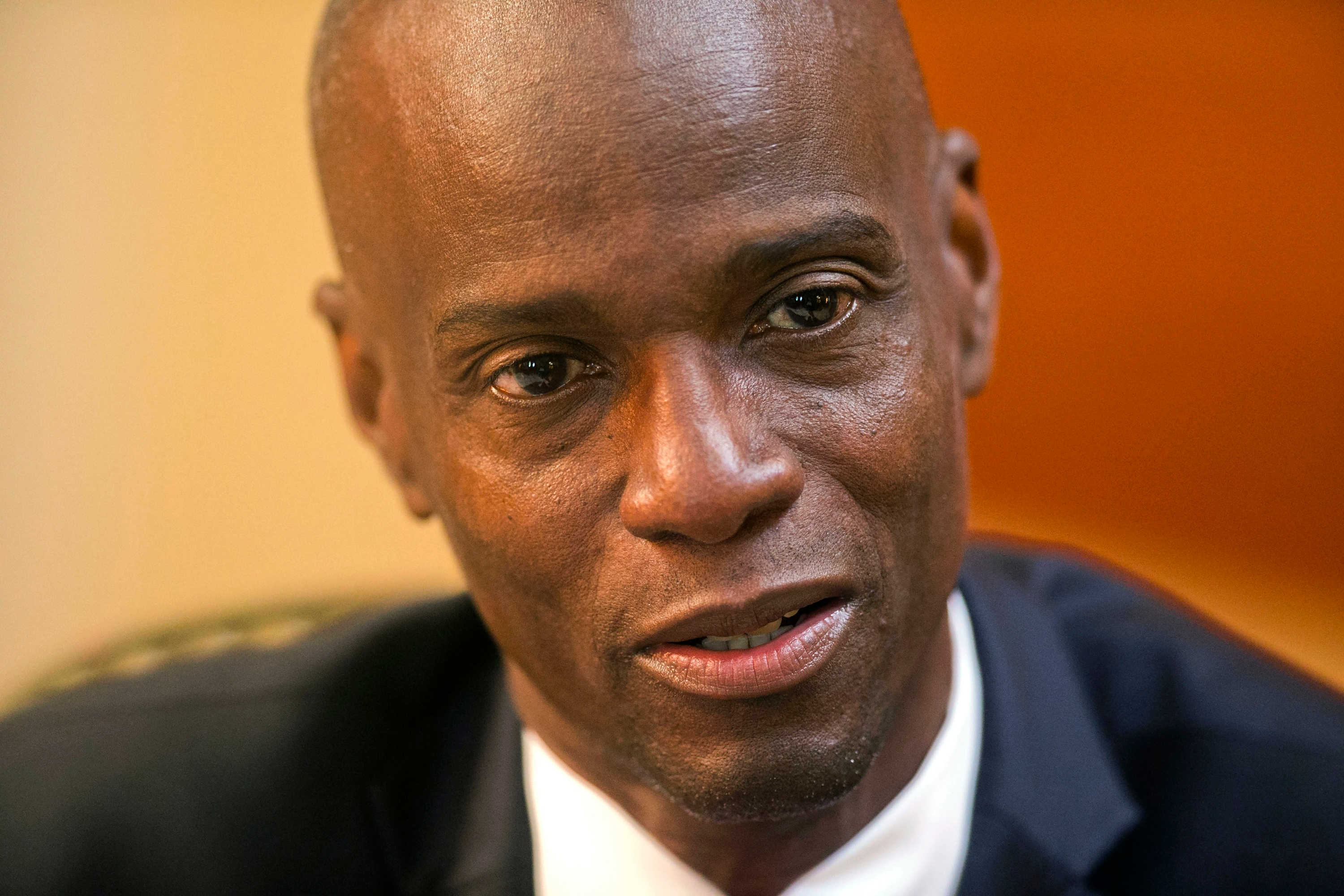
    MIAMI — A former Haitian government official and more than a dozen other people appeared Monday in federal court in Miami on charges related to the 2021 assassination of Haitian President Jovenel Moïse.

    Joseph Badio, a former Haiti Ministry of Justice employee, was brought into the Florida court in a wheelchair. The hearing happened a day after he and 17 others described as Colombian mercenaries were flown to the United States from Haiti, where they had been in custody.

    They’re among 30 people charged in the indictment, including Christian Sanon, a Palm Beach County, Fla., resident and dual Haitian-American citizen who was already preparing to face trial next week. Authorities said he aspired to be Haiti’s president.

    South Florida served as a central location for planning and financing the plot to oust Moïse and replace him with someone of the conspirators’ choosing, U.S. authorities have alleged. At least nine people so far have been convicted at trial or through guilty pleas.

    Moïse was “assassinated by individuals seeking to profit from illicit financial opportunities and business contracts,” U.S. Attorney Jason Reding Quiñones said.

    Moïse was killed on July 7, 2021, when about two dozen foreign mercenaries, most from Colombia, attacked his home near Port-au-Prince.

    In 2025, justice officials in Haiti asked the U.S. and Canada for help after a local court of appeals ordered a new investigation into Moïse’s killing, the third inquiry of its kind since he was shot 12 times at his private residence. His wife, Martine, also was injured in the attack.

    The previous investigations were stalled because Haitian judges kept resigning from the case, fearing for their lives, and gangs seized control of the downtown Port-au-Prince courthouse where the judges were interrogating suspects.

    Any proceedings in Haiti “continue to face significant difficulties,” the Ministry of Justice and Public Security said Sunday.

    The indictment says Badio, who is charged with conspiracy, posed as a U.S. drug agent and participated in Moïse’s killing. A lawyer appointed to temporarily represent him could not immediately be reached for comment.

    Badio once worked in the government’s anti-corruption unit until he was fired for alleged ethics violations weeks before the assassination.

    U.S. Magistrate Judge Lisette Reid assigned lawyers and set additional court dates during a series of brief dialogues with each of the 18 defendants.

    The scheme to kill Moïse included paying mercenaries with money obtained from U.S. government programs that were intended to help businesses during the COVID-19 pandemic, the indictment says.

    Haiti has not had a president in the five years since Moïse’s death. It has instead been overwhelmed by gang violence: More than 3,000 people were killed this year by June and about 1.5 million people were displaced, according to the U.N.