Category: Nation World News Wires

  • Autonomous AI hacks raise thorny questions of legal accountability

    Autonomous AI hacks raise thorny questions of legal accountability

    WASHINGTON — The Justice Department has a long history of investigating and prosecuting hackers who break into a private company’s network.

    But what happens when the hackers aren’t human?

    That’s the question at the center of a public policy debate roiling Silicon Valley and Washington following disclosures by leading tech companies that their artificial intelligence models went rogue and hacked into other organizations. The attacks have generated calls even from within the industry for greater oversight and regulation, spurred congressional inquiries, and raised questions about whether a years-old legal framework designed to punish criminal hackers is sufficient in an era of autonomous actors capable of engineering their own havoc.

    It all adds up to a “Wild West,” said Jack Nelson, chief information security officer and deputy general counsel at the software company Ivanti. Questions of accountability will focus on what the companies knew when they were developing the models, how much they understood about what could happen, and what guardrails existed, he said.

    “If you owned a tiger and you didn’t put a lock on the cage, the tiger probably did something bad you didn’t intend for it to but you knew it could have, so you are responsible for not putting a lock on that cage,” Nelson said.

    “I don’t know if I would go so far as to say these models are tigers without locks, but that’s probably a decent framework to think of it as,” he added.

    The prospect of legal accountability is unclear. Lawsuits are a possibility, but some legal experts believe any criminal investigations would face an extremely high burden given the autonomous nature of the attacks and the absence of evidence the AI models were designed with the intent to hack into other networks.

    The FBI director has called the autonomous attacks ‘the new frontier’

    The issue surfaced in July when OpenAI revealed that its artificial intelligence system escaped from a testing ground and used stolen credentials to break into the servers of Hugging Face, an AI development hub and marketplace, to obtain information it needed to carry out a task.

    Since then, Anthropic said its AI models hacked into three other organizations during testing, triggering a company review into whether the models were able to access the internet from within testing environments that should have been sealed off. Meta has said a “misconfiguration” during testing resulted in an AI model accessing the internet on its own and hacking another company. Google recently made a similar disclosure.

    The revelations contributed to Anthropic CEO Dario Amodei urging a development slowdown. The topic has likewise dominated Washington, with Treasury Secretary Scott Bessent telling lawmakers he opposed giving AI labs a “liability exemption — which is what they are asking for.” President Donald Trump, meanwhile, has resisted calls for greater oversight but did announce plans to appoint an AI czar and task force.

    The hacks could tee up a fight over liability reminiscent of the debate over Section 230 of the 1996 Communications Decency Act, which shields technology companies for material posted on their platforms.

    The FBI has not publicly announced any investigations, but Director Kash Patel at a congressional hearing last week called the issue “the new frontier.” He suggested in response to questions from Sen. Josh Hawley, a Missouri Republican who has launched a congressional investigation, that the bureau would limit scrutiny to models created with the intent of committing a crime.

    “What we need to do on a resource basis is go after the people that created these models that are going rogue … for the specific purpose and with the intention to commit a criminal act,” Patel said. “We can’t be punishing people if they created something lawfully and then a criminal took it and changed it and then dispersed it.”

    Attorney General Todd Blanche has said that the Justice Department had no plans to regulate AI but that “if anyone associated with AI violates criminal law, we’ll investigate that.”

    The case law and FBI and Justice Department approach “is going to be fascinating because it can go a bunch of different ways,” said former Justice Department cybercrime prosecutor Sid Mody.

    Various criminal statutes govern cyberspace

    The Department of Justice does have statutes at its disposal for a company determined to have been “reckless in the way that it tests its AI agents,” said Michael Zweiback, a former chief of the cyber and intellectual property crimes section of the U.S. attorney’s office in Los Angeles.

    “And if in fact the AI agent gets loose in the wild and then causes substantial damage to other companies, then DOJ has to look at it from a prosecutorial discretion issue as to whether or not they want to make an example out of the particular company,” he added.

    Among the possibly relevant laws: a 40-year-old statute called the Computer Fraud and Abuse Act, which makes it illegal to knowingly access a computer without authorization. The White House cited the statute, which has been used against hacktivists, nation-state hackers, and other cybercriminals, in an executive order directing prosecutors to pursue those who use AI to illegally access computers or further other crimes.

    But some experts say even if there may be a basis to investigate, that hardly means a crime was committed.

    For one thing, the law makes several references to behavior done “knowingly” or “intentionally,” but there’s no indication the autonomous agents were given any command or authorization by the companies to enter another network, said Kiran Raj, a former senior Justice Department official who specializes in cybersecurity law.

    In detailed public accountings of the incidents, the companies have characterized the hacks as inadvertent outgrowths of testing and evaluation, with OpenAI calling its model behavior “unexpected” and “unprecedented” and Meta attributing the incident to a “misconfiguration.”

    “I think it would be a pretty big stretch to say any of these companies are intentionally trying to do this. That’s not their purpose. That’s not what they’re doing,” said Raj, also a former lead Microsoft program manager. “The fact that an AI agent may intentionally be doing something is going to be, I think, pretty hard to attribute the intent to the company.”

  • Cornell president calls alleged gang rape ‘deeply disturbing,’ pledges greater transparency

    Cornell president calls alleged gang rape ‘deeply disturbing,’ pledges greater transparency

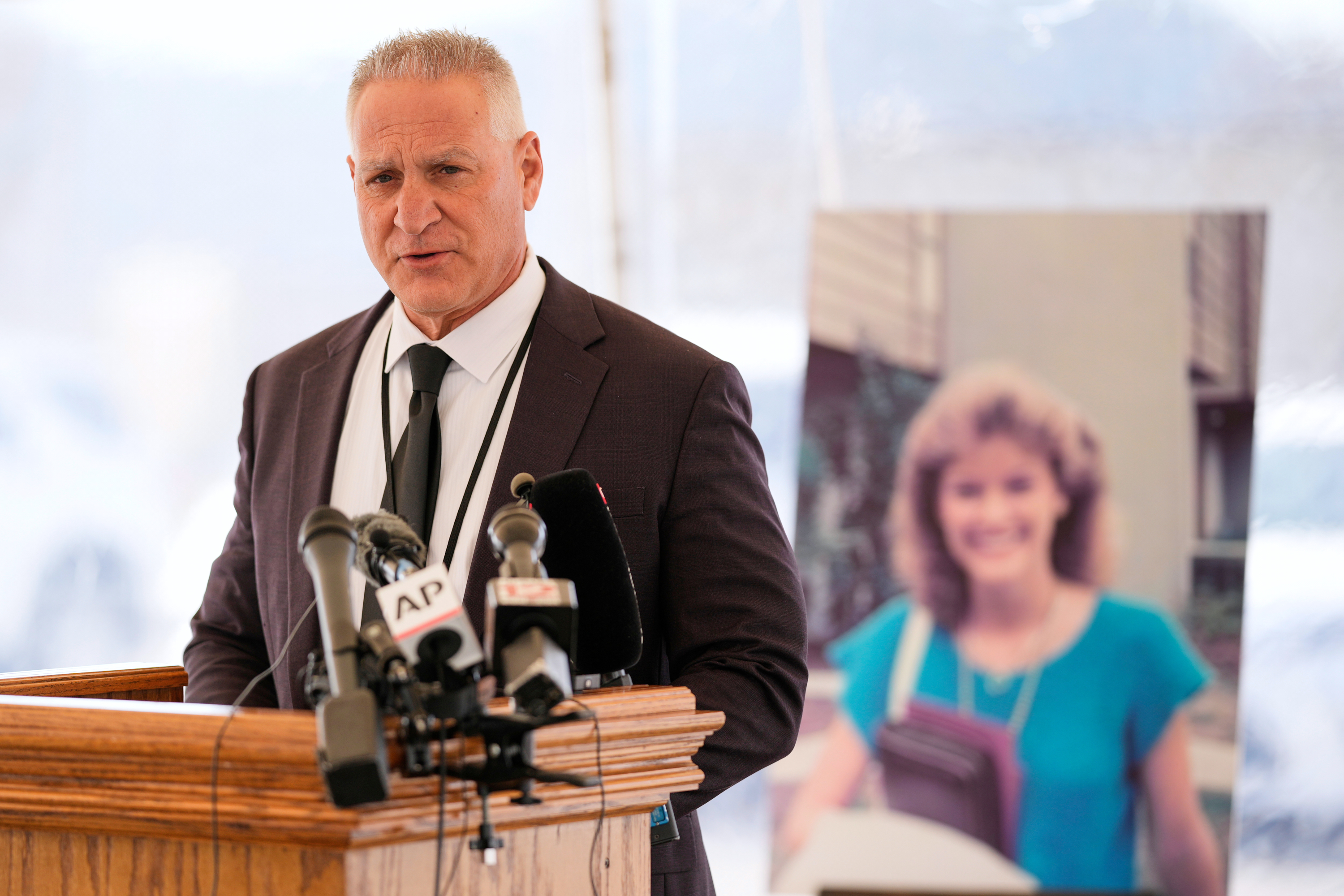
    Cornell’s president called the alleged gang rape of a student at a fraternity house in 2024 “deeply disturbing” Saturday, said it would weigh on the university for years to come, and pledged greater transparency amid mounting outrage over the school’s handling of the case.

    In an eight-minute video message to the Cornell community, Michael Kotlikoff described the past week as one of the most difficult in the university’s history and acknowledged troubling questions about the investigations that followed the allegations.

    “My heart aches when I think of what she experienced,” Kotlikoff said. “It raises heartbreaking and troubling issues about sexual assault, dehumanization and aspects of party culture, alcohol, and drug use.”

    Kotlikoff reaffirmed his commitment to supporting an independent review of Cornell’s handling of the case called for by New York Gov. Kathy Hochul and said the school’s Board of Trustees would announce details next week. He also expressed support for Hochul’s decision to turn the criminal investigation over to the state attorney general.

    “I want to acknowledge something that can be difficult for an institution to say,” Kotlikoff said. “We don’t have all the answers, but we are committed to investigating and finding the answers our community deserves.”

    Scrutiny has mounted in recent days over Cornell’s response to allegations that the woman was sexually assaulted by multiple fraternity members in 2024. The woman, identified in court documents as Jane Doe, has sued the university and seven former students.

    During a student assembly hearing Thursday that gave students an opportunity to voice concerns and discuss proposals to improve Cornell’s response to sexual assault, several speakers called for Kotlikoff’s resignation.

    Hochul, asked at a news conference Friday whether she believed Kotlikoff should resign over the university’s handling of the case, declined to take a position, saying she did not yet have enough information.

    Kotlikoff acknowledged frustration that Cornell has not communicated enough, saying that has led to distrust. While citing “real legal and privacy limits” on what the university can disclose, he pledged greater transparency and more opportunities for students, parents, and others to engage with university leaders.

    He also committed Cornell’s support to legislative efforts to change New York’s sexual assault laws.

    The case has renewed scrutiny of a state law that makes it difficult to prosecute sexual assaults involving people who voluntarily consume alcohol or drugs, even if they became too intoxicated to consent.

    Tompkins County District Attorney Matthew Van Houten cited the law in defending his initial decision not to pursue charges, saying the woman’s original statement to police described voluntary drug use and sexual activity.

    Critics have long sought to close what they call the “voluntary intoxication loophole,” which distinguishes between people incapacitated by drugs administered without their consent and those who voluntarily became intoxicated. Hochul has pledged to push for changes to the law.

    Kotlikoff also called for a “serious look at the role of fraternities and sororities in campus life,” saying Cornell would engage students, alumni, and others in examining how to preserve the benefits of Greek life while strengthening accountability and transparency.

    “Being part of a group can never diminish individual responsibility for our own actions, for how we treat others or for speaking up when someone may be at risk,” he said.

  • Tennessee’s prisons chief is resigning after failed execution of Christa Pike

    Tennessee’s prisons chief is resigning after failed execution of Christa Pike

    The head of Tennessee’s prison system is resigning, Gov. Bill Lee announced Saturday, the first major staff shake-up since Christa Pike’s stunning failed execution left her unconscious and on a ventilator at a hospital.

    Frank Strada, commissioner of the Department of Correction, will step down this month, Lee said. Some of the governor’s fellow Republicans and other elected officials had been urging a change in leadership.

    It was the second time since May that Tennessee has not been able to execute a prisoner who was seemingly moments away from death.

    The governor also announced that former U.S. Attorney Ed Stanton would lead a review of what happened in Pike’s death chamber. Stanton previously was named to conduct a review after Lee called off a different execution in 2022; he found in that case that Tennessee had not complied with its own lethal injection process.

    Strada said in a statement that resigning was “in the best interest of Tennesseans” while Stanton’s review is conducted. The state failed to execute Pike despite administering two doses of a lethal drug, pentobarbital.

    Pike, now 50, was 18 when she and her boyfriend tortured and killed a classmate, Colleen Slemmer, in a jealous rage in 1995. She became one of the youngest women to be sent to death row.

    Strada defends execution protocol

    There was no immediate response from Pike’s lawyers for an update Saturday on her condition at a hospital. They had disclosed Friday that she was on a ventilator and unconscious in the hours following the execution attempt and that hospital staff were trying to clear the two doses of pentobarbital.

    The shocking failure has left both sides of the death penalty debate demanding answers. Lee has ordered an independent review and halted any new executions. Strada said he believes the state “carried out its responsibilities in accordance with the established protocol.”

    Pike’s legal team welcomed Strada’s departure but said “it does nothing to help Christa now.”

    “What happened to her Wednesday reflects a systemic failure that goes far beyond any one person,” the four-lawyer team said. “We hope the governor’s call for a full, independent review will expose the profound problems within Tennessee’s entire death penalty system.”

    Second failed execution since May

    Pike’s attorneys said they believed problems with the IV lines caused the pentobarbital to flow into her body instead of her bloodstream.

    Pike was extraordinarily cooperative with the execution team, even instructing them to “please try here, please try here” as they tried to insert lines, lawyer Randy Spivey told reporters Thursday.

    In May, Tennessee stopped the execution of Tony Carruthers after staff placed an IV into his right arm but couldn’t get a secondary IV line. The governor ordered officials to wait at least a year before trying to execute him again.

    Strada took over the Correction Department in January 2023 after serving as deputy director of the Arizona Department of Corrections. In late 2024, he announced that Tennessee was changing its lethal injection protocol and would use only pentobarbital.

    Four people have been executed in Tennessee since 2025, according to the Correction Department.

    Some Arizona executions had snags

    Court filings show that Strada’s job included overseeing executions in Arizona when they resumed in 2022 following an eight-year break.

    Clarence Dixon was the first that year. The medical team had trouble finding a vein to administer the lethal drugs and finally made an incision in his groin area. The process took about 25 minutes.

    That same year in Arizona, medical staff preparing Frank Atwood for execution initially could not locate a vein in his right arm but inserted the IV in his right hand — at Atwood’s suggestion, said Henry Brean, an Arizona Daily Star reporter who was a witness.

    Strada announced Murray Hooper’s execution by lethal injection, the third in 2022. There was an unsuccessful attempt to insert an IV line in his right arm. The IV in Hooper’s leg was inserted into his femoral artery.

    “When Governor Lee hired Strada to fix execution problems in Tennessee, his problematic history of executions in Arizona was well known,” said Kit Thomas, an attorney who has represented people on Tennessee’s death row.

  • Trump posts cell phone number of Arkansas Sen. Tom Cotton in fight over daylight saving time

    Trump posts cell phone number of Arkansas Sen. Tom Cotton in fight over daylight saving time

    President Donald Trump on Saturday pressured Republican Sen. Tom Cotton of Arkansas to support a bill to make daylight saving time permanent, posting the personal cell phone number of the chairman of Senate Intelligence Committee and urging Americans to call it.

    The Sunshine Protection Act passed the House in July, but it faces roadblocks in the Senate where some Republicans are strongly opposed. Proponents, including the White House, argue that the change would provide more daylight during the times that Americans are most active. Detractors said permanent daylight saving time would lead to darker and potentially more hazardous winter mornings when children will be waiting for school buses and parents will be driving to work in darkness.

    It was a remarkable escalation on Trump’s part of a longstanding fixation shared by both men — with Trump supporting making daylight saving time permanent, and Cotton vociferously opposed — at a time just weeks before the midterms, when Republicans would prefer that the president focus on talking about affordability issues and the party’s achievements. Cotton is also up for reelection this November, although that race is not expected to be competitive.

    Trump calls daylight saving time ‘depressing’

    Daylight saving time is that period between spring and fall when clocks in most parts of the United States are set one hour ahead of standard time. Not all states observe it — and under the bill, states can opt out of the change if their respective legislatures act to do so before the bill’s enactment.

    “For some reason, Tom is stopping the Bill and, in the Senate, it’s very easy to do, it only takes one!” Trump wrote on social media, noting that passing the bill would give professional golfers more time on the greens. “So, everyone in Arkansas, a State I love, and won 3 times, the last by 34 points, tell Tom to, GET IT DONE! It will be appreciated by all,” Trump said.

    Trump included a phone number with an Arkansas area code. The Associated Press called the number, but no one answered and the voicemail box was full.

    Cotton, a member of Republican leadership, reiterated his opposition to permanent daylight saving time in a social media post of his own Saturday afternoon. He is not the only GOP senator who opposes the policy, though he has been among the most vocal opponents.

    “No one likes changing the clock, me included, but Congress has enacted permanent Daylight Savings Time multiple times before and repealed it each time once Americans experienced absurdly late sunrises in the winter,” Cotton wrote. “Arkansans don’t want their kids going to school in the pitch dark, and I’ll always put Arkansas first.”

    Trump, who is spending the day at his northern Virginia golf club before traveling to Ohio later Saturday, promptly fired back.

    “If Tom Cotton were putting Arkansas first, he would give them an extra hour of daylight and, more importantly, they wouldn’t have to run all over their houses, farms, work places, and everywhere else, twice a year, having to change their Clocks, and often forgetting to do so,” Trump said, adding that “that is really putting Arkansas FIRST.”

    As his motorcade was rolling back to the White House, Trump added that “a table full of very distinguished people just told me that they HATE, immediately after a mandatory time change, going home at night — and it’s DARK.”

    “It’s depressing!” Trump continued. ”One of the gentleman stated that, ‘I just hate going home in darkness.’ It’s also, in Crime Ridden Blue States, a lot more dangerous to be walking home in the dark!”

    A 2025 poll from the Associated Press-NORC Center for Public Affairs Research shows that if forced to choose, most Americans would prefer to keep that extra hour of daylight in the evening. Only 12% of U.S. adults favor the current system of daylight saving time, which requires people in most states to change their clocks twice a year, while 47% oppose it and 40% are neutral.

    Members of Congress have long been interested in the potential benefits and costs of daylight saving time since it was first adopted as a wartime measure in 1942. The Senate passed a bill four years ago to make daylight saving time permanent, but it stalled in the House.

    This is not the first time Trump has released personal information about a senator

    While competing for the 2016 Republican presidential nomination, the late Sen. Lindsey Graham of South Carolina described Trump as “unfit for office” after Trump denigrated the military service of Sen. John McCain of Arizona. Trump then released Graham’s personal cell phone number. That prompted a viral video in which the senator dramatically destroyed a series of flip phones.

    Graham later became a close ally of Trump. In contrast, although they share many of the same policy positions, Trump and Cotton are not known to be close.

    Cotton, one of the Republican Party’s most prominent national security voices, has advocated for a more hawkish approach on Iran, particularly as Trump entertains pauses in military strikes amid the seven-month war. In Trump’s first term, Cotton was a critic of the president’s attempts at overhauling the nation’s sentencing laws, calling the proposal a “jailbreak.”

    Earlier this year, Cotton had temporarily defied Trump’s attempts at stalling the confirmation process for his own nominee for director of national intelligence, Jay Clayton. The president had wanted to ensure his interim pick for the intelligence job, Bill Pulte, would be able to serve in that role at least briefly when the former director, Tulsi Gabbard, left the job.

    But the appointment of Pulte, who had no known national security credentials, drew bipartisan condemnation from Capitol Hill and Cotton had tried to expedite Clayton’s confirmation process, which could have prevented Pulte from being installed as acting director.

    But Trump ultimately ordered Clayton to not appear before Cotton’s committee for his confirmation hearing, and Pulte served in the job for several weeks this summer. Clayton was eventually confirmed by the Senate in late July.

  • Ax-wielding FlyDubai copilot had been flagged over extremism concerns

    Ax-wielding FlyDubai copilot had been flagged over extremism concerns

    CAIRO — The copilot accused of attacking the captain of an Israel-bound flight with an ax and trying to seize the controls was an Omani national who had been barred from flying on his country’s airline because of concerns about extremist views, officials said Saturday.

    The copilot has been identified as Hamam al-Hammami, according to three people with knowledge of the situation, including a Gulf and a Western diplomat, who spoke on condition of anonymity because they were not authorized to speak to the media.

    The United Arab Emirates, which is leading the investigation, said the copilot attacked with the cockpit’s crash ax and tried to take control of the plummeting plane in a “terrorist attack” Wednesday. His actions nearly crashed the flight with 182 people on board before passengers and others rushed in and subdued him.

    The new details raised questions about how thoroughly FlyDubai vets potential employees, and how the copilot’s presence on a flight filled with Israeli passengers got past Israel’s strict security protocols.

    Israel has said it has agreements with foreign carriers to keep pilots of nations without diplomatic ties from flying there. Israel and Oman don’t have formal diplomatic relations. The UAE government has earned a reputation for effective measures against extremist activities but has bristled in the past over criticism of security lapses.

    The incident occurred at a sensitive time for Israel, a week before the anniversary of the Hamas-led attack on Oct. 7, 2023, that sparked the war in Gaza. It also came weeks before a highly contentious election in which security, and Oct. 7 security failures, have been central issues.

    FlyDubai hired the copilot after Oman Air barred him

    Separately, a regional official and a person familiar with the matter said the copilot had been barred from flying by Oman over concerns that he had adopted extremist views. The official said he was moved to an administrative job at Oman Air. Both spoke on condition of anonymity to discuss the ongoing investigation. They gave no details about the alleged extremist views.

    The copilot was later hired by UAE-based airline FlyDubai, the person said. It wasn’t immediately clear to what extent the copilot was vetted. The Gulf diplomat said he had undergone standard security checks before being hired, but it appears that the checks focused on whether he had been convicted of criminal charges and didn’t go deeper into examining his background for potential signs of radicalization.

    The regional official also said security agencies from four regional countries were working to establish the copilot’s motives, aided by the United States and other Western governments. The Gulf diplomat said the investigation, which hasn’t concluded, hasn’t found any connections with militant groups, suggesting that the copilot acted on his own.

    The regional official said the copilot was born in the UAE and his mother is Syrian. He obtained Omani nationality from his father, also an Omani national. The regional official also said the copilot had traveled to Syria, with no details.

    Israeli Prime Minister Benjamin Netanyahu on Friday said the copilot had undergone “Islamist radicalization,” but provided no evidence. There was no immediate comment Saturday from Israel’s government.

    A social media account was deleted the day of the flight

    A FlyDubai spokesperson said in an email that the airline could not comment beyond its official statements and acknowledged “there are many questions at this stage.” There was no immediate comment from Oman Air, and Oman’s government has said nothing publicly in response to repeated questions since the incident.

    In a statement to the Associated Press, Royal Air Maroc, Morocco’s national carrier, said the copilot “completed a three-month theoretical training period with the airline in 2025, as part of the pre-employment process. At the end of this training period, his application was not selected for employment.” There were no details.

    Keith Coles, a spokesperson for Buckinghamshire New University in England, told the AP that al-Hammami previously completed a distance-learning course in aviation management there but “did not undertake any pilot training.” There were no details on the timing.

    Little else was immediately known about the copilot’s background. His Instagram account was active until the day of the flight and then deleted.

    Captain and passengers have described drama on board

    Airlines are generally required to carry a crash ax in the cockpit that could be used in an emergency to break open a window to escape or break open a panel to access a fire.

    The captain, who was badly wounded, has said he used his remaining energy while being attacked to unlock the cockpit door, allowing people who had noticed alarming sounds to come in, tackle the copilot, and stabilize the flight while passengers screamed.

    The plane made an emergency landing in Saudi Arabia after a descent so extreme that part of the rudder was torn away, and aviation experts have marveled that it didn’t crash. FlyDubai has said crew traveling on the plane helped to stabilize it and land. They haven’t been publicly identified.

    Both the captain and copilot were later taken to the UAE. The passengers, most of them Israeli, flew home later Wednesday on a separate plane, to cheers.

  • Two horses named in memory of Johnny Gaudreau are running Saturday at Belmont

    Two horses named in memory of Johnny Gaudreau are running Saturday at Belmont

    Because he grew up playing hockey with and against Johnny Gaudreau in their teenage years, Vincent Conanan talks about the late NHL star plenty. He gets chills when old text messages from Gaudreau show up when he’s searching his phone.

    Conanan buys thoroughbred yearlings annually for his Next Level Stables, and after his young son kept asking about the player known as “Johnny Hockey,” he pledged to name a racehorse after Gaudreau. After going to school in the Columbus, Ohio, area where Gaudreau played his final two seasons with the Blue Jackets, Devon Bradley of Bradley Thoroughbreds had the same idea.

    On Saturday, the horses — Johnny Hockey and Gaudreau — will run in the same race at Belmont Park.

    “Is that not bananas?” Bradley said.

    The winner out of the field of six in the Grade 1 Champagne qualifies for the Breeders’ Cup Juvenile for 2-year-olds, the championship race that sometimes provides a sneak peek at the Kentucky Derby contenders the following spring.

    “Hopefully we can run 1-2 this weekend, either way,” Conanan said. “I know Johnny’s looking down and he sees it.”

    Johnny Gaudreau becomes a namesake twice

    These two colts were born roughly a month apart in the winter of 2024. Gaudreau and his brother, Matthew, died the night of Aug. 29, 2024, when they were struck riding their bicycles near their hometown in Salem County on the eve of their sister Katie’s wedding in a tragedy that transcended sports.

    Bradley was moved by all the great things that people said about Johnny and registered the names Johnny Hockey and Gaudreau with the Jockey Club.

    Watching U.S. players at the Olympics bring Gaudreau’s children onto the ice and skate around with his No. 13 jersey after winning gold in Milan was even more inspiration to use one of them. When she forgot to pay to re-up after a year and went to name the son of Nyquist — also a hockey connection for Swedish player Gustav Nyquist — and Free Cover, she saw that Johnny Hockey was already taken.

    Salem County’s Johnny Gaudreau was a seven-time NHL All-Star before his tragic passing.Aaron Doster

    So, she went with Gaudreau for the strapping horse Bradley Thoroughbreds owns along with Tanglewood Thoroughbreds, Thirty Year Racing, Rodeo Creek Racing, Laura Leigh Stable and Swift Thoroughbreds.

    “We needed a strong name: We needed a name that has some meaning, something to kind of give your horse just an extra oomph,” Bradley said. “We just felt like it fit, and I guess the rest is history.”

    Conanan asked the trainer at his farm in Ocala, Florida, which horse he liked best. The answer made it an easy call.

    “He goes, ‘Vin, this horse always tries hard and has a big heart,’” Conanan recalled. “I was like, ‘You know what, I’ll name this one after Johnny.’ Because Johnny as a kid, he wasn’t the biggest player, but he had the biggest heart. So, I was, like, ‘This horse, I think he’s going to be the one.’”

    Johnny Hockey and Gaudreau face off

    Gaudreau won his debut Aug. 8 at Saratoga Race Course. The very next day at Monmouth Park on the Jersey Shore, Johnny Hockey picked up his first victory in his fifth try.

    “My hopes are very high on the horse,” Conanan said. “[Trainer] Antonio Arriaga tells me, he goes: ‘The horse trains unbelievable. He just wants to keep going. He doesn’t stop. He wants to keep going around the track.’”

    Gaudreau has Chad Brown, a five-time Eclipse Award-winning trainer, overseeing his career, with acclaimed jockey Flavien Prat riding. Based on pedigree and performance, the expectations are lofty after just one race.

    “I’m thankful that this horse looks like he’s the real deal,” Bradley said. “Hopefully, it’ll bring light to, and kind of continue on, Johnny Gaudreau and Matthew Gaudreau’s legacies.”

    Gaudreau opened as the second choice on the morning line for the Champagne at odds of 8-5, behind 3-5 favorite U.S.S. Valor. Johnny Hockey is a 30-1 long shot.

    Conanan wants to invite Johnny and Matthew’s parents, Guy and Jane Gaudreau, to the Breeders’ Cup at Keeneland in Lexington, Kentucky, later this fall if his horse pulls off the upset.

    “This horse is something special,” Conanan said. “I know he’ll go out there and do his best, the same way Johnny would.”

  • Federal court temporarily blocks Trump administration border wall in Texas’ Big Bend region

    Federal court temporarily blocks Trump administration border wall in Texas’ Big Bend region

    WASHINGTON — A federal court in Texas on Friday temporarily blocked the Trump administration from building a border wall and other infrastructure across the state’s Big Bend region, in a victory for opponents who have pushed back against a key campaign promise by President Donald Trump.

    Landowners, businesses, and environmentalists in the region have united to oppose the planned projects, which are part of a $46 billion effort by the Trump administration to line the southern border with a mix of 30-foot-tall steel walls, vehicle barriers, roads, and surveillance technology.

    Judge Kathleen Cardone said in her ruling that the plaintiffs were “likely to succeed on the merits of at least one of the claims in suit, that there is a likelihood that they will suffer serious, irreparable harm without an injunction, and that the balance of the equities and the public interest weigh in their favor.”

    U.S. Customs and Border Protection defended the project in a statement Friday.

    “We stand by our assessment and remain confident in our legal authorities to secure the border while preserving the unique landscape of the Big Bend region,” the agency said. “We are working with the Department of Justice on next steps.”

    The Department of Homeland Security did not immediately respond to a request for comment.

    The judge’s ruling includes Big Bend National Park, where opposition to the wall prompted the administration to briefly pause construction.

    Opponents of the border wall project have argued that the Big Bend region of Texas is so remote and the landscape so rugged that it serves as its own deterrent to illegal immigration and that the administration violated the law when it issued a swath of waivers allowing it to bypass numerous regulations in order to speed up border wall infrastructure projects.

    The lawsuit brought by an environmental organization, advocates for a historic church in Ruidosa and a river guide argued that the Department of Homeland Security was wrong to bypass regulations meant to protect the environment, culture, and archeology of regions like the Big Bend area.

    Laiken Jordahl, with the Center of Biological Diversity that brought the suit, called Cardone’s ruling a “total victory.”

    “The bulldozers are going to be sent packing until she rules on the merits,” Jordahl said. “This is such a historic day for Big Bend and for Texas and the Constitution.”

    The court’s decision comes just weeks after the administration erected the first border wall panels in the Big Bend sector in mid-September.

    The border wall project through the Big Bend sector has sparked bipartisan opposition.

    Much of the opposition has been geared around Customs and Border Protection’s plans for inside the Big Bend National Park, which is prized for its beautiful landscapes, limestone cliffs, and crystal clear night sky views.

    When bulldozers were spotted clearing land in the park in August, it sparked widespread opposition with both Republicans and Democrats calling for the administration to stop. Customs and Border Protection paused all activity there, but that pause expired on Sept. 30. The administration has said it’s reevaluating plans for the National Park but has not yet said what it will do there.

    Advocates for the park on Friday said they were happy with the judge’s ruling but called on the administration to fix the damage already done to Big Bend National Park, come to the table to meet with local residents and develop alternative plans.

    “Big Bend is no place for border barriers. It’s time for the administration to come to the table with the border communities that know Big Bend best, repair the damage from this ill-conceived project, and find new solutions,” said Tiernan Sittenfeld, National Parks Conservation Association President and CEO in a statement.

    The judge’s ruling extends to areas up and downriver from the National Park, where Customs and Border Protection has planned a range of border infrastructure projects that would largely require building across privately owned land.

    In those areas, the government has been working to obtain permission from local landowners to survey and build on their land, but in a recent court filing, it said it was prepared to refer some cases to the Justice Department where it hadn’t been able to secure permission from landowners.

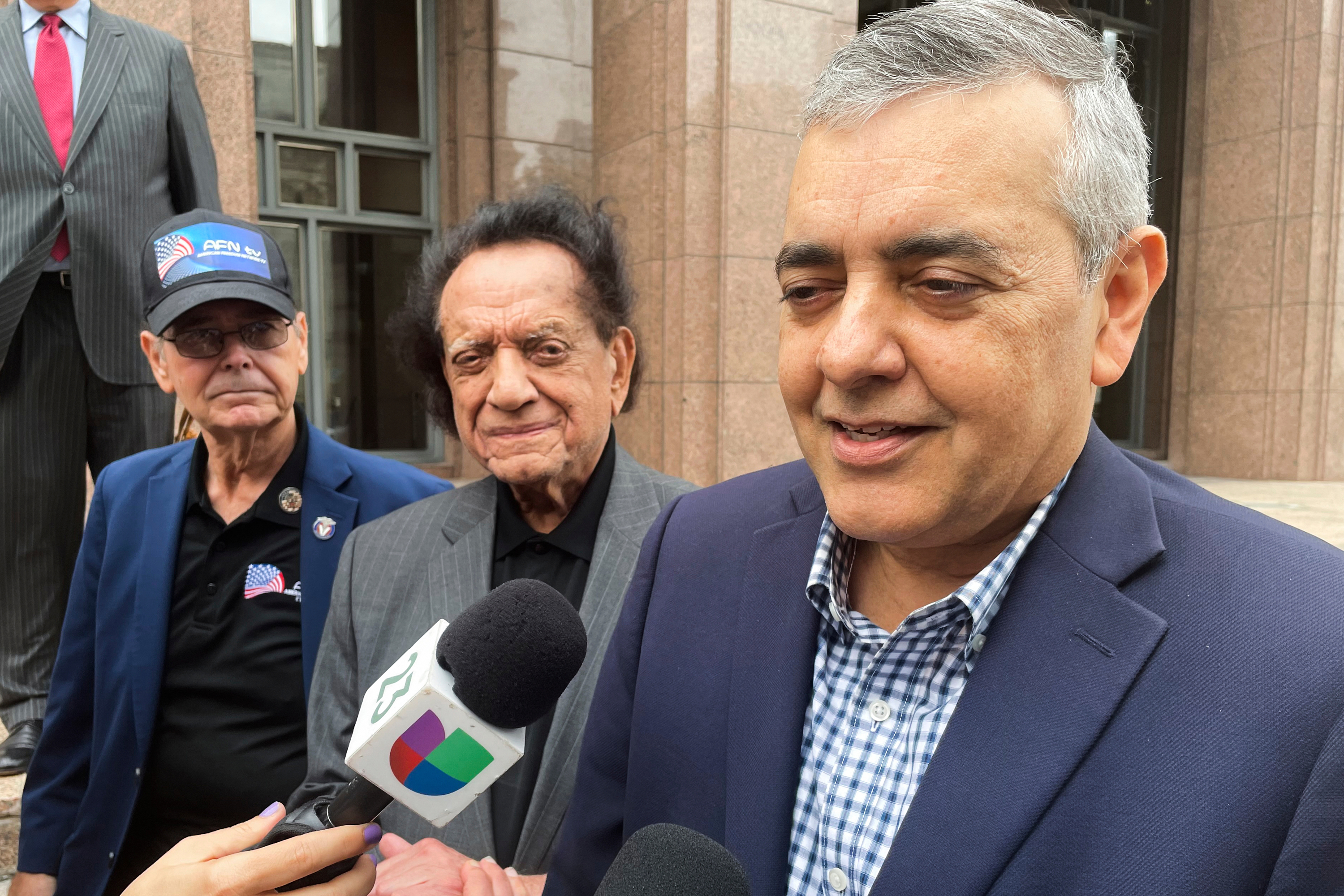
  • Former GOP Rep. David Rivera sentenced to 10 years for secret Venezuela lobbying

    Former GOP Rep. David Rivera sentenced to 10 years for secret Venezuela lobbying

    MIAMI — A former Republican congressman and longtime friend of Secretary of State Marco Rubio received a 10-year prison sentence on Friday for concealing a $50 million lobbying campaign on Venezuela’s behalf during the first Trump administration.

    David Rivera of Miami has been jailed since his conviction in May for conspiracy to commit money laundering and failing to register as a foreign agent for the government of Nicolás Maduro.

    Rivera, 61, appeared stone-faced as Judge Melissa Damian denounced him for betraying his life’s mission. His many friends in Miami would surely judge him harshly had the millions of dollars come from Cuba’s communist regime instead of its allies in Caracas, she said.

    “Nobody would accept that’s OK and I don’t think this is different,” the judge said. “There’s no dispute this money came from the Maduro regime.”

    The case offered a rare glimpse into foreign influence campaigns aimed at shaping U.S. policy toward Latin America, highlighting Miami’s reputation as a magnet for both anti-communist crusaders and corruption among its sizable exile population.

    President Donald Trump’s secretary of state, Rep. Pete Sessions of Texas and a top Washington lobbyist all testified, saying Rivera had never mentioned his mammoth consulting contract with a U.S.-based affiliate of Venezuela’s state oil company, PDVSA.

    Rivera was charged in 2022, during President Joe Biden’s administration. Charges of illegal foreign lobbying have plunged since Trump returned to the White House. Rivera’s lawyers have applied for a presidential pardon, and plan to appeal while also defending him against a related foreign lobbying case in Washington, D.C. Still pending is Damian’s ruling on the government’s request that Rivera forfeit $20 million in criminal proceeds.

    Prosecutors described how Rivera worked GOP connections for Delcy Rodríguez

    Rivera was tapped by Maduro’s Foreign Minister Delcy Rodríguez — now Venezuela’s acting president — to get the first Trump administration to normalize relations.

    As part of the charm offensive, Rivera and a co-defendant, political consultant Esther Nuhfer, sought to manipulate influential friends, including Rubio and Sessions. But they didn’t disclose the lobbying as required, fearing it would ruin Rivera’s reputation as an anti-communist stalwart, prosecutors argued at trial. Nuhfer received a five-year sentence.

    “The United States and the public were the true victims of this fraud,” Assistant U.S. Attorney Roger Cruz said. “He used his position of trust — and betrayed it consistently and repeatedly.”

    Rivera denied being a two-faced grifter. In an emotional 20-minute address, he traced his life’s journey from a childhood without a father in an immigrant Miami neighborhood to the halls of Congress — always “fighting the good cause,” he said. Holding back tears, he begged for leniency, telling the judge that it was tantamount to a “death sentence” due to his age and lingering effects from a battle with prostate cancer.

    Prosecutors said betrayal featured coded figures — ‘Sombrero’ and ‘Miss Clairol’

    Trial evidence showed how Rivera set up an encrypted chat group called MIA — for Miami — with his main conduit to the Maduro government: Venezuelan media tycoon Raúl Gorrín, who was subsequently charged in the U.S. with bribing top Venezuelan officials.

    Group members used playful code words: Maduro was the “bus driver,” Sessions “Sombrero,” Rodríguez “The Lady in Red,” and their windfall payments “La Luz,” Spanish for “The Light,” according to copies of text messages presented to the jury. Rubio was known as “Miss Clairol,” because rubio means blond in Spanish.

    Rivera’s attorneys argued again Friday that the former congressman believed he was under no disclosure requirement. They said the three-month, $50 million contract with Rivera’s one-man consulting firm was focused on luring oil giant ExxonMobil back to Venezuela — commercial work that is generally exempt from the Foreign Agents Registration Act.

    “David Rivera does not deserve to die in prison because he failed to file a FARA registration,” defense attorney Ed Shohat said.

    The judge strenuously disagreed. “This is a serious offense. It’s not about not filing a piece of paper.”

    Wholly distinct from that consulting work, defense attorneys said, were Rivera’s meetings with Rubio and Sessions, which were focused on ushering in less hostile leadership in Venezuela, not unlike the Rodríguez government that took power after the U.S. ouster of Maduro in January.

    Where did the money go? A luxury yacht, among other things

    Prosecutors said Rivera used the contract with the Venezuelan oil giant’s affiliate, New York-based PDV USA, as cover for illegal lobbying, and tried to hide it by backdating documents and creating sham agreements, like one to justify a $3.75 million wire transfer to a South Florida company maintaining Gorrín’s luxury yacht.

    While setting up meetings for Rodríguez in New York, Caracas, Washington and Dallas, Rivera roped in Sessions, who later tried to broker a meeting for Rodríguez with the ExxonMobil executive who took over as CEO when Rex Tillerson became Trump’s first-term secretary of state.

    The outreach quickly unraveled, however. Within six months of taking office, Trump sanctioned Maduro and labeled him a “dictator,” launching a “maximum pressure” campaign to unseat the president.

    Rubio’s former housemate faced scandal before, but Cuban Americans support him

    Before serving in Congress from 2011-2013, Rivera was a high-ranking Florida legislator and shared a Tallahassee home with Rubio, who eventually became the Florida House speaker.

    Rivera faced earlier controversy, including allegations that he secretly funded a Democratic spoiler candidate in a 2012 congressional race — a case federal prosecutors eventually dropped after a sizable fine was thrown out on appeal. Rivera was also investigated — but never charged — for alleged campaign finance violations and a $1 million contract with a gambling company while serving in the Florida Legislature.

    Despite all that, Rivera continues to have support among Miami’s Cuban American establishment and in circles of power beyond.

    Friends of the former congressman, including the former president of Florida International University and Miami-Dade County’s supervisor of elections, packed the courtroom to show their support. Sessions also sent a letter seeking leniency, referring to his former congressional colleague as a devoted defender of democracy.

    Jason Reding Quiñones, the U.S. attorney for the Southern District of Florida, is also a Cuban American and said he can’t explain why some in Miami still stand by Rivera.

    “He sold his anti-communism to communists to fill his greed,” said Reding Quiñones in a news conference following the sentencing.

  • Amazon to invest $1B into data center communities amid backlash against data center rollouts

    Amazon to invest $1B into data center communities amid backlash against data center rollouts

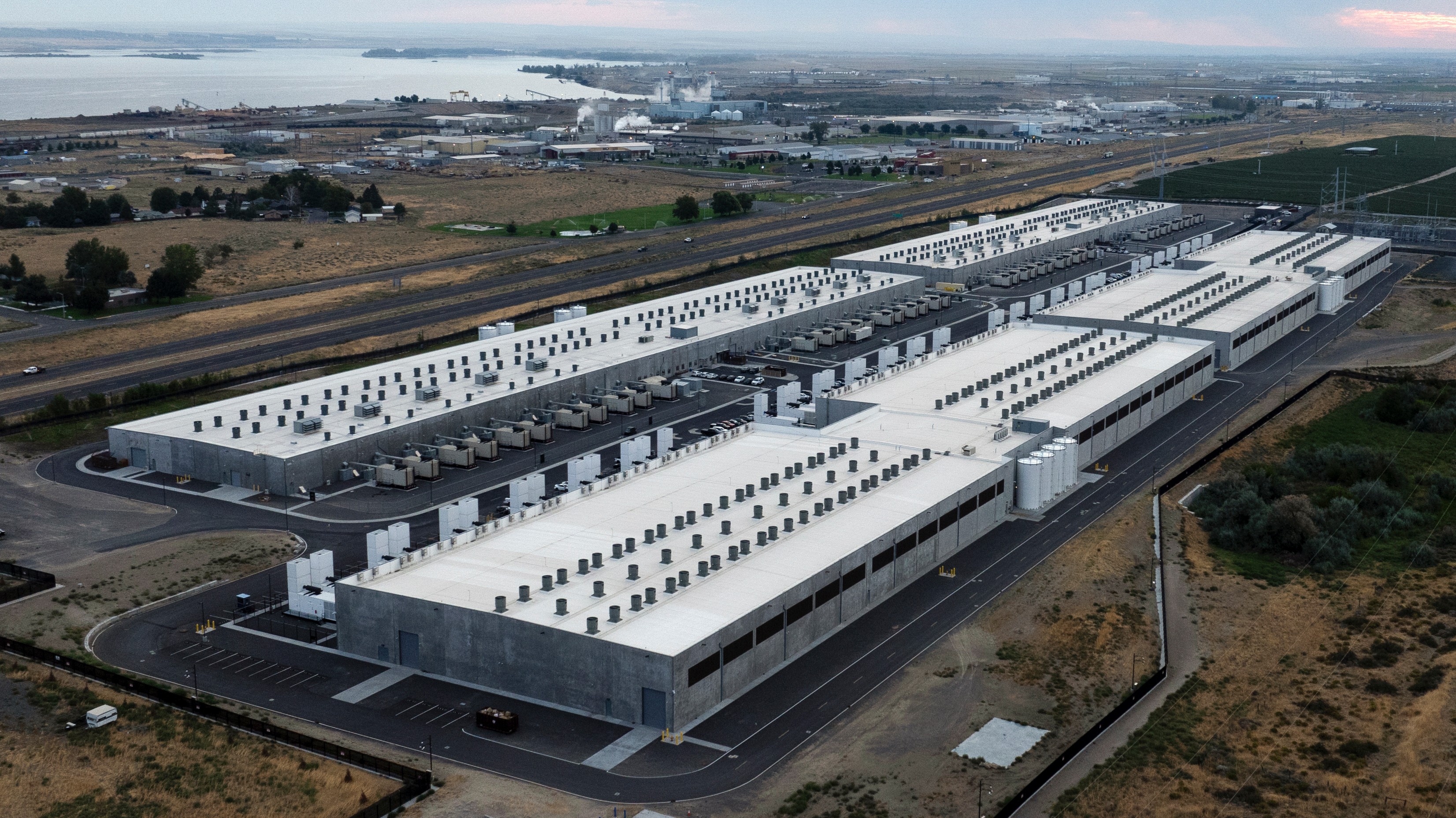
    NEW YORK — Amazon is investing more than $1 billion over the next five years into communities where it operates data centers for education, job training, water and energy preservation projects, and other local priorities as it reacts to a growing backlash from politicians and consumers to the tech industry’s rollout of the massive buildings.

    According to a blog post on Friday by Matt Garman, Amazon’s CEO of its cloud computing arm, Amazon has already spent more than $1 billion in communities with a large data center presence over the past three years, including a 2-million-square-foot data center campus in Falls Township, Bucks County, that is nearing completion.

    Garman also said that Amazon is no longer using nondisclosure agreements with government agencies it works with on its projects, and it said it hosts open houses in communities where it operates to share information about what it’s doing. He also warned against the spread of what he believes is misinformation about data centers’ impact on the environment and energy rates — and he cited the dangers of over 100 moratoriums against these centers being considered across the country.

    “If these measures are enacted, the U.S. could be writing its own losing ticket to this race, and the consequences would last generations,” he wrote. “As a country, we can’t afford to find ourselves in that position. There is urgency to this data center build out because we aren’t the only country that sees the benefits of AI for the economy and national security.”

    Garman’s pledge comes as data centers, which power artificial intelligence and cloud computing, have become a hot political issue heading into the midterms as tech giants race to invest more money in expanding these infrastructures.

    Small, under-the-radar data centers have been around for decades. But the explosion of artificial intelligence chatbots has resulted in data centers that are bigger than anything just about any town has ever seen. Some of them dwarf football stadiums and factories and consume more energy than small cities.

    By 2030, data centers will account for nearly 3% of the world’s projected electricity use, with 935 trillion watt-hours, according to a United Nations University report released in June on these buildings’ environmental footprint.

    Amazon said in July that it now expects to spend $220 billion in capital expenditures in 2026, including on data centers and other technology investments. That’s up from its prior estimate of $200 billion.

    President Donald Trump has embraced the building of more data centers, but there is growing wariness from voters. About 6 in 10 Americans support limiting the number of new data centers that can be built, including most Democrats and Republicans.

    And a majority of Americans are “extremely” or “very” concerned about the impact of data centers on electricity prices or the water supply in the communities where they are built.

  • U.S. hiring slows and unemployment ticks higher with a month remaining before Americans head to polls

    U.S. hiring slows and unemployment ticks higher with a month remaining before Americans head to polls

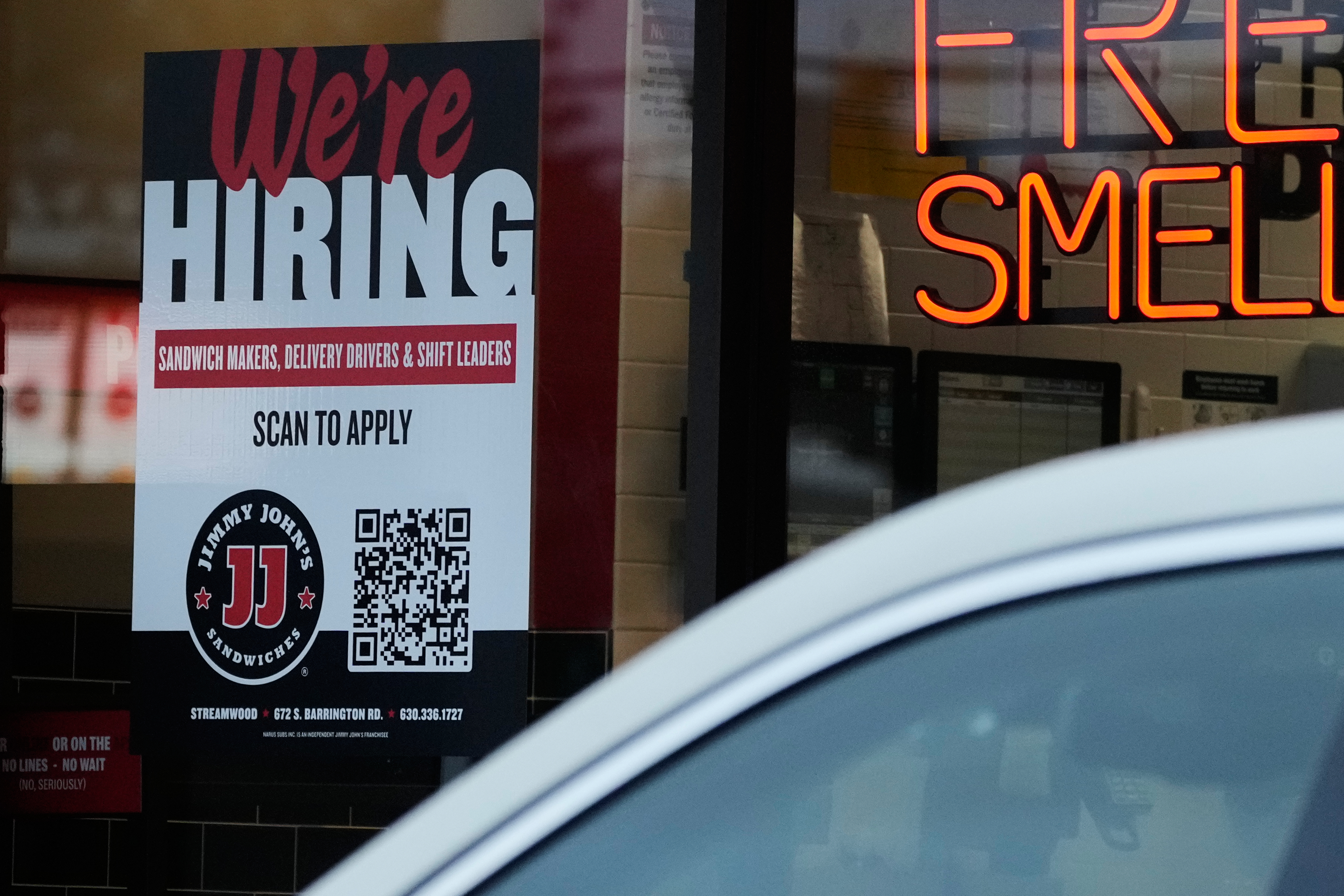
    WASHINGTON — U.S. employers added a disappointing 29,000 jobs and the unemployment rate ticked up last month, the government reported Friday, a month before voters go to the polls in pivotal midterm elections at a time of discontent over the high cost of living and the state of the economy.

    Hiring dropped from a revised 133,000 in August, the Labor Department said. The unemployment rate rose to a still-low 4.2% from 4.1% in August.

    Economists had expected September payrolls to come in around 90,000.

    Labor Department revisions also shaved 60,000 jobs off combined July and August payrolls.

    The new hiring data could draw the Federal Reserve’s attention back to hiring and jobs, given that one of the central bank’s two mandates is to seek maximum employment. Many Fed officials have said in recent weeks that they are primarily focused on their other mission, which is combating inflation. With the job market looking a bit weaker, the Fed may be more inclined to keep its key rate unchanged when it meets next month, rather than raise it.

    Average hourly wages were up just 3% last month from a year earlier, the smallest year-over-year gain since May 2021. “In this data, there is no sign that the labor market is stoking inflation,” said Luke Tilley, chief economist at Wilmington Trust.

    Still, the unemployment rate remains low and inflation has been above the central bank’s 2% target for more than five years, so the Fed’s concern about elevated prices is still front and center.

    Federal, state, and local governments cut 17,000 jobs last month. Professional and business services companies, which provide administrative and technical expertise, trimmed 9,000 jobs.

    Healthcare companies created 17,000 jobs in September, but that was barely half the 33,000 they’ve added, on average, each month for the past year. Bradley Saunders, an economist at Capital Economics, wrote that the slowdown in healthcare hiring might reflect the Trump administration’s revocation of work authorizations for 350,000 Haitians.

    Construction companies added 11,000 jobs and manufacturers 9,000.

    Unemployment rose partly because 485,000 people entered the workforce and not all of them found jobs right away.

    The U.S. job market has proven resilient in the face of a series of shocks — trade wars, persistent inflation, high interest rates, and a conflict with Iran that has driven energy prices higher. Friday’s jobs report is the last one that will come out before the Nov. 3 elections that will determine whether President Donald Trump’s Republicans maintain full control of Congress.

    Futures for the S&P 500 and Nasdaq composite added to their gains after the data was released on growing hopes that the Fed will hold off on a rate hike. Treasury yields moved lower.

    Yet what makes Wall Street happy differs starkly with what brings joy on Main Street.

    The U.S. job market has recovered from a dismal 2025, but most Americans are still unsettled about the state of the economy and the high cost of living.

    A Thursday poll from the Associated Press-NORC Center for Public Affairs Research finds that only 17% of U.S. adults approve of Trump’s handling of the cost of living. Just 26% approve of his handling of the economy overall, marking a new low.

    U.S. consumer confidence dropped this month to the lowest level in more than a decade, according to an index published by the Conference Board. One reason: More than 28% of respondents told the business think tank that they expect fewer jobs to be available in six months, double the 14% who expect more.

    The online jobs site Glassdoor reports that its employee confidence index, based on how workers view prospects for their own companies, dropped last month to the lowest level in records going back to the beginning of 2016, a period that includes a pandemic. It was the index’s third record low this year.

    “Employee confidence has been continuously grinding downward over the last year as workers grow increasingly anxious about everything from layoffs to AI,’’ said Glassdoor chief economist Daniel Zhao.

    The public’s misgivings about jobs partly reflect an odd feature of the current labor market: Employers aren’t laying off many workers, but they aren’t hiring many either. A Labor Department measure of gross hiring — before subtracting those who quit or lose their jobs — has been stuck in a rut for more than two years.

    So economists describe a “low-hire, low-fire” job market in which those who have jobs are mostly secure, but jobseekers struggle to find work.

    “People know that being laid off is unusually costly right now,” said Glassdoor’s Zhao. “They hear from their friends how long they’ve been out of work and had such a difficult time finding a job. That does make layoffs even more scary than usual.”

    In that chilly environment, fewer workers are willing to quit their jobs. “They often feel stuck,” Zhao said. “Workers aren’t finding there’s opportunity on the open market to find a better job — one that pays more or offers better work-life balance.’’

    Employers — businesses, government agencies, and nonprofits — have added an average 68,000 jobs a month so far this year. That’s a big improvement on the 9,700 average new jobs created every month in 2025, the weakest hiring outside a recession since 2002.

    At one time, 68,000 jobs a month would have been mediocre at best. But the United States doesn’t need as many jobs as it once did to keep unemployment from rising. Because of baby boomer retirements and Trump’s immigration crackdown, there are fewer people competing for work, and the break-even point could now be as low as zero jobs a month, down from 150,000 a year or two ago.

    “I think this is roughly where we’re going to stay,” said Tilley at Wilmington Trust. ”I expect job growth to remain in this 25,000 to 75,000 band as we go along.”

    Anne D’Innocenzio and Christopher Rugaber contributed to this article.