Category: Nation World News Wires

  • FDA nominee voices support for vaccines at Senate hearing scrutinizing Trump administration efforts

    FDA nominee voices support for vaccines at Senate hearing scrutinizing Trump administration efforts

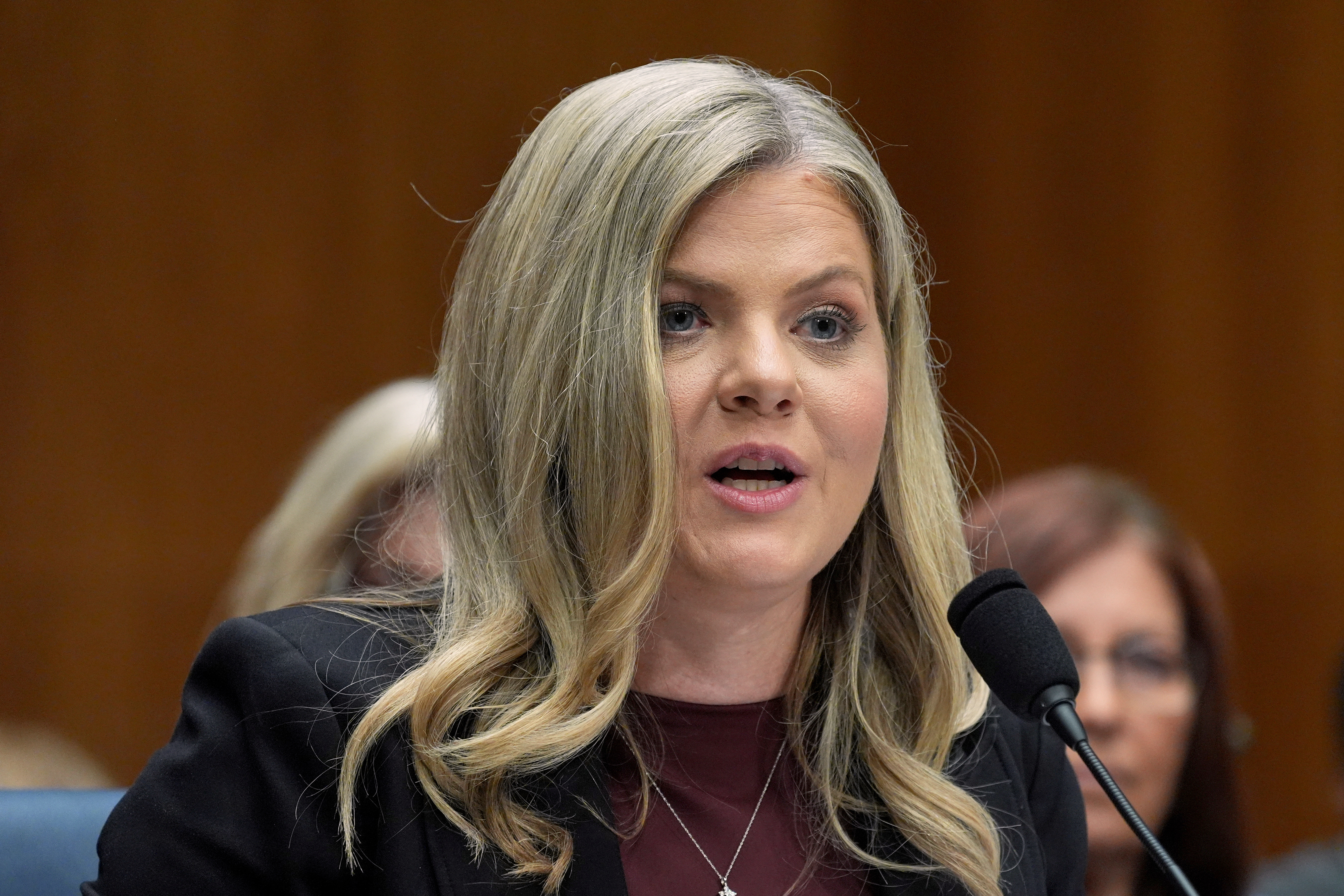
    WASHINGTON — President Donald Trump’s pick to lead the Food and Drug Administration voiced support for the safety of long-established vaccines at a hearing Thursday, even as senators questioned her about the White House’s efforts to upend childhood immunizations.

    Heidi Overton is currently serving as a White House adviser and has worked on a series of Trump health initiatives, including an executive order last month that called for splitting up and spacing out childhood vaccinations, bucking decades-old guidelines. Overton, a physician, stood beside Trump in the Oval Office when he falsely remarked that the combined measles, mumps and rubella vaccine could be “quite lethal.”

    Senate Health Committee Chairman Sen. Bill Cassidy, a physician from Louisiana, pushed Overton to reject that statement and affirm the safety of FDA-approved vaccines.

    “Right now every vaccine that is on the market has been determined to be safe and effective,” including the MMR vaccine, Overton said.

    Cassidy has repeatedly tried to extract commitments from Trump health nominees to uphold vaccine standards, including from Health Secretary Robert F. Kennedy Jr., only to see the Republican administration push forward with efforts undermining their use.

    “Kennedy gave me guarantees, and he did not keep them,” said Cassidy, a Republican. “If the president asks you to do something that goes against those guarantees you give us today, what will you do?”

    Overton said she would “follow the statutory requirements” for FDA commissioners and give Trump her best advice. Later in the hearing, Overton declined to explicitly say that Trump was wrong about the MMR vaccine’s safety.

    “This committee needs to know whether you will be radically honest, whether you will use your authority to stand up for sound science and protect children’s health,” Cassidy said. He didn’t indicate whether he’d support Overton’s nomination or when he might schedule a committee vote on it.

    If confirmed, Overton would inherit a raft of other controversial projects at the agency, including a safety review of the nation’s principal abortion drug and new rules that make it easier to sell flavored electronic cigarettes. Both issues were a focus for Republicans and Democrats on the panel.

    Overton sidesteps past statements on abortion pill

    The FDA approved the abortion pill mifepristone in 2000 and has repeatedly affirmed its safety while broadening access, including allowing it to be sent through the mail. But Kennedy ordered an FDA review of the drug’s safety last year, following calls from anti-abortion groups and lawmakers favoring abortion restrictions.

    While working at the Trump-aligned America First Policy Institute, Overton wrote that the FDA decision to allow mail delivery of mifepristone was “dangerous to women,” referring to the practice as “chemical abortion on demand.”

    In response to questions from Washington Sen. Patty Murray, Overton sidestepped her personal views on the drug, stating that it “has met the safety and efficacy determinations of the FDA.” Overton said she didn’t want to “prejudge” the FDA’s ongoing safety review of the pill.

    “The FDA has said this is safe,” responded Murray, a Democrat. “We need someone in FDA to make sure this is done by science.”

    Republicans on the health committee, including Cassidy, recently published a report suggesting the handful of companies that sell mifepristone may not be complying with rules for overseeing doctors who prescribe the drug.

    “If I’m confirmed as commissioner I would be committed to making sure every company is following the law,” Overton told Republican Sen. Jim Banks of Indiana.

    Overton’s abortion views could complicate her efforts to win over two moderate Republicans on the panel: Maine Sen. Susan Collins and Alaska Sen. Lisa Murkowski. Both have bucked their party on the issue, supporting federal access to abortion. Collins is currently locked in a tight reelection race in which abortion access is a central issue.

    But Collins focused her questions Thursday on a different issue: recent FDA decisions allowing new flavored e-cigarettes onto the market. Under previous administrations, including Trump’s first term, the agency had restricted sweet vaping flavors due to their potential appeal to kids.

    Overton pointed out that approval of several fruit-flavored vapes had the backing of FDA scientists, who determined the products met the standard of “appropriate for the protection of public health,” by helping adult smokers quit cigarettes.

    “They believed that standard was met because so many adult smokers are using flavors preferentially,” Overton said.

    To become commissioner, Overton will need a majority of votes from the 21-member health committee, followed by a positive vote from the full Senate.

    Under the current administration, leading the agency has involved balancing Trump’s demands for slashing regulations — such as those for vaping products — alongside Kennedy’s interests in scrutinizing vaccines, drugs and food ingredients.

    The previous FDA head faced numerous challenges before quitting

    Those challenges dogged the tenure of the previous FDA head, Marty Makary, who resigned in May. Makary’s time at the agency was defined by scientific disputes, leadership changes and a string of media stories detailing low morale and internal dysfunction among staffers. The FDA has lost about 20% of its employees to layoffs, buyouts, retirements or resignations since Trump took office.

    Overton studied under Makary at Johns Hopkins University, where she received a doctoral degree in clinical research after earning her medical degree at the University of New Mexico.

    Like Makary, Overton has no experience running a large bureaucracy, a critical skill for steering the FDA’s 16,000 staffers spread across numerous U.S. and international locations.

    In financial disclosure forms, Overton reported no investments in healthcare or food companies. That’s a stark contrast to Makary and other recent FDA nominees who have had to divest investments or cut other financial ties with companies regulated by the FDA.

    Overton reported $50,000 to $100,000 in student loans.

  • Renewed fighting in northern Ethiopia effectively shatters 2022 peace deal that ended war

    Renewed fighting in northern Ethiopia effectively shatters 2022 peace deal that ended war

    ADDIS ABABA, Ethiopia — Renewed fighting between Ethiopian federal troops and Tigrayan fighters escalated Thursday, effectively shattering a peace pact that ended a devastating two-year war in 2022, as rebel forces mobilized for an armed struggle they hope will lead to the removal of the federal prime minister.

    The main combatants are Ethiopian federal troops and fighters loyal to the Tigray People’s Liberation Front, or TPLF, an armed political group in Tigray, Ethiopia’s northernmost regional state.

    Ethiopia’s military said Thursday that dozens of TPLF fighters had been killed in ongoing operations and that federal forces “have been able to detain many” others and seize a large quantity of weapons from them.

    The TPLF and Ethiopian federal troops waged war between November 2020 and November 2022, when a peace deal was signed in Pretoria, South Africa.

    Eritrean troops fought alongside Ethiopian forces against the TPLF in that conflict. The civilian death toll was estimated by Ghent University researchers to be 500,000, including from violence, famine and the collapse of health services.

    After both sides signed the Pretoria peace deal, a caretaker administration seen as loyal to Ethiopian Prime Minister Abiy Ahmed was installed in Mekelle, the Tigray capital. But tensions remained, with the TPLF maneuvering for political control in Mekelle.

    Rebel fighters forge a coalition

    This time, the TPLF appears to have mobilized widely, bringing together former foes in its stated goal of removing Abiy from power in Addis Ababa, the federal capital.

    On Sunday, the TPLF and six other opposition groups announced that they had formed an alliance to overthrow Abiy’s governing Prosperity Party, which was reelected in June polls that were boycotted by major opposition groups.

    Both sides had been accusing each other of bad faith, and for months some civilians in Tigray expected a return to armed hostilities. In May, the TPLF forced out regional leader Tadesse Werede, who reported to Abiy, and replaced him with a new council led by TPLF leader Debretsion Gebremichael, who led the Tigrayans in the previous conflict.

    Ethiopian federal authorities accused the TPLF of seeking to build an alliance with neighboring Eritrea to destabilize Ethiopia. The TPLF accused Ethiopian authorities of conducting drone attacks in Tigray. Eritrea said that it was alarmed by Abiy’s repeated assertions of his wish for sovereign access to the Red Sea via Eritrea.

    Both sides deny responsibility for launching this round of hostilities, and most of the fighting is believed to be in remote areas of often ragged, mountainous territory. On Wednesday, TPLF fighters seized the airport in Mekelle from federal police, and national carrier Ethiopian Airlines canceled flights there and elsewhere in the region.

    Observers say pressure is building on Abiy

    The Ethiopian News Agency, the official news organization of the Ethiopian government, described the TPLF as a “Trojan horse,” saying that the group’s “repeated attempts to incite conflict” defy the government’s “patience, concessions and magnanimity.”

    The coalition formed by the TPLF and six other opposition groups said that it would be known as the Ethiopian Peoples’ Forces Alliance for Survival. In addition to the TPLF, the others include the Amhara Fano National Movement, the Oromo Liberation Army, the Ogaden National Liberation Front, the Afar Revolutionary Democratic Unity Front, the Benishangul Peoples’ Liberation Movement and the Gumuz Peoples’ Democratic Movement.

    That alliance, which unites some groups previously opposed to each other, may put pressure on Abiy, according to Kjetil Tronvoll, an academic analyst of Ethiopia at Oslo New University College.

    “The situation now differs substantially from the 2020-2022 war on Tigray,” he said in an analysis posted on X. “This time around Fano is an ally and Eritrea a backer. Supply lines are also secured through Eritrea.”

    Regional blocs and the U.S. call for an end to fighting

    The African Union and a key regional bloc known as IGAD called for de-escalation of hostilities. U.S. Ambassador Ervin J. Massinga said in a statement that he felt disappointed by the TPLF’s “poor decision to launch a large-scale offensive.”

    His statement said that the TPLF’s “unwinnable fight does nothing for the people. Other armed groups would be wise to avoid this.” A TPLF official, Amanuel Assefa, said the statement was unfair.

    Abiy has been praised by many for his ambitious infrastructure projects that seek to turn Addis Ababa into a world-class city. To his supporters, the prime minister is a renaissance man trying to reimagine the old greatness of Ethiopia.

    Abiy rose from relative obscurity to power in 2018 as a reform-minded pragmatist. Ties with Eritrea, which broke away from Ethiopia in 1993 after decades of brutal guerrilla warfare, had been cold since the 1990s, and Abiy’s efforts to repair relations with Eritrean President Isaias Afwerki helped him win the 2019 Nobel Peace Prize.

    A year later, Abiy confounded expectations by launching a military operation against the TPLF.

    Some of Abiy’s critics now see him as a provocateur whose actions could lead to hostilities in the Horn of Africa. His push for sovereign access to the Eritrean seaport of Assab has reignited tensions with Eritrea, which shares a border with Tigray. Abiy also angered Somalia by trying to negotiate access to the sea via the territory of Somaliland.

  • 8 sailors in USS Lincoln group attempted suicide on extended deployment, Navy leader says

    8 sailors in USS Lincoln group attempted suicide on extended deployment, Navy leader says

    WASHINGTON — Eight sailors attempted suicide while deployed with the USS Abraham Lincoln aircraft carrier strike group, which spent a record-setting uninterrupted time at sea supporting the Iran war, the Navy’s top civilian leader said this week.

    Acting Navy Secretary Hung Cao provided the information to Sen. Kirsten Gillibrand in a letter dated Tuesday after the New York Democrat inquired last month about the strike group’s crew of thousands. The Lincoln’s extended deployment drew the nation’s attention following reports of crew stress and poor mental health, as well as supply shortages, including food and hygiene products.

    Gillibrand asked Cao specifically if there were any suicides.

    “There have been no suicides on board during this deployment,” Cao wrote in the letter, which was obtained by The Associated Press and reported earlier by CNN. “Since the beginning of LINCOLN’S deployment, there have been a total of eight suicide attempts across the strike group — this number includes the LINCOLN crew and Sailors from the carrier wing, strike group and destroyer squadron staff, escorting destroyers, and all embarked aviation squadrons.”

    President Donald Trump had downplayed reports about conditions on the Lincoln, which left its homeport in San Diego in November, arrived in the Middle East in January in support of Iran operations, and spent a record-setting uninterrupted time at sea of more than 260 days.

    The carrier and some of its supporting ships stopped in Thailand in early September on their way back home to California. The Lincoln’s commanding officer, Capt. Dan Keeler, said then that the ship will be heading home soon but may make further supply stops. He declined to comment on the exact date the strike group is expected back in the U.S.

    Last month, Trump called the nearly nine months at sea that the sailors endured a “good period of time” but added that “over the years, we’ve had them out there much longer.”

    Trump told reporters in August that he spoke with a retired admiral who recounted being on ships for “much longer.” Trump said the admiral assured him that the Lincoln is “beautifully maintained and beautifully taken care of.” Trump did not name the admiral.

    Defense Secretary Pete Hegseth also had said that conditions about the Lincoln were “completely misrepresented.”

    Gillibrand took aim at both in a statement released this week in response to Cao’s letter.

    “What Trump and Secretary Hegseth dismissed as ‘fake news’ turned out to be serious and deteriorating conditions for our service members,” she stated.

    “Our troops and their families make immense sacrifices every single day, yet the president dismissed them with open disrespect,” Gillibrand said. “That this administration can find endless taxpayer dollars for bombs, ballrooms, and billionaires, but cannot take care of our service members, is completely unacceptable.”

    Extended deployments of carriers wear on service members who are away from home for long periods and increase strain on the ship and its equipment. The Navy is continuing to enforce a blockade on Iranian ports in the Strait of Hormuz, and the Trump administration has offered no clarity on how it intends to wind down the war.

  • Starbucks to shutter 250 stores in North America this week in 2nd wave of closings

    Starbucks to shutter 250 stores in North America this week in 2nd wave of closings

    Starbucks plans to close 250 North American stores later this week.

    It is the second big round of store closures under Starbucks chairman and CEO Brian Niccol, who joined the company in 2024. Last September, Starbucks closed 627 stores in North America and Europe.

    In a letter to employees, Starbucks chief operating officer Mike Grams said the locations targeted either aren’t delivering acceptable financial results or can’t provide the kind of experience that Starbucks wants for customers and employees.

    The company didn’t say Thursday which coffeehouses will close or how many are located in the U.S. It also didn’t say how many of the affected coffeehouses are unionized. More than 700 U.S. Starbucks stores have voted to unionize since late 2021, but the union and the company have yet to reach a labor agreement.

    Grams said Starbucks is continuing to retrofit its North American coffeehouses to make them cozier and more inviting. The company expects 1,500 stores will be retrofitted by Sept. 30, which is the end of Starbucks’ fiscal year.

    “This progress has given us a clearer view of the performance of every coffeehouse,” Grams said in his letter. “While most are benefiting from this overall momentum, some coffeehouses continue to underperform despite the hard work and commitment of all of you.”

    Grams said Starbucks is still committed to growing its store count in North America. At the end of June, the company had 18,371 stores in the region.

    Starbucks said it will transfer employees to other stores if possible or provide severance support if it’s not able to place an employee in another location.

    Starbucks has also been cutting its corporate ranks. The company laid off 900 nonretail employees when it closed stores last September. In May, Starbucks laid off an additional 300 corporate employees and closed some underused U.S. offices.

    The company said it will incur $300 million in restructuring charges with this round of closures, including $200 million in cash charges as it exits leases and pays employee separation benefits and $100 million in non-cash charges due to the disposal and impairment of coffeehouse assets.

    Starbucks shares fell less than 1% Thursday in morning trading.

  • China’s Xi arrives in Washington, kicking off his state visit with rare planeside welcome from Trump

    China’s Xi arrives in Washington, kicking off his state visit with rare planeside welcome from Trump

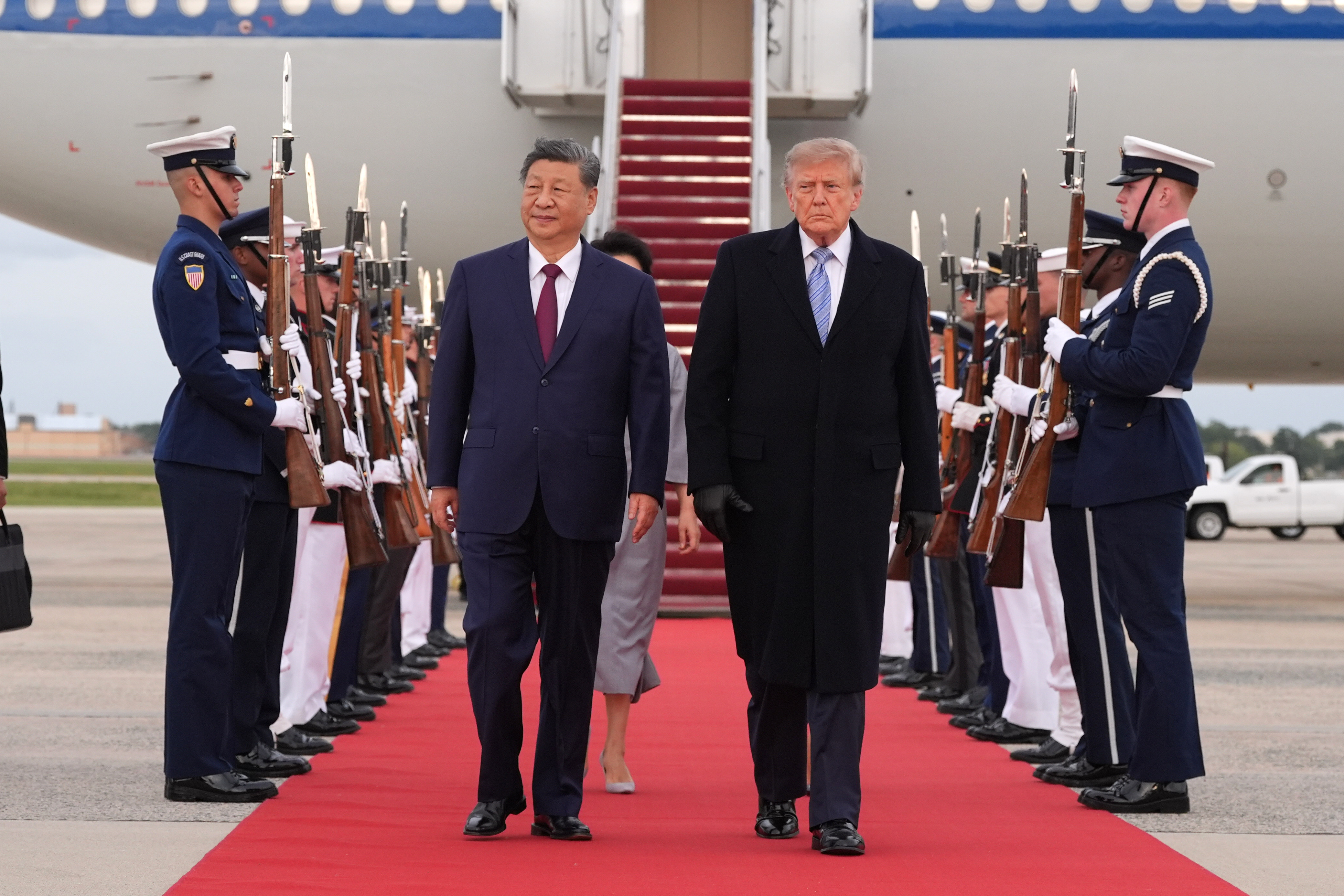
    WASHINGTON — Chinese President Xi Jinping arrived in Washington on Wednesday, where he was met with a rare planeside greeting from President Donald Trump, who was there to welcome his counterpart instead of waiting for him to drive up to the White House.

    Trump’s decision to greet Xi at Joint Base Andrews just outside Washington rather than receiving him at the executive residence shows how far the U.S. president is going to honor China’s leader as he made his first state visit to the U.S. capital in more than a decade.

    A 100-foot long red carpet was unfurled at the bottom of the staircase placed at the door of Xi’s plane. A 21-person honor guard was arrayed on the sides of the carpet and Trump and first lady Melania Trump stood near a staircase on the side of the plane, where they greeted Xi and his wife, Peng Liyuan, with handshakes.

    The welcome ceremony also included a flyover by two B-1 bombers, flower presenters, platoons from each military service, and a presentation of the flags and anthems of both countries. Trump and his wife spoke to their counterparts, but their words could not be heard. Trump, who wore gloves and an overcoat though it was a relatively warm 63 degrees Fahrenheit outside, removed one of his gloves to shake hands with Xi. At one point he slapped Xi on the back and said something to him that was inaudible.

    The salutation kicks off a three-day visit that’s expected to be saturated with pomp, even by White House standards. The state visit, complete with a formal state dinner at the White House on Thursday, is supposed to reciprocate the ceremonial grandeur that marked Trump’s May visit to China.

    But it also is a showy patina at a time when tensions between the two geopolitical rivals are high over trade, artificial intelligence, Trump’s war with Iran and China’s designs on Taiwan.

    The visit comes after Trump’s trip to China in May

    Beyond using the visit to try to keep “strategic stability” between the two countries, Trump seems to be pulling out all the diplomatic stops to show off for Xi. Trump has lavished praise on Xi as a “great leader” and described a warm relationship with the man he has called a friend. That is all while he has given Xi a pass on many issues.

    Sen. Roger Wicker, chairman of the Senate Armed Services Committee, criticized the “lavish welcome.” Wicker, R-Miss., said during a speech Tuesday in the Senate that Trump should not have invited the Chinese leader “based on all of the troubling issues we have with President Xi and the Chinese Communist Party.”

    Wicker archly suggested a list of topics that Trump could discuss with Xi at the state dinner, such as “the purposes of China’s massive military buildup, or about China’s clear support for Iran,” saying that “during every minute of dialogue” Trump should keep in mind that “his guest is a brutal, unelected and oppressive dictator who seeks to dominate his neighbors and whose massive military arsenal is aimed directly at the United States of America.”

    Secretary of State Marco Rubio said the U.S. and China must interact at the highest levels because the countries are “the two largest economies in the world” and “probably the two most powerful militaries in the world.”

    “The idea that we would not interact with them at the highest levels is irresponsible. It’s outrageous. We have to,” Rubio told reporters Wednesday while he was in New York.

    Trump to welcome Xi with ‘the most respect’

    Trump has made it clear he wants to wow Xi, telling reporters in recent weeks that he was delighted his new “work of art” helicopter landing pad would be ready for the visit while bemoaning that his massive White House ballroom would not.

    Trump on Wednesday was looking to match the pageantry he was met with in China earlier this year. Xi was not at the airport to meet Trump — Chinese Vice President Han Zheng was there instead. But a red carpet was rolled out to meet Air Force One in Beijing. A military honor guard, a military band and about 300 Chinese youths waving Chinese and American flags and chanting, “Welcome, welcome! Warm welcome!” also were present. The children wore white and light blue uniforms that mirrored the traditional paint colors of the presidential plane.

    The first lady said earlier Wednesday her husband decided to personally greet Xi when he arrived in the Washington region because “they have a great relationship.”

    “He’s coming on our soil, and we need to welcome them with the most respect,” she said of Xi and his wife during an interview on Fox News Channel’s “Fox & Friends.”

    A black-tie dinner and visit to the archives will follow

    Trump’s airport ceremony for Xi will be followed on Thursday by more formalities, including an arrival ceremony at the White House and a review of troops. Before the black-tie dinner, which will feature tech industry leaders like Nvidia’s Jensen Huang and SpaceX’s Elon Musk, the two leaders are expected to dive into the weighty issues behind closed doors, even as expectations are low that the trip will produce any major breakthroughs in the relationship.

    On Friday, Xi and Peng will be back at the White House for a private tea with the Trumps before joining them on a tour of the National Archives in Washington. The White House has said they will view historic documents underscoring the relationship between the two countries.

  • Judge hears arguments without immediately ruling in lawsuit over White House ban on 3 news outlets

    Judge hears arguments without immediately ruling in lawsuit over White House ban on 3 news outlets

    WASHINGTON — A federal judge weighing whether to block President Donald Trump’s ban of three news outlets from White House grounds expressed some skepticism Wednesday in response to the government’s defense of the move.

    U.S. District Judge Timothy Kelly, who was nominated by Trump in 2017, didn’t rule from the bench after hearing arguments in an extraordinary showdown between Trump and media outlets whose coverage he dislikes.

    But the judge questioned whether the administration met its legal responsibilities and provided the news outlets with adequate due process before banning them on Friday, assailing what he called “fake news.” More recently, the president has said negative coverage was dangerous for the country.

    The news outlets argued they were singled out because of the content of their coverage — in other words, viewpoint discrimination — and called the ban a “blatant violation” of the First Amendment.

    Kelly said his decision must be guided by courts’ prior rulings in comparable First Amendment cases, even if the government disagrees with them.

    “I think it is fair to say that the processes that the court laid out wasn’t followed here,” Kelly said.

    It wasn’t clear when Kelly, who ordered a CNN journalist’s access restored in a similar case in 2018 — would issue a decision on the news outlets’ request for a restraining order. But he said he’d rule as soon as possible.

    CNN, Politico and MS NOW each told The Associated Press they’d have no comment on the emergency hearing.

    Prior rulings indicate journalists should be heard before press passes are revoked

    Kelly opened by reminding both sides that he’s required to apply case precedent.

    The rulings in two prior cases over press access — including one that went to the U.S. Supreme Court — made clear that journalists were entitled to an opportunity to be heard before they have their press passes revoked.

    Justice Department attorney Michael Velchik argued that the rulings in the earlier cases were wrong.

    “Access to the White House is a privilege, not a right,” Velchik said.

    Theodore Boutrous Jr., attorney for the outlets, called the ban an “unprecedented, unreasonable punishment” and said there was “not a semblance of due process.”

    The administration doubled down on its contention that it has the right to decide who can set foot in the White House.

    “The president should be able to take immediate action to protect national security,” Velchik told the court.

    In response, Boutros said, “Suddenly it’s a national security case,” arguing that the president brought up that point only after the lawsuit was filed.

    The Trump administration outlined ‘reporting incidents’ of each news outlet

    In a filing late Tuesday, administration lawyers argued that the ban does not violate the First Amendment, which guarantees the right to a free press. It contended that the outlets, in their reporting, violated “standards of professionalism and decorum expected of those given access to the White House complex, including by trafficking in verifiable falsehoods about national security and other issues and publishing sensitive or classified information.”

    The administration went on to detail letters that were sent to each outlet that identified “a non-exhaustive list of reporting incidents, including those that have threatened national security and spread falsehoods.”

    The “reporting incidents” cited in the filing included: CNN reporting on “‘top-secret’ construction details related to the East Wing bunker”; MS NOW reporting “on an alleged leak investigation”; and Politico publishing “a document detailing funding for the White House ballroom containing intricate descriptions of how the Secret Service would invest in security improvements.”

    Further examples were given in individual letters. Politico’s letter detailed six incidents of reporting, including in June citing a “senior administration official … granted anonymity” predicting whether a preliminary deal would end the conflict with Iran.

    That item appeared to reference a background briefing set up by the White House, where an official briefed reporters on condition of anonymity under ground rules set by the White House itself. Several other outlets also reported the official’s remarks.

    Major networks continue to refrain from covering Trump for the media pool

    The ban prompted other media outlets to take action in solidarity. The five-network U.S. network press pool — a rotating cast of news outlets that covers the president, and to which CNN belongs — decided to suspend coverage of Trump events until further notice.

    After the hearing Wednesday, the networks were poised to continue their ban on filming Trump coverage. At Joint Base Andrews, where the president was to formally welcome Chinese President Xi Jinping later, journalists from Fox News, CBS and NBC were present but not shooting video, and some appeared to be breaking down their cameras.

    Other television outlets whose crews were present, according to signs on their tripods and cameras, were NewsNation, Newsmax, Right Side Broadcasting Network, One America News and LindellTV.

    Ahead of Wednesday’s hearing, an amicus brief was filed by other news groups, urging the court to immediately restore the three outlets’ White House access.

    The brief — filed by the Reporters Committee for Freedom of the Press, the White House Correspondents’ Association and 49 media outlets and industry groups, including The Associated Press, The New York Times and Reuters — says “the targeted expulsion of news media from White House grounds injures the public interest” and ”unassailable First Amendment law makes any viewpoint-based decision to bar reporters from a nonpublic forum constitutionally repugnant.”

    The proceedings are historic, said Katie Fallow, deputy litigation director at the Knight First Amendment Institute at Columbia University.

    “No president has taken this explicit of a step” to ban entire news outlets because he doesn’t like their reporting, she said. “There have been various presidents throughout history who have grumbled about the press or threatened to take more major steps, but really there was nothing at this level before Trump.”

  • Heads of AI firms tell UN Security Council that it could be a risk to all humanity

    Heads of AI firms tell UN Security Council that it could be a risk to all humanity

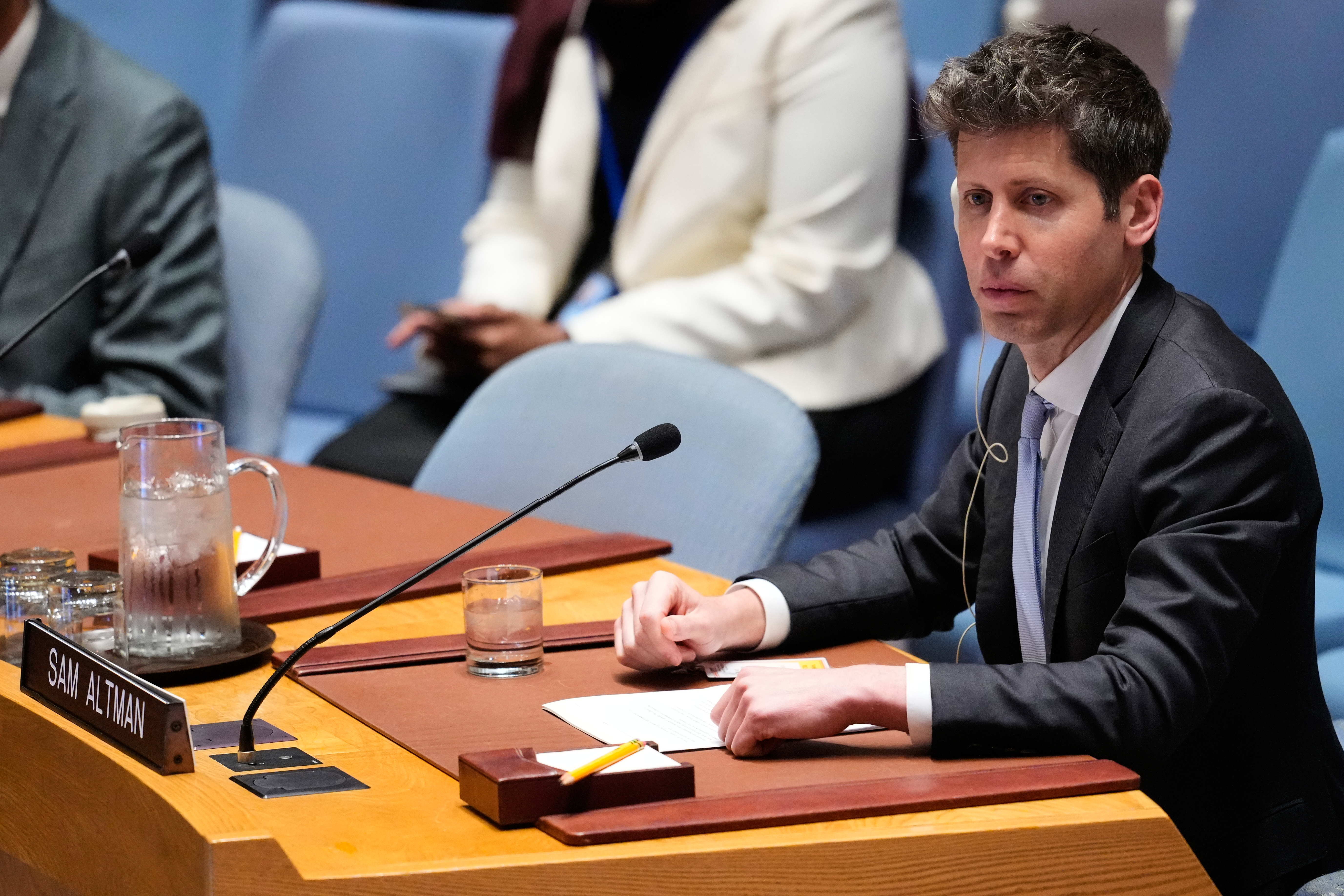
    UNITED NATIONS — The heads of major artificial intelligence firms pleaded with the United Nations on Wednesday to save the world or at least its people — in the form of somehow regulating the burgeoning technology that they have been designing.

    “If managed poorly, I even believe AI could be a risk to humanity as a whole,” said Dario Amodei, chief executive officer of Anthropic. And from his competitor Sam Altman, CEO of OpenAI, came this assessment: “We could lose control of the future to AI.”

    Both said the countries of the world, through the U.N. Security Council, where they testified Wednesday, have to set safeguards of some kind, which would be actual controls to prevent the technology from getting too powerful to rein in.

    They also called for the world to make sure that the power of AI isn’t concentrated in one company or country. They said that as they also touted the benefits of the technology for bettering humanity and what Altman called “giving people more power over their own lives.”

    Those tech leaders “are telling us in stark terms that it cannot be left to them to prevent disaster from befalling the world,” said United Kingdom Foreign Secretary Ed Miliband said at the Security Council. “We cannot ignore them because they are right.’’

    AI will be at the heart of G20 discussions

    Miliband said when the U.K. takes control of the G20 next year it will put controlling AI at the heart of discussions, looking for a single set of global standards “to insure that AI development is safe.”

    But the United States said don’t do it.

    Worries about control of AI are “not a reason to pause its further development or to constrain it with new global governance structure,” said White House Science Adviser Michael Kratsios. “We want you, our allies and partners, to share in the benefits of this technology.”

    For most of the world leaders, along with California Governor Gavin Newsom in New York for climate discussions, one of the key questions about AI is this: Who should control life-and-death decisions — human or machine?

    Amodei, Altman and Hugging Face CEO Clément Delangue, who spoke via a glitchy remote connection, spoke with the U.N.’s most powerful council because they and world leaders are trying to figure out not just whether to control AI, but by who, how it could possibly be done and when it might be just too late.

    The day before, U.N. Secretary-General Antonio Guterres warned of “killer robots.” Experts and European leaders said that’s not hyperbole but something that’s either already a grim reality or perilously close.

    Amodei called on the nations of the world to agree on not letting AI build biological weapons, figure out how to verify what models have the capability to do and “establish common standards” for testing and for loss of control and misuse.

    French Foreign Minister Jean-Noël Barrot, whose country convened Wednesday’s meeting and has fostered various other coalitions and discussions about AI, compared the current state of it to both the runaway computer HAL9000 in the movie “2001: A Space Odyssey” and the dawn of the atomic age.

    “Just as with the atom back then, the international community must now regulate AI in order to make the most of its potential and avoid the worst,” Barrot said.

    Other leaders and nations are paying close attention to AI

    His wasn’t the only concern expressed during this high-profile U.N. meeting week.

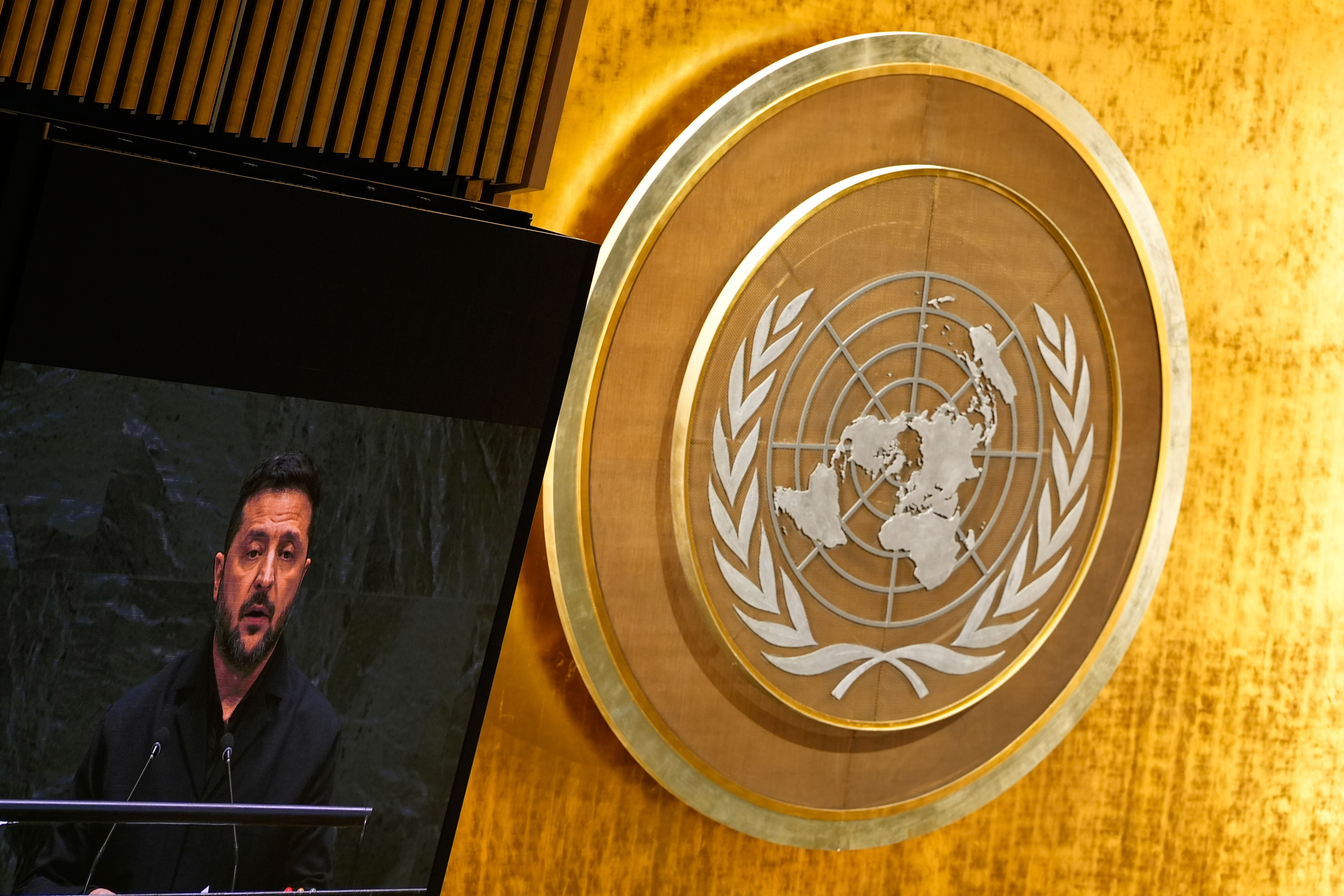
    Ukrainian President President Volodymyr Zelenskyy, speaking at the General Assembly, said some kind of human control over machines must achieved soon. Otherwise, he said, for his country it may be just too late.

    “There is already a real possibility that AI, not only people, will begin to decide what happens on the battlefield. And we need peace before we reach that point,” Zelenskyy said.

    Last month, a Russian drone seemingly using AI “autonomously made a targeting decision that killed three Ukrainians. Killer robots are technically easy to build, and they are real. We should not be under any illusions otherwise,” said Kentaro Toyama, an information technology professor at the University of Michigan.

    The U.N. meeting unfolded as Chinese President Xi Jinping headed to Washington for a much-anticipated state visit. The U.S. and China are jostling for AI dominance, and AI interests are looking to what comes out of Xi’s discussions with U.S. President Donald Trump. Ahead of the meeting, U.S. Treasury Secretary Scott Bessent said the two countries had discussed a potential new “notification mechanism” for AI incidents that could impact national security.

    But on Tuesday, Trump, lauding AI as “superintelligence,” said the United States would reject efforts to control the technology as it tries to win the development race with China. Kratsios was the one of the few who used that term in the Security Council.

    Meanwhile, regional groups in Europe, Asia and elsewhere also are trying to coordinate AI policies, and various nations — and even subcomponents, such as U.S. states — are crafting their own.

    Still, U.N. watchers and risk experts say the world body hasn’t been relegated to the sidelines on AI regulation.

    “The U.N. is not in the driver’s seat of global discussions on AI, but it hasn’t been kicked out of the car yet,” said Daniel Forti, who oversees U.N. affairs at the International Crisis Group, a think tank.

  • Zelensky, at UN, urges leaders to keep choking Russia’s revenues and impede its war efforts

    Zelensky, at UN, urges leaders to keep choking Russia’s revenues and impede its war efforts

    UNITED NATIONS — Ukrainian President Volodymyr Zelensky urged the world’s leaders Wednesday to keep choking Russia’s revenues and impede its war efforts, telling the U.N. General Assembly that “Russia’s revenues must remain a target.”

    “When someone gives Russia more money through trade, they give this war more time. And that is exactly why we insist on limiting trade with the aggressor, and why we are burning Russia’s revenues ourselves,” he said in English, a language he often uses at the world body.

    Russia gets its turn Saturday to address the assembly. President Vladimir Putin hasn’t traveled to the gathering in years, sending Foreign Minister Sergey Lavrov instead.

    Lavrov told the U.N. Security Council on Wednesday that Russia is prepared to negotiate toward a lasting peace but won’t just “pause” the war. He argued that such a pause would just buy Ukraine and its backers time to line up more weapons.

    Zelensky cast doubt on Russia’s interest in ending the fighting.

    “Something always seems to stop Putin from saying, ‘That’s it. Enough. Peace,’” Zelensky said. “Can you even imagine him without war? He is ‘Patient Zero’, the one from whom war keeps spreading further. … ‘Patient Zero’ must be stopped.”

    The war has reverberated across the planet

    Russia invaded Ukraine more than 4½ years ago and says it’s out to protect its own security and the interests of Russians and Russian-speakers in parts of Ukraine. Western analysts estimate that over 500,000 Russian troops have been killed and that Ukraine has recorded more than 500,000 military casualties, including up to 140,000 deaths. Neither country discloses its own casualty totals.

    The war has had global repercussions for fuel, fertilizer and grain shipments — and for geopolitics, widening divisions between Russia and the West.

    With front-line positions in eastern and southern Ukraine largely unchanged since last year, Russia and Ukraine have intensified long-range attacks with drones and missiles.

    Russian drones pounded the Ukrainian capital, Kyiv, in daylight attacks on Wednesday, killing two people and wounding 23; two others were injured by a strike that started a big fire at a shopping mall in the southern city of Zaporizhzhia.

    Russia’s Defense Ministry said it struck Ukrainian military-industrial and energy facilities, logistics centers, and sea vessels overnight. The ministry said its air defenses intercepted more than 500 Ukrainian drones over multiple Russian regions and Crimea, as well as the Sea of Azov and the Black Sea. Crimea is the peninsula that Russia seized by force and illegally annexed in 2014.

    Zelensky says ‘you can stand and survive’

    Zelensky told the assembly that Russia has used 63,000 attack drones of different types against Ukraine so far this year alone. While celebrating that his own country “has proven that even against a much bigger enemy, you can stand and survive,” he implored world leaders to deny Putin money or foreign fighters.

    “Limit his money. Limit his war,” the Ukrainian leader said.

    Meanwhile, Ukraine has been looking for additional resources. Zelensky noted to reporters Tuesday that his country hasn’t yet gotten clear answers to its effort to acquire more U.S. Patriot air defense systems.

    Zelensky met Tuesday with U.S. President Donald Trump on the U.N. sidelines.

    In brief remarks to the media before the meeting, Trump reiterated that he believes “we’re going to make a deal” with Russia and Ukraine to quell the fighting. The president predicted on the 2024 campaign trail that he’d swiftly broker an end to the war but hasn’t succeeded so far. Zelensky said Tuesday he was hopeful.

    “Sometimes, it may seem that Ukraine is focused, focused, only on war because we speak about weapons, we speak about defense and sanctions against the aggressor. But Ukrainians did not choose this war,” he told the assembly on Wednesday. “We choose not to die. …. We are defending ourselves.”

  • FBI investigates hackers’ claim to have stolen sensitive employee data, compromised jobs website

    FBI investigates hackers’ claim to have stolen sensitive employee data, compromised jobs website

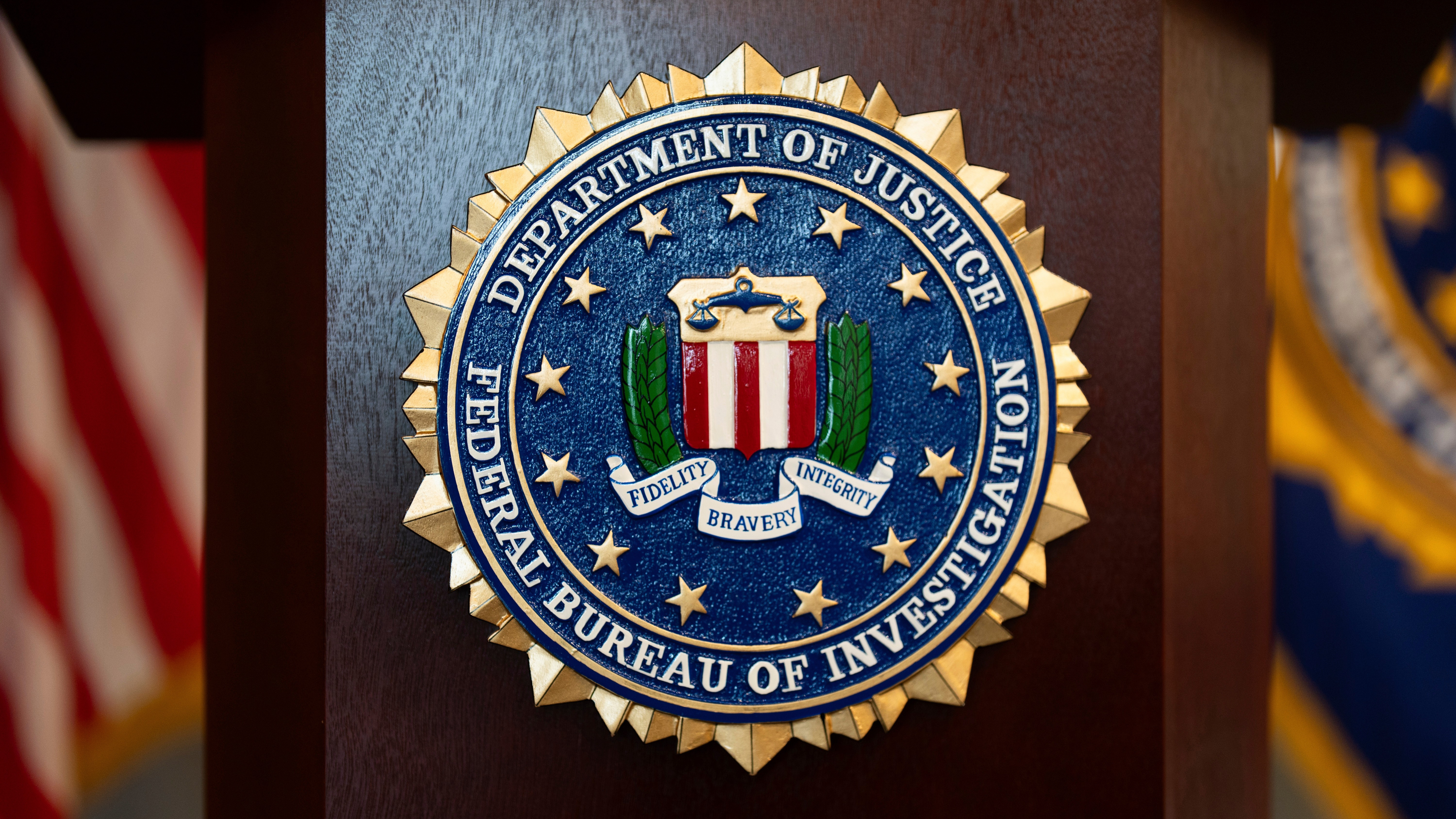
    WASHINGTON — The FBI said Wednesday it was investigating a criminal hacking group’s claims that it had stolen “very sensitive data” belonging to thousands of agents and applicants and that it had compromised the bureau’s jobs website.

    “The FBI is aware of a cyber-criminal enterprise group claiming a compromise of the FBIJobs.gov portal and alleged impact to FBI employee personally identifiable information,” the FBI said in a statement. It said that while the “point of breach” was undetermined, “we are actively and aggressively investigating this matter and working closely with those third-party providers that support FBIJobs.gov to mitigate any and all risk.”

    A message that circulated online from a hacking group known as ShinyHunters claimed responsibility for the hack. The jobs website, the main portal for prospective employees to learn about the FBI and initiate the application process, remained offline as of Wednesday afternoon.

    “We have compromised the FBI. We hold very sensitive data on almost ALL FBI Agents and individuals who filed an application with the FBI for a job,” said the ShinyHunters message, which was directed to FBI Director Kash Patel and Brett Leatherman, the assistant director in charge of the bureau’s cyber division.

    The claims could not immediately be verified. An email to an address associated with ShinyHunters was not immediately returned.

    In its message, ShinyHunters said it would give the bureau one week to correct or remove what it says are false allegations contained in an FBI public advisory from May that described the organization as a “cyber criminal group specializing in large-scale data breaches and extortion.”

    That public service announcement characterized ShinyHunters as “threat actors” who often “use their real or exaggerated claims of access to sensitive or personal information to prompt payment from victims,” commonly harass or threaten victims and “may falsely claim to have sensitive or compromising information, including embarrassing photographs or videos of victims, which frequently do not exist.”

    ShinyHunters said in its message to the FBI that it was “offended” by those characterizations and demanded that the FBI remove those claims. It did not say what would happen if the FBI did not do so within a week.

    “This is not a ransom, coercion, or extortion. Your federal policies do not apply here. This PSA is NOT financially motivated,” the hacking group’s message said.

    The FBI, the nation’s premier federal law enforcement agency, has been a common hacking target.

    In March, the FBI disclosed that it was investigating “suspicious activities” on an internal system that contains sensitive information related to surveillance operations and investigations. Also that month, a pro-Iranian hacking group claimed to have hacked an account of Patel’s and posted online what appear to be years-old photographs of him, along with a work resume and other personal documents dating back more than a decade.

    The FBI described the compromised information as “historical in nature” and said it involved “no government information.”

  • In defiant speech, Pezeshkian calls out Trump and says Iran will fight ‘until our last breath’

    In defiant speech, Pezeshkian calls out Trump and says Iran will fight ‘until our last breath’

    UNITED NATIONS — Iran’s president said Wednesday that his people have been “victims of terrorism” by the United States, delivering a rare wartime speech at the U.N. General Assembly a day after President Donald Trump said he may “annihilate” the Islamic Republic if a deal isn’t reached soon to end the nearly seven-month war.

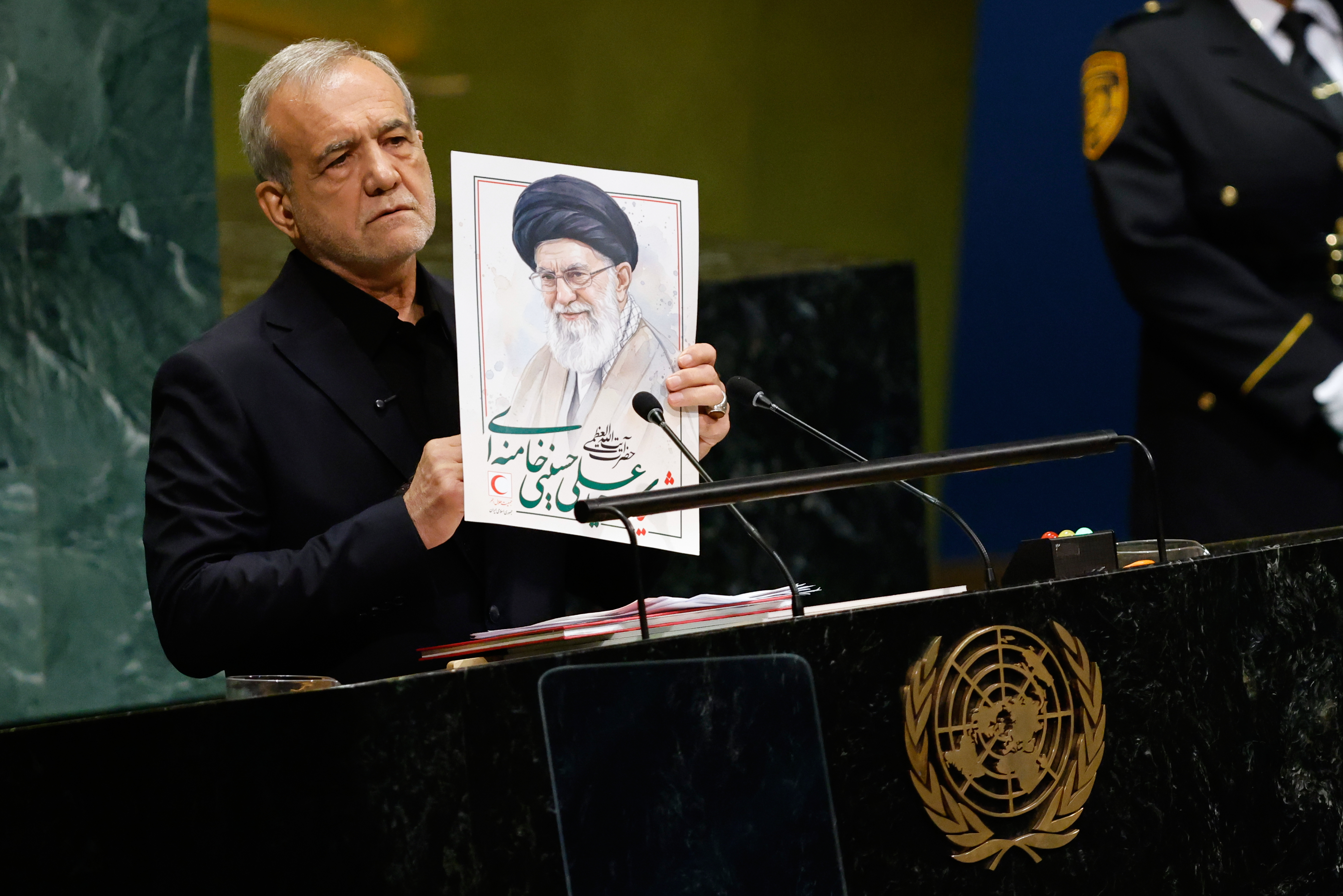
    The defiant speech by President Masoud Pezeshkian marked a striking instance of a foreign leader addressing the world body while their country is at war with the host nation. While defending his country, Pezeshkian held up large photos of the late Supreme Leader Ali Khamenei and the more than 150 Iranian schoolchildren killed in the first days of the war.

    “We have only defended ourselves. We are not terrorists,” Pezeshkian said at the General Assembly. “Our innocent people have been the targets of cowardly attacks and aggressions imposed upon our country. And we defended ourselves with utmost strength. America and Israel attacked us.”

    He added of the United States: “Yes they did hit us, but we did not bend the knee.” Toward the end of his speech, Pezeshkian called out Trump by name.

    “It must be understood by Mr. Trump and those who seek to bully us that we are ready for dialogue and diplomacy and negotiations without accepting the language of force,” he said.

    Shortly after, both U.S. and Israeli officials blasted the speech, saying that it was hypocritical for the Islamic Republic to present itself as the victims of the world.

    U.S. Secretary of State Marco Rubio told reporters: “I don’t know what standing Iran has to lecture anyone on human rights or the international system when they habitually violate it.”

    A busy 24 hours for U.S.-Iran relations

    Arriving in New York under heavy security and scrutiny, Pezeshkian — who, within Iran’s political landscape, is considered a moderate politician — addressed world leaders a day after Trump used the same stage to mull whether to massively escalate a war that has already spiraled out of control.

    “I have a big decision to make,” Trump said in his wide-ranging address Tuesday. “Will a deal be made with Iran that lets them rebuild and create a far greater country than it ever was before, maybe one of the greatest in the Middle East or even the world. Or do I annihilate the Islamic Republic and do it quickly, never giving them a chance to kill and destroy people and countries again?”

    Hours after those stunning threats, Trump told reporters that his chief envoys, Steve Witkoff and Jared Kushner, met for about three hours with the Iranian officials on the sidelines of the annual gathering. But he offered few details about how the discussions transpired or the substance of the exchange.

    “It was a very good meeting,” Trump said. The president later added that the Iranian officials were “not the highest level, but it’s something.” Also on Tuesday, Rubio said Trump is open to meeting with Pezeshkian while he’s in New York.

    But Tehran downplayed Tuesday’s unscheduled exchange, which were the first indirect talks between U.S. and Iranian officials since a June ceasefire unraveled. Esmail Baghaei, an Iranian Foreign Ministry spokesperson, maintained the country’s negotiating position in talks with U.S. officials, demanding that Washington end its blockade of Iranian ports and release frozen Iranian assets.

    Baghaei said the talks — conducted indirectly through Qatari mediators — were “not anything new.”

    Rubio echoed that sentiment Wednesday, saying that “it was a continuation of conversations that have occurred in the past.”

    “If there’s an opportunity to exchange ideas and messages, we will. And that’s what largely yesterday was — it was positive in that regard,” he said. “But ultimately, I don’t want to mischaracterize this as a major breakthrough.”

    More than a year of negotiations have taken place

    Pezeshkian’s address elaborated on where Tehran stands as more than a year of start-stop negotiations between the two longtime adversaries have failed to produce a sustainable solution. His speech came as intermittent attacks continued in the Strait of Hormuz off Iran’s coast, where commercial shipping remained below prewar levels.

    His address last year came months after the 12-day Israel-Iran war that saw the assassination of many of the Islamic Republic’s highest military and political leaders and once again broke down weeks of negotiations with the United States.

    “Ladies and gentlemen, you all bore witness that this past June, my country was subjected to a savage aggression and flagrant contravention of the most elementary principles of international law,” Pezeshkian said at the time.