Category: Nation World News Wires

  • Iran-backed Houthi rebels warn against joining Saudi Arabia in Yemen’s growing civil war

    Iran-backed Houthi rebels warn against joining Saudi Arabia in Yemen’s growing civil war

    CAIRO — A senior official with the Iran-backed Houthi rebels is warning countries against joining Saudi Arabia in Yemen’s revived civil war, telling the Associated Press on Sunday that his group has assured the Trump administration that it won’t attack U.S. vessels in the Red Sea.

    Mohamed al-Bukhaiti, a member of the Houthis’ political bureau, said Washington reached out to the rebels after their rapid advance down Yemen’s western coast to the Bab el-Mandeb Strait earlier this month.

    “We confirmed that we are not targeting the United States, or any other nation, in the strait, with the sole exception of the Saudi enemy,” he told the AP in a Zoom interview from the rebel-held Yemeni capital, Sanaa. “That remains the case.”

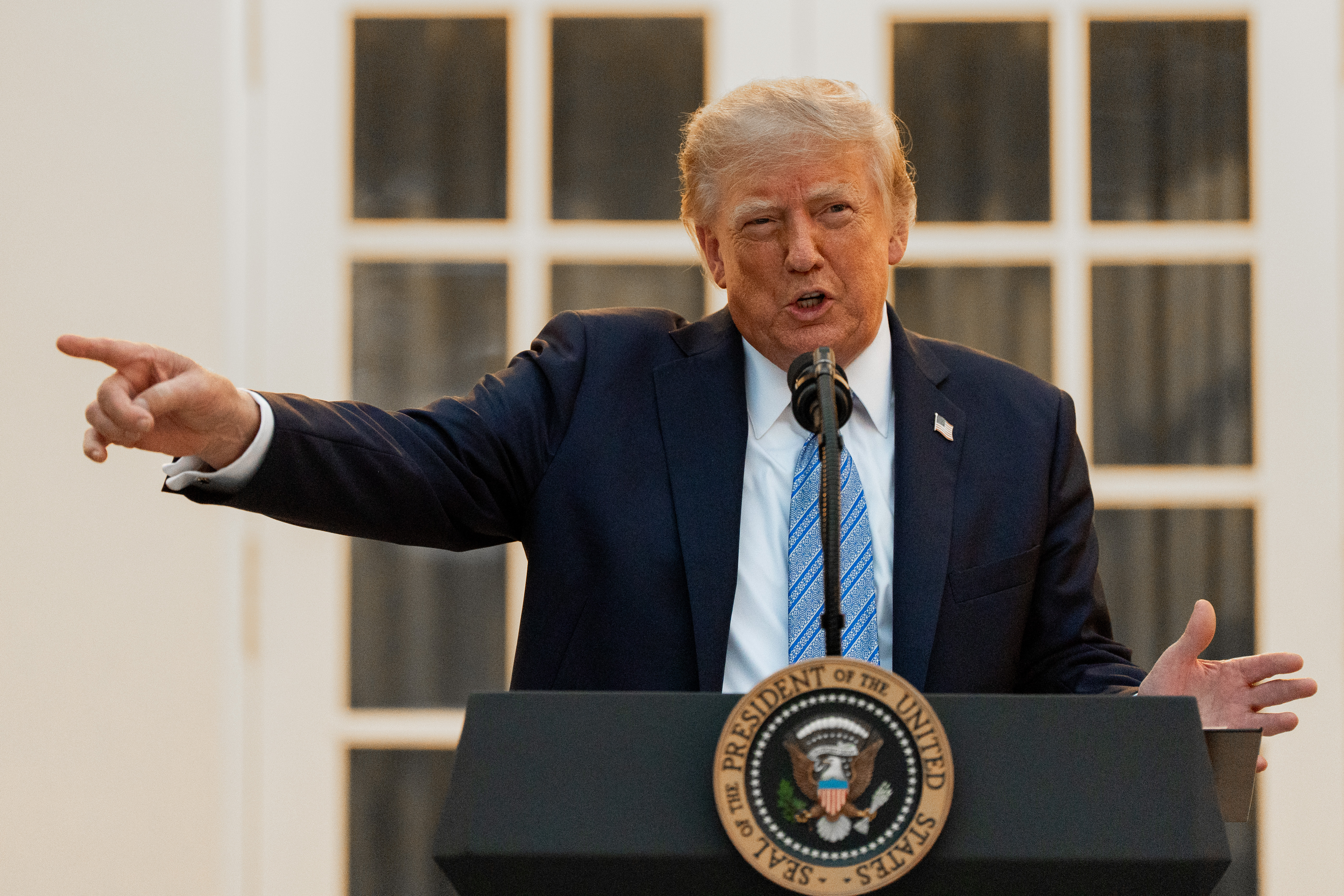
    U.S. President Donald Trump last weekend said his administration has “had discussions” with the Houthis, but did not say when. “The Houthis called us, and they don’t want to fight with us,” he said. “They would much prefer not having us involved, and they’re letting most ships go through.”

    The AP later reported that Oman hosted a meeting between U.S. and Houthi representatives last weekend, citing a Houthi official and another individual familiar with the talks. They spoke on condition of anonymity because they were not authorized to brief the media.

    However, al-Bukhaiti only confirmed indirect contacts with U.S. officials through longtime mediator Oman, which brokered a 2025 ceasefire between the Houthis and the Trump administration. That ended a weekslong U.S. bombing campaign against the rebels in return for them ceasing attacks on U.S. vessels in the Red Sea.

    “The goal of our military operations is not to close the Bab el-Mandeb Strait, but rather to ensure freedom of navigation through it for everyone, including Yemen,” he said.

    Houthis claim they can fight a war on multiple fronts

    Al-Bukhaiti said the rebels have the capacity to fight a war on multiple fronts “should any nation become implicated in the aggression against Yemen alongside Saudi Arabia.”

    “Today, Yemen is capable of waging battle — not merely an internal conflict, but an international one as well,” he said.

    He said the Houthi attacks against neighboring Saudi Arabia will persist until Riyadh ends its decade-long blockade on rebel-held areas in Yemen and allows vessels to reach Houthi-controlled ports on the Red Sea. Then they will be ready to negotiate, he said.

    Al-Bukhaiti blamed Saudi Arabia for the latest escalation of violence in Yemen, which he said erupted after an airstrike blamed on the Saudi-led coalition fighting the rebels hit the Sanaa international airport. The strike prevented an Iranian flight carrying a Houthi delegation to land. The flight was a Houthi attempt to challenge the coalition’s air and naval blockade.

    The Houthis responded with missile and drone strikes on Saudi Arabia, including one that targeted Riyadh on Saturday before being intercepted. Saudi officials said debris from a Houthi drone also killed one civilian and injured others.

    The Houthis also declared a blockade on Saudi shipping in the Bab el-Mandeb Strait and the Red Sea, attacking Saudi-linked vessels and oil facilities inside the kingdom, the world’s top oil exporter.

    The Saudis and their allies have long struggled to contain the Houthis, and may be tempted to seek a diplomatic solution to halt attacks. That might ultimately require U.S. concessions to Iran, the only country with leverage over the Houthis. But Washington’s negotiations with Tehran over their own war fell apart weeks ago.

    “We have not closed the door to peace,” Mahdi al-Mashat, president of the Houthis’ Supreme Political Council, the top executive body, said in a speech Sunday marking the anniversary of their 2014 takeover of Sanaa.

    The U.S., which bombed the Houthis under the Biden and Trump administrations, has shown no interest in getting involved militarily this time around.

    The rebels believe power has shifted in their favor

    The rebels’ advance inside Yemen seized the crucial port city of Mokha and key Red Sea islands that allow them to better monitor shipping traffic through the Bab el-Mandeb, through which some 12% of world trade normally passes.

    The Saudi-backed Yemeni government forces, long divided into factions, withdrew but have vowed to regroup.

    The escalation ended a 2022 ceasefire that largely ended fighting in Yemen’s civil war, which started when the Houthis swept in from their mountainous heartland and seized much of northern and central Yemen, including Sanaa, 12 years ago.

    The Saudi-led coalition entered the war the following year on behalf of the internationally recognized government. The civil war killed at least 150,000 people, according to U.N. estimates, and pushed the country to the brink of famine.

    Now, with Houthis in control of Yemen’s western coast overlooking the Red Sea shipping corridor, “the balance of power has shifted in favor of the Sanaa government,” al-Bukhaiti said, referring to the rebels’ de facto authorities there.

    “Ultimately, (Saudi Arabia) lost its most critical card: the west coast,” he said.
  • North Korea launches 2 ballistic missiles toward the sea and dials up pressure on the U.S.

    North Korea launches 2 ballistic missiles toward the sea and dials up pressure on the U.S.

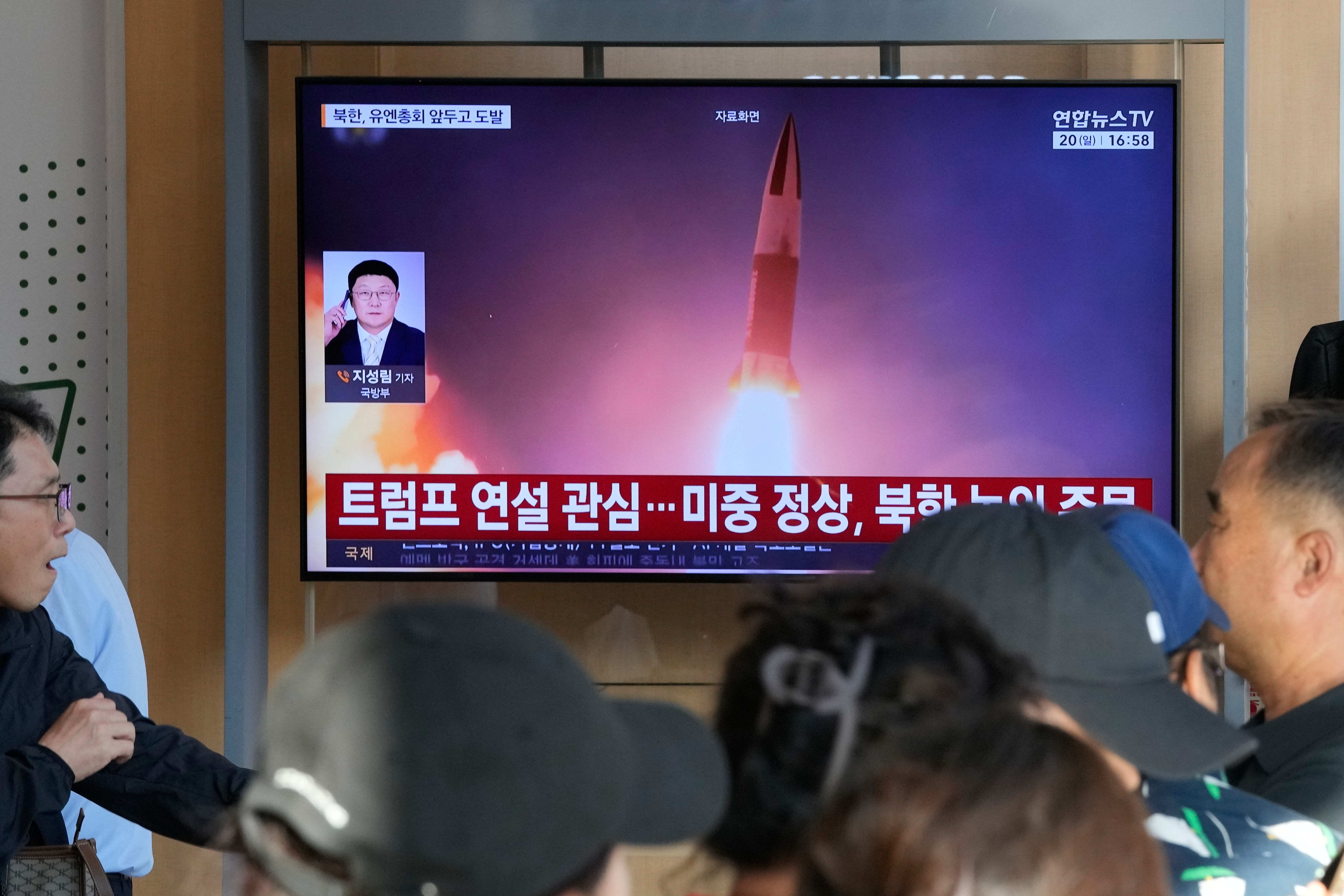
    SEOUL, South Korea — North Korea launched two short-range ballistic missiles toward the sea on Sunday, South Korea’s military said, days after the North threatened to bolster its nuclear deterrent capabilities and respond to what it called U.S. hostilities.

    The launches were the latest in a series of weapons demonstrations by North Korea even after U.S. President Donald Trump scaled back a joint military exercise with South Korea last month in an apparent effort to revive diplomacy with the North’s leader, Kim Jong Un.

    The two missile launches — about three hours apart — were conducted from North Korea’s eastern coastal Wonsan area. The first missile flew about 280 miles while the second one flew more than 370 miles, both toward the North’s eastern waters, South Korea’s military said.

    The missiles eventually ended up in the sea. South Korea’s presidential office urged North Korea to immediately halt ballistic missile launches that are banned by U.N. Security Council resolutions. The South’s military said it maintains readiness to repel any provocations by the North under a solid alliance with the United States.

    Japan’s Defense Ministry said it detected a suspected North Korean missile earlier Sunday but that the weapon did not land in its territorial waters.

    North Korea escalates pressure on U.S.

    Kim’s sister and senior official, Kim Yo Jong, earlier shrugged off Trump’s overture, saying that shortening the drill wouldn’t change its “provocative, aggressive nature.” North Korea’s military later launched about 10 short-range ballistic missiles toward the sea, apparently following through with a previous threat to respond to the U.S.-South Korean drill.

    On Friday, Kim’s sister slammed another recent U.S.-led multilateral maritime exercise in the region as a “frantic military move” by the Americans meant to prolong their hegemony in the Asia-Pacific area. The “Pacific Vanguard” exercise brought together the U.S., South Korea, Japan, Australia, New Zealand, and Canada.

    She claimed that “regular U.S.-led war rehearsals” are the main source of worsening tensions in the Korean Peninsula and the region.

    “Our will to defend our sovereignty will be expressed in clearer action and there will be never ever change in the course of intensifying the nuclear war deterrence,” she said.

    Earlier this month, North Korea conducted what it called a joint live-fire drill involving missiles, artillery, and drones, a day after the United States, South Korea, and Japan wrapped their five-day trilateral military drill that North Korea described as a provocation. North Korea said its drill included firing different types of weapons simultaneously, likely aiming at developing the ability to overwhelm South Korean and U.S. air defenses.

    Chances of a swift resumption of U.S.-North Korea talks are unclear

    Kim Jong Un has been focusing on expanding his nuclear arsenal after his earlier high-stakes diplomacy with Trump collapsed in 2019.

    When Trump ordered the Pentagon to “substantially reduce” the annual Ulchi Freedom Shield exercise with South Korea, he cited what he called a good relationship with Kim, who has called such drills invasion rehearsals.

    Emboldened by his advancing nuclear arsenal and deepening ties with Russia and China, experts say, Kim likely thinks he now has greater leverage in possible fresh diplomacy with Trump. Earlier this year, Kim said he could return to talks if the U.S. drops its “hostile policy” against his country and respects what he calls the North’s status as a nuclear state.

    South Korean President Lee Jae Myung, a liberal who advocates improved ties with the North, said on Friday that a resumption of U.S.-North Korea talks would be “an important starting point” toward boosting chances for peace on the Korean Peninsula.

    “What is clear is that President Trump wants dialogue and I’ve also been encouraging President Trump to seek dialogue” with Kim, Lee told reporters.

  • Rising gas prices frustrate voters. Trump says it’s an ‘inexpensive price to pay’ for the Iran war

    Rising gas prices frustrate voters. Trump says it’s an ‘inexpensive price to pay’ for the Iran war

    EDINBURG, Texas — Quinten Martinez, pumping gas under a hot South Texas sun, remembers a time when fueling up didn’t require difficult decisions.

    “Is it going to be groceries this week?” asked the 28-year-old Amazon delivery driver as he watched the numbers tick higher. ”Is it going to be getting gas in our tank to go to work?”

    He shook his head when asked about President Donald Trump’s assertion last week that higher gas prices are a small price to pay for the war with Iran.

    “I don’t feel like it’s a good trade-off,” Martinez said. “I don’t feel like this is good for anyone.”

    Voters across the country, and across the political spectrum, tend to agree.

    Interviews with voters in several states, along with a fresh round of national polling, reveal an overwhelming sense of frustration that skyrocketing gas prices — a direct result of Trump’s war — are creating serious and sustained financial hardships for America’s working class.

    The acute concerns are adding to a bad political environment that may be worsening for Trump and his Republican Party as early voting gets underway in the November midterm elections.

    Historically, the party holding the White House has suffered major losses in midterms. Today, seven weeks before Election Day, Republican candidates at all levels are struggling with the additional burden of Trump’s weak approval ratings, an unpopular foreign conflict and an affordability crisis that Trump and his congressional allies had promised to fix.

    But when Trump campaigned in North Carolina on Wednesday, he played down the impact of surging gas prices.

    “You have a little higher. It’s a very inexpensive price to pay for what we’ve done,” Trump said of the war, which he describes as critical to prevent Iran from obtaining a nuclear weapon. ”Remember that. It’s a little more. Frankly, even if it was a lot more.”

    ‘Gas prices matter,’ Republican strategist says

    Despite what Trump says, there are few things that may matter more this election year than the price of a gallon of gasoline, according to political operatives in both parties.

    Gas prices are moving sharply in the wrong direction at a time of year when drivers typically get some relief. The national average for a gallon of gas reached $4.48 on Friday, according to AAA, up roughly 17 cents over the last week, 40 cents in a month and $1.27 from a year ago.

    “Gas prices matter because they’re one of the few economic indicators voters experience and see in real time,” said veteran Republican strategist Chris Wilson. “The price is literally staring them in the face several times a week. So I wouldn’t minimize the frustration we’re seeing, particularly among working- and middle-class voters.”

    Interviews with voters this week found bipartisan frustration and disappointment.

    Democrats and independents were especially motivated to punish Republicans at the ballot box for their economic hardship, while some of Trump’s working-class supporters pledged to support Republicans this fall, even if they weren’t happy with the president’s leadership on the economy.

    Some Republicans say they’re disappointed

    Dan Lloyd, who voted for Trump, lamented the president’s leadership as the 63-year-old carpenter paid $4.39 a gallon to fill up his pickup truck in Mesa, Ariz.

    “He hurt himself stepping into this,” Lloyd said of Trump. “Where’s all this oil from Venezuela? I thought we were flush with gas and everything, but no. The American people eat it every time, whether it’s interest rates, food, gasoline.”

    Still, he expects to vote Republican in the midterms.

    “I think the Democratic Party has lost its way,” Lloyd said. “I just feel like the whole system’s on the verge of collapse.”

    In sweltering Edinburg, Texas, 52-year-old Kristin Jimenez shrugged off the rising price of gas after filling up her Mercedes.

    “We’ve paid the same price under Republican presidents, we’ve paid this price under Democrat presidents,” said Jimenez, a mother who runs a small business. She plans to vote for a Republican in November because they’re the “lesser of two evils.”

    She said gas prices aren’t part of her calculation.

    “We don’t mind paying $8 for a cup of coffee at Starbucks, but we have a problem paying four bucks at the pump?” she said. “Make it make sense.”

    More than 1,500 miles to the north in central Michigan, 35-year-old Garth Johnson is trying to make ends meet running a deep-cleaning business with several gas-powered vehicles and one machine fueled by diesel, which was $6.79 a gallon as he filled up his SUV.

    Johnson voted for Trump, but doesn’t know what he’s going to do in November. Johnson doesn’t feel qualified to second-guess the president’s evaluation of the war, but he’s feeling financial pressure in his own life.

    “I like a lot of the things he’s done,” Johnson said, but added, “I’m a little guy and I’ve got to live my life.”

    Other voters are not so forgiving

    Midterm voting was already underway on Friday in Virginia, where 60-year-old engineer Alan Johnson said Trump seems to have “no empathy” for Americans who are struggling financially.

    “With the gas prices being what they are and continuing to grow, we’ve got to do something. Hopefully the Democrats can get into office and turn the ship around,” said Johnson, who cast ballots in the morning for Democrats for the U.S. Senate and U.S. House.

    In Raleigh, N.C., teacher Brittney Bivins sees surging gas prices as evidence that Trump and his Republican Party aren’t dealing with the issues that matter most to people like her.

    “He really doesn’t care about everyday people,” the 45-year-old said. “He can afford the gas, but most of us can’t. So it feels like he’s not even connected to his own people.”

    Bivins, who described herself as an independent, said she’s eager to support Democrats this fall — especially the party’s emerging democratic socialist wing.

    At a gas station in Lansing, Michigan., Rina Risper spent $50 on 8 gallons of premium gas.

    “When I rolled up I was in shock, actually, and said, well, maybe I should drink water instead of having that $4.99 bottle of whatever it was I was going to get,” Risper said. She thinks Trump’s tariffs will make affordability even worse.

    “We’re not in Miami. We’re in Lansing, Mich.,” she said. “It’s really going to impact our people.”

    Most voters think administration has made economy worse, poll shows

    Nationwide, more than three times as many voters say they are falling behind financially as getting ahead, according to a Fox News survey released Wednesday. By a 15 percentage point margin, Democrats are considered the party that would better handle inflation and prices at a time when the cost of living and the economy are voters’ top concerns.

    The Fox poll found that 61% of voters say gas prices are a major problem for their household, compared with 48% two years ago, while 52% say the same for healthcare costs, compared with 44% in 2024. Majorities also view housing costs and grocery prices as major problems, although neither has increased.

    Overall, nearly two-thirds of voters (63%) say the administration has made the economy worse, compared with 52% in September 2025, including one-quarter of Republicans. Only 46% of Republicans say the administration has improved the economy, while about one-quarter don’t see an impact.

    Back in rural South Texas, an area where Trump’s GOP made gains in recent elections, Martinez, the Amazon delivery driver, could not contain his frustration.

    Trump “likes to tout that we are the best economy in the world,” said Martinez, but in more rural towns, “you don’t see any of the winning, you don’t see any of the ups that he’s talking about.”

    “You just see struggles for day to day life,” he said.

  • Ukraine fires over 1,000 drones at Russia, including ‘largest ever’ attack on Moscow

    Ukraine fires over 1,000 drones at Russia, including ‘largest ever’ attack on Moscow

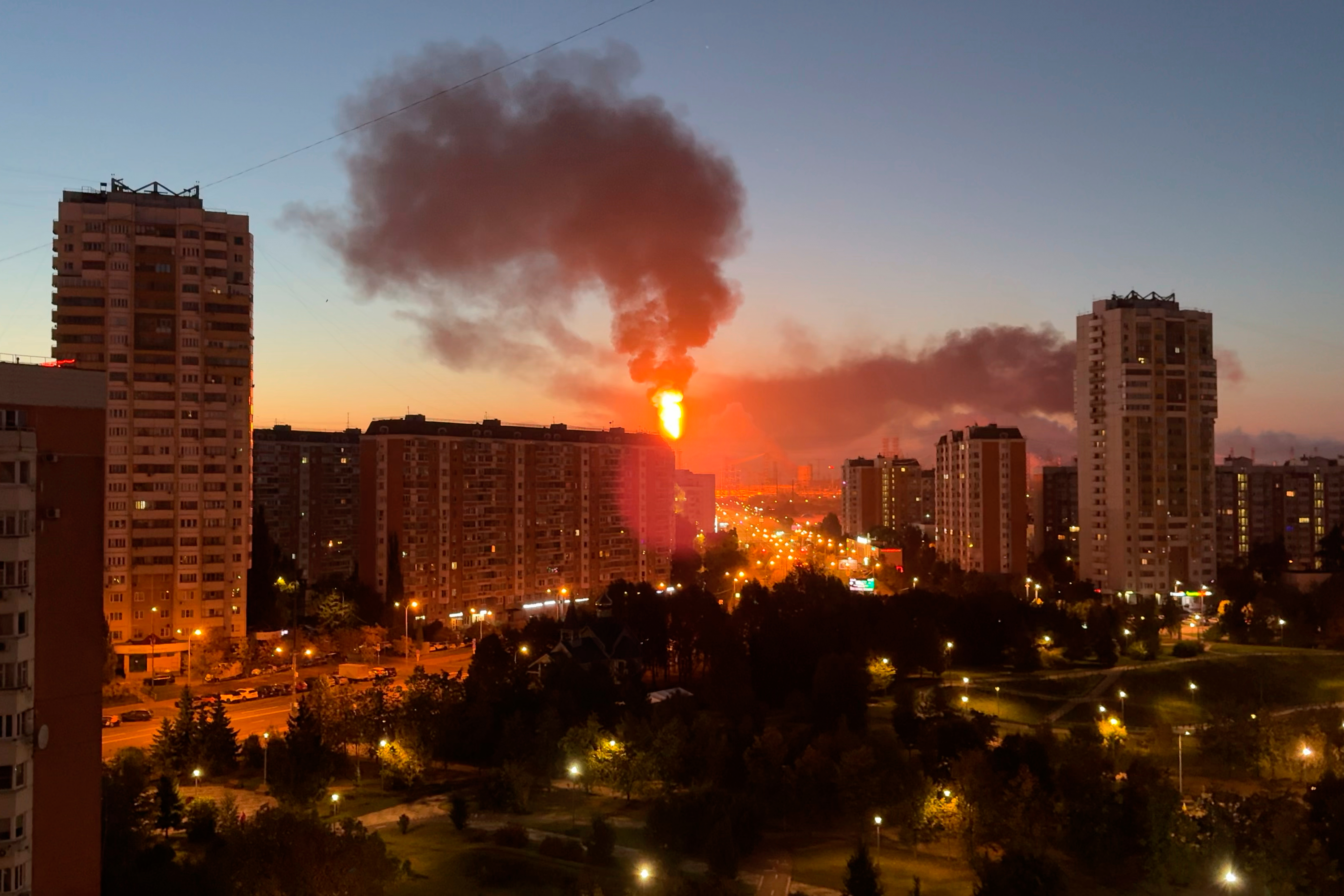
    Ukrainian forces fired more than 1,000 drones at Russia overnight, including hundreds that were launched toward Moscow, officials said Sunday, as the Kremlin was wrapping up the third and last day of its parliamentary elections.

    Moscow’s mayor described the wave of drones as the “largest ever” drone attack on the Russian capital and said there had been damage to the Moscow Oil Refinery, which is among several sites that supply the Russian capital, and a residential building.

    Across the wider Moscow region, the attack killed two people and wounded 20, local Gov. Andrei Vorobyov said. The dead were a 74-year-old man and a 44-year-old woman, he said.

    Writing on social media, Ukrainian President Volodymyr Zelensky said that Kyiv had used a range of missiles and drones in the attack — including Ukraine’s domestically made Flamingo and Pelican missiles — to hit oil and logistics facilities.

    “These are billions of dollars that sustain the war machine,” Zelensky said, referring to the financial pressure that Kyiv hopes to put on Russia’s economy.

    Ukraine also continued to fend off Russian attacks, Zelensky said. A Russian drone strike hit a monastery in Ukraine’s Kherson region Saturday, killing a member of the clergy and wounding four people, he said.

    A Russian attack on the Ukrainian capital also killed two children and their mother on Saturday evening, said Tymur Tkachenko, head of the Kyiv regional state administration. He later said that another child wounded in the same attack had died in hospital on Sunday.

    Russia votes in an election devoid of opposition

    The attack took place on the final day of Russia’s first wartime parliamentary election — balloting that has been virtually devoid of opposition to President Vladimir Putin’s policies and is all but certain to cement the Kremlin’s dominance.

    Russia was also holding the vote in the four Ukrainian regions that Moscow illegally annexed after the war began but still doesn’t fully control, and in Crimea, the Black Sea peninsula that was illegally annexed by Russia in 2014. Kyiv has denounced the action as illegal.

    In a Russian-occupied area of Ukraine’s Kherson region, a Ukrainian attack killed a member of the local electoral committee, Russia’s Central Election Commission said in a statement.

    Russia’s Ministry of Defense said Sunday that its forces shot down a total of 1,110 Ukrainian drones across Russia, as well as over the annexed Ukrainian peninsula of Crimea and the waters of the Black Sea.

    Moscow Mayor Sergei Sobyanin said that 450 drones had been destroyed en route to the Russian capital, and that the attack had damaged the Moscow Oil Refinery and a residential building.

    He said the “unprecedented attack” on Moscow was an attempt to disrupt the elections. “The enemy failed in this regard,” he said.

    Since Russia’s invasion more than four years ago, Ukraine has become a global leader in military drone technology, deploying domestically produced long-range drones alongside missiles for strikes deep inside Russia. Its drone technology has impressed governments and defense manufacturers around the world.

    Kyiv is aiming to make the Russian public feel the war’s consequences and pressure Russian President Vladimir Putin into negotiating a peace settlement. Putin has so far shown no signs he intends to stop the invasion.

    Instead, Moscow and Kyiv have been drawn into an escalating duel of long-range aerial strikes as fighting along the roughly 780-mile front line in eastern and southern Ukraine has slowed, restricted by large numbers of drones and ground robots threatening troop movements.

  • The poorest in the U.S. can’t find housing even as low-income units sit empty

    The poorest in the U.S. can’t find housing even as low-income units sit empty

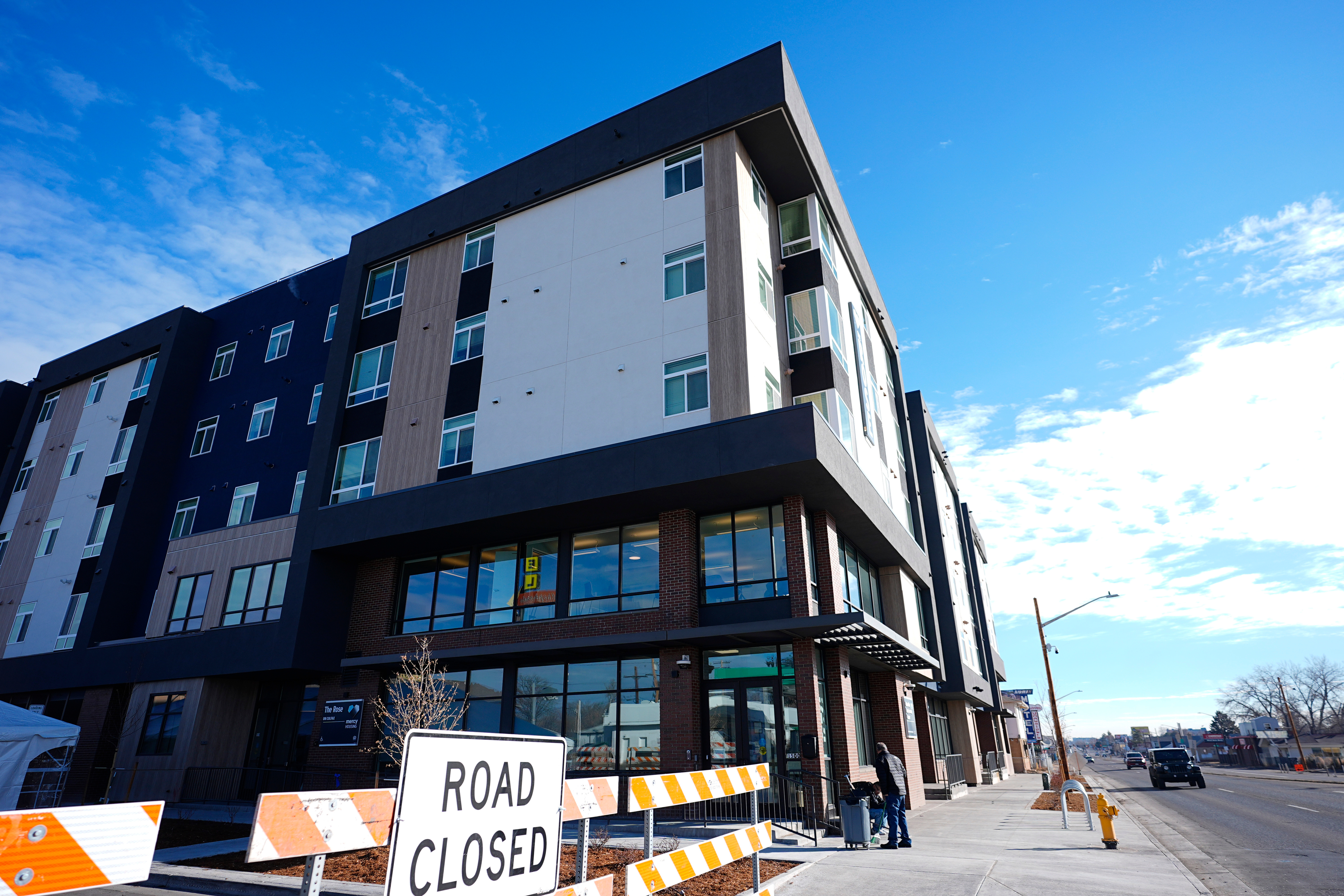
    PORTLAND, Ore. — Mathew Davis, who lives in a homeless shelter in Austin, Texas, would love an apartment of his own. But with the little money he makes donating blood plasma, even a $450-a-month tiny home with no running water and a communal bathroom would be a stretch.

    Meanwhile, over 4,500 units the city classifies as affordable — nearly 16% — sit empty.

    “I don’t make enough money really to afford anything,” Davis, 49, said of the few hundred dollars he earns a month. “I just keep trying to swim uphill.”

    The poorest people in the U.S. face the most acute shortages of affordable homes. But the majority of low-income housing financed in recent years is for those earning 50% of an area’s median income or above, according to a survey of state housing agencies.

    Some cities are now seeing an uptick in vacancies as rents for these units approach market rates. The result: Apartments designated as affordable sit empty because the poorest of the poor cannot afford them.

    Meanwhile, some people are forced into homelessness and others into desperate circumstances to pay for housing they can’t afford.

    The poorest have few housing options

    There are only about 4 million affordable rental units available for the country’s 11 million extremely low-income renter households, according to the National Low Income Housing Coalition’s most recent annual report.

    These are people with annual incomes either below the federal poverty guidelines — just under $16,000 for a single-person household — or 30% of the median income in their area, whichever is higher. They comprise about a quarter of U.S. renter households, and include many people working low-wage jobs, seniors, and those with disabilities living on fixed incomes.

    About three-quarters of extremely low-income renter households pay over half their income on rent and utilities, the report said, leaving little leftover for other necessities.

    Yet homes set aside for these renters were only about 12% of the affordable housing units financed in 2024 by the Low-Income Housing Tax Credit — a federal program providing tax credits to developers in exchange for keeping rents low for at least 30 years, according to figures from the National Council of State Housing Agencies.

    The majority are for those earning at least 50% of an area’s median income, or AMI. In Austin, that’s a single person earning roughly $47,000 a year, as compared with an extremely low-income person earning under $28,000.

    The program has financed nearly 4 million affordable units nationwide since its creation 40 years ago. But some experts say it’s inefficient — and more costly than housing vouchers.

    “It’s enormously complex and bureaucratic, and it raises the cost of construction enormously because the rules are so complicated,” said Chris Edwards, an economist at the Cato Institute, a libertarian think tank, who told Congress the program’s complexity “spawned” an industry of law and accounting firms just to administer it.

    “If you’re going to subsidize affordable housing, you should give the money directly to tenants,” he said, referring to housing vouchers.

    Other experts say the two programs work together well because properties built with the tax credit are required to accept vouchers — while landlords of market-rate apartments in many states are not.

    Still, there’s a major federal funding shortfall: Experts estimate only one in four eligible families ever receive vouchers. Vouchers can help the poorest pay for housing that’s targeted to higher income groups, but the waitlist can be yearslong.

    Some affordable housing developers say that without vouchers, it’s not economically feasible to provide units for extremely low-income people.

    True Ground Housing Partners, an affordable housing developer in the Washington, D.C., area, gives an example: A unit for those earning 60% of the area’s median income — nearly $70,000 a year — brings in $1,715 per month in rent. But after $1,575 in mortgage and operating expenses, only $140 is left.

    “The math does not lie,” said president and CEO Carmen Romero, noting that an extremely low-income person would pay only half that rent.

    “Our expenses don’t make it really possible to create a 30% AMI unit, unless there was this extraordinary amount of subsidy that just doesn’t exist.”

    Affordable housing competes with market-rate rents

    Meanwhile, affordable housing rents for 60% AMI units are approaching those of market-rate apartments in U.S. cities like Austin, Denver, and Portland, Ore.

    As a result, some people are opting to pay a bit more for market-rate apartments with less income-verification and faster approval — leaving growing numbers of affordable units vacant.

    In Austin, the vacancy rate for all affordable housing is nearly 16% with over 4,500 vacant units, according to real estate data and analytics firm CoStar. A healthy vacancy rate is around 5%.

    LDG Development, an affordable housing developer, cited a 12% vacancy rate for its 60% AMI units in Austin. Chief portfolio officer Rebekah Fischer said LDG is “in direct competition” with the thousands of new market-rate apartments recently built in Austin.

    “I have to have every bank statement, every pay check, every bill, every Venmo transaction that you had with your friends,” Fischer said of affordable housing applicants.

    “When we’re almost going after the same renter, you can be approved within two minutes at a market-rate deal, where unfortunately in affordable housing … it takes time.”

    In Denver, there’s a 13% vacancy rate among 60% AMI units financed by the federal tax credit program — and a 21% vacancy rate for 80% AMI units, according to the Colorado Housing and Finance Authority. Meanwhile, there is far too little housing for the city’s poorest.

    In Portland, where there is also a housing shortage for the lowest income groups, there are over 1,700 vacant affordable units for an overall vacancy rate of 7.5%, according to the Portland Housing Bureau. Most are for those earning 60% AMI, or about $54,000 for a single-person household, with rent capped at $1,444 per month.

    That’s close to the average rent of $1,581 for a one-bedroom market-rate apartment, according to CoStar figures shared by the bureau.

    Portland resident Jaiden Barbee earns around 55% of the area median income and is on waitlists for affordable housing. But, he says, he’d pay more for a market-rate apartment to avoid the lengthy application process.

    “I’d rather spend the $200 extra just to get into a place easier that’s wherever I want” and doesn’t have “all these hoops,” he said.

    ‘I want to shut the door at night and sleep’

    Austin officials set a goal of building 20,000 units between 2018 and 2027 for extremely low-income people — 17% of the city’s households.

    Just 543 were built as of 2024, city documents show.

    Meanwhile, all 15,000 units planned for those earning between 60% and 80% of area median income were built.

    In response to questions from the Associated Press, the Austin housing department said it recognized the need to do more to produce housing for the poorest people and was taking steps to do that, including giving preference to funding proposals that include 30% AMI units.

    For Davis, who lived in his car for a year before getting a bed in the Austin shelter, the housing shortage for people like him is frustrating.

    “I want to shut the door at night and be able to sleep,” he said. “I really just want to find the right place.”

    Charlotte Kramon contributed to this article.

  • Holdout juror in Clancy trial didn’t have ‘any doubts’ that she was responsible for killing her kids

    Holdout juror in Clancy trial didn’t have ‘any doubts’ that she was responsible for killing her kids

    BOSTON — The lone juror who wanted to convict Lindsay Clancy of murder for killing her three children said he was certain of her guilt, but that other jurors wouldn’t listen to him, according to a statement released by his lawyer Friday in his first public comments on the case.

    Eleven of 12 jurors were ready to clear Clancy of criminal responsibility, with the majority feeling that the Massachusetts mom was in the grip of a rare condition called postpartum psychosis when she strangled her kids. But juror Michael Desronvil sided with the prosecutors, who had argued that Clancy knew what she was doing.

    “I didn’t have any doubts,” Desronvil said in a statement released on X by his lawyer, Edward Paltzik.

    The jury’s foreperson had claimed in an earlier media interview that Desronvil had admitted having “reasonable doubt” about Clancy’s guilt, but wanted to convict her anyway. Desronvil said that wasn’t true.

    “As I tried to explain different possible theories during deliberation, I kept getting cut off as if I had doubts based on the evidence presented,” he wrote. “Based on all the physical evidence, key witnesses, and what the prosecution presented, I thought it was enough proof that she (Clancy) knew exactly what she was doing and planned.”

    The jury’s deadlock forced the judge to declare a mistrial on Sept. 4, leaving the case unresolved. The Plymouth County district attorney has yet to say whether he’ll seek to put Clancy on trial again.

    Neither side disputed that Clancy strangled her children, Cora, Dawson, and Callan, in the family’s home in 2023 before trying to end her own life. But her attorney said she was a loving mother experiencing deep delusions and other mental health problems, for which she had been getting treatment.

    Since the trial ended, Desronvil has been both publicly praised and scorned for his actions, and his personal life and past financial and legal problems have become the subject of scrutiny by the news media and amateur sleuths.

    Among the public revelations: He had a restraining order against him at the time of jury selection and was facing eviction from his apartment due to over $12,000 in unpaid rent. He also was accused of domestic violence in 2021, a charge that was later dismissed.

    Some of the opinion has fallen along political lines, with Desronvil being praised by some conservative pundits as a hero.

    Paltzik, whose past clients have included President Donald Trump and Martin Shkreli, said on X that Desronvil was in “an undisclosed secure location” in a rural part of northern New England and would not be giving interviews.

    “As a devoted father and man of God, he will not be defeated or shattered by the wicked who wish harm upon him,” Paltzik wrote.

    A fundraiser to cover what organizers say are costs of “security, lawyers, and lost work” for Desronvil has raised over $289,000.

    Florida Gov. Ron DeSantis has rolled out the welcome mat for him, saying that if he is being harassed, “Florida will provide asylum.”

    “I’m sure he’d be welcomed and appreciated,” DeSantis wrote on X.

  • MS NOW, CNN, and Politico say their journalists were denied access to White House after Trump ban

    MS NOW, CNN, and Politico say their journalists were denied access to White House after Trump ban

    NEW YORK — Reporters from three major news organizations — CNN, MS NOW, and Politico — were denied access to the White House on Saturday, a day after President Donald Trump said he was barring them because of reporting he found to be “fake news.”

    The actions were a clear escalation of Trump’s long-running efforts — in the courts and through administrative action — to restrict news coverage by journalists he finds objectionable, and the latest test of First Amendment protections in the United States. Trump had said Friday he would ban all three outlets because of coverage he disliked.

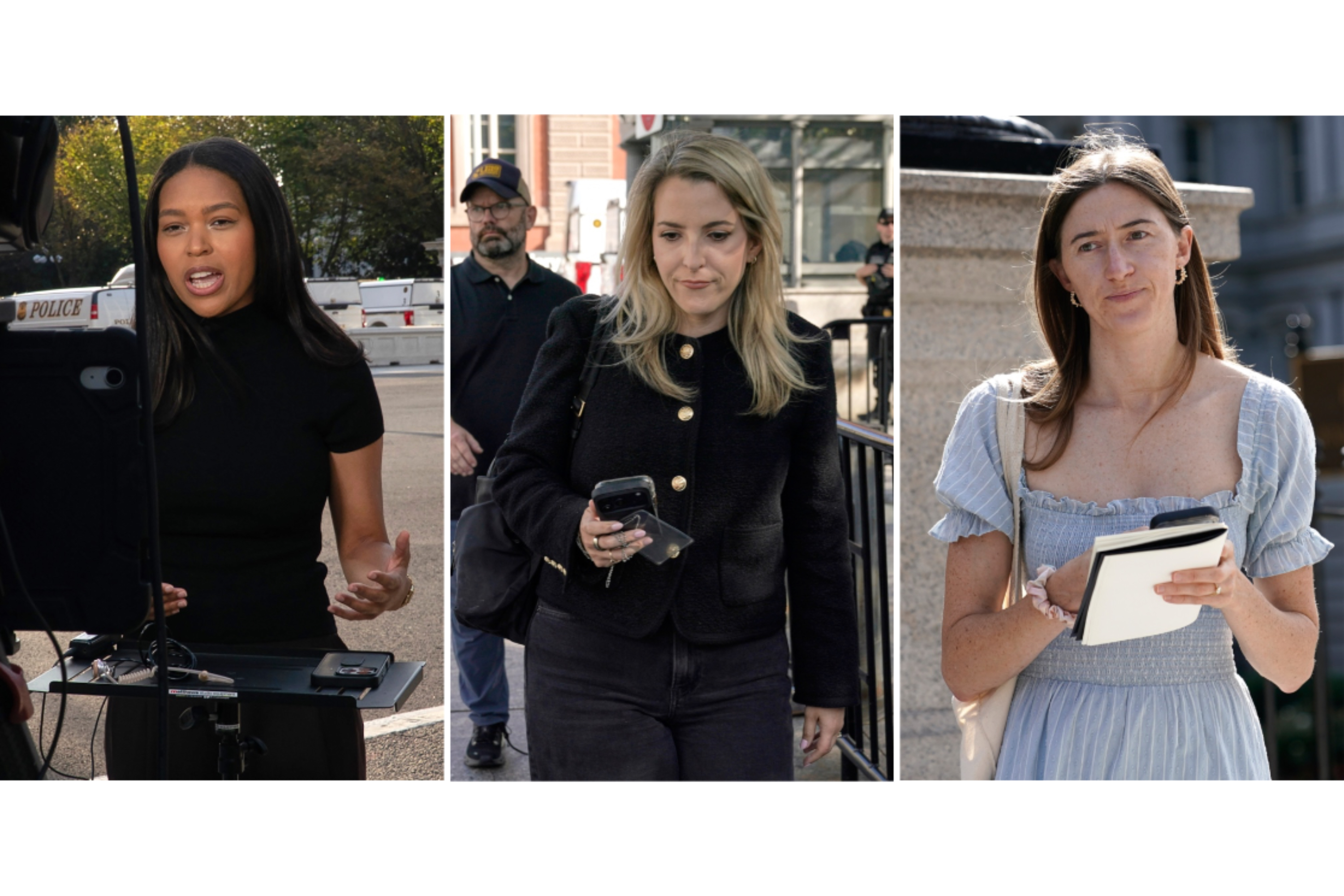
    White House reporters from the two cable networks — Betsy Klein of CNN and Akayla Gardner of MS NOW — both went live to report they’d been turned away when arriving for their jobs at the White House. Soon after, Politico said its White House reporter Cheyenne Haslett was also denied entry and had her badge confiscated.

    Politico editor-in-chief Jonathan Greenberger said in a statement to the Politico newsroom: “We stand by her and all reporters here covering the White House. … We will vigorously defend our First Amendment rights.”

    CNN and MS NOW issued similar statements. “We will not be deflected from our duty to hold the government and other public bodies to account,” CNN said.

    “The White House belongs to the American people and the decisions made inside are funded by our tax dollars,” MS NOW said in its statement. “MS NOW intends to take any and all steps necessary to defend our First Amendment rights and the essential role of independent journalism in our democracy.“ ‘

    In his second term, Trump and his administration have upped the ante and punished certain media outlets, both in the courtroom and through regulatory action. Trump has also lashed out at individual reporters in person or over social media, sometimes in strikingly personal terms — insulting them in briefings, or in his recent speech at the White House Correspondents’ Association dinner.

    CNN and MS NOW correspondents are turned away

    Network correspondents are usually present on the weekends when the president is in Washington or at nearby Camp David. Trump is at the presidential retreat in Maryland this weekend.

    MS NOW’s Gardner reported that she had walked through two gates successfully, but once she got to where her badge needed to be scanned, an officer told her it was disabled and asked her to hand it over. He said the decision “was above him,” she reported. An MS NOW producer was able to get in, but a photographer’s badge was also disabled, Gardner said.

    Klein, senior White House reporter at CNN, also said her badge had been deactivated. It was confiscated, and she was handed back the clear plastic case. She said she was referred to the White House press office for further information.

    Amy Kristin Sanders, a professor at Pennsylvania State University and an expert in media law, said it has “become pretty clear that this administration is not interested in playing by traditional First Amendment rules and norms.

    “The second Trump administration’s efforts to crack down on press freedom and delegitimize independent journalism far exceed those of any other modern American president,” Sanders said. ”It is not an exaggeration to say his hostile actions toward news organizations and individual reporters have a chilling effect on freedom of expression around the world.”

    CNN media analyst Brian Stelter called the move “a direct threat to press freedom in the United States.”

    “It’s so much bigger than CNN,” Stelter said. “This is a free speech test in America.”

    Trump calls these and other outlets ‘fake news’

    The president wrote on his social media site Friday that effective immediately, “I am banning” CNN, MS NOW, and Politico “from the White House as a result of their constant ‘reporting’ FAKE NEWS!” Minutes later, speaking at an event in the Oval Office, Trump was asked to explain his statement.

    “Because they’re fake news,” he said. “You get so tired of reading and seeing fake news. When you look at CNN, it’s just fake. That’s why their ratings are no good. When you look at MS NOW … it’s fake news.”

    “And when you look at Politico … the stories they wrote are fake. So there’s a lot of news and there may be others to join them, and maybe they can get better,” he said. “But our country has to have honest news.”

    The move follows the president’s decision last year to bar Associated Press reporters from the Oval Office, Air Force One, and other events in retaliation for the news outlet’s decision not to follow his lead in changing the name of the Gulf of Mexico, which lies partially in Mexican and other waters. The AP said that it would note when appropriate that Trump had ordered it renamed the “Gulf of America.”

    The AP filed suit and the case is ongoing. Since returning to office, Trump has pursued other legal action against a variety of different outlets, including the New York Times, the Wall Street Journal, and the BBC. His administration is also involved in a long-simmering confrontation involving ABC over renewal of its broadcast licenses.

    The AP said Saturday it supported the news organizations banned this week. In a statement, it said: “No news organization — or person — should be retaliated against by the government over the words they use.”

  • Judge isn’t swayed by government’s claims that plans for an ‘anti-weaponization fund’ are dead

    Judge isn’t swayed by government’s claims that plans for an ‘anti-weaponization fund’ are dead

    ALEXANDRIA, Va. — A federal judge who blocked the creation of a $1.8 billion “anti-weaponization fund” for compensating President Donald Trump’s political allies wasn’t swayed by a government attorney’s assurances Friday that the administration has abandoned the concept.

    U.S. District Judge Leonie Brinkema in Virginia didn’t rule from the bench on the government’s request for her to dismiss a lawsuit challenging the fund’s formation and operation. But the judge rejected the notion that the case’s claims are moot because the Trump administration says the fund is dead and won’t go forward.

    “The issues that underlie this case are still alive and kicking, in my view,” Brinkema said.

    The fund for compensating Trump’s political allies encountered a fierce bipartisan backlash and threatened to derail Attorney General Todd Blanche’s Senate confirmation. On Aug. 2, Blanche issued a formal order terminating the fund after negotiating for weeks with two Republican senators who wanted to see the promise in writing before they endorsed his nomination.

    “The case is moot,” Justice Department attorney Andrew Block told Brinkema. “The mootness has been addressed at every stage.”

    But the judge noted that Blanche’s assurances have been undercut by the president and other administration officials. Trump, a Republican, continued to publicly express support for the fund even as Blanche insisted it was dead.

    “They contradict themselves all the time,” Brinkema said.

    The administration created the settlement fund to resolve Trump’s lawsuit against the IRS over the leak of his tax returns. The plan stoked outrage over the notion that Trump supporters who attacked police officers while storming the U.S. Capitol on Jan. 6, 2021, could be eligible for payments.

    Attorneys from the legal advocacy group Democracy Forward sued in May, asking the Alexandria, Va., court to suspend the fund’s implementation temporarily and stop the Trump administration from disbursing any payouts. Plaintiffs’ attorneys argued the government can’t divert taxpayer money to a slush fund for enriching Trump’s allies.

    Brinkema, who was nominated to the bench by Democratic President Bill Clinton, agreed in June to extend an order blocking the fund until further notice from the court.

    Democracy Forward attorney Pooja Boisture told the judge on Friday that the administration will most likely move forward with the fund — “either in its current iteration or a new one” — if her order is lifted.

    The Virginia lawsuit’s plaintiffs include a fired prosecutor and a college professor acquitted of assaulting federal agents at a protest. Also named as plaintiffs are the government watchdog Common Cause; the city of New Haven, Conn.; and the National Abortion Federation, an association of abortion providers.

    “This scheme is an unprecedented, unlawful, and corrupt attempt to manipulate the legal process and laws intended to prevent political interference to achieve benefits that President Trump and his political allies could not have obtained lawfully,” the plaintiffs’ attorneys wrote.

    Justice Department attorneys argue the plaintiffs don’t have a legal basis for claims challenging a fund that “has never existed and will not exist.”

    “The time has come to stop this inquisition,” they wrote.

  • Hundreds of thousands attend Iran’s biggest government-organized rally since the war began

    Hundreds of thousands attend Iran’s biggest government-organized rally since the war began

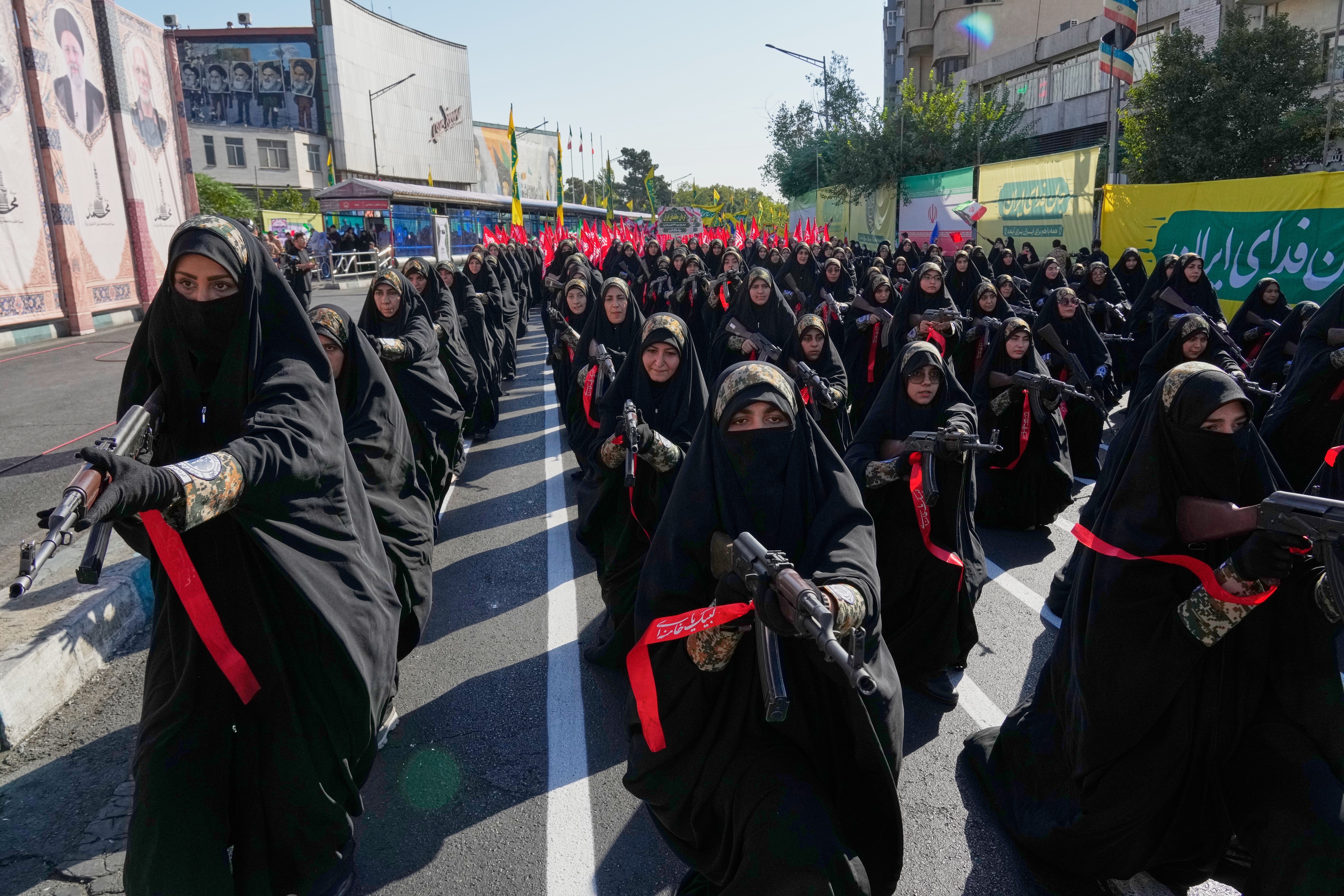
    CAIRO — Hundreds of thousands of Iranians rallied Friday in a government-organized show of defiance after months of war, pledging their readiness to take up arms in the biggest such demonstration since the United States and Israel attacked in February.

    Iran’s government has sought to rally the people and stress national unity, even as the economy worsens under a U.S. naval blockade of Iranian ports and new U.S. sanctions. On Friday, it claimed another attack on a tanker in the Strait of Hormuz, a key waterway it has sought to control since the start of the war.

    Estimates varied of the number of people volunteering to receive limited military training and defend the country in an effort described as “Janfaday-e Iran,” or the “ones who sacrifice their lives for Iran.” They marched through downtown Tehran in combat uniform, carrying flags, as onlookers cheered.

    For days, state media have encouraged Iranians to join the campaign, saying training with assault rifles would begin soon. The volunteers would be an additional layer of security to the paramilitary Revolutionary Guard and the Basij militia, which has played a key role in quashing anti-government protests.

    Rally seeks to project strength under U.S. pressure

    Tehran’s Guard chief, Gen. Hassan Hassanzadeh, told the state broadcaster that over 600,000 people had registered to participate, with over 1 million expected to take part in the training. On Friday morning, the broadcaster estimated over 300,000 people were on the streets.

    The new head of the Basij, Hossein Taeb, declared in a speech as the rally began that the volunteers will be ready for “full-fledged defense” and similar rallies will take place in other cities soon.

    The new trainees will make a “nightmare” for Iran’s enemies, Taeb added, as President Masoud Pezeshkian, military commanders, and other senior officials watched the march.

    Some participants trampled flags of the U.S. and Israel. Others chanted “Death to America” and “Death to Israel.”

    “I am here to tell (U.S. President Donald) Trump that we Iranians have no fear about his threats against our homeland,” said Marzieh Afaghi, 24, who attended the rally with her toddler and husband. “No one in history could invade Iran and remain there.”

    The rally was also a chance for Iran to show off military hardware. Anti-aircraft batteries were on display, while female Guard members in black headscarves sat with truck-mounted machine guns.

    Iran says it attacked another tanker in the Strait of Hormuz

    The Guard displayed drones that have been used against ships in the Strait of Hormuz, where Iran’s attacks and threats have severely affected the Gulf region’s shipments of oil and natural gas to the rest of the world.

    Iran said it had attacked a Togo-flagged oil tanker, the Trend, for what it called an “illegal attempt” to pass through the Strait of Hormuz, the state broadcaster reported. The U.K. Maritime Trade Operations center said a tanker was hit by a projectile, sparking a fire on board that was extinguished.

    The UKMTO in a separate update said ship transits facilitated by the U.S. military off Oman have averaged 24 a day over the past week but overall traffic remains about 90% lower than before the war.

    Iran’s new volunteers could help suppress future dissent

    Friday’s events also suggested that hard-liners like Taeb among Iran’s leadership will be more prepared to suppress any future demonstration against the theocracy.

    In January, shortly before the war, Iran saw some of its largest nationwide protests in history, which began over the struggling economy and turned to wider grievances. Activists have said a crackdown killed over 7,000 people and saw tens of thousands detained.

    In May, government officials said more than 30 million people in Iran — which has a total population of some 90 million — had volunteered via an online form or at public gatherings to lay down their lives for the theocracy. The Associated Press could not independently confirm that.

  • Trump says he is banning CNN, MS NOW, and Politico from the White House

    Trump says he is banning CNN, MS NOW, and Politico from the White House

    President Donald Trump said on Friday that he would ban CNN, MS NOW, and Politico from the White House, although it was unclear how such a prohibition would be enforced or legally defended.

    The president’s abrupt proclamation, which he said was “effective immediately,” came in a post on Truth Social, the social media platform he owns.

    Journalists from those news outlets were still working as usual on the White House grounds on Friday afternoon, and there were no immediate signs that they were being evicted.

    Speaking later with reporters in the Oval Office, Trump said he announced a ban “because they’re fake news. You get so tired of reading and seeing fake news.” He added, “You get sick of it.”

    Asked exactly what he meant by a ban, the president replied: “A very simple ban. I don’t want them in my office. I don’t want them here. I would say the ban would go as far as you can. And if they could straighten themselves out, I’d love it.”

    Asked if his ban could survive a court challenge, Trump replied, “I don’t think that a court should allow fake news to be written day after day after day.”

    CNN said in a statement that Trump’s ban would be “an illegal assault” on a “fundamental and constitutionally-protected right.”

    “We have a right under the U.S. Constitution to do that reporting without hindrance or interference from the government,” the network said.

    A spokesperson for MS NOW declined to comment. A spokesperson for Politico did not immediately respond to a request for comment. An inquiry to the White House Correspondents’ Association was not immediately returned.

    A prospective ban would open yet another front in Trump’s ever-expanding battles with the news media, whose output he has increasingly attempted to control using a variety of bureaucratic levers and intimidation tactics. The president has filed lawsuits and used government tools like subpoenas to target newspapers, late-night talk show hosts, corporate media conglomerates, and journalists whose reporting he dislikes.

    In his social media post on Friday, Trump warned that he might add other organizations to his prospective ban, writing, “Other Fake News Media Outlets to follow.”

    Trump expanded on his feelings at his Oval Office appearance, echoing the usual protestations about the media that he unspools at rallies, news conferences, and in interviews. “They purposely write negative news,” the president said. “And they do that because they want to try and diminish the Republicans and a Republican administration.”

    Any prospective ban on journalists from specific news outlets would almost certainly prompt a legal challenge.

    Trump has tried to bar some news organizations from parts of the White House in the past. During his first term, he revoked a White House pass for Jim Acosta, the former CNN journalist. CNN succeeded in restoring Acosta’s press credentials in court.

    This term, Trump has attempted to bar Associated Press journalists from parts of the White House, including the Oval Office and Air Force One. The AP has sued to restore its access, but that case remains in litigation; in the meantime, AP photographers have had continued access to the Oval Office. Its print journalists have had more limited access.

    His administration has also taken command of the daily White House press pool, a small, rotating group of reporters who relay the president’s daily activities to the public. Previously, the Correspondents’ Association chose which outlets participated; now, the administration handpicks the news outlets that are included.

    Jameel Jaffer, the executive director of the Knight First Amendment Institute at Columbia University, said that the ban floated by Trump on Friday is clearly unconstitutional because it would punish news organizations for the content of their reporting.

    “If President Trump means to expel these news organizations from the White House press pool, his action is doubly unconstitutional because the press pool is a ‘public forum’ under the First Amendment, which means the president can’t exclude journalists from it on the basis of their viewpoints,” Jaffer said.