Category: Nation World News Wires

  • Trump’s tariffs are unpopular — but they’ll be tough to repeal despite Democrats’ landslide win

    Trump’s tariffs are unpopular — but they’ll be tough to repeal despite Democrats’ landslide win

    WASHINGTON — For months, Democrats on the campaign trail hammered President Donald Trump’s unpopular tariffs, arguing that the taxes on imports drive up prices for American families already frustrated by the high cost of living.

    James Talarico, a Democrat running for a U.S. Senate seat in Texas, blamed Trump’s tariff on Mexican tomatoes for pushing up the price of a popular appetizer: “Chips and salsa,” he said, “are sacred in Texas.”

    Targeting tariffs proved to be a winning message nationwide, contributing to the Democrats’ stunning gains in the Nov. 3 midterm elections. And in Texas? Talarico became the first Democrat elected to the Senate from the state since 1988.

    “Americans don’t like tariffs,″ said Scott Lincicome at the Cato Institute’s Center for Trade Policy Studies. ”They connect them to the cost of living.″

    But when the Democrats take full control of Congress, they are likely to find that reversing Trump’s tariffs won’t be easy.

    The president will still have power to veto any legislation that repeals his import taxes or reins in his legal authority to impose them. And it’s unclear — probably doubtful — that enough Republicans would defy Trump and join Democrats in overriding his veto.

    Moreover, Democrats themselves are divided over trade policy. Some want to move back toward low-tariff trade policies that Trump demolished. Other Democrats want to see the United States continue using tariffs to fight other countries’ unfair trade policies and to sanction U.S. adversaries such as China.

    “There’s going to be a big debate over what should the Democrats’ tariff and trade policy be,” said Ryan Majerus, a former U.S. trade official during Trump’s first term and in the Biden administration. ”It can’t just be: We don’t like what Trump’s doing.’’

    Complicating matters is the fact that Trump’s tariffs are delivering significant amounts of revenue to the U.S. Treasury — nearly $370 billion in the last two budget years — at a time when the federal government is sitting on a staggering $40 trillion in debt.

    Democrats have “just been elected to come in and address concerns about affordability,’’ said Sally Laing, former chief trade counsel for the Senate Finance Committee and now a partner at the law firm Akin Gump. “It’s not as easy as people may think.’’

    Trump’s tariffs pinched family budgets

    The U.S. Constitution gives the power to levy taxes — including tariffs — to Congress. But over the years, lawmakers have relinquished tariff-setting authority to the president.

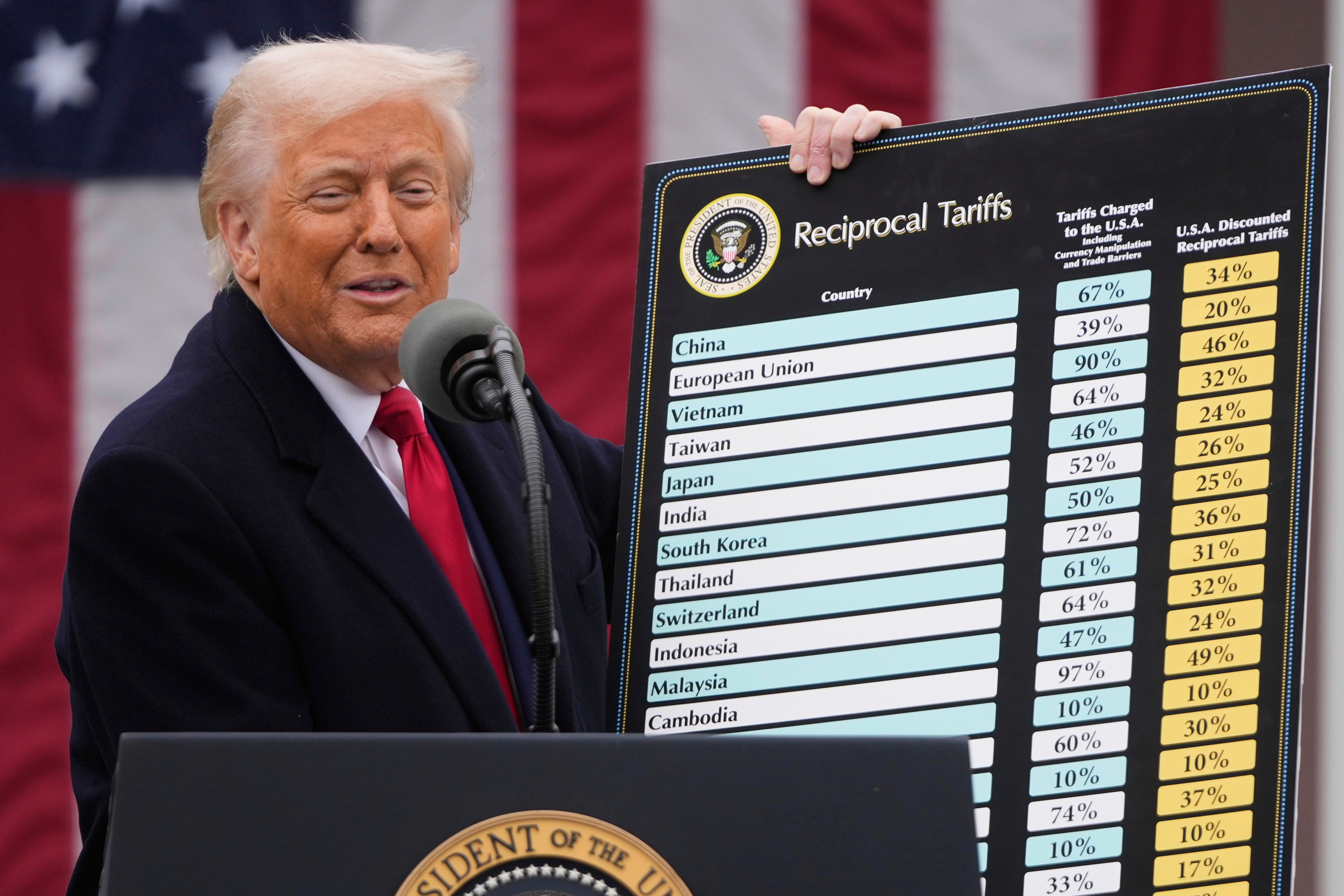
    Trump swept into the vacuum. In his first term, he started a trade war with China and slapped taxes on steel and aluminum imports, saying they posed a threat to U.S. national security. All that was just a warmup for his second term. Although the Supreme Court rejected his most ambitious tariffs in February, he has still managed to build a high protective wall around the U.S. economy, sometimes relying on the expansive use of the legal authority Congress gave up.

    His use of tariffs also has proven erratic. Last year, for instance, he suddenly imposed a 50% tariff on Brazil because its government had prosecuted his friend, former Brazilian president Jair Bolsonaro. (The Supreme Court decision struck down that tariff, among others.)

    “Trade policy has sort of gone off the rails and has lost a strategic focus,” said Inu Manak, senior fellow at the Peterson Institute for International Economics. “Now, we’re just using tariffs as a blunt cudgel instead of addressing real challenges.’’

    Trump’s tariff frenzy has lifted the average U.S. tariff from around 2.5% when he returned to the White House in January 2025 to 11.2% now, according to Yale University’s Budget Lab. Tariffs are paid by importers in the United States. And they often pass along the burden to consumers via higher prices. Yale’s Budget Lab estimates that tariffs cost the average U.S. household about $900 a year.

    That burden comes at a time when elevated inflation is already pinching family budgets, even more so because Trump’s war with Iran has driven up gasoline prices.

    But the Republicans who controlled Congress did nothing to reassert their authority and push back against the president’s aggressive use of tariffs.

    Voters largely turned against Trump’s tariffs as they voted in the midterm elections. About two-thirds of U.S. voters said Trump’s tariffs had hurt the national economy or the economy in their area, while only about 2 in 10 said they’d helped, according to the AP Voter Poll, a survey of more than 100,000 midterm voters. Voters who saw a negative impact from the tariffs overwhelmingly supported the Democratic candidate in their local U.S. House race.

    Trump, meanwhile, remains committed to his protectionist agenda.

    “President Trump will never waver from putting Americans and America First, whether in trade negotiations or through an economic agenda of tax cuts and deregulation,’’ White House spokesperson Matthew Middleton said in response to questions from the Associated Press.

    Democrats must round up GOP votes to repeal Trump tariffs

    As they campaigned this fall, Democrats vowed to cancel some Trump tariffs and curb his legal authority to impose others. Their proposals include repealing the tariffs he levied in July on 60 U.S. trading partners for allegedly failing to do enough to crack down on trade in products made by forced labor. Another would require Congress to approve his tariffs.

    Turning their ideas into law will require overcoming a daunting obstacle: Trump’s veto power. Overriding a presidential veto requires a two-thirds majority in both houses of Congress. Even if Democrats win all the congressional races that are still undecided this year, they won’t have enough votes to override a Trump veto on their own. They will need Republican support.

    Can they get it? Their resounding midterms victory makes “a veto-proof vote more possible,” said Majerus, the former trade official and now a partner at King & Spalding. “Are Republicans willing to break with Trump? I’m still skeptical.’’

    Oregon Sen. Ron Wyden, the top Democrat on the Senate Finance Committee, sees one issue that could draw Republican support: ending the 50% tariffs that Trump imposed in August on $20 billion worth of Canadian imports.

    “That’s what we’re focused on, figuring out a way to beat Trump and his veto,” said Wyden, who will be Senate Finance chair when the Democrats take over.

    The levies damaged relations with America’s neighbor and longstanding ally, drew retaliatory tariffs from Ottawa, and hurt U.S. companies that depend on trade with Canada. “The Canadian tariffs, these tariffs on our allies, are wildly unpopular,’’ Laing said.

    Gellert Global Group, a food importer based in Elizabeth, N.J., is contending with Trump tariffs on Canadian cheese.

    “We are paying millions of dollars in additional costs and tariffs to maintain our distribution and have our products on the shelf,” said co-CEO Thomas Gellert. “We’re absorbing that today. It’s not sustainable for our business.″ The company, represented by the libertarian advocacy group Liberty Justice Center, has sued the Trump administration over the Canada tariffs.

    Furor over the Canada tariffs contributed to longtime Republican Sen. Susan Collins’ loss in Maine — even after Trump exempted products from the levies to aid her reelection bid.

    Republicans, Wyden said, face a choice: They can “help lower costs for American families or they can continue to defend Trump’s tariffs and make clear whose side they’re on.’’
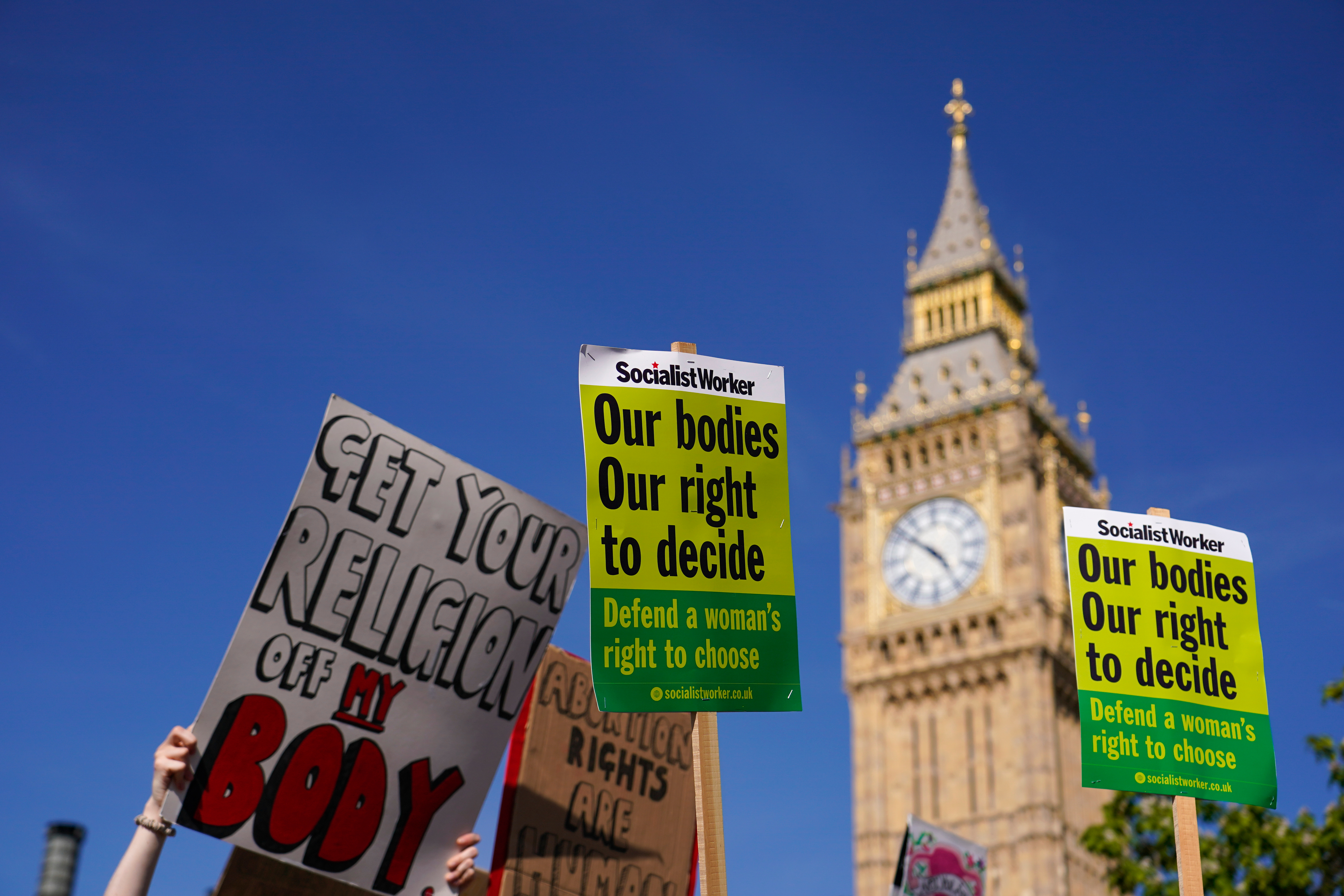

  • British women to receive automatic pardons for past abortion convictions

    British women to receive automatic pardons for past abortion convictions

    LONDON — British women convicted of illegally terminating their pregnancies under a Victorian-era law will be automatically pardoned Monday, the government said.

    The action follows Parliament’s passage last year of a landmark vote to decriminalize abortion by repealing a section from the 1861 Offences Against the Person Act.

    Women who have received a caution from police will also be pardoned and women arrested or investigated for ending their own pregnancy will have those details removed from their criminal records. They will not have to apply for pardons and some will be issued posthumously.

    “For too long, women have faced the devastating consequences of outdated abortion laws,” said Heidi Stewart, chief executive of the British Pregnancy Advisory Service. “While no pardon can undo the distress and trauma these women have experienced, this historic change in the law recognizes the profound harm caused by their criminalization and represents a meaningful step towards justice.”

    The government did not provide the number of women affected. But Tonia Antoniazzi, the Labour member of Parliament who introduced the decriminalization amendment, said police had investigated more than 100 women suspected of illegal abortions in the five years preceding last year’s vote. That included some who suffered natural miscarriages and stillbirths.

    Antoniazzi described how women suspected of illegally aborting a fetus were once “dragged from hospital beds to police cells” and interrogated when they should have been cared for.

    “This trauma cannot be erased, but I hope that this offers some alleviation of the pain these women have endured, enabling them to participate fully in society again, living their lives to the full, working the jobs they’ve always wanted to,” she said.

    Under current law, doctors can legally carry out abortions in England, Scotland, and Wales up to 24 weeks, and beyond that under special circumstances, such as when the life of the mother is in danger. Abortion in Northern Ireland was decriminalized in 2019.

    Under the Crime and Policing Act that took effect this spring, women who terminate a pregnancy at any stage will not face criminal charges.

    The measure was opposed by anti-abortion groups that argued it would open the door to abortion on demand at any stage of pregnancy.

    The law was changed after high-profile prosecutions, including the jailing of a mother of three that caused an outcry from abortion rights supporters.

    Carla Foster was sentenced to more than two years in prison in 2023 for medically inducing an abortion about eight months into her pregnancy. An appeals court freed her a month later, saying the case called for “compassion, not punishment.”

    Another woman, Nicola Packer, was acquitted on a charge of unlawfully self-administering poison or a noxious thing with intent to procure a miscarriage. Packer, who took abortion medicine when she was about 26 weeks pregnant, testified that she did not know she had been pregnant more than 10 weeks.

  • A technical issue at JPMorgan Chase triggers online banking delays for major U.S. banks

    A technical issue at JPMorgan Chase triggers online banking delays for major U.S. banks

    NEW YORK — Thousands of customers reported difficulty accessing online accounts at several major U.S. banks and the money transfer service Zelle on Monday after a technical issue at JPMorgan Chase caused ripple effects throughout the financial system.

    Chase said Monday that the technical problems were not a systemic issue and were not the result of a cyberattack, and that it was working to bring banking services back online.

    “Due to a technical issue, some transactions are taking longer than usual to complete but customers still have access to their accounts and funds,” a Chase spokesperson said in a statement. “We are working to resolve this as quickly as possible.”

    The disruption comes days after two major outages affected other parts of the U.S. economy: A major outage by Microsoft happened Thursday and lasted for hours, severely impacting services including Outlook, Teams, and AI assistant Copilot. This was followed by an outage affecting the nation’s air traffic control system Friday that grounded all U.S. flights for several hours and continued to disrupt air travel across the country over the weekend.

    Monday’s technical issues seem to be centered on Chase customers and customers at other banks trying to transact with Chase. Those banks, including Bank of America and Citigroup, were not having issues with their banking services.

    A spokesperson for U.S. Bank said its systems are not directly impacted but that “clients attempting to send or receive Zelle payments with another financial institution may experience transaction delays.”

    Zelle is the peer-to-peer payment system that major U.S. banks use to allow customers to send money to friends and family at near-instant speed. Zelle is owned by Arizona-based Early Warning Services, which in turn is owned by financial institutions including Bank of America, Capital One, JPMorgan Chase, PNC Bank, Truist, U.S. Bank, and Wells Fargo.

    A spokesperson for Early Warning Services said the Zelle network was fully operational.

    “An issue at the financial institutions may be delaying Zelle payments for some of their customers,” the spokesperson said.

    Some Chase customers received a message that said, “Some services aren’t available. We’re working on them. Please try back later.”

  • Lindsay Clancy to face March retrial in deaths of her 3 children

    Lindsay Clancy to face March retrial in deaths of her 3 children

    PLYMOUTH, Mass. — A Massachusetts judge on Monday scheduled Lindsay Clancy’s retrial for late March after prosecutors signaled that — at least for now — they intend to prosecute her again on first-degree murder charges in the killings of her three young children.

    Clancy’s first trial ended in a mistrial after jurors were unable to reach a unanimous verdict on whether she was criminally responsible for the killings. Eleven jurors favored acquittal on the grounds of insanity, while one disagreed.

    While the Plymouth County district attorney hasn’t indicated publicly whether his office will pursue the same charges in a second trial, Assistant District Attorney Jennifer Sprague told the judge during Monday’s hearing that prosecutors were “ready to pick a jury trial date.”

    Clancy’s lawyer, Kevin Reddington, said he took that to mean that prosecutors intended to go ahead with a first-degree murder case, as a lesser charge would allow Clancy to waive her right to have a jury.

    “The die has been cast,” Reddington told Judge William Sullivan. “I think you can read between the lines that when they say that the case is going to require a jury, that it’s an indirect comment from the DA that they intend to proceed on first-degree murder indictments.”

    Prosecutors had sought a May trial date, citing scheduling conflicts, but Sullivan set the retrial for March 29.

    The decision to schedule Clancy’s second trial comes a week after Sullivan rejected a defense request to dismiss the charges. He ruled that a retrial would not violate Clancy’s constitutional protection against double jeopardy.

    Attorneys are scheduled to return to court Dec. 30 to discuss trial logistics, security, and media arrangements.

    Clancy, a former labor and delivery nurse, has never disputed that she killed her three children at the family’s Duxbury home in January 2023. Her attorneys said she was suffering from postpartum psychosis, a rare mental illness that can afflict mothers after childbirth.

    Prosecutors argued Clancy planned the killings and understood what she was doing.

  • Freeman Johnson, the oldest of the dwindling number of Pearl Harbor survivors, dies at 106

    Freeman Johnson, the oldest of the dwindling number of Pearl Harbor survivors, dies at 106

    BOSTON — Freeman Johnson, the oldest of the few remaining Pearl Harbor survivors, has died.

    Mr. Johnson died Saturday at his home in Centerville, Mass. He was 106, according to one of his daughters, Diane Johnson.

    “It’s going to be a hell of a Thanksgiving,” said Diane Johnson, 72. “He’s going to be up there with all of his friends and family and my mom.”

    Freeman Johnson was one of the estimated 87,000 military personnel on Oahu on Dec. 7, 1941, and was below deck working on a boiler of the USS St. Louis when the Japanese surprise attack happened. In a May 2026 interview with the Associated Press, Mr. Johnson said he didn’t hear or see the attack. He never heard his shipmates firing anti-aircraft guns at the attacking planes — shooting down a torpedo plane.

    “While all the rigamarole was going on topside, I was inside a steam drum. Couldn’t see anything, absolutely nothing,” said Mr. Johnson, whose job had been known as a firefighter on the ship.

    Even as the St. Louis headed into the Pacific Ocean, Mr. Johnson knew little about the attack. By the time he was topside, the St. Louis, a light cruiser, had evaded midget submarines and safely set out to sea.

    “We were way out to sea, way out. You couldn’t see any land at all. All you saw was ocean,” he said. “I was just a sailor, just a swabbie, I was not an officer. They don’t tell you anything if you don’t need to know. And I didn’t need to know it. So they tell you nothing.”

    The list of surviving veterans from the attack had stood at about a dozen names after the December 2025 death of Ira “Ike” Schab, who was 105.

    While Mr. Johnson didn’t see the Pearl Harbor attack, which killed just over 2,400 Americans and propelled the United States into the war, he was witness to other historic moments during World War II.

    He helped commission the USS Iowa and recalled the battleship’s preparations in November 1943 ahead of transporting President Franklin D. Roosevelt to the Tehran Conference with British Prime Minister Winston Churchill and Soviet leader Josef Stalin. The ship was equipped with two elevators and a bathtub. All the ammunition and much of the oil was removed to lighten the ship as it made its way down the Potomac River to pick up Roosevelt. It was reloaded before the ship headed out to sea.

    Mr. Johnson also witnessed the war’s end while aboard the Iowa. He was on the Iowa’s mast watching the surrender ceremonies about a mile away in Tokyo Bay aboard the USS Missouri on Sept. 2, 1945.

    “I could see the boats coming up with the Marines escorting the Japanese onto the ship and sitting around a table,” he said. “It was all over. That was the end of the war. A bunch of us got together — the war is over. Let’s go home.”

    For all the attention to Pearl Harbor, the gruff Mr. Johnson, who was known for his cackling laugh and mischievous smile, didn’t see it as one of the defining moments in his life.

    Those would have been getting married after the war to his late wife and having three daughters. He worked for years in a machinist shop, then in a convenience store, and, finally, delivering meals to seniors — all jobs he retired from, the last one at the age of 90.

    “Pearl Harbor just happened. I can’t put it any other way,” he said.

  • Third U.S. aircraft carrier arrives in the Middle East as Trump keeps options open in the Iran war

    Third U.S. aircraft carrier arrives in the Middle East as Trump keeps options open in the Iran war

    WASHINGTON — A third American aircraft carrier has arrived in the Middle East, U.S. Central Command said in a social media post Monday, making a dramatic show of military might as President Donald Trump keeps his options open for next steps in the Iran war.

    The USS Theodore Roosevelt brings thousands of additional troops to the Middle East as Trump has oscillated between threatening additional large-scale strikes on Iran and insisting that the more than 8-month-old war “militarily is effectively over.”

    The Roosevelt, along with its accompanying strike force, left San Diego in September. It joins the USS George H.W. Bush and the USS George Washington aircraft carriers, as well as smaller Navy ships, which are in the region to maintain a naval blockade of Iranian shipping.

    Three aircraft carriers deployed in the Middle East is rare

    The H.W. Bush arrived in the region in April, while the George Washington arrived in August. The Navy previously had three carrier strike groups in the Middle East in April, for the first time since 2003.

    In addition to the three aircraft carriers, the flotilla in the Arabian Sea now includes 13 destroyers, two cruisers, and a littoral combat ship, according to the Navy. Two more destroyers are in the Red Sea.

    The Roosevelt had deployed along with the USS Makin Island amphibious readiness group, which includes the USS John P. Murtha and USS Anchorage amphibious landing ships and around 2,000 Marines. Those ships have yet to make it to the region.

    The third carrier arrived nearly two weeks after midterm elections that saw voters deliver major losses to Trump’s Republican Party, driven in part by the unpopularity of the Iran war and its economic effects. The results led Vice President JD Vance to publicly break with Trump over the conflict, posting on social media that “the reason we lost is the war.”

    Trump has insisted it was the right thing to do and has not ruled out restarting the conflict, which has been locked in a stalemate for months.

    Trump says U.S. is prepared to strike but might not need to

    Last week, Trump warned Iran that the U.S. military is “locked and loaded” and that the U.S. was keeping an eye on Pickaxe Mountain, a facility linked to Iran’s nuclear program, for signs of activity.

    “If something does not work out, I would not hesitate” to act, Trump told conservative broadcaster Hugh Hewitt on Thursday.

    Yet, Trump also told reporters last week that he believed it was highly unlikely he would need to order new major strikes on Iran, declaring that the war “militarily is effectively over” after meeting with Qatar’s prime minister.

    Trump also declared that the U.S. no longer needs a deal with Tehran and told Vance — who was a chief negotiator in earlier ceasefire talks — instead to focus on the administration’s domestic anti-fraud campaign targeting Democratic-controlled cities and states.

    Negotiations have stalled due to differences over Iran’s nuclear program, an issue that Trump insists be part of any deal meant to end the war. Iran wants the U.S. first to agree to several core conditions, including lifting the naval blockade that is stopping its oil from getting to world markets.

    Conflict simmers in the Strait of Hormuz

    In the meantime, a focal point of the simmering conflict remains the Strait of Hormuz, a critical waterway where a fifth of the world’s oil passed before the war.

    Commercial ships are still coming under attack or facing other risks, while the U.S. has carried out limited strikes on Iranian targets near the strait and is helping guide vessels through the contested waters.

    Iranian state TV, quoting the naval arm of Iran’s Revolutionary Guard and the army, warned shipping companies Monday that a U.S.-supported route through the waterway is dangerous because of mines.

    Mines have damaged six oil tankers since Sunday, polluting the strait’s coastlines, according to the Revolutionary Guard’s navy.

    Separately, a projectile struck a tanker trying to transit through the strait, starting an engine room fire, but no casualties were reported, the United Kingdom Maritime Trade Organization said.

    U.S. Central Command, which oversees military operations in the Middle East, said it has redirected 150 merchant vessels and disabled five since June under the blockade.

    Independent assessments from Lloyd’s List, a maritime tracking and analysis firm, show that traffic through the strait remains at less than a third of prewar levels.

  • Trump’s Asia trip: Deals in Manila and Shenzhen, nuclear summit with Xi and Putin, maybe Kim meeting

    Trump’s Asia trip: Deals in Manila and Shenzhen, nuclear summit with Xi and Putin, maybe Kim meeting

    WASHINGTON — President Donald Trump departed for Asia on Monday, turning his focus to economic deals and historic three-way nuclear talks with Russia and China as his administration adjusts to a new political reality in Washington. He said he may meet with Kim Jong Un while in China as the U.S. looks to reengage North Korea on its nuclear program.

    Trump also said he plans to talk about Russia’s nearly 5-year-old war in Ukraine during the highly anticipated meeting with Chinese President Xi Jinping and Russian leader Vladimir Putin in China.

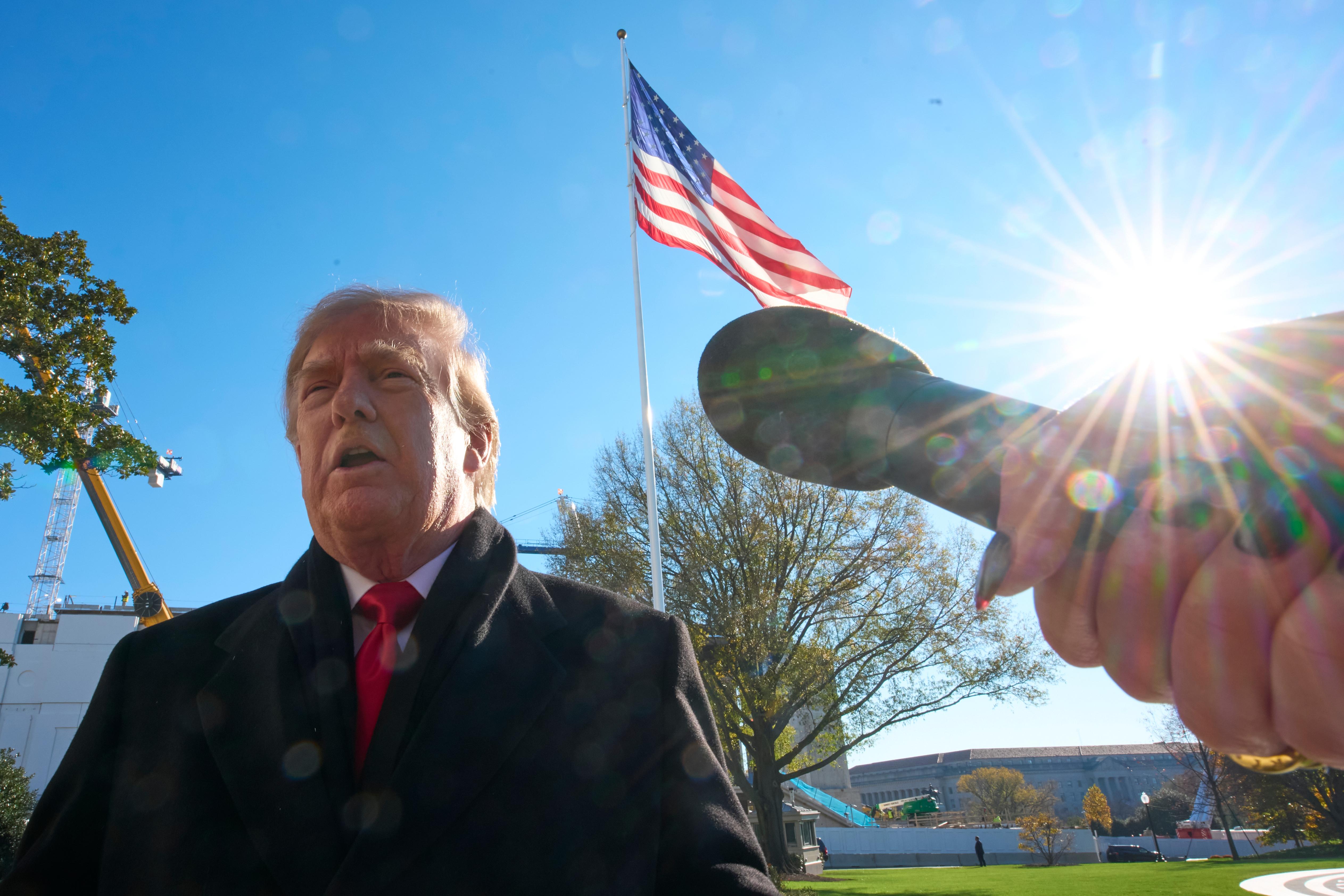
    “We’ll talk about, my favorite subject, Ukraine. Ukraine’s losing Ukraine,” Trump told reporters at the White House on Monday morning before departing for his visit to Asia. “Russia is losing 25,000 soldiers in the month. So we’ll be talking about that.”

    Trump suggested he’ll talk with the leaders about the war even after his administration officials on Friday told reporters that he would discuss nuclear disarmament and the Iran war with his Chinese and Russian counterparts but steer clear of Russia’s war with Ukraine.

    Ukrainian President Volodymyr Zelensky had expressed concern as Trump pushed for the meeting with Putin and Xi about the potential of the three leaders using the moment to redraw global spheres of influence.

    Planning for the summit has drawn comparisons to the Yalta Conference, the 1945 gathering at which the leaders of the U.S., Britain, and the Soviet Union agreed to divide Germany and Berlin into four military occupation zones and finalized plans for establishing the United Nations.

    “We really don’t want this to turn into ‘Yalta 2, 3, 4’ with a redistribution of influence,” Zelensky said last month.

    Trump has been dealing with problems at home

    Trump’s departure comes after the often omnipresent president had remained largely out of public sight for the past several days, even as a nationwide ground stop snarled air traffic and his Republican administration faced tough questions on its handling of the situation.

    Trump said he was kept up to date Friday about the ground stop by Transportation Secretary Sean Duffy and Homeland Security Secretary Markwayne Mullin, who held a briefing Friday evening to address the American public.

    Trump defended his decision to delegate to the cabinet officials to inform the public.

    “I didn’t think there was any reason for me to do it,” Trump said, adding, “I thought they did a very good job.”

    His trip to Asia, which begins in Manila and then continues to the Chinese tech hub of Shenzhen, gives him the opportunity to change the narrative from his domestic woes, including the air travel problems and fallout from the November midterm election where his party lost both chambers of Congress.

    Trump administration’s actions on Nvidia scrutinized

    The controversy over tech powerhouse and chipmaker Nvidia is also certain to hang over Trump’s visit to China, despite efforts by administration officials to downplay the president’s close ties to Jensen Huang, who resigned as CEO last week after admitting to an affair with an alleged Chinese government agent.

    Beijing has said it was not involved. Trump had no plans to raise the issue with Xi when the two leaders meet, said U.S. officials who briefed reporters anonymously about the president’s Asia trip under ground rules set by the White House.

    But the president came to Huang’s defense, asserting he hasn’t been told by officials that it’s been determined that the executive from Megaspeed, a Singapore-based cloud computing and AI infrastructure provider, who Huang had an affair with is in fact a Chinese agent. Trump added he’d like to see Huang reinstated as Nvidia’s CEO.

    “Well, I don’t know that she’s a spy at all. Nobody’s proven that. He probably shouldn’t have been doing on a personal basis what he did,” Trump said. “That’s a different story.”

    Huang accompanied Trump on Air Force One during the president’s last trip to China in May, and he has been a sporadic presence around Trump at the White House while speaking to him frequently. Trump has argued that America needs to preserve its leadership on artificial intelligence, and warned of dire consequences if China wins that competition.

    Scrutiny of the Trump administration’s actions as they relate to Nvidia has been growing, including on the Commerce Department’s delay in placing restrictions on Nvidia chip exports to Megaspeed.

    “We’re having a very good relationship with China right now, and I understand both sides of it, and I’ll make a decision, but I understand very well both sides,” Trump said.

    Trump has been trying to engage with Kim

    Regarding North Korea, Trump met with Kim on three occasions during his first term but has not been able to get him to meaningfully engage since his return to the White House. Trump has sought to set the groundwork for further talks with Kim. In August, he ordered the Pentagon to scale back joint military exercises with South Korea.

    Trump, in an exchange with reporters before departing the White House for his flight for Manila, said that Kim “may come” to Shenzhen but “that’s up to President Xi.”

    Among the travelers on the Asia trip with Trump will be Elon Musk, the head of SpaceX and Tesla, who is shaping up to be a top investigative target of the incoming Democratic majority in Congress.

    In the Philippines, Trump will meet with Southeast Asian leaders who look to the United States for help countering Beijing’s aggression in the region. He plans to sign a trade deal with Thailand while in Manila, the White House said.

    Trump, Xi, and Putin will talk about nuclear stockpiles

    Then he heads to China for the Asia-Pacific Economic Cooperation summit — and at the end of the trip, the first-ever three-way talks with China’s Xi and Russia’s Putin to discuss nuclear stockpiles.

    The three-way meeting will also put in the spotlight the ongoing U.S. war with Iran, a country which has often allied with China and Russia. The war has been widely blamed for the Republican Party’s steep losses in the midterms, and while Trump has tried to play down the chances he will order a resumption of major strikes against Iran, he also has said he does not see the need for talks.

    China’s Foreign Ministry spokesperson Mao Ning said Monday that the trilateral talks would be of “groundbreaking significance” and that China aimed to have in-depth exchanges about safeguarding world peace and promoting stability.

    “Under the current circumstances, the three countries shoulder an important responsibility to work together in addressing global challenges,” she said in a regular briefing in Beijing.

    Kremlin foreign affairs adviser Yuri Ushakov also indicated that a one-on-one meeting between Trump and Putin during the Shenzhen summit was being arranged.

    “I can say with 100% certainty that since both Putin and Donald Trump will be in Shenzhen, they will undoubtedly meet,” Ushakov said.

  • Trump bristles at criticism over grounding of planes, blaming old tech and Biden for the problems

    Trump bristles at criticism over grounding of planes, blaming old tech and Biden for the problems

    WASHINGTON — President Donald Trump bristled Monday at suggestions he’s been too focused on White House building projects, and that they might have distracted him during the nationwide grounding of all planes, even insisting, “You don’t see me on a scaffold.”

    Speaking publicly for the first time about the air traffic snarls caused by a router issue in the aging air traffic control system as he left the White House for his trip to Asia, Trump got defensive during a lengthy — sometimes testy — exchange with reporters.

    He faulted old technology and Democrats for the incident that caused upheaval at the country’s airports — especially his predecessor, President Joe Biden. “I don’t take any responsibility” for Friday’s ground stop, Trump said, explaining his Transportation Secretary Sean Duffy was in charge.

    “What you saw on Friday was very, very old equipment that had a heart attack,” the president said. He later noted, “Incredibly, everybody was safe. Nobody was hurt. No crashes, no nothing” but, referring to his administration’s efforts to make improvements, he added, “the only responsibility should be, for 40 years they should have done this.”

    Trump was silent on the chaos until Sunday, when he posted on social media blasting his Democratic predecessor and asking Congress for more money to cover the cost of system improvements.

    His blame-shifting, as well as congressional Democratic finger-pointing. follow a familiar pattern of Trump seeking to say others were a fault during major crises — and underscore political divisions that could widen when Democrats take control of Congress in January, with scrutiny of his administration accelerating.

    The problems with aging equipment at the FAA date back decades, well before even the first Trump administration, and past efforts to modernize the system have come up short. The last major effort to overhaul air traffic control, called NextGen, started in 2003 and consumed more than $15 billion over the years.

    Trump says he spends ‘very little time’ on White House overhaul

    On Monday, when pressed about his priorities, the president spent far more time defending his extensive efforts to mold the White House to his own, often gold and gilded tastes than he did talking about his administration’s response to the ground stop.

    “I spend very little time” on building projects Trump said, adding, “You don’t see me on a scaffold.”

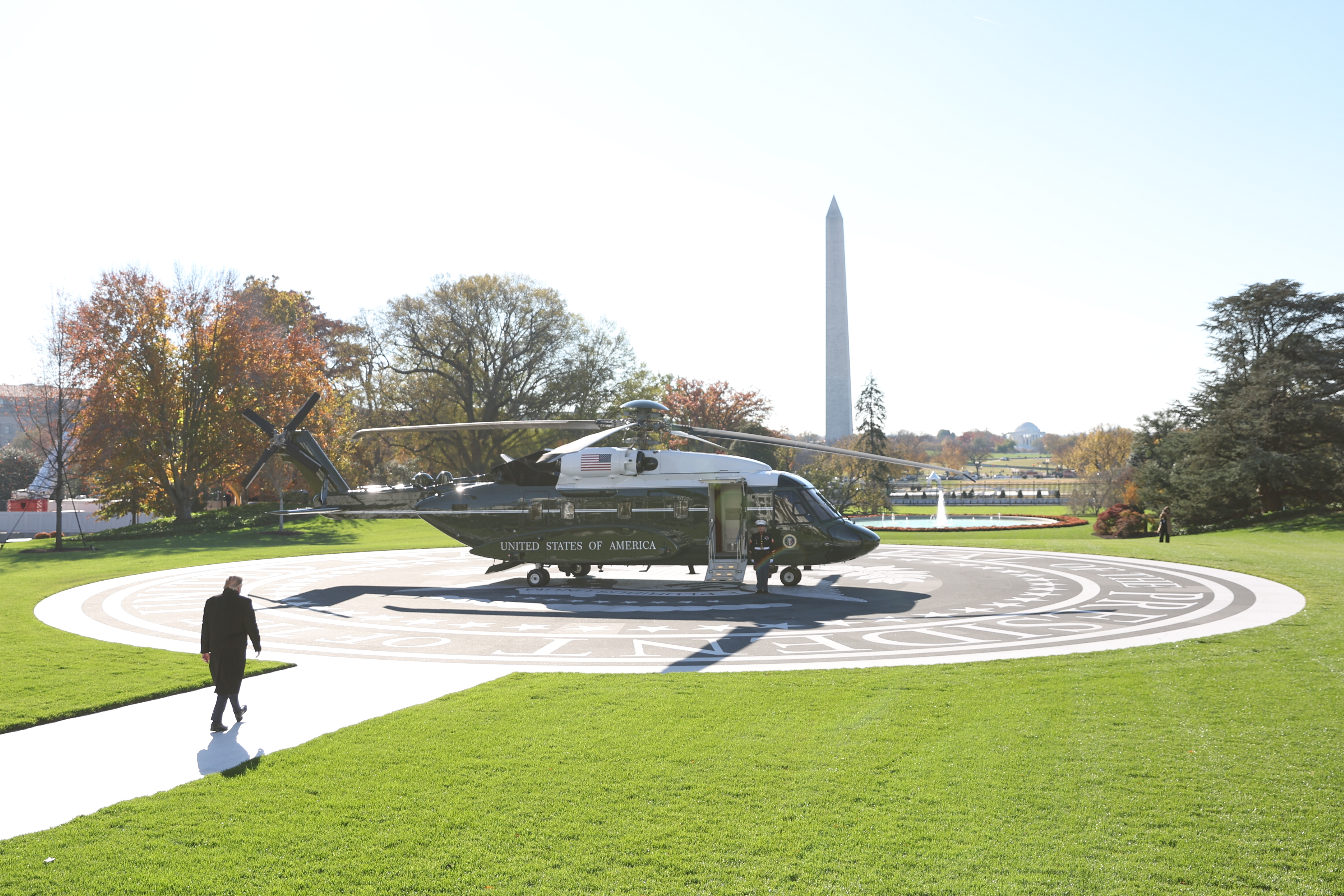
    He said the large granite helicopter landing pad he had built on the South Lawn had received “great reviews” and had replaced broken stone walkways and common areas. He also defended the sprawling ballroom being erected, which is larger than the rest of the White House, saying it “fits like a glove.”

    “See this stone? Get your cameras on it,” he commanded of reporters on the South Lawn. “This stone was badly broken.”

    Pressed further, he told a reporter, “You’re so pathetic,” then continued that he had “a responsibility to make sure the symbol of our country is in decent shape.”

    The president suggested that the White House had previously had broken windows and columns that were “in horrible condition,” even though the extensive damage he described wasn’t visible before he ordered so many building projects.

    Asked further about who was funding so much work, Trump responded, “This doesn’t cost money. This is peanuts.” The full extent of the costs of his many projects is unknown.

    Trump also sought to justify the unusually personal role he’s taken in the parade of building projects at the White House, telling a reporter, “This is called talent. You don’t have talent”

    Trump administration seeks additional funding

    Duffy, who made the decision Friday to ground the planes, has also pushed Congress for billions more dollars to upgrade a system he said had been neglected for decades.

    Duffy said the problem began when a federal contractor was replacing a section of old copper wire with new fiber wire, causing the system to overload.

    The Federal Aviation Administration said in a statement that “excessive data” was flooding the system “at a rate of 1,000 connection attempts every 4 to 5 seconds.” That deluge created instability with “aircraft communications and radar feeds,” the agency said.

    Duffy said on Sunday that billions of dollars are needed to build new architecture for the network and said companies — including AT&T, Verizon, and Lumen — are ready to deploy it as soon as the money is there.

    Upgrading the nation’s air transportation system is an effort that Congress has dedicated significant sums to in recent years.

    Under Biden, Congress approved a massive infrastructure bill that included $25 billion over five years for airport and air traffic control infrastructure improvements. Much of that money went to airport projects like new runways and taxiways and updated terminals.

    After Trump returned to the White House in 2025, a Republican-led Congress approved $12.5 billion in 2025 to modernize the FAA’s air traffic system.

    The Trump administration said the money would provide critical updates to outdated radar systems and traffic control centers, some dating back to the 1960s. Republicans used the same bill to allocate $170 billion for Trump’s immigration crackdown, border security, and immigration enforcement.

  • The Trump administration wants billions to overhaul the FAA. Democrats are demanding answers on the White House’s spending.

    The Trump administration wants billions to overhaul the FAA. Democrats are demanding answers on the White House’s spending.

    WASHINGTON — The Trump administration is pressing for $50 billion to address an aging air traffic control system after problems with routers apparently led to a rare nationwide grounding of all planes, but Democrats are demanding answers about how the administration has spent billions it’s already been given and why its funding request has soared.

    The growing rift over how to address the Federal Aviation Administration’s vulnerabilities comes as passengers across the country are struggling to get to where they need to go after thousands of flights were grounded Friday, and investigators are still trying to figure out what went wrong.

    President Donald Trump, who hadn’t spoken publicly or commented on the flight grounding, finally weighed in Sunday with comments on social media blasting his Democratic predecessor and calling for more money to pay for improvements to the system.

    The finger-pointing and blame-shifting between the Republican administration and Democrats in Congress underscored the political division that could only grow wider when Democrats take control in January and scrutiny of the Trump administration accelerates, even on a matter that impacts all travelers.

    During appearances on Sunday morning talk shows, Transportation Secretary Sean Duffy detailed what is known — and still unclear — about the problems that led up to his decision Friday to ground the planes, as he also pushed Congress for billions more to upgrade a system he said had been neglected for decades.

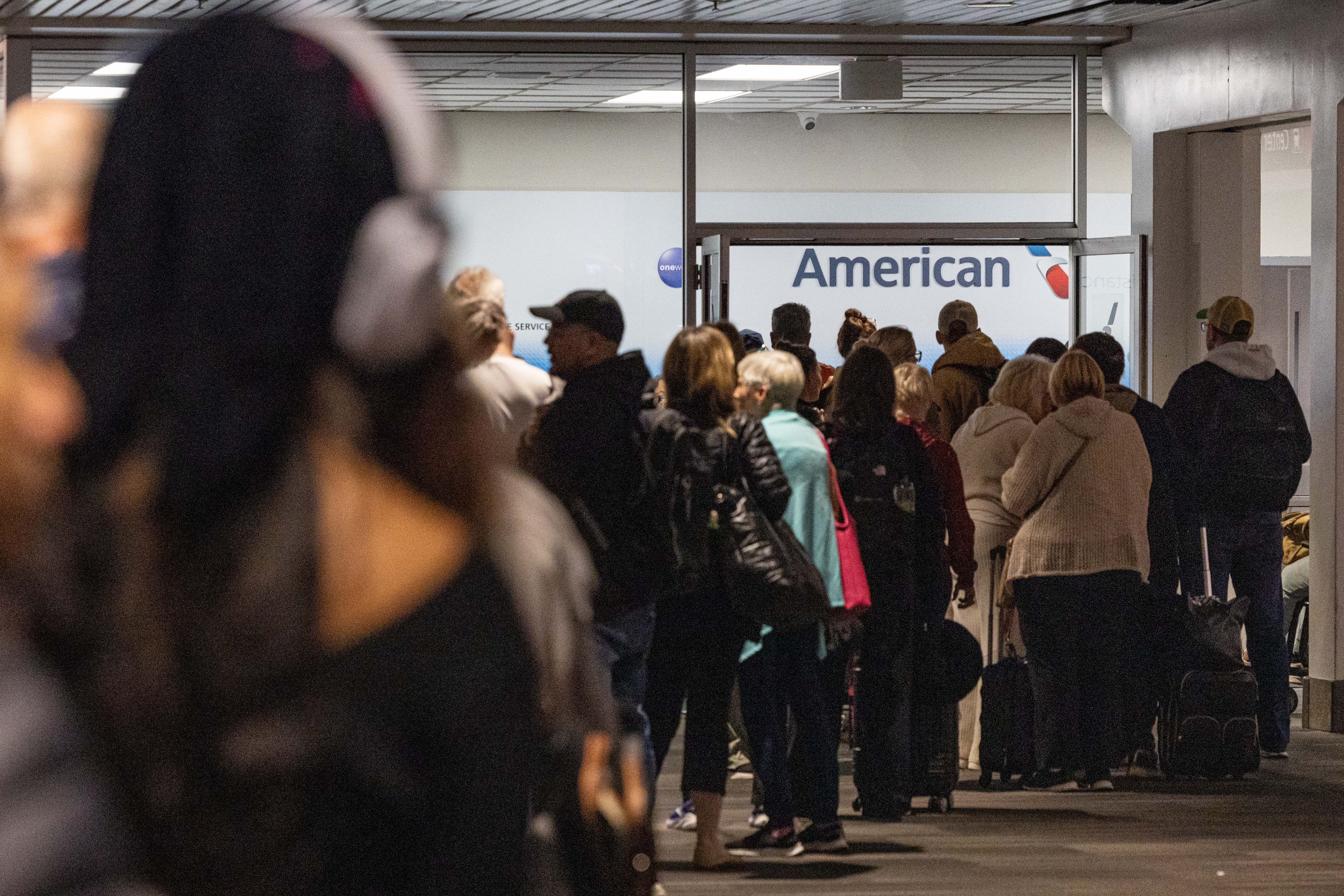
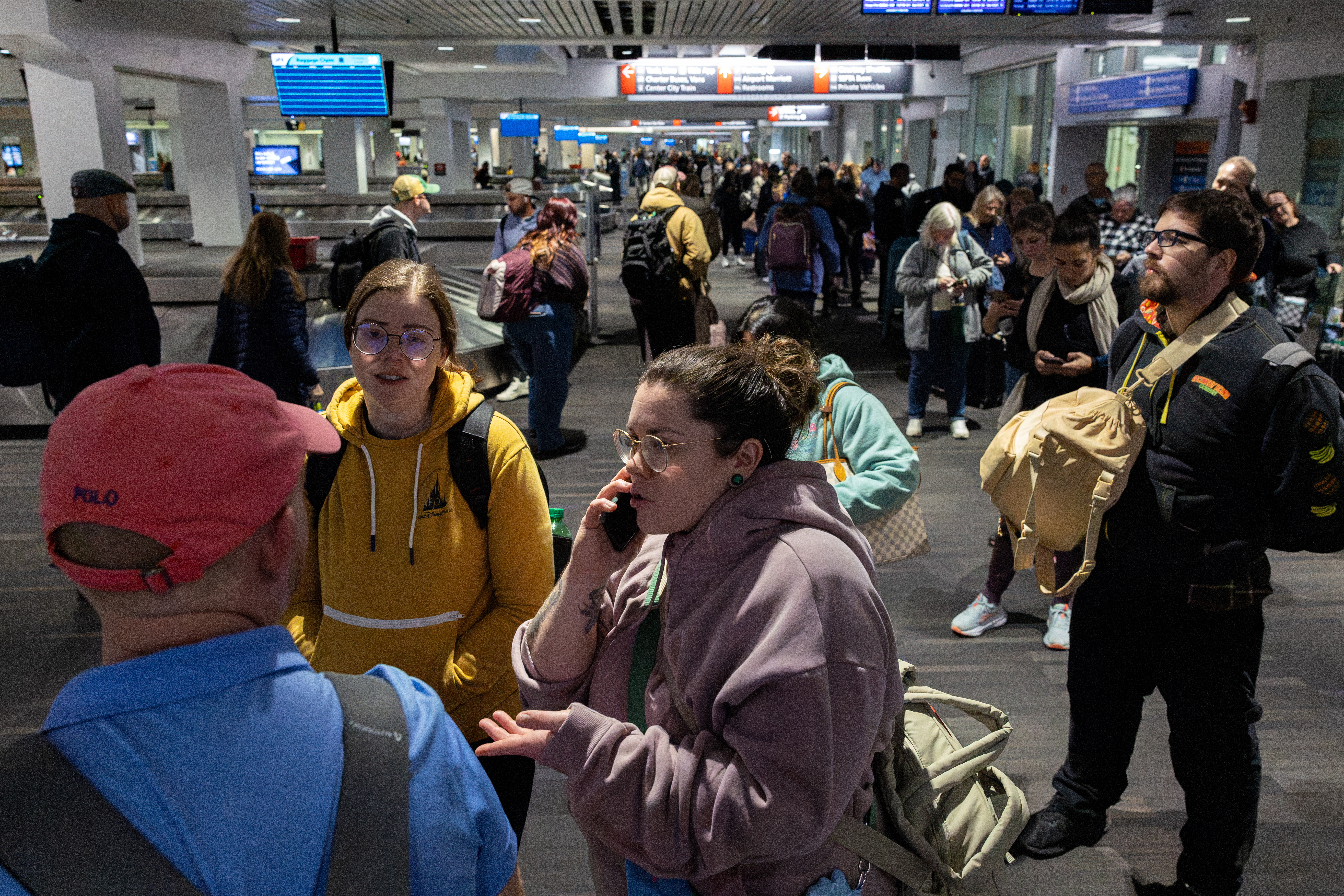
    Robin DeAngelis, 37, of Chester County, talks with Benjamin Glunz alongside sister Mary DeAngelis, 38, while on hold with American Airlines inside the Philadelphia International Airport on Friday. The sisters were planning on going to Walt Disney World for a “girls trip” for the weekend until the cancelations took place. “It is what it is,” Mary said. They hope to receive their luggage soon.Aidan T. Gallo / Staff Photographer

    Duffy details what happened

    In a post on X, Duffy said the problem began when a federal contractor was replacing a section of old copper wire with new fiber wire, causing the system to overload.

    After the wire was replaced at the site in El Dorado, Arkansas, and the router was turned on, a problem then cropped up at a facility in Amarillo, Texas, cascading into the ground stop.

    The FAA said in a statement that “excessive data” was flooding the system “at a rate of 1,000 connection attempts every 4 to 5 seconds.” That deluge created instability with “aircraft communications and radar feeds,” the agency said. The contractor blocked the two locations in Arkansas and Texas, and the agency said that stabilized the network.

    Duffy said billions are needed to build a “brand new architecture” for the network and said companies — including AT&T, Verizon and Lumen — are ready to deploy it “tomorrow” if the money is there.

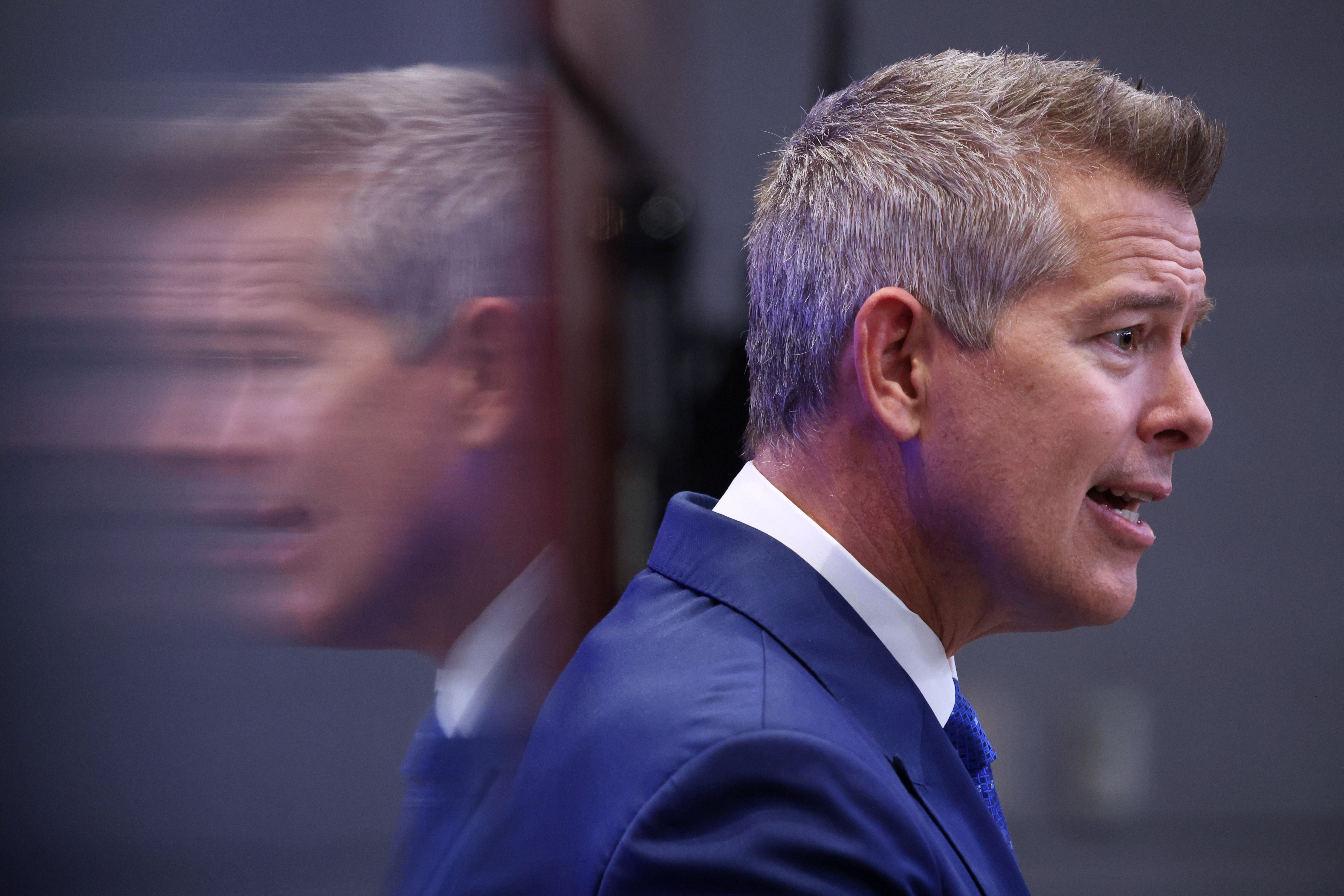
    Transportation Secretary Sean DuffyTom Brenner

    Aging air traffic control system has been a problem for years

    The need to upgrade the nation’s air transportation system is an effort that Congress has dedicated significant sums to in recent years.

    Under President Joe Biden, Congress approved a massive infrastructure bill that included $25 billion over five years for airport and air traffic control infrastructure improvements. Much of that money went to airports for such things as new runways and taxiways, and new and refurbished terminals.

    Under Trump, a Republican-led Congress approved $12.5 billion in 2025 to modernize the FAA’s air traffic system.

    The administration said the money would provide critical updates to outdated radar systems and traffic control centers, some dating back to the 1960s. Republicans used the same bill to allocate $170 billion for Trump’s immigration crackdown, for more border security and immigration enforcement.

    In a hearing on Sept. 15, FAA Administrator Bryan Bedford said with the money Congress provided, “we are executing on the most ambitious modernization and delivering it in record time.”

    The FAA upgrade has two phases. The first, funded by the $12.5 billion, is supposed to be completed by December 2028. A second phase involves developing new systems to track aircraft and optimize traffic. Bedford told lawmakers in September that the second phase will cost at least an additional $10 billion.

    Separately, Sen. Eric Schmitt, a Missouri Republican, in September introduced a bill that builds on the $12.5 billion Congress approved last year and calls for about $30 billion more in new investments in the nation’s air transportation system. Duffy has also pushed for that funding.

    Schmitt’s bill would include the $10 billion Bedford said is needed for the second phase. On top of that it includes money to modernize up to three medium hub airports and to make various airport improvements around the country, from new air traffic control towers to new terminals.

    Then on Friday Duffy said he wants $50 billion, but he hasn’t detailed what it’s for. He said Saturday that he’ll be sending a detailed request to legislators on Monday.

    Democrats question rising costs and why money hasn’t been spent

    Congressional Democrats say they also want to upgrade the country’s aging air traffic control system. But they are questioning the price tag.

    Democrats on the House Transportation Committee said most of the money appropriated last year remains unspent.

    “Explain to Congress, again, why they need more money?” Rep. Rick Larsen, the ranking Democrat on the committee, and Rep. André Carson, the top Democrat on a subcommittee with jurisdiction over aviation issues, said in a statement.

    Democrats on the House Appropriations Committee are asking the same question. Rep. Rosa DeLauro, the top Democrat on the panel, said Congress has shown it’s willing to invest in modernizing the FAA.

    “But we need a competent partner at the Department of Transportation to carry this out in a sustainable, transparent manner. Right now, it is clear that we lack such a partner,” DeLauro said.

    Duffy said Sunday the money appropriated last year by Congress will be spent by the end of 2028. He also said his agency was restricted by Congress in how it could be spent and that didn’t include spending on the FAA’s telecommunications infrastructure.

    Trump conspicuously quiet for two days

    Trump had not commented publicly or on social media after the ground stop was ordered Friday afternoon, although he was active on social media about unrelated matters.

    Sunday morning, he weighed in with a post on Truth Social, saying his administration has begun upgrading the air traffic control system but it should not be done in “drips and drabs.”

    “If Congress approves the desperately needed money for Air Traffic Control, we can get it built quickly and efficiently,” Trump wrote. “It will be the BEST SYSTEM anywhere in the World. Much of our current air control system is 50 years old – RIDICULOUS!”

    Duffy said Trump has been “fully engaged” on the ground stop.

    Travel should return to normal by Monday

    As for the traveling public, Duffy said that “as we look to the end of the day and into tomorrow, we should be running at full capacity.”

    Duffy said the administration feels “pretty good” that the breakdown did not result from a hacking event. He said various intelligence agencies have said they were not finding the “chatter or the footprints that we would normally see if this was a cyberattack.”

    Duffy appeared on CBS’ “Face the Nation,” CNN’s “State of the Union,” “Fox News Sunday,” NBC’s “Meet the Press” and ABC’s “This Week.”

  • Pope crosses Peru in finale of trip home to visit flock high in Andes and deep in Amazon

    Pope crosses Peru in finale of trip home to visit flock high in Andes and deep in Amazon

    CUSCO, Peru — Pope Leo XIV traveled across Peru on Sunday to visit communities high in the Andes mountains and deep in the Amazon rainforest, as the plight of Indigenous peoples and the protection of the environment took center stage on his South American odyssey.

    On the penultimate day of his visit to his adopted homeland, Leo channeled Pope Francis by emphasizing Catholic teaching that links care for the most vulnerable with care for God’s creation.

    Leo arrived first in the Andean city of Cusco, the former capital of the Inca empire, before flying to the Amazonian city of Pucallpa, where illegal mining, deforestation, and threats to Indigenous communities are central concerns.

    In Cusco, Leo praised the traditional expression of popular piety, including processions and religious festivals, as effective ways of forging community and transmitting the faith, especially to young people.

    “The future of these traditions lies not only in preserving what has been handed down, but also in passing it on in a living way,” he said from the grounds of Cusco’s historic Incan fortress, Sacsayhuamán.

    Huge crowds lined Cusco’s cobblestoned streets and packed its central Plaza de Armas, an imposing square decorated with a blend of Inca and Spanish colonial buildings. Many people wore the traditional Andean hats and colorful wool vests typical of the region, while others wore plastic ponchos to guard against a drizzling morning rain.

    “It is all worth it,” said Margarida Salomon, 63, who said she came from Sucre in Bolivia to see the pontiff, spending about $500 to take a bus, sleep in a tent, and eat Peruvian food from stalls. “I am still getting to know this pope, but the fact he is here in the Andes means a lot.”

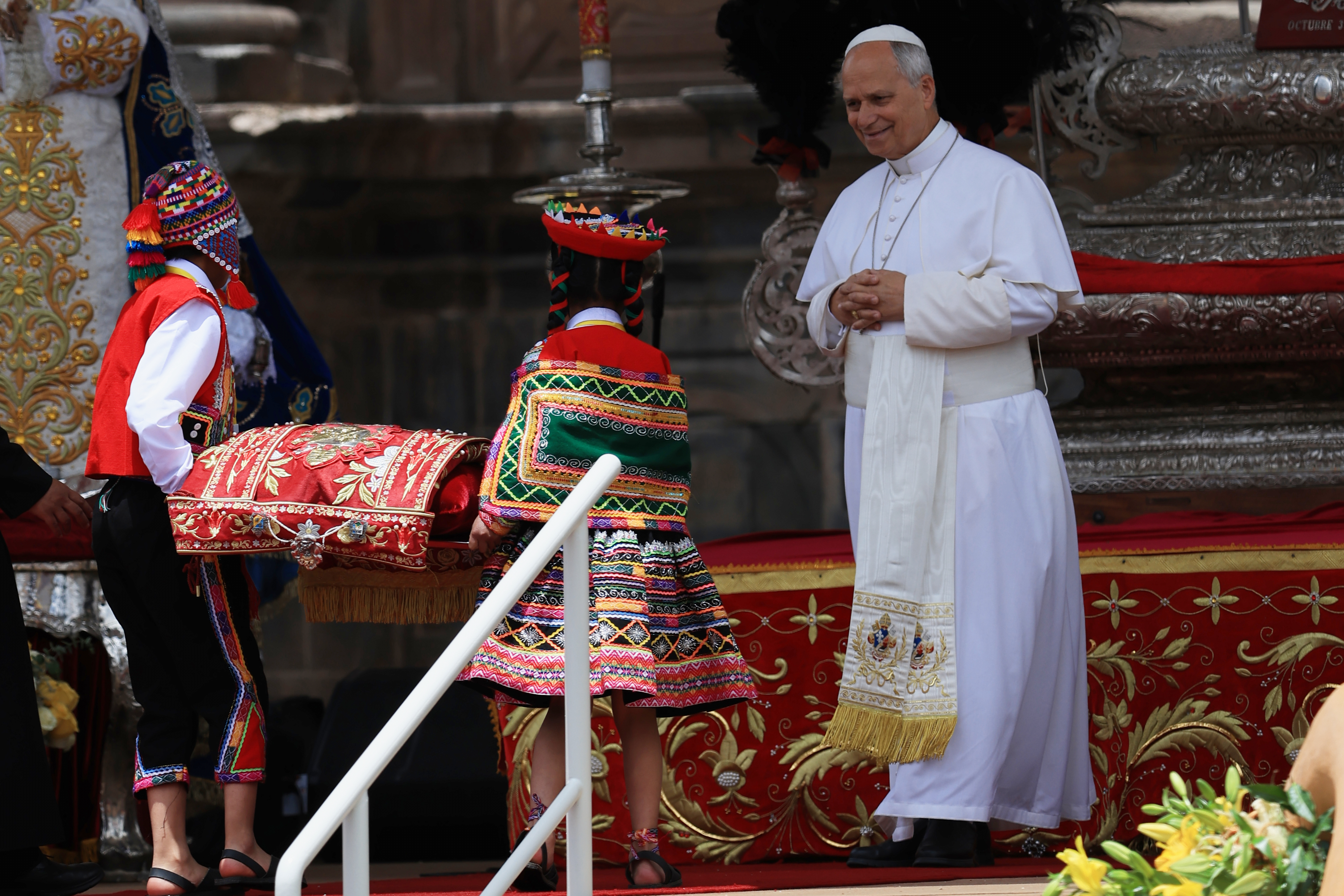
    Spectators at the archaeological site were treated to a performance of Los Pablitos, which translates to the Little Pauls but refers to the Ukukus (or Pabluchas). They are mythical half-man, half-bear figures who serve as the traditional guardians and peacekeepers during the Pilgrimage to the Sanctuary of the Lord of Qoyllurit’i in Cusco.

    The visit to Cusco, more than 11,000 feet above sea level, tested Leo’s stamina as he continues recovering from lung cancer surgery. Leo sat in the chair of his popemobile during part of the ride around Cusco, but it wasn’t clear if that was to preserve his energy or to steady himself on the uneven streets.

    In general, the 71-year-old Leo has seemed unfazed by the toll of the three-nation South American trip, the longest of his pontificate. While others traveling on the papal plane have fallen ill, Leo has shown no sign of weakness or fatigue since the trip began Nov. 6, and in fact seemed energized, especially from the days spent in his former diocese of Chiclayo seeing old friends.

    From the Andes to the Amazon

    In Pucallpa, a rainforest city of 434,000 people, Leo was expected to reinforce Francis’ teachings on protecting the environment and Indigenous communities threatened by illegal mining and other forms of exploitation.

    Illegal gold mining has become an increasingly lucrative business in the Amazon, devastating forests and polluting rivers. Miners use makeshift suction dredges and mercury, a toxic metal, to extract gold.

    “This global context of war and conflict has contributed to gold prices rising to historic highs, and the direct impact of this is that gold — which is present in all Amazonian rivers — can be extracted using mercury, particularly if you want to do this on a large scale,” said Raphael Hoetmer, Western Amazon program director at Amazon Watch.

    “It’s causing pollution, health issues, and environmental degradation,” he said.

    On Saturday, police reported three operations against illegal mining in Madre de Dios, one of the country’s most biodiverse regions. They said they destroyed extraction equipment, including rafts and motors, valued at $4.1 million.

    Illegal mining also drives deforestation and encroaches on Indigenous territories, threatening ancestral lands and exposing communities to violence and organized crime.

    “The church in Peru perceives the continuity of his commitment to accompany Indigenous peoples in the defense of life and the care of the territory, which is increasingly threatened by deforestation and illegal mining,” Peruvian Cardinal Pedro Barreto, president of the Amazon bishops conference, told the Associated Press.

    “Leo is clearing the path laid out” by Francis on environmental protection and human rights, Barreto said.

    The Rev. Luca Zanta, one of the visit’s organizers, said Leo would “primarily listen to the Amazonian Indigenous peoples, including the Shipibo, Asháninka, and Kukama communities” gathered beside Lake Yarinacocha.

    Zanta said Leo would lead a symbolic planting of a shihuahuaco, a native rainforest tree that can live for more than 1,000 years and grow dozens of meters tall.

    “That is a symbol of how we want our common house to be. We want the Catholic Church to live long, protect those who need it, and see its values and beauty admired by generations and generations,” Zanta told local radio Saturday.

    Indigenous communities face mounting threats

    The Rev. Peter Hughes, an 84-year-old Irish priest who has lived in Peru for more than six decades, said the visit reflects the church’s concern for the poor.

    “In Latin American terms, the Indigenous peoples, or what is left of them, are the most important collective representing the truly poor,” he said. “That is what makes leaders like Pope Francis and Pope Leo speak the language of the Gospel in very human terms, putting a premium on justice and peace. In the Christian sense of justice, the most important people are the poor, the marginalized, and those who have no voice.”

    Isolated peoples are especially vulnerable

    Leo is also expected to address sexual violence against Indigenous women and girls. Barreto said the pope would likely pay particular attention to a recent case in Condorcanqui province in the northern Amazon, where teachers sexually abused Indigenous Awajún and Wampis girls.

    There is particular concern in Peru for Indigenous peoples living in isolation, including the Mashco Piro in the forests of southeastern Madre de Dios.

    Images released by Survival International in 2024 showed dozens of Mashco Piro people near logging concessions. Clashes between Indigenous people and loggers that year left at least two loggers dead.

    Concerns also extend to Kakataibo communities living in isolation or initial contact.

    “They have reservations that should protect them. But the Peruvian government is increasingly unwilling to acknowledge the existence of these peoples,” Hoetmer said. “And their reserves are also being invaded by drug cartels because, of course, they’re ideal places for them to operate since no one can get in.”