Category: Nation World News Wires

  • Early voting begins in US midterm elections that could flip control of Congress

    Early voting begins in US midterm elections that could flip control of Congress

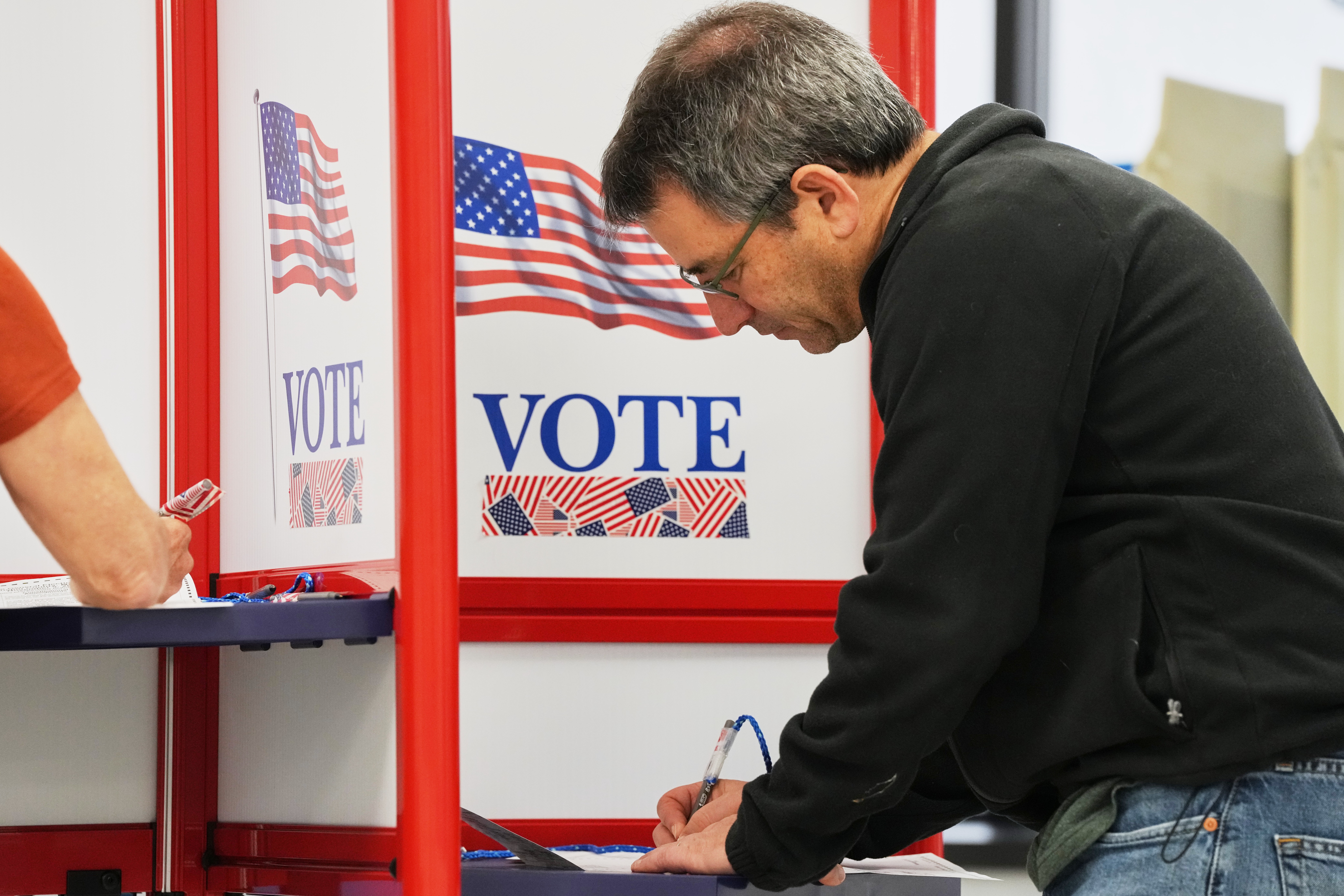
    HENRICO, Va. — In-person voting for this year’s midterm elections began Friday, ushering in the final six weeks for Americans to decide which party they trust to lead Congress through a cost-of-living crisis, a prolonged war in Iran, and other pressing issues.

    Election administrators say they are prepared and confident the vote will be accurate and secure. Nevertheless, President Donald Trump has continued efforts to denigrate certain voting methods and reshape how elections are run, through court challenges, a federal hunt for noncitizen voters, and a pressure campaign to force election officials to share sensitive voter data.

    Friday was the start of early voting in Virginia. Voters in a few other states, including Minnesota and South Dakota, can cast absentee ballots in person, typically at a local election office or voting center. More expansive early voting is scheduled to begin in those and other states in the coming weeks.

    At a voting location in Fairfax, Va,. 18-year-old college student Sanya Singhal was among the first to vote early in person Friday morning, arriving well before the site opened to get in line.

    “Why not just have a little fun in life, you know, try to be the first early voter?” she asked. “I really want to participate in my democracy.”

    At a voting location in suburban Richmond, a poll worker rang a bell as the building opened and about a dozen voters in line began to file in. Stephen Gura was excited to be the first.

    “This election is critical. We need to stop the Trump agenda,” said Gura, who added that he voted for U.S. Sen. Mark Warner, a Democrat, and Shannon Taylor, the Democratic nominee against Republican incumbent Rob Wittman in the 1st Congressional District.

    The Nov. 3 election includes votes for governor and state legislature in most states and will determine whether Republicans maintain control of the U.S. House and Senate. If Democrats retake Congress, it will alter the trajectory of the final two years of Trump’s term, most likely leading to investigations and other oversight efforts.

    Votes underway after redistricting, Trump’s bid to control elections

    At the suburban Richmond voting center, a steady stream of voters flowed in and out. William Curry, a 74-year-old retiree who described himself as a libertarian-leaning independent conservative, voted for Warner’s Republican challenger, Bert Mizusawa, and Wittman. Curry said he generally approves of the job Trump has done, apart from the war with Iran.

    “He’s in a mess he can’t get rid of,” Curry said of the conflict.

    On a rainy day in Sioux Falls, S.D., Bill Goehring, 67, said he voted early at the county office because he will be traveling later. He voted for a mix of Democrats and independents, and said Trump’s “dictatorial tendencies are bad for America.”

    John Thomas, a conservative retired police officer at the Sioux Falls office, said his biggest concerns were public safety and election integrity. He said he doesn’t want to see votes in federal elections from immigrants living in the country illegally. Such fraudulent voting has been found to be extremely rare.

    Trump’s immigration agenda is “spot on,” the 77-year-old said.

    “We wouldn’t be a country that much longer if it had stayed the same for another four years,” he said.

    The start of early voting comes at a time of deep angst and division among many Americans about issues including rising gas and grocery prices, the war in Iran, the looming risks of artificial intelligence, and Trump’s aggressive immigration enforcement campaign.

    It also follows an unprecedented spate of mid-decade redistricting for the House that began when Trump urged the Republican-controlled legislature in Texas to redraw its congressional map to help the party. California and other states followed.

    The changes affect millions of people: Research shows 1 in 10 Americans this fall is a resident of a different congressional district than in 2024.

    Those partisan efforts are expected to continue before the 2028 elections after a landmark ruling this year from the U.S. Supreme Court weakened the federal Voting Rights Act’s protections against racially discriminatory redistricting.

    As the start of early voting approached, Trump was focused on efforts to assert federal control over election administration, even as the Constitution bestows the power to run elections on the states and, in some cases, Congress. The nation’s highest court this week rejected Trump’s bid to restrict mail ballots, but several of his administration’s other efforts to influence the voting process and investigate state voter lists continue.

    Virginia’s Democratic attorney general warned Thursday that Trump’s administration may have violated the state’s laws after a whistleblower accused federal employees of misrepresenting themselves on voter lookup tools to hunt for noncitizen voters.

    Trump for years has raised the specter of widespread noncitizen voting in U.S. elections, and this year is no exception. But research continues to show noncitizen voting is exceptionally rare.

    David Becker, executive director and founder of the Center for Election Innovation and Research, said he wouldn’t be surprised if the Republican president continues “his disinformation campaign and his attack on election officials.” But he said he thinks “the process will hold as it has in past years.”

    At least a few Friday voters were motivated to vote early in part because of Trump’s actions.

    In Minneapolis, 47-year-old business processing engineer Dragan Colakovic said he didn’t want to wait until Election Day for fear of being stopped by immigration agents. He said Trump’s surge of agents to Minnesota in an immigration crackdown earlier this year terrified him. He is a naturalized U.S. citizen who moved from Bosnia in 1997 and saw the horrors of war in the former Yugoslavia.

    “This echoed what I saw in Bosnia,” he said of the heavily armed immigration agents who repeatedly swept through his neighborhood, which has many immigrants.

    “These were my neighbors, my friends,” being arrested, he said.

    Democratic voter Laura Bland, 63, in Virginia’s Henrico County said she cast a ballot early to send “a signal that we’re still here” despite Trump’s efforts to curtail mail voting.

    “Regardless of whether you vote for a Democrat, Republican, people are not going to be stopped or intimidated from participating in our elections,” Bland said, nearly moved to tears.

    Advocates suggest voters cast their ballots early

    Voting rights advocates have encouraged voters this year to cast mail ballots early, in part because of concerns about recent changes in U.S. Postal Service operations that could delay the application of postmarks to ballots.

    Voting early “gives voters options, eases lines on Election Day, and can even mean faster results,” said Hannah Fried, co-founder and CEO of the voting rights group All Voting Is Local.

    The top official at the U.S. Postal Service also encouraged voters who cast ballots by mail to get them in a week before they’re due.

    “Everything is solved if people vote early,” Postmaster General David Steiner said in an interview.

    In a news briefing Thursday, Minnesota Secretary of State Steve Simon urged people not to be swayed by stories they might have seen or read that cast doubt on election operations. They would be able to vote “just like they always have,” he said.

    “I just want to reaffirm that Minnesota’s elections are fundamentally free, fair, accurate, honest, and secure,” he said.

  • Trump refers to Black man from racially offensive 1988 campaign ad while stumping in North Carolina

    Trump refers to Black man from racially offensive 1988 campaign ad while stumping in North Carolina

    As President Donald Trump tries to convince voters that Democrats have let crime run amok, he’s digging into the country’s political past to cite one of the most controversial campaign advertisements — one that relied heavily on racist tropes.

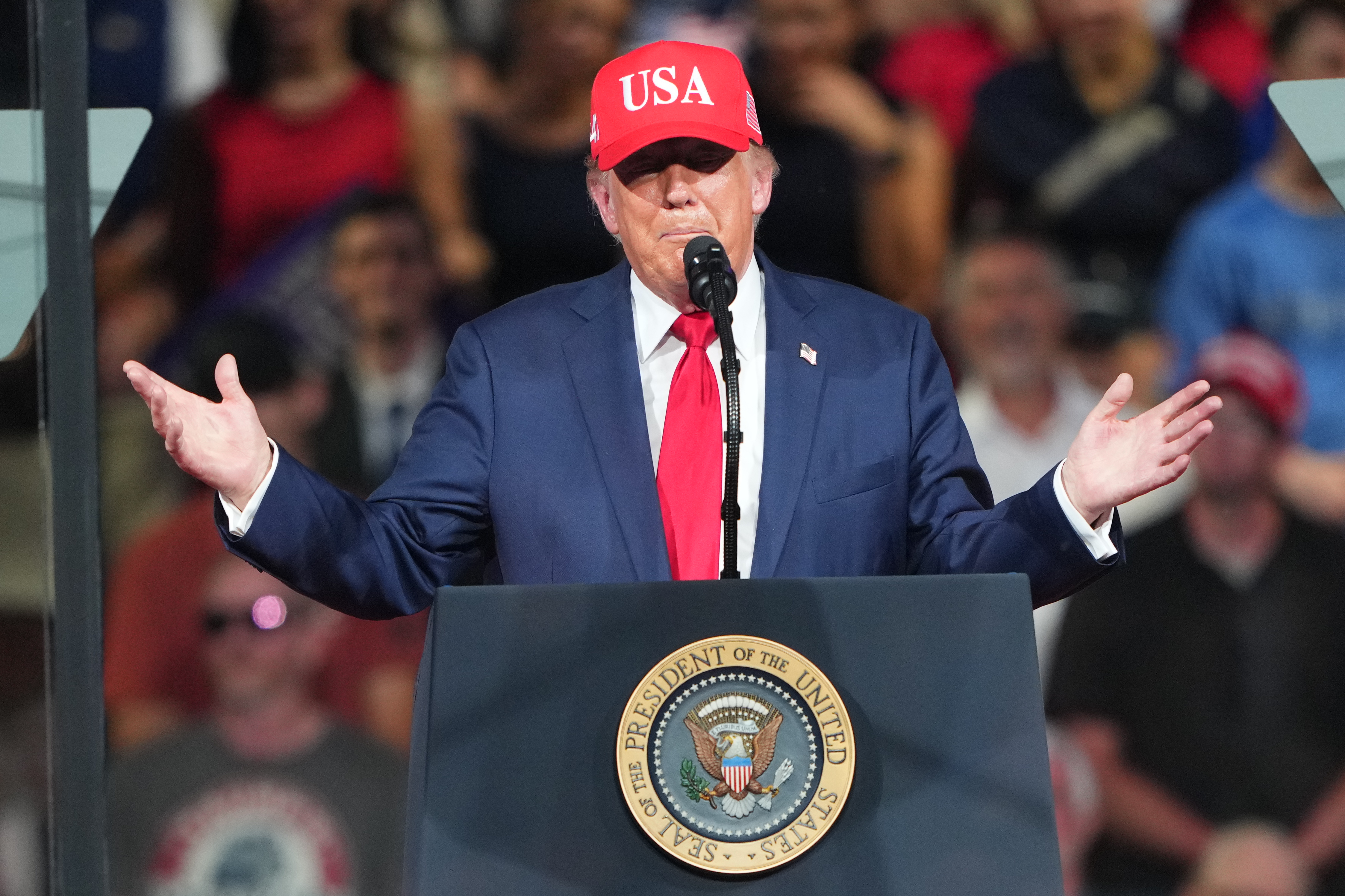
    During a campaign stop Wednesday in Gastonia, N.C., to stump for Republican U.S. Senate candidate Michael Whatley, Trump resurrected a 1988 George H.W. Bush presidential campaign ad featuring Willie Horton, a Black man convicted of rape and assault after his release through a Massachusetts prison furlough program.

    A grainy black-and-white prison photo of Horton was used in the ad targeting then-Massachusetts Gov. Michael Dukakis, who was ahead of Bush in the polls. On Wednesday, Trump evoked the Horton ad in an effort to convince voters Democratic former Gov. Roy Cooper, Whatley’s opponent in the Senate race, is soft on crime.

    “Willie Horton was a bad guy, really bad guy,” Trump said, before comparing Dukakis’ release of Horton to the pretrial release of a Black man who faces a murder charge for last year’s killing of a white Ukrainian refugee in Charlotte, N.C.

    But Cooper was not the governor when the man was released or when he was later charged with killing the refugee.

    “Same thing as this, same as, same exact thing,” the president told the crowd in Gastonia.

    It’s the second time Trump has invoked Willie Horton while campaigning for his party. Last month during a speech in Las Vegas, Trump called the Charlotte killing a “Willie Horton — modern day” tragedy.

    “After the Willie Horton ad dropped, Bush established a lead in the polls and never looked back,” said Andra Gillespie, a political scientist at Emory University outside Atlanta. “They showed the picture, and you ascribed race onto it. It wasn’t sufficiently condemned as racism.”

    A spokesperson for the Republican National Committee, which organized the Gastonia campaign rally, defended Trump’s reference to Horton.

    “Roy Cooper emptied prisons and released thousands of violent monsters onto North Carolina streets,” RNC National Press Secretary Natalie Baldassarre said in a statement to the Associated Press. “The results had deadly consequences, and every Democrat who supports abolishing or defunding the police, paroling criminals, and implementing lax bail policies will have to answer for their dangerous records in November.”

    Trump paints North Carolina as a ‘dangerous state’

    Wednesday’s rally cited the Aug. 22, 2025, killing of white 23-year-old Iryna Zarutska on a commuter train in Charlotte.

    Decarlos Brown Jr., who is Black, faces murder and other charges in Zarutska’s stabbing, which was captured on video. Court records showed that at the time of the attack, Brown had 14 prior cases in Mecklenburg County, including serving five years for robbery with a dangerous weapon. Doctors had diagnosed him with schizophrenia.

    Republicans and other influential voices in Trump’s Make America Great Again movement claimed the attack showed how Democratic elected leaders in large cities across the U.S. failed to protect residents, while some conservative commentators suggested Democrats were ignoring an unfounded “black-on-white” crime problem.

    “He should have been locked up for many, many years,” Trump said Wednesday of Brown.

    “Nobody used to think of North Carolina as a dangerous state, criminally dangerous,” Trump added while blaming Cooper. “It was apple pie, right? Now, it’s one of the most violent, one of the worst in the whole nation.”

    According to 2024 FBI crime data, North Carolina ranked 19th for statewide violent-crime rates in a 50-state comparison.

    During the Gastonia rally, a mosaic of mug shots was displayed on a large screen for the crowd. Trump claimed Cooper had cut a deal with “radical activists” to release “some of the worst criminals in the nation into North Carolina.”

    “He released these people. This is just a small group of them,” the president said, pointing to the mug shots that overwhelmingly featured Black people.

    Although it is unclear under what circumstances the people in the mug shots were released, state corrections officials have said Brown was not released early from prison or under Cooper’s COVID-era prisoner-release settlement that Trump referenced.

    Before fatally stabbing Zarutska, according to court records, Brown had been on a pretrial release over a misdemeanor offense that was ordered by a magistrate after Cooper left office.

    ‘Tapping into anger’

    Republicans are under pressure to win over swayable voters as the November midterms approach with Democrats pushing to gain control of the House, the Senate, or both. Some political strategists say part of the ploy of adding Horton to the North Carolina Senate campaign is to rile up Trump’s base.

    “He’s tapping into the anger to remind Republican voters of what he thinks their first principles are in hopes that will be successful for Republican candidates,” Gillespie said.

    “He’s doing this to try and divert attention away from criticism of how he’s governing at the moment,” she added. “Democrats want to make the story of this election Trump’s low approval numbers, the war in Iran, inflation, being preoccupied with things that don’t make a whole lot of sense when there are really serious things going on in the country.”

    Dewey Clayton, professor emeritus of political science at the University of Louisville, said Trump and other Republicans may be thinking that what worked before in the 2016 and 2024 elections presumably will work again in this year’s midterms.

    “It was very effective,” Clayton said. “You do not necessarily have to look at it as racial, in and of itself, although (race) clearly becomes a component. In 2026, talking about ads going back in the 1980s? I’m sure he had consultants that were basically saying this is tried and true.”

    The GOP may need the push in November, Gillespie warns. “I think the motivation by going back to these old strategies is there is real concern about Republican enthusiasm and you might see lower Republican turnout,” she said.

    Rhetoric attempts to divert voters’ attention from rising costs

    The tactic speaks to desperation by Trump and the Whatley campaign, according to Morgan Jackson, a partner with Nexus Strategies in Raleigh.

    “Trump brings up Willie Horton to stoke racial division, something he’s used for the last 10 years,” said Jackson, who is chief strategist for Cooper’s campaign. “It is very clear from the president’s speech last night their only goal is to sow division and hate and lies. Michael Whatley doubles down in support of that effort.”

    Jackson also said Trump and Whatley are trying to change the election’s message of “rising inflation and the cost of everything.”

    “They want to use inflammatory rhetoric, hate speech and lies to sow division in a chance to win an election,” he said. “By referencing Willie Horton, they are showing their hand very clearly.”

    The AP sent an email Thursday seeking comment from Whatley’s Senate campaign.

  • Trump withdraws Lance Schroyer, a former Oklahoma state trooper, as his nominee to lead ICE

    Trump withdraws Lance Schroyer, a former Oklahoma state trooper, as his nominee to lead ICE

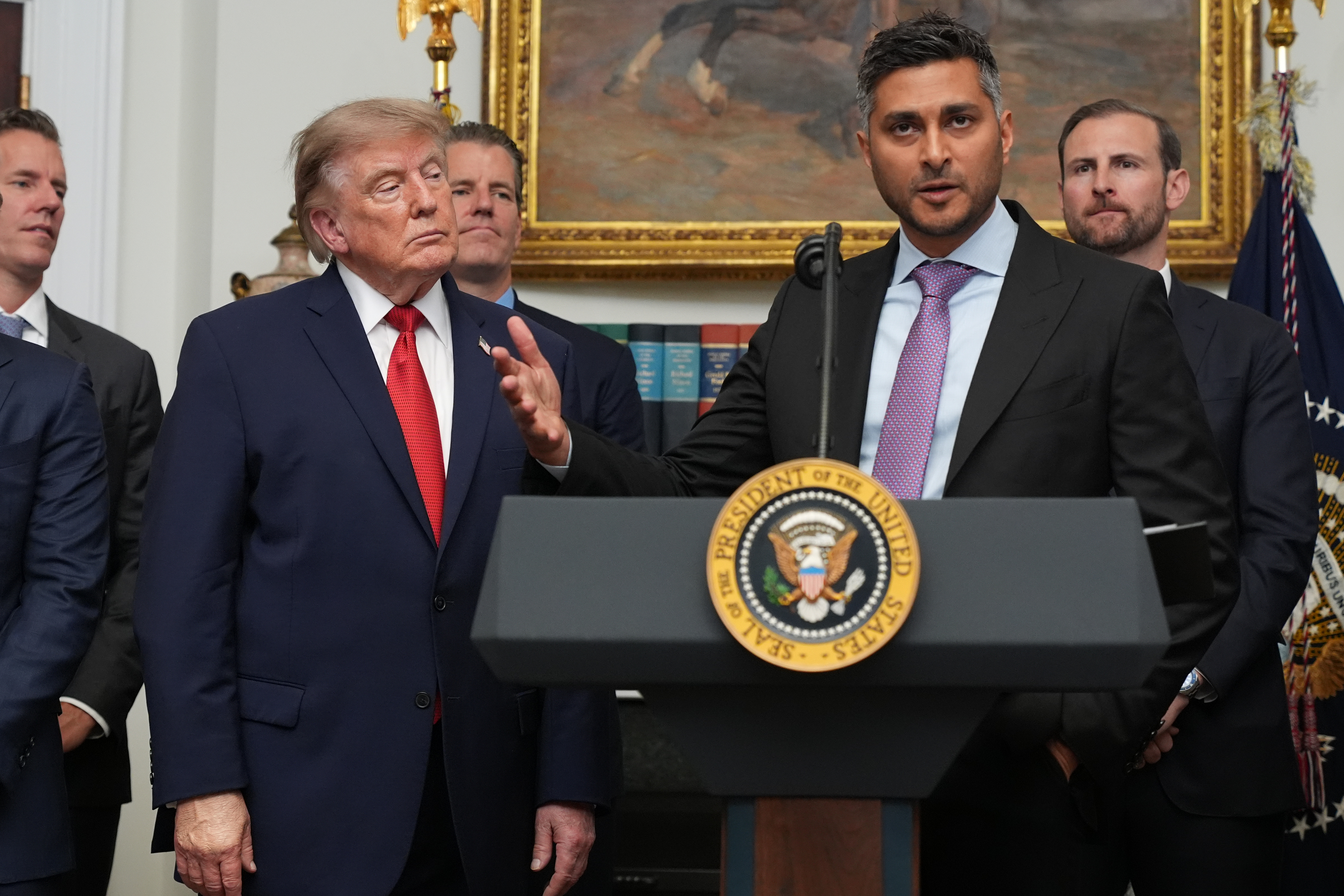
    WASHINGTON — The White House said Thursday that it was withdrawing its nomination of Lance Schroyer, a former Oklahoma state trooper, to lead U.S. Immigration and Customs Enforcement, ensuring that an agency at the forefront of President Donald Trump’s domestic agenda will remain without a Senate-confirmed leader for at least a while longer.

    Schroyer, who has little experience in immigration, is close to Homeland Security Secretary Markwayne Mullin, a former U.S. senator from Oklahoma.

    The White House offered no comment in a brief statement.

    The latest setback comes as the agency remains under withering scrutiny over its handling of enforcement operations. Critics have question how ICE has recruited and trained officers as it raced to hire thousands to carry out Trump’s promise of mass deportations. Officers have shot and killed multiple people, including two American citizens in Minneapolis earlier this year.

    Sen. Rand Paul, the chairman of the Senate Homeland Security and Governmental Affairs Committee, had refused to hold a hearing on the nominee until DHS provided him with information he had been seeking about civilian deaths during ICE enforcement operations.

    “I don’t have a concern with who the nominee was. I had asked them to give me an update on the internal investigation into civilian deaths,” Paul (R., Ky.) told the Associated Press.

    “And I’m still waiting.”

    When Mullin took over DHS in March, he pledged a lower-profile approach to immigration enforcement, pulling back on the aggressive, tumultuous crackdown on the streets of large cities that sparked widespread public condemnation.

    Arrests have continued to accelerate, reaching nearly 51,000 in August, the highest single monthly arrest total during the second Trump administration.

    Paul said he intended to hold a hearing on Schroyer’s nomination but it never came to that. He only heard about the nomination being withdrawn when the White House made it public Thursday.

    ICE has not had a Senate-confirmed leader since the Obama administration. David Venturella, a former executive at a private prison operator, returned to the agency as acting director earlier this year after Todd Lyons resigned.

    When Trump nominated Schroyer in June, Trump said on his Truth Social platform that his pick was “a PATRIOT with real operational experience” and a “proven leader with DECADES of experience locking up the worst of the worst.”

    The administration did not indicate when it might announce another pick for the position.

  • Judge orders Kennedy Center to provide 30 days’ notice before making any major physical changes

    Judge orders Kennedy Center to provide 30 days’ notice before making any major physical changes

    WASHINGTON — A federal judge on Thursday ordered the Kennedy Center to provide 30 days’ notice before making any major physical changes to the building, including demolishing it as President Donald Trump has threatened.

    U.S. District Judge Christopher Cooper said his ruling would “avoid any confusion on that score given more recent events,” including the sudden closure of the building to the public on Wednesday.

    Matt Floca, the Kennedy Center’s executive director and chief operating officer, said he closed the iconic performing arts center temporarily due to “acute risks to public safety resulting from continued structural deterioration” of the aging building. The building will be closed for at least seven days to “assess existing safety risks in those portions of the main building exhibiting severe structural deterioration,” Floca said.

    The temporary closure, which occurred without notice Wednesday, is separate from a vote Tuesday by the Kennedy Center’s board to close the performing arts center indefinitely for repairs, Floca and other officials said. The closure was based on an inspection of the roof terrace canopy and a partial ceiling collapse earlier this month, Floca said. The closure may be extended after evaluation next week, he said.

    The announcement of the closure came in response to a court case filed by a Democratic congresswoman who is a trustee and sought an emergency court hearing to prevent what she called the building’s “unlawful closing.”

    Rep. Joyce Beatty, an Ohio Democrat and an ex-officio member of the Kennedy Center board, has led efforts to block President Donald Trump’s name from being added to the building. Beatty had a verbal confrontation with the Republican president Tuesday during a virtual board meeting.

    Beatty’s lawyers said in a court filing Thursday that the board members’ “rationale that they are only temporarily closing the Kennedy Center is a plain pretext to justify shutting down the Center permanently. The facts before the Court are deeply concerning.”

    Cooper denied a request by Beatty’s legal team to hold a hearing to clarify the board’s actions and intent. But he agreed to their request “to make crystal clear” that his order prohibits demolition of the building.

    The Trump-aligned board, chaired by the president, voted to close the center after Cooper blocked the institution from returning Trump’s name to the building.

    Trump, who was named the Kennedy Center’s chairman last year by loyalists on the board, said Wednesday that his efforts to restore the aging building deserve recognition, “because frankly, if we don’t do that, it’s going to close. It’ll end up being ripped down. It’s in very, very bad shape, very dangerous shape.”

    Congress has allocated $257 million to cover the repairs, but Trump said they only would happen if the board was permitted to move forward with plans to add his name to the building.

    On Thursday, Barbra Streisand, a Kennedy Center honoree in 2008, questioned the closing of the center for repairs and called the controversy surrounding its operation “galling and painful to witness.”

    Of Trump’s attempts to add his name to the center, she said in a statement to The Associated Press: “You can easily imagine my indignation at seeing this revered institution become the subject of such a bitter struggle over one man’s name and unchecked ego.”

    The Kennedy Center board voted in August to inscribe Trump’s name on the Kennedy Center’s facade so it would read “The John F. Kennedy Center for the Performing Arts Restored and Renovated By President Donald J. Trump.” If the Trump Kennedy Center Fund reached $100 million, another inscription would be added reading “Endowed by the Trump Kennedy Center Fund.”

    The plaza in front of the Kennedy Center would also have been renamed in Trump’s honor.

    All of those proposals were shot down Tuesday by Cooper, who ruled that nothing could happen “without Congress’s blessing.”

    Cooper ruled in May that the Kennedy Center illegally added Trump’s name to the building, ordering it removed. The institution’s leaders complied in June but left a tarp and scaffolding in place where Trump’s name was once displayed.

    Streisand told AP she was deeply honored to be included in the 31st annual class of Kennedy Center Honorees, adding, “for me, and for so many artists, that honor represented something larger than a career recognition. It represented a belief in the importance of art to the life of a democracy.”

  • A global AI safety strategy depends on U.S.-China cooperation. They each see the other as the problem

    A global AI safety strategy depends on U.S.-China cooperation. They each see the other as the problem

    HONG KONG — As concern rises over the risks of artificial intelligence, hopes for any kind of global approach depend on cooperation between the U.S. and China — superpowers that seem only to be more skeptical of each other’s AI strategy.

    AI governance is expected to be on the agenda in a meeting planned for next week in Washington between President Donald Trump and Chinese leader Xi Jinping. The topic has gained urgency in both countries, with American tech leaders saying that averting worst-case scenarios for rogue AI depends on a degree of cooperation with China.

    But both countries are vying for a decisive advantage on AI, with Trump warning that any efforts to regulate the technology would help China. That sets up a meeting in which any agreements might be superficial but a possible start to something larger.

    “A formal agreement or consensus may be near impossible, but they do not need to go that far,” said Samm Sacks, a senior fellow at the Johns Hopkins School of Advanced International Studies’ Institute for America, China, and the Future of Global Affairs. “Trump and Xi just need to create political space by acknowledging AI poses risks to both countries.”

    China and the U.S. are increasingly at odds on AI

    Trump has pushed back on calls to strengthen regulation of the technology, claiming that doing so could cause China to eclipse America on AI. He has repeatedly declared that the nation that leads on the technology “wins.”

    “We are leading China, and all others,” Trump said Monday on social media.

    The two countries are moving the technology forward in different ways. U.S. companies are chasing AI frontiers with computing power supported by cutting-edge chips and the country’s rapidly expanding data center infrastructure. China is pursuing wide global adoption of its open-source, more affordable models.

    Chinese AI models have made major advances and gained traction with American companies even as U.S.-led restrictions bar China from getting the world’s most advanced AI chips. While most American frontier models are closed-source, with their design elements kept secret, U.S. Treasury Secretary Scott Bessent said Tuesday the U.S. needs to develop more open-source models to counter China.

    The U.S. has accused China of “aggressive, malicious” efforts to extract capabilities from American AI systems. China has hit back, accusing the U.S. of trying to suppress Chinese companies so it can build a “monopoly of the AI industry.”

    David Sacks, a top AI adviser to Trump, said that China has “already rejected” slowing down the pace of developing the most advanced forms of AI. He said on Fox News’ “The Ingraham Angle” that unlike the nuclear tensions with the Soviet Union during the Cold War it would be impossible to verify whether China honored any AI commitments.

    “In this case, we don’t have trust and we can’t verify,” Sacks said. “So let’s not be foolish about this and just hand the whole ball game to China.”

    Still, those with ties to the Chinese government see coordination on AI as helpful.

    At an annual security and defense conference in Beijing, Cui Tiankai, a former Chinese ambassador to the U.S., said Tuesday that AI is an area where “we should go ahead and build up” dialogue between Beijing and Washington. “Because there is a need, a growing need, for cooperation,” he told the Xiangshan Forum. “So how can we manage the balance?”

    American AI leaders call for keeping China in check — and cooperating with China

    Two leading American AI companies, Anthropic and OpenAI, each restrict access in China and have said the U.S. has a national security imperative to protect its lead on AI technology. But they also have called for cooperation with China to manage safety.

    In his essay last weekend calling for a slowdown of AI development for safety reasons, Anthropic CEO Dario Amodei said the U.S. should slow China’s progress, including keeping up U.S. restrictions on China’s purchases of the world’s most advanced AI chips.

    He also added, however, that “global pacing will require cooperation with China, the autocratic country with by far the most advanced AI capabilities.”

    His essay quickly drew criticism from Beijing, with China’s Ministry of Foreign Affairs saying on Monday that “fearmongering, confrontation, and vicious competition will only disrupt the process of global AI governance which serves no one’s interest.”

    China’s state-run Global Times newspaper went further, calling his remarks “packed with containment provisions targeting China and is, in essence, a ‘Cold War playbook’ for the AI sector.”

    Trump has consulted with Nvidia CEO Jensen Huang, even calling the maker of the world’s most advanced computer chips in the middle of a Monday podcast interview. Nvidia has generally favored some chip exports to China as a way to create an American ecosystem for the technology and a more open relationship on AI given the number of researchers in China.

    Both countries have been alarmed by emerging AI capabilities

    In both the U.S. and China, AI’s increasingly powerful capabilities have alarmed top officials and policymakers.

    The head of China’s Ministry of State Security, its spy agency, warned in an article Sunday that AI poses many threats to the country, from political and ideological security to cyberattacks.

    In the article, Chen Yixin argued that AI could threaten China’s political and ideological security if used by those “with ulterior motives,” while singling out Anthropic’s and OpenAI’s powerful AI models. It said they could be used to “weaponize” cybersecurity vulnerabilities and threaten China’s critical information infrastructure.

    Several other recent AI-related events were also causing concern in China when it comes to AI governance. That includes a U.S. security firm’s recent discovery of AI vulnerabilities in WeChat, China’s key messaging app that also offers payment services among other functions, said Paul Triolo, a partner at DGA-Albright Stonebridge Group.

    While Chinese officials said after Trump’s Beijing summit with Xi in mid-May that China and the United States had agreed to pursue dialogue on AI development and governance, little progress has been made.

    At the same time, China and the U.S. have been working to form AI alliances with like-minded nations.

    In July, China launched the World Artificial Intelligence Cooperation Organization, a group with 29 initial founding member countries, including Russia and Pakistan, meant to promote global AI governance. This month, China’s Xi has called on BRICS member countries to accelerate the setting up of a global AI governance framework and establish an open-source AI community.

    Some political observers saw the China-led organization as a response to the U.S.-led Pax Silica initiative, which launched last year focusing on strengthening collaboration with countries including Japan, the U.K., and Australia on AI supply chains.

    Asked about his expectations on AI from the Trump-Xi meeting on AI in an interview with CBS’ Face the Nation, Amodei said “the more long-term thing would be working together to put a speed limit on the rate of AI progress.” But he said it likely would be very difficult.

    In the run-up to the Trump-Xi meeting, a recent social media post by Yuyuantantian, a Chinese state media-linked account, was similarly circumspect.

    “Only after the United States first demonstrates that the safety rules are equally effective for its own model companies can substantive discussions between the U.S. and China take place,” the post said.

  • Cases of Black people found hanged in the U.S. South are a reminder of nation’s lynching history

    Cases of Black people found hanged in the U.S. South are a reminder of nation’s lynching history

    The death of a Black Mississippi woman found hanging from a tree has stirred distressing memories of the grim history of lynchings across the U.S. South.

    The body of Tasia Fortune, 29, was found behind an abandoned home in Jackson, the state capital, on Aug. 3. Jarques Ratliff, 51, who is also Black, pleaded not guilty to murder on Monday. Police and prosecutors haven’t given a suspected motive and say more arrests are expected.

    Regardless of the circumstances of the case, for many Black people, the imagery of a rope and noose evokes the legacy of lynching and vigilante violence against Black people in the U.S. and brings with it deep pain and trauma.

    “Black folks down here in 2026, we are feeling and experiencing some of the same things we felt in 1956 and 1966 and that should not be happening,” Jackson activist Brad Franklin said of Fortune’s death.

    “But because it’s Mississippi and the racist history of our state, our skin has been toughened a lot to deal with it.”

    Fortune’s mother, Christy Spivey, told The Associated Press that she doesn’t believe race had anything to do with her daughter’s death. Spivey is white. She said Fortune’s father is Black.

    “I think this is something very personal, very personal,” Spivey said, insisting that someone who was acquainted with Fortune was involved.

    Recent cases have triggered skepticism — and private autopsies

    Over the past two years, about a half-dozen Black women and men have been found hanged across the South. Police in some of those cases quickly deemed them suicides — often eliciting historically grounded skepticism when investigators provide limited evidence ruling out foul play.

    “I say let the evidence show,” said Sean Joe, a professor of social work at Washington University in St. Louis and a nationally recognized authority on suicidal behavior among Black people. “But if … you go into a definition or a conclusion of suicide, you have to show some evidence for that.”

    Spivey says she is certain her daughter would not have killed herself. “Absolutely not. Even if she could climb that tree, no, no, she would never, ever, ever,” Spivey said.

    In Roanoke Rapids, N.C., police are investigating the Aug. 21 death of Demetrius Eugene Fleming, 38. Police Chief Lawrence Wiggins said Tuesday that his office is waiting on reports from a medical examiner.

    In February, police in Cobb County, Georgia, found the body of 21-year-old Kyle Bassinga in a park. While investigators said there was no indication of foul play, Bassinga’s death “caused many to think of the days of slavery and of Jim Crow,” said Cobb County Commission Chairwoman Lisa Cupid.

    The September 2025 death of 21-year-old Black student Trey Reed at Mississippi’s Delta State University was ruled a suicide, as was that of Dennoriss Richardson, 39, in September 2024 in Alabama’s rural Colbert County.

    Richardson’s wife, Leigh, has said she doesn’t believe he killed himself and, as has occurred in other cases, a private autopsy was conducted, finding his death consistent with a hanging, according to news reports.

    Leigh Richardson told ABC News that despite chronic asthma and other breathing problems that would cause her husband anxiety attacks, “that is just not a way that he would even process to leave this world.”

    Group has chronicled thousands of lynchings in U.S.

    More than 4,400 lynchings occurred in the U.S. between Reconstruction and World War II, according to the Alabama-based Equal Justice Initiative. The 1955 lynching of teenager Emmett Till in Mississippi over accusations he flirted with a white woman helped catalyze the civil rights movement.

    “These were public, intentionally public in order to convey terror, not just to the individuals and their families, but to a whole community,” said Karlos Hill, professor of African and African American Studies at the University of Oklahoma and author of Beyond The Rope: The Impact of Lynching on Black Culture and Memory.

    Nearly 60 members of Congress signed a letter in September demanding the Justice Department investigate hanging deaths of Black individuals and enforce the 2022 Emmett Till Antilynching Act, which made lynching a federal hate crime.

    “In this moment of anti-Blackness and emboldened white supremacy, we cannot stand idly by while the strange fruit of Black bodies hang from trees across the country,” U.S. Rep. Ayanna Pressley said in a statement.

    The Justice Department confirmed it received the letter but has not responded, according to the office of Pressley, a Massachusetts Democrat and the letter’s lead author.

    ‘I know the skin I’m in’

    Trent Thompson, 58, of Florence, Ala., says the recent hangings and deaths of Black people led to talk in the Black community about the death this summer of Nolan Xavier Wells.

    Wells, 18 and Black, joined friends on a Fourth of July boat excursion to an island off Mississippi’s Gulf Coast but did not return with them. His body was found two days later. Scrutiny of the investigation has deepened with the state’s history of racist violence and distrust of law enforcement — triggering suspicion in the Black community toward many cases involving deaths of Black people, Thompson said.

    “I know the skin I’m in,” he said.

  • Body found in Grand Canyon was missing hiker, wife says, bringing flood death toll to 3

    Body found in Grand Canyon was missing hiker, wife says, bringing flood death toll to 3

    GRAND CANYON NATIONAL PARK, Ariz. — Human remains found in the Grand Canyon this week were those of the last remaining person missing after the deadly flash flooding in late August, the victim’s wife said Thursday.

    The discovery of Timothy Allen Smith brought the death toll to three from flooding that devastated the Phantom Ranch area at the canyon bottom and damaged the water pipeline serving the South Rim.

    Smith, 53, was a pilot from western Wyoming’s Star Valley. His remains were found Monday near Crystal Rapids on the Colorado River that runs through the canyon.

    The remains of Smith’s two backcountry companions, Brent Rosenkranz, 42, and John Giusti, 46, both of Granbury, Texas, were found earlier.

    Smith grew up in Granbury and lived with his wife in Star Valley Ranch, about 40 miles southwest of Jackson.

    He, Rosenkranz and Giusti were on a multiday hiking, fishing, and camping trip when flooding swept through the Grand Canyon.

    During the two-day deluge, searchers used night vision and other equipment to find people in need of rescue. They relied on the Grand Canyon National Park’s permit system and checked vehicle license plates to track those still missing. More than 80 people were rescued.

    Soon, only Smith was missing. In a Facebook video at the time, his wife, Carrie, and their children thanked people for their support and prayers.

    On Tuesday morning, Carrie Smith posted on Facebook that the family was aware a body had been found a day earlier and asked others to pray with them.

    Smith confirmed in a Facebook post on Thursday that the remains had been identified as her husband’s.

    “My family has done a lot of waiting over the last three weeks … waiting and hoping Tim (Daddy) would come home, waiting and wondering if the remains found were Tim (Daddy),” she wrote. “We no longer have to wait, Tim was found two days ago by the Rangers at Grand Canyon National Park. Not in the way we had hoped, but we know that he was doing something he loved with John and Brent.”

    She added, “We know that these three men loved the Lord and were a shining light for Him. The impact their lives had on others is still being shown to our families daily.”

    The National Park Service and Department of the Interior did not immediately return email messages seeking comment Thursday. The agencies have not publicly identified the remains found this week.

    The flooding began Aug. 29 during the summer monsoon, or rainy, season when clear skies can quickly give way to thunderstorms and heavy rain. A desert landscape can funnel water from a deluge into sudden torrents that rage down previously dry gullies and canyons.

    The rain fell on part of a North Rim burn area left after a lightning-caused wildfire in July 2025. The fire destroyed the historic Grand Canyon Lodge, cabins and other structures.

    Burn areas can worsen flash flooding because there’s less vegetation to absorb runoff.

    The flooding damaged a pipeline spanning the canyon that supplies water to millions of tourists and residents. Insufficient water caused all overnight lodging to be halted until the pipeline could be restored. National Park Service officials said recently that they expected to restore a reliable water supply in the canyon in weeks — not months — after determining most of a near-complete pipeline project was not damaged during the flash flood.

    Many hiking trails and lodging areas remain closed, and water has been shut off in the inner canyon, prompting advisories that hikers bring their own water or water filtration devices.

    Another flash flood hit the canyon along Bright Angel Creek and the Colorado River during a storm Wednesday, park officials said. No injuries were reported. Authorities said efforts to minimize personnel in the canyon before the storm, as well as flash flood warnings, enabled crews to reach safety. Damage assessments were underway.

  • Speaker Johnson recesses the House early as Rep. Thomas Massie pushes Hegseth impeachment

    Speaker Johnson recesses the House early as Rep. Thomas Massie pushes Hegseth impeachment

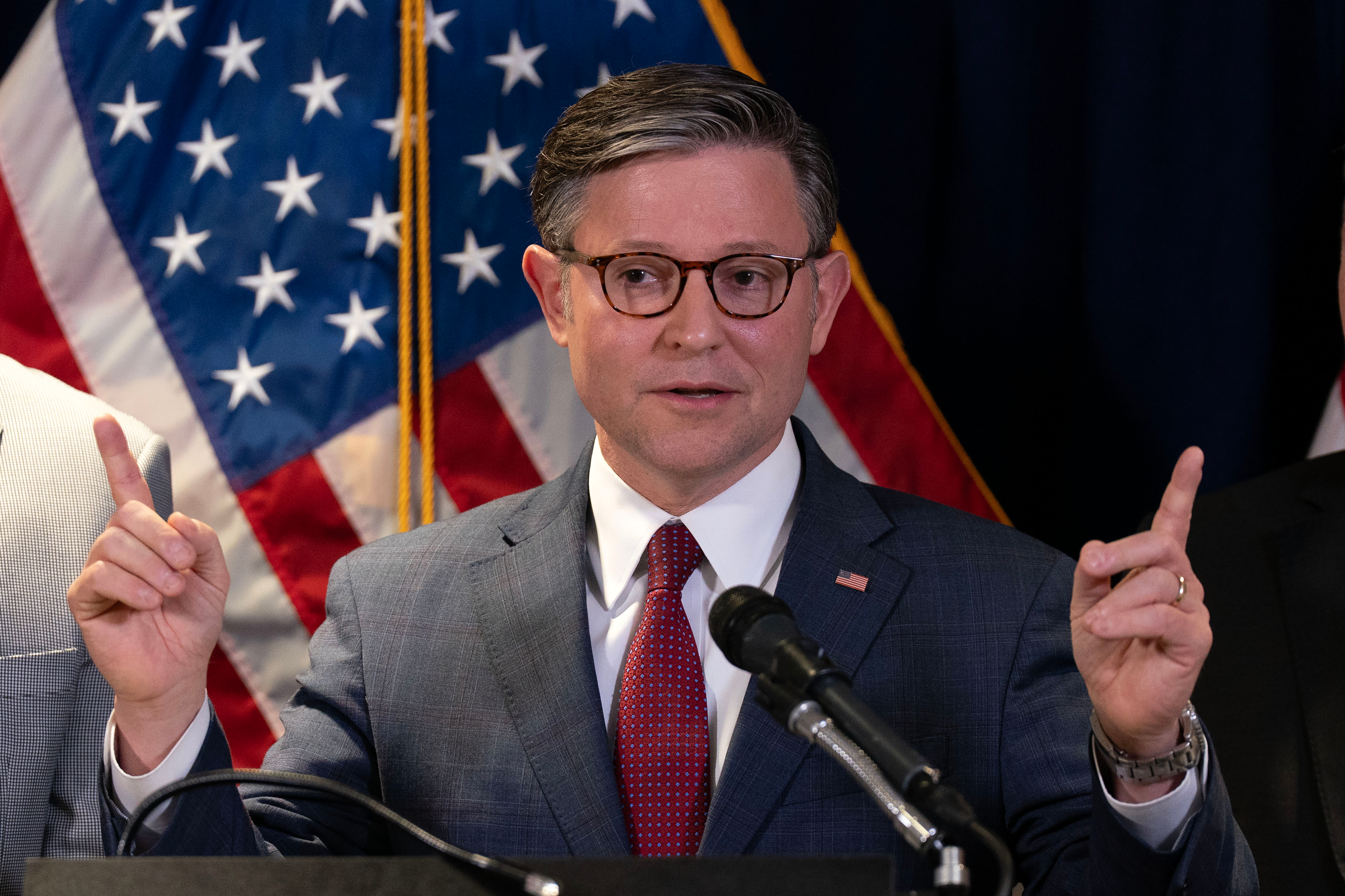
    WASHINGTON — Speaker Mike Johnson closed up the House early, sending lawmakers home Wednesday to campaign for the midterm elections after what he claims is the most productive Congress in decades.

    But not without a scathing rebuke from GOP Rep. Thomas Massie for all the unfinished business.

    Massie’s resolution to impeach Defense Secretary Pete Hegseth over the war in Iran and his bipartisan effort to force the release of more files in the Jeffrey Epstein investigation are all being left behind, blocked from votes.

    “We’re calling off Congress? And we’re in the majority?” Massie railed from the House floor.

    “I’m trying to get justice for the Epstein survivors,” he said. “I’m trying to stop a war.”

    Massie, the renegade Republican from Kentucky, seized control of the chamber for a blistering hourlong speech criticizing Johnson, the Republican majority, and the work he said the speaker is refusing to conduct to lower prices for Americans and hold the Trump administration accountable.

    “Why would we be canceling days when the country is burning?” Massie said. “We should stay here for every day that’s on the calendar and we should debate.”

    A fitting end to a tumultuous House session

    The afternoon showdown provided a colorful capstone to what has been a tumultuous two-year session of House Republicans in control by a bare majority, with Johnson routinely struggling to keep the place running.

    Despite the enormous tools of the gavel — the speaker holds one of the most powerful positions in Washington, second in the line of succession to the president — Johnson has often been thwarted by his own conference.

    The speaker has repeatedly and abruptly canceled House voting days to send lawmakers home rather than manage the disruptions from his own rebellious flank — particularly those legislative efforts that threatened to rebuke President Donald Trump.

    By one tally, the House has cut 28 days this year, while adding four others, for a net loss of 24 days — about one-fourth of the total scheduled.

    Still, Johnson has hauled major legislation to the finish line, most notably the “Big Beautiful Bill,” a package of tax breaks and social service cuts that Trump signed into law last summer. And on Wednesday the House powered through a full agenda, passing bills large and small, including one to name the American mastodon the national fossil mammal and the Tyrannosaurus Rex the national fossil dinosaur.

    Johnson called Massie’s effort to impeach Hegseth “a stunt.”

    “Secretary Hegseth has done an extraordinary job at the Department of War,” Johnson said.

    “This has literally been the most productive and successful and aggressive Congress” in decades, he said earlier this month, calling it the top five of all time. “We’re confident American voters are going to remember that when they head to vote this fall.”

    Voters will be assessing the situation in November as they decide whether to keep Trump’s party in power, while Democrats work to dislodge Republicans from majority control of both the House and the Senate.

    House Democratic Leader Hakeem Jeffries assailed the “do-nothing” Republican majority and promised Democrats will perform better.

    “Donald Trump and MAGA Republicans promised to bring down grocery prices on Day One. They promised to stop endless wars in the Middle East,” Jeffries said from the steps of the Capitol, flanked by Democratic lawmakers.

    “But Republicans have done nothing to make life more affordable for the American people,” he said.

    He said Democrats’ message is a simple one: “We hear you. We see you … And we are committed to making life better for you.”

    Massie’s last stand

    The confrontation also provided a platform for Massie, the libertarian-leaning go-his-own-way congressman who orchestrated the initial release of the Epstein files and helped lead efforts to halt the conflict in Iran through a war powers resolution.

    Massie lost his own primary bid for reelection after Trump mounted a costly campaign to kick him out of Congress.

    But the congressman has only appeared emboldened in his final days in office.

    Massie spent much of his floor speech assailing Johnson’s leadership and decrying what he calls the “uniparty,” which he characterizes as moving in lockstep with big-money special interests at home and abroad.

    He also devoted substantial time to criticizing Hegseth and the “stupid war” he said the U.S. should not be involved with in Iran. Deriding Hegseth’s leadership, he mocked the secretary for trying to rename the Defense Department as the Department of War without consulting Congress.

    “Hell, you can’t even rename a post office without us,” he said.

    Hegseth’s role in sending the U.S. into the Iran war without approval of Congress and directing the U.S. military strikes of alleged drug trafficking boats in the Caribbean are among the actions Massie characterized as high crimes and misdemeanors in the articles of impeachment against the Defense secretary.

    Massie said he knew when he landed in Washington that he would stand apart.

    “I’m not playing this game,” he said. “I am going to tell people what is going on up here.”

  • Senate blocks cryptocurrency regulation as Democrats push back on Trump investments

    Senate blocks cryptocurrency regulation as Democrats push back on Trump investments

    WASHINGTON — Senate Democrats on Tuesday blocked legislation to create a new regulatory framework for cryptocurrency, stalling an industry-backed effort to place new guardrails around digital assets after demanding more limits on President Donald Trump’s investments.

    The 49-50 vote on whether to move forward with the legislation was a pivotal election-year test for the $2.3 trillion cryptocurrency market as the industry has pushed aggressively for a uniform set of rules. The Senate debate came as cryptocurrency companies have become a major political force, and as Trump has amassed significant wealth in crypto while in office.

    While some Democrats are friendly toward the industry and support the idea of regulation, they have been adamant that the bill include strong ethics safeguards to prevent the president and his family from enriching themselves while he’s in office. The opposition appears to have only solidified two months before the midterm elections, despite significant donations that crypto groups have given to some Democrats in recent years. In the end, no Democrats supported it.

    “Let’s make sure that we do not pass a crypto bill that will let Donald Trump continue to rake in billions of dollars in crypto profits while working families across this country struggle to deal with higher prices and an economy that gets worse by the day,” said Massachusetts Sen. Elizabeth Warren, the top Democrat on the Senate Banking Committee.

    Several Democrats who have been supportive of the bill aside from the ethics concerns said they were still open to negotiating.

    Virginia Sen. Mark Warner said he still wants regulation of the crypto industry, but “we cannot pass landmark legislation governing this industry while allowing the president of the United States to personally profit from it.”

    The White House indicated Tuesday that it would now turn to agencies to implement parts of their crypto agenda and warned that the failed vote would continue to stifle financial innovation domestically while it flourishes abroad.

    “The full cost of today’s result may not be known for years to come, but this much is clear: It increases the risk that the standards that global financial markets adhere to in the future will be those of Brussels or Beijing, rather than Washington and New York,” Patrick Witt, the White House’s crypto adviser, said.

    Trump agrees to some changes as Democrats push back

    As Democrats made clear they would block the bill, Trump agreed to some concessions on ethics, including new restrictions on federal elected officials from issuing digital assets like the presidential meme coins he and his wife Melania launched before he took office for his second term. He agreed to new concessions Sunday, such as additional powers for state attorneys general that Democrats had sought to enforce the crypto measures.

    Those concessions were not enough for Democrats, who sent a counteroffer late Monday to expand the ethics provision but were not able to strike a final deal. Among other issues, they said the bill still needed stricter enforcement and a requirement for Trump or any future president to divest if holdings reach a certain value.

    “Instead of spending their time twisting themselves into knots to appease President Trump, Republicans should have worked more closely with Senate Democrats to craft a bill that could pass with strong ethics provisions,” said Arizona Sen. Ruben Gallego, who was involved in last-minute talks with GOP senators on the bill.

    Republicans needed Democratic support to win the 60 votes necessary to move forward on the bill in the 53-47 Senate.

    North Carolina Sen. Thom Tillis, a Republican who worked with Gallego to strengthen the ethics provision, said before the vote that he was pleased with Trump’s latest concessions.

    “We’re so close,” Tillis said. “It’s just a shame to not take this opportunity.”

    Trump has amassed big crypto profits

    Trump’s family has raked in big profits in the crypto sector since he was reelected, including the meme coin, announced the day before Trump took office. Top investors were invited to a private reception with the president.

    Trump’s family also has a controlling stake in World Liberty Financial, a crypto firm co-founded with the president’s special envoy Steve Witkoff. Trump reported more than $500 million in revenue from World Liberty Financial sales of crypto products, including “governance tokens,” in his annual disclosure report filed with the Office of Government Ethics. That is a significant share of the more than $1.4 billion that the president reported from crypto businesses last year.

    A measure enacted into law last year regulating stablecoins, a type of cryptocurrency, barred members of Congress and their families from profiting off them, but it did not extend to Trump or his family.

    Legislation aims to give crypto firms legal certainty

    Republicans who have been working on the legislation for more than a year say it could now stall indefinitely. The House and Senate will be out of session during October and before the elections, and the dynamics could significantly shift if Democrats win back the majorities of the House or Senate, or both, in November.

    Republican Sen. Cynthia Lummis of Wyoming, a lead sponsor of the bill, said beforehand that a no vote means ”opposing real ethics reforms on politicians’ personal investments, handing American leadership in digital assets to our foreign competitors, and leaving Americans with zero protections in the digital asset markets.”

    Supporters say the legislation aims to give the industry more legal certainty and protect consumers by creating a broad set of guardrails and regulatory requirements, including better enforcement to prevent bad actors and protections to prevent a market collapse.

    As talks continued Tuesday morning, Lummis posted on X that it was “now or never for the Clarity Act,” referring to the bill’s name.

    “The time for negotiating is over,” she wrote.

    Crypto cash has flooded campaigns

    Opponents, mostly Democrats, say the bill is a giveaway to the industry as crypto companies have become generous donors to candidates in both parties around the country.

    “It’s no secret that they are seeking to ram a bill through Congress based upon not the merits of the bill, but the threat that they will spend even more money in elections against people who vote against it,” said Democratic Sen. Chris Murphy of Connecticut.

    In 2024, the crypto industry spent more than $130 million in congressional races, including $40 million in Ohio and $10 million each in Arizona and Michigan.

    “DC received a clear message that being anti-crypto is a good way to end your career, as it doesn’t represent the will of the voters,” Brian Armstrong, the CEO of Coinbase, the nation’s largest crypto exchange, wrote in a social media post the day after the 2024 election.

  • Change in human trafficking policy could make some minors easier to deport

    Change in human trafficking policy could make some minors easier to deport

    The Trump administration has ordered caregivers for migrant children to stop reporting human trafficking concerns directly to the office created to help victims, a change that critics say could make some vulnerable minors easier to deport.

    The directive, in a Sept. 10 memo reviewed by the Associated Press, could mean that some victims would be denied services and face tougher odds of obtaining asylum and visas allowing them to stay in the United States.

    “This is going to harm children,” said Jean Bruggeman, co-executive director of Freedom Network USA, a coalition that advocates for human trafficking survivors. “This makes it more likely they will be deported before they get the services they need and put back into harm’s way.”

    The order added another plank to the Trump administration’s hard-line immigration agenda that has forged the most restrictive policies toward immigrants in more than a generation. Some of those efforts have been stopped by courts but many others have taken root.

    The memo said the change would “streamline the reporting, tracking, and referral of trafficking-related concerns.” An administration statement said the change was an effort to reduce the high number of claims that did not rise to the level of criminal human trafficking but nonetheless triggered the award of benefits and relief.

    But Democratic Sen. Ron Wyden of Oregon said the change requires children and their advocates to report human trafficking to the same agency that is holding them in custody. “This move to sideline human trafficking experts is more evidence that the Trump administration will deport kids to score political points rather than actually protect them,” he said.

    Office has helped thousands of trafficking victims

    The change applies to 1,800 children who are in federal custody after arriving in the United States without parents or being arrested with parents who were not legally present, and others who have been released but remain under supervision.

    Under longstanding policy, caregivers are required to conduct an initial screening of unaccompanied children for potential labor or sex trafficking within five days of admission to a facility or shelter. If they suspect the child is a victim, they have been required within 24 hours to notify the Office of Trafficking in Persons, which was created in 2015 to prevent human trafficking and protect victims.

    If the office certifies the claim, the minors become eligible for a program that gives them greater freedom by allowing them to move out of short-term housing, placing them in foster care, and allowing them to attend public school. It does not protect them from deportation immediately, but they can use the determination to pursue visas for victims of trafficking or asylum claims. It also grants eligibility for nutrition, housing, and other public benefits once they are released from federal custody.

    Thousands of unaccompanied minors have benefited from the office’s determinations. They are particularly susceptible to labor and sex trafficking, including in their home countries, on their way to the U.S., and after they arrive, and that’s why Congress has given them protections, Bruggeman said.

    Administration says change will target improper claims

    Under the change ordered last week by the administration, federal employees and care providers were told to no longer report labor and sex trafficking claims involving the minors to the Office on Trafficking in Persons.

    Instead, the memo said those claims should be submitted only to the Office of Refugee Resettlement, which oversees the housing of unaccompanied minors. That office will now investigate the claims and decide which ones should be forwarded to the Office on Trafficking in Persons for further review, the memo said, warning that providers “must respond promptly to requests for information.”

    In a statement, the Office of Refugee Resettlement said the change was driven by a review last year that found 95% of more than 9,000 reports “were determined not to be viable trafficking leads” for criminal investigators.

    “The vast majority of the reports detailed instances of alleged abuse or neglect, not forced labor or commercial sex as defined in human trafficking statutes,” the statement said.

    Even so, 58% of reports from shelter employees and case managers qualified for trafficking-related benefits. The change in reporting will “strengthen integrity, reduce improper referrals, reduce fraud, and ensure that children who may have experienced trafficking receive immediate support,” the statement said.

    Former official questions rationale

    Jen Smyers, who served as deputy director of the Office of Refugee Resettlement during the Biden administration, said the claim that the change will streamline reporting is questionable. She said ORR already gets the human trafficking reports but has no special expertise in evaluating them, unlike the office created for that purpose.

    The fear is that legitimate claims will get delayed or missed during the new layer of review, and career employees will face political pressure to refer fewer cases, she said.

    “It’s the opposite of streamlining,” Smyers said.

    Smyers noted the change comes after what she called an “onslaught” of Trump administration policies that have undermined the ability of unaccompanied minors to gain legal status, including making it harder to leave federal custody, arresting sponsors in the middle of the release process, and cutting their legal representation.

    “What they are trying to do is deport as many as possible. What interferes with deporting children is if they are eligible for protections Congress has given them,” she said.