SAN FRANCISCO — Ken Kesey’s school bus — once painted in bright, swirly colors and driven across the country on a psychedelic journey — is back in San Francisco after 60 years as the centerpiece of a new exhibition celebrating the legacy of the Grateful Dead, a band that rose from the city’s famed hippie movement.
“Forever Grateful/Golden Gate Park” opened Sept. 5 and also features the Grateful Dead frontman Jerry Garcia‘s BMW, which remains in mint condition and has never been displayed publicly.
The two iconic artifacts anchor an exhibition that immerses visitors in the colors, sounds, and sights of the counterculture that flourished in San Francisco in the 1960s.
Kesey rode the bus dubbed “Furthur” during the cross-country trip by the late author and his Merry Band of Pranksters to expand human consciousness through art, music, and mind-altering drugs.
“This invites people to communicate and connect around art, music, and activism,” said Kelly Harris, executive director of the Haight Street Art Center, which organized the exhibition. “In this day and age, when we need something to bridge community, we know that this space allows for that to happen, and Furthur is the portal.”
A celebration of hippie love, activism
The exhibition aims to celebrate the city’s history of hippie love and activism at a time when San Francisco is grappling with widening economic inequality fueled by an AI-driven technology boom, and the nation confronts deepening political divisions and collective fatigue.
Formed in 1965, the Grateful Dead is synonymous with San Francisco and its counterculture. Members lived in a dirt-cheap Victorian in the Haight and later became a significant part of 1967’s Summer of Love.
And it all started with the bus.
Kesey bought the bus with the proceeds from his novel One Flew Over the Cuckoo’s Nest. In 1964, the writer and his friends drove it on a marijuana- and LSD-fueled journey from coast to coast, helping introduce Americans to the emerging psychedelic scene.
That history-making road trip was later recounted in Tom Wolfe’s 1968 bestseller, The Electric Kool-Aid Acid Test.
Upon their return to California, Kesey, who as a student had been a guinea pig for government tests of the mind-altering drug, shared his experiences at a series of parties at his home in the hills above Stanford University that became known as the “acid tests.”
The parties featured a local bar band called the Warlocks, which turned into the Grateful Dead. The bus became a defining feature of the “acid tests” as Kesey and his friends took the parties on the road, mainly around the Bay Area.
“This entire exhibit, it’s a very layered story of the Grateful Dead and their influence, their phenomenon, and their impact on communities, on society, on people, and how their legacy still lives on,” said Renee de Cossio, director of exhibitions at the Haight Street Art Center.
Deadheads can recite why they fell in love with the music, how it happened, and the moment it all clicked. They embrace something just as important as the music itself — the community that comes together at a Dead show.
Exhibit immerses visitors in counterculture
Visitors are be invited to record their first encounter with the counterculture — whether it was becoming a Deadhead, as the band’s fans are called, while Garcia was still alive, discovering the band after his death, or experiencing the Grateful Dead for the first time through the exhibition.
Actors with the Third Rail Projects, a New York-based experiential performance company, guide visitors through part of the exhibit, including a dark tunnel full of mirrors that leads into booths where they will start conversations with the audience.
They will then lead small groups to experience a liquid light show, a 1960s art form that mixes liquids of different densities in watch glasses and projects colorful, shifting psychedelic patterns onto every space of a room, creating the sensation of being inside a giant, multicolor lava lamp.
“You might go with the people that you came with, or you might get packaged with a couple other folks that you didn’t know, and you’ll then unpack the experience with each other and have a conversation with a stranger that you wouldn’t have had otherwise,” said Edward Rice, associate managing director at Third Rail Projects.
The exhibit, which runs through Oct. 25, also features photographs from the band’s many concerts in Golden Gate Park and a screen-printing station where visitors can create their own art.
It will also help launch an effort to restore the now-dilapidated “Furthur” bus, which got its name after a typo on its destination sign. The bus was kept on the Kesey family farm in Pleasant Hill, Ore., and was last seen in public at Woodstock in 1969.
“The focal point is the Furthur bus. And Furthur is a call to action. Never stop creating, never stop exploring, keep going further,” Harris said.
NASHVILLE, Tenn. — In Nashville, Tenn., the Republican-dominated state government and Democrat-controlled city government are engaged in an ugly battle for control of the city’s airport.
Lydia Popovich, a Parton superfan who started a petition for the name change in 2025, said on Friday that Parton had gracefully batted down the idea of naming the airport after her, as she did with many other proposed honors during her lifetime. That includes a bill brought by Tennessee lawmakers in 2021 to place a statue of her on the Capitol grounds.
Parton asked lawmakers to withdraw the bill but expressed a hope that it might happen “somewhere down the road several years from now or perhaps after I’m gone if you still feel I deserve it.”
Effort to rename airport gained steam after Parton’s death
After Parton’s death two weeks ago, the airport naming idea seemingly caught fire, with Popovich’s petition reaching more than 175,000 signatures — not that the officials competing to run the airport needed the push.
At a meeting Friday of the state-controlled Metropolitan Nashville Airport Authority, a motion directing the airport CEO to begin the renaming process was unanimously approved by board members praising Parton to the heavens. Airport officials said the change could take a year or more and involves working with Parton’s estate to determine how they might split profits from merchandise sales, among other things.
Bipartisan agreement on name change is a departure
There are two Metropolitan Nashville Airport Authorities: one run by the state and the other controlled by the city, a bifurcated regulatory system that was created in 2023 amid a partisan dispute between the GOP-run state and the Democratic-run city. Who actually controls the airport has been in dispute ever since, with competing boards taking the reins only to be deposed as courts rule and are overturned.
Despite the acrimony, Nashville’s Democratic Mayor Freddie O’Connell and the competing, city-controlled Metropolitan Nashville Airport Authority are also in support of the name change, according to O’Connell spokesperson Alex Apple.
“The FAA’s going to get two votes from two boards, both in favor,” Apple said.
Stuart McWhorter, a member of the state-controlled board and deputy to Tennessee’s Republican Gov. Bill Lee, briefly mentioned the dispute at the Friday meeting. He suggested that in the spirit of Parton, “We can get beyond the litigation and get back to working together.”
Supporter of name change: ‘She’s the best of Tennessee’
Born in poverty in the foothills of the Great Smoky Mountains, Parton became an icon whose popularity crossed generational, geographic, and political boundaries. In addition to writing and recording hit songs such as “Jolene” and “I Will Always Love You,” she starred in Hollywood films including 9 to 5 and Steel Magnolias.
Popovich, who attended the Friday meeting and spoke in favor of the proposal, was in tears after the unanimous vote in favor.
“It’s been a really beautiful experience, especially as you’re grieving someone that was such a great loss,” she told the Associated Press. “She’s the best of Tennessee. She’s the best of the humans on the planet. She was this magical person that provided light and guidance to all of us.
“Unfortunately she’s left us, but now we get to celebrate her and get to tell the world how much Tennessee loved her.”
Barry Melrose, a hockey player-turned-coach who led the Los Angeles Kings to the 1993 Stanley Cup Final before going on to a long career in broadcasting the sport, has died. He was 70.
ESPN announced Melrose’s death Wednesday after his wife informed the network.
“From the flowing locks of his distinctive mullet to the flared lapels of his trademark long suit coats, Barry Melrose cut an unmistakable figure whenever you were fortunate enough to run into him at a rink or catch him on your television screen,” NHL Commissioner Gary Bettman said. “You were even more fortunate if you engaged him in conversation or listened to his analysis because he never failed to boost your love of the game of hockey.”
Melrose stepped away from his analyst role in 2023 after being diagnosed with Parkinson’s disease. Wayne Gretzky at the time said Melrose was “bigger than any team.”
Melrose had a relatable everyman’s broadcasting style, bringing a sense of humor to his insights, and was easily recognized by his goatee and slicked-backed hair.
“For decades, Barry Melrose was one of the most distinctive and trusted voices in hockey,” ESPN said in a statement. “His knowledge of the game was deep, his candor was refreshing and his passion was unmistakable.”
From rural Kelvington, Saskatchewan, Melrose broke into pro hockey with the Cincinnati Stingers of the now-defunct World Hockey Association in 1976. He played three seasons in Cincinnati — the last teaming with a young Mark Messier — and, following the WHA’s demise, made the transition to the NHL with Winnipeg in 1979.
Melrose went on to play for Toronto and Detroit, where he closed his career following the 1985-86 season.
He finished with 10 goals and 33 points and 728 penalty minutes in 300 career NHL regular-season games, and he skated in seven more in the playoffs. His WHA totals were five goals and 32 points and 343 penalty minutes in 178 games with Cincinnati.
Melrose turned to coaching and led the Adirondack Red Wings to win the American Hockey League Calder Cup championship in 1992.
The following year, Melrose was hired by the Kings, where he brought a sense of colorful flare and instant success to Los Angeles. In his rookie season, he coached a Kings team that featured Gretzky to make a memorable playoff run. They reached the final before losing to Montreal in five games.
Melrose finished with a record of 79-101 and 29 ties over two-plus seasons in L.A. before being fired midway through the 1994-95 season.
He was hired by ESPN in 1996 and left broadcasting for what became a brief stint coaching the Tampa Bay Lightning in Steven Stamkos’ rookie season in 2008-09. Melrose was fired 16 games into the season following a 5-7-4 start and returned to broadcasting.
Melrose also was known for his long-ball hitting prowess in fast-pitch softball, joining fellow Kelvington-area NHL players Wendel Clark, Joey Kocur, Kelly Chase and Kevin Kaminski and others in the offseason in Saskatchewan to form what some call the “the toughest team there ever was.”
KYIV, Ukraine — On the eve of her wedding, Liudmyla Ryzhak pressed her delicately embroidered dress, laid out a full white tulle skirt and her soon-to-be husband’s traditionally patterned shirt, then hung them on the bedroom door.
After repeated delays caused by the war with Russia, she was only hours away from marrying her partner, a 43-year-old Ukrainian soldier, in a ceremony in the capital.
But as the couple slept, a Russian strike hit a warehouse across the street from their building, sending a blast wave through the apartment and threatening to stop the wedding scheduled for Tuesday morning.
The pair were soon digging their wedding clothes out of the rubble. Ryzhak, 33, had to pull her skirt from beneath the debris, shaking off pieces of broken glass.
Strike followed visit by U.S. envoys
The strike came soon after U.S. envoys visited Ukraine on Sunday, a trip that brought a lull in Russian attacks. The assaults then resumed with drones and missiles. Explosions were heard in Kyiv for almost five hours overnight. Strikes continued during the day Tuesday.
Like many others in Kyiv, the couple decided the attacks would not derail their lives and forged ahead with the ceremony. It had taken a long time for her fiancé, Leonid Ryzhak, to make it back from the front lines in eastern Ukraine.
“If God gave me a continuation of life, then why should I put it off?” the bride said. “For someone, it ended. And who can guarantee this won’t happen again tomorrow? That tomorrow won’t come for us? At least for now, I have the right to be happy. Both him and me.”
Liudmyla and Leonid awoke from the blast, which blew out the apartment’s windows and scattered its furniture. A burned curtain hung in shreds.
Their ears deafened by the explosion, the couple’s only immediate thought was the risk of a second strike. They fled to a shelter with Liudmyla’s 6-year-old daughter and two guinea pigs but without the cat, which had hidden in fright and could not be found.
They were lucky: By the time the second strike hit, they were already safe. The apartment was rendered uninhabitable until repairs are made.
A friendship deepened into love
The two met three years ago through mutual friends, coming together as adults who weren’t looking for anything serious. Both had children from previous marriages.
But the friendship deepened. She supported him through his deployments to the front, and slowly the relationship grew into love. Leonid Ryzhak, who serves as part of a team that deploys bomber drones in the Pokrovsk area, arrived in Kyiv for a long-awaited vacation a week and a half earlier, just as near-constant air-raid alerts and daytime attacks began disrupting life in the capital.
For six days straight, the couple went to the registry office but could not submit their documents because of constant air-raid sirens.
When they finally succeeded, they were assigned Sept. 8. Nobody could have predicted that their apartment would be badly damaged on the same day.
It wasn’t the first time for Liudmyla, who owns a Kyiv pet store. She had already lived through one attack, on Aug. 20, when a strike cut the gas lines and shattered windows in her home. She was badly frightened and for a time was afraid to go back.
Eventually, the two put on their wedding clothes and headed to the registry office.
Leonid tried to keep their spirits up. What mattered most to him, he said, was for his bride to be smiling.
“It’s fine. We’ll get through it,” he said.
When they stepped outside their apartment, the courtyard looked almost apocalyptic, with a column of black smoke rising behind a brightly colored children’s playground. Neighbors clearing debris stopped to congratulate the couple.
“We should all be celebrated, that we survived,” Liudmyla replied.
The couple arrived at the registry office on time, at 10:40 a.m.
Leonid wore an embroidered vyshyvanka, a traditional Ukrainian shirt, with a pattern that matched the one on Liudmyla’s dress.
In place of black dress pants, he wore army trousers — he couldn’t dig his own out of the rubble — and black sneakers with fluorescent yellow soles and laces, for the same reason. Liudmyla’s white tulle overlay had tiny, barely visible holes that were torn as she pulled it out from the rubble and broken glass.
Shortly after they arrived, a siren sounded: Another attack had begun, and the registry office closed for safety. The couple waited in the courtyard, unsure how long it would last.
Explosions echoed nearby as strikes hit surrounding districts and fires broke out. Almost three hours passed before the alert finally ended, and the couple hurried back inside.
Against all odds, they became husband and wife
Just before entering the hall for the ceremony, they paused, trading nervous jokes.
“I didn’t even get to finish the repairs at home,” Leonid joked about their now-wrecked apartment.
“I’ve never had such a spectacular day,” his bride replied.
The ceremony went ahead as the officiant told them, “Love is when two people become a team.”
Moments later, the two were officially married.
“We’re gaining a new life, because we survived,” Liudmyla said. “You could probably call [it] a new life because it could have ended today, and none of this would happen.”
In a different scenario, “I wouldn’t be wearing this dress. Someone would be picking out something else for me instead, something darker.”
Americans’ satisfaction with the quality of K-12 education in the country has hit a low point, driven by a growing political divide and concerns that schools are not preparing children for college and future jobs.
Just 32% of American adults say they are “completely” or “somewhat” satisfied with the U.S. school system, according to an August poll published Tuesday by Gallup and the Walton Family Foundation and shared exclusively with the Associated Press. That’s an 11-point drop over the past two years and the lowest since Gallup began polling on the subject 27 years ago.
At the same time, dissatisfaction has increased to a high of 67%.
Experts on education and school policy say the findings are deeply concerning but not surprising.
Democrats are driving the recent slide, with their satisfaction dropping about 19 points since President Donald Trump’s second term began in 2025. Independents’ satisfaction appears to be down as well, about 10 points from 2024, while Republicans’ satisfaction has also fallen slightly, about 6 points.
The Trump administration has contributed to the erosion in public confidence by depicting schools as political battlegrounds, raising concerns about what teachers should be allowed to say in the classroom, and moving to abolish diversity programs and dismantle the Education Department, said Jack Schneider, director of the Center for Education Policy at the University of Massachusetts Amherst.
“It’s terrifying. We’re on the precipice of the dissolution of the public education system as we have known it,” Schneider said. Democrats, he said, are also particularly concerned by Trump’s signature school choice program that will use taxpayer-supported scholarships to pay for kids’ private school tuition.
National test scores have fallen since the pandemic
But politics alone does not explain the dissatisfaction. Gallup polling shows public confidence in schools generally has declined since the COVID-19 pandemic closed classrooms, exacerbating academic declines, mental health issues, and other problems.
Headlines have consistently told a story of a national drop in test scores, especially in reading, which sends a message that schools have struggled to rebound since COVID lows.
“We’ve had a drumbeat of bad news about test scores and other social trends that could be driving this,” said Sarah Reckhow, a political-science professor at Michigan State University who specializes in public policy. “There’s a ton of debate, discussion, and noise about technology and AI in education,” she said. And recently, kids’ screentime at school has dominated education headlines locally and nationally.
However, parents have a different view about their own children’s education. About two-thirds of parents with school-age children say they are satisfied with their child’s education, which is also a low point in the trend — parents haven’t had a similarly discontented view since 2013 — but double the 32% satisfaction with U.S. education among adults overall.
That reflects a steady trend of parents feeling more confident about their own schools than the narrative they hear from elected officials and headlines about the national picture.
“When people weigh in about the nation’s schools, what they are commenting on are 98,999 schools that they haven’t set foot in,” Schneider said.
A separate survey, also conducted in August by Gallup and Walton, asked Americans how well they thought schools were preparing kids for the future. Only about 2 in 10 said schools are doing a “good” or “excellent” job teaching critical thinking or preparing students for the current workforce. Schools’ highest marks were for preparing students to adapt to new technologies, with 44% giving schools a high ranking in this area.
Gallup senior education researcher Zach Hrynowski says the findings highlight a frustration with institutions more broadly.
“People have a general negative vibe about everything in the country right now,” Hrynowski said. “People are frustrated, and don’t think any institution is working particularly well.”
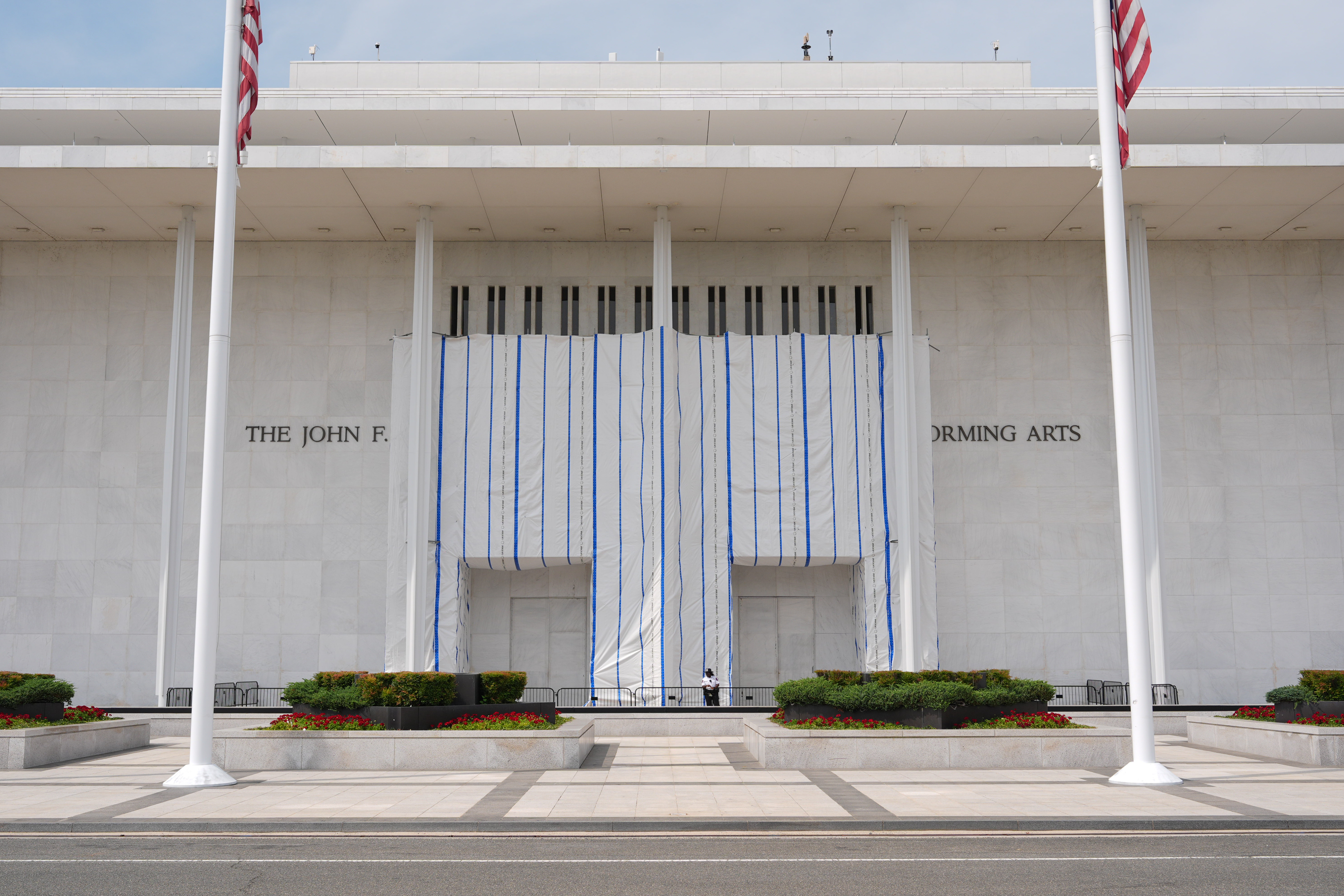
WASHINGTON — A chunk of ceiling fell inside a main hallway of the Kennedy Center, according to a spokesperson who said the damage underscores the need to shut down the historic arts venue for renovations sought by President Donald Trump.
No one was injured when a piece of the ceiling inside the Kennedy Center’s grand foyer collapsed Friday evening, said Roma Daravi, the center’s vice president for public relations.
Photos provided by the center showed a large hole in the high ceiling and debris littering the red carpet in part of the hallway that connects the Kennedy Center’s three main performance auditoriums. The damage occurred during stormy weather in Washington.
The Kennedy Center’s Trump-aligned board is fighting in court to move forward with plans to add Trump’s name to the building’s facade and to close the center for two years as it undergoes $250 million in renovations.
Daravi called the partial ceiling collapse Friday “another example of the urgent need to close for renovation and revitalization, as our Chairman President Trump has championed.”
“This structural failure stems from decades of neglect and deferred maintenance by the previous leadership, and there’s no justification for further delays in restoring America’s cultural center,” Daravi said in a statement.
Trump’s efforts to add his name and make other big changes to the center established to honor President John F. Kennedy following his assassination are just part of Trump’s broader second-term agenda to reshape Washington.
U.S. District Judge Christopher Cooper ruled in May that Trump’s name had been added to the Kennedy Center illegally and ordered that it be taken down. He also blocked the administration from closing the venue for renovations.
Now before the judge is an August vote by the Kennedy Center’s board to return Trump’s name to the facade so it reads: “The John F. Kennedy Center for the Performing Arts Restored and Renovated By President Donald J. Trump.” Justice Department lawyers have argued donations for renovations will dry up without Trump’s name on the building.
Other changes have moved forward. Last week, the Kennedy Center took down a large stick figure sculpture known as Blue that had stood outside the center since 2019. The Kennedy Center gave no reason for its removal, but said in a statement “we are honored to have been stewards” of the late sculptor Joel Shapiro’s work.
Grace Terpstra of Keep the KC, a community group fighting the Kennedy Center’s closure, said she suspects the board will seize on what appears to be limited ceiling damage “to make the point that the whole thing needs to be shut down, that it’s going to fall on everybody.”
“I think they’ll try to make it into a bigger thing and show that they’ve found a lot of other things,” said Terpstra, the group’s founder.
Dubbed America’s best singer by Time magazine in 2001, Ms. Wilson was best known for her genre-bending voice, which expanded the boundaries of traditional blues-based jazz and worked effortlessly across folk, pop, R&B, country, and beyond. At the heart of all her work was her idiosyncratic contralto, a soulful sound distinctly tied to her roots.
As Jon Batiste put it in a eulogy on Wednesday, Ms. Wilson sounded like the South.
She died in her native Jackson, Mississippi, on Tuesday morning, the Hinds County Coroner Jeramiah Howard confirmed.
“It is with profound sadness that we announce the passing of Cassandra Wilson, the Grammy Award-winning and legendary jazz artist. Cassandra Wilson transitioned peacefully at home, surrounded by family, close friends, and her manager,” said a statement from her manager to jazz radio station WBGO.
From Jackson to the world
Born and raised in Jackson to musician Herman B. Fowlkes and teacher Mary Fowlkes, Ms. Wilson showed an early love of music listening to Motown, Miles Davis, and Thelonious Monk. At 6, she started piano lessons. She played clarinet in marching bands. She performed at coffeehouses and in cover bands while studying at Millsaps College and Jackson State University.
In the early ‘80s, she mentored under jazz greats in New Orleans before moving to New York City and joining Steve Coleman’s M-Base Collective — eventually becoming its main vocalist.
Her instantly recognizable voice earned her four Grammy nominations and two wins for best jazz vocal album. Those were in 1997 for New Moon Daughter and 2009 for Loverly.
In 2015, it was Ms. Wilson who gave a special concert at the famed Apollo Theater to commemorate the 100th birthday of blues singer Billie Holiday, the legendary American jazz vocalist who died in New York City at age 44. That same year, Ms. Wilson released her last album, Coming Forth by Day, an homage to Holiday.
In 2022, Ms. Wilson was named a National Endowment for the Arts Jazz Master, one of the highest honors awarded to jazz musicians in the United States.
Tributes pour in
“She had an unmistakable vocal tone, phrasing, and her approach of weaving folkloric, R&B, and diasporic music together with experimental and popular genres had a major impact on me,” Batiste said in his tribute to Ms. Wilson on Instagram.
“Her Mississippi heritage was always present in everything no matter how expansive her artistry evolved,” he wrote in the caption of a clip showing them together on Brazilian TV in 2009. “She was one of the first people to take me on tour around the world, the great Cassandra Wilson.”
Jackson Mayor John Horhn said the city “has lost an extraordinary native daughter, and the world has lost a singular musical voice.”
“Cassandra Wilson carried the sound, spirit and history of Mississippi with her wherever her music reached,” said the mayor’s statement, shared with WJTV. “Her work had rare depth of character and a profound understanding of how music moves people, tells stories and connects generations.”
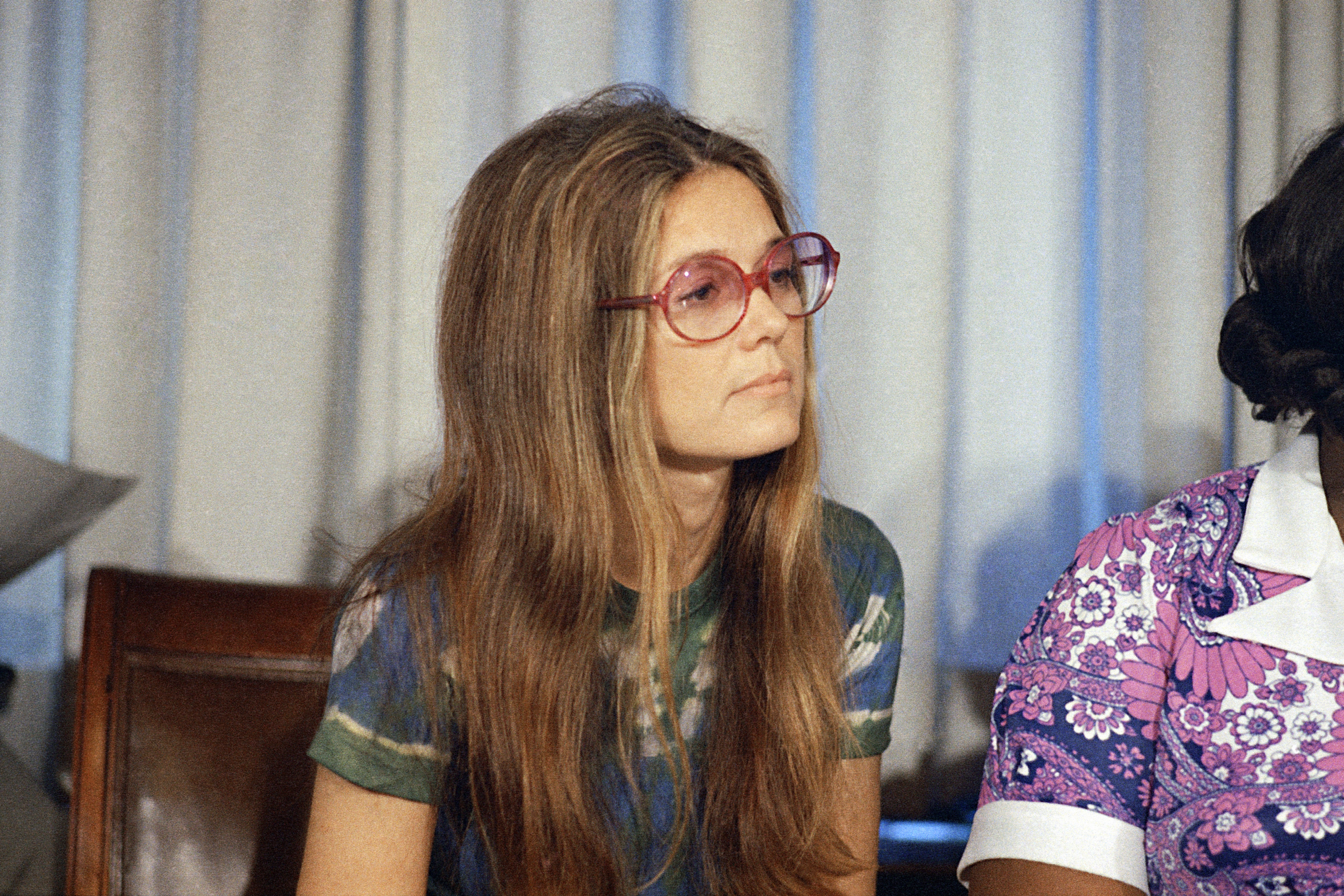
NEW YORK — Gloria Steinem, the celebrated author and activist who became one of the most visible symbols and potent voices of the U.S. women’s movement and a fierce advocate for feminist causes throughout her life, has died. She was 92.
With her trademark streaked hair parted down the middle and large aviator glasses, Ms. Steinem, a co-founder of Ms. Magazine, was a hugely recognizable presence wherever she went. And she went everywhere: Much of her life as an advocate was spent on the road, speaking at college campuses and community centers, at rallies and marches.
She died Wednesday at her home in New York City, according to her and her foundation’s social media pages.
“Gloria’s greatest gift was her ability to listen to others, to make others feel seen and heard,” the posts said. “Her words, actions, and example gave people permission to be their truest selves. Gloria lived true to her independent spirit, always with curiosity and a great sense of humor.”
Ms. Steinem enjoyed writing and spending time in the community in recent years, the posts said. She also hosted talking circles for hundreds of people in her home. She died just before a planned memoir was to be released this fall.
“You can’t do it on the phone or on the web,” she told The Associated Press in a 2015 interview. “You have to be there with all five senses. It should be obvious that people can’t empathize with each other unless we’re in the same room.”
Ms. Steinem changed her career path after a start as a journalist
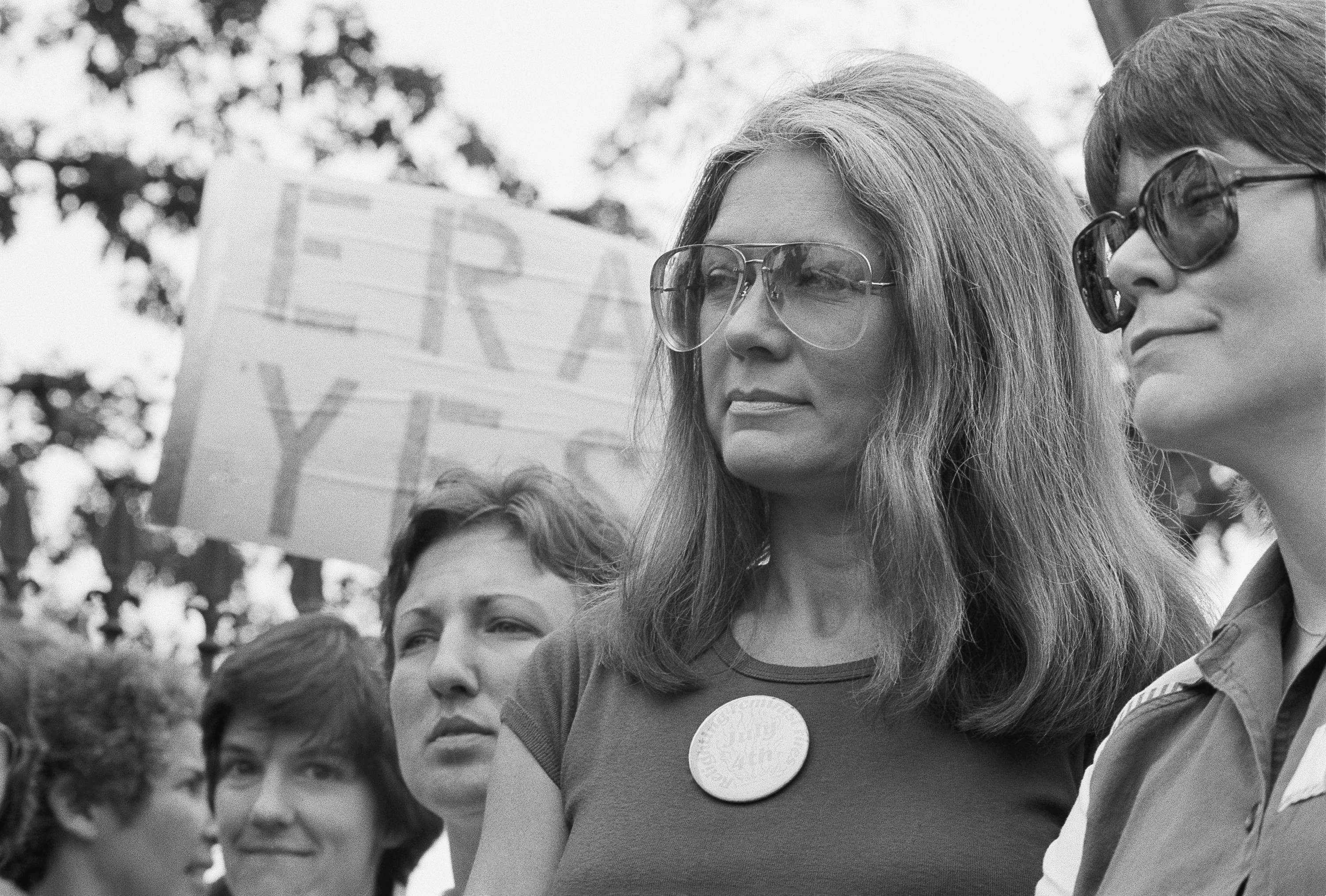
Ms. Steinem at an Equal Rights Amendment rally outside the White House on July 4, 1981.Scott Applewhite
She began her career as a journalist, notably one who reported, in 1963, on degrading conditions in Hugh Hefner’s Playboy empire, an undercover assignment she came to later regret. She credits a meeting six years later, where women spoke out boldly in favor of abortion rights, with changing her career path.
“That speak-out was the beginning of activism for me,” Ms. Steinem, who had undergone a secret illegal abortion herself at age 22, told the AP in an email in 2022, reflecting on the reversal of Roe v Wade. “Either our control over our own bodies is equal, regardless of sex or race, or we’re not living in a democracy.”
Though she soon became a known activist, those who watched Ms. Steinem denounce discrimination for so many years likely never suspected that she’d had to overcome a deep fear of public speaking. She would have simply stuck to writing, she said, if only editors at the time had been willing to let her write about the women’s movement.
But they weren’t interested, she told the AP in 2015. “So I ended up going out and speaking, which was my nightmare,” she said. “I mean, I was terrified. But I’m grateful, even though I still get scared even now.”
Ms. Steinem’s visibility endured throughout her life
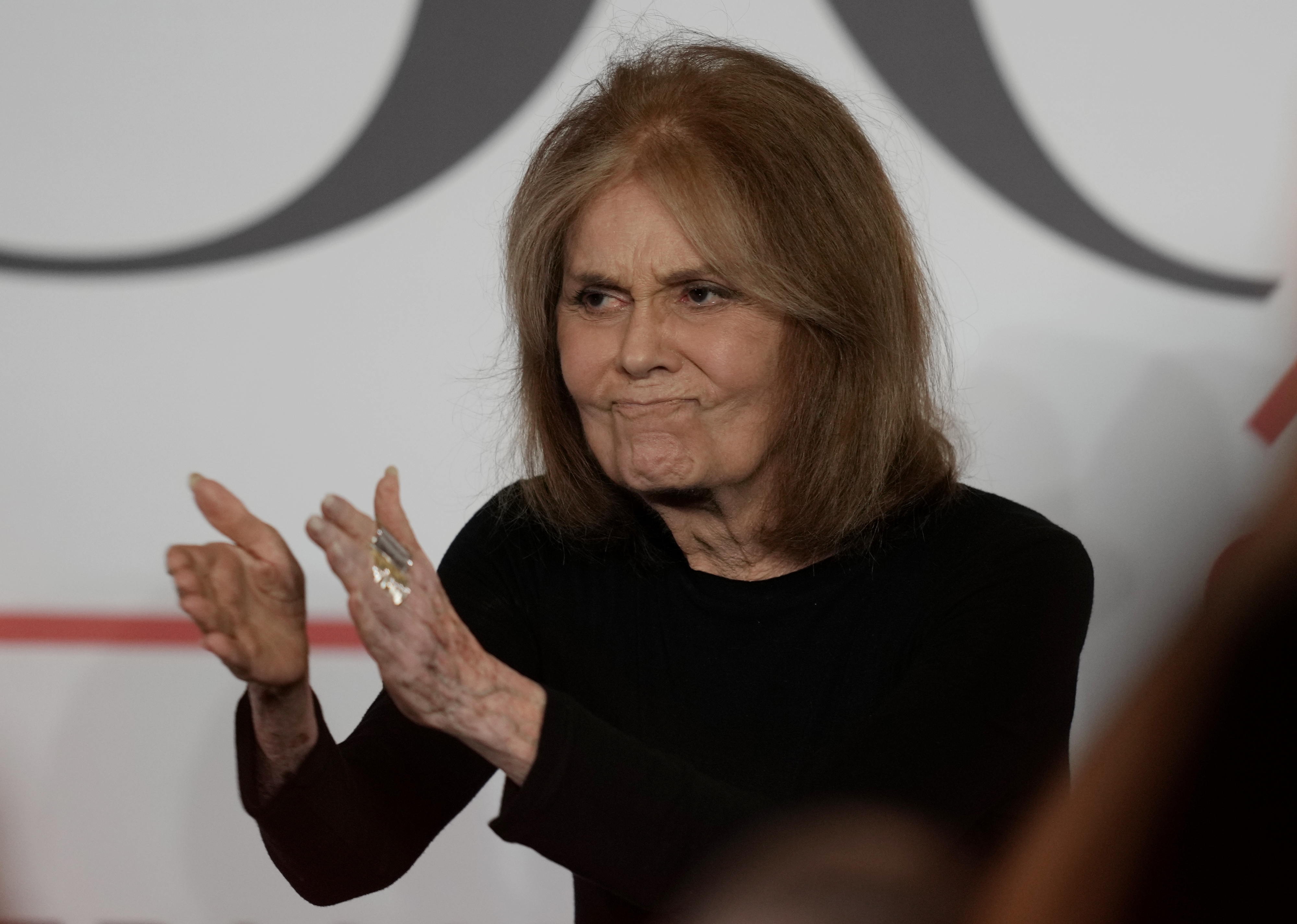
Ms. Steinem claps as she walks on the stage during an International Women’s Day event in Abu Dhabi, United Arab Emirates, in 2023.Kamran Jebreili
Time hardly slowed Ms. Steinem down; well into her 80s she was traveling the globe and speaking out on issues of importance to her. These included everything from genital mutilation to Korean reconciliation, but it was equality for women that took precedence. “Being a feminist means that you see the world as whole instead of half,” she once said. “It shouldn’t need a name, and one day it won’t.”
As the years went on, Ms. Steinem’s visibility endured. At 83, she sat in the front row of her first fashion show, guest of designer Prabal Gurung. A few days after her 85th birthday, she was leading a women’s “talking circle” at an off-Broadway play celebrating her life, where one by one, women in the audience — many fighting tears — rose to thank her and tell their own stories of discrimination. In 2020, her life was the subject of a feature film, The Glorias, A Life on The Road, based on her 2015 memoir and starring Julianne Moore.
And at 91, she collaborated on a picture book with Liberian peace activist and Nobel laureate Leymah Gbowee aimed at inspiring young people to change the world. Rise, Girl, Rise: Our Sister-Friend Journey. Together for All was published in February.
The constant visibility came with a price; even into her older years, Ms. Steinem expressed frustration that despite her accomplishments, she was often described as beautiful or glamorous (A 1992 Vanity Fair profile even noted her “spectacular racehorse legs.”) It was a label she said unfairly detracted from her message.
“Nobody ever called me beautiful until I was publicly a feminist, and that was in my mid-30s,” she told AP in a 2011 interview. “It was clear that label was being assigned to me. The most hurtful part is that you work very hard, and people say it’s because of your looks.”
Ms. Steinem dealt with hostility from many directions
Of course, Ms. Steinem also had to deal with hostility. Sometimes it came from surprising places. Appearing on Larry King’s talk show on CNN in 1990, she was visibly stunned when a female caller greeted her cheerfully, then told her to “rot in hell” because she had ruined “the beautiful American family.”
But by then, she noted, at least people were taking feminists seriously. That wasn’t the case in 1972 when she co-founded Ms. Magazine and many commentators — especially male — dismissed it as ridiculous, predicting an early demise. (The magazine continues to this day, published by the Feminist Majority Foundation.)
Among Ms. Steinem’s detractors was President Richard Nixon, who was caught on an Oval Office tape ridiculing both her and the “Ms.” title. The ridicule was mutual: In a 1972 National Press Club speech, Ms. Steinem called Nixon “the most sexually insecure chief of state since Napoleon.”
It was just one example of Ms. Steinem’s trademark wit. Before she married at 66, she often explained her singlehood by saying “I can’t mate in captivity.” Laughter, she wrote, was “the only free emotion — the only one that can’t be compelled.”
In 2013, Ms. Steinem was awarded the Presidential Medal of Freedom by President Barack Obama. “Because of her work across America and around the world, more women are afforded the respect and opportunities that they deserve,” he said, “but she also changed how women thought about themselves.”
Ms. Steinem ‘read everything I could get my hands on’ growing up
Gloria Marie Steinem was born on March 25, 1934, in Toledo, Ohio. Her father was a traveling antique salesperson; she spent her early years on the road with her parents, not attending regular school. “I just read everything I could get my hands on,” she told an audience at Manhattan’s 92Y in 2026. “Which was frequently completely unsuitable … just everything and anything. I also was in love with the movies — my idea of heaven was a movie and a malted.”
In 1944 her parents divorced, and 10-year-old Gloria was left to take care of her mother. a once-promising journalist who struggled to combine her work with running a household, and eventually suffered a nervous breakdown.
As a young girl she excelled at tap dancing — it was even going to be her “ticket out of Toledo,” she said. Although she remained a good dancer, that particular career didn’t materialize. She attended Smith College in the ’50s, a time when, she has said, women were being educated to be mothers and wives.
But marriage was not on Ms. Steinem’s mind. “I was engaged to a very nice man. It wasn’t his fault, but I just didn’t want to get married,” she told her 2026 audience. Instead, she took advantage of a modest fellowship to travel to India. After that, Ms. Steinem headed to Manhattan, where she couldn’t rent her own apartment because, she said, landlords avoided single women, assuming “if you could earn enough, you must be a hooker.”
The aspiring journalist wanted to write about politics. But editors gave her assignments on food, fashion, and, in what she jokingly called “the low point of my life,” an article about textured stockings. Even more demoralizing was her experience with an editor who, she said, gave her a choice one day: Spend the afternoon in a hotel with him, or mail his letters on the way out.
She chose to mail the letters. “There was no word for sexual harassment then,” she has said. “It was just life.”
But one assignment in 1963 sounded compelling: posing as a Playboy Bunny, for an exposé in the now-defunct Show magazine. Ms. Steinem went through the audition process, assuming she’d be weeded out. But she was given her bunny costume — “so tight, it would give a man a cleavage,” she joked — and worked in the job for about a month.
“I could not have made a bigger mistake,” she told the AP in 2011. “It was personally and professionally a disaster. In the short term, it was much harder to get assignments, and in the long term it’s been used to ridicule me.”
Ms. Steinem’s writing became more political in her 30s
Ms. Steinem was in her 30s when she joined the editorial board of New York magazine, and her writing became more political. In 1969, she went to cover an abortion rights hearing. She had never told anyone about her illegal abortion at 22, in London. That was the moment, she has said, that triggered her career as a women’s rights activist. “I don’t think I had ever felt part of a group before,” she said in a 1970 TV interview.
Ms. Steinem founded the National Women’s Political Caucus in 1971 along with Betty Friedan, Shirley Chisholm and Bella Abzug. The latter became a dear lifelong friend — “the woman I wished I had had as a mother,” she said at Abzug’s funeral.
Unlike Abzug, Ms. Steinem was naturally reserved, not comfortable in front of a crowd. Gradually, with her early speaking partner Dorothy Pitman Hughes, a Black feminist and child welfare advocate, she found her footing. The two formed a powerful partnership at a time when feminism was viewed as largely a white, middle-class movement. In an iconic photo, the two raise their right arms together in the Black Power salute.
As she grew more famous, Ms. Steinem drew attention not just for her work but for a glamorous Manhattan life. Asked once about her streaked hair and aviator glasses, she explained that the hair was inspired by Holly Golightly, the free-spirited character played by Audrey Hepburn in Breakfast at Tiffany’s. The glasses? They were “more about hiding,” she said.
When reaction was hostile, Ms. Steinem would try to reason that it was a step above ridicule. But sometimes it stung, like a snarky Esquire profile in the early ’70s, so hurtful that she cried, and colleagues called a news conference to defend her.
Ms. Steinem co-founded Ms. Magazine and stayed with it as an adviser
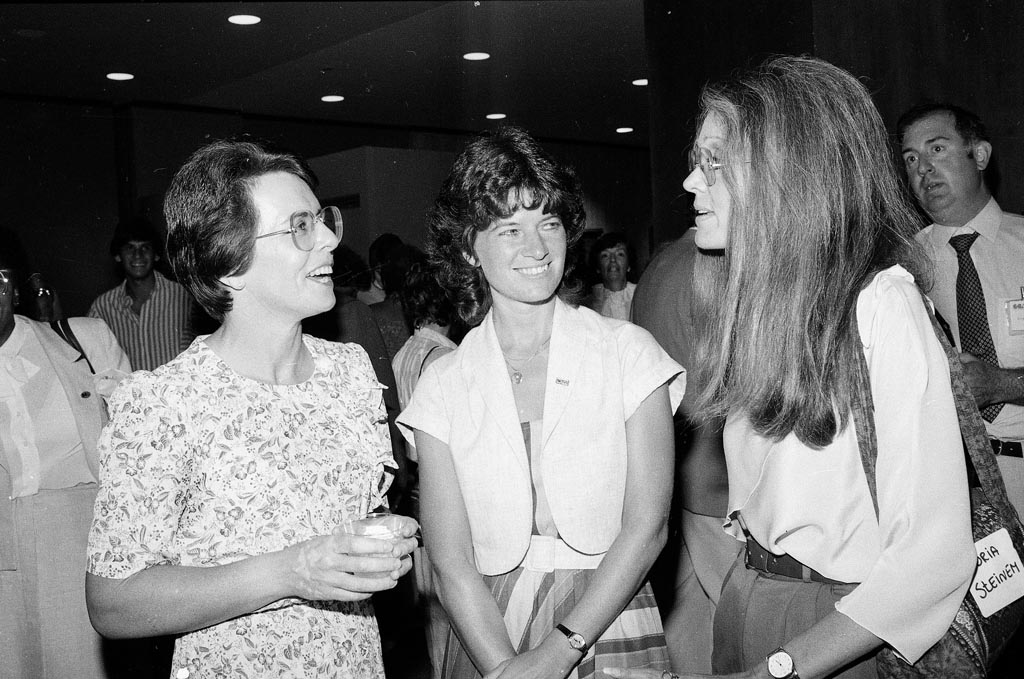
(From left) Tennis star Billie Jean King, astronaut Sally Ride, and Ms. Steinem at a reception hosted by the Girls Club of America and Ms. Magazine to honor Ride in 1983.ASSOCIATED PRESS
Then came Ms. Magazine in 1972, a magazine by women, for women. “I was so obsessed with the fear that it would fail and be a disgrace to the movement,” Ms. Steinem, age 37 when it launched, told the AP in 2011. And opponents hoped that would happen. TV newsman Harry Reasoner, an especially tart critic, later apologized on air. Ms. Steinem continued with Ms. until it was bought in 2001 by the Feminist Majority Foundation, and remained an adviser.
By 1977, numerous gains had been made for women, including Roe in 1973. But the Equal Rights Amendment, which had passed the House and Senate in 1972 but needed to be ratified by three-quarters of state legislatures, remained elusive. The issue was front and center at the 1977 National Women’s Conference, convened on a congressional mandate to examine women’s rights.
“If they want us to become the radicals that they fear we are, just let them stop the ERA and we will become those radicals,” Ms. Steinem said there.
Among groups Ms. Steinem co-founded were the Women’s Action Alliance, which was active through the 1990s; the Women’s Media Center in 2004, the Voters for Choice political action committee in 1977, and the Ms. Foundation for Women. She also helped establish the Take Our Daughters to Work Day.
Ms. Steinem never had her own children, and said she never regretted it. “No, not for a millisecond,” she told the AP, describing an incident in which she was afraid to answer that question in front of a group of women in India, fearing they wouldn’t like the answer. “But they applauded,” she said. “It’s important that some of us not have children, to show that we have a choice.”
In 2000, Ms. Steinem she did something she’d never planned to: She got married, at 66, to British activist and businessman David Bale, whom she met at a fundraiser (Bale was the father of actor Christian Bale.)
“I thought, ‘I haven’t changed, marriage had changed,’” Ms. Steinem said. “David and I wanted to be together, we loved each other. He needed a green card.” They married at a Cherokee ceremony in Oklahoma. Several years later, he became ill with brain lymphoma, and Ms. Steinem cared for him until his death in 2003.
Ms. Steinem said she had few regrets in life, but did miss being present when her father died. She received word that he’d been in a serious car accident, but did not respond in time, and he died alone. “I had taken care of my mom as a child, and I feared I’d never come back,” she explained. She was also sorry that she didn’t become closer to her mother. “I was so fearful of becoming her,” she said in an HBO documentary, Gloria: In Her Own Words.
Ms. Steinem’s books included ‘A Life on the Road’
Ms. Steinem’s books included the 2015 road memoir A Life on the Road — but she wryly noted at the time that she’d actually never learned to drive. It would have taken away, she said, from her ability to converse with her hosts, who would pick her up from airports or train stations. And, she noted, she always loved to chat with taxi drivers.
On Jan. 21, 2017, when hundreds of thousands of women gathered in Washington in their pink “pussy hats” for the historic Women’s March, it surprised nobody that the keynote speaker, and the most rousing, was Ms. Steinem.
“We are linked,” she told the crowd. “And this is a day that will change us forever because we are together.”
For many women, Ms. Steinem was the galvanizing voice that day. She would go on to advocate fiercely. But, though many saw her as a singular figure in history, she often liked to say that if she hadn’t come along, someone else would have accomplished the same things.
By the same token, she said, it was less important that younger people listen to her, and more important that they listen to themselves.
“The primary thing is not that they know who I am,” she said, “but that they know who THEY are.”
MILLINOCKET, Maine — More than 14 million older adults fall every year in the U.S., perhaps none so often as 91-year-old Dale Sanders.
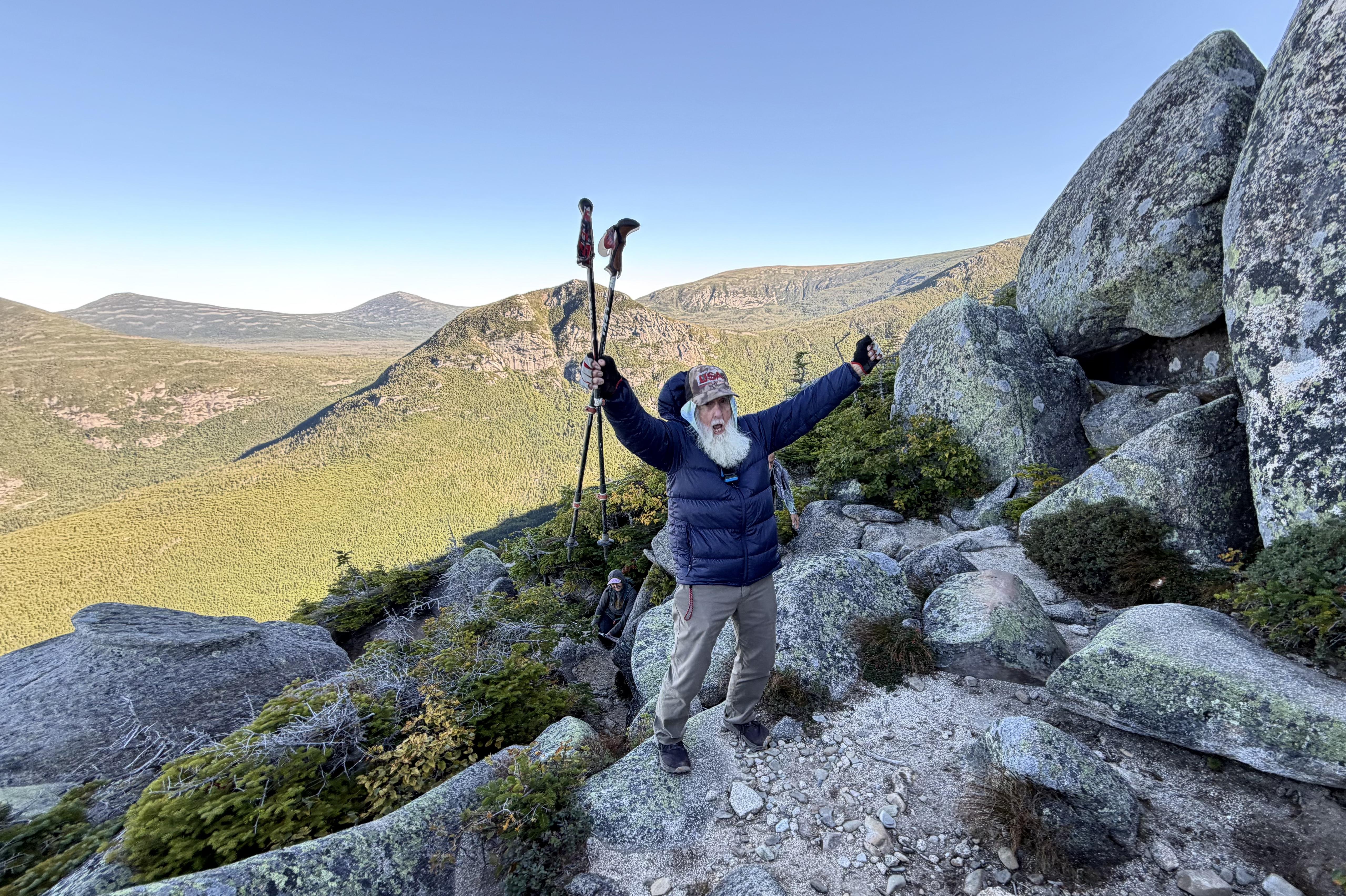
By his count, Sanders fell 71 times while reclaiming his record as the oldest hiker to complete the Appalachian Trail. Six were what he calls hard falls, including one that led to a brief hospitalization and another just 200 yards from the finish. But none were enough to permanently divert him from the 2,193-mile trail that runs between Springer Mountain in Georgia and Mount Katahdin in Maine.
The Appalachian Trail Conservancy defines a thru-hike as completing all of the trail’s sections in any order within a year, allowing for pauses. Sanders started Sept. 6 in West Virginia, hopscotched around with some brief breaks, and finished Monday atop Maine’s highest peak, where he paused to pray at the sign marking the summit.
“I had to thank God, and I had to thank my support team and everybody that got me here,” he said.
A long-planned comeback
Sanders, whose trail name is Grey Beard, first set the Appalachian Trail record in 2017 at age 82. Four years later, his 83-year-old friend M.J. Eberhart, aka Nimblewill Nomad, took the title. But within months, Sanders announced his comeback plan.
While Sanders’ first journey was easier than he expected, the latest was considerably harder. Despite six months of training, he said he wasn’t in the best condition when he returned to the trail.
“And even today, I feel that I should probably be in better shape than I am,” he said last month. “But I just have to always go back and say, ‘But I am 91, so I’m blazing new ground hiking long distances like this.’”
In June, Sanders was descending Killington Mountain in central Vermont when he fell forward in a boulder field, scraping his legs, arms, and hands.
“Thank God nothing got broken, but I was banged up,” he said. “I didn’t rub the blood off, I just kept hiking.”
Weeks later, his left arm went numb and he ended up at a Maine hospital. What doctors initially feared was a stroke turned out to be a pinched nerve, but though he was soon cleared to resume hiking, he considered giving up.
He returned home to Tennessee in early August to be with his wife, whose mother had just died, and she convinced him to press on.
His mission changed along the way
Some of Sanders’ best days were in Pennsylvania, where he enjoyed well-maintained trails and treats delivered by “trail angels.”
“When people are taking care of you and bringing you caramel frappes on the trail, the rocks don’t matter,” he said.
In fact, Sanders has become something of a star among fellow hikers. Thousands more follow him on social media, which surprised Sanders and caused him to expand his mission beyond reclaiming his record.
“I want to get it back, but right now, that’s secondary,” he said. ”Right now, what’s the most important thing — and it’s one of the things that surprised me — is that people are motivated and given encouragement by my efforts.”
Meredith Ewenson, who met Sanders in June while leading a hike in New Hampshire for 10 other women, said he embodied not just the idea that anything is possible, but that the journey matters most.
“Seeing it in real life is something that I’ll definitely remember forever,” she said.
Ewenson said her group spotted Sanders early in the morning, but it wasn’t until he blazed by them hours later that they saw the Grey Beard logo on his T-shirt and realized who he was. They caught up with him that night at an Appalachian Mountain Club hut, arriving around 4 p.m.
“I got here at noon,” he told them.
The next morning, she and others cheered as Sanders performed a “victory dance” before setting off again.
“My first thought was ‘Wow, his mobility is insane,’” Ewenson said. “His face on that body just doesn’t make any sense. My brain couldn’t compute how he was so impossibly fit for being that age.”
Off-trail adventures
Sanders was born in Kentucky in 1935, two years before the Appalachian Trail was completed. Bullied as a child for his small size, he gained confidence in solo sports like acrobatics and swimming. He later served in the Navy and retired in 2002 after a long career in parks and recreation.
Sanders holds numerous other age-related records, including becoming the oldest person to paddle the entire length of the Mississippi River, an 87-day trip he started on his 87th birthday.
On his latest adventure, he tackled obstacles like downed trees or steep scrambles with vigor, though he started to get a bit wobbly toward the end of one 12-mile day. He laid down on the trail, said he needed a power nap, and briefly fell asleep.
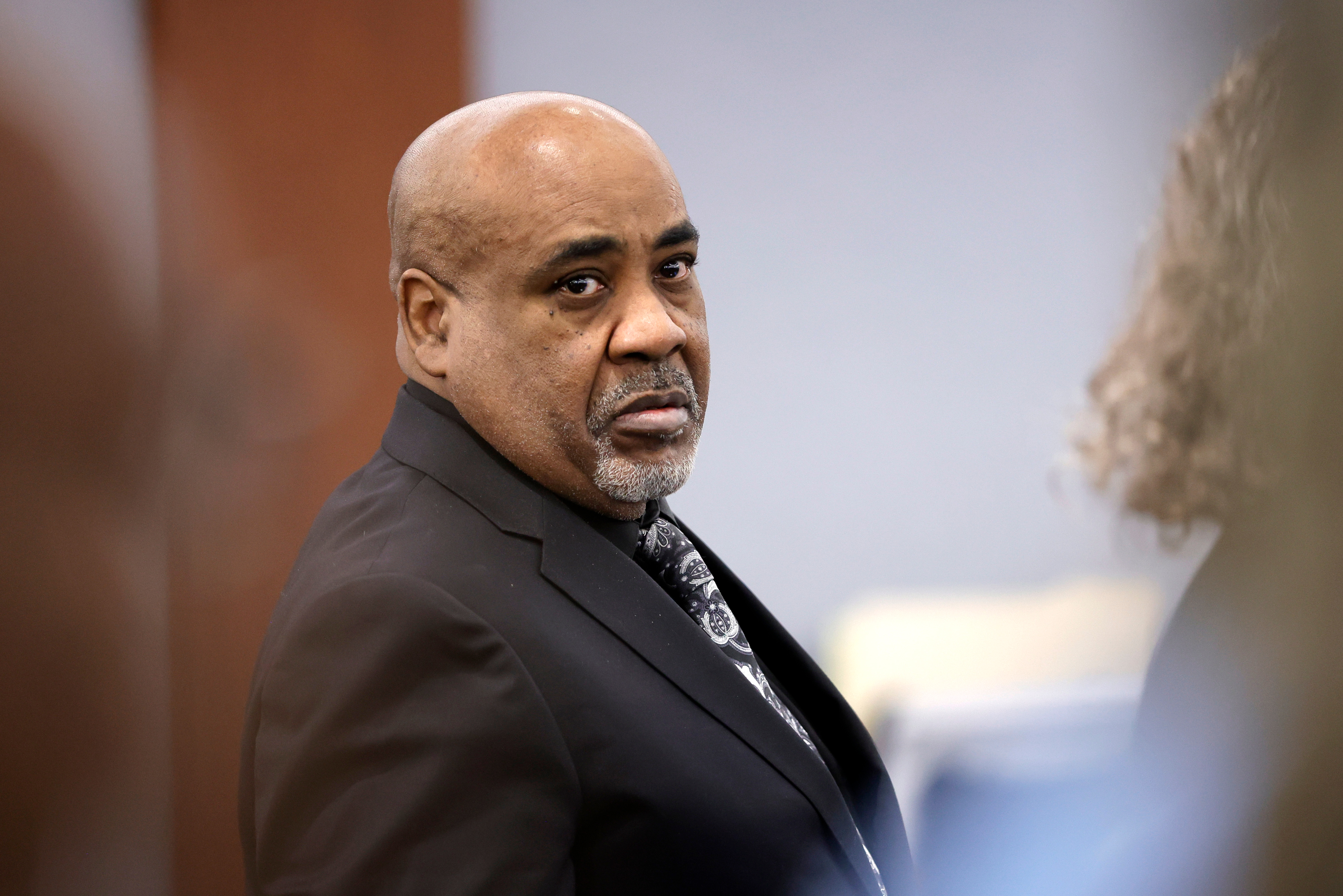
LAS VEGAS — A jury found Duane “Keffe D” Davis guilty of orchestrating the 1996 killing of rap icon Tupac Shakur, finally bringing a measure of resolution to a case that had gripped hip-hop fans and lingered in the public imagination for decades.
The 63-year-old Davis was convicted Monday of a single count of murder with a deadly weapon and could be sentenced to life in prison. The jury deliberated for less than three hours after a weekslong trial in Las Vegas.
After the verdict was read, Shakur’s sister, Sekyiwa “Set” Shakur, cried and hugged the prosecutors. Davis’ son covered his face with one hand.
Chief Deputy District Attorney Binu Palal told jurors in closing arguments earlier Monday that Davis acquired a gun and “went hunting” for Shakur and Death Row Records co-founder Marion “Suge” Knight after the men had beaten up Davis’ nephew earlier that night.
“He is responsible of the murder of Tupac Shakur,” Palal said. “Tell him you hear him. Find him guilty.”
Prosecutors said that while his story had changed over the years, Davis repeatedly placed himself inside a white Cadillac from which the shots were fired. And they said that while he did not pull the trigger, evidence showed he’d called for the gunfire as a powerful gang leader the younger men in the car, including his nephew, were going to listen to.
Defense attorney Michael Sanft asked jurors if there was any evidence that Davis had ever called the shots before or after the shooting.
The panel of 16 jurors, four of whom are alternates, heard testimony from 24 prosecution witnesses and three defense witnesses over nine days.
The prosecution said the state would dismiss a gang enhancement charge due to witness logistics. Prosecutors declined to comment following the verdict, and members of Shakur’s family said they were waiting until sentencing, which is scheduled for October.
Decades-old case has drawn attention of hip-hop fans and crime experts alike
The trial brought to a head a decades-old case that for years has drawn the attention of hip-hop fans and true crime experts alike. Shakur, who was considered one of the most influential rappers of all time, was in Las Vegas on Sept. 7, 1996, and stopped at a red light when a white Cadillac pulled up beside him, and shots were fired. He died six days later from his wounds. Knight was also wounded but survived.
For years, nobody had been charged in the rapper’s death until Davis began making public statements, saying he was in the Cadillac and gave the gun to others in the backseat, calling the shooting a retaliation for the earlier beating of his nephew. Davis is the only person still alive among the four men prosecutors say were in the Cadillac.
Defense argued public statements were untrue, physical evidence was lacking
Sanft, Davis’ attorney, argued there was no physical evidence connecting his client to the shooting. He said the book Davis co-authored and the public statements he made were dramatized bravado designed to make money, not to tell the truth.
Throughout the trial, Sanft poked holes in prosecutors’ narrative. He said investigators did not back up the claims made by his client, and he repeatedly pointed out a lack of physical evidence, such as phone records, that showed Davis was the shot caller.
“They have nothing in this case that says that man was here in Las Vegas on Sept. 7, 1996,” Sanft said during his closing argument.
In a rebuttal argument, prosecutor Marc DiGiacomo pointed to a scrapbook Davis kept containing articles about Shakur.
“This guy’s scrapbooking his murder, for God’s sake,” DiGiacomo told jurors.
Davis’ own words were front and center
Palal held up Davis’ 2019 memoir, Compton Street Legend, and played an interview in which Davis encouraged people to buy it to get the “real truth.” Although the book contains a disclaimer saying some facts were changed, prosecutors argued the central account did not.
Sanft also turned to his client’s memoir during his closing argument. While reading an excerpt, he said the N-word aloud, prompting people watching in an overflow courtroom to recoil and shake their heads.
In multiple interviews, Davis said he handed the gun to the back seat, but in others as well as in his book, Davis wouldn’t say who pulled the trigger.
Gang and record label rivalries provided the backdrop
While insisting Davis’ words alone were enough to convict him, prosecutors said a gang rivalry helped explain why the shooting happened.
Witnesses described the hostile rivalry between the Los Angeles gang sects leading up to Shakur’s death, and how the gangs became affiliated with two rival labels — Mob Piru with Knight’s Death Row Records and the South Side Compton Crips with Sean “Diddy” Combs’ Bad Boy Records.
The shooting death of Bad Boy’s the Notorious B.I.G. six months after Shakur came up many times during the trial, with law enforcement witnesses saying Davis was briefly a suspect in that killing before being discounted. That case, which has also been an obsession of hip-hop fans, remains unsolved.