Category: Business Wires

  • Three tricky decisions for every retirement plan

    Three tricky decisions for every retirement plan

    Many aspects of retirement planning are the subject of hot debate, even among experts. Here are three tricky decisions that confront people planning retirement today.

    How much to withdraw each year in retirement

    It’s impossible to say at the outset of retirement what the “right” withdrawal rate is. You don’t know what the major asset classes will return or how high (or low) inflation will run during your retirement. Nor do you know how long you’ll live.

    But you have to use something, and this is where the disagreements come in. A 4% starting withdrawal rate, with annual inflation adjustments to that initial dollar amount thereafter, is often cited as a “safe” withdrawal system for new retirees. Research we conducted at the end of 2021 suggested that a 3.3% withdrawal rate was a safe starting point for new retirees with balanced portfolios over a 30-year horizon. When we revisited the research in late 2022, our safe starting withdrawal percentage was 3.8%. By late 2023, that number had popped up to the classic 4%, thanks to rising fixed-income yields and moderating inflation. At the end of 2024, it was 3.7%, and 3.9% at the end of 2025. Further complicating matters is that retirees don’t spend the same amount, adjusted for inflation, year after year.

    There’s a comforting consensus in a few key areas.

    Whether to buy long-term-care insurance

    According to a 2019 study, about half of people turning 65 will need some type of paid long-term care. But paying for it can be financially devastating. What’s up for debate is whether and how to protect yourself.

    The long-term-care insurance market is deeply troubled today. While recent interest rate hikes have improved the economics of the long-term-care insurance industry, premiums have increased and several insurers have gotten out of the business.

    That’s why purchasing pure long-term-care insurance is by no means a no-brainer. Hybrid products offer a long-term-care rider bolted onto a life insurance policy or annuity, but they’re complicated and often purchased with a lump sum.

    Take a hard look at your retirement portfolio to decide whether your assets are sufficient to self-fund, you’re likely to qualify for Medicaid, or you fall somewhere in between. From there, you can create a long-term-care action plan.

    Whether to buy an annuity

    Academic researchers have long championed simple income annuities for retirement, arguing they provide longevity risk protection and a higher payout than would be available from fixed-rate investment products like bond funds. Annuities have been getting even more attention as payouts tend to get better during a period of rising interest rates.

    But annuity types vary widely, from single-premium immediate annuities to more complicated products that provide equity exposure, guaranteed minimum living benefits, and death benefits.

    Research has demonstrated that the peace of mind that accompanies the purchase of a basic annuity is greater than would be associated with holding the same amount in investment assets. Yet the annuity products that retirement researchers generally like best — the plain-vanilla immediate and deferred-income annuities — have struggled in the sales department. Investors may be reluctant to part with the capital to purchase them, and advisers may not have a strong motive to recommend them.

    While there’s no consensus on whether annuities are a must-have or which types to buy, there’s little doubt that the lifetime income they offer is in short supply. That’s especially true given that only about a fourth of baby boomers retiring today have pensions, and that number trends down for the generations behind them.

    The starting point when thinking about lifetime income isn’t an annuity. It’s Social Security, which is basically an annuity backed by the U.S. government. Only after maximizing lifetime income through Social Security should an annuity come into play.

    This article was provided to the Associated Press by Morningstar. For more retirement content, go to morningstar.com/retirement.

    Christine Benz is director of personal finance and retirement planning for Morningstar and co-host of “The Long View” podcast. Subscribe to her free newsletter, Improving Your Finances.
  • Trump says U.S. has entered deal with Venezuela to take control of 65 billion barrels of oil reserves

    Trump says U.S. has entered deal with Venezuela to take control of 65 billion barrels of oil reserves

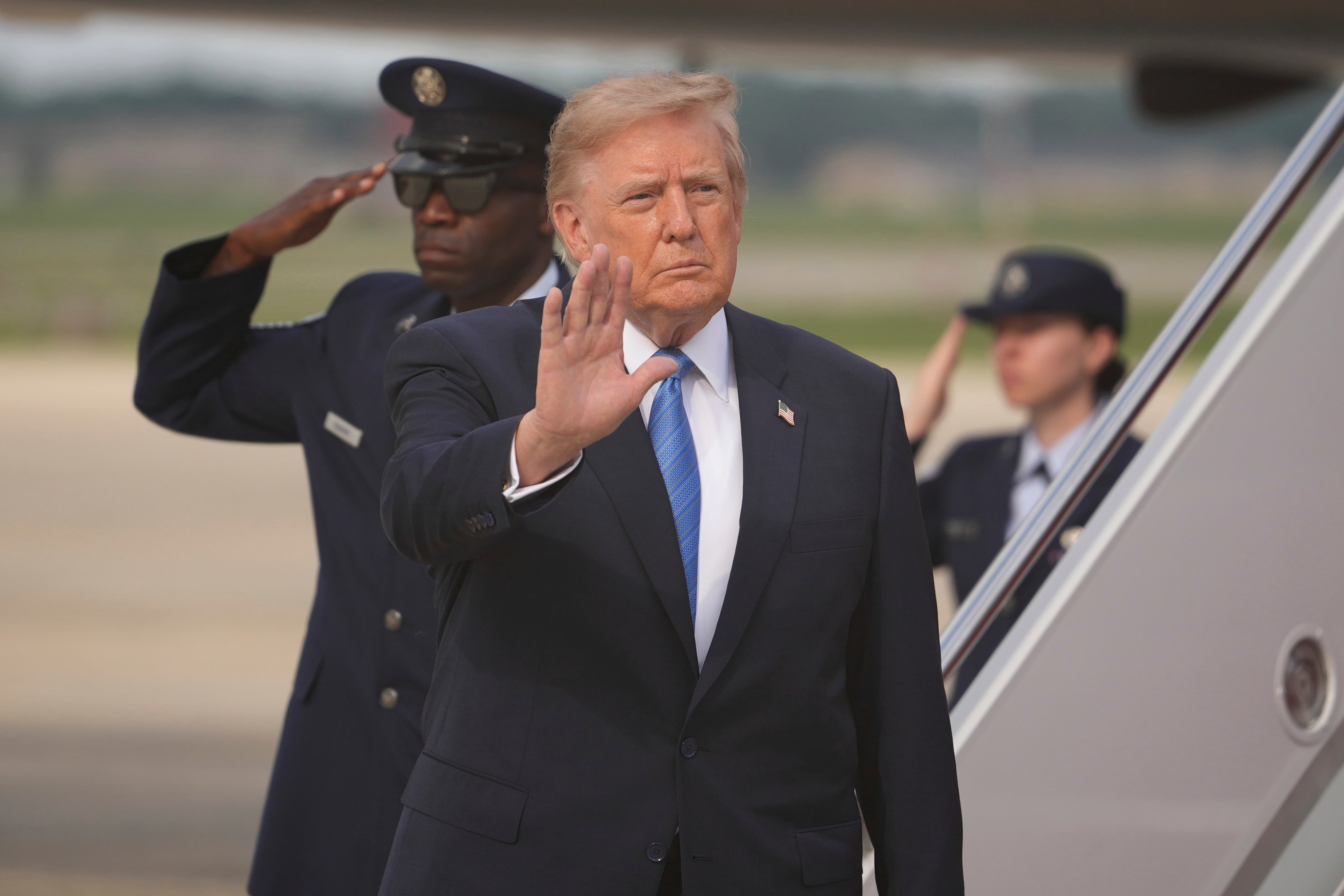
    WASHINGTON — President Donald Trump said Friday that his administration has entered a sweeping agreement with Venezuela that, if realized, could give the U.S. access to vast amounts of the South American country’s untapped oil reserves, at cost.

    Trump in a social media post announcing the agreement said it was negotiated by Secretary of State Marco Rubio, Defense Secretary Pete Hegseth, and Venezuela’s acting President Delcy Rodríguez.

    “The United States of America has just entered into an Agreement with the Country of Venezuela on, THE BIGGEST OIL DEAL IN WORLD HISTORY!” Trump wrote.

    Rodríguez’s government in a statement said the deal involves the development of 17 fields with a proven potential of 65 billion barrels. It said the agreement could draw $100 billion in investment into Venezuela’s oil industry and yield over $209 billion in taxes for Caracas.

    Rodríguez in a posting on Telegram predicted the deal “will have a significant impact on our nation’s revival.”

    The agreement allows for the United States to partner with an unnamed private operator in Venezuela to create a new private company to take hold of the reserves, according to a U.S. official familiar with the contours of the deal.

    The official, who was not authorized to comment publicly and spoke on the condition of anonymity, added that Rodríguez granted the company 100-year rights to develop the oil fields.

    The deal gives the United States 55% effective output of the new private company — including an ownership stake and rights to buy oil at cost. The company would be the second largest corporate holder of proven reserves after Saudi Aramco, according to the official.

    Trump is under pressure to show he’s lowering oil costs

    The announcement comes nearly nine months after the U.S. military at Trump’s direction carried out an operation to capture Venezuela’s then-President Nicolás Maduro and spirit him to the United States to face federal narcoterrorism and drug trafficking charges.

    Trump faces mounting pressure to address high gas prices as the war in Iran on Friday reached a six-month milestone with no conclusion in sight. The U.S. has tapped its strategic petroleum reserves, which in early August fell below 300 million barrels, down by more than 100 million barrels since the start of 2026.

    The U.S.-Israel war against Iran has led to a dramatic slowdown of Gulf oil moving through the Strait of Hormuz, which about 20% of the world petroleum passed through prior to the conflict.

    The average price of gas in the U.S. stood at about $4.09 a gallon on Friday, according to AAA. The average price was $3.21 at the same time last year.

    A significant drop in U.S. gas prices tied to the agreement should not be expected immediately. Experts have repeatedly warned that a substantial boost in Venezuelan oil production will not happen quickly as repairing and expanding infrastructure takes years and requires billions of dollars.

    Persuading big American oil companies to return the region could face headwinds given the political uncertainty and decades of badly damaged infrastructure.

    Days after the ouster of Maduro, Trump gathered oil executives at the White House and called on them to rush back into Venezuela. Executives expressed interest in the opportunity but there was also a measure of caution given their past experience in the country.

    Darren Woods, CEO of ExxonMobil, the largest U.S. oil company, said at that moment he saw the country as “uninvestable.”

    But Trump has insisted that his administration has brought a measure of stability to Venezuela.

    He has argued that Venezuela stole U.S. oil when former Venezuelan President Hugo Chávez moved decades ago to nationalize hundreds of foreign-owned assets, including those owned by American oil companies.

    Rodríguez, in one of her early moves after taking power, signed a law that opens the nation’s oil sector to privatization and reversed a bedrock tenet of the self-proclaimed socialist movement that has ruled the country for more than two decades.

    Rubio said on X that the agreement would usher in billions in private investment into Venezuela and lead to lower gas prices in the United States.

    “This deal is a huge win for both the American and Venezuelan people,” Rubio posted.

    The oil bought from the new company would go toward filling the U.S. strategic petroleum reserve and toward military use, according to the U.S. official.

    Venezuela has one of the largest oil reserves in the world, with an estimated 303 billion barrels of crude oil in the ground. That’s about 17% of the world’s supply, according to the U.S. Energy Information Administration.

    Unlike other parts of the world, where geologists have to search for untapped oil, the reserves under Venezuela’s soil are largely mapped and known, experts say. But because of dilapidated infrastructure, the country only produces about 1% of the world’s oil.

    Maduro remains jailed in the U.S. He has pleaded not guilty.

  • Israeli strikes kill 5 in Gaza and 3 in West Bank

    Israeli strikes kill 5 in Gaza and 3 in West Bank

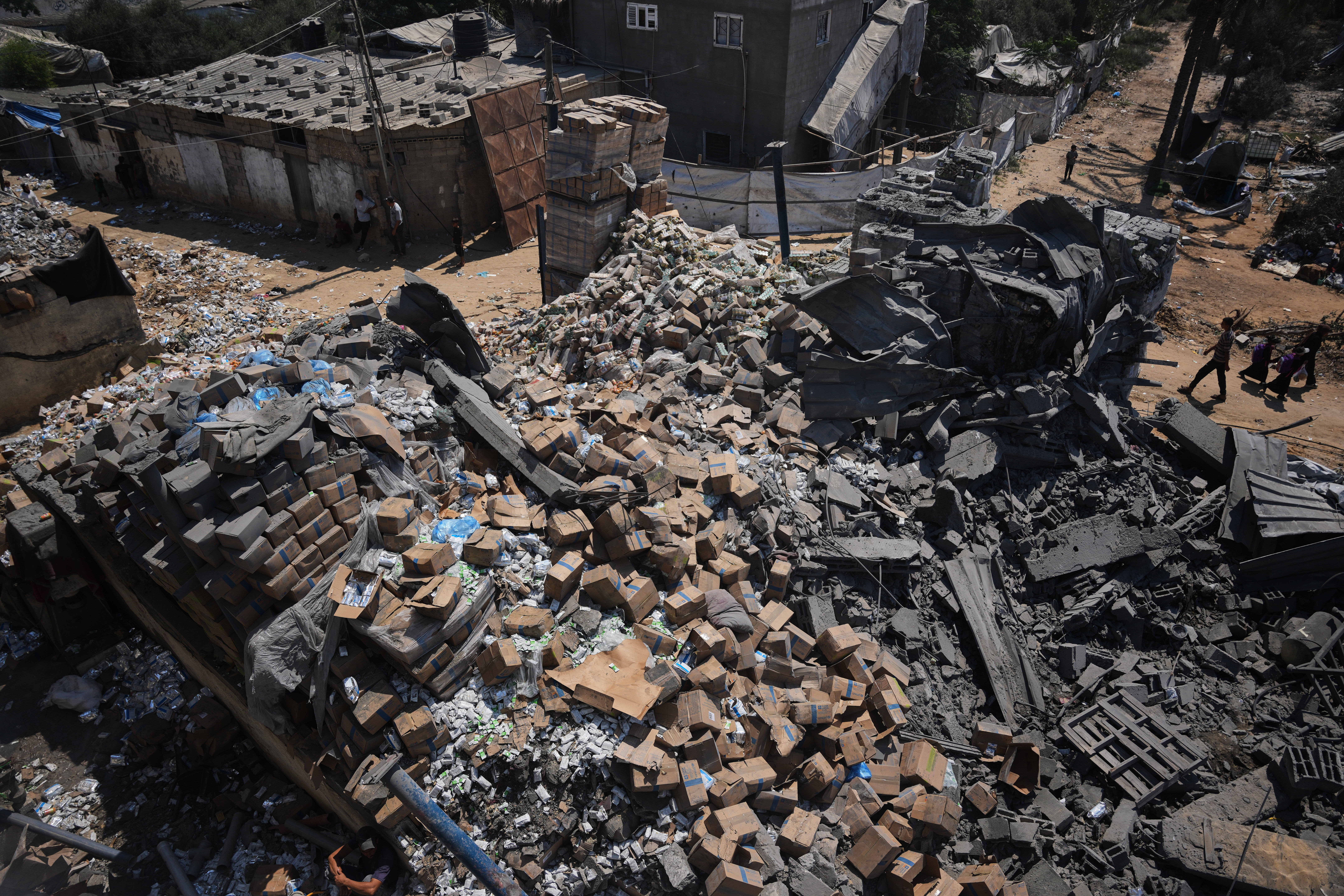
    Israeli airstrikes killed five people in Gaza and three in the West Bank on Friday, despite a fragile ceasefire brokered by the United States.

    Meanwhile, thousands of sailors remain stranded in the Persian Gulf by the Iran war, while Iran is touting an energy deal with Russia and the U.S. has imposed restrictions on a major Egyptian bank for its ties with Iran.

    Israeli strikes in Gaza kill 5

    Israeli strikes in Gaza have killed five people, local hospital officials said Friday.

    Two brothers and another relative died in a strike on the family’s home outside Khan Younis, officials at Nasser Hospital said. Two separate Israeli strikes killed one person each in Gaza City, according to health officials at Shifa hospital.

    Israel’s military confirmed the Gaza strikes but said it was not aware of the one in Khan Younis.

    The five deaths are among more than 1,300 Palestinians killed in airstrikes since an October ceasefire deal, Gaza health officials say.

    Attack kills 3 in Jenin

    Israel’s military said it killed three Palestinians in an airstrike in the West Bank city of Jenin on Friday, describing one of the dead as a Hamas operative and the two others as accomplices.

    The military identified one of the targets as Qais Bitawi who was alleged to be “involved in advancing significant terrorist activity.” The Palestinian Ministry of Health confirmed Bitawi had been killed, along with two others. Hamas condemned the strike as a “heinous crime.”

    Violence has escalated in the West Bank, where at least 87 Palestinians have been killed in attacks while three Israelis have been killed by Palestinians in 2026.

    Iranian leader bans actions undermining national unity

    Iran’s leader, Mojtaba Khamenei, on Friday declared that actions undermining national unity in the political, security, cultural, social, or economic spheres are prohibited.

    He warned that even measures with some support could ultimately be harmful if their broader social consequences are ignored.

    “Any statement that creates despair or weakens national and public motivation,” as well as what Khamenei called false divisions such as “war or negotiations,” “consensus or radicalism,” and “compromise or warmongering,” could damage the country.

    U.S. diplomats return to Mideast embassies

    American diplomats and some of their family members are beginning to return to U.S. embassies in the Middle East after many were ordered to leave their posts during the early days of the war with Iran.

    On Friday, the embassies in Doha, Qatar; Kuwait City, Kuwait; and Manama, Bahrain, announced they would allow some family members of diplomats to return.

    Similar measures were implemented earlier this week to all family members of U.S. government employees in Israel as well as those who are over 21 to Beirut, Lebanon.

    Iran’s president says negotiations between Iran and U.S. needed

    Iranian President Masoud Pezeshkian said Friday that neither Tehran nor Washington can achieve all of its demands and that negotiations are needed to bring stability and calm, state television reported.

    Pezeshkian said Iran would remain committed to the Islamabad memorandum if the United States upheld its own commitments under the agreement, adding that negotiations could then continue toward a broader resolution.

    He also criticized hard-liners inside Iran who oppose an agreement, favor continuing the war and argue that sanctions have had little effect on the country.

    Thousands of sailors stranded by Iran war

    The U.N.’s maritime agency said Friday that 19 seafarers have been killed and at least 6,000 remain stranded on hundreds of ships unable to leave the region since the start of the Iran war on Feb. 28.

    There have been at least 70 attacks on international shipping in the Persian Gulf, according to the International Maritime Organization.

    About 20% of the world’s traded oil and natural gas passed through the vital commercial waterway at the mouth of the Persian Gulf before the war.

    Iran and Russia look to revive energy deal

    Iran’s ambassador to Russia on Friday said the two countries are seeking to deepen links between their energy grids by reviving a plan that dates to 2022, according to Iranian state media.

    Umud Shokri, a fellow at George Mason University, said the plan calls for piping 55 billion cubic meters of Russian gas annually into Iran, via Azerbaijan.

    He said that would help Iran weather U.S. economic pressure by alleviating seasonal shortages of gas, though there are significant hurdles, as building out the infrastructure would be expensive and time-consuming.

    U.S. imposes restrictions on Egyptian bank

    The Trump administration is taking steps to limit an Egyptian bank’s operations in the United Arab Emirates.

    Banque Misr, Egypt’s second-largest bank, is accused of serving as an economic lifeline to Iran’s leadership. But under a new rule proposed by the U.S. Treasury, the bank’s Emirati branches would be severed from access to the U.S. financial system.

    The Central Bank of Egypt said the restrictions are limited to Banque Misr’s branches in the UAE and relate to dollar transfers only. No other Egyptian bank is affected.

    Iran objects to U.S. economic pressure

    Iran’s Foreign Ministry on Friday condemned a new round of U.S. economic measures against the country, calling them “economic terrorism” and saying Tehran would use all available means to counter them.

    The ministry said the sanctions violated international law and called on other countries to refrain from implementing them.

    Earlier this week, U.S. Treasury Secretary Scott Bessent vowed to fully sever Iran from the global economy and threatened countries that continue to do business with Iran with secondary sanctions.

    Finland to stop providing U.N. agency aid for Palestine

    Finland said it will not extend an agreement to provide humanitarian aid with the United Nations agency for Palestinian refugees, or UNRWA.

    Israel’s Foreign Ministry, which has accused the U.N. agency of being a “hotbed of terrorism,” welcomed the news. UNRWA did not immediately respond to a request for comment.

    Finland provided UNRWA with 5 million euros ($5.8 million) annually under a multiyear deal set to expire later this year. The country said aid to Palestinian territories would instead be provided through other channels, such as the U.N.’s World Food Programme.

    U.S. revokes visa of former Iraqi finance minister

    The Trump administration has revoked the U.S. visa of a former Iraqi finance minister who was honored in 2022 with an International Women of Courage award by the State Department.

    The department said Friday it had revoked the visa of Taif Sami Mohammed Al Shakarchi, who served as Iraq’s finance minister from 2022 until July and earlier this month when she was implicated by Iraqi authorities in a possible corruption scheme.

    The department said her visa was revoked after the FBI added her to its “terrorism watchlist.” It was not clear why she had been added to the watchlist but officials said she had left the United States before her visa was revoked.

  • Russia bombards 9 Ukrainian cities overnight, calling the strikes ‘massive’

    Russia bombards 9 Ukrainian cities overnight, calling the strikes ‘massive’

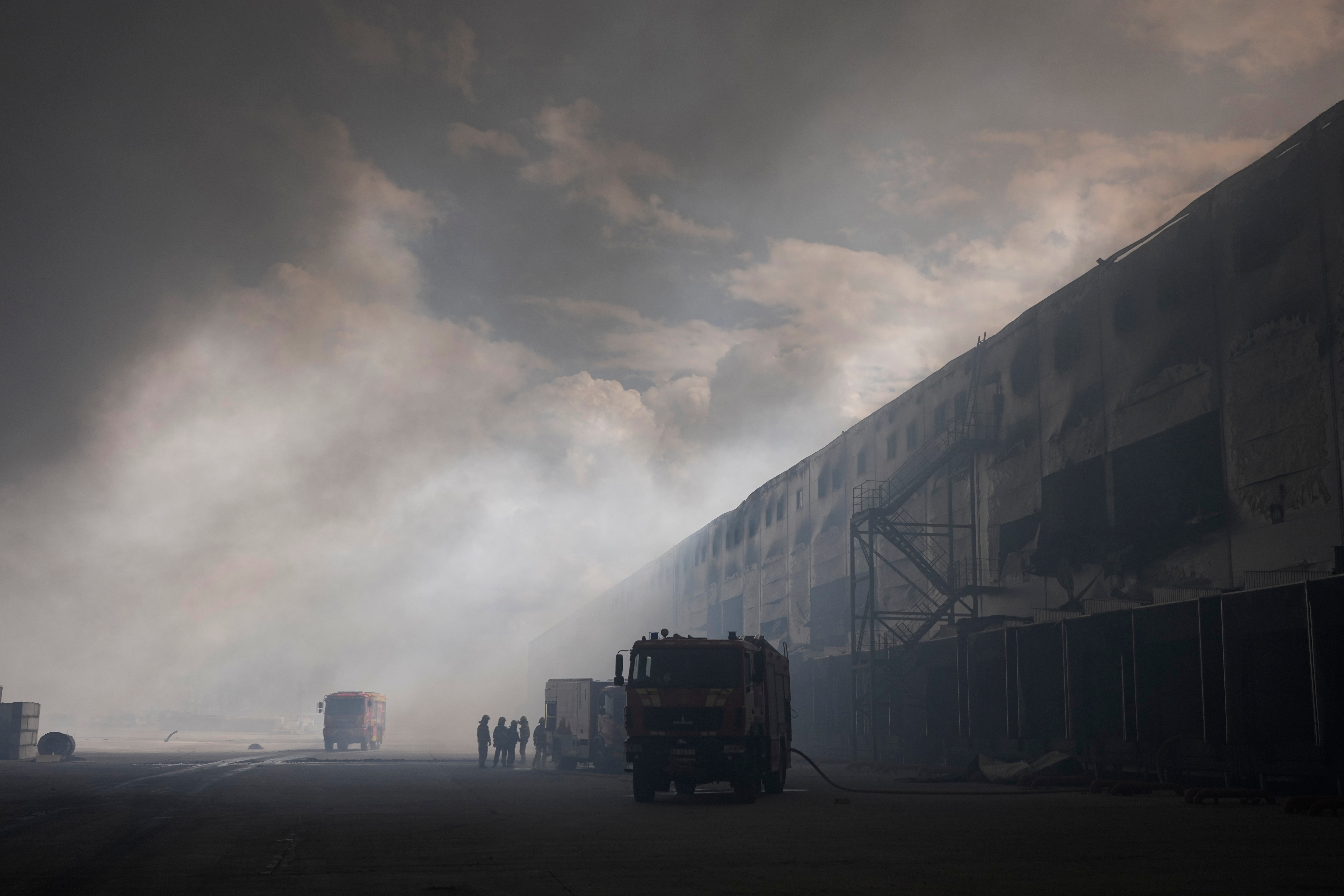
    KYIV, Ukraine — Russia bombarded cities across Ukraine with missiles and drones in an overnight onslaught that ran into the daylight hours of Thursday, when explosions echoed around Kyiv through the morning.

    Ukraine is desperately short of U.S.-made Patriot air defense missiles that can counter Russia’s ballistic missiles, and Moscow’s fast-flying jet-powered drones have brought another challenge since the Russian military’s full-scale invasion began 4½ years ago.

    Ukrainian officials say Russia builds up missile stocks and launches major attacks every few days, hoping to exhaust Ukrainian defenses through the sheer weight of numbers. In response, Ukraine has hit high-profile targets on Russian soil as the countries inflict mutual destruction.

    Russia says attack targeted war-related facilities

    The Russian Defense Ministry said its forces carried out a “massive” strike on targets in nine Ukrainian cities that began after nightfall on Wednesday. It described the targets as military-related, including industrial facilities, oil refineries, logistics hubs and port infrastructure.

    Civilian areas, including apartment buildings, suffered damage. The barrage killed a 78-year-old woman in the southern Zaporizhzhia region and another person in the northern Kharkiv region, with at least 14 people reported wounded elsewhere, Ukrainian officials said.

    “Russia continues to invest in missiles and in expanding its war, and that means more countermeasures are needed,” Ukrainian President Volodymyr Zelenskyy said on social media, noting promises earlier this week by European countries to provide more air defense assistance.

    “It is important that these (measures) are also supplemented by additional ballistic missile defense packages” through European purchases of weapons from the United States, he said.

    Though the Russian Defense Ministry insisted only war-related targets were attacked, Russia appears determined to hurt Ukrainian businesses and dent the country’s economy through attacks on private enterprise after Ukraine’s long-range drone strikes caused financial difficulties for Moscow.

    Russian drones hit three major distribution centers, destroying depots belonging to a toy store chain and a confectionery company, and damaging another run by an electronics retailer, the companies said.

    In addition, Moscow continued its efforts to wreck the Ukrainian power grid before the freezing winter months.

    Four powerful glide bombs destroyed generating equipment at the southern Kherson region’s combined heat and power plant, forcing it to shut down, its operator Naftogaz said.

    Zelenskyy expected on official visit to neighboring Moldova

    Zelenskyy was due to visit neighboring Moldova on Thursday to mark its national day commemorating its 1991 declaration of independence from the Soviet Union. Ukraine announced its independence the same year.

    Russia’s neighbors in Eastern Europe are concerned its invasion of Ukraine could trigger a wider conflict, and drones flying into its airspace have fueled jitters.

    Moldova’s Ministry of Defense said Thursday that five drones breached its airspace overnight, but it didn’t specify who fired them.

    Ukraine’s air force said defenses shot down or suppressed seven Russian ballistic missiles, though it didn’t say how they achieved that.

    Four districts of Kyiv were hit during the night, damaging residential buildings, a school and a medical facility, though no casualties were reported, city police said.

    Russian forces struck industrial facilities as well as energy infrastructure in Ukraine’s central Poltava region, said Vitalii Diakivnych, head of the Poltava regional military administration.

    The southern Odesa region also came under a major Russian attack lasting more than seven hours, according to Oleh Kiper, head of the Odesa regional military administration.

    The barrage damaged a 16-story residential building and two educational facilities as well as a grain elevator, he said. Odesa is a key port for Ukraine’s vital exports of grain and other agricultural products.

    Some trains were delayed by more than 17 hours following the attack, according to Ukrainian state rail company Ukrzaliznysia.

    Ukraine takes aim at another Russian online retailer

    Ukraine has also fired hundreds of long-range drones almost nightly at targets in Russia.

    Ukraine’s General Staff said that plane-launched missiles hit Russia’s main and backup command posts near the eastern city of Donetsk, where Ukrainian defenders are under pressure from a Russian push.

    The Russian Defense Ministry said Thursday that its air defenses shot down 267 Ukrainian drones over 14 Russian regions, the illegally annexed Crimean Peninsula, the Sea of Azov and the Black Sea.

    After razing huge warehouses in recent months belonging to Wildberries, Russia’s biggest online retailer, Ukrainian drones are now taking aim at Ozon, the country’s second-largest e-commerce company.

    Ozon initially said that its logistics facilities in the cities of Orenburg and Ufa were attacked, but neither of the premises caught fire. A later alteration to the company statement said that only the Ufa site was attacked, while the Orenburg facility was evacuated because of an alert, but resumed normal operations.

  • Iran scrambles to sustain trade as U.S. threatens to sanction countries that refuse to break ties

    Iran scrambles to sustain trade as U.S. threatens to sanction countries that refuse to break ties

    BEIRUT — Iran’s economy, already strained by high inflation, years of Western sanctions, and a war that has sharply reduced oil revenue, is poised for more instability as the Trump administration tries to coerce other countries into ending all financial dealings with the Islamic Republic.

    A decision by the United Arab Emirates to suspend trade relations with Iran last week kick-started the White House’s latest attempt to isolate Tehran into submission. Iran entered the war with its foreign commerce concentrated among a relatively small group of countries, leaving it with fewer places to turn now.

    The success of the U.S. strategy will largely hinge on China, the main buyer of Iranian oil and its top trading partner. Russia, a fellow target of sweeping U.S.-led sanctions, has a military conflict and economic crisis of its own and probably can’t offer longtime ally Iran much hard financial support.

    Regional partners like Turkey, Pakistan, and Iraq maintain important relationships with both Iran and the U.S., giving them reason to avoid exposure to the secondary sanctions that Treasury Secretary Scott Bessent said awaited nations that did not cut economic ties with Iran.

    “Those who stand with the United States will reap the rewards of our partnership,” Bessent said Monday while outlining the plan he called “Operation Economic Outcast.” “Those who tether themselves to the Iranian regime should expect to share in the isolation.”

    The Emirates will be hard for Iran to replace as a conduit for foreign goods and payments

    Despite Western sanctions, Iran in 2024 exchanged $125 billion worth of goods globally, according to Trade Data Monitor, a private firm. Iran is not a member of the World Trade Organization.

    The bulk of its declared international trade, though, was with a handful of partners. The UAE, China, and Turkey supplied nearly three-quarters of Iran’s merchandise imports. Four countries — China, Iraq, the UAE, and Turkey — accounted for more than two-thirds of its non-oil exports.

    On the supply side, the UAE held outsized importance. It was Iran’s biggest source of imported items and a gateway to financial channels that helped Iranian businesses make and receive international payments. Both roles kept Iran connected to the global economy.

    As a re-export hub, the UAE processed shipments from foreign suppliers reluctant to deal directly with Iranian customers.

    “From Iran’s perspective, the UAE can be replaced, but the Iranians are openly saying it’s not going to happen overnight,” said Alex Vatanka, a senior fellow at the Middle East Institute in Washington.

    China has deep economic ties to Iran but depends less on the relationship

    Beijing has economic interests in the Persian Gulf beyond Iran, and so far has avoided getting drawn into the conflict the U.S. and Israel initiated. China buys the overwhelming majority of Iran’s crude through opaque trading networks that bypass sanctions.

    Its manufacturing clout and stranglehold on critical mineral supplies nonetheless give Beijing more room than Iran’s other partners to resist U.S. pressure, said David Lubin, a senior research fellow at Chatham House. Aggressive action against major Chinese banks and businesses could revive trade tensions as Chinese leader Xi Jinping prepares to meet with President Donald Trump in Washington next month.

    “I don’t see China playing ball by any means,” Lubin said.

    China is both Iran’s largest reported export market and a supplier of essential parts and products, according to WTO and U.N. data.

    During the Obama administration, Beijing did agree to reduce energy imports from Iran, said Atlantic Council fellow Daniel Fried, a former U.S. ambassador to Poland.

    “We will want the Chinese to go a lot farther than they have gone in the past,” Fried said. “But it’s a lot harder now.”

    China has experience helping an ally survive sanctions: it has long been North Korea’s economic lifeline and main diplomatic backer. Experts say China has avoided fully enforcing U.N. sanctions on North Korea and sent clandestine aid to help its impoverished neighbor stay afloat.

    Expanding bilateral trade would create problems for Iran’s neighbors

    Iranian Parliament Speaker Mohammad Bagher Qalibaf, who has been his country’s lead negotiator over the past six months, was in Iraq the day of the UAE’s trade suspension. A purpose of his visit, he said, was “speeding up efforts to expand joint cooperation among all countries in the region, without foreign interference.”

    The U.S. dollar’s preeminence in international trade and finance, however, means none of Iran’s trading partners would antagonize Washington lightly, Vatanka said. “We’re still at a point where if the U.S. wants to hurt you, it will matter,” he said.

    Underscoring potential consequences, Turkey settled a yearslong U.S. dispute in July over the role of a state-owned bank in helping Iran evade sanctions through an oil-for-gold scheme. Trump also moved to lift sanctions on its fellow NATO member stemming from Turkey’s purchase of a sophisticated Russian missile system.

    “I really don’t think Turkey would like to become the next country helping Iran to evade sanctions right now,” said Riccardo Gasco, an analyst at the IstanPol think tank in Istanbul.

    Iran is a vital import source for Iraq and retains influence there through allied political factions and armed groups. Baghdad has sought closer economic and security ties with Washington. Since it invaded Iraq in 2003, the U.S. has significant control over the nation’s foreign currency reserves because they are housed in the Federal Reserve Bank in New York.

    Oman, a frequent intermediary between Washington and Tehran, has found its balancing act suddenly precarious. Trump threatened Oman last week over its ongoing negotiations with Iran on the future management of the Strait of Hormuz.

    One easy route for goods slipping past sanctions on Iran would be ports like Gwadar near the Persian Gulf in Pakistan, said Peter Harrell, a visiting scholar at Georgetown University.

    “Ship an intermodal container of drone parts to one of the ports in western Pakistan and unload it onto a truck and have it driven across the border into Iran,” he said.

    While Pakistan, a key ally and economic partner of China in the region, wants to increase trade with Iran, it faces competing pressures. It is serving as a key mediator between Tehran and Washington and has deep security ties with Saudi Arabia, Iran’s longtime regional rival.

    Caspian Sea trade route alternatives unlikely to grow quickly

    With the Strait of Hormuz mostly blocked and Russia’s war with Ukraine endangering ships on the Black Sea, Iran has sought to develop a “road of life” on the Caspian Sea, said Nikita Smagin, an independent analyst and a former Russian state news agency correspondent in Tehran.

    Russia reportedly sent drones to Iran this year, repaying Tehran’s favor after Moscow’s full-scale invasion of Ukraine. It also rerouted exports to Iran via Caspian Sea ports like Astrakhan. Agricultural products make up 80% of Russia and Iran’s reported trade.

    “Both economies are exporting natural resources and have little to offer each other,” Smagin said.

    The other countries that border the Caspian — Azerbaijan, Turkmenistan and Kazakhstan — probably won’t rush to join in, said Umud Shokri, a fellow at George Mason University.

    Yet Russia and Iran are already in an “axis of the sanctioned,” said Mark Galeotti, executive director of the Mayak Intelligence firm. For decades the pair have collaborated to thwart trade restrictions, and increasing bilateral trade in both “strategic goods” and contraband like military technology, microchips and Gucci handbags could be a next step.

    “Pomegranates and tomatoes only go so far,” he said.

  • Canada is bolstering its defense industry as US relations fray. A boom is on for local contractors

    Canada is bolstering its defense industry as US relations fray. A boom is on for local contractors

    TORONTO — As Canada moves to reduce its dependence on American military suppliers, the push is on display inside a Toronto garment factory.

    Hunched over sewing machines, two workers rapidly stitch together pieces of camouflage-patterned fabric and Velcro strips. In the next room, workers snip stray threads as they inspect the finished product: helmet covers for the Canadian military.

    The factory is assembling uniforms for Wuxly, a luxury parka maker that is among a flurry of Canadian companies branching into defense contracting. As Canadian military spending surges, others are developing remote sensors for the country’s vast Arctic region, making drones to resupply soldiers, and building autonomous robots.

    The boom in the defense sector reflects Canadian Prime Minister Mark Carney’s vow to strengthen the country’s economic self-sufficiency amid fraying relations with Washington, including a fresh escalation this week with new rounds of tariffs.

    Canadian startups and established companies, alongside firms in Europe, are set to benefit from tens of billions of dollars in extra defense funding, driven partly by pressure from U.S. President Donald Trump to contribute more to NATO. Canada’s investment remains small compared with the Pentagon’s budget, but its strategy aims to boost domestic defense capabilities, and not just U.S. contractors.

    A country known for peacekeeping ramps up military spending

    A defense industrial strategy released earlier this year by Carney represents a generational shift for Canada, which invented modern peacekeeping and had long been content to remain in the shadow of its southern neighbor on defense matters.

    The defense plan earmarks an additional $60 billion in funding over the next five years, and the government has promised support for domestic businesses to sell into defense and security supply chains. Currently, Canada spends about $36 billion to $43 billion on national defense.

    “The scale of investment that is involved is quite significant by Canadian standards, certainly in peacetime,” said Philippe Lagassé, a professor at Carleton University specializing in defense policy.

    The defense boom is “quite evident at all the events we’re at. Every defense show (is) sold out. Lots of new companies and (other) industries coming into the (defense) industry, getting involved,” said Wuxly founder and CEO James Yurichuk.

    Wuxly’s helmet covers, destined for the Canadian Armed Forces, allow soldiers to attach call sign patches or gear like lights, cameras, and beacons. The company also makes military parkas and tank covers and has been supplying Ukraine’s military with gear, including 40,000 female uniforms — one of the company’s specialties.

    Carney has called for upgrading the Canadian military’s Arctic capabilities, increasing spending by tens of billions of dollars to assert sovereignty over the vast but sparsely populated and increasingly contested region.

    “There’s a lot of innovation that can create advantage in the North, and with the Arctic region being so important, we’ve got to clothe our soldiers properly,” Yurichuk said.

    Canadian companies and European allies find new opportunities

    A major part of the strategy is diversifying away from U.S. defense contractors. It focuses on tapping a wider global pool of suppliers of military hardware — and fostering domestic defense supply chains.

    The strategy envisions investments amounting to more than half a trillion dollars, creating 125,000 jobs and tripling the size of the country’s defense industry over the next decade by steering contracts to Canadian companies. It calls for accelerating research and development and prioritizes developing key “sovereign capabilities” including aerospace, robotics and unmanned systems.

    As Canada pursues partnerships with other allies, in addition to the United States, Ottawa has announced deals this year to buy radar planes from Sweden’s Saab over American competitors and submarines from Germany’s ThyssenKrupp.

    Canadian startups like New Frontier Robotics also are lining up to play a part.

    “There definitely is money in play,” said Nikhil Malhotra, co-founder of the two-person company. “We see it. Obviously, we are going for it.”

    The company is working on a mobile manipulator robot — essentially a robot arm on a mobile platform — powered by artificial intelligence that could have both military and civilian applications, in what’s known as dual-use technology.

    The initial plan was to target manufacturing, with robots working autonomously between assembly lines, but potential customers suggested there was also a growing need from the defense industry. Robots could also be used for support roles at military bases, Malhotra said.

    “If you have infrastructure up in the Arctic that needs maintenance, obviously the climate is very dangerous. Are you really willing to risk an operator’s life? The answer is no. It’s better to put this thing on,” said Malhotra, whose company is based temporarily at a robotics lab at the University of Waterloo, about 60 miles (100 kilometers) west of Toronto.

    Startups focus on products with versatility

    Canada’s efforts to modernize its war machine still face big potential challenges, including the risk that opposition parties target Carney’s spending plans in future elections.

    Companies that develop novel technologies could be lured to the U.S. by its much larger defense market. It also will be tough for Canadian companies competing against American counterparts with much bigger research and development budgets that mean they are “always going to be a bit more at the edge of the technological capability,” Lagassé said.

    Still, the strategy opens new possibilities for companies like drone maker Volatus Aerospace, based near Montreal.

    “Defense was not a popular topic for a small-cap Canadian public company in the past,” CEO Glen Lynch said.

    Lynch said Canada has had limited manufacturing capability not just for drones “but manufacturing capability in general.”

    Like New Frontier, Volatus’ technology is considered dual use. Because Canada is technically not at war, companies can’t rely on selling exclusively to the military.

    Volatus makes drones and related services for civilian and commercial uses, such as air dropping medicine to isolated communities. But it also has a defense unit and makes first-person-view drones that take out targets by crashing into them.

    The company does some testing at a 100-acre site north of Toronto accessed by an unmarked gravel road and surrounded by fields of corn. Volatus employees demonstrated several aircraft on a recent visit by The Associated Press.

    The company showed off a drone with a 60-kilogram (132-pound) payload slung underneath by cable, and a scaled-down drone with tilt-wing rotors that can carry cargo over long distances. In a demonstration, the drones operated autonomously and flew in a circular pattern before landing.

    One drone, dubbed the Canary, has payload bay doors and is used to airdrop medical supplies to remote indigenous First Nations communities in Alberta.

    It could also be used to send “resupply packages for soldiers” as well as dropping munitions, said Chief Operations Officer Greg Colacitti.

  • Economists don’t expect reopening the U.S. to Mexican cattle imports to reduce high beef prices

    Economists don’t expect reopening the U.S. to Mexican cattle imports to reduce high beef prices

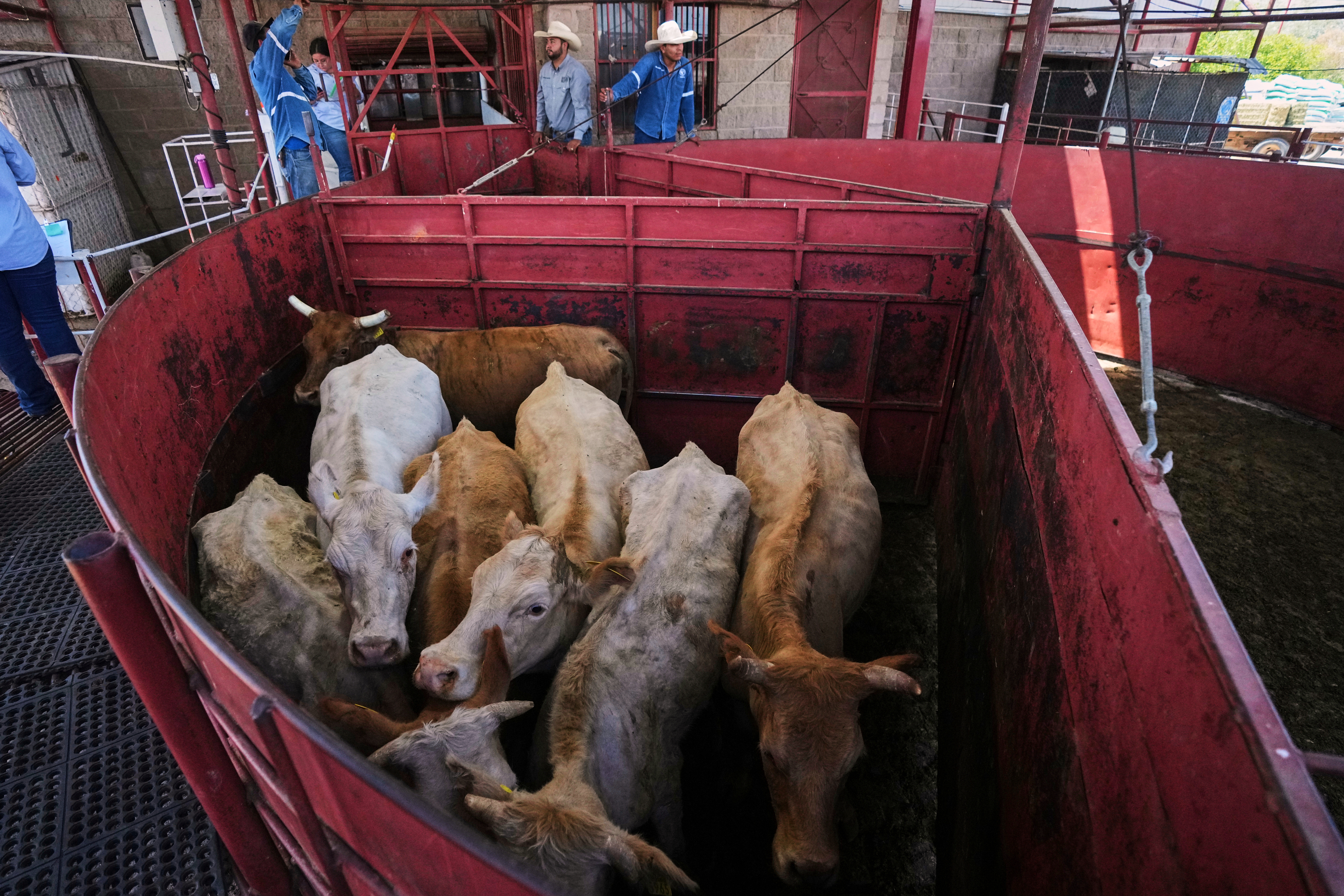
    The U.S. reopened a border crossing in Arizona to cattle from Mexico on Monday as part of a broader effort by the Trump administration to reduce record-high beef prices, though economists doubt the move will mean much to grocery store shoppers.

    The U.S. Department of Agriculture has said concerns about the New World screwworm’s spread lessened enough to allow the movement of cattle from Mexico at a crossing in Douglas, Ariz., about 230 miles southeast of Phoenix. Over time, it hopes to reopen other crossings in New Mexico and Texas.

    “Today, the border in Sonora is open for livestock,” Mexican President Claudia Sheinbaum said during a Monday morning news conference in Mexico City, referring to the Mexican state bordering Arizona.

    Cattle were coming across the border by mid-afternoon Monday.

    Beef prices clearly are a concern for President Donald Trump, who announced Friday that he would allow up to 331,000 tons (300,000 metric tons) of imported ground beef into the U.S., tariff-free, to be sold at below-market prices over the next 90 days. In February, the White House said closing the border to livestock imports from Mexico more than a year ago was “essential” to containing the screwworm, but it has exacerbated a shortage of cattle for slaughter in the U.S.

    “The administration obviously has a lot of incentive to try to be able to say that they’re doing something about high beef prices in particular,” said Derrell Peel, a professor of agribusiness at Oklahoma State University. “Beef has been singled out because it is an expensive product and because it’s just high profile.”

    The Trump administration closed the border to cattle imports in May 2025 as part of its response to the screwworm, a parasite with flesh-eating larvae that can infest and even kill cattle or other animals. The move came as the U.S. already was struggling to meet beef demand, thanks to a cattle herd that has been shrinking for five years and now is the smallest in decades.

    Because the USDA plans a phased reopening of the border, it will take months for Mexican imports to return to their traditional levels, Peel said. Mexico has traditionally provided 1.1 million head, or about 3% of the U.S. cattle supply.

    “I don’t expect to see any measurable impact on cattle prices or beef prices soon,” Peel said.

    The smallest U.S. herd in decades fueled record prices

    The USDA reported that on Jan. 1, the U.S. cattle herd had dropped to 86.2 million head, the lowest figure in 75 years. Beef prices skyrocketed over the past five years, rising significantly faster than food prices as a whole, according to the U.S. Bureau of Labor Statistics.

    The average price of a pound of ground beef rose nearly 57% from July 2021 to July 2026, from $4.39 to $6.89 — hitting a peak of $6.90 in May — with a 10% increase over the previous year. Food prices have risen about 25% overall in those five years, according to the bureau’s numbers.

    The price for a pound of uncooked steak rose 35% over the past five years, reaching a record $13.06 per pound in July, also 10% higher than a year before.

    But Glynn Tonsor, a professor of agricultural economics at Kansas State University, said the potential effect on beef prices from the smaller supply of cattle was lessened because the U.S. beef industry is more efficient and has been able to get more meat from each animal than in past years.

    The USDA says the reopening starts at a safe spot

    U.S. government and industry officials view the New World screwworm fly as a major threat to the nation’s $113 billion cattle industry. It was an annual warm-weather scourge for U.S. ranchers from at least the 1930s through the 1960s, until the U.S. largely eradicated it. The fly was contained for years near the Panama Canal, but returned to southern Mexico in late 2024 and advanced toward the U.S., with the first case in Texas since 1966 reported June 3.

    Since then, more than 40 cases have been confirmed in southern Texas and southeastern New Mexico, with infestations of cattle, sheep, goats, and dogs.

    In her July announcement of plans for a phased reopening of the border, U.S. Agriculture Secretary Brooke Rollins said it was possible to start with an Arizona crossing because the northern Mexican states of Sonora and Chihuahua had stronger animal health programs than other parts of Mexico. She also said each animal would be inspected and declared free of the parasite before crossing the border.

    U.S. Senate Agriculture Committee Chair John Boozman said the USDA is taking a “careful, science-based” approach to reopening the border and imposing strong animal health protocols.

    “This is an important step for America’s cattle producers, especially our feeders in the border states,” Boozman, an Arkansas Republican, said in a statement. “Restoring this long-standing trade is critical to strengthening our cattle supply and supporting a healthy, competitive beef industry.”

    Drought, low prices led to the smallest U.S. herd in 75 years

    Drought in cattle-producing regions of the U.S. is a major reason the national herd is so small, said David Anderson, professor of agricultural economics at Texas A&M University. If grass doesn’t grow, cattle have nothing to graze upon, forcing ranchers to sell them off. Low cattle prices over the past two decades also are a factor.

    “Where we are today is sort of the culmination of some 18, 19, 20 years of very low cattle prices,” he said. “That forces us to reduce our herds. Drought forces us to reduce them even further.”

    The shortage of cattle also has left beef processing plants operating below capacity.

    Tyson Foods, one of the nation’s largest meat processors, announced in November that it was reorganizing its beef operations and closing a plant in Lexington, Neb., about 220 miles southwest of Omaha. Earlier this month, it announced plans to close a plant in Utah outside Salt Lake City and another in Illinois about 150 miles southeast of Chicago.

    In June, another major U.S. processor, JBS USA, announced plans to close beef plants in Memphis and outside Philadelphia, though it later said it would keep some operations at the Pennsylvania plant to preserve 400 jobs there.

    Rebuilding the U.S. herd — and ultimately lowering prices — likely will take years, largely because a cow typically has only one calf a year, Peel said. In addition, breeding a heifer keeps her out of the food supply, tightening it further as the herd is rebuilt.

    Peel said prices will remain high for some time and for elected officials, “There’s nothing you can do.”

  • Canada to announce retaliatory tariffs as Trump tells its leaders to ‘fall in line’

    Canada to announce retaliatory tariffs as Trump tells its leaders to ‘fall in line’

    TORONTO — Canada will announce retaliatory tariffs against the United States on Tuesday after relations deteriorated sharply Monday, with President Donald Trump telling Canadian leaders to “fall in line” or face consequences “far WORSE” than existing tariffs and Prime Minister Mark Carney accusing Washington of trying to subordinate Canada.

    Trump also threatened new 50% tariffs on Canadian vehicles, auto parts and steel, while Carney said U.S. trade demands showed Washington wanted to “destroy our major industries,” including autos, steel and aluminum.

    Finance Minister François-Philippe Champagne and three other Cabinet ministers are also expected Tuesday morning to share details of supports for workers affected by tariffs. Carney said earlier Monday that Canada may need to move away from matching U.S. tariffs dollar for dollar and instead use more targeted retaliation aimed at protecting Canadian workers and businesses.

    “An attitude at the negotiation table that Canada is a subsidiary of the United States” is “not something we’re going to accept,” Carney said.

    Carney was even more blunt in French.

    “We learned during the negotiations that the Americans want to destroy our major industries, including autos, steel and aluminum,” Carney said. “That was one of the main reasons we said no. It was a bad deal.”

    The fiery words from both sides show how U.S.-Canada relations have deteriorated since Carney walked away from trade negotiations with the Trump administration late Friday, triggering the president’s threatened 50% tariffs the next day on about $20 billion worth of Canadian goods.

    Canada and the United States share one of the world’s largest trading relationships, with deeply integrated supply chains across autos, energy, agriculture and manufacturing, making a prolonged trade fight potentially costly for businesses and workers on both sides of the border.

    Carney cast doubt on the U.S.’s dependability, saying Canada was finding reliable partners “everywhere in the world, except in the United States. Except in the United States. And Russia.”

    Trump unleashes personal attacks on Canadian leaders

    On Monday, Trump came back with further tariffs, warning that he would impose them on Canada’s auto industry beginning next year.

    “Canada has been ripping off the United States of America for years,” Trump wrote on social media, criticizing what he called the country’s “ridiculously high tariffs” on American farmers.

    Carney said Washington’s auto-sector proposals would gradually have the effect of dismantling Canadian production.

    “This is the most successful automotive partnership in history,” Carney said, referring to the deeply integrated Canada-U.S. industry.

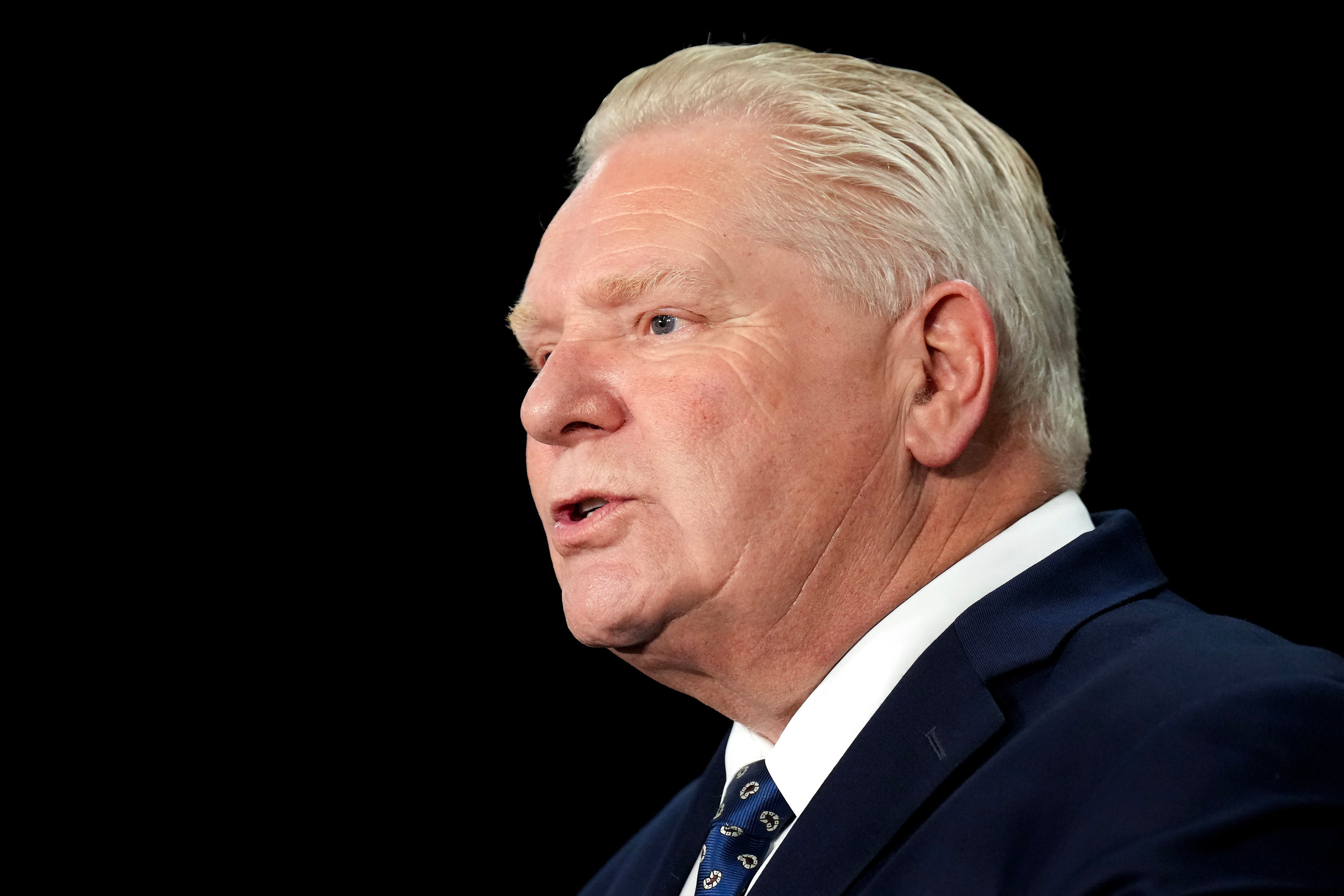
    Meanwhile, Ontario Premier Doug Ford unleashed his own tirade. In an interview with The Associated Press, he said Trump had underestimated Canadians’ willingness to endure economic pain rather than give in to U.S. pressure.

    “We’re all in,” Ford said. “Up here, we’re at a fever pitch; everyone’s in for an economic war. They know they’re going to have to sacrifice.”

    Trump responded in a social media post by attacking Ford personally, calling him “the less charismatic, intelligent, and overall unimpressive brother of the late, great, Rob Ford,” and once again referring to Canada’s prime minister as “Governor Carney.”

    Ford dismissed the insults: “If you think an insult from him hurts me? Well, bring it on, buddy, I’m ready.”

    Ford is a Progressive Conservative whose party differs from that of Carney, a Liberal, but the two underscore broad political unity in Canada over the trade fight with Trump.

    Ford threatens critical minerals and electricity

    Ford said “everything is on the table” if the dispute worsens, including cutting off electricity and critical minerals from Ontario.

    Critical minerals are increasingly important to U.S. national security and manufacturing. The Pentagon has sought more secure supplies of minerals used in military aircraft, missiles, munitions and electronics as Washington tries to reduce reliance on China, which dominates the mining or processing of several strategically important minerals.

    Ford said Canada should also consider increasingly severe retaliation if Trump continues targeting Canadian industries, including oil and potash, while Ontario could raise electricity prices or stop sending power south.

    “We power 1.5 million homes and businesses,” Ford said. “Everything’s on the table. I’ll do whatever it takes.”

    Ford has used electricity as leverage before. During an earlier phase of the dispute, Ontario imposed a 25% surcharge on electricity exported to Michigan, Minnesota and New York. Trump responded by threatening to double tariffs on Canadian steel and aluminum before both sides backed away.

    Auto industry becomes a central battleground

    Ford accused Trump of not simply seeking a better trade deal but aiming to hollow out Canadian industries and move production south.

    Ford said Trump wants to make Canada a vassal state.

    “He wants to bleed out every single sector and bring them down to the U.S.,” Ford said.

    The auto sector is especially important to Ontario, the center of Canada’s vehicle manufacturing industry. Plants and suppliers in Ontario are tightly integrated with factories in Michigan and other U.S. states, with parts routinely crossing the border multiple times during production.

    Automakers including Ford, General Motors and Stellantis operate major assembly plants in Ontario, and the wider supply chain supports tens of thousands of jobs. Trump’s new threat of a 50% tariff on Canadian vehicles and parts puts that sector directly at the center of the escalating dispute.

    U.S. Trade Representative Jamieson Greer said Monday that “the only reason Canada has auto production in the first place” was because of the 1960s Auto Pact, under which Canada used access to its market to encourage vehicle production north of the border.

    Ford says he opposed preliminary deal

    Ford also disclosed that he had opposed the preliminary agreement Carney was considering before Canada walked away from negotiations, and that he was unwilling to restore American liquor to Ontario store shelves as part of an agreement.

    “I wasn’t going to put the booze back on the shelves,” Ford said. “I was ready to go out there and call a press conference … and say I’m not buckling over.”

    Ford said he understood Washington had sought language late in the negotiations that would have restricted Canada’s ability to negotiate trade agreements with other countries without U.S. approval. Carney has called that demand unacceptable and a question of Canadian sovereignty.

    Carney said the dispute also exposed a deeper divide over language and culture, saying protections for French and Canadian culture that Washington views as trade irritants are considered fundamental rights in Canada.

    “Who does he think he is?” Ford said of Trump. “You gotta be kidding.”

  • Zillow and Redfin resolve litigation over deal FTC alleges suppresses rental listings competition

    Zillow and Redfin resolve litigation over deal FTC alleges suppresses rental listings competition

    The U.S. Federal Trade Commission has reached a settlement with Zillow and Redfin to resolve the regulator’s claim that the companies made an illegal deal to suppress competition in online rental advertising.

    The FTC said Monday that it filed a proposed order with the U.S. District Court for the Eastern District of Virginia. It essentially requires Redfin to restart its standalone rental housing listings business, which the commission says will restore competition in the market for rental property listings. The settlement also resolves litigation brought by state attorneys general in Arizona, Connecticut, New York, Virginia, and Washington.

    “This settlement delivers better, quicker, more certain results for both renters and property management companies than we would have been able to achieve after prevailing at trial, including firm and enforceable commitments by Redfin to relaunch its rentals advertising business,” Daniel Guarnera, director of the FTC’s Bureau of Competition, said in a statement.

    In its complaint filed almost a year ago, the FTC alleged that in exchange for $100 million and other compensation from Zillow, Redfin had agreed to shut down its internet listings and exclusively repost Zillow’s apartment listings, transition its customers to Zillow, and stay out of the apartment listings market for up to nine years.

    The commission argued that the companies’ February 2025 pact violated federal antitrust laws and could reduce incentives for competition, leading to higher prices and fewer choices for multifamily rental advertising customers.

    Zillow and Redfin said their agreement was not anticompetitive and benefited renters and property managers alike.

    The FTC’s proposed order requires Redfin to restart its rental listings business and hire enough staff to maintain it within six months of the order being finalized, or face financial penalties. The FTC said Redfin fired hundreds of employees shortly after announcing its deal with Zillow.

    And while Redfin will continue to syndicate Zillow’s listings, it will be free to seek out and advertise non-Zillow listings, according to the FTC.

    In a statement Monday, Seattle-based Zillow said it “has consistently maintained the partnership with Redfin is pro-consumer and procompetitive, and we’re pleased to have found a resolution that enables its continuation.”

    A spokesperson for Redfin, which was acquired by Detroit-based mortgage giant Rocket Cos. last year, said Monday that the agreement “allows us to maintain our rental partnership with Zillow through at least 2030 while building and investing in a standalone rentals business of our own.”

  • Trump’s ‘economic D-Day’ threats become warnings for countries to sever financial ties with Iran

    Trump’s ‘economic D-Day’ threats become warnings for countries to sever financial ties with Iran

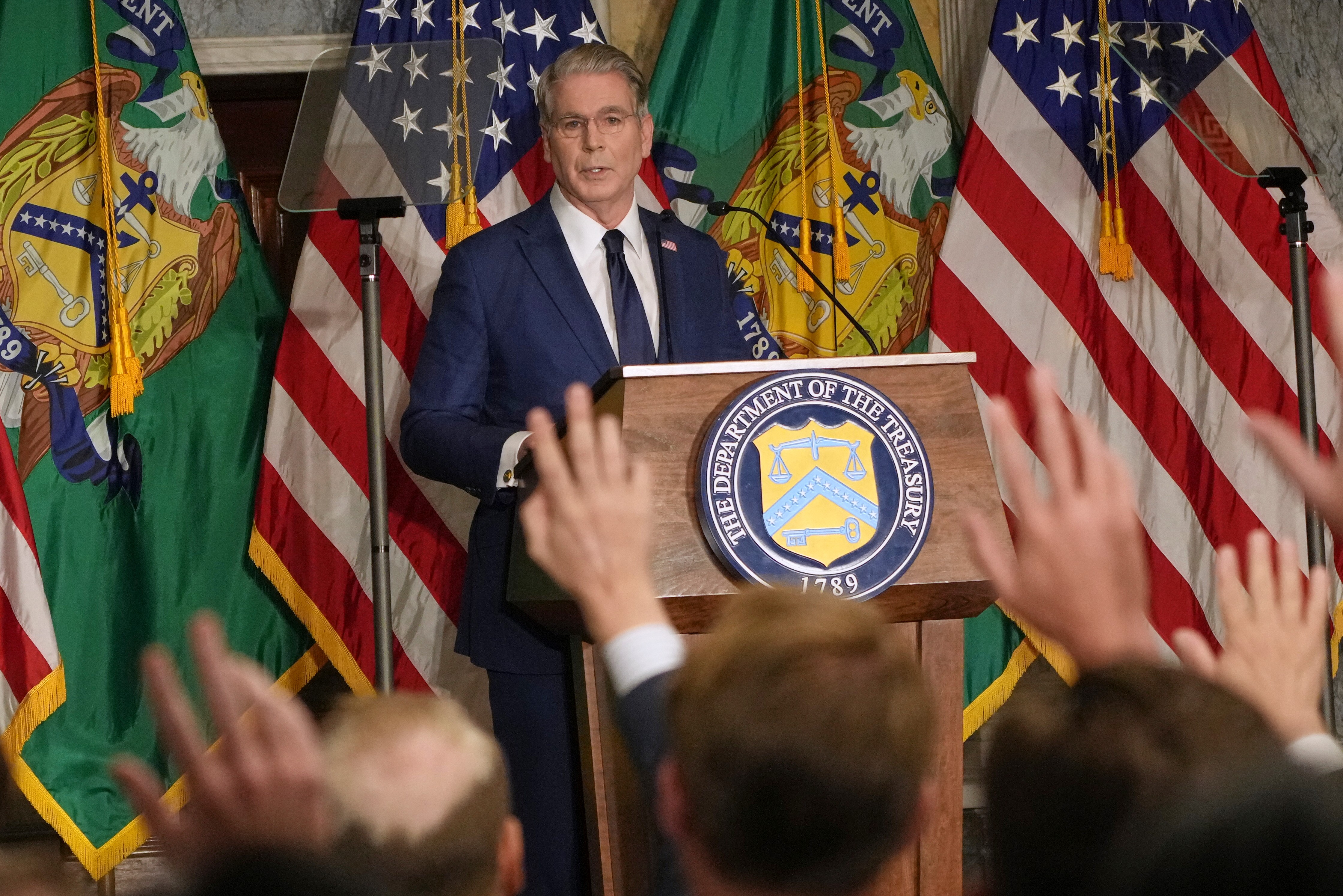
    WASHINGTON — Treasury Secretary Scott Bessent announced a new round of sanctions aimed at Iran on Monday and warned every country that does business with the Islamic Republic to sever those financial ties or face retaliation from the United States.

    President Donald Trump’s pledge last week to unleash an “economic D-Day” against Tehran turned out to be new warnings to cut off Iran from the rest of the global economy. Asked why the U.S. was not imposing secondary sanctions on Iran’s trading partners, Bessent told reporters he wanted countries to have an opportunity to shift away from Iran before it was too late.

    “Why would I want to blow up the global financial system?” Bessent said.

    The Trump administration is struggling to find an off-ramp nearly six months into an unpopular war with an increasingly obstinate Iran. Washington had promised new sanctions would put even more pressure on an Iranian economy already battered by previous penalties and a U.S. naval blockade.

    But the announcement Monday provided little detail and did not name which countries could face secondary sanctions. China, Turkey, and the United Arab Emirates are Iran’s largest trade partners.

    “We are level-setting with every country to tell them our expectations. We know who they are. They know who they are,” Bessent said. “So when the hammer of U.S. Treasury actions falls upon them, they will have no one to blame but themselves.”

    Dubbing the campaign “Operation Economic Outcast,” Bessent said Trump has been “making phone calls to world leaders with specific requests to cease their interactions” with Iran and has already seen results.

    The UAE announced last week that it was suspending all trade, commercial exchanges, and financial transactions with Iran until further notice after a reported missile attack on the Gulf country. Bessent said the UAE decision was “not a coincidence.”

    Shortly before the announcement, Iranian parliamentary Speaker Mohammad Bagher Qalibaf said the U.S. is not in an economic position to further restrict Tehran’s relations with other countries.

    “Iran’s trading partners, both in the media and through messages sent to us, have made it clear that they don’t take these statements into account anywhere,” Qalibaf, who has been Iran’s lead negotiator over the past six months, posted on X.

    Bessent is pressed on what new campaign means for China

    Asked whether the U.S. would target China, Bessent said, “No one is above the reach of U.S. sanctions,” despite the fragile trade truce in place between the world’s two largest economies.

    “If they facilitate transactions and are part of the ecosystem that turns Iranian oil into money, into repression, they will be targeted,” he added.

    Experts say the U.S. is likely to carefully calibrate its actions on China, just a month before Chinese leader Xi Jinping is expected to visit the U.S.

    How much the announcement matters “depends on the aggressiveness with which President Trump is willing to enforce it,” said Ali Wyne, senior research and advocacy adviser for U.S.-China relations at the International Crisis Group. “Thus far, despite threatening severe economic consequences for countries that do business with Iran, he has largely given China a pass.”

    The Treasury Department said Monday that it was imposing sanctions on nearly 60 Iran-linked entities, accusing them of roles in Iran’s nuclear and missile programs, cyber activities, and oil shipments.

    That includes Hong Kong-based Sweet Ocean Industrial Limited and associated people and businesses, which were accused of helping Iran acquire sensitive goods such as laser optics equipment. Also penalized was China-based Shenzhen Huamei, which is a service provider for the Iran-based logistics company BRE Line, as well as BRE Line’s branch in Hong Kong, for allegedly supporting the missile and nuclear programs.

    Iranian currency falls to a record low

    Hours before Bessent’s announcement, Iran’s currency hit a record low.

    The rial dropped to 2.02 million to the U.S. dollar as trading opened on currency markets. Iran’s official Central Bank rate stood at around 1.5 million rials to the dollar, but the market rate is what most Iranians pay.

    The currency had already been under pressure before the U.S. and Israel attacked Iran on Feb. 28, as Iran faced double-digit inflation and negative growth. The rial has repeatedly hit new lows as nearly six months of war have taken an even greater toll.

    Iranians find daily staples increasingly unaffordable. Since the war began, rice is up some 60% and beef prices are more than 150% higher. The International Monetary Fund forecasts that gross domestic product will contract more than 5%.

    Still, economic pressure has not yet translated into political pressure. Iran retains a key strategic advantage: Its attacks and threats on ships in the Strait of Hormuz have brought traffic in the vital waterway to a near halt, damaging the world economy and heaping pressure on U.S. President Donald Trump ahead of congressional elections.

    The war, as a result, has devolved into a fight over who controls the strait, through which a fifth of the world’s traded oil transited before the conflict. Iran is now refusing to fully reopen it unless it can charge ships.

    Iran and Oman, which is on the opposite side of the strait, are reportedly in the final stages of agreeing on a plan for joint management of the waterway. Oman’s foreign minister is set to visit Iran on Tuesday.

    Pakistani delegation visits Iran

    Pakistan, which played a key role in brokering a 60-day ceasefire in June, sent a high-level delegation to Iran on Monday to encourage the U.S. and Iran to return to negotiations, two senior officials said. The officials spoke on condition of anonymity because they were not authorized to speak to the media.

    The military confirmed only Field Marshal Asim Munir’s visit, saying it was aimed at de-escalating tensions in the region.

    Trump spoke with Munir ahead of the army chief’s visit to Iran, according to a person familiar with the discussion who spoke on condition of anonymity to confirm a private conversation. Reuters, citing Pakistani sources, first reported the call.

    Munir met Iranian Interior Minister Eskandar Momeni in Tehran, according to the two senior officials. Munir was accompanied by Pakistani Interior Minister Mohsin Naqvi and other officials. Munir was expected to remain in Iran overnight and meet the Iranian president and other senior officials before returning to Pakistan.

    His previous visit to Tehran in May helped pave the way for a memorandum of understanding signed by the U.S. and Iran in June.

    In downtown Tehran, 73-year-old Sadegh Mahmoudi did not hold out hope for a resolution. He joined a line of about a dozen people to purchase U.S. dollars with his remaining savings to hedge against further declines.

    “There is no hope for a deal and peace,” he said.