Category: Associated Press

  • For Nigel Farage, success brings new pressures and a showdown with Count Binface

    For Nigel Farage, success brings new pressures and a showdown with Count Binface

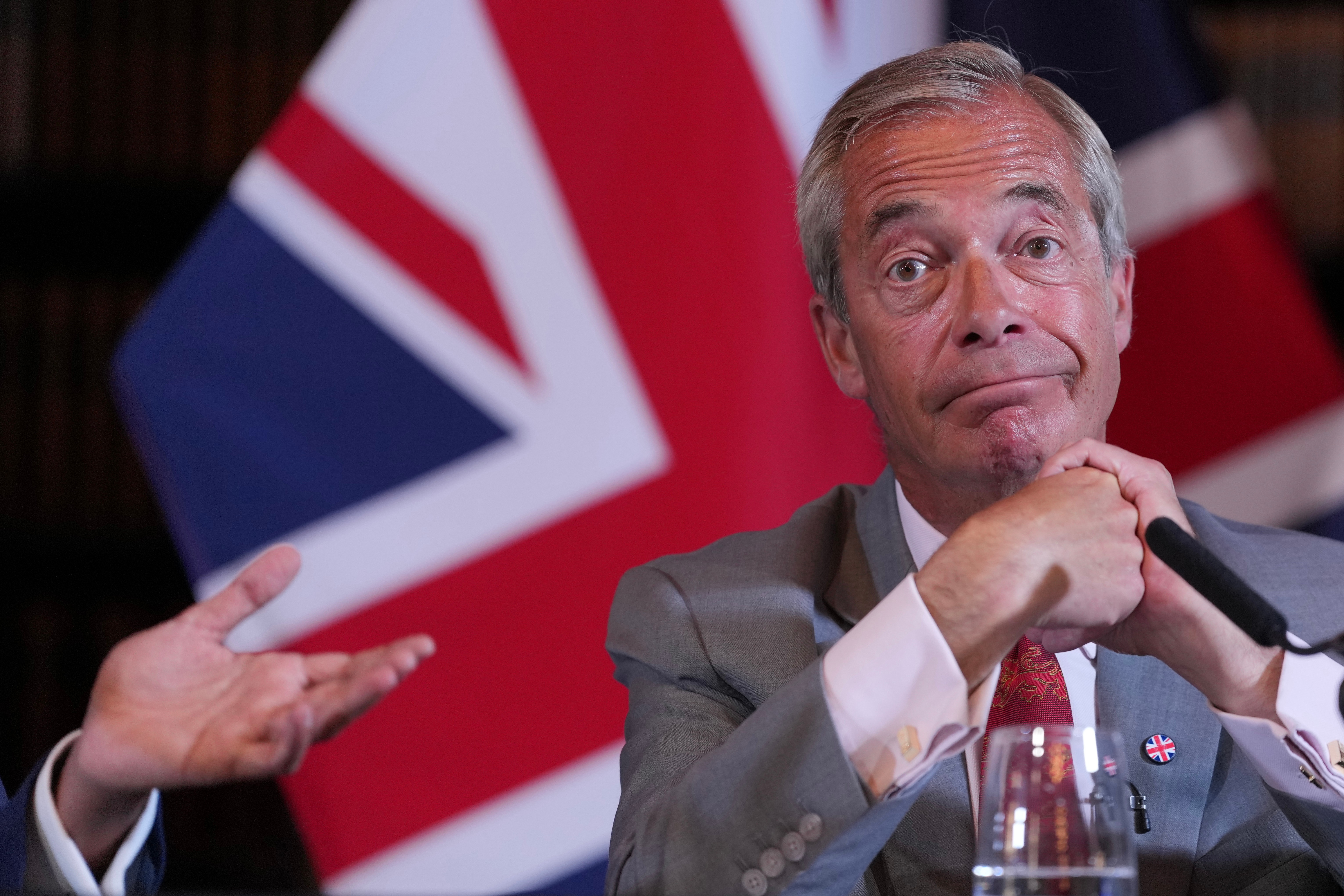
    LONDON — Nigel Farage depicts himself as an outsider taking on the establishment, but now the tables have turned.

    The leader of anti-immigration party Reform UK is running in an election as the incumbent favorite, and his main opponent is a man dressed as a garbage can.

    Farage, an ally of U.S. President Donald Trump, triggered Thursday’s special election in the English seaside town of Clacton by quitting his seat in the House of Commons last month. Facing awkward questions about his finances, Farage said he would let voters judge him in a “people versus the establishment” contest.

    But the other main parties called it a stunt and refused to take part, leaving Farage running against an assortment of independents, jokers, and single-issue candidates led by Count Binface, a comic space alien with a trash can on his head. In that field, it’s Farage who looks like the mainstream politician.

    Simon Usherwood, professor of politics and international studies at the Open University, said Farage’s appeal is built on his image as a straight-talking individualist, “the kind of bloke you can have a pint with down the pub.”

    “It’s that very charismatic aspect of Farage that is both his strength and his weakness,” Usherwood said. “He has fallen into a trap of thinking that he is somehow immune from the kind of scrutiny that would undo other politicians.”

    Farage built his brand on Brexit and immigration

    For two decades, the populist Farage has led small parties with an outsized impact on British policy.

    His charisma — and, critics say, his distortions — were key to securing victory for the “leave” side in Britain’s 2016 European Union membership referendum. After Brexit, Farage switched his focus to migrants crossing the English Channel in small boats, a stream that he has called an invasion.

    In 2024 he was elected to Parliament at his eighth attempt, representing the strongly Brexit-backing town of Clacton in eastern England.

    Becoming a lawmaker brought unwelcome scrutiny of his finances. Parliament’s standards watchdog is investigating an undeclared donation of 5 million pounds ($6.7 million) to Farage in 2024 from Christopher Harborne, a Thailand-based cryptocurrency billionaire. Farage says he didn’t need to declare the money because it was a personal gift he used to fund his security and came before he was elected.

    Newly elected lawmakers must declare gifts worth more than 300 pounds ($400) received in the previous year if they are related to political activities.

    Farage is also facing an investigation into his financial relationship with George Cottrell, an aristocratic crypto-gambling entrepreneur who served eight months in a U.S. prison for fraud a decade ago after offering to launder money for undercover agents posing as drug traffickers.

    Cottrell, 32, remains close to Farage and has reportedly given him money for security and staff. U.K. media report that Cottrell and his mother have been interviewed by police as part of a probe into donations to Reform UK, though they have not been arrested.

    Farage is standing by the man he calls “Posh George,” saying Aug. 3: “I don’t ditch my allies.”

    Farage faces off against Count Binface

    The governing Labour Party and opposition Conservatives, Liberal Democrats, and Greens all declined to run in Clacton. But it is still a crowded field, with almost three dozen candidates, including representatives of Rejoin EU, the Everyone Is God Party, and the Monster Raving Loony Party.

    By far the best known is Count Binface, a frequent comedy candidate whose platform includes the pledge “I will not accept 5-million-pound gifts from crypto billionaires (on Earth).” He says his main appeal is “I’m not Nigel Farage.”

    Farage doesn’t find it funny. He and his party claim Binface, alter ego of comedian Jon Harvey, is just another representative of a hostile political establishment.

    “The establishment is using every means available, fair and foul, to undermine Farage before the country gets a chance to elect him,” Gawain Towler, Farage’s former press officer and now a Reform UK board member, said in a blog post.

    Farage won handily in Clacton in 2024, and most observers expect him to win again. If he does, the parliamentary investigation of his finances will resume. A finding of wrongdoing could lead to Farage being suspended from Parliament and trigger yet another special election for the seat.

    Reform UK has just seven lawmakers — eight if Farage is included — but led nationwide opinion polls for more than a year. But the party has recently suffered setbacks, losing a string of special elections, including one in June that brought Prime Minister Andy Burnham to power.

    After months of flagging popularity, Labour senses a “Burnham bounce.” Meanwhile, Conservative leader Kemi Badenoch has found her feet after a shaky start. And Restore Britain, a far-right party with just one lawmaker but a loud social media presence amplified by Elon Musk, is nibbling away at Reform’s support.

    Farage, 62, has a history of walking away from parties he led. He stepped down from both the UK Independence Party and its successor, the Brexit Party, in the last decade.

    He has earned more than 2 million pounds ($2.7 million) outside of Parliament in the past two years from speeches, promotional work, and television appearances, far more than he makes as a lawmaker. He might be tempted to quit politics again if he remains under sustained pressure.

    Martin Farr, a contemporary historian at Newcastle University, said Farage will probably come out of the election strengthened, at least in the eyes of his supporters.

    “To his supporters, this will be an example of how he’s fearless and he’s prepared to fight against, as he will put it, the tyranny of the majority, the tyranny of the establishment,” Farr said. “To his opponents, it suggests a thin-skinned demagogue who has reacted petulantly to scrutiny and has been embarrassed by the fact that no one else has taken his stand seriously.”


  • Trump told Ukraine it had no cards. Then Kyiv took the war to Russia

    Trump told Ukraine it had no cards. Then Kyiv took the war to Russia

    The meeting in the Oval Office between U.S. President Donald Trump and Ukrainian President Volodymyr Zelensky was a diplomatic car crash.

    “Your country is in big trouble. You’re not winning,” Trump said, dressing down Zelenskyy in front of the world’s media. “You don’t have the cards.”

    The blowup in February 2025, three years into the war, was more than just a heated public exchange: The Ukrainian delegation was asked to leave the White House, and Washington briefly suspended intelligence sharing with Kyiv. In the ensuing months, as Russia made slow but steady gains on the battlefield, Trump warmly welcomed Russian President Vladimir Putin in Alaska and seemed ready to push Ukraine into an unfavorable peace deal, including forcing it to give up territory.

    But even as Zelensky sat next to Trump, his forces were preparing an operation that would reveal Ukraine’s ability and ambition to take the war to Russia: Months later, drones smuggled into the country attacked Russian bombers, destroying or damaging planes worth hundreds of millions of dollars.

    Since then, Kyiv has ramped up a campaign of longer-range strikes inside Russia and in areas Moscow has seized, increased production of weapons, targeted Russian air defenses, and hit oil infrastructure and the warehouses of a major retailer in a bid to ensure ordinary Russians feel the impact of the conflict.

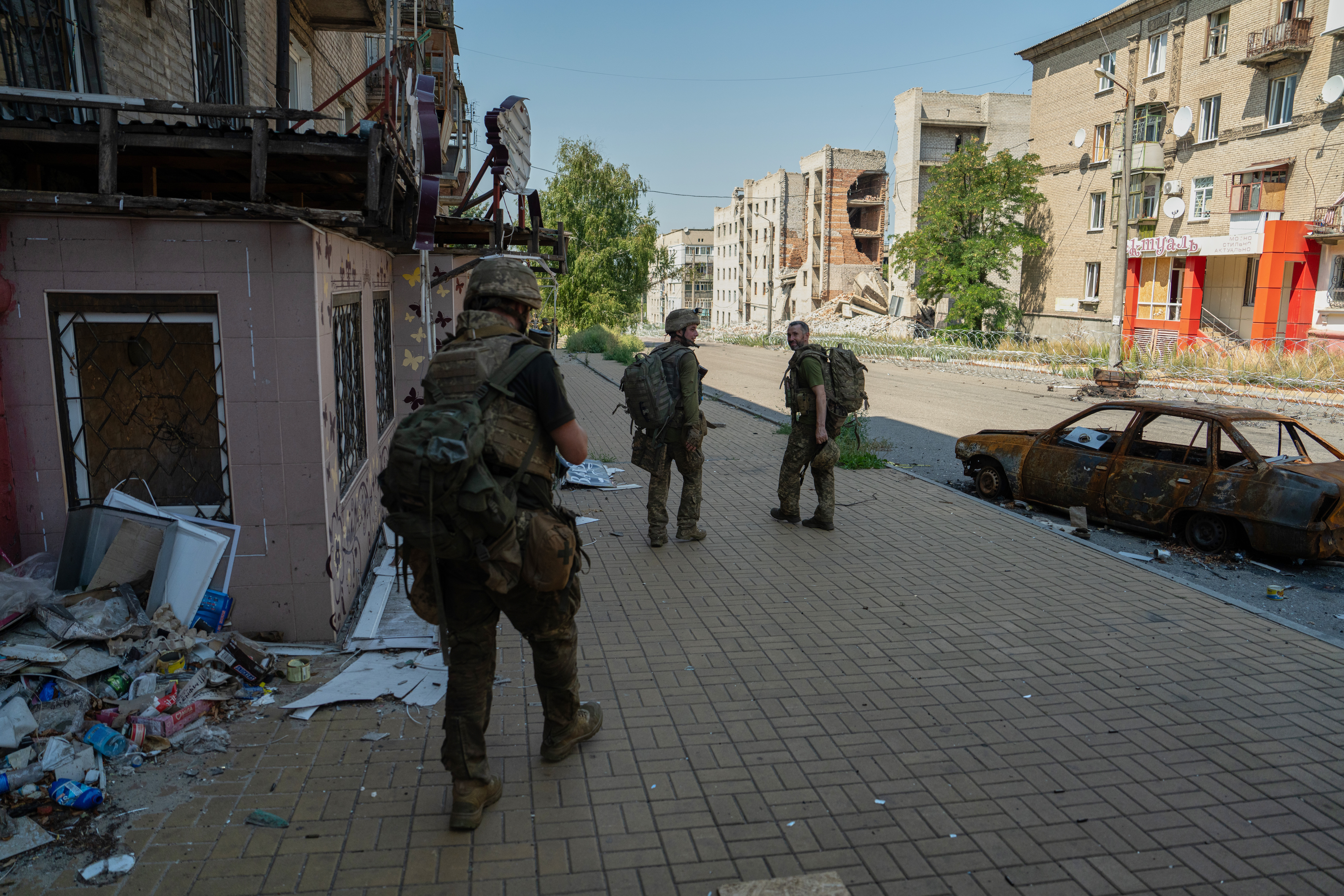
    In an embarrassment to Putin, Ukrainian drone strikes sent thick plumes of smoke billowing over St. Petersburg shortly before the opening of an international economic forum in June. Concern over Ukraine’s attacks led Russian authorities to scale down the May 9 military parade commemorating the defeat of Nazi Germany. Strikes on oil refineries have caused a summer fuel crisis.

    By the time Trump and Zelensky met at a NATO summit in July, the American president said the Ukrainian leader had “been very effective” in the war. “We’ve actually developed a good relationship,” Trump added.

    But as Ukraine’s strikes have intensified, so have Russia’s — and Kyiv faces major challenges in defending against them because of shortages of American Patriot air defense missiles.

    In the first six months of the year, 1,396 civilians were killed in Ukraine, according to the U.N. Meanwhile, the world body said Russian authorities reported 250 civilians killed in the same period. On Monday, a strike that Ukraine said hit an oil refinery in Russia killed 13 people, according to local officials.

    And while Ukraine’s effort appears to have shifted the narrative about the war in Washington, it’s still not clear if it will be able to push Putin toward the negotiating table.

    Ukraine’s strikes are aimed at undermining the idea that Russia can afford to “just let this roll,” said Jack Watling, a senior research fellow at the London-based RUSI think tank.

    The question of whether it will succeed depends on how much pain Ukraine can exact. “Logically, above a certain threshold, it does work but whether they can reach that threshold is an interesting question” — and one that depends at least partly on factors outside Kyiv’s control, like continued European financial support, he noted.

    Ukraine brings the war to Russia

    While most of Ukraine’s strikes have a range of less than 125 miles, its longer-range attacks have increased dramatically this year. It launched three times as many of those strikes in July as it did in January, according to data from ACLED, an independent conflict monitor. Repeatedly hitting deep into Russia has forced its military to stretch air defenses over a larger area.

    Many of its strikes have focused on four key categories of targets, according to an Associated Press analysis of hundreds of Ukrainian attacks this year — compiled from statements by Russian officials and state media and the Ukrainian military.

    As the Iran war pushed up energy prices, leading the U.S. to ease sanctions on Russian oil, Kyiv ramped up strikes on oil infrastructure to deny the Kremlin revenue from fuel exports and force shortages on ordinary Russians. It is also striking defense manufacturing to damage Russia’s long-term ability to produce weapons, targeting air defenses to clear a path for its own arms, and hitting retail warehouses to bring the effects to ordinary Russians.

    — As part of the campaign against oil infrastructure, Kyiv said it hit Russia’s largest oil refinery, more than 1,550 miles from Ukraine.

    — Kyiv has also targeted defense manufacturing centers. It hit a factory making navigation systems multiple times, including with its own Flamingo missile.

    — In July and August, Ukraine struck Wildberries warehouses. Kyiv said the company helps supply the Russian military. Moscow denies that.

    — Many of Ukraine’s strikes on Russian air defenses and radar are around Russian-held Crimea and are often carried out with drones.

    Maj. Robert “Magyar” Brovdi, the commander leading Ukraine’s drone war, told the AP its strikes in Crimea are also aimed at rendering the peninsula unusable as a staging ground for Russian forces.

    Starlink gives Ukraine an advantage — for now

    It’s not always clear if Ukraine’s attacks are effective — and some may have resulted in minimal or no damage. In May and June, Ukraine said it hit several satellite, reconnaissance, or signals intelligence facilities in Russia, but satellite images analyzed by AP did not show major damage.

    Still, Ukraine has one advantage that can help it strip back Russian air defenses and make its drone strikes more precise.

    It has access to Elon Musk’s satellite communications service Starlink — which means its operators can control drones in real time in Russian-held Ukrainian territory. Russia has been blocked from using Starlink.

    But Russia is also building its own version of Starlink, and is installing jamming systems that hamper Starlink connectivity, Brovdi said.

    Ukraine is investing heavily in weapons production

    Even before the Oval Office meeting, Ukraine scrambled to invest in new weapons — but that moment was “a real wake-up call,” said a European military official who spoke on condition of anonymity to discuss the front-line situation in detail. It became clear that U.S. support could be stopped “from one day to the next.”

    Ukraine doubled down on production, churning out a growing array of weapons in larger numbers and shortening traditional research and production cycles from decades to years or even months.

    Even so, Ukraine is still not able to produce as many missiles as it needs. It also took Ukraine time to make systems that could target facilities precisely enough that Kyiv felt comfortable using them to strike deep into Russia, Watling said.

    And while Ukraine has begun to resolve navigational issues with its missiles, such as the Flamingo, those weapons are still not as accurate — or as stealthy — as their Western analogues. That often means hundreds of drones must be fired to overwhelm Russian air defenses to allow a missile to get through.

    It’s an expensive and time-consuming way to wage war since only 5% to 9% of what Ukraine fires gets past Russian air defenses, according to Watling.

    But, although Russia’s weapons are more powerful, Zelensky suggested at the NATO summit that Putin is “losing the initiative” in the war as Ukraine has moved the fight from the stalled battlefield to the sky.

    Sitting next to Trump at the summit, the Ukrainian leader even cracked a joke, demurring when Trump asked him if he would accept Moscow as a venue for peace talks, as Putin has suggested.

    “There are a lot of Ukrainian drones in the air,” Zelensky said. ”It would be dangerous.”

  • Trump pivots back to sanctions for Iran as other strategies to end his war fizzle

    Trump pivots back to sanctions for Iran as other strategies to end his war fizzle

    WASHINGTON — President Donald Trump likes to say that he started his war with Iran after 50 years of economic pressure had failed to stop its nuclear weapons ambitions — but he’s now betting that another financial squeeze can bring an end to that war.

    Trump’s administration is hoping that months of bombing have pushed Iran’s economy to a breaking point that will force its leadership to cave to demands to end its nuclear program and fully reopen the Strait of Hormuz to oil and natural gas tankers.

    The Republican president on Monday said that since Iran is seeking compensation as part of any peace talks, he now intends to demand the same for the U.S. side. It’s part of a larger pivot this weekend by Trump to argue that Iran is now on the cusp of financially collapsing, even though it has already endured decades of financial sanctions, which are often a longer-term strategy rather than an immediate tool of warfare that can halt a conflict.

    The shift comes as U.S. stockpiles of key weapons have dwindled and as stop-start talks seem again to have stalled. But Trump insists the pressure can lead to a breakthrough.

    “Yeah, they can make trouble, but they’re broke,” Trump told reporters. “They have no money. You know, Iran is broke, totally broke. And, they’re not paying their soldiers. They have inflation of 300%.”

    Inflation is running high in Iran, although Trump’s estimates were higher than what administration officials have been citing to reporters. But the prospect of a longer war also carries inflation risks for other nations, including the U.S., where the war and higher gasoline prices are unpopular.

    Crude oil prices climbed on Monday as investors interpreted Trump’s comments as a sign that fewer ships would be traversing the Strait of Hormuz, continuing to limit global supplies of gasoline, jet fuel, natural gas, and other forms of energy. The Iran war largely closed the waterway involved in shipping roughly 20% of global oil supplies before the conflict — and attempts to reopen the strait have been short-lived as it has become a source of leverage for the Iranians in negotiations.

    Iran does not appear to be publicly intimidated by the prospect of more financial sanctions.

    “Whenever Washington proves itself incapable of pursuing diplomacy, it retreats into sanctions; and whenever those sanctions fail to produce results, it simply increases the dose,” said Esmail Baghaei, spokesperson for Iran’s Foreign Ministry, on social media. “The real risk is that American politicians, clinging to this bad habit, will instead strangle their own remaining chances of a less humiliating exit from a crisis of their own making.”

    The White House has called this Operation Economic Fury

    The president didn’t say what additional financial pressure would be applied, but the administration has since April 16 been engaged in what it calls Operation Economic Fury against Iran. Treasury Secretary Scott Bessent called this component the “financial equivalent” of a bombing campaign as the countries that buy oil from Iran or bank with it could be sanctioned.

    But one problem with this pivot is that the sanctions are unable to bite as quickly as the impact of the largely shuttered strait, said Richard Nephew, a senior research scholar at Columbia University who helped direct Iran sanctions strategy in the Obama administration.

    Nephew stressed that the value of sanctions as a tool is limited because Trump has not articulated clear strategic goals for the war, at times stressing that it can’t have a nuclear weapon, then emphasizing the strait and then talking about ballistic missiles. Instead, Trump has engaged in a massive series of aerial assaults and a level of destruction that has not produced the quick end that he initially promised.

    “Economic pressure is a possible element in his strategy, but he’s yet to explain the purpose,” Nephew said. “Trump has systematically weakened his own hand through his inadequate use of force, inarticulate elucidation of an objective, and vacillation on negotiations.”

    Still, the sanctions and the ongoing U.S. naval blockade of Iranian ports give the U.S. economic and financial leverage, said Juan Zarate, a deputy national security adviser in the George W. Bush administration. Zarate said the U.S. sanctions threatening third-party countries doing business with Iran also have an impact. But these things take time, he noted.

    “The ultimate question will be how far the United States is willing to go to constrict Iran’s oil trade and threaten third countries with severe sanctions — and whether it has the patience to test whether the economic pain will change the regime’s behavior,” Zarate said.

    Past presidents used sanctions. Trump has said they didn’t go far enough

    Trump’s latest pivot to economic issues with Iran is something of a flip-flop. Trump has long derided past presidents who used sanctions to limit Iran’s economic ability to pay for its military and nuclear development. In a speech last week in Las Vegas, he defended the bombing, missiles, and drone attacks that began on Feb. 28 by indicating that the sanctions from previous administrations that date back to November 1979 had failed.

    “It’s been 47 years, but really, it’s been 50 years because they’ve been saying 47 for three years, it’s been 50 years,” Trump said. “And no other president has done what you should have done a long time ago, because Iran cannot have a nuclear weapon, can’t have it.”

    The Iranian economy has suffered gravely because of the war, with the International Monetary Fund estimating the overall economy shrinks by 5.4% and the Iranian government recently reporting an annual inflation rate of 88.6%. The U.S. Treasury Department said average loadings of Iranian oil have decreased from 1.8 million barrels per day before the war to less than 500,000 barrels per day over the past month.

    The U.S. economy — the world’s largest — has continued to grow, but inflation is elevated and borrowing costs have risen in ways that have hurt Trump’s popularity and led to disapproval of the Iran war.

    A senior U.S. official, insisting on anonymity to discuss strategy, said the U.S. military has set back Iran’s ability to produce, sell, and ship oil and other energy resources. The administration sees the naval blockade of the strait and sanctions as effective and views Trump as having additional options that can be cranked harder in the weeks and months ahead.

    Trump is essentially arguing that U.S. voters are better able to tolerate any economic inconveniences than Iranians, who have been in a state of economic hardship for years.

    “It’s not just what the military can do — we’ve got the most powerful economy in the world as well,” Defense Secretary Pete Hegseth said Monday in a joint appearance with Bessent. ”And when you’ve got a motivated treasury secretary who can pull a lot of levers because he knows how to do it, you can put a lot of pressure on adversaries.”

  • Russian attacks kill 10 in Ukraine as Zelensky says Moscow is getting more North Korean missiles

    Russian attacks kill 10 in Ukraine as Zelensky says Moscow is getting more North Korean missiles

    KYIV, Ukraine — Russia attacked Ukrainian cities with missiles, drones, and glide bombs Tuesday, killing at least 10 civilians, officials said, as President Volodymyr Zelensky said Moscow is getting new military help from North Korea for its more than 4-year-old invasion.

    Zelensky said Russian forces used ballistic missiles supplied by North Korea in an overnight attack on the southeastern city of Zaporizhzhia, where a company said seven workers at its steel plant were killed and 21 injured.

    Three more people, including a 15-year-old boy, were killed by Russian drones and artillery in the central Dnipropetrovsk region, authorities said.

    In addition to the ballistic missiles, North Korea is preparing to deploy more of its troops to Russia, Zelensky said late Monday.

    Russian President Vladimir Putin and North Korean leader Kim Jong Un signed a strategic partnership agreement in 2024, pledging mutual aid if either country faces aggression.

    Kim has sent thousands of troops and huge supplies of weapons to support Putin’s full-scale invasion of Ukraine. Some experts say the engagement with Moscow is helping improve North Korea’s military capabilities, and Zelensky said the battlefield experience would help Pyongyang menace other countries in its region.

    Ukraine says Russia is poised to escalate the war

    Ukraine says Russia is scaling up its production of ballistic missiles, aiming to exploit Kyiv’s critical shortage of Patriot air defense interceptors that can stop them, and claims Moscow is preparing to recruit more troops for a new push on the front line that stretches 775 miles along eastern and southern Ukraine.

    “Every step Russia takes — increasing ballistic missile production, bringing in North Korean equipment, preparing for mobilization — all of this shows that Moscow is preparing not for peace, but for escalation,” Zelensky said on social media.

    In an unusual step, Ukraine’s air force didn’t say in its daily report how many missiles Russia launched overnight. It was not clear whether the omission was deliberate, and Kyiv officials made no immediate comment.

    U.S.-led diplomatic efforts to stop the war have fizzled as Washington grew frustrated with the lack of progress and its attention turned to the Iran war.

    In an indication that Putin is determined to press on with the invasion, Russia’s highest court on Monday ordered that Yabloko, the only political party opposing the war, be excluded from the ballot in the Sept. 18-20 parliamentary election.

    “The Kremlin will not enter serious negotiations or make meaningful compromises on its demands as long as Putin believes that he has a viable military path to achieving his full objectives,” the Institute for the Study of War, a Washington-based think tank, said in an analysis Monday.

    “Ukraine’s Patriot shortages offer Russia an opportunity to cause very serious damage to Ukraine over the coming winter and will therefore contribute to delaying meaningful negotiations and protracting the war,” it said.

    Russia hits the grounds of a Kyiv children’s hospital

    Russian forces also struck parts of the Ukrainian capital, Kyiv, overnight, according to officials. One strike hit the grounds of a children’s hospital, leaving two craters and shattering windows, the State Emergency Service said. Children and medical workers were in bomb shelters and nobody was hurt, it added.

    At another location in Kyiv, a Russian strike started a fire in a warehouse that spread across about nearly 13,000 square feet, according to emergency officials.

    The Russian Defense Ministry said its forces overnight struck “military industrial facilities and transport and logistics centers” in Kyiv and Zaporizhzhia with “ground-based precision weapons.”

    It said in a statement that it hit civilian storage facilities housing drones in Kyiv and a metallurgical plant in Zaporizhzhia.

    Metinvest, a major Ukrainian mining and metals company with operations in Zaporizhzhia, said seven of its steel plant employees died as staff tried to reach shelters after a warning of an incoming ballistic missile.

    The company, which employs tens of thousands of people, said in a statement that the attack damaged its blast furnace and other equipment and forced the plant to shut down.

    Russia targeted Kyiv and Zaporizhzhia with Zircon anti-ship missiles and Iskander ballistic missiles, while launching 120 long-range strike drones across the country, Ukraine’s air force said.

    Russia’s biggest e-commerce company hit again

    Meanwhile, the Russian Defense Ministry said its air defenses overnight intercepted nearly 400 Ukrainian drones over 14 regions and Crimea, the peninsula that Moscow illegally annexed from Kyiv in 2014.

    Russia’s biggest online retailer, Wildberries, said its logistical facilities in the Voronezh region near the Ukrainian border came under attack and caught fire. It added that the fire was extinguished and goods stored there were “largely undamaged.”

    Ukraine has repeatedly struck Wildberries warehouses and Russian oil facilities in what it says is a strategy to compel Putin to negotiate an end to the invasion.

    Ukraine’s General Staff said its forces struck an oil refinery in the city of Orsk in Russia’s Orenburg region near the border with Kazakhstan, about 930 miles from Ukraine, causing a fire.

    The refinery, with an annual processing capacity of about 44 million barrels of crude oil, produces gasoline, diesel, and aviation fuel, among other products. The extent of the damage was being assessed, the military said.

    Meanwhile, Romania’s Ministry of National Defense said its navy destroyed two drones drifting in the Black Sea about 90 nautical miles from the port of Constanta.

    The Gerbera-type drones were neutralized by divers using controlled detonations, and some pieces were recovered, the ministry said, adding that Ukraine said the drones were not theirs.

    U.N. says over 16,000 civilians are being held by Russia

    The United Nations, meanwhile, estimates that more than 16,000 civilians detained by Russia during the war are still being “deprived of their liberty,” with many held incommunicado and on grounds that don’t comply with international law.

    “Widespread and systematic torture and ill-treatment” of both Ukrainian civilian detainees and prisoners of war by Russia are continuing, including sexual violence, said Claudia Fuentes Julio, the U.N. assistant secretary-general for human rights.

    She spoke at an informal meeting of the U.N. Security Council on Monday to spotlight the plight of civilians and soldiers taken following the Russia invasion.

  • Democratic Arizona Gov. Katie Hobbs chooses former Republican Mayor John Giles as her running mate

    Democratic Arizona Gov. Katie Hobbs chooses former Republican Mayor John Giles as her running mate

    PHOENIX — Democratic Arizona Gov. Katie Hobbs has picked a Republican-turned-independent to be her running mate in a tough reelection campaign, setting up a bipartisan ticket as voters elect the state’s first lieutenant governor.

    Hobbs’ selection Tuesday of John Giles, a former mayor of Mesa, a Phoenix suburb that is Arizona’s third-largest city, is an overture to the Republicans and conservative independents she must win in a state that was once a GOP stronghold. Republicans have expanded their voter registration advantage over Democrats since Hobbs eked out a narrow win over Kari Lake, a fierce ally of President Donald Trump, in 2022.

    Hobbs is considered the most vulnerable Democratic governor in the country. Giles, a registered Republican for decades, changed his party affiliation to independent on May 17 and voted in the Democratic primary last month, according to county voting records.

    The Republican nominee is U.S. Rep. Andy Biggs, who last week picked Sine Kerr, a farmer and Republican former state lawmaker, to be his running mate. Kerr’s rural roots balance Biggs’ base in parts of metro Phoenix.

    In an interview with the Associated Press before Hobbs publicly announced that she had picked Giles, he said he still considers himself to be a conservative and said he stuck around the Republican Party probably longer than he should have in a crusade to save it. “A few months ago, I realized that it was time to give up that crusade,” Giles said.

    Giles led a conservative city for a decade

    Giles, who was Mesa’s mayor from 2014 to 2025, has been a vocal Trump critic and has endorsed Democrats, including Trump’s 2024 rival, then-Vice President Kamala Harris. Giles spoke in favor of Harris at the Democratic National Convention, saying Trump’s policies would hurt Mesa.

    Giles also backed Democrats running against Trump allies, including Hobbs in her 2022 race against Lake and the state’s current U.S. senators, Mark Kelly and Ruben Gallego.

    As mayor, Giles signed a proclamation promoting equal treatment for lesbian, gay, bisexual, and transgender residents in housing and accommodations, a controversial move in the conservative city.

    The Biggs campaign, in anticipation of Hobbs’ announcement, launched a website highlighting Giles’ support for Harris in 2024 and his participation in the Democratic convention. Drew Sexton, a senior adviser in the Biggs campaign, issued a statement early Tuesday saying Hobbs’ selection of Giles “is of no surprise to Arizonans who have been paying attention. As Kamala Harris’ favorite Arizona mayor, Giles is aligned with Hobbs on all the issues that have hurt Arizonans the most over the past four years.”

    Sexton also said Giles “has been an aspiring Democrat since he first voted for Joe Biden in 2020.”

    As a member of the Church of Jesus Christ of Latter-day Saints, Giles can be an ambassador for Hobbs. Church members make up about 6% of the Arizona population. Latter-day Saints, widely known as Mormons, have been a reliably Republican voting bloc for decades, but many have been ambivalent about Trump since his first run for the White House.

    Democrats have been working to woo Latter-day Saints turned off by Trump’s penchant for foul language and demeaning rhetoric toward women and people of color, which clashes with the church’s values of humility, morality, and compassion.

    Biggs is also a member of the church.

    Picking a former Republican as a running mate hones the bipartisan image Hobbs has tried to create, contrasting with Biggs’ background as a far-right congressman and, before that, the state Senate president. But it also risks inflaming tensions on the left.

    In the AP interview, Hobbs said she takes a nonpartisan approach to her work in government. When she was asked whether some supporters might be frustrated because she picked a former Republican as her running mate, she said, “It shouldn’t be a surprise.”

    Both Hobbs and Giles portray Biggs as an extreme partisan. Giles said it’s disingenuous for Biggs to present himself as more of a moderate when he was “unapologetic about being the most conservative person in the roo in any room.”

    Arizona is electing a lieutenant governor for the first time

    Arizona is one of just five states without a lieutenant governor position, along with Maine, New Hampshire, Oregon, and Wyoming.

    That will change in January.

    Voters added the post in 2022 to more clearly define the line of succession. Until then, the secretary of state will continue to serve as the next in line to be governor.

    Gubernatorial succession is especially relevant in Arizona, where five governors since 1975 have entered the office through succession rather than election.

    In fact, of Arizona’s 12 governors over the past 50 years, only one, Republican Doug Ducey, entered and left the office through the typical pathways of being elected and serving out a full term. Among the others, one died, one was impeached and removed, one resigned after being convicted of fraud, and two quit to accept presidential appointments.

  • Toyota recalls 655K Camrys over display error that may deactivate turn signals and other indicators

    Toyota recalls 655K Camrys over display error that may deactivate turn signals and other indicators

    CHICAGO — Toyota is recalling about 655,000 of its Camry vehicles globally, the automaker confirmed Tuesday, due to a display error that may deactivate safety indicators like turn signals and hazard lights during start-up.

    Most of the now-recalled cars were sold in the U.S. — where more than 508,000 model year 2025-2026 Camry Hybrids are affected.

    According to documents published by the National Highway Traffic Safety Administration, these vehicles are equipped with a 7-inch display combination meter that can become blank at start-up. And beyond turn signals and hazard lights, certain warnings like seat belt reminders and “key left in ignition” buzzers may also not function as a result.

    These display failures increase crash risks — both for drivers who may not be able to see telltale indicators and “the ability of other road users to recognize the driver’s intent to change direction or indicate a vehicle hazard,” the NHTSA warns.

    Texas-based Toyota Motor North America — a subsidiary of the larger Japanese automaker — says it will notify all known owners of the affected Camrys to bring their vehicles into a certified dealer. To remedy the issue, those dealers will later provide a software update free of charge.

    Owner letters are set to be mailed starting Sept. 21 in the U.S., and Toyota expects to complete those notifications by early October. In the meantime, customers can check the NHTSA’s and Toyota’s online recall lookups to see if their car is affected.

    Toyota confirmed to the Associated Press via email Tuesday that its recall affects markets in North America, the Middle East, Asia, and some countries in other regions. The company said the 655,000 vehicles impacted globally were produced between December 2023 and July 2026 — across three plants located in the U.S., Japan, and Thailand.

    For more information, customers can visit Toyota’s website or contact customer support at 800-331-4331.

  • Colombia searches for over 3,000 missing after a powerful earthquake kills more than 100

    Colombia searches for over 3,000 missing after a powerful earthquake kills more than 100

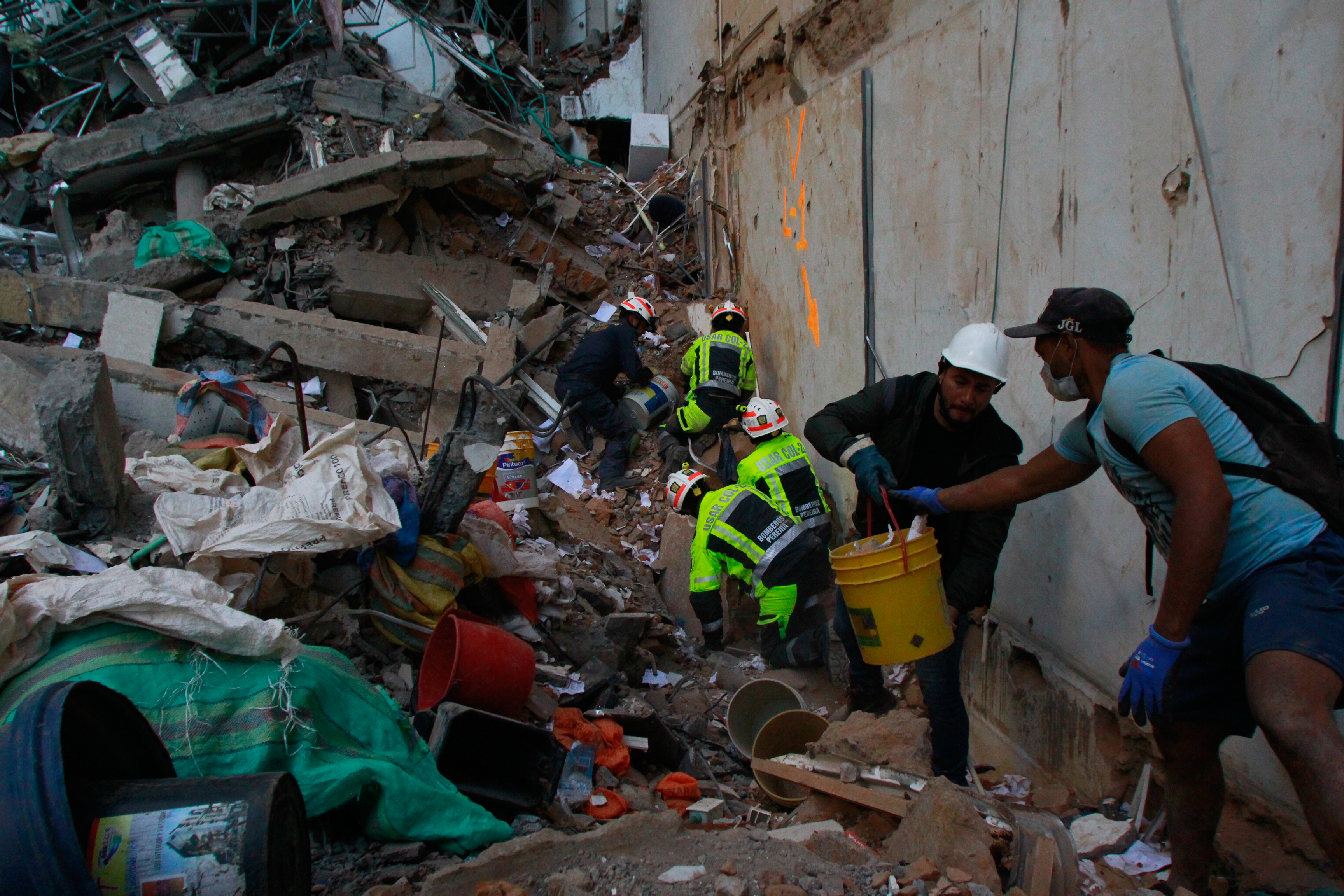
    PEREIRA, Colombia — Rescue crews and civilians in Colombia painstakingly searched through rubble Tuesday in the hopes of finding survivors trapped under debris after a powerful earthquake left thousands missing in dozens of cities and towns.

    The 7.4 magnitude earthquake that hit western Colombia on Monday wreaked havoc, collapsing buildings, buckling roads, crushing cars, and leaving devastated residents to console each other among the wreckage of their homes. Excavators and heavy machinery cleared heavy chunks of concrete, while buckets of rubble were passed hand-to-hand along a line of volunteers.

    Rescue crews and volunteers picked through flattened concrete buildings in affected cities, searching for signs of life. They raised their hands to call for silence when they thought they heard someone beneath the piles of debris. At least one woman was retrieved — alive — from the rubble.

    Colombian President Abelardo de la Espriella said the earthquake killed at least 181 people and left 2,595 more injured. He said at least 195 remained missing, but civilian-run databases suggest that number could be closer to 4,000.

    Crews race to find survivors

    Authorities said the deaths were concentrated in the cities of Cali, Pereira, Manizales, and Quibdo, but local leaders and families worried about casualties and damage in rural areas, from where very little information has emerged. Aid agencies consider the first 48 to 72 hours crucial for retrieving people alive, though that threshold can be extended if they have access to food and water.

    De la Espriella said more than 1,000 homes were destroyed and yet more damaged.

    Standing near the remains of his brother’s collapsed apartment building in Pereira, Jairo Vargas said he made the 135-mile drive from Medellin, hoping to find him alive.

    “I’m absolutely certain he’s here. Absolutely certain,” Vargas said, adding that his brother’s car was still parked outside. But he fears his sibling did not survive.

    “The debris surrounding my brother is soft,” he said, as heavy machinery rumbled nearby. “It’s possible that it’s protecting him, but we can’t hear any noises anymore. I don’t know. I have little hope.”

    Colombia’s new president faces his first serious challenge

    The earthquake presents the first major test for first-time officeholder de la Espriella, who entered office just days before the natural disaster. The leader, who split the country in recent elections, now seeks to unite Colombia in its disaster response.

    That challenge was particularly notable in Choco, the region at the quake’s epicenter. It is one of Colombia’s poorest and most neglected regions, often beset by warring armed groups. Much of Choco is accessible only by boat, through the jungle, or by airplane.

    Sterling Palacios, a religious and environmental leader in the region, said Choco’s capital and smaller communities along the Atrato River were devastated. Homes were reduced to rubble and aftershocks continued to rumble, terrifying residents who slept in the streets overnight.

    The Colombian Geological Service said it has documented more than 100 less powerful aftershocks since the initial quake.

    “There are towns where people have lost everything, where people have died, where homes have been destroyed,” he said. “We don’t have a full panorama of the damage, but we know it’s been massive.”

    De la Espriella traveled to Quibdo in Choco on Monday night where he announced he was mobilizing “the entire military and police apparatus,” as well as deploying engineers, rescue workers, and search dogs.

    “Choco will never again be the ‘land of the forgotten,’” he said.

    Palacios said the government’s response has so far been “concentrated in the capital,” and that authorities were flying the wounded from Quibdo to hospitals in the city of Medellín.

    The biggest challenge, he said, remains towns in rural areas only reachable by boat — journeys that can take hours or days. That response is also complicated by a toxic slate of armed groups warring for control who, during the COVID-19 pandemic, blocked healthcare workers from traveling to remote areas.

    “It’s a risk and it’s very difficult to predict” what could happen, he said, adding it could take weeks to fully assess the devastation.

    Desperate residents seek news of loved ones

    Families posted information about missing loved ones on citizen-run websites.

    Dana Carolina Zamora posted an image of her missing 60-year-old uncle, Miguel Ángel Zamora, cradling his dog. The farmer was living in a rural area of El Cairo, not far from the quake’s epicenter in San Jose Del Palmar.

    Local authorities said 80% of El Cairo, a town of about 7,000 people, was damaged. Zamora said her uncle lived in a traditional house of sticks and mud.

    “We are afraid. We hope that is not the case, that he is all right and that it is only a communication failure. But we haven’t heard anything from him,” Zamora said.

    The earthquake left many people unnerved after back-to-back quakes devastated neighboring Venezuela in late June, destroying hundreds of buildings and killing more than 6,300 people.

    Mónica Sánchez, who lives in Pereira, one of the worst-hit cities, said when the quake happened a wall collapsed inside her clothing factory. Sánchez and her 12 employees escaped just in time.

    “It was shocking — the city fell down around us,” she said.

    On Tuesday, rescue workers pulled a woman alive from the rubble. Diana Troncoso lay on a stretcher, dusty and scraped up, with her eyes closed. Observers burst into applause as she emerged, but search teams raised their hand to call for quiet so they could continue their search for survivors.

    Pereira and Cali enforced curfews Monday night to prevent looting, and private vehicles were banned from the roads of Pereira so ambulances, police, and rescue workers were able to navigate what’s left of the roads.

    The U.S. State Department has announced it would provide $15.5 million for emergency shelter, food, and other aid. Governments across Latin America have also lined up to help.

    “This has been a tragedy for the whole city, for thousands of families,” Pereira Mayor Mauricio Salazar told local media, his voice quavering. “But here we are, and we will continue forward with the hand of God.”

  • Ukraine’s push to cripple Russia in Crimea is just getting started, drone chief says

    Ukraine’s push to cripple Russia in Crimea is just getting started, drone chief says

    EASTERN UKRAINE — The commander leading Ukraine’s drone war says his country’s recent strikes in Crimea are the first phase of a campaign aimed at rendering the peninsula — illegally annexed by Russia in 2014 — unusable as a staging ground for Russian forces.

    Maj. Robert “Magyar” Brovdi, one of Ukraine’s most prominent commanders among a new generation of soldiers, said his forces could strike seven times more military targets in Crimea if the money pledged by Western allies came faster.

    “Crimea falls within the key conceptual pillars on the path to ending the war,” Brovdi told the Associated Press in an interview.

    Despite that shortfall, Ukraine’s summer campaign in Crimea has already inflicted significant damage: striking rail bridges, oil depots, and power infrastructure to disrupt supply lines and blind Russian air defenses as drones fly in.

    Brovdi said his forces are equipped at just 14% of what they would need to carry out the Crimea campaign at full capacity.

    A firm believer in numbers since his past life running an international grain trading business, Brovdi joined Ukraine’s territorial defense as a volunteer in the war’s opening days. He rose quickly, commanding one of the country’s most effective drone brigades before being tapped to lead a force with no precedent before this war — Ukraine’s Unmanned Systems Forces.

    “It’s not that the production capacity of Ukrainian manufacturers doesn’t allow us to make the necessary quantities” of drones, Brovdi said. “It’s the banal problem of untimely financing, which our partners do allocate, but which moves significantly slower than our plans.”

    A lover of the arts

    A devoted patron of the arts, Brovdi works in an underground command post that resembles a museum, with pieces of Ukrainian art on display, including by renowned painter Maria Prymachenko — each with small placards noting their titles and a QR code linking to more information. “Please don’t touch the sculpture,” reads a sign beneath one piece.

    The artwork sits against a backdrop of dozens of screens streaming live footage from the front, along with real-time data that drives decisions on the battlefield. Soldiers can grab good coffee, pick a book, work out, or rest in sleeping pods — a culture that feels closer to a Silicon Valley office than a war room.

    They work around the clock to try to prevent Crimea from functioning as a staging ground for the Russian military, said Brovdi, whose call sign, Magyar, nods to his ethnic Hungarian roots in Zakarpattia, the western Ukrainian region bordering Hungary.

    He pointed to one sign of progress — in four recent large-scale Russian missile barrages from the peninsula, only five missiles were launched in total, a drop he credited to the systematic destruction of Russian air defenses there. The AP couldn’t independently verify the claim.

    To open that “window” for drones to strike the peninsula without being shot down en masse, his forces destroyed more than 300 air defense assets over recent months — surface-to-air systems, radar stations, electronic warfare equipment.

    The window metaphor sends him into a sidetrack about something personal — he loves sleeping with one open, a pleasure he rarely gets anymore as one of Russia’s most hunted men, who spends most of his time in underground bunkers.

    Forcing Russia out of Crimea

    Much of Russia’s Soviet-era air defense hardware runs on the power grid, which is one of the reasons Crimea’s electrical infrastructure has become a recurring target. Russian soldiers become “blind,” left with just machine guns and rifles, he said. The tactic has also impacted access to power for civilians, and Brovdi said he has twice publicly apologized to Ukrainians living in Crimea for the disruptions.

    Wherever Starlink connectivity reaches across Crimea, his forces can now destroy even the most heavily defended target using an average of just three drones, mixing munitions with different characteristics and warheads depending on what’s being hit. He described the strikes as deliberately calibrated — different munitions for a bridge pier than for a fuel truck or a moving train — and said his forces avoid hitting civilian infrastructure.

    “Creating conditions that make it impossible for any kind of military capability … to remain there will make Crimea uninteresting … as a military staging ground,” he said.

    Ukraine is also working to dismantle Crimea’s role as a naval base — a blow to Russia’s presence near NATO’s borders, he added.

    The campaign’s early results have not been made public, Brovdi said. But roughly two weeks into the offensive that began in late June, he said Ukrainian intelligence indicated Russian authorities had ordered all military commands and security services to relocate off the peninsula, along with a covert order to remove secret archives and artworks. The AP could not independently verify the account.

    Threats from Russia

    Meanwhile, Russia is working to counter Ukraine’s edge. It is installing jamming systems at a scale that will, to some degree, degrade Starlink connectivity, Brovdi said.

    Russia is also building its own satellite communications system to rival Starlink, he said. “This is a risk for the entire planet,” Brovdi said, “because a dictatorship will gain access to information across the whole globe.”

    He also pointed to other threats facing Ukraine. The concentration of jet-powered Shahed drones, which are much harder for Ukraine to shoot down, has increased 2½ times in recent weeks, he said.

    Russia’s military can currently fire a simultaneous salvo of 77 ballistic and cruise missiles, he said, and plans to increase that to 200. That is one of Ukraine’s most vulnerable points, since the country is running short of interceptors for the U.S.-made Patriot — the only system Ukraine has in its arsenal against ballistic missiles — meaning dozens fired by Russia during mass barrages get through and hit their targets.

    “Even if they only manage half of that, it will all be flying at us,” Brovdi said. The only way to bring the number down, he said, is by striking every facility involved in producing those missiles — underscoring the importance of Ukraine’s long-range strikes deep inside Russian territory.

    Ukraine’s plan for Russia’s Wildberries

    Ukraine has increasingly targeted Wildberries, Russia’s largest online marketplace, sometimes described as the country’s answer to Amazon, and Brovdi named it as a target.

    “Wildberries is, first of all, a supply platform — it’s the war’s quartermaster,” he said, noting the company runs a dedicated section selling goods for Russia’s military.

    The Kremlin has denied the site supplies the Russian military and has accused Ukraine of striking civilian targets. Russia regularly attacks Ukrainian logistics and retail facilities.

    At the same time, Brovdi said, the strikes on Wildberries are meant to make ordinary Russians feel the war directly, in hopes the resulting desire to end it could weigh on Russia’s ability to keep fighting.

    Brovdi declined to give a timeline for the Wildberries campaign, saying only that the strikes will continue “until it becomes impossible for it to recover quickly.”

    “Ultimately, Wildberries is, forgive the expression, a consumer gambling addiction,” he said, arguing that losing access to it — like restrictions on social media — creates an intrusion on one’s personal life that most Russians feel.

    “It turned out to be a sensitive sensor of the comfort of Russia’s massive population — people who consider themselves completely untouched by the actions of the aggressor country,” he said.

  • Zuckerberg manifesto pushes an open-source approach on AI as Meta releases its latest model

    Zuckerberg manifesto pushes an open-source approach on AI as Meta releases its latest model

    Meta Platforms CEO Mark Zuckerberg laid out a vision Monday of what he said artificial intelligence can do for the world, imagining a future where everyone has their own, all-knowing AI agent that strives to improve all aspects of their lives.

    Zuckerberg detailed his ambitions for the technology in a 6,500-word essay published online where he also outlined why he favors open-source AI technology, in which developers make key components accessible for anyone to examine, modify and build upon.

    In a document derided by critics as fantastical, Zuckerberg said his company is working toward an era where everyone will have the tools to create new businesses, receive Ph.D.-level tutoring, and provide personalized lifestyle tips. His 8-year-old daughter, he wrote, can already code her ideas and quickly produce videos.

    “Everyone will soon have invention superpowers,” Zuckerberg wrote.

    Zuckerberg warned of risks if control of advanced AI is concentrated with a select few companies, institutions, or governments. On Monday, Meta also announced the release of a new open-source AI model, Muse Glimmer, which can run on a personal computer, and Zuckerberg said the company would also would provide a way for developers to access a more powerful AI model, Muse Spark 1.2.

    Meta makes AI models, like several other tech companies, and uses them to power platforms such as Instagram and Facebook. The Menlo Park, Calif., company also makes them available to developers who can create their own apps and features.

    Skeptics urge a slower pace of AI development

    Critics said Zuckerberg was not reckoning fully with the risks inherent in AI’s rapid development.

    Noting recent incidents where AI models, including Meta’s own, hacked other companies on at least three separate occasions, Anthony Aguirre, president and CEO of the AI safety nonprofit Future of Life Institute, asked “what on Earth makes Meta think they — or anyone — could control something exponentially smarter, faster, and more capable?”

    “Meta’s chosen path is ultimately one of human replacement and disempowerment, but there is an alternate, pro-human path — one that brings about individual flourishing and scientific breakthroughs with controllable AI tools. What’s urgently needed now is for governments to facilitate a pause on advanced AI development and steer us onto the pro-human path — before it’s too late,” Aguirre said.

    Meta chief says AI should be broadly distributed

    In his essay, Zuckerberg outlined why he thought open source is a better path for fair development of AI. He warned that if control of AI “superintelligence” is too concentrated, it will lead to less favorable outcomes for everyone else. The key, he wrote, is finding a balance that ensures advanced AI is “broadly distributed” to empower billions of people equitably.

    Meta has long been a proponent of open-sourcing its AI models, but has struggled to keep up with rivals such as OpenAI, Anthropic, and Google that have not taken the same approach.

    Zuckerberg made what could be a veiled reference to Meta’s rivals without naming specific companies.

    “Most other labs are focused on building AI for companies, governments, or other institutions, so if those labs lead, then the balance of power will favor larger institutions over individuals,” he wrote.

    Zuckerberg also included policy recommendations for keeping the U.S. ahead of rivals, including China. The United States and its allies need to speed up building energy capacity and infrastructure to stay competitive, he said.

    Zuckerberg called for authorities to reconsider their position on “distillation,” which involves training a less capable model on the outputs of a stronger one. The Trump administration has vowed to crack down on Chinese AI companies using distillation to extract technical features from U.S. AI models. Anthropic earlier this year accused China’s DeepSeek of using distillation.

    “Some have tried to frame distillation as harmful, but I think it is important to protect the principle that you can learn from anything you can observe,” Zuckerberg said. “This is how the world works, and the U.S. will not be able to lead if we restrict ourselves on this front.”

    Critics see a self-serving message from Meta

    Matt Lane, senior policy counsel at the nonprofit digital rights advocacy group Fight for the Future, called Zuckerberg “annoyingly out of touch on his best day,” but said the CEO is right about the importance of open-source AI.

    Shared access to open-source AI systems is important for protection in a world where AI can be used to hack into electronic systems, like voting systems and benefits infrastructure, he said.

    But he said only Meta will benefit if everyone were to use Meta-designed AI systems, even if they are fully open-source. “Open-source AI needs to be supported beyond these corporate interests. We, unlike Zuckerberg, hope for as much competition as possible,” he said.

  • Canada puts the military on standby as British Columbia wildfires kill 1 and displace thousands

    Canada puts the military on standby as British Columbia wildfires kill 1 and displace thousands

    Canada put its military on standby Monday to help battle deadly wildfires in British Columbia as a local mayor warned that one of the blazes had wreaked huge destruction on his community. A woman has died and some 20,000 people have fled their homes so far.

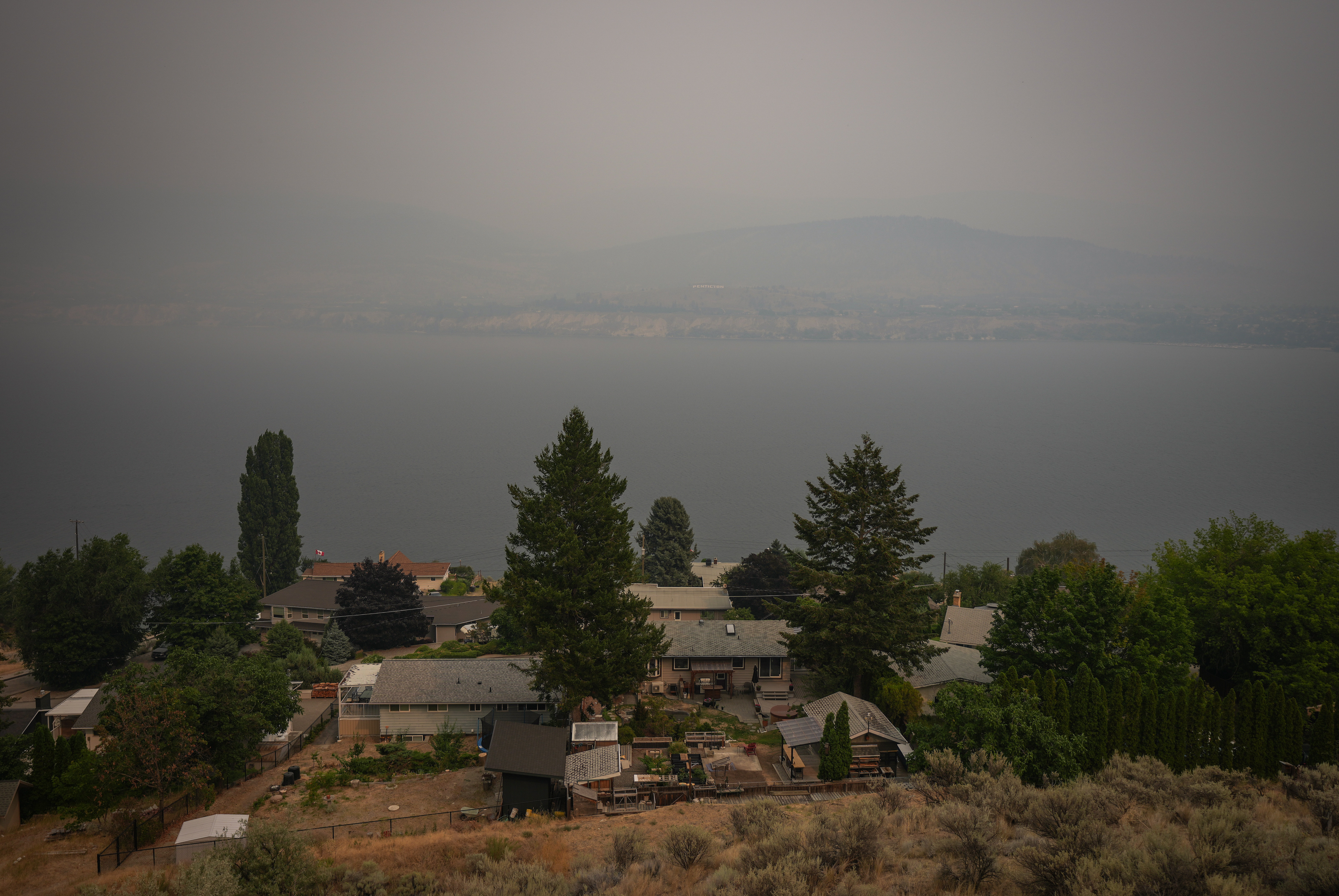
    For days, scores of wildfires have burned across the province, nearly half of them out of control in hot, windy weather and prolonged drought. Thousands have fled on jammed roads as officials said even more communities could be threatened.

    The mayor of Summerland — home to about 12,000 people, which was ordered evacuated on Saturday night along with about 8,000 people in and around nearby Peachland — warned that the affected areas remained too dangerous to enter and that it was impossible to determine the scope of the destruction.

    The blaze — known as the Bald Range wildfire — remained out of control after racing toward Summerland and other communities along Okanagan Lake over the weekend.

    “It’s going to be quite a bit,” Mayor Doug Holmes said of the expected destruction. “We need to brace ourselves for that bad news when it’s time to go back. Everybody will know somebody who has lost a home.”

    Defense Minister David McGuinty said the Canadian Armed Forces were in constant contact with provincial and federal officials and were ready to respond if British Columbia formally requested assistance. The federal government has already approved provincial requests for help with shelter and accommodations.

    The Royal Canadian Mounted Police said an 80-year-old woman died while trying to escape the fire near Summerland. Canadian Prime Minister Mark Carney said the death was heartbreaking and that the federal government would continue supporting British Columbia.

    The British Columbia Wildfire Service said Monday the fire had grown to about 60 square miles from 53 square miles on Sunday. Officials warned clearer skies and direct sunlight could increase fire activity.

    Ravi Parmer, British Columbia Minister of Forests, said 19 helicopters were assigned to the Bald Range wildfire but that its intensity made it impossible to halt the blaze.

    “We could have put a thousand more helicopters and a thousand more people on the ground, and it wouldn’t have made a difference,” he said.

    British Columbia Wildfire Service information officer Nicole Bonnett said the smoke lingering over the Bald Range fire has reduced visibility, limiting the use of air tankers and water-skimming aircraft.

    Bonnett said the blaze has been fueled primarily by extremely dry conditions rather than wind, and grew explosively Friday, reaching 19 square miles within three hours.

    Evacuated residents face uncertain prospects for return

    Holmes, the Summerland mayor, said there was no timetable for when residents would be able to return as power lines had been downed and hazards at the destroyed or damaged buildings would have to be assessed first. He added that residents would eventually return, likely neighborhood by neighborhood.

    “The hard part is going home and seeing the devastation,” he cautioned.

    Kyla Gaudiuso, a resident of Faulder, a 215-strong community, said her home was likely destroyed as she had gotten a photo showing the ridge where it stood engulfed in flames.

    She described the community’s evacuation as “pandemonium” and said she was now staying with a friend in the town of Penticton.

    “It doesn’t really seem real,” she said. “I have to see it to believe it.”

    Progress made with Washington state fires

    Firefighters in Spokane, Wash., have strengthened containment lines around three destructive blazes in recent days, allowing some evacuated residents to return home.

    Washington Gov. Bob Ferguson announced emergency proclamations to help those impacted by the fires at a news conference in Spokane on Monday. He suspended waiting periods for unemployment benefits and prohibited evictions, while the state Department of Licensing and Department of Health will help people who lost important documents get them immediately without charge.

    The state is also working on a request to the federal government for a major disaster declaration that would secure more support, he said.

    In California, evacuations have been ordered for areas along the famous Big Sur coast as a wildfire burns in the nearby steep, rugged mountains. The Timber Fire in Monterey County started Sunday and had grown to about 2 square miles by midday Monday, according to Cal Fire.