Category: Associated Press

  • Trump asks Supreme Court to let White House ballroom construction continue during appeal

    Trump asks Supreme Court to let White House ballroom construction continue during appeal

    WASHINGTON — President Donald Trump’s administration on Friday asked the U.S. Supreme Court to allow the White House to continue construction on its $400 million ballroom project while it appeals a lower court’s order to halt the work.

    Trump’s solicitor general petitioned the high court to suspend last week’s decision by a three-judge panel from the U.S. Court of Appeals for the District of Columbia Circuit.

    The divided panel ruled last week Trump must stop the White House ballroom’s construction because Congress has not approved the project. The panel’s majority said Trump doesn’t have the unilateral authority to build a 90,000-square-foot ballroom where the White House’s East Wing stood before he ordered its demolition last fall.

    The lower court suspended its own ruling for two weeks to give Trump’s Republican administration time to appeal to the Supreme Court. Solicitor General D. John Sauer asked the Supreme Court to rule on its stay petition before the appeals court panel’s decision takes effect on Aug. 21.

    “This case involves an extraordinary and unlawful injunction that will halt the ongoing construction of the integrated military complex, including a totally secure ballroom space, at the East Wing of the White House, which is vitally required by national security,” Sauer wrote.

    The lower court’s 2-1 decision upheld an order to pause aboveground construction on the project, siding with historic preservationists who sued to stop construction of the ballroom.

    “Whether or not a massive ballroom should be constructed is for Congress to decide and is not a matter for Executive self-help,” wrote the majority’s two judges, both appointed by Democratic presidents.

    A third judge disagreed, finding that the preservationist group that challenged the project had no legal right to sue.

    “The district court elevated the aesthetic displeasure of a single passerby over the government’s security interests in the ballroom,” wrote Judge Neomi Rao, who was appointed by Trump.

    The Trump administration argues that the president, not Congress or the courts, has unimpeded authority to renovate the White House. The current state of the project, essentially an open construction site, makes it harder to protect the White House, the Justice Department contends.

    The administration also says the National Trust for Historic Preservation does not have the legal right, or standing, to sue over the ballroom, which is part of Trump’s plans to quickly remake Washington. The solicitor general said the ballroom project “should be a matter for the President and the political process, not construction-by-injunction.”

    During an appeals court hearing in early June, an administration lawyer defended a broad view of presidential control over iconic public facilities. The government could bulldoze the Statue of Liberty and the White House, Justice Department lawyer Yaakov Roth said in response to a hypothetical question, and the descendants of immigrants who came through Ellis Island and the enslaved people who built the White House would not have standing to sue.

    The D.C. Circuit panel upheld a ruling by U.S. District Judge Richard Leon, who was nominated by Republican President George W. Bush. Leon concluded that a pause wouldn’t jeopardize national security. He also exempted any construction work that is necessary for the safety and security of the White House.

    The ballroom has been under construction for 10 months. The administration says the work is roughly 65% finished.

    “Given those developments, the injunction promises chaos in service of nothing,” Sauer wrote.

  • Some U.S. adults are using AI for financial guidance, but few trust it, Gallup poll finds

    Some U.S. adults are using AI for financial guidance, but few trust it, Gallup poll finds

    NEW YORK — Some U.S. adults are using artificial intelligence for financial guidance, but it’s far from the most trusted source of advice, according to a new Gallup survey conducted in partnership with Edward Jones, a financial services firm.

    About 1 in 5 Americans who have sought financial advice in the past year turned to AI, the survey found. But among U.S. adults overall, only about 3 in 10 have “a great deal” or “some” confidence in its expertise for managing money, according to the survey, including just 3% who trust AI “a great deal.”

    The poll, which was conducted in the spring and looked at the views of adults who are at least 21, found a disconnect between the resources Americans trust for financial advice and the ones they actually rely on. About 8 in 10 U.S. adults have at least “some” confidence in financial advisers. But only about one-third of U.S. adults who sought financial advice turned to a professional financial adviser, with far more, 73%, saying they relied on their own internet research.

    As the use of AI increases, financial experts say consumers should be cautious about fully trusting these tools. Using AI as a tool at the start of a learning journey and then combining this knowledge with other trusted sources can be the best way to engage with new and traditional financial guidance tools, said Taha Choukhmane, associate professor at MIT’s Sloan School of Management.

    “I would encourage people to use AI to explain and define,” Choukhmane said. “If you’re interested in knowing what the stock market is, what the difference between a mutual fund and an index fund is. Using AI to explain these concepts can be very useful because it can empower people to get the most out of these methods.”

    Most Americans have sought financial guidance from at least one source in the past year, the survey found. In addition to those who said they used internet research, financial advisers, or AI, 35% went to a parent, sibling, or relative, while 26% got information from news, media, or social media. About 2 in 10 said they turned to a friend or an author, speaker, or influencer, and fewer relied on an employer or retirement plan provider, a robo-adviser or a teacher or professor.

    Younger generations are more likely to say they’ve used AI for financial advice, while older adults are more likely to have turned to a professional financial adviser.

    Affordability can often deter younger adults from hiring a financial adviser. While doing research online, asking family and friends and using AI can have minimal costs, hiring a professional can require a bigger financial commitment. About a quarter of Gen Z and millennial adults who looked for financial advice in the past year went to AI, compared to 16% of Gen Xers and just 7% of baby boomers. But while only 14% of Gen Z adults and 21% of millennials who sought guidance turned to a professional financial adviser, that rose to 34% of Gen X adults and about half, 55%, of baby boomers.

    Since AI interacts with specific user prompts, the advice can vary depending on how questions are asked. But asking general questions about personal finance can help people understand complex financial terms. Choukhmane also recommends asking AI to provide references to trusted sources to verify the information provided.

    While AI can be utilized for research, some financial experts are skeptical about the legal responsibilities of the technology. Certified financial planners have a legal responsibility to give the most fitting advice while AI tools don’t. Ultimately, the decisions a person makes based on AI advice are their responsibility.

    “Fiduciary responsibility is very real,” said Bobbi Rebell, certified financial planner and founder of Financial Wellness Strategies. “There’s no AI that is a fiduciary. It doesn’t really know your life; it’s not asking you all the questions.”

    The poll of 5,075 U.S. adults ages 21 and older was conducted March 20-April 6, 2026, using a sample drawn from Gallup’s probability-based panel, which is designed to be representative of the U.S. population. The margin of sampling error for U.S. adults overall is plus or minus 1.8 percentage points.

    Amelia Thomson-Deveau contributed to this article.

  • Concerns grow over conditions on Navy carrier

    Concerns grow over conditions on Navy carrier

    WASHINGTON — Democratic senators have begun raising concerns about the extended deployment of the USS Abraham Lincoln, amid reports about poor living conditions and a lack of downtime for the crew after more than 8½ months at sea.

    The Lincoln, a San Diego-based aircraft carrier with a crew of about 5,000 sailors, is supporting U.S. operations in the Middle East against Iran.

    In a letter to Defense Secretary Pete Hegseth and Hung Cao, the acting Navy secretary, Sen. Richard Blumenthal (D., Conn.) described a list of reported problems on the ship.

    “There have been widespread reports of shortages of basic supplies, water contamination, plumbing issues, deteriorating mental health, deck safety concerns, and disruptions in the mail system, which have caused many care packages in route to the ship to be lost in transit for months,” he wrote about the problems, many of which were reported earlier by Navy Times and Stars and Stripes.

    Blumenthal added that the Trump administration had kept aircraft carriers at sea far longer than usual during its pressure campaign against Venezuela and its war with Iran.

    Sen. Ruben Gallego (D., Ariz.) said in a social media post Wednesday that he was requesting an overnight visit to the Lincoln for a bipartisan delegation of lawmakers.

    “Unlike Donald Trump, I’ve seen active duty,” said Gallego, who served in combat as a Marine. “The way he’s treating our service members as he carries out this illegal war is not just disgusting; it’s dangerous.”

    The Navy is sending the aircraft carrier George Washington to the Middle East to relieve the Lincoln, according to a U.S. official who spoke on the condition of anonymity because they were not authorized to speak publicly about ship schedules.

    “We ​make sure every ship, every crew, every captain has everything we can provide ​them at every single moment,” Hegseth told reporters ​during a visit to Panama on Thursday, according to Reuters. “Some deployments are longer than others, and I have more respect and gratitude for those sailors than anybody. What they do in ​those high seas in those austere conditions with less port calls — it’s incredible.”

    A second carrier, the USS George H.W. Bush deployed on March 31 and is already operating in the Middle East.

    The Navy’s newest carrier, the USS Gerald R. Ford, was deployed for 326 days before it returned home in May, breaking the record for the longest carrier deployment since the Vietnam War.

    The Ford deployed from Norfolk, Va., on June 24, 2025, and was operating in the Mediterranean when it was redirected to the Caribbean in October as part of the force that captured President Nicolás Maduro of Venezuela. In February the ship was sent to the Middle East as part of a buildup of U.S. military forces in the region that launched the war against Iran late that month.

    During its deployment, the ship suffered a fire and food shortages along with mechanical problems.

    The longer warship deployments are, the more they wear on people and equipment alike. When in constant operation, gear often begins to break or become inoperable if replacement parts are not readily available. And the nonstop cycle can take a toll on morale.

    Keeping warships out for extended periods often also creates other issues, such as upending plans that keep ships in certain parts of the globe for strategic reasons, along with interrupting shipyard maintenance schedules that are developed years in advance.

    “The Navy has a lot of flexibility to react to contingency operations, but as those deployments get extended and demand more underway time outside of normal schedules, readiness and maintenance suffer,” Mike Franken, a retired Navy vice admiral, said in an interview. “We just don’t have the ability to recover from that quickly. It will take years.”

    The Lincoln itself had to fend off attacks from Iran during the early phase of the war.

    “Iran shot hundreds and hundreds of missiles and one-way attack drones at our aircraft carrier,” Hegseth told reporters at the Pentagon on April 8. “Every single one of those shots, easily shot down miles and miles away from the Abe Lincoln.”

    The Lincoln has also helped enforce the U.S. blockade of Iranian ports, which initially ran from April 13 until a ceasefire agreement was announced in mid-June, and then resumed on July 15.

    During the first blockade, U.S. Central Command, which directs military operations across the Middle East, said its forces disabled nine “noncompliant” vessels through gunfire and missile attacks, and had “redirected” 135 ships that ultimately complied with the blockade order.

    In the second blockade, there appear to have been fewer U.S. attacks on merchant ships. In its most recent update on Aug. 9, Central Command said it had redirected 55 commercial vessels, disabled two, and boarded two to “ensure compliance” since the blockade was reinstated.

    When the Lincoln’s relief will arrive is unclear, but the George Washington recently passed through the Strait of Malacca — a major transit route through the Pacific Ocean in Indonesian waters — heading west, according to a second U.S. official who spoke on the condition of anonymity to discuss warship movements.

    With the Navy’s limited numbers of aircraft carriers being routinely pushed months beyond their scheduled deployments, Franken said, it will begin to limit their availability for combat operations in the future.

    “I guarantee you that the first two years of the Trump administration will definitely affect the next two years of the Trump administration,” he said.

    This article originally appeared in The New York Times.

  • In the Reflecting Pool saga, the National Park Service’s mission is tested by Trump’s demands

    In the Reflecting Pool saga, the National Park Service’s mission is tested by Trump’s demands

    WASHINGTON— President Donald Trump’s botched repairs at the Lincoln Memorial Reflecting Pool have landed the National Park Service in a tight spot, forced to serve the public while managing controversial demands by the Republican president.

    The beloved federal agency, its iconic park rangers, and other employees have been navigating a new reality under Trump, from orders to revise exhibits at parks and other sites to the demolition of important structures under its stewardship, such as the White House’s East Wing, to arresting visitors for alleged vandalism at the pool.

    Critics say the monthslong Reflecting Pool saga and other demands by Trump risk undermining the integrity of a federal agency that has long been held in high esteem by the American public.

    “Never — not once in decades — have I witnessed such systematic degradation, disrespect, and dismantling of the National Park Service as I see today under the thumb of President Donald Trump and Interior Secretary Doug Burgum,” said Bill Wade, a former park ranger and superintendent.

    Wade, who now serves as executive director of the Association of National Park Rangers, wrote an op-ed for the Denver Post lamenting what he called the Trump administration’s “assault on the people, the mission and the values that have made the National Park Service one of America’s most valued institutions.”

    The park service has been at the center of some of Trump’s most contentious actions during his second term. An executive order targeted funding and demanded reviews at national parks and other sites that Trump said advanced “divisive narratives” and “improper ideology,” resulting in changes to some exhibits on slavery or climate change.

    The president has also ordered sweeping changes to historical monuments and buildings in Washington that fall under NPS’ purview, including the creation of a White House ballroom and a 250-foot-tall memorial arch. The agency meanwhile has lost at least one-quarter of its permanent workforce since Trump began his second term, through layoffs, forced retirements, and resignations.

    Park service employees “are being politicized and drawn into the absurdities and corruption of this administration” on a regular basis, said California Rep. Jared Huffman, the top Democrat on the House Natural Resources Committee. He cited the pool project, the proposed arch, and the executive order on exhibit materials.

    The ongoing political assault on the agency “is unlike anything we’ve seen in this country, and it makes life miserable at agencies like the National Park Service,” Huffman said.

    Reflecting Pool saga continues

    Trump launched repairs at the Reflecting Pool earlier this year, hoping to address longstanding problems at the iconic site ahead of the America 250 celebrations. But the $16 million project faced immediate problems, including peeling blue sealant and a fierce return of green algae.

    Trump blamed the sealant issues on vandalism without providing evidence, and felony charges were brought against a former Olympic canoeist, David Hearn, after he was accused of vandalizing the pool.

    The U.S. Park Police, a unit of the National Park Service, arrested Hearn, who denied wrongdoing and said he briefly touched a chunk of the coating.

    Charges against Hearn were dropped on July 31 after prosecutors acknowledged that damage was caused by a bungled installation rather than vandalism.

    The advice and counsel of career officials and rangers — instantly recognizable by their signature flat hats and green-and-gray uniforms — has been ignored or pushed aside as Trump and Burgum make decisions regarding the failed pool repair, according to an Interior Department employee who was not authorized to discuss internal discussions and spoke on the condition of anonymity.

    “It’s tragic,” said Ed Stierli, vice president of government affairs at the National Parks Conservation Association, another advocacy group. “The whole thing is a master class in how not to go about a public rehabilitation project.”

    In the days since the dismissal of the charges, Trump has continued to lean on NPS in his repeated claims that vandals damaged the pool’s lining.

    “A National Park Service career employee, a highly credible witness, saw David Hearn … in broad daylight vandalize the Reflecting Pool by ‘violently’ ripping and tugging at the Pool’s somewhat delicate coating,” Trump posted Aug. 9 on his Truth Social site. Hearn’s legal team said Trump “is continuing to attack an innocent man.”

    Stierli, of the parks conservation group, called Trump’s reference to the unnamed park employee an example of the awkward position agency workers now face under Trump and Burgum, who has publicly backed Trump’s claims about vandalism at the pool.

    “I think the public understands that unfortunately, you have the president of the United States directly driving decisions, both here in Washington and around the country,” Stierli said. The park service — and especially its career staff — “has very little control over this,” he added.

    The White House and the Interior Department did not directly respond to requests for comment on the park service. The White House defended the pool project, saying Trump “promised to make D.C. safe and beautiful, and he’s delivering.”

    “For years, the Reflecting Pool sat neglected, plagued with algae, and leaking millions of gallons of water,” the White House said in a statement. “Fixing it was common sense.”

    Park service morale is at its lowest point, a former official says

    Wade, the former park superintendent, called the pool repair “a comedy of errors” and “a continuation of the incompetence” shown by the Trump administration.

    “Most people realize the NPS is under the gun and can’t do much about it, even though they’d like to,″ he said, adding that morale at the agency is at the lowest point he can remember.

    Edicts from Washington have made clear that speaking honestly about what is going on could cost staffers their jobs, Wade said. “There’s a very strong fear among employees at NPS,″ he said in an interview. “It’s very frustrating for them, as you can imagine.”

    Trump’s proposed memorial arch has faced some pushback. A recent report by park service staff warned that the proposed gilded arch could disrupt the historical significance of dozens of sites around its planned location near the Lincoln Memorial.

    The arch, which last month received initial approval from a key federal commission, would impact the “integrity” of dozens of historical properties because it would change “character-defining visual and spatial relationships” between them, the report said.

    Americans view the National Park Service favorably

    The park service is popular with Americans. About three-quarters of U.S. adults — including similar shares of Democrats and Republicans — have a favorable opinion of the agency, according to Pew Research Center polling from 2025. Only about 1 in 10 have a negative impression, and about 15% are unsure.

    A Washington Post/Ipsos poll from July found that about two-thirds of Americans say they are “dissatisfied” or “upset” about Trump’s Washington area projects, including construction of a new ballroom at the White House, painting the Reflecting Pool, and building his triumphal arch. Republicans are more likely to be “enthusiastic” or “satisfied” with the projects.

    About one-quarter of U.S. adults say Trump’s goal is to “make Washington more beautiful,” while about half say he has a “different goal.” In an open-ended question, many respondents speculated that Trump wants to glorify himself or leave his mark.

    The pool and other recent controversies including the exhibit reviews jeopardize the agency’s credibility, Wade said.

    “Whether interpreting the Civil War, discussing climate science, or describing the complex stories of Indigenous people, rangers have sought to present evidence, not political ideology,’’ he said. ”That is now being lost.”


  • Poland says it thwarted a Russian plot to kill an American citizen in Warsaw

    Poland says it thwarted a Russian plot to kill an American citizen in Warsaw

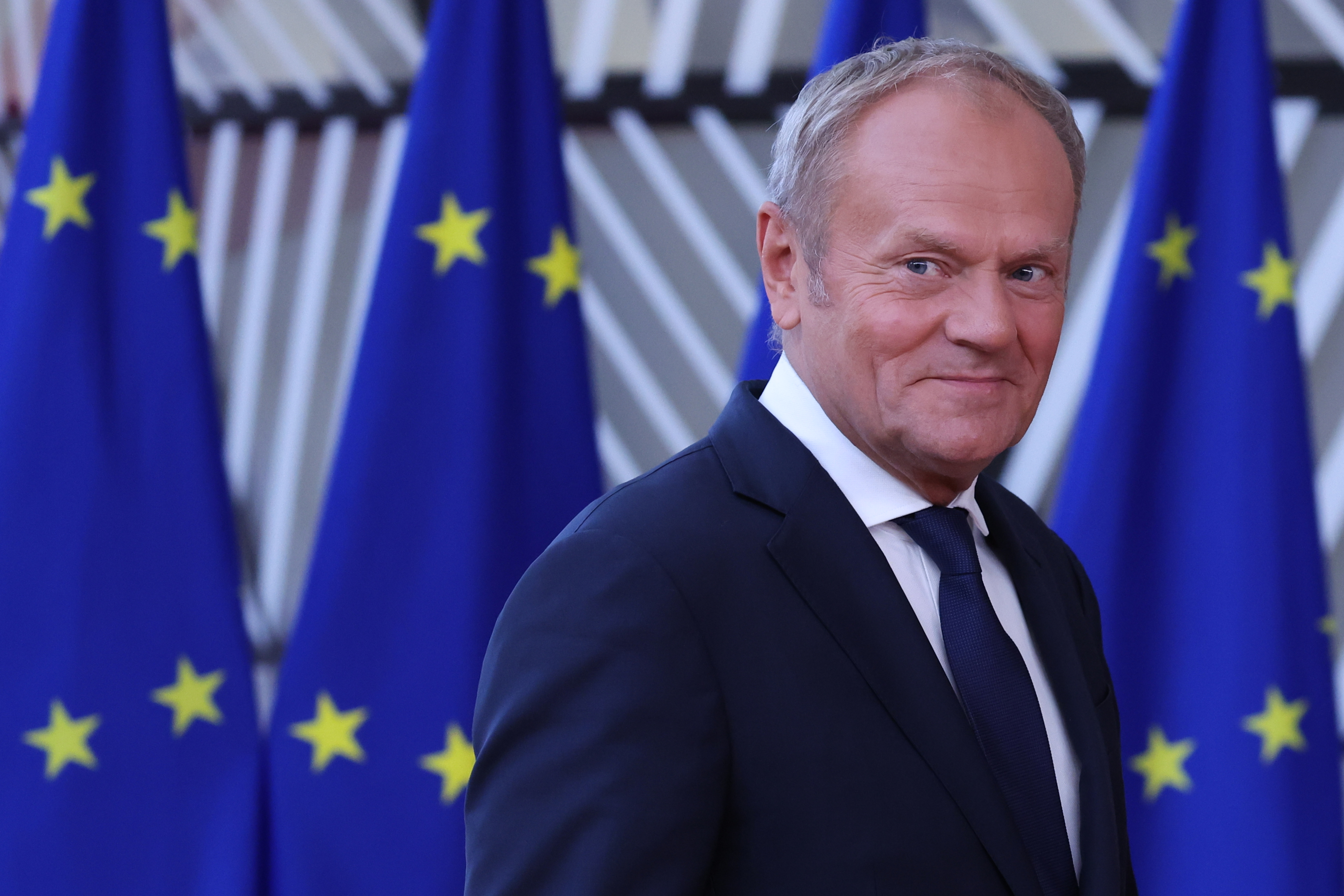
    WARSAW — A Russian plan to kill a Ukrainian American citizen in Warsaw was thwarted by Poland before it could be carried out, the Polish prime minister said Thursday, adding it was the first time that “someone on the order of Russia” sought to attack a U.S. citizen on the territory of another NATO country.

    Western officials have previously warned that Russia stepped up a campaign of targeted killings since President Vladimir Putin’s 2022 invasion of Ukraine, saying they have disrupted several plots across Europe. But Polish Prime Minister Donald Tusk said this incident was unprecedented.

    The suspect, who was allegedly recruited by Russia’s secret services, was detained by Polish authorities on Aug. 7. He will be held in custody for three months, the Warsaw police said in a statement.

    The American Ukrainian citizen “was uncomfortable for the Putin regime,” Tusk said in a news conference, without elaborating.

    The operation was carried out in cooperation with U.S. services, said Tomasz Siemoniak, Poland’s minister overseeing intelligence services. He said the targeted victim was a U.S. citizen “of Ukrainian origin.” Officials did not immediately provide further details.

    The Russian Foreign Ministry did not immediately respond to a request for comment.

    The U.S. State Department said it was aware of the reports but said it had no additional information.

    Western countries believe Russia seeks to undermine Ukraine’s allies

    Russia has long been accused of targeting its enemies abroad, including by using rare poisons. But intelligence officials previously told the Associated Press that Russia’s security services are now more brazen in their choice of targets, going after Russian activists and foreign supporters of Ukraine as well as military defectors.

    “We must assume that the Putin regime will try to eliminate people who are inconvenient for various reasons, in various places around the world,” Tusk said on Thursday. He said that Poland and others must be prepared to counter such actions.

    Western officials see the campaign as connected to Russia’s broader efforts to undermine European countries that support Ukraine. The AP has mapped about 200 acts of sabotage, arson, and other disruption across Europe since the start of the war that officials have linked to Russia. President Vladimir Putin told the AP in June that Russia is not waging a sabotage campaign against Europe.

    In 2006, British authorities accused Russia of being behind the killing of former FSB officer Alexander Litvinenko in London with radioactive polonium. The U.K. also blames Russia for the attempted killing of former Russian military intelligence officer Sergei Skripal in Salisbury in 2018 with the nerve agent Novichok.

    German authorities said Russia organized the 2019 killing of Zelimkhan Khangoshvili, a former Chechen rebel commander who was shot in a Berlin park by Vadim Krasikov, a hitman who was later greeted by Putin after he was exchanged in a spy swap.

    In June, a Russian artist who was critical of Putin was shot and killed at close range near his home in eastern Poland. Tusk said at the time that the killing of Robert Kuzovkov, known by the pseudonym Semyon Skrepetsky, had the hallmarks of a political assassination. He suggested it was possible Russia was behind it but Polish officials have not yet attributed it to Moscow.

    Last year French officials disrupted a plot which they believe was aimed at killing Vladimir Osechkin, a Russian exile who lives under police protection and works to help military defectors flee Putin’s war. Lithuanian officials also disrupted a plot last year to kill a Lithuanian supporter of Ukraine and another against a Russian activist. Officials in Germany have similarly broken up two plots: one to target the head of a German weapons company supplying Ukraine, the other against a Ukrainian military official.

    Polish authorities arrested a man in 2024 in what they said was a plot to assassinate Ukrainian President Volodymyr Zelensky. That year, a Russian helicopter pilot who defected was killed in Spain — with Russian operatives the prime suspects.

    “This campaign is not by accident or chance,” a senior European intelligence official previously told the AP. “There is political authorization.”

  • Congo’s fastest-growing Ebola outbreak reaches a sixth province

    Congo’s fastest-growing Ebola outbreak reaches a sixth province

    KINSHASA, Congo — Congo’s Ebola outbreak has spread to a sixth province after a death was recorded in the previously unaffected Bas-Uele province, the head of Africa’s CDC said Thursday.

    The man died in Buta, the capital of Bas-Uele, after traveling there from Isiro in Haut-Uele province, said Jean Kaseya, director general of Africa Centres for Disease Control and Prevention.

    He was a motorcycle-taxi driver who had sought treatment at several hospitals before he died, Jean-Jacques Muyembe, head of Congo’s National Institute ​for Biomedical Research, said. His colleagues tried to forcibly take his dead body, prompting police intervention and concerns that more people may have been exposed to the virus, Muyembe added.

    The outbreak in eastern Congo, considered the fastest-growing one yet, is on track to surpass the deadliest one in history, which erupted over a decade ago and killed over 11,000 people, the World Health Organization said Wednesday. There are no approved vaccines or treatments for the rare Bundibugyo virus responsible for the current outbreak.

    It has killed over 2,100 people out of more than 4,500 cases, according to the latest government figures. This death toll has been reached almost three times faster than in the 2014-16 Ebola outbreak in West Africa — the worst in history.

    The outbreak is unfolding in some of the most challenging conditions imaginable, with strikes by some unpaid health workers, threats by rebel groups, anger from long-traumatized communities, and misinformation asserting that Ebola isn’t real.

    Bas-Uele is a vast province in northeastern Congo that borders the Central African Republic, where there is recurring armed violence that has forced thousands to flee and take refuge in the province. Access can be difficult due to bad and poorly connected roads as well as limited communication networks, and there are frequent population movements related to gold mining and displacement from conflict.

    As of Thursday, six out of 26 of Congo’s provinces have been impacted. About 90% of all cases and 80% of deaths are concentrated in Ituri province, the WHO said Wednesday.

    Mercy Corps, an aid group, warned Thursday that Ebola cases have been reported along a major travel route about 22 miles from Congo’s border with South Sudan, expressing concern over the outbreak’s “widening footprint.” No cases have been confirmed in South Sudan so far.

    Unpaid health workers’ strikes, low contact tracing hamper response

    Meanwhile, health workers at the Nizi Treatment Center in Ituri province, one of the most affected in the area, went on strike Thursday, leading to the temporary closure of the center after they said they have not been paid for three months.

    Kaseya on Thursday called on the Congolese government to pay the outstanding salaries.

    “We need to pay health workers,” he told reporters. “This is the responsibility of the government, not partners. And they told us that money is available.”

    The real scope of the outbreak remains unknown. It was declared on May 15, but the WHO now says sequencing showed it began months earlier, in February.

    Health authorities have said between 60% and 70% of new cases are recorded outside contacts being monitored, and that the disease is spreading at an “alarming” rate. Contact tracing helps break chains of transmission by finding exposed people early and reacting quickly if they show symptoms.

    “We are chasing the virus; the virus is ahead of us,” the WHO regional director for Africa, Mohamed Yakub Janabi, said this week.

    On Thursday, Kaseya from Africa CDC said, “The concept of contact tracing in DRC has become useless.”

    Trials for treatments and vaccines are underway

    Ebola is rare but highly contagious and can be contracted from bodily fluids such as vomit, blood, or semen, and from contaminated surfaces and materials such as bedding and clothing. The disease it causes is severe and often fatal.

    Clinical trials of two possible treatments for this type of Ebola began last month in Ituri, the most affected of the provinces in Congo where cases have been reported.

    Two vaccines developed specifically for the Bundibugyo virus are now being tested in people for the first time, the WHO said Wednesday.

    WHO also plans to test whether an existing Ebola vaccine could protect people against the virus after studies in animals showed promising results.

    Kaseya said on Thursday that the Africa CDC supports the use of Ervebo, a vaccine authorized against the Zaire Ebola strain, in provinces impacted by Bundibugyo virus. He said some studies show some cross-protection from the available vaccines.

    “We are in a gray area,” he said. “And when you are in a gray area, you have to make strong decisions to stop seeing people dying.”

  • Kennedy Center votes to restore Trump’s name and close for 2 years, challenging a judge’s order

    Kennedy Center votes to restore Trump’s name and close for 2 years, challenging a judge’s order

    WASHINGTON — The battle over the Kennedy Center’s future escalated Thursday as President Donald Trump’s allies on the board took new steps to commemorate him with physical changes to the iconic performing arts institution that could defy a federal court order.

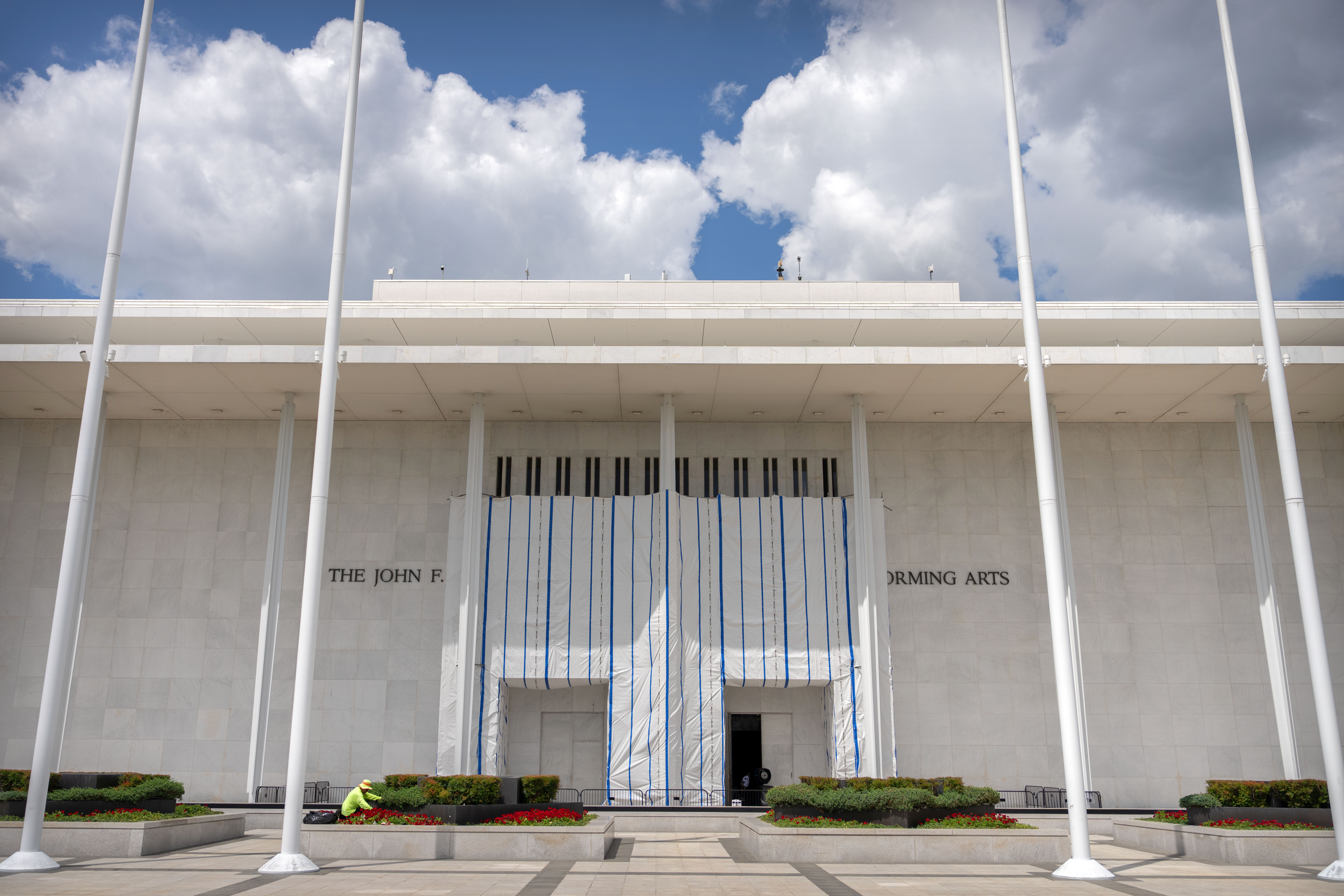
    During an hourslong meeting that was conducted virtually, the board voted to add Trump’s name to the building’s facade so it would read “The John F. Kennedy Center for the Performing Arts Restored and Renovated By President Donald J. Trump.” The plaza in front of the building would be named after Trump and most of the space at the venue would be closed for two years to allow for substantial renovations.

    The changes, described by Rep. Joyce Beatty, an Ohio Democrat who is an ex-officio board member, and her lawyers, amount to a dramatic test of U.S. District Judge Christopher Cooper. He ruled in May that letters affixed to the building that spelled out Trump’s name were added illegally and he ordered their removal, a decision that the Republican administration failed to persuade courts to overturn. At the same time, Cooper blocked a two-year closure that was set to take effect July 5, saying an earlier board vote authorizing the shuttering was “ill-informed and seemingly preordained.”

    “This latest development is a transparent effort to circumvent the Court’s ruling, and flies in the face of the statutes that Congress passed,” Beatty said in a statement. ”I will continue to fight for this treasured national monument.”

    A representative of the Kennedy Center did not immediately respond to a request for comment.

    Much of Thursday’s board meeting was expected to focus on the extent of closures required to allow for renovations that the Kennedy Center’s management says are needed to improve safety. In response to the judge’s criticism of the earlier vote, the institution’s leaders said they would provide the board with three options to consider.

    They included a complete closure or a partial closure that would allow “some continued public access and limited programming in spaces unaffected” by the work. A third option would “consider a highly limited series of phased closures to address only the Center’s most serious infrastructure needs while scheduling and maintaining a full slate of programming.”

    Ultimately, the board decided to close the building for two years while leaving the potential for some degree of programming to still happen in an outdoor space known as the Reach. The decision to move ahead with the two-year closure, in addition to the moves to memorialize Trump, could revive questions about whether the board seriously considered the full range of options.

    During Trump’s second term, the Kennedy Center has become an unlikely — and highly visible — metaphor of presidential power. While he largely ignored the institution during his first round in Washington, Trump moved quickly to oust the institution’s leadership when he returned to office in January 2025 and replaced it with a board of trustees that named him chairperson.

    His name was quickly added to the building, before coming down in June in response to Cooper’s order. The area where it once stood is now covered by a massive tarp.

    Trump’s push to remake the nation’s capital

    The Kennedy Center moves are part of Trump’s broader push to reshape the physical landscape of the nation’s capital in ways that have few modern parallels.

    He demolished the East Wing of the White House and is building a controversial ballroom in its place, though an appeals court ruled last week that construction should stop because Congress didn’t approve the project. Trump has said he will take the case to the Supreme Court.

    His remodel of the Lincoln Memorial Reflecting Pool has also stumbled after algae returned and U.S. Attorney Jeanine Pirro refuted his claims that a vandal was responsible for the damage.

    Meanwhile, Trump is planning extensive renovations of a golf course in East Potomac Park, which could significantly reduce the public’s access to running and biking paths. He is also moving forward with a triumphal arch that will sit near Arlington National Cemetery.

    Trump has derided the Kennedy Center as “rusted, rotted, and rat and bug infested” and threatened to hand the building over to Congress after Cooper rejected the closure and the addition of the president’s name to the building.

    The institution’s leadership has argued that it’s in genuine need of repair and updating.

    Matt Floca, the Kennedy Center’s executive director and chief operating officer, guided a group of journalists through the building in April, highlighting severe water damage that he said corroded steel in some places as thin as tissue paper. Some pieces of equipment, including several 800-ton chillers that help cool the building, are decades old and in need of replacement.

    At the time, Floca said he considered doing the repairs individually but insisted it was his recommendation to Trump to close the building and move forward with the renovation all at once.

    “When the president asked: ‘How do you make these projects the best? How do you make them really excellent and deliver them efficiently?’ my recommendation was you close the building and you do everything over a definite period of time, two years,” he said.

    More recently, the legal battles became the subject of barbs and jokes as comedian Bill Maher accepted the Mark Twain Prize for American Humor in late June. At the start of the program, Pamella Roland DeVos, a Kennedy Center trustee appointed by Trump, described the institution as a “national cultural center open not just for some but for every American patron who wants to experience the greatest art and expression the world has to offer.”

    “The responsibility that comes with it is one our board takes very seriously,” she said.

  • Luigi Mangione expected to plead guilty in federal case in UnitedHealthcare killing, AP source says

    Luigi Mangione expected to plead guilty in federal case in UnitedHealthcare killing, AP source says

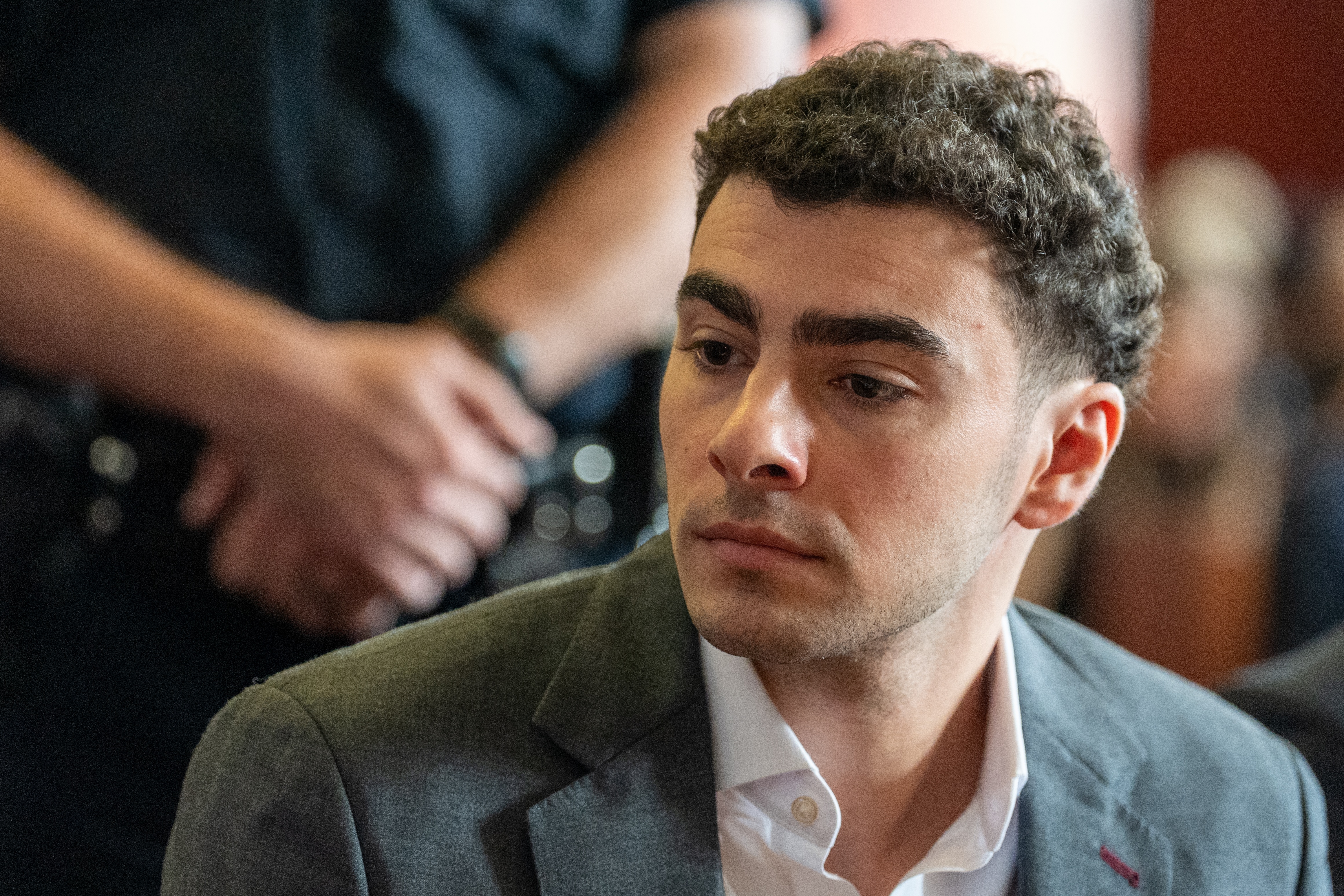
    NEW YORK — Luigi Mangione is expected to plead guilty as early as Friday in the federal case accusing him of stalking and killing UnitedHealthcare CEO Brian Thompson, according to a person familiar with the matter.

    The person, who was not authorized to talk publicly about the case and spoke to the Associated Press on the condition of anonymity, cautioned that Mangione could change his mind. If he follows through, it would be a stunning development in a case that rattled business leaders while galvanizing their critics.

    Mangione’s lawyers, and spokespeople for the Justice Department and Manhattan federal prosecutors, declined to comment.

    Mangione is accused of traveling to New York City to ambush Thompson, 50, then shooting him outside a Manhattan hotel on Dec. 4, 2024, as the executive walked to UnitedHealth Group’s annual investor conference.

    Mangione is due in court on Friday for a hastily scheduled hearing in the federal case, which involves two counts of stalking. It wasn’t clear what charge or charges Mangione is expected to plead guilty to. The hearing, in Manhattan federal court, comes as his lawyers have been talking with federal prosecutors about a possible resolution to one of two criminal cases against Mangione in Thompson’s death. Previous talks in June broke down.

    Mangione, 28, has been charged in both federal and state court in New York and still faces the possibility of a trial in his unresolved state case. Mangione’s state murder trial is set to begin Sept. 8. Both sets of charges carried the possibility of a life sentence.

    Mangione has pleaded not guilty and has spoken out publicly against the prospect of two trials, telling a judge in February: “It’s the same trial twice. One plus one is two. Double jeopardy by any commonsense definition.”

    Under New York law, a state prosecution could be barred if the federal case is resolved first, but it isn’t automatic.

    The state’s double jeopardy protections kick in if a jury has been sworn in a prior prosecution, such as a federal case, or if that prosecution ends in a guilty plea. Mangione’s cases involve different charges arising from the same course of conduct.

    Once Mangione pleads guilty, his lawyers could then ask the judge in the state case to throw out those charges on double jeopardy grounds. State prosecutors argue their case is distinct and double jeopardy shouldn’t apply.

    Mangione’s federal charges allege that he traveled across state lines by bus to stalk and kill Thompson and that he used means such as a cell phone, the internet, interstate highways, and staying at a hostel that serves out-of-state customers while planning and carrying out the attack. The state charges pertain to the killing itself, as well as firearms offenses.

    In a letter last month, state prosecutors objected to the possibility of a guilty plea in the federal case wiping out the state case.

    “Obviously, any guilty pleas in these matters must account for the seriousness of defendant’s offenses, the loss of an innocent life, the impact of those crimes on the victim’s family, and the other state interests that are implicated, including the sanctity of life principle that underpins the state homicide charges,” Seidemann wrote.

    Mangione’s apparent decision to plead guilty comes after a series of setbacks for his defense.

    In January, U.S. District Judge Margaret Garnett took the death penalty off the table but ruled that prosecutors could use items collected from Mangione’s backpack during his arrest as evidence against him.

    They included a 3D-printed pistol that investigators said matched the one used to kill Thompson and a notebook in which authorities say Mangione described his intent to kill an insurance executive.

    In June, Mangione’s lawyers said they would pursue a psychiatric defense in the state case but reversed course a day later. The defense, involving claims that he was suffering from extreme emotional disturbance at the time of the killing, isn’t allowed in federal court.

    Surveillance video of the killing showed a masked gunman shooting Thompson from behind. Police say “delay,” “deny,” and “depose” were written on the ammunition, mimicking a phrase used to describe how insurers avoid paying claims.

    Mangione, an Ivy League graduate from a wealthy Maryland family, was arrested five days later at a McDonald’s in Altoona, Pa., about 230 miles west of Manhattan.

    He has become a cause célèbre for people upset with the health insurance industry.

    An online fundraiser for his legal defense fund raised more than $1.5 million, and several dozen supporters have shown up to his court appearances, some wearing green clothing — the color worn by the Mario Bros. video game character Luigi — and “FREE LUIGI” T-shirts.

  • Rescuers call for silence around earthquake rubble as window for survival narrows in Colombia

    Rescuers call for silence around earthquake rubble as window for survival narrows in Colombia

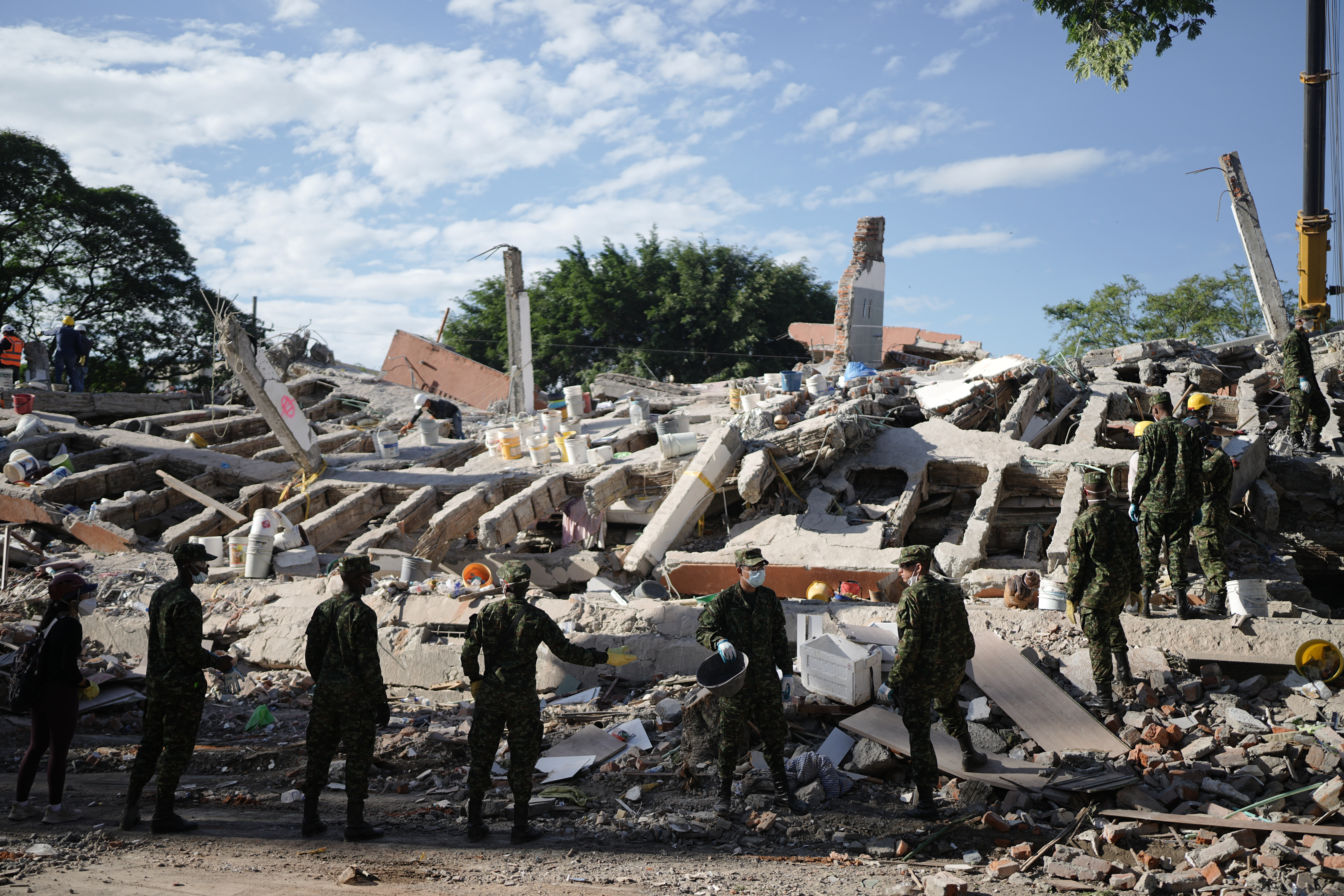
    CALI, Colombia — With arms raised and fists clenched, rescuers in Colombia called for silence Thursday as they listened for signs of life in the rubble left by a deadly earthquake that has killed more than 270 people and left hundreds more missing.

    The call for quiet was part of last-ditch efforts to find survivors in the aftermath of the 7.4-magnitude quake that struck the South American country Monday. Aid agencies consider the first two to three days after a quake to be the prime window for retrieving survivors. But that time frame can be extended if those trapped have access to food and water.

    “There might be two more people alive here, and I’m hopeful,” rescuer Daiana Rojas, 25, told the Associated Press. “We have been hearing sounds since 2:30 a.m., so our hope remains.”

    Rojas and her family were unharmed by the quake, the most powerful to hit Colombia in this century. She has been working as a volunteer to help search for survivors in Cali, one of the most affected cities, along with Pereira, Manizales, and Quibdó.

    “I thought that was going to be my last moment alive,” she said, recalling the terror of the quake. “Seeing this situation in my city breaks my heart.”

    Rojas has witnessed two people being pulled alive from the debris, as well as the recovery of bodies.

    “They are not a relative or a friend of mine, but it feels as they were,” she said of the survivors who have been found. “Whenever rescuers ask for silence, everyone stays still and tries not to move, speak, or whisper. But when signs of life are found, all the teams start to applaud.”

    The mayor of Cali, Alejandro Eder, told reporters Wednesday that rescue teams continue to find signs of life under the rubble and race to save anyone within reach. “The next 20 hours are the most critical to find and rescue people alive,” he said.

    But authorities recognize that the rescue effort is entering a grim phase as search teams begin shifting toward recovering bodies.

    “The removal of debris begins now; more than 72 hours have passed,” Milton Castrillón, who works in the Cali mayor’s office, told AP, adding that the teams now lean on “miracles from God to find survivors.”

    The death toll rose Thursday to 273, authorities said.

    Over 3,800 people were reported injured, with nearly 12,600 homes destroyed and more than 74,800 homes damaged, according to David Santiago Tamayo, director of the National Unit for Disaster Risk Management.

    The devastation has tested Colombia’s new president, Abelardo de la Espriella, and his government as they scramble to respond while aid groups seek to help the most heavily damaged communities.

    De la Espriella said Wednesday that nearly 500 people were reported missing, though civilian-run databases put that number at more than 4,200. In total, more than 25,800 families have been affected, de la Espriella said.

    Meanwhile, Colombia received more international aid from around the world.

    A group of rescuers from the Los Angeles County Fire Department arrived Thursday to help with search efforts and structural engineering assessments. Other countries, including Peru, El Salvador, Mexico, and Brazil, have also offered assistance.

    De la Espriella announced on X that Colombia will receive a $10 million donation from the United Arab Emirates.

    The South American Football Confederation and the Colombian Football Federation also jointly announced a $1 million donation to support reconstruction efforts.

    “Soccer transcends the pitch and remains close to its people, especially in the most difficult times,” they said in a joint statement.

    The Colombia disaster unfolded less than two months after neighboring Venezuela endured back-to-back earthquakes, and the contrast between the two countries’ responses was stark.

    In Venezuela, acting President Delcy Rodríguez waited nearly four hours before addressing the nation. In Colombia, de la Espriella announced an emergency command post to oversee rescue efforts barely an hour after the earthquake. For weeks, Venezuelan civilians were clawing through rubble by hand. Hours after the earthquake in Colombia, rescue teams were searching for survivors with cranes and excavators.

    The contrast was a reminder of the differences between the nations — their political systems, resources, and the strength of their institutions — and a demonstration of how those can take on life-or-death importance.

  • Trump’s vaccine plan would require millions of individual shots last used decades ago

    Trump’s vaccine plan would require millions of individual shots last used decades ago

    WASHINGTON — Public health experts have been quick to condemn an executive order from President Donald Trump aimed at upending childhood vaccinations in the U.S., but the biggest obstacles may be the unprecedented financial and logistical challenges it would impose on parents, health providers, and drugmakers.

    Monday’s announcement by the Republican president calls for separating combination shots — including the measles, mumps, and rubella, or MMR, vaccine — into separate injections. Appointments for that and other vaccinations should be spaced out whenever possible, the order states.

    To accomplish that, drugmakers would need to revive a slate of individual vaccines that have not been marketed separately in the U.S. for decades. They would also have to build new manufacturing plants capable of producing millions more vaccine doses than the nation currently uses.

    For parents, unbundling the MMR vaccine and spacing out the shots would mean returning to the doctor’s office many more times than is currently needed. Those appointments could also strain pediatricians who typically administer the shots, while driving up costs tied to syringes and other medical supplies.

    Studies in the U.S. and other countries have shown that combination vaccines increase the likelihood that children will be fully protected from infectious diseases before starting school.

    Health experts say there is no scientific basis for changing course.

    “We do things that are less convenient and more expensive if there’s a good reason to do it,” said Anna Durbin, of the Johns Hopkins Bloomberg School of Public Health. “There is no good justification for this. I think it’s very bad public health policy.”

    Trump’s plan would require vaccine manufacturing overhaul

    Under Trump’s executive order, federal officials are instructed to develop within 90 days plans for breaking up the MMR shot and spacing out other vaccines.

    But pharmaceutical scientists and former regulators say those changes would likely take years and require drugmakers to spend tens of millions of dollars on new studies and manufacturing facilities.

    Currently, there are no individual vaccines in the U.S. for measles, mumps, or rubella. All the vaccines approved for those viruses by the Food and Drug Administration are combination shots. That three-in-one approach has been the standard in the U.S. since the early 1970s.

    Jesse Goodman, a former FDA vaccine chief, said companies would have to conduct large studies showing new individual shots produced immune system-boosting reactions in children similar to the current versions.

    Companies might also have to demonstrate the safety of new manufacturing facilities and procedures, given that individual measles shots haven’t been widely produced in the U.S. for roughly a half-century.

    “The question is how much has changed since then and how comfortable will the FDA and the companies be relying on those comparisons?” said Goodman, who is now a professor at Georgetown University.

    Designing, constructing, and getting federal sign-off for new vaccine plants typically takes about five years, according to industry experts.

    Additionally, Goodman said, the FDA would have to review and license each unbundled vaccine separately, a process with no precedent.

    “I don’t think there’s any comparable example of removing hugely effective public health measures that protect babies for no documented scientific reason,” he said.

    Individual shots for measles and related diseases tend to be used by lower-income countries that can’t afford the MMR shot. Merck, GSK, and the handful of other companies that supply U.S. childhood vaccines make only the combination shot.

    In separate statements, Merck and GSK said they stand by the safety and effectiveness of their products. Neither discussed plans to unbundle their shots.

    “To date, there has been no published scientific evidence that shows any benefit in separating the combination MMR vaccine into three individual shots,” Merck said in an emailed statement.

    Many more trips to the doctor

    The MMR shot is currently delivered in two doses — the first at the age of 1 and the second dose after age 4. Splitting up the shot into its three separate components would mean six office visits. Spacing out other shots for pertussis and other infectious diseases could multiply the number of visits many more times.

    As the number of visits goes up, parents are more likely to miss appointments or stop making them, according to Durbin.

    “It’s going to be less convenient, more expensive, and you’re going to have fewer people getting vaccinated,” she said.

    Since last year, Trump has repeatedly expressed concern about the number of vaccinations U.S. children are receiving and called on Health Secretary Robert F. Kennedy Jr. to reduce the number. Kennedy and other officials have pointed to smaller countries, such as Denmark, that recommended slightly fewer vaccines than the U.S.

    But breaking up combination shots will result in kids receiving many more individual shots than other comparable nations, Durbin notes.

    White House spokesperson Kush Desai said the Trump administration’s efforts on the MMR vaccine “will give parents more options on timing and frequency for their children, which ultimately will increase vaccination rates for all three diseases.”

    Vaccine order is not legally binding

    Despite the precedent-breaking nature of Trump’s order, some experts are skeptical it will result in meaningful changes.

    Neither the White House nor the FDA can compel drugmakers to develop and seek approval for new vaccines. And from a business perspective, companies have little incentive to develop individual versions of vaccines they already sell in combination shots.

    “They’d be competing against themselves, and there’s no reason to do that,” said Paul Offit, a Children’s Hospital of Philadelphia vaccine researcher and former government adviser.

    While Trump’s order calls for more federal research and recommendations, only state governments have the legal authority to require vaccinations for schoolchildren. The order simply advises states to consider updating their laws to reflect the Trump administration’s approach.

    “I think states will ignore this,” Offit said. “I think that bottom line is that we don’t need to look to Donald Trump for our medical advice.”