Category: Associated Press

  • Feds charge speedboat operator after mother and infant are killed in New York Harbor capsizing

    Feds charge speedboat operator after mother and infant are killed in New York Harbor capsizing

    NEW YORK — The driver of a speedboat that capsized in New York Harbor over the weekend, killing a 27-year-old woman and her infant daughter, was charged Monday with causing their deaths through misconduct or neglect.

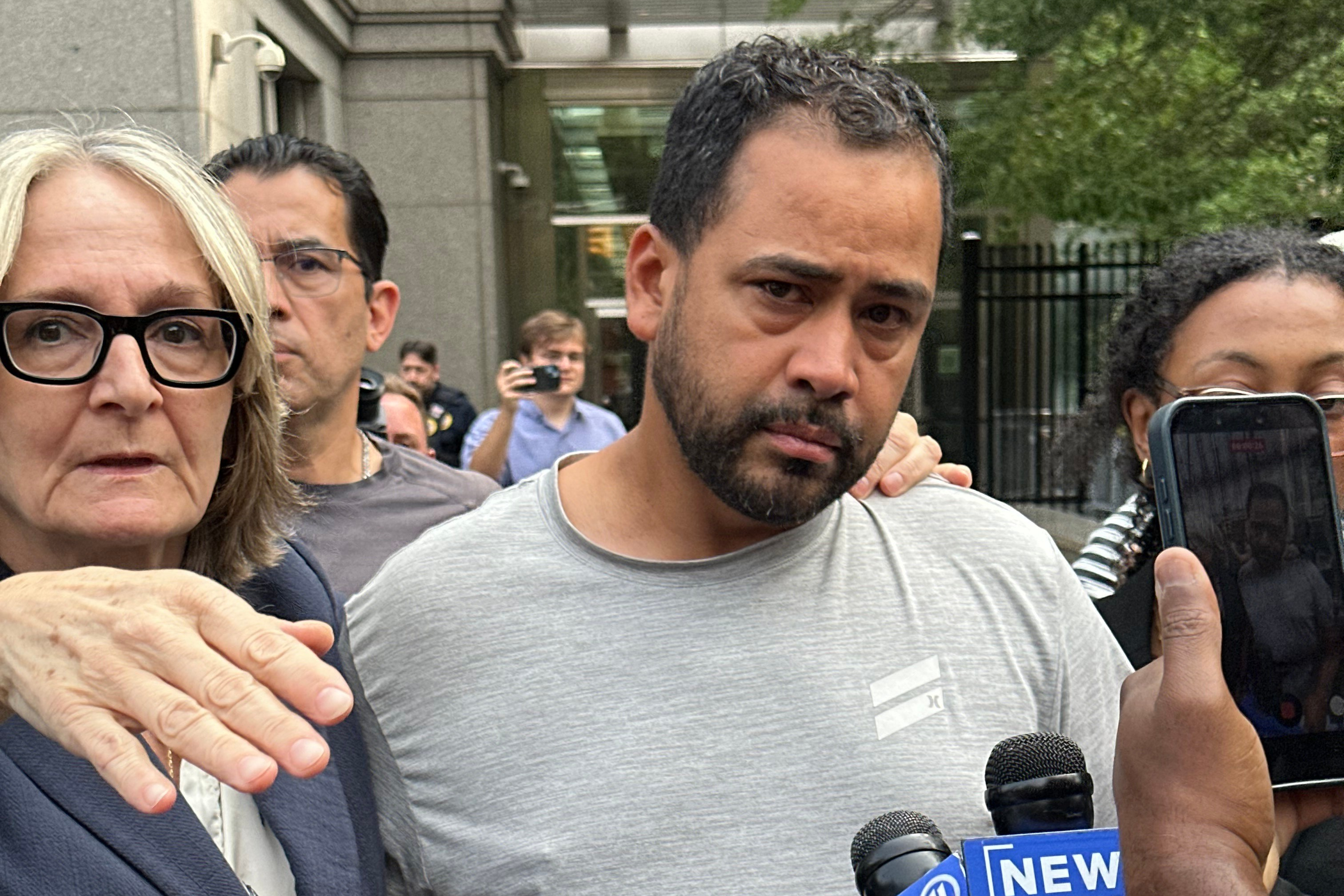
    Manuel Hernandez, 46, of Manville, N.J., wiped his eyes with his hand as he arrived for his initial appearance in Manhattan federal court, his feet shackled. He was not required to enter a plea and was released on $50,000 bail.

    Sara Sanchez and her 5-month-old daughter, Antonella Garcia, died after the 22-foot Yamaha AR210 speedboat overturned late Saturday near the Statue of Liberty in an accident authorities blamed on an overcrowded boat, poor decisions by Hernandez, a lack of appropriate licenses, and the failure to put a life vest on a 5-month-old child. Twelve others were rescued and are in stable condition, authorities said.

    As Hernandez left the hearing, his court-appointed attorney, Amy Gallicchio, guided him to a waiting vehicle. Both declined to comment.

    The vessel was pulled from the water and taken to the New York Police Department’s harbor unit facility on Randall’s Island.

    After state charges were lodged against Hernandez over the weekend, prosecutors said Monday that he will be tried in federal court, not state court. He was transferred to federal custody on Sunday.

    In a criminal complaint, federal prosecutors brought two charges alleging that Hernandez, as the boat’s pilot and operator, engaged in negligent actions and omissions that caused the capsizing and deaths in a boat that exceeded its maximum capacity of 10 people, with 14 on board.

    They said he also knowingly operated the boat with an infant on board without ensuring that the child was wearing a life vest and with the awareness that the boat didn’t have any child- or infant-sized life vests.

    The boat tour, which began at 7 p.m. Saturday, was more than three hours into its journey when Hernandez was piloting the boat toward the Statue of Liberty and made a U-turn that brought it into a swell, possibly caused by a larger passing vessel’s wake, according to the complaint.

    Hernandez tried to accelerate to pass through the swell, but the swell swamped the bow of his boat and immediately capsized it, prosecutors wrote.

    Hernandez told investigators that he had worked for the company on a freelance or contract basis since last year, starting as a limousine driver, they wrote.

    He stated that twice recently he used his personal boat, a slightly larger Yamaha AR250, for charter tours organized by Zeus Luxury Rentals Inc., according to the complaint.

    He said that on Saturday, he used a friend’s boat because his own needed repairs, but he didn’t tell the friend that he was using it for a charter tour, prosecutors wrote.

    Hernandez admitted to investigators that he had never sought the required licensing and claimed he was unaware it was needed, they wrote. He also admitted that he agreed to conduct the tour with the 5-month-old on board despite the vessel not having any child or infant-sized life vests, prosecutors said.

    Police Commissioner Jessica S. Tisch said the “tragedy could have been prevented, and now a family is left to grieve the unimaginable loss of a mother and her 5-month-old daughter because of his negligence.”

    In a news release, U.S. Attorney Jamie McDonald said Hernandez flouted federal regulations and maritime safety protocols when he transported paying customers on a commercial boat without appropriate licenses.

    “We mourn the tragic drowning deaths of the infant and her mother and urge would-be tour operators and the public to observe all safety protocols for commercial vessels,” he said.

    Capt. Doreen McCarthy, the Coast Guard Sector New York commander, credited the rescue of survivors to “heroic, swift actions” by those who responded from various agencies, along with a good Samaritan vessel.

    Meanwhile, a GoFundMe campaign that began Sunday to help Andres Garcia pay for the funeral and other expenses for his partner, Sanchez, and their daughter had topped $25,000 by Tuesday afternoon. Garcia was also on the boat when it capsized.

    Antonio Russo, general manager at Il Punto Ristorante, said Garcia is an “amazing guy” who has been working long hours each week as a waiter, driver, and food-runner to provide for his family here and in Colombia.

    Diego Naranjo, a neighbor of Sanchez in Queens, said he first met her last spring when her son threw a ball into their backyard. After recovering the ball, Naranjo invited her son to play on a trampoline with his children.

    “They were really nice people. You can see when a person is noble,” Naranjo said.

    He said he last saw Sanchez last Tuesday as she brought groceries into her home. He said he was shocked by the deaths.


  • Contiguous U.S. breaks its record for hottest month ever, NOAA says

    Contiguous U.S. breaks its record for hottest month ever, NOAA says

    KENSINGTON, Maryland — The contiguous United States sizzled to its hottest month ever last month, according to the National Oceanic and Atmospheric Administration.

    July averaged 76.89 degrees Fahrenheit across the Lower 48 states, eclipsing the Dust Bowl’s July 1936 by an eighth of a degree. Records go back to 1895.

    “It’s not good when you’re breaking records from the Dust Bowl, which we are in this case,” said meteorologist Jeff Masters of Yale Climate Connections. “And that was a crazy sort of situation where you put tens of millions of people in motion. You had this great migration because of the drought and the heat that hit the center of the U.S. — just a cataclysmic event in U. S. history. If we’re exceeding records from the Dust Bowl, that says that we’re in deep trouble.”

    Although it was unusually cool in Alaska, hotter-than-normal conditions blanketed the Lower 48, with the most excessive heat in the Mountain West, Southwest, Northern Plains, and Southeast. The heat was so widespread that every one of the Lower 48 states was at least 1 degree F warmer than the 20th century average, said Russ Vose, chief of monitoring at NOAA’s National Center for Environmental Information.

    The heat in the Dust Bowl years was more concentrated in parts of the Midwest and was aggravated by agricultural practices at the time, Vose said.

    What’s happening now is due to the burning of coal, oil, and gas, scientists said.

    “Extremely high temperatures across the continental U.S. this summer, along with intense drought and fire conditions, are absolutely consistent with the climate change signal,’ said Katharine Jacobs, a climate scientist at the University of Arizona.

    The biggest driver of the record heat was nighttime lows that smashed the old mark for hottest minimums by 0.7 degrees, NOAA said. Hotter nights are a classic sign of human-caused climate change, according to scientists and several studies in peer-reviewed literature. NOAA’s calculation is based on averaging 24 hours of temperature, not just highs or lows.

    “If you’re talking heat waves, that nighttime low is incredibly important for determining total heat stress,” Masters said. “So if it doesn’t cool off at night, your body doesn’t have time to readjust to all the heat.”

    As nighttime temperatures increase, more people die and even more lose sleep, studies show.

    The years 2021 and 1936 tie for America’s hottest summer, which is June through August. Through July, 2026 is a shade cooler than 2021, which was powered by record heat in June.

    Because of climate change, Masters said, “This may be one of the coolest years we’re going to experience for the rest of our lives.”

    What’s needed, Masters said, is “to stop burning so many fossil fuels. We also need to be spending money to adapt to the new climate that we’ve put in place.”

  • Ben Jones, ‘Dukes of Hazzard’ actor and 2-term U.S. House member, dies at 84

    Ben Jones, ‘Dukes of Hazzard’ actor and 2-term U.S. House member, dies at 84

    Ben Jones, who played the good ol’ boy mechanic in The Dukes of Hazzard TV series and parlayed his fame into a political career and two terms in the U.S. House, has died. He was 84.

    Mr. Jones had a heart attack in his home Sunday in Washington, Va., as he was waiting to watch his beloved Atlanta Braves play baseball, his wife, Alma Viator, said on social media. Rappahannock County Sheriff Connie Compton confirmed his death.

    Mr. Jones’ fame came from his role as Cooter Davenport, the mechanic who got the Duke boys out of jams as they tried to do the right thing and fight the corrupt Boss Hogg in the fictional Hazzard County, Ga.

    After playing Cooter for all seven seasons of the series from 1979 to 1985, Mr. Jones turned to politics and was elected to the U.S. House from a district near Atlanta in 1988. The Democrat served two terms before he was redistricted out of the seat.

    Mr. Jones was born in North Carolina and in college got involved in acting and civil rights, he wrote in his autobiography Redneck Boy in the Promised Land: The Confessions of ‘Crazy Cooter.’

    Acting took over his life. Mr. Jones performed in numerous stage productions and had a few minor TV and movie roles in Atlanta during the 1970s before his life-defining break came on a TV show Jones defended as a modern-day morality tale and a fine example of Southern values.

    For seven seasons, Mr. Jones was one of a small band of friends and family helping Bo and Luke Duke in The Dukes of Hazzard. The brothers were on probation for running moonshine and were constantly trying to clear their names and stop the crooked and powerful Boss Hogg from stealing or cheating.

    The Duke boys drove a modified 1969 Dodge Charger called the General Lee with a Confederate flag on its roof. Cooter owned Cooter’s Garage in the town square. Nearly every episode involved a car chase with jumps and stunts and a patrol car badly in need of repairs.

    Cooter was often on the CB radio in his pickup truck saying, “Breaker one, Breaker one. I might be crazy but I ain’t dumb. Crazy Cooter coming at you.”

    The Dukes of Hazzard was a hit for CBS and its popularity never waned. It went into syndication and later became a prominent fixture on cable’s Nashville Network.

    Mr. Jones also credited the series with pulling him out of a self-destructive, alcoholic lifestyle that led to the failure of several marriages.

    ″It was like being in a Beatles movie,″ Mr. Jones said. ″Our lives changed.″

    Tom Wopat, who played Luke Duke, said Mr. Jones was an integral part of making the series work.

    “Ben Jones was a fine friend and a fierce advocate of all the best things we can offer in the entertainment business. He will be sorely missed,” Wopat wrote on Instagram.

    After The Dukes of Hazzard, Mr. Jones went into politics. He kept his aw-shucks personality, but took the issues seriously. In his four years in Washington, Mr. Jones was known as a Democrat who could buck his party. He was liberal on social issues and conservative on economics.

    But even in politics, he made a splash. After losing in 1992 in his redrawn district, Mr. Jones ran for Congress again in 1994. He lost to Newt Gingrich in the elections that elevated the Republican to the Speaker’s Office.

    Mr. Jones would file an ethics complaint that Gingrich used tax-deductible donations to fund his partisan college course, leading to a House reprimand and Gingrich’s decision to leave the body.

    Mr. Jones always embraced his role as Cooter. After moving to Virginia, he would open at least three Cooter’s country stores in Nashville and Pigeon Forge, Tenn., and near his home. They sold plenty of T-shirts, key chains, and insulated tumblers and included Dukes of Hazzard memorabilia like one of the 300 or so General Lee cars used and abused in the TV series.

    The show and Cooter lived on because it was funny, had plenty of action and car chases, and had a good, family-friendly heart, Mr. Jones told the Richmond Times-Dispatch at a 2001 car show where he played in a band, signed autographs, and met fans.

    “The show reflects the values of the heartland of America. The good guys always win,” Mr. Jones said.

  • Trump signs executive order calling for spacing out childhood shots

    Trump signs executive order calling for spacing out childhood shots

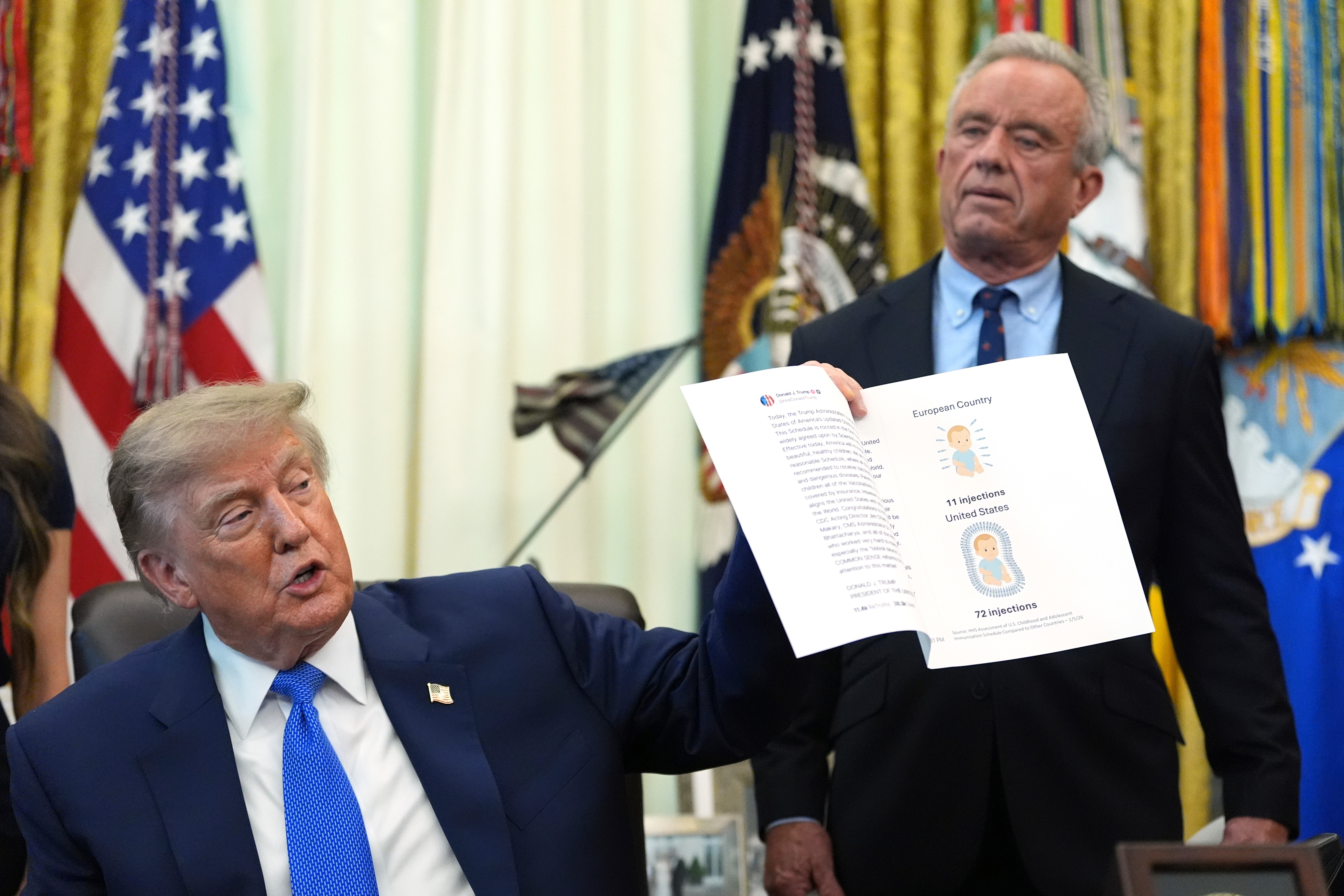
    WASHINGTON — President Donald Trump on Monday signed an executive order calling for revamped childhood vaccine recommendations that promote his long-held but discredited theory that childhood shots should be spaced out into separate medical visits.

    The order advocates separating the measles, mumps and rubella (MMR) vaccine into three different single-disease shots and administering all childhood immunizations at separate appointments whenever possible. It also directs the nation’s health department to improve research on vaccines, which are already extensively studied, and present a plan to offer separate measles, mumps, and rubella vaccines for children, since that is not currently an option in the United States.

    The renewed focus on vaccines marks a departure from the Trump administration’s recent efforts to emphasize less controversial health policies related to healthy eating, drug price negotiations and medical fraud crackdowns ahead of November’s midterm elections.

    Public health experts have raised concerns that spacing out shots as Trump suggests can lead to an increased risk that children become infected with a vaccine-preventable disease before returning for another visit. Childhood vaccines — and how and when to give them in combination — go through rigorous studies, and safety tracking continues for years as the shots are used.

    Trump called the announcement a “major victory for parents rights, religious and constitutional rights, and for the gold standard science.”

    Speaking about the order at the Oval Office on Monday, Trump repeatedly suggested the number or timing of vaccines could play a role in rising rates of autism spectrum disorder, even as scientific consensus and decades of studies have firmly concluded there is no link. The order also includes several changes to the childhood vaccine schedule that his health department has already attempted, but that have been blocked by a federal judge. A White House official who insisted on anonymity to brief reporters said Trump was within his right to provide his own recommendation through the executive order and said the lawsuit blocking the health department’s schedule was a separate issue.

    Dr. Andrew Racine, president of the American Academy of Pediatrics, said the announcement spreads uncertainty, fear and confusion where “there doesn’t need to be any of that.” He disputed Trump’s recommendations and said previous ones should stand.

    “Science about vaccines and their efficacy has not changed,” he said. “The distribution of viruses and other pathogens in our environment has not changed. Children in this country have not changed in the last 48 hours.”

    Sen. Bill Cassidy, the Republican chair of the Senate health committee, slammed the executive order in a social media post, saying vaccines are safe and do not cause autism.

    “I’m a doctor. This executive order is wrong,” the Louisiana senator wrote. “The President does not have the expertise to make these changes.”

    Who is in charge of vaccine policy?

    Even as the order calls for revised vaccine recommendations, states, not the federal government, have the authority to require vaccinations for schoolchildren. The order advises states with school vaccine mandates to consider updating their laws to reflect the administration’s preferred schedule, according to a White House fact sheet.

    Last December, Trump ordered the Department of Health and Human Services to review how peer nations approach vaccine recommendations and consider revising U.S. guidance accordingly. The department responded by cutting the number of vaccines it recommends for every child, a move that has since been blocked in court.

    Changes to federal childhood vaccine recommendations customarily require approval from the director of the Centers for Disease Control and Prevention. The newly Senate-confirmed CDC director, Dr. Erica Schwartz, oversaw policies promoting vaccination of service members while in a leadership position at the U.S. Coast Guard.

    However, public health law expert Lawrence Gostin at Georgetown University said the Supreme Court’s interpretation of Trump’s power may allow him to supersede Schwartz if she does not agree to new recommendations.

    “This is clearly the first test for Dr. Erica Schwartz,” Gostin said in an email. “The President is placing her in an untenable position.”

    Asked on a call with reporters why the president was advocating splitting MMR into three single-disease vaccines, the White House official did not provide any studies supporting the decision. They said that was Trump’s long-held view and that some countries provide individual measles vaccines in certain circumstances.

    Kush Desai, a Trump spokesperson, told The Associated Press that the president is “one of countless parents who have voiced questions and concerns about the combined MMR vaccine” and said the plan to develop single-disease vaccines would “give parents more options on timing and frequency for their children,” ultimately increasing vaccine uptake.

    Studies of babies and toddlers in the U.S. have shown that the use of combination shots for childhood vaccines, rather than single ones, increased the likelihood of completing all recommended vaccinations by the age of 2.

    Announcement follows other Trump administration vaccine actions

    Health Secretary Robert F. Kennedy Jr., an anti-vaccine activist before he entered politics, set out to overhaul immunization guidance at DHS in the first year of Trump’s term. He fired an entire 17-member vaccine advisory committee, installing replacements who made far more restrictive recommendations that have since been halted by a federal judge. He also personally directed the CDC to abandon its position that vaccines do not cause autism, without supplying any new evidence to support the change.

    Throughout his second term, Trump has been fixated on connecting autism to vaccines. He has recently ramped up pressure on Kennedy to identify the cause of autism, something Kennedy had pledged to do with new research unveiled last year. Trump publicly prodded the health secretary for an update on autism research in a Cabinet meeting last month.

    “How are you doing on the autism research?” Trump asked.

    “We will have an answer for you,” Kennedy said.

    Scientific consensus and decades of studies have firmly concluded there is no link between childhood vaccines and autism. Racine reiterated that point on Monday, noting that the potential link had been studied in “over 40 methodologically well-designed studies in over seven countries involving over 5 million children.”

    “I’m not sure that there is anything that has been as thoroughly looked at as this question,” he said. “And the answer is unequivocally no.”

    In the Oval Office, Kennedy repeated his assertion that he believes an unknown environmental factor is to blame for rising autism diagnoses and said that his department will deliver research findings “as soon as they are ready.”

    Monday’s order comes as students are returning to classrooms around the country and the nation contends with a measles outbreak that experts say could result in the U.S. losing its measles elimination status.

    Doctors have raised concerns that Trump’s falsehoods on vaccines could stoke vaccine hesitancy. Federal data shows U.S. kindergarten vaccination rates have been dropping, with the share of children with exemptions rising to an all-time high in the 2024-25 school year.

  • WHO says Congo’s fast-moving Ebola outbreak started months before it was declared

    WHO says Congo’s fast-moving Ebola outbreak started months before it was declared

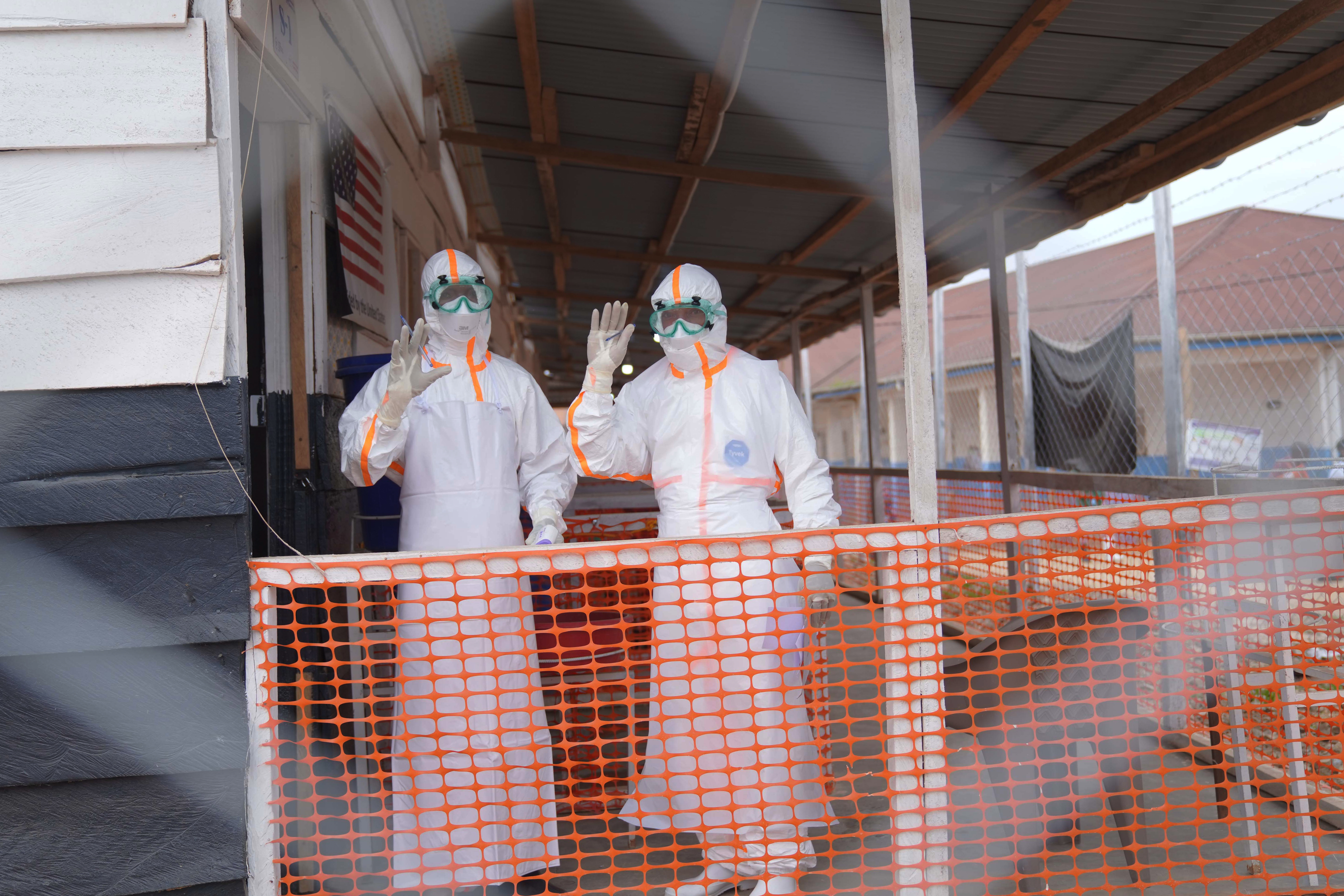
    BUNIA, Congo — The fastest-growing Ebola outbreak on record started in February, months before it was officially declared in mid-May, the World Health Organization said Monday as responders in eastern Congo struggle to catch up.

    The WHO regional director for Africa, Mohamed Yakub Janabi, told a news conference that sequencing indicated the outbreak’s start. He said some cases early on were wrongly attributed to other diseases, including malaria and typhoid.

    “So we are chasing the virus, the virus is ahead of us,” Janabi said.

    Thierno Balde, WHO’s incident manager for the Ebola response, said the genetic sequencing was conducted under the leadership of Steve Ahuka, head of the virology department at Congo’s National Institute for Biomedical Research.

    Confirmed cases of Ebola in this outbreak have reached 4,200, including over 1,900 deaths, according to the latest government figures.

    WHO assesses the global risk of spread as low because Ebola does not travel through the air, making it much harder to spread than respiratory viruses. Cases detected outside the affected region have so far been quickly identified and contained without leading to sustained transmission, according to the agency.

    The outbreak declared on May 15 is unlike most previous ones for Ebola because the rare Bundibugyo virus responsible for it has no approved vaccines or treatments. Early testing was conducted for the more common type of Ebola, contributing to delays.

    The outbreak is unfolding in some of the most challenging conditions imaginable, with strikes by some unpaid health workers, threats by rebel groups, anger from long-traumatized communities, and misinformation asserting that Ebola isn’t real. Health teams travel remote, unpaved roads and have reported shortages of protective gear, while a vast population of displaced people struggles to find reliable water sources for washing hands.

    This Ebola outbreak has killed more people at a quicker rate than any other, including the 2014-2016 outbreak in West Africa that is considered the worst on record with over 11,000 deaths out of at least 28,000 cases. That one took about eight months to reach 1,000 deaths.

    Ebola is rare but highly contagious and can be contracted from bodily fluids such as vomit, blood, or semen and from contaminated surfaces and materials such as bedding and clothing. The disease it causes is severe and often fatal.

    Last week, WHO Director-General Tedros Adhanom Ghebreyesu said Ebola is spreading faster than efforts to fight it. New cases are doubling in some hot spots, Tedros said on X after meeting with officials in the capital, Kinshasa.

    Health authorities have said between 60% and 70% of new cases are recorded outside of contacts being monitored, and that the outbreak is spreading at an “alarming” rate.

    Access to healthcare in the region already had been challenged by years of rebel conflict in one of Congo’s most remote and vulnerable areas, near the borders of South Sudan, Uganda, and Rwanda. Now some pregnant women and others are avoiding health centers for fear of the virus, at risk to their lives.

    Several past Ebola outbreaks have also been declared weeks or months late, including the 2014-2016 West Africa outbreak. That outbreak was declared in March 2014, although the first human case later was found to have occurred in December 2013.

  • Zuckerberg spokesperson says his yacht did not hear call for maritime assist

    Zuckerberg spokesperson says his yacht did not hear call for maritime assist

    A yacht owned by Mark Zuckerberg didn’t respond immediately to a call for help from a small skiff that ran out of fuel off the coast of Alaska, but a maritime law expert said Monday the crew may not have been obligated to after the Coast Guard determined the boat wasn’t in distress.

    A spokesperson for the Meta CEO also said the crew didn’t immediately hear the radio call for help and by the time it did, another nearby ship had already rendered assistance.

    The Aug. 3 incident gained attention in recent days after a passenger on the cruise ship posted on social media that the captain had said Zuckerberg’s yacht “refused” to respond.

    The U.S. Coast Guard said the 21-foot Hewescraft vessel first hailed it for assistance at approximately 9:32 p.m., using a radio frequency all boats are expected to monitor. About 25 minutes later, the Coast Guard determined the vessel was not in distress and issued an assistance request. The skiff was able to make it safely to Farragut Bay after the Wilderness Legacy cruise ship towed it there and helped it refuel.

    When another ship is in distress, everyone in the area is obligated to respond as long as doing so doesn’t put their own ship at risk. But maritime law expert Ian Ralby said this situation appears different, and the crew of Zuckerberg’s yacht wouldn’t face that legal obligation.

    “It’s the difference between calling AAA and 911. You need an ambulance on site, that’s a distress call. You need somebody to give you a jump or to tow your car, you call AAA,” said Ralby, who is president of Auxilium Worldwide. It is a big difference in terms of the emergency type, he said. “Both concerning, both needing assistance, but the legal obligations to respond are very different.”

    Zuckerberg and his family were not on the 387-foot Launchpad yacht when this happened, according to his spokesperson.

    “As the Coast Guard noted, the boat was not in distress, and by the time the crew reviewed the Coast Guard contact on a different radio channel from the one they were operating on, the assist was already underway. We’re grateful all parties are safe,” Zuckerberg’s spokesperson Brian Baker said.

    The Alaska Beacon first reported on what happened after Michael Love, who said he was a passenger on the Wilderness Legacy cruise ship, posted on Bluesky on Aug. 5.

    “Our boat rescued a stranded vessel last night and apparently we did that after the Coast Guard radioed Mark Zuckerberg’s yacht — which was closer — and they repeatedly refused to respond. (There was near unanimous booing when the captain announced this),” he said.

    The Coast Guard said in a statement that they determined within half an hour of when the skiff radioed in that the small ship wasn’t in distress. A marine assistance request was broadcast on their behalf, and the Wilderness Legacy responded, reaching the 21-foot vessel about an hour later.

    It’s a little unusual that the Launchpad crew missed the call for help because it is common practice for ships to always be monitoring channel 16 on their radios and keep it as the default frequency. That’s where this call for help was transmitted, but it is also where the Coast Guard would broadcast warnings about any hazards in the area, whether that’s a brewing storm or anything else.

    “The situation was resolved without any harm to life,” said Ralby. ”It does not seem that there was any immediate issue in terms of threat to life of mariners or concerns for the marine environment, which are the two main things that lead to that urgent distress call where all mariners no matter who they are are legally obligated to try and respond.”

  • Trump scoffs at Iran’s demand for war reparations and other Mideast developments

    Trump scoffs at Iran’s demand for war reparations and other Mideast developments

    President Donald Trump on Monday scoffed at Iran’s demand for reparations for devastation caused to the country by the U.S. and Israeli bombardment over the past five months — a demand he said Tehran’s negotiators hadn’t raised until now.

    Trump’s social media post Monday came after Iranian Foreign Ministry spokesperson Esmail Baghaei stressed that Iran will not reopen the Strait of Hormuz until the U.S. meets its conditions.

    Tehran wants the U.S. to end its blockade of Iranian ports, lift economic sanctions, and release Iran’s frozen assets. It also said the U.S. must pay compensation for war damage.

    “It is up to the U.S. side to stop and make amends for its illegal and destructive actions,” Baghaei said.

    Trump responded that he is now demanding “compensation from Iran, for all of the people that they have killed and gravely wounded with their roadside bombs and many conflicts.”

    The U.S. government has blamed Iran-backed militants for the deaths and injuries of hundreds of Americans over several decades. They include a 1983 bombing that killed 241 U.S. military personnel at a Marine compound in Beirut and the deaths of at least 603 U.S. troops in Iraq between 2003 and 2011.

    Trump said he also wants Tehran to compensate the families of Iranian protesters who were killed.

    “I have instructed my representatives to put this firmly into any, and all, future negotiations,” Trump said in his post.

    The closure of the Strait of Hormuz — through which roughly one-fifth of the world’s traded oil supplies passed before the war — has kept energy prices as a major focus of U.S. politics ahead of November’s midterm elections.

    Iran’s supreme leader is said to want ‘unity’

    Iran’s president said Monday the country’s supreme leader is calling for “unity and cohesion” as the Islamic Republic faces economic hardships and sanctions stemming from its war with the United States.

    President Masoud Pezeshkian described a nearly seven-hour meeting with Ayatollah Mojtaba Khamenei in an interview with Iranian state television that aired amid apparent tensions among the Islamic Republic’s leaders.

    Pezeshkian told the state-run IRIB that he and Khamenei discussed “people’s livelihoods, the state of the market, employment, people’s housing,” as well as “problems that are now being created as a result of the (U.S.) sanctions.” He didn’t say when or where they met.

    Most important, he said, was Khamenei’s emphasis on unity.

    “All of the enemy’s plans are aimed at creating division,” Pezeshkian said. “What we have to do is prevent divisions from emerging.”

    It is only the second time the Iranian president said he has met with the new supreme leader since Khamenei was appointed in March following a U.S.-Israeli strike that killed his father. Khamenei, believed to have been wounded in the same attack, has not appeared in public since then.

    Iran names former Revolutionary Guard leader to top security post

    Iran on Sunday appointed Mohsen Rezaei, a military adviser to its new supreme leader, to head its powerful Supreme National Security Council.

    Rezaei commanded Iran’s paramilitary Revolutionary Guard from 1981 to 1997, a period that includes Iran’s 1980s war with Iraq. The 71-year-old hard-liner last week threatened American forces with “serious risks and casualties” if the U.S. did not lift its blockade of Iranian ports.

    Rezaei replaces Mohammad Bagher Zolghadr, who will become a political adviser to Khamenei.

    While Rezaei appears willing to negotiate with the U.S. to “secure Iran’s maximalist aims, including control of the Strait of Hormuz,” he has also been “unwilling to present any Iranian concessions,” wrote the Institute for the Study of War, a U.S.-based think-tank.

    Israel declares closed military zone in Taybeh

    Israel’s military said Monday it had declared a Christian-majority town in the occupied West Bank a closed military zone to keep out Israeli settlers and other non-residents.

    The new tactic is designed to keep Israelis out of Taybeh, which has been subject to arson, vandalism, and settlers coming onto private and village property. The army said Palestinian residents and journalists would be allowed unless soldiers determine their presence poses a threat. The army said its troops would detain suspects and disperse gatherings to keep the peace.

    The designation comes after months of the army and police struggling to maintain order throughout the territory, where at least 87 Palestinians have been killed by Israeli settlers or soldiers in 2026, according to the Ramallah-based Palestinian Health Ministry.

    Yemen provides death toll on Sunday’s Houthi attack

    Yemen’s Iran-backed Houthi rebels attacked a Red Sea port town controlled by government forces on Sunday, killing seven and injuring 30 people. Yemen’s Defense Ministry — which operates under its internationally recognized government — said four military personnel and three civilians were killed.

    Clashes continued Monday near the village of Taiz. The Houthi group said a 13-year-old child was killed by artillery shelling and another child was injured.

    The attack on Mokha is the latest in one of the largest waves of Houthi strikes on Yemeni military positions and areas held by the Saudi-backed government since a 2022 truce. It comes as threats to shipping through the Strait of Hormuz have renewed focus on the Red Sea and Bab el-Mandeb Strait at its southern tip.

  • Trump officials propose new scrutiny of food additives and ingredients

    Trump officials propose new scrutiny of food additives and ingredients

    WASHINGTON — U.S. health officials on Monday proposed a rule change that would require food manufacturers to notify regulators before introducing new ingredients or additives into processed or packaged foods.

    The proposal would change a decades-old policy that advocates have called a regulatory loophole, blaming it for allowing thousands of unvetted ingredients into the U.S. food supply.

    Under the proposed rule from the Food and Drug Administration, companies would have to document and submit their safety findings for new ingredients, giving regulators the opportunity to investigate if they see a potential safety risk. Currently companies can decide for themselves if an ingredient or additive is “generally recognized as safe” and there is no requirement for companies to notify or submit evidence to the FDA, although some do.

    “Shifting to a mandatory notification system closes a decades-old information gap, giving the FDA the comprehensive visibility needed to enhance postmarket safety,” acting FDA Commissioner Kyle Diamantas told reporters on Monday.

    The FDA will take comments on the proposal for 120 days.

    Consumer advocates who have long pushed for changes said FDA’s proposal should require more than giving advance notice about new ingredients.

    “It must also include strong, science-based safety standards and thorough, independent FDA review before chemicals are allowed in our food,” said Melanie Benesh of the nonprofit Environmental Working Group.

    Scrutiny of ultraprocessed food continues, but with few details

    In a separate move, the FDA said it completed work on the federal government’s first-ever definition of ultraprocessed food, but did not release any details or the proposed language. The agency said it has submitted the definition to the White House for further review.

    Health advocates consider an official definition of ultraprocessed food a key step toward bringing greater scrutiny to packaged foods that are blamed for multiple chronic health problems afflicting Americans. A government-backed definition could pave the way for more federal research and, eventually, possible labeling or other restrictions on processed foods.

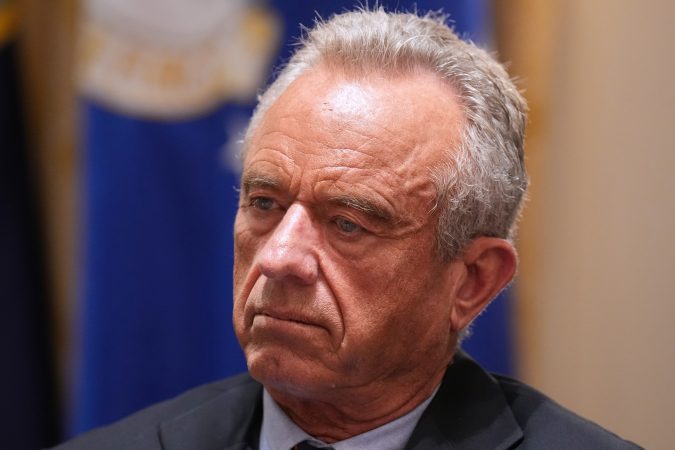
    Neither of Monday’s announcements is likely to immediately impact American diets, which are packed with fats, sodium, and sugar and are blamed for a host of chronic diseases such as obesity, diabetes, and heart disease. But both initiatives are considered top priorities for Health Secretary Robert F. Kennedy Jr., who entered government vowing to crack down on artificial colors, additives, and other ingredients.

    “These two actions will change how the federal government oversees what’s in our food and how we understand the foods that Americans eat,” Kennedy said at an event Monday at HHS headquarters.

    Ultraprocessed foods are made using industrial processing and additives, colors, preservatives, or other ingredients not found in home kitchens. The foods include sugary cereals, sodas, chips, frozen pizzas, and other grocery items.

    Scientists have been working to define and classify processed foods for well over a decade. But sweeping definitions come with downsides. They can be often applied to foods like whole grain bread, yogurt, and granola that are all highly processed but still considered nutritious. Some recent efforts to define ultraprocessed foods include carve-outs for foods that meet nutrition standards, despite having processed ingredients.

    FDA proposal would bring new insights on additives

    In the U.S., an estimated 10,000 additives are allowed in food, including thickeners, preservatives, and packaging ingredients.

    Consumer advocates have long argued that many of those ingredients have never been properly vetted because of the FDA’s policy allowing manufacturers to certify for themselves that new additives are “generally recognized as safe,” or GRAS.

    FDA’s Diamantas stressed Monday that the new policy would not require all new ingredients to undergo FDA review. He said that type of mandatory review would need to be enacted by Congress to rewrite FDA’s food authorities.

    “What we’re doing is requiring companies that utilize the pathway to notify us of their conclusions so that we have greater visibility into those conclusions and consumers have awareness,” Diamantas said.

    Under the proposal, the FDA would be expected to review new ingredient submission within 180 days. If FDA regulators have safety concerns they could request additional information from manufacturers or request that they delay introducing the ingredient.

    Kennedy said the Trump administration would ask Congress to grant FDA additional powers over food ingredients.

    “Congress needs to give FDA the additional tools it needs to keep pace with the changing food supply and protect the American people,” Kennedy said.

    Rule change in the 1990s created what advocates call a loophole

    Any substance intentionally added to food is supposed to undergo formal review — unless the additive is considered safe. Since the late 1950s, the government recognized that many common ingredients in foods, such as spices and vinegar, were widely consumed and understood to be safe for consumption.

    The FDA policed the GRAS exemption for years, but it took time and resources. Starting in 1997, the FDA began allowing companies to independently determine that a new additive is safe based on publicly available scientific evidence and the consensus of qualified experts.

    However, the list of products deemed GRAS by companies grew to include many synthetic and natural additives, all incorporated into the food supply without independent review.

    The process has created a “secret GRAS loophole,” according to the consumer advocacy group Center for Science in the Public Interest, that “undermines the integrity of our food safety system.”

    Food industry officials contend their internal reviews of additives are as rigorous as the FDA’s own processes.

  • At least 111 dead, buildings collapsed after 7.4-magnitude earthquake shakes western Colombia

    At least 111 dead, buildings collapsed after 7.4-magnitude earthquake shakes western Colombia

    CALI, Colombia — A powerful 7.4 magnitude earthquake struck western Colombia on Monday, killing at least 111 people, damaging hundreds of buildings, and leaving many trapped under debris while their loved ones and rescue workers searched through rubble.

    Colombia’s President Abelardo de la Espriella, who reported the death toll, said at least 87 people were injured and around 1,600 buildings were damaged, including at least 61 that completely collapsed. He declared an emergency to expedite funding for the quake recovery while saying he would visit the disaster zone.

    “We aren’t going to leave people alone. They are in our hearts and we are going to tend to people with our full determination,” he said.

    The epicenter was in San Jose Del Palmar, a community of about 4,800 people in the Choco region about 250 miles west of Bogota, the U.S. Geological Survey said. The quake also was felt in neighboring Ecuador and Panama, though minimal damage was reported there.

    The quake ravaged cities across western Colombia, including Pereira, Quibdo, Cali, and Manizales.

    In the country’s third-largest city, Cali, search teams and civilians picked through the remains of destroyed buildings, passing large pieces of concrete and other rubble down a long line of volunteers. The desperate scene brought memories of the searches still ongoing in neighboring Venezuela weeks after that country was devastated by two powerful earthquakes.

    Most powerful quake recorded in Colombia this century

    Colombia’s Geological Service said Monday’s quake was the strongest recorded in Colombia “in the 21st century,” and that it was followed by 21 less powerful aftershocks.

    Colombia’s Pacific region around the quake’s epicenter lies along the Ring of Fire, the line of seismic faults encircling the Pacific Ocean where most of the world’s earthquakes occur. The Pacific, particularly the Choco region, is one of the poorest regions in the country. Nestled in the dense jungle, much of Choco is only reachable by boat or plane, which may pose a problem for authorities in assessing the wider toll.

    Jorge Moncayo, a 64-year-old taxi driver in Cali, said he saw plumes of dust shoot up across the city as buildings collapsed. Residents and rescue workers were searching the rubble for survivors.

    “My entire house shook. I’ve never lived through such a powerful earthquake,” he said. “We’re thanking God we’re alive.”

    Local authorities said the death toll included at least 40 people who were killed in the Risaralda region, where the hard-hit city of Pereira is located, as well as 27 people in the Valle del Cauca region, where Cali is located, including three children. Authorities also confirmed nine people killed in Choco, two in the Caldas region, and a 73-year-old in the Antioquia region. It was not immediately clear where the other 32 people died.

    Authorities said flights were suspended in the airports of Manizales, Quibdo, Armenia, Cartago, Buenaventura, and Pereira as they assessed damage.

    The earthquakes left many in the Andean nation unnerved after two back-to-back quakes devastated neighboring Venezuela in late June, destroyed hundreds of buildings, and killed more than 5,000 people.

    Little was known about the extent of the damage in Choco, a remote region where officials reported dozens of injured people and damaged buildings but few other details. Phone signals were out in many parts of region’s capital, Quibdo. The town closest to the earthquake’s epicenter, San Jose del Palmar, has no airport, and is located on top of a mountain ridge along a highway linking the cities of Cali and Pereira.

    In Pereira, further south in the coffee-producing mountains of Colombia, photos and videos published by local media showed pieces of the airport ceiling falling down on travelers taking shelter and screaming. In the city, people were shown running through rubble and plumes of dust. Pereira’s mayor, Mauricio Salazar, told a local radio station that more people were trapped under “a massive quantity of collapsed buildings.”

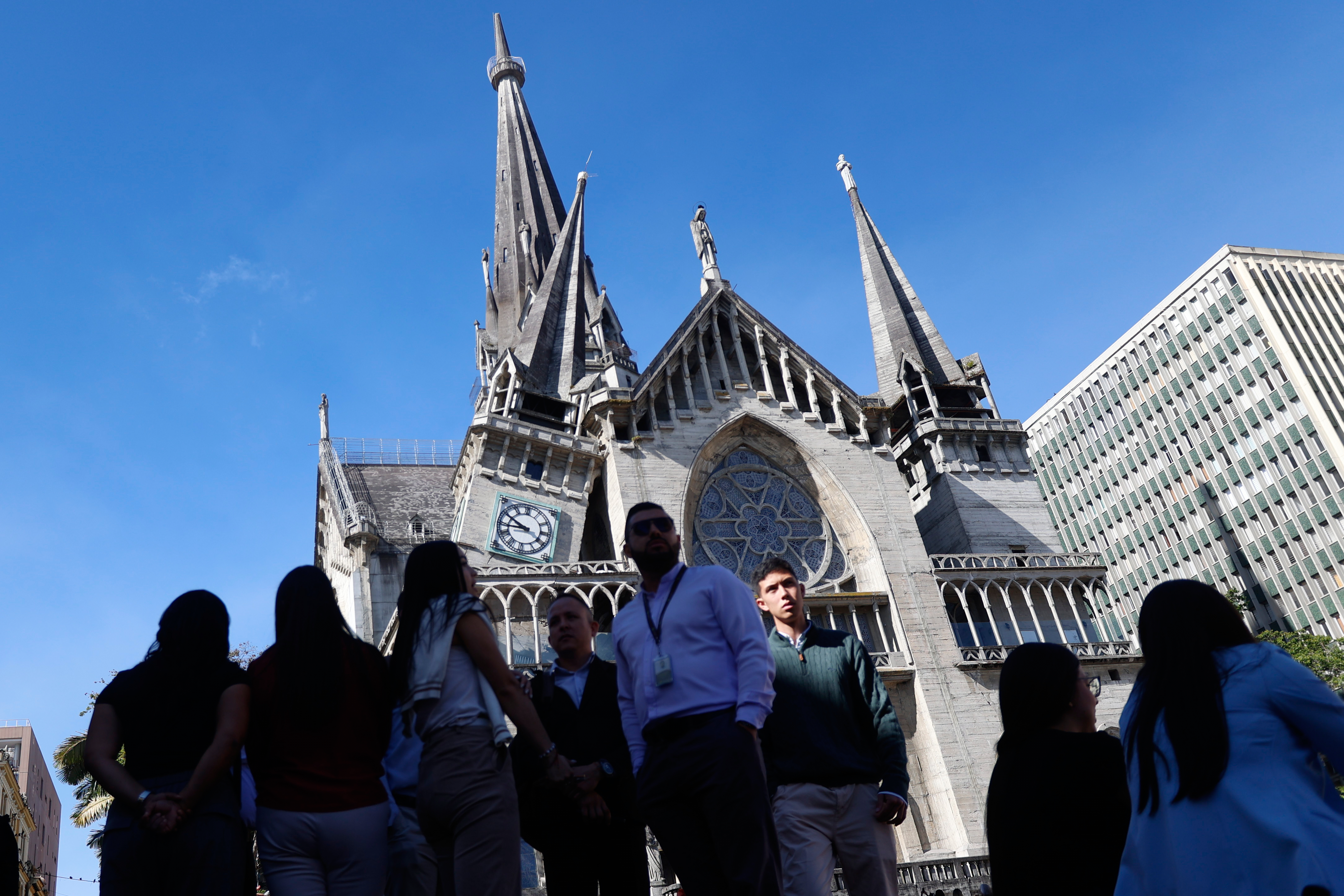
    In nearby Manizales, one of the towers of the neo-Gothic cathedral collapsed and fell on the nave. Mayor Jorge Eduardo Rojas asked residents to stay outside in case of aftershocks.

    In Cali, a city of 2 million people, Mayor Alejandro Eder said that residents were trapped in at least 19 buildings that had collapsed.

    Powerful quakes rare in Colombia, smaller quakes common

    Small earthquakes, known as “temblores,” are common in central and western Colombia, but those above 6.0 magnitude are rare. In 1999, a 6.2 magnitude quake near the city of Armenia killed more than 1,100 people.

    Colombia’s newly inaugurated president said Monday that he had personally taken charge of the government’s response to the emergency.

    “You are not alone. The state is present and taking action,” he said.

    Response to the earthquake presents the first major challenge to de la Espriella, a Trump ally who was sworn in as president over the weekend.

    Messages of support rolled in from leaders across the Americas, including Mexico, Brazil, Ecuador, El Salvador, and the United States.

    “The Trump administration is closely monitoring the large earthquake that struck Colombia and stands ready to support the people of Colombia,” U.S. Secretary of State Marco Rubio wrote in a post on X.

    A number of countries offered aid, and the U.N. deputy spokesperson, Farhan Haq, said, “We stand ready to help as needed.”

  • Pilots of helicopter that crashed while fighting wildfire in Utah are dead, officials say

    Pilots of helicopter that crashed while fighting wildfire in Utah are dead, officials say

    Two helicopter pilots who crashed while they were fighting a wildfire in Utah are dead, officials confirmed Saturday.

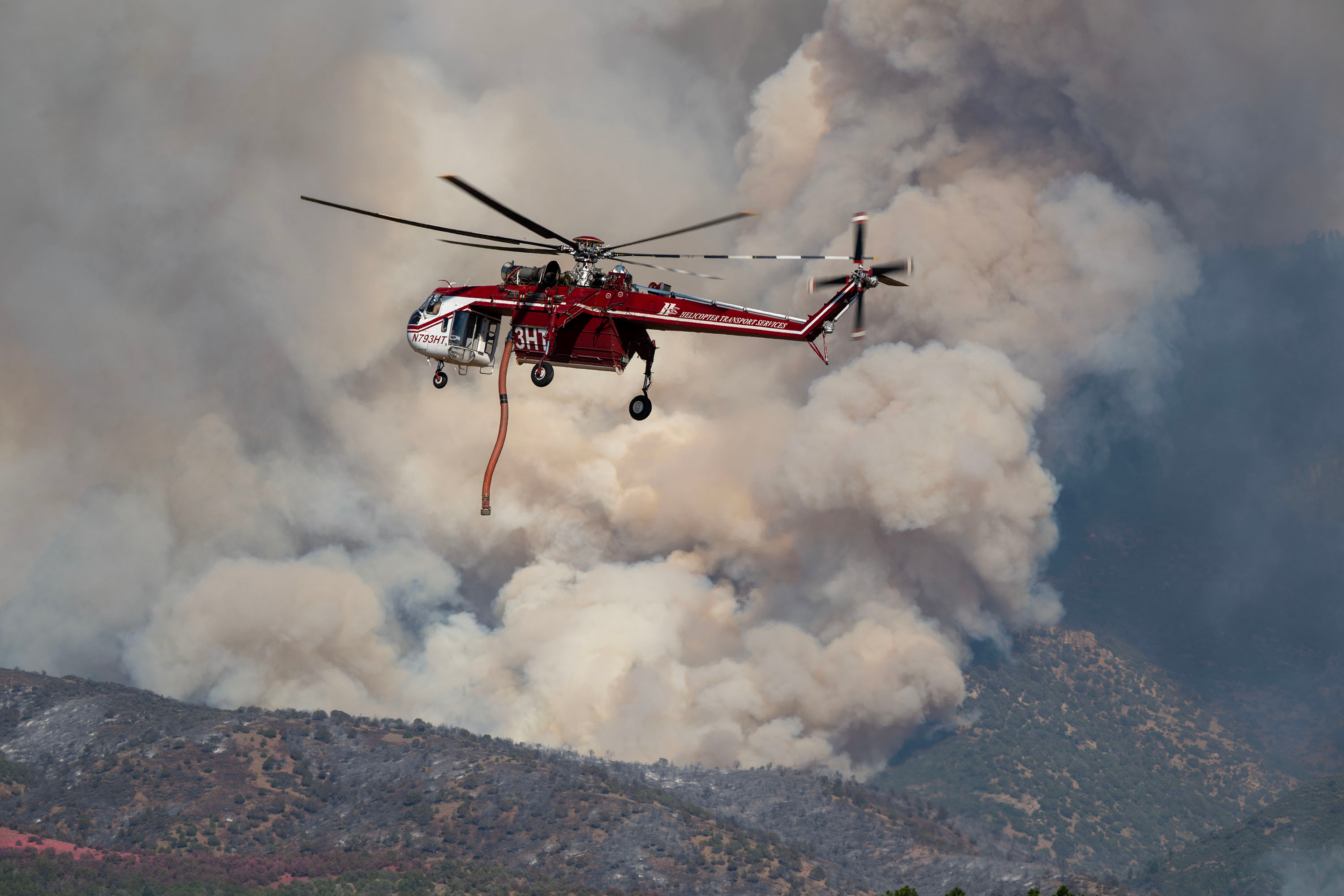
    The pilots were killed when their Sikorsky Skycrane helicopter went down Friday morning, according to the Sevier County Sheriff.

    The helicopter was among those fighting a fire in the Fishlake National Forest. The crash ignited a new fire that spread to connect with the existing blaze, which has now scorched nearly 174 square miles.

    Officials did not identify the pilots but said they were employed by Helicopter Transport Services, which was contracted by the U.S. Forest Service.

    Initially officials said they were unable to reach the crash site because of the fire. Then, on Saturday, crews were able to enter the area and confirmed the deaths, according to the Sevier County sheriff and coroner.

    The National Transportation Safety Board will investigate once its team can examine the wreckage. It will likely take the NTSB a year or more to determine the cause.

    Numerous fires also were burning in other parts of the West, including one that closed part of Mount Rainier National Park in Washington.

    The National Park Service shut down access to the Sunrise and White River areas of the park after a new wildfire burned less than a third of a square mile. Firefighters were working to gain control of it.

    Larger fires near Spokane, Wash., have now burned more than 15.6 square miles, but firefighters constructed more than 75 miles of containment line to help control those flames.

    Elsewhere in Oregon, hot and dry conditions helped an uncontrolled fire spread beyond 30 square miles.

    Firefighters were still trying to identify the best places to set up containment lines around the Wrights Spring fire as they mourned the death of 47-year-old Jason Ensign, who was killed while operating a bulldozer for a timber company. The blaze grew rapidly Thursday and cut off Ensign’s escape route.

    And north of the border in British Columbia, more than 20,000 people had to evacuate ahead of another fast-moving wildfire.