Category: Associated Press

  • Ax-wielding FlyDubai copilot had been flagged over extremism concerns

    Ax-wielding FlyDubai copilot had been flagged over extremism concerns

    CAIRO — The copilot accused of attacking the captain of an Israel-bound flight with an ax and trying to seize the controls was an Omani national who had been barred from flying on his country’s airline because of concerns about extremist views, officials said Saturday.

    The copilot has been identified as Hamam al-Hammami, according to three people with knowledge of the situation, including a Gulf and a Western diplomat, who spoke on condition of anonymity because they were not authorized to speak to the media.

    The United Arab Emirates, which is leading the investigation, said the copilot attacked with the cockpit’s crash ax and tried to take control of the plummeting plane in a “terrorist attack” Wednesday. His actions nearly crashed the flight with 182 people on board before passengers and others rushed in and subdued him.

    The new details raised questions about how thoroughly FlyDubai vets potential employees, and how the copilot’s presence on a flight filled with Israeli passengers got past Israel’s strict security protocols.

    Israel has said it has agreements with foreign carriers to keep pilots of nations without diplomatic ties from flying there. Israel and Oman don’t have formal diplomatic relations. The UAE government has earned a reputation for effective measures against extremist activities but has bristled in the past over criticism of security lapses.

    The incident occurred at a sensitive time for Israel, a week before the anniversary of the Hamas-led attack on Oct. 7, 2023, that sparked the war in Gaza. It also came weeks before a highly contentious election in which security, and Oct. 7 security failures, have been central issues.

    FlyDubai hired the copilot after Oman Air barred him

    Separately, a regional official and a person familiar with the matter said the copilot had been barred from flying by Oman over concerns that he had adopted extremist views. The official said he was moved to an administrative job at Oman Air. Both spoke on condition of anonymity to discuss the ongoing investigation. They gave no details about the alleged extremist views.

    The copilot was later hired by UAE-based airline FlyDubai, the person said. It wasn’t immediately clear to what extent the copilot was vetted. The Gulf diplomat said he had undergone standard security checks before being hired, but it appears that the checks focused on whether he had been convicted of criminal charges and didn’t go deeper into examining his background for potential signs of radicalization.

    The regional official also said security agencies from four regional countries were working to establish the copilot’s motives, aided by the United States and other Western governments. The Gulf diplomat said the investigation, which hasn’t concluded, hasn’t found any connections with militant groups, suggesting that the copilot acted on his own.

    The regional official said the copilot was born in the UAE and his mother is Syrian. He obtained Omani nationality from his father, also an Omani national. The regional official also said the copilot had traveled to Syria, with no details.

    Israeli Prime Minister Benjamin Netanyahu on Friday said the copilot had undergone “Islamist radicalization,” but provided no evidence. There was no immediate comment Saturday from Israel’s government.

    A social media account was deleted the day of the flight

    A FlyDubai spokesperson said in an email that the airline could not comment beyond its official statements and acknowledged “there are many questions at this stage.” There was no immediate comment from Oman Air, and Oman’s government has said nothing publicly in response to repeated questions since the incident.

    In a statement to the Associated Press, Royal Air Maroc, Morocco’s national carrier, said the copilot “completed a three-month theoretical training period with the airline in 2025, as part of the pre-employment process. At the end of this training period, his application was not selected for employment.” There were no details.

    Keith Coles, a spokesperson for Buckinghamshire New University in England, told the AP that al-Hammami previously completed a distance-learning course in aviation management there but “did not undertake any pilot training.” There were no details on the timing.

    Little else was immediately known about the copilot’s background. His Instagram account was active until the day of the flight and then deleted.

    Captain and passengers have described drama on board

    Airlines are generally required to carry a crash ax in the cockpit that could be used in an emergency to break open a window to escape or break open a panel to access a fire.

    The captain, who was badly wounded, has said he used his remaining energy while being attacked to unlock the cockpit door, allowing people who had noticed alarming sounds to come in, tackle the copilot, and stabilize the flight while passengers screamed.

    The plane made an emergency landing in Saudi Arabia after a descent so extreme that part of the rudder was torn away, and aviation experts have marveled that it didn’t crash. FlyDubai has said crew traveling on the plane helped to stabilize it and land. They haven’t been publicly identified.

    Both the captain and copilot were later taken to the UAE. The passengers, most of them Israeli, flew home later Wednesday on a separate plane, to cheers.


  • Two horses named in memory of Johnny Gaudreau are running Saturday at Belmont

    Two horses named in memory of Johnny Gaudreau are running Saturday at Belmont

    Because he grew up playing hockey with and against Johnny Gaudreau in their teenage years, Vincent Conanan talks about the late NHL star plenty. He gets chills when old text messages from Gaudreau show up when he’s searching his phone.

    Conanan buys thoroughbred yearlings annually for his Next Level Stables, and after his young son kept asking about the player known as “Johnny Hockey,” he pledged to name a racehorse after Gaudreau. After going to school in the Columbus, Ohio, area where Gaudreau played his final two seasons with the Blue Jackets, Devon Bradley of Bradley Thoroughbreds had the same idea.

    On Saturday, the horses — Johnny Hockey and Gaudreau — will run in the same race at Belmont Park.

    “Is that not bananas?” Bradley said.

    The winner out of the field of six in the Grade 1 Champagne qualifies for the Breeders’ Cup Juvenile for 2-year-olds, the championship race that sometimes provides a sneak peek at the Kentucky Derby contenders the following spring.

    “Hopefully we can run 1-2 this weekend, either way,” Conanan said. “I know Johnny’s looking down and he sees it.”

    Johnny Gaudreau becomes a namesake twice

    These two colts were born roughly a month apart in the winter of 2024. Gaudreau and his brother, Matthew, died the night of Aug. 29, 2024, when they were struck riding their bicycles near their hometown in Salem County on the eve of their sister Katie’s wedding in a tragedy that transcended sports.

    Bradley was moved by all the great things that people said about Johnny and registered the names Johnny Hockey and Gaudreau with the Jockey Club.

    Watching U.S. players at the Olympics bring Gaudreau’s children onto the ice and skate around with his No. 13 jersey after winning gold in Milan was even more inspiration to use one of them. When she forgot to pay to re-up after a year and went to name the son of Nyquist — also a hockey connection for Swedish player Gustav Nyquist — and Free Cover, she saw that Johnny Hockey was already taken.

    Salem County’s Johnny Gaudreau was a seven-time NHL All-Star before his tragic passing.Aaron Doster

    So, she went with Gaudreau for the strapping horse Bradley Thoroughbreds owns along with Tanglewood Thoroughbreds, Thirty Year Racing, Rodeo Creek Racing, Laura Leigh Stable and Swift Thoroughbreds.

    “We needed a strong name: We needed a name that has some meaning, something to kind of give your horse just an extra oomph,” Bradley said. “We just felt like it fit, and I guess the rest is history.”

    Conanan asked the trainer at his farm in Ocala, Florida, which horse he liked best. The answer made it an easy call.

    “He goes, ‘Vin, this horse always tries hard and has a big heart,’” Conanan recalled. “I was like, ‘You know what, I’ll name this one after Johnny.’ Because Johnny as a kid, he wasn’t the biggest player, but he had the biggest heart. So, I was, like, ‘This horse, I think he’s going to be the one.’”

    Johnny Hockey and Gaudreau face off

    Gaudreau won his debut Aug. 8 at Saratoga Race Course. The very next day at Monmouth Park on the Jersey Shore, Johnny Hockey picked up his first victory in his fifth try.

    “My hopes are very high on the horse,” Conanan said. “[Trainer] Antonio Arriaga tells me, he goes: ‘The horse trains unbelievable. He just wants to keep going. He doesn’t stop. He wants to keep going around the track.’”

    Gaudreau has Chad Brown, a five-time Eclipse Award-winning trainer, overseeing his career, with acclaimed jockey Flavien Prat riding. Based on pedigree and performance, the expectations are lofty after just one race.

    “I’m thankful that this horse looks like he’s the real deal,” Bradley said. “Hopefully, it’ll bring light to, and kind of continue on, Johnny Gaudreau and Matthew Gaudreau’s legacies.”

    Gaudreau opened as the second choice on the morning line for the Champagne at odds of 8-5, behind 3-5 favorite U.S.S. Valor. Johnny Hockey is a 30-1 long shot.

    Conanan wants to invite Johnny and Matthew’s parents, Guy and Jane Gaudreau, to the Breeders’ Cup at Keeneland in Lexington, Kentucky, later this fall if his horse pulls off the upset.

    “This horse is something special,” Conanan said. “I know he’ll go out there and do his best, the same way Johnny would.”

  • Federal court temporarily blocks Trump administration border wall in Texas’ Big Bend region

    Federal court temporarily blocks Trump administration border wall in Texas’ Big Bend region

    WASHINGTON — A federal court in Texas on Friday temporarily blocked the Trump administration from building a border wall and other infrastructure across the state’s Big Bend region, in a victory for opponents who have pushed back against a key campaign promise by President Donald Trump.

    Landowners, businesses, and environmentalists in the region have united to oppose the planned projects, which are part of a $46 billion effort by the Trump administration to line the southern border with a mix of 30-foot-tall steel walls, vehicle barriers, roads, and surveillance technology.

    Judge Kathleen Cardone said in her ruling that the plaintiffs were “likely to succeed on the merits of at least one of the claims in suit, that there is a likelihood that they will suffer serious, irreparable harm without an injunction, and that the balance of the equities and the public interest weigh in their favor.”

    U.S. Customs and Border Protection defended the project in a statement Friday.

    “We stand by our assessment and remain confident in our legal authorities to secure the border while preserving the unique landscape of the Big Bend region,” the agency said. “We are working with the Department of Justice on next steps.”

    The Department of Homeland Security did not immediately respond to a request for comment.

    The judge’s ruling includes Big Bend National Park, where opposition to the wall prompted the administration to briefly pause construction.

    Opponents of the border wall project have argued that the Big Bend region of Texas is so remote and the landscape so rugged that it serves as its own deterrent to illegal immigration and that the administration violated the law when it issued a swath of waivers allowing it to bypass numerous regulations in order to speed up border wall infrastructure projects.

    The lawsuit brought by an environmental organization, advocates for a historic church in Ruidosa and a river guide argued that the Department of Homeland Security was wrong to bypass regulations meant to protect the environment, culture, and archeology of regions like the Big Bend area.

    Laiken Jordahl, with the Center of Biological Diversity that brought the suit, called Cardone’s ruling a “total victory.”

    “The bulldozers are going to be sent packing until she rules on the merits,” Jordahl said. “This is such a historic day for Big Bend and for Texas and the Constitution.”

    The court’s decision comes just weeks after the administration erected the first border wall panels in the Big Bend sector in mid-September.

    The border wall project through the Big Bend sector has sparked bipartisan opposition.

    Much of the opposition has been geared around Customs and Border Protection’s plans for inside the Big Bend National Park, which is prized for its beautiful landscapes, limestone cliffs, and crystal clear night sky views.

    When bulldozers were spotted clearing land in the park in August, it sparked widespread opposition with both Republicans and Democrats calling for the administration to stop. Customs and Border Protection paused all activity there, but that pause expired on Sept. 30. The administration has said it’s reevaluating plans for the National Park but has not yet said what it will do there.

    Advocates for the park on Friday said they were happy with the judge’s ruling but called on the administration to fix the damage already done to Big Bend National Park, come to the table to meet with local residents and develop alternative plans.

    “Big Bend is no place for border barriers. It’s time for the administration to come to the table with the border communities that know Big Bend best, repair the damage from this ill-conceived project, and find new solutions,” said Tiernan Sittenfeld, National Parks Conservation Association President and CEO in a statement.

    The judge’s ruling extends to areas up and downriver from the National Park, where Customs and Border Protection has planned a range of border infrastructure projects that would largely require building across privately owned land.

    In those areas, the government has been working to obtain permission from local landowners to survey and build on their land, but in a recent court filing, it said it was prepared to refer some cases to the Justice Department where it hadn’t been able to secure permission from landowners.

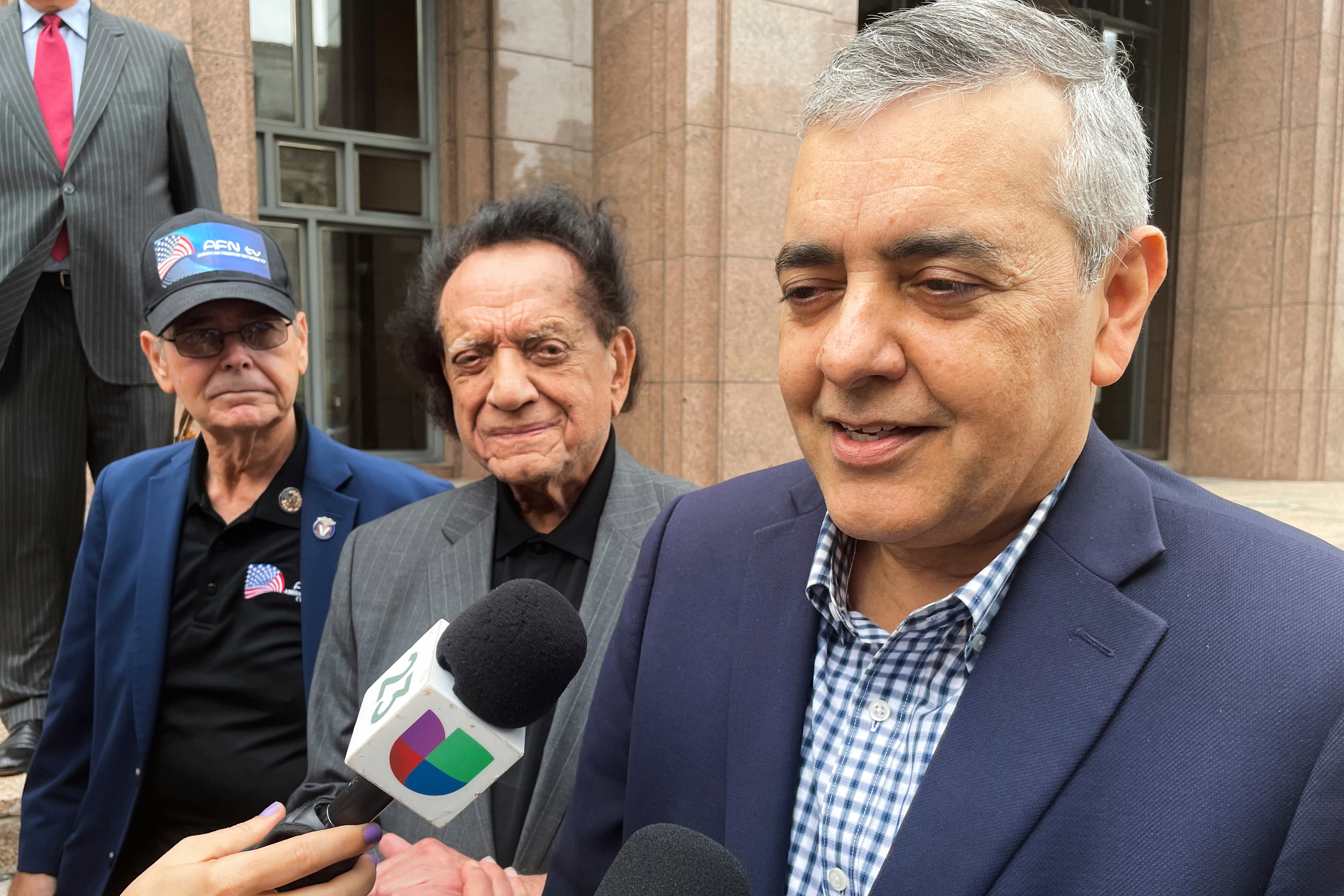
  • Former GOP Rep. David Rivera sentenced to 10 years for secret Venezuela lobbying

    Former GOP Rep. David Rivera sentenced to 10 years for secret Venezuela lobbying

    MIAMI — A former Republican congressman and longtime friend of Secretary of State Marco Rubio received a 10-year prison sentence on Friday for concealing a $50 million lobbying campaign on Venezuela’s behalf during the first Trump administration.

    David Rivera of Miami has been jailed since his conviction in May for conspiracy to commit money laundering and failing to register as a foreign agent for the government of Nicolás Maduro.

    Rivera, 61, appeared stone-faced as Judge Melissa Damian denounced him for betraying his life’s mission. His many friends in Miami would surely judge him harshly had the millions of dollars come from Cuba’s communist regime instead of its allies in Caracas, she said.

    “Nobody would accept that’s OK and I don’t think this is different,” the judge said. “There’s no dispute this money came from the Maduro regime.”

    The case offered a rare glimpse into foreign influence campaigns aimed at shaping U.S. policy toward Latin America, highlighting Miami’s reputation as a magnet for both anti-communist crusaders and corruption among its sizable exile population.

    President Donald Trump’s secretary of state, Rep. Pete Sessions of Texas and a top Washington lobbyist all testified, saying Rivera had never mentioned his mammoth consulting contract with a U.S.-based affiliate of Venezuela’s state oil company, PDVSA.

    Rivera was charged in 2022, during President Joe Biden’s administration. Charges of illegal foreign lobbying have plunged since Trump returned to the White House. Rivera’s lawyers have applied for a presidential pardon, and plan to appeal while also defending him against a related foreign lobbying case in Washington, D.C. Still pending is Damian’s ruling on the government’s request that Rivera forfeit $20 million in criminal proceeds.

    Prosecutors described how Rivera worked GOP connections for Delcy Rodríguez

    Rivera was tapped by Maduro’s Foreign Minister Delcy Rodríguez — now Venezuela’s acting president — to get the first Trump administration to normalize relations.

    As part of the charm offensive, Rivera and a co-defendant, political consultant Esther Nuhfer, sought to manipulate influential friends, including Rubio and Sessions. But they didn’t disclose the lobbying as required, fearing it would ruin Rivera’s reputation as an anti-communist stalwart, prosecutors argued at trial. Nuhfer received a five-year sentence.

    “The United States and the public were the true victims of this fraud,” Assistant U.S. Attorney Roger Cruz said. “He used his position of trust — and betrayed it consistently and repeatedly.”

    Rivera denied being a two-faced grifter. In an emotional 20-minute address, he traced his life’s journey from a childhood without a father in an immigrant Miami neighborhood to the halls of Congress — always “fighting the good cause,” he said. Holding back tears, he begged for leniency, telling the judge that it was tantamount to a “death sentence” due to his age and lingering effects from a battle with prostate cancer.

    Prosecutors said betrayal featured coded figures — ‘Sombrero’ and ‘Miss Clairol’

    Trial evidence showed how Rivera set up an encrypted chat group called MIA — for Miami — with his main conduit to the Maduro government: Venezuelan media tycoon Raúl Gorrín, who was subsequently charged in the U.S. with bribing top Venezuelan officials.

    Group members used playful code words: Maduro was the “bus driver,” Sessions “Sombrero,” Rodríguez “The Lady in Red,” and their windfall payments “La Luz,” Spanish for “The Light,” according to copies of text messages presented to the jury. Rubio was known as “Miss Clairol,” because rubio means blond in Spanish.

    Rivera’s attorneys argued again Friday that the former congressman believed he was under no disclosure requirement. They said the three-month, $50 million contract with Rivera’s one-man consulting firm was focused on luring oil giant ExxonMobil back to Venezuela — commercial work that is generally exempt from the Foreign Agents Registration Act.

    “David Rivera does not deserve to die in prison because he failed to file a FARA registration,” defense attorney Ed Shohat said.

    The judge strenuously disagreed. “This is a serious offense. It’s not about not filing a piece of paper.”

    Wholly distinct from that consulting work, defense attorneys said, were Rivera’s meetings with Rubio and Sessions, which were focused on ushering in less hostile leadership in Venezuela, not unlike the Rodríguez government that took power after the U.S. ouster of Maduro in January.

    Where did the money go? A luxury yacht, among other things

    Prosecutors said Rivera used the contract with the Venezuelan oil giant’s affiliate, New York-based PDV USA, as cover for illegal lobbying, and tried to hide it by backdating documents and creating sham agreements, like one to justify a $3.75 million wire transfer to a South Florida company maintaining Gorrín’s luxury yacht.

    While setting up meetings for Rodríguez in New York, Caracas, Washington and Dallas, Rivera roped in Sessions, who later tried to broker a meeting for Rodríguez with the ExxonMobil executive who took over as CEO when Rex Tillerson became Trump’s first-term secretary of state.

    The outreach quickly unraveled, however. Within six months of taking office, Trump sanctioned Maduro and labeled him a “dictator,” launching a “maximum pressure” campaign to unseat the president.

    Rubio’s former housemate faced scandal before, but Cuban Americans support him

    Before serving in Congress from 2011-2013, Rivera was a high-ranking Florida legislator and shared a Tallahassee home with Rubio, who eventually became the Florida House speaker.

    Rivera faced earlier controversy, including allegations that he secretly funded a Democratic spoiler candidate in a 2012 congressional race — a case federal prosecutors eventually dropped after a sizable fine was thrown out on appeal. Rivera was also investigated — but never charged — for alleged campaign finance violations and a $1 million contract with a gambling company while serving in the Florida Legislature.

    Despite all that, Rivera continues to have support among Miami’s Cuban American establishment and in circles of power beyond.

    Friends of the former congressman, including the former president of Florida International University and Miami-Dade County’s supervisor of elections, packed the courtroom to show their support. Sessions also sent a letter seeking leniency, referring to his former congressional colleague as a devoted defender of democracy.

    Jason Reding Quiñones, the U.S. attorney for the Southern District of Florida, is also a Cuban American and said he can’t explain why some in Miami still stand by Rivera.

    “He sold his anti-communism to communists to fill his greed,” said Reding Quiñones in a news conference following the sentencing.

  • Rams star Aaron Donald out for Eagles game, Puka Nacua set to return

    Rams star Aaron Donald out for Eagles game, Puka Nacua set to return

    LOS ANGELES — Aaron Donald will miss the Rams’ game against the Philadelphia Eagles on Sunday because of a sore back, while Puka Nacua will return after missing two games because of hip and groin injuries.

    Donald did not practice all week and coach Sean McVay officially ruled him out Friday. A three-time AP Defensive Player of the Year, Donald has four tackles, one tackle for loss and one quarterback hit in two games after ending his two-season retirement.

    McVay said the Rams (1-2) were erring on the side of caution with Donald and that the 35-year-old defensive tackle probably could have played through the injury if needed.

    “We have to protect him from him,” McVay said. “This guy will do everything (to play) and that much more.”

    Nacua had five receptions for 74 yards in the season opener against the 49ers but missed games versus the Giants and Broncos after hurting himself in practice on Sept. 17.

    “Just in some of the change of direction stuff, some of the stuff in my hip area just was not feeling great,” Nacua said. “It was causing me some pain and some restriction in some of my movements.”

    The Rams also ruled out tight end Terrance Ferguson (ankle) and cornerback Jaylen Watson (shoulder), while tight end Colby Parkinson (knee/shoulder) and linebacker Grant Stuard (groin), a key special teams contributor, are questionable.

    McVay also said wide receiver Alex Bachman will likely be called up off the practice squad to contribute on special teams after return specialist Xavier Smith was waived on Friday.

    The decision to move on from Smith came one day after special teams coordinator Bubba Ventrone was critical of Smith’s performance while also ruling out replacing the third-year wide receiver from Florida A&M. Smith’s status had been in question since he muffed a punt leading to a Seattle touchdown in the Seahawks’ 31-27 win over the Rams in the NFC championship last season.

    “We just need better production out of that position,” McVay said. “That’s exclusively what it was.”

    “We weren’t thinking about it when (Ventrone) talked to you guys yesterday. And as you get a chance to kind of take a step back, evaluate the totality of our group — what’s the best way to try to be able to put together all three phases? Did feel like that was in the best interest of the group, and that was kind of what went into it.”

  • CBS announces Tony Romo’s permanent exit following arrest for operating a vehicle while intoxicated

    CBS announces Tony Romo’s permanent exit following arrest for operating a vehicle while intoxicated

    CBS Sports and Tony Romo have officially parted ways, one month after the former Dallas Cowboys quarterback pleaded no contest to charges of operating a vehicle while intoxicated.

    Romo had been on leave since his July 23 arrest in Wisconsin. He had been the lead game analyst for CBS’ NFL coverage since 2017.

    “CBS Sports and Tony Romo have mutually agreed to part ways,” CBS Sports said Friday in a statement. “We thank Tony for his contributions over the past nine years and wish him the best moving forward.”

    Analyst JJ Watt had joined play-by-play announcer Jim Nantz and sideline reporter Tracy Wolfson on CBS Sports’ lead NFL team during Romo’s absence. Watt will continue in that role now and all other CBS teams will remain the same.

    Romo was arrested following a traffic stop as he was driving south on Interstate 43 in Wisconsin. He pleaded no contest to a charge of operating while intoxicated on Sept. 1 and issued a statement apologizing for the actions that led to his arrest.

    According to Milwaukee County court records, Romo lost his driving privileges for six months and was ordered to complete an alcohol assessment program.

    “The past month has been difficult, but it has also been personally significant,” Romo said Sept. 1 in a statement on Instagram. “It has required me to confront and own my mistakes fully — to the Lord, to myself, to my family and now to the public.”

    Romo said the multiple back surgeries that led to his retirement as a player “left me with constant, debilitating pain.” He noted that the pain “led to a dependence on pain medication, and my efforts to get off those medications led to an over-reliance on alcohol.”

    “None of this is an excuse,” Romo said. “These are my failures and I take responsibility for them.”

    Romo said he is working with a team of doctors to address his health and “make the necessary changes.”

    The 46-year-old Romo made four Pro Bowl appearances during a playing career that ran from 2004-16 and was spent entirely with Dallas.

  • Amazon to invest $1B into data center communities amid backlash against data center rollouts

    Amazon to invest $1B into data center communities amid backlash against data center rollouts

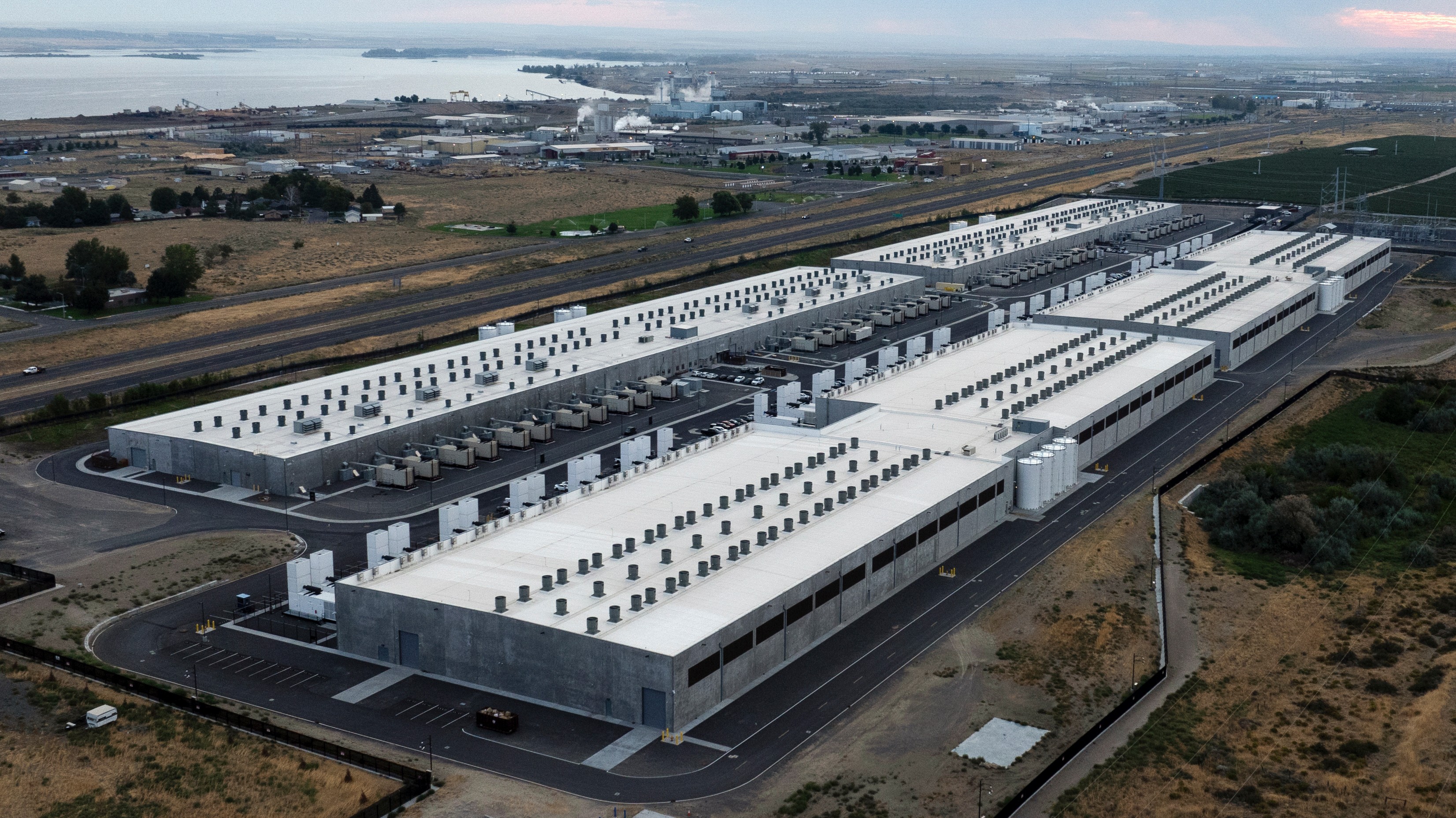
    NEW YORK — Amazon is investing more than $1 billion over the next five years into communities where it operates data centers for education, job training, water and energy preservation projects, and other local priorities as it reacts to a growing backlash from politicians and consumers to the tech industry’s rollout of the massive buildings.

    According to a blog post on Friday by Matt Garman, Amazon’s CEO of its cloud computing arm, Amazon has already spent more than $1 billion in communities with a large data center presence over the past three years, including a 2-million-square-foot data center campus in Falls Township, Bucks County, that is nearing completion.

    Garman also said that Amazon is no longer using nondisclosure agreements with government agencies it works with on its projects, and it said it hosts open houses in communities where it operates to share information about what it’s doing. He also warned against the spread of what he believes is misinformation about data centers’ impact on the environment and energy rates — and he cited the dangers of over 100 moratoriums against these centers being considered across the country.

    “If these measures are enacted, the U.S. could be writing its own losing ticket to this race, and the consequences would last generations,” he wrote. “As a country, we can’t afford to find ourselves in that position. There is urgency to this data center build out because we aren’t the only country that sees the benefits of AI for the economy and national security.”

    Garman’s pledge comes as data centers, which power artificial intelligence and cloud computing, have become a hot political issue heading into the midterms as tech giants race to invest more money in expanding these infrastructures.

    Small, under-the-radar data centers have been around for decades. But the explosion of artificial intelligence chatbots has resulted in data centers that are bigger than anything just about any town has ever seen. Some of them dwarf football stadiums and factories and consume more energy than small cities.

    By 2030, data centers will account for nearly 3% of the world’s projected electricity use, with 935 trillion watt-hours, according to a United Nations University report released in June on these buildings’ environmental footprint.

    Amazon said in July that it now expects to spend $220 billion in capital expenditures in 2026, including on data centers and other technology investments. That’s up from its prior estimate of $200 billion.

    President Donald Trump has embraced the building of more data centers, but there is growing wariness from voters. About 6 in 10 Americans support limiting the number of new data centers that can be built, including most Democrats and Republicans.

    And a majority of Americans are “extremely” or “very” concerned about the impact of data centers on electricity prices or the water supply in the communities where they are built.

  • U.S. hiring slows and unemployment ticks higher with a month remaining before Americans head to polls

    U.S. hiring slows and unemployment ticks higher with a month remaining before Americans head to polls

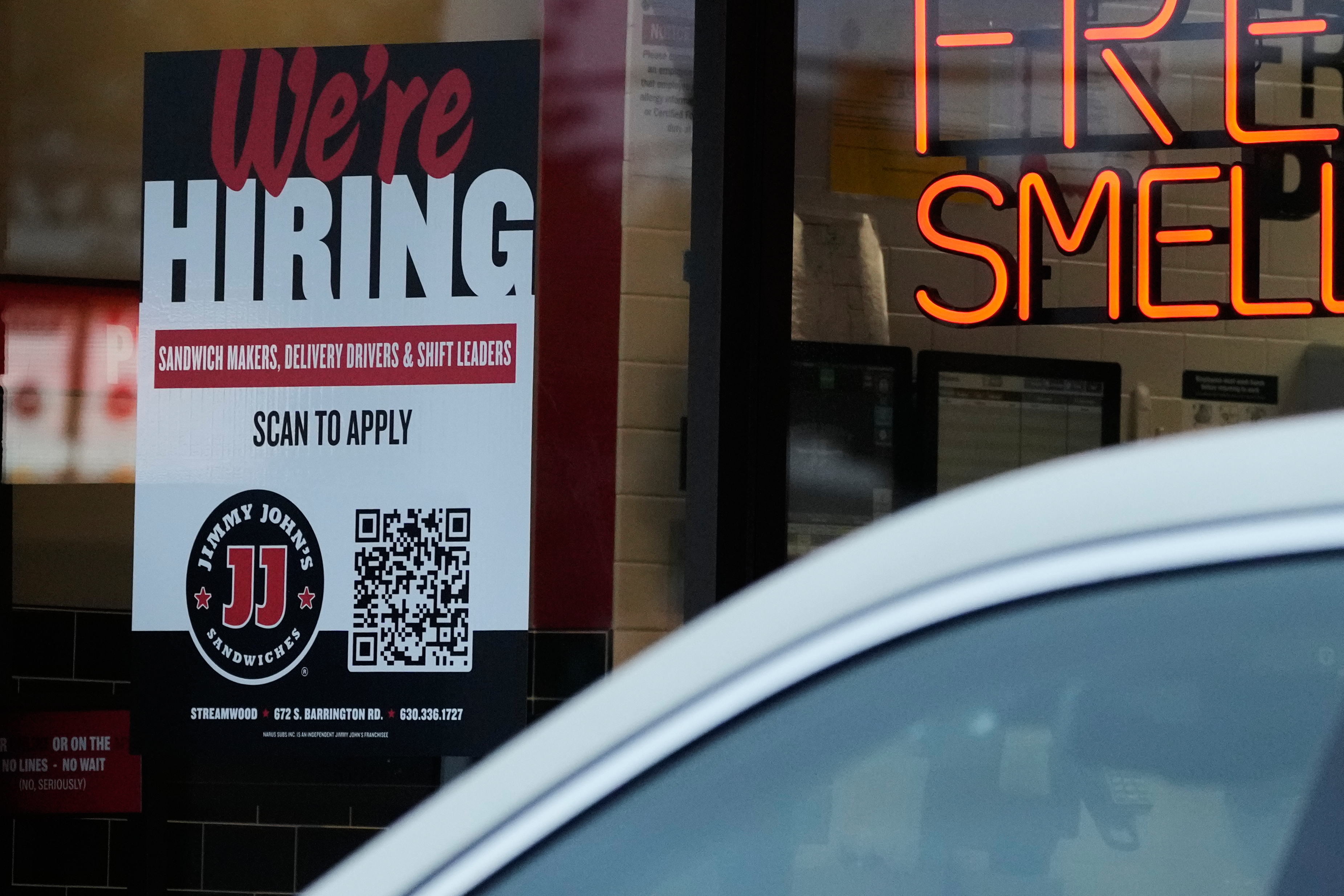
    WASHINGTON — U.S. employers added a disappointing 29,000 jobs and the unemployment rate ticked up last month, the government reported Friday, a month before voters go to the polls in pivotal midterm elections at a time of discontent over the high cost of living and the state of the economy.

    Hiring dropped from a revised 133,000 in August, the Labor Department said. The unemployment rate rose to a still-low 4.2% from 4.1% in August.

    Economists had expected September payrolls to come in around 90,000.

    Labor Department revisions also shaved 60,000 jobs off combined July and August payrolls.

    The new hiring data could draw the Federal Reserve’s attention back to hiring and jobs, given that one of the central bank’s two mandates is to seek maximum employment. Many Fed officials have said in recent weeks that they are primarily focused on their other mission, which is combating inflation. With the job market looking a bit weaker, the Fed may be more inclined to keep its key rate unchanged when it meets next month, rather than raise it.

    Average hourly wages were up just 3% last month from a year earlier, the smallest year-over-year gain since May 2021. “In this data, there is no sign that the labor market is stoking inflation,” said Luke Tilley, chief economist at Wilmington Trust.

    Still, the unemployment rate remains low and inflation has been above the central bank’s 2% target for more than five years, so the Fed’s concern about elevated prices is still front and center.

    Federal, state, and local governments cut 17,000 jobs last month. Professional and business services companies, which provide administrative and technical expertise, trimmed 9,000 jobs.

    Healthcare companies created 17,000 jobs in September, but that was barely half the 33,000 they’ve added, on average, each month for the past year. Bradley Saunders, an economist at Capital Economics, wrote that the slowdown in healthcare hiring might reflect the Trump administration’s revocation of work authorizations for 350,000 Haitians.

    Construction companies added 11,000 jobs and manufacturers 9,000.

    Unemployment rose partly because 485,000 people entered the workforce and not all of them found jobs right away.

    The U.S. job market has proven resilient in the face of a series of shocks — trade wars, persistent inflation, high interest rates, and a conflict with Iran that has driven energy prices higher. Friday’s jobs report is the last one that will come out before the Nov. 3 elections that will determine whether President Donald Trump’s Republicans maintain full control of Congress.

    Futures for the S&P 500 and Nasdaq composite added to their gains after the data was released on growing hopes that the Fed will hold off on a rate hike. Treasury yields moved lower.

    Yet what makes Wall Street happy differs starkly with what brings joy on Main Street.

    The U.S. job market has recovered from a dismal 2025, but most Americans are still unsettled about the state of the economy and the high cost of living.

    A Thursday poll from the Associated Press-NORC Center for Public Affairs Research finds that only 17% of U.S. adults approve of Trump’s handling of the cost of living. Just 26% approve of his handling of the economy overall, marking a new low.

    U.S. consumer confidence dropped this month to the lowest level in more than a decade, according to an index published by the Conference Board. One reason: More than 28% of respondents told the business think tank that they expect fewer jobs to be available in six months, double the 14% who expect more.

    The online jobs site Glassdoor reports that its employee confidence index, based on how workers view prospects for their own companies, dropped last month to the lowest level in records going back to the beginning of 2016, a period that includes a pandemic. It was the index’s third record low this year.

    “Employee confidence has been continuously grinding downward over the last year as workers grow increasingly anxious about everything from layoffs to AI,’’ said Glassdoor chief economist Daniel Zhao.

    The public’s misgivings about jobs partly reflect an odd feature of the current labor market: Employers aren’t laying off many workers, but they aren’t hiring many either. A Labor Department measure of gross hiring — before subtracting those who quit or lose their jobs — has been stuck in a rut for more than two years.

    So economists describe a “low-hire, low-fire” job market in which those who have jobs are mostly secure, but jobseekers struggle to find work.

    “People know that being laid off is unusually costly right now,” said Glassdoor’s Zhao. “They hear from their friends how long they’ve been out of work and had such a difficult time finding a job. That does make layoffs even more scary than usual.”

    In that chilly environment, fewer workers are willing to quit their jobs. “They often feel stuck,” Zhao said. “Workers aren’t finding there’s opportunity on the open market to find a better job — one that pays more or offers better work-life balance.’’

    Employers — businesses, government agencies, and nonprofits — have added an average 68,000 jobs a month so far this year. That’s a big improvement on the 9,700 average new jobs created every month in 2025, the weakest hiring outside a recession since 2002.

    At one time, 68,000 jobs a month would have been mediocre at best. But the United States doesn’t need as many jobs as it once did to keep unemployment from rising. Because of baby boomer retirements and Trump’s immigration crackdown, there are fewer people competing for work, and the break-even point could now be as low as zero jobs a month, down from 150,000 a year or two ago.

    “I think this is roughly where we’re going to stay,” said Tilley at Wilmington Trust. ”I expect job growth to remain in this 25,000 to 75,000 band as we go along.”

    Anne D’Innocenzio and Christopher Rugaber contributed to this article.

  • Russian aerial strikes snarl traffic on 3 Kyiv bridges in a new disruption tactic

    Russian aerial strikes snarl traffic on 3 Kyiv bridges in a new disruption tactic

    KYIV, Ukraine — Russian aerial attacks forced the partial closure Friday of three bridges over the Dnipro River in Kyiv, the Ukrainian capital’s mayor said, in Moscow’s latest effort to disrupt life in the city.

    Meanwhile, Ukraine’s top diplomat said officials have received separate proposals for a partial truce with Russia from the United States, India, Turkey, and Egypt. The proposals envision halting attacks on energy infrastructure, which have caused fuel shortages in Russia and power outages in Ukraine, and on Black Sea shipping needed to get vital grain exports to world markets.

    The Russian strikes forcing the full or partial closure of three of Kyiv’s six road bridges caused traffic logjams and appeared to be a new tactic in its campaign to torment the city’s residents. Previously, Russia has hit apartment blocks, supermarket warehouses, gas stations, and data centers, among other targets, in an escalation of attacks.

    Oleksandr Pihalo, a Kyiv resident, said traffic was “jammed solid” and it took him 45 minutes to cover 2 ½ miles. “It’s a total mess on the road today,” he told the Associated Press.

    One of the three bridges was hit again on Friday afternoon, Mayor Vitalii Klitschko said.

    Civilians “are bearing the brunt of this war,” the U.N. High Commissioner for Human Rights, Volker Türk, said in Geneva on Friday.

    “The war in Ukraine is a human rights catastrophe that is growing and intensifying by the week, causing unfathomable pain to civilians,” he said. “Across Ukraine, people are living in constant dread.”

    While the aerial war has intensified in recent months, fighting along the roughly 770-mile front line snaking through northern, eastern, and southern Ukraine has been virtually deadlocked. Russia invaded its neighbor more than 4 ½ years ago, and there are no concrete signs that a peace settlement might be possible.

    However, Ukraine has this year made some progress against Russia’s bigger army, according to the Institute for the Study of War.

    Russian forces lost control over almost 116 square miles of Ukraine between March and September, the Washington-based think tank said in a report late Thursday. Also, it said that the Russian military suffered over 46,000 casualties in September, the highest monthly number this year. It did not say how many Ukrainian troops were killed or wounded.

    Zelensky says sanctions can stop Russian drones and missiles

    Russia fired more than 100 drones at Ukraine overnight, striking Kyiv and eight other regions, Ukrainian President Volodymyr Zelensky said. Almost half of the drones were the jet-powered type that are especially hard to stop, he said.

    A drone hit a high-rise apartment block in Kyiv, killing one person, he said. At least four people were reported wounded elsewhere.

    Zelensky repeated his appeal for foreign countries to close loopholes in international sanctions on Russia and to add more restrictions on its trade. He said Russia’s drones and missiles are “critically dependent” on foreign components.

    “Every Russian drone can actually be stopped right at the production line,” Zelensky said in a post on X.

    Ukraine has also bombarded Russia with the long-range drones and missiles it now produces, aiming at military manufacturing plants and oil refineries.

    The Russian Defense Ministry said Friday that its air defenses overnight downed 646 Ukrainian drones over Russian regions, occupied Crimea, the Sea of Azov and the Black Sea.

    One person was wounded in Russia’s southwestern Volgograd region, Gov. Andrei Bocharov said. The attack targeted “industrial infrastructure,” he said, without providing details.

    Ukraine is ready for a truce on energy strikes and the Black Sea

    Ukraine’s Foreign Minister Andrii Sybiha said the partial truce proposals presented to Kyiv by four countries were the first time India has offered to play a role.

    India is trying to balance its ties with Russia against its growing partnerships with the United States and other Western powers. A new U.S. sanctions package on Russia could impose up to 100% tariffs on New Delhi as a major importer of Russian oil.

    Sybiha said Kyiv is ready to accept a ceasefire if it stops Russian attacks on Ukraine’s power grid — as well as Ukrainian strikes on Russian oil refineries — and on cargo vessels exporting grain and other farm products through the Black Sea.

    “We are ready for an energy and Black Sea ceasefire, but only in that combination. Energy and a ceasefire in the Black Sea,” Sybiha told reporters Thursday, in comments embargoed until Friday.

    He repeated Ukraine’s offer of an unconditional ceasefire on the front line. But Moscow has rejected a ceasefire, saying a comprehensive peace deal must be agreed rather than a temporary truce.

    Russia’s Deputy Prime Minister Alexander Novak said Friday that Ukraine attacked four Russian oil refineries overnight, but air defenses fended off the attacks and key equipment wasn’t damaged.

    The government and companies have worked hard to improve protection of refineries, he said. Russian President Vladimir Putin decreed in August that the state can temporarily seize control of critical infrastructure facilities if private owners fail to protect them or rebuild them after Ukrainian strikes.

    It wasn’t possible to verify either side’s claims.

    Russia is stockpiling ballistic missiles, Ukraine says

    Sybiha said Ukraine is requesting some 300 Patriot missiles from partner countries because intelligence services estimate that Russia is holding 600 ballistic missiles in reserve and can produce up to 140 ballistic missiles per month.

    The U.S.-made Patriot air defense systems can effectively defend against ballistic missiles, which fly fast and drop steeply, but they are in short supply due to the Iran war.

    Ukraine needs more funding and quickly, foreign minister says

    Ukraine urgently needs funding in order to contract future drone production, so there are no gaps in supply at the beginning of next year, Sybiha said.

    Kyiv faces a projected budget deficit of roughly $27 billion this year, although the European Union has promised to help meet its financial requirements.

    The European Commission announced Friday it had disbursed €2.9 billion ($3.3 billion) to Ukraine in its latest batch of financing. Zelensky said the amount would help Ukraine’s financial stability and strengthen its defense.

    Russia is also facing economic and financial challenges because of high military spending and debt.

  • G7 nations will release 100 million barrels of oil and diesel fuel after prices soar

    G7 nations will release 100 million barrels of oil and diesel fuel after prices soar

    WASHINGTON — The Group of Seven wealthy democracies said Friday that they plan to release 100 million barrels of oil and fuel products in the coming weeks, starting with “substantial” amounts of diesel after the fuel recently hit record high prices in the United States.

    President Donald Trump said the diesel release would happen “immediately,” echoing a G7 promise to start “immediately” with a “frontloaded substantial release” of diesel within the next 20 days and the rest over four months.

    Trump and his Republican Party face pressure to address surging prices ahead of the Nov. 3 midterm elections, and Trump announced the action Friday on social media. The president’s approval ratings on the economy hit a new low, according to an AP-NORC poll, as the Iran war and his trade battles have increased U.S. prices for oil and other goods.

    Gas prices in the U.S. and abroad have soared during the eight-month-long war, a cost Trump has repeatedly said is worth it for making sure Iran does not obtain nuclear weapons. The national average for a gallon of diesel in the U.S. was $6.37 on Friday, according to AAA, after hitting a record $6.52 on Sept. 22. Diesel prices have hit records in Europe, too.

    The release of diesel in Europe might mean less exports of diesel from the U.S., which could lower prices by 25-50 cents per gallon after a few weeks, said Michael Lynch, distinguished fellow at Energy Policy Research Foundation, a non-partisan research institution focused on energy and economics.

    Macron says the decision should bring down prices

    France holds the rotating presidency of the G7 group and made the announcement in a statement released after videoconference talks that Macron presided over. The G7 countries are Canada, France, Germany, Italy, Japan, the U.K., and the U.S., plus EU representation.

    The release follows on from a March announcement that International Energy Agency member countries would release 426 million barrels of oil and products to stabilize the oil market. European Union countries committed about 92 million barrels, a promise weighted toward refined products made from crude such as diesel.

    “This common decision and this unity should bring down prices,” Macron said. “The volumes we’re releasing should also add liquidity to the market and bring down prices.”

    In addition to the rise in the price of the crude oil from which diesel is made, other factors include the decision by Russia to ban exports due to Ukrainian drone strikes on its refineries. Europe does not import Russian diesel, but other buyers of Russian diesel such as Turkey and Latin American countries must now compete with Europe for available barrels.

    Meanwhile, refined product shipments from the Persian Gulf producers have fallen due to war damage and blocked export routes.

    The statement pushed U.S. oil prices down 2% but “the impact was lessened by lack of clarity on an important question,” said Pavel Molchanov, investment strategy analyst at Raymond James. Is the 100 million barrels in addition to the amount already agreed in March, or “is this the final portion of the existing pledge?” he said.

    The G7 says export bans are off the table

    Some Republicans in the U.S. had called for Trump to ban U.S. exports of diesel to try to bring domestic prices down. But the G7 statement said the group agreed not to limit energy exports to each other. Oil market analysts warn a U.S. export ban could lower prices in the short term but eventually backfire by reducing supplies of gasoline since diesel output can’t be lowered without also cutting overall refinery production.

    Asked about a potential U.S. export ban on Friday, Trump said “we were never going to do it.”

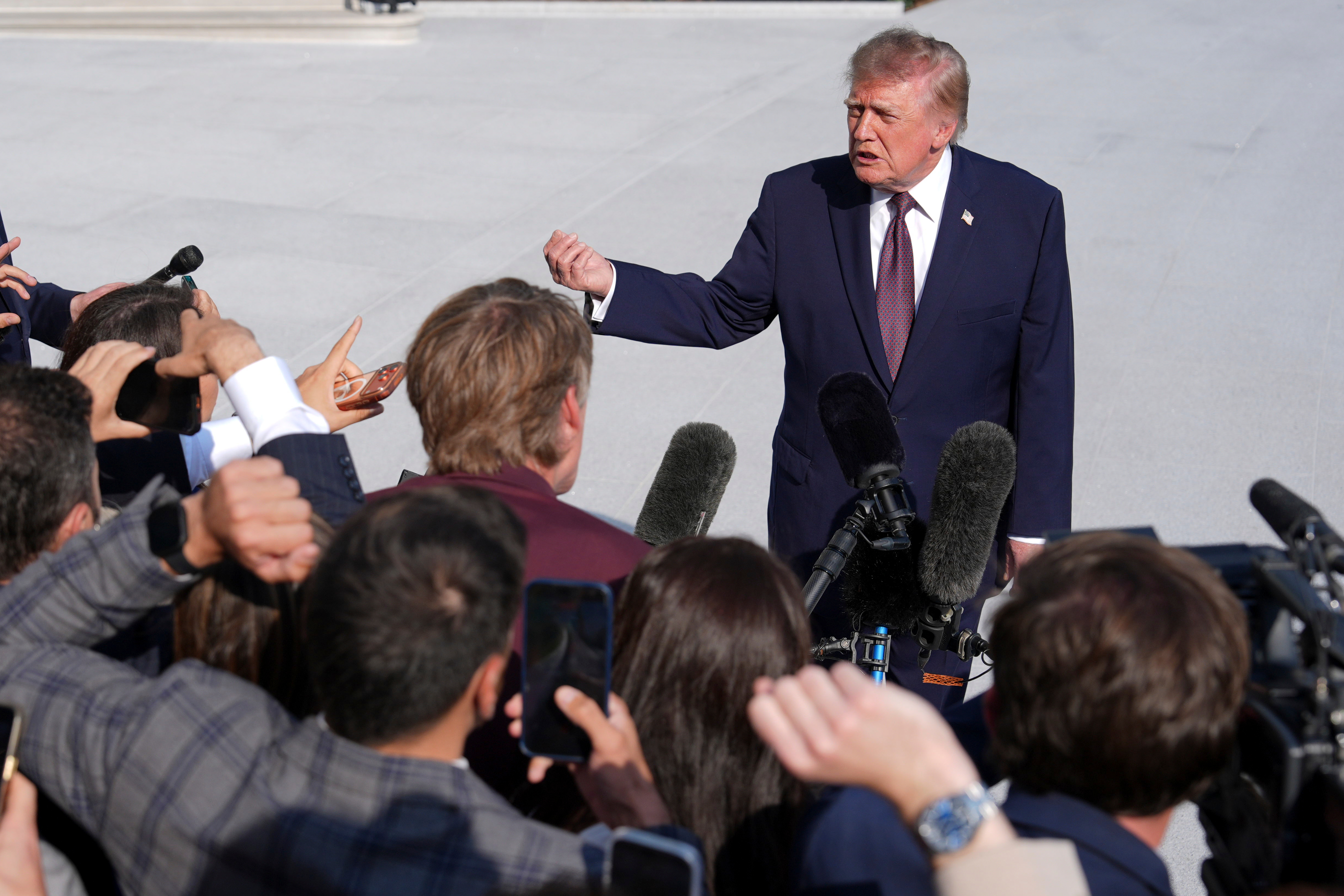
    “We’re not going to be doing the export ban,” Trump told reporters at the White House. “We’re going to be doing what we’re supposed to do.” He added that Europe is making “a major world contribution, and so are we.”

    Experts say there are risks in the strategy

    The emergency release could also be a short-term fix with the potential to do long-term harm, said Jim Krane, energy research fellow at Rice University’s Baker Institute.

    “Draining stocks will reduce retail fuel prices for a while, at the cost of leaving Europe with less emergency cover,” Krane said. “At some point in the future Europe and the rest of the G7 will have to refill their strategic reserves. Normally they try to do this when prices are low. Nobody knows when that will happen. It’s a risk.”

    With two wars raging that involve attacks on refineries and exports, “it’s not the best time to be frittering away your emergency stocks — especially when there is no visibility on future prices or peace agreements,” Krane said.

    Trump had a conversation overnight with Macron about the need to address rising fuel prices and the availability of petroleum products, according to the French Embassy in the U.S. Macron on Friday then chaired the videoconference of G7 leaders to discuss the issue.

    Besides his call with Macron, Trump on Friday called in to the meeting with the G7 leaders to negotiate the release of the European diesel stockpiles, according to a White House official who was not authorized to speak publicly and spoke on the condition of anonymity.

    Trump on Thursday embarked on what he said would be a 32-day marathon of rallies to try to bolster his party’s chances for keeping control of the U.S. House and Senate in the November elections. The president has grown increasingly frustrated with what he sees as a disconnect between his achievements and the public’s view of his work. This week he gave himself an A-plus for his work on the economy but said “we’re doing an extremely poor job of promotion.”