Category: Associated Press

  • Israel’s Ben Gvir advocates killing ’30 to 40′ people in Gaza nightly while speaking to ex-hostage

    Israel’s Ben Gvir advocates killing ’30 to 40′ people in Gaza nightly while speaking to ex-hostage

    JERUSALEM — An extremist Israeli lawmaker in Prime Minister Benjamin Netanyahu’s coalition publicly advocated for killing “30 to 40” people in Gaza each night, comments that surfaced Sunday and were quickly shared by Palestinian media.

    Minister of National Security Itamar Ben-Gvir made the statement while speaking to a former Gaza-held hostage, Rom Braslavski, on Braslavski’s podcast. The two were discussing Israel’s recovery from the Hamas attack of Oct. 7, 2023, when Ben-Gvir criticized Israel’s recent drawdown of strikes in Gaza.

    “It’s no secret, I disagree with the prime minister,” he said. “I think targeted assassinations should be carried out in Gaza, taking down 30 to 40 every night. Not just those who pose an immediate threat — there are people there who are not worthy of life. They shouldn’t live. They’re not even people.”

    In the past, similar statements by Ben-Gvir and other Israeli officials were widely condemned. Many have been presented to the UN’s world court as evidence of genocidal intent. Israel denies it has committed genocide in Gaza.

    Israel’s domestic media has made scarce mention of the statement, highlighting how once-fringe ideologies like Ben-Gvir’s are surging in the lead-up to Israeli elections Oct. 27.

    Figures like Ben-Gvir have become more popular among Israelis since Hamas’ brutal attack in 2023, when the militants killed about 1,200 people and took 251 hostage. Many hostages have recounted long-term starvation, physical and psychological abuse, and, in some cases, sexual abuse.

    Ben-Gvir oversees Israel’s police force and prisons

    Ben-Gvir does not have power over the country’s military and cannot order strikes on Gaza. But, after operating for decades within Israel’s far-right fringe, he is now one of the most influential people in the country.

    He has substantial control over key parts of Israel’s security apparatus, running the country’s prisons — where thousands of Palestinians from Gaza and the West Bank are incarcerated — as well as the national police force.

    He has previously boasted of lessening food rations for Palestinian prisoners. Israel’s top court ruled in 2025 that the prison service under Ben-Gvir was depriving Palestinians of a minimum subsistence diet.

    Ben-Gvir criticizes drawdown of Israeli strikes in Gaza

    Until recently, Israel was striking Gaza nearly every day, attacks that have killed over 1,250 people since an October truce deal came into effect, according to Gaza’s Health Ministry.

    Israel’s military, which says the strikes have targeted Hamas militants, appeared to ease off on the attacks in a quiet concession to U.S. President Donald Trump after Netanyahu rejected the president’s latest attempt to move the truce forward.

    Israeli media last week reported that the authority for carrying out strikes has now been limited to the army’s chief of staff, raising the ire of right-wing lawmakers such as Ben-Gvir.

    Ben Gvir advocates mass emigration, expulsion of Palestinians from Gaza

    In the same taped appearance, the lawmaker advocated for mass emigration of Palestinians from Gaza — a proposal that international lawyers say could amount to ethnic cleansing — and resettlement of Gaza by Israel.

    Twenty years ago, Israel withdrew from the Gaza Strip, dismantling a block of 21 Jewish settlements known as Gush Katif and pulling out its forces.

    “I see all of Gaza as ours,” said Ben-Gvir in the interview. “Settlements not just in Gush Katif but throughout Gaza, encouraging as much emigration as possible, sending them to their countries, and for the terrorists, no emigration, nothing, just to kill them one by one.”

    Trump’s latest proposal involves Hamas gradually giving up its weapons while Israeli forces halt their attacks and begin withdrawing from Gaza. Hamas accepted the deal, although the group linked the surrender of its heaviest weapons to the creation of a Palestinian state, something Israel’s current government and most of its political class adamantly reject.

    Netanyahu says Israel will not retreat from any of its positions in Gaza until Hamas has been completely disarmed. The stance leaves other elements of the ceasefire, including the deployment of international forces and any reconstruction of the devastated territory, on hold.

  • Firefighters battle massive blazes in Belgium and Greece as 2 die on an island near Athens

    Firefighters battle massive blazes in Belgium and Greece as 2 die on an island near Athens

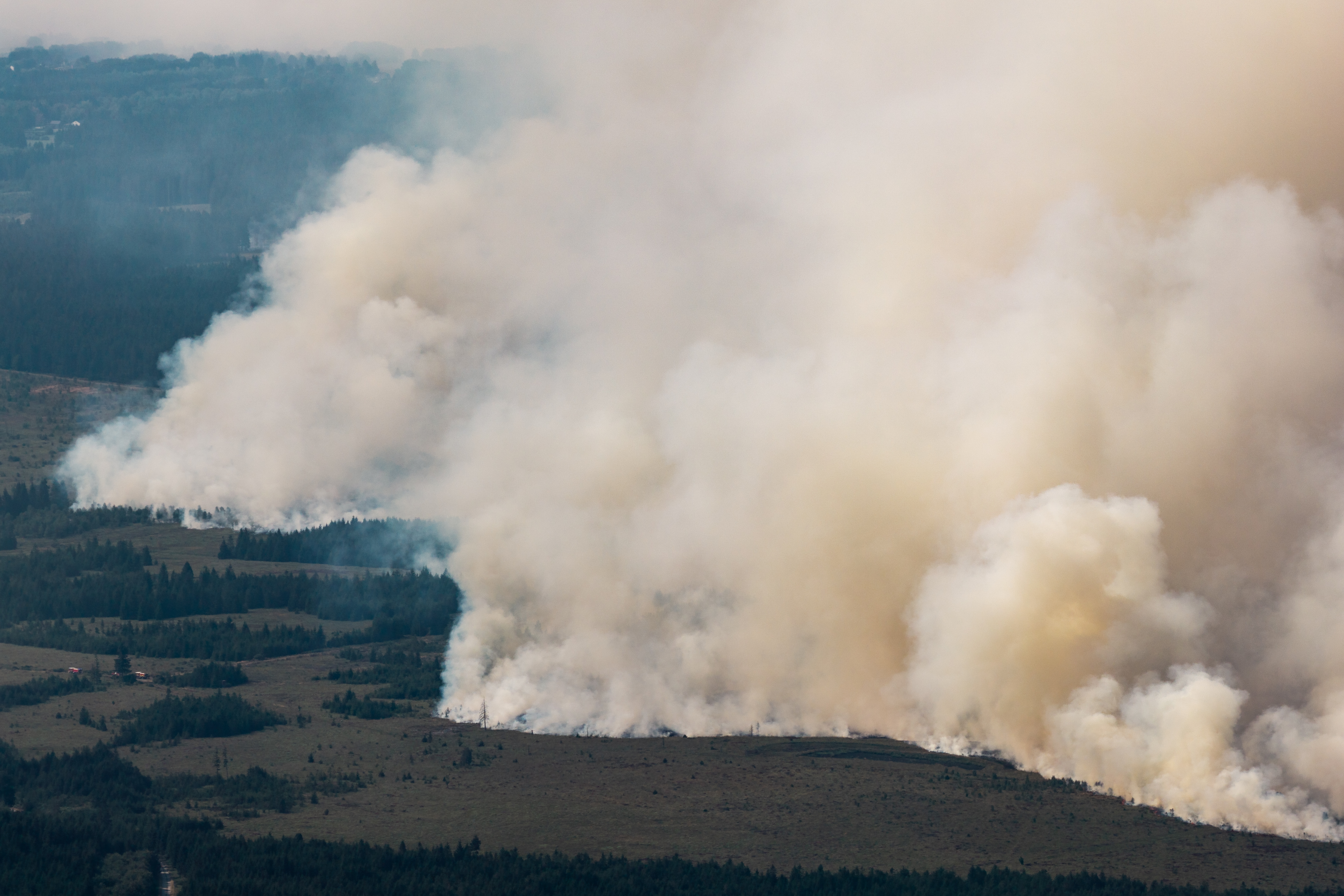
    BAELEN, Belgium — Firefighters battled a massive wildfire that scorched a nature reserve in eastern Belgium and another on a Greek island where two people were killed on Sunday as hot and dry conditions fueled fires across parts of Europe.

    A blaze in eastern Belgium burned about 12 square miles in the High Fens, a large nature reserve, in one of the country’s worst wildfires in recent history.

    About 600 residents in the nearby municipalities of Waimes and Bütgenbach, in Liège province near the German border, were told to evacuate on Saturday as winds shifted and smoke spread through the area. Authorities also advised tourists to leave, while a nearby gymnasium was opened to receive evacuees.

    Liège provincial governor Hervé Jamar said in a statement Sunday that more than 250 emergency personnel have been deployed, including over 100 Belgian and German firefighters, as well as police and military officers and civil protection staff. Firefighting helicopters operated by Belgium’s federal police and the Netherlands also helped.

    Two killed as fires break out on a Greek island

    In Greece, two people were killed in a wildfire Sunday on the island of Salamina, west of Athens, Greek firefighters said.

    The bodies were recovered in the village of Peristeria, where strong winds fueled the rapidly spreading blaze. A second blaze was reported in the Selini area. Firefighting and coast guard vessels were evacuating beachgoers in the area.

    Some 260 firefighters were responding to the blazes, including 15 ground teams, 10 aircraft, and eight helicopters.

    The island had been placed at high wildfire risk on Sunday, with near gale-force winds. “These conditions enabled the fire to quickly reach dangerous proportions and spread rapidly within seven minutes toward nearby residential areas,” said Fire Brigadier General Vasileios Vathrakogiannis.

    Dry conditions fuel record-breaking Belgium wildfire

    The blaze now torching Belgium has far surpassed a 2011 fire that burned nearly 5.4 square miles in the same area and was previously the country’s largest wildfire on record, according to data from the European Forest Fire Information System.

    Nicolas Yernaux, a spokesperson for the Public Service of Wallonia, said conditions were much worse this time. “We’re dealing with something much deeper because we have very dry soil,” he said.

    René Dahmen, chief engineer at the Department of Nature and Forest, said the fire was still spreading Sunday in an area that was difficult for crews to reach.

    “On the eastern flank, there’s a line at least a kilometer long where the fire is slowly advancing toward a municipal forest,” Dahmen said. “That’s the first priority now.”

    Interior Minister Bernard Quintin said on X firefighters managed to keep the fire from spreading towards the west and toward the German town of Monschau.

    In Germany, local authorities warned Sunday that the fire was just under a mile from the border.

    Some farmers from both Belgium and Germany filled up tanker trucks, pumping water from a nearby lake before heading toward the fire area to help firefighters.

    European countries send firefighting aircraft

    Belgium activated the European Union’s civil protection mechanism to receive assistance from other countries, EU Commissioner Hadja Lahbib, who is in charge of crisis management, said on X.

    “The High Fens are burning. Belgium is not facing it alone,” Lahbib said. Sweden sent two water-bombing aircraft, while three helicopters — two from the Netherlands and one from the Czech Republic — were also being deployed.

    The fire follows weeks of unusually hot and dry weather. The High Fens’ mix of heathland and peat bogs has complicated efforts to contain the flames.

    Belgium was hit by another spell of intense heat this week, with temperatures reaching about 98.6 F in parts of the country Friday.

    Wildfires burn in France and the U.K.

    In France, firefighters battling a wildfire in a pine forest in the southwestern Landes region faced no major flare-ups overnight, Landes Prefect Gilles Clavreul said. Authorities estimated the total area burned at 6.6 square miles, while about 650 people had been evacuated from their homes.

    It was the third major wildfire in the vast pine forests of southwestern France this summer, following two others in late July. A massive wildfire in the neighboring Gironde department burned about 162 square miles and forced the evacuation of about 220,000 people as it spread toward the Atlantic coast and the Bordeaux area.

    In the U.K., emergency crews were fighting 14 wildfires in South Wales with the support of military personnel. Authorities warned that although the heat wave is easing, drought conditions mean the risk of wildfires remains high.

    Fires gutted more than a dozen homes in the West Midlands in central England this week as officials recorded the hottest day of the year on Thursday, when temperatures reached 100.6 F.

    In Germany, firefighters made significant progress against a wildfire in the Hürtgen Forest, allowing about 2,000 evacuated residents of Gey to return home Saturday. Officials said Sunday there were no open flames and crews had established a cleared cordon around the affected area to prevent the fire from spreading.

  • Indiana authorities say at least 5 people have died in flooding across the state

    Indiana authorities say at least 5 people have died in flooding across the state

    Indiana authorities say at least five people have died in flooding across the state this week, as first responders worked to rescue more people Saturday from rising waters in neighborhoods along the White River in Indianapolis.

    The state has been hammered over the past week by heavy rains, resulting in rivers and creeks surging.

    More than 90 people and their pets were rescued Saturday as floodwaters rose along the White River in Indianapolis and authorities in central Indiana responded to what many described as historic flooding.

    The damage so far was concentrated along the river corridor from Hamilton County and into the northern Indianapolis suburbs. Farther east in Delaware County, sheriff deputies on Friday found the body of a 58-year-old woman who they believe died after trying to drive through floodwaters.

    Gov. Mike Braun confirmed Saturday that President Donald Trump intends to approve his request for federal resources to help in response to the flooding and the recovery.

    Braun said his heart is with the families who have lost loved ones due to the flooding over the past week. He also warned people to take the flooding seriously and stay away from floodwaters.

    Indianapolis Mayor Joe Hogsett was joined by emergency managers during a briefing Saturday as he urged residents along the river to evacuate. A day earlier, he had declared a local emergency as heavy rains resulted in creeks and streams swelling throughout central Indiana.

    “This is one of those once-in-a-lifetime type floods,” Jacob Spence, director of Marion County Emergency Management, told the Associated Press. “So yeah, this is an unprecedented event and unfortunately we’re setting some new records.”

    The National Weather Service reported that more than 11 inches of rain fell over a two-day period in some areas. The White River crested at more than 24 feet in the communities of Anderson and Noblesville, surpassing records set in 1913.

    Flash-flood warnings and watches were issued across a swath of central Indiana on Saturday, and forecasters with the National Weather Service warned that more showers and thunderstorms would be moving into the area throughout the day. In Warren County, forecasters reported 2 inches of rain falling in six hours.

    Forecasters expected the White River to crest Saturday evening in the Indianapolis area, where National Guard vehicles were among those helping with the rescue efforts. Rita Reith, a spokesperson with the Indianapolis Fire Department, put the number of rescues at 91 people and 45 pets as of early afternoon.

    “The water is still rising, so heed the warnings,” said Todd Wilson, director of the city’s public works department.

    Residents posted videos on social media that showed vehicles stranded in high water, a power pole being toppled by rushing water, and flooded intersections.

    Earlier this week, severe storms wreaked havoc across other parts of the Midwest, causing tornadoes, heavy rains, and flash flooding. Storm damage was reported from the Chicago area all the way to western Pennsylvania.

  • Democrats’ 2028 presidential calendar gives Black and Latino voters and union members an early say

    Democrats’ 2028 presidential calendar gives Black and Latino voters and union members an early say

    AUSTIN, Texas — Democrats seeking the party’s presidential nomination in 2028 will need to prove themselves early on in states where Black and Latino voters and union members are key supporters, under an election-year calendar approved Saturday.

    The primary lineup pushes Iowa from the traditional top spot and makes South Carolina the leadoff state, voting on Jan. 22, 2028, followed by Nevada on Feb. 1. New Hampshire, New Mexico, Michigan, and Virginia round out the early states throughout February, according to the plan endorsed by the Democratic National Committee at its meeting in Texas.

    DNC Chairperson Ken Martin said that to win the general election, “You have to be battle-tested in a way that you already have campaigned in front of and for the support of various communities throughout the country.” That is why the calendar designed by the party matters, he said in an interview.

    Some potential candidates in what is expected to be a large field have visited early-voting states such as South Carolina. Party leaders have said the order gives candidates the best shot at winning back the White House after Republican President Donald Trump’s second term.

    “They have to show that they can go to the South and talk to Black voters and rural voters, as well as out West, talking ranching and mining issues, to a border state, to union members,” said party strategist Karen Finney, who has worked on multiple presidential campaigns. “Whoever survives will be battle-tested.”

    Former presidential candidate Howard Dean, a onetime Vermont governor, recalled his tenure as national party chairperson, when Democrats solidified Nevada and South Carolina as early states behind Iowa and New Hampshire. The latest change is even better, he said.

    “These states look more like the country” as a whole, he said, “whereas Iowa and New Hampshire don’t.”

    Rita Hart, chairperson of the Iowa Democratic Party, said bypassing her state in the early going would sideline important voter voices and give a political edge to Republicans, who are expected to keep Iowa atop their calendar.

    Nonwhite voters claim top billing

    As the first-in-the-South primary, South Carolina was more decisive than Iowa and New Hampshire for nominees Barack Obama in 2008, Hillary Clinton in 2016, and Joe Biden in 2020. All three dominated among South Carolina’s large Black population, which can yield more than half the state’s Democratic primary electorate.

    With Nevada and New Mexico following, candidates will be required to court more Latino voters early in the process.

    Shifting from Iowa and New Hampshire does not mean little-known candidates cannot catch fire, as Pete Buttigieg did in Iowa and New Hampshire in 2020, when he was a 37-year-old former mayor. They just will not be able to do it with an almost entirely white audience.

    “If you can’t go to every part of this country and make your case, you should not be running for president,” Finney said.

    The progressive vs. establishment dynamics may shift

    There is disagreement over how Democrats’ split between progressives and mainstream liberals may or may not surface in the nominating calendar.

    “I think our primary voters up north are probably a little different than primary voters in South Carolina,” said Boyd Brown, a former DNC member from South Carolina. “It’s not the woke ideologies that we just can’t get away from” in other places.

    Nina Smith, a former Buttigieg adviser who now works closely with progressive causes, disagreed. Smith said Black South Carolinians, especially, have gravitated to more moderate candidates — twice rejecting Vermont Sen. Bernie Sanders in favor of Clinton and Biden.

    But, she said, “Southern Black voters are more progressive than they’re given credit for” on policy but also “realists” about what is possible.

    “Living through Jim Crow and other oppressive structures will force you to be take that approach,” she said.

    Smith said that with South Carolina leading off and many Southern states following on Super Tuesday soon after the early lineup concludes, progressives will have to take the time to listen and then tailor their messages.

    “A lot of Black voters don’t necessarily see themselves in the ideas and arguments that progressives put forward,” she said.

    Unions will get a spotlight in the early-voting states

    Nevada has the service industry unions because of Las Vegas; Michigan has the auto industry and associated manufacturing support industries; Virginia is home to more federal workers than any other state.

    “Labor is still so important,” Dean said.

    Beyond seeking the backing of organized labor, the campaigns and the party will look to unions for help in spreading Democrats’ message to voters and getting people to the polls.

    More scheduling efficiency for candidates

    Campaigns struggle to balance many demands such as meeting voters in person, raising money, and dealing with the logistics of travel. As a result, places such as Nevada have gotten short shrift in the past because candidates, most from the eastern part of the country, have concluded the investment of time is not worth it.

    An expanded calendar offers more clustering opportunities.

    A swing to the West could hit two early states — Nevada and New Mexico — and include a fundraising stop in California, full of Democratic donors. A South Carolina trip could mean fundraisers and public appearances in Atlanta, Charlotte, and Raleigh, both in North Carolina. Virginia offers proximity to donors and national TV studios in Washington; the same options are available by adding a New York City stop on the way to New Hampshire.

    Bre Maxwell is a DNC member from South Carolina who said the state’s smaller size and lower media costs are a financial equalizer, allowing not only the best-funded candidates to have an impact.

    “They can campaign from the top to the bottom in a day,” Maxwell said.

    It’s about primaries, with a clear look to November

    Of the six early states, all but South Carolina have been competitive in general elections.

    That means that even before Super Tuesday, the Democratic candidates will have spent significant time and resources in states worth a combined 43 Electoral College votes. That is not insignificant on the way to the 270 needed to win.

    Television ads and news coverage can spill over, as well. Markets targeting parts of South Carolina also reach portions of North Carolina and Georgia.

    After all, Brown said, the point is to put a Democrat in the White House.

    “This is not a social or a debate club. It is a political party,” he said.

  • Magnitude 7.7 earthquake strikes off Indonesia’s coast, killing at least 47 and toppling buildings

    Magnitude 7.7 earthquake strikes off Indonesia’s coast, killing at least 47 and toppling buildings

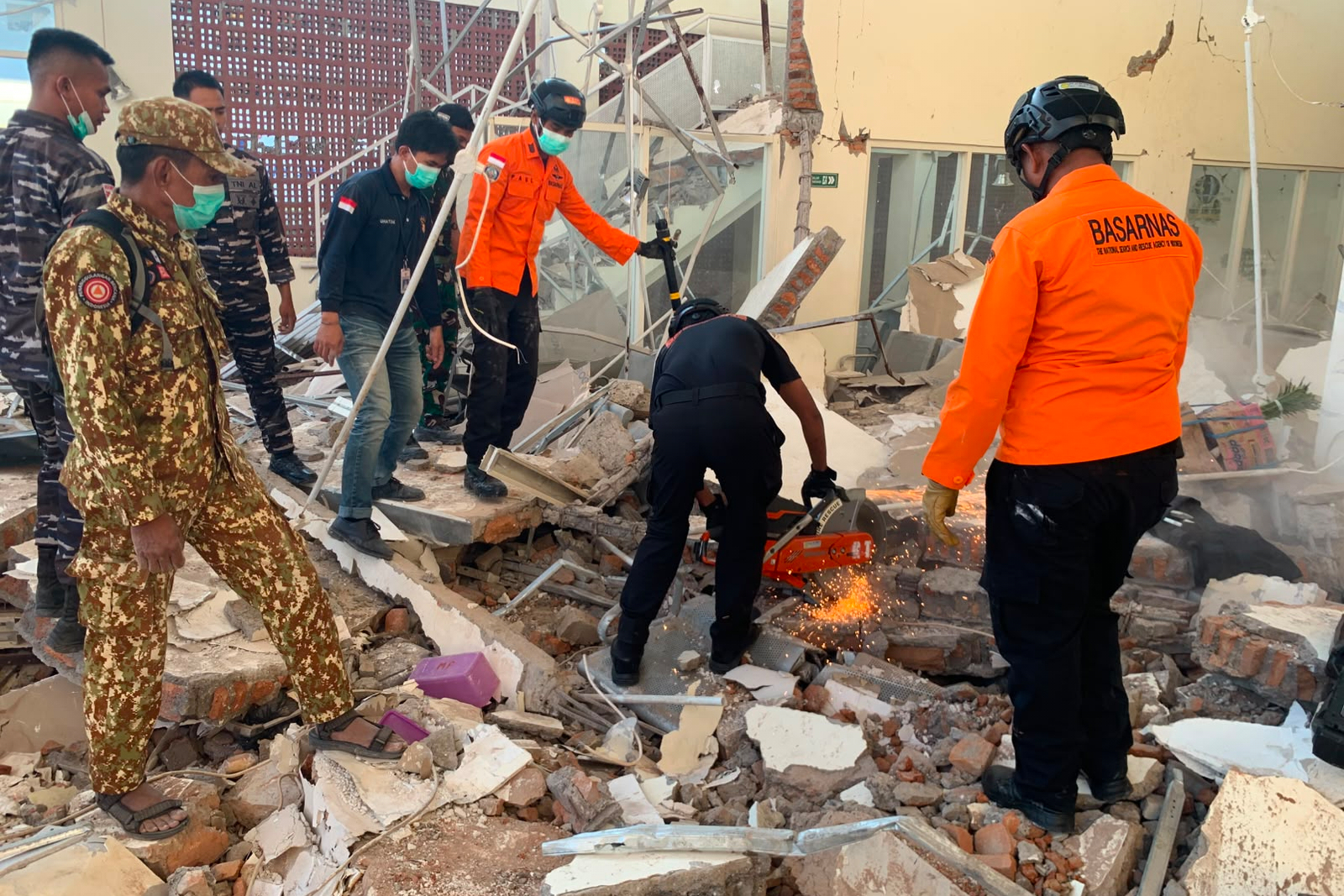
    MAUMERE, Indonesia — A powerful magnitude 7.7 earthquake struck off the coast of Indonesia early Saturday, killing at least 47 people, collapsing buildings, and causing panic in a region prone to deadly quakes. Authorities said dozens more residents were injured and warned that the death toll would almost certainly rise.

    Authorities issued a tsunami warning and urged coastal residents to move to higher ground, but later lifted the warning when Indonesia’s meteorological agency said monitoring showed no significant sea-level changes that posed a threat to coastal communities. Some smaller tsunamis were reported.

    The U.S. Geological Survey said the quake hit eastern Indonesia’s Flores region at a depth of 6 miles at 5:58 a.m. local time. Its epicenter was 42 miles north-northwest of the city of Ende in East Nusa Tenggara province.

    Wuake triggers landslides, generates small tsunamis

    The meteorological agency said the quake was followed by at least 235 aftershocks, with the largest recorded at magnitude 6.2.

    The agency’s sea-level monitoring stations acknowledged some small tsunamis reached coastal villages in Manggarai and East Manggarai regencies. Videos obtained by the Associated Press showed the coastal village of Riung in Ngada regency blanketed in mud and debris after what the agency described as a 5.3-foot tsunami. Fishing boats were stranded ashore, infrastructure damaged, and homes surrounded by sediment left by receding waters.

    Waves measuring 3.1 feet were observed in Maurole, Ende Regency.

    Tsunami waves exceeding 1.6 feet were detected in Bulukumba, South Sulawesi, and Sape in Bima Regency.

    A strong, land-based earthquake of 6.9 magnitude hit North Sumatra province in western Indonesia on Saturday afternoon, according to the USGS. It struck 107 miles beneath the earth’s surface, meaning it was too deep to cause significant damage or casualties, Indonesian authorities said.

    The quake has caused buildings to collapse

    East Nusa Tenggara Police Chief Rudi Darmoko said power outages hampered the spread of information about the impact of the earthquake in cities and villages, complicating search and rescue efforts.

    “We are continuing to collect reports of damage and casualties, but there are communication disruptions,” Darmoko said. He said quake-triggered landslides in Ende regency blocked the Trans-Flores highway, a roughly 435-mile paved mountain road spanning Flores Island, from Labuan Bajo to Larantuka.

    The head of the National Disaster Management Agency, Suharyanto, said rescuers have recovered at least 47 bodies, mostly in Sikka, Manggarai, and East Manggarai, and at least 50 people were taken to hospitals.

    Suharyanto, who like many Indonesians uses a single name, said the quake flattened at least 157 houses and damaged nearly 200 more, forcing about 2,000 villagers to abandon their homes and move to temporary shelters. The powerful temblor also destroyed more than 100 public facilities, including schools, medical centers, and churches.

    The death toll could rise because landslides triggered by the earthquake buried or cut off many remote villages across six regencies on Flores Island, said Fathur Rahman, who heads the Search and Rescue Office in Maumere, the capital of Sikka.

    Some remote villages are completely buried, he said, and damaged infrastructure and a lack of heavy equipment were hindering rescue efforts.

    Authorities deployed three helicopters and a rescue vessel to support logistics and emergency response operations, including potential evacuations. East Nusa Tenggara consists of numerous islands and presents significant transportation and access challenges.

    Residents ran for their lives when quake struck

    The quake was felt across much of Flores island with initial reports indicating heavy damage.

    Yohanna Embu, who lives in Sikka, said people ran in a panic to higher ground.

    “Many buildings here were damaged … I saw that the waiting room at the port terminal in Maumere had collapsed,” she said.

    Students at St. Peter Major Seminary in Sikka who were attending morning Mass fled when the roof of an assembly hall collapsed, said the Rev. Guidelbertus Tanga, rector of the seminary, known locally as Ritapiret Seminary, on the predominantly Catholic island of Flores.

    “Our students and nuns ran out in panic beneath a collapsing roof,” Tanga said. “At least one priest suffered a broken leg after jumping from the second floor of a building during the quake.”

    The quake also struck Labuan Bajo, a gateway town to eastern Indonesia’s Komodo National Park, one of the country’s best-known attractions. Damage was reported in Bima, a city in neighboring West Nusa Tenggara province, and in parts of southern Sulawesi island.

    Indonesian authorities initially issued a tsunami warning for parts of East Nusa Tenggara, West Nusa Tenggara, South Sulawesi, and Southeast Sulawesi provinces, and urged residents to stay away from beaches and riverbanks. The agency located the shallow undersea quake near Flores island.

    Indonesia, a vast archipelago of more than 17,000 islands, is prone to earthquakes and volcanic activity because of its location on the Ring of Fire, an arc of volcanoes and fault lines in the Pacific Basin.

    Most notably, a powerful earthquake caused a tsunami in 1992 that killed about 2,500 people on Flores, part of a group of islands in the eastern half of Indonesia, while in 2018, a magnitude 7.5 quake spawned a large localized tsunami that wiped out coastal areas, killing more than 4,400 people.

    In December 2004, a massive magnitude 9.1 earthquake off Sumatra in western Indonesia triggered a tsunami that killed 230,000 people in a dozen countries.

  • With U.S.-Iran talks stalled, diplomatic efforts expand to unlikely European players

    With U.S.-Iran talks stalled, diplomatic efforts expand to unlikely European players

    WASHINGTON — Faced with an increasingly bellicose Iran as talks to end the war have stalled, the Trump administration appears to be reaching out to a broader swath of countries that might be able to help pressure Tehran or ease its hardline position where traditional mediators have not succeeded so far.

    While discussions between Iran and Oman, as well as between Iran and Pakistan, Turkey, and Qatar, persist at an uneven and unpredictable pace, the U.S. administration quietly has expanded its outreach to include perhaps unlikely interlocutors in Europe.

    Just this week, Secretary of State Marco Rubio met in person in Washington with the foreign minister of Austria on Tuesday and held a call with the foreign minister of Greece on Wednesday.

    Those interactions were not notable beyond the normal course of relations between the U.S. and two close European allies. The official State Department readouts of the discussions were bland and vague and did not mention Iran by name as a topic of conversation.

    But it then emerged that both foreign ministers — almost immediately after their talks with Rubio — spoke Thursday with Iranian Foreign Minister Abbas Araghchi.

    The apparent new tack to break the negotiation logjam comes as the U.S. and Iran are both pushing for control of the Strait of Hormuz, the crucial oil shipping corridor. President Donald Trump faces little wiggle room in his next steps as the economic fallout from the war and dwindling stockpiles of key weapons pose political problems for Republicans ahead of November’s midterm congressional elections.

    A desperate push is on to break the diplomatic logjam

    The entry by Austria and Greece is likely less of a formal mediation attempt, analysts say, and more reflective of a desperate push to halt the conflict because of the impact it has on an increasing number of countries, beyond those in the Middle East.

    “Everyone is just urging both sides to stop this reckless game of chicken,” said Ali Vaez, Iran project director at the International Crisis Group.

    It also shows how much Iran’s effective closure of the Strait of Hormuz has forced countries, which otherwise were neutral bystanders to the larger conflict, to exercise any diplomatic sway they may have on their Iranian and American counterparts to kick-start a lasting resolution.

    Mona Yacoubian, director of the Middle East Program at the Center for Strategic and International Studies, warned that any efforts by Greece, Austria, or any other nonmediating country could prove to be futile.

    “While the calls to both sides may entail encouraging both Iran and the U.S. back to the negotiating table, such efforts fall short of mediation, which is a very complex endeavor and requires trust to be built by the mediator with both sides,” Yacoubian said.

    She added that it’s not something that any country can “just jump into.”

    Rubio discussed Iran with his Austrian and Greek counterparts

    The State Department said Friday that it could not comment on the timing of calls by other countries’ foreign ministers and maintained that Rubio had made no requests of either to get in touch with Iran or pass messages to Araghchi.

    One European diplomat, who was briefed on the matter and spoke on condition of anonymity to detail sensitive diplomatic conversations, said the timing of the calls was not an accident.

    The State Department did allow, however, that Iran had been a topic of conversation in Rubio’s discussions, which occurred as Trump is facing serious political headwinds over a war for which he has offered shifting objectives.

    No longer purely about making Iran incapable of producing a nuclear weapon, the immediate goal has become reopening the Strait of Hormuz, where a fifth of the world’s oil usually passes through and which was open before the U.S. and Israel launched attacks on Iran on Feb. 28.

    “That’s goal number one: Keep oil and gas cheap for Americans all over our country,” Vice President JD Vance said in an interview Thursday on Fox News Channel. But he did not say anything about the strait being open and toll-free for transiting ships, as he had in the past.

    The second goal, Vance said, is to ensure that Iran will never get a nuclear weapon.

    The two European countries have key connections to war’s fallout

    Austria and Greece may not be obvious choices to assist on the Iran portfolio, but Vienna is home to the International Atomic Energy Agency, which will play a key role in any resolution to the Iran’s nuclear program, and hosted the final negotiations that resulted in the 2015 Iran nuclear deal. Greece is a major maritime nation in the Mediterranean and has significant shipping interests in the Strait of Hormuz and the Red Sea.

    In statements from the Austrian, Greek, and Iranian foreign ministries, it was clear that Iran had been a top topic in all of the conversations this week.

    The Greek foreign ministry said Foreign Minister George Gerapetritis had been briefed by Araghchi on “regional developments, and in particular on the ongoing talks regarding the Strait of Hormuz.” It said Gerapetritis “underlined the importance of freedom of navigation and maritime security.”

    The Austrian foreign ministry offered Austria’s services as a venue for further potential talks with Iran and said Foreign Minister Beate Meinl-Reisinger had stressed to Araghchi “the urgency of restoring stability in the region through serious diplomatic efforts.”

    “There can be no military solution,” it said. “A diplomatic solution remains possible. Our priority is to safeguard freedom of navigation through the Strait of Hormuz.”

    Iran’s foreign ministry, expectedly, took a different tack in explaining the calls.

    It said Friday that in Araghchi’s calls with his European counterparts they discussed “mechanisms for the future management of the Strait of Hormuz,” which he said had been disrupted by the “unlawful aggression by the United States and the Israeli regime against Iran.”

    In both calls, he accused the U.S. of violating the interim deal signed by both sides in June to end the immediate hostilities and begin broader talks to end the war.

  • A surprise credit after an overseas purchase: The tariff refunds now flowing through shippers

    A surprise credit after an overseas purchase: The tariff refunds now flowing through shippers

    NEW YORK — If you bought something from an overseas vendor last year, it might be time to check your bank account.

    Shippers including FedEx and UPS that acted as customs brokers for imported packages and received tariff refunds from the U.S. government have started to pass on those refunds to the customers that originally paid the tariffs.

    The refunds to consumers are the last step in a monthslong process that kicked off in February when the Supreme Court struck down sweeping tariffs implemented by President Donald Trump in March 2025 under the 1977 International Emergency Economic Powers Act on goods from almost every country. The court ordered the government to return the tariffs it collected.

    So far, about $100 billion in tariffs have been refunded to companies who paid them under a system set up by U.S. Customs and Border Protection.

    That doesn’t mean Americans will get anywhere close to what they paid in tariffs, since most were paid indirectly. In 2025, the Trump tariffs amounted to an average tax increase of $1,000 per U.S. household, according to the Tax Foundation, a Washington, D.C., group that studies taxes.

    But some consumers are getting some of what they paid directly back from shippers including UPS, DHL and FedEx. The refunds are being rolled out in phases based on what date they were paid. Shippers have said they’ll return the refunds on a rolling basis as they receive them.

    Tariff refunds from shippers will be directly refunded to credit cards or bank accounts

    Most big overseas retailers paid the tariffs themselves and passed them along to retailers with a line item in their invoice that was part of the total bill, or indirectly by raising prices. But some smaller sellers left the tariff to be paid when it reached the U.S. In those cases, shippers paid the bill and charged the recipient of the package.

    FedEx said it has begun the process of issuing $800 million in tariff refunds it received from the government back to the customers that paid them. Customers don’t need to apply to receive their refund, but they can enter tracking numbers for purchased items into a portal on the FedEx website to see whether or not they are due a refund.

    UPS said in April it had paid $5 billion in tariffs on behalf of clients and would begin the process of applying to the government for refunds. In the first phase, it applied for $500 million in refunds and said customers should get refunds one to three months after it receives reimbursement from the Treasury.

    DHL similarly said that it has filed claims for almost all eligible shipments where it served as the importer of record and is returning the refunds it has received.

    “The volume and pace of refunds continue to depend on CBP’s processing of claims,” DHL said in a statement.

    Major retailers say they could give back some refunds but mostly will use them to lower prices

    Unlike shippers who collected tariffs directly from customers, most big retailers passed on tariffs in indirect ways, changing their product lineups or partly absorbing higher costs, making a consumer refund unlikely.

    Amazon executives said last week the company received $600 million in tariff refunds in the second quarter.

    In a call with investors, Amazon CFO Brian Olsavsky said the company isn’t the importer of record on most of the goods it sells and that it has absorbed some tariff costs. But he said the company has “identified a limited set of circumstances where we can trace that we pass specific import charges on to customers.” In those circumstances, he added, “we will proactively contact affected customers and automatically issue refunds to them.”

    Otherwise, he said, Amazon will use tariff refunds to lower prices for customers.

    That echoes what other large retailers have said. In May, Cori Barrie, outgoing CEO of Best Buy, the nation’s largest consumer electronics chain, said the retailer is an importer of record of only about 2% to 3% of what it sells and that the company would use any refund it gets to “deliver value back to our customers.”

    And Costco CEO Ron Vachris said the company planned to return “in some form” the tariffs that were passed on to consumers.

    “How much we return and when depends on a variety of factors, including how much refund money we receive and when it arrives as well as developments in the lawsuit filed against the company regarding the return process,” he said in a quarterly earnings call in May.

    Dozens of class-action lawsuits have been filed

    Some shoppers are suing to get the tariffs they paid in the form of higher prices back from companies. More than 80 class-action lawsuits have been filed by customers across the country against retailers including Costco, Nike, Amazon, Walmart and others.

    The lawsuits will face difficulty because plaintiffs will have to prove they paid for price increases that were specifically tied to the tariffs, according to Lori Leskin, partner and co-chair of law firm Arnold & Porter’s Consumer Products Practice Group. None of the lawsuits have yet been certified as class action, which would mean they apply to all customers.

    “It’s going to be very hard for anyone to establish that the price increase they paid was due to tariffs and not some other market force,” she said. “Most of them are just talking about price increases, and to be able to trace a price increase due to a single factor is going to be really difficult given the multifactorial approach that most companies take.”

  • Russian drones kill a woman and 9-year-old son at home as Ukrainian civilian casualties surge

    Russian drones kill a woman and 9-year-old son at home as Ukrainian civilian casualties surge

    KYIV, Ukraine — Russian jet-powered drones struck a home in northern Ukraine on Friday, killing a 29-year-old woman and her 9-year-old son, officials said.

    The strike came a day after the United Nations said July was the deadliest month for Ukrainian civilians since the weeks following Moscow’s all-out invasion of its neighbor more than four years ago.

    At least 437 civilians were killed and 2,610 wounded last month, the U.N. monitoring mission in Kyiv said, as Russia escalated its bombing of Ukrainian towns and cities. That was 70% higher than in July last year and 30% up on June of this year.

    Overall, since Russia’s invasion on Feb. 24, 2022, U.N. human rights monitors say the war has killed at least 16,874 civilians, including 820 children, and wounded 51,273, including 3,126 children.

    “Every month this year the number of killed and injured civilians has increased. That trend accelerated sharply in July,” said Danielle Bell, head of the U.N. human rights monitoring mission in Kyiv. “The number of civilian casualties in July was the highest we documented in a single month since March 2022.”

    The Russian strike in northern Ukraine’s Sumy region early Friday also wounded four other people, including the dead boy’s father and grandmother, who were hospitalized with severe burns, the regional military administration chief Oleh Hryhorov said.

    Russia’s top diplomat says Moscow will intensify attacks

    Russian Foreign Minister Sergey Lavrov warned that Moscow is planning to escalate its strikes on Ukraine, even as U.S. diplomatic efforts to end the war are set to continue.

    “We will use much harsher methods to destroy everything that feeds Kyiv’s war machine from the West,” Lavrov said in an interview with Russian state TV broadcast Friday, referring to military aid Kyiv receives from abroad.

    Officials in Washington said last month that Steve Witkoff and Jared Kushner, President Donald Trump’s main envoys, would travel to Kyiv sometime in the future. No date for the trip is publicly known, as the U.S. focuses on the Iran war.

    President Volodymyr Zelensky has accepted an unconditional ceasefire demanded by Trump, but Putin has refused, demanding a comprehensive peace agreement first, and Lavrov said that position hasn’t changed.

    “We will only stop when there’s a long-term, reliable, and sustainable settlement,” he said.

    Russian glide bombs hit residential areas near front line

    In Ukraine’s eastern Donetsk region, a Russian glide bomb demolished six floors of a 10-story apartment block, killing one person and wounding 16 others, Zelensky said.

    Russia is launching around 220 glide bombs every day against settlements near the front line in eastern and southern Ukraine, Zelensky said in a social media post Friday.

    Russian forces crush settlements with the brute force of 3,000-pound glide bombs, artillery, missiles, and drones, then send in infantry units to attack the exposed defenders. The tactic has rendered many towns and villages uninhabitable.

    In addition, Russian forces struck two tugboats in the Black Sea that were escorting cargo ships carrying Western weapons for Ukraine, the Defense Ministry in Moscow said.

    It also said that its drones overnight hit the railway station in Ukraine’s southern port of Izmail that it said is used for transporting military cargo and fuel for the Ukrainian armed forces.

    In all, Russia attacked 12 Ukrainian regions overnight, wounding dozens of people, Zelensky said.

    Ukrainian drones strike a major port north of Moscow

    Ukrainian forces, meanwhile, extended their long-range strike campaign against Russian infrastructure, hitting the port of Ust-Luga in the Leningrad region north of Moscow and starting a brief fire, its governor Alexander Drozdenko said.

    Ust-Luga is one of Russia’s largest oil and gas export terminals, located more than 500 miles from Ukraine.

    It has been a frequent target of Ukrainian drone attacks this summer, as Kyiv seeks to undermine Russian oil exports that provide Moscow with vital revenue for its war effort.

    Ukraine also launched another attack on the premises of Wildberries, Russia’s biggest online retailer, which Kyiv says helps supply the Russian military.

    The attack damaged a wall of a Wildberries warehouse in the Tver region north of Moscow, the region’s acting governor, Vitaly Korolyov, said.

    Wildberries reported “insignificant damage” and said the goods stored at the site were not damaged.

    The Russian Defense Ministry said Friday its air defenses overnight intercepted 553 Ukrainian drones over 18 Russian regions, as well as occupied Crimea and the waters of the Azov and the Black seas.

    NATO warplanes shoot down a drone over Latvia

    NATO fighter jets shot down a drone that entered Latvian airspace in the early hours of Friday, the Latvian army and an official for the military alliance said.

    Latvian authorities did not say what the origin of the drone was, but said it had entered Latvia “as a result of Russian electromagnetic warfare.”

    Several drones have previously crossed the border into Latvia. Most of them are thought to be Ukrainian drones that strayed off course due to Russian electronic jamming.

    Two Italian Eurofighter jets were scrambled to tackle the drone and one of them shot it down, NATO spokesperson Allison Hart said.

    Two Turkish fighter jets were also deployed, she said.

    Residents in five municipalities in eastern Latvia were warned about the threat to airspace and told to take shelter.

    Another drone crashed in woodland in Romania 3.1 miles from the border with Ukraine, the NATO member’s Defense Ministry said Friday.

    Military radars did not detect the drone, which landed in eastern Tulcea County, because it was flying at a “very low” altitude, it said without providing details about the drone’s origin.

    The ministry said later that another drone was found Friday in the village of Plauru, also in Tulcea County, which is situated across the Danube River from Ukraine’s port of Izmail. A specialist team was deployed to the area, which was secured, it added.

  • Trump says record-setting Navy deployment to support Iran operations ‘not nearly long enough’

    Trump says record-setting Navy deployment to support Iran operations ‘not nearly long enough’

    WASHINGTON — President Donald Trump on Friday downplayed the toll on American sailors enduring a record-setting deployment of nearly nine months on the USS Abraham Lincoln as concerns escalated about mental health and supply issues aboard the aircraft carrier supporting U.S. operations against Iran.

    In a brief exchange with reporters before flying to New York for an event to highlight falling violent crime rates across the U.S., Trump refuted that family members have raised concerns about the deployment’s length and even said that the more than 260-day deployment is “not nearly long enough.”

    “That ship is moving right now, or very shortly, and it’s being replaced with another very similar ship,” Trump said when asked about the lengthy deployment.

    The Lincoln has been supporting the U.S. war against Iran, and several Democratic lawmakers, including Sens. Richard Blumenthal of Connecticut and Ruben Gallego of Arizona, are pressing for accountability from the Pentagon over conditions aboard the carrier, which Defense Secretary Pete Hegseth on Thursday said were “completely misrepresented.”

    Rep. Jason Crow (D., Colo.), who served three tours in Iraq and Afghanistan with the 82nd Airborne Division and 75th Ranger Regiment before being elected, took to social media to criticize Trump’s comments, saying on X that “President Trump does not care about our servicemembers or their families.”

    Extended deployments of carriers during the Iran conflict have raised concerns about the impact on service members who are away from home for long periods as well as the increasing strain on the ship and its equipment.

    While hostilities between the U.S. and Iran have calmed in recent weeks, the Navy has reimposed a blockade on Iranian ports in the crucial Strait of Hormuz, and the Trump administration has offered no clarity on how it intends to wind down the war. Hegseth said that the U.S. military can maintain the blockage of Iranian ports “indefinitely.”

    Another aircraft carrier, the USS George Washington, left port in Da Nang, Vietnam, last week, and is expected to replace the USS Lincoln, one of two aircraft carriers currently deployed in the Middle East.

    After reports emerged that sailors on the Lincoln are struggling with mental health concerns, the Navy said it has “not observed an increase in suicidal ideations or attempts aboard the ship,” though officials have declined to provide data, citing operational security and patient privacy concerns.

    A Navy official said that a sailor aboard the Lincoln went overboard in early August but that the person was quickly recovered, treated by the ship’s medical department, and transferred off ship for follow-on care. The official would not say whether it was being considered a suicide attempt.

    U.S. Central Command, which oversees military operations in the Middle East, has also pushed back on reports about poor conditions.

  • Luigi Mangione pleads guilty to federal stalking charges in the killing of UnitedHealthcare CEO

    Luigi Mangione pleads guilty to federal stalking charges in the killing of UnitedHealthcare CEO

    NEW YORK — Luigi Mangione pleaded guilty on Friday to federal stalking charges in the killing of UnitedHealthcare CEO Brian Thompson, admitting matter-of-factly that he trailed the executive to an investor conference in 2024 and gunned him down on a New York City street.

    Mangione, 28, said he even used a ruse to glean information about the event, contacting the health insurance company ahead of time under the guise of being an investor at a multibillion-dollar firm.

    “On the morning of Dec. 4, 2024, I shot Mr. Thompson in Manhattan, and he died,” Mangione told the court as Thompson’s wife, Paulette, took several deep breaths and repeatedly wiped tears from her eyes. A supporter put an arm around the wife and held her tight.

    Mangione is set for sentencing Dec. 18. When U.S. District Judge Margaret M. Garnett asked whether he understood that he could spend the rest of his life in prison, Mangione answered neutrally: “Yes.”

    Mangione entered the plea at a hastily scheduled hearing in Manhattan federal court, resolving one of two cases against him in connection with Thompson’s death. Mangione’s lawyers could now seek to have his separate New York state murder case thrown out on double jeopardy grounds.

    Surveillance video of the ambush showed a masked gunman shooting Thompson, 50, from behind. Police say “delay,” “deny,” and “depose” were written on the ammunition, mimicking a phrase used to describe how insurers avoid paying claims. That detail — and revelations that Mangione’s private writings lambasted health insurers as greedy, according to authorities — made the case a fulcrum for debate about the industry and made Mangione a cause célèbre for some of its critics.

    Mangione told the court Friday that he pursued Thompson “after years of enduring severe pain from a broken back and navigating the obstacles of the health insurance system.”

    Mangione never was a UnitedHealthcare customer, according to police and the company. A University of Pennsylvania graduate from a wealthy Maryland family, he was arrested five days after the shooting, when he was spotted at a McDonald’s in Altoona, Pa. It’s about 230 miles west of Manhattan.

    Thompson led one of the United States’ largest health insurers, but he wasn’t well known outside the industry. Trained as an accountant, he had worked at parent company UnitedHealth Group Inc. for 20 years and became CEO of its insurance arm, UnitedHealthcare, in 2021. He and his wife had two sons, who were in high school when their father was killed.

    Both the federal and state cases could lead to a life prison sentence for Mangione. A federal judge earlier this year tossed out additional charges that could have exposed him to a potential death penalty.

    Mangione had complained about the prospect of two trials, telling a judge in February: “It’s the same trial twice. One plus one is two. Double jeopardy by any commonsense definition.”

    Under New York law, a state prosecution could potentially be barred if the federal case is resolved first.

    The state’s double jeopardy protections kick in if a jury has been sworn in a prior prosecution, such as a federal case, or if that prosecution ends in a guilty plea. Mangione’s cases involve different charges arising from the same course of conduct.

    In a letter last month, state prosecutors objected to the possibility of a guilty plea in the federal case wiping out the state case.

    Garnett has delivered some setbacks to the defense, including ruling in January that prosecutors could use items collected from Mangione’s backpack during his arrest as evidence against him.

    They included a 3D-printed pistol that investigators said matched the one used to kill Thompson and a notebook in which authorities say Mangione described his intent to kill an insurance executive.

    In June, Mangione’s lawyers said they would pursue a psychiatric defense in the state case but reversed course a day later. The defense, involving claims that he was suffering from extreme emotional disturbance at the time of the killing, isn’t allowed in federal court.