Category: Transportation

  • Speed cameras on Frankford Avenue will begin issuing fines

    Speed cameras on Frankford Avenue will begin issuing fines

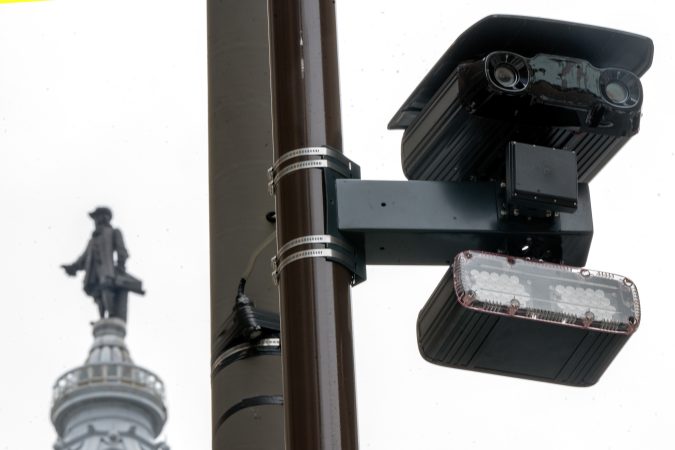
    Starting Friday, drivers traveling 36 mph or faster on Frankford Avenue in Northeast Philadelphia will face a minimum $100 fine.

    Ten new speed-enforcement cameras were activated on April 13, initiating a 60-day warning period which brought mailed warnings to violators of the road’s 25 mph speed limit.

    “Speed cameras are a tremendous tool that helps save lives,” said Gabe Roberts, acting executive director of the Philadelphia Parking Authority, in an emailed statement.

    There are three tiers of penalties for speeding on the 4.5-mile stretch of U.S. Route 13 that are now going into effect.

    Fines are $100 for traveling 11-19 mph over the speed limit; $125 for going 20-29 mph over; and $150 for speeding by 30 or more mph.

    Tickets are mailed to the registered owner of the vehicle speeding. No points — PennDOT’s method of recording driving violations — are added to the motorist’s driver’s license.

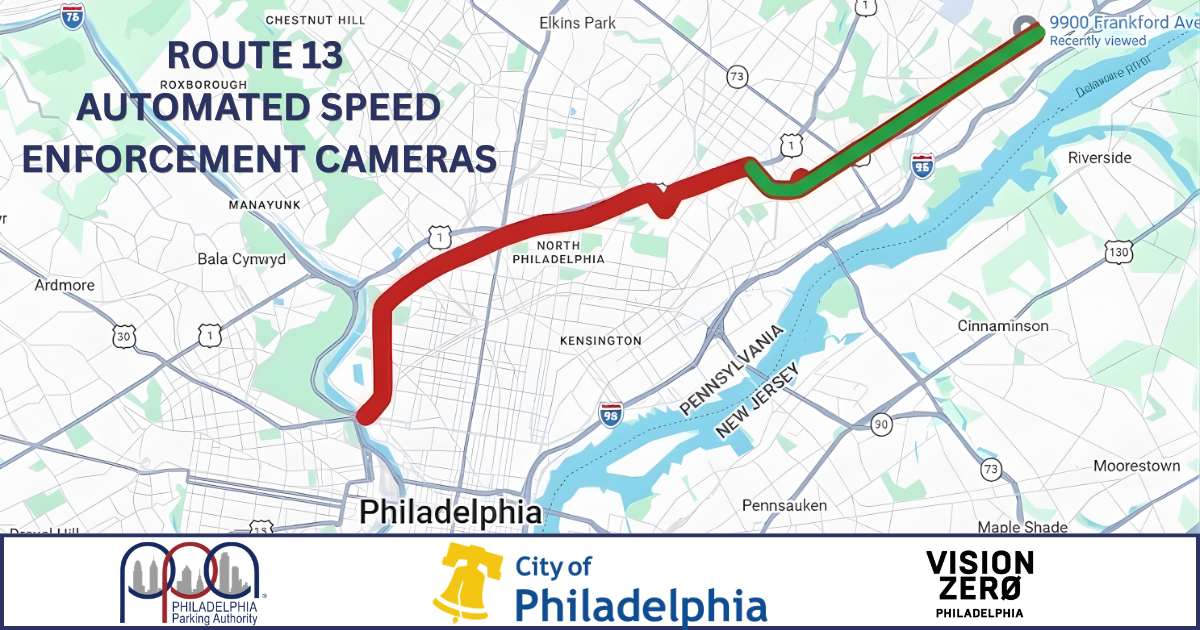
    The cameras are placed at 9900 Frankford Ave.; 8300 Frankford Ave.; 7000 Frankford Ave.; 6400 Frankford Ave.; 3100 Levick St.; and 2100 Robbins St.

    Automated speed enforcement cameras went live Monday April 13 on the portion of U.S. Route 13 shown in green. Philadelphia Parking Authority will install cameras on the rest of the corridor in July 2026.City of Philadelphia

    Speed-enforcement cameras were first piloted in Philadelphia on Roosevelt Boulevard in June 2020, with 32 automated cameras placed along the highway previously considered the most dangerous road in the city.

    According to the Philadelphia Parking Authority, speed violations have since decreased on the boulevard by more than 90%, and there has been a 50% reduction in pedestrian-involved crashes.

    There are now a total of 80 speed cameras operating throughout the city, with additional cameras installed on Broad Street and nearby five school zone locations.

  • City officials plan to revamp Market Street from Sixth Street to City Hall

    City officials plan to revamp Market Street from Sixth Street to City Hall

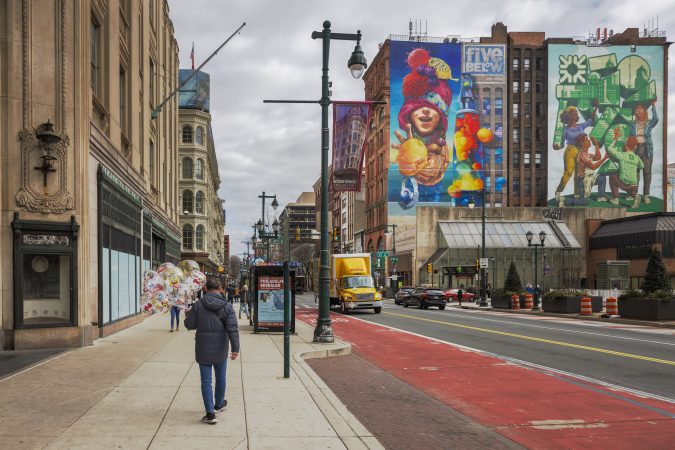
    Philadelphia officials are planning a major renovation of Market Street’s sidewalks, landscaping, and streetscapes, from Sixth Street toward City Hall.

    The announcement of a $2.5 million federal grant to begin the planning and design comes on the heels of the recently completed renovation of the thoroughfare in Old City from Second to Sixth streets. That effort took 18 months of construction and $16 million.

    The stretch to City Hall poses more logistical problems and could prove a heavier lift because of its dense use.

    The planned revamp is part of Mayor Cherelle L. Parker’s pledge to revitalize the Market East corridor.

    Most recently, the row of storefronts on the 900 block of Market owned by Comcast and Harris Blitzer Sports & Entertainment have begun hosting small pop-up businesses for the summer, as the city celebrates the 250th anniversary of the Declaration of Independence.

    The Department of Planning and Development is overseeing the revitalization, and the public-private Market East Corridor Advisory Group is helping to craft a vision.

    The new $2.5 million grant from the U.S. Department of Transportation, which the city will match, is limited to planning the streetscape along Market Street between 6th and Juniper Streets.

    Construction is years away, said Kelley Yemen, Philadelphia’s director of the Office of Multimodal Planning. Her office is gathering information to evaluate everything from traffic patterns to potential road diets and bike lanes.

    “Everything’s on the table at this point,” Yemen said.

    Safety remains a primary driver, she said, given that the section of Market Street is situated on the city’s “high-injury network.”

    However, she said redesigning the corridor poses unique logistical challenges compared with the recent improvements in Old City.

    Market East serves as a major commercial hub with heavy transit use, requiring planners to balance the needs of transit riders, pedestrians, and cyclists.

    Additionally, the shallow depth of the underground subway system may constrain surface-level landscaping.

    Yemen explained that any trees or plantings must account for the height of the subway ceiling, potentially leading to elevated planters rather than vegetation that’s rooted in the ground.

    The city is working with the consulting firm WSP and a team of subconsultants to develop design options.

    Yemen anticipates the design will take two to three years, as the city also has to navigate federal environmental reviews.

    Though the planning phase is now paid for, the city does not yet have money to fund construction and will likely look to federal or state grants for help in the future.

    Public involvement will be a key next step, she said.

    The planning commission is expected to launch a broader public engagement push this July to gather community input on the larger Market East revival.

  • SEPTA approved contracts with the transit police union and other workers

    SEPTA approved contracts with the transit police union and other workers

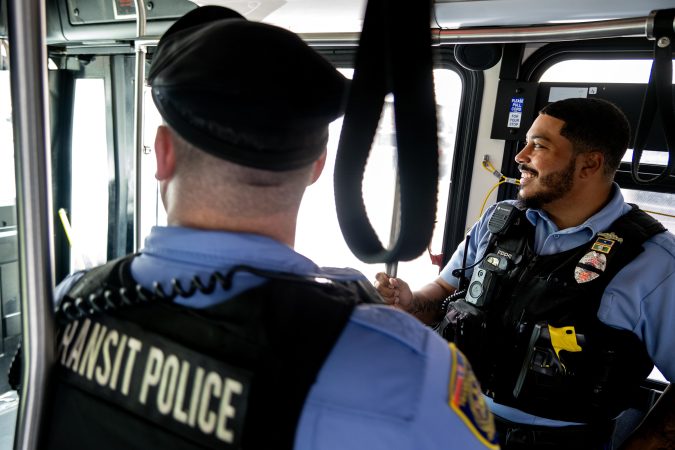
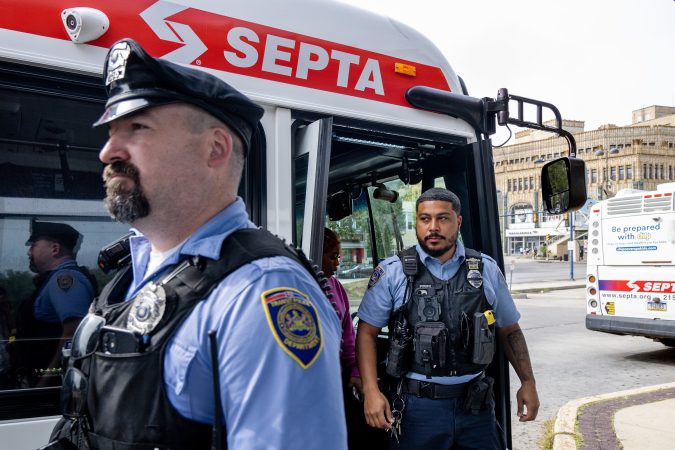
    The SEPTA board on Thursday approved new labor contracts with the Fraternal Order of Transit Police Lodge 109 and three unions representing workers in the Regional Rail Division.

    Transit police officers had threatened earlier this month to walk off the job while Philadelphia was hosting World Cup soccer matches, Major League Baseball’s All-Star week and events celebrating the 250th birthday of the U.S.

    Lodge 109 and SEPTA agreed on a three-year deal that gives the officers a 12% raise over the life of the contract, as well as a $2,500 signing bonus, longevity bonuses, and an increase in differential pay for evening and overnight shifts.

    Union members ratified the contract last week.

    Omari Bervine, president of Lodge 109, said the agreement was “fair to the hardworking men and women of the transit police” and thanked SEPTA General Manager Scott A. Sauer for helping restart negotiations.

    The transit police union represents 203 patrol officers who protect the regional agency’s transit and commuter rail networks, trolleys, buses and property, including stations and transportation hubs.

    “Historic reductions in crime over the last two years have come amid an unprecedented effort to bolster our transit police,” Sauer said at the board meeting. “Staffing is at its highest level in more than a decade.”

    Fifteen new officers joined the force this month after graduating from the police academy, and 18 cadets are scheduled to start their studies next month, SEPTA says.

    Officers had been working without a contract since March 31.

    The new agreement is retroactive to April 1 and runs through March 31, 2029.

    Lodge 109 members will receive a 5% increase in their hourly rates Sunday, with 3½% raises in June of each of the following two years. Longevity bonuses will range from $2,901 for officers with three years of experience, up to $9,552 for those who have 25 years or more of service.

    SEPTA’s board also approved new two-year contracts with the Brotherhood of Railway Carmen, International Association of Machinists and Aerospace Workers that together represent about 145 rail vehicle mechanics, welders, millwrights and maintenance custodians working on Regional Rail.

    The board also ratified a new contract with the Transportation Communications Union, which represents 76 Regional Rail clerical staff.

    Each deal with the three Regional Rail unions is for two years and gives workers raises totaling 7%, the same as the contract reached last year with the Transport Workers Union Local 234, SEPTA’s largest.

  • Authorities ID 3 people killed in Maryland crash of plane from Ocean City, N.J.

    Authorities ID 3 people killed in Maryland crash of plane from Ocean City, N.J.

    Maryland State Police on Monday released the names of three young men killed when a plane that took off from Ocean City, N.J. crashed late Saturday night east of Washington D.C.

    Around 11:30 p.m. Saturday, a single-engine Piper Cherokee piloted by Yoav Bomrind, 26, of Israel, with two passengers, David Rabinovich, 19, or Israel, and Elad Naidik, 20, of Canada, crashed in a wooded area in Bowie, Md.

    Maryland State Police said Prince George’s County Public Safety Communications received an iPhone crash alert around 11:45 p.m. indicating the plane went down in the area of U.S. Routes 50 and 301 in Bowie.

    The plane was headed to the Montgomery County Airpark in Gaithersburg, Md., approximately 20 miles northwest of Bowie, apparently as part of a training flight, the state police said.

    Based on preliminary information, investigators believe the plane was owned by a flight school in Montgomery County, Maryland, the state police said.

    Multiple agencies responded to the crash area and the plane was located around 3:45 a.m. Sunday near a residential neighborhood. All three men were pronounced dead at the scene.

    No one else was injured, the state police said.

    The National Transportation Safety Board is investigating the crash.

  • Pennsylvania and N.J. Turnpikes choose a design for a new $1.6 billion Delaware River bridge

    Pennsylvania and N.J. Turnpikes choose a design for a new $1.6 billion Delaware River bridge

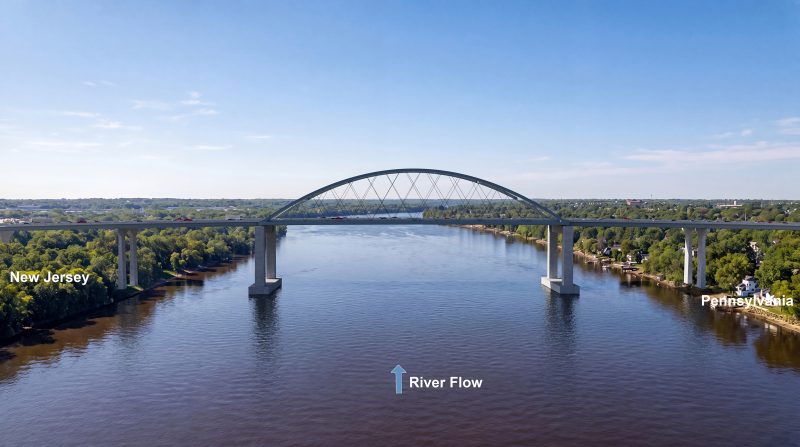
    Officials of the Pennsylvania and New Jersey Turnpikes have chosen a design to replace the 70-year-old bridge over the Delaware River linking the toll roads: a six-lane span that would be built about 195 feet north of the existing one.

    Called a ”tied-arch” bridge, the $1.6 billion replacement would be cheaper than other styles considered and can be built fastest, said John Boyer, senior engineer for the Pennsylvania Turnpike Commission.

    “Shorter time frames mean less disruption to local businesses and daily life for the communities in this area,” said Boyer, the manager of the joint project.

    Because the new bridge would be farther from the existing Delaware River Bridge than alternatives, traffic can keep flowing as it’s built, he said.

    Planners for years have known that the region would need a new turnpike bridge because of exponential growth in traffic volume, especially trucks.

    Freight volumes nationally are projected to grow by 73% by 2050, with warehouses on both sides of the river relying on crossing.

    Before the nearby I-95/Pennsylvania Turnpike interchange opened in 2018, an average of 42,000 vehicles a day crossed the four-lane Delaware River Bridge. Now, that’s up to around 70,000. By 2050, projections say an average 93,000 vehicles will need to traverse the replacement.

    The surface of a tied-arch bridge provides tension to resist the horizontal forces pressing on either end of the arch, like the taut string that connects a bow. It requires less sturdy foundations than a bridge supported by cables.

    “You can be build those river piers while you’re building the arch structure off-site,” Boyer said. When the piers are ready, the arch can be brought in by barge and “you can essentially jack it and elevate it up into place,” he said.

    Federal authorities approved a new span in 2003, but the project was put on hold because of problems paying for it.

    In 2017, a crack was discovered in a truss supporting the existing bridge’s roadway, and it was closed for about two months.

    As congestion increased on the repaired bridge, more traffic capacity became imperative, officials said.

    Because the earlier federal approval was so old, officials had to start again with a new environmental impact statement and design studies. Last year, turnpike officials settled on two options.

    Now, they’re finishing up the environmental impact statement, with formal public hearings scheduled for the winter.

    Turnpike officials expect the Federal Highway Administration to make a decision on the project around April 2028.

    In March, Pennsylvania’s U.S. senators announced a $600 million federal grant for construction of the new bridge connecting Bristol, Pa., and Florence, N.J. New Jersey’s congressional delegation also worked on getting the grant.

    The two states’ turnpike agencies will finance the balance. Borrowing would be backed by toll revenue, but both say the bridge project won’t increase tolls for drivers.

  • A man was shot on the Market-Frankford Line in Center City

    A man was shot on the Market-Frankford Line in Center City

    A man was shot in the stomach while riding the L train in Center City on Thursday afternoon.

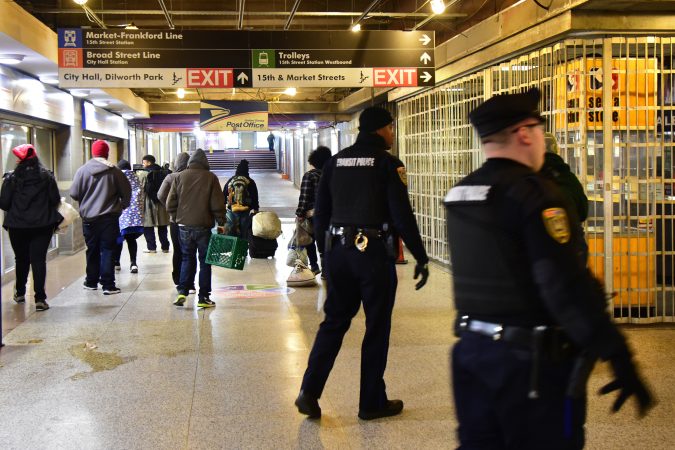
    SEPTA Transit Police were investigating the shooting, which occurred around 1:30 p.m. on a westbound L train, also known as the Market-Frankford Line, at 15th Street Station located under City Hall and Dilworth Plaza.

    Police transported the injured man, who was not identified, to a nearby hospital, where he was in stable condition, according to SEPTA. A search was underway for a suspect, whom police did not identify.

    L train and trolley service resumed after having been stopped for around 30 minutes, a SEPTA spokesperson said.

  • Philadelphia is shrinking the rideshare virtual border around FIFA Fan Festival

    Philadelphia is shrinking the rideshare virtual border around FIFA Fan Festival

    The city is rolling back its geofence border around the FIFA Fan Festival to reduce the number of residential areas blocked from using rideshare.

    The Philadelphia Office of Transportation and Infrastructure Systems (OTIS) announced Thursday that it would shrink the geofence to exclude large residential buildings on Pennsylvania Avenue.

    The geofence, which blocks people within its borders from using rideshare services like Uber and Lyft, will now shrink to the south of Aspen Street, about half a block from its original border at 25th and Meredith Streets.

    “We’re continuing to work with the community, elected officials, and operational partners to improve the experience for everyone, including residents impacted by Lemon Hill festivities,” an OTIS spokesperson said.

    Additionally, four blocks in Fairmount had been designated for rideshare pickups and drop-offs, but OTIS is reducing rideshare zones to two, allowing for more parking for permitted residents.

    The rideshare pickup/drop-off zones are now located only near Eastern State Penitentiary, at 23rd Street and Fairmount Avenue, and the 2200 block of Fairmount Avenue.

    This was well-received news for residents who live in the area and have been concerned about the geofence’s restriction on residents with mobility issues.

    Paul Stewart, an 86-year-old resident who lives in one of the large apartment buildings that initially had been geofenced, relies on Uber to visit his doctor at Thomas Jefferson University Hospital. But last week, when he planned to head to an appointment, he found he could not call a rideshare.

    “The geofence that includes my building and all the businesses in the immediate area will continue for 39 days,” Stewart said before the geofence rollback. “Many people take Uber to and from the restaurants and bars in this neighborhood so that they can have a few drinks and not worry about driving drunk.”

    Geofencing these large residential buildings and blocks was hindering everyday life, Stewart said. Now, he said, residents will be able to go about their business as they normally would.

    The geofence reduction is just one of the adjustments the city has been making as it manages the traffic and fans around the FIFA Fan Festival in Lemon Hill. Since at least May, residents have been requesting traffic-calming measures on residential blocks. The Philadelphia Parking Authority and OTIS installed additional barricades and signage last week.

  • Transit police union and SEPTA have a tentative deal on a 3-year contract

    Transit police union and SEPTA have a tentative deal on a 3-year contract

    The union representing transit police and SEPTA reached a tentative deal on a new three-year contract Wednesday that includes a 12% raise and avoids a possible strike during the region’s summer of big events.

    Officers had been working without a contract since March 31, and the police union said on June 4 it was willing to walk off the job if there was no progress in talks. Leaders said the two sides were at an impasse.

    Since then, negotiators traded new proposals and met several times.

    Members of Fraternal Order of Transit Police Lodge 109 are scheduled to hold a ratification vote on the agreement Thursday, with SEPTA’s board scheduled to consider it next week.

    “SEPTA believes the agreement is fair to our hard-working Transit Police officers and responsible to the fare-paying riders and taxpayers who fund the authority,” spokesperson Andrew Busch said in a statement.

    “I can confidently say that a strike has been averted at this time,” FOTP Lodge 109 president Omari Bervine said in an interview.

    He credited SEPTA general manager Scott A. Sauer with getting talks moving.

    “We were able to actually sit down to direct talks, with the general manager [involved], and that was instrumental in getting a tentative deal worked out,” Bervine said.

    A 12% raise is in line with the deal Transport Workers Union Local 234 received in its contract agreement last year. SEPTA engages in pattern bargaining, using contracts with TWU Local 234 as a guidepost.

    Officers would get a 5% pay hike in the first year and 3½% in each of the next two years, according to sources familiar with the agreement. They also would receive a $2,500 signing bonus.

    Officers are scheduled to get the first installment of the pay bump on June 28, if the contract is ratified and approved. Normally, pay increases for transit police did not kick in until the next anniversary of the start of the contract year — in this case, April 1, 2027.

    Lodge 109 has pressed to change the timing so members would start receiving raises as soon as possible after the signing of an agreement, as happens with other SEPTA unions.

    The union represents 203 rank-and-file officers who patrol SEPTA’s stations and transit vehicles across its five-county service area.

    Bervine had offered to waive the right to strike if SEPTA voluntarily agreed to submit their dispute to binding arbitration.

    Most union-represented police officers in Pennsylvania can use binding arbitration, which involves an independent arbiter deciding the final terms of a contract. In turn, those officers are barred from striking.

    But state law does not allow transit police and some other state law enforcement officers to use binding arbitration.

    Bervine said there was no agreement to include binding arbitration in the contract. There is proposed legislation in Harrisburg to extend it to officers employed by state agencies like SEPTA. “Hopefully, common sense will prevail,” he said.

    Union and SEPTA negotiators met on Tuesday and Thursday last week and exchanged new proposed contract language. They met for a third time Saturday.

    The union has exercised its right to strike before.

    In December 2023, the transit officers union went on strike for three days seeking wage increases matching those given to Transport Workers Union Local 234 and other SEPTA employee unions.

    In 2019, transit officers walked out for six days, in part over whether members could review body-camera footage before filing incident reports. They struck in 2012 over a 15-cent difference between the FOTP’s demand and SEPTA’s offer for an increase in the hourly rate that members received for annual recertification as police officers.
  • Parents of CHOP physician killed riding her bike in Center City sue the drunk driver who hit her

    Parents of CHOP physician killed riding her bike in Center City sue the drunk driver who hit her

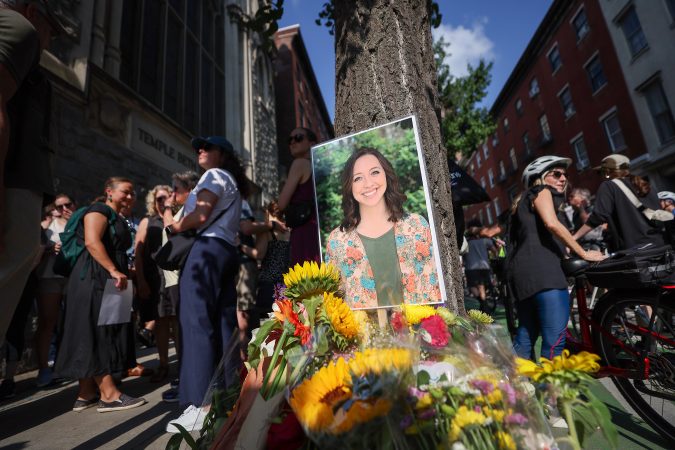
    A white bicycle marks the spot on Spruce Street where a drunk driver struck and killed Barbara Friedes in July 2024. The 30-year-old doctor’s death led to an outpouring of grief from her loved ones, Children’s Hospital of Philadelphia colleagues, and the cyclist community.

    Two years later, the driver is in prison but the pediatric resident’s parents are still seeking justice.

    John and Mary Dietrick have sued Michael Vahey, who was driving his Volkswagen intoxicated at roughly 60 mph in a 25-mph zone when he hit Friedes as she was riding her bike near Rittenhouse Square. His blood alcohol limit exceeded the legal threshold for intoxication.

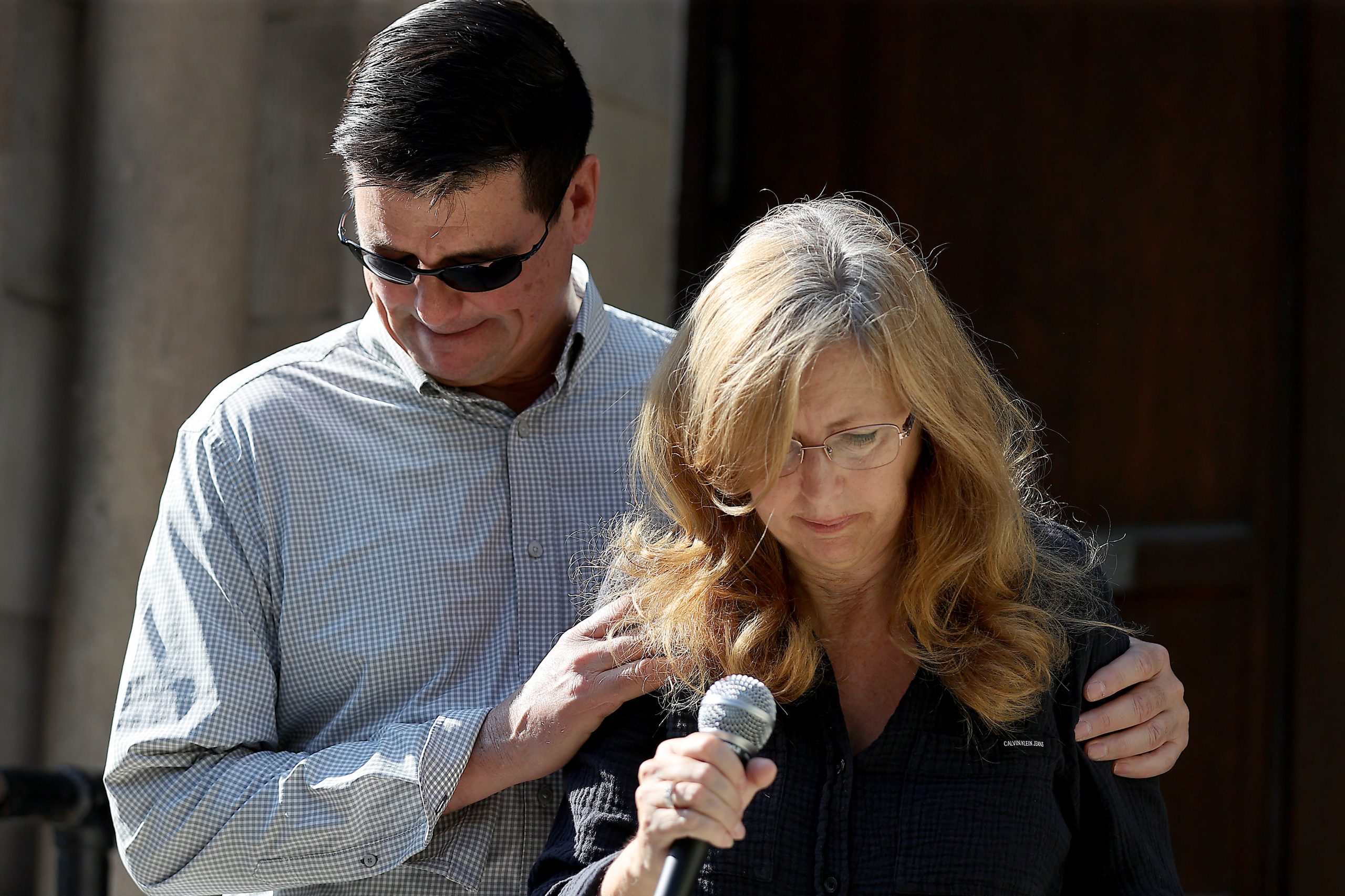
    Mary Dietrick (right) is embraced by her husband, John Dietrick, as she speaks about her daughter Barbara Friedes at a vigil in 2024.David Maialetti / Staff Photographer

    Vahey, 70, pleaded guilty to third-degree murder, homicide by vehicle while driving under the influence, and related charges. He was sentenced last year to six to 20 years in prison.

    The lawsuit seeks “the full measure of damages available under Pennsylvania law for Vahey’s negligent, reckless, and outrageous conduct causing her death and the immeasurable loss to Barbara’s family,” according to the complaint, which was filed Monday in Common Pleas Court.

    Friedes was riding her bicycle on the 1800 block of Spruce Street in the designated bike lane on the evening of July 17, 2024. Intoxicated, Vahey sped through Center City at an “outrageous speed,” the suit says.

    “His foot never left the accelerator of his car as he struck Barbara,” according to the complaint.

    Amato Sanita, an attorney who represented Vahey in his criminal case, said in a statement that his heart goes out to all parties involved in the tragedy.

    Friedes was a chief resident physician at CHOP and applied for fellowship training in pediatric oncology. She was remembered by her colleagues for her kindness and compassion.

    Barbara Friedes was killed when a man driving a Volkswagen hit her from behind while she was riding her bike in the bike lane on the 1800 block of Spruce Street.Courtesy Cole Friedes

    Her husband, Cole Friedes, said his wife of three years loved children, devoted her career to them, and longed to be a mother.

    “She was the kindest person I’ve ever met in my entire life,” he told The Inquirer after her death. “She taught me the true meaning of kindness.”

    Friedes’ killing sparked protest and public discourse over traffic safety. Hundreds of cyclists filled the streets of Center City following the incident, calling for infrastructure improvements to protect bike lanes.

    Mayor Cherelle L. Parker joined a symbolic ride of unity later that summer with activists who criticized her administration for not taking action to make bike lanes safer.

    City transportation officials in fall 2024 recommended $4.8 million in safety upgrades to bike lanes along Pine and Spruce Streets that would include concrete barriers. And in December 2024, Parker signed a law that prohibits motor vehicles from stopping in city-designated bicycle lanes.

    Some residents of Pine and Spruce Streets filed a lawsuit over the planned upgrades. The case is ongoing.

    The parents’ lawsuit does not name any defendants except Vahey and stays away from the debate over bike lane infrastructure.

    “The primary purpose of this lawsuit is to establish full accountability under the civil justice system,” said Tom Kline, a Kline & Specter attorney representing the Dietricks. “It is the second half of the equation.”

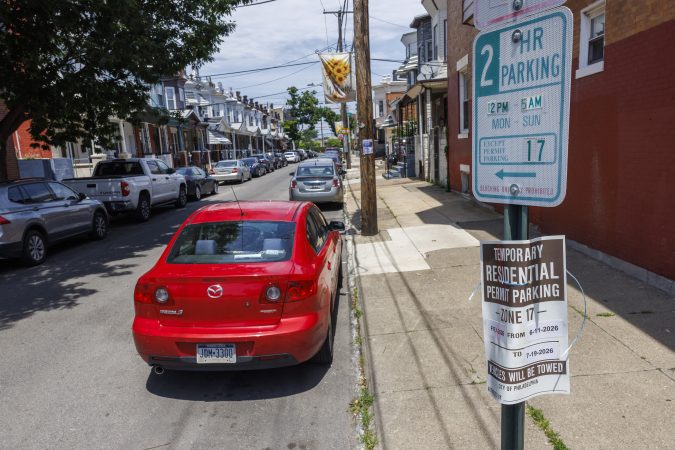
  • PPA tickets and tows Fairmount residents with Fan Festival parking permits

    PPA tickets and tows Fairmount residents with Fan Festival parking permits

    Justin Siebel woke up on Sunday to drive with his wife to the Pocono Raceway and enjoy the NASCAR Cup Series, a two-hour drive from their Fairmount home.

    But when he walked to where he had parked his car a few days prior, near Harper Street, a block from the FIFA Fan Festival, the vehicle was gone.

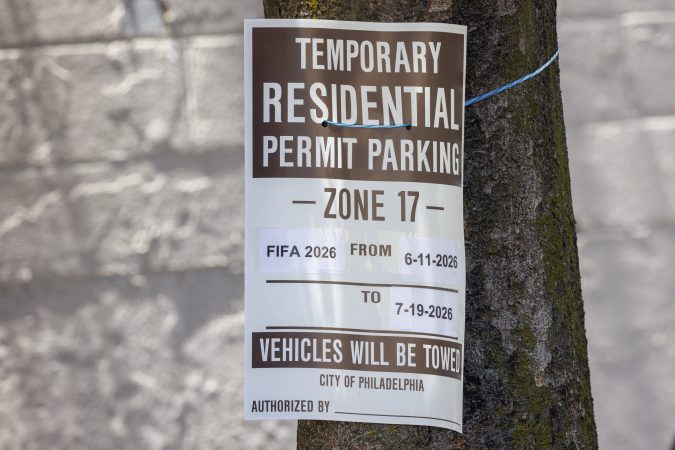
    Though Siebel had registered for special permit parking with the Philadelphia Parking Authority that allows residents to park in the neighborhood during the festival, his car was ticketed and towed to a South Philly tow yard.

    “My wife and I did the right things, we registered our vehicles with PPA, and still came out to my car and it wasn’t there,” Siebel said.

    Fairmount residents have been taking to social media to share accounts of parking tickets despite having registered for special permits. Since the fan festival started last week, residents have expressed concern over the city’s management of road closures, parking restrictions, and communication.

    The PPA issued nearly 2,500 tickets for illegal parking in the festival parking enforcement zone over the weekend, with 173 of those tickets written in error to residents with valid parking permits, said Gabe Roberts, the agency’s acting executive director. PPA’s internal system has flagged these tickets for cancellation and will continue to flag wrongfully issued parking tickets by “cross-checking them with our existing residential parking permit holder lists,” Roberts said.

    Residents who have permits and were wrongfully ticketed will receive a cancellation notice by mail, the PPA said.

    “The PPA utilizes a daily internal accuracy control mechanism that identifies and cancels any FanFest Enforcement Zone ticket written in error for vehicles with valid residential parking permits or Lemon Hill permits,” a PPA spokesperson said. “Any vehicle towed in error will also have its violation canceled and all fees refunded. The PPA apologizes for any inconvenience.”

    Most ticketed residents will simply have their ticket canceled, Roberts said. But four residents with valid parking permits had their vehicles towed, and later returned with no fees.

    However, Siebel’s was not returned, and he needed to call PPA to locate his car, then call the tow yard in South Philly about picking it up. Siebel said he was initially told it would cost $238 to drive out of the tow yard, but his fees were waived upon arriving and he was able to freely leave with his car.

    “It did cost me an Uber and an afternoon to retrieve. But I recommend that anyone else stay calm and use humor. Everyone in Philly has a sense of humor,” Siebel said.

    Residents can contact the PPA with questions or to confirm that their ticket has been canceled by calling 215-683-9421 or 215-683-9677 or by emailing engageppa@philapark.org.