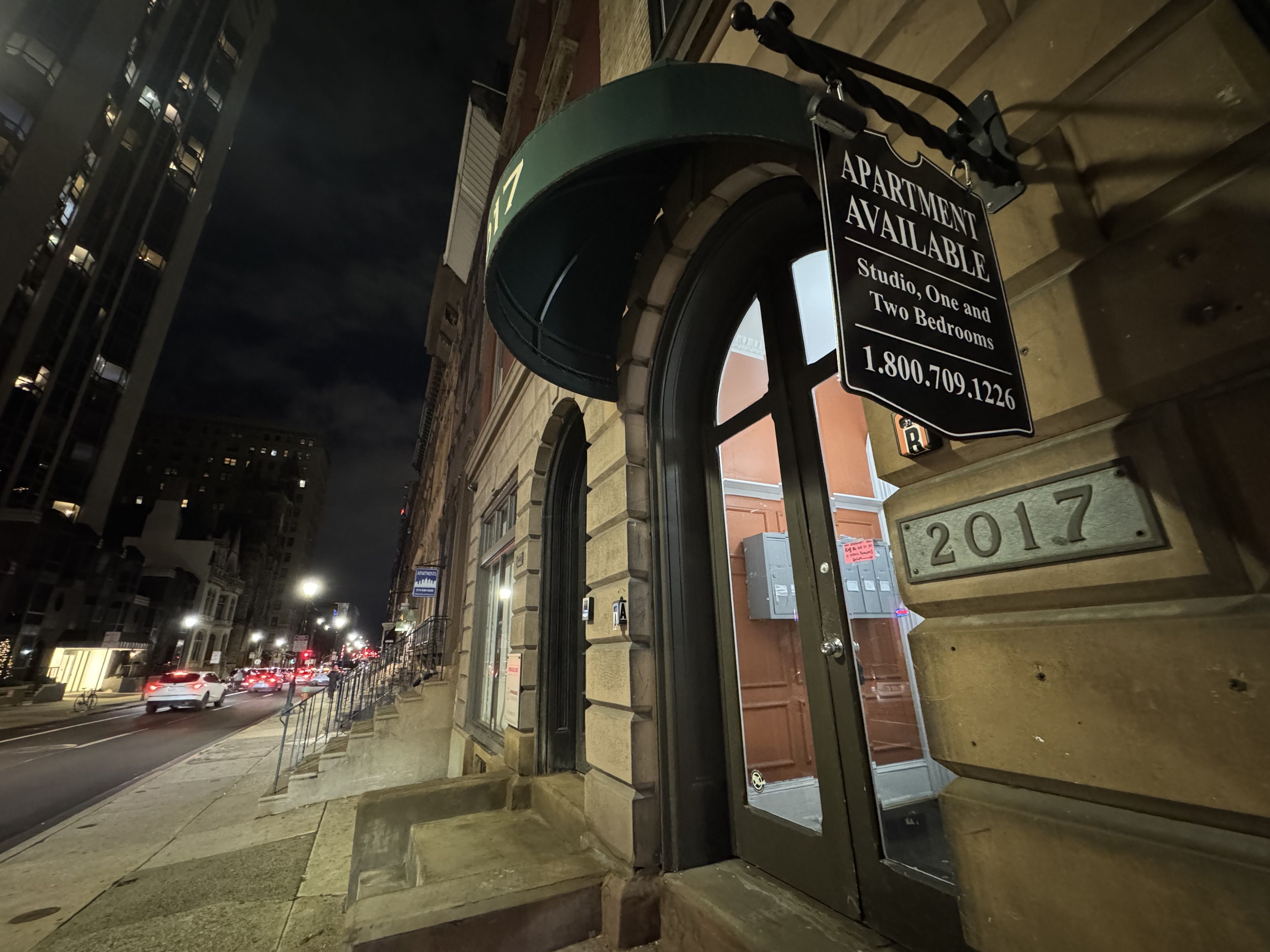
If you’re looking for a place to rent a spacious new apartment, Philly ain’t it.
Apartments across the country got slightly bigger last year, but in Philadelphia, they’reshrinking.
Apartments inPhilly are already relatively small. Of the country’s top 100 cities with the largest apartment supply, Philadelphia ranked 88th in apartment size, according to an analysis by the nationwide apartment search website RentCafe. The report was based on apartments in buildings with 50 or more units.
New Philly apartments, which RentCafedefined as those built between 2016 and 2025, spanan average of 747 square feet — 163 fewer square feet than the national average.
But in Philadelphia, the average new apartmentshrank by 104 square feet compared toapartments built during the previous decade — basicallythe loss of a home office, according to RentCafe.
Philadelphia’s position as a desirable rental market and demographic trends help explain the shrinking, according to Veronica Grecu, research analyst at RentCafe.
“In high-demand markets, developers often prioritize studios and one-bedrooms because they can deliver more apartments per building and meet the needs of a growing number of single-person and smaller households,” Grecu said in a statement. “… the upside is more availability in markets where inventory has historically been tight.”
Apartments currently under construction in Philadelphia average 627 square feet, according to RentCafe.
The platform found that Philadelphia’s new three-bedroom apartments actually grew in size — by 93 square feet — as studios and one- and two-bedroom apartments shrank. But not many developers are building three-bedroom units. They made up 3% of the city’s supply of new apartments, according to RentCafe.
(function(){function e(){window.addEventListener(`message`,function(e){if(e.data[`datawrapper-height`]!==void 0){var t=document.querySelectorAll(`iframe`);for(var n in e.data[`datawrapper-height`])for(var r=0,i;i=t[r];r++)if(i.contentWindow===e.source){var a=e.data[`datawrapper-height`][n]+`px`;i.style.height=a}}})}e()})();
How Philly compares to other cities
Cities in the Northeast and West dominate RentCafe’s list of places with the smallest new apartments.
Pittsburgh was one of the top 10 cities where new apartments shrank the most in the last decade. The average size decreased by 142 square feet. But the average new apartment was 804 square feet, still larger than the average in Philadelphia.
Seattle has the smallest new apartments. Those built in the last decade average 645 square feet, asmore studios and one-bedroom apartments have been built.
The typical homeowner in New Jersey has one of the highest levels of housing wealth in the country, according to a study by LendingTree, an online loan marketplace.
The state was one of the top five where homeowners reported having the most home equity in the first quarter of the year, according to an analysis of more than 965,000 anonymized inquiries for home equity loans and home equity lines of credit submitted through LendingTree.
Home equity shoppers in New Jersey reported having a median of about $295,000 in equity, meaning half had more and half had less. The Garden State tied with Washington state in the rankings, but New Jersey had a slightly higher share of homeowners with at least $200,000 in equity — almost three in four shoppers.
Home equity, also referred to as housing wealth, is the difference between how much a property is worth and how much the owner owes on their mortgage. Equity increases when home values rise and/or owners pay down their mortgage. It’s money that belongs to the owner, but it’s not the same as having cash, noted Matt Schulz, LendingTree’s chief consumer finance analyst.
“Accessing [equity] generally means selling the home or borrowing against it, and borrowing comes with costs and risks,” Schulz said in a statement. Equity fluctuates with the market. Before borrowing against a home, owners should verify how much equity they have and how much the loan will ultimately cost. And they shouldn’t borrow more than they need, he said.
Property owners take out loans and lines of credit against a home’s equity to do things like consolidate debt, pay for school, and repair or renovate the home.
How equity compares
Home equity shoppers in Hawaii reported having the most housing wealth — a median of about $425,000, according to the LendingTree analysis. More than 80% of these homeowners had at least $200,000 in home equity.
California came in at second for median housing wealth — about $350,000.
(function(){function e(){window.addEventListener(`message`,function(e){if(e.data[`datawrapper-height`]!==void 0){var t=document.querySelectorAll(`iframe`);for(var n in e.data[`datawrapper-height`])for(var r=0,i;i=t[r];r++)if(i.contentWindow===e.source){var a=e.data[`datawrapper-height`][n]+`px`;i.style.height=a}}})}e()})();
Pennsylvania ranked 34th. Home equity shoppers on LendingTree’s platform reported having a median of $180,000.
Of the 50 states, West Virginia and Iowa were tied for last place. Home equity shoppers in these states reported having a median of about $130,000 in equity.
Differences among states “are a reminder that the home equity story can look very different depending on where you live,” Schulz said.
“For some homeowners, their house can provide a huge financial cushion,” he said. “For others, there may be far less wiggle room.”
But in total, U.S. homeowners “are sitting on an extraordinary amount of housing wealth,” Schulz said.
Across the country, households had $34.9 trillion in home equity as of the first quarter of 2026 — $48.7 trillion in real estate assets and $13.8 trillion in mortgage debt, according to LendingTree’s analysis of Federal Reserve data.
From her home in Mexico, JoAnne Kim started searching for a Philadelphia-area apartment by opening ChatGPT.
Kim, a regular user of the generative artificial-intelligence tool, told OpenAI’s chatbot what she and her husband wanted: a quiet place in Pennsylvaniathat was walkable and dog friendly with good transit access, a strong sense of community, cafes and restaurants, and a lot of things to do.
ChatGPT suggested Ardmore, Bryn Mawr, and Chestnut Hill. The couple chose Ardmore, and Kim asked the chatbot for a list of apartment communities that fit their criteria and included outdoor space.
ChatGPT “helped me become a better apartment hunter, because I was able to use all the data to help me make a decision,” said Kim, a 64-year-old career mentor for university students.
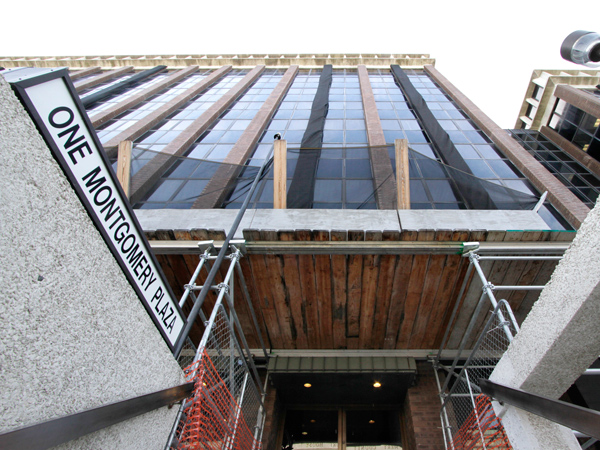
This month, the Kims moved into Montgomery Plaza near Suburban Square.
Generative AI toolsare becoming increasingly popular as more people use them to write emails, summarize documents, and recreate pictures of pets. And, like Kim, renters are also using AI chatbots to find apartments.
In Philadelphia and beyond, the growth of AI is changing the way people search for homes — and it’s prompting some in the industry to change how they do business.
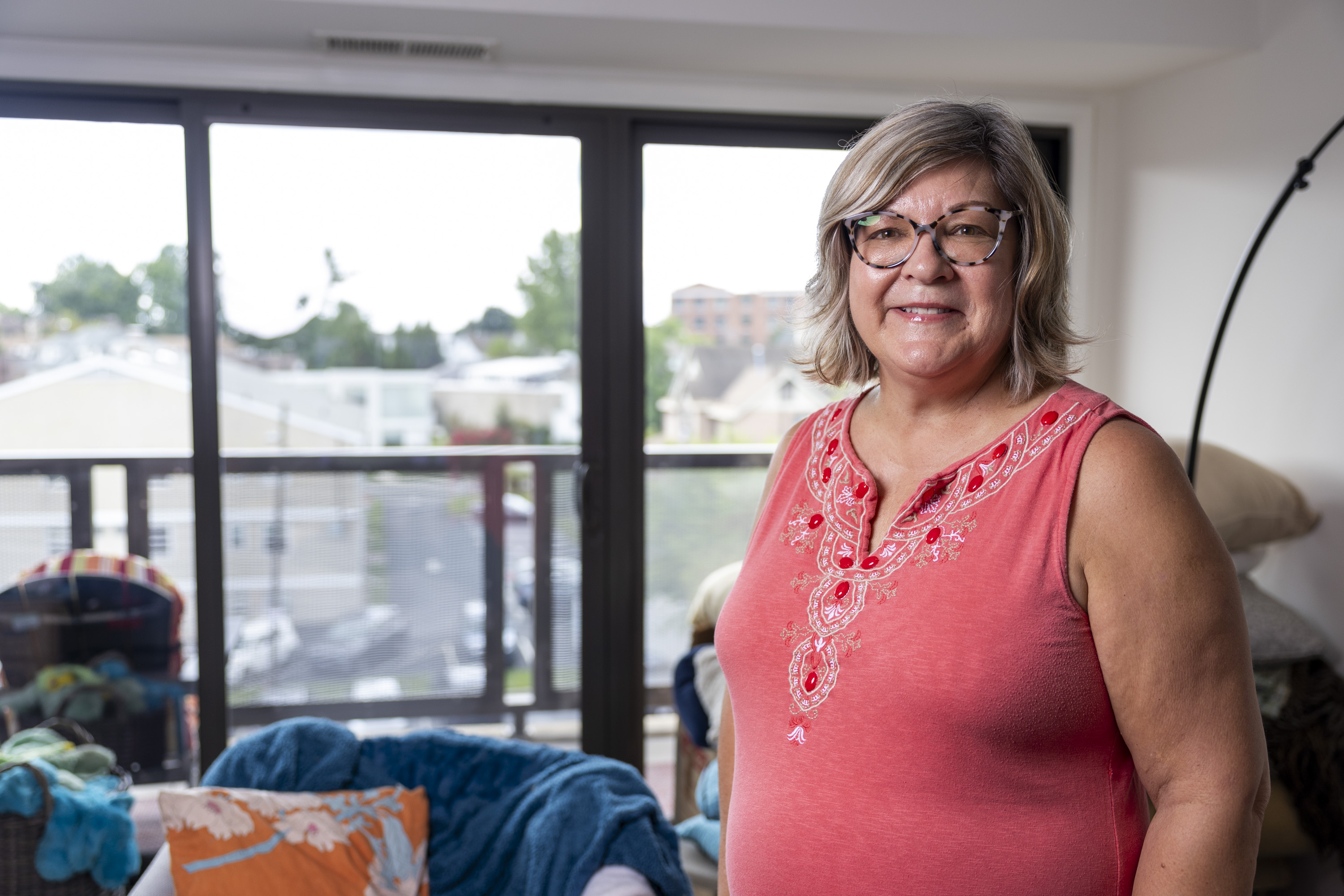
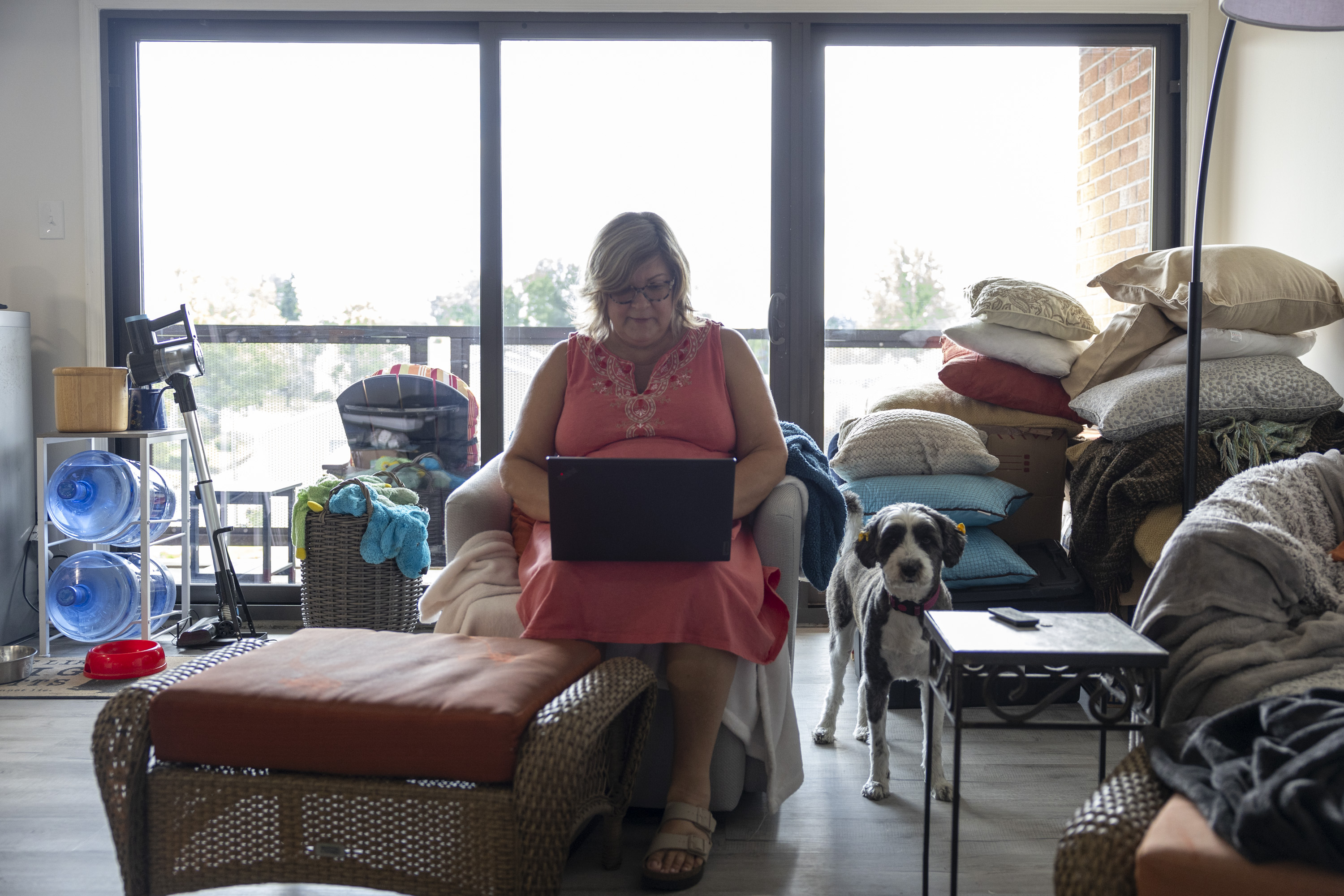
JoAnne Kim used ChatGPT to find the apartment she moved into this month.Tyger Williams / Staff Photographer
In April, Philadelphia became one of 15 cities where RentCafe, a national apartment search website, rolled out its AI assistant, Ren. The platform is preparing to make the tool available nationwide. Apartments.com launched its latest AI tool — Apartments.com Ai — in June and started an advertising campaign in August to get more renters to use it.
Property managers, too, are trying to find ways to reach people who use AI.
Charlie Marshall, a leasing associate at the Ardmore-based property management company Harrison Richards, which manages Montgomery Plaza, has been tweaking the company’s website to try to get its seven properties more prominent placement in generative AI search results.
Marshall said the handful of people who said they found a building using AI tools seemed more informed and committed than other prospective tenants.
“It was immediately clear they had a good idea of the places they wanted to lease at,” he said. “It was not like some people you see that are touring seven or eight properties. They had narrowed it down to like three.”
Stuart Richens, vice president of product at Apartments.com, said because the company’s AI tool “is immersive and kind of keeps guiding you and helping you, renters are getting much deeper into the search more quickly.”
“And that’s helping them get to that short list more quickly,” he said.
Kim and her husband, a senior data analyst who uses AI, worked with ChatGPT to focus their search. But to find a place that felt like home, Kim also watched local real estate agents’ YouTube videos, read reviews, watched local news coverage, and talked to property managers.
Kim said that because she started with virtual conversations on ChatGPT, “I spent more time thinking about the kind of life we wanted to have. It wasn’t just about finding the apartment. It was the neighborhood, the vibe.”
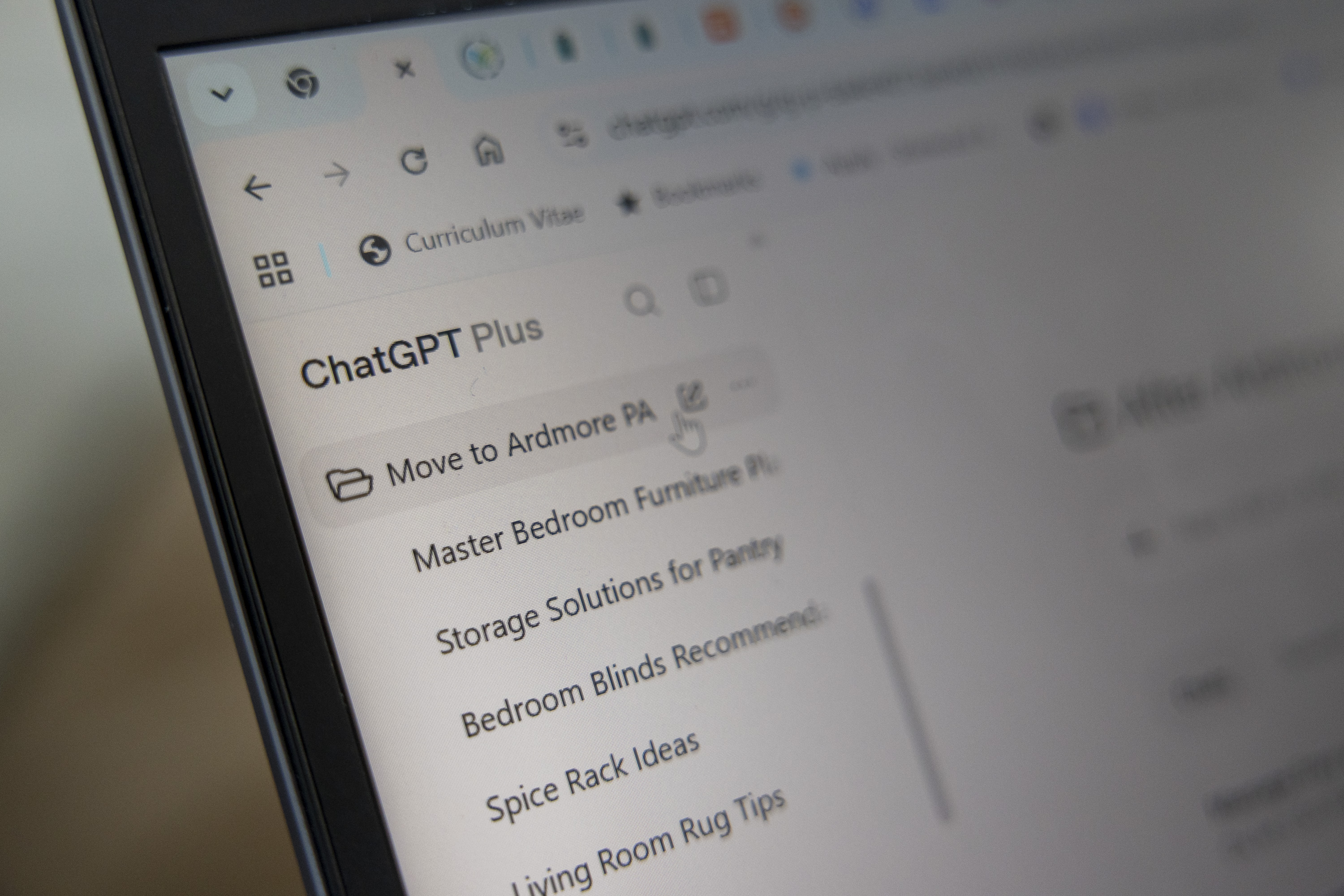
JoAnne Kim shows the ChatGPT online tool she used to find her apartment.Tyger Williams / Staff Photographer
‘A more advanced Google search’
AI tools can only do so much.
Vee Gordon, a rental agent with Philly Home Girls, said she worked this year with a New York City couple in their 20s who wanted a two-bedroom home in Philadelphia. They insisted on seeing places that were hundreds of dollars over their $6,000 monthly budget. During a meeting with Gordon, they pulled up ChatGPT.
“They were asking it how to negotiate a rental price down,” she said. “I feel I have more insight on that than what ChatGPT was saying.”
Gordon has worked exclusively with renters — many in their 20s and 30s — for four years in the city and its suburbs. She estimates she has helped sign almost 500 leases.
“This is my expertise,” she said.
The couple didn’t end up finding a place through her.
Jack Olmanson, 27, doesn’t regularly use generative AI tools. But this year, when he and his girlfriend needed to move from Washington, D.C., to the Philadelphia area for her work in the equestrian industry, he turned to Anthropic’s Claude for help.
The couple used it “as a more advanced Google search,” said Olmanson, who works in business management.
“You can be very customized in your asks,” he said. Claude “was good at giving us everything that’s out there that meets our initial criteria.”
The couple wanted a two-bedroom apartment in a walkable area and a building that welcomed Mya, their yellow Labrador retriever.
Olmanson and his girlfriend are originally from Minnesota and didn’t know the Philadelphia area, so they asked Claude to compare suburban towns here to those they knew in the Minneapolis area. They also asked it to make a map of locations with reasonable commute times.
Once they got suggestions from Claude, they did their own research, exploring websites, looking at photos, reading reviews, and taking tours. And they still reviewed Zillow listings they got through email alerts.
They moved into an Ardmore apartment building managed by Harrison Richards in May.
Olmanson recommends renters verify everything an AI chatbot tells them to make sure it’s not making things up. And remember, he said, it’s just a tool.
“You’re still in charge of making sure [a home] is the right fit for you,” he said.
How AI has changed apartment listing websites
When Philadelphia renters begin searching RentCafe’s website of home listings, a button prompts them to “Ask Ren.” Apartments.com encourages them to “Meet your Ai rental adviser.”
Renters using AI tools tend to start broadly with a location and budget and refine searches through a virtual back-and-forth to get to a smaller number of the most relevant listings. Renters can type or talk. Apartments.com’s chatbot supports about 50 languages.
RentCafe found that people who use its tool are twice as likely to click into a listing and 50% more likely to contact propertymanagers than people who use traditional search tools. Users of Apartments.com’s chatbot request 144% more tours.
“Conversational search, we’ve seen, has been very helpful for renters,” said Samantha Skrobot, renter advocate at RentCafe.
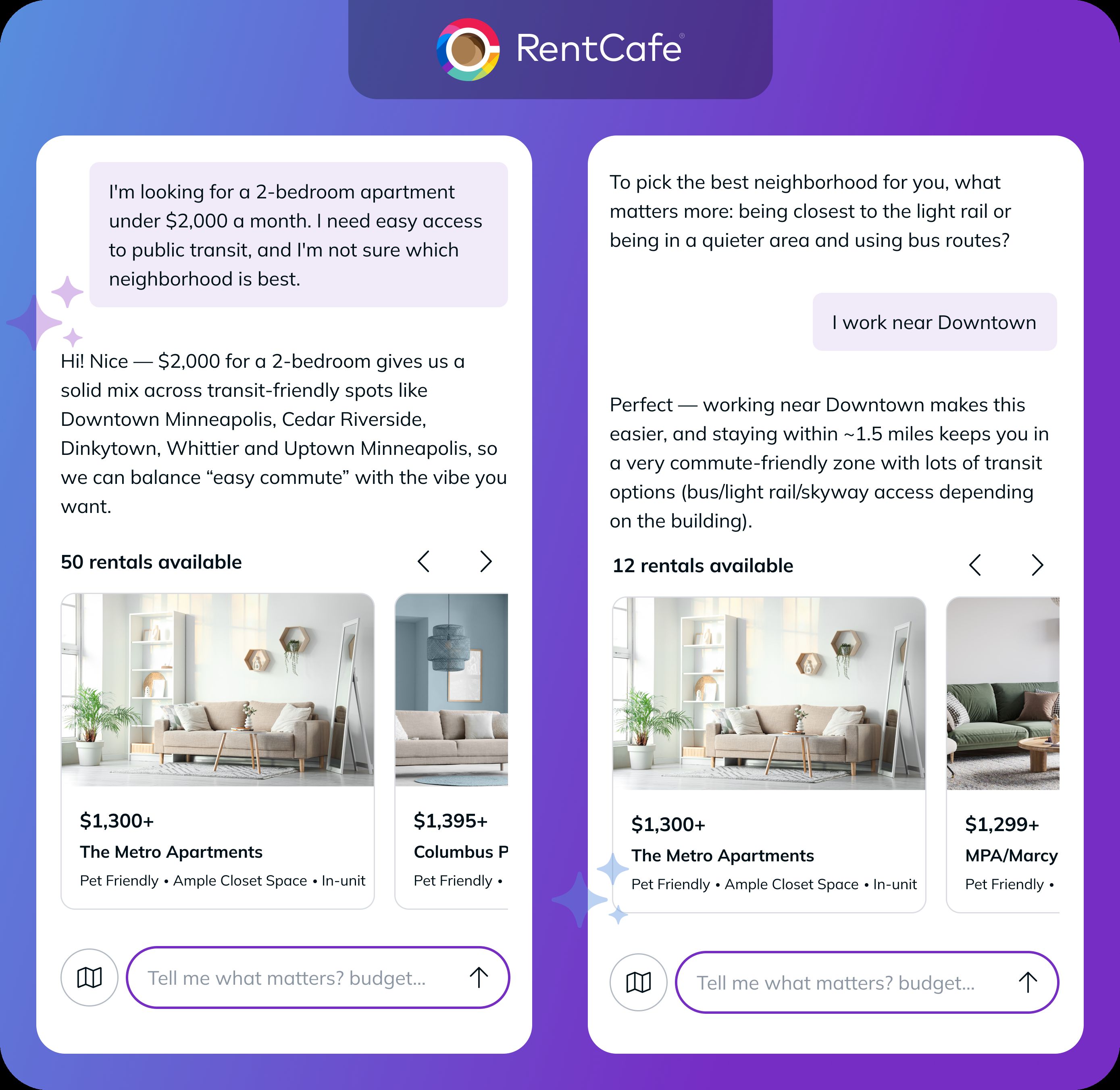
This image provided by RentCafe, a national apartment search website, demonstrates how a renter could use its AI assistant, Ren.RentCafe
Renters can use it to figure out realistic budgets anddetermine locations accessible by public transit. They can search for requirements that aren’t included in traditional filters on apartment search websites, such as proximity to a laundromat or library. Users can ask AI tools to compare properties’ amenities and tell them about nearby schools.
Through the chatbots, renters can prioritize certain property characteristics (say, gets a lot of natural light) and indicate where they’re flexible, which they can’t do with traditional search filters. AI chatbots can suggest locations a renter may not have considered that meet their requirements.
On newer 3D tours on Apartments.com, renters can tell the AI chatbot to remove furniture from a room and give dimensions of a space.
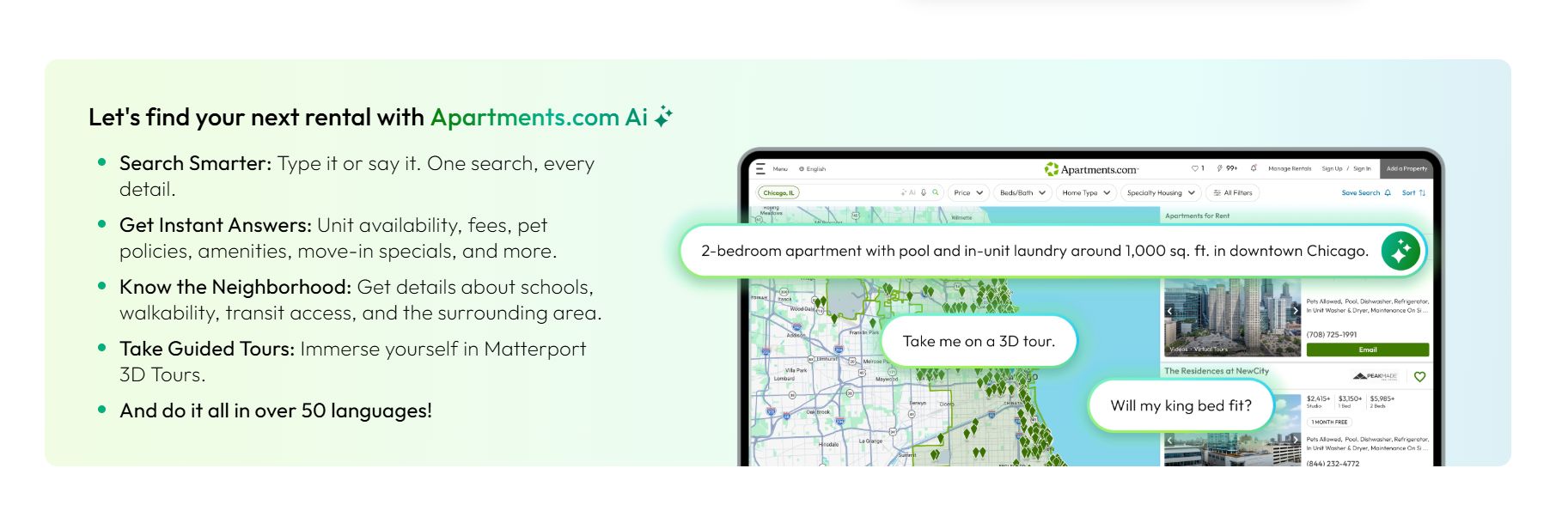
Apartments.com’s homepage encourages renters to use its generative AI chatbot, Apartments.com Ai.Screenshot
Adjusting for AI
Because of the growth of generative AI tools, Richens at Apartments.com said that for property managers, “having a very complete listing with every piece of data about the property … is very important because that’s what renters are asking for.”
“And if you don’t have it, how is the AI going to answer?” he said.
Apartments.com is working with property managers to beef up listings.
At Harrison Richards, Marshall has worked to improve how the company’s properties show up in generative AI searches. He asked questions that a renter would ask and noted when the company’s properties did and did not appear.
A Redditor posted a couple years ago looking for Ardmore-area apartments, and someone said they’d lived at the company’s Montgomery Plaza property and liked it.
“That was apparently gold for ChatGPT,” Marshall said.
The property management company has changed heading sizes and where information shows up on its website, so AI tools can more easily pull out answers for renters. Marshall has noticed a difference.
After the changes, he said, the AI tools “would draw out the things we think are important and the things people might have questions about.”
Harrison Richards, an Ardmore-based property management company, has adjusted its website to better position its properties, such as Montgomery Plaza, in generative AI search results.Tyger Williams / Staff Photographer
But for thousands of residents, many of whom live in North Philadelphia, next year’s tax bills are expected to soar.
Nearly 6,000 homeowners in Philadelphia saw their property assessments this year climb by more than 50% compared with two years ago, the last time the city conducted a mass revaluation, according to an Inquirer analysis of city property assessment data released in June.
Of those homeowners, more than 2,200 saw their assessments more than double.
That is likely to result in sticker shock come tax time next year, because property tax bills in the city are calculated based on home values. The revenue is split between the city and the Philadelphia School District.
Homeowners across the city saw a median 3% increase in their property assessments this year compared with the 2025 tax year. Jumps were higher in neighborhoods that border gentrifying areas, such as in parts of Kensington and West Philadelphia.
But this year, two other areas of the city had the densest concentrations of homes where property assessments increased by 50% or more, according to The Inquirer’s analysis.
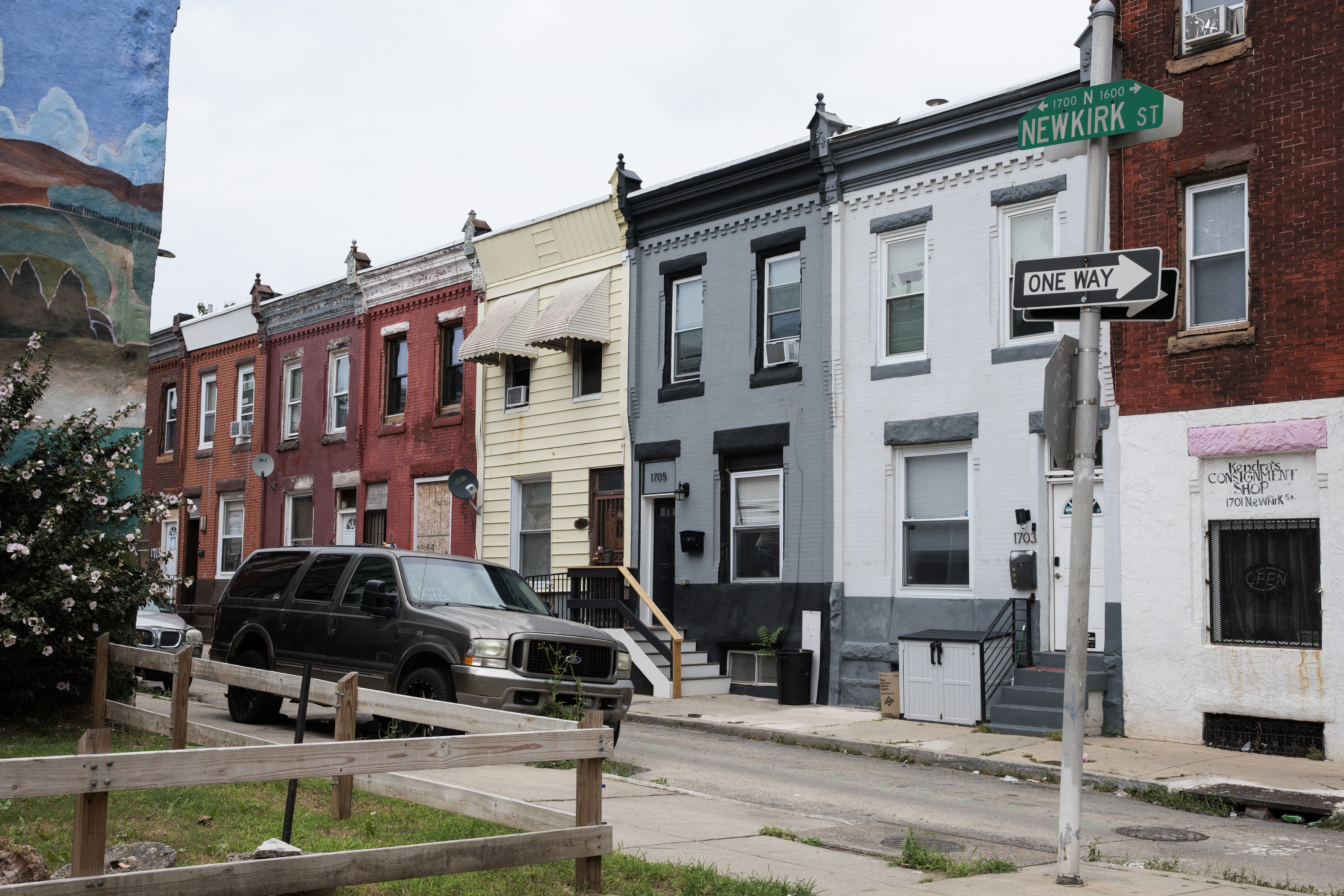
The steep rises are clustered in the southern end of Strawberry Mansion, the historically Black neighborhood along the Schuylkill, and in the tiny Hartranft neighborhood north of Temple University and east of Broad Street, where residents are predominately Latino.
(function() {
var l2 = function() {
new pym.Parent(‘html_sandwich_2026_property4’,
‘https://media.inquirer.com/storage/inquirer/projects/innovation/arcgis_iframe/html_sandwich_2026_property4.html’);
};
if (typeof(pym) === ‘undefined’) {
var h = document.getElementsByTagName(‘head’)[0],
s = document.createElement(‘script’);
s.type = ‘text/javascript’;
s.src = ‘https://pym.nprapps.org/pym.v1.min.js’;
s.onload = l2;
h.appendChild(s);
} else {
l2();
}
})();
Housing experts and advocates for low-income homeowners have long criticized the city’s assessment system as systemically biased, leaving Black and brown homeowners to pay disproportionately high property taxes. Mayor Cherelle L. Parker convened a task force in 2024 to study the city’s revaluation system, and that group’s recommendations are expected to be released later this year.
Monty Wilson, a senior attorney at Community Legal Services who sits on the task force, said the Philadelphia Office of Property Assessment is the best in the state and has “worked really hard to become more and more accurate.”
But he said bias persists in part because of the unique challenges that assessors face in low-income neighborhoods that can cause volatility in home values, such as higher rates of vacant lots, foreclosures, and other factors.
A 2024 CLS report found that errors were clustered in lower-value neighborhoods where a majority of residents are people of color.
“That means when a property is overassessed,” Wilson said, ”it tends to occur in a Black and brown neighborhood.”
(function(){function e(){window.addEventListener(`message`,function(e){if(e.data[`datawrapper-height`]!==void 0){var t=document.querySelectorAll(`iframe`);for(var n in e.data[`datawrapper-height`])for(var r=0,i;i=t[r];r++)if(i.contentWindow===e.source){var a=e.data[`datawrapper-height`][n]+`px`;i.style.height=a}}})}e()})();
The Parker administration did not respond to requests for comment.
In response to a previous article about this year’s property reassessments, city officials emphasized that some lower-income homeowners pay relatively low tax bills because of the popular homestead exemption tax break. The program, which any homeowners can apply for and obtain if they live in their house as their primary residence, exempts the first $100,000 from a home’s taxable value.
That means that some homeowners in working-class neighborhoods previously paid little to no property taxes. A sudden increase in valuation, like the ones seen this year in pockets of North Philadelphia, could require they pay bills next year that are several hundred dollars more than in the past.
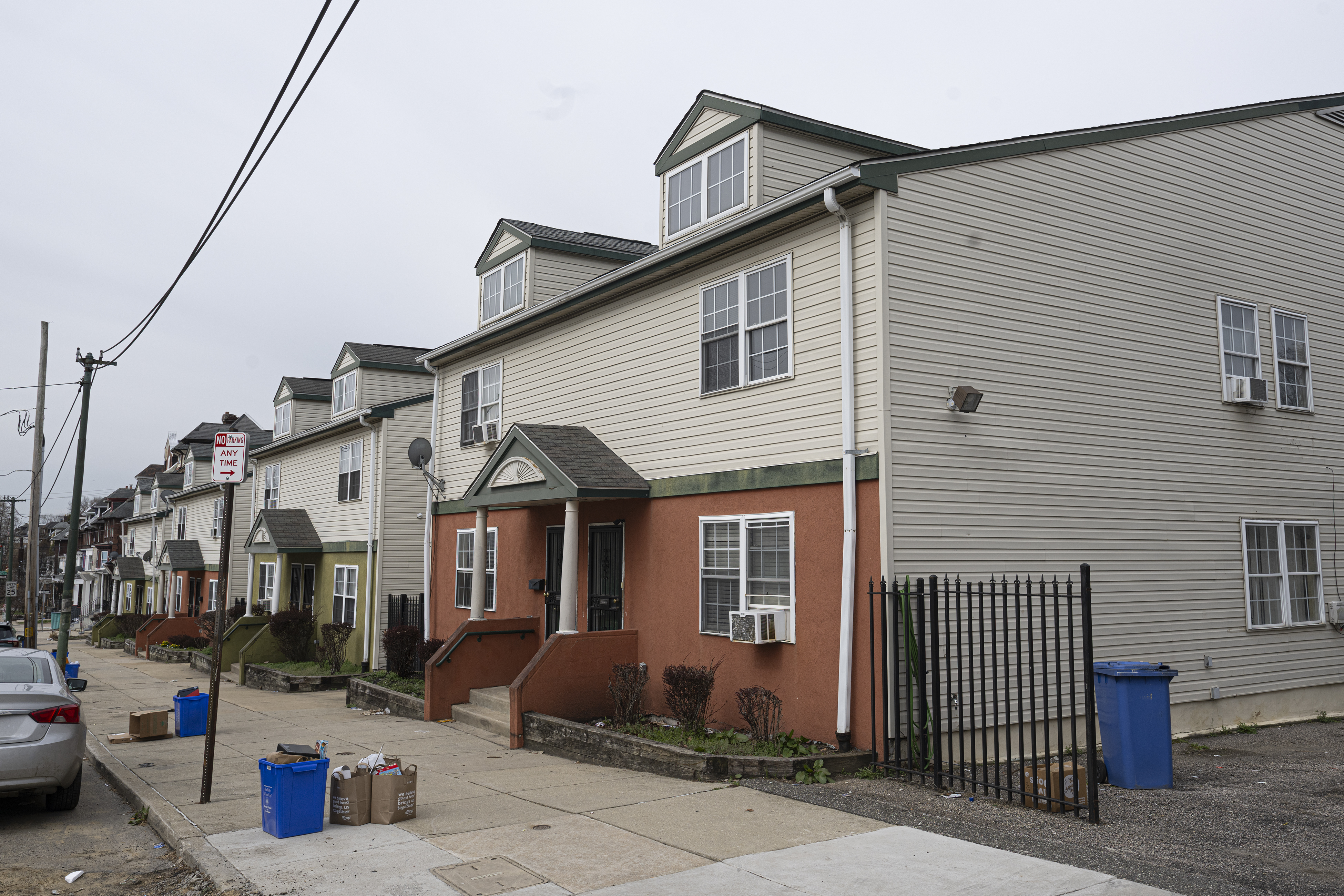
Take the 2500 block of North Marshall Street. The residential North Philly street sits between West Kensington and Broad Street, and nearly every home saw its assessment increase by 60% or more, according to The Inquirer’s analysis.
Most of the homes there had previously been valued at less than $100,000, meaning owners with the homestead exemption owed no property taxes. Now, many of the homes on the block are valued at about $140,000, an amount that would next year yield more than $500 in yearly tax bills for owners with the homestead exemption.
More than 40% of the Hartranft neighborhood’s residents are below the federal poverty level, which is $33,000 a year for a family of four, according to U.S. Census data.
At Left a property on 2500 N. Marshall St., Philadelphia, PA 19133 is shown Wednesday, Aug. 19, 2026, in Philadelphia.Jose F. Moreno / Staff Photographer
City Councilmember Quetcy Lozada, whose district includes parts of Kensington and North Philadelphia, said the Hartranft area is not like sections of Kensington that have seen an influx of development in recent years and where increases in property assessments may be expected.
It is possible, she said, that lower-income residents who have been displaced from parts of Kensington looked to move west of the neighborhood, increasing demand in the Fairhill and Hartranft areas.
Lozada — who has held workshops in the neighborhood to connect residents with property tax relief programs — said she fears her constituents are being asked to pay disproportionately high taxes and not seeing better city services and stronger public schools.
“How is it possible that someone in Fairhill is paying a higher tax for a property that has not had any investment, in a neighborhood that is not as safe, whose school system is not as great, as somebody that lives in Chestnut Hill, for instance?” she said, referring to the upscale Northwest Philadelphia neighborhood with a $109,000 median household income. “There has to be a better way of doing a more accurate evaluation in every neighborhood.”
In Strawberry Mansion, community leaders said that increased assessments are likely a result of market pressure from Brewerytown to its south, a comparatively whiter and higher-income neighborhood.
“The city has to be super transparent about this assessment system so people can better understand it and not feel that sticker stock,” said Tonnetta Graham, president of the Strawberry Mansion Community Development Corp. “If we know how they came to their number, it’s easier to chew.”
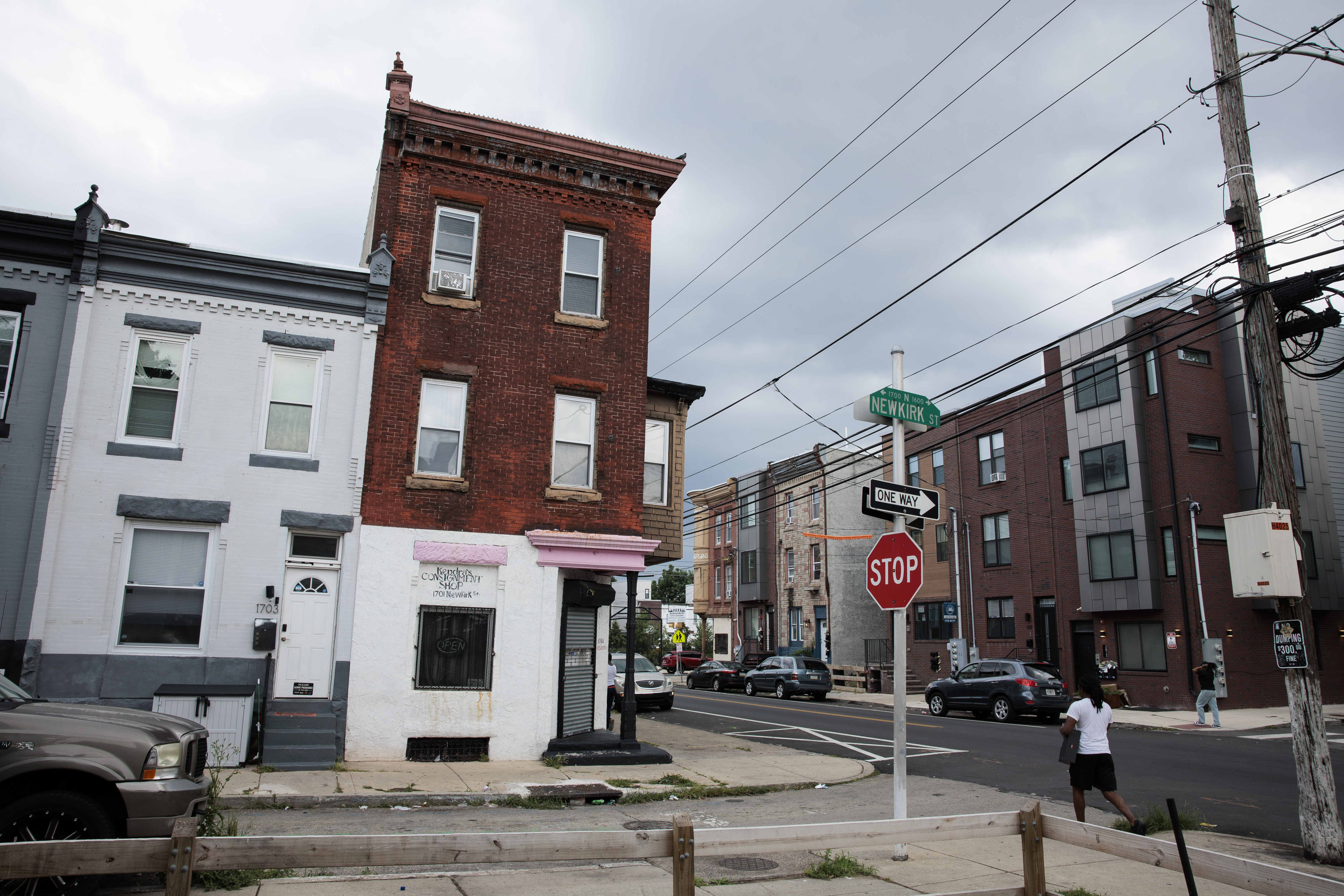
The 1700 block of North Newkirk Street on Thursday, Aug. 20, 2026 in Philadelphia.Monica Herndon / Staff Photographer
Councilmember Jeffery Young Jr., whose district includes both Strawberry Mansion and parts of Hartranft, did not respond to requests for comment.
Jalon Alexander, a Strawberry Mansion native who this month launched a campaign to challenge Young for his Council seat next year, said he was recently at a block party in the neighborhood where he heard repeatedly from older homeowners who were concerned about their increased assessments.
“They feel taken advantage of, and they feel like it’s coming out of nowhere,” Alexander said. “This is an area where there’s high levels of poverty, and there is not a lot of political or government attention in this area. I’ve spoken with many people whose rates have almost doubled. It’s the biggest issue in the neighborhood.”
Staff writer Michaelle Bond contributed to this article.
A county review of a revised plan for the former Melrose Country Club shows more than two dozen more houses than in earlier versions.
The mixed-use development proposal, set on about 115 acres on the southern end of Cheltenham Township, includes townhouses, a medical office, traumatic brain injury care living units, and commercial space. The project would also feature walking trails and a controversial public pool complex.
The pools have drawn a lawsuit and criticism from some residents, who argue that the plan, which could cost up to $4.5 million and would also replace the existing Conklin Pool, moved too quickly, lacked transparency, and evaded public bidding rules.
The president of the township’s board of commissioners has acknowledged that the contract with the private developer gives Cheltenham less input on the pool design, and officials have said they cannot answer some questions about the deal due to the lawsuit.
But the agenda for the township planning committee’s forthcoming meeting includes extensive attachments about the Melrose project, including a February fiscal analysis estimating that the project would net about $1.8 million per year for the township and about $5.9 million annually for the Cheltenham School District.
The Montgomery County Planning Commission reviewed the latest version of the plan in a letter Thursday to the township that notes about 443 homes and recommends several changes to the developer’s proposal.
What’s in new Melrose redevelopment plan
The plan that county officials received Aug. 6 has more townhomes and eliminates apartments, according to the planning commission’s letter, adding about 33 homes.
There are 351 townhomes and 12 twins in the new plan. Some of the townhouses will be age-restricted. A 2024 version of the plan had included only 306 townhouses, 24 age-restricted apartments, and no twins, Thursday’s letter notes.
The Melrose plan also includes 80 assisted living apartments, 30 traumatic brain injury care living units, two retail spaces, and three public pools. It’s unclear whether the TBI units would be long-term residences.
The single-family homes along with the assisted living apartments total about 443 residences.
Montco recommends changes to Melrose plan
County planners recommended changes to the Melrose plan and criticized the removal of apartments and some commercial space.
The township and the developer did not immediately respond to requests for comment on the county’s recommendations or the plan changes.
“We are sorry to see the loss of the previously proposed small apartment building on this site. Housing variety benefits communities by providing more options for price points, size, and configuration of dwelling units,” the planners wrote, and the reduction in retail space “conflicts” with Cheltenham’s goal of boosting its commercial tax base.
“A stronger commercial area would make the proposal an even better fit with the future land use vision from Cheltenham’s new comprehensive plan,” planners wrote.
Carl Freedman, who sits on Cheltenham’s planning commission, has previously criticized the loss of commercial space in newer Melrose plans for similar reasons.
The county review also addresses pool parking in more detail than in its fall 2025 review, noting that a public pool might require more spaces for cars and recommending an analysis of parking at Conklin Pool to inform needs at Melrose.
The county also recommended adding more trees around the public pools to cool and shade the area, which will be mostly paved, and revising the stormwater plan behind a set of townhouses to prevent flooding.
Planners praised the developer’s inclusion of a path along Ashbourne Road and a circuit trail along Tookany Creek, which could connect to a longer trail network underway in the Philadelphia area.
The chair of Cheltenham’s transportation committee said Wednesday he believes the project’s walkability aligns with the town’s goal to build a more connected community.
This suburban content is produced with support from the Leslie Miller and Richard Worley Foundation and The Lenfest Institute for Journalism. Editorial content is created independently of the project donors. Gifts to support The Inquirer’s high-impact journalism can be made at inquirer.com/donate. A list of Lenfest Institute donors can be found at lenfestinstitute.org/supporters.
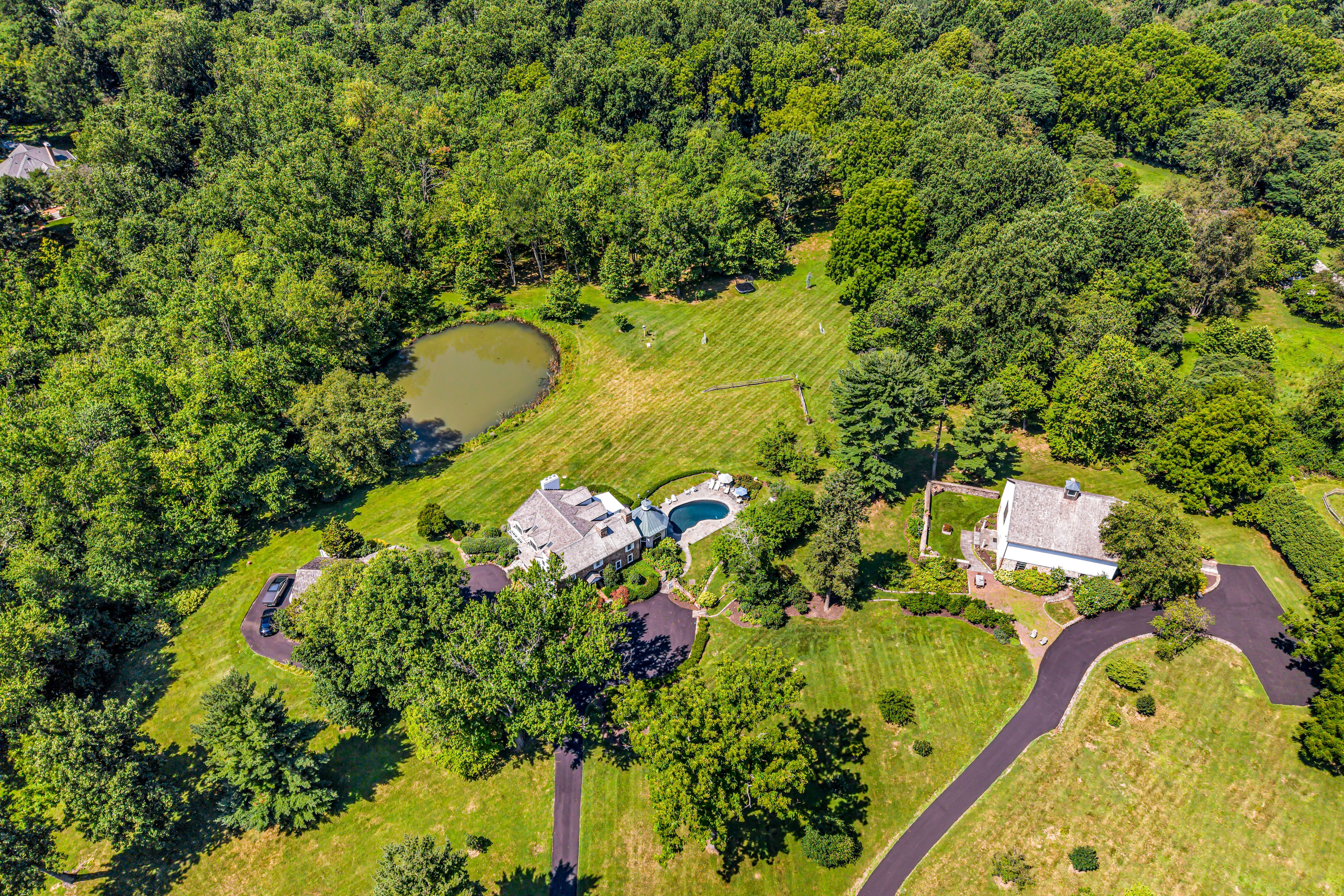
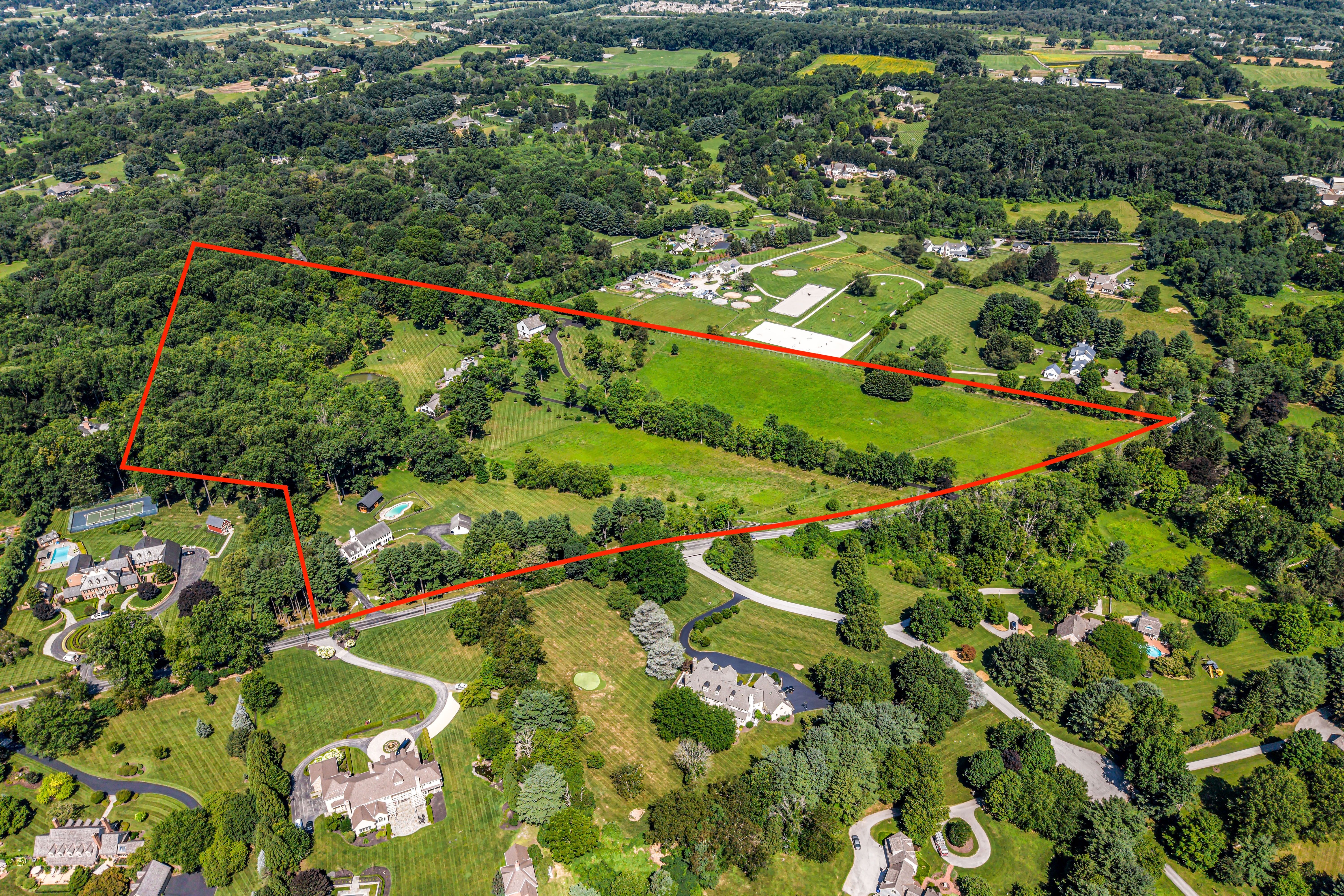
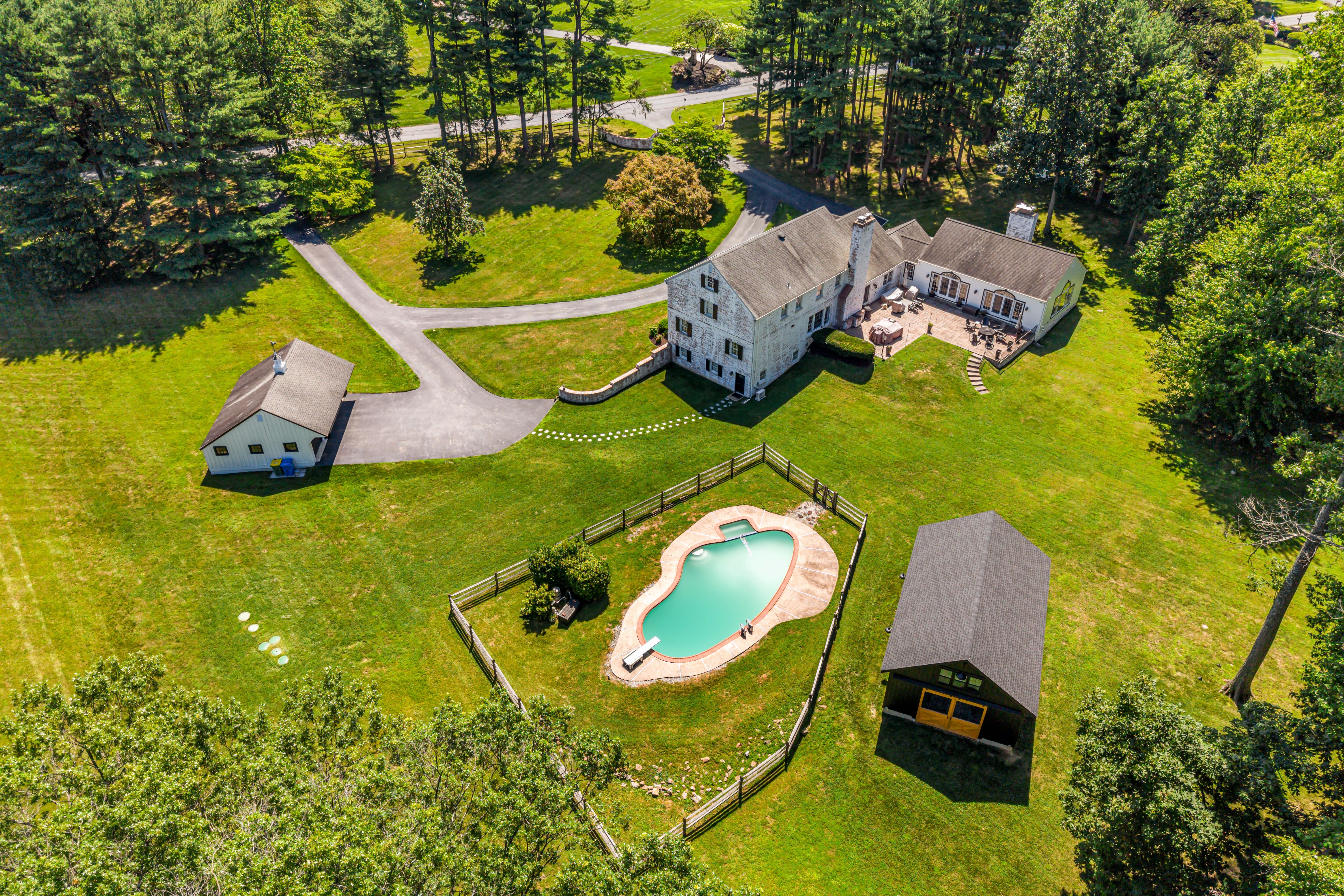
Three properties that span 27 acres and include two homes, two pools, and a two-story barn are for sale for $8.95 million in Willistown Township, Chester County.
The three parcels, situated among the area’s pastures and horse farms, together form the largest package of land currently for sale along the Main Line whose use is not restricted by a conservancy, according to listing agent Karen Strid of Compass Real Estate.
“Each parcel is worth something, but together they’re worth so much more,” Strid said.
That a buyer can do whatever they want on the land, including building more homes, “is what makes [the listing] so rare,” she said.
“It’s such a special purchase for someone who really understands the area,” Strid said.
The three combined parcels for sale at 416, 418, and 420 Dutton Mill Rd., spanning 27 acres in Willistown Township, are outlined in red.Billy Kyle
Willistown Township, which neighbors Malvern Borough and includes the 19th-century village of Sugartown, is a desirable location for people who want land and a more rural feel and also access to mountains, beaches, and major cities, Strid said.
These parcels are “appealing to the people who want privacy and can have whatever they want and don’t want to be in the middle of nowhere,” she said. “You’re really close to everything, but you feel like you’re in your own world.”
The seller owns all three parcels, which together are called Sugartown Springs Farm. Strid said it would make a good family compound. Across the parcels, buildings and property features are “spread out in a really nice way,” she said.
The parcels were privately listed for sale on the Compass and Redfin platforms the second week of August.
Two homes and a two-story barn
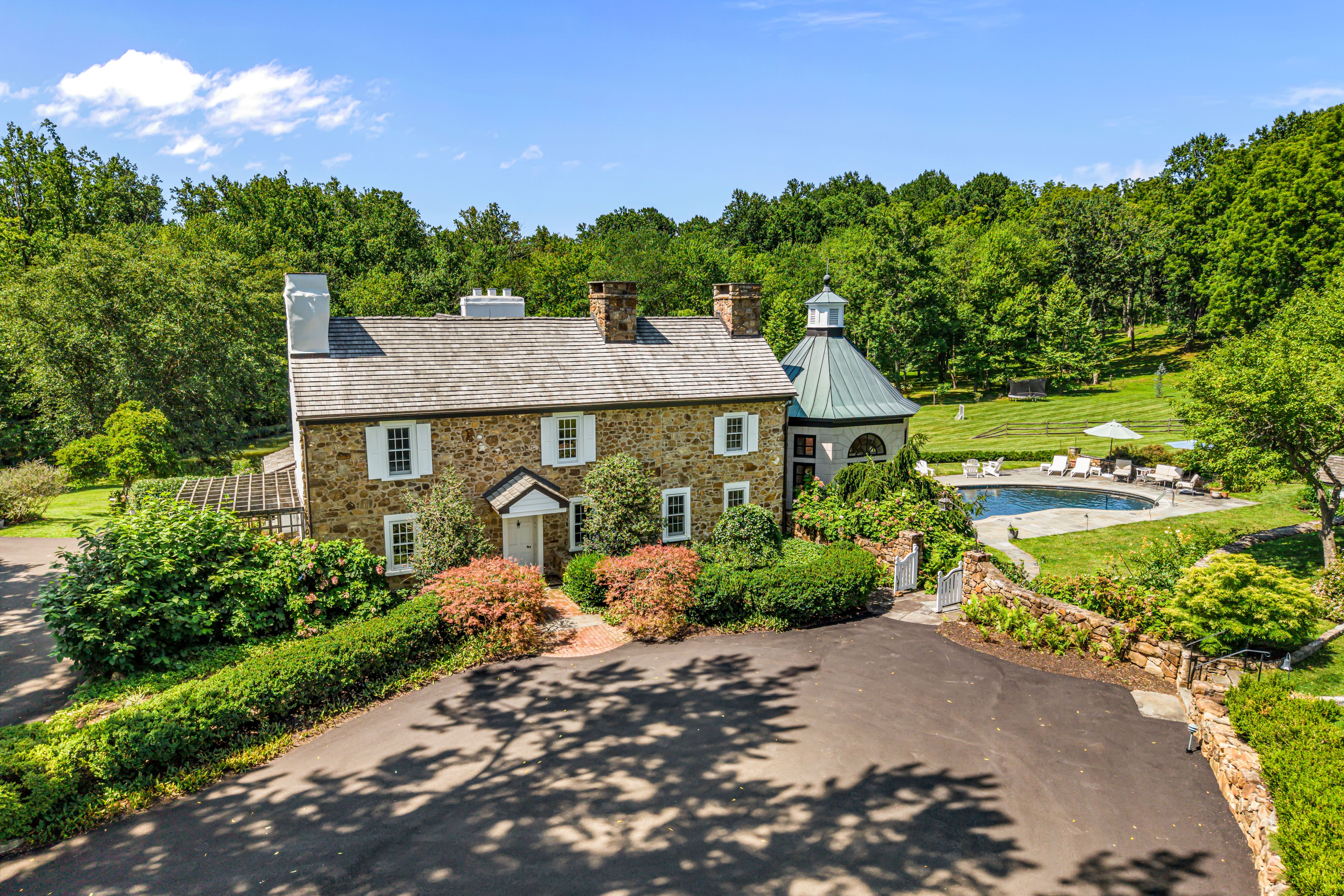
At 418 Dutton Mill Rd., a stone main house dating to the mid-1700s offers four bedrooms, four full bathrooms, and one half bathroom. The primary en suite bedroom includes a fireplace, soaking tub, shower, and double vanities.
The stone main house at 418 Dutton Mill Rd. has four bedrooms and a two-story solarium that serves as the dining room.Billy Kyle
The 7,559-square-foot house features interior stone walls, exposed timber beams, hardwood floors, and more fireplaces throughout. The two-story solarium serves as the dining room and highlights views of the grounds. The home also has an elevator.
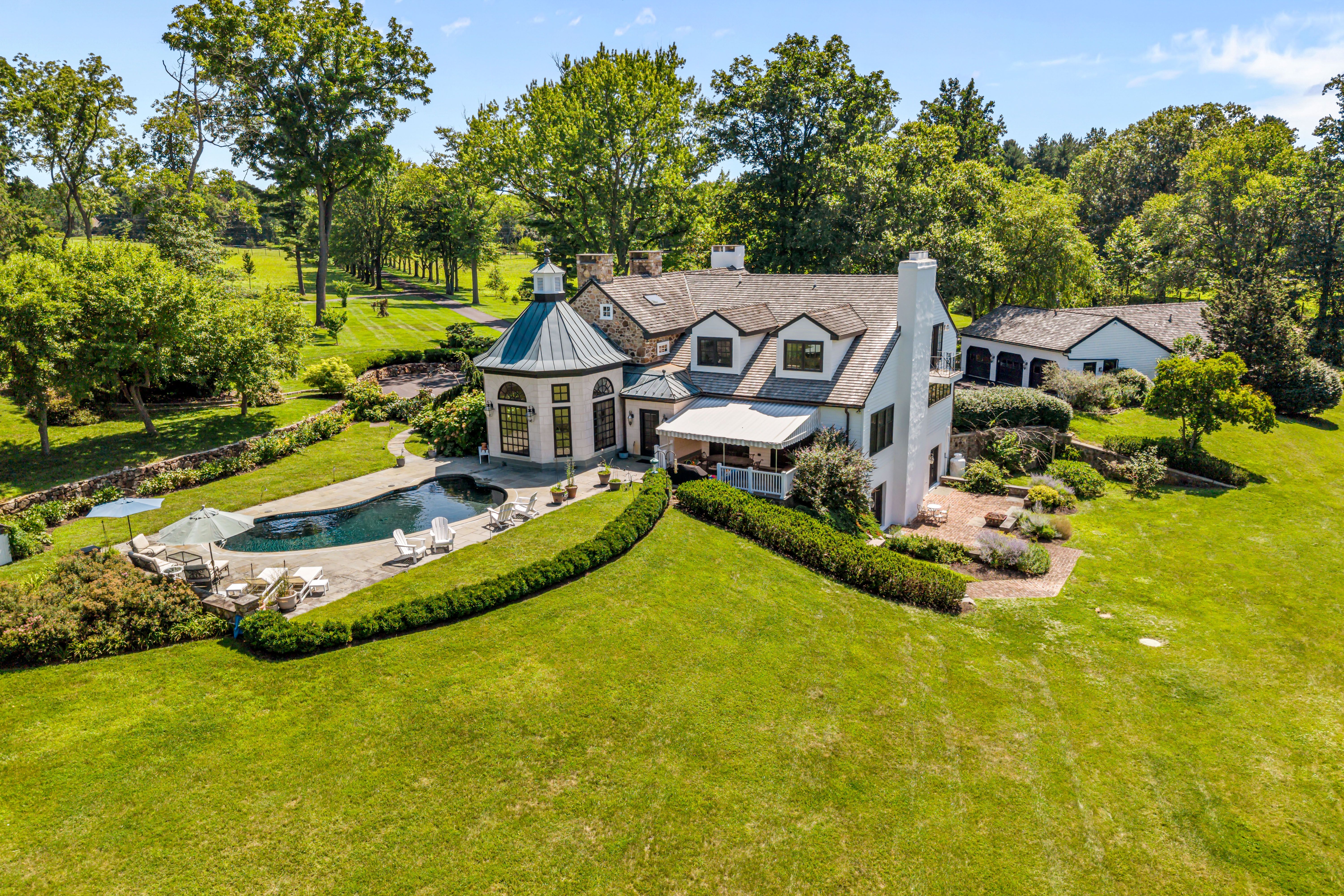
The 10-acre property includes an in-ground pool and a spring-fed pond. A detached garage off the circular driveway can fit six vehicles and also includes a full bathroom and a second laundry room.
The 10-acre property at 418 Dutton Mill Rd. includes an in-ground pool and a detached garage that can fit six vehicles.Billy Kyle
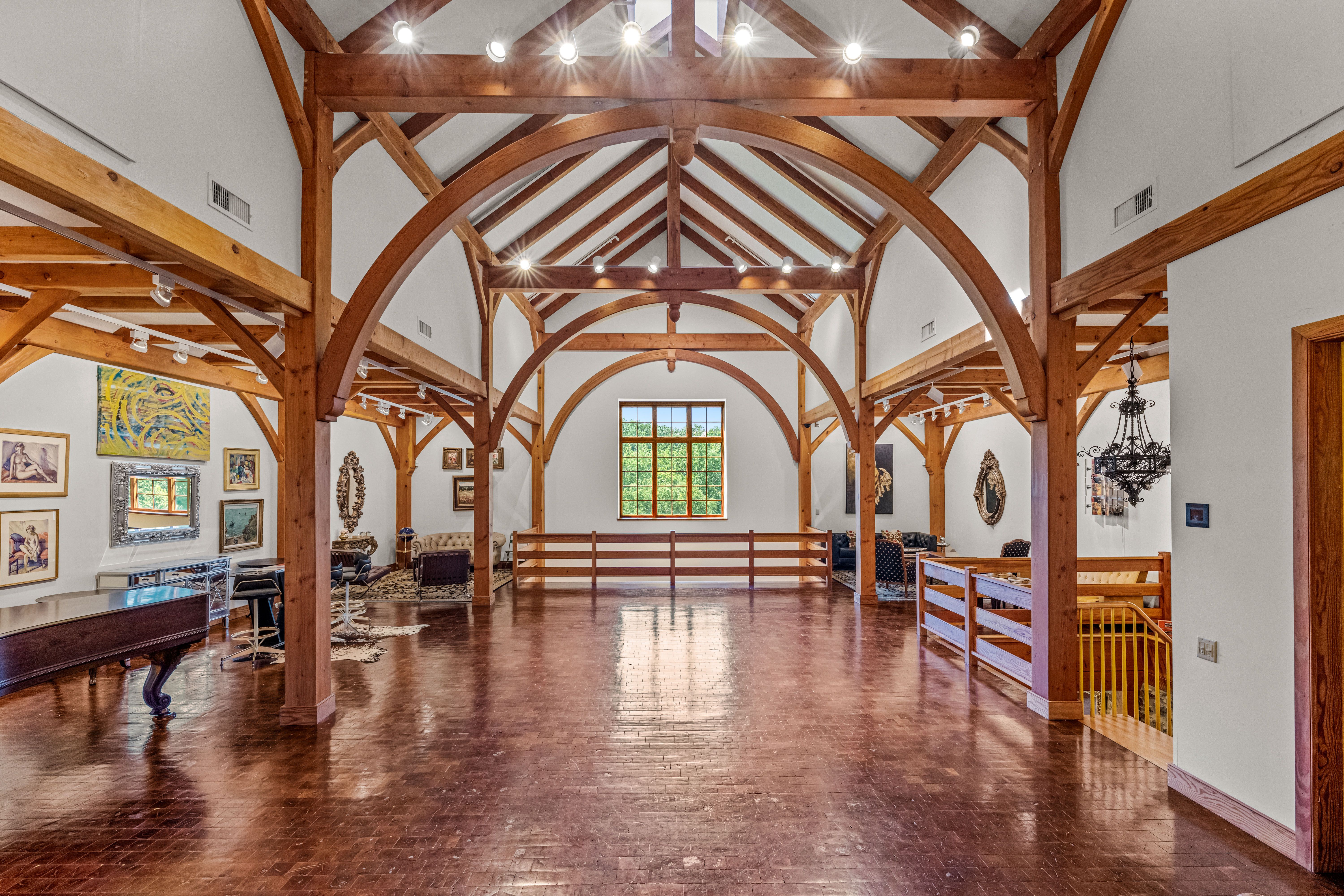
To the right of the main house is a two-story timber-frame barn at 420 Dutton Mill Rd. The barn was once used as an art gallery for Andrew Wyeth’s paintings.
The structure features a glass atrium, a room that could be a bedroom or office, 1½ bathrooms, a kitchenette, and multifunctional space. The upper level has beamed ceilings and gathering spaces.
The upper level of the barn at 420 Dutton Mill Rd. can be used as a gathering space.Billy Kyle
The property includes a stone-walled courtyard and spans 12.8 acres.
These two parcels are listed for sale for a combined $5.975 million.
A second home at 416 Dutton Mill Rd. is listed for sale for $2.975 million. The Colonial spans 6,032 square feet and was built in 1963.
The home has six bedrooms, three full bathrooms, two half bathrooms, formal living and dining rooms, and a walkout finished basement. It features fireplaces and brick wall accents and has a finished attic.
The 4.2-acre property includes a rear stone patio, a detached three-car garage, an in-ground pool, and a timber-frame barn built in 2024.
The home for sale at 416 Dutton Mill Rd. in Willistown Township features an in-ground pool, a timber-frame barn, and a detached three-car garage.Billy Kyle
This home is currently being rented for $9,000 per month under a lease that ends in early 2028.
Strid said standing on Sugartown Springs Farm highlights why people value the lifestyle it represents.
“It’s so serene and calm and beautiful,” she said.
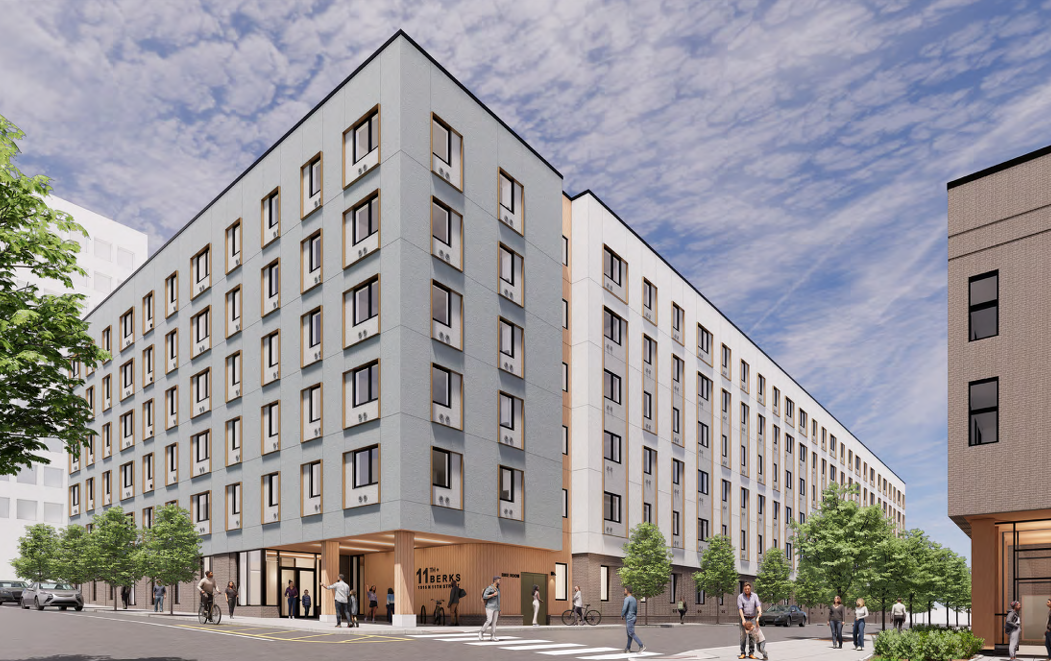
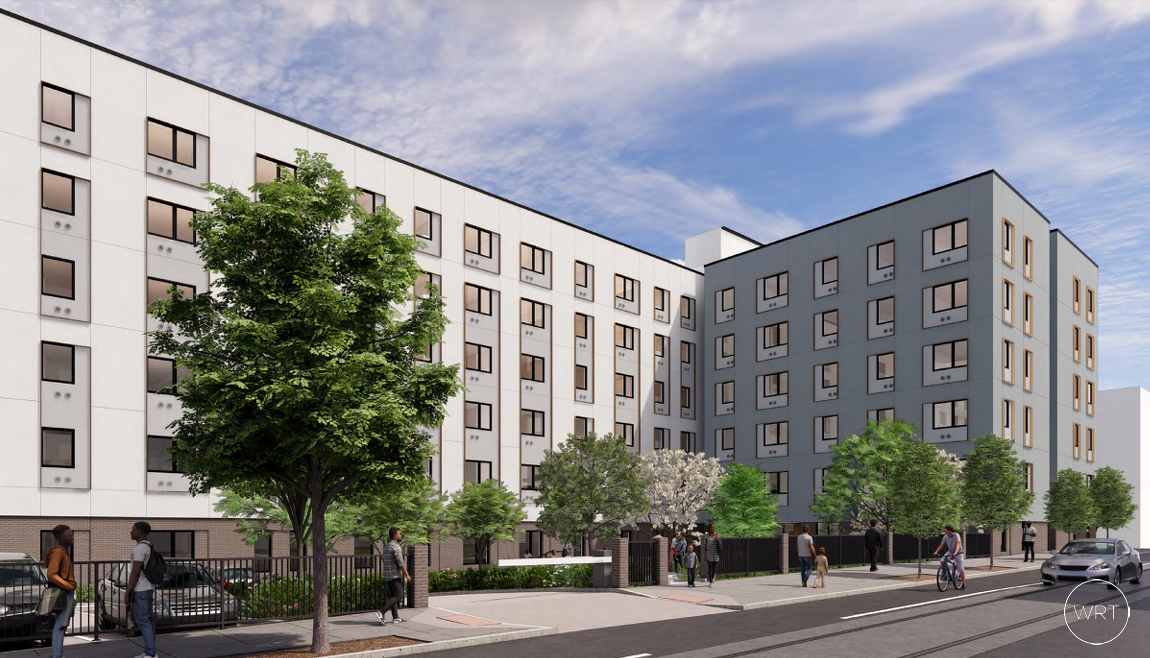
A 129-unit affordable apartment building is slated for 11th and Berks Streets in North Philadelphia, just east of Temple University’s campus.
The six-story structure will be built on land owned by the Philadelphia Housing Authority (PHA) but will be developed by New York City-based Jonathan Rose Cos., which has built two other affordable apartment complexes in the area.
The designer for the building is Philadelphia-based WRT architects, which worked with Jonathan Rose on other projects in the neighborhood.
“We’ve kind of been marching our way down the block,” said Marissa Hebert, an architect for the building with WRT. “This will be their third project in Philadelphia.”
The others include 120 units in Paseo Verde at the corner of Ninth and Berks and 133 units at NC Five at 10th and Berks.
“Being able to still have the site so close to Temple, to be able to put affordable units for the actual residents and long-term community members has been really great,” Hebert said. “You can see the impact of still having affordable housing in this neighborhood.”
The majority of the units — 61 apartments — will be affordable to those making 60% of area median income (AMI), or just over $44,000 for a one-person household; 54 units will be at 50% of AMI, which is just under $42,000 for a one-person household, and 14 will be for those making under 20% of AMI, or almost $17,000.
The project is being largely funded through Low Income Housing Tax Credits, a federal program, and subsidies through PHA such as the project-based Section 8 program.
The proposed apartment building from Jonathan Rose Cos., the New York-based developer’s third project in North Philly.WRT Architects
The building will be carved into 60 one-bedroom apartments, 60 two-bedrooms units, and nine three-bedrooms.
“They said they would have the three-bedroom units on the first floor,” said Elizabeth Segarra, of Asociación Puertorriqueños en Marcha (APM), a nonprofit developer and the lead community group in the area.
“Why? Because they don’t want families on a third floor jumping, and then a single person complaining because they’re hearing too much jumping,” Segarra said. “So they’re going to keep that kind of environment on the first floor.”
The project will include 21 parking spaces and no ground-floor commercial, although there will be amenities such as a gym and community room in the building.
On the rest of the site, PHA is planning to build 15 for-sale townhouses at affordable prices, as well as recreational spaces including a basketball court.
Hebert of WRT says the apartment building will be the largest “passive house” project in Philadelphia, in reference to a building standard that tries to minimize energy use in structures.
“That’ll mean lower utility costs for all the residents, better thermal comfort for them, and higher indoor air quality,” Hebert said.
Jonathan Rose plans to begin construction in December and anticipates the building taking two years to complete. Tenants will be able to move in early in 2029.
“It’s not only going to bring more people to the community, it’s going to bring more jobs, and it’s going to bring a live vibe in that area,” Segarra said. “They really knocked it out of the park.”
Mayor Cherelle L. Parker’s administration met formally for the first timeFriday with the owner of hundreds ofrental homes in West and Southwest Philadelphia whose federal affordability requirements are expiring and committed to working to preserve the homes.
Jim Levin of Neighborhood Restorations plans to sell 925 homes where tenants pay below-market-rate rents, and he wants to keep them affordable. But he needed assurance that the city plans to work with him, said Angela D. Brooks, Parker’s chief housing and urban development officer.
Brooks gave him that on Friday, she said, telling Levin “we’re in this, we’re going to be a good partner, and we’re going to move this forward.”
“We are committed to being part of the solution,” Brooks said in an interview Friday.
About 3,000 people live in the 925 rental units in West and Southwest Philadelphia. The homes were developed through the federal Low Income Housing Tax Credit program, which requires reduced rents at the properties for three decades.
The city’s initial focus will be on 225 of the homes: the 63 that are no longer required to be leased for below-market-rate rents or will lose the requirement by the end of the year, and the 162 homes where affordability requirements are set to expire within the next three years.
Agreements for reduced rents at the other 700 homes are set to expire between 2030 and 2040.
Across the city, Philadelphia is at risk of losing more than 7,500 subsidized rental homes during the next decade as federal affordability agreements expire, according to an analysis published last fall by the Housing Initiative at Penn.
When agreements end, property owners can choose to continue charging below-market rents, charge higher rents, or sell their properties in potentially lucrative deals to take advantage of the city’s rising property values.
Levin told tenants and city officials a year ago that he planned to sell the properties.
The city will not buy the homes, Brooks said, and it has not made a spending commitment toward its goal of keeping the properties affordable once they’re sold.
But a steering committee that began meeting at the end of last year and includes members of the administration, elected officials, and housing policyexperts recommended that the city provide $36 million over five years to help preserve Neighborhood Restorations properties.
Over the next few months, the committee plans to start evaluating the conditions of the properties and identifying funding sources, Brooks said.
Three days before Brooks’ meeting with the property owner, tenants who fear losing their reduced rents and their homes rallied at City Hall to push the administration to help save the properties.
Brooks said preserving all 925 homes could cost more than $260 million.
In a statement, Parker said, “There is no simple or immediate solution at this scale.”
“The city remains committed to doing our part and continuing the work,” she said. “But preserving these homes will require all of us, including strong intergovernmental support that includes resources from local, state, and federal government.”
Tenants have partnered with the grassroots social justice nonprofit OnePA to push the city to keep the homes affordable permanently and to give renters the opportunity to buy their homes for below-market prices.
In a statement, tenants thanked Parker and her administration “for making an initial commitment to saving our homes.”
“We know there is still a long way to go before our homes are safe, and we urge the city to act quickly before it is too late,” they said. “We look forward to working with Mayor Parker and others, and we will continue organizing until all 925 units are protected and no one is displaced.”
The Philadelphia region became a homebuying hot spot for millennials in recent years.
The number of millennial households that own their homes in the Philadelphia area almost doubled between 2018 and 2023, outpacing the generation’s homeownership growth in every other major metropolitan area in the Northeast, according to an analysis by RentCafe.
In that five-year period, homeownership among Philadelphia-area millennial households jumped roughly 92%, from about 201,000 to about 386,000, according to the nationwide apartment search website.
That’s higher growth than the 74% increase nationally. In RentCafe’s analysis of 107 metro areas with the biggest populations of millennial households, the Philadelphia region ranked 17th for its jump in millennial homeownership. And among metros with at least 100,000 millennial households in 2023, it ranked seventh.
“Philadelphia stands out because it’s unique in the Northeast,” said Doug Ressler, manager of business intelligence at Yardi Matrix, RentCafe’s sister company.
He points to the Philadelphia area’s combination of positive characteristics. Compared to many other markets, the region has lower home prices, stronger job opportunities, and good wage growth, Ressler said.
It also has a good supply of starter homes, which he called “key.” Rowhouses in particular “provide an entry point for homeowners at a price you can’t find anywhere else,” he said.
Coastal areas are popular among millennials — people born from 1981 to 1996. But “millennials in many coastal markets remain locked out of homeownership,” Ressler said. The Philadelphia region’s relative affordability gives renters a chance to become homeowners.
RentCafe’s report specifically points to the area’s older housing stock and availability of homebuyer assistance programs to further explain why millennials can buy homes in the Philadelphia region.
Also, the generation’s income growth has outpaced the growth of home prices. Between 2018 and 2023, area millennials’ incomes increased by roughly 38%, while home prices increased by 18.5%, according to the RentCafe analysis.
Roughly 56% of Philadelphia-area millennial households were homeowners in 2023. More millennials owned homes than rented them in 83 of the 107 metro areas RentCafe analyzed.
While millennial homeownership in the area increased by about 92% between 2018 and 2023, the number of millennial renter households increased by just 2.4% — below the roughly 5% increase nationwide.
(function(){function e(){window.addEventListener(`message`,function(e){if(e.data[`datawrapper-height`]!==void 0){var t=document.querySelectorAll(`iframe`);for(var n in e.data[`datawrapper-height`])for(var r=0,i;i=t[r];r++)if(i.contentWindow===e.source){var a=e.data[`datawrapper-height`][n]+`px`;i.style.height=a}}})}e()})();
Where millennials are buying homes nationwide
Small and mid-sized metro areas have seen the highest concentrations of millennial homeowners, thanks to more affordable home prices. In the Lancaster area, roughly 63% of millennials owned homes in 2023.
In the Grand Rapids, Mich., area and two metros in Utah — Ogden and Provo — more than two-thirds of millennial households owned their homes.
From 2018 to 2023, small and mid-sized metros in Florida and California had the highest increases in millennial homeowners. They’re all places with more affordable home prices and strong income growth. And they attracted millennials during the pandemic who moved away from denser and more expensive major cities.
The number of homeowner millennial households more than doubled in 12 of the 107 metro areas RentCafe analyzed.
The nearest of these to the Philadelphia area is Youngstown in northeastern Ohio, near the Pennsylvania border. The number of millennial households that own homes increased from about 15,900 in 2018 to about 32,400 in 2023.
Three Florida metro areas topped RentCafe’s list for highest rates of millennial homeownership growth: North Port, Lakeland, and Jacksonville. The North Port area has ranked among the country’s fastest-growing metros overall.
Affordable artist apartments will be coming to South Broad Street next year after the John S. and James L. Knight Foundation awarded a $2.5 million grant to the development company that promises to turn former University of the Arts dorms into low-priced housing.
Lindsey Scannapieco’s company Scout acquired Hamilton Hall, facing Broad Street, and the accompanying Frank Furness-designed former dormitory that front on 15th Street in early 2025 after the surprise bankruptcy and closure of the University of the Arts.
Scout has renamed the combined complex as the Village of Industry & Art. The company is most known for its redevelopment of a former South Philly public school into a warren of artist studios, small businesses, and eateries, now known as the Bok Building.
Scannapieco has long promised 45 affordable artist apartments for the former dormitory space, and the Knight Foundation grant provided the final funding to move forward.
“We have the rest of the funding in place, so this was really about bridging the gap that was required to make this happen,” Scannapieco said.
She also noted that the project’s affordability would be deed-restricted, locking it in place for the long term.
“We have a deep commitment now that regardless of what happens to me or my team, this will be affordable housing for artists and cultural workers,” Scannapieco said.
Scout plans for 35 of the units to be long-term rentals for artists who make between 60% and 80% of area median income, or between $50,000 and almost $67,000 for a one-person household.
Ten of the units will be furnished and are slated for visiting artists conducting short-term residencies in Philadelphia.
The apartments range in size from the smallest at a little over 500 square feet to the largest at 726 square feet, with the majority around the 600 square-foot range.
Those sizes are comparable with the Philadelphia apartment market. In 2023, a study showed that the average size of a new one-bedroom apartment built in Philadelphia over the previous decade had been 764 square feet, while the average studio was 445 square feet. A more recent study found that $1,500 a month would get a renter 591 square feet in the city.
Scannapieco says Scout has been studying complexes that include artist housing and workspace in cities like New York, Baltimore, and Pittsburgh. The 15th Street project will include specialized amenities like dark rooms, slop sinks, and material storage libraries.
“Artists are essential to Philadelphia’s identity, economy and future,” said Kristina Newman-Scott, Knight Foundation’s vice president of arts. “This project demonstrates what becomes possible when we design cities with artists in mind, creating affordable places for artists to live and work is an investment in Philadelphia’s long-term vitality.”
Scannapieco says she expects the affordable artist apartments will be open by mid-2027.
“A lot of people talk about the need for permanent commitments and allocation of housing for artists and cultural workers, and we’ve never been able to frankly do it at this scale in Philadelphia,” she said. “So that’s very much what this project will provide.”
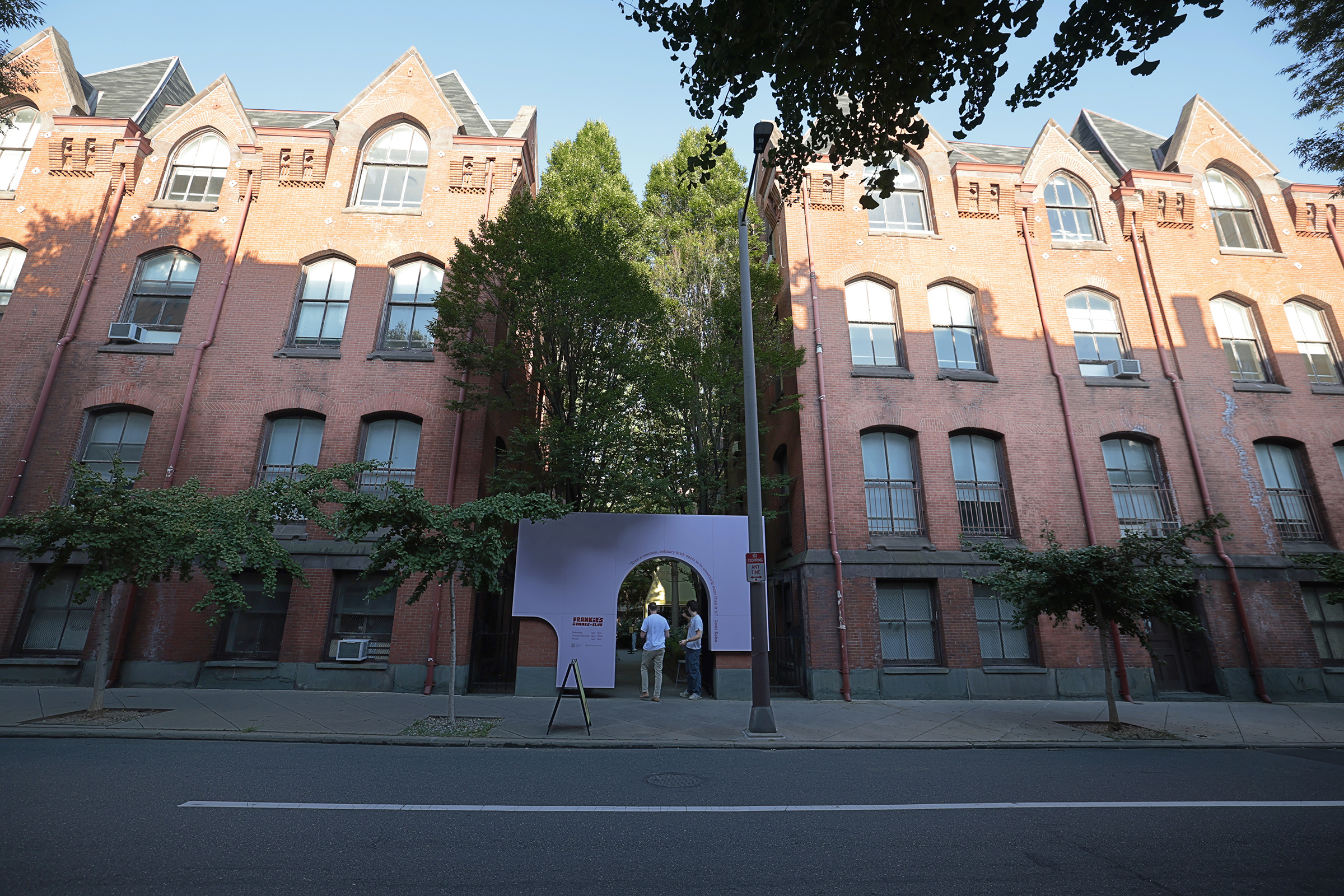
The Village of Industry & Art, which covers over 110,00 square feet, currently hosts the popular outdoor restaurant and bar Frankie’s Summer Club in its courtyard facing 15th Street.
A news release from Knight and Scout noted that it already includes tenants such as BlackStar Projects, Monument Lab, DesignPhiladelphia, and the Stained Glass Project.